Re-Visiting Russiagate In Light Of The Ukraine War
Caitlin Johnstone, Substack, 28 Mar 22,
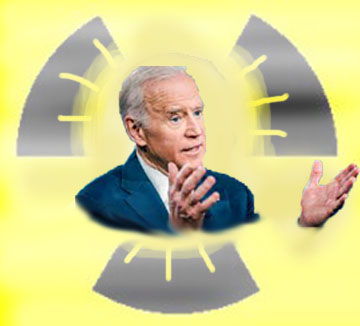
The president of the United States has confirmed what Consortium News and others have been reporting since the beginnings of Russsiagate in 2016, that the ultimate U.S. aim is to overthrow the government of Vladimir Putin.
“For God’s sake, this man cannot remain in power,” Biden said on Saturday at the Royal Castle in Warsaw.
It’s hard to believe that the last president spent his term pouring weapons into Ukraine, shredding treaties with Russia and ramping up cold war escalations against Moscow which helped lead us directly to the extraordinarily dangerous situation we now find ourselves in, and yet mainstream liberals spent his entire administration screaming that he was a Kremlin puppet.
A lot of anti-empire commentary is rightly going into criticizing how the Obama administration paved the way to this conflict in Ukraine with its role in the 2014 coup and support for Kyiv’s war against Donbass separatists. But what’s getting lost in all this, largely because Trumpites have been using their mainstream numbers to loudly amplify criticisms of the role of the Obama and Biden administrations in this mess, is what happened between those two presidencies which was just as crucial in getting us here.
Though it’s been scrubbed from mainstream liberal history, it was actually the Trump administration that began the US policy of arming Ukraine in the first place. Obama had refused forceful demands from neocons and liberal hawks to do so because he feared it would provoke an attack by Russia.
In a 2015 article titled “Defying Obama, Many in Congress Press to Arm Ukraine“, The New York Times reported that “So far, the Obama administration has refused to provide lethal aid, fearing that it would only escalate the bloodshed and give President Vladimir V. Putin of Russia a pretext for further incursions.”
It wasn’t until the Trump presidency that those weapons began pouring into Ukraine, and boy howdy are we looking at some “further incursions” now. This change occurred either because Trump was a fully willing participant in the agenda to ramp up aggressions against Moscow, or because he was politically pressured into playing along with that agenda by the collusion narrative which had its origins at every step in the US intelligence cartel, or because of some combination of the two.
In all the world-shaping news stories we’ve been experiencing lately, it’s easy to forget how the narrative that the Kremlin had infiltrated the highest levels of the US government dominated news coverage and political discourse for years on end. But in light of the fact that today’s major headlines now revolve around that exact same foreign government, this fact is probably worth revisiting.
The most important thing to understand about the Trump-Russia collusion narrative is that it began with western intelligence agencies, was sustained by western intelligence agencies, and in the end resulted in cold war escalations against a government long targeted by western intelligence agencies. It was the US intelligence cartel who initiated the still completely unproven and severely plot hole-riddled claim that Russia interfered in the 2016 election to benefit Trump. It was a “former” MI6 operative who produced the notorious and completely discredited Steele Dossier which birthed the narrative that Trump colluded with the Kremlin to steal the 2016 election. It was the FBI who spied on the Trump campaign claiming it was investigating possible ties to Russia. It was the US intelligence cartel which produced, and then later walked back, the narrative that Russia was paying Taliban-linked fighters to kill allied occupiers in Afghanistan which was leveraged by Democrats to demand Trump escalate further against Putin. It was even a CIA officer who just so happened to be in the right place at the right time that kicked off the flimsy impeachment narrative that Trump had suspended arms deliveries to Ukraine……………………
Day after day mainstream liberals were promised major revelations which would lead to the entire Trump family being dragged from the White House in chains, and day after day those promises failed to deliver. But what did happen during that time was a mountain of US cold war escalations against Moscow, a very good illustration of the immense difference between narrative and fact………………………..
And now here we are. Joe Lauria has an excellent new article out for Consortium News titled “Biden Confirms Why the US Needed This War” which lays out the evidence that the Ukraine invasion was deliberately provoked to facilitate the longstanding agenda to oust Putin and “ultimately restore a Yeltsin-like puppet to Moscow.” The US could easily have prevented this war with a little bit of diplomacy and a few low-cost concessions, but instead it chose to provoke a war that could then be used to manufacture international consensus for unprecedented acts of economic warfare against Russia with the goal of effecting regime change.
The U.S. got its war in Ukraine. Without it, Washington could not attempt to destroy Russia’s economy, orchestrate worldwide condemnation and lead an insurgency to bleed Russia, all part of an attempt to bring down its government. Joe Biden has now left no doubt that it’s true.
The president of the United States has confirmed what Consortium News and others have been reporting since the beginnings of Russsiagate in 2016, that the ultimate U.S. aim is to overthrow the government of Vladimir Putin.
“For God’s sake, this man cannot remain in power,” Biden said on Saturday at the Royal Castle in Warsaw.
This was all planned years in advance. Long before Biden’s presidency, and long before Trump’s. It is not a coincidence that we spent years being bombarded with anti-Russia propaganda in the lead-up to a massive confrontation with that same government. There’s no connection between the discredited allegation that Trump was a secret Kremlin agent and Putin’s decision to invade Ukraine, yet the mainstream anti-Russia hysteria manufactured by the former is flowing seamlessly into mainstream opposition of the latter.
This is because this was all planned well in advance. We’re where we’re at now because the US empire brought us here intentionally. https://caitlinjohnstone.substack.com/p/re-visiting-russiagate-in-light-of?token=eyJ1c2VyX2lkIjoyNTU2MjE3LCJwb3N0X2lkIjo1MTE0MTM1NSwiXyI6IlBCbmJRIiwiaWF0IjoxNjQ4NDM3MzgwLCJleHAiOjE2NDg0NDA5ODAsImlzcyI6InB1Yi04MjEyNCIsInN1YiI6InBvc3QtcmVhY3Rpb24ifQ.sV_DF9_RZoNSYBEyBYnmKKu9W2xB_fClLi6qcluyOv4&s=r
USA promises Israel that Iran will never acquire nuclear weapons
Iran will never acquire nuclear weapons, US promises Israel Antony Blnken seeks to reassure Israel and Gulf allies ahead of possible renewal of nuclear deal
Patrick Wintour Diplomatic editor, Mon 28 Mar 2022 The US secretary of state, Antony Blinken, has sought to reassure Israel and its Gulf allies that Iran will never acquire atomic weapons, ahead of the possible renewal of the nuclear deal with Tehran.
“When it comes to the most important element, we see eye to eye,” Blinken said at a news conference on Sunday with Israel’s foreign minister, Yair Lapid. “We are both committed, both determined, that Iran will never acquire a nuclear weapon.”
Blinken’s comments came before a meeting with four Arab foreign ministers at an extraordinary summit hosted by Israel’s prime minister, Naftali Bennett – an event that in itself shows how the landscape of Israel’s relations with some Arab states has been transformed in the past 18 months, driven partly by fears about the imminent end of Iran’s economic isolation………………………………………
Speaking in Israel, Blinken nevertheless defended the principle of trying to revive the Iran nuclear deal, saying: “The US believes that a return to full implementation of the deal is the best way to put Iran’s nuclear programme back in the box that it was in, but has escaped from since the United States withdrew from that agreement…………………. https://www.theguardian.com/world/2022/mar/27/iran-will-never-acquire-nuclear-weapons-us-promises-israel
Iran blames US for delays in reaching nuclear deal
Iran blames US for delays in reaching nuclear deal
Iran’s foreign minister says his country is ready to reach a lasting agreement with world powers and is blaming the latest failure to revive Tehran’s tattered nuclear deal on an allegedly “unrealistic vision” by the United States
ByThe Associated Press, 25 March 2022 BEIRUT — Iran’s foreign minister claimed Thursday that his country is ready to reach a lasting agreement with world powers, blaming the latest failure to revive Tehran’s tattered nuclear deal on an allegedly “unrealistic vision” by the United States.
Speaking during a visit to Beirut, Hossein Amirabdollahian urged the U.S. to stop “wasting time.”
Nuclear negotiations nearly reached completion on the deal earlier this month before Russia demanded that its trade with Iran be exempted from Western sanctions over Ukraine, throwing the process into disarray. Negotiators have yet to reconvene in the Austrian capital, and its unclear exactly what hurdles lie ahead…………………
On Monday, Iran’s supreme leader, Ayatollah Ali Khamenei, signaled support for Tehran’s nuclear negotiations to secure sanctions relief — a rare reference to the still-halted talks as world powers near a diplomatic turning point.
And last Friday, news of Tehran’s decision to reprocess a fraction of its stockpile of highly enriched uranium into material that can be used in medicine — instead of enriching further, to weapon-grade levels — appears to signal the negotiations may still see the parties return to Vienna and reach a deal. https://abcnews.go.com/International/wireStory/iran-blames-us-delays-reaching-nuclear-deal-83652616
No surety that Europe will favour nuclear power, following Ukraine crisis
Will the Ukraine War change Europe’s thinking on nuclear? Energy Monitor
The war is prompting countries like Belgium to delay nuclear phase-outs to be less dependent on Russia, but for countries like Germany, Russia’s missile attacks on nuclear plants reaffirm concerns about safety.
”……………………………………………………….
Changed thinking on nuclear?
Grossi (of IAEA)N says it is too early to know exactly how the Ukraine crisis will impact Europe’s thinking on nuclear power in the long term, although last week’s developments in Belgium and Germany give some clues. “The gas and power price crisis has already lasted for some months now and a lot of governments have in mind that something should be done,” he says. “The current situation isn’t sustainable and solutions have to be found.”
As the energy price crisis has unfolded, fuelled by the economic recovery from the pandemic, its impact is already clear in the outcome of a long-running debate over an EU taxonomy for green investments. In the end, both gas and nuclear were included on the list. It was a demonstrable comeback for nuclear power in Europe after fears that Brexit would tip the balance of opinion against it in the remaining EU 27.
However, when the European Commission came out with its REPowerEU strategy on how to wean the EU off of Russian gas on 8 March, nuclear was strangely absent. The strategy had been in the works since the start of the year as a response to rising energy prices, but it was quickly retooled with a Russia focus following the outbreak of the war.
New nuclear power plants will not solve today’s energy security problems, he [Grossi] acknowledges, because they will take at least ten years to build and come online, but at the very least the Commission should be advising against taking existing plants offline, he says……….
recent decommissionings, coupled with fewer new plants being built as they struggle to attract investment, means the number of nuclear reactors operating globally fell to a 30-year low in 2020, according to the World Nuclear Industry Status Report. A total of 55 new reactors are currently being constructed in 19 countries, but they are almost all outside Europe. China, India and Russia are building the most new plants. The only plants being built in the EU are one in France and one in Slovakia.
The very different reactions in Belgium and Germany this past month show it is hard to predict how the Ukraine crisis will impact European policy on nuclear power. Much may depend on whether the nuclear plants in Ukraine stay safe in the coming weeks and months.
Were any kind of nuclear incident to occur, it would likely be game over for nuclear power in Europe – no matter its climate benefits.
Zelensky ready to negotiate with Russia over NATO and Donbas sovereignty, but Biden won’t budge.

There are questions galore. Principally, if it is so easy to work out a compromise over Russia’s legitimate security demands, especially regarding Ukraine’s NATO membership and the alliance’s further expansion, why was Biden so very stubborn in his refusal even to discuss it, given the urgency of the matter?
M K Bhadrakumar-Zelensky rubbishes Biden’s war on Russia, Pearls and Irritations, By P&I Guest Writers, Mar 24, 2022 What was the need for all that happened in the period since mid-December when Russia transmitted to Washington its demands for security guarantees? This question will haunt US President Joe Biden long after he retires from public life.
The foreign-policy legacy of his presidency and the reputation of this much-vaunted 80-year-old politician with a half-century’s record in public life, much of it supposedly in the domain of American foreign policy, are in tatters – irreparable.
News has appeared that Ukrainian President Volodymyr Zelensky has conceded that he is willing to concede to the Russian demand that his country will not seek to become a member of the North Atlantic Treaty Organization.
The announcement came early this week in an interview with ABC News where he revealed that he is no longer pressing for Ukraine’s NATO membership.
In fact, Zelensky let the cat out of the bag by casually adding, “I have cooled down regarding this question a long time ago after we understood that … NATO is not prepared to accept Ukraine.”
Zelensky explained why: “The alliance is afraid of controversial things, and confrontation with Russia.”
This comes after his earlier revelation that he is “open to compromise” on the sovereignty of the two breakaway republics of Lugansk and Donetsk in the eastern Donbas region and on the status of Crimea.
ABC News reportedly telecast the interview on Monday night Eastern Time. Since then, the duo in the Biden team who piloted the Ukraine strategy, those apocalyptic “sanctions from hell” and the demonization of Vladimir Putin through the recent months – Secretary of State Antony Blinken and Undersecretary of State Victoria Nuland – are nowhere to be seen.
That duo of Eastern European descent in the front seat – Blinken driving and Nuland by his side navigating him – ought to offer an explanation for this charade playing out, which is virtually demolishing American prestige as a superpower.
There are questions galore. Principally, if it is so easy to work out a compromise over Russia’s legitimate security demands, especially regarding Ukraine’s NATO membership and the alliance’s further expansion, why was Biden so very stubborn in his refusal even to discuss it, given the urgency of the matter?
Can it be that Biden was acting smart to create a fait accompli for Moscow by formalizing Ukraine’s membership at the forthcoming NATO summit on June 29-30 in Madrid?
What’s the need to destabilize the European economies and rock the world oil market at a juncture when most economies are entering a path of post-pandemic economic recovery?
What explains this unnatural obsession on the part of Biden over Ukraine’s regime?
Why such visceral hatred on Biden’s part toward Russia, something unworthy of an 80-year-old world statesman?
Why is it that the economic war against Russia has become such a very personal affair for Biden, as his White House speech on Tuesday shows?
But such an ignominious end to this entire episode over Ukraine’s NATO membership was entirely to be anticipated. Fundamentally, this is an existential issue for Russia, whereas Biden, Blinken and Nuland are dilettantes sitting 10,000 kilometers away indulging in old neocon pastimes of interfering in other countries’ internal affairs, threatening them, disciplining them or punishing them for defying America’s diktat.
Even after Zelensky spoke, what has been Biden’s reaction? He scheduled a speech to announce that the US shall no longer import oil from Russia. Shouldn’t he have heaved a sigh of relief that this war in Ukraine is petering out?
Instead, he resorted to this strange toothless measure to impress the American audience that he is still on a winning streak promoting democracy in faraway lands. Isn’t such a gimmick an insult to the gullible American public?
Biden took this new step after Europeans told him plainly that they are not interested in such a move against Russia, given their heavy reliance on Russian oil.
Second, Biden doesn’t seem to know, or has pretended otherwise, that America is actually shooting at its own feet. For Russian prices are highly competitive and American companies will now have to pay much more to source heavy-grade oil suitable for their refineries………
Biden claims he is making sure that Putin won’t have money for his “war machine” if America stops buying oil from Russia. This is laughable, bordering on a lie.
The US was purchasing about 12% of Russia’s total oil exports. All right, that’s a decent figure. But it isn’t as if Russia won’t have any other buyers in a world market where the oil price has soared close to US$130 per barrel (thanks to Biden’s “sanctions from hell” against Russia)………..
Fundamentally, the problem is that the American elite is delusional. While the rest of the world knows that in a multipolar world, the United States’ capacity to force its will on other countries is inexorably in decline, the American elite shut their eyes to that reality. The present ridiculous situation was only due to this arrogance and self-deception……..
The strategic defeat that Washington has suffered will dent US prestige worldwide, weaken its trans-Atlantic leadership, unravel its Indo-Pacific strategy, and accelerate the drain of American influence in the 21st century. The Biden presidency will carry this heavy cross.
This article was produced in partnership by Indian Punchline and Globetrotter, which provided it to Asia Times.
M K Bhadrakumar is a former Indian diplomat. Follow him on Twitter at @BhadraPunchline . His diplomatic career included assignments on the territories of the former Soviet Union and to Pakistan, Iran and Afghanistan. Other overseas postings included South Korea, Sri Lanka, Germany, and Turkey. https://johnmenadue.com/m-k-bhadrakumar-zelensky-rubbishes-bidens-war-on-russia/
Kremlin says Russia could use nuclear weapons, if its existence were threatened.
Russia could use nuclear weapons if existence threatened: Kremlin
Kremlin spokesperson says Russia has a ‘concept of domestic security’ that outlines when nuclear weapons can be used. Kremlin spokesman Dmitry Peskov has said in an interview that Russia would only use nuclear weapons if its very existence were threatened.
Peskov’s comment came as CNN interviewer Christiane Amanpour pushed him on whether he was “convinced or confident” that President Vladimir Putin would not use the nuclear option in the Ukrainian context………. https://www.aljazeera.com/news/2022/3/22/russia-only-to-use-nuclear-weapons-if-existence-threatened
Iran’s foreign minister says nuclear deal closer ‘than ever’
Iran’s foreign minister says nuclear deal closer ‘than ever’, DUBAI, March 23 (Reuters) – Iranian Foreign Minister Hossein Amirabdollahian said on Wednesday that the Islamic Republic and world powers are closer than ever to reviving a 2015 nuclear deal………..
Reporting by Dubai Newsroom; editing by Michael Georgy, Toby Chopra, William Maclean https://www.reuters.com/world/middle-east/irans-foreign-minister-says-nuclear-deal-closer-than-ever-2022-03-23/
Renewable energy: Austria, a leader of anti-nuclear advocacy in Europe
Renewable energy: Austria, a leader of anti-nuclear advocacy in Europe, https://www.france24.com/en/tv-shows/focus/20220321-renewable-energy-austria-a-leader-of-anti-nuclear-advocacy-in-europeBy:
Vianey LORIN|Anthony MILLS, The EU is proposing to put nuclear power on its list of sustainable energy sources. But Austria is threatening to file a case with the Court of Justice of the European Union to get that text annulled. The country has never embraced nuclear energy and is even home to the world’s only power station to have been built but never fired up. Austria produces more than 75 percent of its electricity from renewable energy and is a leader of anti-nuclear advocacy in Europe. Our correspondents report.
Russia about to announce an export ban on uranium
Putin goes nuclear: Biden faces crisis as Russia BANS uranium exports in sanction response
US PRESIDENT JOE BIDEN is currently facing a nuclear crisis as Russia announces an export ban on uranium. Express UK, By ANTONY ASHKENAZ Mar 21, 2022 Russian President Vladimir Putin has hit back the US for the crippling sanctions placed by Joe Biden on Russia following the invasion of Ukraine. Earlier this month, the US dealt a major blow to Moscow by announcing a ban on Russian oil and gas, the country’s largest export. Now as a response to the embargo, Russia is considering halting the sale of uranium to the US.
When he was asked about how he felt about imposing a ban on the export of uranium, Mr Novak said: “This issue is also on the agenda, it is being studied.”
Uranium, which is a key component of nuclear weapons and nuclear energy, is another energy resource mined in Russia.
The US energy industry relies on Moscow and its key allies Kazakhstan and Uzbekistan for roughly half of the uranium powering its nuclear power plants.
Mr Biden has faced intense lobbying from the nuclear industry to continue buying Russian uranium despite Putin’s invasion of Ukraine.
Russia has known uranium deposits of 500,000 tonnes and accounts for 9 percent of the world’s uranium production, according to the World Nuclear Association.
Uranium is primarily used for its nuclear properties, both as a fuel for power plants and for nuclear weapons.
Earlier this month, at a White House address, Mr Biden said: ‘We’re banning all imports of
Russian gas, oil and energy’…………….
sources noted that these sanctions do not include a ban on imports of uranium for nuclear
power plants……….. https://www.express.co.uk/news/science/1584053/putin-news-russia-nuclear-nightmare-uranium-exports-ban-ukraine-invasion
Deal on Ukrainian nuclear safety to come ‘soon,’ says IAEA chief
Deal on Ukrainian nuclear safety to come ‘soon,’ says IAEA chief, https://www.politico.eu/article/deal-ukraine-nuclear-safety-iaea-chief-russia-war/
Agency hopes to send experts to Ukraine to get ‘credible, objective’ on the ground information.
The International Atomic Energy Agency (IAEA) is closing in on a deal to guarantee the safety and security of nuclear facilities in Ukraine, according to its chief Rafael Mariano Grossi.
“We are negotiating, we are approaching what we want to be the final stages of our consultations,” Grossi told European lawmakers on Monday, adding he hoped to reach a deal “very soon.”
The discussions, which started on March 10, are “very delicate” diplomatically, he said.
The future framework will make “no political references to the situation in the plants or no connection that could be construed as legitimizing the presence of anybody in a foreign territory,” according to Grossi, responding to concerns that it could be used by Moscow to legitimize control over parts of Ukraine’s territory.
He added that it will require Russia and Ukraine to “observe some of the rules … that have been repeatedly violated with enormous risk for the population, local, regional, European populations” since Russia’s invasion of Ukraine in late February.
Russian troops have taken control of the decommissioned Chernobyl nuclear power plant and the active nuclear power station at Zaporizhzhia, prompting fears of potential nuclear disaster and large-scale environmental damage.
Grossi has repeatedly expressed his concerns about nuclear safety as the conflict unfolds, but at no point has the IAEA warned of explicit and immediate danger outside Ukraine.
Speaking to MEPs on Monday, he stressed that “nuclear power plants are very robust, they can sustain an airplane that falls on them.” It would take “massive means” to get to the core of a reactor. He also repeated that targeting nuclear plants would constitute a breach of international law.
Once the framework is agreed, Grossi said he hopes to send IAEA experts to Ukraine “to facilitate the situation there, also as a deterrent to new, complicated, dangerous occurrences taking places.”
Experts will also look to gather “credible, objective information” about the situation on the ground, he said, noting that it is becoming “increasingly difficult” to ascertain the facts of the situation “because there are conflicting narratives about what is happening.”
Western countries importing Russian uranium and nuclear supplies – WITH NO SANCTIONS.
Weekly Data: Cutting nuclear links with Russia may be harder than cutting fossil fuel imports, https://www.energymonitor.ai/sectors/power/weekly-data-russian-uranium-supply-chains
Russia’s war in Ukraine and Western countries’ subsequent sanctions are wreaking havoc on fossil fuel supply chains – but uranium deliveries for nuclear power remain untouched, for now.
By Mirela Petkova, As the EU looks for ways to reduce its dependence on Russian gas and oil in response to Russia’s invasion of Ukraine, the future of nuclear energy is also becoming uncertain. This may seem surprising at first. Nuclear power generated almost a quarter of the total electricity produced in the bloc in 2020 and the European Commission recently allowed for the classification of some nuclear power plants as green investments under the EU Taxonomy for green investment.
Energy Monitor’s Weekly Data shows Russia is the second-biggest source of uranium, the raw material for nuclear fuel, for EU member states. The supply chain is diversified, as countries such as Niger, Kazakhstan and Canada also contribute significant amounts.
Domestic production remains low, with uranium originating outside the EU 27 accounting for 95% of total consumption, according to the European Atomic Energy Community. However, getting the uranium is not the only element of fuelling nuclear plants – it also must be enriched. Russia provides about 35% of enriched uranium globally and according to the World Nuclear Association (WNA) has the biggest enrichment capacity in the world, with China ranked second. Among EU members, countries with enrichment capacities include Germany, the Netherlands and France.
Furthermore, a significant number of nuclear reactors in Europe are Russian-designed – 18 out of 103, in five of the 13 nuclear EU member states. According to the WNA, there are Russian-designed reactors in Bulgaria and Finland (two each), Hungary and Slovakia (four each), and the Czech Republic (six).
Those reactors contribute significantly to some of the countries’ electricity supplies. In the case of the Czech Republic, nuclear power makes up one-third of electricity production, and Hungary’s four reactors account for almost half its electricity needs. Europe’s Russian-designed nuclear plants depend largely or wholly on Russian companies for fuel fabrication.
The supply chain situation is different, but just as difficult, across the Atlantic. Despite US President Joe Biden’s executive order in early March 2022 to stop imports of Russian oil and gas, uranium for nuclear power plants has not been targeted. The reliance on Russia is slightly smaller than the EU’s – according to the US Energy Information Administration (EIA), in 2020, Russia accounted for 16% of US uranium imports, with Uzbekistan and Kazakhstan accounting for 8% and 22%, respectively.
US domestic uranium production has declined steeply in recent years, with the EIA being unable to publish quarterly production figures in the last two years due to a low reporting threshold. As Republican Senator John Barrasso from Wyoming proposes legislation to ban imports of Russian uranium, the US could find itself cut off from Russian imports.
Back in Europe, while the war in Ukraine has made clear the EU must work to diversify its energy supplies, the bloc’s dependence on Russian uranium fuel and enrichment has, so far, flown under the radar. Either way, looking ahead, Russia’s reserves of uranium pale in comparison with countries such as Australia, Kazakhstan and Canada.
People Against Wylfa-B (PAWB) calls for sanctions on UK importing enriched uranium from Russia
PAWB has written to Ynys Môn MP, Virginia Crosbie, who is a member of the
All Party Nuclear Group in Westminster. We urge the group to call for
sanctions on raw and enriched uranium from Russia, and that such sanctions
are imposed internationally. Russia has 35% of the world market for
enriched uranium.
We also condemn in the strongest terms, the All Party
Nuclear Group’s totally reckless and irresponsible call for 30 Gigawatts
(30,000 Megawatts) of electricity through nuclear by 2050. This shows an
astounding economic and environmental illiteracy. This would be 3 times the
peak of electricity generated by nuclear power in Wales, England and
Scotland during the mid 1990s.
It appears Boris Johnson is listening too
much to this completely misguided nuclear cheerleading by the All Party
Nuclear Group. The Group totally ignores the challenges of climate change,
rising sea levels and the severe threats from storm surges to all coastal
nuclear sites in Wales, England and Scotland. Also, in the context of the
war in Ukraine where 15 operational nuclear reactors are potential dirty
bombs that could poison the whole of Europe with radioactivity, can the All
Party Nuclear Group and Boris Johnson answer how the British state can
justify building new nuclear reactors, obvious targets for hypersonic
missiles by potential enemies?
PAWB 20th March 2022
https://www.stop-wylfa.org/news/
European countries make an exception for uranium from Russia – no sanctions on importing that!

So far, the EU has not put uranium on any sanctions list. Because only Russia can supply suitable fuel rods for many Eastern European nuclear power plants. Without Russia, the technicians at the Bohunice nuclear power plant in western Slovakia have a problem.
Here it is easy to imagine what an immediate embargo on raw materials from Russia would mean. They need uranium to keep the electricity flowing. But there is only one supplier who can supply the reactors with fuel. And that is, of all things, a Russian state-owned company. Slovakia has put itself in an awkward position.
Now Putin is bombing Ukraine. And yet uranium imports must continue. Of course, even Germany has not yet been able to bring itself to impose an energy embargo – the fear of skyrocketing prices, unemployment and cold living rooms is too great. But other European states also have red lines.
It is no coincidence that uranium is not on any EU sanctions list so far.
Sueddeutsche Zeitung 17th March 2022
https://www.sueddeutsche.de/wirtschaft/energie-atomkraft-uran-russland-1.5549686
Russia’s Ukraine invasion may have been preventable, The US made a huge mistake?
Russia’s Ukraine invasion may have been preventable, The US refused to consider Ukraine’s NATO status as Putin threatened war. Experts say that was a huge mistake, MSNBC, March 5, 2022, By Zeeshan Aleem, MSNBC Opinion Columnist
The prevailing wisdom in the West is that Russian President Vladimir Putin was never interested in President Joe Biden’s diplomatic efforts to avert an invasion of Ukraine. Bent on restoring the might of the Soviet empire, this narrative goes, the Russian autocrat audaciously invaded Ukraine to fulfill a revanchist desire for some combination of land, power and glory.
In a typical account operating under this framing, Politico described Putin as “the steely-eyed strongman” who proved immune to “traditional tools of diplomacy and deterrence” and had been “playing Biden all along.” This telling suggests that the United States exhausted its diplomatic arsenal and that Russia’s horrifying and illegal invasion of Ukraine, which has involved targeting civilian areas and shelling nuclear plants, could never have been prevented.
But according to a line of widely overlooked scholarship, forgotten warnings from Western statesmen and interviews with several experts — including high-level former government officials who oversaw Russia strategy for decades — this narrative is wrong.
Many of these analysts argue that the U.S. erred in its efforts to prevent the breakout of war by refusing to offer to retract support for Ukraine to one day join NATO or substantially reconsider its terms of entry. And they argue that Russia’s willingness to go to war over Ukraine’s NATO status, which it perceived as an existential national security threat and listed as a fundamental part of its rationale for the invasion, was so clear for so long that dropping support for its eventual entry could have averted the invasion.
…………….. the abundance of evidence that NATO was a sustained source of anxiety for Moscow raises the question of whether the United States’ strategic posture was not just imprudent but negligent.
The fact that the NATO status question was not put on the table as Putin signaled that he was serious about an invasion — so plainly that the U.S. government was spelling it out with day-by-day updates — was an error, and potentially a catastrophic one. It may sound cruel to suggest that Ukraine could be barred, either temporarily or permanently, from entering a military alliance it wants to be in. But what’s more cruel is that Ukrainians might be paying with their lives for the United States’ reckless flirtation with Ukraine as a future NATO member without ever committing to its defense.
…………. by dangling the possibility of Ukraine’s NATO membership for years but never fulfilling it, NATO created a scenario that emboldened Ukraine to act tough and buck Russia — without any intention of directly defending Ukraine with its firepower if Moscow decided Ukraine had gone too far.
But for the West to offer to compromise on Ukraine’s future entry into NATO would have required admitting the limitations of Western power.
“It was the desire of Western governments not to lose face by compromising with Russia,” Anatol Lieven, senior research fellow on Russia and Europe at the Quincy Institute for Responsible Statecraft and the author of “Ukraine and Russia: A Fraternal Rivalry,” told me. “But it was also the moral cowardice of so many Western commentators and officials and ex-officials who would not come out in public and admit that this was no longer a viable project.”
The West didn’t want to set limits on NATO’s enlargement and influence or lose face. So what it did was gamble.
“The choice that we faced in Ukraine — and I’m using the past tense there intentionally — was whether Russia exercised a veto over NATO involvement in Ukraine on the negotiating table or on the battlefield,” said George Beebe, a former director of Russia analysis at the CIA and special adviser on Russia to former Vice President Dick Cheney. “And we elected to make sure that the veto was exercised on the battlefield, hoping that either Putin would stay his hand or that the military operation would fail.”
What’s happened has happened, and there’s no going back. But it still matters.
The U.S. must do everything it can do to end this war — which is already brutalizing Ukraine, rattling the global economy, and could quite easily spiral into a nuclear-armed confrontation between the U.S. and Russia, if things get out of hand — as swiftly as possible, including negotiating on Ukraine’s NATO status and possible neutrality with an open mind. And over the longer term, Americans must realize that in an increasingly multipolar world, reckoning with the limits of their power is critical for achieving a more peaceful and just world………………………………………………..
Russia has grown concerned again about Ukraine for a number of reasons. Analysts like Lieven and Beebe point out that Ukrainian President Volodymyr Zelenskyy has taken a number of sharp measures to eradicate Russian influence in Ukraine recently by doing things like banning the use of Russian language in schools and state institutions, shutting down Kremlin-linked television stations and arresting some of the most prominent Russo-sympathetic leaders in the country — all while cooperating on the ground with NATO. Russia read this as a sign that Kyiv was throwing its lot in with the U.S. and the prospect of an agreement ensuring autonomy for the separatist-held Donbas region, crucial to Russia’s plan to thwart Ukraine’s NATO entry, might be dead……………………
Emma Ashford, resident senior fellow with the New American Engagement Initiative in the Scowcroft Center for Strategy and Security, wrote in an email that it was a “pity” that “NATO’s open-door principle was not up for debate.” Though she was skeptical about the political ability of the West to “promise to close NATO’s open door, particularly in a way that would have been credible to Moscow,” she said there were potential ways to deal with Moscow’s concerns, such as “a moratorium on NATO membership for Ukraine and Georgia, conventional arms control agreements limiting the scope of NATO military integration and cooperation with Ukraine, or some form of negotiated Ukrainian neutrality.”
The idea behind a moratorium — of, say, 20 years — is to provide a way for the West to propose to Russia that the issue can be taken up by a future generation of leaders, at a time when Russia’s political class has changed and geopolitics may have shifted………….
All we do know is that the NATO element mattered a great deal to Russia’s political establishment, and there’s reason to think it could’ve changed the course of negotiations. When things looked dicey, it was worth trying……..
dangling is incredibly dangerous, and it’s possible that it just caused Ukraine to experience the worst of all worlds: not receiving NATO protection while also enduring one of the most aggressive forms of Russian domination possible.
Many of the experts I spoke to said Ukraine’s neutrality or some kind of altered NATO status should be part of the discussion in diplomatic backchannels. Critics will say this constitutes “appeasement” of Putin. But as Biden has already made clear, the U.S. is not willing to wage war with Russia, and it certainly isn’t going to allow Ukraine into NATO when Russia is attacking it, since that would require all of NATO to go to war with Russia. The issue now is to think clearly about how to end a conflict that could spiral into World War III.
It is imperative that America develops a clearer understanding of its adversaries and behaves more judiciously in an increasingly multipolar world. It is not difficult to imagine the U.S. making a miscalculation over what China would be willing to do to secure its domination of the South China Sea. The U.S. may want to be the only great power in the world, free to expand its hegemony with impunity, but it is not. Refusing to see this is dangerous for us all. https://www.msnbc.com/opinion/msnbc-opinion/russia-s-ukraine-invasion-may-have-been-preventable-n1290831?featureFlag=true#anchor-ExpandingNATOwasalwayshugelycontroversial
Expanding NATO was always hugely controversial
Russia’s Ukraine invasion may have been preventable, The US refused to consider Ukraine’s NATO status asPutin threatened wae. Experts say that was a huge mistake, MSNBC, March 5, 2022, By Zeeshan Aleem, MSNBC Opinion Columnist ”……………………………………….Expanding NATO was always hugely controversial
NATO was originally formed as a military and political alliance between the U.S., Canada and several Western European nations in 1949. It was meant to serve as a collective defense organization to contain the Soviet Union during the Cold War, and its most important provision, Article 5, held that an attack on one member of the alliance was an attack against all of them.
n 1990, the West led the Soviets to believe NATO would not expand further eastward across Europe in exchange for Germany reunification and the agreement that the new Germany would be a NATO member. Most famously, U.S. Secretary of State James Baker once assured Soviet leader Mikhail Gorbachev that the NATO alliance would move “not one inch eastward” in exchange for this agreement, but as the late Princeton University scholar Stephen Cohen pointed out in 2018, this pledge was in fact made multiple times by several Western countries.
These assurances were not honored, and NATO has expanded eastward over the years to include many more countries, all the way up to Russia’s borders.
“It is the broken promise to Gorbachev that lingers as America’s original sin,” Cohen said then.
NATO’s expansion was hugely controversial in policy circles in the 1990s. As foreign policy commentator Peter Beinart has noted, around the time the Clinton administration was considering NATO in the ’90s to include Poland, Hungary and the Czech Republic — a debate that almost caused President Bill Clinton’s Secretary of Defense William Perry to resign — many influential voices dissented:
George Kennan, the living legend who had fathered America’s policy of containment against the Soviet Union, called NATO expansion “a strategic blunder of potentially epic proportions.” Thomas Friedman, America’s most prominent foreign policy columnist, declared it the “most ill-conceived project of the post-Cold War era.” Daniel Patrick Moynihan, widely considered the most erudite member of the US Senate, warned, “We have no idea what we’re getting into.” John Lewis Gaddis, the dean of America’s Cold War historians, noted that, “historians—normally so contentious—are in uncharacteristic agreement: with remarkably few exceptions, they see NATO enlargement as ill-conceived, ill-timed, and above all ill-suited to the realities of the post-Cold War world.”
The major concern was that expansion would backfire — that it would, as Kennan put it in 1997, “inflame the nationalistic, anti-Western and militaristic tendencies in Russian opinion.” Indeed, Russia hated it. As Lieven previously told me, for decades the Russian political establishment and commentators have vociferously objected to NATO expansion and “warned that if this went as far as taking in Georgia and Ukraine, then there would be confrontation and strong likelihood of war.”
Russia perceives NATO as an existential threat
Russia is no longer at the helm of a global superpower, but it is still, at the very least, a regional great power, and as such it devotes considerable resources to exerting its influence beyond its borders and using the states around it as buffers. Russia views Ukraine, a large country to which it has long-running cultural and historical ties, as a particularly critical buffer state for protecting its capital.
The issue that Russia saw in NATO was not just an expanding military alliance, but one that had shifted gears to transforming and proactively intervening in global affairs. After the end of the Cold War, NATO’s raison d’être no longer existed, but instead of disbanding, its mission shifted to democracy promotion. The carrot of membership in NATO was used to encourage countries to adopt liberalization and good governance and align with U.S. political, economic and military interests.
Of particular concern to the Russians have been NATO’s operations outside of NATO countries. The Russians were shocked by NATO’s bombing campaign in Yugoslavia, where NATO not only intervened in the affairs of a non-NATO country, but took sides against the Serbs, allies of the Russians, and did so without United Nations Security Council approval. NATO has also been involved in regime change and nation-building projects in places like Libya and Afghanistan………..
Things turned up a notch in 2008, when NATO declared that Ukraine and Georgia “will become members” of NATO. It did not specify a timeline, and it was assumed that it was conditional on the countries adopting political reforms, but it infuriated the Russians……
John Mearsheimer, an international relations scholar at the University of Chicago, also warned that this was foreshadowing, and Ukraine’s pseudo-membership status was going to bait Moscow and result in catastrophe. “The West is leading Ukraine down the primrose path, and the end result is Ukraine is going to get wrecked,” he said in a lecture…………………………….https://www.msnbc.com/opinion/msnbc-opinion/russia-s-ukraine-invasion-may-have-been-preventable-n1290831?featureFlag=true#anchor-ExpandingNATOwasalwayshugelycontroversial
1 This Month



26 September – International Day for the Total Elimination of Nuclear Weapons


PLEASE OPPOSE HR 8255 AND S.3639 – bills would accelerate satellite deployment, with no environmental review or safeguards – https://ncstd5li.quorum.us/campaign/169331/
To see nuclear-related stories in greater depth and intensity – go to https://nuclearinformation.wordpress.com
-
Archives
- September 2026 (257)
- August 2026 (330)
- July 2026 (355)
- June 2026 (287)
- May 2026 (306)
- April 2026 (356)
- March 2026 (251)
- February 2026 (267)
- January 2026 (308)
- December 2025 (358)
- November 2025 (359)
- October 2025 (375)
-
Categories
- 1
- 1 NUCLEAR ISSUES
- business and costs
- climate change
- culture and arts
- ENERGY
- environment
- health
- history
- indigenous issues
- Legal
- marketing of nuclear
- media
- opposition to nuclear
- PERSONAL STORIES
- politics
- politics international
- Religion and ethics
- safety
- secrets,lies and civil liberties
- spinbuster
- technology
- Uranium
- wastes
- weapons and war
- Women
- 2 WORLD
- ACTION
- AFRICA
- Atrocities
- AUSTRALIA
- Christina's notes
- Christina's themes
- culture and arts
- Events
- Fuk 2022
- Fuk 2023
- Fukushima 2017
- Fukushima 2018
- fukushima 2019
- Fukushima 2020
- Fukushima 2021
- general
- global warming
- Humour (God we need it)
- Nuclear
- RARE EARTHS
- Reference
- resources – print
- Resources -audiovicual
- Weekly Newsletter
- World
- World Nuclear
- YouTube
-
RSS
Entries RSS
Comments RSS

