Lawmaker Says Iran Nuclear Talks Will Resume In Coming Days
https://www.iranintl.com/en/202207318199 1 Aug 22, An Iranian lawmaker has said the talks to revive the 2015 nuclear deal, known as the JCPOA, will resume probably in Vienna in the coming days.
Yaghoub Rezazadeh, a member of the parliament’s National Security and Foreign Policy Committee, said on Sunday that the decision has been taken thanks to the latest efforts of the European parties to reach a conclusion about the negotiations.
Rezazadeh added that the Islamic Republic had proposed that the next round would be held in Iran, but the final location of the negotiations will be determined following the agreement by the parties.
He said during the past few days the members of the committee held several meetings with Ali Bagheri-Kani, the head of Tehran’s negotiating team.
Moreover, Ali Bagheri-Kani tweeted on Sunday that “We shared our proposed ideas, both on substance and form, to pave the way for a swift conclusion of Vienna negotiations which were aimed at fixing the damaging complicated situation caused by the US unilateral and unlawful withdrawal.”
He added that Tehran works closely with the JCPOA partners, in particular with the EU coordinator of the talks “to give another chance to the US to demonstrate good faith and act responsibly. As Iran, we stand ready to conclude the negotiations in a short order, should the other side be ready to do the same.”
State Department spokesman Ned Price said on July 26 that the US was mulling European Union’s proposals over Iran’s nuclear program. EU foreign policy chief Josep Borrell recently produced new ideas to bridge differences between the United States and Iran and allow both to return to the agreement.
How professional lobbyists have worked to generate enthusiasm in Washington for a long proxy military conflict in Ukraine
Kiev’s influence blitz in Washington is exposed as revealing Foreign Agent registration figures emerge
Rt.com.By Slobodan Kolomoets.29 July 22,” …………………
On July 11, Washington DC-based public affairs consultancy Ridgely Walsh registered as a Foreign Agent on behalf of Ukrainian interests with the US Justice Department.
The company – which typically advises Silicon Valley big hitters such as eBay, Google, Snapchat, SpaceX, and Uber – is just the latest Beltway operator to enlist under the Foreign Agent Registration Act (FARA)
Last July, just 11 US-based firms were registered as lobbyists for Ukrainian clients under FARA. Over the course of 2021, these influencers attempted to pressure Washington to kill the Nord Stream 2 project, increase lethal aid shipments to Kiev, and post ever-more US and NATO forces along Russia’s border.
In the process, they amassed over 10,000 contacts with lawmakers, think tanks, and journalists. This is a staggering figure when one considers the Saudi lobby – one of the largest and most influential in the US – had just 2,834 interactions with these elements in the same timeframe.
Lobbying activity on behalf of Kiev over 2022 will inevitably dwarf even that vast total. Now, the number of registered pro-Ukrainian agents in Washington stands at an unprecedented 24, with six being compelled to register in June alone. Strikingly too, many of these companies are providing their services free of charge – to the extent pro bono lobbying for Zelensky’s government has been dubbed the ‘hottest trend’ in Washington DC political circles.
This phenomenon cannot be attributed to generosity of spirit, or altruism. Some lobbyists work for the Ukrainian government without remuneration for a positive PR boost, others to rehabilitate their reputations and remain in favor with US clients after enthusiastically representing Russian corporations prior to the February 24 invasion. As we shall see, there are potentially other, more spectral factors at work in some cases, too.
It is likely many more firms are effectively representing Ukrainian interests than are officially recognized under FARA. Ridgely Walsh only registered in July, after Vox documented its work chaperoning two Ukrainian pilots around Washington, meeting with journalists, senators and representatives, and Defense and State Department representatives. It had been working for the Ukrainian government for over five months by that point.
The FARA filing indicates that Ridgely Walsh engages directly with Yury Sak, adviser to Ukrainian Defense Minister Aleksey Reznikov, and Lieutenant Colonel Denis Smazhny, and an appendix in the document sets out the terms of Ridgely Walsh’s work for Kiev.
It states that the company “provides public relations and media relations support to Ukraine, including by engaging with US media representatives, government officials, NGOs, educational institutions, think tanks, investors, and foreign policy experts; arranging media interviews; developing and pitching op-eds; [and] organizing events.” The firm also creates “opportunities for Ukrainians to interact” with journalists, politicians, pundits, and “other sections of the US public.”…………………………..
The constellation of troublemaking initiatives funded by Ribachuk also received significant financing from American oligarch Pierre Omidyar, and US intelligence agency fronts USAID and the National Endowment for Democracy (NED), which were fundamental to supporting the 2014 Maidan in Kiev.
Writing in February 2014, veteran journalist Bob Parry noted that the NED had over the previous year funded 65 projects in Ukraine totaling over $20 million, amounting to “a shadow political structure of media and activist groups that could be deployed to stir up unrest when the Ukrainian government didn’t act as desired.”
………………………………………………… the vast majority of Western media coverage of the conflict has amounted to simply regurgitating Ukrainian statements, without any attempt at fact checking.
………………………….. Evidently, Washington and Kiev are preparing for a very long war indeed. And a vast army of lobbying firms are ready, willing, and able to make that happen, by deluging the media and legislative chambers the world over with eminently suspect narratives to maintain inexorable and ever-increasingly vast Western arms shipments to Kiev…. https://www.rt.com/russia/559386-foreign-agent-registration-document/
U.N. nuclear conference to start Monday as Ukraine’s Zaporizhzhya plant in “alarming” state, watchdog says
BY PAMELA FALK, JULY 29, 2022 / CBS NEWS United Nations — On Monday, International Atomic Energy Agency (IAEA) chief Rafael Grossi, U.S. Secretary of State Antony Blinken and U.N. Secretary General Antonio Guterres will be among those expected to gather at United Nations headquarters in New York for the tenth annual review of the Nuclear Non-Proliferation Treaty. The meeting comes as the IAEA is being denied U.N. help to access Ukraine’s Zaporizhzhya Nuclear Power Plant, the largest nuclear plant in Europe, which has been occupied by Russia since the early days of the war, and which the watchdog agency says is in an “alarming” state.
“It is urgent,” Grossi said in the latest IAEA report. “I’m continuing my determined efforts to agree and lead a safety, security and safeguards mission to the site as soon as possible.”
Ukraine’s nuclear power facilities at risk
Alarm bells went off, figuratively, in early March at the Vienna offices of the International Atomic Energy Agency, an autonomous agency within the U.N. system, when Russian forces took control of the Zaporizhzhya plant and Ukraine informed the agency that Ukrainian staff was operating the plant under Russian command………………………………………….
Most of the Russian delegation has received their visas to attend the conference, and a Ukrainian delegation will be present. Analysts say it will be an ideal time to map out a safety plan.
Ukraine’s nuclear power plants are a priority and “the range of bad scenarios is unnerving,” Richard Gowan, U.N. director for the International Crisis Group think-tank, told CBS News.
“Nuclear plants getting hit by missiles or artillery, nuclear material going missing, key workers unable to service the plants, it’s a long list,” Gowan said. “The fact that you have nuclear power stations right in the middle of a large-scale conventional war of attrition is unprecedented.”
On Monday, Grossi will be at U.N. Headquarters for two days to open the month-long conference, which will also deal with North Korea’s nuclear ambitions and the stalled Iran nuclear deal. https://www.cbsnews.com/news/un-nuclear-conference-ukraine-zaporizhzhya-plant/
Nuclear giant EDF and waste company Veolia continue to do business with Russia – the nuclear industry gets uranium from Russia, and sends wastes there.
Two utility giants raking in billions from British customers are STILL doing business with Russia — five months after Vladimir Putin ‘s forces invaded Ukraine.
Energy supplier EDF and waste firm Veolia have been accused of indirectly funding the war. Despite the death of 5,000 civilians, EDF Group’s contracts include a deal to source uranium from state-run nuclear power giant Rosatom. And Veolia – like EDF, French-owned – has a number of lucrative heating and waste supply contracts. Both firms insist they comply with international sanctions and that their activities are to provide essential public services.
But critics believe they should cut all ties immediately. Lib Dem energy spokesperson Wera Hobhouse said: “EDF should do the right thing by ending their business with brutal dictator Putin.”
Mirror 23rd July 2022
https://www.mirror.co.uk/news/uk-news/two-energy-firms-earning-billions-27560187
Nancy Pelosi’s planned trip to Taiwan – ‘Unprecedented, foolish, dangerous’ -says former Australian Prime Minister
Due to the sensitivity of travelling to Taiwan – which neither America nor Australia officially recognises diplomatically, no serving president, vice president or prime minister has visited the democratic island of 24 million people.
Unprecedented, foolish, dangerous’: Keating attacks Pelosi’s planned trip to Taiwan, The Age, By Eryk Bagshaw. July 25, 2022,
Singapore: Former prime minister Paul Keating has accused US House Speaker Nancy Pelosi of inflaming tensions with Beijing and risking a military conflict by planning to visit Taiwan next month.
Pelosi, who sits behind President Joe Biden and Vice President Kamala Harris in American political seniority, would be the highest-level serving US official to visit Taiwan since the White House established diplomatic ties with Beijing in 1979.
Keating said in a statement on Monday evening that it was hard to imagine “a more reckless and provocative act”.
“Across the political spectrum, no observer of the cross-straits relationship between China and Taiwan doubts that such a visit by the Speaker of the American Congress may degenerate into military hostilities,” he said.
“If the situation is misjudged or mishandled, the outcome for the security, prosperity and order of the region and the world (and above all for Taiwan) would be catastrophic.”………………………
Keating has been critical of US and Australian policy toward Beijing, arguing that Taiwan’s future was a civil matter for China, and it was not “a vital Australian interest”. But that argument has been resisted by the Coalition, Labor and Taipei which have developed stronger unofficial ties in the past decade through trade offices, while officially maintaining Australia’s “one-China policy”.
Due to the sensitivity of travelling to Taiwan – which neither America nor Australia officially recognises diplomatically, no serving president, vice president or prime minister has visited the democratic island of 24 million people.
Biden last week publicly rebuked Pelosi’s plans for the trip. “The military thinks it is not a good idea right now,” he said.
Keating said a visit by Pelosi would be “unprecedented – foolish, dangerous and unnecessary to any cause other than her own”.
“Over decades, countries like the United States and Australia have taken the only realistic option available on cross-strait relations. We encourage both sides to manage the situation in a way that ensures that the outcome for a peaceful resolution is always available,” he said.
“But that requires a contribution from us – calm, clear and sensitive to the messages being sent. A visit by Pelosi would threaten to trash everything that has gone before.”
The Financial Times, which first reported Pelosi’s plans to travel to Taiwan last week, said the Biden administration had been warned privately by Chinese officials about a potential military response to her visit. Pelosi has not publicly confirmed her plans, despite members of Congress being invited to travel with her.
There has been no official comment from Taiwan’s President Tsai Ing-wen or Foreign Minister Joseph Wu since the potential visit by Pelosi was first reported, highlighting the sensitivity of the situation………….
https://www.theage.com.au/world/asia/unprecedented-foolish-dangerous-keating-attacks-pelosi-s-planned-trip-to-taiwan-20220725-p5b4g4.html
EDF’s new demand means that Hinkley Point C will be further delayed, with costs escalating to £34 billion.
EDF have implicitly admitted that the construction of Hinkley C may take
at least 11 years to finish signalling cost overruns of 70 per cent or
more. Bloomberg reports that EDF is requesting the Government that EDF be
given another 15 months to complete the plant and be fully generating
beyond 2029.
Under the terms of EDF’s contract with the UK Government if
Hinkley C fails to generate power by 2029 it will start losing the amount
of subsidy it can claim. Adding 15 months to this as requested (under a
‘force majeure’ clause) will take us into 2030. Hinkley C construction
was begun seriously in early 2019, meaning a total construction period of
over 11 years.
The plant was supposed to be operating by the end of 2025
according the EDF’ earlier plans. Using the rule of thumb that
construction cost is directly proportional to the length of construction
time this would imply a 70% cost overrun. That could mean a cost rise, in
today’s prices from around the original £20 bn to £34 billion. However,
one should in no way assume this will be all the time that is needed.
Things may well get worse.
100% Renewables 22nd July 2022
The provocations behind the ‘unprovoked’ war
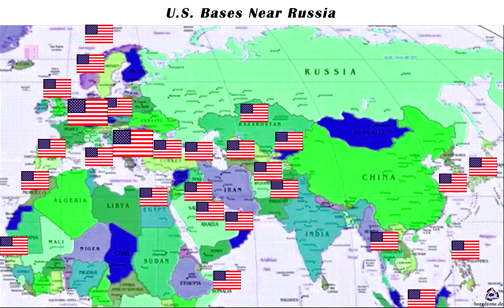
By Phil Wilayto Jul 23, 2022, ack in 1949, the United States, Canada and 10 Western European countries formed a military alliance called the North Atlantic Treaty organization, or NATO. Washington had decided that the Soviet Union, its wartime ally — the one that had broken the back of the Nazi war machine — now was its peacetime enemy.
By 1990, the Soviet Union and most of its socialist allies were collapsing, the result of internal contradictions and outside pressures. The U.S. was promoting the reunification of Germany — a move opposed by Soviet leader Mikhail Gorbachev, who still remembered how his country had lost 20 million people to the Nazi invasion, and was not real excited about the prospect of a revitalized Germany.
So U.S. Secretary of State James Baker offered a deal: If Gorbachev agreed to a united Germany, NATO — which, by that time, had grown from its original 12 members to 16 — would promise not to advance one inch eastward. Gorbachev agreed.
Today, each of the 14 new NATO member countries has been to the east. Of the seven countries bordering Russia’s western flank, Estonia, Latvia and Norway already are NATO members. Finland, Georgia and Ukraine have asked to join.
Once that process is completed, Russia’s only western border ally would be Belarus. Every other bordering country would be committed by Article 5 of the NATO Charter to come to each other’s defense in the event of a military confrontation.
And this should worry Russia, why?
In 1999, NATO carried out a 78-day air campaign in Yugoslavia that involved 400 aircraft, 5,000 personnel and the use of cancer-causing depleted uranium munitions……………………………………
Once that process is completed, Russia’s only western border ally would be Belarus. Every other bordering country would be committed by Article 5 of the NATO Charter to come to each other’s defense in the event of a military confrontation.
And this should worry Russia, why?
In 1999, NATO carried out a 78-day air campaign in Yugoslavia that involved 400 aircraft, 5,000 personnel and the use of cancer-causing depleted uranium munitions.
For NATO, combined military expenditures of all 30 member countries in 2021 was an estimated $1.2 trillion — more than 18 times that of Russia.
And even though Russia and NATO have rough parity when it comes to nuclear weapons, it’s just possible that the steady eastward expansion of a steadily growing, hostile NATO might have raised some legitimate security concerns in Russia.
Then, there’s the matter of U.S. support for the anti-Russian Ukrainian coup of 2014. This began as peaceful protests against then-President Viktor Yanukovych for his opposition to closer economic ties with Western Europe. It morphed into a violent uprising in which openly neo-Nazi organizations played a major role.
The U.S. support was not in dispute. Sen. John McCain, R-Ariz., had traveled to give encouraging speeches to the protesters. U.S. Assistant Secretary of State for European and Eurasian Affairs Victoria Nuland handed out pastries to the crowds. More importantly, she later openly bragged about how the U.S. had spent $5 billion promoting “pro-democracy” groups in the country.
The coup changed Ukraine in fundamental ways. The new government banned the use of the Russian language for official business, even though 17% of the population was ethnic Russian and some 30% spoke Russian as a first language.
Statues honoring Ukrainian fascists like Stepan Bandera, who had collaborated with the Nazi occuaption, were erected while memorials to Soviet war heroes were taken down. The neo-Nazi organizations were free to roam the streets, attacking anyone opposed to the coup. Those acts of violence included the May 2014 Odessa Massacre, where dozens of people were murdered in the Black Sea port city.
Meanwhile, Ukraine began to operate as a NATO member in everything but name, including carrying out joint military exercises right up to Russia’s border.
None of this is meant to endorse Russia’s war. But since the Biden administration already has given Ukraine $5.3 billion in military aid, it might be a good idea to view the war in a historical context.
And if we do that, “unprovoked” might not be the first word that comes to mind.
Phil Wilayto is editor of The Virginia Defender and coordinator of the Odessa Solidarity Campaign. Contact him at: virginiadefendernews@gmail.com
https://richmond.com/opinion/columnists/phil-wilayto-column-the-provocations-behind-the-unprovoked-war/article_ea0e7635-8bd4-5fa7-beef-56d0f2d149f6.html
The brutal reality of the US-UK ‘Special Relationship’, and the persecution of Julian Assange

In an exclusive article, the world’s leading public intellectual says the handover of global imperial power from Britain to the US is at the root of the UK’s continued persecution of Julian Assange.
Declassified UK, NOAM CHOMSKY, 21 JULY 2022,
The abject submission of British authorities to the Master in Washington in the case of journalist Julian Assange is painful to observe but – unfortunately – not difficult to understand.
The roots go back to the Second World War, when Britain handed the mantle of world domination over to its former colony. The US had long surpassed the UK as an economic power and had displaced it from “our little region over here,” as Secretary of War Henry Stimson described the Western hemisphere. But it had not yet become a truly global power.
At the time, British officials were well aware that the UK was becoming a “junior partner” to the US, now subject to its will, which was often exercised crudely.
Given their own ample experience with imperial arrogance, brutality and hypocrisy, British diplomats could easily read between the lines when their American counterparts protested that US global domination is “part of our obligation to the security of the world…what was good for us was good for the world”, as Abe Fortas, a leading figure in the New Deal administrations, put it.
The British Foreign Office, parsing this apparent altruistic concern, concluded that Washington was, in fact, guided by “the economic imperialism of American business interests” and was “attempting to elbow us out…under the cloak of a benevolent and avuncular internationalism”.
UK officials continued that their American counterparts believe “that the United States stands for something in the world – something of which the world has need, something which the world is going to like, something, in the final analysis, which the world is going to take, whether it likes it or not.” What true believers in the historical profession call “Wilsonian idealism”.
From then, Britain takes it, whether it likes it or not. Things could have gone a different way at various points in modern history, recently if Jeremy Corbyn hadn’t been destroyed by a vicious media campaign. But today’s British authorities just take the orders and Julian Assange is one of the victims.
Intricate handover
While Britain had become the “junior partner” by 1945, the handover process had played out in an extended and intricate way.
One of the reasons why the now-famous Second Amendment of the US Constitution called for “a well regulated militia” was fear that “the Brits are coming”. The first foreign policy goal of the new Republic, apart from cleansing what became the national territory, was to take Cuba.
The British Navy was in the way. But, as the great grand strategist John Quincy Adams explained, over time British power would decline while that of the US would increase and Cuba would then fall into US hands by the laws of “political gravitation”.
This did happen in 1898 when the US intervened to prevent Cuba’s liberation from Spain and turn it into a virtual colony. This is called “the liberation of Cuba” in preferred doctrine…………………………………………..
The vast gap between law and practice is illustrated by the Assange case. Here Britain, adopting its usual role of “junior partner,” has been savagely supporting the effort of the inheritors of the Framers to infringe radically on freedom of the press. The media response has ranged from tepid to cowardly.
The precedent is all too clear. If the states that claim, with some justice, to be in the forefront of defence of freedom are granted licence to crush it when it interferes with state power and violence, the limited freedoms that have been won by popular struggle suffer a severe blow everywhere. https://declassifieduk.org/the-brutal-reality-of-the-us-uk-special-relationship/—
Ukraine Defense Minister Offers Ukraine as a ‘Testing Ground’ for NATO Weapons
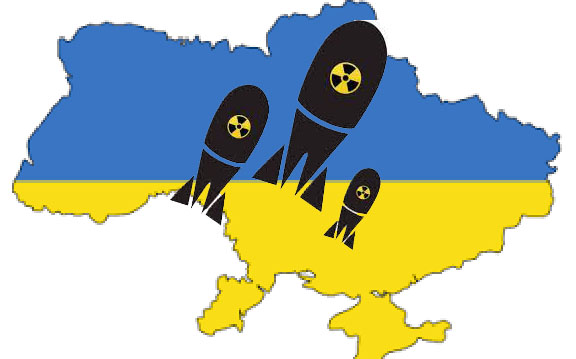
Oleksii Reznikov said Ukraine is ‘inviting arms manufacturers to test the new products here’ https://news.antiwar.com/2022/07/19/ukraine-defense-minister-offers-ukraine-as-a-testing-ground-for-nato-weapons/ by Dave DeCamp
Ukrainian Defense Minister Oleksii Reznikov on Tuesday openly offered Ukraine as a venue to test NATO weapons against Russia in an online conversation with the director of the Atlantic Council’s Eurasia Center.
Reznikov said that Ukraine “is essentially a testing ground” for the advanced weaponry the US and its allies are pouring into the country. “Many weapons are now getting tested in the field in the real conditions of the battle against the Russian Army, which has plenty of modern systems of its own,” he said.
The Ukrainian military chief made the offer in a fresh pitch for more Western arms. “We are interested in testing modern systems in the fight against the enemy and we are inviting arms manufacturers to test the new products here,” he said.
One weapons system that is getting its first use on the battlefield in Ukraine is the Polish Krab artillery system that was provided by Warsaw. “So, I think for our partners in Poland, in the United States, France, or Germany, it’s a good chance to test the equipment. So, give us the tools. We will finish the job and you will have all the new information,” Reznikov said.
The Western response to the war in Ukraine has been a boon for US arms makers, who are making money sending weapons into the war zone, replenishing NATO stockpiles, and selling arms to European countries that have decided to boost military spending.
Kyiv has been asking for more advanced arms than it has been sending, including F-15 and F-16 fighter jets. Ukrainian pilots would need to be trained to fly the US aircraft, and the House version of the National Defense Authorization Act includes $100 million to go towards that training, although the massive spending bill has not yet been finalized.
NATO: The Most Dangerous Military Alliance on the Planet
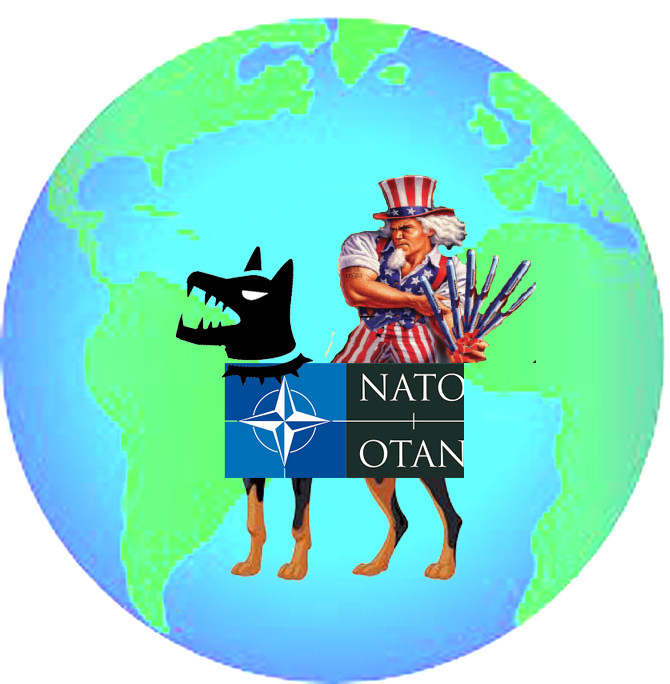
NATO is determined to stay in business. Its business is war. That meant expanding its war machine far beyond the border of Europe and engaging in ceaseless antagonism toward China and Russia.
NATO sees the future, as detailed in its “NATO 2030: Unified for a New Era,” as a battle for hegemony with rival states, especially China, and calls for the preparation of prolonged global conflict.
the U.S. and NATO seem determined to funnel billions of dollars of weapons into the conflict for months if not years — the more the unthinkable becomes thinkable.
The massive expansion of NATO, not only in Eastern and Central Europe but the Middle East, Latin America, Africa and Asia, presages endless war and a potential nuclear holocaust.
By Chris Hedges, July 16, 2022: Information Clearing House — The North Atlantic Treaty Organization (NATO), and the arms industry that depends on it for billions in profits, has become the most aggressive and dangerous military alliance on the planet. Created in 1949 to thwart Soviet expansion into Eastern and Central Europe, it has evolved into a global war machine in Europe, the Middle East, Latin America, Africa and Asia.
NATO expanded its footprint, violating promises to Moscow, once the Cold War ended, to incorporate 14 countries in Eastern and Central Europe into the alliance. It will soon add Finland and Sweden. It bombed Bosnia, Serbia and Kosovo. It launched wars in Afghanistan, Iraq, Syria and Libya, resulting in close to a million deaths and some 38 million people driven from their homes. It is building a military footprint in Africa and Asia. It invited Australia, Japan, New Zealand and South Korea, the so-called “Asia Pacific Four,” to its recent summit in Madrid at the end of June. It has expanded its reach into the Southern Hemisphere, signing a military training partnership agreement with Colombia, in December 2021. It has backed Turkey, with NATO’s second largest military, which has illegally invaded and occupied parts of Syria as well as Iraq. Turkish-backed militias are engaged in the ethnic cleansing of Syrian Kurds and other inhabitants of north and east Syria. The Turkish military has been accused of war crimes – including multiple airstrikes against a refugee camp and chemical weapons use – in northern Iraq. In exchange for President Recep Tayyip Erdoğan’s permission for Finland and Sweden to join the alliance, the two Nordic countries have agreed to expand their domestic terror laws making it easier to crack down on Kurdish and other activists, lift their restrictions on selling arms to Turkey and deny support to the Kurdish-led movement for democratic autonomy in Syria.
It is quite a record for a military alliance that with the collapse of the Soviet Union was rendered obsolete and should have been dismantled. NATO and the militarists had no intention of embracing the “peace dividend,” fostering a world based on diplomacy, a respect of spheres of influence and mutual cooperation. It was determined to stay in business. Its business is war. That meant expanding its war machine far beyond the border of Europe and engaging in ceaseless antagonism toward China and Russia.
NATO sees the future, as detailed in its “NATO 2030: Unified for a New Era,” as a battle for hegemony with rival states, especially China, and calls for the preparation of prolonged global conflict…………………………………….
NATO has provided more than $8 billion in military aid to Ukraine, while the US has committed nearly $54 billion in military and humanitarian assistance to the country.
China, however, is the main course. Unable to compete economically, the U.S. and NATO have turned to the blunt instrument of war to cripple their global competitor.
The provocation of China replicates the NATO baiting of Russia………………………..
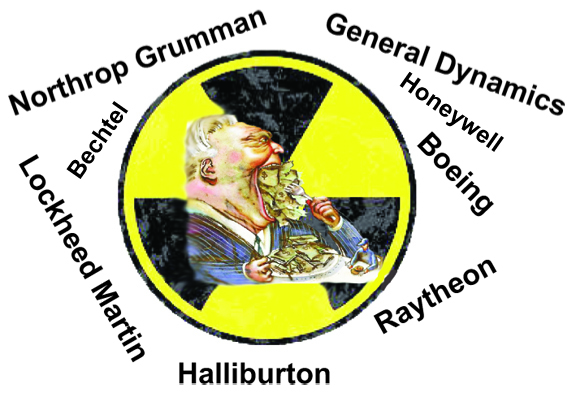
The conflict in Ukraine has been a bonanza for the arms industry, which, given the humiliating withdrawal from Afghanistan, needed a new conflict. Lockheed Martin’s stock prices are up 12 percent. Northrop Grumman is up 20 percent. The war is being used by NATO to increase its military presence in Eastern and Central Europe. The U.S. is building a permanent military base in Poland. The 40,000-strong NATO reaction force is being expanded to 300,000 troops. Billions of dollars in weapons are pouring into the region………………….
The war makers are frighteningly cavalier about the threat of nuclear war……………………………
The Biden administration has formed a Tiger Team of national security officials to run war games on what to do if Russia uses a nuclear weapon, according to The New York Times. The threat of nuclear war is minimized with discussions of “tactical nuclear weapons,” as if less powerful nuclear explosions are somehow more acceptable and won’t lead to the use of bigger bombs.
At no time, including the Cuban missile crisis, have we stood closer to the precipice of nuclear war. ………..
The longer the war in Ukraine continues — and the U.S. and NATO seem determined to funnel billions of dollars of weapons into the conflict for months if not years — the more the unthinkable becomes thinkable. Flirting with Armageddon to profit the arms industry and carry out the futile quest to reclaim U.S. global hegemony is at best extremely reckless and at worst genocidal. http://www.informationclearinghouse.info/57120.htm
Global action urged to block AUKUS plan on transfer of nuclear materials

The submarine purchase, if realized, “will be the first time” after the Nuclear Non-Proliferation Treaty went into force in 1970 that nuclear weapon states transfer tons of weapons-grade nuclear materials to a non-nuclear-weapon state
The plan is high on the agenda of the 10th Review Conference of the Parties to the Treaty on the Non-Proliferation of Nuclear Weapons, which is scheduled to open in New York on Aug 1
http://global.chinadaily.com.cn/a/202207/21/WS62d898fda310fd2b29e6d83a.html By ZHANG YUNBI | CHINA DAILY | Updated: 2022-07-21,
A report written by leading Chinese nuclear security researchers urged the global community to use an upcoming global conference on nuclear nonproliferation to deter the collaboration of the United States and the United Kingdom to transfer weapons-grade nuclear materials through nuclear-powered submarines to Australia.
“The weapons-grade nuclear materials to be transferred to Australia by the two countries would be sufficient to build as many as 64 to 80 nuclear weapons,” said Zhao Xuelin, a leading engineer at the China Institute of Nuclear Industry Strategy.
Such a move would be in “serious violation” of the objectives and purpose of the nonproliferation treaty and would cause enormous harm, he said.
“Washington has been busy building up blocs and small circles like AUKUS to shore up its overwhelming advantage in military areas and secure its hegemony in the Asia-Pacific and the whole world,” said Liu Chong, director of the Institute of International Security of the China Institutes of Contemporary International Relations.
“Such moves have run counter to many countries’ need to seek common security. The trilateral bloc’s members seek their own security at the cost of the other countries, sabotaging global security,” he added.
Zhang Yan, president of the China Arms Control and Disarmament Association, noted that the AUKUS partnership is a new political and military alliance that serves the US’ “Indo-Pacific Strategy”, which aims to provoke regional confrontation and step up a geopolitical zero-sum game.
The submarine purchase, if realized, “will be the first time” after the Nuclear Non-Proliferation Treaty went into force in 1970 that nuclear weapon states transfer tons of weapons-grade nuclear materials to a non-nuclear-weapon state, Zhang said.
“The US, the UK and Australia should seriously respond to the concerns of the international community and earnestly fulfill their obligations under international law,” he added.
Pan Qilong, chairman of the China Institute of Nuclear Industry Strategy, said the AUKUS nuclear-powered submarine collaboration sets a dangerous example of illegal transfer of weapons-grade nuclear materials.
Such a “blatant act of nuclear proliferation” has triggered widespread concern and criticism from the international community, he added
The US, Britain and Australia should “stop taking double standards” and halt their collaboration on nuclear-powered submarines, said the research report issued on Wednesday in Beijing.
Two leading Chinese nuclear research agencies-the China Arms Control and Disarmament Association and the China Institute of Nuclear Industry Strategy-issued the report.
“The international community should take action to urge the AUKUS countries to revoke their wrong decision, and jointly safeguard the integrity, authority and effectiveness of the international nuclear nonproliferation regime,” the report said.
The research report is the first of its kind made by Chinese think tanks focused on the collaboration of the three nations, and it offers abundant evidence and data to prove how the AUKUS countries-Australia, the UK and the US-affect the international nuclear nonproliferation system and stir up the arms race, Foreign Ministry spokesman Wang Wenbin said on Wednesday.
The report is the latest proof that the international community’s concerns on AUKUS collaboration “are well-founded by facts”, he added.
Washington, London and Canberra built the AUKUS trilateral security partnership last year. That prompted anger within and outside the Asia-Pacific region as they announced a plan to allow Australia to purchase nuclear-powered submarines from the UK.
The plan is high on the agenda of the 10th Review Conference of the Parties to the Treaty on the Non-Proliferation of Nuclear Weapons, which is scheduled to open in New York on Aug 1.
The conference, a top-level global meeting that aims to prevent a nuclear arms race and checks on the status quo of nuclear materials around the world, has been delayed for two years due to the COVID-19 pandemic.
In Ukraine, a proxy war on the planet
As the Ukraine crisis causes global havoc, US officials won’t negotiate with Russia to end the fighting — and are even willing to “countenance” mounting hunger as a result.
Aaron Maté, Jul 17, 22
In 2015, one year after a US-backed coup ushered in a US-friendly, far-right-dominated government in Kiev, University of Chicago professor John Mearsheimer issued a stark warning. “The West is leading Ukraine down the primrose path,” he said. “And the end result is that Ukraine is going to get wrecked.”
Mearsheimer’s cause for concern was what he identified as a US-led campaign to convert Ukraine into a NATO proxy on Russia’s border. The events since have proved him to be both tragically prescient, and understated.
In using Ukraine to “fight Russia over there”, as Adam Schiff put it in January 2020, the US has not only sacrificed countless Ukrainian lives. Four months into Russia’s invasion, the Biden administration is signaling its willingness to sacrifice the rest of the planet, particularly the most vulnerable areas.
In an article headlined “Ukraine War Pushes Millions of the World’s Poorest Toward Starvation,” the Wall Street Journal summarizes the impact of the Ukraine war on global hunger:………………………..
By invading Ukraine rather than exhausting all diplomatic solutions, Russia bears obvious responsibility for the crisis. Ukraine’s grain exports, which feed multiple countries, have plummeted. Russia has denied blocking Ukrainian grain, instead faulting Kiev’s extensive mining of its Black Sea ports. Ukraine has refused to de-mine those ports on self-defense grounds, claiming that doing so could invite further Russian incursions. Turkey, which has been brokering talks between the two sides, has just announced a pending deal to break the impasse.
But even if the Turkey-backed deal is implemented, a major cause of the food crisis will remain.
By invading Ukraine rather than exhausting all diplomatic solutions, Russia bears obvious responsibility for the crisis. Ukraine’s grain exports, which feed multiple countries, have plummeted. Russia has denied blocking Ukrainian grain, instead faulting Kiev’s extensive mining of its Black Sea ports. Ukraine has refused to de-mine those ports on self-defense grounds, claiming that doing so could invite further Russian incursions. Turkey, which has been brokering talks between the two sides, has just announced a pending deal to break the impasse.
But even if the Turkey-backed deal is implemented, a major cause of the food crisis will remain. The US-led sanctions regime against Russia has blocked international payments for Russian goods and necessary export licenses, including food shipments……………………
Rather than seek a diplomatic solution in Ukraine that could end the war and its worldwide deprivations, the US has shunned talks with Russia and made clear that it is even willing to tolerate global starvation………….
Left unquestioned is why a group of officials in Washington have arrogated themselves the right to “countenance” a global recession and mounting hunger – including pushing millions toward famine — on behalf of the rest of the planet.
Because the Biden administration is willing to countenance hunger, Africa is now being pushed into what a recent New York Times article describes as a major “dilemma.” African countries who seek to accept Russian grain imports, the Times notes, “potentially face a hard choice between, on one hand, benefiting from possible war crimes and displeasing a powerful Western ally, and on the other, refusing cheap food at a time when wheat prices are soaring and hundreds of thousands of people are starving.”
Under policies set by Washington, it is apparently a “dilemma” for Africa to have to choose between feeding hundreds of thousands of people or risk “displeasing” its “powerful Western ally,” — which would presumably prefer that they starve. https://mate.substack.com/p/in-ukraine-a-proxy-war-on-the-planet
Documents show Australian Labor government supports Assange’s extradition to the US

as far as the Labor government is concerned, Assange’s extradition is a done deal.
the greatest mistake defenders of Assange could make would be to harbour illusions that Labor will act to free the WikiLeaks founder.
as far as the Labor government is concerned, Assange’s extradition is a done deal.
the greatest mistake defenders of Assange could make would be to harbour illusions that Labor will act to free the WikiLeaks founder.
https://www.wsws.org/en/articles/2022/07/18/rqbf-j18.html Oscar Grenfell @Oscar_Grenfell, 18 July 22,
Documents obtained by lawyer Kellie Tranter and published on the Declassified Australia website cast a damning light on the Australian Labor government’s role in facilitating the continued imprisonment of WikiLeaks publisher Julian Assange and his extradition to the US.
The material gives the lie to the claims of Labor supporters that the newly-elected government may be seeking to secure Assange’s freedom through backroom diplomacy, despite the refusal of Labor ministers to condemn the attempted US extradition and prosecution.
They show that Labor is willing to let Assange be sent to the US, despite doctors and his family warning that it would be a death sentence. A successful extradition would also set a sweeping precedent for attacks on journalists and political dissidents globally.
Assange faces 17 charges under the Espionage Act, and 175 years imprisonment, for publishing true information exposing massive US-led war crimes in Iraq and Afghanistan.
Tranter, a longstanding legal advisor to Assange, has for many years filed freedom of information requests aimed at acquiring official documents revealing the role of Australian governments in the persecution of Assange. Those released by Declassified Australia are the first she has published since the Labor government was installed after the May 21 federal election.
The two documents are redacted. What is present, however, gives a sufficient picture of Labor’s acquiescence to Assange’s extradition, and the cynical, duplicitous character of the ambiguous public statements its leading representatives have made.
The first are internal “talking points” prepared for Attorney-General Mark Dreyfus on June 2. It is entitled: “Julian Assange – International Transfer of Prisoners process – talking points and background.” Its heading indicates the central preoccupation of the document, which states:
“Prisoner transfers cannot be agreed between governments in advance of a person being a prisoner (after a criminal trial, conviction and sentencing) in a particular country, and require the consent of the prisoner;
“International prisoner transfers to Australia are initiated by an application from a prisoner after the prisoner has been convicted and sentenced;
“If surrendered, convicted and sentenced in the US, Assange could apply under the ITP scheme to serve his sentence in Australia;”
In other words, Assange is to be extradited to the US, where the former Trump administration and the CIA plotted to kidnap or assassinate him from London in 2017, before settling on a pseudo-legal criminal indictment. He would be hauled before a kangaroo court in the District of Virginia, with a jury stacked by the very same CIA officers and their relatives. The hearings would proceed in secret and Assange’s detention regime would be one of total isolation.
With this hanging over his head, the document suggests that perhaps Assange will feel compelled to plead guilty to the “crime” of journalism revealing the illegal killings of civilians, torture and other violations of international law.
Tranter notes that following a redacted section, the document continues: “However, the UK High Court’s judgment does note that the US has provided an assurance that they will consent to Mr Assange being transferred to Australia to serve any custodial sentence on him if he is convicted.”
The US “assurances” are not worth the paper they are written on. Their sole aim was to overcome an earlier British court ruling, which found that Assange’s extradition would be “oppressive” because of his deep on-going health issues and the horrific conditions in which he would be held in a US prison.
The assurances, accepted by a British High Court as bona fide last October, asserted that Assange’s conditions of detention would not be as bad as his lawyers claimed. But those very assurances made plain that the intelligence agencies, including the CIA, would have complete control over the circumstances of Assange’s imprisonment, which could be changed at any time.
The second, June 8 document, is a “ministerial submission,” entitled “Julian Assange – extradition request from the United States to the United Kingdom.” It recommends that Dreyfus “note” the situation confronting Assange, in the lead up to an announcement by British Home Secretary Priti Patel on whether she would approve extradition. Several weeks later, Patel gave her green light.
The submission to Dreyfus bluntly stated: “The UK Home Secretary is due to make a final decision on Mr Assange’s extradition to the US by 20 June. Mr Assange will have one final avenue of appeal with the leave of the High Court, otherwise he must be extradited within 28 days of the Secretary of State’s decision.”
And again: “If Mr Assange is extradited, convicted and sentenced in the US, he may apply for transfer to Australia under the International Transfer of Prisoner’s Scheme. This will require the consent of the US and Australian authorities.
“The UK High Court’s judgment notes that the US has provided an assurance that it will consent to Mr Assange being transferred to Australia to serve any custodial sentence imposed on him if he is convicted.”
Later on, the document stated: “‘If Mr Assange is convicted and sentenced to imprisonment in the US, it will be possible for him to apply under the ITP scheme to serve the remainder of his sentence in Australia. A transfer would also require the consent of the US, the Australian Government (through you as Attorney-General), and the relevant minister in the state into whose prison Mr Assange would be transferring.
“In making any such decision, the department would provide you with advice on factors such as the extent to which the transfer would assist the prisoner’s rehabilitation, sentence enforcement, community safety and any relevant humanitarian considerations, in addition to any conditions of transfer required by the US.’”
In other words, as far as the Labor government is concerned, Assange’s extradition is a done deal.
Also striking is the fact that the documents do not countenance the possibility that he would be found “not guilty” in a US court. The entire thrust of the two documents is that the extradition and successful prosecution have already been stitched up, in a conspiracy involving the British government, the UK courts, the American authorities and the Labor administration.
Once Assange were in the US, moreover, the documents acknowledge that any “prison transfer” would be dependent upon the acquiescence of the American government whose President, Joe Biden, has previously branded Assange as a “high-tech terrorist.” A prison transfer, even in the unlikely event that it occurred, would mean years more of Assange’s incarceration, in Britain, the US and then Australia.
The contempt of the government for Assange is summed up by the reference to “factors such as the extent to which the transfer would assist the prisoner’s rehabilitation.” Assange does not need to be rehabilitated. He is a heroic journalist who has done a major service to humanity. It is the war criminals he has exposed who need to be placed in an institution.
Obviously it is unknown what is contained in the redacted section. It may deal with the elephant in the room, which is excluded from the rest of the documents. Assange’s doctors, lawyers and family have all testified that the WikiLeaks founder would take his life if he were to be extradited to the US. That judgment was effectively upheld by the British District Court, before it was overturned on the basis of the bogus US assurances.
All of the talk about “prison transfers” and the like is therefore window dressing for what would amount to a death sentence.
The documents reveal the sinister character of statements by Labor leaders, including Prime Minister Anthony Albanese, Foreign Minister Penny Wong and Dreyfus, that the Assange case has ‘gone on for too long,” and “needs to be brought to a close.” When asked by journalists, each has refused to elaborate on what this precisely means.
One thing that is entirely absent from the documents is any suggestion that Labor has so much as suggested the US government drop the charges against Assange and end the extradition proceedings. The continuation of the judicial frame-up and victimisation is taken as given.
The documents vindicate the warnings of the Socialist Equality Party that the greatest mistake defenders of Assange could make would be to harbour illusions that Labor will act to free the WikiLeaks founder.
The 2010-2013 Gillard Labor government initiated Australia’s collaboration with the persecution of Assange. Gillard slandered Assange by falsely claiming that he had broken Australian laws. Assange publicly accused Gillard and other senior ministers of secretly collaborating with the American state against him and other Australian citizens associated with WikiLeaks.
Those actions were bound up with the Gillard government’s full-throated support for the “pivot to Asia,” a vast military build-up aimed at preparing for an aggressive US-led war against China.
A decade on and the military preparations are far advanced. The new Labor government is functioning as an attack dog of the Biden administration throughout the region. Last week, during a visit to Washington, Defence Minister Richard Marles hailed the US-Australia alliance as “unbreakable,” as he outlined a further massive military-build up.
The documents confirm that the fight for Assange’s freedom requires a political struggle by the working class, the social constituency for democratic rights, against the Labor government and all of its defenders. A Labor government will only intervene diplomatically and legally to free Assange, if it is forced to do so by a mass movement from below.
Earthling: Was Obama right about Russia-Ukraine?
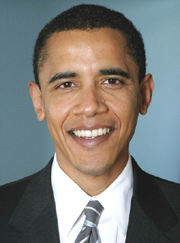
NonZero Newsletter, 18 July 22, If President Obama’s successors had stuck with his policy toward Ukraine, would there be a war there now?
That question is raised by a 2015 New York Times article that Glenn Greenwald unearthed this week. And, though the answer, as with other great historical what-ifs, is “We’ll never know for sure,” you could make a case for “Probably not.” In any event, pondering the question has benefits—such as reminding us how constricted discourse about war becomes once a war is underway.
The Times article was about Obama’s refusal, in the face of bipartisan pressure, to send arms to Ukraine. Obama, the Times reported, “has told aides and visitors that arming the Ukrainians would encourage the notion that they could actually defeat the far more powerful Russians, and so it would potentially draw a more forceful response from Moscow.”
An anonymous source paraphrased Obama as asking questions like, “Okay, what happens if we send in equipment – do we have to send in trainers?” And, “What if it ends up in the hands of thugs? What if Putin escalates?” In the absence of satisfactory answers, Obama confined aid to things like helmets and night vision goggles.
After he left office, Washington reversed course and sent lethal military aid to Ukraine—billions of dollars worth. And, to answer Obama’s questions: Yes, that turned out to involve sending trainers to Ukraine—as well as conducting NATO-Ukraine military exercises on Russia’s doorstep; and yes, Putin escalated. This doesn’t mean that the former caused the latter, but the sequence of events leaves that possibility quite open.
By early fall of 2021, some American observers were warning that the kinds of fears Obama expressed were being born out. Ted Galen Carpenter of the CATO institute noted that Biden had continued and in some ways accelerated the flow of weapons started under Trump, including weapons that “Russia considers especially destabilizing.” Galen said Ukraine had become “a NATO member in all but name” and called this policy “arrogant, unwise, and potentially very dangerous.”
In Putin’s famously intense speech on February 21, a few days before the invasion, the flow of western weapons to Ukraine, and Ukraine’s increasingly close relationship to NATO, were central themes. ………………………….
given the power wielded within the Ukrainian military by its famously zealous Azov battalion, it’s certainly possible that assertiveness on the part of American-equipped Azov officers was a factor.
In any event, these are all good questions. So it’s unfortunate that, since the invasion, they’ve become virtually off limits. If you suggest that things like arming Ukraine or encouraging Ukraine to join NATO raised the chances of war, you’re accused of “reciting Putin talking points” or “justifying” Putin’s invasion (even if you explicitly and repeatedly say that the invasion was wrong and unjustified)……………………….. https://nonzero.substack.com/p/earthling-was-obama-right-about-russia?utm_medium=email
Iran critical of President Biden telling Israelis that USA is ready to use force against Iran
Tehran Times, 18Juy 22, TEHRAN – Nasser Kanaani, the spokesman for the Iranian foreign ministry, has reacted to the U.S. president’s threat against Iran over American-Israeli allegations of Iran seeking nuclear bombs, saying that Iran has never sought to build such bombs.
That U.S. President Joe Biden threatens Iran over nuclear allegations while visiting an “outlaw regime” possessing nukes is an “irony of our times,” Kanaani said on Twitter.
“Irony of our times: just on the anniv. of 1st US nuke test & after visiting an outlaw regime that possess clandestine nukes, Mr. Biden stresses that he would not ‘allow’ Iran to build bombs,” he said.
The spokesman considered the U.S. commitment not to allow Iran develop nuclear weapons a “sales pitch” aimed at charming Israel. “Sales pitch to charm the Israeli apartheid regime by bombs that Iran has never sought,” he said.
During his visit to Israel, U.S. President Joe Biden issued threats against Iran and spoke in such a way as to signal Washington’s readiness to use force against Iran.
In Jerusalem, President Biden signed a document called “The Jerusalem U.S.-Israel Strategic Partnership Joint Declaration,” which makes two references to Iran in the context of the U.S.’s commitment to preserving Israel’s security.
The Declaration accused Iran of pursuing nuclear weapons and highlighted a U.S. commitment to “use all elements of its national power to ensure” that Iran does not acquire nuclear weapons.
Biden continued to make allegations during his visit to Saudi Arabia.
The spokesman touched upon the past record of the United States as the first country to have used A-bombs and pointed to its relentless interference in the internal affairs of the regional countries, military aggression and occupation, large sales of weapons and promotion of militarism in the region.
“Once again by resorting to the failed policy of promoting Iranophobia, the United States seeks to create tensions and crisis in the region,” he noted, according to an Iranian foreign ministry statement.
The spokesman further underscored several decades of Washington’s blind and unflinching support for the usurper Israeli regime.
“Indubitably, the U.S. government is the key contributor to the ongoing occupation of the Palestinian land and holy Qods, the regime’s day-to-day crimes against Palestinians and apartheid and systematic violation of human rights with regards to the oppressed and resistant Palestinian nation,” he explained…………………………………. https://www.tehrantimes.com/news/474778/Iran-has-never-sought-nuclear-bombs-spokesman
1 This Month



26 September – International Day for the Total Elimination of Nuclear Weapons


PLEASE OPPOSE HR 8255 AND S.3639 – bills would accelerate satellite deployment, with no environmental review or safeguards – https://ncstd5li.quorum.us/campaign/169331/
To see nuclear-related stories in greater depth and intensity – go to https://nuclearinformation.wordpress.com
-
Archives
- September 2026 (257)
- August 2026 (330)
- July 2026 (355)
- June 2026 (287)
- May 2026 (306)
- April 2026 (356)
- March 2026 (251)
- February 2026 (267)
- January 2026 (308)
- December 2025 (358)
- November 2025 (359)
- October 2025 (375)
-
Categories
- 1
- 1 NUCLEAR ISSUES
- business and costs
- climate change
- culture and arts
- ENERGY
- environment
- health
- history
- indigenous issues
- Legal
- marketing of nuclear
- media
- opposition to nuclear
- PERSONAL STORIES
- politics
- politics international
- Religion and ethics
- safety
- secrets,lies and civil liberties
- spinbuster
- technology
- Uranium
- wastes
- weapons and war
- Women
- 2 WORLD
- ACTION
- AFRICA
- Atrocities
- AUSTRALIA
- Christina's notes
- Christina's themes
- culture and arts
- Events
- Fuk 2022
- Fuk 2023
- Fukushima 2017
- Fukushima 2018
- fukushima 2019
- Fukushima 2020
- Fukushima 2021
- general
- global warming
- Humour (God we need it)
- Nuclear
- RARE EARTHS
- Reference
- resources – print
- Resources -audiovicual
- Weekly Newsletter
- World
- World Nuclear
- YouTube
-
RSS
Entries RSS
Comments RSS
 nuclear-news