Biden proved that Israel is a US proxy in the Middle East
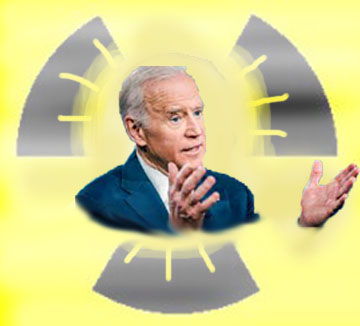
Biden went on to stress that the US needs Israel to stand beside it in its fight in the Middle East, which America is returning to in order to prevent the Russian and Chinese influence.
Biden’s words have proven that Israel is an American proxy in the Middle East.
Motasem A Dalloul, July 15, 2022
American President Joe Biden landed in Israel on Wednesday and started his four-day tour of the Middle East, the first since he took office. Moments after landing in Tel Aviv, he delivered a speech which outlined his intentions during this controversial tour.
Biden has visited Israel several times before becoming president, with his first trip being in 1973 when he was a senator. He has repeatedly expressed his absolute support for Israel, regardless of its daily abuses of Palestinians and continuous violations against their legitimate rights.
In his speech on Wednesday, he repeated his support for the occupation state, highlighting that he is a Zionist Christian; emphasising that supporters of Israel don’t need to be Jews.
He also told the journalist: “As president, I’m proud to say that our relationship with the State of Israel is deeper and stronger, in my view, than it’s ever been. And with this visit, we are strengthening our connections even further. We’ve reaffirmed the unshakable commitment of the United States to Israel’s security, including partnering with Israel on the most cutting-edge defence systems in the world.”
Biden stressed that “generation after generation” the “connection grows,” adding: “We invest in each other. We dream together. We’re part of what has always been the objective we both have.” Thus highlighting that the two states have been working to achieve shared objectives and address global challenges.
The US president failed, once again, to mention Israeli violations and aggression against Palestinians and other countries in the region. “We’ll continue to advance Israel’s integration into the region; expand emerging forums and engagement,” he said.
He mentioned the two-state solution, which remains, in his view, “the best way to ensure the future of equal measure of freedom, prosperity and democracy for Israelis and Palestinians alike.” This, while Israeli occupation forces confiscated large swathes of Palestinian land slated for the potential Palestinian state just a few miles away.
Biden stated that Israel is united with the US, stressing that they have “shared values” and a “shared vision”. While making efforts to extend the US’ domination over the world, Biden wished America and Israel could “continue to grow and prosper together for the benefit of the entire world.”
The following day, Biden met with Israel’s caretaker Prime Minister Yair Lapid in Jerusalem, where Israel has been working to evict Palestinians and force them from their homes. There they signed “The Jerusalem US-Israel Strategic Partnership Joint Declaration” in which the US pledged to protect Israel and meet its security demands. “The United States and Israel reaffirm the unbreakable bonds between our two countries and the enduring commitment of the United States to Israel’s security,” the declaration stipulated.
Ignoring Israel’s abuses of human rights and violations of international law, it adds that the US and Israel share “unwavering commitment to democracy and the rule of law” in order to “repair the world.”
The declaration reiterated the US “commitment to Israel’s security, and especially to the maintenance of its qualitative military edge.” As part of the declaration, the US reiterated “its steadfast commitment to preserve and strengthen Israel’s capability to deter its enemies and to defend itself by itself against any threat or combination of threats.”
Touching on the alleged Iranian threat, it said the US is committed to “never allow Iran to acquire a nuclear weapon, and that it is prepared to use all elements of its national power to ensure that outcome.” The declaration also stipulated that the US will continue to help Israel in its attack on the non-violent grass roots Palestinian Boycott, Divestment and Sanctions (BDS) campaign, calling it an act of “self-defence” to do so.
“The United States and Israel affirm that they will continue to work together to combat all efforts to boycott or de-legitimise Israel, to deny its right to self-defence,” the declaration stated, stressing that “they firmly reject the BDS campaign.”
Biden went on to stress that the US needs Israel to stand beside it in its fight in the Middle East, which America is returning to in order to prevent the Russian and Chinese influence.
As part of this pledge, the US is working to integrate the occupation state in the Arab world, Biden said, adding that the US will not allow any of the region’s countries to have nuclear weapons or arms more qualitative than those in Israel’s possession in order to give Tel Aviv the military edge.
Biden’s words have proven that Israel is an American proxy in the Middle East.
US, Israel sign joint anti-Iran nuclear declaration – US will use “all elements of national power”
Aljazeera, 14 July 22, US President Biden and Israeli Prime Minister Lapid sign joint declaration during meeting in Jerusalem.
United States President Joe Biden and Israeli Prime Minister Yair Lapid have reiterated their anti-Iran positions in a joint declaration committing to preventing Tehran from acquiring nuclear weapons.
The two leaders signed the statement earlier after holding a one-on-one meeting on Thursday morning in West Jerusalem on the second day of Biden’s four-day Middle East tour, followed by a virtual summit with the leaders of India and the United Arab Emirates.
The statement says that the US will use “all elements of national power” available to it to deny Iran the ability to arm itself with nuclear weapons.
The joint declaration also includes a pledge by Washington to continue US military aid to Israel.
A record 10-year $38bn aid package was signed in 2016 under the administration of former US President Barack Obama when Biden was vice president.
Speaking at a news conference following the signing, both Biden and Lapid spoke of their support for the US-Israeli relationship, and the perceived threat from Iran.
“The only way to stop a nuclear Iran is if Iran knows the free world will use force,” Lapid said………………………………………………. https://www.aljazeera.com/news/2022/7/14/us-israel-to-commit-to-stopping-iran-nuclear-ambitions
Noam Chomsky: Biden’s Middle East Trip Contains Echoes of Trump’s Policies
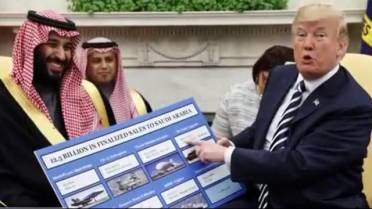
C.J. Polychroniou, Truthout,15 July 22, After 18 months in office, President Joe Biden decided to pay a visit to the Middle East region. Oil is most likely what is dragging him back to the Middle East, and why for months now he had been warming up to Saudi Arabia, despite having said as a presidential candidate that he would make the Saudis “pay the price, and make them in fact the pariah that they are,” while saying that there was “very little social redeeming value in the present government in Saudi Arabia.”
As Noam Chomsky notes in this exclusive interview for Truthout, Biden is carrying on a U.S. tradition: Relations with Saudi Arabia “have always proceeded amicably, undisturbed by its horrifying record of human rights abuses, which persists.”
Security also likely figures in the equation of Biden’s trip, particularly with regard to Israel. He will also visit the West Bank and meet with Palestinan leaders, but it’s hard to say what he hopes to accomplish there. As Chomsky points out, “Palestinian hopes lie elsewhere.”…………………………………………………….more https://truthout.org/articles/noam-chomsky-bidens-middle-east-trip-contains-echoes-of-trumps-policies/?eType=EmailBlastContent&eId=d682ca02-74e2-4ef3-a856-28d3b4293907
Former National Security Advisor John Bolton boasts openly about USA government overturning foreign governments
The Empire Is Showing More And More Of Its True Face
Caitlin Johnstone 14 July 22
Genocide walrus John Bolton outright admitted to planning foreign coups with the US government in conversation with CNN’s Jake Tapper on Wednesday. That’s coups, plural.
While arguing that the Capitol riot on January 6th of last year was not an attempted coup but rather just Trump stumbling around trying to look after his own interests, Bolton hastened to pull authority on the matter when Tapper suggested that he might not be correct about how coups work.
“I disagree with that,” Bolton said. “As somebody who has helped plan coups d’etat — not here, but, you know, other places — it takes a lot of work, and that’s not what [Trump] did.”
Places. Plural.
Tapper just let Bolton’s remark slide like he didn’t just admit to something extraordinarily fiendish, but did eventually follow up with a request that the former National Security Advisor elaborate.
“I do want to ask a follow up,” Tapper said. “When we were talking about what is capable, or what you need to do to be able to plan a coup, and you cited your expertise having planned coups.”
“I’m not going to get into the specifics,” replied Bolton with a chuckle.
“Successful coups?” Tapper asked.
“Well, I wrote about Venezuela in the book,” Bolton answered. “And it turned out not to be successful – not that we had all that much to do with it, but I saw what it took for an opposition to try and overturn an illegally elected president, and they failed. The notion that Donald Trump was half as competent as the Venezuelan opposition is laughable.”
“I feel like there’s other stuff you’re not telling me, though,” Tapper responded.
“I’m sure there is,” Bolton said, grinning like he just finished boiling a puppy.
Tapper pursued the matter no further, because he is a propagandist first and a journalist second, and he would be acutely aware that Bolton was saying things that you are not supposed to admit to on television.
Bolton’s sole admission to coup plotting runs counter to his comments about the US government’s failed attempt to oust President Nicolas Maduro while he was facilitating that bizarre operation under the Trump administration, telling reporters in 2019 that the empire’s Venezuela shenanigans were “clearly not a coup.”………………….. https://caitlinjohnstone.substack.com/p/the-empire-is-showing-more-and-more—
The Nuclear Ban Treaty Had a Conference. Now it Has a Plan.
https://allthingsnuclear.org/jknox/the-nuclear-ban-treaty-had-a-conference-now-it-has-a-plan/ Jennifer Knox July 13, 2022 The Treaty on the Prohibition of Nuclear Weapons (TPNW) entered into force in early 2021, for the first time defining nuclear weapons as illegitimate tools of war under international law. In Vienna from June 21-23, states parties gathered for the first time alongside other state observers, civil society groups, and survivors of nuclear use, testing, and development to define concrete steps towards implementing the obligations of the treaty. At its conclusion, states parties adopted the Vienna Declaration and 50-point Action Plan.
The Vienna Declaration
The Vienna Declaration is a forceful statement against nuclear weapons. It reaffirms the treaty’s goal of a world without nuclear weapons and asserts “that the risk of a nuclear weapon detonation by accident, miscalculation or design concerns the security of all humanity.”
The Declaration also addresses the growing risks of nuclear war. Members were divided on whether to explicitly condemn Russia’s invasion of Ukraine and escalating threats of nuclear use; many participating states issued statements condemning Russian aggression, but others did not. Ultimately, while the Declaration acknowledged an environment of “increasingly strident nuclear rhetoric,” it did not single out Russia. Instead, the Declaration “[condemns] unequivocally any and all nuclear threats, whether they be explicit or implicit and irrespective of the circumstances.”
While Russia’s recent nuclear threats are particularly egregious and irresponsible, they are unfortunately not unique. Other nuclear powers engage in similar rhetoric, using the threat of nuclear use not for their own defense but as a coercive tool of policy. Former US President Donald Trump repeatedly issued such threats during his administration. National populist leaders like Vladimir Putin and Donald Trump are more likely to resort to dangerous rhetoric and take risks in pursuit of their goals. As national populism continues to rise in nuclear-armed states, norms of nuclear restraint will continue to erode.
However, nuclear threats do not only come from national populists through speeches or tweets. The threat of nuclear use is fundamental to the security of every nuclear-armed state and any other state that relies on nuclear deterrence. Nuclear deterrence is the threat of nuclear use, issued in the hope that the risk of catastrophic humanitarian disaster will disincentivize conflict. Helplessness, uncertainty and terror are foundational to theories of nuclear deterrence – this is how the system works by design.
The Vienna Declaration denounces not a single bad actor but the very practice of nuclear deterrence, a system which both permits and perpetuates Russia’s nuclear coercion. While nuclear powers and their allies recommit indefinitely to global terror through nuclear deterrence, the Vienna Declaration is a timely reminder that most states have explicitly rejected the threat of mass destruction as a form of security. Nine states possess nuclear weapons. Another 33 states have or will soon have collective security relationships with nuclear powers. They include:
- 6 of which host US nuclear weapons)
- Soon-to-be NATO members Finland and Sweden
- Australia, Japan, and South Korea, which have military alliances with the United States
- Belarus, which may soon host Russian nuclear weapons
That leaves 151 states that do not rely on nuclear weapons in any form for their security. All but one of those states (South Sudan) have committed to never develop or possess nuclear weapons as members of the Nuclear Non-Proliferation Treaty (NPT). 114 of those states are members of regional nuclear-weapons-free zones. 66 (so far) have signed and ratified the TPNW – for many, joining the TPNW is the third time they have formally affirmed their commitment to abstain from nuclear weapons.
Nuclear weapons are not inevitable or irreplaceable. Most governments and most people in the world have chosen not to seek their own security through the threat of mass destruction.
The Action Plan
State parties also adopted a 50-point Action Plan. This document contains concrete actions for members of the TPNW to advance nuclear disarmament and fulfill their obligations under the treaty. Many of these provisions relate to the treaty’s ‘positive obligations:’ measures to reduce both the past, present, and future harm caused by nuclear weapons. The treaty obliges its members to provide victim assistance and environmental remediation for frontline communities impacted by nuclear use, testing, and development.
The humanitarian impacts of nuclear weapons are widespread, affecting people all over the world. The nuclear age began with the destruction of the cities of Hiroshima and Nagasaki, creating hundreds of thousands of casualties and leaving behind generations affected by the consequences. In the following 70 years, over 2,000 nuclear tests were conducted throughout North America, Eurasia, Africa, and the Pacific. Further environmental contamination resulted from mining, development, production, waste storage, and disposal activities related to nuclear weapons. Indigenous communities and people of color have disproportionately born the health and environmental consequences of nuclear weapons, and, in most cases, those harms have not been addressed. In the Action Plan, states parties committed to
- consult closely with affected communities and international organizations to develop sustainable, effective, and detailed plans for victim assistance and environmental remediation.
- appoint government officials and adopt national laws and policies required to carry out that work.
- establish voluntary reporting on national initiatives and progress.
- provide technical, material, and financial assistance to states in need of additional support that have been affected by nuclear weapons.
- develop guidelines for how to address age- and gender-specific nuclear harm.
The Action Plan also emphasizes the role of scientific and technical expertise in creating a shared understanding of the humanitarian impact of nuclear weapons and guiding implementation of the treaty. The Action Plan calls for states parties to
- establish
The Action Plan also emphasizes the role of scientific and technical expertise in creating a shared understanding of the humanitarian impact of nuclear weapons and guiding implementation of the treaty. The Action Plan calls for states parties to
- establish a Scientific Advisory Group to advise treaty members and aid in achieving the treaty’s goals.
- create a broad network of experts from relevant fields that are diverse in terms of geography and gender.
Beyond the immediate objectives of the Action Plan, this document is also meaningful as a sign of forward momentum on nuclear disarmament issues. It represents the first conclusive plan of work to result from multilateral disarmament efforts in over a decade. In the past, review conferences for the NPT have been seen as important opportunities to make progress on nuclear disarmament, a key pillar of the treaty. The 2010 NPT Review Conference produced an action plan for the first time, but it was never fully implemented. The 2015 Review Conference failed to produce a consensus document, in large part because of a lack of progress on the 2010 action plan. Prospects for a better outcome during the 2022 Review Conference this August are bleak. Beyond the immediate objectives of the Action Plan, this document is also meaningful as a sign of forward momentum on nuclear disarmament issues. It represents the first conclusive plan of work to result from multilateral disarmament efforts in over a decade. In the past, review conferences for the NPT have been seen as important opportunities to make progress on nuclear disarmament, a key pillar of the treaty. The 2010 NPT Review Conference produced an action plan for the first time, but it was never fully implemented. The 2015 Review Conference failed to produce a consensus document, in large part because of a lack of progress on the 2010 action plan. Prospects for a better outcome during the 2022 Review Conference this August are bleak.
Meanwhile, the Conference on Disarmament, established to be the primary forum for disarmament negotiations, has not produced an arms control agreement since the 1996 Comprehensive Nuclear Test Ban Treaty. As tensions between nuclear powers rise, there is little hope of a breakthrough in the foreseeable future.
The TPNW’s first meeting of states parties was not just a review of treaty progress but an international forum for states to work collaboratively on nuclear disarmament issues and to create a plan for moving forward. While states possessing nuclear weapons have boycotted the TPNW, several states that rely on nuclear deterrence through NATO engaged constructively with the conference as observers. Hopefully that meeting will only be the first among many such opportunities, and the action plan that resulted will be the first of many such action plans.
The states parties expressed in the Vienna Declaration that they “have no illusions about the challenges and obstacles that lie before us,” but that they will “move ahead with optimism and resolve.” They offer no false hope that the destination is easy or close, but at least one more pathway is open.
By classifying nuclear as ”green”, Europe benefit’s Putin’s Russia – a major supplier of nuclear fuel
By classifying gas and nuclear as “green” investments the EU has
indirectly handed Putin a pay check. More must be done, including sanctions
on uranium, to end his grip on Europe’s power supply.
At least a fifth of the uranium for Europe’s nuclear reactors comes from Russia
Tortoise 12th July 2022
https://www.tortoisemedia.com/2022/07/12/putins-other-nuclear-project/
NATO’S 2022 PLAN DECLARES SECOND COLD WAR ON RUSSIA AND CHINA
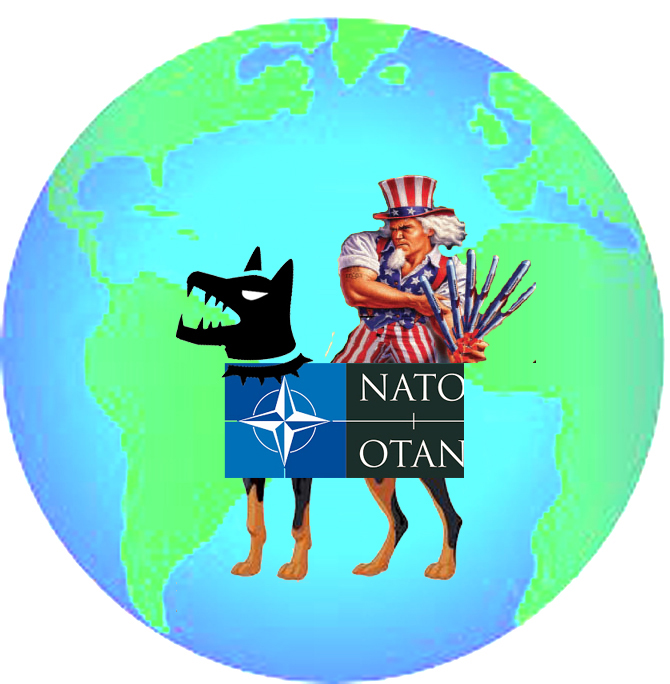
- Popular Resistance, By Ben Norton, Multipolarista., July 10, 20
NATO’s 2022 “Strategic Concept,” Its First New Plan Since 2010, Declares Russia A “Threat” And China “Systemic Challenge.”
It demonizes the Eurasian powers as “authoritarian actors” and “strategic competitors,” essentially declaring a second cold war to maintain Western hegemony.
The US-led NATO military alliance has published a historic new plan outlining its goals. The document, officially titled the 2022 “Strategic Concept,” is the first such blueprint NATO has released since 2010.
The 2022 Strategic Concept is essentially a call for a new cold war on both Russia and China.
In the document, NATO condemned Russia and China as “authoritarian actors” and “strategic competitors” that pose “systemic challenges.”
NATO referred to the Russian Federation specifically as “the most significant and direct threat.” It also claimed China “challenge[s] our interests, security and values” and “strives to subvert the rules-based international order.”
The plan made it clear that the US-led military cartel is very concerned about the growing Eurasian alliance between Beijing and Moscow.
“The deepening strategic partnership between the People’s Republic of China and the Russian Federation and their mutually reinforcing attempts to undercut the rules-based international order run counter to our values and interests,” NATO wrote.
The document euphemistically refers to this new cold war climate as an “environment of strategic competition.”
NATO’s Madrid Summit: New Cold War On Russia And China, Continued Expansion, More Military Spending
The 2022 Strategic Concept was adopted unanimously by the leaders of NATO member states in a summit in Madrid, Spain in late June……………………….
The Madrid summit showed how the US-led military cartel is expanding, and not just in Europe, but also in the Pacific region.
Japan, South Korea, Australia, and New Zealand – all of which are very far from the North Atlantic region – attended the NATO summit for the first time…………
After the Madrid summit, NATO boasted that it had agreed to “the biggest overhaul of Allied collective defence and deterrence since the Cold War.”
The US-led cartel announced more common funding, and said member states agreed to increase their national military spending to 2% or more of GDP……………….
Like the NATO conference, the G7 summit was clearly aimed at coordinating tactics in a new cold war to weaken Russia and China. At that meeting, the G7 pledged $600 billion in spending on public-private partnerships to challenge Beijing’s global Belt and Road Initiative.
NATO Portrays Second Cold War On Russia And China As Supposed Battle Between ‘Democracy’ And ‘Authoritarianism’
While dubbing Russia its top “threat” and China a “systemic challenge” and “strategic competitor,” NATO’s 2022 Strategic Concept portrays the second cold war that it is waging as a supposed battle between “democracy” and “authoritarianism.”………………………….
In addition to focusing on Russia and China, the Strategic Concept portrayed Iran, Syria, and North Korea as threats.
The document asserted that NATO exists to “safeguard our freedom and democracy” and is based on “shared democratic values,” in order to protect a “rules-based international order.”
Left completely unmentioned was that numerous authoritarian regimes are currently members of NATO, including Turkey, Hungary, and Poland.
Portugal’s former fascist dictatorship was likewise a founding member of NATO in 1949.
NATO’s insistence that it is supposedly dedicated to protecting democracy, and not US hegemony, is especially ironic considering that the Madrid summit prominently featured Turkey’s autocratic leader Recep Tayyip Erdogan.
Western officials’ constant refrain at the Madrid summit that NATO exists to defend democracy was similarly undermined by the fact that Sweden and Finland refused to hold popular referenda on membership, meaning their people had no voice in the process and no opportunity to vote on whether or not they think joining the US-led military cartel is a good idea.
NATO’s democratic window dressing was even more transparently contradicted by the opening of the summit on June 28, which featured a “special address” by Spain’s King Felipe VI.
“The long-standing global struggle between tyranny and democracy is as relevant as ever,” Spain’s unelected hereditary monarch declared, without a hint of irony………………………
In the plan, the US-led military cartel also emphasized its commitment to continue expanding.
“NATO’s enlargement has been a historic success,” it insisted, underlining, “We reaffirm our Open Door policy.”……………
The 2022 Strategic Concept described NATO as a “defensive alliance,” despite its offensive wars on Libya in 2011, Afghanistan from 2001 to 2021, and Yugoslavia in the 1990s.……
The US-led military cartel hinted it is ready for World War III if deemed necessary, underscoring that it is prepared for “high-intensity, multi-domain warfighting against nuclear-armed peer-competitors.”
The Strategic Concept emphasized its firm commitment to nuclear weapons, describing them as unnegotiable: “As long as nuclear weapons exist, NATO will remain a nuclear alliance.”
……………………………… The US-led military cartel claimed “NATO does not seek confrontation and poses no threat to the Russian Federation,” although the alliance has surrounded Moscow with hostile military bases and repeatedly expanded right up to its borders. https://popularresistance.org/natos-2022-plan-declares-second-cold-war-on-russia-and-china/
Europe divided over “greenwashing” gas and nuclear energy, but parliament ready to support the bill
For the European Parliament natural gas and nuclear power plants have been designated as climate-friendly investments. The European Commission released the proposal, formally called the EU taxonomy, in December as a list of economic activities that investors can label and market as green in the EU.
A motion to block the proposal received 278 votes in favor and 328 against, while 33 lawmakers abstained.
Unless 20 of the EU’s 27 member states oppose the proposal, it will be passed into law. The proposal was initially met with resistance among some EU member states, with one camp led by France strongly backing the green label for natural gas and nuclear energy, while Germany which has been phasing out its nuclear power plants — had opposed the plan.
Some environmental groups and EU lawmakers have also criticized the plan for “greenwashing” fossil fuel and nuclear energy.
Austria and Luxembourg have even pledged to sue the EU if the plan becomes law. Still, the proposal had the backing of the majority of the center-right European People’s Party, the European Parliament’s biggest lawmakers’ group.
Lawmakers of the centrist Renew Europe group were largely in favor of the proposal, while the Greens and Social Democrats mostly opposed it.
A total of 353 lawmakers — a majority of the Parliament’s 705 lawmakers — are needed to reject a plan for it to fail. The ongoing conflict over Russian gas supply to Europe has fueled opposition to the plan to label gas as environmentally friendly.
“It’s dirty politics and it’s an outrageous outcome to label gas and nuclear as green and keep more money flowing to Vladimir Putin’s war chest,” Greenpeace EU sustainable finance campaigner Ariadna Rodrigo said. “We will fight this in the courts,” she added.
Paul Tang, a Dutch EU lawmaker with the center-left Social Democrats, had criticized the plan as influenced by “the lobby from Gazprom and Rosneft,” both Russian state-owned energy companies.
Tang also slammed the move as “institutionalizing greenwashing.”
“It is now important to prevent this vote from setting a precedent for other countries to temper climate ambitions,” he wrote in a statement.
Bogdan Rzonca, a Polish member of the European Parliament (MEP) for the right-wing Law and Justice party (PiS), said less wealthy EU countries need private investments in gas and nuclear power to be able to move away from coal.
Gilles Boyer, a French MEP with the Renew group, said that meeting energy demand with renewable energy in the long-term “would be ideal, but it’s not possible right now.”
Czech Prime Minister Petr Fiala, whose country has just taken over the rotating EU presidency, said Wednesday’s vote was “excellent news” for Europe.
Nationalisation of French energy giant EDF means it is unlikely to spearhead future nuclear power projects in UK, according to top industry insider
By FRANCESCA WASHTELL, FINANCIAL MAIL ON SUNDAY,
The nationalisation of French energy giant EDF means it is unlikely to spearhead future nuclear power projects in the UK, according to a top industry insider.
The Hinkley Point C developer will instead focus investment on reactors in France, the source said.
French Prime Minister Elisabeth Borne announced last week that the state would buy the 16 per cent of shares in EDF it does not already own.
EDF, one of Britain’s big household energy suppliers, will continue work on Hinkley in Somerset, as well as Sizewell C in Suffolk, which is still being approved by the UK Government.
But the source said EDF would now shift its focus to France as it battles the energy crisis sweeping Europe, adding: ‘The odds of it putting money into another UK plant are incredibly small.
‘This has been a long time coming because being fully nationalised means it can put more money into French projects without having to worry about state aid.’ ……………………………… https://www.thisismoney.co.uk/money/markets/article-10998301/Nationalised-EDF-wont-build-new-nuclear-sites-UK.html
European parliamentarians vote nuclear and gas as ”green” – another step in the sinister lobbying process of the desperate nuclear industry.
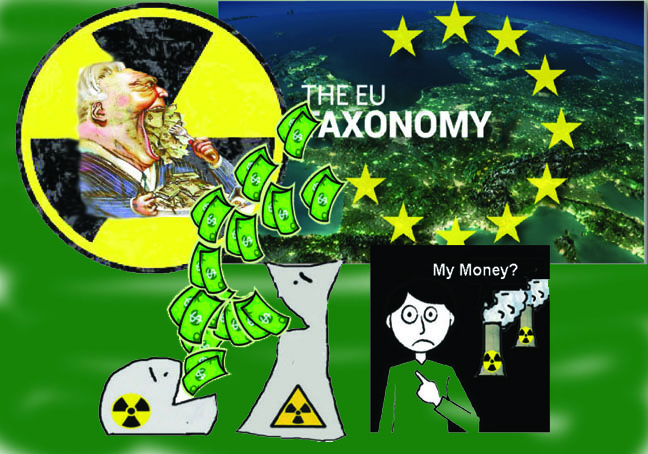
Réseau sortir du nucléaire. 7 July 22, It is a dark day for the environment and the climate. Meeting in plenary in Strasbourg, European parliamentarians validated by 328 votes against 278 the European Commission's proposal to include nuclear and gas in the green taxonomy. We strongly denounce the maneuvering lobbies and the major deleterious role played by France.

This vote marks the culmination of a sinister soap opera marked by unprecedented pressure from lobbies and pro-nuclear states. Bankrupt and ready for any maneuver to benefit from new money, the nuclear industry had laid siege to the European Commission and obtained the order of a report shamelessly minimizing the harmful effects caused by the atom.

Emmanuel Macron himself was famous for his duplicity, posing as a climate champion while pleading for the inclusion of fossil gas and allying himself with leaders who care little for human rights, such as Viktor Orban, provided that they support the atom. A few days before the vote, the Minister for Energy Transition, Agnès Pannier-Runacher, had again signed a pro-nuclear platform with ministers from other Member States far removed from ecological issues.

The European Parliament, which had initially come out against the inclusion of nuclear power and gas in this text, had the possibility of contesting the delegated act published at the beginning of 2022 by the European Commission, which classified these polluting energies among the technologies "of transition ". But while the "Environment" and "Economy and Finance" committees had refused this classification, the parliamentarians meeting in plenary seem to have finally yielded to the sirens of the lobbies. The elected French Macronists of “Renew” bear an overwhelming responsibility for this catastrophic decision.

To qualify nuclear and fossil gas as “transitional” energies is to make words lose all meaning and totally empty of its meaning a tool initially intended to fight against greenwashing. How can gas, a greenhouse gas emitter, fit into this category? Not to mention nuclear, which is dangerous, polluting even in regular operation, producing unmanageable waste, and too slow and too expensive to be a relevant tool in the face of the climate emergency! Any euro spent on the pursuit of nuclear power will be a wasted resource at the expense of the real solutions to climate change: sobriety, efficiency and renewable energies.
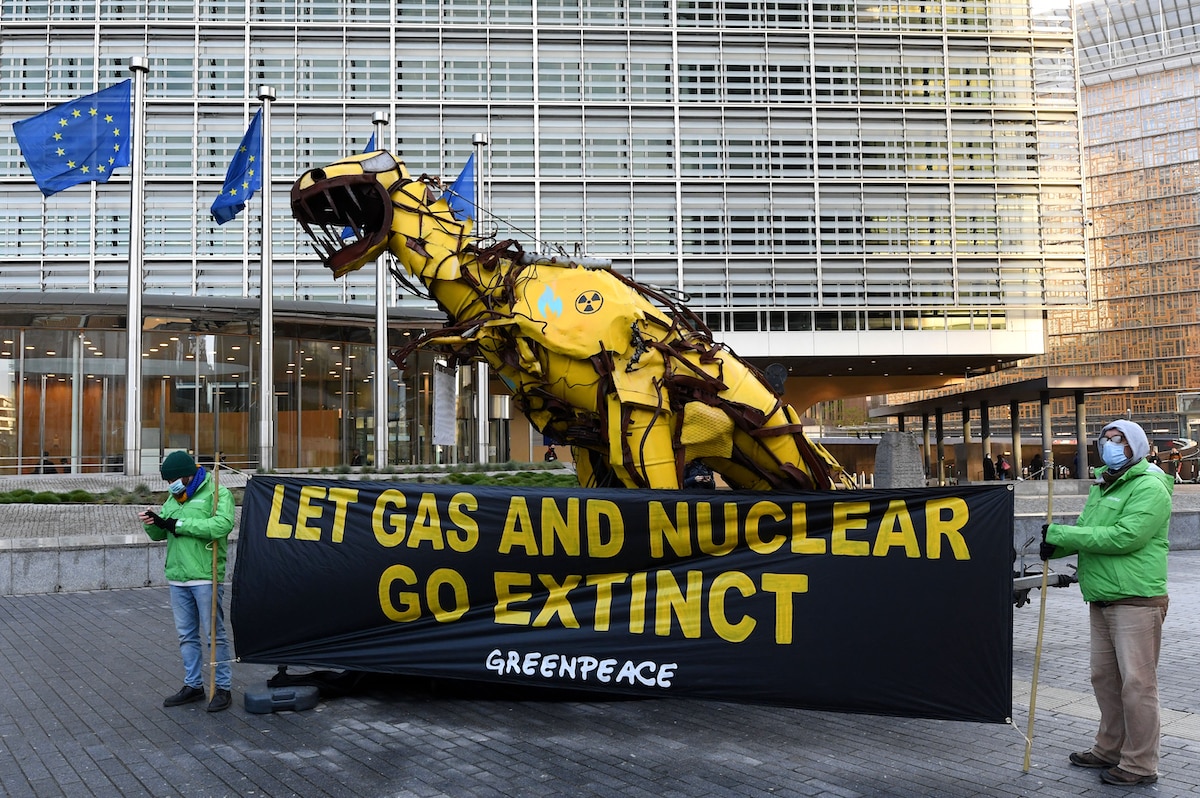
EU Votes to Label Gas and Nuclear Power Investments as ‘Green’
https://www.ecowatch.com/eu-gas-nuclear-investments-green.html— 6 July 22,
In a setback for the fight against climate change, 328 of 639 members of the European Parliament (MEPs) have voted in favor of plans to label investments in gas and nuclear power plants as “green,” reported Reuters. Unless 20 of the 27 European Union (EU) member states oppose the proposals adopted by the European Commission in the Complementary Delegated Act, they will pass it into law.
This means that some nuclear and gas projects would be added to the EU taxonomy of economic activities that are considered environmentally sustainable, with some conditions, The Guardian reported. Investors would then be able to label and market investments in the gas and nuclear projects as green, reported Reuters.
Experts said the vote sets a dangerous precedent for other countries, according to The Guardian. Ukraine, as well as climate activists, had appealed to parliament to reject the proposals, saying they would be beneficial to Russian president Vladimir Putin.
“This will delay a desperately needed real sustainable transition and deepen our dependency on Russian fuels,” said environmental and climate activist Greta Thunberg on Twitter.
The proposals allow investments in gas-powered projects to be designated as sustainable as long as “the same energy capacity cannot be generated with renewable sources” and there are plans to transition to renewable sources or gases that are considered “low-carbon,” The Guardian reported. Nuclear power can be classed as renewable if a project pledges to take care of its radioactive waste.
European Commissioner for Financial Stability, Financial Services and the Capital Markets Union Mairead McGuinness said the proposals adopted in the Complementary Delegated Act “ensure that private investments in gas and nuclear, needed for our energy transition, meet strict criteria,” as reported by The Guardian.
Some EU member states view gas — a fossil fuel that produces dangerous carbon dioxide emissions — as an interim substitute for coal during the transition to more sustainable power sources, Reuters reported. Nuclear power, while free of carbon dioxide emissions, results in hazardous radioactive waste.
“By clearing the way for this delegated act, the EU will have unreliable and greenwashed conditions for green investments in the energy sector,” said Dutch MEP Bas Eickhout, who is the vice-president of the European Parliament’s environment committee, as reported by The Guardian.
Austria and Luxembourg, which don’t support nuclear energy or putting a “green” label on gas, vowed to fight the law.
Greenpeace also said it would contest the law in court.
“I am in shock. Russia’s war against Ukraine is a war paid for by climate-heating fossil fuels and the European parliament just voted to boost billions of funding to fossil gas from Russia. How in the world is that in line with Europe’s stance to protect our planet and stand with Ukraine?” said Ukrainian climate scientist and member of the Intergovernmental Panel on Climate Change Svitlana Krakovska, as The Guardian reported.
USA causing tensions and uncertainty with its expanding militarism in the Pacific, targeting China
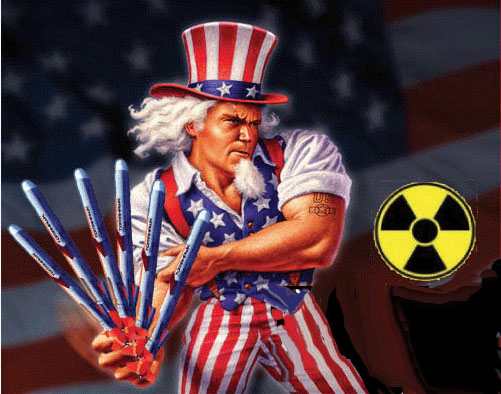
Wshington should stop playing dangerous games https://www.chinadaily.com.cn/a/202207/04/WS62c225a5a310fd2b29e6a123.html By Martin Sieff | CHINA DAILY , 6 Jul 22
US President Joe Biden has taken a vague approach on an understanding with Beijing over the Taiwan question negotiated in 1972 by then president Richard Nixon that has ensured peace and mutual prosperity in the Pacific for half a century.
The US-led West continues to push NATO’s eastward expansion and build NATO-like military alliances in the Asia-Pacific region such as AUKUS, the much-touted Australia-United Kingdom-United States strategic alliance. Now the Western powers with some other countries are holding RIMPAC 2022, or Rim of the Pacific, military exercises, the largest in the program’s history, which will further increase uncertainties in the Asia-Pacific.
The alleged reason the West cites for trying to brainwash the prosperous and, left to themselves, peaceful and well-meaning populations of those and other countries is that China, Russia and some other countries present some hideous threat to the rest of the world like Hitler’s Nazi Germany and therefore must be resisted.
Yet the Joe Biden administration, oblivious to the ageless teachings, remains consistent in holding on to the extraordinary irony and blasphemy that its own political values and ideology-which it so manifestly fails to live up to in its own domestic policies and society-must nevertheless be imposed as the inevitable and unavoidable destiny on the rest of the world. Such ridiculous hubris, or arrogance according to the classical Greek view of life, must inevitably generate an annihilating nemesis: total destruction.
How else can one explain the determination of the US administration, pulling its Pacific allies in tow, to provoke a full-scale confrontation, threatening no holds barred confrontation with China over the Taiwan question?
US President Joe Biden has taken a vague approach on an understanding with Beijing over the Taiwan question negotiated in 1972 by then president Richard Nixon that has ensured peace and mutual prosperity in the Pacific for half a century. Biden is also continuing to arm Ukraine to the teeth so Kyiv can keep fighting a bloody conflict it cannot possibly win against Moscow.
What possible sanity can lie behind provoking a war and openly threatening the world’s two other leading strategic and nuclear-armed powers with destabilization and destruction at the same time?
Now, the next step on this march of folly to an extended war has also been taken. Following the recently concluded G7 summit which was apparently targeted at both Russia and China, the Biden administration has dragooned its Pacific allies of New Zealand, Australia and (maybe a reluctant) Japan into the latest RIMPAC exercises specifically aimed at targeting Beijing and bullying it into accepting Washington’s diktat over Taiwan.
Neither Biden nor any of his national security team of Secretary of State Antony Blinken, National Security Advisor Jake Sullivan, Secretary of Defense Lloyd Austin and Under Secretary of State for Policy Victoria Nuland shows the slightest realization that all their policies are certain to bring about the very Armageddon they claim to be determined to deter.
In fact, in his first face-to-face meeting with Austin on the sidelines of the Shangri-La Dialogue in Singapore on June 10, Chinese State Councilor and Defense Minister Wei Fenghe made clear that any move, encouraged or manipulated by the US, to get Taiwan to declare independence would be immediately taken by Beijing as a casus belli.
This would be an insane risk for the US administration to take even if it was to secure peace with the rest of the world, and at no risk of a full-scale war with Russia, another catastrophe which Biden has been assiduously courting.
Far from deterring China, the announcement of the latest RIMPAC exercises, as well as the provocative, hostile and contemptuous language in which that statement was made, can only lock the US even further into its suicidal leap of the Gadarene swine off the edge of a gigantic cliff from which there can be no return or recovery.
Only about 25 people are reported to have survived trying to commit suicide by jumping off the Golden Gate Bridge in San Francisco since it was completed in 1937 out of the 1,700 who have tried. Every one of those survivors has testified that they realized they had made a terrible mistake as soon as they jumped the 67 meters into San Francisco Bay.
Will Biden, Blinken, Sullivan and Nuland experience a similar far-too-late moment of clarity when the catastrophe they have worked so ceaselessly to provoke finally explodes on their country and its allies? By that point, it will not matter: the damned cannot escape their inevitable destruction. One can only weep for the hundreds of millions they will take with them.
The author is a senior fellow at the American University in Moscow.
US imposes new Iran sanctions amid efforts to revive nuclear deal
US measures targeting Iranian petroleum and petrochemical sales come ahead of Joe Biden’s visit to the region next week.
By Al Jazeera Staff. 6 Jul 2022
The sanctions come days after American and Iranian diplomats held a round of indirect talks in Qatar to try to restore the Joint Comprehensive Plan of Action (JCPOA), the multilateral agreement that saw Iran scale back its nuclear programme in exchange for the lifting of sanctions against its economy.
“While the United States is committed to achieving an agreement with Iran that seeks a mutual return to compliance with the Joint Comprehensive Plan of Action, we will continue to use all our authorities to enforce sanctions on the sale of Iranian petroleum and petrochemicals,” Under-secretary of the
Treasury for Terrorism and Financial Intelligence Brian Nelson, said in a statement.
…………………………….. President Joe Biden and his top aides say they are committed to reviving the deal through mutual compliance, but they have continued to enforce Trump’s sanctions and added dozens of their own.
……………………
Tehran has blamed Washington’s refusal to revoke sanctions for the inability to reach a deal so far.
“Agreement is possible only based on mutual understanding & interests,” Iranian Foreign Minister Hossein Amirabdollahian wrote on Twitter on Tuesday after a phone call with European Union’s foreign policy chief Josep Borrell.
“We remain ready to negotiate a strong & durable agreement. US must decide if it wants a deal or insists on sticking to its unilateral demands.” https://www.aljazeera.com/news/2022/7/6/us-imposes-new-iran-sanctions-amid-efforts-to-revive-nuclear-deal
Macron says he doesn’t want to ‘annihilate’ Russia
While the French president has backed anti-Russia sanctions, he has refrained from the extreme rhetoric of his US and UK counterparts/
French President Emmanuel Macron condemned “Anglo Saxon” leaders for openly wishing annihilation upon Russia in clips from a recent documentary. Macron has already been criticized by some of Ukraine’s most fervent supporters for staying in contact with Russian President Vladimir Putin.
While he has condemned Russia’s military operation in Ukraine and supported EU sanctions on Moscow, the French president has spoken to Putin by phone on several occasions since February. These calls have apparently not brought Ukraine any closer to peace, but have earned Macron scorn from Kiev’s supporters, including Polish Prime Minister Mateusz Morawiecki, who castigated his French counterpart for talking to a man he compared to “Hitler.”
However, in a documentary recently broadcast on French television, Macron gave some insight into his approach to diplomacy.
Filmed on a train back from Kiev last month, Macron explained that talking to Putin is necessary to prevent the conflict in Ukraine from becoming a wider war. Describing “Anglo Saxon” leaders as pushing the message that “we must annihilate Russia, weaken it permanently,” Macron said that his goal is instead to “help Ukraine to win,” and “not to fight against Russia, let alone annihilate it.”
Whatever the practical similarities between Macron’s approach and that of his US and UK counterparts, all of whom have provided Kiev with weapons and ammunition, there exists a clear difference in rhetoric between France and the “Anglo Saxon” world.
While US President Joe Biden has accused Russia of committing “genocide” in Ukraine, Macron has cautioned the West against bandying around such loaded terms. Likewise, he has dismissed requests from Kiev that he declare Russia a “sponsor of terrorism.”
And while US Secretary of State Lloyd Austin has described the conflict in Ukraine as an opportunity to leave Russia “weakened” and Biden has let slip that he wishes for regime change in Moscow, Macron has stated that the West “must not humiliate Russia,” in order to make a peace deal possible some day.
In Britain, Prime Minister Boris Johnson has compared Putin to a “crocodile” and repeatedly dismissed the idea of peace talks with Moscow. Meanwhile, the newly-appointed chief of Britain’s armed forces has declared that the UK’s military must prepare for the possibility of “defeating Russia in battle.”……………. https://www.rt.com/news/558308-macron-russia-anglo-saxon/
If you want to be accepted as ”Western” – best to be white.

The Washington Post reported on the 15th of June that President Biden is to visit Saudi Arabia in July for talks with Crown Prince Mohammed bin Salman. He explained that the Kingdom had been ‘a strategic partner of the United States for nearly eight decades’. No talk there of sanctions and condemnation. It illustrates how empty is the present Western rhetoric about a global struggle between democracy and autocracy.
The West is white, https://johnmenadue.com/the-west-is-white/ By Henry Reynolds, Jul 1, 2022

When the Soviet Union disintegrated in 1991 Gorbachev’s vision of a ‘common European homeland from the Atlantic to the Urals’ did not prevail. Rather than retract ,NATO expanded. Russia was too weak to halt the process but was useful as a potential adversary. Suggestions that it could actually join the alliance were peremptorily dismissed. NATO was far too useful for the Americans as the means to perpetuate their dominance of Western Europe. And without the Soviet Union the members of the alliance could be called on to join the global campaign against terror and go to war in Libya, Iraq and Afghanistan, places in many cases they knew little about.
The catastrophic war in Ukraine should not have come as a surprise. Tension between NATO and Russia had been intensifying for some time. From as far back as the era of Clinton and Yeltsin experienced observers had warned about the likely consequences of perpetuating the divisions of the cold war. But American policy makers are no doubt pleased with the solidarity of their client states with the added bonus of Sweden and Finland surprisingly seeking membership of the alliance. And having recruited a host of willing adjutants for Imperial ventures in the Middle East the next task is to turn NATO into a global player with the mission to both contain and confront China. There doesn’t appear to be any reluctance to join this new crusade. In early June the President of little Lithuania Ingrida Simonyte announced that she was willing to join the rest of the alliance ‘as it stares down China and Russia.’
But anti-Russian solidarity in Europe has not been matched in the rest of the world nor is there any enthusiasm to sign up to the coming confrontation with China. There are many reasons for this. As with the classic cold war there are bound to be many states which will determine to remain non-aligned. And the power and prestige of the West is greatly diminished. America can no longer present itself as an exemplar of a well ordered democracy. There is just too much that is going wrong. Domestic opinion is deeply fractured. Democracy itself is in trouble in the land of the free.
Wider forces are also at work. At the very moment when the west is fanning cold war embers there is a recrudescence of anti-colonialism in Europe’s erstwhile colonies with a focus on the legacy of slavery, the expropriation and destruction of indigenous societies and the accompanying intellectual heritage of racial superiority. In the rest of the world the West’s sense of entitlement is seen as just the latest iteration of habits of thought and behaviour which derive from the era when white men bestrode the world as self-selected lords of human kind.1
The West’s hypocrisy is also under fire. The shock and outrage about Russia’s onslaught on Ukraine renews the memory of the disastrous wars unleashed on Afghanistan, Iraq and Syria and the accompanying war crimes which have never been called to account. But the contemporaneous war in Yemen receives little attention and less condemnation even though those pillars of NATO the United States, Britain and France have all assisted Saudi Arabia. And the results speak for themselves. A U.N survey at the end of 2021 concluded that the war had resulted in 377,000 deaths including 10,200 children who had been killed or wounded. Famine conditions face 160,000 and 19 million people will go hungry. As recently as January this year a Saudi airstrike killed91 civilians and wounded another 226. Not that anyone in the west bothered to notice it.
The Washington Post reported on the 15th of June that President Biden is to visit Saudi Arabia in July for talks with Crown Prince Mohammed bin Salman. He explained that the Kingdom had been ‘a strategic partner of the United States for nearly eight decades’. No talk there of sanctions and condemnation. It illustrates how empty is the present Western rhetoric about a global struggle between democracy and autocracy.
The world would be forgiven for assuming that the West is only outraged by war when the victims are white. This was certainly the conclusion of the Malaysian Health Minister Khairy Jamaluddin when he addressed the recent Davos Conference. He lamented that “ the colour of your skin argument” still seemed relevant .’Now that violence and state terror effects someone like you—that is a white westerner suddenly, there is this moral outrage from Washington to Davos.’
The West’s hypocrisy about refugees and immigration has also been highlighted by the Ukraine war. The exemplary reception of the waves of over two million refugees fleeing from the war is so different from Poland’s hostility to Middle Eastern refugees still stuck in no man’s land between Poland and Belarus. They have been forgotten by the western media.
Many are still there. The Polish army patrols the border and work proceeds on a 186 kilometre border fence. Latvia and Lithuania have adopted similar defensive policies. Poland can scarcely claim to have no responsibility in the matter. Their forces spent years in both Iraq and Afghanistan helping to produce the chaos from which people are trying to escape. But the electorate is adamant. In a recent survey 70% of respondents didn’t want non-white people living in their country.
Poland is not alone when it comes to migration from outside fortress Europe. After the migration crisis of 2015 European opinion has swung decisively against non-European migration. Right wing parties have ridden the wave into the centre of political life. Multiculturalism has been decisively rejected even in the erstwhile liberal Nordic countries. And in the background is the growing popularity of what has become known as the racial replacement theory. It is most influential in the United States. Surveys now show that a third of Americans and many more Republicans believe that there is a conspiracy to replace white or ‘heritage’ Americans with coloured foreigners.
The link between domestic developments such as these and the growing hostility to China scarcely needs emphasising. It is a result of replacement theory projected on a global scale. And that is of great concern to the rest of the world. A chorus of many voices insists that they want to work on both sides of the growing divide and don’t want to choose. Can this surprise us? In the C20th the whole world was drawn into two disastrous world wars. This was the legacy of Europe , North America and Japan. Why would anyone wish to see a C21st replay?
1 This Month



26 September – International Day for the Total Elimination of Nuclear Weapons


PLEASE OPPOSE HR 8255 AND S.3639 – bills would accelerate satellite deployment, with no environmental review or safeguards – https://ncstd5li.quorum.us/campaign/169331/
To see nuclear-related stories in greater depth and intensity – go to https://nuclearinformation.wordpress.com
-
Archives
- September 2026 (257)
- August 2026 (330)
- July 2026 (355)
- June 2026 (287)
- May 2026 (306)
- April 2026 (356)
- March 2026 (251)
- February 2026 (267)
- January 2026 (308)
- December 2025 (358)
- November 2025 (359)
- October 2025 (375)
-
Categories
- 1
- 1 NUCLEAR ISSUES
- business and costs
- climate change
- culture and arts
- ENERGY
- environment
- health
- history
- indigenous issues
- Legal
- marketing of nuclear
- media
- opposition to nuclear
- PERSONAL STORIES
- politics
- politics international
- Religion and ethics
- safety
- secrets,lies and civil liberties
- spinbuster
- technology
- Uranium
- wastes
- weapons and war
- Women
- 2 WORLD
- ACTION
- AFRICA
- Atrocities
- AUSTRALIA
- Christina's notes
- Christina's themes
- culture and arts
- Events
- Fuk 2022
- Fuk 2023
- Fukushima 2017
- Fukushima 2018
- fukushima 2019
- Fukushima 2020
- Fukushima 2021
- general
- global warming
- Humour (God we need it)
- Nuclear
- RARE EARTHS
- Reference
- resources – print
- Resources -audiovicual
- Weekly Newsletter
- World
- World Nuclear
- YouTube
-
RSS
Entries RSS
Comments RSS
 nuclear-news