Are Russia and NATO trying to destroy the nuclear Non-Proliferation Treaty?

Not only will they not begin negotiations to eliminate their nuclear arsenals, as they promised decades ago; they will not even pledge not to start World War III.
Russia and NATO aren’t afraid to start World War III
Wrecking ball — Beyond Nuclear International By Ira Helfand 28 Aug 22, Since it was adopted more than 50 years ago, the Treaty on the Non-Proliferation of Nuclear Weapons (NPT) has been described as the cornerstone of international efforts to limit the danger of nuclear war, its preservation a key, shared policy objective of the P5, the five permanent members of the United Nations Security Council. In the lead-up to this year’s NPT Review Conference, which opened on August 1 in New York, Russia and NATO are putting the treaty at risk.
The NPT was conceived as a grand bargain between nations who did not have nuclear weapons and promised not to develop them and the P5, who did have them in 1968 and promised, in Article VI of the treaty, to undertake good faith negotiations to eliminate their nuclear arsenals.
In the five decades since, these five nuclear-armed states have continued to insist that other signatories to the treaty honor their commitment not to build nuclear weapons, but they have never seriously considered meeting their obligations to disarm.
Tension over this blatant failure to uphold their end of the bargain has been growing for years and helped fuel the 2017 adoption by 121 non-nuclear-armed states of the Treaty on the Prohibition of Nuclear Weapons, a new treaty consistent with Article VI and intended to pressure the countries that have nuclear weapons to meet their obligations to get rid of them.
The gap between the promises of the P5 and their behavior has grown into a chasm since the Russian invasion of Ukraine. Russia has made repeated threats to use nuclear weapons and NATO — representing France, the United Kingdom and the United States — has replied with nuclear threats of its own.
Responding to this escalating danger of nuclear war, 18 Nobel Peace Laureates issued a statement in April urging Russia and NATO to pledge publicly that they will not use nuclear weapons under any circumstances in the current war. The statement was endorsed by more than 1 million people after it was posted to the Avaaz website. The response from Russia and NATO was a thunderous silence.
It is now clear: Not only will they not begin negotiations to eliminate their nuclear arsenals, as they promised decades ago; they will not even pledge not to start World War III…………………………….
The current threats by Russia and NATO reveal the truth: Nuclear-armed states possess these weapons to threaten and bully the rest of the world — and they are prepared to use them. As former Defense Secretary Robert McNamara famously observed, we have not avoided nuclear war because of sound doctrine or wise leaders or infallible technology. “We lucked out,” he said. “It was luck that prevented nuclear war.”……….. more https://beyondnuclearinternational.org/2022/08/28/wrecking-ball/
A nuclear showdown? One of the greatest ‘realist’ fears about the Russia-Ukraine conflict is actually groundless, and here’s why
The US will not intervene directly, because it’s not an existential crisis for Washington – it stands to lose little from Kiev’s inevitable defeat.
the Ukraine conflict is not an existential one for either the US or NATO; a loss in Ukraine will be another setback – Afghanistan on steroids. But a Ukrainian defeat does not, in and of itself, threaten NATO with collapse or spell the end of the American Republic.
Scott Ritter, 23 Aug 22, Fears that the Ukraine conflict is now bogged down into some sort of stalemate which risks dangerous escalation from the parties involved in order to achieve victory are misplaced. There is only one victor in the Ukraine conflict, and that is Russia. Nothing can change this reality.
Renowned American intellectual John Mearsheimer has written an important article about the conflict, entitled: ‘Playing with Fire in Ukraine: The Underappreciated Risks of Catastrophic Escalation’. The article paints a dark picture about both the nature of the war in Ukraine (prolonged stalemate) and probable outcome (decisive escalation by the parties involved to stave off defeat
Mearsheimer’s underpinning premises, however, are fundamentally flawed. Russia possesses the strategic initiative – militarily, politically, and economically – when it comes to the war in Ukraine and the larger proxy engagement with NATO. Moreover, neither the US nor NATO is in a position to escalate, decisively or otherwise, to thwart a Russian victory, and Russia has no need for any similar escalation on its part.
In short, the Ukraine conflict is over, and Russia has won. All that remains is a long and bloody mopping up.
The key to understanding how Mearsheimer got it so wrong is to dissect his understanding of the ambitions of both the US and Russia when it comes to the issue. According to Mearsheimer, “Since the war began, both Moscow and Washington have raised their ambitions significantly, and both are now deeply committed to winning the war and achieving formidable political aims.”
This passage is especially difficult to parse out. First and foremost, it is extremely difficult to articulate a sound baseline when it comes to assessing US “ambitions” vis-à-vis Ukraine and Russia. President Joe Biden’s administration inherited a policy which had been conceived in the George W. Bush-era and partially implemented under the team of Barack Obama (where Biden played a critical role). This was a very aggressive policy geared toward undermining Russia with the goal of weakening the Russian president, Vladimir Putin, to such an extent that eventually he would be replaced by a figure more amenable to adhering to a US-dictated policy line.
But one cannot pretend that there were not four years of Trump administration policy which threw the anti-Putin – and, by extension, anti-Russia – narrative promulgated by the Obama administration on its head. While Trump was never able to gain traction for his ‘why can’t we be friends’ approach to US-Russian diplomacy, he was able to seriously undermine two major policy pillars which propped the Obama-era policy up, namely NATO unity and Ukrainian solidarity.
The Biden administration was never able to resuscitate the Obama-era policy direction regarding Russia, inclusive of its anti-Putin goals and objectives. Trump’s undermining of NATO’s unity and purpose, when combined with the humiliating pull-out from Afghanistan, put the bloc on the back foot when it came to standing up to the challenge of a Russian state determined to be more assertive about what it viewed as its legitimate national security interests, inclusive of a new European security framework respectful of the notion of a Russian ‘sphere of influence’.
……………………………. neither the US military nor its NATO allies are able to generate the kind of meaningful military capability needed to effectively challenge Russia on the ground in Ukraine.
This reality severely limits the scope and scale of any possible US ambitions regarding Ukraine. At the end of the day, Washington has only one path forward – to continue to waste billions of dollars of taxpayers’ money sending military equipment to Ukraine, which has no chance of changing the outcome on the battlefield, to convince a domestic American audience that their government is ‘doing the right thing’ in a losing effort.
There is no ‘military option’ in Ukraine for either the US or NATO because, simply put, there is no military capable of meaningfully executing such an option.
This conclusion is critical to understanding Russia’s ‘ambitions’. Unlike the US, Russia has articulated clear and concise objectives regarding its decision to dispatch military forces into Ukraine. These can be described as follows: Permanent Ukrainian neutrality (i.e., no NATO membership), the de-Nazification of Ukraine (the permanent eradication of the odious nationalistic ideology of Stepan Bandera), and the de-militarization of the state – the destruction and elimination of all traces of NATO involvement in the security affairs of Ukraine.
These three objectives only reflect the immediate goals of the Special Military Operation in Ukraine. The ultimate objective – a restructured European security framework that has all NATO infrastructure withdrawn to the 1997 boundaries of that alliance – remains as a non-negotiable requirement that will have to be addressed after Russia secures its final military and political victory in Ukraine.
In short, Russia is winning on the ground in Ukraine, and there is nothing either the US or NATO can do to alter this outcome. And once Russia secures this victory, it will be in a far stronger position to insist that its concerns about a viable European security framework be respected and implemented.
Mearsheimer believes that the situation on the ground in Ukraine provides both the US and Russia with “powerful incentives to find ways to prevail and, more important, to avoid losing.”
At the end of the day, the Ukraine conflict is not an existential one for either the US or NATO; a loss in Ukraine will be another setback – Afghanistan on steroids. But a Ukrainian defeat does not, in and of itself, threaten NATO with collapse or spell the end of the American Republic.
Simply put, Mearsheimer’s fear that a loss in Ukraine “means that the United States might join the fighting either if it is desperate to win or to prevent Ukraine from losing” is unfounded.
So, too, is his contention that “Russia might use nuclear weapons if it is desperate to win or faces imminent defeat, which would be likely if US forces were drawn into the fighting.” Russia neither “faces defeat” nor has anything to worry about, existentially, from a US military intervention which, from all practical points of view, could not materialize even if the US wanted to be so bold…… https://www.rt.com/russia/561376-ukraine-russia-conflict-us/
Bruce Gagnon Interview: An Objective Look at U.S. Foreign Policy

“Once weapons were manufactured to fight wars. Now wars are manufactured to sell weapons”.
BY JOHN RACHEL, 26 Aug 22,
Events continue to unfold at a quickening pace. Facing an alarming escalation in tensions around the world, we asked Bruce Gagnon for his most current thoughts.
Bruce Gagnon is the Coordinator of the Global Network Against Weapons & Nuclear Power in Space, and was a co-founder of the Global Network when it was created in 1992………………. He is currently an active member of Veterans for Peace.
……………Here is what Bruce had to say.
Q. We hear a lot of terms and acronyms bandied about. ‘Deep State’ … ‘MIC’ … ‘FIRE sector’ … ‘ruling elite’ … ‘oligarchy’ … ‘neocons’. Who actually defines and sets America’s geopolitical priorities and determines our foreign policy? Not “officially”. Not constitutionally. But de facto.
A. The banksters in London and Wall Street are the essential movers and shakers of US-UK-NATO foreign policy. The CIA is their primary arm of control. Add to them the burgeoning global military industrial complex and the political ‘mis-leaders’ they generously contribute to. The corporate controlled mainstream media are also accessories to the present day crimes. Together they add up to a formidable crew of what I call ‘pirates’ who are stealing the national treasures throughout the western capitalist world and using them to supress and colonize others across the Global South and here at home.
Q. We’ve had decades of international tensions. Recent developments have seen a sharp escalation in the potential for a major war. ……………….. war inevitable and peace impossible?
A. During the reign of George W. Bush in Washington, at the time of the US ‘shock and awe’ attack in Iraq, I was watching C-SPAN one evening. They introduced then Naval War College instructor Thomas Barnett (author of a book called ‘The Pentagon’s New Map’) and they announced that in the audience were hundreds of top-level Pentagon officers and CIA bigwigs. During his talk Barnett told the assembled that due to globalization of the world economy every nation would have a specific role to fill. In the US he said we won’t make ‘consumer products’ anymore because it was cheaper to send those jobs overseas. Our role in the US, Barnett said, would be ‘security export’. Thus it should be no surprise that the #1 industrial export product of the US today is weapons. When weapons are your #1 industrial export product, what is your ‘global marketing strategy’ for that product line?
Barnett (introduced as Rumsfeld’s ‘strategy guy’) also told the leading brass that the Pentagon would be endlessly fighting to take control of the ‘non-integrating gap’ around the globe – those parts of the world that were not submitting to the authority of corporate globalization. He instructed the audience to go and teach these ‘new concepts’ to those under their authority if they hoped to get promoted within the system in the years ahead.
For more than a year after this Barnett presentation I witnessed him being squired around Washington speaking to Republican and Democrat audiences on C-SPAN. It was evident to me that his ‘new doctrine’ was a bi-partisan plan. Since that time it has become quite clear that this is true as we now see the Democrats leading the proxy war on Russia – using Ukraine as the hammer in this dangerous and provocative attempt to force regime change in Moscow. Pelosi’s recent ill-fated trip to Taiwan also indicates the plan to force regime change in Beijing.
Imagine that Washington and its NATO allies, who limped out of Afghanistan after 20 years of brutal occupation there, are now planning for war with Russia and China. The absurdity is beyond imagination. It reveals much about their psychopathology.
As long as this reality persists then we will move from one war to another. Arundhati Roy says, “Once weapons were manufactured to fight wars. Now wars are manufactured to sell weapons”. She is right on the money…………………..
Q. Our leaders relentlessly talk about our “national interests” and our “national security”, warning that both are under constant assault. Yet, we spend more than the next nine countries combined on our military. Why does such colossal spending never seem to be enough?
A. When they talk about ‘national interests’ they are actually talking about the interests of the banksters. When they talk about ‘freedom’ they are talking about their freedom to steal the national wealth from nations with resources and the people around the world. Washington claims that Russia wants to re-create the former Soviet Union and take control of Europe. In 2022 Russia is spending $66 billion on their military. It is a defensive military to protect their vast border regions. The US this year is spending $800 billion plus. When you add up the hidden military spending in the other pots of gold – like the nuclear weapons spending inside the Department of Energy budget – the US total is around $1.2 trillion this year. They are robbing us blind and we keep handing over our hard-earned tax dollars. Why?………………………………………………….
- We need to convert the military industrial complex (the war machine) to build public mass transit systems, tidal power systems, solar, wind power and the like – all of which would create more jobs than weapons manufacturing does.
- We need to ban corporate funding of elections. We need to open up a multi-party system so that more voices can be heard by the voters.
- We need to end the massive poverty that exists (which will be worsening in the near future) by taxing the rich and corporations.
- Stop the massive corporate subsides – welfare for the rich.
- We need to close down the more than 800 US military bases around the world and cut the Pentagon budget by at least 80%.
- We only need a defensive military that protects our borders.
- Do all these things and we might have a chance if we don’t first perish from a red-hot nuclear war or climate crisis.We don’t have time to fool around.
- Folks need to get off their arses and speak out NOW. ………..
A Crucial Week For The Iran Nuclear Deal
Iran Nuclear Deal Has Never Been Closer, https://oilprice.com/Energy/Energy-General/A-Crucial-Week-For-The-Iran-Nuclear-Deal.html 26 Aug 22, Indirect talks between the United States and Iran are moving closer to a final stage as both Tehran and Washington have responded to the European Union’s final draft, with further talks expected next week.
-It remains to be seen if the Iranian authorities would drop demands such as scrapping the IRGC from the US terrorist list or demanding written guarantees there would be no sudden US snapback on the JCPOA.
-Iranian crude exports have averaged approximately 800,000 b/d so far this year, the highest level since the Trump administration quit the JCPOA, as oversight turned laxer.
-There have been no exports to Europe since November 2018, whilst almost all of Asian demand is coming from China which takes in cargoes either directly or via ship-to-ship transfers in Malaysia.
Iran’s UN envoy slams Israel refusal to join NPT, urges nuclear-weapon-free zone in Middle East
Israel, which pursues a policy of deliberate ambiguity about its nuclear weapons, is estimated to possess 200 to 400 nuclear warheads in its arsenal, making it the sole possessor of non-conventional arms in West Asia.
Friday, 26 August 2022,
A senior Iranian diplomat has denounced Israel’s continued refusal to join the Nuclear Non-Proliferation Treaty (NPT), stressing that establishing a Middle East region free of nuclear weapons is of utmost importance.
Iran’s ambassador and permanent representative to the United Nations, Majid Takht-Ravanchi, made the remarks while speaking to reporters on Friday on the sidelines of the Tenth Review Conference of the Parties to the Treaty on the Non-Proliferation of Nuclear Weapons held at the UN headquarters in New York.
“The issue of the Middle East as a region free of nuclear weapons is one of the important discussions… because the Israeli regime, as the only possessor of hundreds of nuclear warheads, is not ready to join the Nuclear Non-Proliferation Treaty and place its nuclear facilities under the supervision of the International Atomic Energy Agency,” he said.
He added that Israel’s refusal to join the NPT comes as some countries are cooperating with the regime and have always supported it.
The Iranian delegation attending the tenth NPT review conference played a constructive role in highlighting the significance of a Middle East region free of weapons of mass destruction, he said
As documents relating to the NPT review conferences in 1995, 2000, and 2010 have explicitly announced that the Israeli regime must join the treaty, the Iranian team emphasized that the issue should also be included in the final statement of the 10th NPT review meeting, Takht-Ravanchi added.
He emphasized that during the current conference, the Islamic Republic clearly announced that it would not back down from its stance on the importance of a Middle East without any weapons of mass destruction.
“We said that this issue is one of the red lines of the Islamic Republic of Iran and if they want to act honestly and constructively, the literature used in the statements of previous conferences should also be used in this conference in order to move towards a Middle East without nuclear weapons,” the senior Iranian diplomat pointed out.
He noted that Iran seeks to reach a consensus with the participants at the current NPT review conference but it has principles and certain measures must be carried out.
n a Monday address to the Tenth Review Conference of the Parties to the Treaty on the Non-Proliferation of Nuclear Weapons, Takht-Ravanchi expressed concern over the lack of progress in the implementation of the 1995 Nuclear Nonproliferation Treaty (NPT) resolution and the 2010 action plan on the Middle East, saying the Israeli regime must eliminate its stockpile of nuclear weapons.
Takht-Ravanchi also slammed the US double standards, saying Israel’s accession to the NPT “without precondition and further delay” and the placement of all of its nuclear activities and facilities under the comprehensive IAEA safeguards are “essential in realizing the goal of universal adherence to the Treaty in the Middle East and the establishment of a nuclear-weapon-free zone in the Middle East.”
Israel, which pursues a policy of deliberate ambiguity about its nuclear weapons, is estimated to possess 200 to 400 nuclear warheads in its arsenal, making it the sole possessor of non-conventional arms in West Asia.
The illegitimate entity has, however, refused to either allow inspections of its military nuclear facilities or sign the NPT.
What has emboldened Tel Aviv to accelerate its nuclear activities, according to observers, is the support from the US and Europe, the two countries most critical of Iran’s peaceful nuclear program.
The regime has assassinated at least seven Iranian nuclear scientists and conducted a series of sabotage operations against the Islamic Republic’s nuclear facilities.
The west’s false narrative about Russia and China
https://johnmenadue.com/the-wests-false-narrative-about-russia-and-china/ The Western narrative about the Ukraine war is that it is an unprovoked attack by Putin in the quest to recreate the Russian empire. Yet the real history starts with the Western promise to Soviet President Mikhail Gorbachev that NATO would not enlarge to the East, followed by four waves of NATO aggrandisement:
At the core of all of this is the US attempt to remain the world’s hegemonic power, by augmenting military alliances around the world to contain or defeat China and Russia. It’s a dangerous, delusional, and outmoded idea.
There is only one country whose self-declared fantasy is to be the world’s dominant power: the US.
https://johnmenadue.com/the-wests-false-narrative-about-russia-and-china/ By Jeffrey Sachs, Aug 24, 2022, The world is on the edge of nuclear catastrophe in no small part because of the failure of Western political leaders to be forthright about the causes of the escalating global conflicts. The relentless Western narrative that the West is noble while Russia and China are evil is simple-minded and extraordinarily dangerous. It is an attempt to manipulate public opinion, not to deal with very real and pressing diplomacy.
The essential narrative of the West is built into US national security strategy. The core US idea is that China and Russia are implacable foes that are “attempting to erode American security and prosperity.” These countries are, according to the US, “determined to make economies less free and less fair, to grow their. militaries, and to control information and data to repress their societies and expand their influence.”
The irony is that since 1980 the US has been in at least 15 overseas wars of choice (Afghanistan, Iraq, Libya, Panama, Serbia, Syria, and Yemen just to name a few), while China has been in none, and Russia only in one (Syria) beyond the former Soviet Union. The US has military bases in 85 countries, China in 3, and Russia in 1 (Syria) beyond the former Soviet Union.
President Joe Biden has promoted this narrative, declaring that the greatest challenge of our time is the competition with the autocracies, which “seek to advance their own power, export and expand their influence around the world, and justify their repressive policies and practices as a more efficient way to address today’s challenges.” US security strategy is not the work of any single US president but of the US security establishment, which is largely autonomous, and operates behind a wall of secrecy.
The overwrought fear of China and Russia is sold to a Western public through manipulation of the facts. A generation earlier George W. Bush, Jr. sold the public on the idea that America’s greatest threat was Islamic fundamentalism, without mentioning that it was the CIA, with Saudi Arabia and other countries, that had created, funded, and deployed the jihadists in Afghanistan, Syria, and elsewhere to fight America’s wars.
Or consider the Soviet Union’s invasion of Afghanistan in 1980, which was painted in the Western media as an act of unprovoked perfidy. Years later, we learned that the Soviet invasion was actually preceded by a CIA operation designed to provoke the Soviet invasion! The same misinformation occurred vis-à-vis Syria. The Western press is filled with recriminations against Putin’s military assistance to Syria’s Bashar al-Assad beginning in 2015, without mentioning that the US supported the overthrow of al-Assad beginning in 2011, with the CIA funding a major operation (Timber Sycamore) to overthrow Assad years before Russia arrived.
Or more recently, when US House Speaker Nancy Pelosi recklessly flew to Taiwan despite China’s warnings, no G7 foreign minister criticised Pelosi’s provocation, yet the G7 ministers together harshly criticised China’s “overreaction” to Pelosi’s trip.
The Western narrative about the Ukraine war is that it is an unprovoked attack by Putin in the quest to recreate the Russian empire. Yet the real history starts with the Western promise to Soviet President Mikhail Gorbachev that NATO would not enlarge to the East, followed by four waves of NATO aggrandisement: in 1999, incorporating three Central European countries; in 2004, incorporating 7 more, including in the Black Sea and Baltic States; in 2008, committing to enlarge to Ukraine and Georgia; and in 2022, inviting four Asia-Pacific leaders to NATO to take aim at China.
Nor do the Western media mention the US role in the 2014 overthrow of Ukraine’s pro-Russian president Viktor Yanukovych; the failure of the Governments of France and Germany, guarantors of the Minsk II agreement, to press Ukraine to carry out its commitments; the vast US armaments sent to Ukraine during the Trump and Biden Administrations in the lead-up to war; nor the refusal of the US to negotiate with Putin over NATO enlargement to Ukraine.
Of course, NATO says that is purely defensive, so that Putin should have nothing to fear. In other words, Putin should take no notice of the CIA operations in Afghanistan and Syria; the NATO bombing of Serbia in 1999; the NATO overthrow of Moammar Qaddafi in 2011; the NATO occupation of Afghanistan for 15 years; nor Biden’s “gaffe” calling for Putin’s ouster (which of course was no gaffe at all); nor US Defence Secretary Lloyd Austin stating that the US war aim in Ukraine is the weakening of Russia.
At the core of all of this is the US attempt to remain the world’s hegemonic power, by augmenting military alliances around the world to contain or defeat China and Russia. It’s a dangerous, delusional, and outmoded idea. The US has a mere 4.2% of the world population, and now a mere 16% of world GDP (measured at international prices). In fact, the combined GDP of the G7 is now less than that of the BRICS (Brazil, Russia, India, China, and South Africa), while the G7 population is just 6 percent of the world compared with 41 percent in the BRICS.
There is only one country whose self-declared fantasy is to be the world’s dominant power: the US. It’s past time that the US recognised the true sources of security: internal social cohesion and responsible cooperation with the rest of the world, rather than the illusion of hegemony. With such a revised foreign policy, the US and its allies would avoid war with China and Russia, and enable the world to face its myriad environment, energy, food and social crises.
Above all, at this time of extreme danger, European leaders should pursue the true source of European security: not US hegemony, but European security arrangements that respect the legitimate security interests of all European nations, certainly including Ukraine, but also including Russia, which continues to resist NATO enlargements into the Black Sea. Europe should reflect on the fact that the non-enlargement of NATO and the implementation of the Minsk II agreements would have averted this awful war in Ukraine. At this stage, diplomacy, not military escalation, is the true path to European and global security.
S Korea signs $2.25 billion deal with Russia nuclear company
By KIM TONG-HYUNG, August 26, 2022
SEOUL, South Korea (AP) — South Korea has signed a 3 trillion won ($2.25 billion) contract with a Russian state-run nuclear energy company to provide components and construct turbine buildings for Egypt’s first nuclear power plant, officials said Thursday.
The South Koreans hailed the deal as a triumph for their nuclear power industry, although it made for awkward optics as their American allies push an economic pressure campaign to isolate Russia over its war on Ukraine.
South Korean officials said the United States was consulted in advance about the deal and that the technologies being supplied by Seoul for the project would not clash with international sanctions against Russia.
According to South Korea’s presidential office and trade ministry, the state-run Korea Hydro and Nuclear Power was subcontracted by Russia’s Atomstroyexport to provide certain materials and equipment and construct turbine buildings and other structures at the plant being built in Dabaa. The Mediterranean coastal town is about 130 kilometers (80 miles) northwest of Cairo.
Atomstroyexport, also called ASE, is a subsidiary of Rosatom, a state-owned Russian nuclear conglomerate. The company has a contract with Egypt to deliver four 1,200 megawatt reactors through 2030. Korea Hydro and Nuclear Power’s part of project is from 2023 to 2029…………….. https://apnews.com/article/russia-ukraine-middle-east-africa-349bf2b3eb2551bdea5ec886855dea92
Is NATO a Defensive Alliance?
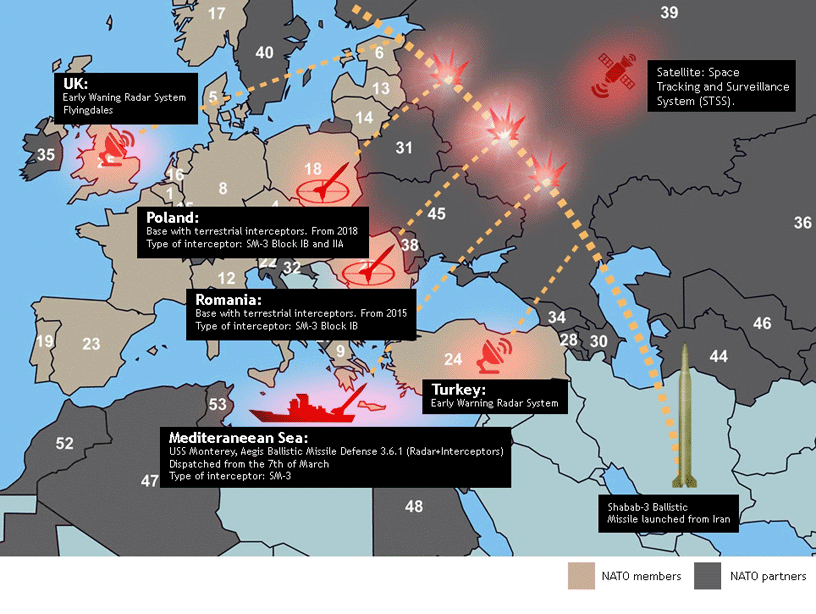
The Hidden Truth about the War in Ukraine, The Postil Magazine, Jacques Baud “………………………………………………………………………………………… NATO’s rationale is to bring European Allies under the US nuclear umbrella. It was designed as a defensive alliance, although recently declassified US documents show that the Soviets had apparently no intention to attack the West.
For the Russians, the question about whether NATO is offensive or defensive is beside the point. To understand Putin’s point of view, we have to consider two things that are usually overlooked by Western commentators: the enlargement of NATO towards the East, and the incremental abandonment of the international security’s normative framework by the US.
In fact, as long as the US didn’t deploy missiles in the vicinity of its borders, Russia didn’t bother so much about NATO extension. Russia itself considered to apply for membership. But problems stated to appear in 2001, as George W. Bush decided to unilaterally withdraw from the ABM Treaty and to deploy anti-ballistic missiles (ABM) in Eastern Europe. The ABM Treaty was intended to limit the use of defensive missiles, with the rationale of maintaining the deterrent effect of a mutual destruction by allowing the protection of decision-making bodies by a ballistic shield (in order to preserve a negotiating capacity). Thus, it limited the deployment of anti-ballistic missiles to certain specific zones (notably around Washington DC and Moscow) and prohibited it outside national territories.
Since then, the United States has progressively withdrawn from all the arms control agreements established during the Cold War: the ABM Treaty (2002), the Open Skies Treaty (2018) and the Intermediate-range Nuclear Forces (INF) Treaty (2019).
In 2019, Donald Trump justified his withdrawal from the INF Treaty by alleged violations by the Russian side. But, as the Stockholm International Peace Research Institute (SIPRI) notes, the Americans never provided proof of these violations. In fact, the US was simply trying to get out of the agreement in order to install their AEGIS missile systems in Poland and Romania. According to the US administration, these systems are officially intended to intercept Iranian ballistic missiles. But there are two problems that clearly cast doubt on the good faith of the Americans:
The first one is that there is no indication that the Iranians are developing such missiles, as Michael Ellemann of Lockheed-Martin stated before a committee of the American Senate.The second one is that these systems use Mk41 launchers, which can be used to launch either anti-ballistic missiles or nuclear missiles. The Radzikowo site, in Poland, is 800 km from the Russian border and 1,300 km from Moscow.
The Bush and Trump administrations said that the systems deployed in Europe were purely defensive. However, even if theoretically true, it is technically and strategically false. For the doubt, which allowed them to be installed, is the same doubt that the Russians could legitimately have in the event of a conflict. This presence in the immediate vicinity of Russia’s national territory can indeed lead to a nuclear conflict. For in the event of a conflict, it would not be possible to know precisely the nature of the missiles loaded in the systems—should the Russians therefore wait for explosions before reacting? In fact, we know the answer: having no early-warning time, the Russians would have practically no time to determine the nature of a fired missile and would thus be forced to respond pre-emptively with a nuclear strike.
Not only does Vladimir Putin see this as a risk to Russia’s security, but he also notes that the United States is increasingly disregarding international law in order to pursue a unilateral policy. This is why Vladimir Putin says that European countries could be dragged into a nuclear conflict without wanting to. This was the substance of his speech in Munich in 2007, and he came with the same argument early 2022, as Emmanuel Macron went to Moscow in February.
Finland and Sweden in NATO—A Good Idea?
The future will tell if Sweden’s and Finland’s decision to apply for NATO membership was a wise idea. They probably overstated the value of the nuclear protection offered by NATO. As a matter of fact, it is very unlikely that the US will sacrifice its national soil by striking Russian soil for the sake of Sweden or Finland. It is more likely that if the US engages nuclear weapons, it will be primarily on European soil and only as a last resort on Russian territory, in order to preserve its own territory from nuclear counter-strike.
Further, these two countries, which met the criteria of neutrality that Russia would want for its direct neighbors, deliberately put themselves in Russia’s nuclear crosshairs. For Russia, the main threat comes from the Central European theater of war. In other words, in the event of a hypothetical conflict in Europe, Russian forces would be engaged primarily in Central Europe, and could use their theater nuclear armies to “flank” their operations by striking the Nordic countries, with virtually no risk of a U.S. nuclear response.
Was it Impossible to Leave the Warsaw Pact?
The Warsaw Pact was created just after Germany joined NATO, for exactly the same reasons we have described above. Its largest military engagement was the invasion of Czechoslovakia in August 1968 (with the participation of all Pact nations, except Albania and Romania). This event resulted in Albania withdrawing from the Pact less than a month later, and Romania ceasing to participate actively in the military command of the Warsaw Pact after 1969. Therefore, asserting that no one was free to leave the treaty is not correct. https://www.thepostil.com/the-hidden-truth-about-the-war-in-ukraine/
NATO Abandons Diplomacy, Says No Longer ‘At Peace’
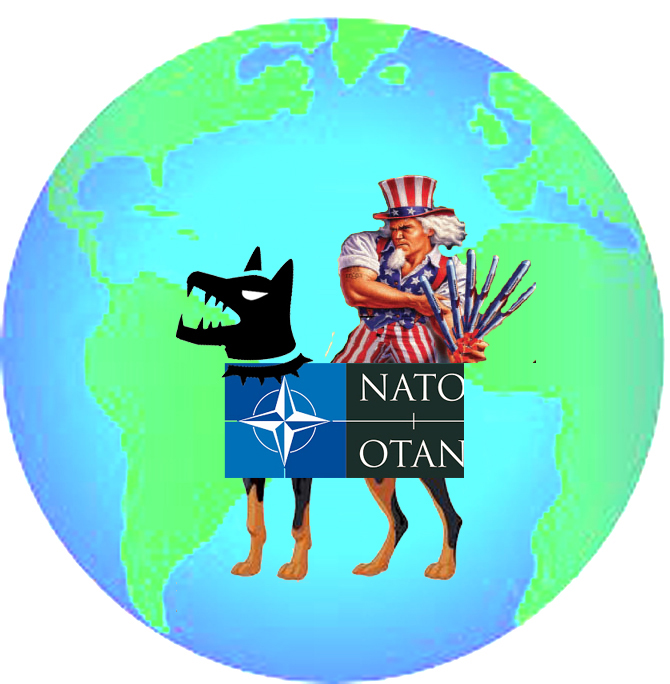
Libertarian Instituteby Bas Spliet | Aug 23, 2022 At the end of its annual summit in Madrid in late June, NATO adopted a new strategic concept. The guidance document is the eighth of its kind since the founding of the alliance in 1949. It radically breaks with the three previous post-Cold War security briefs, however, which observed that “the Euro-Atlantic area is at peace” because “the threat of a conventional attack against NATO territory is low.”
In the eyes of NATO, Russia’s invasion of Ukraine has changed that calculus, claiming that the military organization can no longer discount the possibility of an assault on sovereign NATO states. Continuing the same cryptic language, the new strategic concept concludes that the Euro-Atlantic area now is “not at peace,” in spite of no NATO member being in a state of war with Russia.
Behind this word play, a more dangerous policy change has been codified in the document. Since the adoption of the Harmel Report in 1967, NATO has always officially included diplomacy in one form or another (with political dialogue and strategic partnership being interchangeable labels) as one of its “core” or “fundamental” tasks. The “NATO 2030” report from November 2020, for instance, unequivocally stated that “NATO should continue the dual-track approach of deterrence and dialogue with Russia.”
In the new strategic concept, the core tasks have been purged of the need for diplomacy, except for one or two throw-away lines about “meaningful and reciprocal political dialogue” about arms control issues buried in the middle of the text. Rather, in addition to its original function of deterrence and defense, NATO now fully embraces “crisis prevention and management,” which it has spearheaded since the 1990s with its legally dubious and morally questionable interventions in the Balkans, Afghanistan, and Libya; and “cooperative security,” referring to NATO’s enlargement in Eastern Europe and its Partnership for Peace cooperation with countries in ever further-away regions, including the Black Sea, the Middle East, North Africa, and even the Indo-Pacific, which the British have been pushing to include in a “global NATO.”
Russia was the first country to sign up for the Partnership for Peace program back in 1994. The new NATO doctrine, however, states that Russia can no longer be considered a partner “in light of its hostile policies and actions.” The strategic concept ignores the fact that NATO’s enlargement and new core tasks, which the alliance adopted after the Cold War in an effort to justify its continued existence, have likewise long been seen as hostile in Moscow, nor does it offer any reflection on how the new policies might have contributed to the current unpeaceful “strategic environment.” Instead, it hails the “historic success” of NATO’s expansion in terms of space and substance and insists that the alliance “does not seek confrontation and poses no threat to the Russian federation.”
……………………………….. Now, NATO apologists, like Ukrainian President Volodymyr Zelensky, argue that if the alliance had not expanded eastward, Vladimir Putin would have been even bolder in his imperial ambitions. But as John Mearsheimer pointed out back in 2014, there is virtually no evidence that Putin aimed to incorporate Crimea before the Maidan coup. Rather, his offensive foreign policy in Ukraine since 2014, culminating in the 2022 invasion, is one of reaction to NATO creeping up to Russia’s borders. Bringing Ukraine into the NATO fold has long been a big fat redline for Russia, and we crossed it.
First of all, West-European officials promised the Soviets after the fall of the Berlin Wall that NATO’s borders would not move “one inch” eastward. But then all former Warsaw Pact countries and even some former Soviet Republics were incorporated in the 1990s and early 2000s. In addition to the evidence the National Security Archive assembled on this issue a few years ago, recent archival research has once again confirmed these broken promises.
Next, in 2008, Russian Foreign Minister Sergei Lavrov warned American diplomats that further NATO enlargement, particularly to Ukraine, would constitute a “potential military threat.” …………………………….
After 2014, Ukraine started to become a de facto member of NATO, which bolstered the Ukrainian regime to take a tough stance against Russia. In 2017, Trump decided to sell “defensive weapons” to Kyiv. Other NATO countries got in on the act, shipping weapons to Ukraine, training its military and teaming up with it in joint air and naval exercises. In June 2021, a British destroyer sailed through the Black Sea in an effort to shore up support for Ukraine, precipitating a diplomatic stand-off with Russia. NATO was undeterred, however, because a total of 32 countries participated in a major naval exercise in the Black Sea one month later.
In response, Russia decided to engage in coercive diplomacy, much like the Obama administration had done to get Iran to sign on to the 2015 nuclear deal. Putin amassed troops on the Ukrainian border, demanding guarantees that no offensive missiles would be installed in Eastern Europe and Ukraine not to join NATO. When the crisis was not solved diplomatically, Russia invaded Ukraine. Up until recently, there was hardly any diplomatic intercourse between Washington and Moscow in order to resolve the conflict. The UK’s Boris Johnson, too, “urged against negotiations” during a trip to Kyiv in April. Other NATO members, such as France, Germany, Italy and Hungary, have warmed to negotiations. But as long as there is no bigger push to re-establish diplomacy as a core task of the military alliance, Wilsonian rhetoric is likely to continue to make the world unsafe. https://libertarianinstitute.org/articles/nato-abandons-diplomacy-says-no-longer-at-peace/—
The Chinese non-threat
China relies on something called soft power discovered by the Chinese long before the rest of us.
https://johnmenadue.com/the-chinese-non-threat/ Pearls and Irritations, By Gregory Clark, Aug 23, 2022
Our resident non-Chinese speaking, non-Chinese informed but bitterly ‘China is expansionist-aggressive’ commentators in the mainstream media in Australia don’t have,or even want to have, any idea about China.
China is accused of aggressive expansionism, over Taiwan and towards its neighbours in general.
It is a curious charge. Almost all of the 178 nations recognising China have formally recognised that legally Taiwan belongs to China. In the recently proclaimed ‘rules based international order’ such formal recognition by so many nations would seem to have some weight.
Yet Beijing has still done little to claim this promised recognition. On the contrary, it still accepts Taiwan’s control over a number of islands in the South China Sea, including some occupied by the Taiwan military a stone’s throw from China’s coast.
Nor is it only Taiwan that enjoys Beijing’s territorial tolerance.
It has done nothing to follow up on China’s strong historical clam to much of Russia’s Far East. Even at the height of China’s strong tensions with Moscow in the 1960’s and ’70’s it barely moved despite constant invitations to do so by Western hawks.
(Taiwan too had criticised Beijing’s inaction).
Amazingly Beijing has done nothing to try to dominate, let alone attack, the vast areas of a Mongolia with rich resources needed by China and with only 3 million people to defend its 4,600 kilometre with China (Taiwan insists Mongolia is China’s territory and strongly criticises Beijing’s inaction.)
The same is true for Kazakstan, Kyrgyzstan, Tajikistan and Afghanistan, central Asian nations which border China and have at times harboured militants that have attacked into China.(Taiwan again criticises Beijing’s inaction.)
Moving down to Pakistan and India, we find Beijing has tolerated borders (the MacMahon Line and in much of Ladakh) imposed by aggressive19th century UK colonial advances far into China’s then nominally controlled, Tibetan-populated Himalayan territories.
True, there have since been disputes with India which took over from the British the large Tibetan populated areas in northern Assam and Ladakh, and wants more. Only when the Indians under Nehru’s forward policy went too far and moved into Tibet across even the UK arbitrarily imposed MacMahon Line did Beijing finally take action.
Even then, and having taught the Indians a lesson, it retreated to the MacMahon Line (a retreat which Taiwan protested, of course).
(As China desk officer in Canberra at the time I know for a fact that the first dispute in 1962 was due to India trying illegally to seize territory north of the MacMahon Line.The Chinese gave us the maps to prove it. The Indians gave nothing.)
Moving further east we find that Beijing, unlike Taiwan, accepts a border with Myanmar that allows Kokang, a large Mandarin Chinese speaking community, to remain in eastern Myanmar. (Taiwan objects to Beijing’s generosity, of course.)
Beijing did nothing to support the many pro-Beijing, Chinese speakers in Sarawak, fighting a losing battle with British and Australian troops while seeking to prevent their 1960’s forcible incorporation into the artificial construct of Malaysia.
Beijing did nothing to maintain the now disappeared 2,000 year colony of Chinese in western Borneo – the Laifang Republic. And as we know tragically it did nothing to protect the one million Chinese and leftwing Indonesian massacred in 1958. Nor did it try to protect resident Chinese from subsequent brutal Indonesian pogroms there .
And finally we come to the alleged Chinese claims against sone minuscule Japanese claimed islands -the Senkaku Islands – in the east China sea. The claims were in fact made by Taiwan, not China; they are supported by China. The islands have no Japanese name; they were discovered and named by Chinese and British explorers. Geographically they are part of Taiwan and lie on the Chinese continental shelf.
Even the US does not recognise Japanese sovereignty.
One wonders whether our resident non-Chinese speaking, non-Chinese informed but bitterly ‘China is expansionist-aggressive’ commentators in the mainstream media have, or even want to have, any idea of any of these details.
By comparison, while China has been doing little in recent decades, the US was quickly trying to take over by force large territories of France, Mexico, Spain (including the Philippines) and even Canada plus a host of islands belonging to other people in both the Atlantic and the Pacific.
In shameful collusion with the UK the US expelled the population of the Diego Garcia island and used it for the bombing of much of the Middle East.
China’s long acceptance of British and Portuguese colonies on its border (India was far less tolerant), its delay in taking over Taiwan (a right granted by every nation recognising Beijing, including the US and Australia), its toleration of Taiwan still occupying militarily the Offshore Islands etc suggests almost a dislike of military action.
Instead it relies on something called soft power discovered by the Chinese long before the rest of us. Convinced of the attractiveness of its culture it long believed with it can automatically draw people to its side without force of arms.
That was before it came up against us militaristic Westerners, happy to invade China and vandalistically destroy the symbols of that culture.
GREGORY CLARK
Gregory Clark began his career in Australia’s Department of External Affairs, with postings to Hong Kong and Moscow. Resigning in 1964 to protest at Australia’s participation in the Vietnam War he moved to Japan, becoming emeritus president of Tama University in Tokyo and vice-president of the pioneering Akita International University. He continues to live in Japan and has established himself as a commentator/academic. Between 1969-74 he was correspondent for The Australian in Tokyo.
More on http://www.gregoryclark.net
The only thing keeping US and China from war is running dangerously thin
Washington’s ambiguous Taiwan policies are edging towards conflict, but Beijing wants to exhaust peaceful options first.
A US policy at war with itself
What emerges from this amalgam of policy statements and positions is a US policy that is inherently at war with itself, unable to fully commit either to the finality of a “one China” policy or walk away from the sale of weapons to Taiwan. The US disguises this inherent inconsistency by referring to it as “strategic ambiguity.” The problem is this policy stew is neither strategic in vision, nor ambiguous.
radical departure from stated US policy by the Biden administration helped launch a Congressional trifecta of hubris-laced ignorance, which saw the dispatch of three consecutive delegations that threaten to propel China down the path toward a war with Taiwan it doesn’t want to wage, and which the world (including the US) is not prepared to suffer the consequences of.
Despite the clear evidence of a marked departure [by USA] from past policy regarding Taiwan and weapons sales, China continues to believe that there is a non-violent solution to the one China problem.
https://www.rt.com/news/561182-china-taiwan-us-war/ Scott Ritter, 22 Aug 22,
American relations with China in regards to Taiwan have been dictated by years of ambiguous statements and commitments. Now this rhetoric is breaking down and armed conflict seems closer than ever – but is Washington ready to fight over Taiwan, or capable of winning?
Assurances and commitments
Officially, US policy toward Taiwan is guided by three US-China Joint Communiques issued between 1972 and 1982, the Taiwan Relations Act of 1979, and the so-called “Six Assurances” issued in 1982. In the Shanghai Communique of 1972, China asserted that “the Taiwan question is the crucial question obstructing the normalization of relations between China and the United States,” declaring that “the Government of the People’s Republic of China is the sole legal government of China,” that Taiwan is a province of China, and that “the liberation of Taiwan is China’s internal affair in which no other country has the right to interfere.”
The US responded by acknowledging that “all Chinese on either side of the Taiwan Strait maintain there is but one China and that Taiwan is a part of China,” something the US government did not challenge. The US also reaffirmed its interest “in a peaceful settlement of the Taiwan question by the Chinese themselves.”
Before that, on January 1, 1979, the US and China had issued a “Joint Communique of the Establishment of Diplomatic Relations” in which the US undertook to recognize “the Government of the People’s Republic of China as the sole legal Government of China,” noting that, within the context of that commitment, “the people of the United States will maintain cultural, commercial, and other unofficial relations with the people of Taiwan.”
President Jimmy Carter, in announcing the communique, went out of his way to ensure the people of Taiwan “that normalization of relations between our country and the People’s Republic will not jeopardize the well-being of the people of Taiwan,” adding that “the people of our country will maintain our current commercial, cultural, trade, and other relations with Taiwan through nongovernmental means.”
Carter’s move to establish diplomatic relations with China did not sit well with many members of Congress, who responded by passing the Taiwan Relations Act of 1979, in which it was declared that it is US policy “to preserve and promote extensive, close, and friendly commercial, cultural, and other relations between the people of the United States and the people on Taiwan, as well as the people on the China mainland,” and “to make clear that the United States decision to establish diplomatic relations with the People’s Republic of China rests upon the expectation that the future of Taiwan will be determined by peaceful means.”
In this regard, the Taiwan Relations Act underscored that the US would “consider any effort to determine the future of Taiwan by other than peaceful means, including by boycotts or embargoes, a threat to the peace and security of the Western Pacific area and of grave concern to the United States,” and “to provide Taiwan with arms of a defensive character.” Finally, the Act declared that the US would maintain the capacity “to resist any resort to force or other forms of coercion that would jeopardize the security, or the social or economic system, of the people on Taiwan.”
The emphasis on arms sales contained in the Taiwan Relations Act led to the third joint communiqué between the US and China, released on August 17, 1982, which sought to settle differences between the two nations regarding US arms sales to Taiwan. The communique was basically a quid-pro-quo agreement where China underscored that it maintained “a fundamental policy of striving for a peaceful reunification” with Taiwan, over which it claimed sovereignty. For its part, the US declared that it “understands and appreciates the Chinese policy of striving for a peaceful resolution of the Taiwan question,” and, with that in mind, the US declared that it did not seek to carry out a long-term policy of arms sales to Taiwan, and that it would gradually reduce its sale of arms to Taiwan while working for a final resolution to reunification.
To mollify Taiwanese concerns about the third communique, the US agreed to what have become known as “the Six Assurances” between the US and Taiwan. These are 1) the US has not set a date for ending arms sales to Taiwan, 2) the US has not agreed to prior consultations with China about arms sales to Taiwan, 3) the US has not agreed to any mediation role between China and Taiwan, 4) the US has not agreed to revise the Taiwan Relations Act, 5) the US has not taken a position regarding the sovereignty of Taiwan, and 6) that the US would never put pressure on Taiwan to negotiate with China.
There was an unwritten corollary to the third communique—an internal memorandum signed by President Ronald Reagan in which he declared that “the US willingness to reduce its arms sales to Taiwan is conditioned absolutely upon the continued commitment of China to the peaceful solution of the Taiwan-PRC [People’s Republic of China] differences,” adding that “it is essential that the quantity and quality of the arms provided Taiwan be conditioned entirely on the threat posed by the PRC.”
A US policy at war with itself
What emerges from this amalgam of policy statements and positions is a US policy that is inherently at war with itself, unable to fully commit either to the finality of a “one China” policy or walk away from the sale of weapons to Taiwan. The US disguises this inherent inconsistency by referring to it as “strategic ambiguity.” The problem is this policy stew is neither strategic in vision, nor ambiguous.
From the moment President Reagan issued the “Six Assurances,” US-China policy was strained over the issue of weapons sales, with China making the case that the US was not serious about either the peaceful reunification of Taiwan with China, or the elimination of arms sales to Taiwan. Arms sales increased exponentially from the Reagan administration to that of George H. W. Bush and Bill Clinton, with the US providing Taipei F-16 fighters, Patriot surface-to-air missiles, and other advanced weapons. In 1997, House Speaker Newt Gingrich visited Taiwan as part of a Pacific tour that included China. Gingrich claims he told his Chinese hosts that, if China were to attack Taiwan, the US “will defend Taiwan. Period.”
In 2005, in response to US backsliding when it came to arms sales and Taiwan, China adopted legislation known as the “Anti-Secession Law” which stated firmly that Taiwan “is part of China.”
Continue readingPutin Claim U.S. Is Dragging Out War Isn’t Crazy, Military Expert Says

Newsweek, BY NICK MORDOWANEC ON 8/18/22
aims made by Russian President Vladimir Putin that the United States is intentionally prolonging the Russia-Ukraine conflict may not be as implausible as described, says one U.S. military veteran and journalist.
In a speech this week, Putin called out “Western globalist elites” who he said are “provoking chaos, inciting old and new conflicts,” and attempting “to preserve the hegemony and power that is slipping out of their hands.” He added that the situation in Ukraine shows the U.S. is “trying to prolong the conflict.”
Sean Spoonts, a U.S. Navy veteran and editor-in-chief of Special Operations Forces Report (SOFREP), told Newsweek that President Joe Biden and Ukrainian President Volodymyr Zelensky seem to have separate policy goals in mind.
“It seems like while Ukraine would like to end the war quickly and decisively defeat Russian forces and drive them out of their country, U.S. policy almost seems designed to prolong the conflict hoping to bring about the collapse of Russia itself, both militarily and economically,” Spoonts said.
……………. As a recent report by The Washington Post indicated, the U.S. was privy to some of Russia’s plans for the invasion of Ukraine before it officially began on February 24. Spoonts alluded to Biden’s remarks on that day, when he said, “Some of the most powerful impacts of our actions will come over time as we squeeze Russia’s access to finance and technology for strategic sectors of its economy and degrade its industrial capacity for years to come.”
“Biden has said publicly that his goal is to degrade Russia as a world power, never again in the position to threaten its neighbors,” said Spoonts. “That goes a lot further than Zelensky’s goal, which is to simply get Russian armies out of his country and regain lost territories in Donbas, Luhansk and Crimea.”………………………………. https://www.newsweek.com/sean-spoonts-us-russia-ukraine-war-policy-goals-1735019
Malaysia’s Mahathir says US seeking to provoke war in Taiwan
By EILEEN NG, 20 Aug 22,
KUALA LUMPUR, Malaysia (AP) — Former Malaysian Prime Minister Mahathir Mohamad on Friday accused the U.S. of trying to provoke a war in Taiwan, and in a wide-ranging interview also said he expects Malaysia’s graft-tainted ruling party to hold general elections in the coming months.
Mahathir, a two-time prime minister long known as a critic of the West and its geopolitics, warned that the U.S. was antagonizing China through recent visits to Taiwan by House Speaker Nancy Pelosi and others. China considers the self-ruled island democracy part of its territory and regards such visits as meddling in its affairs.
“China has allowed Taiwan to remain by itself. No problem. They didn’t invade. If they wanted to invade, they could have invaded. They didn’t. But America is provoking (them) so that there can be a war, so that the Chinese will make the mistake of trying to occupy Taiwan,” the 97-year-old Mahathir said.
“Then there is an excuse … for the U.S. to help Taiwan, even fight against China and sell a lot of arms to Taiwan,” he added…………………….. more https://apnews.com/article/russia-ukraine-2022-midterm-elections-biden-taiwan-nato-96f52741ce6e9e6a2cdcfce5fd459ad8—
The Nuclear Non Proliferation Treaty (NPT) is a fraud as the nuclear Mafia continue to spend $billions on their nuclear arsenals.
By Robin Lloyd of Women’s International League for Peace and Freedom (WILPF) 19 Aug 22
“This a critical moment for nuclear disarmament, and for our collective survival.” wrote Ray Acheson of Reaching Critical Will commenting on the Non-proliferation Treaty Review Conference taking place NOW at the United Nations.
I attended the Conference for several days last week as a NGO delegate from the Women’s International League for Peace and Freedom (WILPF), and have been watching closely the negotiations going on for the entire month of August 2022 over an outcome statement for the Conference.
This could be an extraordinary breakthrough towards global nuclear disarmament. 191 nations are represented in this treaty and are seated in the General Assembly hall now, until August 26, listening to each other. In the first week, we heard urgent warning statements from the nations without nuclear weapons, such as “The clouds that parted following the end of the Cold War are gathering once more,” and, from Costa Rica, scolding, “The lack of firm deadlines has provided the nuclear-armed States with a pathway to disregard their disarmament commitments as flagrantly as they have since the last Review Conference.”After two weeks a draft preamble was submitted that reaffirms , amongst other things, “
…that a nuclear war cannot be won and must never be fought, and commits to ensuring that nuclear weapons will never be used again under any circumstances.”
In a hopeful step, in the last year, 89 non-nuclear states have either signed or ratified a binding disarmament treaty, the TPNW (Treaty PROHIBITING Nuclear Weapons) that requires disarmament commitments. These states are no longer tolerating the double talk from the nine nation nuclear mafia.
How can the US consider signing the draft preamble while the House and Senate are finalizing the National Defense Authorization Act which calls for the modernization of our nuclear arsenal? How can our government even take part in this Conference while it is seeking funding for a renewed nuclear edifice of destruction including Modernized Strategic Delivery Systems and Refurbished Nuclear Warheads? Over the next decade, the United States plans to spend $494 billion on its nuclear forces, or about $50 billion a year, according to a 2019 Congressional Budget Office report. Trillions of dollars for submarines and bombers and buried nuclear missiles. Things they are committing to not use. Please, does this make sense?
At one of the NGO meetings I attended in the basement of the UN sponsored by peace groups, I blurted out “This Conference IS A FRAUD.” The nuclear mafia have no serious plans to disarm, as required by Section 6 of the NPT Treaty. Their duplicity could be rebuked to the world by a walkout in the final days of the conference by the countries that have signed/ratified the TPNW, and their supporters.
For the NPT Treaty to collapse would be tragic, but for it to continue when everyone knows it is a lie is a moral and mortal affront to the people of the world.
1 This Month



26 September – International Day for the Total Elimination of Nuclear Weapons


PLEASE OPPOSE HR 8255 AND S.3639 – bills would accelerate satellite deployment, with no environmental review or safeguards – https://ncstd5li.quorum.us/campaign/169331/
To see nuclear-related stories in greater depth and intensity – go to https://nuclearinformation.wordpress.com
-
Archives
- September 2026 (257)
- August 2026 (330)
- July 2026 (355)
- June 2026 (287)
- May 2026 (306)
- April 2026 (356)
- March 2026 (251)
- February 2026 (267)
- January 2026 (308)
- December 2025 (358)
- November 2025 (359)
- October 2025 (375)
-
Categories
- 1
- 1 NUCLEAR ISSUES
- business and costs
- climate change
- culture and arts
- ENERGY
- environment
- health
- history
- indigenous issues
- Legal
- marketing of nuclear
- media
- opposition to nuclear
- PERSONAL STORIES
- politics
- politics international
- Religion and ethics
- safety
- secrets,lies and civil liberties
- spinbuster
- technology
- Uranium
- wastes
- weapons and war
- Women
- 2 WORLD
- ACTION
- AFRICA
- Atrocities
- AUSTRALIA
- Christina's notes
- Christina's themes
- culture and arts
- Events
- Fuk 2022
- Fuk 2023
- Fukushima 2017
- Fukushima 2018
- fukushima 2019
- Fukushima 2020
- Fukushima 2021
- general
- global warming
- Humour (God we need it)
- Nuclear
- RARE EARTHS
- Reference
- resources – print
- Resources -audiovicual
- Weekly Newsletter
- World
- World Nuclear
- YouTube
-
RSS
Entries RSS
Comments RSS
 nuclear-news