Committee to Protect Journalists calls on Ukrainian lawmakers to drop media bill
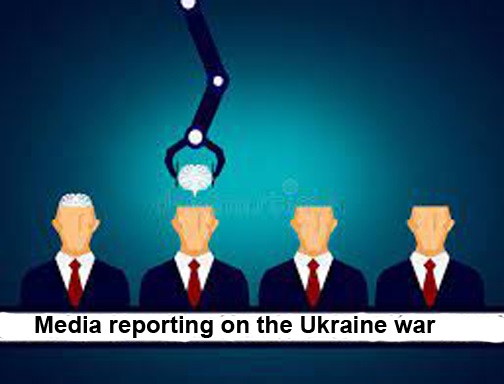
https://cpj.org/2022/09/cpj-calls-on-ukrainian-lawmakers-to-drop-media-bill/ Paris, September 13, 2022 – In response to media reports that Ukraine’s parliament passed in its first reading on August 30 a media bill that threatens to restrict press freedom, the Committee to Protect Journalists issued the following statement calling for the bill to be dropped:
“Ukraine’s media bill seriously imperils press freedom in the country by tightening government control over information at a time when citizens need it the most,” said Gulnoza Said, CPJ’s Europe and Central Asia program coordinator, in New York. “Ukrainian legislators should abandon the bill, or at least pause its progress in parliament until the European Union can weigh in with recommendations.”
Ukraine, a candidate to join the EU, is required to reform its media laws–many of which were implemented in the 1990s–in order to begin negotiations for membership. Matti Maasikas, the head of the EU Delegation to Ukraine, said in an interview published on August 23 that the bill was currently under evaluation by the EU and the Council of Europe, which could issue recommendations by the end of September.
The bill has the support of members of the ruling party, which has a majority in the Verkhovna Rada, the country’s parliament. To become law, it would need to pass two more readings in parliament and then be approved by President Volodymyr Zelenskyy.
As of September 13, the website of the Verkhovna Rada did not indicate the date of the second reading. “They have 21 days [after the first reading] to make amendments. But then it can take a month or up to the end of the year to be approved,” Sergiy Tomilenko, the head of the Ukrainian National Union of Journalists (NUJU), a local trade group, told CPJ via messaging app.
If passed, the legislation would expand the powers of the National Council of Television and Radio Broadcasting, the state broadcasting regulator, allowing it to regulate online and print outlets, invalidate the registration and license of any media outlet, block online media without a court order, and request that social media platforms and web browsers remove content forbidden under the law, according to multiple media reports.
According to an analysis posted on Telegram by NUJU, only 10% of the bill directly addressed commitments that Ukraine has undertaken as a candidate to join the EU. “The rest reflects the authorities’ desire to have more influence on the media: to issue injunctions, fines, and shut them down,” Tomilenko said in a statement NUJU posted to Telegram.
The new bill was amended only a few weeks before the vote, without a preliminary discussion with journalists and members of the media, Tomilenko said in the same statement.
CPJ emailed the Verkhovna Rada for comment, but did not receive any reply.
Putin and Macron trade blame over risk at Ukraine’s Zaporizhzhia nuclear plant
Last operating reactor has now been shut down, says Energoatom, to transfer facility to ‘safest state’
Guardian, Isobel Koshiw in Kyiv and agencies, Mon 12 Sep 2022
Vladimir Putin and Emmanuel Macron have traded blame over safety concerns at the Zaporizhzhia nuclear power station, which has been a focal point of fighting in recent weeks.
Separate readouts of a phone call between the French and Russian presidents highlighted the difficulties in trying to find an accord to ensure safety at the site.
“The Russian side drew attention to regular Ukrainian attacks on the plant’s facilities, including
radioactive waste storage, which is fraught with catastrophic
consequences,” said a statement published on the Kremlin’s website. It
called for a “non-politicised interaction” on the matter with the
participation of the International Atomic Energy Agency (IAEA).
In its statement, the French presidency said the occupation by Russian troops of
the plant was what was putting it at risk. “He [Macron] asked that
Russian forces withdraw their heavy and light weapons and that the IAEA’s
recommendations be followed to ensure safety at the site,” the Elysee
said.
Earlier, Ukraine’s nuclear power operator said the last operating
reactor at the plant had been shut down and the plant “completely
stopped”. The six-reactor Zaporizhzhia plant was disconnected from the
grid last week after all its power lines were disconnected as a result of
fighting in the area, and was operating in “island mode” for several
days, generating electricity for crucial cooling systems from its only
remaining reactor in operation.
Energoatom, the state-run operator of all
four of Ukraine’s nuclear power stations, said one of the power lines was
restored on Saturday night, allowing plant operators to shut down the last
reactor. “A decision was made to shut down power unit No 6 and transfer
it to the safest state: cold shutdown,” the operator said. Electricity
supply to the plant has been cut with increasing frequency over the past
few weeks, including at least three times last week. Energoatom said the
risk of continued damage to the supply line “remains high” and that it
did not want to risk the plant being powered by diesel generators, “the
duration of which is limited by the technological resource and the amount
of available diesel fuel”.
Guardian 11th Sept 2022
Space race – the old macho aim – USA and China to beat each other
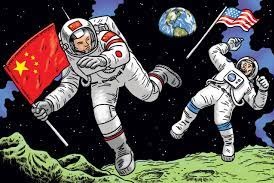
A new space race? China adds urgency to US return to moon
By ELLEN KNICKMEYER September 15, 2022 WASHINGTON (AP) — It’s not just rocket fuel propelling America’s first moonshot after a half-century lull. Strategic rivalry with China’s ambitious space program is helping drive NASA’s effort to get back into space in a bigger way, as both nations push to put people back on the moon and establish the first lunar bases.
American intelligence, military and political leaders make clear they see a host of strategic challenges to the U.S. in China’s space program, in an echo of the U.S.-Soviet rivalry that prompted the 1960s’ race to the moon. That’s as China is quickly matching U.S. civil and military space accomplishments and notching new ones of its own.
On the military side, the U.S. and China trade accusations of weaponizing space. Senior U.S. defense officials warn that China and Russia are building capabilities to take out the satellite systems that underpin U.S. intelligence, military communications and early warning networks………………………..
NASA, the U.S. civilian space agency, is awaiting a new launch date this month or in October for its Artemis 1 uncrewed test moonshot. Technical problems scrubbed the first two launch attempts in recent weeks.
China likewise aims to send astronauts to the moon this decade, as well as establish a robotic research station there. Both the U.S. and China intend to establish bases for intermittent crews on the moon’s south pole after that…………………………………….
And for space more broadly, Americans alone have tens of thousands of satellites overhead ………………………
The moon programs signal that “space is going to be an arena of competition on the prestige front, demonstrating advanced technical expertise and know-how, and then also on the military front as well,” said Aaron Bateman, a professor of history and international affairs at George Washington University and a member of the Space Policy Institute……………………………….
A 1967 U.N. space treaty meant to start shaping the guardrails for space exploration bans anyone from claiming sovereignty over a celestial body, putting a military base on it, or putting weapons of mass destruction into space.
“I don’t think it’s at all by coincidence or happenstance that it is now in this period of what people are claiming is renewed great-power competition that the United States is actually investing the resources to go back,” said Bateman, the scholar on space and national security. “Time will tell if this turns into a sustained program.”………………………………… https://apnews.com/article/astronomy-russia-ukraine-space-exploration-science-technology-f98448825e588e8902bb74519b55ba9f
Russia’s Stranglehold On The World’s Nuclear Power Cycle
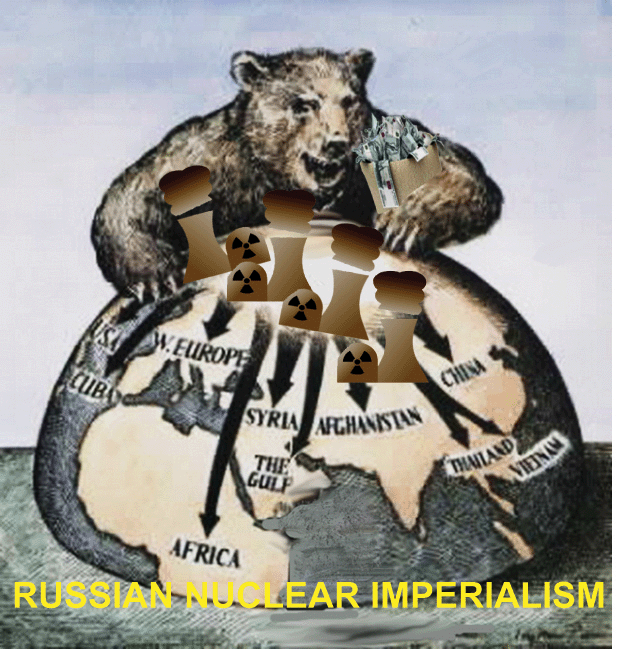
Radio Free Europe, September 01, 2022 By Kristyna Foltynova [Excellent graphics] “…………………… Here’s how Russia plays a crucial role in the world’s nuclear cycle
It’s Not Just About Mining
Russia is among the five countries with the world’s largest uranium resources. It is estimated to have about 486,000 tons of uranium, the equivalent of 8 percent of global supply…………….
However, uranium mining is just one piece of the nuclear process. Raw uranium is not suitable as fuel for nuclear plants. It needs to be refined into uranium concentrate, converted into gas, and then enriched. And this is where Russia excels.
In 2020, there were just four conversion plants operating commercially — in Canada, China, France, and Russia. Russia was the largest player, with almost 40 percent of the total uranium conversion infrastructure in the world, and therefore produced the largest share of uranium in gaseous form (called uranium hexafluoride).
World Uranium Conversion Capacity
In 2020, almost 40 percent of converted uranium came from Russia.
The same goes for uranium enrichment, the next step in the nuclear cycle. According to 2018 data (the latest available), that capacity was spread among a handful of key players, with Russia once again responsible for the largest share — about 46 percent.Therefore, Russia is a significant supplier of both uranium and uranium enrichment services. According to the latest available data, the European Union purchased about 20 percent of its natural uranium and 26 percent of its enrichment services from Russia in 2020. The United States imported about 14 percent of its uranium and 28 percent of all enrichment services from Russia in 2021.
Purchases Of Natural Uranium
In 2020, Russia supplied about one-fifth of the EU’s natural uranium and was among the top suppliers of uranium to the United States in 2021.
Did Someone Say Nuclear Reactors?
Nuclear reactors made in Russia are known as VVER — an abbreviation for the Russian vodo-vodyanoi enyergeticheskiy reactor (water-water energetic reactor). These reactors use water both as a coolant and as a moderator and were originally developed in the Soviet Union. There are several versions of VVERs (such as the VVER-440 and VVER-1000), with the volume of power being one of the significant differences.
Currently, there are 11 countries where various types of VVERs are operating, including Bulgaria, the Czech Republic, Hungary, and Finland. On top of that, other countries such as Egypt, Turkey, and Argentina currently have these reactors under construction or plan to build them.
Russia is considered the world leader when it comes to the export of nuclear plant development. Between 2012 and 2021, Rosatom initiated construction of 19 nuclear reactors; 15 of these were initiated abroad. That is far more than the next most prolific providers: China, France, and South Korea. Although China started building 29 reactors during the same period, only two of them were initiated abroad. France started building two reactors abroad, and South Korea four.
Exporters Of Nuclear Plants
Between 2012 and 2021, Russia initiated the construction of 15 nuclear reactors abroad.
Don’t Forget The Fuel
To keep the reactors operating, plants need a regular supply of nuclear fuel — usually a certain type of fuel. And this is where another level of dependency on Russia can be observed. Although there are several suppliers on the market, the Russian TVEL Fuel Company is currently the only authorized supplier of fuel needed for VVER-440s……..
Russia is also able to supply high-assay low-enriched uranium (also known as HALEU). It is a type of fuel that will be needed for more advanced reactors that are now under development by many companies across the United States. The main difference from the fuel that is currently being used is the level of uranium enrichment. Instead of up to 5 percent uranium-235 enrichment, the new generation of reactors needs fuel with up to 20 percent enrichment……………. At the moment, the only supplier able to provide the fuel on a commercial scale is Russia’s Tenex (owned by the Russian state-owned company Rosatom).
Looking For New Markets
Selling nuclear technology is also part of Russia’s effort to gain influence and reap profits in countries that are new to nuclear energy. One of the reasons countries want to cooperate with Russia is that it offers a “whole package” solution. Russia can not only build a nuclear plant and supply fuel, but it also trains local specialists, helps with safety questions, runs scholarship programs, and disposes of radioactive waste.
However, offering attractive loans is probably Russia’s most powerful tool. These loans are usually backed by government subsidies and cover at least 80 percent of construction costs. For example, Russia has already lent $10 billion to Hungary, $11 billion to Bangladesh, and $25 billion to Egypt — all to build nuclear power plants.
Russia has operating nuclear reactors in 11 countries, and more are under construction or being planned. Besides that, Russia has also signed either memorandums of understanding or intergovernmental agreements with at least 30 countries around the world, mostly in Africa. These serve as a declaration of interest in nuclear technology or set an intention to cooperate on the building of nuclear plants, respectively.
Russia has operating nuclear reactors in 11 countries, and more are under construction or being planned. Besides that, Russia has also signed either memorandums of understanding or intergovernmental agreements with at least 30 countries around the world, mostly in Africa. These serve as a declaration of interest in nuclear technology or set an intention to cooperate on the building of nuclear plants, respectively.
Some experts warn that African countries might not be ready for nuclear power, but Russia argues that the technology represents an answer to the continent’s increasing demand for electricity. It is also worth noting that African countries represent the largest voting bloc in the United Nations, which might be another reason for Russia to strengthen its ties in the region.
Nuclear Cooperation
There are at least 50 countries with some level of nuclear cooperation with Russia………. https://www.rferl.org/a/russia-nuclear-power-industry-graphics/32014247.html—
US-South Korea Provocations in the Pacific
Consortium News, September 14, 2022, The resumption of the recent joint military exercises is viewed with alarm by China, which, like North Korea, has repeatedly pointed to U.S. attempts to set up a NATO-like organization in Asia, writes Aditya Sarin.
By Aditya Sarin Peoples Dispatch Sept 16 2022,
Between Aug. 22 and Sept. 1, the United States and South Korea concluded their largest joint military drills in the Korean Peninsula since 2017, under the name “Ulchi Freedom Shield.” Over the last four years, the scope of the annual exercises had been scaled back, first because of former U.S. President Donald Trump’s attempts at diplomacy with North Korea’s Kim Jong-un and later because of the Covid-19 pandemic.
With these drills, however, the U.S. and South Korea seem to be attempting to send a clear message to both North Korea and China of their united military posture in the region, and come at a time when the U.S.’ encirclement of China continues rapidly.
The U.S. has maintained a force of at least tens of thousands of troops in South Korea (officially the Republic of Korea, or ROK), since before the Korean War. While South Korean forces are otherwise independent, at times of war they are subordinated to the command of a U.S. general as part of the ROK/US Combined Forces Command. With 28,500 U.S. troops stationed there, South Korea has the third-highest number of U.S. troops of any country outside of the U.S.
While the recent exercises have been conducted against a nameless enemy, it is not hard to see towards whom their message is aimed. The site of the exercises was only 32 kilometers from the border and De-Militarized Zone (DMZ) between North and South Korea. Live-fire tank and troop maneuvers have been practiced as the U.S. and the ROK engage in simulations and seek to increase interoperability of their deployments and technologies…………………………………….. more https://consortiumnews.com/2022/09/14/us-south-korea-provocations-in-the-pacific/
Russia’s uranium exports can continue – exempt from sanctions imposed on other commodities
The German government said Monday that it can’t stop a shipment of Russian uranium destined for French nuclear plants from being processed at a site in Germany because atomic fuel isn’t covered by European Union sanctions on Russia.
Environmentalists have called on Germany and the Netherlands to block a shipment of uranium aboard the Russian ship Mikhail Dudin — currently docked in the French port of Dunkirk — from being transported to a processing plant in Lingen, close to the German-Dutch border.
“We have no legal grounds to prevent the transport of uranium from Russia, because the sanctions imposed by the EU due to the Russian invasion of Ukraine exempt the import of nuclear fuel … to the EU from import bans,” said a spokesman for Germany’s Environment Ministry, Andreas Kuebler. Safety requirements for the shipment had been examined and foundto meet requirements, meaning German authorities had to approve it, he added.
Washington Post 12th Sept 2022
It’s not okay for grown adults to say the Ukraine invasion was “unprovoked”
The US Army-commissioned paper details how the empire can use proxy warfare, economic warfare and other cold war tactics to push its longtime geopolitical foe to the brink without costing American lives or sparking a nuclear conflict. It mentions Ukraine hundreds of times, and it explicitly discusses the same economic warfare tactics we’re seeing today
Caitlin Johnstone, TheAltWorld, Wed, 07 Sep 2022
On a recent interview with the Useful Idiots podcast, Noam Chomsky repeated his argument that the only reason we hear the word “unprovoked” every time anyone mentions Russia’s invasion of Ukraine in the mainstream news media is because it absolutely was provoked, and they know it. Chomsky said:
“Right now if you’re a respectable writer and you want to write in the main journals, you talk about the Russian invasion of Ukraine, you have to call it ‘the unprovoked Russian invasion of Ukraine”. It’s a very interesting phrase; it was never used before. You look back, you look at Iraq, which was totally unprovoked, nobody ever called it ‘the unprovoked invasion of Iraq.’ In fact I don’t know if the term was ever used — if it was it was very marginal. Now you look it up on Google, and hundreds of thousands of hits. Every article that comes out has to talk about the unprovoked invasion of Ukraine.
“Why? Because they know perfectly well it was provoked. That doesn’t justify it, but it was massively provoked. Top US diplomats have been talking about this for 30 years, even the head of the CIA.”
Chomsky is of course correct here. The imperial media and their brainwashed automatons have spent half a year mindlessly bleating the word “unprovoked” in relation to this war, but one question none of them ever have a straight answer for is this: if the invasion of Ukraine was unprovoked, how come so many western experts spent years warning that the actions of western governments would provoke an invasion of Ukraine?
Because, as Chomsky notes, that is indeed the case. A few days after the invasion began this past February a guy named Arnaud Bertrand put together an extremely viral Twitter thread that just goes on and on and on about the various diplomats, analysts and academics in the west who have over the years been warning that a dangerous confrontation with Russia was coming because of NATO advancements toward its borders, interventionism in Ukraine, and various other aggressions. It contains examples like John Mearsheimer explicitly warning in 2015 that “the west is leading Ukraine down the primrose path, and the end result is that Ukraine is going to get wrecked,” and Pat Buchanan warning all the way back in 1999 that “By moving NATO onto Russia’s front porch, we have scheduled a twenty-first-century confrontation.”
Empire apologists love claiming that the invasion of Ukraine had nothing to do with NATO expansionism (their claims generally based on brazen misrepresentations of what Vladimir Putin has said about Russia’s reasons for the war), but that’s silly. The US war machine was continuing to taunt the possibility of NATO membership for Ukraine right up until the invasion, a threat it refused to take off the table since placing it there in 2008 despite knowing full well that this threat was an incendiary provocation to Moscow.
This is to say nothing of the US empire actively fomenting a violent uprising in 2014 which ousted Kyiv’s sitting government and fractured the nation between its more Moscow-loyal populations to the east and the more US/EU-friendly parts of the country. This led to the annexation of Crimea (overwhelmingly supported by the people who live there) and eight years of brutal warfare against Russia-backed separatists in the Donbas. Ukrainian attacks on those separatists are known to have increased exponentially in the days leading up to the invasion, and it has been argued that this is what provoked Putin’s final decision to commit to invading (which was a last-minute decision according to US intelligence).
The US power alliance could very easily have prevented this war with a few low-cost concessions like enshrining Ukrainian neutrality, rolling back its war machinery from Russia’s borders and sincerely pursuing detente with Moscow instead of shredding treaties and ramping up cold war escalations. Hell, it could likely have prevented this war just by protecting President Zelensky from the anti-Moscow far right nationalists who were openly threatening to lynch him if he began honoring the Minsk agreements and pursuing peace with Russia, as he was originally elected to do.
Instead it knowingly chose the opposite course: continuing to float the possibility of formal NATO membership for Ukraine while pouring weapons into the nation and making it more and more of a de facto NATO memberwith closer and closer intimacy with the US war machine, and then either ordering, encouraging or tolerating Ukraine’s aggressive assault on Donbas separatists.
Why did the empire opt for provocation over peace? Congressman Adam Schiff gave a pretty good answer to that question in January of 2020 as the road to war was being paved: “so that we can fight Russia over there, and we don’t have to fight Russia here.” If you relinquish the infantile idea that the US empire is helping its good friend Ukraine because it loves the Ukrainian people and wants them to have freedom and democracy, it’s not hard to see that the US sparked a convenient proxy war because it was in its geostrategic interests to do so, and because it wouldn’t be their lives and property getting laid to waste.
Brian Berletic put out a good video a few days ago about a Pentagon-funded 2019 Rand Corporation paper titled “Extending Russia – Competing from Advantageous Ground,” which is exactly what it sounds like. The US Army-commissioned paper details how the empire can use proxy warfare, economic warfare and other cold war tactics to push its longtime geopolitical foe to the brink without costing American lives or sparking a nuclear conflict. It mentions Ukraine hundreds of times, and it explicitly discusses the same economic warfare tactics we’re seeing today like sanctions and attacking Russia’s energy interests in Europe (the latter of which Berletic points out is also being used to bolster US dominance over its vassals in the EU).
Continue readingFrance, Germany and UK lose faith in negotiations with Iran, to restore the nuclear agreement.
We the governments of France, Germany and the United Kingdom have
negotiated with Iran, in good faith, since April 2021 to restore and fully
implement the Joint Comprehensive Plan of Action (JCPoA), along with other
participants to the deal and the United States.
In early August, after a
year and a half of negotiations, the JCPoA Coordinator submitted a final
set of texts which would allow for an Iranian return to compliance with its
JCPoA commitments and a US return to the deal. In this final package, the
Coordinator made additional changes that took us to the limit of our
flexibility.
Unfortunately, Iran has chosen not to seize this critical
diplomatic opportunity. Instead, Iran continues to escalate its nuclear
program way beyond any plausible civilian justification. While we were
edging closer to an agreement, Iran reopened separate issues that relate to
its legally binding international obligations under the Non Proliferation
Treaty (NPT) and its NPT safeguards agreement concluded with the
International Atomic Energy Agency (IAEA).
This latest demand raises
serious doubts as to Iran’s intentions and commitment to a successful
outcome on the JCPoA. Iran’s position contradicts its legally binding
obligations and jeopardizes prospects of restoring the JCPoA.
French Ministry of Foreign Affairs 10th Sept 2022
Revival of the Iran nuclear deal is not likely any time soon
Tehran has submitted its latest response in the ongoing negotiations to
restore the Iran nuclear deal — and the United States is slamming it as a
“not at all encouraging” step “backwards.” The negative reaction
from the Biden administration — as well as European sources — suggests
that a revival of the 2015 nuclear agreement is not imminent as some
supporters of the deal had hoped, despite roughly a year and a half of
talks.
Politico 1st Sept 2022
https://www.politico.com/news/2022/09/01/nuclear-talks-u-s-iran-00054603
No energy solution without a radical rethink — World leaders suck in the fossil-nuclear mindset

Global leaders bear responsibility for ever worsening energy problems
No solution without a radical rethink — Beyond Nuclear International The danger of antiquated fossil-nuclear mindsets on energy policy
By Hans-Josef Fell 4 Sept 22,
EU President von der Leyen, German Chancellor Scholz, French President Macron, Taiwan’s President Tsai Ing Wen, as well as most other global leaders – they are all characterized by the fact that in their important high-ranking functions they have almost always viewed energy security solely from a fossil-nuclear perspective. To the present day they have prioritised the business interests of the big energy companies, whose focus is fossil-nuclear.
These global leaders subordinated the resulting geopolitical tensions and climate protection in their policy of procuring crude oil, natural gas, coal and uranium, although the consequences have been foreseeable for decades. They have not effectively promoted domestic renewable energies as the only real solution for energy security. For that reason, they are largely responsible for the fact that the EU and other regions are now highly dependent on energy supplies from autocratic countries and they bear a large share of the blame for the current, ever worsening energy problems, geopolitical tensions and global warming. …………
German Chancellor Olaf Scholz
For example, German Chancellor Scholz has still not been to Bavaria, the state that has been the biggest blocker of the energy transition for years and is hence now facing particularly massive energy problems in the coming winter. ……………………..
French President Emmanuel Macron
Another example for persisting fossil nuclear patterns of thought is the French President Emmanuel Macron. He aims to build 14 new nuclear power plants and to continue operation of the existing ones with 50-year longevity extensions to enable French energy security in the years ahead. This strategy seems particularly absurd in light of France’s recent experiences with new nuclear construction and operation. For example, the only new nuclear power plant built in France, the EPR reactor in Flamanville, is still not in operation since construction started in 2007 and planned commissioning in 2012. Construction costs have skyrocketed by at least three times. With this in mind, the plans for the construction of 14 new reactors will certainly not be feasible before 2050 and hence will by no means be part of a solution to the the current energy crisis.
On the contrary, France’s 56 nuclear power plants contribute significantly to the European energy crisis. Up to 50% of the French nuclear power plants had to be shut down recently, partly because significant safety risks had been discovered due to cracks in the cooling pipes. Additionally, many other nuclear plants had to be shut down this hot summer due to warm river temperatures and low water levels that could no longer guarantee the plants’ cooling.If the drought persists, there is a threat of further shutdowns in the coming weeks, incidentally also at coal-fired power plants as they also rely on river cooling water.
So far, a French blackout has only been prevented with green electricity supplies from Germany………………….
EU Commission President Ursula von der Leyen ………………………….. Ursula von der Leyen is responsible for the inclusion of the highly climate-damaging natural gas and the highly dangerous nuclear energy as “green” energies in the EU taxonomy. There is no more obvious way to document the compliant support of the fossil and nuclear economy. Against this backdrop, Ursula von der Leyens recent political activities completely failed in terms of the expansion of renewable energies.
Ukrainian President Wolodimir Selenski
The Ukrainian President Wolodomir Selenski plans to export electricity to Europe to generate revenue. However, more than 50% of the electricity in Ukraine comes from nuclear power plants. These are at high risk in Putin’s war right now. Misdicrected rockets as well as targeted attacks during wars can cause a nuclear “super-disaster”. In that case, regions all over Europe would be affected by radioactive contamination……….
at least in wars, nuclear power plants must be shut down. President Selenski, however, is still sticking to nuclear power production, building up on his announcement to construct new nuclear power plants. Moreover, Ukraine itself buys fuel elements from Russia and thus paradoxically finances Russia’s war of aggression against its own country.
Selenski’s adherence to the fossil-nuclear energy system is thus also a great danger to the existence of all Europeans. The only way out of this highly dangerous situation is the switch to 100% renewable energies. But so far, Selenski has hardly promoted this transformation.
Taiwanese President Tsai Ing Wen
Similarily, the industrial region of Taiwan, another current trouble spot, is almost completely dependent on fossil and nuclear energy supplies from abroad…………………………………..
Conclusion
Scholz, Macron, von der Leyen, Selenski, Tsai Ing Wen – as different as the challenges that the respective countries are currently facing may be – what unites them all is that they seem to have learned nothing from the current crises. Even though the multidimensional crises of our time – energy price crisis, climate crisis, health crisis, wars – show us more painfully than ever where our nuclear fossil dependency has led us, they are still clinging to the fossil and nuclear energy system instead of clearly focusing all efforts on the expansion of renewable energies. Only with these will we be able to embark on the path to a sustainable and peaceful future. Read our global study to learn how such a 100% clean energy supply can be implemented worldwide in a technically and economically viable way.
Hans-Josef Fell is the founder and president of The Energy Watch Group and was a member of the German Parliamentary Group Alliance 90/ the Greens from 1998 to 2013.
Gorbachev Ended Cold War, Eased Nuclear Tensions But Trusted US Too Much – Experts

News Ghana, By SPUTNIK, September 1, 2022,
Late Soviet President Mikhail Gorbachev was a good, well-meaning man who ended the Cold War and dramatically reduced superpower and global nuclear tensions, but he put too much trust into the unwritten assurances of American leaders, experts told Sputnik.
Gorbachev died on Tuesday at the age of 91 in Moscow after a long and serious illness, according to the Central Clinical Hospital. He will be laid to rest at the Novodevichy cemetery in Moscow after a public farewell ceremony on Saturday.
Former US Assistant Secretary of Defense for International Security Affairs Chas Freeman paid tribute to Gorbachev’s monumental achievement in easing global tensions and ensuring superpower peace for decades.
“Until his death, he was the most consequential of all living persons,” Freeman said.
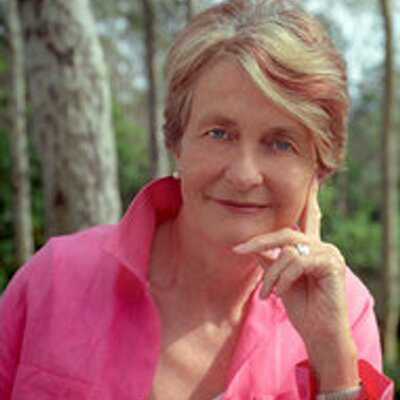
Global anti-nuclear campaigner Dr. Helen Caldicott, founder of Nobel Peace Prize winning Physicians said Gorbachev had far greater vision and determination to abolish nuclear weapons than his US counterparts.
Global anti-nuclear campaigner Dr. Helen Caldicott, founder of Nobel Peace Prize winning Physicians said Gorbachev had far greater vision and determination to abolish nuclear weapons than his US counterparts.
“A global hero died [on Tuesday]. A man who liaised with [then-US president Ronald] Reagan who brought the Cold War to an end and was one of the wisest men, if not the wisest, of this last century,” she said.
Unfortunately, when the two leaders met in Reykjavik, Iceland in October 1986 and almost agreed to abolish nuclear weapons, Reagan insisted on keeping Star Wars, the US-space-based weapons systems, Caldicott recalled.
“Gorbachev opposed this notion, so we still have our lives hanging by a thread, rapidly approaching global annihilation,” she said.
Gorbachev was also opposed to the eastward expansion of NATO in the 30 years following the end of the Soviet Union, Caldicott pointed out. A halt on NATO expansion east of the Oder River and the eastern-most border of Germany had been promised by then-Secretary of State James A. Baker III in the George Herbert Walker Bush administration, she noted.
However, this pledge was “subsequently violated by the great United States of America, hence the murderous mess in the Ukraine [today],” Caldicott commented.
American University in Moscow President Edward Lozansky agreed that Gorbachev was a good man who sought international global security and cooperation for all, especially for the Russian and American peoples, but that he was naive in trusting the assurances of successive US leaders.
“Gorbachev was a good man who clearly saw the mountains of problems in… the Soviet Union but naively expected America’s help in solving them,” he said.
In his vision which Gorbachev presented to Washington he saw this help not as a charity but an investment in the future, involving both mutually beneficial security and economic cooperation, Lozansky explained.
“Taking into account Russia’s enormous natural riches, its huge nuclear arsenal and human capital, that cooperation being performed in an honest way would definitely be good for everyone and prevent many problems that America faces today,” he pointed out.
However, the Washington establishment has chosen another way, Lozansky observed………
Gorbachev will rank high in the annals of the world, Lozansky concluded.
“Still. I believe that his historical legacy will place him in the ranks of the righteous,” he said.
California State University Political Science Professor Beau Grosscup agreed that Gorbachev had courageously approved enormous constructive changes even at the cost of his own standing and career………….. https://newsghana.com.gh/gorbachev-ended-cold-war-eased-nuclear-tensions-but-trusted-us-too-much-experts/
Zelensky aide says UN nuclear watchdog should be mistrusted ‘by default’
RT.com, 2 Sept 22,
A top advisor to the Ukrainian president says he doesn’t expect a breakthrough from the IAEA mission to the Zaporozhye power plant.
International organizations including the International Atomic Energy Agency (IAEA) are “cowardly” and cannot be trusted, a senior aide to Ukrainian President Vladimir Zelensky has said.
“I don’t like international institutions and mediation missions in general. They look extremely ineffective, extremely cowardly and extremely unprofessional,” Mikhail Podolyak said in an interview on Thursday evening.
This applies “not only to the IAEA”, but also to the UN, Amnesty International, and the International Committee of the Red Cross, the Ukrainian official claimed, adding: “By default, you should not trust them.”
Podolyak’s remarks came as he criticized the IAEA mission to the Russia-controlled Zaporozhye nuclear power plant, which arrived earlier in the day. He expressed his low expectations from the mission, based on the positive remarks that Director General Rafael Grossi made after touring the facility in Ukraine.
The Ukrainian official said he was willing to give the IAEA inspectors the benefit of the doubt and wait for them make an official report that would “show the depth of their inner destruction”.
He explained his concerns, citing several aspects of Grossi’s visit. They include its relatively short duration, which Podolyak assessed was too short for a proper fact-finding mission. He also criticized the willingness of the IAEA chief to talk to a representative of the Russian atomic energy body Rosatom, who, Podolyak said, “delivered a strange long speech” to the UN official.
The IAEA experts arrived at the station from Kiev despite continued military action in its vicinity. Kiev and Moscow have accused each other of being behind the shelling and of trying to derail the inspection. Some members of the mission stayed behind to monitor the situation, while Grossi and others left.
Podolyak said the IAEA should blame Russia for attacks on the plant, and if their report fails to do so, only stating that inspectors witnessed evidence of strikes, his opinion about the organization will be vindicated.
President Vladimir Zelensky too has expressed skepticism about the IAEA visit to the Zaporozhye nuclear power plant………….https://www.rt.com/russia/562053-iaea-mission-podolyak-interview/
Iran seeks stronger U.S. guarantees for revival of 2015 nuclear deal
By Parisa Hafezi, 1 Sept 22, DUBAI, Aug 31 (Reuters) – Iran needs stronger guarantees from Washington for the revival of a 2015 nuclear deal, its foreign minister said in Moscow on Wednesday, adding that the U.N. atomic watchdog should drop its “politically motivated probes” of Tehran’s nuclear work.
Reporting by Parisa Hafezi in Dubai Additional reporting by Doina Chiacu, Rami Ayyub and Jeff Mason in Washington Editing by Nick Macfie and Matthew Lewis………………more https://www.reuters.com/world/iran-seeks-stronger-us-guarantees-revival-2015-nuclear-deal-2022-08-31/
Russia and the U.S. are entering ‘dangerous and uncharted’ nuclear territory

the U.S. believes “a controlled shutdown” of the plant’s nuclear reactors is “the least risky course of action in the near term.”
Fighting around a Ukraine nuclear power plant is poisoning arms control discussions and feeding fears of a diplomatic break.
Politico By NAHAL TOOSI, 08/30/2022
When President Joe Biden and Russian leader Vladimir Putin met face to face last year, they proudly touted how, “even in periods of tension,” Washington and Moscow could cooperate on nuclear issues.
A year and a war later, even such existential-level cooperation appears shaky.
Most urgently, ongoing fighting around a Ukrainian nuclear power plant captured by Russian forces has injected fresh uncertainty into a U.S.-Russian nuclear relationship that was already reeling from Putin’s invasion of Ukraine and the subsequent U.S. and European sanctions on Moscow.
But the invasion and its fallout have affected an array of other nuclear-related issues, from the Iran nuclear talks to recent international discussions about the Nuclear Non-Proliferation Treaty, a bedrock pact.
Russia and the U.S. also have been tangling over inspections of each side’s nuclear weapons facilities allowed by the New START treaty. There are fears that New START, the last arms control treaty between the two countries, will not get renewed or replaced if tensions between the nuclear powers worsen.
Russia and the United States have the two largest nuclear arsenals in the world. Even during the Cold War, Washington and Moscow were able to cooperate on ways to avoid an atomic disaster. Still, the sensitivity of anything nuclear-related means both countries must reassure the world that they can cooperate now, former officials and analysts say.
“The United States and Russia, despite their differences, have a special responsibility to avoid nuclear catastrophe,” said Daryl Kimball, executive director of the Arms Control Association. “I really do think both sides have an interest in continuing arms control treaties. It’s not just PR. The question is can they get over all these other problems and obstacles that Russia’s war has certainly created.”
A nuclear plant held ‘hostage’
The most immediate concern is the situation at a nuclear power plant in the southern Ukraine area of Zaporizhzhia……………………………………
A senior U.S. defense official, meanwhile, said the U.S. believes “a controlled shutdown” of the plant’s nuclear reactors is “the least risky course of action in the near term.”
………………………………
Reached Monday, officials with the Russian embassy in Washington referred POLITICO to past statements from Kremlin sources that put much of the blame on the U.S. and Ukraine.
In those statements, Russian officials disputed that they are the guilty party in the showdown over the Zaporizhzhia plant. They accused Ukraine of artillery fire in the area and said the Biden administration should do more to stop its ally.
“The administration’s silence on these facts is unacceptable and only encourages Kiev’s impunity,” the Russian embassy said in a statement earlier this month. https://www.politico.com/news/2022/08/30/russia-united-states-dangerous-uncharted-nuclear-territory-00054134
Meeting on Nuclear Non Proliferation Treaty ends in failure, as Russia blocks final draft
A month-long meeting on nuclear disarmament ended in failure at the United
Nations Friday night when Russia refused to accept the final draft of the
Treaty on the Non-Proliferation of Nuclear Weapons. The treaty is reviewed
every five years as part of an effort to reduce nuclear risks and stop the
expansion of nuclear arsenals around the world. The failure of the
negotiations came amid disagreements over Russia’s invasion of Ukraine,
which has entered its sixth month.
CNN 27th Aug 2022
1 This Month



26 September – International Day for the Total Elimination of Nuclear Weapons


PLEASE OPPOSE HR 8255 AND S.3639 – bills would accelerate satellite deployment, with no environmental review or safeguards – https://ncstd5li.quorum.us/campaign/169331/
To see nuclear-related stories in greater depth and intensity – go to https://nuclearinformation.wordpress.com
-
Archives
- September 2026 (257)
- August 2026 (330)
- July 2026 (355)
- June 2026 (287)
- May 2026 (306)
- April 2026 (356)
- March 2026 (251)
- February 2026 (267)
- January 2026 (308)
- December 2025 (358)
- November 2025 (359)
- October 2025 (375)
-
Categories
- 1
- 1 NUCLEAR ISSUES
- business and costs
- climate change
- culture and arts
- ENERGY
- environment
- health
- history
- indigenous issues
- Legal
- marketing of nuclear
- media
- opposition to nuclear
- PERSONAL STORIES
- politics
- politics international
- Religion and ethics
- safety
- secrets,lies and civil liberties
- spinbuster
- technology
- Uranium
- wastes
- weapons and war
- Women
- 2 WORLD
- ACTION
- AFRICA
- Atrocities
- AUSTRALIA
- Christina's notes
- Christina's themes
- culture and arts
- Events
- Fuk 2022
- Fuk 2023
- Fukushima 2017
- Fukushima 2018
- fukushima 2019
- Fukushima 2020
- Fukushima 2021
- general
- global warming
- Humour (God we need it)
- Nuclear
- RARE EARTHS
- Reference
- resources – print
- Resources -audiovicual
- Weekly Newsletter
- World
- World Nuclear
- YouTube
-
RSS
Entries RSS
Comments RSS
 nuclear-news