Both sides need to acknowledge their mistakes, especially regarding Crimea and the Donbass
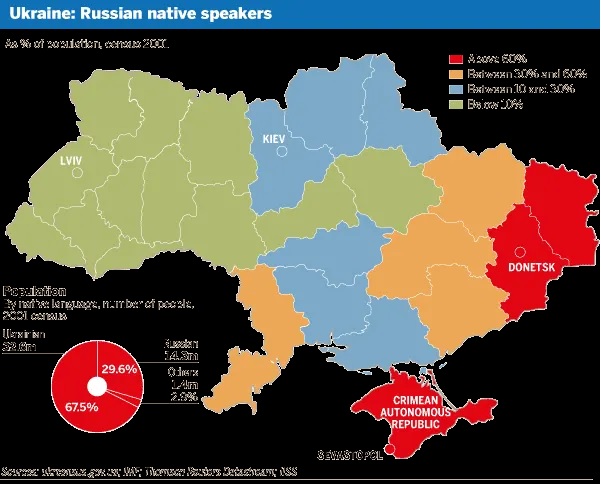
At the end of this presentation, we see that the blame is shared, but not equally. The West recognized the 2014 coup; it tried to stop the ensuing massacre, but ultimately let the full nationalists continue it; it armed Ukraine instead of forcing it to comply with the Minsk 1 and 2 agreements. Russia, for its part, built a bridge that locks the Sea of Azov without consultation. Peace will only be preserved if both sides recognize their mistakes.
Are we able to do this?
Crimea, which had already voted in a referendum to become part of the future independent Russia when the USSR was dissolved, six months before the rest of the Ukrainian Soviet Republic declared its independence, voted again in a referendum. For four years, Crimea was claimed by both Russia and Ukraine. Moscow argues that between 1991 and 1995, it and not Kiev was paying pensions and salaries of officials in Crimea. In fact, Crimea was always Russian, even if it was considered part of Ukraine. In the end, it was Russian President Boris Yeltsin who, in the midst of a severe economic crisis, decided to abandon Crimea to Kiev. However, Crimea then voted for a constitution recognizing its autonomy within Ukraine, which Kiev never accepted. The second referendum, in 2014, overwhelmingly proclaimed independence. The Crimean Parliament then called for the attachment of its state to the Russian Federation, which the latter accepted. To strengthen the continuity of its territory, Russia built, without consulting Ukraine, a gigantic bridge linking its metropolis to the Crimean peninsula across the Sea of Azov, effectively privatizing this small sea.
How to Stop the Escalation to War,
Voltaire.net, by Thierry Meyssan, Translation, Roger Lagassé, 27 Sept 22,
The Ukrainian conflict is turning into a war between the West on one side and Russia and China on the other. Each side is convinced that the other one wants its loss. And fear is a bad advisor. Peace can only be preserved if each side recognizes its mistakes. This must be a radical change, because today neither Western discourse nor Russian actions correspond to reality.
o political leader wants a war on his territory. When they do, it is usually out of fear. Each side fears the other, rightly or wrongly. Of course, there are always a few elements that push for a cataclysm, but they are fanatical and in the minority.
This is exactly the situation in which we find ourselves. Russia is convinced, rightly or wrongly, that the West wants to destroy it, while the West is identically convinced that Russia is conducting an imperialist campaign and will eventually destroy its freedoms. In the shadows, a very small group, the Straussians, want confrontation.
This is not to say that World War III is just around the corner. But if no political leader radically changes his or her foreign policy, we are walking directly into the unknown and must prepare for absolute chaos.
To clear up misunderstandings, we must listen to the narratives of both sides.
Moscow believes that the overthrow of democratically elected President Viktor Yanukovych was a coup d’état orchestrated by the United States. This is the first point of divergence as Washington interprets the events as a “revolution”, the “EuroMaidan” or “Dignity” revolution. Eight years later, numerous Western testimonies attest to the involvement of the US State Department, the CIA and the NED, Poland, Canada and finally NATO.
The people of Crimea and Donbass refused to endorse the new power, which included many “integral nationalists”, successors of the defeated of the Second World War.
Crimea, which had already voted in a referendum to become part of the future independent Russia when the USSR was dissolved, six months before the rest of the Ukrainian Soviet Republic declared its independence, voted again in a referendum. For four years, Crimea was claimed by both Russia and Ukraine. Moscow argues that between 1991 and 1995, it and not Kiev was paying pensions and salaries of officials in Crimea. In fact, Crimea was always Russian, even if it was considered part of Ukraine. In the end, it was Russian President Boris Yeltsin who, in the midst of a severe economic crisis, decided to abandon Crimea to Kiev. However, Crimea then voted for a constitution recognizing its autonomy within Ukraine, which Kiev never accepted. The second referendum, in 2014, overwhelmingly proclaimed independence. The Crimean Parliament then called for the attachment of its state to the Russian Federation, which the latter accepted. To strengthen the continuity of its territory, Russia built, without consulting Ukraine, a gigantic bridge linking its metropolis to the Crimean peninsula across the Sea of Azov, effectively privatizing this small sea.
Crimea is home to the port of Sevastopol, which is indispensable to the Russian navy. The latter represented nothing in 1990, but became a power again in 2014.
The West recognized the Soviet referendum in Ukraine in 1990, but not the one in 2014. Yet the right of peoples to self-determination does apply to the Crimeans. The West argues that many Russian soldiers were present without wearing their uniforms. True, but the results of the two referendums in 1990 and 2014 were similar. There is no room for suspicion of fraud.
To show that they did not accept this “annexation”, the West collectively imposed sanctions on Russia, without authorization from the Security Council. These sanctions violate the UN Charter, which gives exclusive authority to the Security Council.
The Donetsk and Luganks oblasts have also rejected the 2014 coup government. They proclaimed their autonomy and posed as resisters to the “Nazis” in Kiev. Equating “integral nationalists” with “Nazis” is historically justified, but does not allow non-Ukrainians to understand what is going on.
The “integral nationalist” was created in Ukraine by Dmytro Dontsov at the very beginning of the 20th century. Initially, Dontsov was a left-wing philosopher, only gradually moving to the extreme right. He was a paid agent of the Second Reich during the First World War, before participating in the Ukrainian government of Symon Petliura, which arose during the Russian Revolution of 1917. He participated in the Paris Peace Conference and accepted the Treaty of Versailles. During the inter-war period, he exercised a mastery over Ukrainian youth and became a propagandist of fascism, then of Nazism.
He became violently anti-Semitic, preaching for the massacre of the Jews long before this theme was supported by the Nazi authorities, who spoke only of expulsion until 1942. During the Second World War, he refused to take over the leadership of the Organization of Ukrainian Nationalists (OUN), which he entrusted to his disciple Stepan Bandera, assisted by Yaroslav Stetsko.
Almost all the documents about his activity within Nazism have been destroyed. It is not known what he did during the war, except for his active participation in the Reinhard Heydrich Institute after the latter’s assassination. The newspapers of this anti-Semitic organ gave him a lot of space
At the Liberation, he fled to Canada, under the protection of the Anglo-Saxon secret services, and then to the United States. At the end of his life, he was still as virulent as ever and had evolved into a form of Viking mysticism, preaching the final confrontation against the “Muscovites. Today, his books, especially his Nationalism, are required reading for militiamen, especially those in the Azov Regiment. Ukrainian “integral nationalists” massacred at least 3 million of their fellow citizens during World War II.
Washington reads this history differently. For it, the “integral nationalists” certainly made mistakes, but they were fighting for their independence against both the German Nazis and the Russian Bolsheviks. The CIA was therefore right to host Dmytro Donsov in the USA and to employ Stepan Bandera on Radio Free Europe. And even more, to create the World Anti-Communist League around the Ukrainian Nazi Prime Minister, Yaroslav Stetsko, and the leader of the Chinese anti-communist opposition, Chiang Kai-shek. Today, again according to Washington, these facts belong to the past.
In 2014, with President Petro Poroshenko, the Kiev government cut off all aid to the “Muscovites” of Donbass. It stopped paying pensions to its citizens and salaries to their civil servants. It banned the Russian language, spoken by half of Ukrainians, and launched punitive military operations against these “sub-humans”, killing 5,600 and displacing 1.5 million in 10 months. In the face of these horrors, Germany, France and Russia imposed the Minsk agreements. The aim was to bring the Kiev government to its senses and to protect the people of the Donbass.
Noting that the first agreements had not been followed by effect. Russia had the Minsk 2 agreement endorsed by the Security Council. This was resolution 2202, adopted unanimously. During the explanations of vote, the United States developed its interpretation of this period. For them, the “resistance” in Donbass were only “separatists” supported militarily by Moscow. They therefore specified that the Minsk 2 agreement (February 12, 2015) did not replace the Minsk 1 agreements (September 5 and 19, 2014), but added to them. They thus demanded that Russia withdraw the troops it had deployed without uniform in the Donbass. Germany and France had a joint statement added, co-signed by Russia, guaranteeing the “binding” implementation of this set of “commitments.”
However, shortly afterwards, President Poroshenko declared that he had no intention of implementing anything and resumed hostilities, a position that the government of President Zelensky has reiterated. In the seven years following resolution 2202, 12,000 new victims were killed, according to Kiev, or 20,000, according to Moscow.
During this period, Moscow did not intervene. President Vladimir Putin not only withdrew his troops, but also forbade an oligarch to send mercenaries to support the people of Donbass. The latter have been abandoned by the guarantors of the Minsk agreements and by the other members of the Security Council.
In the Russian way of politics, one waits until one is in a position to do something before announcing it. So Moscow did not say anything, but prepared for what was to come. Suffering from the sanctions it had endured since the annexation of Crimea, it expected the West to tighten them when it intervened to implement resolution 2202. So Putin approached other sanctioned states, including Iran, to circumvent the sanctions on him and prepare to circumvent others. Anyone who regularly visits Russia will have noticed that the Putin administration is developing food autarky, including for meat and cheese, which his country had previously lacked. Russia has moved closer to China in banking, which we have wrongly interpreted as a move against the dollar. In reality, it was a preparation for the exclusion of the SWIFT system.
When President Putin launched his army into Ukraine, he made it clear that he was not declaring a “war” to annex Ukraine, but was implementing a “special military operation” under Resolution 2202 and his “responsibility to protect” the civilian population of Donbass.
As expected, the West responded with economic sanctions that severely disrupted the Russian economy for two months. Then things turned around and these sanctions turned out to be profitable for Russia, which had prepared for them for a long time.
On the ground, the West sent a lot of weapons, then deployed military advisors and some special forces. The Russian army, three times smaller in number than the Ukrainian army, began to suffer. It has therefore just decreed a partial mobilization to send new troops without having to dismantle its national defence system.
Nato, for its part, has developed a plan to mobilize a core group of states and an expanded group of its more distant allies. The idea is to spread the financial effort over as many partners as possible until Russia is exhausted.
Moscow responded by announcing that if the West took a further step, it would use its new weapons.
The Russian and Chinese armies have mastered hypersonic launchers, which the West lacks. Moscow and Beijing can destroy any target, anywhere in the world, in a matter of minutes. It is impossible to stop them, and this imbalance will last at least until 2030, according to US generals. Russia has already said that it will strike first at the British Foreign Office, which it considers to be the head of its enemies, and the Pentagon, which it considers to be its armed wing. In the event of an attack, the Russian and Chinese armies would first destroy the United States’ strategic communication satellites (CS3). The latter would lose in a few hours the possibility of guiding nuclear missiles and therefore of retaliating. There is little doubt about the outcome of such a war.
……………Engaging in this confrontation is not impossible. In the United States, the Straussians, a very small group of unelected politicians, are determined to bring about the apocalypse. In their view, the United States will no longer be able to exercise dominance over the entire world, but it can still achieve it over its allies. To do this, they must not hesitate to sacrifice some of their own, if their allies suffer even more than they do and if, in this way, they remain the first (not the best).
As in all conflicts, people are afraid and some individuals push them to war.
Russia has just held four referendums on self-determination and annexation, both in the two republics of Donbass and in two oblasts of Novorossia. The view of the G7, whose foreign ministers were attending the UN General Assembly in New York, was immediately to denounce the referendums as invalid because they were held in a war situation, which is a debatable opinion. So they went on to denounce a violation of the sovereignty and territorial integrity of Ukraine and the principles of the UN Charter. These last points are false. By definition, the right of peoples to self-determination does not violate the sovereignty and territorial integrity of the state from which they can, if they wish, separate. Moreover, all the members of the G7 (except Japan) have signed the Helsinki Final Act, in which they undertake to defend all these principles simultaneously.
It is particularly odious to note the way in which the G7 interprets the right to self-determination to its advantage. For example, the United Nations General Assembly has condemned the illegal occupation by the United Kingdom of the Chagos Archipelago. It ordered that it be returned to Mauritius by October 22, 2019. Not only has this not been done, but one of the Chagos Islands, Diego Garcia, is still illegally leased to the United States to house the largest military base in the Indian Ocean. Moreover, France illegally transformed its colony of Mayotte into a department in 2009. It held a referendum in violation of General Assembly resolutions 3291, 3385 and 31/4, which affirm the unity of the Comoros and prohibit referendums in only one of its parts, the state of the Comoros and the French colony of Mayotte. It is precisely to avoid decolonization that France has organized this referendum, given that it has installed a maritime military base there and above all a military interception and intelligence base.
From a Russian point of view, these referendums, if internationally recognized, would put an end to military operations. By refusing them, the West is prolonging the conflict. Their intention is to see the rest of Novorossia fall into the hands of Russia. If Odessa becomes Russian again, Moscow will have to accept the accession of the adjacent Transnistria to the Russian Federation. Transnistria is not Ukrainian, but Moldovan, hence its current name of Dniester Moldavian Republic.
Russia refuses to accept a Moldavian territory that has historical reasons to proclaim itself independent. But it did not accept it either with South Ossetia and Abkhazia, which also have historical reasons to proclaim themselves independent, but are Georgian. Neither Moldova nor Georgia have committed crimes comparable to those of modern Ukraine.
At the end of this presentation, we see that the blame is shared, but not equally. The West recognized the 2014 coup; it tried to stop the ensuing massacre, but ultimately let the full nationalists continue it; it armed Ukraine instead of forcing it to comply with the Minsk 1 and 2 agreements. Russia, for its part, built a bridge that locks the Sea of Azov without consultation. Peace will only be preserved if both sides recognize their mistakes.
Are we able to do this? https://www.voltairenet.org/article218093.html
Iran Nuclear Deal Talks at Dead End, Biden Admin Tells Congress in Classified Briefing
Adam Kredo • September 28, 2022, The Biden administration’s negotiations with Iran over a revamped version of the 2015 nuclear deal have hit a dead end, jeopardizing the likelihood of a new agreement, senior U.S. officials informed Congress during a classified briefing…………………………………. more https://freebeacon.com/national-security/iran-nuclear-deal-talks-at-dead-end-biden-admin-tells-congress-in-classified-briefing/
The Ukraine war could open the nuclear Pandora’s box
If neither Russia nor the West backs down, the scope and dimension of the conflict will change dramatically
Nato could be forced to intervene directly, for example to protect Ukraine’s nuclear reactors, if Mr Zelenskyy requests it. Ukraine is home to 14 reactors in addition to the Russian-controlled Zaporizhzhia plant in the south-east. In such a scenario, the war would become a European war.
The US, also to help protect the nuclear reactors, might be willing to supply missiles to Ukraine with a range of up to 400 kilometres, long enough to reach Crimea and perhaps even the Russian capital. In which case, according to a Russian expert, Moscow could deploy nuclear weapons.
The National RAGHIDA DERGHAM 25 Sept 22, The war in Ukraine has entered a decisive phase, with Russian President Vladimir Putin ordering referendums in the Donbas last week. The outcome of these referendums, which the West believes Moscow has designated with the purpose of annexing Ukraine’s Russian-controlled regions, will change the rules of the conflict. At the same time, Mr Putin has invoked his government’s nuclear options and declared a partial mobilisation of up to 300,000 conscripts, indicating the expansion of the war in the coming weeks.
It is now clear to anyone who previously thought Mr Putin might take steps to negotiate with Kyiv or back down that he is convinced he can – and is determined to – prevail in Ukraine and will not entertain the idea of a defeat. The Kremlin is not afraid of inviting a western military intervention and has put Nato on edge by talking about victory at any cost, including a nuclear cost.
On the other hand, it is clear that American and European leaders have made their decision in the equation of victory-or-defeat and will not allow Russia to seize Ukraine, no matter the cost. This means that, what appeared impossible a month or two ago is now in the realm of plausibility, meaning direct western intervention in the war, in the event of Russia deploying tactical nukes – which are not strictly “tactical” or “small radius” weapons.
So who will win and who will lose in Ukraine?
First, let’s address the big picture – the US strategy that many believe is to implicate the Russian leadership and its system, if not Russia itself, for calculations related to Washington’s grand strategy vis-a-vis China’s rise. It must be said that no matter the planners’ genius, it requires the target to fall into the trap. Indeed, Moscow did not resist this trap. It even doubled down. Its leadership thought its ultimatums and escalations would force the West to back down and comply with its demands, and therefore, enable a Russian victory in Ukraine. So far, it has lost its bets and continues to follow the path charted for it by the western powers towards an ambush that could prove disastrous for Russia.
Comparisons have been made between Moscow’s intervention in Afghanistan, which eventually led to the break-up of the Soviet Union, and the Ukraine war that could have dire consequences for the Russian Federation. Backing down now could amount to a significant setback for Moscow. Yet, the paradox is that continuing this war carries the same risks, particularly if Russia loses. For this reason, defeat is not a word in its dictionary and not an option for its military, especially after the war exposed the latter’s weaknesses and undermined its prestige.
From Washington’s point of view, defeating Russia helps the American strategy against China. US National Security Council strategists believe that defeating Russia would cause Beijing to lose a strategic partner practically and psychologically. It also means, according to one informed expert, that China would lose its Russian “buffer zone”, forcing it to the frontline in its strategic stand-off with the US………………..
Russia will not allow Ukraine to be shared by the two sides. But nor will Ukrainian President Volodymyr Zelenskyy back down. He sees Moscow’s failure to remove him from power as a decisive moment in the war. He is also confident that Nato will guarantee Kyiv the military edge. Modern warfare is not limited to what goes on in the battlefield; it’s also a technological war, and Mr Zelenskyy is using Nato’s advanced technology to fight Moscow.
Nato could be forced to intervene directly, for example to protect Ukraine’s nuclear reactors, if Mr Zelenskyy requests it. Ukraine is home to 14 reactors in addition to the Russian-controlled Zaporizhzhia plant in the south-east. In such a scenario, the war would become a European war. The US, also to help protect the nuclear reactors, might be willing to supply missiles to Ukraine with a range of up to 400 kilometres, long enough to reach Crimea and perhaps even the Russian capital. In which case, according to a Russian expert, Moscow could deploy nuclear weapons.
The Kremlin is seen to be paving the way towards being able to use these weapons. The referendums in the Donbas, to conclude on Tuesday with the Russian expectation that majorities will vote in favour of joining its federation, will be followed by the annexation of those regions. Subsequently, from September 29-30, after the Russian Duma endorses the results, any assault on those regions would amount to an assault on Russia, giving the Kremlin the right to respond by all means necessary, included nuclear ones.
Put differently, according to another expert, “the buffer zone between Russia and Ukraine will disappear, and the war will enter a new threshold that includes the activation of Russian strategic nuclear instruments based on national laws to defend Russian territories using all available means”.
A Russian military victory, if it were to transpire, may require an escalation that would bring with it much destruction. For this reason, the next two weeks will not only be crucial, but possibly also dangerous. https://www.thenationalnews.com/opinion/comment/2022/09/25/the-ukraine-war-could-open-the-nuclear-pandoras-box/
Marshall Islands calls off talks after no US response on nuclear legacy plan

Giff Johnson, Editor, Marshall Islands Journal / RNZ Pacific correspondent, Editor, Marshall Islands Journal / RNZ Pacific correspondent 24 Sept 22,
On the eve of the US Pacific Islands Summit in Washington, a key ally in the region called off a scheduled negotiating session for a treaty Washington views as an essential hedge against China in the region.
The Marshall Islands and the United States negotiators were scheduled for the third round of talks this weekend to renew some expiring provisions of a Compact of Free Association when leaders in Majuro called it off, saying the lack of response from Washington on the country’s US nuclear weapons testing legacy meant there was no reason to meet.
Marshall Islands leaders have repeatedly said the continuing legacy of health, environmental and economic problems from 67 US nuclear tests from 1946-1958 must be satisfactorily addressed before they will agree to a new economic package with the US.
Washington sees the Compact treaties with the Marshall Islands, Federated States of Micronesia, and Palau, which stretch across an ocean area larger than the continental US, as key to countering the expansion of China in the region.
“The unique security relationships established by the Compacts of Free Association have magnified the US power projection in the Indo-Pacific region, structured US defense planning and force posture, and contributed to essential defense capabilities,” said a new study released September 20 in Washington, DC by the United States Institute of Peace, “China’s Influence on the Freely Associated States of the Northern Pacific.”
China’s naval expansion is increasing the value of the US relationship with the freely associated states (FAS)………………………..
US and Marshall Islands negotiators have both said they hope for a speedy conclusion to the talks as the existing 20-year funding package expires on September 30, 2023. But the nuclear test legacy is the line in the sand for the Marshall Islands.
“The entire Compact Negotiation Committee agreed – don’t go,” said Parliament Speaker Kenneth Kedi, who represents Rongelap Atoll, which was contaminated with nuclear test fallout by the 1954 Bravo hydrogen bomb test at Bikini Atoll and other weapons tests.
“It is not prudent to spend over $100,000 for our delegation to travel to Washington with no written response to our proposal. We are negotiating in good faith. We submitted our proposal in writing.” But he said Friday, “there has been no answer or counter proposal from the US.”
US and Marshall Islands officials had been aiming to sign a “memorandum of understanding” at the summit as an indication of progress in the discussions, but that now appears off the table…………………
Marshall Islands President David Kabua, while affirming in his speech at the UN that the Marshall Islands has a “strong partnership” with the US, added: “It is vital that the legacy and contemporary challenges of nuclear testing be better addressed” (during negotiations on the Compact of Free Association). “The exposure of our people and land has created impacts that have lasted – and will last – for generations.”
The Marshall Islands submitted a proposed nuclear settlement agreement to US negotiators during the second round of talks in July. The US has not responded, Kedi and other negotiating committee members said Friday in Majuro.
……………………………… “We live with the problem (from the nuclear tests),” said Kelen, a displaced Bikini Islander. “We know the big picture: bombs tested, people relocated from their islands, people exposed to nuclear fallout, and people studied. We can’t change that. What we can do now is work on the details for this today for the funding needed to mitigate the problems from the nuclear legacy.”
Kedi said he was tired of US attempts to argue over legal issues from the original Compact of Free Association’s nuclear test settlement that was approved 40 years ago before the Marshall Islands was an independent nation.
That agreement, which provided a now-exhausted $150 million nuclear compensation fund, was called “manifestly inadequate” by the country’s Nuclear Claims Tribunal, which over a two-decade period determined the value of claims to be over $3 billion.
“Bottom line, the nuclear issue needs to be addressed,” Kedi said…………………..
President Kabua is scheduled to participate in the White House-sponsored US Pacific Islands Summit on September 28-29.
Meanwhile, the members of his Compact negotiating team are in Majuro waiting for a response from the US government to their proposal to address the nuclear legacy. https://www.rnz.co.nz/international/pacific-news/475398/marshall-islands-calls-off-talks-after-no-us-response-on-nuclear-legacy-plan
World powers must take Putin’s threat seriously, stop the escalation and seek a diplomatic solution.

Beware the prospect of a nuclear calamity
Marwan Bishara, Senior political analyst at Al Jazeera. 22 Sept 22,
The world’s indifference to the prospect of a nuclear disaster, today, is frankly insane.
For the past few months, Western experts have downplayed the probability that the Ukraine war would lead to nuclear escalation between Russia and the West. Since Putin first put Russia’s nuclear arsenal on alert back in February, many experts have argued that he was merely posturing in a bid to throw his “adversaries off balance”.
However, Putin’s most recent threats of using such weapons — made in a televised speech on Wednesday morning — must not be taken lightly, regardless of his motivation or intention. He said that Western officials have threatened Russia with nuclear weapons, a charge that US President Joe Biden denied during his speech to the United Nations General Assembly hours later. Putin also announced a partial mobilisation and his support for upcoming referendums in four Russian-controlled regions of Ukraine that could pave the way for their annexation by Moscow.
It’s one thing for the West to dismiss as irrelevant the threat of Putin firing, for instance, a secretary. However, any chance he may fire his nukes should be taken seriously, regardless of how remote the possibility is.
In fact, the West has so far avoided imposing a no-fly zone over Ukraine or transferring long-range missiles and other weapons that may threaten Russian territory for fear of the Kremlin’s retaliation against Europe…………………………………
as past Russian and American wars have shown – whether in Vietnam, Afghanistan, Iraq or elsewhere – a troops surge may win him time but won’t necessarily win him the war. That’s why he coupled his decision for a military surge with a nuclear warning, putting the West on notice: back off or face the consequences.
Hence the seriousness of Putin’s threat to use weapons of mass destruction. The threat is “not a bluff” as he put it, nor a bluster; it rather sounds desperate and deliberate. It is also the biggest escalation since the invasion began seven months ago and the biggest troop mobilisation since the end of the Cold War.
Some are now sounding a warning about Putin’s potential use of tactical nuclear weapons on the battlefield. …………………..
In theory, the use of these weapons, which are short-range and designed for limited strikes, sounds implausible considering Ukraine’s geographic proximity and Russia’s nuclear doctrine which underlines the defensive use of nuclear weapons or when the very existence of Russia is threatened……………………..
In short, the danger of a nuclear calamity is real if the war continues to escalate, whether by design or default; whether stemming from strategic or tactical use of nuclear weapons, or from the bombing of a nuclear plant.
None of it is inevitable and all of its totally avoidable. Nuclear powers have lost or ended conventional wars in the past without resorting to nuclear weapons. That’s why world powers have a duty to stop the escalation and to seek a diplomatic solution sooner rather than later.
Putin may be directly responsible for this war of aggression against Ukraine, but the West’s insistence on NATO’s expansion to Russia’s border and its sabre rattling in Ukraine have also been terribly provocative and reckless.
The war has been a disaster for all, especially Ukraine. It will get worse. That’s why cooler heads must prevail. Before it is too late. Those still hoping to win must remember that there is no winning a nuclear war. https://www.aljazeera.com/opinions/2022/9/22/beware-the-prospect-of-a-nuclear-calamity
Australia’s foreign minister warns of ‘catastrophic’ impact of Indo-Pacific war during UN address
9 News, By Savannah Meacham • Associate Producer Sep 24, 2022
Foreign minister Penny Wong has used her first major speech to the United Nations to warn of the impact of a war in the Indo-Pacific region, invoking the China-Taiwan tensions in all but name.
Wong not only condemned the invasion of Russia in Ukraine in her speech but she also forewarned the “catastrophic” impact conflict in the Indo-Pacific would have on Australia and the other Asia-Pacific nations.
“In my own region, where geopolitical contest becomes ever sharper, we must ensure that competition does not escalate into conflict,” Wong said.
“Because if conflict were to break out in the Indo-Pacific, it would be catastrophic – for our people and our prosperity.
“And with the Indo-Pacific’s centrality to global prosperity and security, the cost would extend far beyond our region and reach into every life.”
Wong questioned how countries can “apply the brakes” against rising tensions, like the one in the Indo-Pacific.
“It is up to all of us to ask ourselves how can we each use our state power, our influence, our networks, our capabilities, to avert catastrophic conflict?” she asked.
“How do we acquit our responsibilities to constrain tensions – to apply the brakes before the momentum for conflict in our region or beyond becomes unstoppable?”
In recent months, tensions have been developing between China and Taiwan.
Wong is addressing the UN to remind the group of Australia’s desire to have a seat on the council in 2029. She will support this by outlining Australia’s “resolve” to battle growing conflicts in the Asia Pacific.
“The Australian people want to be better, more involved, and more helpful members of the Pacific family,” Wong said.
“Australians want to enhance our defence, maritime and economic cooperation with Pacific Island Countries. And we want to be the Pacific’s partner of choice for development and security.
“It is why we seek a seat on the UN Security Council for 2029-2030. It is why we seek reform of the Security Council, with greater permanent representation for Africa, Latin America, and Asia, including India and Japan.”
‘We cannot leave it to the big powers’
She outlined Australia’s goal to become a significant player on the world stage and urge smaller countries to set their own fate aside from the one allegedly decided by global superpowers.
“It reminds us that each nation must make its own choices, and exercise its own agency. We cannot leave it to the big powers. And we cannot be passive when big powers flout the rules,” she said……………………. more https://www.9news.com.au/national/australian-foreign-minister-penny-wong-warns-of-impact-of-war-in-indo-pacific-united-nations-speech/e514adc1-9b31-4ed6-8d48-62f4b3cbb324
Unlocked: NATO prolongs the Ukraine proxy war, and global havoc
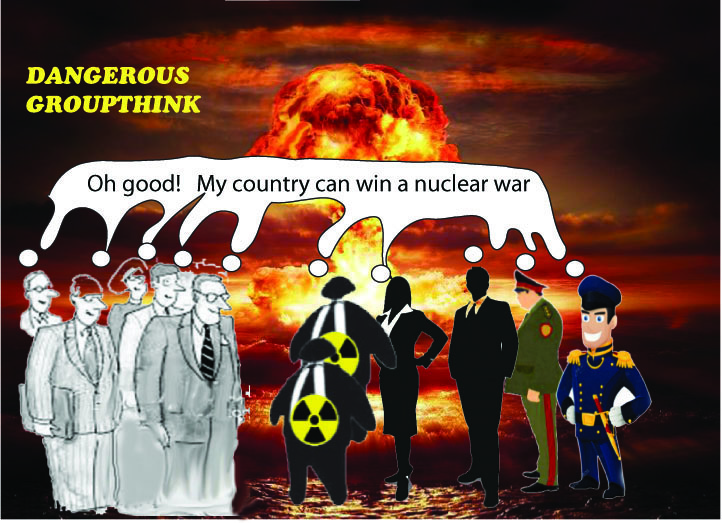
With diplomacy thwarted, the US and its allies plan for “open-ended” military and economic warfare against Russia — despite acknowledging that “the most dangerous moments are yet to come.”
As has been apparent since the Ukraine crisis erupted, US planning for open-ended proxy warfare against Russia has led it to sabotage any prospect of a negotiated end.
Substack Aaron Maté 22 Sept 22, Russia has announced plans to mobilize an additional 300,000 troops for the war in Ukraine. In his speech unveiling the expanded war effort, Vladimir Putin vowed to achieve his main goal of the “liberation of Donbas,” and issued a thinly veiled nuclear threat in the process. The move comes days ahead of planned referendums in breakaway Ukrainian areas to formalize Russian annexation.
Russia’s escalation ensures that the fighting is entering an even more dangerous phase. While Russia bears legal and moral responsibility for its invasion, recent developments underscore that NATO leaders have shunned opportunities to prevent further catastrophe and chosen instead to fuel it.
Putin’s announcement comes just after the Ukrainian military’s routing of Russian forces from Kharkiv, which relied extensively on US planning, weaponry and intelligence, sparked triumphant declarations that the tide has turned.
According to The Atlantic’s Anne Applebaum, “Americans and Europeans need to prepare for a Ukrainian victory,” one so overwhelming that it may well bring “about the end of Putin’s regime.”
Beyond the chorus of emboldened neoconservatives, Western officials are less sanguine.
“Certainly it’s a military setback” for Russia, a US official said of the Kharkiv retreat to the Washington Post. “I don’t know if I could call it a major strategic loss at this point.” Germany’s defense chief, General Eberhard Zorn, said that while Ukraine “can win back places or individual areas of the frontlines,” overall, its forces can “not push Russia back over a broad front.”
Whether or not it marked a major strategic loss for Russia, the battle in Kharkiv is already a major victory for NATO leaders seeking to prolong their proxy war in Ukraine and economic warfare next door.
Ukraine’s expulsion of Russian forces in the northeast, the New York Times reports, has “amplified voices in the West demanding that more weapons be sent to Ukraine so that it could win.”
“Despite Ukrainian forces’ startling gains in the war against Russia,” the Washington Post adds, “the Biden administration anticipates months of intense fighting with wins and losses for each side, spurring U.S. plans for an open-ended campaign with no prospect for a negotiated end in sight.”
As has been apparent since the Ukraine crisis erupted, US planning for open-ended proxy warfare against Russia has led it to sabotage any prospect of a negotiated end.
The US rejection of diplomacy around Ukraine has been newly substantiated by former White House Russia expert Fiona Hill. Citing “multiple former senior U.S. officials,” Hill reports that in April of this year “Russian and Ukrainian negotiators appeared to have tentatively agreed on the outlines of a negotiated interim settlement.” Under this framework, Russia would withdraw to its pre-invasion position, while Ukraine would pledge not to join NATO “and instead receive security guarantees from a number of countries.”
In confirming that US officials were aware of this tentative agreement, Hill bolsters previous news that Washington’s junior partner in London was enlisted to thwart it. As Ukrainian media reported, citing sources close to Ukrainian President Volodymyr Zelensky, UK Prime Minister Boris Johnson traveled to Kiev in April and relayed the message that Russia “should be pressured, not negotiated with.” Johnson also informed Zelensky that “even if Ukraine is ready to sign some agreements on [security] guarantees with Putin,” his Western patrons “are not.” The talks promptly collapsed.
In his speech announcing the expanded war effort, Putin invoked this episode. After the invasion began, he said, Ukrainian officials “reacted very positively to our proposals… After certain compromises were reached, Kyiv was actually given a direct order to disrupt all agreements.”
Having undermined the prospect of a negotiated peace in the war’s early weeks, proxy warriors in Washington are openly celebrating their success.
“I like the structural path we’re on here,” Republican Senator Lindsey Graham recently declared. “As long as we help Ukraine with the weapons they need and the economic support, they will fight to the last person.”
Graham’s avowed willingness to expend every “last person” in Ukraine to fight Russia is in line with a broader US strategy that views the entire world as subordinate to its war aims. As the Washington Post reported in June, the White House is willing to “countenance even a global recession and mounting hunger” in order to hand Russia a costly defeat. In Ukraine, this now means also countenancing the threat of nuclear disaster, as the crisis surrounding the Zaporizhzhia nuclear power plant has laid bare.
The prevailing willingness to sacrifice civilian well-being extends to the US public, as National Security Advisor Jake Sullivan has newly made clear. Appearing at the Aspen Security Conference, Sullivan was asked if he is worried about the “American people’s staying power” on the Ukraine proxy war, amid “criticism that we’re spending billions and billions to support Ukraine, and not spending it here.”
“Fundamentally not,” Sullivan responded. “It’s very important for Putin to understand what exactly he’s up against from the point of view of the United States’ staying power.” That staying power, Sullivan explained, was cemented in the $40 billion war funding measure overwhelmingly approved by Congress (including every self-identified progressive Democrat) in May……………………………………….
Allied NATO leaders are also vocally countenancing the Ukraine proxy war’s costs on their domestic populations. In response to the European sanctions, Russia has now halted gas deliveries to the EU via the key Nord Stream 1 pipeline. Having previously relied on Russia for close to 40 percent of its gas needs, European industries are facing layoffs, factory closures, and higher energy bills that “are pushing consumers to near poverty,” the Financial Times reports. https://mate.substack.com/p/unlocked-nato-prolongs-the-ukraine?utm_source=post-email-title&isFreemail=true&utm_medium=email
China, and others, see the International Atomic Energy Agency as biased in supporting AUKUS nuclear submarines plan

Ed note. My problem with the IAEA is that it is NOT an impartial body, on matters nuclear
China accuses IAEA of issuing a ‘lopsided’ report on AUKUS nuclear submarines plan, more https://www.abc.net.au/news/2022-09-14/china-iaea-lopsided-aukus-nuclear-submarines-report/101441254 By foreign affairs reporter Stephen Dziedzic 15 Sept 22
China’s Foreign Affairs Ministry has launched a furious attack on the UN nuclear watchdog over AUKUS, accusing the International Atomic Energy Agency (IAEA) of issuing a “lopsided” report about Australia’s plan to build nuclear submarines while ignoring widespread concerns about its ramifications for non-proliferation.
Key points:
- The IAEA issued a report to member states which said it was “satisfied with the level of engagement” from Australia, the UK and US
- A Chinese Foreign Ministry spokeswoman slammed the report, saying China was “gravely concerned about the substance” of it
- China has lobbied against AUKUS accusing the three countries of undermining the non-proliferation treaty
Last week the IAEA sent member states a confidential report on Australia’s move to develop the submarines drawing on nuclear submarine technology provided by the United States and the United Kingdom.
China has lobbied relentlessly against the deal in international forums, accusing the three countries of undermining the non-proliferation treaty and fuelling a regional arms race.
However Reuters reported last Friday that the IAEA issued a confidential report to member states which said it was “satisfied with the level of engagement” with the agency from all three nations so far.
Earlier this week the IAEA Director General Rafael Grossi struck a similar tone while addressing the agency’s Board of Governors, saying the Secretariat had held four “technical meetings” with the three AUKUS members so far and suggesting it was comfortable with the way they were handling the matter.
But on Tuesday Chinese Foreign Ministry spokeswoman Mao Ning slammed the report, saying China was “gravely concerned about the substance.”
“This report lopsidedly cited the account given by the US, the UK and Australia to explain away what they have done, but made no mention of the international community’s major concerns over the risk of nuclear proliferation that may arise from the AUKUS nuclear submarine cooperation,” she said.
“The report turns a blind eye to many countries’ solemn position that the AUKUS cooperation violates the purpose and object of the NPT.”
IAEA report finds AUKUS non-proliferation risks ‘limited’
While China has repeatedly attacked Australia, the United States and the United Kingdom over the agreement, this is the first time it has publicly excoriated the IAEA over the matter.
US and Australian officials have privately accused Beijing of gross hypocrisy over its public attacks on AUKUS, pointing out that China has been rapidly developing its own fleet of nuclear powered submarines — including submarines capable of launching nuclear weapons.
But nuclear non-proliferation advocates have also raised serious concerns about AUKUS, suggesting that it will establish a dangerous precedent by allowing a non-nuclear state to acquire nuclear propulsion technology for the first time.
Indonesian diplomats have also repeatedly made it clear they’re uneasy about the plan, and the country’s foreign ministry recently claimed recently that it won widespread support at the United Nations nuclear non-proliferation review conference for its plan to monitor nuclear material in submarines more closely.
Reuters reported last week that the IAEA report acknowledged Australia’s argument that the non-proliferation risks posed by AUKUS were limited because it would only be provided with “complete, welded” nuclear power units which would make removing nuclear material “extremely difficult.”
It reportedly also said the material within the units could not be used in nuclear weapons without chemical processing which requires facilities which Australia does not have and will not seek.
In effect if not juridically, Ukraine was becoming a member of the NATO alliance. THE WORLD SPLIT APART

THE WORLD SPLIT APART 2.0: Introduction Russian & Eurasian Politics, GORDON M. HAHN 21 Sept 22,
Nearly a decade ago I began warning that NATO expansion and the West’s failure to understand that Russian national security interests not a Russian desire to ‘recreate the USSR’ or ‘former Russian empire’ would lead to a world split apart between the West and ‘the rest’ (Sino-Russian ‘strategic partnership and those states oriented towards it).…………………………………………………………………………..
NATO expansion to Ukraine continued with Ukrainian membership replaced by deep Western and NATO involvement in Ukraine’s politics and military and gradually deepening after the 2014 Maidan revolt. In effect if not juridically, Ukraine was becoming a member of the NATO alliance.
In this regard, it is important to point out that the famous Article 5 of the NATO Charter is not a blanket, mandatory obligation to engage directly in military action in defense of an alliance member under attack by an alliance non-member state. It merely requires consultations and assistance, which can but does not necessarily have to be the commitment of member-states’ forces directly to the battlefield.
Assistance can include the provision of weapons, training, intelligence, and other forms of indirect assistance. This was already happening in Ukraine as a result of NATO policies. Russian President responded with his invasion rapidly to both escalating that level of NATO military and intelligence assistance to Ukraine and accelerating the bifurcation of the world between the West and the rest.
For all intents and purposes NATO and the entire West are at war with Russia and escalation to a more direct confrontation is just over the horizon. This course of events has deepened and consolidated the Sino-Russian alliance by any other name and that alliance’s efforts to rally to its side the rest of the rest. The world is becoming split apart as never before – an outcome globalization was not supposed to being about. The ‘new cold war’ is driving towards a greater bifurcation of the world into two camps than the confrontation between communism and capitalism ever engendered. Continuation to follow. https://wordpress.com/read/feeds/33462456/posts/4272028238
THE WORLD SPLIT APART 2.0: Introduction — Russian & Eurasian Politics
Aw gee shucks – Australia can be IMPORTANT if we lead USA’s attacks with our AUKUS submarines !

Marles said nuclear subs would make “the rest of the world take us seriously”,
Final design and cost of Australia’s nuclear submarines to be known in early 2023, Defence minister Richard Marles links the cutting-edge technology to Australia’s economic and trade success
Guardian, Josh Butler, Thu 15 Sep 2022 The defence minister, Richard Marles, says Australia’s pathway to acquiring nuclear submarines is “taking shape”, flagging key decisions within months about which ship to use, how to build it and boosting the country’s defence-industrial capability.
On the first anniversary of the Aukus pact, Marles said nuclear subs would make “the rest of the world take us seriously”, linking the cutting-edge technology to Australia’s economic and trade success.
Final design and cost of Australia’s nuclear submarines to be known in early 2023
Defence minister Richard Marles links the cutting-edge technology to Australia’s economic and trade success…………………………….
On the first anniversary of the Aukus pact, Marles said nuclear subs would make “the rest of the world take us seriously”, linking the cutting-edge technology to Australia’s economic and trade success.
“The optimal pathway is taking shape. We can now begin to see it,” he said. “With Aukus there’s a really huge opportunity beyond submarines of pursuing a greater and more ambitious agenda.”……..
Marles, also the deputy prime minister, said the first steps toward acquisition of nuclear submarines were on track. In a briefing call with journalists this week, he said the current timeline had Australia slated to make initial announcements in the first part of 2023.
The government plans to give answers to five questions by that time: the final design; when it can be acquired; what capability gap that timeline will create and solutions to plug it; the cost; and how Australia’s plans comply with nuclear non-proliferation obligations.
The government is said to be choosing between building American or British ships, or some hybrid. Marles said the government was not ready to announce which type of submarines would be built but hinted Australia’s design could be “trilateral” in nature………..
In a press conference with Marles in the UK earlier this month, the British defence secretary, Ben Wallace, said future submarine designs may see a combination of British, American and Australian components.
“We are on to our next design and our new one and that might well be fully shared with all three nations as a collaborative design,” he said.
The cost of the submarine program is not yet known but is expected to be in the tens of billions. Marles linked the Aukus arrangement not only to military but economic security, saying a boosted submarine fleet would protect freedom of navigation through vital shipping routes.
“We need a highly capable defence force which has the rest of the world take us seriously and enables us to do all the normal peaceful activities that are so important for our economy,” he said………

V Adm Jonathan Mead, the chair of the nuclear submarine taskforce, also spoke of protecting “sea lanes” on the call.
Mead said the navy was investigating workforce challenges, such as how to build and crew the ships – which may involve placing Australian staff in British and American nuclear schools or agencies, laboratories and shipyards
“The exchange of these personnel will be both ways and won’t just involve our submariners,” he said.
Facilities to build and maintain the submarines in Australia are part of the equation. Defence this year pinpointed Brisbane, Newcastle and Port Kembla as possible sites for an east coast nuclear base and consultation with those communities is said to be in its early stages.
Marles also spoke of building Australia’s defence-industrial capability on the back of the nuclear process…………………..“We hope Aukus can help develop a genuinely seamless defence industrial base across the US, the UK and Australia.”…………………….
A report from the Australian Strategic Policy Institute (Aspi), released on Thursday, recommended further investment in other Aukus streams like hypersonic missiles and artificial intelligence technology, to help plug a capability gap while the submarines are built………..
Such short-term investment may force government to make “difficult choices and trade-offs” in its defence strategic review, also slated for March, Aspi said. https://www.theguardian.com/australia-news/2022/sep/15/final-design-and-cost-of-australias-nuclear-submarines-to-be-known-in-early-2023
China, AUKUS clash over nuclear subs

By Francois Murphy, South Coast Register, September 17 2022 China has clashed with the countries in the AUKUS alliance at a meeting of the UN nuclear watchdog over their plan to supply Australia with nuclear-powered submarines, capping a week in which Beijing has repeatedly railed against the project.
Under the alliance between Washington, London and Canberra announced last year, Australia plans to acquire at least eight nuclear submarines that International Atomic Energy Agency (IAEA) chief Rafael Grossi has said will be fuelled by “very highly enriched uranium”, suggesting it could be weapons-grade or close to it.

To date no party to the nuclear Non-Proliferation Treaty (NPT) other than the five countries the treaty recognises as weapons states – the United States, Russia, China, Britain and France – has nuclear submarines.
The vessels can stay underwater for longer than conventional subs and are harder to detect.
“The AUKUS partnership involves the illegal transfer of nuclear weapon materials, making it essentially an act of nuclear proliferation,” China said in a position paper sent to IAEA member states during this week’s quarterly meeting of the IAEA’s 35-nation Board of Governors……………………
The AUKUS countries and the IAEA say the NPT allows so-called marine nuclear propulsion provided necessary arrangements are made with the IAEA.
China disagrees in this case because nuclear material will be transferred to Australia rather than being produced by it.
It argues the IAEA is overstepping its mandate and wants an unspecified “inter-governmental” process to examine the issue at the IAEA instead of leaving it to the agency.
In its seven-page position paper, China said AUKUS countries were seeking to take the IAEA “hostage” so it could “whitewash” nuclear proliferation.
Nuclear submarines are a particular challenge because when they are at sea their fuel is beyond the reach of the agency’s inspectors who are supposed to keep track of all nuclear material.
IAEA chief Grossi has said he is satisfied with the AUKUS countries’ transparency so far……………………
https://www.southcoastregister.com.au/story/7906718/china-aukus-clash-over-nuclear-subs/?cs=202—
The Defence Strategic Review – Australia is becoming a proxy or is it a patsy for the US in a possible conflict with China

Pearls and Irritations By John Menadue, Sep 16, 2022
The Defence Strategic Review must warn Minister Marles about the dangerous path he is committing Australia to. We are becoming a spear carrier for the US.
- Fearing its world hegemony is under challenge the US is goading China at every opportunity. Speaker of the US House of Representatives, Nancy Pelosi’s visit to Taiwan was but the most recent example of this goading.
- The threat we face from China is if we continue to act in our region as a proxy for the US. Other regional countries are not doing so.
- The ‘China’ threat is a rerun of the shameful and earlier ‘yellow peril’. China is not a military threat to Australia.
- The US is the most violent and aggressive country in the world, almost always at war. Its military empire includes 800 foreign military bases.
We need a strong US presence in our region but not the provocative and dangerous behaviour we see time and time again.- We are attaching ourselves uncritically to a declining but dangerous hegemon.
- Our ‘Washington Club’ has been on an American drip feed for a long time.It has a ‘colonial’ mind set.It accepts without serious thought the US view of the world.
- Northern Australia is becoming a US military colony.These points are developed further below.
Northern Australia is becoming a US military colony
In some political difficulty in 2011 Julia Gillard was anxious for President Obama to visit Australia and address the Parliament. Kim Beazley, our Ambassador in Washington was very keen to help. As part of the deal to lock in the Obama visit Gillard agreed to the rotation of Marines through Darwin with US hopes for more future basing in Perth and Cocos-Keeling.
This was the real door opening for the Americans.
The colonisation has continued apace since then with more and more Marines rotating through Darwin and USAF operations in Northern Australia.
But putting the foot on the accelerator of US military colonisation really came in September 2021.
On 16 September 2021, Secretary of State Antony Blinken and Secretary of Defence Lloyd Austin hosted Minister for Foreign Affairs and Minister for Women Marise Payne and Minister for Defence Peter Dutton in Washington D.C. for the 31st Australia-United States Ministerial Consultations (AUSMIN 2021). The Secretaries and Ministers endorsed the following areas of force posture cooperation:
Enhanced air cooperation through the rotational deployment of U.S. aircraft of all types in Australia and appropriate aircraft training and exercises.
Enhanced maritime cooperation by increasing logistics and sustainment capabilities of U.S. surface and subsurface vessels in Australia.
Enhanced land cooperation by conducting more complex and more integrated exercises and greater combined engagement with Allies and Partners in the region.
Establish a combined logistics, sustainment, and maintenance enterprise to support high end warfighting and combined military operations in the region.
See the Australia-US Ministerial Consultations (AUSMIN) joint statement.
We have committed ourselves to ‘high end warfighting and combined military operations and unfettered access for US forces and platforms’ in northern and western Australia.
Only yesterday the AFR highlighted the US focus on western and northern Australia. ‘Former foreign policy adviser to president George W. Bush and new United States Studies Centre chief executive Michael Green predicts the US will become more dependent on Australia for its military operations and intelligence. A shift in foreign policy focus from Asia-Pacific to Indo-Pacific meant that areas of western and northern Australia would be ‘‘critical’’ for the US and its allies. ‘‘We need access: we need purchase on the Indian Ocean and, so geographically, in technology, in terms of military operations and intelligence, the US is going to be more dependent on Australia,’’ Mr Green said. ‘‘There’s no two ways around it.’’
We have not seriously debated or considered the enormous and very risky consequences of all of this. Our sovereignty and integrity as a nation is on the line and at the whim of the US, a country that does not really know which path it is on, crypto-fascism, civil war or anarchy.
In AUKUS, at enormous cost and with great delay we are planning to fuse our future nuclear powered submarines with the US Navy to operate in the South China Sea against China.
Minister Marles has told us that we are not only working ‘inter-operatively’ with the US military in numerous ways but we are now committed to ‘inter-changeabilty’ with US forces. We are locking ourselves even more to a ‘dangerous ally’. Minister Marles seems unconcerned about the dangerous path we are on.Even worse he seems careless about surrendering our national sovereignty. He should be watched very carefully.
The US is the most violent country in the world and almost always at war
There is an enormous and powerful US constituency committed to continual war. We joined those wars in Vietnam, Iraq, Afghanistan and Syria. All were disastrous. Now the US is continually goading and provoking China and wants us to join it. And we are obliging…………….
In this blog, Is war in the American DNA?, I have drawn attention repeatedly to the risks we run in being “joined at the hip” to a country that is almost always at war. The facts are clear…………………..
Despite all the evidence of wars and meddling, the American Imperium continues without serious check or query in America or Australia………………………………………………………………
Australia is trapped within the American Imperium
This complex co-opts institutions and individuals around the globe. It has enormous influence. No US president, nor for that matter any Australian prime minister, would likely challenge it. Morrison and Albanese have the same view on the US imperium.
Australia has locked itself into this complex. Our military and defence leaders are heavily dependent on the US Departments of Defence and State, the CIA and the FBI for advice. We act as their branch offices.
…………………………………… AUKUS has locked us in even more. In AUKUS we are effectively fusing our Navy with that of the US so that we can operate together in the South China Sea and threaten China. We are surrendering more and more of our strategic autonomy by encouraging the US to use Northern Australia as a forward base against China as if the US does not have enough giant military bases ringing China in Japan, ROK and Guam.
A ’rules-based international order’; but not for America
The third reason for the continuing dominance of the American Imperium is the way the US expects others to abide by a “rules-based international order”………………………….
Derivative media compounds Australia’s lack of autonomy
A major voice in articulating American extremism and the American Imperium is Fox News and Rupert Murdoch who exert their influence not just in America but also in the UK and Australia. ………………………. But it is not just the destructive role of News Corp in the US, UK and Australia. Our media, including the ABC are so derivative. It is so pervasive and extensive, we don’t recognise it for its very nature. We really do have a ‘white man’s media’. We see it most obviously today in the way legacy media spew out an endless daily conveyor belt of anti-China stories…………………………………..
Read more in our Defence Strategic Review series of articles. https://johnmenadue.com/the-defence-strategic-review-we-are-ceding-our-sovereignty-to-the-us/
Zelensky and NATO plan to transform post-war Ukraine into ‘a big Israel’.
https://thegrayzone.com/2022/09/17/zelensky-nato-ukraine-big-israel/— ALEXANDER RUBINSTEIN·SEPTEMBER 17, 2022
The NATO-backed Atlantic Council has proposed apartheid Israel as a blueprint for a hyper-militarized Ukraine. The paper was authored by Obama’s former ambassador to Tel Aviv, now an Israeli spy-tech consultant.
Just forty days after Russia’s military campaign began inside Ukraine, Ukrainian President Vlodymyr Zelensky told reporters that in the future, his country would be like “a big Israel.” The following day, one of Israel’s top promoters in the Democratic Party published an op-ed in NATO’s official think tank exploring how that could be executed.
Zelensky made his prediction while speaking to reporters on April 5, rejecting the idea that Kiev would remain neutral in future conflicts between NATO, the European Union, and Russia. According to Zelensky, his country would never be like Switzerland (which coincidentally abandoned its Napoleon-era tradition of nonalignment by sanctioning Russia in response to its February invasion).
“We cannot talk about ‘Switzerland of the future,’” the president informed reporters. “But we will definitely become a ‘big Israel’ with its own face.”
For those wondering what a “big Israel” would actually look like, Zelensky quickly elaborated on his disturbing prophecy.
“We will not be surprised that we will have representatives of the Armed Forces or the National Guard in all institutions, supermarkets, cinemas — there will be people with weapons,” Ukraine’s president said, predicting a bleak existence for his citizens. “I am sure that our security issue will be number one in the next ten years.”
Though the web post was based on comments Zelensky made to reporters, the president’s office mysteriously excised a section of his remarks in which he declared a future Ukraine would not be “absolutely liberal, European.” Instead, along with his vision for a heavily militarized Ukraine, the post emphasized Zelensky’s readiness to join NATO “already tomorrow.”
For NATO’s power brokers, however, Zelensky’s intimated willingness to join the military alliance was perhaps the least remarkable aspect of his statement. Instead, within 48 hours of his comments, the Atlantic Council – NATO’s semi-official think tank in Washington – published a “road map” exploring how to transform Ukraine into “a big Israel.”
Authored by Daniel B. Shapiro, the former US Ambassador to Israel under President Barack Obama, the document posited that “the two embattled countries share more than you might think.”
Just as former US Secretary of State Alexander Haig presented Israel as “the largest American air craft carrier in the world that cannot be sunk,” Shapiro put forward a vision of Ukraine as a hyper-militarized NATO bastion whose national identity would be defined by its ability to project US power against Russia.
Despite Israel’s reluctance to join the Western sanctions campaign against Russia, it has aided Ukraine’s militarily, sending two large shipments of defensive equipment since February of this year. In the past, however, Israel’s support for Ukraine in its fight against Russia has been more than defensive.
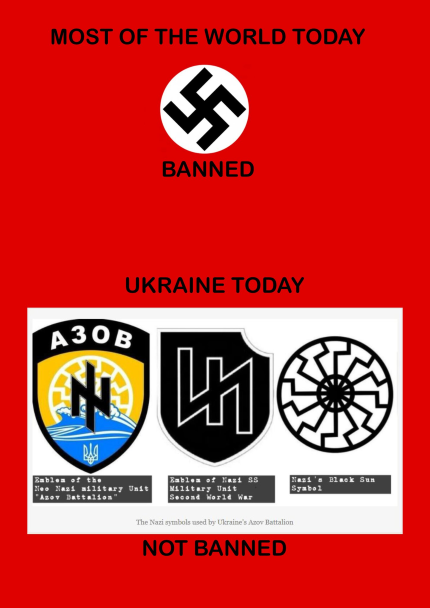
Back in 2018, over 40 human rights activists petitioned the Israeli High Court of Justice to stop arming Ukraine after members of the neo-nazi Azov Battalion were caught brandishing Israeli-made weapons. As Israel’s Ha’aretz noted at the time, “The militia’s [Azov] emblems are well-known national socialist ones. Its members use the Nazi salute and carry swastikas and SS insignias… One militia member said in an interview that he was fighting Russia since Putin was a Jew.”
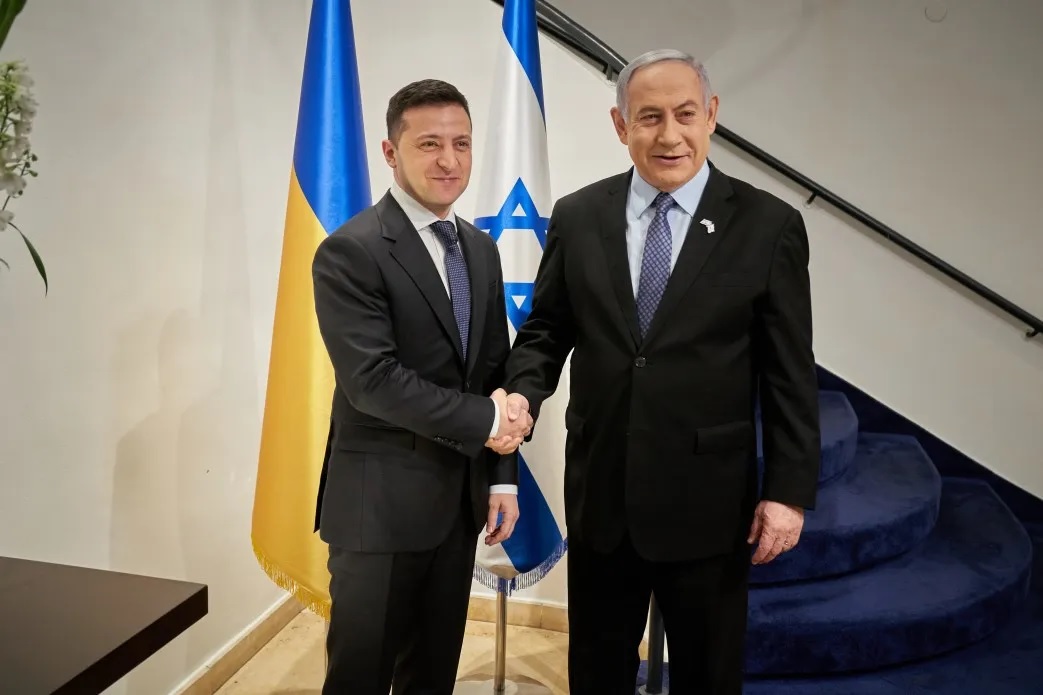
Zelensky, a Ukrainian Jew, was apparently unperturbed by Israel’s alleged arming of Nazi elements in his country. One year after his 2019 election, he made a pilgrimage to Jerusalem to launch what he called a “prayer for peace,” and to attend an event entitled “Remember the Holocaust to fight anti-Semitism.” Ahead of the junket, Zelensky heaped praise on Israeli society, remarking in an interview that “Jews managed to build a country, to elevate it, without anything except people and brains,” and that Israelis are a “united, strong, powerful people. And despite being under the threat of war, they enjoy every day. I’ve seen it.”
NATO’s Approach to Russia’s Borders Planned Years Ago
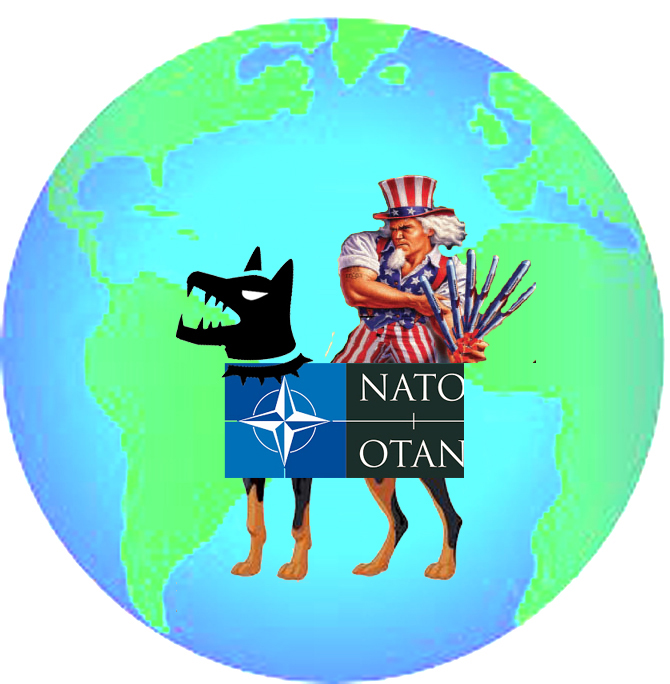
The alliance revealed plans to increase the number of prepared forces on the eastern flank to more than 300,000 soldiers in the near future.
The head of NATO’s Military Committee, Admiral Rob Bauer, stated on Saturday that NATO began planning its expansion near Russia’s borders several years ago.
Earlier on Saturday, the NATO Military Committee met in Estonia, where Supreme Allied Commander Europe General Christopher Cavoli outlined to NATO member countries his strategic considerations for NATO’s efforts on the eastern flank, among other things.
“We’re talking about the biggest overhaul of our military structures since 1949. The planning for that started several years ago, but now we’re implementing it,” Bauer said at a press conference.
NATO leaders agreed on a plan for a significant build-up of the alliance’s forces at the end of June, on the eastern flank by 2023, amid Russia’s military operation in Ukraine.
The alliance revealed plans to increase the number of prepared forces on the eastern flank to more than 300,000 soldiers in the near future. In addition, it intends to increase the composition of combat groups to the brigade level. Moreover, NATO countries pledged to increase defense spending.
Max Blumenthal tweets: In their post-counteroffensive triumphalism, US hawks reveal real objectives of the Ukraine proxy war. “A victory in Ukraine’s understanding of the term also brings about the end of Putin’s regime,” Anne Applebaum wrote, urging Russia’s destabilization.
NATO is closely collaborating with the defense sector to restock its arsenal, which has been depleted as a result of the supply of armaments to Ukraine by the bloc, according to the NATO Secretary-General.
“NATO is working closely with defense industry in order to replenish stocks for the military equipment the allies have sent to Ukraine,” Stoltenberg said on the sidelines of a forum organized by U.S. magazine Foreign Policy, adding that NATO countries were also asking defense companies to ramp up their production.
The Secretary-General added that the need for additional help for Ukraine was still urgent, and it was crucial to make sure that the bloc had adequate weapons and other equipment to stockpile and support Kiev militarily.
US EU LOOMING CRASH, BILLIONS OF US $$ POURING INTO UKRAINE, WAR BETWEEN THE US AND RUSSIA

Bruce Gagnon interview – 13 September 22, https://www.bitchute.com/video/4zlLVGLWEONw/ Youtube has removed Regis Tremblay’s videos – I suppose, for political reasons. This time he is interviewing Bruce Gagnon – long-time doughty warrior for preventing war in space. I wish I had time to transcribe it
1 This Month



26 September – International Day for the Total Elimination of Nuclear Weapons


PLEASE OPPOSE HR 8255 AND S.3639 – bills would accelerate satellite deployment, with no environmental review or safeguards – https://ncstd5li.quorum.us/campaign/169331/
To see nuclear-related stories in greater depth and intensity – go to https://nuclearinformation.wordpress.com
-
Archives
- September 2026 (257)
- August 2026 (330)
- July 2026 (355)
- June 2026 (287)
- May 2026 (306)
- April 2026 (356)
- March 2026 (251)
- February 2026 (267)
- January 2026 (308)
- December 2025 (358)
- November 2025 (359)
- October 2025 (375)
-
Categories
- 1
- 1 NUCLEAR ISSUES
- business and costs
- climate change
- culture and arts
- ENERGY
- environment
- health
- history
- indigenous issues
- Legal
- marketing of nuclear
- media
- opposition to nuclear
- PERSONAL STORIES
- politics
- politics international
- Religion and ethics
- safety
- secrets,lies and civil liberties
- spinbuster
- technology
- Uranium
- wastes
- weapons and war
- Women
- 2 WORLD
- ACTION
- AFRICA
- Atrocities
- AUSTRALIA
- Christina's notes
- Christina's themes
- culture and arts
- Events
- Fuk 2022
- Fuk 2023
- Fukushima 2017
- Fukushima 2018
- fukushima 2019
- Fukushima 2020
- Fukushima 2021
- general
- global warming
- Humour (God we need it)
- Nuclear
- RARE EARTHS
- Reference
- resources – print
- Resources -audiovicual
- Weekly Newsletter
- World
- World Nuclear
- YouTube
-
RSS
Entries RSS
Comments RSS
 nuclear-news