How the Iran War undermines the nuclear nonproliferation regime
Bulletin, By George Perkovich | Analysis | April 2, 2026
When President Trump withdrew the United States from the Joint Comprehensive Plan of Action in 2018, he cracked the brittle foundation of the global nonproliferation regime based on the 1970 Non-Proliferation Treaty (NPT). This was not seen clearly at the time, so its implications could not be fully addressed. Now the ramifications are becoming clearer: The war on Iran raises doubt that the NPT can be a central pillar of international security. If not, will more countries seek nuclear weapons, including US allies or friends? And will China and Russia be emboldened to follow the US-Israeli example to forcibly try to stop them?
The US and Israeli leaders who pushed withdrawal from the JCPOA, including President Trump, did not know or care much about the NPT. Israel saw the Iranian nuclear program as an ipso facto direct threat, not as something that could be managed through the treaty’s core bargains. Those bargains posited that states that already had nuclear weapons as of 1967—the United States and Russia, most importantly—would reward states that forego such weapons. The non-nuclear-weapon states would gain security, cooperation in civil nuclear energy development, and progress toward the equity of global nuclear disarmament……………………………………………………………………..
Today it is clear that when the United States broke the JCPOA, Iran was condemned to a fate like Iraq’s in 2003. Objectives beyond nuclear proliferation became decisive for powerful actors in Washington, Israel, and the Gulf. Regime change. Reducing threats to the United States’ oil-exporting Arab friends and Israel. Countering terrorism. The JCPOA had “solved” the nuclear issue within the framework of the NPT bargains, but it did not address these other issues……………………………….
Now that Prime Minister Netanyahu and President Trump have attacked Iran without regard for international law or Iran’s rights under the NPT (and the UN-supported JCPOA), many commentators say nuclear weapon proliferation will be more likely. They say, the “lesson” of Iran today, like that of Iraq, Libya, and Ukraine—contrasted with North Korea—is that a country should acquire nuclear weapons if it doesn’t want to be attacked by a big nuclear power………………………………….
All of this highlights the shakiness of the NPT as an organizing construct for managing security, nuclear energy, and nonproliferation going forward. If nuclear-weapon states have clearly abandoned their commitments under Article VI of the NPT to cease arms racing and pursue nuclear disarmament, and nuclear-armed states have attacked other non-nuclear countries in violation of international law, why wouldn’t more countries feel justified to seek their own nuclear deterrents? If powerful countries have made trade and security accommodations for nuclear-armed India, how should others seek to apply limits on nuclear fuel-cycle activities?………………………………………..
More than threatening the NPT, the US-Israel war on Iran has removed bargaining from adversarial international relations more broadly. Washington and Tel Aviv demand that Iran stop all fuel-cycle activity, surrender all enriched uranium and ballistic missiles, end clerical rule, disarm the Revolutionary Guard, and cease supporting other regional actors that threaten Israel. The American and Israeli governments offer Iran no immediate or near-term benefits in response, except the possible end of military attacks and vague promises of Western corporate investment to help revive the Iranian economy. Essentially, the demand is for unconditional surrender. This is a different model of international affairs than the NPT was predicated on……………………………………https://thebulletin.org/2026/04/how-the-iran-war-undermines-the-nuclear-nonproliferation-regime/
Closing Air Spaces and Cracking Alliances: Trump’s Growing Problem with Allies
2 April 2026 Dr Binoy Kampmark, https://theaimn.net/closing-air-spaces-and-cracking-alliances-trumps-growing-problem-with-allies/
With the Iran War groaning along, the Trump administration is getting increasingly indignant. Plumes of childish anger can be seen coming out of the White House and Pentagon. Having joined an illegal, joint enterprise with Israel in attacking Iran, allies are proving increasingly unwilling to play along.
That unwillingness gurgled to the top with Spain’s announcement on March 30 that it had closed its airspace to US aircraft participating in strikes on Iran. This added to Madrid’s decision earlier in the month to deny the US military access to its bases for military operations against Tehran. “We don’t authorise either the use of military bases or the use of airspace for actions related to the war in Iran,” Defence Minister Margarita Robles told reporters. Spain’s Economy Minister Carlos Cuerpo, in an interview with radio Cadena SER, called the move consistent and “part of the decision already made by the Spanish government not to participate in or contribute to a war which was initiated unilaterally and against international law.”
The government of Prime Minister Pedro Sánchez has been singularly pertinacious in its characterisation of the Iran War, and more broadly illustrative of the current bad blood in transatlantic relations. In a piece for The Economist, Sánchez wrote of his country’s misplaced support for Washington in February 2003 when the then US Secretary of State, Colin Powell, told the UN Security Council most gravely that Iraq had weapons of mass destruction, and needed to be attacked. The foolishly credulous Spanish Prime Minister at the time, José María Aznar, was convinced that the regime of Saddam Hussein had such weapons. “Today we face a similar situation, and my government’s position is the same as that voiced by Spanish society two decades ago: NO TO WAR. No to the unilateral violation of international law. No to repeating the mistakes of the past. No to the idea that the world’s problems can be solved with bombs.”
Italian authorities have also expressed displeasure at the presumptuousness of their US allies in taking liberties with their military facilities. In a March 31 report by Corriere della Sera, “several US bombers” that had intended to land at Sigonella air base on route to the Middle East were refused as they had not properly requested authorisation or consulted with the Italian military. A statement from Palazzo Chigi, the office of Italian Prime Minister Giorgia Meloni, reiterated that Italy “acts in full compliance with existing international agreements and with the policy guidelines expressed by the Government to Parliament.”
Other allies are openly rebuffing requests by US officials to secure additional military equipment to the Gulf. Critical here are air-defence systems such as the Patriot batteries that have been dramatically depleted since the outbreak of hostilities. In the first 16 days of the war, some 1,285 PAC-3 Patriot missiles were used by the US military and Gulf states.
The Polish Defence Minister, Władysław Kosiniak-Kamysz could not have been clearer in his statement on whether Poland’s complement of Patriot air defence systems would make their way to the Middle East. “Our Patriot batteries and their armaments are used to protect Polish airspace and NATO’s eastern flank. Nothing is changing in this regard, and we have no plans to move them anywhere!” Fellow allies understood “the importance of our tasks here. Poland’s security is an absolute priority.”
As has become customary, US President Donald Trump has led the growls of grievance, billowing with anger on Truth Social about the reluctance of European partners to throw in their lot in what is, at best, a criminal enterprise. On the issue of depleted jet fuel supplies restricted by the closure of the Strait of Hormuz, he brusquely suggested to his allies that they could purchase supplies from the US (“we have plenty”) and “build up some delayed courage, go to the Strait, and just TAKE IT.” With a demented paternalism, he went on to declare that “You’ll have to start learning how to fight for yourself, the USA won’t be there to help you anymore, just like you weren’t there for us.” With typically strained logic, he went on to suggest that any assistance would be minor, in any case, as Iran had been “decimated.” “The hard part is done. Go get your own oil!”
Special mention was made of mulishness on the part of the UK (“which refused to get involved in the decapitation of Iran”) and France. France, for instance, had refused to permit planes carrying military supplies destined for Israel to fly over French territory. “France has been VERY UNHELPFUL with respect to the ‘Butcher of Iran’, who has been successfully eliminated. The U.S.A. will REMEMBER!!!”.
Soon afterwards, a comically crazed and increasingly God loving Pete Hegseth struck a similar note in the Pentagon. “A lot has been laid bare, a lot has been shown to the world about what our allies would be willing to do for the United States of America,” grumbled the Secretary of Defense (he prefers War) to reporters. “When we undertake an effort of this scope on behalf of the free world, these are missiles that don’t even range the United States of America, they range allies and others and yet, when we ask for additional assistance or simple access… we get questions or roadblocks or hesitation.”
In his March 30 interview with Al Jazeera, Secretary of State Marco Rubio was also brimming with complaints. “If NATO is just about us defending Europe if they’re attacked but then denying us basic rights when we need them, that’s not a very good arrangement. That’s a hard one to stay engaged in and say this is good for the United States.” All this called for a reassessment. “All of it’s going to have to be re-examined.” The re-examination, notably judging from the temper of European states, is proving increasingly reciprocal and, in some circles, even welcome.
It’s all about the nukes
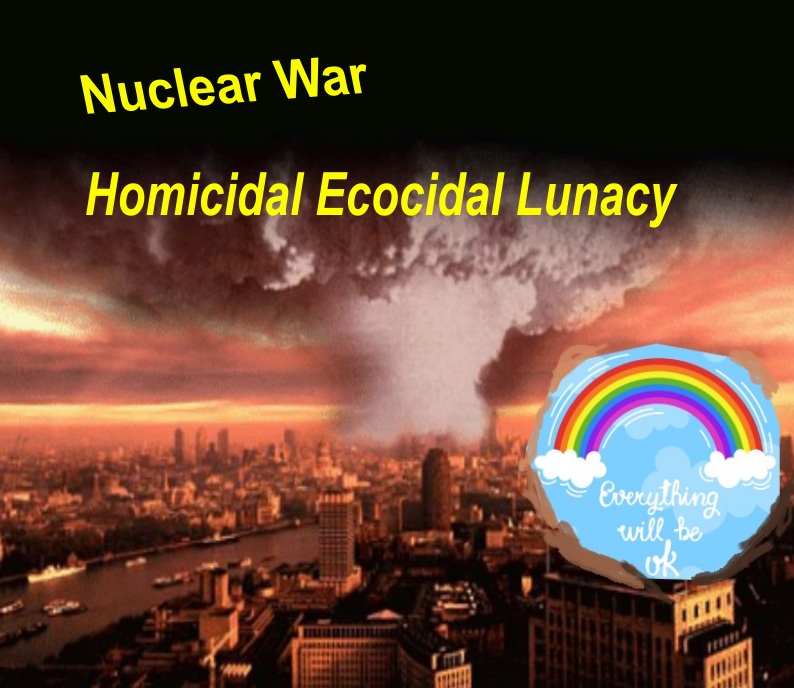
31 March 2026 Dr Binoy Kampmark , https://theaimn.net/its-all-about-the-nukes/
The idea of nuclear non-proliferation has come in for some heavy punishment of late. For one thing, powers with nuclear weapons, pre-eminently the United States, have been shown up as blackguards in seeking to prevent other powers in acquiring the option. In its conduct of talks with Tehran, ostensibly to stem their nuclear ambitions, Washington was merely managing a front of chatter while the warmongers were busying themselves behind the scenes. In June 2025, this culminated in the US joining Israel with Operation Midnight Hammer, which saw, according to President Donald Trump, “Monumental Damage […] done to all Nuclear sites in Iran as shown by satellite images. Obliteration is an accurate term!”
Despite these celebratory self-awarded accolades, Israel and the United States would initiate a savage and ongoing encore that began on February 28, with Trump again stating that Iran could never have a nuclear weapon. Apparently, obliterated nuclear facilities must have had some inner life that needed expunging. Diplomacy on non-proliferation was further shown to be contemptible and hypocritical.
Last year’s strikes on Iran, and the current Iran War, reveal the central hypocrisy of those who insist on keeping the nuclear club closed and limited, something made comically grotesque by the fact that one of the belligerents, Israel, is an undeclared nuclear power buttoned up in strategic ambiguity. Countries possessing the murderous nuke have been keeping those without such weapons in a state of suspended anticipation for decades. The central bargain is to be found in the Nuclear Non-Proliferation Treaty (NPT), a document that keeps club members in fattened bliss while holding off future admissions with the promise of civilian nuclear technology. Iran’s case shows that even having a civilian nuclear program is not something that will be countenanced.
The hard lesson, and one studiously understood by North Korea, is that having nukes is the ultimate security guarantee in the great family of unruly gangsters known as the international community. This much was admitted by the country’s leader, Kim Jong Un, in a March 23 speech at the Supreme People’s Assembly in Pyongyang. “Today’s reality clearly demonstrates the legitimacy of our nation’s strategic choice and decision to reject the enemies’ sweet talk and permanently secure our nuclear arsenal.”
Those who refuse to pursue such an option or have abandoned their ambitions in the face of pressure and empty undertakings given by the powerful, have been found wanting and ultimately dead: Libya’s Muammar Gaddafi, Iraq’s Saddam Hussein.
The late Iranian supreme leader, Ali Khamenei, was killed by Israeli and US airstrikes, despite having issued an expansive fatwa banning the development of nuclear weapons. The religious ruling had first surfaced at a meeting of the International Atomic Energy Agency (IAEA) in 2005. In its words, “[T]he production, stockpiling and use of nuclear weapons are forbidden under Islam and that the Islamic Republic of Iran shall never acquire such weapons.” Iran’s leadership had “pledged at the highest level that Iran will remain a non-nuclear weapon State party to the NPT and has placed the entire scope of its nuclear activities under IAEA safeguards and additional protocol, in addition to undertaking voluntary transparency measures with the Agency.”
In February 2025, the leaders of the Islamic Revolutionary Guard Corps (IRGC) begged Khamenei to reconsider the edict in light of Trump’s return to the White House and the increasingly belligerent tone he had adopted towards the regime. “We have never been this vulnerable, and it may be our last chance to obtain one before it’s too late,” stated one official to The Telegraph. Another revealed that, “The existential threat we now face has led several senior commanders – who previously insisted on following the supreme leader’s guidance – to push for making an atomic weapon.” One of Khamenei’s advisers, Kamal Kharazi, said last November that the fatwa was the only impediment to developing a nuclear capability. “If the Islamic Republic of Iran faces an existential threat, we would have no choice but to adjust our military doctrine.”
In the meantime, Iranian policy became a ragbag of options that pushed it to a point where Tehran might be considered on the brink of the nuclear threshold without quite getting there. Deterrence could be achieved without actually acquiring a weapon. “Khamenei,” writes Tom Vaughan for The Conversation, “seems to have made a bet that achieving ‘nuclear threshold’ status, where a state has the potential to develop nuclear weapons at short notice, would be enough to do this and to deter US or Israeli attacks.” In failing to achieve this, Iran had “borne all the costs of being a ‘proliferator’, while reaping none of the perceived security benefits of nuclear weapons.”
Expanding nuclear weapons arsenals has also become modish. In the face of unreliable guarantees of extended nuclear deterrence offered by the United States in Europe, French President Emmanual Macron is inclined to the view that the next five decades “will be an era of nuclear weapons.” Keeping in mind “our national and European challenges, we have to strengthen the nuclear deterrent… We must think of our nuclear deterrent on a European scale.”
John Erath, former US diplomat and currently serving as a policy director of the Center for Arms Control and Non-Proliferation says that more countries “feel insecure”, with nuclear weapons being the antidote. “There is no real alternative. Deterrence has so far prevented nuclear war, but often by luck.” Specific to Iran, reasons Ramesh Thakur, director of the Centre for Non-Proliferation and Disarmament in the Crawford School of the Australian National University, “nuclear weapons are now the only thing that will guarantee regime survival.” Jennifer Kavanagh, director of military analysis at Defense Priorities, a Washington-based think tank, suggests that a nuclear weapon may prove “a faster route to restore deterrence for a regime that is now more radical and has been attacked twice in the midst of negotiations.”
Instead of being shaded into unusable insignificance and hopeful oblivion, these weapons of homicidal lunacy have been shown to be more attractive than ever. They are virtually the only way regimes and governments of all stripes can hope to deter potential belligerents. Survivors of Iran’s leadership, now facing that existential threat long warned against, will be only too aware of that fact.
Why is Iran being singled out while others escape scrutiny? : Erase nuclear apartheid

Israel maintains a long-standing policy of nuclear ambiguity. It neither confirms nor denies its arsenal, avoids international inspections, and remains outside the NPT altogether. Despite this, it faces no comparable sanctions regime, no sustained diplomatic isolation, and no credible threat of enforced disarmament.
March 30, 2026, by Ranjan Solomon, https://www.middleeastmonitor.com/20260330-why-is-iran-being-singled-out-while-others-escape-scrutiny-erase-nuclear-apartheid/
“The world cannot preach non-proliferation while practising selective permission. That is not law – it is hierarchy.”
The global discourse on nuclear weapons has drifted far from its stated goal of disarmament. What remains today is not a principled framework for peace, but a deeply unequal system of control – one that determines who may possess the most destructive weapons ever created, and who must remain permanently under suspicion.
At the centre of this unequal order stands Iran: scrutinized, sanctioned, and threatened, not for what it has done, but for what it might one day choose to do. This is not non-proliferation. This is nuclear apartheid.
The Nuclear Non-Proliferation Treaty, which entered into force in 1970, was premised on a fundamental bargain. Non-nuclear states ag
At the same time, states outside the NPT framework – such as India and Pakistan—have developed and maintained nuclear weapons with limited global penalty. Most strikingly, Israel, widely believed to possess a sophisticated and undeclared nuclear arsenal, has never signed the NPT and remains entirely outside its inspection regime.
The result is unmistakable: a two-tier system – one for the powerful, and one for the rest.reed to forgo nuclear weapons in exchange for access to peaceful nuclear technology and a binding commitment by nuclear-armed states to pursue disarmament under Article VI. More than fifty years later, that promise stands betrayed.
The five recognized nuclear powers – United States, Russia, China, France, and United Kingdom – have not only failed to disarm, but have actively modernised their arsenals. Vast resources continue to be poured into enhancing nuclear capabilities, refining delivery systems, and ensuring the long-term viability of weapons that can destroy humanity many times over.
To understand why Iran is singled out, one must step beyond present-day accusations and examine history, law, and geopolitical power.
Iran’s nuclear programme did not begin in defiance. It began with encouragement from the United States under the “Atoms for Peace” initiative in the 1950s. At that time, Iran was a strategic ally, and its nuclear ambitions were supported rather than feared.
What changed was not technology – but politics.
The 1979 Revolution transformed Iran from a Western-aligned monarchy into an independent republic asserting sovereignty over its political and economic choices. From that moment onward, its nuclear programme was reframed—from legitimate development to potential threat.
Yet Iran remains a signatory to the NPT. It has accepted inspections and consistently maintained that its nuclear programme is for peaceful purposes, even invoking religious prohibitions against nuclear weapons.
Contrast this with Israel.
Israel maintains a long-standing policy of nuclear ambiguity. It neither confirms nor denies its arsenal, avoids international inspections, and remains outside the NPT altogether. Despite this, it faces no comparable sanctions regime, no sustained diplomatic isolation, and no credible threat of enforced disarmament.
This disparity is not incidental. It reflects geopolitical alignment.
Similarly, nuclear-armed states—both within and outside the NPT—continue to expand and refine their arsenals without facing existential scrutiny. The international system tolerates nuclear weapons in the hands of allies while criminalizing their pursuit by adversaries.
Dimona’s Shadow: How Israel’s Nuclear Monopoly Warps Middle East Security
Iran is not singled out because it is uniquely dangerous. It is singled out because it is politically inconvenient.
The dominant justification for nuclear weapons remains deterrence—the idea that possession prevents aggression. Yet deterrence is not a neutral doctrine. It is a privilege reserved for those already in possession of nuclear weapons.
For states like Iran, surrounded by nuclear-armed powers and subject to repeated threats of military action, the logic of deterrence becomes difficult to ignore. The existence of nuclear arsenals elsewhere creates the very conditions under which others feel compelled to pursue them.
This is the central contradiction of the non-proliferation regime: it seeks to prevent proliferation without addressing the incentives that drive it.
So long as nuclear weapons are seen as guarantors of security for some, they will remain objects of aspiration for others.
Under Article X of the NPT, any state has the sovereign right to withdraw if it determines that extraordinary events jeopardize its supreme national interests. This provision is not exceptional – it is foundational.
If Iran were to exercise this right, it would not be acting outside international law. It would be exercising a legal option embedded within the treaty itself.
The real question, then, is not legality – it is legitimacy.
Why should a state remain bound by a treaty that is applied selectively? Why should obligations be enforced unevenly while privileges remain protected? A legal framework that lacks reciprocity cannot command enduring compliance.
The moral argument against nuclear weapons is not abstract – it is rooted in history. The Atomic bombings of Hiroshima and Nagasaki, carried out by the United States, demonstrated the catastrophic humanitarian consequences of nuclear warfare. Entire cities were obliterated. Generations suffered from radiation, illness, and trauma.
These events should have marked the beginning of the end for nuclear weapons.
Instead, they marked the beginning of their normalization.
In response to this enduring threat, the international community has moved – however unevenly – toward prohibition. The Treaty on the Prohibition of nuclear weapons, adopted in 2017, represents a clear legal and moral rejection of nuclear weapons, declaring them incompatible with international humanitarian law. Yet none of the nuclear-armed states have joined it.
Once again, the pattern is unmistakable: law for some, exemption for others.
The path forward cannot be built on coercion or selective enforcement. It must be grounded in universality. A credible non-proliferation regime requires that all states—without exception – commit to disarmament. This includes the United States, Russia, China, France, the United Kingdom, as well as India, Pakistan, and Israel.
The principle must be simple and uncompromising: no nuclear weapons anywhere, no exceptions, no hierarchies. Anything less is not non-proliferation – it is discrimination.
Talks without balance: Why Tehran and Trump remain locked in escalation
But disarmament cannot remain a rhetorical aspiration. It demands verifiable timelines, binding commitments, and enforcement mechanisms that apply equally to all states. Without such measures, treaties risk becoming instruments of pressure rather than pathways to peace. The authority of international law depends not only on what it proclaims, but on how consistently it is applied.
The current nuclear order is unsustainable because it is fundamentally unjust. It divides the world into those permitted to wield ultimate violence and those permanently denied that power under threat of punishment.
Iran’s case lays bare this contradiction with clarity. Whether one agrees with Iran’s policies or not, the principle remains clear: international law cannot survive selective application. A system that enforces restraint on some while excusing excess in others undermines its own legitimacy.
If the world is serious about peace, it must move beyond power and toward principle—beyond dominance and toward equality. Not a peace imposed by deterrence, but a peace secured by justice. Not a stability rooted in fear, but one grounded in mutual restraint and shared accountability.
Until then, the truth will remain stark and unavoidable:
There can be no peace with nuclear weapons. And there can be no justice with nuclear apartheid
Iran’s Retaliation Reignites Discontent With US Military Bases in Middle East
The US spent decades building an empire of military bases throughout the Middle East. Now they’re under attack.
By Shireen Akram-Boshar , Truthout, March 20, 2026
n Thursday, March 19, Saudi Arabia’s foreign minister Prince Faisal warned Iran that tolerance for its regional attacks was running short — and that the Saudi regime has “the right to take military actions if deemed necessary.” He elaborated that Saudi Arabia and other Gulf states have “very significant capacities and capabilities that they could bring to bear” if the attacks continue. This came a day after Iranian attacks on Gulf energy sites in Saudi Arabia, Qatar, and the United Arab Emirates, which Iran said was in retaliation for an Israeli strike on an Iranian gas field.
Over the past three weeks of the U.S.-Israeli war on Iran, Iran has increasingly targeted sites across the Gulf, further regionalizing the war. Among its prime targets are U.S. military bases in the region: Iran has targeted, and damaged, at least 17 U.S. sites in the region, 11 of which are military bases. The two largest bases, Al Udeid Air Base in Qatar and the U.S. Navy’s Fifth Fleet in Bahrain, host 10,000 and 9,000 U.S. military personnel, respectively — of an estimated 50,000 U.S. military personnel across the region.
The existence of these military bases should alert us to a larger problem — that the U.S. has come to dominate the region militarily, building relationships with local regimes that further encourage repression and domination. Now, Iranian retaliation against these bases spurred by U.S.-Israeli attacks is reigniting a divide between Gulf leaders and their populations……………………………………………………………………………………………………………………………………………..
But the real expansion of U.S. military bases across the Middle East began in the early 1990s during and after the Gulf War, with the establishment of permanent U.S. bases in Kuwait, Qatar, and Bahrain, as well as sites in Saudi Arabia that the U.S. would use for long stretches. Though many expected U.S. global military presence to decrease after the collapse of the Soviet Union, the 1990 Gulf War saw a seismic expansion of U.S. troops in the Middle East along with the start of a unipolar world order dominated by the U.S. With the fall of the Soviet Union, the U.S. was now the world’s sole superpower, and the Middle East would experience its military might.
Following the 1990-’91 Gulf War, Kuwait, Bahrain, Qatar, and the UAE all signed public, formal defense agreements with the U.S., granting the U.S. access to each country’s bases and other facilities. With the exception of Saudi Arabia, U.S. military presence was now well-known rather than discreet. And soon after the U.S.-led campaign ended Iraq’s occupation of Kuwait, the U.S. played a role in bringing the Palestinian First Intifada to an end, pushing for first the Madrid Conference and then the Oslo Accords to contain and end the uprising that challenged Israel’s brutal status quo.
In the wake of the Oslo Accords, the U.S. also facilitated neoliberal transitions throughout the Middle East, accelerating privatization, deregulation, and the selling off of state assets — thereby reversing the nationalization policies of earlier decades and aligning the region with U.S. political and economic interests through a set of reforms and interventions commonly called the Washington Consensus. Thus, in the few years after the fall of the USSR, the U.S. managed to restructure the Middle East according to its designs; its military bases represented one pillar of its dominance and control over the region.
An Empire of Bases and Local Authoritarian Regimes
In 2001, the U.S. expanded its military bases even further, creating an “empire of bases” in the region as it launched its endless “war on terror.” During its wars on Afghanistan and Iraq, the U.S. held more than 1,000 installations in those two countries alone. New bases were established and old ones expanded in Qatar, the UAE, Kuwait, Iraq, and Jordan.
Though international and regional dynamics have changed over the past two-and-a-half decades, U.S. bases still dominate the region. The presence of these bases has also further encouraged U.S. support for authoritarian regimes capable of suppressing popular opposition to U.S. imperialism and support for the Palestinian cause. This is particularly obvious in the case of Bahrain, which hosts the U.S. Navy’s Fifth Fleet and some 9,000 U.S. troops — the second largest base in the region after Qatar’s Al Udeid Air Base — and is thus seen as a crucial base in the region…………………………………………………………………………………………………..
The US-Israeli war on Iran and the regionalization of the war highlight both the U.S.’s historic domination of the region, and the extent to which the region’s regimes have normalized relations with the U.S — straying far from the anti-imperialist sentiments that dominated the region in the 1950s and ‘60s. Instead, it is a reactionary status quo that is entrenched across the Middle East. While Bahraini people dare to protest against their regime, the U.S., and Israel, the Gulf states’ ruling regimes double down in their reliance on U.S. military support, making their alignment clear. Qatar in particular has used its military base to cozy up to Trump.
And yet it is this U.S. military presence itself that has pulled them into the increasingly regionalized war. Still, the large U.S. military presence remains in tension with the wishes of the vast majority of the population in most countries in the region, and it remains to be seen if the current U.S.-Israeli war on Iran, and Iran’s widespread retaliation against this network of bases, will once again reshape the U.S. military presence in the Middle East. https://truthout.org/articles/irans-retaliation-reignites-discontent-with-us-military-bases-in-middle-east/?utm_source=Truthout&utm_campaign=accdbb6382-EMAIL_CAMPAIGN_2026_03_20_06_50_COPY_01&utm_medium=email&utm_term=0_bbb541a1db-1f909890d7-650192793
Israel’s Manipulation of Trump on Iran

The public has noticed who is in charge. According to a soon-to-be-released poll from IMEU Policy Project and Demand Progress, conducted by Data for Progress, voters believe the war is being conducted for Israel’s benefit over America’s by a nearly 2-to-1 margin.
Today on TAP: The worse the Iran war goes, the more blame is likely to be directed at Israel, and by association the Jews.
by Robert KuttnerMarch 18, 2026, https://prospect.org/2026/03/18/iran-israel-joe-kent-trump-netanyahu-antisemitism/
On Tuesday, Joe Kent, director of the National Counterterrorism Center, became the first senior administration official to resign over the Iran war. He resigned not because the war is a debacle, but because of Israel’s role in triggering U.S. involvement.
“I cannot in good conscience support the ongoing war in Iran,” he wrote in a letter to President Trump. “Iran posed no imminent threat to our nation, and it is clear that we started this war due to pressure from Israel and its powerful American lobby.”
Kent has a history of association with far-right white nationalist and antisemitic groups, according to the Associated Press. At the time of his confirmation hearing last February, Rep. Seth Magaziner (D-RI) pointed out, “During his two failed campaigns for Congress, we learned that Kent has ties to white nationalists … [and] sought political support from a Holocaust denier.”
Administration officials and allies spent a frantic 24 hours trying to do damage control, stepping around the question of why a well-documented antisemite should have been given the sensitive post in the first place. The question is doubly awkward, given Trump’s supposed love for the Jews when that posture is convenient to assault universities.
Quite apart from Kent’s record and motives, the issue of Israeli Prime Minister Netanyahu’s manipulation of Trump should be taken seriously. Early in the war, on March 2, Secretary of State Marco Rubio said in a press briefing, “We knew that there was going to be an Israeli action. We knew that that would precipitate an attack against American forces, and we knew that if we didn’t preemptively go after them before they launched those attacks, we would suffer higher casualties.” That’s about right.
Rubio has repeatedly tried to walk that back, but he can’t unsay it. The Israeli attack of February 28, which assassinated top Iranian leaders and effectively set off the war, was reportedly aided by U.S. intelligence, but Netanyahu was determined to launch it whether or not Trump concurred.
Just to rub Washington’s nose in Israel’s habit of escalating war without asking Trump’s permission, on Tuesday of this week top Israeli officials made clear that Trump learned about Israel’s latest assassinations only after the fact. The Wall Street Journal reported, “Israel killed Iran’s security chief, Ali Larijani, in airstrikes Monday night, according to Israel’s defense minister. President Trump would be informed of Larijani’s death, Israel Katz said. ‘Prime Minister Benjamin Netanyahu and I directed the IDF to continue to hunt down the leadership of the terror and oppression regime in Iran and cut off the head of the octopus again and again and prevent it from regrowing,’ Katz said in a statement.”
Let me repeat that, in italics: President Trump would be informed of Larijani’s death, Israel Katz said. Not only was Trump not informed or asked to concur before the assassination. The Israeli defense minister, speaking for himself and Netanyahu, informed Trump via a statement to The Wall Street Journal. That’s even more contemptuous than announcing it on social media, Trump-style. The fact that it was in a deliberate prepared statement means that this was no accidental off-the-cuff blunder. Just yesterday, Israel continued targeting Iran’s leaders, killing the country’s intelligence minister, Esmail Khatib.
The public has noticed who is in charge. According to a soon-to-be-released poll from IMEU Policy Project and Demand Progress, conducted by Data for Progress, voters believe the war is being conducted for Israel’s benefit over America’s by a nearly 2-to-1 margin………..
As the odds increase against Trump finding some kind of exit with dignity, the risk is that he will widen and deepen the war. While Trump is ambivalent, Netanyahu has made it clear that he wants the war to continue, and he acts accordingly. He is just as reckless as Trump, but more strategic.
When a wider war turns into an even bigger crisis, more people who did not start out as antisemites will be inclined to blame history’s favorite all-purpose scapegoats, the Jews. Only in this case, Bibi has provided plenty of ammunition.
Washington’s Public Swagger Meets Private Panic Over Iran
18 March https://scheerpost.com/2026/03/17/washingtons-public-swagger-meets-private-panic-over-iran/
The White House is denying that special envoy Steve Witkoff sent back-channel messages to Iranian officials during the current war—but the denial itself is beginning to look like another chapter in Washington’s increasingly frantic damage control.
In an interview with Breaking Points, Jeremy Scahill said Iranian officials told him that the Trump administration, only days into the bombing campaign, began using intermediaries and private communications to probe whether Tehran would accept talks over an “endgame.”
According to Scahill, Iran’s answer was silence.
That silence matters because it punctures one of the White House’s most repeated claims: that Tehran is “begging” Washington for negotiations while President Donald Trump supposedly holds firm from a position of strength.
Instead, the picture emerging from multiple channels suggests something far less triumphant: an administration that expected rapid capitulation, encountered resistance, and then quietly began searching for exits.
The Story the White House Wants—and the One It Can’t Control
Scahill reported that Iranian officials described third countries carrying messages from Washington almost immediately after the bombing began.
The request was simple enough: was Iran prepared to discuss terms?
The answer, according to those officials, was no—at least not until Tehran believed it had restored deterrence and raised the cost of future U.S.-Israeli attacks.
That refusal reportedly extended to direct outreach allegedly sent through WhatsApp by Witkoff to senior Iranian officials, including Foreign Minister Abbas Araghchi.
The White House responded not with evidence, but with fury.
Rather than issue a standard denial, Scahill said officials sent back a statement attacking Drop Site News as “abhorrent,” accusing it of carrying water for Iran and engaging in “America Last” journalism.
The intensity of that reaction may explain why the administration’s denial has drawn more scrutiny than reassurance.
In Washington, the louder the outrage, the more often it signals a pressure point.
A Diplomatic Reality Hidden Beneath Public Swagger
Trump has publicly insisted that Iran wants talks.
But if Tehran is refusing direct engagement while Washington privately tests channels through intermediaries, the public posture begins to look less like confidence and more like performance.
Scahill’s account suggests Iran’s leadership concluded that entering negotiations too early would validate a pattern it believes has defined recent U.S. policy: negotiate, strike, then negotiate again under coercion.
Their reported demands are expansive—ceasefire terms extending beyond Iran to Lebanon and Iraq, reparations for wartime destruction, and a U.N. Security Council resolution.
Those are not the demands of a government signaling surrender.
They are the demands of a government convinced it has leverage.
Assassinations and the Elimination of Moderates
The timing is especially volatile following reports that senior Iranian figure Ali Larijani may have been killed in Israeli strikes.
If confirmed, the killing would remove one of the few figures widely viewed as capable of mediating future de-escalation.
Scahill warned that each assassination of relatively pragmatic political actors hardens the internal balance inside Iran, strengthening factions less inclined toward diplomacy.
That pattern has repeated across the region for years: eliminate negotiators, then express surprise when negotiations become impossible.
The same logic has played out in Gaza, Lebanon, Iraq, and now appears to be repeating inside Iran itself.
Strait of Hormuz: The War’s Economic Fault Line
At the same time, Washington’s strategic problems are multiplying in the Strait of Hormuz.
Scahill described an administration struggling to recruit allies for maritime operations after Iran demonstrated it can selectively restrict shipping without imposing a total blockade.
That distinction matters.
A full closure would trigger universal backlash.
Selective disruption punishes adversaries while preserving Tehran’s own export routes, particularly toward China.
It also leaves Washington facing a dangerous choice: tolerate strategic embarrassment or escalate naval exposure near Iranian missile range.
Trump reportedly wants allied participation.
So far, major partners appear reluctant.
Even governments normally aligned with Washington are signaling caution.
That hesitation reflects what military planners already know: every additional vessel sent into contested waters increases the odds of casualties—and with them, political consequences at home.
The Familiar Machinery of Narrative Collapse
For now, the administration continues selling a narrative of control.
But the contradiction is becoming harder to conceal:
Publicly, Trump says Iran wants talks.
Privately, according to Iranian accounts, Washington is the one reaching out.
Publicly, officials frame escalation as strength.
Privately, they appear increasingly anxious about where escalation leads.
And as always, the press corps closest to power receives selective denials while independent reporters absorb the political blowback for asking whether the official story holds.
The deeper the war goes, the harder it becomes for the White House to keep its public narrative intact. Even as Trump claims Iran is “begging” for negotiations, reporting by Drop Site News indicates his own administration has been quietly reaching out through back channels, with envoy Steve Witkoff allegedly sending private messages that Tehran chose not to answer. In the account assembled by Jeremy Scahill, Iran’s refusal reflects a belief that Washington is again seeking a pause only after misjudging how costly escalation could become—for U.S. credibility, global energy markets, and a region already pushed to the edge. Here is the larger story from Drop Site News
Iranian Officials Say They Have Been Ignoring Witkoff’s Private Requests to Talk
Trump’s special envoy has been texting Iran’s foreign minister asking to start talks. Tehran says the war will end only when Iran believes it has established long-term deterrence.
Reader support is what makes Drop Site possible. Without it, this journalism wouldn’t exist. If you’re able, please consider making a tax-deductible donation or upgrading to a paid subscription today.
Trump’s NATO Warning Sounds More Like a Threat

17 March 2026 AIMN EditorialBy Peter Brown, https://theaimn.net/trumps-nato-warning-sounds-more-like-a-threat/
When Donald Trump warned that the North Atlantic Treaty Organization could face a “very bad future” after a lukewarm response from allies to help secure the Strait of Hormuz, the remark sounded less like diplomacy and more like a threat.
NATO was not created to serve as a backup force for American military adventures. It was created for collective defence. The alliance’s core principle – Article 5 – obliges members to assist one another only if a member state is attacked.
That principle has been invoked exactly once: after the September 11 attacks, when NATO allies rallied to support the United States in Afghanistan.
But this situation is fundamentally different.
No NATO country has been attacked. No member state has invoked Article 5. The current tensions stem from U.S. military action against Iran, not from an assault on the alliance itself.
Under those circumstances, NATO members are under no treaty obligation to participate in a U.S.-led effort to reopen shipping lanes through the Strait of Hormuz.
Yet Trump’s message to allies is unmistakable: if they do not show up, the future of the alliance itself could be in doubt.
That turns the very idea of an alliance on its head.
Collective security works because nations believe they are joining a defensive pact – one where each country comes to the aid of another when attacked. It does not work if allies believe they are being asked to endorse or participate in conflicts they did not start and may not support.
Many European governments understand the stakes. Joining a military operation in the Persian Gulf could risk direct confrontation with Iran and potentially draw their countries into a wider regional war.
Their hesitation is not betrayal. It is caution.
And from their perspective, the question is obvious: why should NATO automatically rally behind an escalation that began with the United States?
Trump has long criticised NATO members for failing to spend enough on defence and for relying too heavily on American protection. But warning that the alliance itself could have a “very bad future” if allies refuse to follow Washington into a new confrontation moves beyond burden-sharing debates.
It begins to sound like coercion.
Alliances survive on trust – trust that members will defend each other when attacked, and trust that the alliance will not be used as leverage to compel support for unilateral decisions.
If that trust erodes, NATO’s greatest strength – unity – begins to weaken.
And once an alliance starts being treated less like a partnership and more like a tool, its future really does become uncertain.
Warning: This video of Trump airing his grievances about being snubbed by NATO countries is difficult to watch (apart from when the host speaks). You will most likely go through these stages: 1) Trump’s idiocy is entertaining, 2) Trump’s constant droning is becoming boring, and 3) I can’t take this rubbish anymore. (I made it to the the beginning of the third stage. You might do better.)
IAEA says no evidence Iran is building a nuclear bomb
Middle East Monitor 4th March 2026
The head of the International Atomic Energy Agency (IAEA), Rafael Grossi, has said there is no evidence that Iran is currently building a nuclear bomb, while warning that unresolved issues surrounding Tehran’s nuclear programme remain a serious concern.
Speaking in remarks reported on Tuesday evening, Grossi said Iran possesses a large stockpile of enriched uranium that has reached levels close to weapons-grade. However, he stressed that the agency has not found proof that Iran is developing a nuclear weapon…………………
Oman’s Foreign Minister, Badr al-Busaidi, said one day before the conflict began that Iran had agreed in principle not to retain enriched uranium as part of ongoing diplomatic discussions. According to al-Busaidi, the proposal included relinquishing enriched material and ensuring that no nuclear fuel would be stockpiled, with verification mechanisms in place.
US President Donald Trump, however, insisted that Iran should not enrich uranium at all, including at levels below weapons-grade, reiterating Washington’s long-standing demand that Tehran completely halt enrichment activities. https://www.middleeastmonitor.com/20260304-iaea-says-no-evidence-iran-is-building-a-nuclear-bomb/
COMMENTS:
There has never been evidence and the Ayatollah had banned nuclear weapons due to their religion. Getting a US president to believe this has taken Netanyahu over 30 years. Then along came the ignorant, unintelligent deranged Trump…………..and here we are.
Israel is the only country in the Middle East which has nuclear weapons. But it has not signed the Treaty on the Non-Proliferation of Nuclear Weapons (NPT) and refuses to place its nuclear facilities under the watch of UN inspectors. This is unlike Iran, whose facilities are monitored constantly and which, as a non nuclear-weapon state which is a signatory to the NPT, has also agreed not to seek or acquire these weapons…
Israel is not only believed to possess 90 nuclear warheads, but also to have produced enough plutonium to produce 100 to 200 more nuclear weapons. And according to new research from the Stockholm International Peace Research Institute (SIPRI), it is actively modernising its nuclear arsenal.
(‘When it comes to WMDs, Israel’s are very much part of the problem’, Canary 24 June 2025)
Trump Says He Must Have a Say in Picking Iran’s New Leader
by Dave DeCamp | March 5, 2026, https://news.antiwar.com/2026/03/05/trump-says-he-must-have-a-say-in-picking-irans-new-leader/
President Trump said in an interview with Axios on Thursday that he must have a say on who is chosen as Iran’s next leader following the killing of Iranian Supreme Leader Ayatollah Ali Khamenei, contradicting other administration officials who say the US’s goal is not regime change.
Trump made clear to Axios reporter Brak Ravid that Khamenei’s son, Mojtaba Khamenei, who has reportedly emerged as a frontrunner to replace his father, wouldn’t be acceptable to the US.
“They are wasting their time. Khamenei’s son is a lightweight. I have to be involved in the appointment, like with Delcy [Rodriguez] in Venezuela,” the president said, referring to Venezuelan Acting President Delcy Rodriguez.
The US didn’t choose Rodriguez as Nicolas Maduro’s replacement, but she was the next in line as the vice president and has been willing to work with the US to stave off another attack. A much different dynamic is unfolding in Iran as the killing of Khamenei has not slowed Iran’s military response, and the country’s leadership shows no sign of backing down despite the massive US-Israeli bombing campaign, which has killed over 1,000 civilians.
Trump said that he wouldn’t accept any leader who continues Khamenei’s policies because it would result in the US launching another war within five years. “Khamenei’s son is unacceptable to me. We want someone that will bring harmony and peace to Iran,” he said.
Earlier this week, Trump said that all of the people he had in mind to replace Khamenei have been killed and acknowledged that in the end, Iran’s next leader could be “as bad” as Khamenei.
“The worst case would be we do this, and then somebody takes over who’s as bad as the previous person,” he said. “That could happen. We don’t want that to happen. It would probably be the worst — you go through this and then in five years, you realize you put somebody in who was no better.”
In Iran, Israel’s morbid military cult now has the US fully in its grip
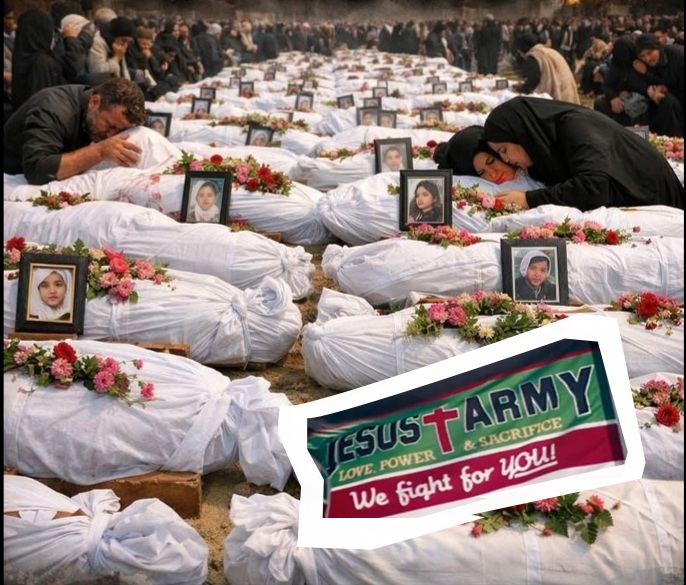
In this catastrophic war of choice, it is Tehran fighting a rearguard action to restore geopolitical sanity. If Iran loses, god only knows where Israel and the US will drag the world next
Jonathan Cook, Mar 06, 2026
The admission this week by US secretary of state Marco Rubio, echoed by Mike Johnson, Speaker of the House of Representatives, that Israel forced Washington’s hand in attacking Iran has rightly caused consternation.
Breathing life into something that would normally be treated as an antisemitic trope, Rubio argued that the Trump administration had been left with no choice but to attack Iran because, had it not, Israel would have launched an attack anyway, exposing US soldiers to retaliation.
Rubio stated: “The president made the very wise decision: We knew that there was going to be an Israeli action, we knew that that would precipitate an attack against American forces, and we knew that if we didn’t preemptively go after them before they launched those attacks, we would suffer higher casualties.”
Rubio was using the term “preemptively” in a highly irregular and misleading way.
In international law, aggression is an illegal application of force – the “supreme international crime”, according to the 1950 principles set out by the Nuremberg war crimes tribunal. But there is a potential mitigating factor if the attacking state can show it was acting pre-emptively: that is, it was acting to prevent a plausible, immediate and severe threat of attack.
Rubio, however, was not suggesting that the US acted “preemptively” against a threat from Iran. He meant Washington had acted preemptively to stop its ally, Israel, from setting off a chain of military events that would lead to US soldiers being harmed.
Had the Trump administration really been acting preemptively in these circumstances, the US should have attacked Israel, not Iran.
Paper tiger
But Rubio’s comment begged a further question: Why didn’t Washington simply tell Israel it was forbidden from starting a war against Iran without US approval?
After all, Israel would be incapable of mounting any kind of attack on Iran without the critical support provided by the US.
Israel has had to rely on help from US military bases dotted around the region, as well as the Arab states that host those bases.
The attack would have been quite inconceivable without the backup of a massive armada of US war ships sent to the region by Trump.
Israel can withstand Iranian retaliation only because it gets a degree of protection from missile interception systems provided and funded by the US.
And on top of all that, Israel is regional hegemon only because it gets massive subsidies from the US – worth many billions of dollars a year – to preserve it as one of the strongest militaries in the world.
In other words, Israel would have found it impossible to wage war on Iran alone. It is a paper tiger without the US.
Rubio’s comment suggested one of two possibilities: either that the US, with the strongest military in world history, is under the thumb of the tiny state of Israel; or that Trump has made his own military, the strongest-ever, servile to Israel.
Whichever it is, it is hard to square with Trump’s repeated assertion that he is putting America First.
This point is so glaringly obvious it is presumably the reason why Rubio was forced to walk back his comments the next day. Meanwhile, Trump hurriedly suggested it was he who had forced Israel’s hand to attack Iran, not the other way round.
Geopolitical insanity
The more likely truth is not that Israel forced Trump’s hand. It is that he was seduced by Israeli prime minister Benjamin Netanyahu’s false claim that an attack on Iran would be a cakewalk – if they struck at a moment when they could be sure of killing Iran’s supreme leader, Ali Khamenei.
Such a decapitation strike, Trump was led to believe, would be a repeat of his Venezuela “success”, when he kidnapped President Nicolas Maduro from Caracas to bring him to trial in New York.
In Venezuela, the flagrant flouting of international law by the US was intended to be the equivalent of pointing a loaded shotgun at the head of Maduro’s replacement, Delcy Rodriguez. Do as we say, or the new president gets it from both barrels.
Netanyahu knew exactly how to sell Trump, still giddy on the noxious fumes of this lawbreaking venture, the idea that he could repeat the exercise in Iran. The ayatollah’s successor would similarly be putty in his hands.
Which is why, in this catastrophic war of choice by the US and Israel, it is Tehran fighting a rearguard action to restore a little geopolitical sanity. If Iran loses, or the US succeeds without paying a fearsome price, god only knows where Israel and Washington will drag the world next.
The world’s fate, in a real sense, is in Tehran’s hands.
Israelisation’ of the US
What the joint attack on Iran demonstrates most clearly is how much Netanyahu has succeeded over the past quarter of a century in “Israelising” Washington and the Pentagon.
The US has always waged illegal wars of aggression. It has always been more gangster than global policeman. But just because Washington was run by ruthless criminals, it did not mean it was incapable of getting still more deranged, still more psychopathic.
That is what Netanyahu has been working on. And Trump is now giving full rein to the Israelisation of the US. The clues are everywhere.
On Wednesday secretary of war Pete Hegseth – the traditional title of “secretary of defence” presumably sounded too law-abiding – dropped any pretence of being the good guy.
He insisted US forces were acting “without mercy” and that the Iranian regime “are toast”. The US would deliver “death and destruction all day long”.
The previous day he had set out the game plan: “No stupid rules of engagement, no nation-building quagmire, no democracy building exercise, no politically correct wars.”………………………………………………………………………………………………………………………………………………………………………………………………………………………………………
The word of God
Central to these beliefs is the gathering of Jews, as God’s Chosen People, into the Land of Israel – a much larger area than that covered by the modern state of Israel.
For Christian fundamentalists such as Hegseth and a growing number of US commanders, Israel is the catalyst for the End Times.
For very obvious reasons, Israel has been nuturing its ties with the huge numbers of Christian fundamentalists in the US. They are politically active – their vote secured the presidency for Trump – and they treat Israel as a critically important domestic issue rather than a foreign policy matter. https://jonathancook.substack.com/p/in-iran-israels-morbid-military-cult
Australian PM Anthony Albanese gave Donald Trump model nuclear submarine on golden plate at White House
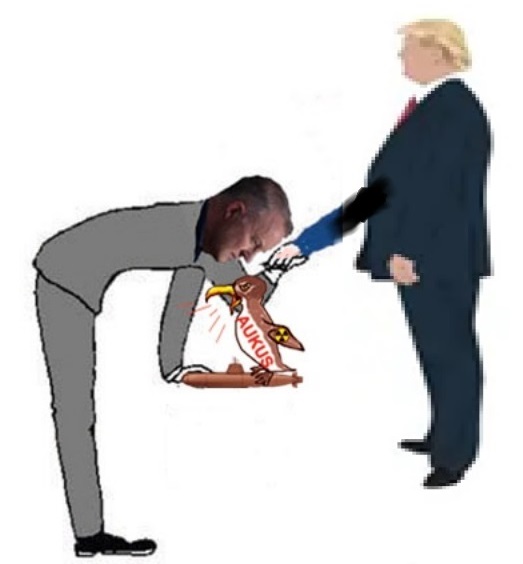
Prime minister also presented Melania Trump with a $3,000 Paspaley pearl pendant
Josh Butler, Guardian, Thu 5 Mar 2026
The Australian prime minister, Anthony Albanese, gave Donald Trump a gift of a model nuclear submarine with golden plates and finishes, internal documents reveal, during his visit to the White House last year which sealed the president’s support for the Aukus pact.
The prime minister also presented the US first lady, Melania Trump, with a A$3,000 Paspaley pearl pendant.
The information, obtained by Guardian Australia from the Department of Prime Minister and Cabinet after a four-month freedom of information process, revealed more about the delicate diplomatic planning and charm offensive that went into Albanese’s long-awaited first face-to-face meeting with Trump.
“Gift form” documents from the department reveal Albanese came to the White House bearing a two-foot-long model Virginia-class submarine, mounted on a base with gold plates, and a pearl necklace from one of Australia’s most famous jewellers.
Albanese had previously stated he’d given the Trumps a model submarine and jewellery, but at the time neither Albanese’s office nor his department would reveal any further information about the gifts.
Other world leaders and business titans have showered Trump with expensive gifts – often gold. The Fifa president, Gianni Infantino, presented Trump with a gold medal and golden trophy for a newly created “Fifa peace prize”; the Apple CEO, Tim Cook, gave Trump a glass disc with a golden base; South Korea’s president gave him a golden crown; while a group of Swiss billionaires gave him a golden clock and engraved gold bar………………….https://www.theguardian.com/australia-news/2026/mar/05/australian-pm-albanese-trump-white-house-visit-gold-submarine-gift
Negotiation to Detonation
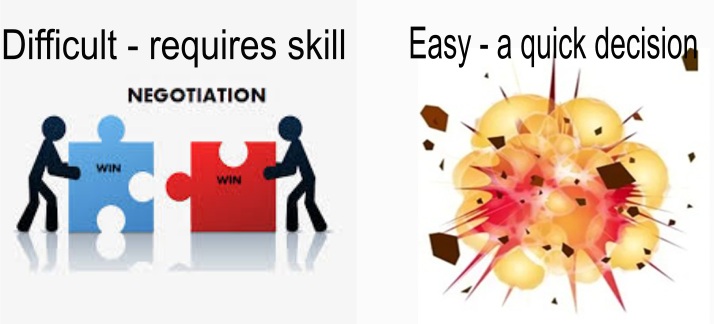
. A peaceful resolution would have prevented the long-term U.S. plan to consolidate and weaponize its control over Middle Eastern oil
By Michael Hudson, Monday, March 2, 2026, https://michael-hudson.com/2026/03/negotiation-to-detonation/
Last Friday the mediator of the U.S. and Iranian nuclear negotiations in Oman, that country’s foreign minister Badr Albusaidi, pulled the rug out from President Trump’s deceptive pretense threatening war with Iran. Why? Because it had refused his demands to give up what he claimed was its own atom bomb. The Omani foreign minister explained on CBS’s Face the Nation that the Iranian team had agreed not to accumulate enriched uranium and offered “full and comprehensive verification by the IAEA.” This new concession was a “breakthrough that has never been achieved any time before. And I think if we can capture that and build on it, I think a deal is within our reach” to achieve “agreement that Iran will never, ever have a nuclear material that will create a bomb. This is, I think, a big achievement.”
Pointing out that this breakthrough “has been missed a lot by the media,” he emphasized that by calling for “zero stockpiling” went far beyond what had been negotiated during President Obama’s administration, because “if you cannot stockpile material that is enriched then there is no way you can actually create a bomb.”
Ayatollah Ali Khamenei – who already had issued a fatwa against doing any such thing, and had repeated this position year after year – called Iran’s Shi’a leaders and military chief to discuss ratification of the agreement to cede control of its enriched uranium in order to prevent war.
But any such capitulation was precisely what neither the United States nor Israel could accept. A peaceful resolution would have prevented the long-term U.S. plan to consolidate and weaponize its control over Middle Eastern oil, its transportation and the investment of its oil export revenues, and to use Israel and al Qaeda/ISIS as its client armies to block independent oil-producing countries from acting in their own sovereign interests.
Israeli intelligence apparently alerted the U.S. military to suggest that the meeting at the Ayatollah’s compound offered a great chance to decapitate the leading decision makers all together. This followed the U.S. military handbook advice that killing a political leader whom the U.S. deems to be undemocratic will liberate popular dreams of regime change. That was the hope of bombing President Putin’s country residence last month, and it was in line with the U.S’s recent Starlink attempt to mobilize popular opposition for revolution in Iran.
The joint U.S.-Israeli attack makes it clear that there is nothing that Iran could have conceded that would have deterred the long-standing U.S. drive to control Middle Eastern oil, alongside using Israel and ISIS/Al Qaeda client armies to prevent sovereign nations in the region from emerging to take control of their oil reserves. That control remains an essential arm of U.S. foreign policy. It is the key to the U.S. ability to hurt other economies by denying them access to energy if they do not adhere to U.S. foreign policy. This insistence on blocking the world’s access to energy sources not under American control is why the U.S. has attacked Venezuela, Syria, Iraq, Libya and Russia.
The attack on negotiators (the second time America has done this to Iran) is a perfidy that will go down in history. It was to prevent Iran’s intended move to peace, before its leaders could have disproven Trump’s false claim that Iran had refused to give up its desire to obtain its own atom bomb.
The markets last week were vastly underestimating the risk of closing the Oil Gulf. U.S. oil companies will make a killing. China and other oil importers will suffer. U.S. financial speculators also will make a killing, because their oil production is domestic. This fact may even have played a role in the U.S. decision to end the world’s access to Middle Eastern oil for what promises to be a lengthy period.
The trade and financial disruption in fact will be so worldwide that I think we can think of Saturday’s February 28 attack on Iran as the true trigger of World War III. For most of the world, the imminent financial crisis (to say nothing of the moral outrage) will define the next decade of international political and economic restructuring.
European, Asian and the Global South countries will be unable to obtain oil except at prices that make many industries unprofitable and many family budgets unaffordable. The rise in oil prices also will make it impossible for Global South countries to service their dollar debts falling due to Western bondholders, banks and the IMF.
Countries can save themselves from having to impose domestic austerity, currency depreciation and inflation only by recognizing that the U.S. attack (supported by Britain and Saudi Arabia, with ambiguous Turkish acquiescence) had ended the U.S. unipolar order – and with it the dollarized international financial system. If this is not recognized, acquiescence will continue until it becomes unsustainable in any case..
If this is the inaugural real battle of World War III, it is in many ways a final battle to decide what World War II was all about. Will international law crumble as a result of the unwillingness of enough countries to protect the rules of civilized law supporting the principles of national sovereignty free from foreign interference and coercion from the 1648 Peace of Westphalia to the UN Charter? And with regard to wars that inevitably are to be waged, will they spare civilians and non-belligerents, or will they be like Ukraine’s attack on its Russian speaking population in its eastern provinces, Israel’s genocide against ethnic Palestinians, Wahabi religious cleansing of non-Sunni Arab populations, or indeed the Iranian, Cuban and other populations under U.S.-sponsored attack.
Can the United Nations be saved without freeing itself and its member countries from U.S. control? An early litmus test of where alliances are sorting out will be which countries join the legal move to declare Donald Trump and his cabinet war criminals. Something more than the present ICC is needed, given the U.S. Government’s personal attacks on ICC judges that found Netanyahu guilty.
What is required is a Nurenberg-scale trial against the Western military policy that has been seeking to plunge the entire world into political and economic chaos if it does not submit to the U.S. unipolar ruler-based order. If other countries do not create an alternative to the US-European-Japanese-Wahabi offensive, they will suffer what U.S. Secretary of State Rubio called (in his recent Munich speech) a resurgence of the Western history of conquest to the basic principles of international law and equity.
An alternative requires restructuring the United Nations to end the U.S. ability to block majority resolutions. In view of the fact that U.N. Secretary-General Antonio Guterres has said that it may be bankrupt by August and have to close its New York City headquarters, this is a propitious time to move it out of the United States itself. The U.S. has banned Francesca Albanese from entering the United States as a result of her report describing Israeli genocide in Gaza. There can be no rule of law as long as control over the U.N. and its agencies remains in U.S. hands and those of its European satellites.
Trump Threatens Full Trade Embargo Over Spain’s Refusal to Be Complicit in Iran Attacks
Ripping the US president’s “flagrant disregard for European sovereignty—and security,” co-general coordinator of Progressive International declared: “Close the bases. All of them.”
Jessica Corbett, Common Dreams, Mar 03, 2026
President Donald Trump on Tuesday threatened to cut off all trade with Spain over the Spanish government’s refusal to allow US aircraft to use its military bases for the war that the United States and Israel are waging on Iran.
Speaking with reporters at the White House beside German Chancellor Friedrich Merz just after noon Eastern time, Trump initially signaled that he’d already taken action against Spain, but less than 10 minutes later, the president suggested he was still deciding.
Referring to Treasury Secretary Scott Bessent, who was also in the room, Trump said: “Spain has been terrible. In fact, I told Scott to cut off all dealings with Spain.”
Trump claimed that “it started” last year, when every other NATO member caved to US pressure to aim for spending 5% of gross domestic product on defense by 2035, “and Spain didn’t do it.”
“And now Spain actually said that we can’t use their bases. And that’s all right. We could use their base if we want. We could just fly in and use it. Nobody’s going to tell us not to use it. But we don’t have to. But they were unfriendly,” the president continued. “Spain has absolutely nothing that we need other than great people. They have great people but they don’t have great leadership.”
Again complaining about their refusal to commit to 5%, he said that “we’re gonna cut off all trade with Spain. We don’t want anything to do with Spain.”………………………………………………………………………………………………………………………………………….
Francesca Albanese, the United Nations special rapporteur focused on the occupied Palestinian territories and a target of Trump administration sanctions, responded to the US president by praising the “strength” of Spanish Prime Minister Pedro Sánchez.
“The peoples of Europe do not want to be complicit in a system that kills children and protects those who profit from their blood,” Albanese said. “Europe deserves better, and you are already part of that change. Thank you.”https://www.commondreams.org/news/iran-spain
This Illegal US-Israeli Attack on Iran Is Also an Assault on the United Nations
As Henry Kissinger famously said, “It may be dangerous to be America’s enemy, but to be its friend is fatal.” We can add that to host US military bases and CIA operations is to turn your country into a vassal state.
The international order that Franklin and Eleanor Roosevelt helped to build after the catastrophe of WWII was founded on a simple and profound idea – that law and respect, not force, should govern relations among states. That idea is now being destroyed by the very nation that did most to promote it in founding the UN. The irony is bitter beyond measure.
Let us be clear about what the United States and Israel are pursuing. The US objective is not the security of the American people. The objective is global hegemony. The attempt is to destroy the UN and the international rule of law—an attempt that will fail.
Jeffrey D. SachsSybil Fares, Mar 02, 2026, Common Dreams, https://www.commondreams.org/opinion/united-nations-israel-us-attack-iran
On February 16, 2026, one of us (Jeffrey Sachs) sent a letter to the UN Security Council warning that the United States was on the verge of tearing up the United Nations Charter. That warning has now come to pass. The United States and Israel have launched an unprovoked war against Iran in flagrant violation of Article 2(4) of the Charter, without authorization from the Security Council, and without any legitimate claim of self-defense under Article 51. They are trying to kill the UN Charter and the international rule of law, but they will fail.
At the Security Council on February 28, 2026, the US and its allies directed their condemnation not at the American and Israeli aggression, but at Iran. One US ally after the next condemned Iran for its retaliatory attacks yet absurdly failed to condemn the illegal and unprovoked US-Israeli attack on Iran. This performance by these countries was disgraceful and turned reality completely upside down.
The truth is that the devastation of the war will not directly affect the so-called West: their children will not suffer traumas or death, and their countries will not be set ablaze. The victims of this attack are the people of the Middle East. They are the expendable ones who suffer from Western arrogance, abuse of power, and addiction to war.
We close with two observations. First, the United States will not achieve global hegemony or kill the UN. The world is too large, too diverse, and too determined to resist domination by any single power, much less one with 4 percent of the world’s population. The world outside of the US and the countries it occupies want the UN to live and thrive. The US attempt will surely fail, but it may cause immense suffering before it does.
Second, if Israel continues its addiction to war and occupation, it too will not survive. That addiction represents a mix of theocracy and post-traumatic stress. Part of Israel believes that it is the biblical kingdom of the 5th century BC. The other part lives in the traumatic memory of the Holocaust, and so is determined to kill any perceived adversary rather than learn to live together with it in peace. The Israeli Ambassador’s twisted defense of Israel’s brazen attack on Iran, as usual, cited the Bible and Auschwitz as the two justifications. These are Israel’s two perennial references, but not the real world of today.
The joint US-Israeli attacks were described by Trump as necessary because Iran “rejected every opportunity to renounce their nuclear ambitions, and we can’t take it anymore.” This is of course a flat lie. As the letter of February 16 recounted, Iran agreed a decade ago to a nuclear deal, the Joint Comprehensive Plan of Action (JCPOA) that was adopted by the UN Security Council in Resolution 2231. It was Trump who ripped up the agreement in 2018. In June 2025, Israel bombed Iran in the midst of US-Iran negotiations. This time too, the Israel-US war plans were set weeks ago when Netanyahu met with Trump, and the negotiations underway between the US and Iran were a charade. This seems to be the new modus operandi of the US: start negotiations and then aim to murder the counterparts.
It is easy to understand why the US allies behave in the embarrassing and self-abasing way they did at the UN Security Council. In addition to the United States, eight of the other fourteen Council members host US military bases or grant the US military access to local bases: Bahrain, Colombia, Denmark, France, Greece, Latvia, Panama, and the United Kingdom. These countries are not fully sovereign. They are partially governed by the US. The US military bases house CIA operations, and the host countries constantly look over their shoulder to try to avoid US subversion in their own countries.
As Henry Kissinger famously said, “It may be dangerous to be America’s enemy, but to be its friend is fatal.” We can add that to host US military bases and CIA operations is to turn your country into a vassal state.
As an absurd but telling example, the Danish ambassador parroted every US talking point, pointing her finger at Iran for its aggression as if Iran had not been attacked by the US and Israel. She completely forgot that such humiliating vassalage to the US will not play well for Denmark if the US occupies Greenland.
The truthful voices at the Security Council came from the countries not occupied by the United States. Russia explained correctly that the so-called West (that is, the countries occupied by the US) is engaged in victim-blaming when it points its finger at Iran. China reminded the Council that the crisis began with the US and Israeli attacks on Iran, not with Iran’s retaliation. Somalia’s ambassador, speaking on behalf of several African member states, truthfully portrayed the source of this recent escalation. The UN Representative of the League of Arab States spoke brilliantly about the root cause of Israel’s mad aggression: the denial of rights to Palestinian people, and Israel’s use of mass murder and regional war to prevent the emergence of a State of Palestine.
When Iran retaliates against US military bases in the Gulf, it is exercising its inherent right of self-defense under Article 51 of the Charter. We must remember that the US and Israel are openly and repeatedly assassinating Iran’s leaders, with the aim of overthrowing its government. When states murder a foreign head of state and attempt to destroy the government, the target of those threats is entitled under international law to defend itself.
The US-Israeli bombing murdered not only Iran’s Supreme Leader and several top government officials, but also more than 140 young girls in their school in Minab. These young children are the victims of a horrific war crime. The countries today that gave a pass to the United States and Israel for these killings—notably Denmark, France, Latvia, the United Kingdom, and of course the US —are also complicit in this war crime.
This UN Security Council emergency meeting will likely be remembered as the day the United Nations ceased to function from its headquarters on American soil. An international organization dedicated to the peaceful settlement of disputes cannot credibly operate from a country that wages illegal wars, threatens member states with annihilation, and treats UN Security Council resolutions as disposable instruments of convenience. For the UN to survive, and we need it to survive, it will need several homes around the world—in Brazil, China, India, South Africa, and others—honoring the true multipolarity of our world.
Let us be clear about what the United States and Israel are pursuing. The US objective is not the security of the American people. The objective is global hegemony. The attempt is to destroy the UN and the international rule of law—an attempt that will fail. Israel’s objective is to establish a Greater Israel, destroy the Palestinian people, and assert its hegemony over hundreds of millions of Arabs across the Middle East (from the Nile to the Euphrates, as US Ambassador Mike Huckabee recently asserted).
The United States’ delusional efforts at global hegemony are proceeding region by region. The US has recently claimed, in a wholly twisted supposed revival of the Monroe Doctrine, that it controls the Western Hemisphere and can dictate how Latin American countries conduct their economic and political affairs. The US kidnapped the sitting Venezuelan president to prove the point, and it now threatens to overthrow the Cuban government as well.
Today’s war against Iran aims to prove that the US similarly owns the Middle East. The war is part of a 30-year campaign, initiated by the Clean Break doctrine, to overthrow all governments that oppose US and Israeli hegemony in the region. Those joint Israel-US wars have included the genocide in Gaza, the occupation of the West Bank and the decades of wars and regime-change operations in Iran, Iraq, Lebanon, Libya, Somalia, Sudan, Syria, and Yemen.
One part of the US global plan is to commandeer the world’s oil exports and to weaken China and Russia in the process. The US seizure of Venezuela was designed to ensure American control of that country’s oil exports, especially to control the flow of oil to China. US sanctions on Russia aim to prevent Russian oil from reaching India and China. Now the US aims to stop the flow of Iran’s oil to China. More broadly, the US aims to control the entire Gulf region plus Iran to maintain its imperial dominance.
The international order that Franklin and Eleanor Roosevelt helped to build after the catastrophe of WWII was founded on a simple and profound idea – that law and respect, not force, should govern relations among states. That idea is now being destroyed by the very nation that did most to promote it in founding the UN. The irony is bitter beyond measure..
A state that depends on permanent war, permanent occupation and slaughter of the Palestinians, and the indefinite subjugation of millions of people has no viable future, and the policies that the United States is now pursuing on Israel’s behalf will accelerate rather than prevent that outcome.
The two-state solution, which the Council has endorsed repeatedly, offers Israel a path to peace. Tragically Israel rejects that. The result, eventually, will be the end of Israel itself in its current form, especially as the US population is rapidly turning against Israel’s violent theocracy and towards the cause of Palestine. Perhaps there will be one democratic state for both Arabs and Jews living in peace, together, with an end of apartheid rule.
These are harsh truths, but emergencies demand honesty. The UN is being murdered by Israel and the United States. The Security Council must rouse itself from their military occupation by the US, and remember that they are the stewards of the UN Charter’s promise to maintain international peace and security.
1 This Month

of the week – Shut Down Drone Warfare!


Tell the Ukrainian Government to Drop Prosecution of Peace Activist Yurii Sheliazhenko

Petition to revoke the licensing of the Near Surface Nuclear Disposal Facility (NSDF) at Chalk River. https://www.ourcommons.ca/petitions/en/Petition/Details?Petition=e-7247
To see nuclear-related stories in greater depth and intensity – go to https://nuclearinformation.wordpress.com
-
Archives
- April 2026 (57)
- March 2026 (251)
- February 2026 (268)
- January 2026 (308)
- December 2025 (358)
- November 2025 (359)
- October 2025 (376)
- September 2025 (257)
- August 2025 (319)
- July 2025 (230)
- June 2025 (348)
- May 2025 (261)
-
Categories
- 1
- 1 NUCLEAR ISSUES
- business and costs
- climate change
- culture and arts
- ENERGY
- environment
- health
- history
- indigenous issues
- Legal
- marketing of nuclear
- media
- opposition to nuclear
- PERSONAL STORIES
- politics
- politics international
- Religion and ethics
- safety
- secrets,lies and civil liberties
- spinbuster
- technology
- Uranium
- wastes
- weapons and war
- Women
- 2 WORLD
- ACTION
- AFRICA
- Atrocities
- AUSTRALIA
- Christina's notes
- Christina's themes
- culture and arts
- Events
- Fuk 2022
- Fuk 2023
- Fukushima 2017
- Fukushima 2018
- fukushima 2019
- Fukushima 2020
- Fukushima 2021
- general
- global warming
- Humour (God we need it)
- Nuclear
- RARE EARTHS
- Reference
- resources – print
- Resources -audiovicual
- Weekly Newsletter
- World
- World Nuclear
- YouTube
-
RSS
Entries RSS
Comments RSS
 nuclear-news