Nuclear storage dump opponents sweep into Theddlethorpe parish council
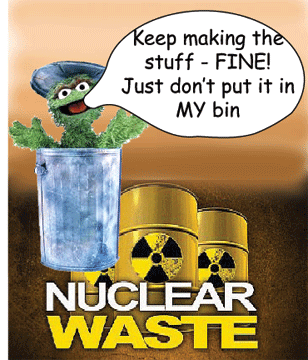
Residents have organised against storage plans
The Lincolnite, By Daniel Jaines Local Democracy Reporter 13 Apr 23
Candidates opposing a nuclear storage dump have surged to power in Theddlethorpe in a demonstration of local opposition.
Eight of the ten seats on two Theddlethorpe Parish Councils – St Helen’s and All Saints – have been filled uncontested by people against to Nuclear Waste Service’s plans for a Geological Disposal Facility in the village.
Nearby residents were in uproar after it was announced last year that the Theddlethorpe Gas Terminal could become the entry point for a nuclear storage facility to dispose of around 10% of the UK’s nuclear waste.
The new councillors, who will automatically become councillors after the May 4 local elections, are all part of Theddlethorpe Residents Association.
Members Brian Swift and Andrew Spink formed it after their application to join the parish councils were rejected in 2021.
Mr Swift said: “We were both turned down, but shortly after this we got together with a few neighbours and formed the Theddlethorpe Residents Association with the aim to give the parish a collective voice and to counter the PC’s negative stance.”
Since its inception, the residents association has garnered more than 120 members and holds regular events.
However, Mr Swift said the anti-GDF sentiment of the members would not mean other views would be unwelcome.
“Despite the fact that the majority of the councillors are now anti-GDF ,we are keen to stress that all points of view are welcome. Our priorities are to carry out the parish council’s functions to the best of our ability and to do our utmost to see that the village thrives and continues to be the friendly, united place we all call home,” he said………………………. more https://thelincolnite.co.uk/2023/04/nuclear-storage-dump-opponents-sweep-into-theddlethorpe-parish-council/—
Nuclear is not the solution to our energy troubles.
France pays a price for its energy security. President Macron has announced plans to build 6 new reactors by 2050 – and they’re much needed to replace the country’s ageing fleet of power stations – but he was warned very publicly just two months ago that he needs to have a credible programme to deal with the fourth issue: nuclear waste and both from the new planned plants and from the new ones. Right now, France’s nuclear waste facilities are close to over-flowing. In reality, if you’re worried about reactor safety, you should really be a lot more worried about nuclear waste. The full decommissioning process for a nuclear plant takes between 20 and 30 years. ……………….Furthermore, those small, modular nuclear power stations on which the Tory position relies? According to research published last year by Stanford University and the University of British Columbia, they produce more waste than conventional nuclear power plants.
Reaction Giga Watt, April 13, 2023
Both the current UK government and the likely next government want to embrace nuclear power.
Rishi Sunak has commissioned an energy review that will focus on “carbon capture and storage, small modular reactors and the like”. Keir Starmer’s proposed “Great British Energy” would invest in nuclear energy alongside wind, solar, tidal and other emerging technologies. There’s nothing new about nuclear power and if it was the solution to all our problems – and on the face of it, it should be – the world would have already fully embraced nuclear, risks and all. So why haven’t we?
………… burning fossil fuels is very much not consequence free and we’re only just starting to get serious about those consequences and no amount of “clean” coal, unleaded fuel, catalytic converters, wonderful though they are, can make up for this.
Secondly, nuclear power is scary: the world’s first public demonstrations of nuclear power were at Hiroshima and Nagasaki. Roughly once a decade since then, the world has provided us with reminders of just how frightening nuclear power can be: the Cuban Missile Crisis, Three Mile Island, Exercise Able Archer, Chernobyl, Fukushima and Zaporizhzhia are all examples from the past 60 years where the perils of a nuclear world have been brought home to us.
………………………………………………………………….. It’s also true that the rise of more sophisticated terrorist organisations made the public and thereby politicians wary of the nuclear industry especially from 9/11 onwards. If terrorists can fly two large aeroplanes into the heart of the biggest financial centre in the world then surely an isolated power station would be a much easier target………….. At Zaporizhzhia in Ukraine during the current conflict, the issue is less about the impact on the reactors themselves from Russian shelling but the impact on waste storage facilities and power supplies to cooling and safety systems
……….As the Zaporizhzhia reactors were being switched off, they still needed to be continuously cooled with water from the Dnieper to ensure safe shutdown because they produce so much heat. Uranium-filled fuel rods, the source of nuclear fission within the reactor, are immersed in water for around 10 years after they are used before they reach a temperature at which they can be safely handled. It’s this efficiency that makes nuclear power an unusual part of the energy mix as, unlike gas or coal, you can’t easily turn the output up or down. Nuclear energy just is.
This means that in a system that requires flexibility, and remembering that UK electricity demand can swing between 40 GWs and 20 GWs in just one day, nuclear power is unsuited to modern demands. ………………….
France pays a price for its energy security. President Macron has announced plans to build 6 new reactors by 2050 – and they’re much needed to replace the country’s ageing fleet of power stations – but he was warned very publicly just two months ago that he needs to have a credible programme to deal with the fourth issue: nuclear waste and both from the new planned plants and from the new ones. Right now, France’s nuclear waste facilities are close to over-flowing. In reality, if you’re worried about reactor safety, you should really be a lot more worried about nuclear waste. The full decommissioning process for a nuclear plant takes between 20 and 30 years. ……………….Furthermore, those small, modular nuclear power stations on which the Tory position relies? According to research published last year by Stanford University and the University of British Columbia, they produce more waste than conventional nuclear power plants.
Part of the problem with waste is that, even as we approach the 70th anniversary of the first nuclear power stations, there is still no global consensus on how best to handle high level nuclear waste because the timeframes are so immense. What seems like an obvious solution today – for example, storing waste in deep geological repositories hundreds of metres below the ground – may end up being a total disaster in 500 or even 5,000 years’ time. What do those timescales mean? It means asking Henry VIII, King of England in 1523, to make decisions about the country we live in today. Unsurprisingly we have ended up with a halfway house: everyone agrees that toxic waste can be treated and converted into less dangerous (but still very dangerous) forms; everyone also agrees that it’s probably best if it’s stored underground but no one can yet agree what underground means and what the risks will be over the centuries to come.
And if the timescales are immense, then so are the costs: the Sellafield facility in Cumbria is being decommissioned with a current cost estimate of £121 billion which does not included the placing of the waste from the site into a geological disposal facility, the location and timing of which are to be determined, which will cost another £53 billion.
At least Henry VIII would not have had to deal with our fifth hurdle: the British planning system and an island cluttered with around 65 million people and it’s this, perhaps above all, that makes new nuclear projects vanishingly unlikely. I don’t want to live next to a nuclear power station of any size and I doubt many Reaction subscribers would either but because we live in an age of Nimbyism, it’s doubtful that any of us will be asked to do so anyway. Even if we are, and if the project is approved, investment is found and if construction starts, you can look forward to the project, counting from today, delivering power in roughly 2035 and that’s being very optimistic.
……………………. over the past ten years, the UK has done so much to change its energy mix that investing in nuclear now, with all the cost, time and controversy involved, would be a significant mistake. It seems unlikely that it will take Sunak and Starmer, arch-pragmatists that they both are, very long to work this out. https://reaction.life/nuclear-is-not-the-solution-to-our-energy-troubles/
Holtec seeking $300M from Michigan to restart Palisades nuclear plant

Beth LeBlanc and Carol Thompson, The Detroit News 13 Apr 23
Lansing — The Florida-based owner of a shuttered nuclear power plant on the shores of Lake Michigan is asking the State of Michigan for roughly $300 million in taxpayer assistance to help it restart operations at the Palisades Nuclear Generating Station.
Holtec International approached a few regional lawmakers recently about the plan, but a formal request has not yet been made to the state, said Rep. Joey Andrews, a St. Joseph Democrat who represents Covert Township in Van Buren County, where the nuclear plant is located.
“It’s bridge money to help them get from ending the decommissioning process to beginning operating against,” Andrews said of the funding request, which was first reported by The Herald-Palladium.
The more than 50-year-old plan was decommissioned by then-owner Entergy Nuclear last year before the company sold the facility to Holtec. The nuclear power plant shut down last May.
Holtec said it was approached by the state last month to restart the plant to address “the need for zero-emission clean energy.” Representatives for the energy company presented plans last month to resume operations at the plant to the U.S. Nuclear Regulatory Commission………………………….
State Rep. Angela Witwer, the Delta Township Democrat who chairs the House Appropriations Committee, said she had not yet received a formal request for the funding. The Michigan Economic Development Corp. did not immediately respond to a request for comment……………………….
……..the $300 million inventive request from Holtec would rank among the largest in straight incentive payments the state has given to businesses.
The restart of the Palisades plant would mark the first time an American nuclear plant resumed operations after being decommissioned………..
Holtec currently is using a decommissioning trust funded by Consumers Energy customers to pay the salaries of the roughly 220 workers decommissioning the site. But the money is restricted to decommissioning efforts and can’t be used to restart a plant, Andrews said…………………………
The reopening has met opposition from anti-nuclear groups worried about the challenges of reversing decommissioning.
German government rejects new call to delay nuclear shutdown
The German government has dismissed calls for a last-minute delay in shutting down the country’s last three nuclear power plants this weekend
By FRANK JORDANS – Associated Press, Apr 12, 2023
BONN, Germany (AP) — The German government dismissed calls Wednesday for a last-minute delay in shutting down the country’s last three nuclear power plants this weekend.
Opposition politicians and even some members of the Free Democrats, a libertarian party that’s part of Chancellor Olaf Scholz’s governing alliance, have demanded a reprieve for the remaining reactors, which were already operating without requisite safety checks.
“The nuclear phase-out by April 15, that’s this Saturday, is a done deal,” Scholz spokesperson Christiane Hoffmann said.
Successive German governments planned a phase-out of nuclear power. The last three plants originally were scheduled to shut down on Dec. 31, 2022. Scholz ordered a postponement last year amid concerns that Germany might face an energy shortage due to the war in Ukraine.
Lawmakers approved the extension on the condition the plants, which began operation more than 30 years ago, would cease operating by mid-April of this year……………..
[Keeping the reactors going] would be both illegal and costly, according to Environment Ministry spokesperson Bastian Zimmermann. The ministry oversees nuclear safety in Germany.
Zimmermann said the three reactors — Emsland, Neckarwestheim and Isar II — last underwent safety checks in 2009 and such inspections normally need to occur every 10 years. The requirement was only suspended due to the shutdown planned for the end of 2022, he said.
Any further lifetime extension for the plants would require comprehensive and lengthy security checks again, Zimmermann said.
The country is still searching for a location to permanently store almost 2,000 containers of highly radioactive waste for thousands of generations.
The Economy Ministry dismissed concerns that Germany won’t be able to meet its energy needs without the nuclear power plants, which currently produce about 5% of the country’s electricity.
Ministry spokesperson Beate Baron said recent studies showed Germany would be able to maintain its power supply with coal and gas-fired power plants and renewables such as wind and solar, while remaining a net exporter of electricity.
Baron said the government wants to phase in the use of hydrogen that can be produced without greenhouse gas emissions and fired up quickly on days when there’s little sun or wind for renewables. https://www.atchisonglobenow.com/news/world/german-government-rejects-new-call-to-delay-nuclear-shutdown/article_93c1beb6-7d8a-51ed-b48d-68ac8ba0fbb3.html
Netherlands energy experts recommend limiting energy demand, see little or no role for nuclear power, but Cabinet wants nuclear anyway.
Cabinet moving forward with nuclear plant plans, despite experts seeing “limited role” NL Times 13 Apr 23,
Minister Rob Jetten for Climate and Energy will move forward with plans to build two new nuclear power plants, he said at the presentation of Expert Team Energy System 2050’s advice on making the Netherlands climate neutral. In that advice, presented in The Hague on Wednesday, the team of experts sees “no or a limited role” for nuclear energy…………….
The final decision on the nuclear power plants will be made in about a year and a half,” Jetten said. “This advice will also be taken into account.”
In the report, the expert team said that new nuclear power plants only make sense if the demand for electricity doubles or triples and the Netherlands has to supply energy to neighboring countries.
The report was also critical of the Cabinet’s choice of Borssele as the destination for the nuclear power plants. According to the Cabinet, Borssele already has knowledge, experience, and support for working with nuclear power, and the energy can be converted into hydrogen. But experts don’t see it as a good choice. “A lot of electricity is already being generated at the coast with wind farms at sea. With nuclear power plants added, the electricity grid is overloaded.”………………………………………
For the energy transition to succeed, it is necessary to limit the energy demand. And that will require cooperation from citizens. The experts see many opportunities in local energy systems. In 2050, many neighborhoods should be energy-neutral or even energy-positive, using energy generated in the district for their limited consumption. If the energy generated remains in the neighborhood, it puts little strain on the high-voltage grids.
Citizen involvement and fairness are the most essential conditions for a successful energy transition, the experts said. “In order to achieve our climate goals, our energy system must be CO2 neutral within 20 years. We can only do that if we put citizens first and offer them opportunities and support to participate, now, here, later, and elsewhere,” co-author Aniek Moonen said. As an example of a fairer policy, she mentioned tackling poorly insulated homes and investing in locally generated energy.
April 15, Germany’s Greenpeace to celebrate nuclear phaseout
After decades of hard work by many courageous people, Germany is phasing
out nuclear power. So that this success can finally become reality, we want
to demonstrate with you in Munich. Ever since Greenpeace Germany was
founded in 1980, we have been fighting against the military and civilian
use of dangerous nuclear power, for example in Wackersdorf, Gorleben and
Gundremmingen.
Also under pressure from the anti-nuclear movement, the then
existing coalition of SPD and Greens decided in 2002 to take a first step
towards phasing out nuclear power. They agreed with the power plant
operators that a certain amount of electricity may still be generated
before the reactors have to be shut down. A specific expiration date has
not been set. The final exit was decided in the summer of 2011 by the then
government consisting of CDU/CSU and FDP. The reactor catastrophe in
Fukushima had occurred shortly before.
Greenpeace Germany 3rd April 2023
https://www.greenpeace.de/klimaschutz/energiewende/atomausstieg/atomausstiegsfest
On April 15, Germany is finally due to phase out nuclear power. But the FDP
and the Union keep demanding that the nuclear reactors should continue to
run. We are currently assuming that the nuclear phase-out will last. We
invite you to three central demonstrations and shutdown parties on April
15th.
Bund 27th March 2023
SCOTT RITTER: The Future of US Nuclear Strategy
The state of play today regarding strategic arms control between the U.S. and Russia can best be likened to a patient on life support whom no one is trying to revive.
This makes the 2024 U.S. presidential election one of the most critical in recent history. Simply put, the future of humanity may ride on whomever the American people vote for in November 2024.
In short, a vote for either Biden/the Democratic establishment or Trump/MAGA Republicans is a vote in favor of continuous nuclear-armed Russian roulette, where there exists only one certainty — eventually the pistol will go off. But in this case, it’s not a pistol, but a nuclear weapon that leads to general nuclear war and the termination of life on planet earth as we currently know and understand it.
April 7, 2023
The fallout from Washington’s policy of seeking Russia’s strategic defeat has seen Moscow radically alter its arms control position. That raises important questions about the winner of the next U.S. presidential election.
By Scott Ritter, Consortium News
The United States finds itself wandering in a wilderness of indecision when it comes to arms control policy.
The situation regarding the status of the last existing nuclear arms control treaty with Russia — the New START treaty — is dire. Implementation is currently frozen after Russia suspended its participation in protest to a stated U.S. policy objective of seeking the strategic defeat of Russia, something Russia finds incompatible with opening its strategic nuclear deterrent (which exists precisely to prevent Russia’s strategic defeat) to inspection by U.S. officials.
The U.S. is not talking with Russia about the future of arms control once New START expires in February 2026.
Moreover, fallout from the U.S. policy of seeking strategic defeat of Russia has seen Moscow radically alter its position regarding future arms control treaties. Any future agreement must, from the Russian perspective, include missile defense; the French and British nuclear arsenals, as well as the U.S.-supplied NATO nuclear deterrent.
Russia has further complicated any future negotiations by deploying tactical nuclear weapons to its Baltic enclave in Kaliningrad, as well as extending its Russian-controlled nuclear umbrella to Belarus where it has mirrored the NATO nuclear umbrella.
The state of play today regarding strategic arms control between the U.S. and Russia can best be likened to a patient on life support whom no one is trying to revive.
Russia is in the process of finalizing a major modernization of its strategic nuclear forces, built around the new Sarmat heavy intercontinental ballistic missile (ICBM) and the Avangard hypersonic reentry vehicle. The United States is on the cusp of initiating its own multi-billion dollar upgrade to the U.S. nuclear Triad consisting of the B-21 stealth bomber, the Columbia class missile submarine and the new Sentinel ICBM.
If no treaty vehicle exists designed to verifiably limit the deployment of these new weapons, once New START expires, the U.S. and Russia will find themselves engaged in an unconstrained nuclear arms race that dramatically increases the probability of unintended nuclear conflict.
When viewed in this light, the future of global security hinges on the ability of Russia and the U.S. returning to the negotiating table and resuscitating arms control from its present moribund state.
Key to this will be the willingness of Washington to incorporate Russian concerns into U.S. nuclear posture. To achieve this, the U.S. nuclear establishment will have to be shaken out of the calcified policy assumptions that have guided U.S. arms control policy since the end of the Cold War.
First and foremost amongst these assumptions is the need to promote and sustain U.S. primacy in global nuclear weapons capability. Whether such an assumption is jettisoned will be tied to the person occupying the White House after the February 2026 expiration of New START.
This makes the 2024 U.S. presidential election one of the most critical in recent history. Simply put, the future of humanity may ride on whomever the American people vote for in November 2024.
………………………………………………………………………………………… Biden ran in 2020 on a promise to change U.S. nuclear strategy away from the George W. Bush-era policy, when preemptive U.S. nuclear strikes were a possibility, to a doctrine holding that U.S. nuclear forces exist for the sole purpose of deterring a nuclear attack against the U.S., or retaliating if deterrence failed.
However, once elected Biden’s promise fell to the wayside as an “interagency process” run by unelected bureaucrats and military officers intervened to prevent campaign rhetoric from becoming official policy.
Biden, like every American president before him in the nuclear age, has been unable and/or unwilling to expend the political capital necessary to take on the American nuclear enterprise, and as a result the American people and the rest of humanity are held hostage by this deadly nexus between the U.S. military industrial complex and the U.S. Congress.
Congress allocates taxpayer money to underwrite a nuclear weapons-oriented, defense industry, which in turn feeds this money back into campaign contributions that empower a compromised Congress to keep funding the nuclear enterprise – creating a vicious cycle impervious to change of its own volition.
Biden or anyone Democratic candidate in 2024 is a byproduct of this very establishment, and a willing participant in the corrupt circle of money and power that is the nuclear, military industrial-congressional complex. In short, if Biden or his proxy is sitting in the White House in 2025, there will be no change in the U.S. nuclear posture on arms control policy.
This means any Democratic Party-controlled candidate voted into office in November 2024 may very well be the last president to hold office, given the probability of nuclear war between the U.S. and Russia, which an unchanged nuclear posture and arms control policy will foster.
The Trump Standard
…………………………………………………. Whether Trump could pull off a second successful presidential run is not the issue here. Instead, the question is whether Trump can promote an arms control stance different from Biden and the Democratic and Republican establishments that could break free of existing constraints — giving arms control a chance.
Trump’s track record is decidedly mixed in this regard…………………..
Trump’s willingness to break free of the ideological prison of rampant Russophobia by considering the possibility of friendly relations between the U.S. and Russia makes him unique among mainstream presidential candidates of either party……………………………………………………………
But there is another side to Trump which bodes poorly for any meaningful change in U.S.-Russian arms control. First and foremost is his abysmal record on arms control……………………………………………….
The bottom line is that the “Trump Standard” for arms control is in many ways even more dangerous than that of the “establishment,” promoting as it does an aggressive posture founded in dominance.
In the end, Trump proved incapable of acting on his own belief, allowing himself to be subordinated to a radical America-first national security ideology which promoted the enhancement and expansion of the American nuclear enterprise — the exact opposite trajectory the U.S. needs to be taking come 2024.
There is no reasonable expectation that a second Trump term would deviate meaningfully from that track record.
A New American Standard in Arms Control
The harsh reality today is that neither of the two potential sources of viable presidential candidates for the 2024 election — Democratic National Committee or MAGA Republicans — are positioned to effect meaningful, positive change regarding either U.S. nuclear posture or underlying arms control policy.
That leaves the American people, and the world as a whole, with the inevitability of a massive nuclear arms race between the U.S. and Russia, which will unfold unconstrained by meaningful arms control treaty-mandated limitations………………………..
In short, a vote for either Biden/the Democratic establishment or Trump/MAGA Republicans is a vote in favor of continuous nuclear-armed Russian roulette, where there exists only one certainty — eventually the pistol will go off. But in this case, it’s not a pistol, but a nuclear weapon that leads to general nuclear war and the termination of life on planet earth as we currently know and understand it.
The rally held in Washington, D.C., on Feb. 19 provided a platform for some voices of sanity who have presidential potential, either as independent candidates, or rogue outliers within their respective party establishments. Tulsi Gabbard, Dennis Kucinich, Ron Paul, and Jimmy Dore all addressed the threat posed by nuclear weapons and the need to control them through meaningful arms control.
But none who spoke have put anything in writing that would remotely constitute an arms control “standard” that could compete with either Biden or Trump — or their proxies — on the public stage. Moreover, other than Dore, a comedian, none of these individuals has announced an intention to run, making moot, for the moment at least, the notion of a third option on arms control and American nuclear posture.
Robert F. Kennedy, Jr., the nephew of former President John F. Kennedy, has announced his intention to challenge Biden for the Democratic nomination…………………………………
Kennedy has not published a detailed position on arms control and the U.S. nuclear posture. But in a recent conversation with me, he spoke about the legacy of his uncle, Jack Kennedy, and how he took guidance from that legacy.
Any man who draws upon the wisdom and patience displayed by President Kennedy to defuse the Cuban Missile Crisis would be on the right track when it comes to arms control. https://consortiumnews.com/2023/04/07/scott-ritter-the-future-of-us-nuclear-strategy/
The British government doesn’t want to talk about its nuclear weapons. The British public does

Women are far less likely than men to support UK possession (28 percent of women, compared with 53 percent of men)
Bulletin, By Tim Street, Harry Spencer, Shane Ward | April 6, 2023
In January 2023 British Pugwash and the polling company Savanta conducted a survey of UK public opinion on nuclear weapons issues and potential support for policies that advance nuclear arms control, disarmament, and non-proliferation.
The poll involved 2,320 UK adults who were asked about the Russia-Ukraine war, the United Kingdom’s ongoing replacement of its nuclear weapon system, the possibility that US nuclear weapons will again be stationed in the United Kingdom, the significant increase to the UK’s nuclear warhead stockpile cap, and the entry into force of the Treaty on the Prohibition of Nuclear Weapons.
Our polling results found some notable differences between the British public’s views and the policies of the UK government concerning nuclear weapons. While 40 percent of poll respondents support the United Kingdom possessing nuclear weapons, there is significant support for policies that would control, limit, or even eliminate the UK’s nuclear weapons—including among supporters of nuclear possession. For example, over a third of those who support the UK’s possession of nuclear weapons also support joining a multilateral disarmament treaty.
Despite the challenges involved, especially at a time of war in Europe, we at British Pugwash see an opportunity for UK political parties to adopt policies more supportive of nuclear arms control and disarmament. Our key findings revealed these differences between government policy and public opinion:
Use of nuclear weapons. The UK government’s policy is to consider using nuclear weapons “only in extreme circumstances of self-defence, including the defence of our NATO allies.” UK and NATO policy does not rule out the first use of nuclear weapons.
Our poll found that 48 percent of UK adults oppose the first use of nuclear weapons by the United Kingdom, and only 40 percent support first use. This finding builds on the results of the survey British Pugwash conducted in 2021, which found that two-thirds of the British public want NATO to renounce the first use of nuclear weapons.
Replacing nuclear weapons. The United Kingdom is replacing all four parts of its nuclear weapons system: submarines, missiles, warheads, and associated infrastructure. The estimated cost of the four new nuclear-armed submarines is £31 billion (about $38 billion), and the estimated total cost of replacing nuclear weapons between 2019 and 2070 is at least £172 billion ($212 billion).
Our poll found that 42 percent of UK adults think the estimated cost of replacing the UK’s nuclear weapons does not represent value for money.
Stationing US nuclear weapons in the United Kingdom. The UK government has previously allowed US nuclear weapons and nuclear-capable aircraft to be stored, maintained, and operated from UK military bases. Although the United Kingdom has not hosted US nuclear weapons since 2008, in April 2022 an analysis of US Defense Department documents reported that a facility at the Royal Air Force’s Lakenheath base in Suffolk—which is used by the US Air Force—was being upgraded, potentially allowing the United States to again deploy nuclear weapons there.
British public opinion is split over allowing the United States to deploy nuclear weapons on UK territory. Our poll found that 34 percent of UK adults oppose, and 32 percent support, stationing US nuclear weapons in the United Kingdom.
Treaty on the Prohibition of Nuclear Weapons. In 2017, 122 states voted in support of the Treaty, which prohibits the development, testing, production, acquisition, possession, stockpiling, and use of nuclear weapons, as well as any threat to use them. The United Kingdom has not signed or ratified the treaty. To join the treaty, the country would have to dismantle its nuclear arsenal or present a legally binding plan to do so.
Our poll found that 39 percent of UK adults support joining the ban treaty. Among 18- to 34-year-olds, 48 percent support joining the treaty, and only 13 percent are opposed.
Nuclear weapons possession. The United Kingdom is one of only nine countries possessing nuclear weapons. Our poll found that 40 percent of UK adults are in favor of possession. Women are far less likely than men to support UK possession (28 percent of women, compared with 53 percent of men). Some 27 percent of UK adults oppose UK nuclear possession, 29 percent neither support nor oppose nuclear possession, and 5 percent said they “don’t know” in response to this question.
Our poll also found that a minority of UK adults (39 percent) fully support the government’s decision to increase the UK’s nuclear warhead stockpile cap.
Even among supporters of nuclear possession, we found significant concerns about the government’s approach to nuclear weapons. For example, 23 percent of those who support nuclear possession don’t think the estimated cost of replacing the UK’s nuclear weapons represents value for money.
Furthermore, 38 percent of those who support UK nuclear possession do not want the military to use nuclear weapons first in a conflict. Notably, 35 percent of those who currently support the possession of nuclear weapons also want the United Kingdom to join the international ban treaty that would eliminate the country’s nuclear arsenal.
War in Ukraine. Our data indicate that Russia’s invasion of Ukraine has significantly strengthened support for UK possession of nuclear weapons among those who already favored possession. Two-thirds of those who support nuclear possession said the conflict strengthened their position on this issue.
We also saw increases in support for nuclear weapons possession among those who otherwise oppose nuclear possession. In our poll, 16 percent of those who oppose UK possession of nuclear weapons said the Ukraine conflict had increased their support for possession.
Responses to this particular question likely reflect wider public support for UK involvement in the Ukraine conflict and may thus be temporary. Moreover, 39 percent of UK adults said the Ukraine conflict had “made no difference” to their view on UK nuclear possession. Overall, our data suggest that a key impact of the Ukraine war has been to reinforce support for UK nuclear possession among UK adults who already held this view.
Uncertainty and ambivalence. Nearly a third of respondents gave an “on the fence” answer to several of the questions posed. For example, 29 percent said they did not support or oppose the UK’s possession of nuclear weapons; 30 percent said they neither support nor oppose the rise in the nuclear warhead stockpile cap; 28 percent said they neither support nor oppose US nuclear weapons again being stationed in the United Kingdom; and 29 percent said they “don’t know” or are “unsure” whether the estimated cost of the UK nuclear weapons replacement program represents value for money.
These findings indicate that there is significant uncertainty about, and ambivalence toward, nuclear weapons among UK adults.
Why our survey matters.………………………………………………………………………………..
Greater public and parliamentary participation in decision making would improve the quality and legitimacy of the United Kingdom’s international policy. Yet decisions on nuclear weapons (and national security more generally) are largely made behind closed doors. The lack of democracy, transparency, and accountability surrounding nuclear weapons has a clear impact on the British public’s interest in and understanding of the issues. The findings of our poll may partly be explained by the lack of awareness and the absence of public debate on nuclear matters in the United Kingdom. The large number of “don’t know” and “on the fence” responses indicates that many UK adults do not feel well enough informed to make a judgment on these issues.
…………………………………………………………….. Our polling data clearly show a sizable gap between public attitudes and the government’s nuclear weapons policy. With a UK general election likely to be held in 2024, British political parties should be developing policies that better represent public views on nuclear weapons issues—and increase democracy, transparency, and accountability in defense and foreign policy more generally. https://thebulletin.org/2023/04/the-british-government-doesnt-want-to-talk-about-its-nuclear-weapons-the-british-public-does/
—
US Department of Energy is once again promoting large nuclear reactors, despite lack of supply chain and absurdly unaffordable costs

The US Department of Energy (DOE) is once again promoting large-scale
reactors after spending a decade advancing smaller models. It boldly
declares in a report last month that the domestic nuclear industry has the
potential to “scale from ~100 GW in 2023 to ~300 GW by 2050 — driven by
deployment of advanced nuclear technologies.”
This is beyond absurd — it’s irresponsible.
It’s absurd because the US no longer has the supply
chain needed for large-scale nuclear projects — it can’t even forge a
pressure vessel; it’s irresponsible because the cost of building 200-300
new reactors would be more than $3 trillion.
Resources devoted to rescuing
a dying industry are resources that wouldn’t be available for viable,
less-costly strategies to achieve net-zero emissions in the power sector.
More than that, the report reflects an energy agency still dominated by a
nuclear-centric culture, and badly out of step with the times.
Energy Intelligence 3rd April 2023
https://www.energyintel.com/00000187-2f8a-db48-adf7-ef9af9880000
What nuclear disarmament leadership should look like — Beyond Nuclear International

Risk of nuclear war is too great for inaction
What nuclear disarmament leadership should look like — Beyond Nuclear International
Time to chart a new path before disaster strikes
By Robert Dodge and Sean Meyer
President Vladimir Putin’s recent announcement that Russia was suspending its participation in the New START Treaty—the last remaining nuclear arms control agreement between the United States and Russia—is the latest, stark reminder of the nuclear brink on which the world finds itself. This is on the heels of repeated reckless threats from Putin and other Russian officials to use nuclear weapons in Ukraine and at a time of rapidly deteriorating relations with China.
In short, the risk of nuclear war is all too real, perhaps greater than it has been since the Cuban Missile Crisis in 1962. It’s well past time for the United States, Russia, and the rest of the world’s nuclear powers to revitalize global nuclear disarmament efforts and take concrete steps to prevent nuclear war.
For its part, Congress has a very important role and voice in championing nuclear risk reduction and disarmament. Unfortunately, very few members have made this existential threat to humanity the priority it needs to be. That needs to change before the unthinkable happens.
………………….. here’s today’s reality: in less than one hour, billions of people could be killed because of an accident, miscalculation, or one person making a very bad decision. Last August, a landmark scientific study laid bare shocking truths about the potential consequences if even a small percentage of the world’s 13,000+ nuclear weapons are detonated over cities. The result would be catastrophic, with the ensuing climate disruption starving and killing hundreds of millions, even billions, of people and effectively ending human civilization as we know it. A large-scale nuclear conflict between the U.S. and Russia could lead to the deaths of up to 75% of the world’s population.
This time of war and heightened global tensions is precisely the right time for the United States, Russia, China, and all nuclear weapons states to recognize their mutual self-interest, and that of all humanity, in preventing a catastrophic nuclear war. Global adversaries can and must work together to solve global problems, especially in times of crisis or heightened tensions. This is exactly what President Ronald Reagan and then Soviet leader Mikhail Gorbachev did in the 1980s resulting in landmark nuclear arms control agreements that made the world a safer place.
Certainly, the problem won’t be addressed without leadership and new, bold thinking. Importantly, President Joe Biden needs to know that members of Congress, and the public, will have his back if he pursues a global nuclear disarmament agenda, even if it means negotiating with adversaries like Russia and China.
For members of the House, there’s one simple step they can take to show that leadership and signal to the administration and their constituents that this issue is important to them. They should co-sponsor H. Res. 77 introduced on January 31st by Rep. Jim McGovern (D-Mass.) and Rep. Earl Blumenauer (D-Ore.).
H. Res 77 calls on the United States to embrace the goals and provisions of the Treaty on the Prohibition of Nuclear Weapons (TPNW) which has now been signed by 92 countries and ratified by 66 of them “to actively pursue and conclude negotiations on a new, bilateral nuclear arms control and disarmament framework agreement with the Russian Federation before 2026 as well as to pursue negotiations with China and all other nuclear-armed states on an agreement or agreements for the verifiable, enforceable, and timebound elimination of global nuclear arsenals.”
H. Res 77 further calls for the the U.S. to lead a global effort to reduce nuclear risks and prevent nuclear war by
adopting the following common sense policies:
- Renounce the option of using nuclear weapons first;
- End the President’s sole authority to launch a nuclear attack;
- Take U.S. nuclear weapons off hair-trigger alert; and
- Cancel the plan to replace the entire nuclear arsenal of the United States with modernized, enhanced weapons at a cost that could exceed $2 trillion.
And there’s widespread public support for these policies. To date, over 70 municipal, county, and state governments including Los Angeles, Chicago, Salt Lake City, Philadelphia, Boston, Minneapolis, and many more have passed resolutions advocating for these very policies that have been organized by Back From the Brink, the national grassroots nuclear weapons abolition campaign. Some 150 local, state, and national organizations including the Union of Concerned Scientists, Physicians for Social Responsibility, Sierra Club, Natural Resources Defense Council, Peace Action, Public Citizen, and dozens of faith organizations have endorsed H. Res 77……………. more https://beyondnuclearinternational.org/2023/04/02/what-nuclear-disarmament-leadership-should-look-like/
—
Illinois Senate votes to lift nuclear construction ban
WSIU Public Broadcasting | By Andrew Adams | Capitol News Illinois, March 31, 2023
Environmental, anti-nuclear groups oppose the legislation
The Illinois Senate approved a measure on Thursday that would lift a 1980s-era moratorium on nuclear power plant construction.
Senate Bill 76, sponsored by Sen. Sue Rezin, R-Morris, was approved on a 39-13 vote. The bill now goes to the House of Representatives for consideration………………
Rezin said on the Senate floor that the bill would specifically allow for the construction of small modular nuclear reactors, or SMRs. ………………………………….
Senate proponents of the bill, including Sens. Bill Cunningham, D-Chicago, and Patrick Joyce, D-Essex, said that lifting the ban would help the state attract investment in new technology………………………….
“By lifting this ban, it allows Illinois, should they choose, to go after federal dollars that are provided by this administration, the Biden administration, who is embracing, supporting and investing in advanced nuclear reactors,” Rezin said.
Sen. Ram Villivalam, D-Chicago, said the bill was “still not fully baked,” adding that the question of what is done with nuclear waste still doesn’t have a solution.
“Whether it’s one pound or a thousand pounds, it’s still nuclear waste,” he said. …………
The state’s ban went into effect in 1987 and was intended to remain in effect until the federal government identifies a national nuclear waste disposal strategy. In 1987, Congress identified a site in Nevada as the nation’s repository for nuclear waste, although later opposition from the state and the White House quashed that plan. No national disposal site has been designated.
Some of the state’s largest environmental groups, including the Illinois Environmental Council, oppose the measure. Jack Darin, the head of the Illinois chapter of the Sierra Club, told Capitol News Illinois earlier this month that his organization doesn’t believe nuclear energy is “clean energy,” citing concerns over the environmental impact of nuclear waste.
David Kraft, the head of the Nuclear Energy Information Service, an anti-nuclear advocacy group based in Chicago, has said the bill will weaken the state’s landmark energy policy, the 2021 Climate and Equitable Jobs Act.
“Small modulars are not climate solutions, they’re not job generators until the 2030s and they’ll generate more nuclear waste,” Kraft said in a Thursday interview.
Kraft added he’s worried that lawmakers are not fully considering the safety implications of SMR technology…………………………….. https://www.northernpublicradio.org/illinois/2023-03-31/senate-votes-to-lift-nuclear-construction-ban
Nuclear Power Classified as Environmentally Sustainable in UK’s Green Taxonomy
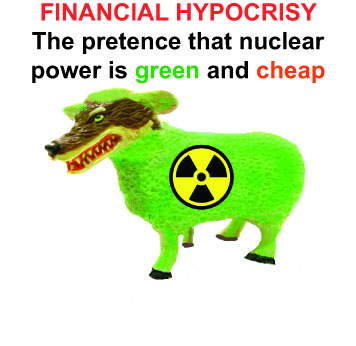
On March 15, 2023, the UK’s Chancellor of the Exchequer, Jeremy Hunt, announced that nuclear power will be classified as “environmentally sustainable” in UK’s green taxonomy, “giving it access to the same investment incentives as renewable energy.” …………………………………..
The inclusion of nuclear in the UK Taxonomy, while controversial, is not surprising given the UK’s stated commitment to building its nuclear fuel capacity. In a 2022 policy paper titled “British energy security strategy,” the Johnson government committed to increase the portion of energy generated from nuclear power to 25%, and to launch a variety of related initiatives, including “backing Great British Nuclear with funding to support projects to get investment ready and through the construction phase.”
…………………….. The Sunak government has not yet released its energy security strategy, but Sunak hinted that its strategy will continue the ongoing commitment to increase the UK’s nuclear energy capacity, by focusing on carbon capture and storage, small modular reactors and the like.
…………………………. It is worth noting, however, that although that the EU Taxonomy Delegated Act is in force, a regulation for UK’s green taxonomy is not and there is no clear timeline for implementation. Rather, the UK government announced in December 2022 a delay in implementation following stakeholder engagement and in light of the complexity inherent in a climate taxonomy, which involves “multiple sectors of the economy and various legislative and regulatory frameworks.”
The Scottish Greens condemn UK Government plans for a major investment in nuclear power
The Scottish Greens have condemned UK Government plans for a major
investment in nuclear power, which they say is no solution to the climate
crisis. The Party says that nuclear power is costly and will leave a toxic
legacy. It has called for assurances that taxpayers in Scotland will not
pay for nuclear reactors across the UK when the Scottish Government is
opposed to nuclear power.
Scottish Greens 30th March 2023
https://greens.scot/news/nuclear-energy-is-no-solution-to-the-climate-crisis
Paris plots response to von der Leyen’s ‘unfortunate’ comments on nuclear

By Paul Messad | EURACIV France | translated by Daniel Eck 27 Mar 23
The office of French Energy Minister Agnès Pannier-Runacher slammed European Commission President Ursula von der Leyen’s recent comments about nuclear not being “strategic” for EU decarbonisation and is planning a counter-offensive at the EU energy ministers meeting in Brussels on Tuesday (28 March).
Read the original French article here.
Nuclear power, whether existing or in development, is not mentioned in the list of “strategic” technologies listed in the European Commission’s Net-Zero Industry Act (NZIA), presented on 16 March.
Ahead of an EU summit last week, the French President’s office called for clarity on the matter, urging member states to decide “once and for all” whether nuclear power is an asset for the bloc’s decarbonisation or not.
Von der Leyen responded after the first day of the summit, saying: “only the net-zero technologies that we deem strategic for the future – like solar panels, batteries and electrolysers, for example – have access to the full advantages and benefits” – which is not the case for nuclear power.
These comments only stoked further tensions with Paris.
EU not ‘consistent’ on tech neutrality………………………………………………….
Speaking on Monday (27 March) before a meeting of the EU’s Energy Council in Brussels, the office of French Energy Minister Agnès Pannier-Runacher drove the point home.
The Commission president’s comments were “unfortunate” and “clearly not consistent with the climate challenge to which nuclear power and renewables are intended to respond,” the minister’s office said, recalling that the strategic nature of nuclear power is recognised “without ambiguity” in the EURATOM Treaty‘s preamble…………………
Nuclear alliance
Faced with Brussels’ reservations on nuclear power, Pannier-Runacher will bring together the 11 member states taking part in the nuclear alliance set in motion at the last EU summit in Stockholm.
The gathering of pro-nuclear countries will take place in Brussels on Tuesday morning (28 March), in preparation of a wider meeting of EU energy ministers in Brussels starting at 10.00 CET……………….. https://www.euractiv.com/section/energy-environment/news/paris-plots-response-to-von-der-leyens-unfortunate-comments-on-nuclear/
Missouri House votes to ease restrictions on nuclear power plant construction costs
The Consumers Council of Missouri is among those who oppose the plan, saying if the plant is never completed, electric customers still bear the costs.
Kurt Erickson ST Louis Post Dispatch, 27 Mar 23,
JEFFERSON CITY — Utility companies like Ameren Missouri could begin billing customers for the upfront costs of building nuclear power facilities under a plan advancing in the General Assembly.
In debate Monday, the Missouri House gave preliminary approval to legislation allowing utility companies to add the cost of a new nuclear plant or renewable energy generator to customers’ rates while they’re under construction.
That’s a practice that was banned by Missouri voters in 1976 in response to the utility company’s attempt to collect costs while it was building the state’s first and only nuclear power plant in Callaway County.
Then, and now, consumer advocates object to the concept of forcing utility users to pay for something that is not yet in service, especially when Ameren recently obtained a rate increase and, in February, announced a 7% increase in its quarterly cash dividend, signaling healthy economic times.………………………..
The Consumers Council of Missouri is among those who oppose the plan, saying if the plant is never completed, electric customers still bear the costs.
In South Carolina, the concept enabled a utility to charge ratepayers for the construction of two nuclear reactors that were never completed. During that period, South Carolina ratepayers were charged billions of dollars until the project faltered and ultimately collapsed, the watchdog organization said.
Large industrial users of electricity, including Ford Motor Co. and other manufacturers, also oppose the plan……………………………
Rep. Doug Clemens, D-St. Ann, warned that the measure could hurt consumers.
“This particular scheme is essentially giving a blank check to our utility companies,” Clemens said. “We’ll never see productivity out of this scheme.”………………………
The proposal needs a final vote in the House before moving to the Senate for further deliberations.
The legislation is House Bill 225. more https://www.stltoday.com/news/local/govt-and-politics/missouri-house-votes-to-ease-restrictions-on-nuclear-power-plant-construction-costs/article_d8ad48b5-988a-5809-a61d-c6daed2f7b76.html
1 This Month
23-25 October – on Zoom – World BEYOND War’s annual global conferenc


Shut down the radiation-damaged Heysham nuclear reactors now
To see nuclear-related stories in greater depth and intensity – go to https://nuclearinformation.wordpress.com

Say No to NASA’s Reckless Nuclear Reactor on the Moon
Say No to NASA’s Reckless Nuclear Reactor on the Moon
-
Archives
- October 2026 (190)
- September 2026 (339)
- August 2026 (330)
- July 2026 (355)
- June 2026 (287)
- May 2026 (306)
- April 2026 (356)
- March 2026 (251)
- February 2026 (267)
- January 2026 (308)
- December 2025 (358)
- November 2025 (359)
-
Categories
- 1
- 1 NUCLEAR ISSUES
- business and costs
- climate change
- culture and arts
- ENERGY
- environment
- health
- history
- indigenous issues
- Legal
- marketing of nuclear
- media
- opposition to nuclear
- PERSONAL STORIES
- politics
- politics international
- Religion and ethics
- safety
- secrets,lies and civil liberties
- spinbuster
- technology
- Uranium
- wastes
- weapons and war
- Women
- 2 WORLD
- ACTION
- AFRICA
- Atrocities
- AUSTRALIA
- Christina's notes
- Christina's themes
- culture and arts
- Events
- Fuk 2022
- Fuk 2023
- Fukushima 2017
- Fukushima 2018
- fukushima 2019
- Fukushima 2020
- Fukushima 2021
- general
- global warming
- Humour (God we need it)
- Nuclear
- RARE EARTHS
- Reference
- resources – print
- Resources -audiovicual
- Weekly Newsletter
- World
- World Nuclear
- YouTube
-
RSS
Entries RSS
Comments RSS

