Donald Trump’s first step to becoming a would-be autocrat – hijacking a party
The Conversation, December 29, 2025, Justin Bergman, International Affairs Editor, Erica Frantz, Associate Professor of Political Science, Michigan State University, https://theconversation.com/donald-trumps-first-step-to-becoming-a-would-be-autocrat-hijacking-a-party-271849?utm_medium=email&utm_campaign=Latest%20from%20The%20Conversation%20for%20December%2029%202025%20-%203630637075&utm_content=Latest%20from%20The%20Conversation%20for%20December%2029%202025%20-%203630637075+CID_f48f66e694ca700aadd909617ad57a30&utm_source=campaign_monitor&utm_term=Donald%20Trumps%20first%20step%20to%20becoming%20a%20would-be%20autocrat%20%20hijacking%20a%20party
In this six-part podcast series, The Making of an Autocrat, we are asking six experts on authoritarianism and US politics to explain how exactly an autocrat is made – and whether Trump is on his way to becoming one.
Like strongmen around the world, Trump’s first step was to take control of a party, explains Erica Frantz, associate professor of political science at Michigan State University.
Trump began this process long before his victory in the 2024 US presidential election. When he first entered the political stage in 2015, he started to transform the Republican Party into his party, alienating his critics, elevating his loyalists to positions of power and maintaining total control through threats and intimidation.
And once a would-be autocrat dominates a party like this, they have a legitimate vehicle to begin dismantling a democracy. As Frantz explains:
Now, many Republican elites see it as political suicide to stand up to Trump. So, fast forward to 2024, and we have a very personalist Trump party – the party is synonymous with Trump.
Not only does the party have a majority in the legislature, but it is Trump’s vehicle. And our research has shown this is a major red flag for democracy. It’s going to enable Trump to get rid of executive constraints in a variety of domains, which he has, and pursue his strongman agenda.
Dungeness power station tipped for nuclear return as government ‘aware’ of interest
Dungeness power station tipped for nuclear return as government
‘aware’ of interest. The government has suggested Kent’s scrapped
nuclear power station could start generating energy again – despite being
decommissioned. Dungeness power station previously produced enough
electricity for a million homes a year before defuelling began in 2021.
But ministers say they are “aware” of interest from developers in
establishing new small modular reactors (SMRs) at the Romney Marsh site.
Last month, the government published its ‘nuclear energy generation’
policy, which outlines where nuclear reactors could be built without naming
specific locations. However, ministers have previously said Dungeness is
being considered for the new project. In September, Lord Patrick Vallance,
minister of state at the Department for Energy Security and Net Zero
(DESNZ), listed the Marsh headland as a potential location for new nuclear
power.
Kent Online 29th Dec 2025, https://www.kentonline.co.uk/romney-marsh/news/scrapped-power-station-tipped-for-nuclear-return-under-new-p-334408/
Former Japanese PM Ishiba again criticizes remarks advocating nuclear armament.
Asia18:02, 27-Dec-2025. CGTN, https://news.cgtn.com/news/2025-12-27/Ex-Japan-PM-Ishiba-in-fresh-broadside-against-nuclear-armament-remarks-1JrH8p2oIaA/p.html
Former Japanese Prime Minister Shigeru Ishiba has again criticized recent remarks by a senior government official suggesting that Japan should possess nuclear weapons.
Speaking on a program aired Friday night by Japan’s BS11 television, Ishiba said that as the only country in the world to have suffered atomic bombings, Japan should take a clear stance on preventing nuclear proliferation and should not make statements that undermine that position.
On December 18, an anonymous senior official in charge of security at the Prime Minister’s Office told reporters that Japan should possess nuclear weapons. After the remarks were made public, they sparked widespread criticism and controversy within Japan.
Addressing the issue earlier, Ishiba said that if Japan were to acquire nuclear weapons, it would be forced to withdraw from the Treaty on the Non-Proliferation of Nuclear Weapons as well as the International Atomic Energy Agency.
He stressed that such a move would render Japan’s nuclear energy policy – which underpins the country’s energy system – untenable, adding that “this would by no means be beneficial for Japan.”
According to a report on the online edition of the Japanese magazine Shukan Bunshun on December24, the official who made the remarks was Oue Sadamasa, a special advisor to Prime Minister Sanae Takaichi, whose portfolio includes nuclear disarmament and non-proliferation.
The 2025 nuclear year in review: Back to the Future Atomic Age

Bulletin, By François Diaz-Maurin | December 25, 2025
“……………………………………………………………… In many ways, 2025 resembled Back to the Future, and not only because Donald Trump—whom the trilogy’s villain Biff is admittedly based on—returned to the White House in January. Less than one year into his second term, President Trump has exhibited Cold War-era thinking several times already.
One week after entering the presidency, Trump announced his plan for a new, comprehensive missile-defense system that his administration later called Golden Dome and claimed would be built in three years at a cost of no more than $175 billion. Many missile defense experts have pointed to the project’s technical and policy flaws and called it a fantasy that will add to a long-running US missile defense debacle. The fantasy started with President Ronald Reagan’s dream of building a missile shield—which he called the Strategic Defense Initiative and that detractors called “Star Wars”—after record Soviet nuclear deployments in—wait for it—1985. Experts warned that the Golden Dome proposal is self-defeating, as it will prompt US adversaries to build more maneuverable missiles and use more decoys, rendering any national defense ineffective.
A few days after announcing his missile defense effort, President Trump told reporters about his desire to engage with Russia and China on denuclearization efforts. “There’s no reason for us to be building brand new nuclear weapons. We already have so many,” he said. “You could destroy the world 50 times over, 100 times over. And here we are building new nuclear weapons, and they’re building nuclear weapons, and China’s building nuclear weapons.” But New START, the only agreement constraining the number of strategic offensive weapons that the United States and Russia can deploy, is set to expire in less than two months. And as of writing, Moscow maintains that it hasn’t received any formal response.
Around the time of Trump’s denuclearization comments, his administration’s Department of Government Efficiency started firing new federal hires, including hundreds at the National Nuclear Security Administration (NNSA), the Energy Department agency responsible for the safety and security of the US nuclear arsenal. (Most of the NNSA employees fired were eventually rehired after a bipartisan uproar in Congress.) The NNSA and its network of national laboratories provide essential technical support to the State Department for nuclear arms control verification. In July, the Trump administration dissolved the State Department’s Bureau of Arms Control, Verification, and Compliance, which was responsible for policy, negotiation, and overall compliance reporting of arms control treaties.
In May, President Trump signed four executive orders on nuclear power to accelerate nuclear power plant construction in the United States and support new, smaller, and less-regulated reactor designs. One of the orders plans a “substantial reorganization” of the US Nuclear Regulatory Commission, a plan three former chairs of the NRC say would threaten the independence of the agency, possibly undermining the safety requirements for nuclear regulation.
The same month, a brief skirmish started at the border between India and Pakistan, which seemed to quickly escalate, prompting President Trump to call for restraint from both sides. As a ceasefire agreement that Trump said he helped broker was being announced, reports suggested that, during the conflict, Pakistan’s Prime Minister had convened the National Command Authority, apparently in response to India’s targeting of Pakistani military bases. The National Command Authority is responsible for Pakistan’s nuclear policy and operational decision-making. (Pakistan’s defense minister later denied that the meeting ever happened.)
Then came the worst international security crisis of the year.
In June, two days after Trump said Iran rejected the US proposal for a nuclear deal that included a demand that it stop enriching uranium on Iranian soil, Israel attacked Iran, targeting military leaders, nuclear facilities, and nuclear scientists. About a week later, the United States bombed three Iranian nuclear sites at Fordow, Natanz, and Isfahan. While Trump touted the attack as “very successful,” the status of Iran’s nuclear program remained unclear after the attack, and later reports suggested that Iran’s stockpile of enriched uranium may not have been destroyed. Some experts warned before the attack that destroying Iran’s enrichment plants would not eliminate the Iranian nuclear threat and that a US action might spur Iran to covertly sprint toward a nuclear weapon as quickly as possible.
In July, in a surprising congressional twist, the House passed the Radiation Exposure Compensation Act (RECA) reauthorization and expansion bill. As a result, communities affected by the 1945 Trinity nuclear test and uranium mining in areas of Idaho, Montana, New Mexico, Colorado, the Navajo Nation and all of Nevada, Utah, and Arizona, as well as downwinders in Guam exposed to fallout from the Pacific nuclear tests during the Cold War started receiving compensation for their radiation exposure this year. (These groups were not initially covered by RECA.)
As if the legacy of US nuclear testing wasn’t painful enough, President Trump suggested in October that the United States should return to nuclear testing, confusing experts who could not tell whether the president was referring to testing a nuclear delivery system (such as a missile) or testing an actual nuclear explosive device. Many experts had already explained how resuming nuclear explosive testing would be impractical and against US security interests.
There have been many other nuclear developments in 2025 that also pointed in the direction of more risk and more instability. But one stood out: In a shocking sign that shows how much the nuclear security landscape has been turned on its head, this past week, a member of Japan’s prime minister’s office who advises Prime Minister Sanae Takaichi on national security told reporters that Japan “should possess nuclear weapons.” These remarks came just months after Japan commemorated the 80th anniversaries of the Hiroshima and Nagasaki bombings.
Whether the world has already entered a new nuclear age marked by renewed arms racing is up for debate. But nuclear affairs have made a strong and undeniable comeback on the front pages of many newspapers this year—something unseen since the end of the Cold War. Even in Hollywood, film directors are daring to talk about nuclear risk once again with a plethora of new and upcoming releases, including this year’s much-remarked A House of Dynamite.
When it reconvenes in January, let’s hope the US administration comes back to the present and sets about a new start in nuclear arms control and diplomacy.
Of course, I couldn’t close this year-end review without mentioning the passing of way too many important figures from the nuclear nonproliferation and arms control community, including Bob Alvarez, Dick Garwin, Dan Hirsch, R. Rajaraman, and (late last year) Evgeny Velikhov. Each stood in their own way for the reduction of the risk from nuclear weapons and pushed for the diplomatic and science-based disarmament or arms control solutions that have been at the core of the Bulletin’s mission since 1945.
Here are five Bulletin nuclear stories that stood out in 2025—and that you should read…………………………………………………. https://thebulletin.org/2025/12/the-2025-nuclear-year-in-review-back-to-the-future-atomic-age/?utm_source=ActiveCampaign&utm_medium=email&utm_content=2025%20nuclear%20year%20in%20review&utm_campaign=20251225%20Thursday%20Newsletter%20%28Copy%29
Trump’s Nuclear Obsession
Karl Grossman – Harvey Wasserman, December 24, 2025 , https://www.counterpunch.org/2025/12/24/trumps-nuclear-obsession/
The Trump family is now directly investing in atomic energy. Its money-losing Truth Social company has become a part owner of a major fusion nuclear power project.
Among much more, the investments mean the Trump family stands to profit directly from White House attacks on wind, solar and other cheap, clean renewable energies which for decades have been driving fusion, fission and fossil fuels toward economic oblivion.
“A Trump-sponsored business is once again betting on an industry that the president has championed, further entwining his personal fortunes in sectors that his administration is both supporting and overseeing,” reported an article on the front page of the business section of the New York Times last week. “This one is in the nuclear power sector. TAE Technologies, which is developing fusion energy, said on Thursday that it planned to merge with Trump Media & Technology Group. President Trump is the largest shareholder of the money-losing social media and crypto investment firm that bears his name, and he will remain a major investor in the combined company.”
The headline of the piece: “Trump’s Push Into Nuclear Is Raising Questions.”
The primary asks have to do with economic conflicts of interest, and public safety.
“The deal, should it be completed,” the article continued, “would put Mr. Trump in competition with other energy companies over which his administration holds financial and regulatory sway. Already, the president has sought to gut safety oversight of nuclear power plants and lower thresholds for human radiation exposure.”
CNN reported: “Nuclear fusion companies are regulated by the federal government and will likely need Uncle Sam’s deep research and even deeper pockets to become commercially viable. The merger needs to be approved by federal regulators—some of whom were nominated by Trump.”
CNN quoted Richard Painter, chief White House ethics lawyer under President George W. Bush, as saying: “There is a clear conflict of interest here. Every other president since the Civil War has divested from business interests that would conflict with official duties. President Trump has done the opposite.” Painter is now a professor at the University of Minnesota Law School.
“Having the president and his family have a large stake in a particular energy source is very problematic,” said Peter A. Bradford, who previously served on the Nuclear Regulatory Commission, the agency meant to oversee the nuclear industry in the United States, in the Times article.
“The Trump administration has sought to accelerate nuclear power technology—including fusion, which remains unproven,” Bradford said. “That support has come in the form of federal loans and grants, as well as executive orders directing the NRC to review and approve applications more quickly.”
Still, the White House press secretary, Karoline Leavitt, said in a statement that “neither the president nor his family have ever engaged, or will ever engage, in conflicts of interest.” And the Times piece continued, “a spokeswoman for Trump Media” said the company was “scrupulously following all applicable rules and regulations, and any hypothetical speculation about ethics violations is wholly unsupported by the facts.”
It went on that “Trump’s stake in Trump Media, recently valued at $1.6 billion, is held in a trust managed by Donald Trump Jr., his eldest son. Trump Media is the parent company of Truth Social, the struggling social-media platform. The merger would set Trump Media in a new strategic direction, while giving TAE a stock market listing as it continues to develop its nuclear fusion technology.”
The Guardian quoted the CEO of Trump Media, Devin Nunes, the arch-conservative former member of the House of Representatives from California and close to Trump, who is currently chair of the President’s Intelligence Advisory Board, saying Trump Media has “built un-cancellable infrastructure to secure free expression online for Americans. And now we’re taking a big step forward toward a revolutionary technology that will cement America’s global energy dominance for generations.” Nunes is the would be co-CEO of the merged company.
A current member of the US House, Don Beyer, a Democrat from Virginia, said in a statement quoted in Politico that the deal raises “significant concerns” about conflicts of interest and avenues for potential corruption. “The President has consistently used both government powers and taxpayer money to benefit his own financial interests and those of his family and political allies. This merger will necessitate congressional oversight to ensure that the U.S. government and public funds are properly directed towards fusion research and development in ways that benefit the American people, as opposed to the Trump family and their corporate holdings.”
By federal law (the Price-Anderson Act of 1957) the US commercial atomic power industry has been shielded from liability in major accidents it might cause. The “Nuclear Clause” in every US homeowner’s insurance policy explicitly denies coverage for losses or damages caused, directly or indirectly, caused by a nuclear reactor accident.
As his company fuses with the atomic industry, Trump acquires a direct financial interest in gutting atomic oversight—which he has already been busy doing. In June Trump fired NRC Chairman Christopher T. Hanson. No other president has ever fired an NRC Commissioner.
. Earlier, more than 100 NRC staff were purged by Elon Musk’s DOGE operation. There has been a stream of Trump executive orders calling for a sharp reduction in radiation standards, expedited approval by the NRC of nuclear plant license applications, and a demand to quadruple nuke power in the United States—from the current 100 gigawatts to 400 gigawatts in 2050. Such a move would require huge federal subsidies and the virtual obliteration of safety regulations. Trump has essentially ordered the NRC to “rubber stamp” all requests from a nuclear industry in which he is now directly invested.
Trump’s Truth Social’s fusion ownership stake removes all doubt about any regulatory neutrality. No presently operating or proposed US atomic reactor can be considered certifiably safe.
Trump’s fusion investments are also bound to escalate Trump’s war against renewable energy and battery storage, the primary competitors facing the billionaire fossil/nuke army in which the Trump family is now formally enlisting. That membership blows to zero the credibility of any claim nuclear reactor backers might make that atomic energy can officially be considered safe.
Continue readingEU launches inquiry into Czech funding plan for new nuclear
WNN, Tuesday, 23 December 2025
The European Commission “has doubts” that the proposed Czech funding plan for its proposed new nuclear units “is fully in line with EU State aid rules”.
In April last year the European Commission (EC), which is the executive arm of the European Union (EU), approved the funding plan for a single new nuclear reactor at the Dukovany nuclear power plant site in the Czech Republic.
In July last year Korea Hydro & Nuclear Power (KHNP) was selected for the project, and in October this year the Czech Republic officially notified the EC it had expanded its plans to two new nuclear units, each with a capacity of 976 MWe
What is the funding plan?
The EC says: “Czechia plans to support the construction of the new nuclear units through three measures: a low-interest repayable State loan of an initial amount currently estimated between EUR23 billion (USD27.1 billion) and EUR30 billion, which will cover the full construction costs; a two-way contract for difference with a proposed duration of 40 years to ensure stable revenues for the nuclear power plant; and a mechanism to protect EDU II in case of policy changes and adverse impacts, to address the risk arising from the longevity of exposure to policy changes.”
EDU II is Elektrárna Dukovany II, a company set up to develop and operate the new nuclear units, which is owned by the Czech state (80%) and the Czech Republic’s nuclear power plant operator ČEZ (20%).
The contract for difference effectively means that if electricity prices are below the agreed level, the nuclear project will receive a subsidy to make it up to the agreed price, and if electricity prices are above the agreed price, the nuclear project would pay money back to the government…………………………………………………..
The EC has doubts about whether it is fully in line with EU State aid rules and wants to ensure that “no more aid than necessary is ultimately granted. In particular, the Commission has doubts on whether the proposed package achieves an appropriate balance between reducing risks to enable the investment and maintaining incentives for efficient behaviour, while avoiding excessive risk transfer to the State”.
It also wants to look at the impact of the State aid measures on competition in the market “in particular, the Commission has concerns that several essential design elements of the CfD remain insufficiently specified, preventing the Commission from fully assessing whether the mechanism maintains efficient operational and maintenance incentives”.
…………………………………….. Asked about the status of any investigation into foreign state aid, a European Commission spokesperson told World Nuclear News on Tuesday: “The Commission’s assessment of a complaint by EDF under the Foreign Subsidies Regulation regarding the award of a tender to KNHP is ongoing. We do not comment on ongoing investigations.” https://www.world-nuclear-news.org/articles/eu-launches-inquiry-into-czech-new-nuclear-funding-plan
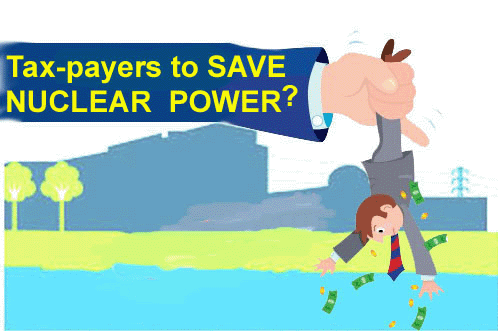
Sweden’s Vattenfall Seeks State Funding for New Nuclear Reactors
By Michael Kern – Dec 23, 2025, https://oilprice.com/Latest-Energy-News/World-News/Swedens-Vattenfall-Seeks-State-Funding-for-New-Nuclear-Reactors.html
Sweden’s power giant Vattenfall announced on Tuesday it is applying for state aid for an investment in small modular reactors (SMRs) as part of a plan by industrial giants to bet on new nuclear power in the country.
Last month Sweden’s biggest industrial firms signed an agreement with Vattenfall to become shareholders in the power giant’s new company, Videberg Kraft AB, which plans to build SMRs in the country.
One of Europe’s top electric utilities, Vattenfall, created Videberg Kraft AB in April this year as a separate entity to be able to apply for government support.
Now the company and the industry organization, Industrikraft, plan joint investment and collaboration enabling the development of new nuclear power in Sweden.
Industrikraft, whose members include Volvo Group, Saab, Alfa Laval, and Hitachi Energy, will become a shareholder in Videberg Kraft with a 20-percent stake.
The government has previously announced that the state also intends to become a shareholder in the new company.
The Swedish government moved to phase out nuclear power completely in 1980, but that decision was reversed by Parliament in 2010. Five years later, four aging reactors were shut down. Six of 12 reactors remain in operation in Sweden today.
The country is now betting on SMRs to expand its nuclear fleet as Stockholm seeks to further reduce emissions with low-carbon 24/7 energy.
Sweden has tweaked its renewable energy policy, which had called for 100% renewable electricity by 2040, changing the terminology to “100% fossil-free” electricity, paving the way for the construction of more nuclear power plants.
Now Videberg Kraft’s CEO Desirée Comstedt has submitted an application for financing and risk-sharing to the Swedish Government.
When an agreement between the state and Videberg Kraft has been reached, the government may initiate a formal state aid process with the European Commission, Vattenfall said.
Videberg Kraft is planning a project with either five BWRX-300 reactors from GE Vernova Hitachi or three reactors from Rolls-Royce SMR, which will provide a total nuclear power output of about 1,500 MW. There is currently an intensive evaluation process of the two remaining suppliers, and a decision on the final supplier is planned for 2026.
Hawai‘i Has a Rare Opportunity to Reclaim Land From the US Military
The US military is abusing Hawaiian land. Will residents be able to exert Indigenous sovereignty and get it back?
By Christine Ahn & Davis Price , Truthout, December 22, 2025
Since 1964, the U.S. military has leased roughly 47,000 acres of land from the State of Hawai‘i — for a token $1. The leases, which account for 18 percent of military lands in Hawai‘i, are set to expire in 2029, offering Hawai‘i a rare opportunity to reclaim land from the war machine. As the expiration date looms, Hawai‘i residents are at a crossroads: remain a staging ground for U.S. imperialism or pivot toward community well‑being, environmental sustainability, and economic self‑determination.
But that decision may arrive sooner than 2029: Allegedly faced with pressure from federal officials to fast-track lease renewals by the end of this year, Democratic Gov. Josh Green signed a statement of principles in September with Army Secretary Dan Driscoll expressing the intention to “explore the feasibility of land use that aligns national security and Army readiness needs with the State’s priorities for public benefit.” A month later, Green sent Driscoll a proposal for a $10 billion plan that included a “community benefits” package. He argued that this sum would be favorable should the Army pursue “condemnation,” the use of eminent domain to seize Hawai‘i’s land for “national security.”
Native Hawaiian groups swiftly condemned the move in a September 2 statement signed by 40 organizations. They opposed fast-tracking the leases and pointed out that Green and Driscoll sidestepped federal and state statutes that require a thorough review — a process the Army and Navy had already failed to complete earlier that year.
After mounting pressure from the Office of Hawaiian Affairs, state legislators, and numerous environmental and civic organizations, Green walked back the end-of-year deadline and extended the negotiation timeline into 2026. Still, the episode highlighted how easily the U.S. military can bypass democratic debate in the name of “national security,” and how vital it is for the public to have informed discussions about the military’s impact on Hawai‘i.
How Hawai‘i Became Occupied
The U.S. military controls roughly 254,000 acres across Hawai‘i, making it the most militarized state per capita in the country. On O‘ahu alone, the military occupies 86,000 acres, or 25 percent of the island. These lands were part of the “ceded” territories illegally seized from the Hawaiian Kingdom.
Once a sovereign nation, Hawai‘i was the starting point for America’s century of imperialism and conquest in the Pacific. In the late-19th century, American missionaries and plantation owners, seeking to avoid U.S. tariffs on Hawaiian sugar, conspired with the U.S. Navy to orchestrate a coup to overthrow Queen Lili‘uokalani in 1893.
Although the coup was condemned by President Grover Cleveland as illegal, in 1898 President William McKinley signed the Newlands Resolution, illegally annexing Hawai‘i as a U.S. territory through a joint congressional resolution, bypassing the legally required two-thirds majority in the Senate to ratify a treaty between two nations.
After annexation, the provisional government reclassified Crown and government lands as “public” property and transferred them to the U.S. Interior Department………………………………………………………………………………………………………………………………………………………………………………………..Native Hawaiian advocates are building momentum toward a shift in the governance of resources in Hawaiʻi, which has been dominated by extractive and abusive industries, such as the military, for too long. While large‑scale stewardship projects exist, they are often treated as side ventures, and lack long‑term capital investments, like roads or schools. Investing in regenerative economies, Lee argues, could create thousands of place‑based jobs in restoration, farming, and renewable energy. “We’d keep more money circulating locally instead of leaking out, building real security from the inside out,” Lee explains. “Hawai‘i’s resilience is national security.”
By engaging in informed public debate about the economic, environmental, and cultural costs of the military’s footprint — and exploring repurposing the military’s footprint for community-driven, sustainable uses — Hawai‘i can transform from a base preparing for war into a beacon of peace, resilience, and Indigenous innovation. https://truthout.org/articles/hawaii-has-a-rare-opportunity-to-reclaim-land-from-the-us-military/
Hiroshima urges Japanese government to uphold non-nuclear principles
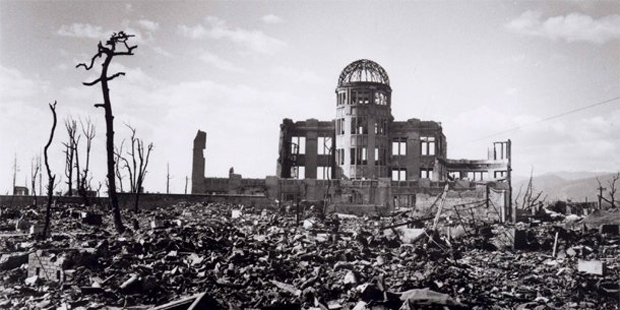
Japan’s Hiroshima Prefecture on Monday issued a statement urging the national government to uphold the country’s non-nuclear principles, after a security official recently suggested the country should possess nuclear weapons.
The Hiroshima prefectural assembly unanimously adopted the written opinion, citing local concerns about reviewing the long-standing Three Non-Nuclear Principles, which prohibit possessing, producing or permitting the introduction of nuclear arms into Japanese territory, Kyodo News reported.
“It is our duty, as the only country to have suffered atomic bombings, to continue striving toward the realization of a world without nuclear weapons,” the statement said.
The statement comes after an official involved in devising security policy under the government led by Prime Minister Sanae Takaichi recently said that Japan should possess nuclear weapons, inciting backlash from locals, including atomic bomb survivors.
It is the first written opinion by the prefectural or city assemblies of Hiroshima or Nagasaki, both devastated by U.S. atomic bombs, regarding the country’s reconsideration of the non-nuclear principles, the report said.
Itsunori Onodera, head of the ruling Liberal Democratic Party’s security research council, said on a TV program on Sunday that Japan needs to debate the future of its non-nuclear principles.
Last month, Japanese media quoted government sources as saying that, as the Takaichi administration gears up to revise the country’s key national security documents by the end of 2026, Takaichi was considering reviewing the third of the Three Non-Nuclear Principles, which prohibits nuclear weapons from entering Japan’s territory, raising strong doubts and concerns at home.
Japan set to restart world’s biggest nuclear power plant.
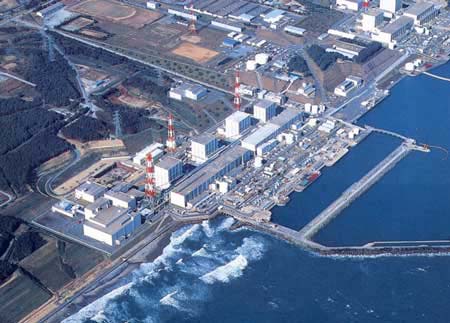
Kashiwazaki-Kariwa will be the latest plant to restart 15 years after the Fukushima disaster shut down the country’s nuclear energy programme.
Aljazeera, By Lyndal Rowlands and News Agencies, 22 Dec 25
Japan is set to resume operations at the world’s largest nuclear power plant: Kashiwazaki-Kariwa.
The partial restart of the plant got the green light in a vote on Monday by the Niigata local government. Japan has reopened several nuclear facilities as it seeks to reduce emissions, reversing policy 15 years after 54 reactors were shut in the wake of the Fukushima disaster despite public opposition.
Niigata prefecture’s assembly passed a vote of confidence on Governor Hideyo Hanazumi, who backed the restart last month, effectively allowing the plant to begin operations again.
The 2011 triple meltdown at Fukushima, following an earthquake and tsunami, destroyed Japan’s trust in its nuclear energy infrastructure…………..
Fourteen of the 33 nuclear plants that remain operable in the country have been resurrected. However, Kashiwazaki-Kariwa is the first to be operated by Tokyo Electric Power Co (TEPCO), which ran the Fukushima plant.
TEPCO is considering reactivating the first of seven reactors at the plant on January 20, Japanese public broadcaster NHK reported……………………
While lawmakers voted in support of Hanazumi, the assembly session showed that the community remains divided over the restart, despite the promise of new jobs and potentially lower electricity bills.
About 300 protesters rallied to oppose the vote, holding banners reading “No Nukes”, “We oppose the restart of Kashiwazaki-Kariwa” and “Support Fukushima”.
Farmer and antinuclear activist Ayako Oga, 52, joined the protests on Monday in her new home of Niigata, where she settled after fleeing the area around the Fukushima plant in 2011 with 160,000 other evacuees. Her old home was within the 20km (12-mile) radius irradiated exclusion zone.
“We know firsthand the risk of a nuclear accident and cannot dismiss it,” said Oga, adding that she still struggles with post-traumatic stress disorder-like symptoms……………………………… https://www.aljazeera.com/news/2025/12/22/japan-set-to-restart-worlds-biggest-nuclear-power-plant
Israeli Cabinet Approves 19 New Apartheid Colonies in Occupied West Bank.
“The ONLY reason Israel gets away with this naked thievery is US military and political support,” said one observer.
Brett Wilkins, Dec 21, 2025, https://www.commondreams.org/news/israel-19-new-settlements
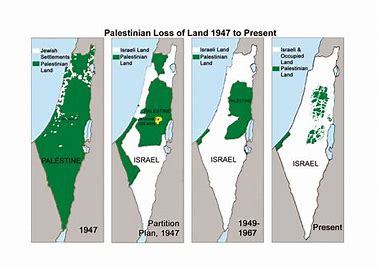
Israel’s Cabinet on Sunday finalized approval of 19 new Jewish-only settler colonies in the illegally occupied West Bank, a move the apartheid state’s far-right finance minister said was aimed at thwarting Palestinian statehood.
Cabinet ministers approved the legalization of the previously unauthorized settler outposts throughout the occupied Palestinian territory, bringing the total number of new settlements in recent years to 69.
The move will bring the overall total number of exclusively or overwhelmingly Jewish settlements—which are illegal under international law—to more than 200, up from around 140 just three years ago.
Included in the new approval are two former settlements—Kadim and Ganim—that were evacuated in compliance with the now effectively repealed 2005 Disengagement Law, under which Israel dismantled all of its colonies in the Gaza Strip and four in the West Bank.
“This is righting a historic injustice of expulsion from 20 years ago,” Israeli Finance Minister Bezalel Smotrich—who is a settler—said on Sunday. “We are putting the brakes on the rise of a Palestinian terror state.”
Israel’s Cabinet on Sunday finalized approval of 19 new Jewish-only settler colonies in the illegally occupied West Bank, a move the apartheid state’s far-right finance minister said was aimed at thwarting Palestinian statehood.
Cabinet ministers approved the legalization of the previously unauthorized settler outposts throughout the occupied Palestinian territory, bringing the total number of new settlements in recent years to 69.
RECOMMENDED…
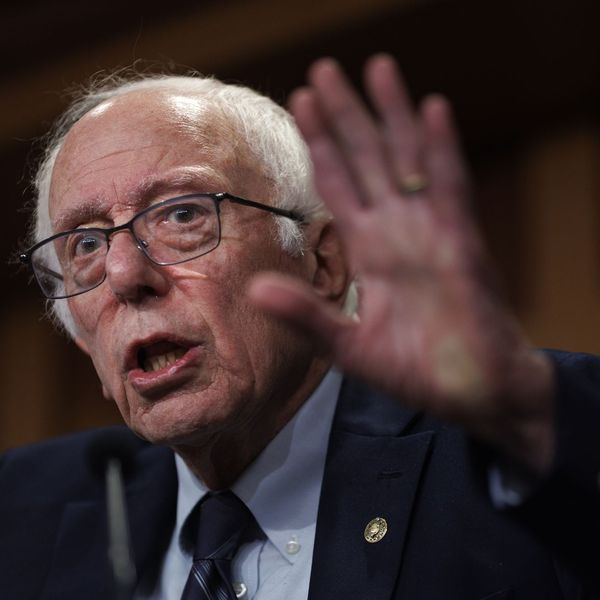
‘No More Military Aid for Netanyahu,’ Says Sanders as Israel Ramps Up West Bank Takeover
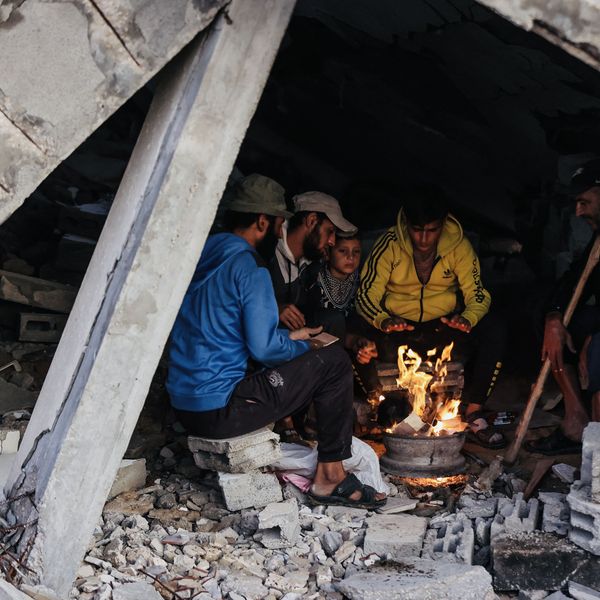
Trump Gaza Plan Condemned as ‘Concentration Camps Within a Mass Concentration Camp’
The move will bring the overall total number of exclusively or overwhelmingly Jewish settlements—which are illegal under international law—to more than 200, up from around 140 just three years ago.
Included in the new approval are two former settlements—Kadim and Ganim—that were evacuated in compliance with the now effectively repealed 2005 Disengagement Law, under which Israel dismantled all of its colonies in the Gaza Strip and four in the West Bank.
“This is righting a historic injustice of expulsion from 20 years ago,” Israeli Finance Minister Bezalel Smotrich—who is a settler—said on Sunday. “We are putting the brakes on the rise of a Palestinian terror state.”
Our people-powered journalism cannot survive without you
Your support allows Common Dreams to continue covering the stories and amplifying the voices that the corporate media never will. Make a tax-deductible year-end gift to ensure we can sustain the reporting needed to meet the challenges of 2026.
“We will continue to develop, build, and settle the inherited land of our ancestors, with faith in the righteousness of our path,” Smotrich added.
Following an earlier round of approval for the new settlements last week, Palestinian presidential spokesperson Nabil Abu Rudeineh said, “All Israeli settlement activity is illegal and constitutes a violation of international law and international legitimacy resolutions.”
United Nations Secretary-General António Guterres earlier this month denounced Israel’s “relentless” settlement expansion.
Such colonization, said Guterres, “continues to fuel tensions, impede access by Palestinians to their land, and threaten the viability of a fully independent, democratic, contiguous, and sovereign Palestinian state.”
Israeli Prime Minister Benjamin Netanyahu and other Israeli officials—some of whom, including Smotrich, deny the very existence of the Palestinian people—have vowed that such a state will not be established.
While Netanyahu—who is wanted by the International Criminal Court for alleged war crimes and crimes against humanity in Gaza—is under pressure from right-wing and far-right government officials, settlers, and others to annex all of the West Bank, US President Donald Trump recently said that “Israel would lose all of its support from the United States if that happened.”
Some doubted Trump’s threat, with Democracy for the Arab World Now (DAWN) executive director Sarah Leah Whitson reacting to the new settlements’ approval by posting on X that “the ONLY reason Israel gets away with this naked thievery is US military and political support.”
Israel seized and occupied the West Bank including East Jerusalem along with Gaza in 1967, ethnically cleansing around 300,000 Palestinians. Many of these forcibly displaced people were survivors of the Nakba, the Jewish terror and ethnic cleansing campaign that saw more than 750,000 Palestinians flee or be forced from Palestine during the foundation of the modern state of Israel.
Since 1967, Israel has steadily seized more and more Palestinian land in the West Bank while building and expanding colonies there. Settlement population has increased exponentially from around 1,500 colonists in 1970 to roughly 140,000 at the time of the Oslo Accords in 1993—under which Israel agreed to halt new settlement activity—to around 770,000 today.
Settlers often attack Palestinians and their property, including in deadly pogroms, in order to terrorize them into leaving so their land can be stolen. Israeli colonists have also attacked Israel Defense Forces soldiers they view as standing in the way of their expansion.
In July 2024, the International Court of Justice—where Israel is currently facing a genocide case related to the Gaza war—found the occupation of Palestine to be an illegal form of apartheid that must be ended as soon as possible. The ICJ also ruled that Israeli settler colonization of the West Bank amounts to annexation, also a crime under international law. Article 49 of the Fourth Geneva Convention states that an “occupying power shall not deport or transfer parts of its own civilian population into the territory it occupies.”
As the world’s attention focused on Gaza during the past two years, Israeli soldiers and settlers have killed at least 1,039 Palestinians—at least 225 of them children—in the West Bank. This year, at least 233 Palestinians, including at least 52 children, have been killed so far, according to the United Nations Relief and Works Agency for Palestinian Refugees in the Near East.
On Saturday, Israeli occupation forces shot and killed two Palestinians in the northern West Bank, including a 16-year-old boy, Rayan Abu Muallah, who the Israel Defense Forces said was shot after he threw an object at its troops.
Nuclear power’s role in Japan is fading. The myths of reactor safety and energy needs can’t change that reality.

By Tadahiro Katsuta , Bulletin of Atomic Scientists 11th Dec 2025
On November 24, the Niigata Prefecture approved the partial restart of the seven-unit Kashiwazaki-Kariwa Nuclear Power Plant—the world’s largest, with a 7,965-megawatt-electric capacity—the first time it would be operated since the 2011 Fukushima Daiichi accident. The decision follows a series of efforts by the Japanese government to revive its nuclear industry since the Fukushima disaster led to the temporary shutdown of all its reactors.
In February, the Japanese government unveiled the country’s latest revised strategic energy plan with one significant shift: It no longer includes the commitment to “reduce dependence on nuclear power as much as possible.” Since the 2011 Fukushima accident, this objective has been reaffirmed in all three revisions preceding the 2022 plan. Its removal marks a clear departure from the government’s previously cautious stance on Japan’s nuclear policy.
Decommissioning work of the Fukushima Daiichi plant is still falling behind schedule, and there are no prospects for fully lifting the evacuation orders in the Fukushima Prefecture. This uncertainty surrounding post-accident Fukushima casts doubt on the government’s ability to manage another nuclear crisis. Meanwhile, the government’s plan actively promotes the “effective use” of plutonium through the reprocessing of spent nuclear fuel and the “usefulness” of nuclear power as a decarbonized power source in its newest plan.
The Japanese government had consistently maintained a strong policy of promoting nuclear power since the initial planning stage in the 1950s until the Fukushima accident. Its current position, therefore, comes as little surprise. But in the nearly 15 years since the accident, Japan’s energy structure and society have changed—and all evidence shows that nuclear power cannot simply be switched on again, despite what the government claims.
Displaced by renewable energy. As a result of new safety regulations that the Nuclear Regulation Authority (NRA) established in 2012, nuclear power plants with inadequate accident prevention measures are still unable to operate.
Japan used to operate 54 commercial nuclear power plants before the Fukushima accident, but so far only 14 have obtained operating permits and resumed operations. This translated into nuclear power’s share of electricity supply dropping to just over 5 percent from the 29 percent before the accident. The government is seeking a 20-percent share by fiscal 2040 but has not presented any specific measures to achieve this goal.
Meanwhile, renewable energy has increased rapidly since the Fukushima accident, partially filling the vacuum of the shutdown reactors. Renewable energy now supplies 226 terawatt-hours of electricity—more than twice the 84 terawatt-hours supplied by nuclear power. And renewables will continue to dominate the electricity market with a target share of 40 to 50 percent by 2040, also more than double that of nuclear power……………..
While nuclear power lacks competitiveness in the electricity market, Japan’s electricity demand has already plateaued. Demand has decreased by more than 10 percent since 2010,[2] according to the latest figures. The government insists that electricity consumption will increase sharply over the next 10 years due to the growing demand in data centers and semiconductor factories. However, even if this happens, it will still result in a lower electricity demand compared to 2010.
Unlike France, Japan does not allow output adjustments for nuclear power generation, and being an island nation, it cannot export electricity overseas. Moreover, with a slowing economy and a shrinking population, electricity demand has already peaked. In a market that seeks to maximize profits by anticipating short-term electricity demand and avoiding excess power generation, nuclear power is not an attractive option.
Does Japan need MOX fuel?
……………………………………………..Power companies and the government have not disclosed what the cost will be for Japan of manufacturing this MOX fuel abroad and then importing it. But trade statistics indicate that the MOX fuel commissioned at a French reprocessing plant cost approximately $11,000 per kilogram of heavy metal (primarily plutonium and uranium), while uranium fuel imported from the United States cost approximately $1,000 per kilogram of heavy metal. In other words, MOX fuel is more than 10 times as expensive as imported non-reprocessed reactor fuel.[3]………………….
Does nuclear power mean fewer CO2 emissions?
……………………………………………………………………………………………………………………………………………..As spent nuclear fuel continues to accumulate in Japan, the government claims that it can be reduced by reprocessing. If so, the reduction cost can be estimated as ¥488 million ($3.3 million) per ton.[5] That’s an emission reduction cost per ton 300,000 times higher than for other mitigation measures indicated by the IPCC. Moreover, spent nuclear fuel does not disappear through reprocessing. Even at the end of a closed fuel cycle, the reprocessed and recycled used fuel will require permanent geological disposal, which comes with its own set of challenges. That’s particularly the case with MOX fuel, which generates high decay heat associated with plutonium and accumulated minor actinides.
Advocates of nuclear power argue that combining fast reactors and transmutation technology after reprocessing can reduce the volume of high-level radioactive waste. But, beyond their many scientific and economic challenges, those measures will not be available in time to solve the climate change crisis, which requires immediate solutions. The only way to stop the generation of spent nuclear fuel is to stop operating nuclear reactors in the first place.
The myth of nuclear power disappears. The Fukushima accident demonstrated—once again—that the claimed inherent safety of nuclear power is a myth. Japan’s reduced reliance on nuclear power since the accident has now also debunked a second myth—that the Japanese society needs nuclear energy. The government’s reversal of its passive stance in favor of a proactive nuclear power policy goes against the current facts. It should revise its energy plan accordingly.
Unfortunately, the new Japanese cabinet formed this October, like its predecessors, is sidestepping the many current and future challenges of nuclear power………………………… As long as the government continues to avoid confronting the difficult reality of nuclear power in Japan, the myth will go on. Until it doesn’t.
India’s Parliament approves bill to open civil nuclear power sector to private firms
DailyMail, By ASSOCIATED PRESS, 19 December 2025
NEW DELHI (AP) – India´s Parliament approved new legislation Thursday that enables opening the tightly controlled civil nuclear power sector to private companies.
The government termed it a major policy shift to speed up [?] clean energy expansion while the opposition political parties argued that it dilutes safety and liability safeguards.
The lower house of parliament passed the legislation Wednesday and the upper house on Thursday. It now needs the assent from the Indian president, which is a formality, to come into force.
………….. critics say it opens the door to risks, mainly health hazards, that could have long term consequences…………..
some are skeptical about India´s ambitions as the country´s nuclear sector is still very small, and negative public perceptions about the industry remain.
Opposition parties flagged concerns related to several provisions of the bill and urged the government to refer it to a parliamentary panel for examination. The government didn´t adhere to the request.
“The bill doesn´t have sufficient safeguards when it comes to mitigating the bad health of those impacted by living in areas closer to nuclear plants,” Ashok Mittal, a lawmaker from the opposition Aam Admi Party, told The Associated Press.
G. Sundarrajan, an anti-nuclear energy activist, called the bill a “disastrous law,” saying it takes away essential safeguards that are needed to make sure companies invest in safety and reduce the chances of a major disaster that can impact millions from occurring.
“It also provides little recourse for any Indian citizen to claim damages from nuclear companies even if they are affected by radiation leaks or suffer from any other health impact as a result of a nuclear plant in their region,” he said. https://www.dailymail.co.uk/wires/ap/article-15396015/Indias-Parliament-approves-bill-open-civil-nuclear-power-sector-private-firms.html
Israeli Ministers Wear Noose Pins to Symbolize Support for Killing Palestinians

The pins resemble the hostage pins that Israeli leaders have worn throughout the Gaza genocide.
By Sharon Zhang , Truthout, December 8, 2025, https://truthout.org/articles/israeli-ministers-wear-noose-pins-to-symbolize-support-for-killing-palestinians/
Ultranationalist Israeli politicians, including National Security Minister Itamar Ben-Gvir, wore golden noose-shaped lapel pins to a meeting on Monday in order to show their “commitment” to advancing a widely condemned bill to mandate the death penalty for “terrorists” who kill Israelis.
The pins resemble the yellow ribbon pins that Israeli leaders have worn throughout their genocide to to acknowledge the Israeli captives held in Gaza.
Ben-Gvir boasted about the pins, worn by members of his Otzma Yehudit party, saying that they show the politicians’ “commitment to the demand for the death penalty for terrorists.”
The politicians were attending a hearing on a bill advancing through the Israeli Knesset that would ensure that those who kill Israelis “with the aim of harming the State of Israel” would be given the death penalty. Critics have noted that the bill is worded in such a way that it would effectively exclusively target Palestinians, in the latest instance of Israeli politicians advancing policies to further entrench Israel’s apartheid.
Ben-Gvir boasted that the nooses are “one of the options by which the law will enforce a death penalty for terrorists.” He seemed to relish in the idea of the death penalty, saying, “of course, there is the option of the gallows, the electric chair, and there is also the option of lethal injection,” Israeli media reported.
The bill, which passed a first reading last month, has been roundly condemned by human rights experts.
“Knesset members should be working to abolish the death penalty, not broadening its application. The death penalty is the ultimate cruel, inhuman, and degrading punishment, and an irreversible denial of the right to life. It should not be imposed in any circumstances, let alone weaponized as a blatantly discriminatory tool of state-sanctioned killing, domination and oppression,” said Erika Guevara Rosas, Amnesty International’s Research, Advocacy, Policy and Campaigns director.
The bill comes amid “a drastic increase in the number of unlawful killings of Palestinians, including acts that amount to extrajudicial executions” since October 2023 and “a climate of incitement to violence against Palestinians as evidenced by the surge in state-backed settler attacks in the occupied West Bank,” Guevara Rosas said.
Indeed, Ben-Gvir also boasted about the deaths of Palestinians in Israeli custody under his watch. According to Israeli media, 110 Palestinians have died under his prison policies in the past two and a half years — a “record high,” Israeli outlet Walla reported. This is compared to 187 Palestinian detainees recorded killed in Israeli prisons between 1967 and 2007. The true toll may be far higher, as Israel obscures statistics on Palestinian prisoners and captives.
“This morning, I saw that it was published that under Itamar Ben-Gvir, 110 terrorists have died. They said there has never been anything like this since the state’s founding,” Ben Gvir boasted, while also denying that his policies were related to the killings.
Last month, the Israeli Medical Association said that its doctors would not participate in the executions, as that would force them to go back on their oath as doctors. “Our knowledge must not be used for purposes that do not promote health and welfare,” a representative of the group said.
Ben-Gvir claimed on Monday, however, that since that statement, “I have received a hundred calls from doctors saying, ‘Itamar, just tell me when.’”
Wait, What?!

Racket cartoons, by Daniel Medina, https://racketcartoons.substack.com/p/wait-what?utm_source=post-email-title&publication_id=549592&post_id=181841928&utm_campaign=email-post-title&isFreemail=true&r=ln98x&triedRedirect=true&utm_medium=email, Dec 17, 2025
After the devastating massacre at Bondi Beach on Sunday, Australia’s PM and leaders promised to tighten gun laws to help make sure it never happens again. As an American reading this, and hearing more than just “thoughts and prayers,” I sat at my desk and felt deeply sad. Our country is so dysfunctional that we cannot handle even the basics of governing, let alone face the leading cause of death for American children: firearms.
What stood out to me was how quickly Australia’s leaders responded and how they seemed to agree that the government should act after something so terrible. In the United States, mass shootings are often followed by sadness but no action. It can feel like we accept these deaths as normal instead of trying to prevent them. Seeing another country treat gun violence as a problem they can fix makes our inaction even harder to understand.
1 This Month

of the week – Shut Down Drone Warfare!


Tell the Ukrainian Government to Drop Prosecution of Peace Activist Yurii Sheliazhenko

Petition to revoke the licensing of the Near Surface Nuclear Disposal Facility (NSDF) at Chalk River. https://www.ourcommons.ca/petitions/en/Petition/Details?Petition=e-7247
To see nuclear-related stories in greater depth and intensity – go to https://nuclearinformation.wordpress.com
-
Archives
- March 2026 (251)
- February 2026 (268)
- January 2026 (308)
- December 2025 (358)
- November 2025 (359)
- October 2025 (376)
- September 2025 (257)
- August 2025 (319)
- July 2025 (230)
- June 2025 (348)
- May 2025 (261)
- April 2025 (305)
-
Categories
- 1
- 1 NUCLEAR ISSUES
- business and costs
- climate change
- culture and arts
- ENERGY
- environment
- health
- history
- indigenous issues
- Legal
- marketing of nuclear
- media
- opposition to nuclear
- PERSONAL STORIES
- politics
- politics international
- Religion and ethics
- safety
- secrets,lies and civil liberties
- spinbuster
- technology
- Uranium
- wastes
- weapons and war
- Women
- 2 WORLD
- ACTION
- AFRICA
- Atrocities
- AUSTRALIA
- Christina's notes
- Christina's themes
- culture and arts
- Events
- Fuk 2022
- Fuk 2023
- Fukushima 2017
- Fukushima 2018
- fukushima 2019
- Fukushima 2020
- Fukushima 2021
- general
- global warming
- Humour (God we need it)
- Nuclear
- RARE EARTHS
- Reference
- resources – print
- Resources -audiovicual
- Weekly Newsletter
- World
- World Nuclear
- YouTube
-
RSS
Entries RSS
Comments RSS
 nuclear-news