Israel’s Plan for Gaza Comes Into View
The Unz Review Mike Whitney • August 28, 2024
Unit 601 of the IDF’s Combat Engineering Corps is clearing a vast swath of land across central Gaza splitting the 25-mile-long territory into two parts. The so-called Netzarim corridor (Highway 749)—which crosses Gaza from east to west—will provide faster transport for IDF troops operating in the area and will also function as vital part of Israel’s security cordon separating the north from the south. There is no doubt that military outposts will be established along the corridor as well as in locations along the western coast. The aim of these actions is to protect the development of new settlements that will be built north of the corridor. In short, the Israeli government is using its war on Hamas to divert attention from its real objective which is the expansion of the Jewish state on Palestinian land.
Not surprisingly, Israel’s activities in the north have resulted in mass evacuations that have intensified the suffering of the traumatized population. According to the Palestinian Chronicle:
The United Nations announced on Tuesday that Israel issued three fresh evacuation orders for over 19 neighborhoods in the north of Gaza and Deir Al-Balah, bringing the number of massive evacuation orders to 16 in August alone, which leaves only 11 percent of the Gaza Strip untouched by the evacuation orders.
Only 11% of Gaza Spared – 16 Israeli Evacuation Orders in August Alone, Palestinian Chronicle
As we noted earlier, the Palestinians are being driven from the north to make room for new settlements that will be built sometime in the near future. The Netzarim corridor serves as a critical buffer zone separating these new colonies from potential attack by Palestinian militants. Israel intends to maintain control over Gaza by putting restrictions on movement and by designating areas where Palestinians can gather. In other words, Palestinians will be refugees in their own country. This is an excerpt from an article at the World Socialist Web Site:
Gaza’s population, which stood at over 2 million before the start of the genocide, is now crammed into an area that is just 41 square kilometers, or 11 percent of Gaza’s total area, with the remaining 89 percent being placed on evacuation orders by the Israeli Defense Forces.
The United Nations warned, “The area is lacking critical infrastructure and basic services, while aid provision is limited due to access and security issues. The severe overcrowding, with a density of 30,000 to 34,000 individuals per square kilometer has exacerbated the dire shortage of essential resources such as water, sanitation and hygiene supplies, health services, protection and shelter.” UN forced to suspend food distribution as Israel places 89 percent of Gaza under evacuation orders, World Socialist Web Site
This is Netanyahu’s plan in a nutshell:
- Shrink the Gaza concentration camp to a mere 11 percent of its original size.
- Transfer the population to the designated location.
- Partition the territory to allow for settlement activity and the expropriation of gas reserves off the coast.
- Neutralize any opposition to Israeli expansion
Surprisingly, an article posted Wednesday at CNN confirms our analysis and admits that Israel’s postwar plans involve “cutting the strip in two” and maintaining a permanent “operational foothold in the area”. And while the author does not verify our theory on settlement development, readers can draw their own conclusions. Israel would never put so much money and effort into an operation that didn’t extend the borders of the Israeli state. Here’s CNN:…………………………………………………………………
Keep in mind, that these developments are taking place while Israeli diplomats are currently conducting ceasefire negotiations in Cairo. Why would Hamas agree to a deal with Israel when Israel is in the process of seizing more Palestinian land and tightening the occupation?
They won’t, which means the bloodbath will continue for the foreseeable future. Hamas has no other choice. Here’s an excerpt from a post by author Anthony Lowenstein:
…. Israel’s goal in Gaza is long-term occupation and the building of small settlements, slowly building into something far more substantial. The editor of @haaretzcom outlines the grim state of play:
“The public discourse in Israel is focused on the hostages and their fate, but Netanyahu considers them to be a media nuisance, a battering ram by his political opponents, and a distraction from the goal: A prolonged occupation of the Gaza Strip, or – as he has repeatedly declared since the outbreak of the war – “Israeli security control. “Control of the Philadephi route and the “security corridor” along the border allows Israel to surround Gaza’s land borders and isolate it from Egypt. Control of the Netzarim road route in practice divides northern Gaza, where few Palestinian remain with destroyed homes and infrastructures, from the southern part of the coastal enclave, overflowing with refugees from the entire Strip.
“In practice, a long-term arrangement for “the day after” is being drawn up. Israel will control the northern Gaza Strip and drive out the 300,000 Palestinian still there. Maj.-Gen. (res.) Giora Eiland, the war’s ideologue, proposes starving them to death, or exiling them, as a lever with which to defeat Hamas. The Israeli right envisions a Jewish settlement of the area, with vast real estate potential of convenient topography, a sea view, and proximity to central Israel.
“The 57-year experience of the occupation of the West Bank and East Jerusalem indicates that this is a long process that requires a lot of patience and diplomatic maneuvering capability. No large Jewish city will be built in Gaza tomorrow, but progress will be made acre by acre, mobile home by mobile home, outpost by outpost – just like in Hebron, Elon Moreh, and Gilad Farm. “The southern Gaza Strip will be left for Hamas, which will have to care for the destitute residents under Israeli siege, even after the international community loses interest in the story and moves on to other crises. Netanyahu believes with certainty that, after the U.S. elections, the influence of pro-Palestinian demonstrators on American politics will wane, even if Vice President Kamala Harris wins.” Haaretz
………………………………….. So, maybe, Netanyahu scrapped his original ethnic cleansing plan in order to avoid a full-blown conflagration with Egypt? We don’t know for sure. But what we do know is that Israel’s endgame for Gaza is now in full view. The area north of the corridor will be occupied by Israeli settlers committed to the Zionist ideal while the native population will be left to languish in grinding poverty in makeshift tent cities cut off from the outside world. https://www.unz.com/mwhitney/israels-plan-for-gaza-comes-into-view/
The billions for Sizewell C show Labour’s shameful nuclear hypocrisy
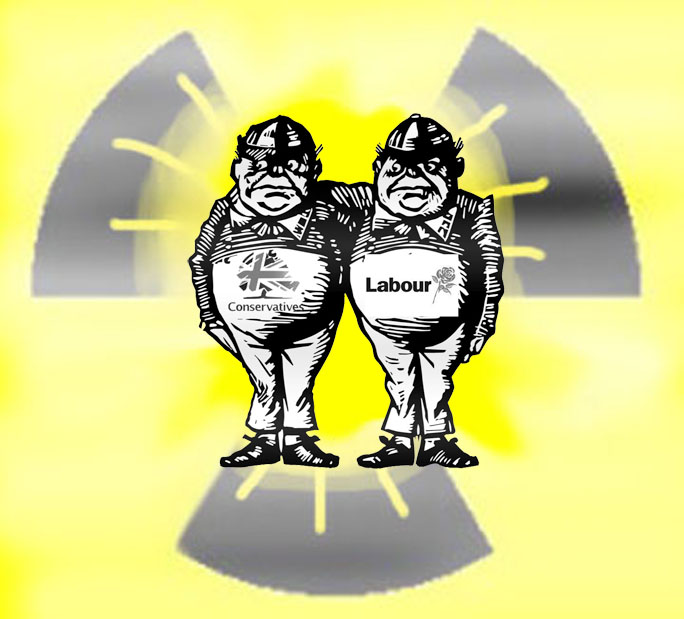
LINDA PENTZ GUNTER condemns Starmer’s willingness to let children go hungry and the elderly shiver while pouring billions into doomed nuclear projects that won’t address the climate crisis
https://morningstaronline.co.uk/article/billions-sizewell-c-show-labours-shameful-nuclear-hypocrisy Linda Penz Gunter6 Sept 24
THE Keir Starmer Labour government won’t scrap the two-child benefit cap because, it claims, the country can’t afford it. Doing away with this punitive measure would lift close to half a million children out of poverty at an estimated cost of £3.6 billion a year.
On the other hand, the Starmer government is perfectly happy to scrap the winter fuel allowance for pensioners, because doing so saves money — an estimated £1.4bn this financial year. That potentially life-saving support will now be stripped from as many as 10 million eligible pensioners.
That’s £5bn saved, on the backs of children and the elderly, two of the most vulnerable segments of our society.
Instead, the Labour government has now announced it will assign almost this identical sum — as much as £5.5bn in life support — to the planned 3,200 megawatt (MW) two-reactor Sizewell C nuclear power plant project on the Suffolk coast.
pensioners shiver in the dark in exchange for an entirely futile energy project that will keep no-one warm anytime soon, if at all.
Reacting to the announcement, Pete Wilkinson, spokesperson for Together Against Sizewell C, a local opposition group, observed: “It’s staggering that Labour has increased the potential outlay on this white elephant project to £8bn just days after Labour claimed the country couldn’t afford winter fuel payments for millions of pensioners.”
This would be the second government subsidy the scheme has received on top of an earlier £2.5bn handed out by the previous Tory government.
The announcement was made on August 30 by the Department for Energy Security and Net Zero, which described it as “a new subsidy scheme — the Sizewell C Devex Scheme — to enable continued support to the development of the proposed new nuclear power plant Sizewell C (SZC) to the point of a Final Investment Decision (FID) and thereby ultimately reach operation.”
The word “ultimately” is key here, since that operational date is very uncertain. Realistically, Sizewell C will never be completed in time to address the climate crisis. The project was initiated in 2010 with the contract awarded to French government corporation, EDF, in 2012.
Fourteen years later, the estimated cost at completion is £20bn, although these calculations are typically unpredictable and underestimated and could soar as high as £30-£40bn. Meanwhile, there are no reactors under construction.
Shovels are in the ground, but only to raze forests and fragile habitats adjacent to the precious Minsmere Nature Reserve. This is being done to make way for non-nuclear construction projects including “new offices, and training facilities,” according to Sizewell C’s joint managing directors Julia Pyke and Nigel Cann.
Further compounding the risks at Sizewell — in addition to the unsolved dangers of radioactive waste storage and meltdowns — the site sits on the shores of the North Sea where erosion has already taken its toll. With climate change precipitating sea-level rise, the plant will become ever more vulnerable to severe flooding and violent storms by the time it becomes operational.
All of this ignores the warnings of climate experts that we now have a window of five years or less in which to take urgent action to reduce carbon emissions to net zero.
Despite this, the Labour government continues to support another nuclear debacle, EDF’s first two-reactor project, the 3,200 MW Hinkley Point C nuclear power plant in Somerset.
Conceived in 2010 in the waning days of the Tony Blair Labour government, it was then ardently embraced by Conservative prime minister, David Cameron, and his Tory successors. Six years into actual construction, Hinkley Point C remains unfinished while its costs have ballooned to at least £34 billion. EDF’s vague completion date is now “after 2029.”
Claims that small modular reactors (SMR) are a promising alternative and can be rolled off assembly lines to answer energy needs are just more pie in the sky. That’s because the hundreds if not thousands of SMRs needed would result in such poor economies of scale it will send electricity prices even higher to compensate for the up-front costs.
SMR designs remain on paper, there is scant interest from buyers, and the flagship SMR project in the US, NuScale, has already collapsed under the weight of its exorbitant finances, which proved unacceptable to investors, many of whom dropped out.
Furthermore, squandering money on new nuclear power plants that are unlikely to materialise on time if ever, diverts much-needed resources away from the technologies that could be deployed quickly and on a significant scale, such as solar and wind power. For every pound squandered on nuclear power, more carbon reductions could be achieved faster by spending it on renewable energy instead.
All of this, however, falls on deaf ears in Westminster. “Labour complained about a black hole in the country’s finances yet now they are proposing to dig still further,” observed Alison Downes of Stop Sizewell C. “Where would this cash come from?”
Certainly not from the military, another nuclear hog at the subsidy trough that Labour is more than happy to overfeed. As Jeremy Corbyn, the former Labour leader and independent MP for Islington North remarked: “If the country’s finances are so bad, then why are we still spending £50bn a year on the military? If there’s no money left, why are we spending £12,000 a minute on nuclear weapons?”
Linda Pentz Gunter is a writer based in Takoma Park, Maryland. She is the independent specialist at Beyond Nuclear (www.beyondnuclear.org).
Controversy Surrounds Kazakhstan’s Nuclear Referendum
Oil Price, By RFE/RL staff – Sep 04, 2024,
- Kazakhstan has allocated $32 million for a referendum on the construction of a nuclear power station.
- The referendum, scheduled for October 6, has sparked controversy due to concerns over nuclear safety and Russia’s potential involvement.
- Despite public opposition, the Kazakh government is pushing forward with the plan, highlighting the country’s tightly controlled political environment.
…………………………………………….Mustafina’s deputy Konstantin Petrov said more than 12 million Kazakh citizens are eligible to vote at more than 10,000 voting sites across the country and 78 stations will be set up in different countries for Kazakh citizens residing abroad.
Only one question will be asked in the referendum: “Do you agree that Kazakhstan needs to construct a nuclear power station?”
Many in Kazakhstan expect that the answer will be “yes,” considering the country’s tightly controlled political environment.
But the push to build a nuclear power plant has been met by significant opposition despite apparent efforts to silence dissent on the issue. In recent weeks, several activists known for their stance against the nuclear power station’s construction have been prevented from attending public debates on the matter.
Nuclear-power-related projects have been a controversial issue in Kazakhstan, where the environment was severely impacted by operations at the Soviet-era Semipalatinsk nuclear test site from 1949 to 1991 and the Baikonur spaceport, which is still being operated by Moscow.
Hours before his decree was made public on September 2, President Toqaev reiterated his support for the plan to build a nuclear power station.
There was no official information about the site of the future nuclear station, but a public debate was held last year in the village of Ulken on the shore of the Lake Balkhash in the southeastern region of Almaty about the possibility of constructing a nuclear power station there.
The idea to build a nuclear power station in Kazakhstan has been circulating in the country for years, leading to questions regarding what countries would be involved in the project.
Kazakh officials have tried to avoid answering the question, saying the decision would be made after a referendum.
Shortly before launching its ongoing invasion of Ukraine in February 2022, Russia proposed its Rosatom nuclear agency to be Kazakhstan’s major partner in the project. https://oilprice.com/Alternative-Energy/Nuclear-Power/Controversy-Surrounds-Kazakhstans-Nuclear-Referendum.html
Kazakh Internet users mostly rejected the idea of Rosatom’s involvement, citing the legacy of the 1986 Chernobyl nuclear disaster and Russia’s gaining control over the Zaporizhzhya nuclear power plant in Ukraine as examples of Russia’s attitude toward nuclear safety.
Inside UK Labour’s plans for a new nuclear age

Before the end of the year, Ed Miliband is expected to announce the next
phase of Britain’s nuclear power revival. The energy secretary has
inherited decisions on two major programmes that could help bring forward a
new nuclear age in the UK — Sizewell C in Suffolk and a fleet of mini
nuclear plants around Britain.
In its election manifesto, Labour lent its
support to nuclear as playing an important role in the shift towards clean [?]
power and improving energy security.
Sceptics of ambitions to build out
Britain’s nuclear industry point towards the delays and budgeting
difficulties that have beset Hinkley Point C as a bad omen for expanding
the UK industry.
The developers have called out the 7,000 design changes it
was forced to make to its reactors by the Office for Nuclear Regulation to
adapt the reactors to UK safety standards, increasing the amount of
concrete and steel needed and pushing up costs.
The project has also been
caught up in wrangling with the Environment Agency and it is still in
dispute over how to best deter fish from swimming near the site and getting
sucked up into its cooling systems.
There is believed to be a £5 billion
funding gap, but CGN’s liability for the project is capped at £6
billion, which leaves the French state on the hook. A fixed, albeit
inflation-linked, subsidy of £92.50 per megawatt-hour (in 2012 prices) was
agreed when Hinkley was signed off, so any increase in costs falls on
shareholders, rather than directly on bill payers.
A final investment decision on [Sizewell C] had been expected by the summer. The hope now is that the project might get the green light before the end of the year, but
there is speculation that it may slip into next year. The government is
expected to launch a new generation of mini nuclear power plants across the
country.
The selection process is being run by Great British Nuclear, an
arm’s-length body set up under the previous government to drive nuclear
deployment. Five ventures, including Rolls-Royce and GE-Hitachi, a joint
venture between GE Vernova, the American energy equipment manufacturer, and
Hitachi, the Japanese conglomerate, have submitted bids for £20 billion in
taxpayer funding.
The plan is to whittle down the list to three or four
designs by the end of this month, with the winning bids chosen before the
end of the year. It is hoped that the chosen technology providers will take
a final investment decision by 2029.
The first small modular reactor is not
expected to be generating electricity before 2035, not in time to
contribute towards Labour’s 2030 net zero goals. Miliband has said the
new government will “strive” to keep to the timetable previously set
out.
When the winning mini nuclear plant designs are chosen, they will be
assigned an operating site by Great British Nuclear. There are eight sites
currently approved for nuclear development in the UK, including Wylfa in
Anglesey, the Sellafield site in Cumbria and Heysham in Lancashire. A deal
in March with Hitachi brought two sites — Wylfa and Oldbury-on-Severn in
Gloucestershire — back under government ownership.
Moorside, which is adjacent to the Sellafield facility is also state-owned, which makes all
three likely potential sites for the first small modular reactors (SMRs).
Rolls-Royce, which is considered a frontrunner in the selection process,
has previously said it has identified four potential parcels of land,
including Oldbury and Moorside, as its preferred locations. However, it is
envisioned that for small modular reactors to fully realise the benefits of
scale, development on more new sites will be needed.
Looser planning rules
are expected to allow these reactors almost anywhere outside built-up
areas.
Times 4th Sept 2024
A staggering £5.5bn more of our taxpayers’ money to be thrown at this white elephant, Sizewell C nuclear

A Stop Sizewell C spokesperson said: “At a time when the overarching
message from the Labour government is that there is no money, this is an
extraordinary statement. Sizewell C has already chewed through £2.5bn, and
now we learn that there is the potential for a staggering £5.5bn more of
our taxpayers’ money to be thrown at this white elephant. “Labour
complained about a black hole in the country’s finances yet now they are
proposing to dig still further. Where would this cash come from?”
New Civil Engineer 2nd Sept 2024, https://www.newcivilengineer.com/latest/sizewell-c-to-receive-up-to-a-further-5-5bn-of-taxpayer-cash-02-09-2024/
Nuclear power scheme given £5.5bn of funding

Neve Gordon-Farleigh & PA, BBC News, Suffolk 30 Aug 24, https://www.bbc.com/news/articles/cp358ywx7e7o—
Up to £5.5bn of government money has been unlocked as part of a new nuclear power station subsidy scheme.
The money will be used for “development expenditure” including enabling works at Sizewell C in Suffolk, before a final investment decision is made.
The government has already spent £2.5bn on the project and while a final investment decision is yet to be made, the government says it is “committed” to carrying out the project.
However, campaign group Stop Sizewell C, said the money would dig further into a financial “black hole”.
While building permission for the project has been granted for the 3.2 gigawatt site, it could take 12 years to construct if funding is secured.
Land between Aldeburgh and Southwold has been earmarked for the site……………………………………………
‘White elephant’
The new Labour government vowed to back this project and other nuclear developments earlier this year.
However, the scheme’s opponents Stop Sizewell C claimed the project will be “slow” to build, harm nearby habitats and damage the tourism economy along the Suffolk Coast.
A spokesperson from the group, said the money was an “extraordinary statement”.
“Sizewell C has already chewed through £2.5 billion, and now we learn that there is the potential for a staggering £5.5 billion more of our taxpayers’ money to be thrown at this white elephant.
“Labour complained about a black hole in the country’s finances yet now they are proposing to dig still further.”
SNP activists whoop as leader John Swinney tells party conference an independent Scotland will give up nuclear deterrent and rejoin the EU
SNP activists cheered today as John Swinney told party conference an independent Scotland will give up the nuclear deterrent and rejoin the EU.
The First Minister tried to be upbeat in his keynote speech in Edinburgh – despite the separatists suffering a meltdown at the general election…………………………….
………….there was rapturous applause as Mr Swinney delivered a series of jibes at UK policies.
‘Labour’s Foreign Secretary thinks Labour should be as proud of creating the UK’s weapons of mass destruction as they are of creating the NHS,’ he said.
‘The SNP wants to see the end of nuclear weapons. With independence, Trident will be removed from Scotland once and for all. …………………………………………………………………….. https://www.dailymail.co.uk/news/article-13802185/SNP-leader-John-Swinney-conference-independent-Scotland-nuclear-deterrent-EU-Brexit-election.html
Russia says it will change nuclear doctrine because of Western role in Ukraine
Reuters, By Mark Trevelyan, September 1, 2024
- Summary
- Minister says work is at “advanced stage”
- Hawks want Putin to lower threshold for nuclear use
- Moscow says West using Ukraine as proxy to harm Russia
- West, Kyiv say this is nonsense
LONDON, Sept 1 (Reuters) – Russia will make changes to its doctrine on the use of nuclear weapons in response to what it regards as Western escalation in the war in Ukraine, state media quoted Deputy Foreign Minister Sergei Ryabkov as saying on Sunday.
The existing nuclear doctrine, set out in a decree by President Vladimir Putin in 2020, says Russia may use nuclear weapons in the event of a nuclear attack by an enemy or a conventional attack that threatens the existence of the state.
Some hawks among Russia’s military analysts have urged Putin to lower the threshold for nuclear use in order to “sober up” Russia’s enemies in the West.
Putin said in June that the nuclear doctrine was a “living instrument” that could change, depending on world events. Ryabkov’s comments on Sunday were the clearest statement yet that changes would indeed be made.
“The work is at an advanced stage, and there is a clear intent to make corrections,” state news agency TASS cited Ryabkov as saying.
He said the decision is “connected with the escalation course of our Western adversaries” in connection with the Ukraine conflict.
Moscow accuses the West of using Ukraine as a proxy to wage war against it, with the aim of inflicting a “strategic defeat” on Russia and breaking it apart.
The United States and its allies deny that, saying they are helping Ukraine defend itself against a colonial-style war of aggression by Russia.
‘RED LINES’
Putin said on day one of Russia’s full-scale invasion of Ukraine in February 2022 that anyone who tried to hinder or threaten it would suffer “consequences that you have never faced in your history”.
Since then, he has issued a series of further statements that the West regards as nuclear threats, and announced the deployment of Russian tactical nuclear weapons in Belarus.
That has not deterred the U.S. and its allies from stepping up military aid to Ukraine in ways that were unthinkable when the war started, including by supplying tanks, long-range missiles and F-16 fighter jets…………………………………………
Russia has more nuclear weapons than any other country. Putin said in March that Moscow was ready for the eventuality of a nuclear war “from a military-technical point of view”.
He said, however, that he saw no rush towards nuclear confrontation and that Russia had never faced a need to use nuclear weapons in Ukraine. https://www.reuters.com/world/europe/russia-will-change-nuclear-doctrine-due-wests-actions-ukraine-official-says-2024-09-01/
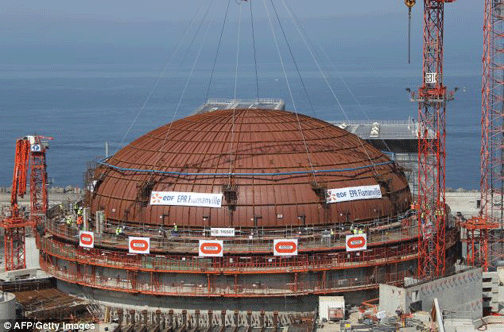
France still faces problems in starting up long-delayed super-expensive Flamanville nuclear reactor
https://www.ft.com/content/31bb42d9-603c-4456-a8d3-9dcaa19c7759, Sarah White in Paris, 2 Sept 24
New unit could be connected to grid by end of year but optimism over further expansion faces political hurdles
France is starting up its first newly built nuclear reactor in a quarter of a century, 12 years behind schedule and after multiple setbacks as the industry looks to a revival with plans for more new plants.
EDF, the French state-owned operator of Europe’s biggest fleet of nuclear power stations, said late on Monday that the first chain reactions — or so-called divergence operations — at the Flamanville 3 reactor on France’s Normandy coast were due to get under way overnight.
If these are successful the reactor will eventually be connected to the grid before the end of the year, once it has reached 25 per cent of its total 1.65 gigawatt capacity — enough to power a large city.
Please use the sharing tools found via the share button at the top or side of articles. Copying articles to share with others is a breach of FT.comT&Cs and Copyright Policy. Email licensing@ft.com to buy additional rights. Subscribers may share up to 10 or 20 articles per month using the gift article service. More information can be found here.
https://www.ft.com/content/31bb42d9-603c-4456-a8d3-9dcaa19c7759
The reactor, France’s 57th and a prototype of models EDF wants to develop at home and overseas, had come to epitomise the reversals the nuclear industry was suffering globally in the wake of a downturn in orders over recent decades, which prompted skilled workers to leave the sector.
Flamanville ended up costing more than four times its initial budget at €13.2bn, and took longer to finish than similar models EDF built in China and Finland that were also hit by delays.
Components for the complex design had to be retooled, some after complaints from safety regulators. EDF was also criticised by the French government for how it struggled to co-ordinate the project that involved hundreds of suppliers.
Please use the sharing tools found via the share button at the top or side of articles. Copying articles to share with others is a breach of FT.comT&Cs and Copyright Policy. Email licensing@ft.com to buy additional rights. Subscribers may share up to 10 or 20 articles per month using the gift article service. More information can be found here.
https://www.ft.com/content/31bb42d9-603c-4456-a8d3-9dcaa19c7759
“It’s a historic step in this project,” Régis Clement, co-head of EDF’s nuclear production division, said of the launch. “Our teams are on the starting blocks.”
EDF, which has contracts to build new reactors in Britain and is tendering to export its design elsewhere, said it had learned valuable lessons from Flamanville 3 that will allow it to whittle down construction times in future.
But it still faces a series of hurdles at home despite French President Emmanuel Macron launching a plan to build at least six new reactors.
The orders have yet to be formalised, and a political impasse in Paris may only delay the process further, after legislative elections this summer delivered a hung parliament.
EDF, which is spending money filling thousands of new positions to prepare for the orders, needs to agree on a funding plan for the projects, which could cost over €52bn.
Hopes of reaching a deal by the end of the year are fading, several people close to the company said. An initial ambition to deliver the new reactors by 2037 seems optimistic as a result, they added.
Other challenges include improving design updates for the future reactors while training a range of staff from engineers to welders will take time. EDF also faces competition overseas from other players, such as South Korean rivals, amid a worldwide revival of nuclear technology.
Though valued for its low carbon emissions, nuclear power has faced an atmosphere of distrust after the Chernobyl accident of 1986 and the Fukushima meltdown in Japan following a tsunami in 2011.
‘No,’ Kamala Harris Says to Withholding Arms From Israel
“Harris is saying she will reject 77% of Democrats, 61% of Americans, international law, domestic U.S. law, and basic humanity to continue the flow of weapons to Israel while it stands accused of genocide,” said one analyst.

Common Dreams. Jake Johnson, Aug 30, 2024
Democratic presidential nominee Kamala Harris said in a CNN interview that aired late Thursday that, if elected in November, she would not change the Biden administration’s policy of steadfast military support for Israel, rejecting widespread calls for an arms embargo to help bring about an end to the devastating assault on Gaza.
“I’m unequivocal and unwavering in my commitment to Israel’s defense and its ability to defend itself, and that’s not gonna change,” said Harris, recounting the horrors of the Hamas-led October 7 attack. “Israel had a right, has a right to defend itself.”
Acknowledging that “far too many innocent Palestinians have been killed,” the vice president responded “no” when CNN‘s Dana Bash asked whether a Harris administration would implement a “change in policy in terms of arms” and withhold even “some” weapons shipments to Israel………………………………………………………………………………………………………………………….
“Poll after poll after poll tells us that a majority of Americans and even more key Democratic constituencies want the US to stop giving arms to Israel that it’s using to kill and displace Palestinian families,” Lieberman added. “Not sending bombs to Israel is politically expedient and—quite obviously!—the morally correct thing to do for anyone reading the daily headlines of Israeli massacres being done with U.S. weapons.”
Democratic presidential nominee Kamala Harris said in a CNN interview that aired late Thursday that, if elected in November, she would not change the Biden administration’s policy of steadfast military support for Israel, rejecting widespread calls for an arms embargo to help bring about an end to the devastating assault on Gaza.
“I’m unequivocal and unwavering in my commitment to Israel’s defense and its ability to defend itself, and that’s not gonna change,” said Harris, recounting the horrors of the Hamas-led October 7 attack. “Israel had a right, has a right to defend itself.”
Acknowledging that “far too many innocent Palestinians have been killed,” the vice president responded “no” when CNN‘s Dana Bash asked whether a Harris administration would implement a “change in policy in terms of arms” and withhold even “some” weapons shipments to Israel.
Watch:
The CNN appearance marked Harris’ first major television interview since becoming the Democratic nominee, a change at the top of the party’s 2024 ticket that Palestinian rights advocates hoped would open the door to a fundamental shift away from the Biden administration’s Gaza policy—which has been to arm Israel to the teeth while tepidly pressuring the country’s far-right government to protect civilians and agree to a cease-fire deal.
“The vice president’s statement was morally indefensible and politically shortsighted as the lack of American consequences for Netanyahu’s horrific assault on Palestinian civilians in Gaza has emboldened Israel to now invade the West Bank,” Layla Elabed and Abbas Alawieh, co-founders of the Uncommitted National Movement, said in a statement Friday. “Vice President Harris must turn the page from one of the most glaring foreign policy failures of our time by aligning with the American majority that opposes sending weapons to Israel’s assault on Gaza.”
Despite Bash’s characterization of calls for an arms embargo against Israel as a demand from the “progressive left,” survey data has shown that a majority of U.S. voters oppose sending weapons to Israel as it commits appalling war crimes in Gaza and the West Bank. Since October, the U.S. has sent Israel over 50,000 tons of weaponry.
“Harris is saying she will reject 77% of Democrats, 61% of Americans, international law, domestic U.S. law, and basic humanity to continue the flow of weapons to Israel while it stands accused of genocide,” Middle East scholar Assal Rad said late Thursday, citing the results of a recent CBS News/YouGov poll.
A separate poll commissioned by the IMEU Policy Project suggested that voters in key U.S. battleground states would be more likely to vote for a Democratic nominee who pledged to withhold weapons from Israel.
The CNN interview aired as Israel continued its multi-day assault on the West Bank, a deadly military campaign that the head of the United Nations and others warned could become an extension of the nearly 11-month war on Gaza, during which Israel has killed more than 40,600 people, displaced 90% of the enclave’s population, and sparked famine across the territory.
On Thursday, Israel’s military killed five Palestinians in an airstrike on a vehicle convoy of the Washington, D.C.-based American Near East Refugee Aid (ANERA) agency. It is a violation of U.S. law to provide weaponry to a country obstructing the delivery of American humanitarian aid.
The attack on the ANERA convoy came a day after Israeli forces opened fire on a World Food Program vehicle, forcing the U.N. agency to suspend employee movement in Gaza.
Harris’ refusal to express openness to an arms embargo against a military that has repeatedly targeted aid and healthcare workers, journalists, and other civilians sparked immediate backlash from Palestinian rights advocates, including at least one member of Congress.
Rep. Rashida Tlaib (D-Mich.), the only Palestinian American in the U.S. Congress, said Harris’ answer signaled that “war crimes and genocide will continue.”
Yonah Lieberman, co-founder of IfNotNow, called the Democratic nominee’s answer on Gaza “terrible” and “out of touch with voters, especially those in key battleground states who Harris needs to feel motivated to go to the polls.”
“Poll after poll after poll tells us that a majority of Americans and even more key Democratic constituencies want the US to stop giving arms to Israel that it’s using to kill and displace Palestinian families,” Lieberman added. “Not sending bombs to Israel is politically expedient and—quite obviously!—the morally correct thing to do for anyone reading the daily headlines of Israeli massacres being done with U.S. weapons.”
In an op-ed for Common Dreams on Friday, RootsAction national director Norman Solomon warned that “time is running out for Kamala Harris to distance herself from U.S. policies that enable Israel to continue with mass murder and genocide in Gaza.”
“Polling shows that a pivot toward moral decency would improve her chances of defeating Donald Trump,” Solomon wrote. “But during her CNN interview Thursday night, Harris remained in lockstep with President Biden’s unconditional arming of Israel.” https://www.commondreams.org/news/kamala-harris-arms-embargo
The US presidential candidates are not confronting the nuclear threat that haunts the world

Bulletin, By Robert Jay Lifton | August 29, 2024
The candidates in the coming election in the United States have said little, certainly nothing coherently, about nuclear weapons. Yet those weapons continue to haunt us, even as they move in and out of our conscious awareness.
We are reminded of this disconnect by the recent revelation of a shift in the American strategy of “nuclear deterrence” to give greater emphasis to China because of evidence of its rapid build-up of the weapons.1 That strategy change suggests China has been granted the dubious status of player in the game of bringing an end to humanity.
This “nuclear end,” as we came to call it in the antinuclear movement, was oddly treated in the recent Musk interview of Trump. Trump spoke vaguely of “nuclear warming,” though he has constantly dismissed the danger of climate change. Musk referred to the relatively rapid rebuilding of Nagasaki as a thriving city, failing to recognize that reconstruction was possible only because of the existence of an outside world to bring the necessary energy and know-how for such rebuilding. The use of contemporary nuclear weapons would allow for no such outside world. And the statement also ignores the residual pain and nuclear fear brought on by the atomic bombing of that city.2
And in her Democratic National Convention acceptance speech, Kamala Harris committed herself to a military that “always has the strongest, most lethal fighting force in the world.”3 We do not know whether she had nuclear weapons in mind.
What are the nuclear truths that are still rarely taken into account?
Nuclear weapons represent a revolution in the human capacity for destructiveness. Whether it begins with battlefield use of relatively small nuclear weapons or with larger ones, a nuclear war is likely to bring about a “nuclear winter”—the blocking of the sun’s rays by soot and other debris blown into the stratosphere—bringing about the lowering of Earth’s temperature to an extent that agriculture and human life could no longer be sustained. There is also more recent research suggesting that even a “limited” nuclear war could bring about worldwide starvation, affecting hundreds of thousands or even millions of people.
From this standpoint, Robert Oppenheimer’s brilliant success in guiding his fellow scientists at Los Alamos to the creation of nuclear weapons was his also tragedy. He could never decide whether to go along with the society’s rendering him a hero or to insist on his guilt, as he did when he told President Harry Truman, “I have blood on my hands.”
The larger US society has the same conflict. It is unable to decide whether the weapons are crucial to keeping the peace and even keeping the world going—the US addition to what I call nuclearism—or whether their very existence, not just their use but their stockpiling, is what threatens our future. The latter idea is central to the treaty put forward by the United Nations banning the “use, possession, testing, and transfer of nuclear weapons under international law.”4 Recently 150 medical journals, including The New England Journal of Medicine, Journal of the American Medical Association, Lancet, and the British Medical Journal made a joint call for the elimination of nuclear weapons with an editorial statement: “The nuclear arms states must eliminate their nuclear arsenals before they eliminate us.”5
That reasonable advocacy of nuclear abolition could not of course abolish our capacity to rebuild the weapons. But such re-creation would be highly demanding, and abolition would make the world a much safer place even if the possibility of building new nuclear weapons existed………………………………………………………………………………..more https://thebulletin.org/2024/08/the-us-presidential-candidates-are-not-confronting-the-nuclear-threat-that-haunts-the-world/?utm_source=Newsletter&utm_medium=Email&utm_campaign=ThursdayNewsletter08292024&utm_content=NuclearRisk_LiftonNuclear_082024
UK government’s new scheme to subsidise Sizewell nuclear project with support up to £5.5 billion !

On 30 August 2024, the Department for Energy Security and Net Zero (DESNZ)
published details of a new subsidy scheme – the Sizewell C Devex Scheme –
to enable continued support to the development of the proposed new nuclear
power plant Sizewell C (SZC) to the point of a Final Investment Decision
(FID) and thereby ultimately reach operation.
This follows the Competition
and Markets Authority’s consideration of DESNZ’s assessment of the Devex
Scheme’s compliance with the requirements under the Subsidy Control Act
2022 earlier this year. More specifically, this Devex Scheme will provide
the government with greater flexibility to cover development expenditure
costs up to and including FID, subject to appropriate Value for Money (VfM)
assessments and approvals at the relevant time.
The total value of support
allowed by the scheme is £5.5 billion. Further details of the Devex Scheme,
and of investments made under the scheme, will be reported on the relevant
page of the subsidies database.
DESNZ 30th Aug 2024
Opposing a USA-led international nuclear agreement that is bizarrely unfair to Australia
Australians can object to the agreement, by putting in a submission to a Parliamentary Joint Standing Committee.
Submissions are due by September 1st. So far, only 2 submissions have been published. They’re sort of “zipped” – so I can’t read them. You can bet your boots they are from the nuclear lobby
I’s a bit of an IT hurdle to actually get your submission in. That’s after you’ve even written it. Which is tough, too, as the general public in Australia knows nothing about it.
But anyway, here’s one little effort
TITLE: Submission to the Joint Standing Committee on Treaties concerning the:
Agreement among the Government of Australia, the Government of the
United Kingdom of Great Britain and Northern Ireland, and the Government
of the United States of America for Cooperation Related to Naval Nuclear Propulsion.
This submission urges that the Joint Standing Committee on Treaties recommends against
the Australian Government signing this Agreement as I believe that it is not in the best interests of the Australian people on a number of grounds, as outlined in this submission
Australia would be landed with high level nuclear waste – This Agreement
requires Australia to “be responsible for the management, disposition, storage, and
disposal of any spent nuclear fuel and radioactive waste resulting from the
operation of Naval Nuclear Propulsion Plants transferred pursuant to this Article,
including radioactive waste generated through submarine operations, maintenance,
decommissioning, and disposal.” (ARTICLE IV Naval Nuclear Propulsion Plants,
Related Equipment and Material, Section D).
The health risk to Australians brought in by the construction of nuclear facilities
and the management and storage of radioactive wastes. Buying second-hand
nuclear submarines make this waste danger another hazard, as we’d be buying
already existing toxic wastes.
Under this agreement it is possible for a nuclear weapon to be present on
Australian shores– this would it would be a clear breach of the highest order of the
Treaty on the Non-Proliferation of Nuclear Weapons (NPT) because as a signatory to
NPT Australia is not allowed to manufacture or otherwise acquire nuclear weapons.
The agreement does not guarantee that the USA will continue with the nuclear
submarine arrangements, but still ensures that Australia will cop the costs. This is
blatantly unfair.
It is extraordinarily unfair and bizarre that under Article IV E. “Australia shall
indemnify, the United States and the United Kingdom against any liability, loss,
costs, damage or injury (including third-party claims) arising out of, related to, or
resulting from Nuclear Risks connected with the design, manufacture, assembly,
transfer, or utilization of any Material or Equipment, including Naval Nuclear
Propulsion Plants and component parts and spare parts thereof transferred or to be
transferred pursuant to this Article.”
The ‘National Interest Analysis [2024] ATNIA 14 with attachment on consultation’,
acknowledges that “There has been no public consultation”, with paragraph 55
stating that “No public consultation has been undertaken, given the classified scope of consultations between the Parties on the Agreement, including matters relating to
national security and operational capability.”
The Treaty clearly outlines that Special Nuclear Material to be transferred under the
agreement, “shall contain highly enriched uranium and, only with respect to
irradiated fuel, may contain plutonium”, (ARTICLE VI Conditions and Guarantees,
SECTION I –SPECIAL NUCLEAR MATERIAL)
In conclusion – the whole agreement is unfair, poorly organised, and should not be
accepted by Australia, particularly in this situation where there has been no public
consultation – set up completely in the dark as far as the Australian people are
concerned.
Noel Wauchope
Democratic Party platform a catastrophe for world peace
https://heartlandprogressive.blogspot.com/—Walt Zlotow, 26 Aug 24,
Last Monday the Democratic National Committee (DNC) adopted likely the worst foreign policy platform in US history.
It voted “ironclad” support for Israel’s genocidal ethnic cleansing of Gaza. Nothing new here as America has long been supplying tens of billions in genocide weapons for Israel to ‘finish the job’. The Democratic platform’s promise of a “commitment to Israel’s qualitative military edge” ensures that hundreds of thousands of Palestinians will die and likely no Palestinian will be left in Gaza unless the US ends its conveyor belt of genocide weapons.
The platform further boasts about the US bombing campaign against Yemen for tying up Red Sea shipping in support of Palestine. Alas, the platform mischaracterized the multibillion-dollar campaign as a success when it has utterly failed to reopen the Red Sea to worldwide shipping. And until America stops supplying Israel the genocide weapons, it never will.
Another false achievement the platform touts is America’s proxy war against Russia in Ukraine which has backfired spectacularly, elevating the former while deeply degrading the latter.
One more imagined platform achievement for good measure: America’s massive multi billion dollar buildup in the Asia Pacific to defeat China, “America’s most consequential strategic competitor.”
The world will be damn fortunate if the 2024 Democratic Platform doesn’t serve as a blueprint for America blowing up the Middle East, blowing up Europe, blowing up the Asia Pacific.
A party platform on foreign affairs should build a sturdy foundation to promote world peace. The 2024 Democratic platform on foreign affairs ensures more instability, more spending of precious treasure on weapons of death, more war; possibly even nuclear winter. That represents a party platform servicing a gallows for peoplekind.
Harris’s concluding speech at DNC embraces agenda of global war
Harris declared, “As commander-in-chief, I will ensure America always has the strongest, most lethal fighting force in the world.” As for whom this force will be fighting, Harris left little doubt, going on to refer to China, Russia, North Korea and Iran, the same countries that the Biden-Harris administration has targeted in a new document outlining American strategy for a future nuclear world war.
Patrick Martin, 23 August 2024
The four days of the Democratic National Convention culminated Thursday with the acceptance speech by Vice President Kamala Harris as the Democratic Party’s candidate for president.
As a whole, the convention consisted of an endless series of inane speeches, hosannahs to Harris that completely falsified her right-wing career as a prosecutor, declarations from billionaires that Harris would be a “president of joy” and constant invocations of the “historic” character of elevating a (multi-millionaire) African American and Asian American woman to the presidency.
The Democrats sought to substitute entertainment for policy, with a series of Hollywood and pop music celebrities embracing Harris. However, the real content of the policies they propose came through in the candidate’s closing speech: an agenda of escalating global war.
Harris declared, “As commander-in-chief, I will ensure America always has the strongest, most lethal fighting force in the world.” As for whom this force will be fighting, Harris left little doubt, going on to refer to China, Russia, North Korea and Iran, the same countries that the Biden-Harris administration has targeted in a new document outlining American strategy for a future nuclear world war.
As in any major address by an American capitalist politician, Harris’s acceptance speech was directed to two audiences. For Wall Street and the military-intelligence apparatus, the real base of the Democratic Party, Harris pledged to continue the militaristic foreign policy of the Biden administration to defend the global interests of the American financial aristocracy.
She was a safe pair of hands, she proclaimed, unlike the unreliable and self-interested Trump—a theme sounded on the convention’s final day by a range of right-wing speakers, from former Defense Secretary and CIA Director Leon Panetta, to a string of Republicans who are now endorsing Harris, to a trio of military-intelligence officials now holding seats as Democrats in the House of Representatives.
While Harris’s brief reference to the suffering of the Palestinian population of Gaza was highlighted in media accounts—and will undoubtedly be hailed as a significant shift by the pseudo-left apologists for the Democratic Party—this came after she flatly reiterated an uncompromising pledge to provide unlimited US military aid to Israel: “I will always stand up for Israel’s right to defend itself, and I will always ensure Israel has the ability to defend itself.”
In other words, more bombs and missiles to kill tens of thousands more in Gaza and potentially in the West Bank, Lebanon, Yemen, Iran and other countries in the region targeted by imperialism…………………………………………………………………………….. more https://www.wsws.org/en/articles/2024/08/24/turk-a24.html
1 This Month
23-25 October – on Zoom – World BEYOND War’s annual global conferenc


Shut down the radiation-damaged Heysham nuclear reactors now
To see nuclear-related stories in greater depth and intensity – go to https://nuclearinformation.wordpress.com

Say No to NASA’s Reckless Nuclear Reactor on the Moon
Say No to NASA’s Reckless Nuclear Reactor on the Moon
-
Archives
- October 2026 (170)
- September 2026 (339)
- August 2026 (330)
- July 2026 (355)
- June 2026 (287)
- May 2026 (306)
- April 2026 (356)
- March 2026 (251)
- February 2026 (267)
- January 2026 (308)
- December 2025 (358)
- November 2025 (359)
-
Categories
- 1
- 1 NUCLEAR ISSUES
- business and costs
- climate change
- culture and arts
- ENERGY
- environment
- health
- history
- indigenous issues
- Legal
- marketing of nuclear
- media
- opposition to nuclear
- PERSONAL STORIES
- politics
- politics international
- Religion and ethics
- safety
- secrets,lies and civil liberties
- spinbuster
- technology
- Uranium
- wastes
- weapons and war
- Women
- 2 WORLD
- ACTION
- AFRICA
- Atrocities
- AUSTRALIA
- Christina's notes
- Christina's themes
- culture and arts
- Events
- Fuk 2022
- Fuk 2023
- Fukushima 2017
- Fukushima 2018
- fukushima 2019
- Fukushima 2020
- Fukushima 2021
- general
- global warming
- Humour (God we need it)
- Nuclear
- RARE EARTHS
- Reference
- resources – print
- Resources -audiovicual
- Weekly Newsletter
- World
- World Nuclear
- YouTube
-
RSS
Entries RSS
Comments RSS

