Inside Project Esther, the right wing action plan to take down the Palestine movement
The Heritage Foundation’s “Project Esther” claims to combat antisemitism but in fact, aims to destroy the Palestine solidarity movement as a first step in a crusade against all domestic dissent in the U.S. https://www.youtube.com/watch?v=PPar-qf5FwY
By Mitchell Plitnick November 22, 2024 , https://mondoweiss.net/2024/11/inside-project-esther-the-right-wing-action-plan-to-take-down-the-palestine-movement/?ml_recipient=138796694236038510&ml_link=138796674607744710&utm_source=newsletter&utm_medium=email&utm_term=2024-11-23&utm_campaign=Daily+Headlines+RSS+Automation
Mitchell Plitnick is the president of ReThinking Foreign Policy. He is the co-author, with Marc Lamont Hill, of Except for Palestine: The Limits of Progressive Politics. Mitchell’s previous positions include vice president at the Foundation for Middle East Peace, Director of the US Office of B’Tselem, and Co-Director of Jewish Voice for Peace. You can find him on Twitter @MJPlitnick.
The Heritage Foundation got a lot of publicity during this election cycle for its infamous Project 2025. But that’s not the only project they intend to carry out now that Donald Trump is returning to the White House.
Project Esther is a new proposal from Heritage that claims to lay out a plan to combat antisemitism in the United States. In fact, it aims to destroy the Palestine solidarity movement as a first step in a crusade to, ultimately, restrict activism against American policy of all sorts, foreign and domestic. .
It’s not a new enterprise, of course. Disingenuous accusations of antisemitism have been weaponized by the Zionist movement and the State of Israel for a century or more but Project Esther means to unify and coordinate the cynical use of the fight against real antisemitism in order to completely destroy the movement for Palestinian rights.
But that is only its initial ambition. As the full plan makes clear, the people who produced this scheme see it as the key to devastating movements against both American imperialism abroad and white supremacy domestically.
What is Project Esther?
The Project Esther document describes its purpose this way: “Named after the historic Jewish heroine who saved the Jews from genocide in ancient Persia, Project Esther provides a blueprint to counter antisemitism in the United States and ensure the security and prosperity of all Americans.”
It should raise concerns right away that the document treats the story of Esther as historical. Most biblical scholars agree that the story is apocryphal, or at best allegorical. Only the most puritanically fundamentalist approach to the Book of Esther would treat it as history.
The key strategy Project Esther proposes is to identify the Palestine solidarity movement as the “Hamas Support Network,” and organizations in the movement as “Hamas Support Organizations.”
This strategy carries two key effects. One is to discredit the Palestine solidarity movement and all the organizations within it by associating it with Hamas, an organization most of the American public identifies as nothing but a terrorist organization, based on decades of misrepresentations of the group and its goals.
The second aim is to attack the ability of organizations to function by casting them as supporters of terrorism, and specifically of an organization that has been designated by the U.S. government as a terrorist organization. This would make it impossible for those organizations to legally raise money or complete legal business transactions.
Unsurprisingly, the “Hamas Support network” purportedly revolves around American Muslims for Palestine and prominently includes Students for Justice in Palestine and Jewish Voice for Peace. Completing the picture are funding organizations such as the Open Society Institute, Tides Foundation, and Rockefeller Brothers Fund.
This demonization of the movement combines with the conspiratorial thinking that permeates the entire world in 2025 to take aim at many common tactics of activism.
After laying out allegedly “sinister” exploitation of the “open society” the United States ostensibly has, Project Esther makes the mere use of press releases, social media posts, letters to and meetings with elected officials, and other common tools of activism sound illegitimate simply because Palestine solidarity activists are using them. Again, they do this simply by talking about these activities being conducted by “Hamas Supporting Organizations.”
After establishing this, they state, without evidence, “It should be obvious at this point even to the casual observer that there is an active cabal of Jew-haters, Israel-haters, and America-haters in Washington—all apparently aligned with the far left, progressive movement.”
A political witchhunt
Throughout the document, in addition to erasing the distinction between anti-Zionism and antisemitism, the writers attempt to paint the movement as a threat not only to Israeli apartheid—which, of course, it is—but also to democracy in the United States.
The conspiracy that Project Esther tries to paint also reaches into the United States government. The document names Rashida Tlaib, Ilhan Omar, Cori Bush, Jamaal Bowman, Summer Lee, Ayana Pressley, Alexandria Ocasio-Cortez, Greg Casar, Andre Carson, Hank Johnson, Jan Schakowsky, Mark Pocan, Pramila Jayapal, Bernie Sanders, Chris Van Hollen, and Elizabeth Warren as being part of or supporting the “Hamas Caucus.”
There is a lot to be read into who is on that list and who is not.
Anyone who follows Congress would immediately see that the range of Democrats listed is very wide. It includes some like Rashida Tlaib, Cori Bush, and Jamaal Bowman whose stances on Palestine have featured very prominently in their political images and stances.
But others on the list have been cautious about Palestine, sometimes standing for Palestinian rights, sometimes not, but even when they do, it has been with relatively little fanfare. That would include some like Jayapal and Casar, and even some like AOC and Pressley who have tried, on one hand to appease their left-wing base on Palestine but have generally been more cautious than Tlaib, Bowman, and Bush.
More telling though is the absence of any Republicans. Before Bernie Sanders’ current effort at passing a Joint Resolution of Disapproval on sales of certain arms to Israel, no senator has been more active in slowing, delaying, and questioning aid to Israel than Republican Senator Rand Paul of Kentucky.
In the House, Rep. Thomas Massie routinely breaks with his party to vote against military aid and other bills related to Israel. Yet neither his name nor Paul’s appear in the Project Esther document.
If, as the authors claim, votes against Israel in Congress are forms of antisemitism, and Project Esther is all about going after antisemitism in the guise of anti-Israel resolutions, where are Massie and Paul in this document?
Their absence clearly reveals the game. The document also attacks outgoing Senate Majority Leader Chuck Schumer, whom Project Esther says “called for Israeli Prime Minister Netanyahu’s ouster for no apparent reason other than Netanyahu’s being on Israel’s political right.”
Schumer did make such a call and did so because he believed that Netanyahu was leading Israel down a disastrous path with his attempt at a judicial coup that threatened to strip away Israel’s thin veneer of democracy even within its 1948 borders. It wasn’t ideological, or even political; it was Schumer trying to save the apartheid state from itself, as he demonstrated shortly thereafter by attending Netanyahu’s despicable address to Congress.
Project Esther’s selective criticism shows its fundamental aim is certainly not to protect Jewish safety, and is politically broader than just the Palestine solidarity movement it targets.
Return to McCarthyism
Project Esther wants to pull out all the stops in its attempt to destroy the Palestine solidarity movement.
Its initial focus is very squarely on the academy, where the document makes clear it hopes to establish a new standard in universities and lower-level schools that treat critical examination of both Israel and the United States as unacceptable. So most of its first tactics revolve around many of the efforts we’ve already seen in universities, twisting existing anti-discrimination laws to defend Israel, using “naming and shaming” and doxing tactics, lawfare, and, of course, congressional activism.
But Project Esther seeks to expand on this, and it goes to great lengths to try to equate the growing movement in support of Palestinian rights with the rise of pro-Nazi elements in the United States prior to World War II.
They note how, in response to the rise of the pro-Nazi Bund in the U.S., various elements came together to fight them. These included organized crime figures from the so-called “Jewish gangland,” as they note, “Jewish gangsters like Meyer Lansky, Benjamin “Bugsy” Siegel, Abner “Longy” Zwillman, and Meyer “Mickey” Cohen—sometimes at the behest of their rabbis—happily coordinated “less than kosher” activities, pro bono, to disrupt and thwart the Bund.” That partnership with organized crime echoes Donald Trump’s own association with vigilante racist groups like the Proud Boys.
They further cite the creation of the House Un-American Activities Committees (HUAC) as a key element in the fight against both support for Nazism and Communism. “New York Democratic Congressman Samuel Dickstein, a Lithuanian-born Jew, worked with Texas Congressman Martin Dies to establish the House of Representatives’ Special Committee on Un-American Activities, also known as the Dies Committee, charged with uncovering Nazi and Communist activities inside the United States.”
The Dies Committee became HUAC in 1945 when it became a standing House committee, and it went on to commit some of the worst violations against civil rights in the United States of the 20th century.
This is what Project Esther would re-create if given the opportunity. And they are well aware that they have the opportunity right now. Written with Joe Biden still in office, and with too many Democrats doing their part to help create fertile ground for this plot, Project Esther states, “Our hope is that this effort will represent an opportunity for public–private partnership when a willing Administration occupies the White House.” That willing administration will arrive on January 20.
It only starts with Palestine solidarity
Speaking with Zeteo, Professor Joseph Howley of Columbia University, an anti-Zionist Jew, said, “[F]ar-right Zionist hegemonists have wanted for years to make being an anti-Zionist or non-Zionist or Israel-critical Jew illegal. This year they’ve succeeded in getting universities to make it policy …. Now they want to make it federal law.”
Once that is accomplished though, the aim is clearly against all possible dissent.
Jewish Voice for Peace’s executive director Stefanie Fox told Zeteo, ““It has never been clearer that defending Palestinian solidarity organizing is one of the most critical frontlines of democracy defense today… this McCarthyite initiative is led by Christian Nationalists, who directly threaten the safety and freedom of all marginalized people, including BIPOC peoples, religious minorities, queer people and women.”
Fox is right, and it goes even further. Project Esther intends to destroy the Palestine solidarity movement as a first step toward crushing dissent of all kinds against white supremacy within the United States and American military and imperial hegemony internationally. There is a very narrow band of people who will be safe from this effort if it’s not stopped.
Immoral Senate votes down resolutions to end US weapons fueling Israel’s genocide in Gaza.

Walt Zlotow, West Suburban Peace Coalition, Glen Ellyn IL, 24 Nov 24
Sen. Bernie Sanders (I-VT) tried but failed to pass his 3 Joint Resolutions of Disapproval (JRD) aimed ending billions in US weapons used by Israel to obliterate habitable life for 2,300,000 Palestinians in Gaza.
Sanders and fellow Independent Angus King of Maine were joined by 17 Democrats hoping to persuade President Biden to stop violating the Leahy Law which forbids sending US weapons to states or groups committing war crimes, human rights violations and ghoulishly, genocide. The vote was engineered by a small contingent of moral Democrats to send a message to Biden they’re growing weary of shoveling over $20 billion in weaponry to assist Israel committing the worst genocide this century. They also heeded the 77% of pre-election Democratic voters who want an end to all US weapons to Israel.
Republican senators wanted no part of following the Leahy Law to extinguish the flames of genocide devouring Gaza. They all voted the resolutions down.
Kudos to my Illinois Senator Dick Durbin who voted for all 3 resolutions. Raspberries to my Illinois Senator Tammy Duckworth who voted to keep the weapons train rolling into Israel in spite of opposition from virtually the entire civilized world save for Israel and America.
Biden worked feverishly to defeat the resolutions. He’s determined to end his presidency an unabashed, morally degraded enabler of genocide. Trump may be even more ravenous in supplying weaponry to Israel come January 20. But at the rate Biden is going, all the Palestinians in Gaza may be dead and gone by then.
Russia’s Revised Nuclear Doctrine and the NATO-Russia Ukrainian War

RUSSIAN and EURASIAN POLITICS, by Gordonhahn, November 21, 2024
In response to the escalating NATO-Ukrainian threat to Russia’s national security, embodied most recently and intensively by the U.S., British, and French use of their own missiles on pre-2022 Russian territory (outside Crimea, annexed in 2014), Moscow adopted and activated into law a revised Nuclear Doctrine (ND) on November 19th.
The original decision to revise Russia’s ND and, indeed, lower the threshold for use came in September when NATO countries first began discussing the use of ATACMs, Storm Shadows, Scalp, etc., which can only be fired with the participation of U.S., British, and/or French officers, making them and their countries direct combatants in a war against Russia, as Russian President Vladimir Putin stated at the time and quite logically so.
This and the timing in which the September discussion was revived in November at the same time completion of the ND revisions was expected gives evidence to the fact that this Western course and escalations in the NATO-Russia Ukrainian War is the driver of the ND revisions.
Similarly, NATO-Ukraine’s use on November 18-19 of ATACMs and Storm Shadows by NATO against targets on Russian territory proper (Bryansk and Kursk) internationally recognized demonstrate how several stipulations in the new doctrine are intended by the Kremlin to address the escalation by NATO to direct involvement by its officers’ control over the launch and attack process of such missiles. Moreover, there are indications that conditions are now such that, according to the new doctrine, Russia’s use of nuclear weapons against Ukrainian, American, British, and French targets is justifiable and thus, regretfully, feasible.
Much of the discussion around the ND revisions centers around Articles 9-12. They address the security problem posed to Russia by the NATO-Ukraine alliance and the war it sparked with Russia. Articles 9-10 note: “9. Nuclear deterrence is also carried out against States that provide their controlled territory, air and/or sea space and resources for the preparation and implementation of aggression against the Russian Federation. 10. Aggression of any state from the military coalition (bloc, union) against the Russian Federation and (or) its allies is considered as aggression of this coalition (bloc, union) as a whole” (http://kremlin.ru/events/president/news/75598, pp. 2-3).
These new articles are a result of, and a response to NATO countries various forms of support for Ukraine, particularly its invasion into Kursk as well as drome and missile attacks on numerous Russian regions, aside from Crimea and the four Ukrainian regions annexed by Russia.
Several subsequent Articles in Russia’s revised ND reduce the threshold for the use of nuclear weapons and demonstrate just how close we are approaching said threshold, as far as the Kremlin is concerned. In many ways, these specific Articles constitute the core of the warning that Putin’s decision to revise the ND is; the revision of the ND is an exercise of nuclear deterrence in and of itself.
Much attention has been focused on Article 11 and properly so. It stipulates: “Aggression against the Russian Federation and (or) its allies by any non-nuclear State with the participation or support of a nuclear State is considered as their joint attack” (http://kremlin.ru/events/president/news/75598, p. 3). This is indeed crucial because it attributes joint responsibility to NATO’s non-nuclear states and Ukraine along with NATO’s nuclear powers – the U.S., UK, and France.
Thus, Ukraine is tied to the potential nuclear threat to Russia or Belarus posed by the three leading NATO states. Kiev is placed on the nuclear escalatory ladder and targeted for nuclear deterrence, given the implied nuclear threat it poses by putting Russia into conflict and ever greater conflict with NATO and its nuclear powers.
The November 21st Russian attack on Dnipro, Kiev using a new intermediate range ballistic conventional not nuclear missile among others, was an exercise in deterrence if implied, if you will. This attack was in accordance with Article 11’s attribution of joint responsibility for Ukraine and NATO and its nuclear powers. Article 12 states: “Nuclear deterrence is aimed at ensuring that a potential adversary understands the inevitability of retaliation in the event of aggression against the Russian Federation and (or) its allies” (http://kremlin.ru/events/president/news/75598, p. 3). The invocation of inevitable retaliation is particularly chilling in light of the Russian ND’s Article 11 and the November 21st Russian attack on Dnipro—already a nuclear deterrence attack sans the nuclear warhead.
In response to the use of six ATACMs, the Russians deployed a new hypersonic, intermediate-range missile with a conventional but still unclear explosive charge, as noted above. In seeming proportion to the six ATACMs, the new Russian missile attacked in 6 waves each with 6 missiles, suggesting a multiple conventional warhead. There is speculation that there was no explosive, the attack having been a test, or detonation occurred deep underground (www.youtube.com/watch?v=hVrLEcxI7Wc&t=933s, at the 1:30 mark). Putin addressed the nation and the world after the Dnipro attack to explain Russia’s deterrence goal while again offering negotiations to end the war. He noted: ……………………………………………………………………………………………..
The upshot of all this, again, is that we are moving closer to scenarios in which Putin or a less cautious successor might choose to use a tactical nuclear weapon in order to end such threats as enumerated above or deter their further posing.
I do not think that Putin, who is an extremely rational and cautious actor, will opt to use even a single tactical nuclear weapon, unless a situation, say, like the one in Kursk should drastically deteriorate from the Russian point of view: for example, if by some miracle Ukraine’s forces in Kursk were somehow to regroup and be approaching the Kursk nuclear power plant and/or nuclear weapons storage facility.
But the actual situation on the ground is quite the reverse. Ukrainian forces are being or have been surrounded, depending on which one is talking about, and are likely to be fully destroyed or mostly destroyed during a hasty retreat. Thus, the ATACMs may be a way to ensure an open extraction corridor, and little more when it comes to Kursk.
But the attack on Bryansk suggests a more expansive NATO-Ukraine agenda for the missiles. Since NATO has consistently escalated its involvement in terms of weapons deployments to Kiev, we can expect a similar escalation regarding the use of the ATACMs and other missiles. Putin will match them every step up the way. He may be forced to rise up the escalatory ladder more rapidly, given mounting public and elite pressure to get tough and fight a war instead of his ‘special military operation.’ https://gordonhahn.com/2024/11/21/russias-revised-nuclear-doctrine-and-the-nato-russia-ukrainian-war/
Norfolk MP criticised for ‘anti-nuclear’ stance for Bacton
Steff Aquarone, North Norfolk MP, has been criticised for his “negative”
stance on plans to create a nuclear reactor in Bacton. Norfolk MP
criticised for ‘anti-nuclear’ stance for Bacton. An MP has been attacked
for not being “more open-minded” over his staunch anti-nuclear stance after
plans emerged that could see a reactor built in a coastal village.
Eastern Daily Press 22nd Nov 2024, https://www.edp24.co.uk/news/24741752.norfolk-mp-criticised-anti-nuclear-stance-bacton/
Nuclear ‘Renaissance’ Recalls Past Boondoggles, Legacy of Failures

These federal subsidies were authorized by President Biden’s Inflation Reduction Act of 2022 (IRA). An analysis by NIRS has estimated the IRA includes more than a third of a trillion dollars in potential nuclear power subsidies. Although touted as a climate mitigation bill, the Nuclear Information and Resource Service analysis reported about the 2022 law: “The total amount of nuclear funding in these IRA measures alone ($383 billion) is potentially greater than the total reported amount of climate spending in the entire bill ($369 billion).
POWER, Nov 19, 2024, by Kevin Kamps
Yet another nuclear power “renaissance”? Again? The industry and its friends in high places would like us all to believe so. But, besides the fact that “relapse” would be a better word choice, we’ve also seen this bad horror flick before.
Anyone recall the George W. Bush administration’s attempted nuclear power relapse? Of some three-dozen gigantic new reactors proposed, only two—Vogtle 3 & 4—ever made it into operation. Albeit seven years behind schedule, and more than double the price tag Southern and Georgia Power predicted in 2012, more than $35 billion instead of “just” $15 billion. Of course, the Nuclear Energy Institute (NEI) had predicted, as cited in Dick Cheney’s Energy Task Force Report of May 2001, that such new reactors would “only” cost $2.5 billion each, not more than $17.5 billion each! Hence, $12 billion in federal loan guarantees, and “nuclear tax” surcharges on ratepayers’ bills, were required—private capital wouldn’t touch it.
The rest of those proposed reactors have simply been canceled at various stages of development. Many never broke ground, including Fermi 3 in Michigan, despite license approval from the U.S. Nuclear Regulatory Commission (NRC) to construct and operate. Others ended half-built or less, as at Summer 2 and 3, contributing to the bankruptcy of century-old Westinghouse, and near-bankruptcy of century-old Toshiba. Summer 2 and 3’s cancellation represented a $9 billion or more loss to the ratepayers of South Carolina, many of whom are low income and/or African American. They will be paying for this fiasco on their electric bills for decades—long after a small handful of corporate execs finish their short time behind bars for fraud—with no electricity in return.
Of course, that nuclear “renaissance” going belly up just echoed earlier booms gone bust. Recall the Forbes editorial of February 11, 1985, entitled “Nuclear Follies,” which stated: “The failure of the U.S. nuclear power program ranks as the largest managerial disaster in business history, a disaster on a monumental scale. The utility industry has already invested $125 billion in nuclear power … only the blind, or the biased, can now think that most of the money has been well spent.”
Scores, even hundreds, of reactors were abandoned at various stages of development in the past 50+ years. This included Midland Units 1 and 2, abandoned after being 85% and 50% built, due to safety-significant buildings sinking into the ground, a nuclear Leaning Tower of Pisa. By 1983, Consumers Energy had spent nearly $4.5 billion—$13.75 billion adjusted for inflation, expressed in 2023 dollar figures. It is the largest infrastructure fiasco in Michigan history. Whereas Richard Nixon had touted “Project Energy Independence,” envisioning a thousand reactors across the U.S. by the year 2000, “only” 135 were built. Of these, some never made it to full power operations, such as Shoreham. Most of the burden of the $6 billion wasted (in 1989 dollars, which would be $15 billion in 2023)—fell on Long Island ratepayers: a 3% surcharge was added onto electric bills for 30 years, to pay off the monumental price tag.
Along the same lines, the five-reactor Washington Public Power Supply System (WPPSS) defaulted on $2.25 billion in municipal bonds in 1983 ($7 billion in 2023 dollars), one of the largest such defaults in American history. Hence, WPPSS became known as “Whoops”!

But, despite the lessons that should have been learned, here we go again, with a propaganda-, lobbying-, and campaign contribution-driven nuclear industry joy ride, perhaps at a scale unlike any before. So-called “Small Modular Reactor” (SMR) schemes have proliferated, despite the sinking of the flagship “UAMPS” project, NuScale’s in Idaho, with the cancellation of eight SMRs, the first certified design. This happened despite massive subsidization. Most recently, NextEra has wisely dismissed SMRs as not “too cheap to meter,” but rather too expensive to matter.
Some have gone so far as to propose restarting closed reactors. Holtec’s zombie scheme at Palisades in Michigan is unprecedented, but others—as at the infamous Three Mile Island in Pennsylvania, and Duane Arnold in Iowa, which nearly had a derecho disaster in 2019—are seriously considering joining the zombie reactor parade. Holtec has also proposed SMRs at Palisades, as well as at the long closed and decommissioned Big Rock Point site in northern Michigan, making the eastern shoreline of Lake Michigan a leading-edge microcosm of the current attempted nuclear relapse across the country.
Holtec’s Magical Thinking in the Great Lakes State
In spring 2022, those of us who had watchdogged Palisades for decades—a proud tradition of resistance there, that even pre-dated its groundbreaking in 1967—breathed a huge sigh of relief, when then-owner Entergy pulled the plug, shutting the reactor for good. We had dodged so many radioactive bullets over the years. Although not everyone has—elevated rates of cancer, including childhood cancer, are reported in the area, for one thing.
Entergy had planned to close Palisades since 2016, although it took till 2022—the up to 57% above market rates power purchase agreement (PPA) it got then-governor (now Energy Secretary) Jennifer Granholm’s Michigan Public Service Commission (MPSC) to bless was just too lucrative to end early, safety risks be damned.
On May 20, 2022, Entergy finally called it a day, 11 days earlier than scheduled. Palisades’ latest in 50 years of ongoing Control Rod Drive Mechanism seal leaks took place, the worst such operating experience in industry. But by then, we already had plenty of evidence for trouble brewing……………………………………………………………………………………………………………..
Germany’s hard won shutdown of its last atomic reactors in early 2023 was a tremendous environmental victory, supported by not only the Greens and Social Democrats, but also the Conservatives. It embodies a political consensus, in response to nuclear power’s hazardous radioactive pollution, nuclear waste dilemma, and exorbitant expense, as well as to its severe dangers, as exemplified by the Chornobyl and Fukushima nuclear catastrophes.
But the nearly thousand-page FOIA response we obtained contained other revelations in addition to Holtec’s bailout application and re-nuclearization strategy for Palisades. MPSC staffer Kevin Krause, referring to “Beyond Nuclear et al,” in an email to MPSC Commissioner Peretick (who has enthusiastically supported Palisades’ restart from the very beginning), brushed off environmental watchdogs’ safety concerns, saying: “The unsafe claims are claims these organizations have been claiming for a long time and the NRC has looked at them before.”
The Upton Sinclair quote from 1935 comes to mind: “It is difficult to get a man to understand something when his salary depends on his not understanding it.” His or her.
…our coalition has warned repeatedly about Palisades’ grave risks for many decades now. But NRC is an infamously captured regulator, long the industry’s lapdog, not its watchdog. NRC oversight can more often be defined as “an unintentional failure to notice or do something,” rather than “the action of overseeing something.” “Unintentional” oversight gives NRC too much benefit of the doubt, assuming mere incompetence, rather than complicity with industry. The Japanese Parliament concluded in 2012 that collusion between the supposed, so-called safety regulatory agency, the industry, and government officials, was in fact the root cause of the Fukushima nuclear catastrophe. There has long been such collusion in spades at Palisades.
For one thing, NRC has repeatedly weakened pressurized thermal shock (PTS) regulations, over decades, in order to accommodate ever more risky continued operations at the worst neutron-embrittled reactor pressure vessel in the country, namely Palisades. For State of Michigan officials to incuriously accept NRC’s flippant assurances of safety is inviting disaster.
Investigative reporter Jeff Donn’s post-Fukushima nuclear catastrophe, four-part Associated Press series, “Aging Nukes,” cited PTS as a top example of NRC’s dangerous, ongoing, decades-long regulatory retreat.
Whitmer, the Michigan state legislature, MPSC, our Michigan U.S. congressional delegation, and even DOE, should not fall for the lie that NRC is somehow on top of safety at Palisades. NRC is the enabler of ever more alarming risk-taking, as by Holtec at Palisades.
But even MPSC’s Krause expressed skepticism that Palisades could actually be restarted, a sentiment shared by other MPSC staffers, as revealed a number of times in the FOIA response documents. Krause, in a Sept. 9, 2022 email he gave the subject line “Palisades – you won”t believe this…..,” wrote several other MPSC staffers that “I talked to a few people this afternoon, and we are in uncharted territory. It is not even clear that keeping the plant open is possible from a licensing perspective.” Krause’s email came in response to the “buzz,” news coverage about Holtec’s surprise announcement that day that it had abandoned its decommissioning plans at Palisades, instead was pursuing an unprecedented restart scheme, and had already secretively applied, more than two months earlier, for $2 billion in DOE CNC funding alone, all with Whitmer’s enthusiastic support.
Krause’s word choice is apt. But the uncharted territory is not limited to bureaucratic regulatory approvals. Holtec’s unprecedented Palisades restart scheme represents uncharted territory in terms of the unacceptable risks to health, safety, security, environment, and vast amounts of public funding.
Other watchdogs share this concern…………………………………………………
It’s astonishing that Holtec and NRC are betting the farm on the dangerously old Palisades reactor. It was a notorious, poorly performing nuclear lemon for most of the past half-century, with ever increasing age-related degradation risks, now made even worse by the apparent lack of active safety maintenace by Holtec for the past two and a half years, and counting.
And it’s dumbfounding that DOE, Whitmer, Michigan state legislators, and the PPA customers, the Wolverine/Hoosier rural electric co-ops, have fallen for NRC and Holtec’s assurances of reliability and safety, given their incompetence, complicity, collusion, and corruption………………………………
Money Grabs Galore

Thus far, Holtec has gotten $300 million in grants for the Palisades restart scheme approved by the State of Michigan, despite repeated protests by a broad Great Lakes State environmental coalition.
Holtec has also recently gotten final approval for $1.52 billion in loan guarantees approved by DOE, 52% more than Holtec had asked for two years earlier. Another $1.3 billion has been approved by the U.S. Department of Agriculture (USDA)—again, $330 million more than was reportedly initially applied for—to reimburse rural electric co-ops (Wolverine in Michigan, Hoosier in Indiana and Illinois) for 25% of a PPA for Palisades’ future antipcipated electricity supply, from 2025 to 2051, if not beyond that. Holtec hopes to gouge ratepayers even worse than the up to 57% above market rates PPA Entergy had previously enjoyed at Palisades for 15 years. Will the co-ops re-apply for yet additional USDA bailouts in the future?
These federal subsidies were authorized by President Biden’s Inflation Reduction Act of 2022 (IRA). An analysis by NIRS has estimated the IRA includes more than a third of a trillion dollars in potential nuclear power subsidies. Although touted as a climate mitigation bill, the Nuclear Information and Resource Service analysis reported about the 2022 law: “The total amount of nuclear funding in these IRA measures alone ($383 billion) is potentially greater than the total reported amount of climate spending in the entire bill ($369 billion).
…………………………………………………………….. It is unbelievable, in a shocking and horrifying way. But even this $3.12 billion in public bailouts approved thus far for the Palisades restart is but the tip of the iceberg. Holtec has requested more than $5 billion in additional taxpayer and ratepayer bailouts towards the zombie reactor restart scheme alone.
…………………………………………………… Opportunity Costs
Dr. Mark Z. Jacobson of Stanford University, citing his 2019 analysis he still stands by, serves as an expert witness for the environmental coalition opposing Palisades’ restart. Jacobson has testified that “a fixed amount of money spent on a new nuclear plant means much less power generation, a much longer wait for power, and a much greater emission rate than the same money spent on WWS [wind, water, and sunlight] technologies.” This dynamic also applies at zombie reactors like Palisades. Closed on May 20, 2022, the earliest date by which Holtec claims it can restart Palisades is August 2025. However, that optimistic goal seems to be slipping to October or even December 2025, even according to Holtec at various points in time recently………………………………………………………………………………………………………………………………………………
Restarted Reactor Risks to Health, Safety, Security, and the Environment
In spring 2006, Palisades’ intial owner/operator (from 1967-2007), Consumers Energy, admitted to the MPSC that the atomic reactor had a long list of severely degraded, safety-significant systems, structures, and components. Watchdogs had already known for a long time before that about its worst neutron-embrittled reactor pressure vessel in the country, something that NRC was finally dragged, kicking and screaming, to adknowledge more than a decade ago now. But the inclusion of the need for “[r]eactor vessel [closure] head replacement,” after the Davis-Besse, Ohio near-miss of 2002, and of the need for “[s]team generator replacement” for the second time at Palisades, added to our causes for concern.
…………………………………………………………………………………….. The problem is, Entergy did not fix any of those problems, despite owning and operating Palisades from 2007 to 2022. And despite the killing it made that entire time, charging up to 57% above market rates on its PPA. Why not? Because, as is typical, NRC did not require it………………………………………………………………
………………………………………All of those pathways to reactor core meltdown are still relevant at Palisades, and will grow worse, if and when Palisades is allowed to restart, and sail ever deeper into the uncharted waters of age-related degradation risk.
……………………………….This is a real world risk. On Christmas Day 1993, Fermi 2’s turbo-generator shaft mechanically exploded. This resulted in two million gallons of radioactively contaminated water being dumped into Lake Erie.
……………………………………………….Regarding the degraded steam generators, Gundersen pointed out in his October 7 declaration filed as part of the environmental coalition’s intervention petition/request for hearing that “at least 700 additional tubes…must be plugged due to metal corrosion. These were as many tubes as had been plugged during the previous 20 years of operating the aged Palisades reactor designed in 1965.”………………………………………..
Radioactive Waste Risks
In addition to averting meltdown, more good news about Palisades’ “permanent closure” by Entergy on May 20, 2022 was that no more highly radioactive waste would be generated there. Since 1971, nearly 900 metric tons of highly radioactive irradiated nuclear fuel has piled up at Palisades. Currently, about a third is in outdoor dry casks; two-thirds is still stored in Palisades’ indoor wet storage pool.
Palisades’ dry cask storage has been extremely controversial since 1993. ……………………………………………………………….. more https://www.powermag.com/blog/nuclear-renaissance-recalls-past-boondoggles-legacy-of-failures/
Biden’s Missile Crisis
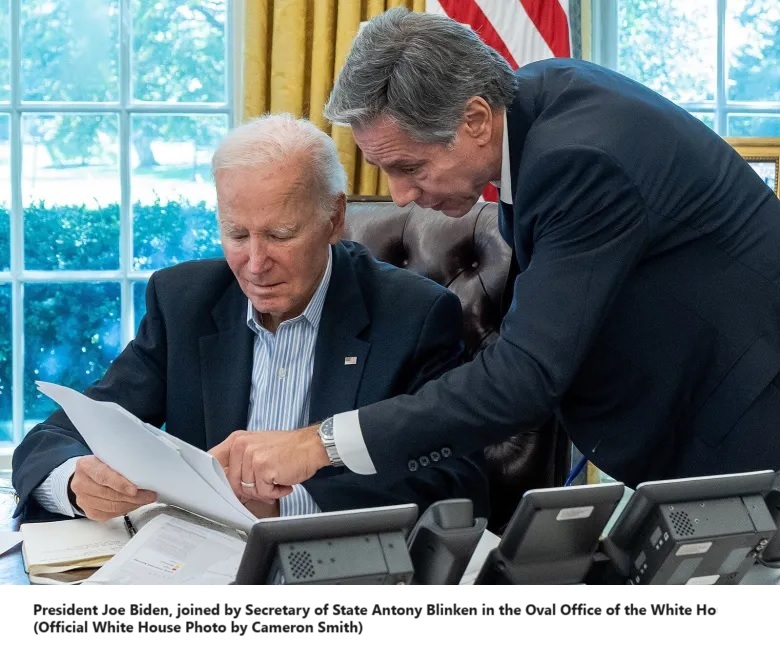
The American people voted for Trump to end the wars. Biden apparently wants to end the world.
Dennis Kucinich, Nov 20, 2024, https://denniskucinich.substack.com/p/bidens-missile-crisis
When President Biden approved the use of supersonic Army Tactical Missile Systems (ATACMS) to strike Russia, he placed in jeopardy the national security of the United States, the safety of our troops abroad and violated the U.S. Constitution, Article I, Section 8, which provides that only Congress can declare war.
Biden has made a decision to insert the U.S. into an unambiguous, escalatory phase, using the territory of Ukraine to attack Russia directly with missiles which can reach 190 miles deep. This is an illegal act by the President which puts our nation on a path to war with Russia.
The American people voted for Trump to end the wars. Biden apparently wants to end the world. Trump is listening to the American people. Biden is listening to NATO’s malignant agenda.
Trump has put America’s interests for peace and prosperity first.
No President has the right to use unilateral executive authority to permit a U.S. missile strike against another nation. It invites a retaliatory attack. It is an impeachable offense.
Congress, as a co-equal branch of government, must act now:
Any Member of Congress can, under privileges of the House, ask for immediate consideration of a joint resolution which invokes Article I, Section 8, and then cuts off all funding for personnel, coordination, technical advisers, materiel, equipment and deployment of ATACMS and emplacement of any other offensive missile systems in Ukraine.
The specter of WWIII has loomed before, in October of 1962, when the Soviet Union used the territory of Cuba to place offensive missiles just 90 miles away from the American mainland.
Absent the wisdom of President Kennedy and the forbearance of Nikita Krushchev, the world was on a path to nuclear annihilation.
If Krushchev had “permitted” Russian missiles to be launched at the U.S. from Cuba, you would not be reading this.
It is magical thinking that U.S. missiles can be used to attack Russia without consequences. Now it is Putin who must exercise forbearance.
North Korea has reportedly sent a detachment to assist Russia. Once the North Koreans learn the Russian language and vice versa, military cooperation will be instructive. That some in the Biden Administration use this occurrence as a bogus excuse to aim U.S. missiles at Russia, shows the neocon/neolieral addiction to war has become a tragicomic death wish.
Western vainglorious cynicism, together with hundreds of billions of dollars for weapons, shoved Ukraine into an unwinnable conflict. Russia is not NATO’s footstool, but its undoing.
The Putin-as-Hitler narrative projected in the media accelerated fear, induced acquiescence and rallied Western support for what was essentially a long-standing war scam by the military-industrial-intelligence complex. The alchemy which turned man into monster turned blood into cash.
Kiev has already paid a horrible price for being a US/NATO proxy: the loss of the flower of its youth, the destruction of its beautiful cities, the spoilation of its fertile farmland, and the sacrifice of its sovereignty.
Now, as U.S. missiles rain down on Russia, a counterstrike will occur, spreading ever wider the misery which has enveloped Ukraine.
The Biden Administration, in the face of the Afghanistan withdrawal debacle, rejected a Ukrainian-Russian diplomatic settlement more than two years ago, and continued financing the war for domestic political reasons, giving Americans a false hope for victory over Russia.
Two weeks ago, the people of the United States voted to stop the endless wars and elected Donald Trump.
Two months to go before the January 20, 2025 Inauguration and Joe Biden has handed Donald Trump a poisoned presidential chalice. Trump knows better than to drink from it.
Great British Nuclear to put £1.8bn worth of mini-nuke contracts up for grabs

Successful bidders will work with winners of delayed SMR design
competition. Nearly £2bn worth of construction contracts for Britain’s
first mini-nuclear power plants will be up for grabs next year as officials
prepare sites for the pioneering energy projects.
Great British Nuclear(GBN), the government body tasked with spearheading the development of small modular reactors (SMRs), expects to put the work out for tender
between February and July 2025, according to official documents.
The biggest jobs available will be at least two £800m “delivery partner”
contracts to manage the construction of the SMRs over a period of 10 years.
Smaller contracts for an “owner’s engineer”, “foundation project
management” and “foundation engineering” will also be open to
bidding.
They will work with technology companies designing the reactors
which will be selected in GBN’s ongoing SMR design competition, which has
been delayed multiple times.
Telegraph 18th Nov 2024 https://www.telegraph.co.uk/business/2024/11/18/great-british-nuclear-to-put-18bn-worth-mini-nuke-contracts/
Trump’s Election Is Also a Win for Tech’s Right-Wing “Warrior Class”

Donald Trump pitched himself to voters as a supposed anti-interventionist candidate of peace. But when he reenters the White House in January, at his side will be a phalanx of pro-military Silicon Valley investors, inventors, and executives eager to build the most sophisticated weapons the world has ever known.
During his last term, the U.S. tech sector tiptoed skittishly around Trump; longtime right-winger Peter Thiel stood as an outlier in his full-throated support of MAGA politics as other investors and executives largely winced and smiled politely. Back then, Silicon Valley still offered the public peaceful mission statements of improving the human condition, connecting people, and organizing information. Technology was supposed to help, never harm. No more: People like Thiel, Palmer Luckey, Trae Stephens, and Marc Andreessen make up a new vanguard of powerful tech figures who have unapologetically merged right-wing politics with a determination to furnish a MAGA-dominated United States with a constant flow of newer, better arms and surveillance tools.
These men (as they tend to be) hold much in common beyond their support of Republican candidates: They share the belief that China represents an existential threat to the United States (an increasingly bipartisan belief, to be sure) and must be dominated technologically and militarily at all costs. They are united in their aversion, if not open hostility, to arguments that the pace of invention must be balanced against any moral consideration beyond winning. And they all stand to profit greatly from this new tech-driven arms race.
Trump’s election marks an epochal victory not just for the right, but also for a growing conservative counterrevolution in American tech that has successfullyrebranded military contracting as the proud national duty of the American engineer, not a taboo to be dodged and hidden. Meta’s recent announcement that its Llama large language model can now be used by defense customers means that Apple is the last of the “Big Five” American tech firms — Amazon, Apple, Google, Microsoft, and Meta — not engaged in military or intelligence contracting.
Trump’s election marks an epochal victory not just for the right, but also for a growing conservative counterrevolution in American tech.
Elon Musk has drawn the lion’s share of media scrutiny (and Trump world credit) for throwing his fortune and digital influence behind the campaign. Over the years, the world’s richest man has become an enormously successful defense contractor via SpaceX, which has selling access to rockets that the Pentagon hopes will someday rapidly ferry troops into battle. SpaceX’s Starlink satellite internet has also become an indispensable American military tool, and the company is working on a constellation of bespoke spy satellites for U.S. intelligence agency use.
But Musk is just one part of a broader wave of militarists who will have Trump’s ear on policy matters…………………………………………………………………………… https://theintercept.com/2024/11/17/tech-industry-trump-military-contracts/
Restart of Three Mile Island tests US appetite for nuclear revival
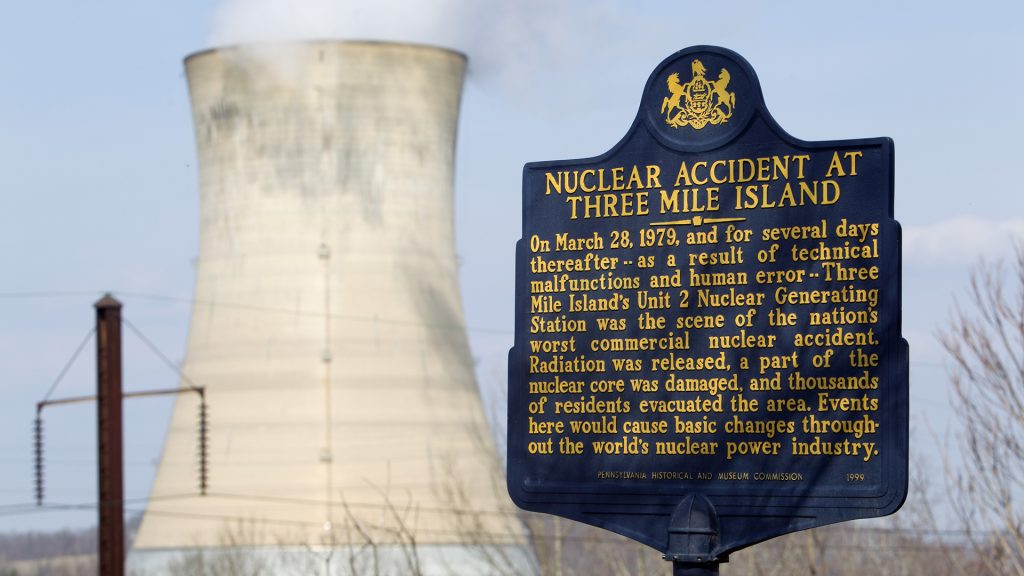
Legal threats, skills shortages and regulatory challenges complicate reopening of plant at site of nuclear accident
Ft.com Jamie Smyth in Middletown, Pennsylvania, 17 Nov 24
A group of veteran community activists is planning legal action to block the reopening of Three Mile Island nuclear plant in a test of whether the American public will back an atomic energy boom financed by Big Tech and US taxpayers. Three Mile Island Alert, a group founded almost half a century ago to lobby for the closure of the plant in Middletown, Pennsylvania — site of the worst nuclear accident in US history — said it would challenge government licences required by operator Constellation Energy, which is targeting a restart in 2028.
The legal threat is one of several obstacles facing the utility as it races to meet the terms of a 20-year power supply deal struck with Microsoft. The $1.6bn project could become a potent symbol of the revival of nuclear energy in the US.
Constellation must obtain numerous regulatory approvals, train hundreds of staff and upgrade equipment at a time when nuclear supply chains are stretched. It must also persuade the local community — and the incoming administration of Donald Trump — that the benefits of restarting the plant outweigh the risks.
“The restart is not going to happen by 2028: that is pure fantasy,” Eric Epstein, a 64-year old former history professor and chair of TMI Alert, told the Financial Times. “We haven’t even cleaned up Three Mile Island unit two, the site of the accident is still highly radioactive . . . and now we’re going to generate more nuclear waste. It’s disappointing and it’s manifestly unfair.”
TMI’s second reactor was closed in 1979 after a partial meltdown caused a radiation leak, prompting a chaotic response from then operator Metropolitan Edison Company and public authorities that dented public trust. The plant’s first reactor was shuttered in 2019 for economic reasons when the US shale revolution produced so much cheap gas that nuclear energy could not compete.
Read more ………… https://www.ft.com/content/b90f6e21-bb8d-4606-9e5e-c4acb56b86ce
: Restart of Three Mile Island tests US appetite for nuclear revival
Trump picks Liberty Energy CEO and Oklo nuclear company board member Chris Wright as Energy secretary
CNBC, Nov 16 2024, Spencer Kimball,
- President-elect Donald Trump picked Liberty Energy CEO Chris Wright to lead the Department of Energy.
- Liberty Energy is an oilfield services company headquartered in Denver, Colorado. Wright also serves on the board of nuclear power startup Oklo.
- Wright has denied that climate change represents a global crisis.
………………………………………………………. https://www.cnbc.com/2024/11/16/trump-picks-liberty-energy-ceo-and-oklo-board-member-chris-wright-as-energy-secretary.html
Saudi Crown Prince condemns Israel attacks on Palestinians as ‘genocide’
November 11, 2024 , https://www.middleeastmonitor.com/20241111-saudi-crown-prince-condemns-israel-attacks-on-palestinians-as-genocide/
Saudi Arabia’s Crown Prince and de facto ruler condemned what he called the “genocide” committed by Israel against Palestinians during a speech at a summit of leaders of Muslim and Arab countries in Riyadh on Monday, Reuters reports.
“The Kingdom renews its condemnation and categorical rejection of the genocide committed by Israel against the brotherly Palestinian people,” Crown Prince Mohammed Bin Salman said at an Arab Islamic summit, echoing comments by Saudi Foreign Minister, Faisal Bin Farhan Al Saud, late last month.
He urged the international community to stop Israel from attacking Iran and to respect Iran’s sovereignty.
The Crown Prince said in September the Kingdom would not recognise Israel unless a Palestinian State was created.
US President Joe Biden’s administration had sought to broker a normalisation accord between Saudi Arabia and Israel that would have included US security guarantees for the Kingdom, among other bilateral deals between Washington and Riyadh.
Those normalisation efforts were put on ice after the 7 October, 2023, attack on Israel by Hamas fighters from Gaza and Israel’s subsequent retaliation.
Israel’s military assault on Gaza in the last 13 months has killed tens of thousands, displaced nearly its entire population, caused a hunger crisis and led to allegations of genocide at the World Court, which Israel denies.
Ultra-Conservative War Hawks Dominate Trump Cabinet
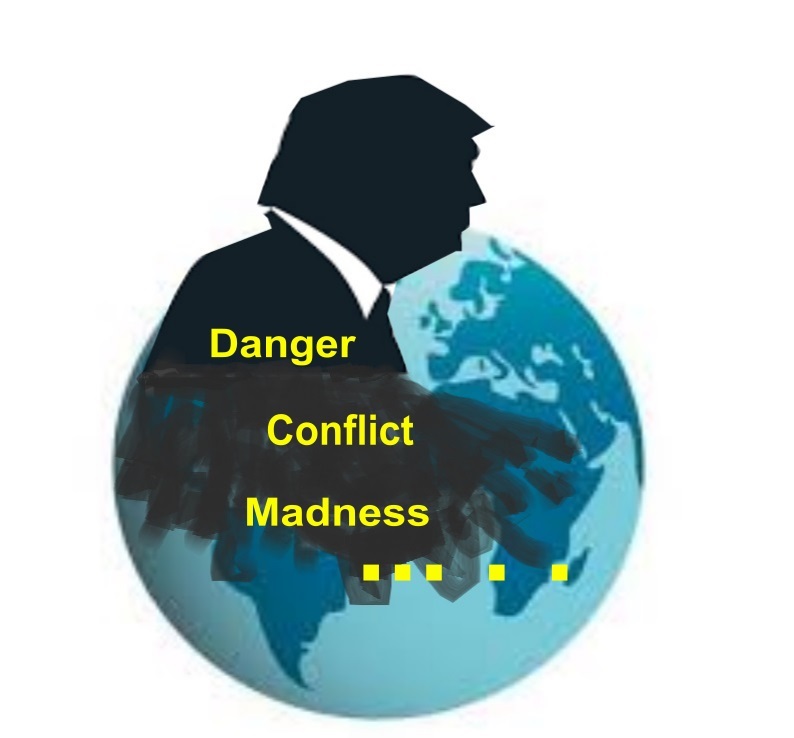
Trump quickly fills cabinet positions with Zionists, warhawks, and personal friends all unified under an ultra-conservative agenda and total loyalty to Trump
November 14, 2024 by Peoples Dispatch, https://peoplesdispatch.org/2024/11/14/ultra-conservative-war-hawks-dominate-trump-cabinet/
Peoples Dispatch has compiled a list of notable appointments below:
Thomas Homan: “Border Czar”
Homan was the head of ICE during Trump’s first term, and has been selected to lead up Trump’s campaign promise to conduct mass deportations of 15 to 20 million people. Homan pledged at the Republican National Convention that he would “run the biggest deportation operation this country’s ever seen” and promised to “flood sanctuary cities” with agents to conduct mass arrests, and carry out massive raids targeting workplaces. He was given the “Presidential Rank Award” by Barack Obama in 2015 for his work in “enforcement and removal operations.” Obama himself was dubbed the “Deporter in Chief” by immigration activists for deporting more people than any president who came before him.
Stephen Miller: Deputy chief of staff for policy
Miller is another pick that signals that Trump is serious regarding his campaign promise to carry out the largest mass deportations in US history. Miller is the architect of the cruelest anti-immigrant policies of the first Trump administration, such as family separation, and a key bridge between the Trump administration and the “alt-right” fascist movement. Miller supports deploying military units of the National Guard to hunt down undocumented people, and advocates for the construction of massive camps to detain immigrants rounded up in raids.
Marco Rubio: Secretary of State
Trump’s choice of Florida Senator Marco Rubio for Secretary of State has surprised some who wanted to believe Trump’s campaign promise of “preventing World War III”. Rubio is a notorious warhawk, known for promoting an aggressive foreign policy approach towards countries that do not tip-toe around the US, including Iran, China, Russia, and Venezuela. Rubio’s appointment could be a test of whether the Trump administration will lean more neoconservative than promised or whether Rubio will be forced to toe a more isolationist foreign policy line.
Rubio, who is of Cuban descent, has a particular hostility towards the socialist state and is a key promoter of harsh sanctions against the island. Rubio has also attacked left-wing social movements within the United States, attempting to use the power of the state to harshly sanction the BDS movement and pro-Palestine and leftist organizations.
Michael Waltz: National Security Adviser
US Army colonel and Florida Representative Michael Waltz is also a notorious warhawk, particularly on China and Iran. During Trump’s first administration, after he almost provoked war with Iran with his assassination of General Qassim Suleimani in 2020, Waltz was one of a small group invited to the White House to receive a briefing on the strike.
Matt Gaetz: Attorney General
Trump loyalist and Florida Representative Matt Gaetz is a prominent figure in the ultra-conservative wing of the Republican Party, leading the charge to overthrow the more established Republican Kevin McCarthy as Speaker of the House—who was replaced with Mike Johnson in 2023. Gaetz, like Trump, is no stranger to scandal, being embroiled in a three-year long federal sex trafficking investigation that ended in 2023.
Pete Hegseth: Secretary of Defense
Hegseth is a controversial Fox News host and military veteran, who is known for his advocacy on behalf of former members of the military who have been convicted of war crimes. This includes lobbying in defense of Navy SEAL Chief Petty Officer Edward Gallagher, who was accused of stabbing a teenaged prisoner of war to death and shooting a teenage girl and elderly man while deployed in Iraq. Since Trump picked Hegseth, his collection of right-wing tattoos has gotten some media attention, which includes a tattoo across his arm of the medieval crusader slogan “Deus Vult,” which translates to “I have not come to bring peace, but a sword,” and signals his political leanings towards the Christian far right.
Kristi Noem: Secretary of Homeland Security
Noem is the current Governor of South Dakota who’s known for her total loyalty to Trump. Noem’s deeply anti-migrant agenda has led her to claim that the “United States of America is in a time of invasion” as a consequence of immigrants “waging war against our nation.” Noem supported the Muslim ban during Trump’s first term because it would restrict refugees from “terrorist hotbed areas.”
John Ratcliffe: CIA Director
Ratcliffe was Trump’s director of national intelligence during his first term. This pick was praised by Republican Representative Mike Turner, who has accused fellow Republican colleagues of repeating Russian propaganda, for helping “counter the serious threats posed by China, Russia, Iran and North Korea.”
Tulsi Gabbard: Director of national intelligence
Trump’s pick of veteran and former Democrat Tulsi Gabbard as the pick to oversee 18 spy agencies has been welcome news to those more critical of the foreign policy establishment. Gabbard endorsed Trump last month, claiming that Trump would transform the Republican Party “back to the party of the people, and the party of peace.”
Steven Witkoff: Special envoy to the Middle East
Witkoff is a Zionist multi-millionaire real estate investor and close personal friend of Trump’s, with zero prior experience in politics in the Middle East/West Asia region.
Mike Huckabee: Ambassador to Israel
Former Arkansas Governor Mike Huckabee and ardent Evangelical Christian is likely to continue his long career of defending Israel in his new post. Huckabee once argued that there was “no such thing as a Palestinian” and recently claimed that the US would back an Israeli attempt to annex the West Bank.
Elise Stefanik: United Nations ambassador
The conservative New York representative went viral for her role in orchestrating the downfall of several prominent university presidents, including former Harvard President Claudine Gay, over the accusation that these presidents were not repressing pro-Palestine students enough. Stefanik is viewed as one of the most prominent enemies of the student movement in the US.
Lee Zeldin: Environmental Protection Agency Administrator
Trump’s pick of Zeldin as EPA Administrator signals that Trump is ready to make good on his campaign promise to attack key environmental protections that are one of the few ways the US government attempts to mitigate the effects of climate change.
Elon Musk and Vivek Ramaswamy: Department of Government Efficiency (DOGE)
The world’s richest person, who in many ways directly bought votes for Trump in key swing states such as Pennsylvania, has been promised a formal role in Trump’s administration alongside entrepreneur Vivek Ramaswamy, through the new commission dubbed the Department of Government Efficiency (the acronym referencing an internet meme). DOGE is in many ways designed to help the ultra-rich including Musk slash through government regulations that may place a limit on power and profit.
Trump’s Appointments Reflect a More Openly Hawkish Face of US Empire
In appointing Marco Rubio, Mike Waltz and Pete Hegseth to his administration, Trump emboldens volatile warmongers.
By Sam Rosenthal , Truthout, November 14, 2024
After mounting his comeback win against Kamala Harris, Donald Trump has already announced a slew of administration appointments. Compared to other presidents-elect, and to his own first term, Trump is ahead of the typical timeline in announcing these appointments, giving observers an earlier-than-usual view into how the second Trump administration could function, both in the domestic and foreign policy arenas.
On the foreign policy front, Trump will inherit several major international crises and tensions that Joe Biden has been unable to resolve during his time in office, chief among them Israel’s ongoing genocide in Gaza, Russia’s war in Ukraine and escalating U.S. rivalry with China over Taiwan. Trump has already named several high-profile cabinet members who will shape much of his foreign policy and could oversee the consequential conclusions of those conflicts.
Marco Rubio, the senator from Florida, has been tapped for the coveted secretary of state position. Rubio is a well-known China hawk who has recently led the charge against TikTok and other Chinese-based tech companies, a stance that dovetails well with Trump’s promise to impose a 60 percent tariff on all goods exported from China. Beyond economic warfare, Rubio has called China the “threat that will define this century” and pushed repeatedly on known pressure points in U.S.-China relations, including the status of Taiwan.
Rubio — the grandson of Cuban immigrants who moved to the U.S. before the Cuban revolution but hated Fidel Castro from afar — is an ardent anti-communist who has argued vociferously against the legitimacy of the sitting governments in Cuba and Venezuela and supported devastating sanctions on both……………………
Rubio’s aggressive stance toward China will no doubt be compounded by Trump’s newly announced pick for national security adviser, Mike Waltz, currently a House representative from Florida. Waltz has pushed his anti-China rhetoric even farther than Rubio, …………………………………….
Arguably Trump’s most surprising pick so far has been his choice for secretary of defense. …………………………….. For his second term, in an apparent attempt to institute more accommodating leadership at the Pentagon, Trump has nominated Pete Hegseth, a Fox News host who served in Afghanistan and at Guantánamo Bay in Cuba, to lead the Department of Defense.
During his time at Fox News, Hegseth has become known for advocating for leniency for military personnel found to have committed war crimes abroad while serving. Hegseth has no governmental experience whatsoever, nor has he served in any command role within the U.S. military…………………………..
During Trump’s last term, he encouraged the then-president to bomb cultural sites in Iran. As head of the Department of Defense, he might focus on internal house cleaning, seeking to remake the military into a more homogenous, more overtly male-dominated entity, with even less care for international law and a firmer belief in U.S. supremacy.
…………………………………………….Tulsi Gabbard, chosen as director of national intelligence……….. has also frequently trafficked in anti-Muslim rhetoric, repeating right-wing talking points about “radical Islamic ideology” that are often used to justify the criminalization and surveillance of Muslim communities…
………………………….Trump has also begun to announce high-profile ambassadorships. Among these early picks, the most consequential is likely to be his selection of former Arkansas Gov. Mike Huckabee to serve as U.S. ambassador to Israel. Huckabee, whose daughter, Sarah Huckabee Sanders, served as Trump’s press secretary in his last term, is well-known for his Christian evangelicism. …..
Huckabee’s pick as ambassador to Israel likely portends an even more openly hostile stance toward Palestinian human rights and comes with possibly apocalyptic consequences for the West Bank. Huckabee, an avowed Zionist (like President Biden), has long supported Benjamin Netanyahu. …………………………………….. He has said that Israeli settlements in the West Bank are not illegal, contradicting the overwhelming consensus of international law experts…………………………..
Beyond that, though, Huckabee ascribes to a particular brand of Christian evangelical thought, rooted in the belief that the existence of modern Israel is ordained by God. Huckabee has close ties to Christian Zionist organizations, including Christians United for Israel (CUFI), one of the largest of its type in the U.S., which is already celebrating his nomination.
But Huckabee’s connection with Hagee and CUFI isn’t just alarming because of its founder’s overt antisemitism; Hagee is part of an extreme segment of the Christian Zionist tradition that believes that a cataclysmic war in Israel and Palestine will be the precipitating event for the second coming of the Christian messiah. Hagee and others in this line of thinking, therefore, encourage the hastening of violent conflict between Israel and its neighbors as much as possible. Whether Huckabee himself is aligned with this particular strain of Christian Zionism is not clear, but his close connection with the broader movement, and with Hagee in particular, should be enough to raise the highest level of alarm about what policies Huckabee intends to support toward an Israeli state that is already deeply enmeshed in the bloodiest campaign of its entire existence.
It is not a foregone conclusion that all of these nominees will make it through the Senate confirmation process. Although Republicans now control the chamber, more moderate caucus members, or those with more traditional views of how the federal government should be run, might be hesitant to confirm some of Trump’s most unorthodox picks. Hegseth and Gabbard, in particular, could face strong headwinds. However, that is dependent on whether Republicans are willing to risk antagonizing Trump, who is infamous for his ability to hold and prosecute personal vendettas, at the outset of his second term. If these nominees are confirmed, they will comprise among the most unusual, and unpredictable, stewards of U.S. foreign policy that the country has ever had.
Caitlin Johnstone: The Incoming Trump Administration Is Already Filling Up With War Sluts,
Caitlin Johnstone, Nov 12, 2024 https://www.caitlinjohnst.one/p/the-incoming-trump-administration?utm_source=post-email-title&publication_id=82124&post_id=151534941&utm_campaign=email-post-title&isFreemail=true&r=1ise1&triedRedirect=true&utm_medium=email
Donald Trump has named Republican congressman Mike Waltz as his next national security advisor, a position that was held by ultrahawk John Bolton in the last Trump administration.
Like Bolton, Waltz is a warmongering freak. Journalist Michael Tracey has been filling up his Twitter page since the announcement with examples of Waltz’s insane hawkishness, including his support for letting Ukraine use US weapons to strike deep into Russian territory, criticizing Biden for not escalating aggressively enough in Ukraine, advocating bombing Iran, opposing the US military withdrawal from Afghanistan, and naming Iran, North Korea, China, Russia and Venezuela as “on the march” against the United States toward global conflict. The mainstream press are calling Waltz a “China hawk”, but from the look of things he’s a war-horny hawk toward all the official enemies of the United States.
Trump has also confirmed that Republican congresswoman Elise Stefanik will be taking on the role of US ambassador to the UN, a role previously held by warmonger Nikki Haley in the last Trump administration. Again, there doesn’t seem to be much difference between the old hawk and the new one.
Stefanik is best known for her congressional efforts to stomp out free speech on college campuses, making a lie of Trump’s lip service to the importance of First Amendment rights. As explained by Antiwar’s Dave DeCamp, she’s a hawkish swamp monster whose political career was primed in some of the most odious neoconservative think tanks in Washington, and opposes placing any limits on US military support for Israel. Earlier this year Stefanik actually flew to Israel to give a speech before the Israeli Knesset vowing to help stop the “antisemitism” of protesters against Israel’s genocidal atrocities at American universities.
And now we’re getting reports throughout the mass media that deranged war slut Marco Rubio has been tapped as Trump’s new secretary of state. It’s really hard to imagine anyone worse for the role of Washington’s top diplomat than a warmonger who has spent his entire political career pushing for more wars, sanctions and slaughter at every opportunity.
This should dash the hopes of Trump supporters everywhere that this time their guy really will end the wars and drain the swamp. Trump’s appointment of Iran hawk Brian Hook to help staff the State Department for the next administration and his rumored consideration of Mike Rogers for secretary of defense are likewise bad signs, as is Tucker Carlson’s claim that virulent China hawk Elbridge Colby is likely to play a role in the administration.
Trump’s anti-interventionist supporters loudly applauded the other day when he unexpectedly announced that Mike Pompeo and Nikki Haley would not be playing a role in the next administration. In response to the announcement, libertarian comedian and podcaster Dave Smith said on Twitter that stopping Pompeo was not enough and that “we need maximum pressure to keep all neocons and war hawks out of the Trump administration.” In response to Smith’s post, Donald Trump Jr tweeted, “Agreed!!! I’m on it.”
When I saw this, I tweeted the following:
“Ignore their words and watch their actions. Been saying it for years, and I’m going to keep on saying it. Ignore their words, watch their actions. Talk, as they say, is cheap.”
Their actions are telling us a lot more than their words right now.
Nuclear reactor in 2011 disaster-hit area restarted
A nuclear reactor in northeastern Japan, hit by the devastating 2011 earthquake and tsunami, was restarted Wednesday after a temporary suspension due to an instrument problem, the plant operator said.
In late October, the Onagawa plant’s No. 2 unit became the first reactor to operate in eastern Japan since the natural disaster, but it was halted earlier this month after a checking device became stuck inside the containment vessel.
Tohoku Electric Power Co, the operator of the Onagawa nuclear plant in Miyagi Prefecture, said it detected that a nut on a joint of a guide tube — designed to send devices into the reactor — was not tightened adequately when it was replaced in May.
The operator said it plans to begin power generation possibly this week after the reactor reaches stable criticality and hopes to start commercial operations around December.
The Onagawa unit cleared safety screening in February 2020 under stricter safety standards set after the 2011 nuclear accident at the Fukushima Daiichi power plant. The reactor is the same type as those at the Fukushima plant.
1 This Month
26 September – International Day for the Total Elimination of Nuclear Weapons





PLEASE OPPOSE HR 8255 AND S.3639 – bills would accelerate satellite deployment, with no environmental review or safeguards – https://ncstd5li.quorum.us/campaign/169331/
To see nuclear-related stories in greater depth and intensity – go to https://nuclearinformation.wordpress.com
-
Archives
- September 2026 (313)
- August 2026 (330)
- July 2026 (355)
- June 2026 (287)
- May 2026 (306)
- April 2026 (356)
- March 2026 (251)
- February 2026 (267)
- January 2026 (308)
- December 2025 (358)
- November 2025 (359)
- October 2025 (375)
-
Categories
- 1
- 1 NUCLEAR ISSUES
- business and costs
- climate change
- culture and arts
- ENERGY
- environment
- health
- history
- indigenous issues
- Legal
- marketing of nuclear
- media
- opposition to nuclear
- PERSONAL STORIES
- politics
- politics international
- Religion and ethics
- safety
- secrets,lies and civil liberties
- spinbuster
- technology
- Uranium
- wastes
- weapons and war
- Women
- 2 WORLD
- ACTION
- AFRICA
- Atrocities
- AUSTRALIA
- Christina's notes
- Christina's themes
- culture and arts
- Events
- Fuk 2022
- Fuk 2023
- Fukushima 2017
- Fukushima 2018
- fukushima 2019
- Fukushima 2020
- Fukushima 2021
- general
- global warming
- Humour (God we need it)
- Nuclear
- RARE EARTHS
- Reference
- resources – print
- Resources -audiovicual
- Weekly Newsletter
- World
- World Nuclear
- YouTube
-
RSS
Entries RSS
Comments RSS

