Congress Revives Cold War Tactics With New Anti-Communism School Curriculum

The Crucial Communism Teaching Act
Even many members of the Progressive Caucus voted in favor, proving that anti-communism is as popular on the left as it is on the right.
a quickly-escalating Cold War against China
December 14, 2024 Alan MacLeod, https://www.mintpressnews.com/congress-revives-cold-war-tactics-with-new-anti-communism-school-curriculum/288830/
Congress has just passed a new bill that will see the U.S. spend huge sums of money redesigning much of the public school system around the ideology of anti-communism. The “Crucial Communism Teaching Act” is now being read in the Senate, where it is all but certain to pass. The move comes amid growing public anger at the economic system and increased public support for socialism.
The Crucial Communism Teaching Act, in its own words, is designed to teach children that “certain political ideologies, including communism and totalitarianism…conflict with the principles of freedom and democracy that are essential to the founding of the United States.”
Although sponsored by Republicans, it enjoys widespread support from Democrats and is focused on China, Venezuela, Cuba and other targets of U.S. empire. The wording of the bill has many worried that this will be a centerpiece of a new era of anti-communist hysteria, similar to previous McCarthyist periods.
The curriculum will be designed by the controversial Victims of Communism Memorial Foundation and will ensure all American high school students “understand the dangers of communism and similar political ideologies” and “learn that communism has led to the deaths of over 100,000,000 victims worldwide.” It will also develop a series titled “Portraits in Patriotism,” that will expose students to individuals who are “victims of the political ideologies” in question.
A Discredited Book
The 100 million figure originates with the notorious pseudoscience text, “The Black Book of Communism.” A collection of political essays, the book’s central claim is that 100 million people have perished as a result of the communist ideology. However, even many of its contributors and co-writers have distanced themselves from it, claiming that the lead author was “obsessed” with reaching the 100 million figure, to the point that he simply conjured millions of deaths from nowhere.
Its methodology was also universally panned, with many pointing out that the tens of millions of Soviet and Nazi losses during World War II were attributed to communist ideology. This means that both Adolf Hitler himself and many of his victims are counted towards the vastly overinflated figure. The book was condemned by Holocaust remembrance groups as whitewashing and even lionizing genocidal fascist groups as anti-communist heroes.
The principal organization promoting the 100 million figure today is the Victims of Communism Memorial Foundation, which has shown a similar level of both anti-communist devotion and methodological rigor. The group, set up by the U.S. government in 1993, added all worldwide COVID-19 deaths to the victims of communism list, arguing that the coronavirus was a communist disease because it originated in China. It is these people who will be designing the new curriculum that will be taught in social studies, government, history, and economics classes across the country.
China Hawks
One of the central goals of the bill is also to “ensure that high school students in the United States understand that 1,500,000,000 people still suffer under communism.” This is a clear reference to China, a rapidly developing country that, in just two generations, has gone from one of the poorest on Earth to a global superpower, challenging and even surpassing the United States on many quality-of-life indicators.
The bill goes on to detail how the school curriculum will “focus on ongoing human rights abuses by such regimes, such as the treatment of Uyghurs in the Xinjiang Uyghur Autonomous Region” by the Chinese “regime” and its “aggression” towards “pro-democracy protests in Hong Kong,” and Taiwan, who it labels “a democratic friend of the United States.”
Furthermore, many of the Victims of Communism Memorial Foundation’s “Witness Project” case studies – likely the source for the “Portraits in Patriotism” series – are from China. This includes Rushan Abbas, the founder and executive director of the Campaign for Uyghurs, a pressure group funded by CIA front organization, the National Endowment for Democracy. Abbas was also previously employed as a translator at the notorious Guantánamo Bay torture camp.
The U.S. is currently engaged in a quickly-escalating Cold War against China that includes channeling money and support to separatist movements, including those in Xinjiang, Hong Kong and Taiwan, as MintPress News has reported. In September, the House of Representatives passed a bill that authorized $1.6 billion to be spent on anti-Chinese messaging worldwide.
Latin America: a Model and a Target
The other major target of the bill will likely be socialist or communist-led governments in Latin America. The act’s sponsor is Maria Elvira Salazar, a Republican Congressperson representing Miami. A part of Florida’s famously conservative Cuban-American community, in 2023, she introduced the FORCE Act, which attempted to block any U.S. president from normalizing relations with Cuba unless its government is overthrown. She has repeatedly condemned President Biden for easing the (illegal) U.S. sanctions on Venezuela. And in July, she denounced what she described as the “socialist curse in Central America and the Caribbean,” singling out Cuban, Venezuela, Honduras, and Nicaragua as countries requiring regime change.
She is, however, an avid supporter of the far-right President of Argentina, Javier Milei, accepting his invitation to attend his inauguration. Argentina, she said, “is going to set the course and point of reference for the rest of Latin America as to the way that a country should be governed… Free market economy, small government, individual liberties, freedom, private sector, no corruption, that’s what we’re trying to do.”
Perhaps the only foreign country she praises more than Argentina is Israel, whose actions she has supported at every step, even going so far as to denounce what she called the “one-sided pressure for a ceasefire” in Gaza.
Salazar’s bill passed easily, 327-62, with limited opposition from Democrats or Republicans, who voted for and against it in roughly equal measures. Even many members of the Progressive Caucus voted in favor, proving that anti-communism is as popular on the left as it is on the right.
A New McCarthyism?
The imminent passing of the Crucial Communism Teaching Act harkens back to earlier anti-communist periods in American history, namely the Red Scare of the 1910s and the McCarthyist era of the 1940s and 1950s. During those times, organized labor movements were ruthlessly attacked, workers from all professions, including professors, government officials, and teachers, were fired en masse, and some of America’s brightest minds had their careers derailed due to their political leanings. This included singer Paul Robeson, actors like Charlie Chaplain and Marilyn Monroe, playwright Arthur Miller and scientist Albert Einstein.
The point of these operations was to break any opposition to the power of the state and big business and ensure the United States maintained its capitalist course. Today, however, fewer Americans than ever are happy with the current political and economic system. A recent Gallup study found that only 22% of the public are satisfied with how things are going, with a majority responding that they are “very dissatisfied.” Living standards have been stagnating or dropping for decades, and alternative economic systems are becoming more desirable. A 2019 poll from Axios found that 48% of adults under 35 prefer socialism to capitalism, including 57% of female respondents.
There are some signs that Washington is slowly moving towards a new McCarthyist era. President Trump, for example, has promised to carry out mass deportations of leftists once he becomes president, stating:
I will order my government to deny entry to all communists and all Marxists. Those who come to join our country must love our country. We don’t want them if they want to destroy our country… So we’re going to be keeping foreign Christian-hating communists, socialists, and Marxists out of America.”
“At the end of the day, either the communists destroy America, or we destroy the communists,” he explained. But he also stated that American citizens espousing anti-capitalist views would be purged. “My question is, what are we going to do with the ones that are already here, that grew up here? I think we have to pass a new law for them,” he said.
That Trump would actually deport millions of American citizens en masse appears like too drastic a step right now, but it is clear that both Democrats and Republicans are serious in their anti-communist convictions. Therefore, the Crucial Communism Teaching Act will likely only be the start of this campaign.
Australia’s Nuclear Neverland politics: The Lost Boys of Costings | The West Report
It’s hard to take the Coalition’s nuclear energy policy seriously, so we didn’t. And frankly, why would they put taxpayers on the hook for the biggest public funded project in history when renewables are crowding private investment en masse? https://www.youtube.com/watch?v=fSeaybp9oAA
Trump and Nuclear Energy: There Are Questions
By James Pethokoukis, October 29, 2024 https://www.aei.org/economics/trump-and-nuclear-energy-there-are-questions/?fbclid=IwY2xjawHFoTFleHRuA2FlbQIxMQABHQxPhKajCptbr5dJgCAd1ZhE0x5OIXLC1-lH_txOvx1zcexr7tF8oqHmYQ_aem_Nlh9f2T4vRa-IsURORqqrA
The 2024 GOP platform from the Republican National Convention promises that “Republicans will unleash Energy Production from all sources, including nuclear, to immediately slash Inflation and power American homes, cars, and factories with reliable, abundant, and affordable Energy.” And much the same message from the party’s presidential nominee:
Starting on day one, I will approve new drilling, new pipelines, new refineries, new power plants, new reactors and we will slash the red tape. We will get the job done. We will create more electricity, also for these new industries that can only function with massive electricity.
But what does that scenario look like, exactly? Trump addressed the issue during his recent podcast with Joe Rogan. As reported by E&E News:
Trump told Joe Rogan in an interview released Friday that he thought projects to build more of the large nuclear reactors currently on the grid, while “very clean,” have a tendency to be complex and to go over budget. He also expressed concern over the energy source’s safety implications. “They get too big, and too complex and too expensive,” Trump said of U.S. nuclear reactors. “I think there’s a little danger in nuclear.” … On Rogan’s show, Trump said two failed nuclear projects were evidence of why large reactors may not be the answer to meeting energy demand, likely referencing the Bellefonte Nuclear Station in Hollywood, Alabama, and the V.C. Summer nuclear plant near Jenkinsville, South Carolina. “They did one in Alabama. They did one in, I think, South Carolina. They do them wrong,” Trump said. “They build these massive things. Then the environmentalists get in.” Trump pointed to small modular reactors as a potential answer to long-running cost concerns surrounding the energy source. He believes that smaller reactors, which can be built in a factory, could avoid the complexities associated with large reactors.
As the piece correctly points out, none of the two dozen or so nuclear reactors that generate two-thirds of French energy are SMRs, a technology that optimists hope will be deployed by decade’s end. Those optimists include mega-retailer Amazon, which recently announced it was partnering with Dominion Energy to explore building a small modular reactor near Virginia’s North Anna nuclear plant. The project aims to support Amazon Web Service’s growing clean energy needs, particularly for AI operations. What’s more, Amazon is hardly the only tech company interested in nuclear to power its data centers, as the chart below [on original] outlines:
But Trump’s vote for nuclear energy abundance seems to conflict with his distaste for the Inflation Reduction Act (IRA)—despite the considerable IRA funding going to red states—which includes substantial nuclear power incentives, including a production tax credit for existing plants, investment tax credits for new nuclear projects, and support for advanced reactor development and nuclear-powered hydrogen production. That framework might change if Trump wins a second term, but it also seems likely that expanded nuclear power in the US “will require public-private collaboration, regardless of whether we decide to focus on building conventional reactors or next-gen designs,” as energy analyst Thomas Hochman told me back in July. For what it’s worth, some professional Washington observers think incentives for nuclear have enough GOP support to survive attacks on the IRA should Trump win.
Nuclear sector’s views on second Trump administration mixed as Rogan interview raises questions
Donald Trump enacted pro-nuclear policies during his first term and supported an “all-of-the-above” energy policy during the campaign, but some advocates fear a “divide between words and actions.”
Utility Dive, Nov. 8, 2024, By Brian Martucci
Dive Brief:
- President-elect Donald Trump in August vowed to “approve new drilling, new pipelines, new refineries, new power plants [and] new reactors” on “day one” of his administration.
- But Trump has more recently sounded skeptical about federal backing for large-scale nuclear builds like Vogtle, which he said in an Oct. 25 interview with podcaster Joe Rogan “get too big, and too complex and too expensive,” raising questions about his second administration’s willingness to support the industry.
- The nuclear sector has mixed views on the incoming administration’s potential support, with some expressing optimism that Trump would build on pro-nuclear policies enacted during the Biden and first Trump administrations and others concerned about a pullback in federal funding for advanced nuclear development.
Dive Insight:
The second Trump administration is likely to “pursue an overall domestic energy agenda focused on energy production and dominance in the United States” but may not continue the Biden-Harris administration’s “massive appropriations” to the nuclear sector, American Nuclear Society Director of Public Policy John Starkey said.
At least one prominent Trump ally, environmental lawyer and former presidential candidate Robert F. Kennedy Jr., has an anti-nuclear track record. Kennedy, a Trump ally who is expected to have an official role in the incoming administration, fought for years to close New York’s Indian Point nuclear plant. More recently, he has voiced opposition to federal nuclear energy subsidies.
“We should have no subsidies … all the companies should internalize their costs in the way that they internalize their profits,” Kennedy told Tesla CEO and fellow Trump backer Elon Musk in an online discussion last year.
But the first Trump administration was broadly supportive of the U.S. nuclear industry. It provided billions in loan guarantees to facilitate construction of Plant Vogtle units 3 and 4; supported the failed Carbon Free Power Project at Idaho National Laboratory, a proposed 462-MW plant that would have used NuScale’s small modular reactor technology; and advanced the pro-nuclear Partnership for Transatlantic Energy Cooperation, the Trump presidential campaign said in 2023.
In 2019, Trump signed the Nuclear Energy Innovation and Modernization Act, or NEIMA, which paved the way for the technology-neutral Part 53 advanced reactor licensing pathway. The NRC is expected to finalize Part 53 regulations by 2027.
“We look forward to working with the new administration to advance policies that extend the lives of existing nuclear reactors, usher in a new era of advanced technologies and support a global marketplace for U.S. exports,” Nuclear Energy Institute President and CEO Maria Korsnick told Utility Dive……………………………………………………………………………………………………………. more https://www.utilitydive.com/news/nuclear-energy-sector-mixed-views-second-trump-administration-joe-rogan/732407/?fbclid=IwY2xjawHFoYpleHRuA2FlbQIxMQABHUakuD2-A16vIr3S063461cig0CymSgxOs5gaAOLJV6GiinQd89Cgy9kBw_aem__hlKjpEPqkmj7Ro11hAMAg
The Fall of Assad & What it Means for The Middle East (w/ Alastair Crooke) | The Chris Hedges Report
December 9, 2024, By Chris Hedges / The Chris Hedges Report https://scheerpost.com/2024/12/09/the-fall-of-assad-what-it-means-for-the-middle-east-w-alastair-crooke-the-chris-hedges-report/
The fall of Syrian President Bashar al-Assad, ending a 55-year dynasty begun by his father, dramatically shifts the pieces on the chessboard of the Middle East. The rebel group Hayat Tahrir al-Sham (HTS), led by Abu Mohammed al-Jolani, is armed and backed by Turkey and was once allied with Al Qaeda. It is sanctioned as a terrorist group. Turkey’s primary goal is to prevent an independent Kurdish state in northern Syria where Kurds have formed an autonomous enclave. But it may not only be Turkey that is behind the overthrow of Assad. It may also be Israel. Israel has long sought to topple the Syrian regime which is the transit point for weapons and aid sent from Iran to the Lebanese militia group Hezbollah. The Syrian regime was backed by Russia and Iran, indeed Russian warplanes routinely bombed Syrian rebel targets. Israeli Prime Minister Benjamin Netanyahu has gloated about the ousting of Assad calling it an “historic day” and said it was a direct result of Israel’s actions against Hezbollah and Iran. But at the same time, Israel will soon have an Islamic state on its border.
Syria, a country of 23 million, is geopolitically important. It links Iraq’s oil to the Mediterranean, the Shia of Iraq and Iran to Lebanon, and Turkey, a NATO ally, to Jordan’s deserts.
Assad’s decision to brutally crush a pro-democracy movement triggered a 14-year-long civil war in 2011 that led to 500,000 people being killed and more than 14 milliondisplaced.
Now What? Will Hayat Tahrir al-Sham seek to renew relations with Iran? Will it impose an Islamic state, given its jihadist roots? Will Syria’s many minority groups, Alawite, Druze, Circassian, Armenian, Chechen, Assyrian, Christian and Turkoman,be persecuted, especially the Alawites, a heterodox offshoot of Shiite Islam comprising around 10 percent of the population, which Assad and the ruling elites were members of? How will it affect the U.S.-backed and Kurdish-led Syrian Democratic Forces, which holds the Syrian oil-rich territory in north and east Syria? Why are the U.S. and Israel bombing targets in Syria following the ouster of Assad? Will the new regime be able to convince the U.S. and Europe to lift sanctions and return the occupied oil fields? What does this portend for the wider Middle East, especially in Lebanon and the Israeli occupied territories?
Joining Chris Hedges to discuss the overthrow of the Assad regime and its ramifications is former British diplomat Alastair Crooke. He served for many years in the Middle East working as a security advisor to the EU special envoy to the Middle East, as well as helping lead efforts to set up negotiations and truces between Hamas, Islamic Jihad and other Palestinian resistant groups with Israel. He was instrumental in establishing the 2002 ceasefire between Hamas and Israel. He is also the author of Resistance: The Essence of the Islamist Revolution, which analyzes the ascendancy of Islamic movements in the Middle East
Syria – Winners And Losers Or Both
Bruce K. Gagnon, https://www.moonofalabama.org/ 9 Dec 24
Syria has fallen.
It is now highly likely that the country will fall apart. Outside and inside actors will try to capture and/or control as many parts of the cadaver as each of them can.
Years of chaos and strife will follow from that.
Israel is grabbing another large amount of Syrian land. It has taken control of the Syrian city of Quneitra, along with the towns of Al-Qahtaniyah and Al-Hamidiyah in the Quneitra region. It has also advanced into the Syrian Mount Hermon and is now positioned just 30 kilometers from (and above) the Syrian capital.
It is also further demilitarizing Syria by bombing every Syria military storage site in its reach. Air defense positions and heave equipment are its primary targets. For years to come Syria, or whatever may evolve from it, will be completely defenseless against outside attacks.
Israel is for now the big winner in Syria. But with restless Jihadists now right on its border it remains to be seen for how long that will hold.
The U.S. is bombing the central desert of Syria. It claims to strike ISIS but the real target is any local (Arab) resistance which could prevent a connection between the U.S. controlled east of Syria with the Israel controlled south-west. There may well be plans to further build this connection into an Eretz Israel, a Zionist controlled state “from the river to the sea”.
Turkey has had and has a big role in the attack on Syria. It is financing and controlling the ‘Syrian National Army’ (previously the Free Syrian Army), which it is mainly using to fight Kurdish separatists in Syria.
There are some 3 to 5 million Syrian refugees in Turkey which the wannabe-Sultan Erdogan wants, for domestic political reasons, to return to Syria. The evolving chaos will not permit that.
Turkey had nurtured and pushed the al-Qaeda derived Hayat Tahrir al-Sham to take Aleppo. It did not expect it to go any further. The fall of Syria is now becoming a problem for Turkey as the U.S. is taking control of it. Washington will try to use HTS for its own interests which are, said mildly, not necessary compatible with whatever Turkey may want to do.
A primary target for Turkey are the Kurdish insurgents within Turkey and their support from the Kurds in Syria. Organized as the Syrian Democratic Forces the Kurds are sponsored and controlled by the United States. The SDF are already fighting Erdogan’s SNA and any further Turkish intrusion into Syria will be confronted by them.
The SDF, supported by the U.S. occupation of east-Syria, is in control of the major oil, gas and wheat fields in the east of the country. Anyone who wants to rule in Damascus will need access to those resources to be able to finance the state.
Despite having a $10 million award on its head HTS leader Abu Mohammad al-Golani is currently played up by western media as the unifying and tolerant new leader of Syria. But his HTS is itself a coalition of hardline Jihadists from various countries. There is little left to loot in Syria and as soon as those resources run out the fighting within HTS will begin. Will al-Golani be able to control the sectarian urges of the comrades when these start to plunder the Shia and Christian shrines of Damascus?
During the last years Russia was less invested in the Assad government than it seemed. It knew that Assad had become a mostly useless partner. The Russia Mediterranean base in Khmeimim in Latakia province is its springboard into Africa. There will be U.S. pressure on any new leadership in Syria to kick the Russians out. However any new leadership in Syria, if it is smart, will want to keep the Russians in. It is never bad to have an alternative choice should one eventually need one. Russia may well stay in Latakia for years to come.
With the fall of Syria Iran has lost the major link in its axis of resistance against Israel. Its forward defenses, provided by Hizbullah in Lebanon, are now in ruins.
As the former General Wesley Clark reported about a talk he once had in the Pentagon:
“This is a memo that describes how we’re going to take out seven countries in five years, starting with Iraq, and then Syria, Lebanon, Libya, Somalia, Sudan and, finishing off, Iran.”
Six of the seven countries mentioned in that famous memo have by now been thrown into chaos. Iran is -so far- the sole survivor of those plans. It will urgently have to further raise its local defenses. It is high time now for it to finally acquire real nuclear weapons.
The incoming Trump administration sees China as its major enemy. By throwing Syria (and Ukraine) into chaos the outgoing Biden administration has guaranteed that Trump will have to stay involved in the Middle East (and eastern Europe).
The massive U.S. ‘Pivot to Asia’ will again have to wait. This gives China more time to build its sphere of influence. It may well be the only power that has been a winner in this.
Taliban In Afghanistan Bad, Al-Qaeda In Syria Good
Caitlin Johnstone, Dec 10, 2024, Caitlin’s Newsletter
It’s pretty wild how the west went directly from “We need to occupy Afghanistan for two decades to prevent it from being taken over by the Taliban” to “Yay! Syria’s been taken over by al-Qaeda!”
❖
The IDF has moved to occupy new stretches of Syrian land in the name of protecting its safety and security in the wake of Assad’s removal, to approximately zero condemnation from the western power alliance.
One of the dumbest things we are asked to believe about Israel is that the only thing it can ever do to ensure its safety and security when a danger presents itself is to grab more land. Land grabs are always the answer.
So to recap:
Russia invading a country in the name of protecting its security interests from perceived threats on its border = wrong, evil, worst thing ever.
Israel invading a country in the name of protecting its security interests from perceived threats on its border = fine, normal, nothing to worry about.
The US is considering removing Hayʼat Tahrir al-Sham from its list of designated terrorist organizations following the al-Qaeda affiliate’s victory in Syria. I have said it before and I’ll say it again: “terrorist organization” is a completely arbitrary designation which is used as a tool of western narrative control to justify war and militarism. In effect it just means “disobedient population who need bombs dropped on them”.
I find it hilarious how empire simps are still shrieking “ASSADIST!” at me for criticizing western regime change interventionism in Syria like that means something. Assad’s gone. They can’t claim I’m helping him stay in power anymore. This shows they were never mad at me for “supporting Assad” or any of that nonsense; they were always just mad at me for criticizing the western empire, which was all I was ever doing
Assad’s not a thing anymore. Your guys are in power now, and your beloved empire got the regime change it’s been chasing for years. You don’t get to pretend you’re sticking up for the little guy any longer. If you’re going to keep simping for the empire you’ve got to do it right out in the open now; you can no longer mask your bootlicking by hurling bizarre false accusations of treasonous loyalty toward some random middle eastern leader at anyone who criticizes the empire’s actions in Syria. You need to find different tactics for your empire apologia.
personally do not believe western interventionism in the middle east leads to positive results and peace, because I am not a newborn baby with a soft squishy head who joined the earth’s population yesterday evening.
❖
Empire apologists rely heavily on the appeal to emotion fallacy when discussing Syria, because they have no real arguments. They can’t counter criticisms of the years of western interventionism which destroyed Syria, so they babble about Assad’s victims instead. But no matter how many sad stories you tell and no matter how much sympathy you elicit, it will not amount to a counter-argument against the extensively documented fact that the US and its allies worked to destroy Syria with the goal of toppling Damascus from the very beginning in 2011. You can rend your garments about barrel bombs and prisoners all you want, but it still won’t be an argument.
I personally don’t blame people for misunderstanding what’s been happening in Syria all these years. Some of my favorite analysts got Syria wrong in the early years of the war. It’s a complicated issue. It’s hard to sort out the true from the false, and it’s hard to sort through the moral complexities and contradictions of it all as a human being. What matters is that you stay curious and open and sincerely dedicated to learning what’s true instead of bedding down and making an identity out of your current understanding.
For years Syria was awash with some of the most complex psychological operations and hybrid warfare the world has ever seen. It’s okay if you didn’t understand it at first. The world is a confusing place, and is rapidly becoming more so. Just do your best, stay curious, and keep learning………………………………. https://www.caitlinjohnst.one/p/taliban-in-afghanistan-bad-al-qaeda?utm_source=post-email-title&publication_id=82124&post_id=152873905&utm_campaign=email-post-title&isFreemail=true&r=1ise1&triedRedirect=true&utm_medium=email
A promissory note to sway the vote? Lincolnshire opts to seek nuclear waste Hosting Agreement.

It is said that money talks, and the nuclear industry and national government making an offer of owdles of cash to any financially-challenged local authority[1] which might be a partner in hosting a radioactive waste dump would be a guaranteed conversation starter.
Impatient to jump the gun, the Executive of Lincolnshire County Council met last week to initiate that conversation by placing their own monetary mark in the sand. Before them was a report recommending an approach be made to Nuclear Waste Services and Whitehall for an Hosting Agreement to provide for ‘Significant Additional Investment’ should Theddlethorpe be selected as the eventual location of the Geological Disposal Facility.
In giving their approval to such a proposal, Lincolnshire Councillors were following the lead shown by elected members of two small townships in Ontario, which agreed Host Agreements with Canada’s own NWS, the Nuclear Waste Management Organisation (NWMO) were they to accommodate a Deep Geological Repository. The NWMO was established by the Canadian nuclear industry to find a final destination for that nation’s legacy radioactive waste. Through Host Agreements with the NWMO, Ignace Town Council was promised $170 million over 81 years, whilst South Bruce stood to receive a more significant $418 million over 138 years.
Big money indeed for small municipalities, and certainly the promise of accessing this largesse is likely to have provided a significant inducement to some residents to vote ‘yes’ when casting their vote in recent online ballots, which determined whether their respective communities would continue to be engaged in the siting process. These ballots both led to ‘yes’ results.
So on Tuesday 3 December, citing South Bruce as being ‘of the most relevance’, the Lincolnshire County Council Executive decided to follow their example in seeking their own Hosting Agreement, guaranteeing big bucks to meet six key infrastructure asks in coastal defences, road and rail networks and public transport, education and skills training, energy, the environment and in the economy.
The irony is that the Council bigwigs were meeting after the South Bruce cash cow had bolted; for on 28 November NWMO had announced with great fanfare that they had selected Ignace instead. The NFLAs can speculate that this selection was made on the basis that the latter was so much cheaper and came with greater public backing. For in Ignace 77.3% of those participating in the poll said ‘yes’, but in South Bruce this fell to only 51.2%. Whilst this might seem incongrous, given the whopping disparity in the promised payout, the site in South Bruce was quite close to the township, whilst in Ignace the proposed site is at Revell Lake, some 34 Kms away. Trying not to be a sore loser, South Bruce Council issued a statement congratulating NWMO on its selection and Ignace on its success, whilst seeking to highlight its concilation prize for participating in the process – a disappointing exit payment of $4 million.
The experience of South Bruce demonstrates that hitching your wagon to any competitive sitiing process in the hope of major infrastructure investment is a risky strategy as there is no guarantee your horse will arrive first at its desired destination. And in the UK there are two other competing runners and riders – both in West Cumbria – rather than the two horse race in Canada.
Given the siting process is a long and uncertain race, electors would surely expect the elected members and officers of Lincolnshire County Council to be already repeatedly and vigorously lobbying central government for the money needed to satisfy its wishlist, rather than relying on this game of chance. Can Lincolnshire really wait up to 15 years for site selection before its promissory note is made real? It is difficult to believe that the county has over 15 years of grace before improving its sea defences when climate change will mean steadily encroaching sea levels on England’s East coast.
The County Council can also be challenged on its impartiality over any decision in hosting a GDF. For in seeking a Hosting Agreement so early in the process, the impression is conveyed that the Council would welcome the GDF development were the cash to be forthcoming.
There is also a certain degree of hypocrisy in the ‘asks’ made by the County Council.
For instance, in seeking investment in tourism no account is taken of the massively deleterious impact on the tourist economy that must result from the construction and operation of a GDF on the holiday coast.
A report completed by Global Tourism Solutions and published by East Lindsey District Council in early September revealed that in 2023 4.57 million people visited the district, an 8.2% increase from 2022, whilst in 2023 the local economy benefitted from £857.9 million of tourist income, a new record building on the £824.2 million received in 2022. This sustained an estimated 8,033 tourist jobs (equivalent to 6,143 full time posts).[2]
The results of a survey of over 1,100 tourists were recently published by the Guardians of the East Coast. 83% of respondees said they would question whether to return to any Lincolnshire seaside resort should this massive engineering project come to Theddlethorpe. If this negative sentiment translates into reduced visitor numbers, the economic downturn would be disastrous. In its accompanying report, GOTEC estimated a 40.5% decline in tourism would result, amounting to over 3,000 jobs lost and almost £250 million in lost annual income.
And in seeking investment to grow energy generating capacity which is not ‘visually damaging’ to the environment, the Council seems to have no qualms about trading this for hosting the UK’s largest engineering project, with the construction of the GDF being compared to building the Channel Tunnel.
Finally, there is a further clue as to another probable motivation for seeking a Hosting Agreement at this time and it rather reveals a focus on an event in three years time rather than fifteen.
In the report it states that ‘It is, however, important that LCC ensures that all opportunities that the facility could provide are identified. This will help inform the local community’s response to the Test of Public Support (ToPS) which the council has sought to be held no later than 2027’.
This could be interpreted as the Council adopting a policy of ‘dangling’ the investment carrot before the public in the hope that this will convince them to vote ‘yes’ to the development in three years time; in effect making the Host Agreement a promissory note to sway the vote.
Ends://..For more information please contact the NFLA Secretary Richard Outram by email to richard.outram@manchester.gov.uk
Gabbard has more intelligence than entire Intelligence Service she’s slated to head.
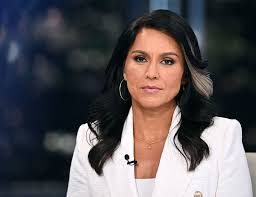
Gabbard had the audacity to speak truth against America’s unhinged proxy war against Russia in 2022 that has failed spectacularly while destroying Ukraine as a viable country. She was spot on in declaring US weaponizing its Ukraine proxies against Russia jeopardizes global security. “This war and suffering could have easily been avoided if the Biden Administration and NATO had simply acknowledged Russia’s legitimate security concerns over NATO membership for Ukraine on Russia’s border.”
Walt Zlotow, West Suburban Peace Coalition, Glen Ellyn IL, 8 Dec 24
The US national security state, more appropriately referred to as the US war party, is aghast Trump picked Tulsi Gabbard to be Director of National Intelligence.

John Bolton, correctly nicknamed ‘Bonkers’ over his love of endless, failed US military interventions charged, “Gabbard, like Trump’s failed Attorney General pick Matt Gaetz, is like a hand grenade ready to explode. Republicans who throw themselves on those grenades for Donald Trump are risking their own personal reputations and places in history. Bolton appears oblivious his reputation and place in history rests in the warmonger wing of the American Story.
My Illinois Senator Tammy Duckworth warned “I think she’s compromised. The U.S. intelligence community has identified her as having troubling relationships with America’s foes.” Ironically, it’s Duckworth, who exploited her service in America’s criminal Iraq war to gain political power supporting more senseless US wars, who is compromised.
Even progressive hero Elizabeth Warren foolishly bellowed “Do you really want her to have all of the secrets of the United States and our defense intelligence agencies when she has so clearly been in Putin’s pocket.” Warren clearly is in the pocket of US weapons merchants, super hawk congresspersons and their media enablers.
What infuriates these unbridled proponents of US unipolar dominance about Gabbard, a former congressperson, Iraq war vet and current Lt. Col. in the US Army reserve?
Gabbard had the audacity to speak truth against America’s unhinged proxy war against Russia in 2022 that has failed spectacularly while destroying Ukraine as a viable country. She was spot on in declaring US weaponizing its Ukraine proxies against Russia jeopardizes global security. “This war and suffering could have easily been avoided if the Biden Administration and NATO had simply acknowledged Russia’s legitimate security concerns over NATO membership for Ukraine on Russia’s border.”
Gabbard compounds this inconvenient truth by speaking with rulers of America’s imaginary enemies like Syrian President Bashar Assad. America’s refusal to speak with its long list of enemies is a reckless policy that can easily stumble America into further warfare, even nuclear.
Bravo to Gabbard for pushing back against senseless US foreign misadventures that threaten American security, indeed, all peoplekind.
American intelligence has been exploited by our clueless leaders since the end of WWII to destabilize, overthrow dozens of countries worldwide. It seeks new enemies to expand its power and influence promoting US unipolar dominance. Gabbard threatens that terrible sinecure.
The Senate should confirm Tulsi Gabbard as Director of National Intelligence to make sensible intelligence Job One in the intelligence community.
Trump’s Pro-Israel Dream Team: Patel Nomination Caps Hawkish Cabinet
December 8, 2024, By Kit Klarenberg / MintPressNews
On November 30, Donald Trump nominated Kash Patel to serve as FBI director. A staunch MAGA activist and loyalist with significant standing in Trump’s orbit, Patel aligns closely with the president-elect on both domestic and foreign policy matters. Indeed, he appears to struggle to pinpoint areas of disagreement with Trump’s agenda.
Patel has consistently advocated for a hardline approach to China and is an unabashed supporter of Israeli interests, often prioritizing them over U.S. considerations. On October 7, marking the first anniversary of the Hamas attack, Patel delivered a fiery interview on Fox News. During the segment, he vowed that the incoming Trump administration would intensify its crackdown on anti-Israeli elements.
We should be side by side [with Israel]…When we are back in power with President Trump…we will shut off the machinery that feeds money into Iran…We need America to wake up and prioritize Israel, and that is not what Kamala Harris is about, we need to bring home Americans and end this war, bring home Israelis, and stand by our number one ally in Israel, and people need to wake up on November 5.”
A relative political outsider who has never occupied high office, the media has been awash with profiles of Patel and fevered speculation about what his management of the Bureau could mean in practice ever since. In the process, he has been subject to a level of mainstream scrutiny and criticism that was entirely lacking over recent weeks, as Trump filled his cabinet with a rogue’s gallery of dedicated hawks, hardcore pro-Israeli elements, and characters both unknown and notorious with potential extremist ties and views.
For some, the composition of Trump’s cabinet is a crushing disappointment. On November 9, Trump caused shockwaves when he announced neither Nikki Haley nor Mike Pompeo would be invited to join his administration in any capacity. The news, coupled with comments he made in a late October appearance on Joe Rogan’s popular podcast, perked optimism in some quarters that the President-elect’s longstanding anti-war posturing could produce real-world results in Ukraine, if not elsewhere.
In his discussion with Rogan, Trump professed that “the biggest mistake” of his first term was he “picked a few people that I shouldn’t have picked” – “neocons or bad people or disloyal people,” among them John Bolton. Haley was the U.S. ambassador to the UN under Trump and perhaps the most ardent, outspoken Zionist ever to fill the role. She, Bolton and Pompeo – who personally orchestrated Iranian General Qasem Soleimani’s assassination, among other hostile deeds – were widely regarded as the administration’s leading hawks.
Yet, any slight hope that the pair’s absence from Trump’s new White House might herald an influx of some doves and, in turn, a more peaceful shift from the U.S. government was comprehensively dashed when the President’s transition team nominations began rolling in. Now the cabinet is fully stocked, countless millions around the world have urgent and grave concerns about what the future could hold for them, their families, countries, regions, and more.
In particular, Trump’s prospective government can already claim the mantle of the most fervently pro-Israel in U.S. history. This is despite replacing an administration that has done more than any before to accelerate, encourage, and facilitate Israel’s war on Gaza. The prospect that Tel Aviv’s deadly assaults on Gaza and Lebanon will escalate somehow further is now not only very real but seemingly inevitable. However, as we shall see, there are minor rays of hope among the mass doom and gloom.
‘Promised Land’
New Secretary of State Marco Rubio hardly needs any introduction as one of the most pro-war members of the modern U.S. political class. Since his career kicked off in 2000, he has been consistently among the loudest voices on how America’s officially designated enemy states should be dealt with, be that China, Iran, Venezuela, or otherwise. Threats of sanctions, coups, and military intervention are almost a daily staple of his political oratory.
A close friend of Benjamin Netanyahu, in 2019, Rubio cosponsored a Senate resolution condemning UN Security Council resolutions designating Jewish settlement expansion in occupied Palestine as a violation of international law. He has referred to Israel’s mass murder in Gaza since October 7, 2023, as legitimate self-defense, claimed Hamas is “100% to blame” for any civilian casualties inflicted by the horrific onslaught, and ominously declared Palestinian resistance must be “eradicated,” as Tel Aviv cannot coexist “with these savages.”……………………………………………………………………………………….
The pro-Israel credentials of Senator Marco Rubio and Representative Michael Waltz are unquestionable. Yet their fervor for supporting Israel’s controversial policies pales in comparison to some of President-elect Donald Trump’s other nominees. Take Mike Huckabee, the ultraconservative former Arkansas governor and twice-failed presidential candidate, now tapped to serve as U.S. ambassador to Israel. Huckabee, an ordained Southern Baptist pastor, wasted no time declaring his intentions. He vowed to publicly refer to Israel in biblical terms, calling it the “Promised Land,” and proclaimed that Jews hold a “rightful deed” to Palestinian territory………………………
Hegseth, a contender for Defense Secretary, has made his allegiances to Israel unmistakably clear. He has described Israel’s settler population as “God’s chosen people.” He has openly advocated for transforming Jerusalem’s al-Aqsa Mosque into a Jewish-only recreation of the historic Temple Mount, framing such an act as a “miracle.” At a 2018 National Council of Young Israel gala in New York City, Hegseth left no room for ambiguity:
Zionism and Americanism are the front lines of Western civilization and freedom in our world today.”………………………………………………………………………………………. more https://www.mintpressnews.com/trumps-pro-israel-dream-team-patel-nomination-caps-hawkish-cabinet/288783/
The First Seven Billionaires Trump Has Tapped for Top Jobs
Out of America’s 800 billionaires, president-elect Trump has so far plucked seven for top spots in his administration.
by Sarah Anderson, December 03, 2024, https://inequality.org/great-divide/billionaires-trump-has-tapped-for-top-jobs/
President-elect Donald Trump has selected an unprecedented total of seven reported billionaires for senior positions in his administration. Including himself, that makes eight.
This figure could continue to grow as Trump fully staffs up. After all, he has nearly 800 additional U.S. billionaires to choose from.
Here’s a quick rundown of the “original seven” members of the nine-figure club on Trump’s employee wish list:
Elon Musk
Position: Co-leader of a new Department of Government Efficiency, a presidential advisory commission tasked with slashing spending and regulations
Estimated net worth: $330 billion
Source of wealth: SpaceX, Tesla, and other businesses
2024 campaign donations: $200 million
Warren Stephens
Position: Ambassador to the UK
Estimated net worth: $3.4 billion
Source of wealth: CEO of private Arkansas-based investment bank Stephens Inc.
2024 campaign donations: $22.7 million (includes $2 million-plus for Nikki Haley’s failed bid for the Republican presidential nomination)
Linda McMahon
tion: Education Secretary
Estimated net worth: $2.5 billion (with her husband, Vince McMahon)
Source of wealth: World Wrestling Entertainment (WWE)
2024 campaign donations: $24 million
Howard Lutnick
Position: Commerce Secretary
Estimated net worth: $2 billion
Source of wealth: majority ownership of investment bank Cantor Fitzgerald
2024 campaign donations: $13.1 million in PAC donations and also hosted a $15 million fundraising event at his home in the Hamptons
Vivek Ramaswamy
Position: Co-leader of the planned Department of Government Efficiency
Estimated net worth: $1.1 billion
Source of wealth: founder of pharmaceutical firm Roivant Sciences
2024 campaign donations: $25,000 (He’d just blown $30.7 million of his own funds on his failed presidential bid.
Doug Burgum
Position: Secretary of the Interior
Estimated net worth: undisclosed. Several media have identified him as a billionaire, while Forbes analysts say he’s worth “at least” $100 million and likely much more if you consider trusts for his adult children
Source of wealth: sold Great Plains Software, which creates accounting packages for small and medium-size businesses, for $1.1 billion in Microsoft stock in 2001
2024 campaign donations: $8,000 (He’d spent $13.9 million of his own funds on his failed presidential bid. This includes the cost of giving $20 gift cards to more than 40,000 donors who gave his campaign at least $1. That expensive but crafty maneuver succeeded in drumming up enough donors to qualify for participation in the presidential debate)
Scott Bessent
Position: Treasury Secretary
Estimated net worth: undisclosed
Source of wealth: Wall Street investments, including as founder of hedge fund Key Square Group
2024 campaign donations: $3.2 million
Donald Trump’s quick trip to absolute dictatorship

November 27, 2024: The AIM Network. Noel Wauchope, https://theaimn.com/donald-trumps-quick-trip-to-absolute-dictatorship/
Comparisons are odious, particularly between Donald Trump and Adolf Hitler. I must be plain from the start, that these individuals have had completely different aims and ideology.
The comparisons I’m making here are just about methods of gaining absolute power. And here, I think, there are parallels. And we can learn, from Hitler, how Trump could well go about attaining dictatorship status – way faster than people realise.
Trump and Hitler do have this in common – a reckless ruthlessness about destroying institutions and crossing boundaries. And both had earlier associations with street violence – Hitler with his Brown Shirts, and the Beer Hall Putsch, and Trump, less obviously, with the Proud Boys and the Capitol attack on January 6th 2021.
Hitler became dictator by very quickly using legitimate political mechanisms, and Trump will be able to do the same.
Hitler, moving towards purging his movement of the Brown Shirts, gained much public support, and business interests saw him as a force to stop street violence, and a protector and support of property and business. Meanwhile, largely thanks to the genius of Joseph Goebbels, Hitler’s propaganda machine flourished, exploiting the latest technology, – radio, and aircraft – “Hitler over Germany”. By 1933 the German economy was recovering, and Hitler’s success in elections did in fact drop, but his National Socialist Party still held a third of the seats in the Reichstag.
Here’s where it got interesting, and it all took just 7 and a half weeks.
30 January 1933 – Hitler was appointed Chancellor. The role of the Chancellor, while being symbolically like the role of the British Prime Minister, was in fact, quite limited. The real power was in the President. President von Hindenburg, bowing to pressure, was persuaded that Hitler could indeed be controlled, by giving him the status of Chancellor.
-Advertisement-
27 February 1933 – the German parliament (Reichstag) building burned down. Without going into the discussion on who caused the fire – it was the trigger for Hitler to persuade von Hindenburg to issue the Reichstag Fire Decree – Emergency Decree for the Protection of the German People, on 28 February, declaring a state of emergency, and abolishing most civil liberties, including the rights to speak, assemble, protest, and due process.
23 March 1933, Hitler proposed the Enabling Law to the Reichstag. This new law, passed on 24 March, gave Chancellor Hitler the power to rule by decree rather than passing laws through the Reichstag and the President. He was now effectively the dictator.
We could go on from there – listing Hitler’s dictatorial actions – National Socialists the only party permitted, trade unions disbanded. Any autonomous states lost those powers – officials appointed as state governors – and much, much more.
July 1934 – Hitler becomes “Fuehrer” – the finishing touch. With the death of President von Hindenburg, Hitler abolishes the now powerless position of “President”.
What has all this got to do with Trump?
Admittedly, the burning down of the Reichstag was a key factor, and we’re not expecting Capitol Hill to burn down. But the thing is that Hitler was at least a super-opportunist, even if the Nazis did not purposely cause this event. If it hadn’t been this event, probably something else could be triggered for a “state of emergency”. So, it would also be very beneficial to Trump- and save a lot of time, if some suitable “event” were to justify Trump, (also a super-opportunist) to declare emergency powers.
In the meantime, Trump is already working on removing the powers of the Department of Justice, and has various avenues open for him to take quick executive action. The President can issue executive orders. There are checks and balances, but these rely on the Supreme Court, and the Congress. So, Trump, with a majority in Congress has freedom – ‘I have an Article 2 where I have the right to do whatever I want as president’.
Trump’s plan for a radical reorganization of the executive branch starts with ending “the post-Watergate norm of Justice Department independence from White House political control.”
Trump will be very careful about which officials he appoints – due to constitutional “checks and balances”. He’d need to pick a compliant Acting Attorney General. The obstacles to be eliminated include an independent Justice Department, independent leadership in administrative agencies and an independent civil service. Trump’s plan would substitute loyalty to him for loyalty to the Constitution.” In 2020 Trump called for the “termination of … the Constitution.”
In the USA, theoretically, there are constraints on the President’s power. But, as in Germany in the 1930s, the leader has already arranged for the administration and every government department to be run by his sycophants.
Also, as in Hitler’s Germany, Trump has extraordinary influence over media, especially social media. Hitler had the brilliance of Goebbels to swamp the public with his lies and spin. Trump is almost one better – he does it all himself.
So – there are similarities between Hitler and Trump in the way to gain absolute power. There’s the opportunism, the clique of dedicated sycophants, the inspired exploitation of new technology, of new media, the reckless crossing of normal boundaries, and the background of violence, (with the potential for violence again).
The differences between them are striking. Hitler had a coherent almost mystical theory – involving war – to gain world domination for the master “Aryan” race, and to eliminate the Jews and other “Untermenschen”. To a large extent, Hitler’s close associates shared that dream, even if jostling for power between each other– Goebbels, Hess, Himmler, Goering, Speer, von Ribbentrop, Heydrich, Bormann. They more or less held to Hitler’s philosophy, and feared Hitler if they stepped out of line. Quite a few, though not all, stayed with Hitler until the very bitter end.
I can’t see Trump’s associates having that kind of dedication. From his previous presidency, there is a long list of former allies who turned against him.
Donald Trump seems to have no coherent theory or aim – other than to be super-powerful and rich, and take revenge on his opponents. He admires dictators, hates China, doesn’t like war, and fears nuclear bombs. If Trump has any philosophy at all, apart from him being at the top, it would be for a world economy dominated by American business. War is not Trump’s chosen method to win, but building up weaponry, and the threat of war – a sort of global bullying is his favoured method.
Trump’s top associates are currently dedicated to him – but are closely connected to billionaires, and not necessarily sharing philosophies. There’s Elon Musk, obsessed with the control of space, and the colonisation of Mars, John Bauer who devised the case for presidential absolute immunity from prosecution, Stephen Miller determinedly anti-immigrant, Fox News employee Pete Hegseth, Robert F. Kennedy Jr. sceptic of public health, Dave Weldon, anti-abortion doctor. What they do seem to have in common is big egos, and rather questionable qualifications for the jobs that they’ll be getting.
So, unlike Hitler, Trump doesn’t seem to have a team dedicated to a single-minded cause. In the short run, things might look good for the new Republican administration, and even for the American public. Dictatorships can do that, for a bit – as the workers found, in the early years of the Hitler administration, and of the Mussolini one in Italy. But it’s anybody’s guess how the new Trump dictatorship will finally work out.
From Genocide Joe to Omnicide Joe
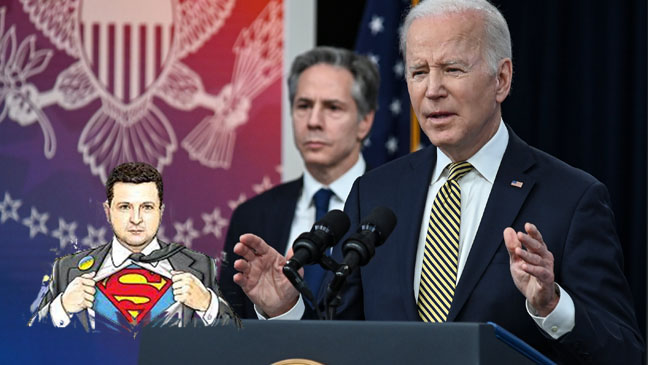
Instead of fulfilling his 2020 campaign promise to adopt a U.S. policy of no-first-use of nuclear weapons, two years ago Biden signed off on the Nuclear Posture Review policy document that explicitly declares the opposite. Last year, under the euphemism of “modernization,” the U.S. government spent $51 billion — more than every other nuclear-armed country combined — updating and sustaining its nuclear arsenal, gaining profligate momentum in a process that’s set to continue for decades to come.
the Biden administration has said it did not want to cross its own red lines—and then has repeatedly proceeded to do so.
Biden’s recent green light for Ukraine to launch longer-range missiles into Russia is another jump toward nuclear warfare.
Norman Solomon 25 Nov 24, https://www.commondreams.org/opinion/genocide-joe
Whether heralded or reviled, Biden’s supposed restraint during the Ukraine war has steadily faded, with more and more dangerous escalation in its place.
President Biden has never wavered from approving huge arms shipments to Israel during more than 13 months of mass murder and deliberate starvation of Palestinian civilians in Gaza. Biden’s crucial role earned him the name “Genocide Joe.”
That nickname might seem shrill, but it’s valid. Although Biden will not be brought to justice for serving as a key accomplice to the horrific crimes against humanity that continue in Gaza, the label sticks—and candid historians will condemn him as a direct enabler of genocide.
Biden could also qualify for another nickname, which according to Google was never published before this article: “Omnicide Joe.”
In contrast to the Genocide Joe sobriquet, which events have already proven apt, Omnicide Joe is a bit anticipatory. That’s inevitable, because if the cascading effects of his foreign policy end up as key factors in nuclear annihilation, historians will not be around to assess his culpability for omnicide—defined as “the destruction of all life or all human life.”
That definition scarcely overstates what scientists tell us would result from an exchange of nuclear weapons. Researchers have discovered that “nuclear winter” would quickly set in across the globe, blotting out sunlight and wiping out agriculture, with a human survival rate of perhaps 1 or 2 percent.
With everything—literally everything—at stake, you might think that averting thermonuclear war between the world’s two nuclear superpowers, Russia and the United States, would be high on a president’s to-do list. But that hardly has been the case with Joe Biden since he first pulled up a chair at the Oval Office desk.
In fact, Biden has done a lot during the first years of this decade to inflame the realistic fears of nuclear war. His immediate predecessor Donald Trump pulled the U.S. out of two vital treaties — Intermediate-Range Nuclear Forces and Open Skies — and Biden did nothing to reinstate them. Likewise, Trump killed the Iran nuclear deal negotiated during the Obama administration, and Biden let it stay dead.
Instead of fulfilling his 2020 campaign promise to adopt a U.S. policy of no-first-use of nuclear weapons, two years ago Biden signed off on the Nuclear Posture Review policy document that explicitly declares the opposite. Last year, under the euphemism of “modernization,” the U.S. government spent $51 billion — more than every other nuclear-armed country combined — updating and sustaining its nuclear arsenal, gaining profligate momentum in a process that’s set to continue for decades to come.
Before and after Russia’s invasion of Ukraine in late February 2022, Biden showed a distinct lack of interest in actual diplomacy to prevent the war or to end it. Three days before the invasion, writing in the Financial Times, Jeffrey Sachs pointed out: “Biden has said repeatedly that the U.S. is open to diplomacy with Russia, but on the issue that Moscow has most emphasized—NATO enlargement—there has been no American diplomacy at all. [Russian President Vladimir] Putin has repeatedly demanded that the U.S. forswear NATO’s enlargement into Ukraine, while Biden has repeatedly asserted that membership of the alliance is Ukraine’s choice.”
While Russia’s invasion and horrible war in Ukraine should be condemned, Biden has compounded Putin’s crimes by giving much higher priority to Washington’s cold-war mania than to negotiation for peace—or to mitigation of escalating risks of nuclear war.
From the outset, Biden scarcely acknowledged that the survival of humanity was put at higher risk by the Ukraine war. In his first State of the Union speech, a week after the invasion, Biden devoted much of his oratory to the Ukraine conflict without saying a word about the heightened danger that it might trigger the use of nuclear weapons.
During the next three months, the White House posted more than 60 presidential statements, documents and communiques about the war in Ukraine. They all shared with his State of the Union address a stunning characteristic — the complete absence of any mention of nuclear weapons or nuclear war dangers—even though many experts gauged those dangers as being the worst they’d been since the 1962 Cuban Missile Crisis.
With occasional muted references to not wanting a U.S. military clash with nuclear-armed Russia, during the last 33 months the Biden administration has said it did not want to cross its own red lines—and then has repeatedly proceeded to do so.
A week ago superhawk John Bolton, a former national security advisor to President Trump, summarized the process on CNN while bemoaning that Biden’s reckless escalation hasn’t been even more reckless: “It’s been one long public debate after another, going back to ‘Shall we supply ATACMS [ballistic missiles] to the Ukrainians at all?’ First it’s no, then there’s a debate, then there’s yes. ‘Should we supply the Ukrainians Abrams tanks?’ First it’s no, then there’s a long debate, then it’s yes. ‘Should we supply the Ukrainians with F-16s?’ First it’s no, then there’s a long debate, and it’s yes. Now, ‘Can we allow the Ukrainians to use ATACMS inside Russia?’ After a long debate, now it’s yes.”
Whether heralded or reviled, Biden’s supposed restraint during the Ukraine war has steadily faded, with more and more dangerous escalation in its place.
Biden’s recent green light for Ukraine to launch longer-range missiles into Russia is another jump toward nuclear warfare. As a Quincy Institute analyst wrote, “the stakes, and escalatory risks, have steadily crept up.” In an ominous direction, “this needlessly escalatory step has put Russia and NATO one step closer to a direct confrontation—the window to avert catastrophic miscalculation is now that much narrower.”
Like Biden and Secretary of State Antony Blinken as well as the Democratic and Republican phalanx of Ukraine war cheerleaders on Capitol Hill, Bolton doesn’t mention that recent polling shows strong support among Ukrainian people for negotiations to put a stop to the war. “An average of 52 percent of Ukrainians would like to see their country negotiate an end to the war as soon as possible,” Gallup reported last week, compared to only 38 percent who say “their country should keep fighting until victory.”
Biden and other war boosters have continued to scorn, as capitulation and accommodation to aggression, what so much of the Ukrainian population now says it wants—a negotiated settlement. Instead, top administration officials and laptop-warrior pundits in the press corps are eager to tout their own mettle by insisting that Ukrainians and Russians must keep killing and dying.
Elites in Washington continue to posture as courageous defenders of freedom with military escalation in Ukraine, where hundreds of thousands have already died. Meanwhile, dangers of nuclear war increase.
Last week, Putin “lowered the threshold for a nuclear strike in response to a broader range of conventional attacks,” Reuters reported, “and Moscow said Ukraine had struck deep inside Russia with U.S.-made ATACMS missiles…. Russia had been warning the West for months that if Washington allowed Ukraine to fire U.S., British and French missiles deep into Russia, Moscow would consider those NATO members to be directly involved in the war in Ukraine.”
For President Biden, the verdict of Genocide Joe is already in. But if, despite pleas for sanity, he turns out to fully deserve the name Omnicide Joe, none of us will be around to read about it.
As America barrels toward war with Russia….Where’s Biden?

Walt Zlotow, West Suburban Peace Coalition, Glen Ellyn IL 27 Nov 24.
Ukraine is now firing US ATACMS long range missiles into Russia. They’re also firing long range UK Storm Shadow missiles into Russia. Ukrainians push the bottoms but US and UK military do the programming and technical support, without which no buttons can be pushed.
That puts Russia at de facto war with the US and UK, NATO as well for that matter.
Russia made that point by unleashing a new hypersonic nuclear capable long range missile, Oreshnik, which obliterated a strategic Ukrainian military target. The point was that the Oreshnik, which can destroy any target with unstoppable speed, can pulverize high value NATO targets thruout Europe. Compared to Oreshnik, US ATACMAS and UK Strom Shadows are like bottle rockets. Their sole military use appears to be provoking all out war.
In spite of the Russian warning, France’s Foreign Minister Jean –Noel Barrot just announced France will allow its SCALPS version to the UK Strom Shadows bottle rocket to be fired by Ukraine into Russia.
This is beginning to resemble the colossal, senseless escalations of European powers that stumbled the world into WWI. That war ignited due to incredible denial and lack of serious thought by leaders of all initial belligerents. There was virtually no diplomacy to turn back the rush to senseless world war that killed over 16 million.
The same senseless escalations with no prospect to prevent all out war are being conducted by a mentally diminished President Biden in his last 60 days. He’s virtually disappeared from public view. Biden never once engaged his Russian counterpart since he provoked the Russian invasion of Ukraine 34 months ago. Nor are any in his war cabinet.
The absence of communication and diplomacy, alongside attacking Russian targets using Ukraine proxies, poses a perilous descent into nuclear war.
Sixty-two years ago Cold Warrior John Kennedy learned a tough lesson from the Cuban Missile Crisis. Lack of communication and understanding of the Soviet Union’s security needs was a prescription for nuclear war. JFK understood that Russian missiles in Cuba were response in part to US missiles near Russia in Turkey. He wisely removed them in the negotiated settlement to withdraw from the brink. He established a Hotline to prevent future misunderstandings that could blow up peoplekind.
Joe Biden ether never learned that lesson in his youth, or worse, has forgotten it from diminished capacity.
In 55 days, Biden, if he hasn’t blown up the world, will turn over the war to his successor nearly as old and quite likely mentally diminished as well. At the rate a befuddled Biden desperately seeking to avoid a well-earned defeat in Ukraine is escalating, we’re going to need more luck than a wise, clearheaded JFK had in 62’ to survive this 21st century version of the Cuban Missile Crisis.
Project 2025 calls for massive changes to Hanford nuclear cleanup

Project 2025 calls on the EPA to be an ally of DOE against the state, instead of being an independent regulator.
the bulk of Project 2025 was written by former Trump officials and allies.
Project 2025 sees reclassifying high-level wastes into low-activity wastes
The Heritage Foundation’s blueprint proposes reclassifying radioactive waste as something less dangerous so it can be disposed of more cheaply.
John Stang, November 20, 2024,
https://www.cascadepbs.org/politics/2024/11/project-2025-calls-massive-changes-hanford-nuclear-cleanup
ill the next presidential administration tinker with the Hanford nuclear reservation’s complicated cleanup of radioactive wastes?
Project 2025, the Heritage Foundation’s conservative blueprint for the future, offers some strong hints that cleanup plans for the nation’s most polluted nuclear site might change with or without the approval of the Washington Department of Ecology.
One Project 2025 idea recommends reclassifying highly radioactive wastes into something less dangerous so cheaper methods can be used to dispose of them. Another proposal is to speed up the cleanup by rerouting money to Hanford from a couple of huge Biden-era appropriations for jobs and infrastructure programs elsewhere. The third Hanford-related idea in Project 2025 posits that the state of Washington and the legally negotiated cleanup deadlines and standards are obstacles to completing the cleanup faster.
Gov. Jay Inslee’s office, the Washington Attorney General’s Office and the state Ecology Department all declined to comment on Project 2025’s plans for Hanford. However, Attorney General and Gov.-elect Bob Ferguson and Attorney General-elect Nick Brown recently held a press conference to announce the AG’s office and have spent months reviewing Project 2025 in preparation for possible litigation with the Trump administration. Ferguson and Brown said the ball is in the Trump administration’s court on whether it will provoke legal battles with Washington.
As attorney general, Ferguson — frequently with other attorneys general — filed several dozen lawsuits against the first Trump administration, losing only two or three. “No one has a record like that except Perry Mason,” Inslee said at a Nov. 6 press conference.
Arguably the most radioactively and chemically contaminated spot in the Western Hemisphere, the Hanford nuclear reservation’s cleanup is governed by a 35-year-old legal agreement called the Tri-Party Agreement. The state of Washington and the U.S. Environmental Protection Agency have repeatedly used this contract to force a sometimes foot-dragging U.S. Department of Energy to meet its legal standards and schedule to clean up the highly radioactive site.
But Project 2025 says the Washington government poses significant legal and political obstacles to cleaning up Hanford.
“Some states (and contractors) see [nuclear cleanup] as a jobs program and have little interest in accelerating the cleanup. [DOE’s nuclear cleanup program] needs to move to an expeditious program with targets for cleanup of sites. The Hanford site in Washington state is a particular challenge. The Tri-Party Agreement among DOE, the Environmental Protection Agency, and Washington State’s Department of Ecology has hampered attempts to accelerate and innovate the cleanup,” the 900-page Project 2025 document says. Nuclear cleanup is addressed on pages 394-396.
Project 2025 continues: “Hanford poses significant political and legal challenges with the State of Washington, and DOE will have to work with Congress to make progress in accelerating cleanup at that site. DOE and EPA need to work more closely to coordinate their responses to claims made under the TPA and work more aggressively for changes, including congressional action if necessary, to achieve workable cleanup goals.”
In other words, Project 2025 calls on the EPA to be an ally of DOE against the state, instead of being an independent regulator.
In reality, Washington has been the greatest force to push the federal government to stick to its legal schedules and meet agreed-upon cleanup standards. Hanford has had problems over the past three decades with keeping to the schedules and getting its engineering up to snuff to prevent future breakdowns.
The Project 2025 document does not elaborate on why it believes Washington’s Ecology Department is a hindrance. Washington’s congressional delegation has strongly supported the state and the Tri-Party Agreement on Hanford cleanup issues.
Project 2025 is a detailed master plan put together by the conservative think tank Heritage Foundation on how the Trump administration should govern. Much of it is highly controversial, focused on issues like immigration and crime. Presidential campaigner Donald Trump claimed he was unfamiliar with it. However, the bulk of Project 2025 was written by former Trump officials and allies.
Vice President-elect JD Vance wrote the foreword for another book authored by Project 2025’s leader Kevin Roberts, titled “Dawn’s Early Light.” The New York Times wrote that Vance’s foreword said the Heritage Foundation has been “the most influential engine of ideas for Republicans from Ronald Reagan to Donald Trump.” Roberts wrote the foreword to the Project 2025 document. The New York Times recently wrote that Roberts plans to meet soon with Trump.
On Saturday, Trump named Chris Wright, CEO of Denver-based fracking company Liberty Energy, as his Secretary of Energy nominee. Wright is a major opponent of fighting climate change. For his first term, Trump’s selection for Energy was Rick Perry, who had called for abolishing the DOE when he ran for president, and was unaware that he would be in charge of cleaning up radioactive nuclear sites when he became energy secretary. Trump recently selected former New York congressman Lee Zeldin as the EPA’s head administrator. As a congressman, Zeldin boosted cleanup of Long Island Sound and wanted the United States to leave the Paris climate accords. But his environmental resume is thin beyond that.
The U.S. government set up Hanford in 1943 to create plutonium for the nation’s atomic bombs, including those exploded in New Mexico and over Nagasaki in 1945. That development work created many billions of gallons of chemical and radioactive wastes, the worst 56 million gallons of which were pumped into 177 underground tanks. About a third of those tanks leak. At least a million gallons of radioactive liquid has leaked into the ground, seeping into the aquifer 200 feet below and into the Columbia River, roughly seven miles away.
In 1989, the Washington Department of Ecology, DOE and the EPA signed the Tri-Party Agreement to govern Hanford’s cleanup with the state and EPA as the regulators enforcing that contract. The agreement has been modified many times. It originally called for Hanford to begin converting the underground tank wastes into glass in 2009 and finish by 2019. After several delays due to budget and technical problems, glassification is scheduled to begin in August 2025. The glassification project’s budget has grown from $4 billion to $17 billion, and is expected to expand to more than $30 billion. Legally, glassification is supposed to be finished by 2052, although future negotiations may push that back.
While the tank wastes are Hanford’s biggest program, the site has numerous other contamination problems. The entire 584-square-mile site is supposed to be cleaned up by 2091.
In 2020, DOE, the EPA and the state began four years of secret negotiations to revise the Tri-Party Agreement. Last April, the three parties unveiled tentative revisions. The three now are reviewing public comments on those proposed revisions before taking the changes to a federal judge for approval.
Those changes would not set a new completion date for glassifying the tank wastes, which is likely to be part of another negotiation. Right now, DOE expects glassification to be done by 2069, which is 17 years beyond the current legal deadline, according to a 2021 report by the Government Accountability Office.
Project 2025 calls for finishing all of Hanford’s cleanup by 2060. It recommends a massive study and remapping of the cleanup of Hanford and other nuclear sites across the nation. DOE has done this type of review a few times over the past 30 years, usually when a new presidential administration comes on board.
Hanford’s 56 million gallons of tank wastes consist of highly radioactive wastes and lesser radioactive wastes (dubbed “low-activity wastes”) mixed together in many of the same tanks. Hanford’s high-level wastes amount to 5 million to 6 million gallons. The Tri-Party Agreement calls for two plants to be built for dealing with low-activity wastes and a third to be built for handling high-level wastes. So far, one low-activity waste plant has been built.
That low-activity waste plant is scheduled to begin glassification in August 2025. A plant to separate high-level wastes from low-activity wastes along with the facility to glassify the high-level wastes are expected to be ready in the 2030s. These plans are all part of the current Tri-Party Agreement, with the revisions also calling for a newer approach for handling the radioactive waste: turning it into a cement-like substance called grout.
Grouting is easier and cheaper than glassification, but has not been extensively tested with Hanford’s chemically complex tank wastes. The grout must be shipped off-site, likely to disposal sites in either Utah or Texas. DOE and the state are still figuring out what type of grouting technology to use. Part of this agreed-upon new approach would reclassify any high-level wastes in 22 tanks aimed toward grouting into low-activity wastes.
Project 2025 sees reclassifying high-level wastes into low-activity wastes as a major step toward speeding up cleanup, although it does not address whether DOE should be able to reclassify wastes beyond the 22 tanks.
“A central challenge at Hanford is the classification of radioactive waste. High-Level Waste (HLW) and Low-Level Waste (LLW) classifications drive the remediation and disposal process. Under President Trump, significant changes in waste classification from HLW to LLW enabled significant progress on remediation. Implementation needs to continue across the complex, particularly at Hanford,” the Project 2025 document said.
Still unknown is whether the state — which has been skeptical about widespread use of grout — would go along with grouting high-level wastes beyond those 22 tanks. One indication of the Ecology Department’s reluctance is that the high-level waste glassification plant and the waste separation facility have been kept in the proposed Tri-Party Agreement revisions.
Meanwhile, Project 2025 calls for appropriating more money toward Hanford’s cleanup. However, that money would be taken from projects nationwide covered by 2022’s Inflation Reduction Act and 2021’s Infrastructure Investment and Jobs Act.
The Infrastructure Investment Act provides money for federal highways, transit, research, hazardous materials work, broadband access, clean water projects and improving electric grids.
The Inflation Reduction Act covers greatly reduced insulin costs, a huge number of climate change-related projects including reducing greenhouse emissions, drought-related measures for the western states, boosting subsidies for the Affordable Care Act, supporting vaccine coverage, increasing tax enforcement by the Internal Revenue Service, and paying for new energy projects.
1 This Month
26 September – International Day for the Total Elimination of Nuclear Weapons





PLEASE OPPOSE HR 8255 AND S.3639 – bills would accelerate satellite deployment, with no environmental review or safeguards – https://ncstd5li.quorum.us/campaign/169331/
To see nuclear-related stories in greater depth and intensity – go to https://nuclearinformation.wordpress.com
-
Archives
- September 2026 (313)
- August 2026 (330)
- July 2026 (355)
- June 2026 (287)
- May 2026 (306)
- April 2026 (356)
- March 2026 (251)
- February 2026 (267)
- January 2026 (308)
- December 2025 (358)
- November 2025 (359)
- October 2025 (375)
-
Categories
- 1
- 1 NUCLEAR ISSUES
- business and costs
- climate change
- culture and arts
- ENERGY
- environment
- health
- history
- indigenous issues
- Legal
- marketing of nuclear
- media
- opposition to nuclear
- PERSONAL STORIES
- politics
- politics international
- Religion and ethics
- safety
- secrets,lies and civil liberties
- spinbuster
- technology
- Uranium
- wastes
- weapons and war
- Women
- 2 WORLD
- ACTION
- AFRICA
- Atrocities
- AUSTRALIA
- Christina's notes
- Christina's themes
- culture and arts
- Events
- Fuk 2022
- Fuk 2023
- Fukushima 2017
- Fukushima 2018
- fukushima 2019
- Fukushima 2020
- Fukushima 2021
- general
- global warming
- Humour (God we need it)
- Nuclear
- RARE EARTHS
- Reference
- resources – print
- Resources -audiovicual
- Weekly Newsletter
- World
- World Nuclear
- YouTube
-
RSS
Entries RSS
Comments RSS

