New untested nuclear reactors – a gamble for UK
U.K. Nuclear Future Relies on Reactor Plagued by Delays: Energy Bloomberg, By Tara Patel & Sally Bakewell – Oct 22, 2013 To ensure the future of its nuclear power industry, the U.K. is relying on an unproven reactor design plagued by delays and billions in budget overruns.
The government’s deal yesterday with Electricite de France SA to build a $26 billion plant at Hinkley Point in England involves two European Pressurized Reactors. The first EPR project in Finland, led by Areva SA (AREVA), the French company that designed the technology, is seven years behind schedule and won’t be completed until 2016. The second, an EDF project at Flamanville in northwest France, will cost more than twice as much as expected…..
History suggests the plan for the U.K., which needs to replace aging reactors built in the 1970s, isn’t ironclad, said Roland Vetter, head of research at CF Partners (UK) LLP, which runs a fund that invests in utilities.
“Nuclear is the biggest gamble in power generation,” said Ingo Becker, an analyst at Kepler Cheuvreux in Frankfurt. “At 16 billion pounds ($26 billion) for two EPRs, they have probably taken into account possible cost overruns.”….
The U.K. project, expected to take 10 years, will be more expensive because soft local soil means it needs deeper foundations, requiring 30 percent more concrete, EDF said in a presentation yesterday. The Paris-based company also has to build an atomic waste facility and 3.8-kilometer (2.2-mile) pipes to carry seawater to cool the reactors….
The EPR was criticized in France for being too big and costly after an Areva-led group lost a $20 billion atomic contract from Abu Dhabi in 2009.
“The credibility of both the EPR and the ability of the French nuclear industry to successfully build new reactors has been seriously undermined by difficulties” at Finland’s Olkiluoto site and Flamanville, according to a report ordered by former President Nicolas Sarkozy and published in 2010. It found the plant’s complexity was “a handicap.”….http://www.bloomberg.com/news/2013-10-21/u-k-nuclear-future-relies-on-reactor-plagued-by-delays-energy.html
Financial reality makes UK’s new nuclear not look too good
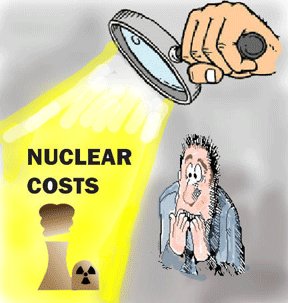 The government has also already committed itself to providing financial guarantees of £10bn to cover the building of Hinkley Point, something not available to builders of solar or wind arrays.
Even Nick Butler, a former energy adviser to No 10 and a supporter of nuclear, believes the price is far too high. In a recent blog he warned: “Lower sources of power are available and have been rejected. When deals do not match the interests of both sides – producers and consumers – at a point of mutual advantage, they tend to unravel.”
 China’s need for nuclear power leads Britain to revive outdated technology , Terry Macalister, The Guardian, Sunday 20 October 2013 Critics say the new plant in Somerset will be heavily subsidised and cushioned from financial reality.
- The signing of a nuclear deal between EDF and the government is a landmark event for power generation. Today’s go-ahead for the Hinkley Point C plant shows ministers are prepared to commit Britain to provide decades of guaranteed financial returns (paid for by you and me as energy users) to companies in return for winning huge slugs of investment for new power stations…..
- Ministers insist that the commitment to provide Hinkley Point with a guaranteed price of around double the market rate is not a subsidy. The final figure of £92.50 is a considerable step up from the £80 per MWhr said to be on the table when negotiations began in earnest, and that figure is said by some calculations to be worth around £80bn in guaranteed revenues, the cost of nine Olympics.
- Critics will accuse the government of providing subsidies to an old technology that should not need handouts, while pointing out the safety dangers and the unsolved waste disposal problems raised by new nuclear. Questions will also be asked about the wisdom of providing a country alleged to be involved in cyber-spying, access to sensitive energy infrastructure via the involvement of a state-owned firm…….. Continue reading
Britain has smarter, less costly energy options, than its new nuclear deal
COLUMN-British nuclear embrace fails to convince: Wynn By Gerard Wynn Oct 21 (Reuters) – Britain’s investment in new nuclear power is a result of a previous decision to limit the country’s options, and depends on an argument for energy security that fails to convince.
Britain has ruled out new coal power and adopted tough carbon emissions targets as well as a carbon tax on energy, given concerns about climate change.
In addition, European Union pollution curbs on sulphur and oxides of nitrogen require the imminent closure of several of the country’s existing coal-fired power plants.
That has created a dependence on gas and low-carbon power.
Britain’s Department of Energy and Climate Change (DECC) on Monday outlined the details of a commercial agreement with French state utility EDF to build the UK’s first new nuclear power plant since 1995, to be commissioned in 2023.
The agreed contract of about 90 pounds ($150) per megawatt-hour should not be compared with the wholesale power price, which records only operating costs including those from subsidised wind and solar power, which have zero fuel costs.
It should instead be compared with the calculated, full cost of power generation, including capital and operating costs.
In those terms, the contract appears competitive with renewable power but is more costly than gas.
Nuclear has the advantage over gas that it is less carbon-emitting, and over wind and solar power that it is baseload, available on demand rather than according to the weather.
But that is before taking into account the cost of radioactive waste, for which Britain still has not identified a long-term disposal site after a tentative agreement with a local council in northwest England recently collapsed.
And the government does not appear to account for the alternative of building sub-sea interconnectors, with which Britain could instead tap lower wholesale power prices in Germany and Scandinavia…….
COST
Monday’s announcement was thin on important details, such as the rate at which the operator will be compensated when its electricity is not required, for example when demand is weak…….
“The UK’s ‘energy island’ strategy for security of supply is not practical in light of excess power capacity across the EU,” argued the UK-based corporate advisory firm Alexa Capital in a report published on Monday, “UK energy in perspective: is there a better way forward?”.
“We ask whether British business and consumers would not be better off contracting for a greater proportion of electricity from interconnection.”
The cost of building an interconnector would add only a few euros per MWh to the cost of importing electricity.
The full cost of buying electricity from German gas plants would probably therefore be cheaper than the new nuclear deal, without the worries of radioactive waste disposal.
It may have been better for Britain to invest in new subsea cables and pick up the phone to E.ON and RWE , not EDF. ($1 = 0.6178 British pounds) ($1 = 0.7302 euros) (Editing by Dale Hudson) http://in.reuters.com/article/2013/10/21/column-wynn-nuclear-britain-idINL5N0IB0TV20131021

Many a slip likely in the China-France nuclear project in Britain
China’s need for nuclear power leads Britain to revive outdated technology , Terry Macalister, The Guardian, Sunday 20 October 2013“…..while EDF has now convinced government of the need to provide these different support mechanisms, the hard work begins for the French and its Chinese partner. The nuclear industry has a terrible reputation for completing new plants years late and over budget. Areva, the French nuclear engineering company providing the EPR design for Hinkley, is involved in similar plants at Flamanville in France and Olkiluoto in Finland. Both are proving more difficult than expected: the Finnish reactors are expected to be at least seven years late and at least £1.4bn over budget; Flamanville is two years late and believed to be as much as £2bn over budget.
And there is good reason to believe that British companies are going to miss out in Somerset. Centrica has already given up its opportunity to participate as an owner, while EDF has indicated the UK may not have the high-tech engineering skills to compete for supply contracts……
Western nuclear experts claim Beijing has a lot to prove that its own regulation is up to standard, and there will be intense pressure on the UK’s Office for Nuclear Regulation not to dilute standards to help Chinese firms operate their own plants here. There is already an inquiry going on into whether too many concessions have been made by George Osborne into a separate deal under which Chinese banks can operate more freely in London.
China General Nuclear Power Group is one of the biggest companies you have never heard of. In fact, it took a new name only six months ago. The change reflected its ambitions to establish itself on a world stage, outside its home base of Guangdong province. Involvement in Hinkley Point is a key part of the globalisation strategy…….http://www.theguardian.com/environment/2013/oct/21/china-nuclear-power-britain-outdated-technology
China will control UK’s new nuclear power plants
 Chinese companies will be allowed to own a majority stake in UK nuclear powerplants, George Osborne says Announcement is expected to hail start of ‘massive wave’ of Asian investment in British nuclear energy sector, ADAM WITHNALL The Independent, 17 OCTOBER 2013 George Osborne has announced that Chinese companies will be permitted to own a majority stake in future projects to build nuclear power stations in Britain.
The ground-breaking decision could see the first deal struck as early as next week, with Chinese investment now considered for a new £14 billion plant at the Hinckley C site….. http://www.independent.co.uk/news/uk/home-news/chinese-companies-will-be-allowed-to-own-a-majority-stake-in-uk-nuclear-power-plants-george-osborne-says-8885829.html
South African govt influenced by coal industry to hold back renewable energy
 SA renewable energy held up by politics, says Greenpeace News 24 Duncan Alfreds, 17 Oct 13 Duncan Alfreds Cape Town – Renewable energy has proven itself and the government should move ahead swiftly with implementation, an environmental organisation has urged.
“It has been proven that there are no technical or economic barriers to renewable energy, leaving only the lack of political will as a barrier to RE,” Ruth Mhlanga, Greenpeace Africa Youth and solutions campaigner told News24.
She accused the government of being influenced by incumbent industry players to ensure that the status quo of energy supply networks remained unchanged.
“Vested interests in the fossil fuel industry with strong political ties use this influence to promote investments in fossil fuels rather than renewable energy,” said Mhlanga.
Recently, Trade and Industry Minister Rob Davies announced plans for a third massive coal-fired power station dubbed “Coal 3” though the Medupi and Kusile projects have been hampered by delays and allegations of poor workmanship……
“In fact, the huge problems at both Medupi and Kusile clearly show that new investments in coal are likely to sabotage the South African economy, and renewable energy can come online and feed into the electricity grid far more quickly and more cheaply than coal can,” Mhlanga said.
It does appear that the Cabinet is not fully united behind the idea of a third coal-fired power plant.
Beeld reported that Science and Technology Minister Derek Hanekom said government would have to rethink its plans for a third mega coal-fired power station…….
Coal power also impacts negatively on the environment and Greenpeace said that South Africans ought to consider the true cost of fossil fuel electricity generation.
“Delays and poor delivery are just the tip of the iceberg when it comes to coal. There are also major hidden costs related to water scarcity, human health impacts and climate change – amounting to billions of rands every year, and it is ordinary South Africans who have to pay the price,” said Melita Steele, Greenpeace Africa Climate and Energy campaigner. http://www.news24.com/Green/News/SA-renewable-energy-held-up-by-politics-says-Greenpeace-20131017
Ontario decides against new nuclear reactors
Ontario backs away from plans to buy new nuclear reactors ADAM RADWANSKI The Globe and Mail, Oct. 10 2013, Ontario’s government will shelve plans for a major new investment in nuclear power, according to industry and government sources.
Kathleen Wynne’s Liberals have decided against spending upwards of $10-billion to buy two new nuclear reactors as had been planned when Dalton McGuinty was premier, and will commit only to refurbishing existing ones, the sources told The Globe and Mail. The decision appears to be the latest blow to the nuclear  industry, which is already facing a decline in international demand, safety concerns after 2011’s earthquake-induced meltdown at Japan’s Fukushima plant, and the emergence of comparatively cheap natural gas. As the most nuclear-reliant province in Canada and the only one with plans to acquire new reactors, Ontario had been held up as a source of hope for prospective builders, including Candu Energy Inc., the once-mighty division of Atomic Energy of Canada Limited that is now a subsidiary of SNC-Lavalin.
As a result of the change in plans, nuclear power – which accounted for 56 per cent of Ontario’s total energy supply in 2012 – could end up with a somewhat smaller share of the supply mix. At the same time, the decision reflects stagnant demand due largely to the struggles of the province’s manufacturing sector.
Ruling out a nuclear procurement in the foreseeable future, rather than just putting one off as Mr. McGuinty did when a potential deal fell through four years ago, also appears aimed at serving Ms. Wynne’s political goals……..http://www.theglobeandmail.com/news/politics/ontario-backs-away-from-plans-to-buy-new-nuclear-reactors/article14793803/
Nuclear power is “unnecessary, unsafe, and uninsurable, undemocratic.”
“This is a technology that can have 40 good years that can be wiped out in one bad day,”
NRC evacuation plans are “fantasy” documents,”
As to a main nuclear industry claim in this promotion to revive nuclear power — that atomic energy is necessary in “mitigating climate change”–this has been shown to be false.
nuclear power is “unnecessary, unsafe, and uninsurable… undemocratic.”
 Nuclear Power Through the Fukushima Perspective http://www.huffingtonpost.com/karl-grossman/nuclear-power-through-the_b_4069712.html Karl Grossman : 10/09/2013 It started this June in California. Speaking about the problems at the troubled San Onofre nuclear plants through the perspective of the Fukushima nuclear complex catastrophe was a panel of Naoto Kan, prime minister of Japan when the disaster began; Gregory Jaczko, chairman of the U.S. Nuclear Regulatory Commission (NRC) at the time; Peter Bradford, an NRC member when the Three Mile Island accident happened; and nuclear engineer and former nuclear industry executive Arne Gundersen.
This week the same panel of experts on nuclear technology — joined by long-time nuclear opponent Ralph Nader — was on the East Coast, in New York City and Boston, speaking about problems at the problem-riddled Indian Point nuclear plants near New York and the troubled Pilgrim plant near Boston, through the perspective on the Fukushima catastrophe.
Their presentations were powerful. Continue reading
Niger aiming to get more taxes from Areva’s uranium mning
Niger’s Hedges Bets on French Uranium Assets Oil Price.com. By Editorial Dept | Fri, 04 October 2013 Bottom Line: Under constant threat of terrorist attacks in the security nightmare of Niger, French nuclear group Areva will now face an audit of its uranium mines as the Nigerien government seeks a better deal.
Analysis: Areva has two mines in Niger: Somair and Cominak. Together these two facilities produce about one-third of France’s nuclear power. But the 10-year contract for these mines ends this year, and the government of Niger is planning to take advantage of that by auditing the company and determining how it can get a better deal. The plan will be to increase tax revenues from Areva and to force it into more significant investments in infrastructure. Areva was operating at a loss last year, but is eyeing over 1.1 billion euros in operating profits for this year—and Niger is hoping to get a bigger chunk of this through taxes and infrastructure deals. The government of Niger already owns a 36.4% stake in Somair and a 31% stake in Cominak. Areva will now be audited first based on claims from some groups that it is not transparently reporting its revenues and operating costs. A third mine that is under construction—Areva’s Imouraren uranium mine—is also under scrutiny. The government of Niger has warned that the company will face fines if there are any further delays to the opening of this mine, now slated for 2015.
Recommendation: This could all play into the security question due to the level of government corruption in Niger,…(furher reading -subscription only) http://oilprice.com/Alternative-Energy/Nuclear-Power/Nigers-Hedges-Bets-on-French-Uranium-Assets.html
Japan’s Nuclear Regulator not happy with Fukushima Plant’s Operator
 Japanese Nuclear Agency Scolds Fukushima Plant’s Operator NYT, By MARTIN FACKLER October 4, 2013TOKYO — In an unusually public scolding, Japan’s nuclear watchdog agency criticized the operator of the crippled Fukushima nuclear plant on Friday for making mistakes that allowed radioactive water to leak into the Pacific Ocean, and ordered it to quickly fix the problems. The agency, the Nuclear Regulation Authority, summoned the president of the operator, the Tokyo Electric Power Company, to explain the accidents and spills that have plagued the cleanup of the Fukushima Daiichi plant since it suffered a triple meltdown two years ago……
In a public hearing, an official at the regulatory agency, Katsuhiko Ikeda, dressed down Tepco’s president, saying the problems raised serious questions about the company’s ability to operate its other nuclear plants, like the huge Kashiwazaki-Kariwa facility, which Tepco wants to restart……
Critics have faulted the government for leaving the plant in the hands of the same operator that many blame for failing to sufficiently fortify it before the huge earthquake and tsunami that struck in March 2011, knocking out vital reactor cooling systems. http://www.nytimes.com/2013/10/05/world/asia/fukushima-nuclear-plant-in-japan.html?_r=0
Japan’s Environment Minister, and former PM speak out against nuclear power
Former Japanese PM And Current Environment Minister Speak Out Against Nuclear Power
Climate progress, BY ARI PHILLIPS ON OCTOBER 3, 2013 This week both Japan’s environment minister, Nobuteru Ishihara, and former Prime Minister Junichiro Koizumi, a popular national figure, spoke out against nuclear power.
Ishihara said the country’s target to cut greenhouse gas emissions should be based on a scenario with no nuclear power generation…….. in a speech to a pro-nuclear audience of business executives, Koizuma went against the grain by saying that Japan should “should rid itself of its atomic plants and switch to renewable energy sources like solar power.”
Koizuma went on to say that “there is nothing more costly than nuclear power. Japan should achieve zero nuclear plants and aim for a more sustainable society.”
Japan’s last operating nuclear reactor was halted for maintenance in September, leaving the nation without nuclear energy for the first time since July 2012…….http://thinkprogress.org/climate/2013/10/03/2722531/japan-nuclear-power-leaks/
Nuclear power plant approvals delayed by US govt shutdown?
“The shutdown of the government is an indication that it can’t be trusted to have institutional controls over radioactive materials for as long as they remain dangerous,” D’Arrigo said. “It seems incredible to me that the NRC is seriously talking about being able to afford and have institutional controls indefinitely.”
 SHUTDOWN MAY FURTHER DELAY NUCLEAR POWER PLANT APPROVALS By Douglas P. Guarino, 3 Oct 13 Global Security Newswire Nuclear power plant licensing decisions — already delayed by a 2012 court ruling — could be pushed back further by the federal government shutdown, Nuclear Regulatory Commission officials said this week.
 If Congress does not approve funding to run the federal government by Friday, the NRC likely will have to reschedule a series of meetings that kicked off this week on a proposed new “waste confidence” rule that is meant to address the ruling, Keith McConnell, head of the NRC waste confidence directorate, said Tuesday.
Most of the federal government shut down on Oct. 1, the start of fiscal 2014, because Democrats and Republicans in Congress cannot agree on a temporary funding bill. Democrats are rejecting GOP attempts include in the budget a repeal of the health-care reform law Congress approved in 2010.
Last year, a federal appeals court sided with the states of New York, Connecticut, Massachusetts and Vermont, which argued the Nuclear Regulatory Commission wrongly assumed spent reactor fuel eventually would move to a permanent waste repository, even though the Obama administration canceled the Yucca Mountain project in Nevada. Continue reading
Cut subsidies to fossil fuel industries – says International Monetary Fund
 IMF: The Murky Cobweb Of Energy Subsidies http://www.energymatters.com.au/index.php?main_page=news_article&article_id=3961 29 Sept 13 Solar power subsidies are a drop in the bucket compared to the gravy train the fossil fuel sector still rides. The International Monetary Fund has pledged to “shine a light on the murky cobweb of energy subsidies”.
In an address to the UN High-Level Forum on Sustainable Development; IMF Managing Director Christine Lagarde spoke of a triple challenge facing the planet – economic instability, environmental damage and insufficient equity. ”We cannot view these in isolation. Each feeds on and magnifies the other,” she said.
 Ms. Largarde stated energy subsidies, including tax subsidies, came to almost $2 trillion in 2011; “a whopping 2½ percent of global GDP that could have been used more wisely.”
Even US President Barack Obama has recognised enough is enough. Earlier this year, he proposed billions more be invested in renewable energy and the elimination of $4 billion in fossil fuel subsidies in his 2014 budget proposal.
In recent years the International Energy Agency (IEA) has also repeatedly called for a winding back of fossil fuel subsidies, which are at times obscured from public view. “Governments need to stop hiding their handouts to oil, gas and coal and come clean,” says the IEA.
Renewable energy subsidies are the relatively new kid on the block, as is the industry itself – and it’s not unusual for fledgling sectors to require a helping hand. However, the fossil fuel sector has been around for well over a century, has been hugely profitable for much of the time; yet has had its snout firmly planted in the public trough for decades – and still does today.
While renewables such as solar power have still flourished on an uneven playing field; with fossil fuel subsidisation wound back and the support diverted to renewable energy, a cheap yet clean energy future will arrive even faster.
Nuclear industry desperately lobbying for government funding
Faced with this situation, the NEI is on a public relations campaign to convince policy makers that nuclear power should be supported and expanded not because it is cheaper – because it is not – but because it provides for energy diversity, reliability and does not produce greenhouse gases.
As for reducing greenhouse emissions, lawmakers are more likely to support solar and wind power. The NEI’s arguments suggest a level of desperation.

Nuclear power rides an economic roller coaster The Day, By Paul Choinie 09/29/2013 It now appears more likely the nuclear industry is entering a period of steady decline, rather than preparing for a rebirth. Adding to the pricing pressure is lower demand for electricity in the United States, caused by a combination of the sluggish economy and improved conservation. Less demand equals lower prices.
It has not been a good year for the nuclear industry. Four reactors have shut down. Vermont Yankee will become a fifth next year. This will leave the nation with fewer than 100 nuclear plants for the first time in decades. The industry acknowledges that at least two of the closings, Vermont Yankee and Kewaunee in Wisconsin, directly relate to price competition. Continue reading
Even Eskom admits nuclear power is by far South Africa’s most expensive energy option
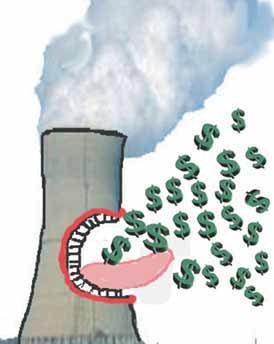 The intended nuclear plan would be “very costly” and if anything went wrong it would have a devastating impact on people and the environment
Doubts over nuclear costs Business Report (South Africa) September 29 2013 By Donwald Pressly. REUTERS The Government is forging ahead with its nuclear build programme to boost the electricity supply although details of its costings are scant, but Eskom’s own figures indicate it will be the most expensive option.
In the wake of an announcement on Thursday by Energy Minister Ben Martins that a detailed costing and the extent of the nuclear programme would be made known before the end of the financial year, a range of organisations have come out against the government’s stance in favour of extending South Africa’s nuclear power footprint beyond Koeberg…….
.While Eskom has not provided recent build programme cost estimates, it did provide comparative figures in its third multiyear price determination application to Nersa of gas, coal, wind, solar and concentrated solar power (CSP). Nuclear ended up being the most expensive by far. Continue reading
1 This Month
23-25 October – on Zoom – World BEYOND War’s annual global conferenc


Shut down the radiation-damaged Heysham nuclear reactors now
To see nuclear-related stories in greater depth and intensity – go to https://nuclearinformation.wordpress.com

Say No to NASA’s Reckless Nuclear Reactor on the Moon
Say No to NASA’s Reckless Nuclear Reactor on the Moon
-
Archives
- October 2026 (180)
- September 2026 (339)
- August 2026 (330)
- July 2026 (355)
- June 2026 (287)
- May 2026 (306)
- April 2026 (356)
- March 2026 (251)
- February 2026 (267)
- January 2026 (308)
- December 2025 (358)
- November 2025 (359)
-
Categories
- 1
- 1 NUCLEAR ISSUES
- business and costs
- climate change
- culture and arts
- ENERGY
- environment
- health
- history
- indigenous issues
- Legal
- marketing of nuclear
- media
- opposition to nuclear
- PERSONAL STORIES
- politics
- politics international
- Religion and ethics
- safety
- secrets,lies and civil liberties
- spinbuster
- technology
- Uranium
- wastes
- weapons and war
- Women
- 2 WORLD
- ACTION
- AFRICA
- Atrocities
- AUSTRALIA
- Christina's notes
- Christina's themes
- culture and arts
- Events
- Fuk 2022
- Fuk 2023
- Fukushima 2017
- Fukushima 2018
- fukushima 2019
- Fukushima 2020
- Fukushima 2021
- general
- global warming
- Humour (God we need it)
- Nuclear
- RARE EARTHS
- Reference
- resources – print
- Resources -audiovicual
- Weekly Newsletter
- World
- World Nuclear
- YouTube
-
RSS
Entries RSS
Comments RSS

