Taiwan nuclear phaseout tipped as result of coming election

 Taiwan election points to nuclear phase-out by 20231, Climate Home, 14/01/2016,
Ing-wen Tsai, who leads the presidential polls, envisions a ‘nuclear-free homeland’ with a bigger role for energy efficiency and renewables. By Megan Darby
Taiwan is facing a phase-out of atomic power, with nuclear sceptic Ing-wen Tsai tipped to win a presidential election on Saturday.
The island state’s three operating nuclear plants are due for retirement by 2023. A fourth, 90% built, was mothballed last year in response to protests from a public spooked by Japan’s Fukushima disaster.
Opinion polls predict a landslide victory for Tsai, with her Democratic Progressive Party (DPP) in with a chance of its first ever parliamentary majority……
Setting out her green energy platform in September, Tsai predicted NT$1 trillion (US$30 billion) of investment in the renewables sector.
“The time is ripe for Taiwan’s green energy development — what we lack is a government determined to see it through,” she said in remarks reported by the China Post…..
Tze-Luen Lin, energy and climate expert at National Taiwan University, expressed confidence the emissions targets were attainable…..http://www.climatechangenews.com/2016/01/14/taiwan-election-points-to-nuclear-free-future/
Propaganda war between the two Koreas

 Koreas Ramp Up Psychological Warfare After Nuclear Test VOA News, Brian Padden January 14, 2016 SEOUL—North Korea’s fourth nuclear test earlier this month ended a short period of inter-Korean cooperation and restarted the Cold War standoff between Seoul and Pyongyang.
While avoiding direct military confrontation that could easily escalate into a hot war, both North and South have resumed psychological war games and tactical maneuvers to demonstrate military readiness and resolve.
On Wednesday a suspected North Korean drone was sighted crossing the inter-Korean demilitarized zone. South Korean forces responded by firing about 20 machine gun rounds at the unidentified flying object but apparently did not hit it.
“Our military fired warning shots after broadcasting a warning. Then it returned to the northern side of the border right away,” said Jeon Ha-gyu, the head of public affairs for the Joint Chiefs of Staff of South Korea’s armed forces.
North Korean propaganda
There have also been reports this week of pro-North Korean leaflets scattered throughout Seoul and its suburban areas. South Korea’s military suspects the propaganda leaflets were sent from the North by hot air balloons.
“North Korea was seen scattering leaflets from the northern area yesterday afternoon and early this morning,” Jeon said Wednesday. …….
Defense officials from China and South Korea are scheduled to meet Friday in Seoul to discuss the increasingly tense security situation on the Korean peninsula. http://www.voanews.com/content/koreas-ramp-up-psychological-warfare-after-nuclear-test/3145316.html
Crisis in Britain’s nuclear safety regulator
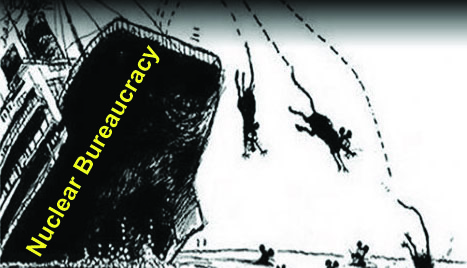
Nuclear watchdog risks meltdown, critics warn, The Times UK, 12 Jan 16 The nuclear safety regulator is facing a leadership crisis and is ill-equipped to deal with a mounting workload linked to China’s plans to invest £8 billion in the British industry, experts have warned.
The Office for Nuclear Regulation is responsible for ensuring the safety and security of 15 nuclear reactors, hazardous sites such as Sellafield and the transport and disposal of high-level nuclear waste. It also oversees the safety case for new reactors.
In recent months it has been plagued by desertions, including the departure of Andy Hall, the Chief Inspector, and Alasdair Corfield, the finance director. Neither has been….. – (Subscribers only)
http://www.thetimes.co.uk/tto/business/industries/utilities/article4662825.ece
Jeremy Corbyn – inconveniently sensible on nuclear weapons
 Corbyn says the Trident isn’t worth the money. It is a costly weapon that can never be used. British security concerns should be focused on terrorism, economic turmoil and catastrophic climate change; nuclear weapons are irrelevant to all that. Corbyn argues, sensibly, that the Cold War era is long gone
Jeremy Corbyn talks common sense on nuclear weapons, WP. By Katrina vanden Heuvel January 12 The new leader of the British Labour Party, Jeremy Corbyn, has sparked a political firestorm by challenging the myths around nuclear weapons and Cold War deterrence. Corbyn announced that he would never use a nuclear weapon. He followed that apostasy by declaring that he opposed renewal of the British nuclear Trident submarine program.“I am opposed to the use of nuclear weapons. I am opposed to the holding of nuclear weapons. I want to see a nuclear-free world. I believe it is possible,” Corbyn declared.
Several Labour shadow ministers suggested they might resign if that became Labour’s policy. Conservative Prime Minister David Cameron and the right-wing British press have been pillorying Corbyn as a threat to national security for his heresy.
Corbyn’s aides argue this is not a new version of the debate over unilateral disarmament that wracked Labour in the 1980s. Rather, they insist the question is whether renewing the fleet is worth the money. Corbyn’s doubts are shared by some current and retired military officers. The British fleet of four Trident submarines is slated for retirement in the late 2020s. It will take almost that long to develop a successor. Renewing and operating the Trident program will cost an estimated 167 billion British pounds over the next four decades. The Army has already been reduced to below 82,000 soldiers, the lowest number since the 1700s. Renewing the Trident fleet would likely force more cuts.
Corbyn says the Trident isn’t worth the money. It is a costly weapon that can never be used. British security concerns should be focused on terrorism, economic turmoil and catastrophic climate change; nuclear weapons are irrelevant to all that. Corbyn argues, sensibly, that the Cold War era is long gone….
The Corbynites are sensitive about being accused of unilateral disarmament, since the party’s adoption of that position in the 1980s at the height of Cold War tensions was electorally damaging. Yet a British commitment to give up nuclear weapons unilaterally might just be the highest and best use of the Trident fleet…..
Corbyn is now taking a beating in the conservative tabloids for his blasphemies. Yet he is talking common sense. No leader in his right mind would use nuclear weapons. The British people would be better off spending the money that renewal would cost elsewhere. The reality is that the British nuclear arsenal will have greater global significance if it is dismantled rather than renewed. Corbyn is meeting fierce resistance, even inside his own party, but he is raising questions that deserve a full debate. https://www.washingtonpost.com/opinions/jeremy-corbyn-talks-common-sense-on-nuclear-weapons/2016/01/12/52e8c886-b88f-11e5-b682-4bb4dd403c7d_story.html
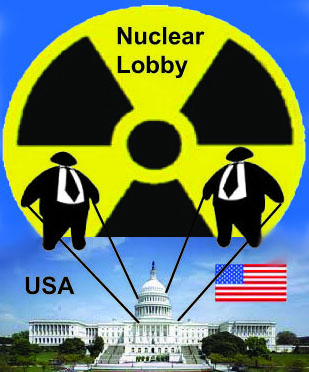
Nuclear lobby getting its way in USA Congress?
The Nuclear Energy Innovation Capabilities Act (H.R. 4084) directs the Department of Energy (DOE) to work with private companies and researchers to develop new nuclear reactors. The bill will help private investors demonstrate novel reactor concepts and designs such asmolten-salt or pebble-bed reactors……..
Against all reason, Republican hawks still trying to sabotage Iran nuclear agreement
 Opponents of Iran Nuclear Deal Just Won’t Quit http://www.huffingtonpost.com/alan-elsner/opponents-of-iran-nuclear_b_8962566.html?ir=Australia Opponents of the Joint Comprehensive Plan of Action (JCPOA) between Iran and six world powers to deal with Iran’s nuclear program mounted a massive campaign last summer, spending tens of millions of dollars to sabotage the agreement.
They failed — but they have not quit.
Days after reports that Iran has dismantled one of the most dangerous parts of its program by removing the core of its heavy-water reactor in Arak and filling it with cement, Republicans in the House of Representatives are mounting a new attempt to kill the agreement that has already made the world much safer.
The “Iran Terror Finance Transparency Act” would prevent the President from lifting sanctions imposed on Iranian individuals and entities unless the Administration can “certify the entity is not a terror financier, human rights abuser or involved in the proliferation of weapons of mass destruction.”
President Obama has already vowed to veto the bill, should it reach his desk, for the simple reason that it tangles up an agreement on Iran’s nuclear program with other issues that have nothing to do with it. The new bill is simply a poison pill, designed to kill the nuclear deal.
The deal was designed to do one very important thing — make the world safe from the threat of a nuclear-armed Iran. It does not aim to tackle Iran’s role in regional conflicts, or its sponsorship of terrorist groups or its domestic human rights abuses.
There are separate sanctions imposed on Iran to confront those issues, all of which will remain in place. And the United States and its partners should remain vigilant and take appropriate action when faced with Iranian provocations — like the ballistic missile test they conducted last October which violated UN Security Council resolutions. But none of these factors have anything to do with the nuclear deal.
If the latest bill passed, the White House warned, the legislation “could result in the collapse of a comprehensive diplomatic arrangement that peacefully and verifiably prevents Iran from acquiring a nuclear weapon.”
That would lead to the end of international inspections and monitoring of Iranian nuclear facilities and leave Iran free to restart its program. It would “lead to the unraveling of the international sanctions regime against Iran, and deal a devastating blow to America’s credibility as a leader of international diplomacy,” the White House said.
Republicans have the votes to pass this bill in the House. It will be more interesting to see how it fares in the Senate, where prominent Republicans expected to face strong Democratic challengers this year, like Mark Kirk of Illinois and Ron Johnson of Wisconsin, have been strong backers of previous efforts to sabotage the agreement.
What opponents don’t get is that the nuclear deal is already proving itself. The Iranians have moved faster than most experts believed would happen to fulfill their part of the agreement. Notably, they shipped 25,000 pounds of low-enriched uranium to Russia, leaving them without enough material for a bomb.
“This step is vital because it is irreversible, since the low-enriched uranium is never coming back and would instead need to be produced again,” said Ilan Goldenberg, who directs the Middle East security program at the Center for a New American Security, writing in The National Interest.
The Iranians have also removed centrifuges as required and allowed intrusive inspections of its facilities, as laid down by the JCPOA. And now they are rendering the Arak plant harmless.
It will soon be time for the United States and its partners to live up to their side of the agreement. Once the designated international authorities confirm that Iran has met its obligations, the international community must begin to lift sanctions originally imposed because of Iran’s nuclear program.
Opponents can be expected to continue their campaign to kill the agreement one way or another. That’s why supporters, and all those who believe in diplomatic solutions to tough international problems, must remain vigilant, ready to take political action whenever needed to preserve this important breakthrough.
Wisconsin Assembly approves lifting nuclear moratorium
Assembly approves lifting nuclear moratorium http://www.startribune.com/assembly-to-vote-on-lifting-nuclear-moratorium/364957481/ Associated Press JANUARY 12, 2016 MADISON, Wis. — The state Assembly has approved a bill that would lift Wisconsin’s ban on new nuclear power plants.Right now, state regulators can’t approve a new nuclear power plant unless a federal facility for storing waste from nuclear plants nationwide exists and such a plant wouldn’t burden ratepayers. No central federal repository exists, leaving nuclear plants to store their waste on-site.
The bill would erase the storage facility and ratepayer clauses from state law, clearing the way for new plants. The bill’s author, Republican Rep. Kevin Peterson, maintains nuclear power is an affordable option as the state faces new federal rules on greenhouse gas emissions.
The Assembly approved the bill on a voice vote Tuesday. It goes next to the state Senate.
Wisconsin could get nuclear waste dump if moratorium is lifted on new reactors
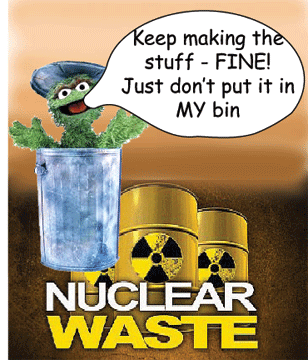
 Al Gedicks: Bill would invite radioactive waste dump to Wisconsin Wisconsin State Journal , 12 Jan 16 LA CROSSE — The Wisconsin Assembly plans to take up a bill today lifting a moratorium on new nuclear reactors.
Under current law, the state cannot approve another nuclear power plant unless there is a federally licensed repository for high-level nuclear waste, and the plant wouldn’t burden ratepayers. The nuclear industry can’t meet these common-sense conditions that have protected Wisconsin citizens for 33 years, so it wants to repeal the law.
If Wisconsin’s moratorium on building nuclear power plants is repealed, the U.S. Department of Energy (DOE) will have all the more reason to reconsider the granite bedrock of Wisconsin’s Wolf River Batholith as a permanent nuclear waste repository. The DOE is desperate to find a host for a permanent geologic repository for nuclear waste because of the failed attempt to site such a repository on the lands of the Western Shoshone Indians in Nevada.
The legislative sponsors of the repeal seem to be unaware that the moratorium was enacted to protect Wisconsin citizens from becoming the host to a permanent geologic nuclear waste repository.
In the 1980s, the DOE ranked Wisconsin’s Wolf River Batholith as one of the top three options for a high-level nuclear waste repository.
The proposed facility would be located somewhere in a 1,000-square-mile watershed that includes Langlade, Shawano, Waupaca, Menominee, Portage, Marathon and Oconto counties. The area also contains the reservation land of three tribes — the Stockbridge-Munsee, Menominee, Ho-Chunk and the ceded treaty lands where 11 bands of the Lake Superior Chippewa retain extensive hunting, fishing and gathering rights.
Wisconsin citizens and American Indian tribes were overwhelmingly opposed to becoming nuclear guinea pigs for the DOE. In a 1983 statewide referendum, 89 percent voted against a nuclear waste disposal site in Wisconsin.
After massive public opposition at public hearings in the potentially affected communities, the DOE said it would indefinitely postpone the search for a second nuclear waste site……..
Regardless of what the nuclear industry and its proponents say, there is no known way to safely dispose of this waste, which remains dangerously radioactive for thousands of years.
The only existing geologic repository for nuclear waste in this country is the Waste Isolation Pilot Plant in Carlsbad, New Mexico. This site was considered the model of safe nuclear waste storage.
But on Valentine’s Day 2014, plutonium and other radioactive elements were accidentally released into the atmosphere from the site, exposing 22 workers to small amounts of radiation. The plant has been closed since the accident.
There is no good reason to expose Wisconsin communities and Indian tribes to the risks of radioactive contamination when there are nuclear-free and carbon-free renewable energy technologies that are truly cleaner, safer, faster and cheaper. http://host.madison.com/wsj/opinion/column/al-gedicks-bill-would-invite-radioactive-waste-dump-to-wisconsin/article_a44c0713-e13b-5ab9-b1f7-d8f9a7132c42.html
Liberal govt to lock Ontario into costly nuclear rebuild
 Liberals Repeat Electricity Mistakes With Costly Nuclear Rebuild http://www.wireservice.ca/index.php?module=News&func=display&sid=18005 The Liberal government plans to lock Ontario into an expensive and risky nuclear rebuild – without reviewing costs and alternatives.


WireService.ca Media Release (01/11/2016) Queen’s Park, ON – “It’s Groundhog Day in Ontario,” says GPO leader Mike Schreiner. “Another billion dollar Liberal boondoggle without any public review of costs or alternatives to a Liberal electricity decision.”
The GPO has called for an independent, public review of rebuilding Ontario’s aging nuclear reactors – what they would cost, and what alternative options might be available. No nuclear project in Ontario’s history has delivered on time or budget. The Darlington rebuild is already over budget.
“Would you rebuild your home without exploring all options?” asks Schreiner. “It’s outrageously irresponsible for Liberals to commit billions of your dollars to a project without a review of costs and alternatives. Will Ontario taxpayers be on the hook for cost overruns once again?”
Most of the debt retirement charge on your electricity bill is to pay for past nuclear cost overruns. The Liberal decision would lock Ontario into another 30 years of nuclear power at a time when alternatives may be available – water imports from Quebec are cheaper, and the costs of renewable energy is dropping dramatically.
In addition to the tremendous financial risk, the government still has no plan to deal with radioactive nuclear waste and has not publicly released emergency plans to deal with a Fukushima scale nuclear disaster. No company will fully insure nuclear plants because the risks are too high.
OPG’s credit rating was downgraded in 2012, due to the costs associated with rebuilding Darlington. “Why do the Liberals refuse to consider less risky, cheaper alternatives to nuclear power?” asks Schreiner. “What are they trying to hide by not conducting an independent public review of costs and alternatives?”
The GPO is on a mission to bring honesty, integrity and good public policy to Queen’s Park
Nuclear corporations in America not only sell bombs, they influence government policy
the “privatization of nuclear war”. Corporations not only reap multibillion-dollar profits from the production of nuclear bombs, they also have a direct voice in setting the agenda regarding the use and deployment of nuclear weapons.
No Danger of Nuclear War? The Pentagon’s Plan to Blow up the Planet By Prof Michel Chossudovsky Global Research, January 11, 2016
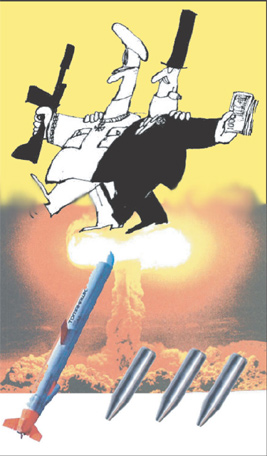
“………….Nuclear war –which threatens life on planet earth– is not front page news in comparison to the most insignificant issues of public concern, including the local level crime scene or the tabloid gossip reports on Hollywood celebrities.
What we are dealing with is the criminalization of the State, whereby officials in high office are complicit in fostering the pre-emptive use of nuclear weapons. The media has camouflaged the implications of America’s post Cold war nuclear doctrine, which was formulated in a secret meeting at US Strategic Command Headquarters on Hiroshima Day, August 6, 2003.
On August 6, 2003, on Hiroshima Day, commemorating when the first atomic bomb was dropped on Hiroshima (August 6 1945), a secret meeting was held behind closed doors at Strategic Command Headquarters at the Offutt Air Force Base in Nebraska.
Senior executives from the nuclear industry and the military industrial complex were in attendance. This mingling of defense contractors, scientists and policy-makers was not intended to commemorate Hiroshima. The meeting was intended to set the stage for the development of a new generation of “smaller”, “safer” and “more usable” nuclear weapons, to be used in the “in-theater nuclear wars” of the 21st Century.
In a cruel irony, the participants to this secret meeting, which excluded members of Congress, arrived on the anniversary of the Hiroshima bombing (August 6) and departed on the anniversary of the attack on Nagasaki (August 9). (Michel Chossudovsky, Towards a World War III Scenario, The Dangers of Nuclear War, Global Research, Montreal, 2012)
The Hiroshima Day 2003 meetings had set the stage for the “privatization of nuclear war”. Corporations not only reap multibillion-dollar profits from the production of nuclear bombs, they also have a direct voice in setting the agenda regarding the use and deployment of nuclear weapons.
All the safeguards of the Cold War era, which categorized the nuclear bomb as “a weapon of last resort”, have been scrapped. “Offensive” military actions using nuclear warheads are now described as acts of “self-defense”. During the Cold War, the doctrine of Mutually Assured Destruction (MAD) prevailed, namely that the use of nuclear weapons against the Soviet Union would result in “the destruction of both the attacker and the defender”.
In the post Cold war era, US nuclear doctrine was redefined. There is no sanity in what is euphemistically called US foreign policy. At no point since the first atomic bomb was dropped on Hiroshima on August 6th, 1945, has humanity been closer to the unthinkable…
Stay informed, spread the word far and wide. To reverse the tide of war, the broader public must be informed. Post on Facebook/Twitter.
Confront the war criminals in high office.
What we really need is real “Regime Change in America”. http://www.globalresearch.ca/there-is-no-danger-of-nuclear-war-or-is-there/5500276
Jeremy Corbyn’s aim to change UK Labour’s stance on Trident nuclear weapons system
Trident: Jeremy Corbyn hopes to alter Labour’s stance on nuclear weapons by stripping shadow Cabinet of power, The Independent, Leader wants Labour’s ruling body to be able to make policy decisions Tom McTague Political Editor @TomMcTague 9 Jan 16 Jeremy Corbyn’s secret blueprint to seize control of Labour’s policy-making machine to fast-track a change in the party’s position on Trident has been revealed in leaked documents drawn up by his allies in the trade unions.
Leading members of the Shadow Cabinet have been made aware of a paper which would strip them of the power to set policy between conferences. Instead, Labour’s National Executive Committee would explicitly be given the role of deciding policy.
>One minister who has seen a copy of the proposal said that Mr Corbyn’s advisers were coordinating the move which would change the NEC’s “aims and objectives” to give it explicit power to set policy. The document is likely to be put before the NEC at its meeting this month.
Speaking to The Independent on Sunday, the shadow Chancellor John McDonnell said he had not seen the document but confirmed the NEC would decide “fairly quickly” on a process to change Labour’s position on Trident – and revealed it would happen “before the summer”.
He revealed that the review of the party’s nuclear policy, which is being conducted by former London Mayor Ken Livingstone and the new shadow Defence Secretary Emily Thornberry – would come up with a range of options, including unilateral disarmament, rather than recommending just one policy. One option, that is to be considered, is for Britain to become a “virtual nuclear state” like Japan and Iran – free of nuclear weapons but with the possibility of re-arming in a short period of time…….http://www.independent.co.uk/news/uk/politics/trident-jeremy-corbyn-hopes-to-alter-labours-stance-on-nuclear-weapons-by-stripping-shadow-cabinet-a6804376.html
Hillary Clinton might Oppose Obama’s $1 Trillion Nuclear Arms Upgrade
 Hillary Clinton Suggests She May Oppose Obama’s $1 Trillion Nuclear Arms Upgrade [includes video] The Intercept, Lee Fang Jan. 8 2016 Hillary Clinton signaled the potential for a major national security policy reversal this week after she told an activist in Iowa that the planned $1 trillion nuclear weapons modernization program “doesn’t make sense.”
Despite a momentous speech embracing nuclear disarmament in Prague in April 2009, President Barack Obama has stunned critics by embarking on an aggressive effort to upgrade the military’s nuclear weapons program, including requests to buy 12 new missile submarines, up to 100 new bombers, and 400 land-based missiles, along with upgraded storage and development sites.
The decision has been called the greatest expansion of nuclear weapons since the fall of the Soviet Union.
Clinton’s comments came in response to a question after a Des Moines campaign event from Kevin Rutledge, a coordinator with the American Friends Service Committee’s “Governing Under the Influence” project. Staff and volunteers with the project in Iowa and New Hampshire have been peppering presidential candidates with questions about corporate influence over military policy, immigrant detention, and other issues. Continue reading
China’s state-owned nuclear companies get together in export marketing drive
 State-owned enterprises eye overseas power projects, Nikkei Asian Review TETSUYA ABE, Nikkei staff writer BEIJING 5 Jan 16, — The global nuclear industry is likely to be another area where China’s growing presence will be keenly felt, as the government and state-owned corporations are working hand in hand to win overseas contracts. This development worries critics who are concerned about nuclear safety issues, as well as Beijing’s seeming lack of commitment to nuclear nonproliferation.United front In their meeting on Dec. 30, Sun Qin, chairman of China National Nuclear Corp., and He Yu, his counterpart at CGN, agreed to join hands to better compete with Western rivals in their pursuit to cultivate overseas nuclear power plant markets.
The two came to the National Development and Reform Commission’s building in Beijing on that day to sign an agreement to set up a joint venture. The new company, to be capitalized at 500 million yuan ($76.5 million), will handle export of Hualong One, a pressurized water reactor model that China claims to have developed on its own.
CNNC and CGN, each of which is a major player that ranks within the top three in the Chinese nuclear industry, are coming together with an eye toward increasing the chance of winning orders in Central Asia and Eastern Europe. Continue reading
UK L:abour leader Corbyn names Trident nuclear critic as shadow defence secretary
Corbyn names Trident nuclear critic as shadow defence secretary, Ft.com By Jim Pickard, Chief Political Correspondent, 5 Jan 16 Emily Thornberry, a critic of the Trident nuclear deterrent, has been appointed as Labour’s shadow defence secretary in the most significant change in Jeremy Corbyn’s first reshuffle.
The Labour leader shifted Maria Eagle, the previous defence spokeswoman, to the culture brief as he seeks to take Labour back to its 1980s position of unilateral nuclear disarmament……..
an important step towards shifting party policy over nuclear weapons, although the leader will still face tough opposition from MPs and many union officials who back Trident. ….http://www.ft.com/intl/cms/s/0/fe69d4fe-b40f-11e5-8358-9a82b43f6b2f.html#axzz3wQGuTYie
Fukushima Diary. Prime Minister Abe says that Fukushima nuclear station is ‘not settled’
 JP PM Abe “It is not proper to say Fukushima is settled” http://fukushima-diary.com/2015/02/jp-pm-abe-proper-say-fukushima-settled/ Iori Mochizuki The Prime Minister of Japan, Abe commented Fukushima is not settled.
This is the statement made in the Budget Committee of the House of Representatives on 1/30/2015.
Abe stated variety of problems are remaining unresolved in Fukushima plant, such as decommissioning, compensation, contaminated water etc.. Problems are piled up. Numbers of people are still forced to live outside of the hometown. It is not proper to say Fukushima is settled.
Related to this article.. Tepco inquired JP Gov about PM Abe’s statement to IOC “Contaminated water is entirely blocked” [URL]
http://www.shugiin.go.jp/internet/itdb_kaigiroku.nsf/html/kaigiroku/001818920150130003.htm
http://search.shugiin.go.jp/ja/search.x?q=%97%5C%8EZ%88%CF%88%F5%89%EF&ie=Shift_JIS
1 This Month
23-25 October – on Zoom – World BEYOND War’s annual global conferenc

To see nuclear-related stories in greater depth and intensity – go to https://nuclearinformation.wordpress.com

Say No to NASA’s Reckless Nuclear Reactor on the Moon
Say No to NASA’s Reckless Nuclear Reactor on the Moon
-
Archives
- October 2026 (160)
- September 2026 (339)
- August 2026 (330)
- July 2026 (355)
- June 2026 (287)
- May 2026 (306)
- April 2026 (356)
- March 2026 (251)
- February 2026 (267)
- January 2026 (308)
- December 2025 (358)
- November 2025 (359)
-
Categories
- 1
- 1 NUCLEAR ISSUES
- business and costs
- climate change
- culture and arts
- ENERGY
- environment
- health
- history
- indigenous issues
- Legal
- marketing of nuclear
- media
- opposition to nuclear
- PERSONAL STORIES
- politics
- politics international
- Religion and ethics
- safety
- secrets,lies and civil liberties
- spinbuster
- technology
- Uranium
- wastes
- weapons and war
- Women
- 2 WORLD
- ACTION
- AFRICA
- Atrocities
- AUSTRALIA
- Christina's notes
- Christina's themes
- culture and arts
- Events
- Fuk 2022
- Fuk 2023
- Fukushima 2017
- Fukushima 2018
- fukushima 2019
- Fukushima 2020
- Fukushima 2021
- general
- global warming
- Humour (God we need it)
- Nuclear
- RARE EARTHS
- Reference
- resources – print
- Resources -audiovicual
- Weekly Newsletter
- World
- World Nuclear
- YouTube
-
RSS
Entries RSS
Comments RSS

