South Africa’s Finance Minister under pressure about govt plans for unaffordable nuclear power
Nuclear must be affordable, says Nene, Business Day, BY CAROL PATON, 24 AUGUST 2015, FINANCE MINISTER NHLANHLA NENE SAYS HE WILL HOLD THE LINE ON THE PROCUREMENT OF NUCLEAR ENERGY IF IT IS UNAFFORDABLE, AND WILL REDUCE THE HEAD COUNT OF THE PUBLIC SERVICE TO ENSURE SPENDING STAYS IN LINE WITH FISCAL TARGETS.
Mr Nene is under enormous political pressure to accede to a presidency-backed plan to procure 9,600MW of nuclear energy capacity at a time when public finances are at their weakest since the mid 1990s.
Underlining this pressure was the appearance of a fake intelligence dossier last week, smearing top Treasury officials as apartheid agents and alleging that they and Mr Nene are part of a conspiracy by the old white establishment to control the Treasury.
The document aroused grave concern among the public, and in political and investor circles, as it is feared it may signal a political attack on the Treasury, which until now has been a strong source of confidence given its ability to exercise tight control over government finances.
The Treasury and Mr Nene say that the document is baseless but appears to be a worrying attempt “to undermine and destablise the institution”.
Mr Nene’s comments, in an exclusive interview with Business Day on Friday, come at a time of keen interest from ratings agencies and the investor community regarding whether the government will stick to self-imposed spending ceilings designed to cut debt in this challenging political context.
Of the challenges, top of the list is whether Mr Nene will be able to hold the line on the nuclear procurement.
Treasury and Department of Energy officials spent most of last week locked in an intense engagement in Cape Town over the financing options for the project.
Mr Nene said that since the Treasury had only just been invited into the process, it was too early to make pronouncements.
However, if it was unaffordable to the country and to consumers, who would have to pay for the energy generated, it could not be done, he said….. the Department of Energy’s discussions with vendors have all assumed the full 9,600MW would be commissioned. The department also envisages using the programme for industrialisation and job creation, and aims to create a nuclear export industry.
It has to date refused to make public its studies or provide evidence that a nuclear procurement of 9,600MW is affordable.
Mr Nene said that as with any project that involved the allocation of resources, the Treasury would have to account to the nation.
“That is why following process is critical…. My job is spelt out in legislation and my role is to uphold and stay within the confines of the Constitution and the Public Finance Management Act.”…..http://www.bdlive.co.za/business/energy/2015/08/24/nuclear-must-be-affordable-says-nene
UK government trashing environmnental policies, promoting nuclear power and fracked gas
 [The new Secretary of State for Energy and Climate Change, Amber Rudd,] will try to meet the UK’s carbon reduction commitments with nuclear power and fracked gas.
(Of course, this is the same Amber Rudd who said that if nuclear reactors were just prettier, everyone would like them. ed.)
commentators from industry, politics and the financial sector have been lining up to condemn the Government’s plans to subsidize the first new reactors proposed at Hinkley.
What is happening in the UK? The new government makes a sharp move away from clean energy in favor of costly polluting sources. Greenworld, 14 Aug 15 The headlines flash daily about major changes in energy policy in the UK; none of them good news. The slashing of support for solar, energy efficiency and other clean energy programs and at the same time an apparent intent to spend absolutely mind-blowing amounts of money on new, untried, and highly risky nuclear power reactors. From the point of view of an America where, haltingly but steadily, clean energy is gaining a true foothold and is moving ahead, it seems incomprehensible that our closest ally would move in the opposite direction of most of the world’s industrial economies. Could that really be true?
So we asked veteran UK activist Pete Roche to explain what is happening in the UK. And no, the news really is not good.
David Cameron’s Conservative Government has now been in power in the UK, without the constraining influence of the Liberal Democrats, for 100 days. From the point-of-view of the environment his new government has been an unmitigated disaster; marked by a sharp embrace of dirty energy sources in a fashion most advanced nations, even including the U.S., are stepping away from.
From the moment the new Government was elected it set about burning the green policies of the previous coalition government. Subsidies for new onshore wind farms, paid for through consumers’ bills, are to end from April next year as are subsidies for solar farms. There will be a review of the feed-in tariff threatening subsidies for solar panels on domestic and commercial roof tops. And other proposed changes will make it much harder for community renewable projects to obtain finance.
The Government has also killed off the Green Deal scheme which provided loans to households for energy efficiency improvements. The scheme was a damp squib but what’s striking is there are no proposals to replace it. And a decade-long plan to force all new homes to be ‘zero carbon’ from 2016 has been dumped. On top of all this the exemption for renewables from the Climate Change Levy–a kind of carbon tax–has been removed, effectively imposing cuts to the income of renewable projects already up and running retrospectively.
The new Secretary of State for Energy and Climate Change, Amber Rudd, told Members of Parliament (MPs) that carbon reduction targets are a bigger priority than meeting renewable energy targets, signalling that she is prepared to miss the UK’s European Union Renewable Target of meeting 15% of our energy needs (not just electricity) from renewable sources by 2020. Continue reading
Hinkley Point C Nuclear scam – UK tax-payers fund Chinese investors

 Tory privatisation scams (2): the Hinkley Point C nuclear payola guaranteed by UK taxpayers for Chinese investors http://www.michaelmeacher.info/weblog/2015/08/tory-privatisation-scams-2-the-hinkley-point-c-nuclear-payola-guaranteed-by-uk-taxpayers-for-chinese-investors/
Just how bad a deal this is is shown by the fact that Hinkley will provide just 3 gigawatts of capacity, yet for the same price gas-fired turbines could provide about 50 gigawatts, onshore wind 20 and offshore wind 10. The plant will not open till 2023 at the earliest, well past the date of the most acute energy shortage at the end of this decade. And it will cost as much as the combined bill for Crossrail, the London Olympics and the revamped Terminal 2 at Heathrow – beat that for the most expensive white elephant of modern times!
It’s an anachronistic behemoth from the bygone age of energy dinosaurs when the world is rapidly moving towards distributed power via renewable energy. It’s far too costly, and is it even needed? First there is the UK’s declining demand for power, currently falling at a rate of 1% a year as energy-saving measures steadily take effect. Then there is the expected threefold jump in the UK’s Interconnection capacity with continental Europe by 2022 which increases the ability to import cheaper supplies. And third there is the litany of setbacks in price overruns and huge delays that have afflicted Finland, France and China over EDF’s European Pressurised Reactor which is the same type as is planned for Hinkley Point.
However nothing distracts the Tory nose from a good old-fashioned financial fix behind the scenes, especially when in this case it plays to their abhorrence of UK State involvement in meeting a public need. So Cameron is off to Beijing in October to sign a final deal wit the Chinese president from which only Chinese investors will gain at UK taxpayer expense.
Tax-payer money going to nuclear related companies in UAE
 Nuclear-related contracts worth Dh9.15bn have been awarded to UAE firms, says Enec, The National, LeAnne Graves, 18 Aug 15, More than Dh9.15 billion in contracts have been awarded to UAE companies for the construction of the country’s first nuclear power plant, according to the Emirates Nuclear Energy Corporation (Enec)…….
African National Congress calls for transparency on nuclear tender process
 ANC calls for transparent nuclear tender process, Mail & Guardian, 18 AUG 2015 2FRANZ WILD, STAFF REPORTER
ANC calls for “full, transparent and thorough cost benefit analysis of nuclear power” as SA prepares for a bidding process for new nuclear plants. n a document that will be discussed at its policy review conference in October, the ANC said: “Government must also announce publicly that nuclear energy can only be procured in line with the legal prescripts and after a thoroughgoing affordability assessment.”
The document was released on Monday.
During his State of the Nation address in February, President Jacob Zuma said all countries that bid “will be engaged in a fair, transparent and competitive procurement process to select a strategic partner, or partners, to undertake the nuclear build programme”.
But the Mail & Guardian reported earlier this year that in a “top secret” presentation, the energy department proposed a closed government-to-government procurement of new nuclear power stations instead of a transparent and competitive tender.
The nuclear agreement with Russia, which amaBhungane revealed, states that the government is prepared to give Russia exclusive rights to its nuclear build programme for a minimum of 20 years. During that time, Russia could block South Africa from procuring nuclear technology from any other country.
The Russians would be indemnified from any liability arising from nuclear accidents during the reactors’ lifespan. Russia would be granted a host of regulatory concessions and favourable taxation and other financial treatment. The designated competent authorities are South Africa’s department of energy and Russia’s state-owned Rosatom State Atomic Energy.
With the Russian economy in turmoil and the subsequent high cost of borrowing, the country’s ability to raise the funding for its nuclear ambitions in many countries is being called into question – as is its ability to deliver on time.
For South Africa, it is even more of a mystery how the government will provide the loan guarantees that would be required, given that so many have been extended to ailing parastatals such as Eskom and SAA. The state may have hit its limit………http://mg.co.za/article/2015-08-18-anc-calls-for-transparent-nuclear-tender-process
Over 300 US rabbis urge Congress to support Iran nuclear deal
Hundreds of US rabbis voice support for Iran nuclear deal, 124 News, 19 Aug 15 IDF: deal could help rein in terrorist activities; US will not succeed to ‘intrude’ on Iran: Khamenei
More than 300 American rabbis wrote members of Congress Monday urging them to support the international nuclear deal with Iran, signalling the US Jewish community is split over the historic but controversial accord.
The religious leaders come from across the spectrum, but hail overwhelmingly from Judaism’s Conservative and Reform streams as well as other progressive Jewish movements, a spokesperson said.
“We encourage the members of the Senate and the House of Representatives to endorse this agreement,” the 340 rabbis wrote in a letter to Congress distributed by Ameinu, a progressive charitable Jewish organization.
“We are deeply concerned with the impression that the leadership of the American Jewish community is united in opposition to the agreement,” the rabbis added.
“We, along with many other Jewish leaders, fully support this historic nuclear accord”……..http://www.i24news.tv/en/news/international/82396-150817-fate-of-nuclear-deal-still-not-clear-iran-s-khamenei
Obama can still do the Iran nuclear deal, despite Congress opposition
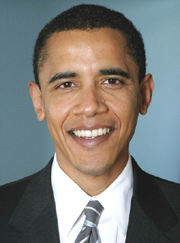 President Obama can do Iran nuclear deal even if Congress rejects it Chicago Tribune, By Tribune wire reports contact the reporter , 16 Aug 15 President Obama doesn’t need a congressional OK to make a deal with Iran over its nuclear program. The September vote on the Iran nuclear deal is billed as a titanic standoff between President Barack Obama and Congress. Yet even if lawmakers reject the agreement, it’s not game-over for the White House.
A congressional vote of disapproval would not prevent Obama from acting on his own to start putting the accord in place. While he probably would take some heavy criticism, this course would let him add the foreign policy breakthrough to his second-term list of accomplishments.
Obama doesn’t need a congressional OK to give Iran most of the billions of dollars in relief from economic sanctions that it would get under the agreement, as long as Tehran honors its commitments to curb its nuclear program — at least for now.
“A resolution to disapprove the Iran agreement may have substantial political reverberations, but limited practical impact,” says Robert Satloff, executive director of the Washington Institute for Near East Policy. “It would not override President Obama’s authority to enter into the agreement.”
Lawmakers on their summer break are deciding how to vote. A look at the current state of play:
WHAT WILL HAPPEN IN SEPTEMBER?
With Republicans controlling both chambers of Congress, the House and Senate are expected to turn down the deal. Obama has pledged to veto such a resolution of disapproval, so the question has turned to whether Congress could muster the votes to override him, in what would be a stinging, bipartisan vote of no-confidence against the president. And Obama would forfeit the authority he now enjoys to waive sanctions that Congress has imposed.
But Democrats and Republicans have predicted that his expected veto will be sustained — that opponents lack the votes to one-up Obama……
WHAT CAN OBAMA DO ON HIS OWN? The president could suspend some U.S. sanctions. He could issue new orders to permit financial transactions that otherwise are banned now. On the financial sector, Obama could use executive orders to remove certain Iranians and entities, including nearly two dozen Iranian banks, from U.S. lists, meaning they no longer would be subject to economic penalties……….http://www.chicagotribune.com/news/nationworld/ct-iran-nuclear-deal-obama-20150816-story.html
Secrecy and graft in South Africa’s multi $billion nuclear power plan?
Nuclear power plan stirs fears of secrecy and graft Project could cost as much as $100 bn – experts., Money Web Joe Brock, Reuters | 14 August 2015 Fears are growing in South Africa that agreements to build nuclear power plants that could be the most expensive procurement in the country’s history will be made behind closed doors, without the necessary public scrutiny.
Among those voicing concern, two government sources say the Treasury is not being included in procurement discussions, despite the massive budgetary implications of a project that experts say may cost as much as $100 billion.
Construction on the first plant is due to start next year, breakneck speed compared with the years of regulatory and environmental checks for nuclear projects in countries such as Britain and the United States.
The Democratic Alliance, the main opposition party, believes the pace of the deal will prevent proper analysis before contracts are signed and huge sums of money change hands.
“The whole deal has been veiled in secrecy. We have no details on what we’re buying, how much it’s going to cost or how we’re going to pay for it,” shadow energy minister Gordon Mackay told Reuters.
The Department of Energy (DoE) did not respond to requests for comment. It has said several times the procurement process will be transparent and follow procedure.
Finance Minister Nhlanhla Nene was forced this week to deny reports of tensions with the DoE over the plans and said the Treasury was playing a supporting role in the procurement process.
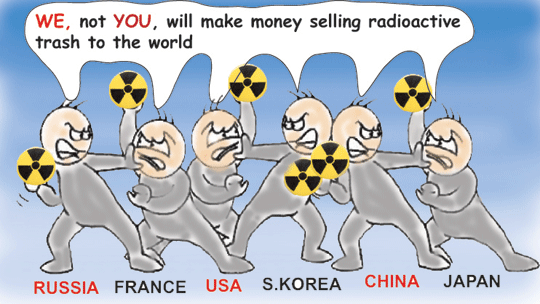 Pretoria has already signed non-binding inter-government agreements for nuclear power support from several countries including France, China and South Korea.
South Africa’s President Jacob Zuma said this week the nuclear plan was at an “advanced stage” and the procurement process should be completed by March.
Following meetings between Zuma and Russian President Vladimir Putin last year, the Russian atomic agency Rosatom said it had agreed a $10 billion contract to build power stations.
However, the DoE denied an agreement had been reached, raising public suspicion in South Africa of backroom dealmaking – an accusation often levelled against the ruling African National Congress under Zuma’s tenure.
The nuclear deal is of huge concern given South Africa’s history of endemic corruption,” said Andrew Feinstein, a former ANC lawmaker and now executive director of Corruption Watch UK.
Feinstein is the author of a book about alleged widespread graft in a $4.8 billion arms deal during the late-1990s.
“I fear that the corruption in this deal might dwarf the arms deal,” he said.
Chronic shortages, mounting debt…….A 2013 study by the University of Cape Town’s Energy Research Centre found more nuclear power was not needed and would not be cost-effective, based on an estimated installed cost of $7 000 per kilowatt.
The DoE has estimated the build would cost $4 200 per kilowatt. Energy experts say this is optimistic and the calculations are based on out-of-date assumptions……..http://www.moneyweb.co.za/news/south-africa/nuclear-power-plan-stirs-fears-of-secrecy-and-graft/
Sendai nuclear station restarted because economics are ‘more important’ than human life
The real reasons for the restart. The decision to restart the reactor at Sendai is probably based upon the “dismal science:” economics. It seems that financial considerations and worries about the health of the national and local economies triumphed over safety concerns.
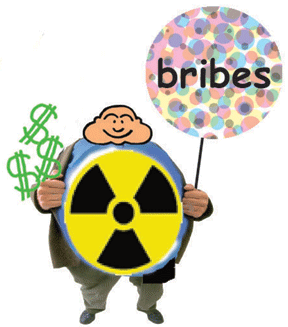 The prefecture and the nearest city are financially dependent on nuclear energy.
Satsumasendai city receives more than $12 million in grants annually from the nuclear industry, which it uses to pay for its public and educational facilities, receiving about $270 million over the years.
There are also questions of transparency in the dealings of local government authorities with Kyushu Electric Power.
Economics was considered more important than human life: That is why the Sendai nuclear power plant was able to restart.
Why was the Sendai nuclear power plant restarted? http://thebulletin.org/why-was-sendai-nuclear-power-plant-restarted8644 Tadahiro Katsuta 13 Aug 15 Two of Japan’s reactors—Units 1 and 2 of the Kyushu Electric Power Company’s Sendai nuclear power plant—have just restarted, and Unit 1 should begin generating electricity on August 14. Like all other Japanese nuclear power plants, Sendai was shut down after the events at Fukushima Daiichi in 2011, in which an earthquake, a tsunami, egregious design mistakes, and a poor safety culture combined to form “a cascade of stupid errors” that led to a triple meltdown.This is the first restart of any of Japan’s 43 operable commercial reactors since Fukushima, and it is happening despite many unresolved questions concerning nuclear safety regulations. When it comes to safety, the Sendai nuclear power plant is definitely not at the head of the class: The utility owning the power plant was given a pass despite a very problematic history. (At one point, a regulatory commissioner called the plan to restart Sendai “wishful thinking”.)
There is certainly no nationwide re-emergence of nuclear power in Japan. Indeed, there have been vocal public protests against the Sendai restart. One of the protestors even included a former prime minister of Japan.
So, why is it happening? What are the ostensible reasons for a restart? Were they valid?
A three-pointed rationalization. The justification for a restart was based upon three key points: the type of reactors to be used at Sendai were considered inherently “safer;” the chance of a similar natural disaster(s) was considered to be minimal; and the concerns of the local communities were dismissed as inconsequential.
Let us look at each of these items in turn. Continue reading
Politics, Safety, Money – all factors working against Japan’s supposed nuclear power revival
Japan’s return to nuclear meets with fear and loathing, CNBC, Nyshka Chandran | @NyshkaC 11 Aug 15, “………..Tuesday’s restart has far-reaching consequences for Japan’s politics and economy. Here are the key issues:
The move is highly controversial among citizens, with regular opinion polls revealing that a clear majority of the population want Japan to end nuclear power………”This is absolutely the worst possible timing given public opinion is significantly moving away from Abe: There is already backlash against his security bills and last week’s Hiroshima commemoration didn’t go well for him either,” James Brown, assistant professor at Temple University in Tokyo, told CNBC, referring to new legislation that would end Japan’s pacifist constitution.
“If we start to see some connection between nuclear issues and the collective self-defense concept behind the security bills, i.e. a connection between civilian and military nuclear usage, that’s particularly dangerous for Abe’s popularity.”
Despite public disapproval, the government will be able to implement its nuclear policies due to the lack of a strong political opposition, Brown explained.
Safety
Kyushu’s Sendai reactor was commissioned around 30 years ago, raising doubts whether the unit may be too old to withstand future disasters, such as the large earthquakes common across Japan.
“They are on the edge, seeing as most reactors above 40 years of age are considered to be aging,” Daniel Aldrich, professor of political science and co-director of the Center for Resilience Studies at Northeastern University in Boston, told CNBC.
The country has embraced stricter guidelines and new technology for the entire nuclear industry since the 2011 tragedy, but according to Aldrich, “the question is, for Japan to extend the life and licensing of these aging reactors, can they convince the population that these reactors are safe?”
The Sendai reactor is also located near an active volcano……..
Money…….“In the longer term, Japan’s population will be in decline, they will be more efficient in energy usage, and overall gas demand should slow. The government is also going big on renewable energy, which should also lower demand.”………”Marginal operating expenses are low but the longer-term costs are incredibly high. Regulatory standards have increased, so nuclear operators need to install more equipment, which means higher costs,” Brown added.http://www.cnbc.com/2015/08/10/japans-return-to-nuclear-meets-with-fear-and-loathing.html
A nuclear revival in Japan is by no means a sure thing
Japan restarts reactor – A nuclear revival? , DW, 11 Aug 15 “…….The government’s nuclear energy program, however, remains controversial in Japan……..PM Abe’s decision to ignore the prevailing public opinion can be explained by the huge amount of influence exercised by regional electricity lobbies on politicians, said Franz Waldenberger, Japan expert at the Tokyo-based German Institute for Japan Studies (DIJ).
“Major media outlets in the country have also been unable to escape this influence, making it extremely difficult for opponents to make themselves heard,” he told DW. Added to this is the lack of any real opposition for Abe either within or outside his Liberal Democratic Party, Waldenberger noted.
Clever tactics
Abe has also maneuvered skillfully in terms of his energy policy. At first, he promised to reduce Japan’s high-reliance on nuclear power as much as possible. This was followed by the PM’s announcement of making nuclear power part of the “main sources of electricity,” and ultimately by raising the intended share of nuclear power in the country’s energy mix from 20 to 22 percent……….
Sakurajima, one of Japan’s active volcanoes, is only 50 kilometers away. Several volcanologists have contradicted the inspectors who argue that the mountain poses no threat. TheAsahi newspaper criticized the ongoing “systemic vulnerability” of the nuclear reactors given that nothing had changed in terms of their classification into groups.
Other experts even think that restarting the reactors after such a long period of time is dangerous. According to the World Nuclear Association, the restart of 14 nuclear reactors around the world after four years of idleness led to emergency shutdowns and technical failures.
An unrealistic goal?
There is significant opposition in Japan to bringing the reactors back online
There are also big doubts about a renaissance of nuclear energy in the East Asian country. “There is just too much happening in terms of renewable energy sources which are becoming increasingly competitive in Japan,” said Waldenberger, adding that this is already being reflected in the country’s energy mix…….
Furthermore, operators will also have to deal with the consequences of the deregulation of the Japanese energy market, which will allow consumers to switch to “green energy” from 2016. And they will also have to face the fact that they are running out of storage space for used nuclear fuel elements. Japan doesn’t even have temporary storage facilities for this purpose. http://www.dw.com/en/japan-restarts-reactor-a-nuclear-revival/a-18640138
Most Japanese oppose nuclear power restart; support drops for PM Shinzo Abe
Japan PM Abe’s support slips, majority oppose nuclear restart http://www.dailymail.co.uk/wires/reuters/article-3191885/Japan-PM-Abes-support-slips-majority-oppose-nuclear-restart.html By REUTERS, 10 August 2015 TOKYO, Support for Japanese Prime Minister Shinzo Abe has slipped to just over 30 percent and a majority oppose the planned restart of a nuclear reactor that went offline after the 2011 Fukushima disaster, a poll by the Mainichi newspaper showed on Monday.
The three-point decline to 32 percent – the lowest since Abe returned to office in December 2012 – comes as voters fret over a shift in security policy that would end a ban on the military fighting overseas to defend a friendly country. That could let Japan’s troops fight abroad for the first time since World War Two.
Abe’s ratings began dropping sharply after scholars told a parliamentary panel in June the legislation would violate Japan’s post-war, pacifist constitution. Abe says the change will boost deterrence and make war less likely but critics fear Japan could get embroiled in a U.S.-led conflict.
Fifty-seven percent of respondents to the weekend survey opposed Kyushu Electric Power Co’s restart of a reactor at its Sendai plant in southwest Japan, set for Tuesday. Thirty percent supported the reboot, the first in nearly two years, which will reopen the nuclear sector.
Opposition to Abe was higher among women than men. Only 26 percent of female voters backed his government compared to 40 percent of men.
Japan’s fragmented opposition parties, however, are not benefiting from Abe’s woes. Support for the ruling Liberal Democratic Party (LDP) was flat at 28 percent but that of the main opposition Democratic Party was just 9 percent.
Nor has any LDP rival so far indicated a desire to challenge Abe in a party leadership election that must be held next month. (Reporting by Linda Sieg; Editing by Alan Raybould)
Nunavat hunters want Federal govt not to overrule Nunavut Impact Review Board uranium decision
Nunavut hunters want feds to stay out of uranium mine decision ‘This would be a political disaster for Nunavut, and for Canada,’ Kivalliq Wildlife Board By Sima Sahar Zerehi, for CBC News Posted: Aug 11, 2015 Hunters in Nunavut say if the federal government overrides a recent uranium mining decision from the Nunavut Impact Review Board if will seriously erode the confidence of the Inuit in the regulatory system.
“This would be a political disaster for Nunavut, and for Canada,” states the Kivalliq Wildlife Board in a letter they sent to the minister of Aboriginal Affairs and Northern Development yesterday.
“Residents and institutions of Nunavut have spent considerable time and resources participating in the NIRB screening and review of Areva’s proposal,” states the letter, “If you reject the NIRB report and recommendation, residents of Nunavut will question what the point of their participation in this process was.”
This spring, the Nunavut Impact Review Board issued its final report on a proposed uranium mine near Baker Lake. The report rejected Areva’s proposed Kiggavik mine on the grounds that it lacks a definite start date and a development schedule. The review board concluded that without this information it was impossible to assess the environmental and social impacts of the uranium mine.
The French mining company Areva, has asked the minister of Aboriginal Affairs and Northern Development to reject that decision. And the region’s hunters and trappers don’t want to see that happen.
“For a company that says they are in support of Inuit organizations to turn around and ask for this was very offensive to our organizations,” says Leah Muckpah, the regional coordinator of the Kivalliq Wildlife Board.
Muckpah says the hunters in Nunavut see the board’s rejection of Areva’s proposal as “a gain to the region.” She says without a clear start date and a land use plan to protect the caribou calving ground, the risks of the project are too high……..
The $2.1 billion project calls for one underground and four open-pit mines just west of Baker Lake.
Areva is in financial turmoil. With the declining market for uranium, even if the project gets the green light, mining may not start for another 10 to 20 years. http://www.cbc.ca/news/canada/north/nunavut-hunters-want-feds-to-stay-out-of-uranium-mine-decision-1.3186753
UK energy analysts unhappy with super costly Hinkley nuclear project
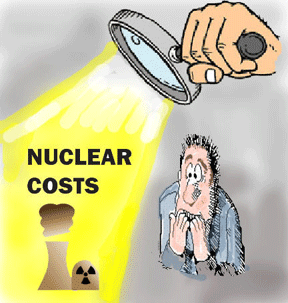 Planned Hinkley Point nuclear power station under fire from energy industry, Guardian, Nils Pratley and Sean Farrell, 10 Aug 15 Energy analyst says that for same price as Hinkley Point C, providing 3,200MW of capacity, almost 50,000MW of gas-fired power capacity could be built. Hinkley Point, the planned £24.5bn nuclear power station in Somerset, is under intensifying criticism from the energy industry and the City, even as the government prepares to give the final go-ahead for the heavily subsidised project.
The plant, due to open in 2023, will cost as much as the combined bill for Crossrail, the London 2012 Olympics and the revamped Terminal 2 at Heathrow, calculated Peter Atherton, energy analyst at investment bank Jefferies. He said that, for the same price as Hinkley Point C, which will provide 3,200MW of capacity, almost 50,000MW of gas-fired power capacity could be built.
“This level of new gas build would effectively replace the entire thermal generation fleet in the UK – much of which is old and inefficient – with brand new, highly efficient, low carbon, gas generation,” said Atherton.
Doubts about Hinkley Point have deepened after a detailed report by HSBC’s energy analysts described eight key challenges to the project, which will be built by the state-backed French firm EDF and be part-financed by investment from China.
These challenges include: declining demand for power in the UK, currently falling at 1% a year as energy-saving measures take effect; a three-fold jump in the UK’s interconnection capacity with continental Europe by 2022, massively increasing the country’s ability to import cheaper supplies; and “a litany of setbacks” in Finland, France and China for EdF’s European Pressurised Reactor (EPR) model, the same type as planned for Hinkley Point.
HSBC’s analysts described the EPR model as too big, too costly and still unproven, saying its future was bleak. They also pointed out that wholesale power prices have fallen by 16% since November 2011 when the government agreed a “strike price” for Hinkley Point’s output – effectively a guaranteed price of £92.50 per megawatt hour, inflation-linked for 35 years and funded through household bills. “With the problems encountered by France’s EPR model and a strike price likely to be double the UK wholesale price at the scheduled 2023 time of opening of the proposed Hinkley C EPR, we see ample reason for the UK government to delay or cancel the project,” they said…….. http://www.theguardian.com/environment/2015/aug/09/planned-hinkley-point-nuclear-power-station-energy-industry
Iran nuclear deal is supported by Jews in Iran

 Iran’s Jewish community gets behind nuclear deal with U.S.USA Today, 7 Aug 15 Reese Erlich, GlobalPost TEHRAN, Iran — Tapo, one of six kosher restaurants in Tehran, has become an informal hangout for the city’s small Jewish community. During a lunchtime rush last week customers ate savory kebabs while excitedly discussing the signing of the U.S.-Iran nuclear accord.
“There was lots of joy for us,” said Horiel, a Jewish customer who declined to give his last name. “It was not only the Jewish community that was happy. The nation was happy.”
Most Iranian Jews strongly disagree with Israeli Prime Minister Benjamin Netanyahu’s denunciations of the accord. Horiel said his ancestors came from Jerusalem, “but I’m an Iranian Jew. Israel will get nothing with threats and war.”
Israeli leaders and conservative politicians in the U.S. have denounced the accords as too weak, saying they’ll allow Iran to eventually develop atomic weapons.
Iranians argue that they never built a nuclear bomb and have no intention of doing so. They broadly support the accord in hopes that the U.S. will lift economic sanctions and the economy will improve.
But the agreement also lessens international tensions, says Homayoun Sameyah Najafabadi, chair of the Tehran Jewish Committee, the country’s main Jewish organization. “There was the possibility of war,” he said. “With the deal signed, it will take war off the table and bring stability to the region.”
Najafabadi said that Israel’s opposition to the accord “has no impact on the Jewish community in Iran.”…….. Jewish leaders estimate there are between 12,000 and 30,000 Jews here today, making Iran’s the second-largest Jewish population in the Middle East after Israel.
But those who have chosen to stay in Iran have a long history of opposition to hawkish Israeli governments. Many consider themselves Jews but not Zionists.
The Islamic Republic of Iran allows freedom of worship for Jews and Christians, according to Siamak Morsedegh, the Jewish representative to Iran’s parliament. He points out that unlike some other countries in the region and in Europe, Jewish templesin Iran have not been attacked.
“There (is) no need for guards in front of our synagogues,” he said………..
GlobalPost Special Correspondent Reese Erlich received a grant from the Pulitzer Center on Crisis Reporting for his reporting from Iran. His latest book is “Inside Syria: The Back Story of Their Civil War and What the World Can Expect.”
This article originally appeared on GlobalPost. http://www.usatoday.com/story/news/world/2015/08/07/globalpost-iran-jewish-community-nuclear-deal/31277653/
1 This Month

22 June – Virtual Event –Climate Change: New Data, New Debate

Monday, June 22, 2026 2:30 p.m. – 3:15 p.m. CT
YouTube. Register here
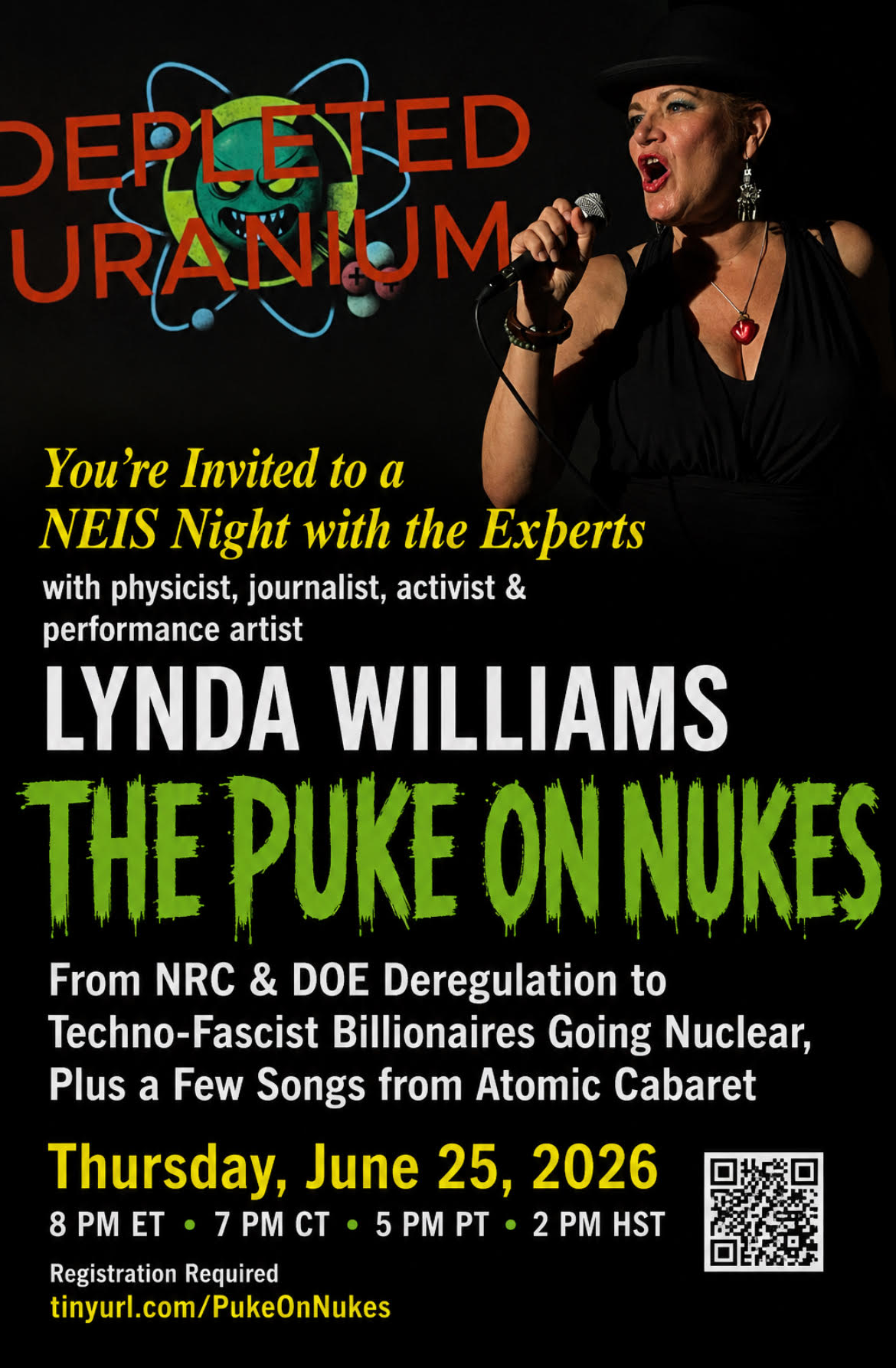
25 June- THE PUKE ON NUKES
Thursday, June 25, 2026
7pm Central Time (8pm ET, 6pm MT, 5pm PT) UTC – 5
From NRC & DOE Deregulation to Techno-Fascist Billionaires Going Nuclear, Plus a Few Songs from Atomic Cabaret REGISTER
26 June – Radiation Trainwreck at the NRC / Join the Protect Better Campaign – https://us02web.zoom.us/meeting/register/4ZlZ5_qLSHGiLSCg8FF6Bg#/registration
1st July – Webinar Waste of Space: The Environmental Harm of Military and Civil Space Activity st July, 7 pm

Report Launch Online: We are seeing an increasing exploitation of space for military and commercial purposes. This must change.

Protect Sazan Island from the Trump family! https://secure.avaaz.org/campaign/en/protect_sazan_island_from_the_trump_family_loc/?bqFCVab&v=174511&cl=22707147157&_checksum=5e9dde668860e8231c33699735e16a1fbf22ab2cb01da50c999fe8732b9775ef&utm_source=email&utm_medium=blast_email&utm_campaign=174511


Cuba Is Not a Failed State – It Is a Besieged State
PETITION: “Global Appeal to Endorse Palestinian Right of Return of Refugees”
To see nuclear-related stories in greater depth and intensity – go to https://nuclearinformation.wordpress.com
-
Archives
- June 2026 (221)
- May 2026 (306)
- April 2026 (356)
- March 2026 (251)
- February 2026 (268)
- January 2026 (308)
- December 2025 (358)
- November 2025 (359)
- October 2025 (376)
- September 2025 (257)
- August 2025 (319)
- July 2025 (230)
-
Categories
- 1
- 1 NUCLEAR ISSUES
- business and costs
- climate change
- culture and arts
- ENERGY
- environment
- health
- history
- indigenous issues
- Legal
- marketing of nuclear
- media
- opposition to nuclear
- PERSONAL STORIES
- politics
- politics international
- Religion and ethics
- safety
- secrets,lies and civil liberties
- spinbuster
- technology
- Uranium
- wastes
- weapons and war
- Women
- 2 WORLD
- ACTION
- AFRICA
- Atrocities
- AUSTRALIA
- Christina's notes
- Christina's themes
- culture and arts
- Events
- Fuk 2022
- Fuk 2023
- Fukushima 2017
- Fukushima 2018
- fukushima 2019
- Fukushima 2020
- Fukushima 2021
- general
- global warming
- Humour (God we need it)
- Nuclear
- RARE EARTHS
- Reference
- resources – print
- Resources -audiovicual
- Weekly Newsletter
- World
- World Nuclear
- YouTube
-
RSS
Entries RSS
Comments RSS
 nuclear-news