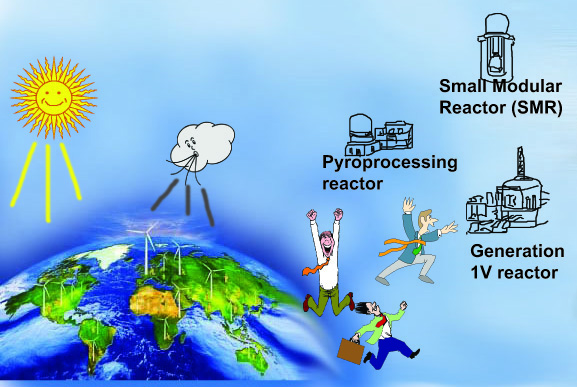
Radioactive leak – but Japanese nuclear reactor still to restart

 Japan nuclear reactor to resume operations despite radioactive leak. UPI.com By Elizabeth Shim TOKYO, Feb. 25 –– A Japanese nuclear power plant reactor that had shown signs of radioactive leaks is to resume operations.
Takahama nuclear power plant’s No. 4 reactor is scheduled to return online Friday, the Asahi Shimbun reported, following the return of two reactors at the Sendai plant in southern Japan, and the resumption of operations at the Takahama plant of reactors No. 1, 2 and 3. The No. 4 reactor was suspended in July 2011 after a regular inspection and is returning online after four years and seven months.
But prior to the announcement, the plant’s parent company Kansai Electric Power had said 36 quarts of contaminated water had been found in a structure next to the No. 4 reactor……….Reactors No. 1 and 2 at Takahama have been operating for more than 40 years. http://www.upi.com/Top_News/World-News/2016/02/25/Japan-nuclear-reactor-to-resume-operations-despite-radioactive-leak/6581456422419/
New Canadian govt still backs nuclear industry
She was speaking on behalf of Minister of Natural Resources Jim Carr yesterday.
The federal government has asked for more information about the planned underground nuclear waste storage site in Kincardine before giving final approval…….https://blackburnnews.com/midwestern-ontario/midwestern-ontario-news/2016/02/26/federal-support-confirmed-for-nuclear-industry/
Gloom in USA nuclear industry: claim they’re ignored in Clean Power Plan
Nuclear industry bemoans Clean Power Plan stay, Power Source, February 23, 2016 For an industry that said it was ignored by the Clean Power Plan, nuclear interests sure took it hard when the Supreme Court halted the rule earlier this month.
Existing nuclear power plants didn’t get any credit for being the largest source of carbon-free electricity in the country, advocates said. There are no direct incentives built into the rule to subsidize new nuclear plants or keep existing ones from retiring early, as more than half a dozen have done or plan to do.
And yet, when the Supreme Court stayed the rule while its merits are hashed out in a lower court, it sent shockwaves through the industry that was counting on the states’ compliance plans to give nuclear energy the credit that the federal government didn’t…….
Across the country, five nuclear plants have already shut down or been put on the early retirement list…..
the nuclear renaissance that the industry banked on, that federal nuclear regulators staffed up for, didn’t happen. ….
Trouble brewing in South Africa over nuclear energy programme
Storm brewing over nuclear energy programme, My Broadband, 23 Feb 16 A storm that has been brewing over the Department of Energy’s nuclear energy programme and PetroSA could erupt, reports News24. By News24 Wire – February 23, 2016 A storm that has been brewing over the Department of Energy’s (DoE) nuclear energy programme and PetroSA could erupt at its portfolio committee meeting on Tuesday, after Minister Tina Joemat-Pettersson snubbed the session last week.
“Tomorrow’s (Tuesday) committee meeting will present the minister with a real opportunity to deliver on her promise of transparency and provide the South African public much needed and vital information on South Africa’s proposed nuclear deal,” according to Democratic Alliance MP Gordon Mackay on Monday.
Last week, the committee asked Joemat-Pettersson to explain the implications of President Jacob Zuma’s State of the Nation (Sona) address in which he cautioned that the country would “only procure nuclear on a scale and pace that our country can afford”.
“The minister, who arrived an hour late, dodged addressing the issue by saying she is going to be part of a parliamentary debate on Wednesday and couldn’t pre-empt this in a portfolio committee meeting,” according Liz McDaid, spokesperson for environmentalist group Safcei.
“The chair then promised that the committee would hear what the minister planned to do given Sona and also for her to account for her own parliamentary comments,” she said. “This is all meant to take place on Tuesday 23rd”.
During her Sona debate on February 17, Joemat-Pettersson said the country had to go nuclear because of the water situation in the country.
“We simply have to go the nuclear route,” said Joemat-Pettersson, “because we don’t have enough freshwater. Koeberg recycles 22bn litres of seawater, while Medupi (coal-fired) power station uses 17bn litres of freshwater.”
Gordon, who heads up the DA’s energy portfolio, told Fin24 that the committee has been clear.
“We want all pertinent documentation relating to SA’s proposed nuclear new build programme,” he said. “Specifically, the Integrated Nuclear Infrastructure Programme (an assessment of SA’s readiness for civil nuclear expansion), all financing options and economic impact assessments.”
“Without these documents any decision to proceed with nuclear must be seen to be irrational,” he said.
McDaid said Parliament has failed to hold Joemat-Pettersson to account. “At one stage, the chair told the public that there would be a discussion on the nuclear deal, but it never happened,” she said. “Then last year, the minister arrived at the meeting with a classified document, which could not be discussed.”
Nuclear train steams ahead
“At the end of last year, during the budget review process, the DoE failed to account for Necsa (SA Nuclear Energy Corporation), which did not report and asked to be exempt from reporting to parliament.”
“Necsa has major liabilities for its failure to address nuclear contamination,” she said. “There is no information on the extent of the contamination, the amount of the liability and the timeline to fix this. Now Necsa is saying that the government must pay and that it is not liable.
“Despite the lack of the accountability, the nuclear train steams ahead.”…….. http://mybroadband.co.za/news/energy/156097-storm-brewing-over-nuclear-energy-programme.html
USA Presidential candidates: their policies on nuclear power
 Here’s Where The 2016 Candidates Stand On Nuclear Power ANDREW FOLLETT, The Daily Caller 21 Feb 16 Energy and Environmental Reporter “……..Here’s a breakdown of what all the major presidential candidates think about nuclear power:
Former Secretary of State Hillary Clinton: The former Secretary of State claimed to be “agnostic about nuclear power” in the 2007 YouTube Democratic Primary debate. As a result, she rarely directly discusses nuclear energy, though one of her campaign fact sheet claims she favors “advanced nuclear,” which requires “expand[ing] successful innovation initiatives, like ARPA-e, and cut those that fail to deliver results.”
Sen. Bernie Sanders: The Vermont senator vehemently opposes nuclear power. He opposes the construction of new nuclear reactors “when we do not know how we get rid of the toxic waste from the ones that already exist.” Sanders’ campaign website states “Bernie has called for a moratorium on nuclear power plant license renewals in the United States.”
Donald Trump: The real estate mogul has made strong public statements supporting nuclear power, but tends to favor further development of natural gas.
In the aftermath of the 2011 Japan Fukushima nuclear disaster, Trump told Fox News “nuclear is a way we get what we have to get, which is energy.”
The permitting process for nuclear power needs to be reformed, Trump nuclear is a way we get what we have to get, which is energy.”
The permitting process for nuclear power needs to be reformed, Trump explained. He qualified this statement saying “we have to be careful” because nuclear power “does have issues.” Trump specified that he favored the development of natural gas over nuclear energy in the same interview: “we’re the Saudi Arabia times 100 of natural gas, but we don’t use it.”
Sen. Ted Cruz: The Texas senator has not said much about nuclear power, and also lacks a substantive voting record on the issue.
Cruz’s website states he wants an “all-of-the-above” energy approach that adopts “an energy plan that embraces the Great American Energy Renaissance.” It does not specifically mention nuclear energy. Cruz has also repeatedly stated he opposes all energy subsides.
Cruz’s campaign declined comment to The Daily Caller News Foundation.
Sen. Marco Rubio: The Florida senator has received praises for his energy policy. The National Review claimed “Rubio has the best and most serious energy plan” last November. Rubio also has a history of supporting nuclear energy.
Rubio’s campaign website says he will help nuclear power by “modernizing regulations and permitting processes will help develop both traditional and alternative energy sources and encourage energy diversity.”
When Rubio was running for Senate in 2010, his campaign website stated he supported “a comprehensive energy plan that encourages nuclear energy.” The Senator also wrote in a 2006 that “[c]lean, safe nuclear energy is another promising option to diversify Florida’s energy portfolio.”
Gov. John Kasich: As Ohio’s governor, Kasich hasn’t said much on nuclear energy, but is a firm supporter of green energy mandates that benefit solar and wind power.
Kasich has been embroiled in a fight with his own party over Ohio’s green energy mandate. Republican state legislators have threatened to gut a law mandating Ohio get 25 percent of its power from green energy by 2025. Kasich threatened to veto any legislative efforts that tamper with his green energy goals.
The Kasich campaign did not respond to request for comment.
Dr. Ben Carson: Not only is Carson a famed neurosurgeon, but he’s also a strong supporter of nuclear power.
“I think it is a huge mistake that we are not developing the next generation nuclear power plants faster,” Carson wrote in an August Facebook post. ……..
need to figure out how to build them with even more safety and expedite the process to lower the cost of construction. As I have said here before, we need to ignite the fire of the American economy and low-cost power is a critical ingredient to gaining a rebirth of manufacturing jobs in this country.”
Former Gov. Jeb Bush: Florida’s former governor is a strong supporter of nuclear power. Bush authored a pro-nuclear power opinion piece in a Florida newspaper in 2008, and was a member of the pro-nuclear Clean and Safe Energy Coalition. As governor, Bush encouraged the use of federal funds for nuclear cleanup. http://dailycaller.com/2016/02/20/heres-where-the-2016-candidates-stand-on-nuclear-power/#ixzz40pvjfPza
Japanese govt Environment Minister’s blunder over nuclear radiation
Sex, Graft, Racism and Radiation: Japan’s Political Year of Scandals Isabel Reynolds IsabelRTokyo Takashi Hirokawa February 19, 2016 —For three years, Japanese Prime Minister Shinzo Abe’s administration has seemed immune to the scandals and gaffes that helped cut short his first term as premier in 2007 after less than a year. That may have changed with a recent spate of blunders……..
Minister says ‘biased’ broadcasters can be shut down
Internal Affairs and Communications Minister Sanae Takaichi told a parliamentary committee this month that the government could order broadcasters to suspend operations if they ignore official warnings to ensure political neutrality.
Opposition Democratic Party lawmaker Soichiro Okuno said in a blog entry that such pressure would prevent freedom of reporting, and local media also criticized her comments. Government spokesman Suga defended Takaichi, saying her remarks were “a matter of course.” http://www.bloomberg.com/news/articles/2016-02-18/sex-graft-slaves-and-radiation-abe-hit-by-slew-of-scandals
Former television news anchor Marukawa, 45, apologized and withdrew the comments, but has rejected calls for her resignation…… http://www.bloomberg.com/news/articles/2016-02-18/sex-graft-slaves-and-radiation-abe-hit-by-slew-of-scandals
Britain’s nuclear project Hinkley Point C staggers again
 U.K.’s Nuclear Project Falters Again http://www.truthdig.com/report/item/uks_nuclear_project_falters_again_20160219 Feb 19, 2016 By Paul Brown / Climate News Network This Creative Commons-licensed piece first appeared at Climate News Network.
LONDON—The future of the nuclear industry in Europe took another blow this week when the French state-owned power company EDF again postponed a final decision on whether to build two large nuclear power stations in the UK. Construction will now not start before 2019, the company said.
This is the eighth time a “final investment decision” on building two European Pressurised Water Reactors (EPRs) has been postponed because the company has still to secure enough backing to finance the £18 billion (€23.26 bn) project.
The excuse this time was that the Chinese New Year celebrations had held up negotiations with the Chinese backers, who have agreed to put up one-third of the money.
Preparation of the site at Hinkley Point in the west of England was stopped last year while EDF sought partners for the project. Each time there has been a postponement the company has issued a statement saying it remains “fully committed” to building two 1,650 MW reactors (1 MW is enough to power 750-1,000 average US homes).
Decision close
This week was no different. “We have the intention to proceed rapidly with the investment decision for Hinkley Point,” EDF’s chief executive Jean-Bernard Levy told reporters. Adding that EDF had not yet finalised talks with its Chinese partners, he said: “Today we estimate this final decision is very close.”
Levy said it would take about three years, possibly a bit more, of study and work with sub-contractors before EDF will begin building the first permanent structures on the Hinkley Point C site, though it will do preparatory work between now and then.
“Definitive construction of what will be built on the site, what we call the first concrete, is on the horizon for 2019,” Levy said.
This date is a year after the reactors were originally due to be completed. The timetable has gradually slipped backwards. Last year the date for power to start being generated was put back to 2025, but this new date for pouring concrete makes 2030 more likely—if the reactors are built at all.
Problematic record
The new proposed start date of 2019 is very significant for reasons the company dare not spell out. This is because there is no evidence yet that these so-called Evolutionary Power Reactors will operate effectively. Four are under construction, but are years behind schedule, and costs have tripled. In Europe their earliest proposed start date is 2018—so it looks as though EDF is being careful not to begin building another one until it can prove the design actually works.
The EPRs are “third generation European Pressurised Water Reactors”—the largest nuclear plants in the world. They have a chequered history, even before any has actually produced a single watt of electricity. Construction of the first prototype began in 2005 in Finland: expected to be finished in 2009, it is still under construction.
The same is true of the second, at Flamanville in France, where construction began in 2007. It has also hit delays and cost over-runs of staggering proportions. It too is due to start in 2018.
The other two EPRs are being built in China. Both should have been in operation by this year, but both also have undergone unspecified delays.
Safety question
The biggest problem for EDF, which owns and is building the Flamanville reactor, is that there are safety issues over the strength of the steel used to build the pressure vessel. It contained too much carbon and is undergoing stress testing to see if it is safe. While the outcome of these tests remains unknown, a question mark hangs over the station’s future.
This, plus the vast amount of remedial safety work required by the French safety regulators from EDF on its fleet of 58 ageing reactors in France itself, has put the company under severe financial strain. It needs to find €100 bn for repairs, and to improve safety following the Fukushima disaster in Japan, to keep the plants operating until 2030.
As a result of fears that the company might overstretch itself and jeopardise jobs in France the six trade union representatives on EDF’s board have expressed opposition to the company going ahead with building reactors on British soil.
Unfilled gap
This further postponement of a start date for the new reactors leaves the UK government with a gaping hole in its energy policy, despite it offering to pay double the existing price of electricity for the output from Hinkley Point, a subsidy that will continue for 35 years.
The Conservative government has been relying on nuclear energy to replace fossil fuels from 2025, when it plans to phase out all its coal stations. Some renewable energy subsidies have been scrapped to make way for new nuclear stations.
In all, the Conservative government wants ten new nuclear stations in the UK—four EPRs and the rest from Japan and the US. None of these now seems likely to be built before 2030, if at all.
Perhaps to divert attention from the postponement of the new reactors, EDF announced that it was going to extend the life of four of the nuclear power stations it already operates in Britain. It bought eight ageing stations of British design in 2009 for £12.5 billion.
Longer lives
Some were already due to close in 2018 but have had their lives extended. Now another four will be kept open to bridge the gap left by the failure to build the new stations at Hinkley Point.
These are the Heysham 1 plant in northwest England and another at Hartlepool in the northeast, both of which had been due to be switched off in 2019 because of their advanced age. They will be allowed to keep producing electricity for another five years.
Two other reactors, Heysham 2 and Torness in Scotland, have been granted extensions of seven years to 2030. There is no reason—as long as the stations are deemed safe – why further life extensions should not be applied for, and granted.
Continuing to apply for life extensions for old nuclear stations also saves the company from technical bankruptcy. Once a station is closed its decommissioning costs become company liabilities. With the company’s debts already high, it would not take many closures for EDF’s liabilities to exceed its assets.
Paul Brown, a founding editor of Climate News Network, is a former environment correspondent of The Guardian newspaper, and still writes columns for the paper.
Summary of Australia’s Nuclear Fuel Chain Royal Commission Report
the waste-to-fuel fantasies of Senator Edwards and Ben Heard are dead and buried.
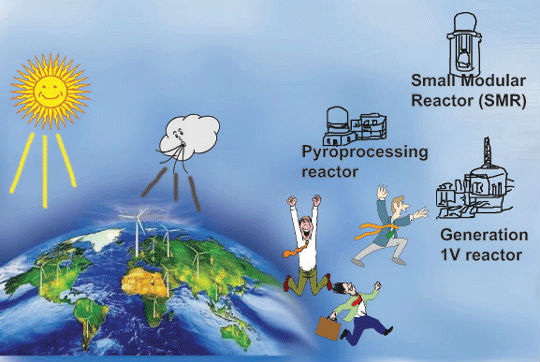
 [Wastes storage] timeframes – 150 years in the U.S. report and 120 years in the Royal Commission study – are nothing compared to the lifespan of nuclear waste. It takes 300,000 years for high level waste to decay to the level of the original uranium ore. The Royal Commission report notes that spent nuclear fuel (high level nuclear waste) “requires isolation from the environment for many hundreds of thousands of years.”
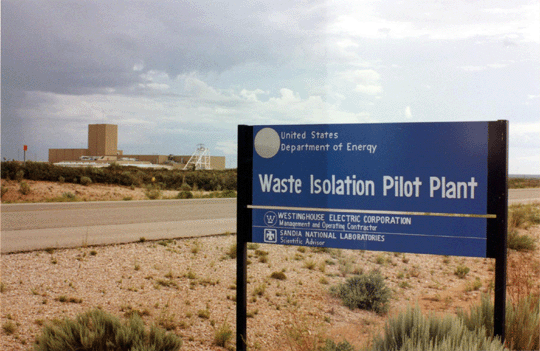 the Waste Isolation Pilot Plant (WIPP) in the U.S. state of New Mexico. WIPP was closed in 2014 because of a chemical explosion which ruptured a nuclear waste barrel and resulted in 23 workers being exposed to radiation. Before WIPP opened, the government estimated one radiation release accident every 200,000 years. But there has been one radiation release accident in the first 15 years of operation of WIPP.
 The Royal Commission’s report is silent about WIPP. It is silent about the Asse repository in Germany, where massive water infiltration has led to the decision to exhume 126,000 barrels of radioactive waste. The report is silent about the fire at a radioactive waste repository in the U.S. state of Nevada last year. And the report is silent about many other problems with the nuclear industry that it should have squarely addressed
Summary of ‘Tentative Findings’ of SA Nuclear Fuel Cycle Royal Commission Friends of the Earth Australia, by Jim Green, national nuclear campaigner, Friends of the Earth 20 Feb 16 What does the report say?
In a nutshell, the Royal Commission is negative about almost all of the proposals it is asked to consider – but positive about the proposal to import high-level nuclear waste from nuclear power plants for disposal in South Australia. Continue reading
Push to not just postpone nuclear waste burial near Great Lakes, but to stop it altogether
Critics want feds to kill nuclear-waste bunker after time extension sought http://www.metronews.ca/news/canada/2016/02/19/critics-want-feds-to-kill-nuclear-waste-bunker-after-time-extension-sought.html By: Colin Perkel The Canadian Press Published on
TORONTO — Groups opposed to the burial of nuclear waste near Lake Huron are calling on the federal government to kill a proposal for an underground storage bunker rather than ask for more information on the project.
In a statement Friday, one group said the environmental credibility of the new Liberal government under Justin Trudeau is at stake.
“It is unfortunate that the government is not listening to what the people and Great Lakes communities are telling them: to reject this plan,” said Beverly Fernandez with Stop the Great Lakes Nuclear Dump.
“No matter what process is followed, burying and abandoning radioactive nuclear waste in the Great Lakes Basin will always be a bad idea.”
The statement comes after the federal government said it needs more information before deciding whether to approve plans to build a giant underground storage bunker for nuclear waste near the Lake Huron shoreline.
That means a decision on the project, decried by scores of communities around or near the Great Lakes, will be delayed well beyond what had been a March 1 deadline.
A notice posted by the Canadian Environmental Assessment Agency says Environment Minister Catherine McKenna wants more details and further environmental studies for the proposed deep geologic repository near Kincardine, Ont.
A review panel last May had given the go-ahead, but a decision rests with the McKenna.
“The minister has requested that the proponent, Ontario Power Generation, provide additional information on three aspects of the environmental assessment: alternate locations for the project, cumulative environmental effects of the project, and an updated list of mitigation commitments for each identified adverse effect,” the notice reads.
“The minister’s request for information from the proponent has paused the timeline for an environmental assessment decision to be issued.”
A decision had been expected in September, but the former Conservative government extended the deadline to March 1 to allow for last fall’s federal election.
McKenna has now given the utility until April 18 to provide the environmental assessment agency with a schedule for fulfilling the information request. When she might make a decision is still to be determined.
Ontario Power Generation proposes to construct and operate the underground facility for the long-term management of radioactive waste at the Bruce nuclear site.
The proposal calls for hundreds of thousands of cubic metres of so-called low- and intermediate-level nuclear waste to be buried 680 metres underground in the bedrock.
Proponents argue the rock is geologically stable and would provide a hermetic seal to prevent any radioactivity reaching the lake about 1.2 kilometres away for tens of thousands of years.
However, almost 200 communities and environmental groups have argued that such a facility, despite OPG’s arguments, would be too risky given the proximity to Lake Huron. Any contamination, they say, could threaten drinking water for millions of people.
The case grows, for stopping Britain’s Hinkley Point nuclear project
 Britain’s nuclear strategy exposed at Hinkley Point EDF’s travails only add to the uncertainty over UK energy policy http://www.ft.com/intl/cms/s/0/9d484f08-d63c-11e5-829b-8564e7528e54.html#axzz40ZWJ8xlp February 18, 2016
It seemed an attractive proposition. Not only was this less than previous reactors, it was competitive with other power sources. New technology seemed to have opened the door to affordable carbonless electricity; Britain could meet its ever-tougher climate goals without shaking the public down.
A decade on and a major nuclear accident later, the world knows better. Nuclear projects elsewhere have been scrapped and existing stations shuttered or scheduled for early closure. Meanwhile stringent regulations have exposed Areva’s promise as a chimera. It turns out that the price of new nuclear for Britain is not £24 per MWh but nearly four times as much.
Even at these elevated prices, Britain’s first proposed new station, at Hinkley Point, is in difficulty. Despite agreeing a deal in 2013, EDF, the developer, has yet to commit to the £18bn project. There are concerns about technology and the French group’s financial capacity. Hinkley Point C — if it opens — may be materially delayed.
The government has done its best to make things easy. It eschewed a competitive bidding process and guaranteed to buy electricity from Hinkley Point at a £92.50 per MWh index-linked for 35 years after the station has been commissioned.
The French face several obstacles. First, there is the question of EDF’s balance sheet, groaning under a €37bn debt pile. The company’s share price has more than halved in the past year and its market capitalisation is now about €21bn. That is not much more than the company’s 67 per cent share of the cost of Hinkley C.
Linked to this are worries about the reactor technology it is employing. The two projects under construction, including EDF’s at Flamanville in France, are delayed and over budget. It might be difficult to entice lenders while it is possible that problems with Flamanville might cause construction to be halted or scrapped.
Politicians have come this far down the road with Hinkley Point because of the constraints they are under. Despite life-extensions, the UK’s existing nuclear stations are near to closing and its dirtiest coal plants are being shut to comply with EU rules. New capacity is needed. Replacing coal with gas would reduce carbon emissions but not enough to meet the targets the government has set itself.
New nuclear might not be needed were the UK to rethink its costly promises and reduce its carbon targets to match those of other EU states. If new reactors are to be considered, however, they must be subjected to the rigours of competition. That is the only way to get the right technology at acceptable cost.
Britain is saddled with the worst of all worlds. The government has effectively written the French a long-dated option to sell it unproven technology at an extremely generous price. Politically painful it may be, but the case for halting Hinkley Point C is becoming hard to refute.
How the nuclear lobby plans to get tax-payers to keep funding their industtry
 Innovative ways of funding nuclear power projects. World Nuclear News, 18 Feb “….set-up costs can be prohibitively high. Given the tight constraints on national balance sheets, governments and developers are creating new and often innovative funding methods for nuclear plants, writes Fiona Reilly.
Traditionally, nuclear power plants were financed, developed and operated by governments. During the mid-20th century, when a number of countries – notably the UK, US, France and Russia – chose to build nuclear power plants, they used direct government funding, partly because it was policy at the time and partly to maintain a high level of control. Later some countries adopted different ownership strategies, such as privatising plants (in the case of the UK) or maintaining their plant as national assets (Slovenia and Croatia).
A further shift in recent years is that government financing has taken on a new cross-border perspective, with Russia and China in particular offering complete solutions for developing nuclear projects in other countries.
Under these schemes, the country offering the solution puts together a consortium to deliver the project together with financing from its government, its government export credit agencies (ECAs) and/or national banks.
All in all, we’re seeing seven types of nuclear financing used across the world today. Aside from ‘traditional’ government funding, there are now six alternative methods: corporate balance sheet financing; the French Exceltium model; the Finnish Mankala model; vendor equity; ECA and debt financing; and private financing with government support mechanisms. In practice, projects tend to progress using a mix of these funding mechanisms.
Here’s a quick review of each of the six alternative models:
Corporate balance sheet financing
Financing a nuclear plant from a company’s own resources is really only an option for the largest utilities and developers. The cost of a large nuclear plant – with two or three reactors – is usually around $20 billion. For even the largest and most established company, it’s a huge challenge to carry such a large capital commitment for the average construction period of five to seven years before the plant starts producing revenue.
The French Exceltium model
Between 2005 and 2010, in an effort to address the increase in energy prices, a number of industrial investors – and banks – came together in France to form ‘Exceltium’. The purpose was to enter into a contractual arrangement with EDF to help finance its new-build plants in return for cheaper electricity from EDF’s portfolio. The payback to the investors – as opposed to the banks – comes over a period of 24 years through agreements to provide electricity to the industrial investors for a mix of fixed and variable pricing. The industrial investors can either use the electricity themselves or sell it to the market.
The Finnish Mankala model
The shareholders in the Mankala are a number of industrialists and utilities, and the Mankala takes a shareholding in the power plant being built. The owners of the Mankala are allowed and obliged to purchase electricity from the power plant equal to their shareholding at a cost price. This electricity can then be used by the investors or can be sold into the market. Other countries are now establishing laws to allow them to follow this model. As well as nuclear power generation plant, the Mankala concept has been used in Finland to help develop various other forms of infrastructure.
Vendor equity
In the late 2000s, it was recognised that reactor technology vendors may be able to support new build projects financially as well as technologically. This realisation gave rise to vendor equity, which helps to finance a project in return for the vendor’s technology being deployed in the new facility. However, technology vendors do not have the infinite balance sheets needed to allow them to invest in unlimited projects. In reality, they will only invest in the most advanced projects that are likely to succeed, will allow them to receive a return on their investment in the shortest possible time, and provide an option to exit the project at the earliest possible opportunity.
Export Credit Agencies (ECA) debt and financing
Non-recourse/limited recourse financing, where the lenders have no/limited recourse to the borrower and the only collateral for the loan is the project itself, is seen as the nirvana of nuclear new-build. However in reality this dream scenario still some way off. In the meantime, commercial banks are becoming less reluctant to lend to nuclear projects, and the support of a number of the ECAs has helped this shift to happen. ECAs have provided the backbone of debt lending to a number of projects in recent years through either direct or guaranteed lending to projects. The key is that the lending is there to support the export of goods or services from the ECA’s home country.
Private financing with government support mechanisms
For projects seeking private financing, the role of the government is key – and the government support mechanisms that are being made available can be crucial to getting deals underway. These mechanisms can take a number of forms, including a guarantee to support debt coming into a project (such as a sovereign guarantee or Infrastructure UK Guarantee), a revenue support mechanism (such as a Power Purchase Agreement or Contract for Difference), or in some cases both together. Much depends on the country in which the plant is being developed, taking into account a range of factors including its credit rating, financial reserves, electricity market, off-take regime, and the rights and obligations of generators. …...
Fiona Reilly
Fiona Reilly is head of nuclear Capital Projects & Infrastructure at PricewaterhouseCoopers.
Fossil fuel lobby’s $millions going to USA’s Presidential Candidates
Fossil Fuel Industry Spending Millions On 2016 Presidential Candidates
DeSmogBlog, February 17, 2016 By Alex Kotch
When candidates run for president, they receive a slew of donations from across the business world, from sectors such as finance, insurance and real estate, health, communications and electronics, labor, and energy and natural resources. Some of these donations have come under scrutiny recently, particularly those from Wall Street and those from the fossil fuel industry.
Disturbed by current elected officials’ inaction on climate change at least in part due to the powerful influence the fossil fuel industry has on policy, environmentalists and concerned citizens are pushing the 2016 presidential candidates to reject campaign contributions from industry political action committees (PACs) and people who work in the industry.
Last July, The Nation and 350 Action called on the candidates to sign their pledge to refuse donations from oil, gas or coal companies; however, direct federal contributions from companies are illegal. Sen. Bernie Sanders (I-VT), former Maryland Gov. Martin O’Malley (D), who recently dropped out of the presidential contest, and Green Party candidate Jill Stein have signed the pledge.
In December, Greenpeace and 19 other organizations asked the candidates to sign on to their Pledge to Fix Democracy, a pledge to defend voting rights, overturn the U.S. Supreme Court’s Citizens United v. Federal Elections Commission decision, and to refuse “money from fossil fuel interests.” These interests, as defined by Greenpeace, mean fossil fuel company PACs, registered lobbyists that work on behalf of such a company, or top executives. Only Sen. Sanders has signed this pledge.
A look into the financial support that the fossil fuel industry has given presidential contenders may shed light on their resistance to these anti-fossil fuel pledges.
Millions of dollars tied to the fossil fuel industry in the form of campaign contributions, bundled campaign donations by lobbyists, donations to super PACs, and details in the candidate’s financial disclosures link many of these candidates to oil, gas, and coal mining companies.
In this presidential election alone, oil, gas and coal mining company PACs and employees have given over $1.8 milliondirectly to the campaigns of the eight remaining Democratic and Republican candidates, according to the Center for Responsive Politics.
The top beneficiaries of the fossil fuel industry’s largesse this year are GOP Sen. Ted Cruz (R-TX), former Republican governor of Florida Jeb Bush, former Secretary of State and Democratic candidate Hillary Clinton, and GOP Sen. Marco Rubio (R-FL). Still more, including GOP governor of Ohio John Kasich and former Hewlett Packard CEO Carly Fiorina, a Republican candidate who dropped out last week, have received considerable campaign contributions in past elections tied to oil, gas and coal mining companies…… [excellent tables]
Let’s dig into the candidates’ financial ties to the fossil fuel industry.
TED CRUZ A climate-change denier from oil-rich Texas, GOP Sen. Ted Cruz leads the pack in campaign donations from the fossil fuel industry. ……
HILLARY CLINTON Clinton’s two Senate campaigns and two presidential bids have netted her nearly $810,000 from fossil fuel interests, including close to $228,000 in this year’s race.
She has disclosed her lobbyist bundlers, and Huffington Post’s Paul Blumenthal and Kate Sheppard were the first to report that most of them either currently or formerly worked for the fossil fuel industry……..
JEB BUSH With the legacy of his father George H.W. Bush, who made his fortune from the oil industry in Texas before entering politics, it wasn’t hard for Jeb Bush to cozy up with oil and gas companies…….
MARCO RUBIO In this election, Florida GOP Sen. Marco Rubio has received more than $218,000 linked to the fossil fuel industry, the third-highest total among presidential contenders…….
JOHN KASICH While his campaign has taken in the fifth-highest amount tied to fossil fuel companies in this year’s race, Republican John Kasich, a long-time member of the House and now governor of Ohio, has racked up a total of nearly $1.2 million in contributions from oil, gas, and coal mining PACs and employees, ……
THE REST OF THE PACK Some other candidates still in the running have received less, but still substantial, dirty energy support……… http://www.desmogblog.com/2016/02/17/fossil-fuel-industry-spending-millions-2016-presidential-candidates
Greenpeace gives 8 reasons why UK should now give up on Hinkley nuclear station
8 reasons George Osborne needs to let Hinkley nuclear plant go http://www.greenpeace.org.uk/blog/climate/8-reasons-george-osborne-let-hinkley-nuclear-go-20160216 by Richard Casson — 16 February 2016 George Osborne wants to build a new nuclear plant in Somerset — Hinkley Point C. If it goes ahead it’ll be the first nuclear power station to come online in the UK in 30 years.
But right now it’s increasingly looking like a big if. Because Hinkley is on the verge of becoming a national omnishambles. It’s suffered huge delays, safety concerns, and it’s clear the money could be far better spent. Here are eight reasons the Chancellor needs to #LetHinkleyGo.
1. The ‘unconstructable’ nuclear reactor
When Hinkley was first proposed in 2007, part of the Labour government’s sales pitch at the time was that it’d use a newfangled European Pressurized Reactor (EPR for short). Sounds appealing, right? Not so much. There are three sites where EPRs are under construction — and all three are experiencing serious difficulties. One academic even described the type of reactor as ‘unconstructable’. Not exactly encouraging is it, George?
2. The cost is astronomical
Back in 2008 the cost of the two Hinkley reactors was put at a princely £5.6 billion. The price kept going up and by 2015 that was revised to £18 billion. And now there are rumours it could clock in at a whopping £24.5 billion. That’d make Hinkley (wait for it)… the single most expensive object on earth.
3. About that reactor again…
Even if Hinkley’s “unconstructable” reactor is actually constructed, there are further concerns over how safe it’ll be. In Flamanville, France — where a power station with the same reactor design is being built — construction has suffered huge setbacks because of ‘anomalies’ in the reactor steel vessel. You don’t have to be a nuclear expert to know that the word ‘anomalies’ is NOT a good word to hear when talking about the centrepiece of a fission reactor.
4. Does anybody even want it anymore?
Like a fading teenage romance, everyone seems to be falling out of love with Hinkley. The Daily Mail called it the biggest white elephant in Britain. Financial creditors and investors have warned against building Hinkley. And now there are rumours that within EDF (the French company that will build Hinkley’s reactor), some of the board members who oversee the running of the company have spoken out against the project. And that’s just the tip of the iceberg (see here for a long list of newspaper articles opposing the Hinkley deal).
5. Onshore wind is already cheaper (and soon solar will be too)
The world of energy is changing. The cost of wind power and solar energy are falling fastand will only drop more in the future. Meanwhile, analysts have calculated that providing electricity from onshore wind would work out cheaper than Hinkley — even with the costs of providing for backup when the wind doesn’t blow. Meanwhile the construction costs for Hinkley only seem to go one direction — upwards.
6. It’s already 8 YEARS overdue
When Hinkley was first announced, we were told that electricity generated by the power station would be ‘cooking Christmas turkeys by 2017’. But then the operational date was pushed back to 2018. A few months later it became 2019. Last autumn EDF admitted it’ll be more like 2023… until they changed their mind and announced it’ll be even later. Contrast this with the London Array – the world’s largest offshore wind farm – which took less than three years to build, and it makes Hinkley look like the Christmas turkey.
7. We could be forced to pick up the cost
With all the delays and setbacks, some are starting to wonder if Hinkley could get canned completely. If it doesn’t go to plan, who will pick up the cost? The answer — taxpayers will. The funding mechanism the government put in place means that if Hinkley is abandoned, or doesn’t work when completed, UK citizens could be required to shell out a stonking £17 billion to French and Chinese backers to cover their costs.
8. The (not so) little matter of nuclear waste
We are nowhere near finding a storage solution for our existing nuclear waste, never mind future nuclear waste produced by Hinkley. It will take approximately 35 years to build a nuclear ‘storage solution’ (read: bury it underground). And even if it goes ahead soon the waste fuel from Hinkley would not be dealt with until near the end of the 22nd century. So far nobody knows where that will be or how it will happen. Oh and it will cost an estimated £12 billion.
UK Nuclear “Beauty Pageant” Scheme: More Than Sheer Madness; Rudd Conflict of Interest

The UK is having an architectural contest to “beautify” the proposed Moorside Nuclear reactor Site, which we choose to call a “beauty pageant”. The image of the Toshiba owned Westinghouse AP 1000 looks like a milk churn or can, as seen here: https://en.wikipedia.org/wiki/File:AP1000Reactor.jpg
Milk Churn-Can and Pail https://www.gov.uk/government/news/rpa-releases-april-milk-production-figures
Cows at Moorside site on the Irish Sea, facing Sellafield Nuclear Site
Maybe they will stick a plastic cow in front of the Moorside visitors’ centre to replace the real cows, which they like to make graze near Sellafield and other nuclear sites?
While a Gothic Devil would be more appropriate,
it will not match the simplicity of the, almost 1000 year old, Old St. Bridget’s Church, seen in the distance with the Windscale chimney at Sellafield to the right.
nor the runic standing stone-crosses, which are estimated at around 900 to 1400 years old. This has been a Christian site since…
View original post 1,507 more words
Nuclear industry funded under the mask of “clean energy”
Obama’s “Clean Energy” budget is propping up nuclear energy, Enformable 12 Feb 2016 “………Cut to page 19 of the Office of Management and Budget’s Fiscal Year 2017 Budget document. Here we find “clean energy,” a phrase no longer to be trusted at face value, having been purloined into meaning at times something quite the reverse. For example, nuclear energy tends to hide beneath the “clean energy” mantel, muddling the message and undermining cause for optimism.
While it may be true that the nuclear power fuel chain does not produce the kind of dirt that can be swept under rugs, the nuclear industry has metaphorically done exactly that by presenting itself as a “clean” energy technology. There is nothing particularly clean about an industry that contaminates the air, land and waterways with heavy metals and with radioactive isotopes that, among other things, give kids living nearby leukemia.
But let’s gerund away anyway and see what lurks beneath the section entitled, “Doubling the Investment in Clean Energy R&D.” Here we learn that the U.S. Government indeed intends to double its current $6.4 billion investment in clean energy for 2016 to arrive at $12.8 billion by 2021. A hefty chunk — $7.7 billion — will be given as discretionary funding to the Department of Energy in 2017 alone for “clean energy R&D.”
But for what, exactly? “About 76 percent of the funding is directed to DOE for critical clean energy development activities, including over $2 billion for energy efficiency and renewable energy technologies,” the Budget document reads. Just two billion dollars for energy efficiency and renewable energy combined? That leaves $5.7 billion for something else that the DOE considers “clean energy.” One of those claimants undoubtedly is nuclear power.

More clues to the likely destination of this unassigned mystery money can be found in a later section where the Budget document reveals that the $7.7 billion is actually earmarked as funding for the “first step toward the Mission Innovation doubling goal.”
The White House describes Mission Innovation, which was announced during the Paris climate talks last December, as an “all-in, all-sector approach,” which is basically the same old “all of the above” foolish compromise on energy policy that the Obama administration has held to from the beginning.
Since this strategy is roundly contradicted by what is actually happening across the country — wind and solar energy installation outpacing natural gas while coal fades and nuclear plants close — there is only one logical explanation for this “fair and balanced” energy policy nonsense: corporate captivity.
To oversimplify: Barack Obama, the Senator from Illinois, emerged from Rahm Emanuel’s clamshell, and Emanuel invented Exelon and Exelon is today the country’s leading nuclear behemoth. Exelon’s chief lobbyist in the early days was David Axelrod. Team Obama was born in the country’s nuclear cradle, then. Nevertheless, it’s high time that a U.S. president as committed to renewables as Obama, ceased tossing favors — aka our money— to his corporate nuclear cronies.
And so it goes on. Sitting on that Paris stage last December for the Mission Innovation announcement was Bill Gates, whose only energy agenda is tinkering around with nuclear unicorns, an exercise so devoid of relevance to the urgent battle to address climate change that every dime spent there is a dime wasted. OK they are his dimes, trillions of them.  But think what he could really do for climate change if he spent his riches wisely.
Let’s follow the trail of budget breadcrumbs a little further. The OMB goes on to say: “Mission Innovation is complemented by the Breakthrough Energy Coalition, a separate, private sector-led effort whose purpose is to mobilize substantial levels of private capital to support the most cutting-edge clean energy technologies emerging from the R&D pipeline.”
The Breakthrough Energy Coalition is Bill Gates again, and loaded to the hilt with his fellow billionaires all salivating at the prospect of old nuclear pots to mend. But given the Breakthrough Coalition is entirely “separate” and “private,” what is it doing even being mentioned in a government budget rollout?
What comes out of the Clean Energy R&D pipeline rather depends on what goes into it. It would be good if that turned out to be a true renewable energy revolution and not more deadly radioactive effluent from an obsolete fleet of new nuclear power plants. http://enformable.com/2016/02/obamas-clean-energy-budget-is-propping-up-nuclear-energy/?utm_source=feedburner&utm_medium=email&utm_campaign=Feed%3A+Enformable+%28Enformable%29
1 This Month
23-25 October – on Zoom – World BEYOND War’s annual global conferenc

To see nuclear-related stories in greater depth and intensity – go to https://nuclearinformation.wordpress.com

Say No to NASA’s Reckless Nuclear Reactor on the Moon
Say No to NASA’s Reckless Nuclear Reactor on the Moon
-
Archives
- October 2026 (160)
- September 2026 (339)
- August 2026 (330)
- July 2026 (355)
- June 2026 (287)
- May 2026 (306)
- April 2026 (356)
- March 2026 (251)
- February 2026 (267)
- January 2026 (308)
- December 2025 (358)
- November 2025 (359)
-
Categories
- 1
- 1 NUCLEAR ISSUES
- business and costs
- climate change
- culture and arts
- ENERGY
- environment
- health
- history
- indigenous issues
- Legal
- marketing of nuclear
- media
- opposition to nuclear
- PERSONAL STORIES
- politics
- politics international
- Religion and ethics
- safety
- secrets,lies and civil liberties
- spinbuster
- technology
- Uranium
- wastes
- weapons and war
- Women
- 2 WORLD
- ACTION
- AFRICA
- Atrocities
- AUSTRALIA
- Christina's notes
- Christina's themes
- culture and arts
- Events
- Fuk 2022
- Fuk 2023
- Fukushima 2017
- Fukushima 2018
- fukushima 2019
- Fukushima 2020
- Fukushima 2021
- general
- global warming
- Humour (God we need it)
- Nuclear
- RARE EARTHS
- Reference
- resources – print
- Resources -audiovicual
- Weekly Newsletter
- World
- World Nuclear
- YouTube
-
RSS
Entries RSS
Comments RSS