Nuclear power opponent wins governor’s race in South West Japan

 Japan nuclear restart in doubt after skeptic wins governor’s race http://asia.nikkei.com/Politics-Economy/Policy-Politics/Japan-nuclear-restart-in-doubt-after-skeptic-wins-governor-s-race, 11 July 16 TOKYO — The election of a governor who favors shutting down the Sendai nuclear power plant in southwestern Japan raises uncertainty for the nation’s only running reactors.
“A nuclear plant whose safety hasn’t been confirmed shouldn’t be operating,” Satoshi Mitazono, a former TV journalist who ran in Kagoshima Prefecture, told reporters Sunday.
His victory in Sunday’s gubernatorial race is not expected to lead to the plant immediately shutting down, since governors lack the legal authority to make this happen.
But the plant’s two reactors are due for regularly scheduled inspections in October and December. Local utility Kyushu Electric Power would have little chance of restarting them after the safety checks if the governor objects. Mitazono’s problems with the evacuation plans may introduce time-consuming revisions.
“If the new governor insists on postponing the restarts, that would rule out operating the Sendai reactors,” said a senior official at the Ministry of Economy, Trade and Industry, which is responsible for Japanese energy policy.
The No. 3 reactor at Shikoku Electric Power‘s Ikata nuclear plant may resume operations as early as this month. Even so, nationwide nuclear energy output would remain far short of the government’s fiscal 2030 target of 20-22% of power generation.
British Parliament to vote on renewing Trident nuclear missile system, as Brexit problems loom
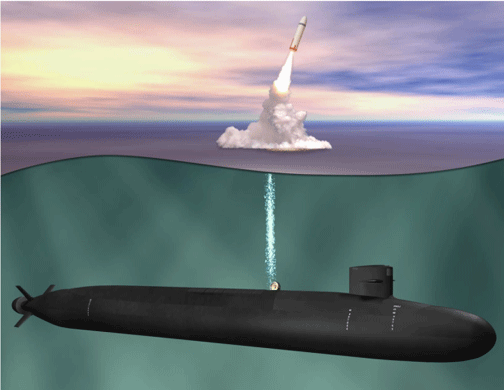 A UK nuclear vote, as Brexit looms http://thebulletin.org/uk-nuclear-vote-brexit-looms9650 By John Mecklin, 10 July 16 In a somewhat unexpected move, United Kingdom Prime Minister David Cameron—who has already declared he will resign in September because of his country’s vote to exit the European Union—announced a quick parliamentary vote on replacing the country’s fleet of nuclear-missile submarines.
The announcement, made at a NATO summit in Warsaw, seems designed to underscore the UK’s commitment to the alliance. This Reuters piece suggests Parliament is likely to vote in favor of renewing the submarine fleet, in large part because of support from Cameron’s Conservative Party.
But amid the political turmoil over possible paths to a “Brexit” from the EU, there will almost certainly be opposition from some in the Labour Party and the Scottish Nationalist Party, which is on record as wanting the Scotland-based submarines decommissioned.
Renewal of Trident nuclear weapons system opposed by British Labour and Scottish National Party
 Trident: David Cameron confirms date for vote on renewal of nuclear weapons system MPs will vote on the future of the controversial weapons system in the House of Commons, The Independent Siobhan Fenton @siobhanfenton 10 July 2016 Parliament will vote on the renewal of the Trident nuclear weapons system on 18 July, David Cameron has announced.
Replacement for the system is estimated to cost between £15bn and £20bn. The force currently consists of four submarines which are each capable of carrying up to 16 ballistic nuclear missiles which are capable of hitting targets up to 7,500 miles away……
The fleet will need to be replaced in 2028 and a decision is required by Parliament this year whether to renew the system.
The controversial scheme has proved divisive in Parliament…….
The Labour party has previously supported it but current leader Jeremy Corbyn has been a long-time opponent of renewal. It is expected Labour MPs may be given a free vote on the issue.
Mr Corbyn told Sky News: “We are having a look at all the issues surrounding it. I believe security in the world is achieved through peace, through democracy, through justice, through human rights.
“I do not believe that nuclear weapons actually enhance security, I support the nuclear non-proliferation treaty, which we are signed up to, which is trying to bring together collective disarmament. Those are the views that I will be putting forward.”
The Labour party has commissioned a defence review about its policy on nuclear weapons. A draft version has reportedly indicated the party will leave open the option of retaining nuclear weapons on a smaller scale, thereby providing a compromise between total disarmament and renewal.
The SNP has been vocal in its opposition of the scheme. http://www.independent.co.uk/news/uk/politics/trident-david-cameron-confirms-date-for-vote-on-renewal-of-nuclear-weapons-system-a7128466.html
America’s major taxpayer liability – the Department of Energy

 How the Department of Energy became a major taxpayer liability http://www.cnbc.com/2016/07/05/how-the-department-of-energy-became-a-major-taxpayer-liability.html Mark Fahey | @marktfahey Wednesday, 6 Jul 2016 If you were to guess which government agency has had to pay out the most in court in recent years, the Department of Energy probably wouldn’t come to mind.
And according to the department itself, the bloodletting as far from over. The DOE has failed to make good on some of its most important contractual obligations for years, and its private partners have been collecting billions in damages.
The Nuclear Waste Policy Act of 1982 requires that the DOE dispose of nuclear waste being produced at civilian energy plants around the country, which in turn pay fees for a long-term storage facility. The department’s contracts with dozens of energy companies said it would start disposing of the waste in 1998.
The companies held up their end, feeding about $750 million into the Nuclear Waste Fund each year. But the department did not manage to set up any facility to receive the waste, forcing energy companies to store it themselves on-site.
All those partial breaches of contract haven’t come cheap. As of the end of 2015, the DOE has paid $5.3 billion for failing to fulfill its obligations, and even if it manages to start disposing of waste in the next 10 years, it could still be on the hook for nearly $24 billion in additional liability.
“Because the United States has no facility available to receive spent nuclear fuel (SNF) and high-level radioactive waste (HLW) under the Nuclear Waste Policy Act, it has been unable to begin disposal of SNF from utilities as required by the standard contract with utilities,” said a DOE spokesperson in an email. “Significant litigation claiming damages for partial breach of contract has ensued as a result of this delay.”
At the end of 2015, the DOE had settled 35 lawsuits and resolved 33 with judgments, with 19 cases pending, according to the Congressional Budget Office. A court ruling halted the collection of storage fees in 2014, but energy companies are still seeking to recoup the money they’re spending every year on waste storage. Even after settlements for back pay are reached, the department is usually required to reimburse those costs going forward.
The hang-up has been in finding a location for the centralized storage facility. For decades, Yucca Mountain in Nevada was the only location that could legally be considered, despite fierce opposition from state and local groups. The Obama administration eventually abandoned the site as “unworkable” in 2011.
At the recommendation of the administration’s Blue Ribbon Commission (BRC), the department is now pursuing a “consent-based” approach, meaning that the DOE will seek the approval of relevant communities before construction, rather than trying to force all of the country’s spent nuclear waste on a pre-decided site in Nevada.
“The administration concurs with the conclusion of the BRC that a fundamental flaw of the 1987 amendments to the NWPA was the imposition of a site for characterization,” wrote then-Energy Secretary Steven Chu in the department’s most recent guiding strategy document from January 2013. “In practical terms, this means encouraging communities to volunteer to be considered to host a nuclear waste management facility.”
The DOE plans to have a pilot interim storage facility by 2021, initially to accept waste from reactor sites that were shut down years ago. Limiting the government’s massive liabilities is a major focus of the department’s strategy, according to the document.
The question isn’t whether the DOE will continue to have to pay out an exorbitant amount of money, but just how exorbitant that sum will end up being. The department itself projects that its total liabilities based on previous payouts will ultimately come to $29 billion in 2015 dollars, but that’s assuming it manages to start accepting waste in the next decade.
Neither the Department of Energy nor the Department of Justice could provide a list of related judgments and settlements so far, and the DOE said an updated liability estimate will not be available until its fiscal 2016 financial report comes out later this year.
“The department is currently developing a consent-based siting process for storage and disposal of SNF [spent nuclear fuel] and HLW [high-level radioactive waste],” said the department spokesperson. “Since January, DOE has held a series of public meetings and received feedback on how best to develop this process.”
The energy industry does not seem optimistic about a quick solution. According to the Nuclear Energy Institute, the department’s total liabilities could stretch to more than $50 billion. But that’s a more pessimistic figure that assumes a “total default” by the DOE.
The DOE’s own documentation for the Yucca Mountain project forecasts that if it failed completely and waste had to stay at the current sites indefinitely, it would cost between $75 billion and $82 billion in 2015 dollars over the first 100 years (including the cost of decommissioning Yucca).
Jay Silberg, a prominent energy industry attorney, said his estimate for total liability is closer to the $50 billion figure.
“I think that number is going to bear out, because I unfortunately don’t have much faith that the government will do what they promised to do in 1982,” said Silberg. “We all hope they can get their act together, but whether that will actually happen and whether it will be at large enough scale to remove the fuel piled up on these sites, I don’t have a lot of confidence in that.”
USA economy’s climate threat if Donald Trump’s energy plan adopted

 Trump’s energy plan poses climate threat to U.S. economy, Skeptical Science, 6 July 2016 by Trump’s energy plan poses climate threat to U.S. economy, Skeptical Science, 6 July 2016 by  Robert Kopp, Rutgers University Last December in Paris, the nations of the world agreed to an ambitious goal forgreenhouse gas emissions: to bring net emissions to zero in the second half of this century. Their objective: to limit global warming to 1.5 to 2 degrees Celsius (2.7 to 3.6 degrees Fahrenheit) above preindustrial temperatures, or equivalently about 0.5 to 1.0°C (0.9 to 1.8°F) above the current global average temperature.The Paris Agreement set up a process by which countries commit to emissions targets and then, every five years, report on their progress and make increasingly stringent new commitments. Current national commitments, which lay out targets for the 2025-2030 time frame, aren’t enough to get us to the long-term goal. But the current commitments and the new process constitute a major step toward breaking the dangerous fossil fuel addiction of the last two centuries. Robert Kopp, Rutgers University Last December in Paris, the nations of the world agreed to an ambitious goal forgreenhouse gas emissions: to bring net emissions to zero in the second half of this century. Their objective: to limit global warming to 1.5 to 2 degrees Celsius (2.7 to 3.6 degrees Fahrenheit) above preindustrial temperatures, or equivalently about 0.5 to 1.0°C (0.9 to 1.8°F) above the current global average temperature.The Paris Agreement set up a process by which countries commit to emissions targets and then, every five years, report on their progress and make increasingly stringent new commitments. Current national commitments, which lay out targets for the 2025-2030 time frame, aren’t enough to get us to the long-term goal. But the current commitments and the new process constitute a major step toward breaking the dangerous fossil fuel addiction of the last two centuries.
Market forces and public policy in the U.S. and around the world are already helping push the world away from carbon-intensive fuels and toward renewable energy. U.S. carbon dioxide emissions peaked in 2007, and it’s possible that Chinese emissions peaked in 2014. This market-led, policy-accelerated shift is making reduction goals more attainable than they seemed a decade ago. Donald Trump’s “America First” energy plan, outlined in May and focused on expanding fossil-fuel production, would reverse these advances. Trump has promised to “cancel” the Paris climate agreement and pledged to reopen coal mines – a pledge which, given the unfavorable economics of coal mining, he could fulfill only through a massive expansion of corporate welfare for coal companies. Backing out of the Paris Agreement would undermine U.S. leadership and stallgreenhouse gas reduction efforts around the world. And expanding production of coal could return us to the pathway of rapidly rising emissions that characterized the 2000s. The climate consequences of such a great leap backwards would be severe. Far from placing America first, they would threaten the health of Americans and of the American economy – not to mention people and economies throughout the world……….http://www.skepticalscience.com/trump-energy-plan-threat-us-economy.html |
Britain’s nuclear submarines’ radioactive wastes will NOT be going to Scotland

 Chapelcross site ruled out for nuclear submarine waste BBC News 8 July 2016 The Ministry of Defence has ruled out a Scottish site as a possible location to store waste from nuclear submarines.
Chapelcross near Annan was on a shortlist of five potential locations.
Capenhurst in Cheshire has been selected to store the nuclear components, with Aldermaston in Berkshire as a “fall back” option. The Scottish site was ruled out along with Sellafield in West Cumbria and Burghfield in Berkshire following public consultation…….
The nuclear components are from 18 redundant submarines and nine still in service.
The redundant Royal Navy submarines are currently stored afloat at Devonport in Plymouth and Rosyth in Fife, but cannot be dismantled until the reactor components have been removed.
The radioactive parts will be stored until after 2040, when the UK’s Geological Disposal Facility, for the permanent disposal of spent fuel and nuclear waste, is planned to come into operation……..http://www.bbc.com/news/uk-scotland-south-scotland-36745287
Generous subsidies proposed for Upstate New York nuclear plants
 NY regulators propose generous Upstate nuclear subsidies By Tim Knauss | tknauss@syracuse.com SYRACUSE, N.Y. – State utility regulators today released a proposal to subsidize Upstate nuclear plants with annual payments totaling an estimated $482 million a year.
The proposal from the Public Service Commission staff seems likely to please nuclear plant operators, who say their facilities deserve subsidies for providing carbon-free power, and to infuriate anti-nuclear advocates who want more resources devoted to wind and solar.
The public has a brief window to comment — until July 18 – an indication that the PSC is likely to rule on the proposal at its Aug. 1 meeting.
Exelon Corp., which owns three of the four Upstate nuclear reactors, recently told the commission that the facilities might close unless subsidies were approved by September.
The proposal unveiled today recommends that the PSC sign 12-year agreements with nuclear operators, as Exelon had previously recommended.
The subsidies would be set administratively by the PSC. According to estimates provided in the proposal, the subsidies would start at $17.48 per megawatt-hour for the first two years and rise gradually to $29.15 per MWH in years 11 and 12.
At the expected combined output of 27.6 million MWH for the Upstate nukes, the total cost would be $482 million a year during the first two years, rising to $805 million per year for the final two years…….http://www.syracuse.com/news/index.ssf/2016/07/ny_regulators_proposed_generous_upstate_nuclear_subsidies.html
Hinkley nuclear costs now estimated at £37bn
Estimated cost of Hinkley Point C nuclear plant rises to £37bn Critics point to volatility of scheme but energy department says price ‘will not affect bill payers’, Guardian, Terry Macalister, 8 July 16, The total lifetime cost of the planned Hinkley Point C nuclear power plant could be as high as £37bn, according to an assessment published by the UK government. The figure was described as shocking by critics of the scheme, who said it showed just how volatile and uncertain the project had become, given that the same energy department’s estimate 12 months earlier had been £14bn.
The latest prediction comes amid increasing speculation about the future of the controversial project in Somerset, whose existence has been put in further doubt by post-Brexit financial jitters.
Hinkley has been a flagship energy project for the British government and in particular for the chancellor, George Osborne, who lobbied hard and successfully for China to take a stake in the scheme…….
Critics of the scheme have claimed that the fall in the value of the pound since the referendum vote will increase the costs of the scheme to EDF’s French contractors, who work in euros………. the EDF staff council last month began legal action to try to force the company to release documents relating the project, including all the contracts it had signed with the British government and its co-investor, the Chinese utility CGN.
The fall in power prices in the UK and continental Europe that has influenced the latest lifetime cost assessment for Hinkley is also responsible for some of the financial difficulties at EDF.
There have also been suggestions that Chinese investors are becoming more nervous about Hinkley and are demanding more concessions from EDF, so that more Chinese project managers and suppliers are involved. EDF has denied this. https://www.theguardian.com/uk-news/2016/jul/07/hinkley-point-c-nuclear-plant-costs-up-to-37bn
Forces in Iran trying to torpedo nuclear deal
Germany says forces in Iran trying to torpedo nuclear deal, http://www.reuters.com/article/us-iran-nuclear-germany-idUSKCN0ZO1F9 8 July 16 Responding to German intelligence agency reports that Iran has been trying to acquire nuclear technology in Germany, Berlin said on Friday that certain forces in Iran may be trying to undermine its nuclear deal with the West.
Germany’s domestic intelligence agency, the Office for the Protection of the Constitution (BfV), said in its annual report that Iranian efforts to illegally procure technology, especially in the nuclear area, had continued at a “high level” in 2015.
A separate report from the intelligence agency in the state of North Rhine-Westphalia this week said it had registered 141 attempts to acquire technology for proliferation purposes last year and that two-thirds of these attempts were linked to Iran.
Asked about the reports on Friday, Foreign Ministry spokesman Martin Schaefer said Germany expected Iran to stick to a United Nations Security Council resolution which sets restrictions on arms-related transfers.
But he also suggested that the procurement attempts may stem from forces in Iran that oppose last year’s nuclear deal, under which Iran agreed to roll back its nuclear program in exchange for the lifting of western economic sanctions.
“There are forces within Iran for which the policies of the country’s president and foreign minister are a thorn in the eye,” Schaefer said. “They may be trying, one way or another, to undermine or torpedo the nuclear deal and the normalization of relations between us and Iran. We are watching this closely.”But hardline allies of Khamenei, including the elite Revolutionary Guards, are wary of losing their grip in power by opening up to the West and have repeatedly criticized pragmatist President Rouhani’s foreign policy.
Schaefer said Germany had a “great deal of faith” in President Hassan Rouhani and Foreign Minister Javad Zarif and had the impression that Tehran was doing its best to stick to the deal, which ended a 12-year standoff with the West over the nuclear program.
Iran’s Supreme Leader Ayatollah Ali Khamenei, whose power far outweighs that of Iran’s elected officials in parliament or the presidency, gave decisive support to the nuclear deal.
German Chancellor Angela Merkel, in a speech to parliament on Thursday, said ballistic missile launches carried out by Iran earlier this year were inconsistent with the UN resolution, which calls on Iran to refrain from work on missiles designed to deliver nuclear weapons for up to eight years.
The NRW intelligence report said procurement efforts in 2015 had been focused on so-called “dual-use” technologies that can be used in both civil and military sectors. While nuclear-related procurement attempts fell slightly, those related to Iran’s missile program rose.
The report said documents had been falsified to suggest technologies were destined for the oil, gas and steel industries. In an apparent attempt to cover its tracks, Iran was seeking to acquire technologies via third countries, including the United Arab Emirates, Turkey and China, the report said.
Donald Trump’s real estate empire already suffering from climate change
Water world: rising tides close in on Trump, the climate change denier Climate change has barely registered as a 2016 campaign issue, but in Florida, the state which usually decides the presidential election, the waters are lapping at the doors of Donald Trump’s real estate empire, Guardian. Suzanne Goldenberg, 6 July 16, On a hot and lazy afternoon in Palm Beach, the only sign of movement is the water gently lapping at the grounds of Mar-a-Lago, the private club that is the prize of Donald Trump’s real estate acquisitions in Florida.
Trump currently dismisses climate change as a hoax invented by China, though he has quietly sought to shield real estate investments in Ireland from its effects.
But at the Republican presidential contender’s Palm Beach estate and the other properties that bear his name in south Florida, the water is already creeping up bridges and advancing on access roads, lawns and beaches because of sea-level rise, according to a risk analysis prepared for the Guardian.
In 30 years, the grounds of Mar-a-Lago could be under at least a foot of water for 210 days a year because of tidal flooding along the intracoastal water way, with the water rising past some of the cottages and bungalows, the analysis by Coastal Risk Consulting found.
Trump’s insouciance in the face of overwhelming scientific evidence of climate change – even lapping up on his own doorstep – makes him something of an outlier in south Florida, where mayors are actively preparing for a future under climate change.
Trump, who backed climate action in 2009 but now describes climate change as “bullshit”, is also out of step with the US and other governments’ efforts to turn emissions-cutting pledges into concrete actions in the wake of the Paris climate agreement. Trump has threatened to pull the US out of the agreement.
And the presidential contender’s posturing about climate denial may further alienate the Republican candidate from younger voters and minority voters in this election who see climate change as a gathering danger.
When Guardian US asked its readers about their most urgent concern in these elections as part of our Voices of America series, the single issue looming on their minds was climate change.
Real estate professionals, with perhaps an extra dash of self-interest, hold similar views. In a survey published in the Miami Herald last month, two-thirds of high-end Miami realtors were concerned sea-level rise and climate change could hurt local property values, up from 56% of them last year.
So too for mayors in south Florida. About a third of the civic leaders in south Florida’s compact of mayors are working on strategies to protect their towns from rising seas – and lobbying Florida’s governor and fellow Republicans in Congress to acknowledge the gathering threat.
Elected officials in those same Florida towns say they are already spending heavily to rebuild disappearing beaches and pump out water-logged streets.
Republicans in coastal districts can’t afford to play politics with climate change, said Steve Abrams, a Republican and mayor of Palm Beach County.
“We don’t have the luxury at the local level to engage in these lofty policy debates,” said Abrams. “I have been in knee-deep water in many parts of my district during King Tide.”……..
modelling suggests Trump’s Hollywood condos could be turned into islands for up to 140 days a year by 2045, cut off from the low-lying A1A coastal road because of tidal flooding and storm surges. Under a category two storm, a storm surge could wash right up to the front gate.
Further south, the Trump Grande in Sunny Isles also faces a soggy future, according to the projections. In 30 years, the boundaries of the property could face tidal flooding and storm surges for 97 days a year, cutting off access to the A1A road. The beaches could also be scoured away by erosion……….https://www.theguardian.com/us-news/2016/jul/06/donald-trump-climate-change-florida-resort
Donald Trump will not overturn Iran nuclear agreement
 Report: Donald Trump Will Not Overhaul Iran Nuclear Accord, Washington Free Beacon, BY: Natalie Johnson, 5 July 16 Donald Trump will not upend the Iran nuclear deal should he clinch the White House this November, according to a top foreign policy adviser for the presumptive Republican nominee.
“[Trump is] not going to get rid of an agreement that has the institutional signature of the United States,” Walid Phares said in an interview with the Daily Caller published July 4. “He is a man of institutions, but he’s going to look back on it the institutional way.”
Trump has been outspoken against the landmark diplomatic agreement, calling it “disastrous” and vowing to renegotiate the nuclear accord between the U.S., Iran, and five other world powers if he assumes the presidency.
Phares said that while Trump opposes the Iran deal and feels it was poorly negotiated, he would seek the input of Congress for improvements rather than fully dismantling it…….http://freebeacon.com/national-security/report-donald-trump-will-not-overhaul-iran-nuclear-accord/
Stop nuclear plant subsidies- call to New York Governor Cuomo
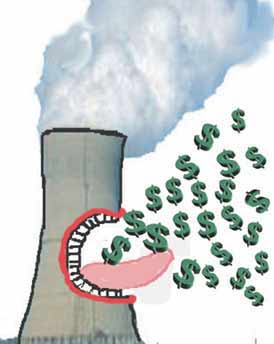 Group asks Cuomo to oppose nuclear plant subsidies, WRVO Public Media, 5 July 16 By PAYNE HORNING More than 100 organizations across New York and the country are sending a letter to Gov. Andrew Cuomo asking the state not to subsidize nuclear power plants.
The New York Public Service Commission is considering passing a nuclear tax credit plan this summer that would aid the financially struggling nuclear plants in upstate,as Cuomo asked them to do earlier this year. It’s part of his “Reforming Our Energy Vision” plan that aims to double the amount of renewable energy the state uses to 50 percent by 2030.
The plan calls for zero-emission credits would reward the plants for producing carbon dioxide-free electricity, similar to how New York subsidizes renewable energy sources like wind and solar. Supporters of the credits say the plants can help New York meet its green energy goals because they produce carbon-free electricity, but those who signed the letter, like Sierra Club member Linda DeStefano, say nuclear plants are too dangerous to keep around.
“People have been saying things like ‘nuclear is a bridge to safer, renewable energy,’ but if you keep saying it’s a bridge and you keep re-licensing these very old, especially dangerous nuclear reactors, you’re never going to get where you need to be,” DeStefano said. “In the meantime, you’re putting the whole upstate area in danger of a catastrophic meltdown as it happened in Fukushima, Japan.”
The letter, organized by the Alliance for a Green Economy (AGREE), calls for investment in renewable energy sources like wind and solar instead, but the Nine Mile Point Nuclear Plant in Oswego County said without these credits, they will have to close like the neighboring FitzPatrick plant plans to do next year. That would mean the loss of more than 1,600 jobs in Oswego County alone, which suffers from one of the worst unemployment rates in the state.
However, the letter contends that the money that would be used to subsidize nuclear power plants, which they estimate to be about $3.5 billion, could better be spent by subsidizing the communities losing those jobs instead.
“Instead of supporting nuclear subsidies, we respectfully request a nuclear decommissioning and just transition process that will protect the environment, retrain workers, and provide a smooth path for nuclear-reliant communities to benefit from the clean energy economy,” the letter says. “We urge your administration to fight for a decommissioning process that begins immediately to clean up and isolate the dangerous radioactive materials at New York’s nuclear sites. Doing so could preserve at least half of the nuclear workforce, and would ensure that the billions of dollars already set aside for decommissioning in New York starts getting pumped into local economies. Workers not employed for decommissioning should be supported through retraining programs and transitional wage support.”
They note that New York is already taking steps to mitigate the economic damage for these nuclear plant communities, by investing $30 million into a pot for lost tax revenues. And, they argue that more renewable energy jobs could be created for less money.
“For example, the planned Solar City factory in Buffalo, the 1366 Technologies factory near Rochester, and the Soraa LED lightbulb factory in Syracuse will collectively create approximately 6,420 long-term jobs,” the letter says. “The state investment in these facilities will be approximately $937 million. By comparison, the nuclear subsidies in the CES could cost over $3.5 billion to preserve fewer than 2,500 nuclear jobs.”……..http://wrvo.org/post/group-asks-cuomo-oppose-nuclear-plant-subsidies#stream/0
USA media keeps the issue of climate change off the political agenda
 Climate change: the missing issue of the 2016 campaign, Guardian 5 July 16
Guardian US survey reveals anger of voters as election year debate fails to deal with concerns over the gathering global disaster by Ed Pilkington and Mona Chalabi The race for the White House is failing to grapple with the key issues of the day, especially the urgent need to combat climate change before atmospheric changes become irreversible, a slice of the American electorate believes.
As the primary election season turns toward a head-to-head between Hillary Clinton and Donald Trump, there is increasing anger and frustration over the nature of the contest. A Guardian call-out to online readers in the US asking them to reflect on the race so far was met by a barrage of criticism on the tone and substance of the world’s most important election – with the two main parties, individual candidates and the media all coming under heavy fire.
The Guardian asked readers to identify the “one issue that affects your life you wish the presidential candidates were discussing more”. Resoundingly, the largest group of participants pointed to climate change………
The concerns of voters came to light as part of the Guardian’s Voices of America series which aims to highlight the way key issues have been ignored or under-played during a primary season when trivial personal attacks seemed to take precedence over substantial debate of issues that matter.
The Guardian call-out was not a poll, and as such was not a controlled survey of opinion. But it does illuminate a largely hidden depth of concern, particularly among liberal Americans, about a gathering global disaster that has tended to be discussed, if at all, at the fringes of the presidential debate…….
The climatologist Michael Mann, who is director of the Earth System Science Center at Pennsylvania State University, said he did believe that Clinton and Sanders had engaged in meaningful dialogue about climate change, and pointed the finger of blame at the media for failing fully to reflect that. He added that as the general election gets underway he hoped there would be more focus on “substantive and critical differences in the views of the candidates, and less focus on frivolous and prurient matters that serve as little more than distraction and misdirection”.
Mann said: “The American people could not have a starker choice before them between a presumptive candidate of one of the two parties who recognizes the risk posted by human-caused climate change and articulates solutions, and the presumptive candidate of the other party, who denies that climate change is even real.”……..https://www.theguardian.com/us-news/2016/jul/05/climate-change-voters-2016-election-issues?CMP=twt_a-environment_b-gdneco
Brexit uncertainty adding to anxiety of former supporters of UK’s Hinkley nuclear project
 Hinkley Point C critics try to derail it amid Brexit vote turmoil
Board of EDF, energy project’s key backer, is at risk of fracturing as ex-supporters worry about uncertainty of British government, Guardian, Terry Macalister, 2 July 16 Britain’s flagship energy project, Hinkley Point C, is hanging by a thread as critics inside key backer EDF use the political turmoil from the Brexit vote to try to derailthe already delayed £18bn scheme.
Jean Bernard Levy, the EDF group chief executive, and the French and British governments, have in recent days insisted they are as committed as ever to a positive final investment decision being taken as soon as possible.
But well-placed sources in Paris have told the Guardian that the already divided EDF board, which must make that decision, is in danger of fracturing further as former supporters of the project worry about Brexit.
“The situation for Levy was already very delicate,” said one source. “But it has become a lot more difficult because there is so little certainty around the British government,” they added. “No one could know today which way a vote [of the board on Hinkley] would go.”
Those arguing against the project say it is impossible to make any decisions when it is unclear who will be the future prime minister, chancellor of the exchequer and energy and climate change secretary.
Highly critical EDF unions in France, which have six representatives on the main board, are pressing waiverers among the five independent board members who have previously supported Levy to change their minds…….https://www.theguardian.com/uk-news/2016/jul/01/hinkley-point-c-critics-try-to-derail-it-amid-brexit-vote-turmoil?CMP=share_btn_tw
Confusion on parties’ nuclear policies, as Japan’s election nears
 Parties vague on atomic power pledges in run-up to Upper House election http://www.japantimes.co.jp/news/2016/07/03/national/politics-diplomacy/parties-vague-atomic-power-pledges-run-upper-house-election/#.V3mhNtJ97Gh
JIJI The election pledges issued by the top political parties show they are divided and uninformed about how fast Japan should reduce its dependence on atomic power and what its energy goals for 2030 should be.
As the pivotal July 10 Upper House election approaches, the parties clearly differ over the government’s fiscal 2030 energy mix, which states that Japan will be procuring 20 to 22 percent of its electricity from nuclear reactors by that time.
Five years after the Fukushima disaster shattered Japan’s nuclear safety myth, the ruling Liberal Democratic Party is promoting nuclear power as a stable, low-cost energy source, and says it intends to slowly reduce Japan’s atomic dependency.
Komeito, its coalition ally, pledges to create a society that does not rely on nuclear power. Although it is opposed to building new reactors, it won’t oppose the restarting of those idled in the wake of the triple core meltdown in Fukushima. Komeito also advocates a very gradual move away from nuclear energy.
The ruling coalition parties’ positions reflect the government’s goal: to lower Japan’s dependency on atomic power around 6 points from 28.6 percent — the level it was at before the Fukushima disaster hobbled the industry in March 2011.
Both aim to bring new and old reactors online if they pass the Nuclear Regulation Authority’s safety screenings, because more than 30 will be needed to achieve the government’s targeted energy mix.
In the opposition camp, the Democratic Party has vowed to rid Japan of nuclear reactors by the 2030s. While the top opposition party will accept reactor restarts, its policy is to strictly maintain the 40-year basic operating limit on reactors. The DP believes its goal will be achievable if no new reactors are built.
The Japanese Communist Party and the Social Democratic Party flatly oppose restarting any nuclear reactors.
Another, Osaka Ishin no Kai, says reactors should not be restarted unless local agreements are enshrined in law as a precondition.
All of the major parties, however, refuse to elaborate on how they will ensure the expansion of alternative energy sources, which are being choked off by Japan’s old and divided power grid.
In line with the government’s target, the LDP and Komeito have promised to almost double the proportion of renewable energy to 22 to 24 percent by fiscal 2030. The DP’s goal is 30 percent and the JCP’s goal is 40 percent.
Since no party has provided hard details on how to further the use of renewable energy and what that will cost, voters need to watch whether the parties will offer any convincing explanations about their pledges during the campaign for the Upper House election.
1 This Month
23-25 October – on Zoom – World BEYOND War’s annual global conference

To see nuclear-related stories in greater depth and intensity – go to https://nuclearinformation.wordpress.com
-
Archives
- October 2026 (149)
- September 2026 (339)
- August 2026 (330)
- July 2026 (355)
- June 2026 (287)
- May 2026 (306)
- April 2026 (356)
- March 2026 (251)
- February 2026 (267)
- January 2026 (308)
- December 2025 (358)
- November 2025 (359)
-
Categories
- 1
- 1 NUCLEAR ISSUES
- business and costs
- climate change
- culture and arts
- ENERGY
- environment
- health
- history
- indigenous issues
- Legal
- marketing of nuclear
- media
- opposition to nuclear
- PERSONAL STORIES
- politics
- politics international
- Religion and ethics
- safety
- secrets,lies and civil liberties
- spinbuster
- technology
- Uranium
- wastes
- weapons and war
- Women
- 2 WORLD
- ACTION
- AFRICA
- Atrocities
- AUSTRALIA
- Christina's notes
- Christina's themes
- culture and arts
- Events
- Fuk 2022
- Fuk 2023
- Fukushima 2017
- Fukushima 2018
- fukushima 2019
- Fukushima 2020
- Fukushima 2021
- general
- global warming
- Humour (God we need it)
- Nuclear
- RARE EARTHS
- Reference
- resources – print
- Resources -audiovicual
- Weekly Newsletter
- World
- World Nuclear
- YouTube
-
RSS
Entries RSS
Comments RSS

