
 Commons votes for Trident renewal by majority of 355 Over half Labour MPs but not Jeremy Corbyn back motion after Theresa May says she would order nuclear strike, Guardian, Rowena Mason, Anushka Asthana,
Politics trumps good sense as EDF prepares to approve Hinkley Point C nuclear project
handing billions of energy bill payers money over to the French government for an outdated technology makes no business sense
 Hinkley Point C nuclear project expected to get go-ahead next week EDF likely to greenlight construction of power plant in Somerset, providing boost to UK government amid Brexit fallout, Guardian, Terry Macalister, 23 July, The Hinkley Point C nuclear project is poised to get the go-ahead from EDF next week in what will be a major boost to a new government trying to steady nerves on the economy after the British vote to leave the European Union last month.
A board meeting of the French energy group on Thursday 28 July is expected to give a final investment decision in favour of building new reactors in Somerset despite internal divisions over the £18bn scheme.
The decision has been repeatedly postponed, partly because of pressure from trade unionists on the board of the partly state-owned French group who claim EDF cannot afford the cost and risk of such a massive project in the UK.
But Jean-Bernard Lévy, EDF’s chief executive, has the support of the British government to press ahead with a scheme that represents an important shop window for selling nuclear technology and expertise worldwide.
EDF said it would discuss Hinkley Point C (HPC) – which involves building two so-called European pressurised reactors (EPR) – at its forthcoming board meeting and underlined the importance of building in Britain. “The HPC project is a major element of the group’s … strategy. The two EPR reactors at Hinkley Point would strengthen EDF’s presence in Britain, a country where its subsidiary EDF Energy already operates 15 nuclear reactors and is the largest electricity supplier by volume.”
EDF would not publicly commit itself to a decision in favour of the project, but nuclear industry sources said all company preparations were being made as if it was a done deal. “We are all expecting the go ahead next week,” the sources said.
The timing could not be better for the UK government, which regards Hinkley as a flagship energy scheme despite criticism from the City about its massive cost.
EDF insists it can build the project for £18bn but a complex system of subsidies agreed by the former chancellor, George Osborne, could cost the consumer up to £37bn, according to a recent estimate published on the Department of Energy and Climate Change (Decc) website………
Critics remained vocal. “It’s right that the UK should remain open for business but handing billions of energy bill payers money over to the French government for an outdated technology makes no business sense,” said John Sauven, executive director of Greenpeace UK.
“A possible final investment decision next week will only show that high-level post-truth politics trumps good sense. The type of reactor EDF wants to build at Hinkley hasn’t yet been shown to work.
“For UK bill payers, the rationale for a massively over-priced power station like Hinkley has long since disappeared but all the key players are too embarrassed to stop it.”………https://www.theguardian.com/uk-news/2016/jul/22/hinkley-point-c-nuclear-project
New York’s nuclear subsidy plan will grow to a $multibillion cost to ratepayers
 Nuclear Subsidies Are Key Part of New York’s Clean-Energy Plan, NYT By VIVIAN YEE JULY 20, 2016 “………The commission is considering a proposal that makes the state’s three upstate nuclear plants important parts of its efforts to wean itself off fossil fuels, offering nearly $1 billion in ratepayer-financed subsidies over the next two years to save plants battered by rising costs and competition from cheap natural gas.
The subsidy is likely to grow into the multibillion-dollar range over the 12-year period proposed by the state, a sum that has caused watchdogs to question whether the state is about to approve a major industry bailout with minimal public scrutiny — even though it is the public’s utility bills that will grow……..Though the commission outlined the plan in January, saying that the subsidy could cost anywhere from $59 million to $658 million by 2023, not until 10 days before the deadline for public comments did it disclose that the actual amount would be closer to $1 billion over the first two years. (The commission pushed the deadline back another week, to Friday, after a minor outcry, while maintaining that it had offered plenty of time and information.)………Exelon Corporation would stand to benefit the most from the plan; It owns two of the three upstate plants, and is in talks to buy the third, the FitzPatrick nuclear power plant in Oswego. Exelon has spent at least $426,000 on lobbying over the past two years, according to state records.
With very little process, and very little time for the public to even know this is happening, what they’re proposing here is a multibillion-dollar uncompetitive subsidy to one company,” said Jessica Azulay, a spokeswoman for the Alliance for a Green Economy, an environmentalist group.
The alliance has calculated the total cost over 12 years as more than $7.6 billion…..http://www.nytimes.com/2016/07/21/nyregion/nuclear-subsidies-new-york-clean-energy-plan.html?_r=0
Assembly Energy Committee queries New York Governor on push for nuclear subsidies
Assembly energy chair questions Cuomo push for nuclear subsidies, Politico By Scott Waldman 07/21/16 ALBANY—The chair of the Assembly Energy Committee is questioning the Cuomo administration’s plan to subsidize upstate nuclear reactors and its potential cost to New York residents.
On Tuesday, Assemblywoman Amy Paulin of Westchester sent a list of pointed questions to the Cuomo administration seeking more information about how much the plan would cost consumers and how much of the subsidy would go to jobs. Paulin, a Democrat, also questioned how it would affect low-income energy customers and asked if the administration had considered whether offshore wind farms could account for some of the emissions-free energy sources the state hopes to cultivate.
Paulin’s request touched on many of the key details about the plan that the administration has yet to release. The administration projected that the plan would cost $1 billion over the next two years, but that costs would climb steeply thereafter. The plan could cost more than $8 billion in the next 12 years, with all of the cost spread through utility bills.
Paulin asked how the plan will spread costs to all utility customers.
“Will the cost for the nuclear tier be evenly distributed among all ratepayers in the state, or will there be some accommodation made for ratepayers who are not served directly from the power produced?” she asked.
The administration has set an aggressive schedule for its plan, and Paulin said the two-week public comment period for the plan was “unusually tight” and requested a response to 13 questions before any action is taken. The PSC is expected to act at its August 1 meeting.
Exelon, which owns three of the four upstate reactors and is seeking to buy the fourth, has said it will close one of them if subsidies are not in place by September………
A coalition of good government groups on Wednesday requested additional time for public comment on the plan. ReInvent Albany, Common Cause and the New York Public Interest Research Group, said they were joining with dozens of environmental and community groups in calling for a 45-day public comment period because of the “magnitude of the potential costs.”
Several French trade unions want “out” of EDF’s Hinkley nuclear project – walk out of meeting
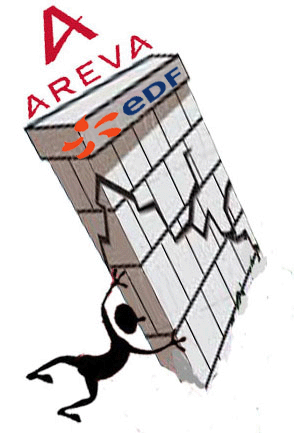
 French unions walk out of nuclear sector meeting with minister, Reuters, 18 July 16 Several French trade unions walked out of a meeting with the economy minister on the nuclear sector on Monday, saying they did not want their participation used as a cover to sanction decisions such as on EDF’s Hinkley Point project in Britain.
Economy Minister Emmanuel Macron was expected to meet the energy branch of the trade unions to discuss the overhaul of the French nuclear sector which has been in turmoil since the Fukushima disaster in 2011.
The unions, worried that heavily indebted state-controlled utility EDF is taking on too much, are against the company pushing ahead with an 18 billion pound ($23.4 billion) plan to build a nuclear reactor complex at Hinkley Point in southern England and have asked for it to be delayed.
Macron has backed the project and said he expects EDF to make a final investment decision in September.
Representatives of several unions, including the hardline CGT and FO, arrived at the meeting, read a brief statement and left. “Nothing guarantees us that this meeting is not a facade to endorse a decision that we do not agree to. Among others, we reject any forceful decision on Hinkley Point,” the CGT, FO, CGC and UNSA unions said in a joint statement.
The unions said that although the meeting was about the French nuclear sector that comprises several players such as AREVA and CEA, only EDF was present at the talks….http://uk.reuters.com/article/france-nuclear-edf-idUKL8N1A443U
Scottish independence a sure thing, now that UK govt will renew Trident nuclear missile system?
 Trident renewal ‘assures Scottish independence,’ says navy whistleblower William McNeilly https://www.rt.com/uk/351814-trident-renewal-william-mcneilly/ 18 Jul, 2016 As Prime Minister Theresa May convenes Parliament on Monday to debate renewing Britain’s Trident nuclear deterrent, Royal Navy submariner-turned-whistleblower William McNeilly tells RT renewal coupled with Brexit will force Scotland to seek independence.
“They rushed the European vote. Now they want to rush the Trident vote,” said McNeilly.
“Those who support the Trident system lack vision. They talk like they are the ones who want to defend the UK. The truth is they are the ones who will destroy the UK if they get their way.
“Voting to leave the EU, then voting Yes on Trident, will guarantee Scottish independence.”
In May 2015, McNeilly, 27, leaked a report exposing 30 safety and security failures documented over his three-month tour on board one of Britain’s Vanguard submarines. Narrowly escaping jail for the leak, he was dishonorably discharged, returning home to his native Belfast.
McNeilly says renewal will lead to the splintering of the United Kingdom, squander hundreds of billions of pounds, and offer terrorists a vulnerable target.
“Scotland is aiming to get another vote [for independence] and these people want to force the Scottish people to keep Trident. The Trident supporters are on the verge of breaking up the UK with this Trident vote, just like they broke up Europe.
“The majority of Scotland want Trident removed. If they force the Scottish people to keep a nuclear system that is damaging their land and sea, putting their lives and land at risk, costing them an absolute fortune … then the majority of Scotland will vote Yes to leave the UK.”
Already spoiling for a second referendum on Scotland’s independence in the wake of the Brexit vote, in which a majority of Scots voted to “Remain” in the EU, McNeilly believes the Scottish National Party (SNP) will see a vote in favor of Trident’s renewal as the final straw.
“The Better Together campaign were able to secure a No vote in the last [independence referendum] because they used the European Union as leverage. Now the Scottish National Party are the ones who will use the European Union as leverage.
“Trident is the fuel the Scottish National Party needs for an independence vote… the Scottish National Party is striking its matches.”
If Scotland leaves the United Kingdom, the government “will have nowhere to put the submarines and will be forced to spend countless more billions on building a base for them or moving them or looking like complete fools by scrapping them after destroying our unity.”
Democratic senators Urge Obama To Cancel super costly Nuclear Cruise Missile

 Senators Urge Obama To Cancel Nuclear Cruise Missile Aaron Mehta, Defense News July 21, 2016 WASHINGTON — A group of ten Democratic senators have penned a letter to US President Barack Obama urging him to cancel development of a new nuclear-capable cruise missile, in what appears to be the next salvo from nonproliferation advocates on Capitol Hill against the weapon.
At issue is the Long-Range Standoff (LRSO) cruise missile, which will replace the Air-Launched Cruise Missile (ALCM) program with 1,000 to 1,100 cruise missiles, representing the US Air Force’s standoff nuclear delivery capability. The ALCM program is scheduled to age out in 2030.
Proponents say the LRSO is vital to maintaining America’s nuclear posture into the future. But opponents argue the weapon is too costly and unnecessary given other nuclear options, with a vocal minority in Congress starting to advocate heavily for that position.
“Independent estimates suggest that nuclear weapons sustainment and modernization plans could cost nearly one trillion dollars over the next 30 years, putting enormous pressure on our defense budget at a time when non-nuclear systems will also require major expenditures,” wrote the authors of the letter. “In particular, we urge you to cancel plans to spend a least $20 billion on a new nuclear air-launched cruise missile, the Long Range Standoff weapon, which would provide an unnecessary capability that could increase the risk of nuclear war.”
The letter was signed by Sens. Ed Markey and Elizabeth Warren of Massachusetts, Diane Feinstein and Barbara Boxer of California, Al Franken of Minnesota, Jeff Merkley of Oregon, Sherrod Brown of Ohio, Patrick Leahy of Vermont, Ron Wyden of Oregon, and Bernie Sanders, the Vermont senator who recently ended his campaign for the presidency…….
The letter also urged Obama to officially adopt a policy of no-first-use of nuclear weapons, something the United States has traditionally been unwilling to do.
“In light of our unmatched conventional military capabilities, we do not need to rely on the threat of nuclear first-use to deter non-nuclear attacks on our homeland or our allies,” the authors wrote. “By adopting a policy of no-first-use of nuclear weapons, the United States could reduce the risk of accidental nuclear conflict while deterring both conventional and nuclear threats to our security.”
Neither the desire to drop the LRSO, nor the goal of a no-first-use policy, appears likely to gain much traction with Donald Trump, officially named the Republican nominee for president this week.
Speaking to The New York Times, Trump reaffirmed a commitment to the so-called nuclear triad but was noncommittal on the no-first-use idea………http://www.defensenews.com/story/defense/policy-budget/congress/2016/07/21/senators-obama-nuclear-missile-lrso/87384128/
Cumbria demands huge investment to support Moorside nuclear project
 Huge investment needed to support Moorside nuclear project, say council, News and Star, 21 July 2016 CUMBRIA’S council leaders say any new nuclear facility built in the county must be accompanied by huge investment in the area’s key infrastructure – such as the road and rail network.
During a meeting at today’s Cumbria County Council cabinet meeting leader Stewart Young said that the authority needed the Government or NuGen – the firm behind the new Moorside development in west Cumbria – to stump up cash in advance so work can can begin…….
“The sheer scale of this nuclear project is unprecedented for Cumbria and in fact unprecedented for the UK. To ensure that everyone benefits we need a guarantee from Government or NuGen or both of extensive additional investment into services like the county’s infrastructure, such as roads, railways and port, as well as accommodation for the workforce, and the development of skills to ensure that as many jobs as possible are taken by Cumbrians.”
The call was made as part of the council’s formal response to the consultation into the Moorside project…… The formal consultation process ends on July 30. http://www.newsandstar.co.uk/news/latest/Huge-investment-needed-to-support-Moorside-nuclear-project-say-council-731df4b0-d076-4d29-86f7-2eea67a2e265-ds
New Zealand has been well served by its nuclear-free policy
 Nuclear-free has ‘served us well’ – Geoffrey Palmer, Radio New Zealand, 22 July 16 An architect of New Zealand’s once contentious anti-nuclear law says it remains the right approach for the country.
The law is in the spotlight as preparations begin for the first visit by an American warship since the landmark legislation was passed in 1987.
Under the law, the Prime Minister must make an assessment of whether the ship will breach New Zealand’s ban on nuclear weapons and nuclear power.
The US has not sent a naval ship since 1983, as it refuses to say whether its ships are nuclear-armed, as required by New Zealand’s nuclear-free law.
The deputy prime minister at the time the nuclear-free law was passed, Sir Geoffrey Palmer, told Morning Report the policy, and the law behind it, was sound…….http://www.radionz.co.nz/news/national/309192/nuclear-free-has-‘served-us-well’-geoffrey-palmer
USA Dept of Energy funds Florida research into nuclear recycling
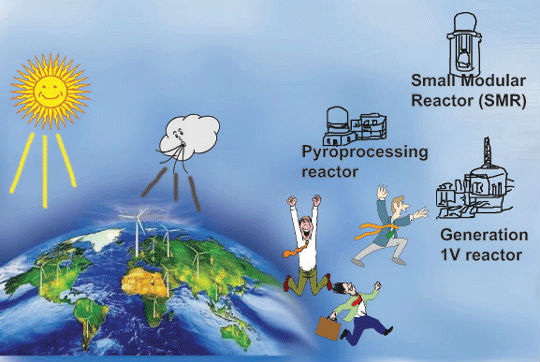 Florida State receives #10 million for nuclear research center Florida State 24/7 JULY 21, 2016
Kathleen Haughney Florida State University will receive $10 million from the U.S. Department of Energy to create a new Energy Frontier Research Center… The center will focus on developing technologies for recycling nuclear fuel and cleaning up Cold War-era weapon production sites. It will be led by Thomas Albrecht-Schmitt, the Gregory R. Choppin Professor of Chemistry at FSU……..Three other institutions will also host research centers. They are The Ohio State University, the University of South Carolina and DOE’s Pacific Northwest National Laboratory. http://news.fsu.edu/Top-Stories/Florida-State-receives-10M-for-nuclear-research-center
UK’s House of Lords’ members, UK banks – financial interests in Trident nuclear programme
 According to the House of Lords register of interests, around 15% of sitting members are directors of, or shareholders in, companies that are either directly contracted to the Trident programme or invest in it.
Specifically Barclays and HSBC. A report by Don’t Bank on the Bomb details the involvement of major financial institutions in the western nuclear weapons industry.
The truth about Trident: the shocking fact that would turn us all against paying for nukes, The Canary, JULY 18TH, 2016 STEVE TOPPLE As parliament debates the renewal of Trident, the UK’s “nuclear deterrent” – the arguments surrounding the controversial weapons system rage as fiercely as ever. But there’s one aspect which has been repeatedly overlooked. UK banks not only finance our nuclear deterrent, but also our supposed “enemy” Russia’s as well, and senior politicians enjoy a direct financial profit through keeping Trident.
The name Trident refers to the nuclear missiles that are carried on four Vanguard-Class submarines. Based out of Faslane, on the Clyde in Scotland, at any one time, there is one submarine on active patrol, another in service, another preparing to patrol and a final one on exercise.
Each submarine can carry 16 Trident missiles (but since 2010 this has been reduced to eight), and each missile can hold 40 warheads.
The cost of replacing the Trident system with “Successor” (which is what the parliamentary debate on Monday is about) is disputed. The official Ministry of Defence (MoD) line is £41 bn per submarine. The Campaign for Nuclear Disarmament (CND) says the true cost is around £205 bn for all four, when you included the cost of their upkeep.
The mainstream arguments for and against Trident are fairly clear cut………
However, there are two arguments that both sides fail to acknowledge – maybe because if they did, it would bring the whole military industry into question. The role of multinational banks and senior UK politicians.
All aboard the Westminster gravy train
The main companies involved in Trident are US multinational Lockheed Martin (who produce the missiles), BAE Systems, Babcock & Wilcox and Rolls-Royce – who are involved in the Successor programme – and also names like Bechtel, Honeywell, Raytheon and Serco who are contracted or subcontracted in relation to the current Trident system.
According to the House of Lords register of interests, around 15% of sitting members are directors of, or shareholders in, companies that are either directly contracted to the Trident programme or invest in it.
Prominent names include Lord Hollick, a Labour Peer who is a director of Honeywell. Lord (William) Hague, chair of the Royal United Services Institute (RUSI). RUSI, who are supposedly impartial US and UK government defence advisors, are sponsored by Babcock, Lockheed Martin, Raytheon and Rolls-Royce.
But one of the most telling individuals is Labour’s Lord Hutton, defence secretary under Gordon Brown. He is an adviser to Bechtel, consultant for Lockheed Martin and chair of the Nuclear Industries Association (NIA). The revolving door (the phrase used to describe MP’s who, once finished in parliament, go into jobs related to their previous role) has never spun so quickly.
It may be no wonder then, that the majority of parliament (excluding the SNP and the Green party) are supportive of renewing Trident.
With reference to the role of multinational financial institutions, all the companies listed above, aside from being involved in Trident, share one other common denominator. They are all financed, or owned, by UK banks. Specifically Barclays and HSBC. A report by Don’t Bank on the Bomb details the involvement of major financial institutions in the western nuclear weapons industry. http://www.thecanary.co/2016/07/18/truth-trident-shocking-fact-turn-us-paying-nukes/
Aging Pickering Nuclear Station that is well past its prime: time to shut it
 Liberals Should Shutter Nuclear Plant Well Past Its Prime Huff Post Mike Schreiner
 Leader of the Green Party of Ontario 07/18/2016 Ontario could save money, increase public safety and create jobs if it closes the Pickering Nuclear Station when its operating licence expires on Aug. 31, 2018. Yet, the Liberal government has approved plans to extend Pickering’s operating life to 2024.
Pickering is already 15 years past its best before date. It’s the fourth oldest nuclear station in North America and the seventh oldest nuclear station in the world. Given its age, it is not surprising that Pickering is one of the most unreliable and poorestperforming nuclear plants in North America. Or that is has the highest operating costs of any nuclear station in North America.
Best before dates are important — not only for the milk you drink but also for the nuclear plant you live by. Pickering is surrounded by over 2.2 million people who live within the 30-kilometre high-risk zone. The Liberals are rolling the dice on a nuclear station that is surrounded by more people than any nuclear plant in North America………
Ontario is currently selling excess electricity at a loss. Ontario’s total electricity exports (22.6 billion kWh) exceeded the total output of the Pickering Nuclear Station (22.6 billion kWh) in 2015. Ontario’s peak hour demand for electricity has declined by 17 per cent in the past decade.
Even if electricity demand goes up because of the Ontario’s efforts to electrify the transportation system, Ontario can purchase electricity from other sources at a lower cost.
We live next door to the world’s fourth largest producer of water power — Quebec. Quebec has a large and growing supply of water power available for export. On average, Quebec water power sells at one third the price of power from Pickering. Why not use this low cost source of clean power to meet possible increases in demand and to cover gaps from the anticipated temporary shut down of the Darlington Nuclear Station?
Ontario can also do more to stretch our energy dollars by investing in energy efficiency measures. The cheapest source of energy is the energy we save. According to the Independent Electricity System Operator (IESO), large industrial energy efficiency programs save electricity at an average cost of 1.5 cents per kWh. Residential, commercial and small industrial energy efficiency programs save electricity at an average cost of 3.5 cents per kWh — far below OPG’s estimate cost of power from Pickering of around nine cents per kWh.
The Liberals seem more interested in making the nuclear lobby happy than in making smart energy choices for the people of Ontario.
And while I understand why the nuclear lobby would fight to protect jobs at Pickering, I believe the Liberal government has a responsibility to make energy decisions that benefit all the people of Ontario even if it means cancelling their $100,000 dinners with the premier.
Moreover, what if we could convert operating jobs at Pickering into jobs decommissioning Pickering–making the area safer for residents while establishing Ontario’s expertise in the decommissioning of nuclear plants. Doing this would create 16,000 person years of employment according to a study by Torrie Smith Associates. This could establish Ontario’s global expertise in decommissioning nuclear plants. With a number of nuclear plants around the world reaching their best before dates, Ontario nuclear workers could benefit from becoming the global experts in shutting down nuclear plants.
The Liberals have a choice to make — give the nuclear lobby what it wants or provide the people of Ontario with an affordable, clean electricity supply; a supply that doesn’t include an old and aging Pickering Nuclear Station that is well past its best before date. http://www.huffingtonpost.ca/mike-schreiner/pickering-nuclear-plant_b_11051446.html
Britain’s Parliament votes to renew Trident nuclear missile system
Theresa May has said she would be willing to authorise a nuclear strike that could kill 100,000 people, as the House of Commons voted overwhelming to replaceBritain’s Trident programme.
The prime minister confirmed she would be prepared to press the nuclear button if necessary as she opened a debate about whether the UK should spend up to £40bn replacing four submarines that carry nuclear warheads.
After more than five hours of discussion, parliament voted in favour of Tridentrenewal by a majority of 355 in a motion backed by almost the entire Conservative party and more than half of Labour MPs.
It was opposed by all Scottish National party (SNP) MPs, the Lib Dems and Labour leader, Jeremy Corbyn, a lifelong unilateralist who spoke out strongly against the plans during the debate.
Other members of Corbyn’s frontbench team, including the shadow defence secretary, Clive Lewis, and the shadow foreign affairs secretary, Emily Thornberry, abstained after claiming in a Guardian article that the government was turning an issue of “national security into a political game”.
However, around 140 of his MPs – including leadership challengers Angela Eagle and Owen Smith – voted in favour of renewing Trident, with many highlighting Labour’s historic position in support of a continuous at-sea nuclear deterrent. Forty-seven Labour MPs joined Corbyn in voting against Trident, while another 41 were absent or abstained.
While Labour were split on the issue, the Conservatives have been hoping the Trident issue could help unify their party after a fractious EU referendum campaign.
However, May attracted gasps during the debate when she made clear she would be willing to authorise a nuclear strike killing 100,000 people, when challenged by the SNP about whether she would ever approve a nuclear hit causing mass loss of life……. https://www.theguardian.com/uk-news/2016/jul/18/mps-vote-in-favour-of-trident-renewal-nuclear-deterrent

Teresa May would approve a nuclear weapon strike on a population
Theresa May would authorise nuclear strike causing mass loss of life Asked in Trident debate if she would approve attack that could kill 100,000 people, PM answers with a decisive ‘yes’,Guardian, Rowena Mason, Anushka Asthana, and Rajeev Syal, 19 July 16. Theresa May has said she would be willing to authorise a nuclear strike killing 100,000 people as she made the case for replacing Britain’s Trident submarines ahead of a House of Commons vote on the matter.
The prime minister answered decisively when challenged by the Scottish National party about whether she would ever approve a nuclear hit causing mass loss of life.
Intervening in her opening speech, the SNP MP George Kerevan asked: “Is she personally prepared to authorise a nuclear strike that can kill a hundred thousand innocent men, women and children?”
May responded: “Yes. And I have to say to the honourable gentleman the whole point of a deterrent is that our enemies need to know that we would be prepared to use it, unlike some suggestions that we could have a deterrent but not actually be willing to use it, which seem to come from the Labour party frontbench.”
Her statement was met by gasps from some MPs on the opposition benches, as the chamber debated whether or not to renew Trident.
Jeremy Corbyn, the Labour leader, responded to May by making the case for nuclear disarmament, pointing out that the party’s pro-Trident position was under review.
He has given his MPs a free vote during Labour’s ongoing defence review, which the Guardian understands involves at least five options ranging from complete replacement to disarmament by the 2030s. The three other options are reduced patrols and fewer submarines, missiles carried by aircraft, and adapted submarines to carry both conventional and nuclear warheads.
Speaking in the Commons, Corbyn said there were currently 40 warheads, which are each eight times as powerful at the atomic bomb that killed 140,000 people at Hiroshima in Japan in 1945.
“What is the threat we are facing that one million people’s deaths would actually deter?” he said, adding it did not stop Islamic State, Saddam Hussein’s atrocities, war crimes in the Balkans or genocide in Rwanda.
“I make it clear today I would not take a decision that kills millions of innocent people,” Corbyn told MPs. “I do not believe the threat of mass murder is a legitimate way to deal with international relations.”
May said it would be a “dereliction of duty” to give up Britain’s nuclear deterrent and pledged to keep to the Nato target of spending 2% of national income on defence while she is prime minister.
Addressing the idea of downgrading the deterrent to a cheaper option, she said: “I am not prepared to settle for something that does not do the job.”……https://www.theguardian.com/uk-news/2016/jul/18/theresa-may-takes-aim-at-jeremy-corbyn-over-trident-renewal
18 July British Parliament to vote on renewal of Trident nuclear missile system
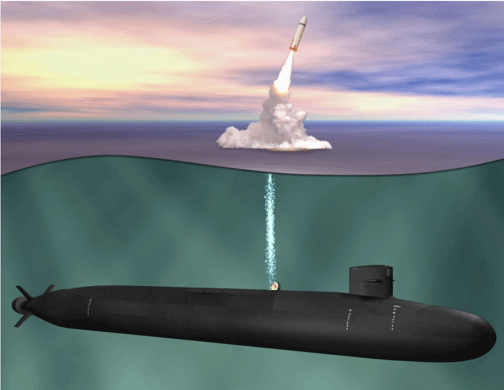 British MPs to vote on renewing nuclear deterrent on July 18 MENAFN – Muscat Daily – 13/07/2016 Warsaw– Britain’s parliament will vote this month on renewing the Trident nuclear weapons programme, Prime Minister David Cameron said Saturday as he sought to reassure NATO allies alarmed by Brexit.Cameron’s announcement at a NATO summit in Warsaw comes as the alliance grapples with the implications for its unity after key member Britain shocked the world by voting to leave the European Union.Conservative leader Cameron is pushing through the vote on the A20 billion (23 billion euro, 25 billion) plan to maintain the submarine-based system before he steps down in September in the wake of the EU result.”Today I can announce that we will hold a parliamentary vote on the 18th of July to confirm (lawmakers’) support for the renewal of a full fleet of four nuclear submarines capable of providing around-the-clock cover,” Cameron told a press conference at what will be his final NATO summit after six years in power……
Cameron is likely to win the Trident vote as his party widely backs it.The leader of the main opposition Labour party Jeremy Corbyn has opposed the upgrade but a significant part of his increasingly rebellious MPs are also likely to support it.The future of Britain’s nuclear deterrent is however in question as the submarines are based in Scotland, where the government is considering a second independence referendum following the Brexit vote.Asked why he was pushing through the vote before handing over to his as-yet-undecided successor, Cameron said it was a pledge in his party’s 2015 election manifesto “and we need to get on with that.””I don’t think it needs to be caught up in the leadership contest (of the Conservative party) and we will be doing it on the 18th of July,” he said….http://www.menafn.com/1094852840/British-MPs-to-vote-on-renewing-nuclear-deterrent-on-July-18
UK does not want to move nuclear weapons from Scotland
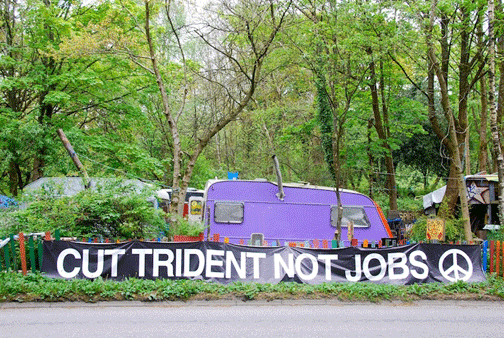 ‘No plans’ to move nuclear weapons from Scotland, BBC News, 15 July 2016
The UK government does not intend to make alternative plans for the storage of the UK’s nuclear weapons outside of Scotland, it has emerged.
The Scottish government opposes the Trident missile system and the storing of nuclear weapons in the country.
On Monday, MPs will vote on whether or not to renew Trident, which is based at Faslane on the Clyde.
No contingency plans for moving Trident were put in place in the run up to the 2014 Scottish independence vote. The Scottish government had pledged it would get rid of nuclear weapons if Scotland voted to leave the UK.
The MoD has said it was not anticipating another referendum and Faslane is the best place for the weapons to be based.
After the UK referendum vote to leave the EU, Scotland’s First Minister Nicola Sturgeon said a second independence referendum was now “highly likely”…….http://www.bbc.com/news/uk-scotland-scotland-politics-36800543
1 This Month
15 October. Joint Appeal for Nuclear Abolition Day -presentation to the UN on October 15 will be live on UNWebTV
Endorse the Nuclear Abolition Day Appeal
23-25 October – on Zoom – World BEYOND War’s annual global conference

To see nuclear-related stories in greater depth and intensity – go to https://nuclearinformation.wordpress.com
-
Archives
- October 2026 (149)
- September 2026 (339)
- August 2026 (330)
- July 2026 (355)
- June 2026 (287)
- May 2026 (306)
- April 2026 (356)
- March 2026 (251)
- February 2026 (267)
- January 2026 (308)
- December 2025 (358)
- November 2025 (359)
-
Categories
- 1
- 1 NUCLEAR ISSUES
- business and costs
- climate change
- culture and arts
- ENERGY
- environment
- health
- history
- indigenous issues
- Legal
- marketing of nuclear
- media
- opposition to nuclear
- PERSONAL STORIES
- politics
- politics international
- Religion and ethics
- safety
- secrets,lies and civil liberties
- spinbuster
- technology
- Uranium
- wastes
- weapons and war
- Women
- 2 WORLD
- ACTION
- AFRICA
- Atrocities
- AUSTRALIA
- Christina's notes
- Christina's themes
- culture and arts
- Events
- Fuk 2022
- Fuk 2023
- Fukushima 2017
- Fukushima 2018
- fukushima 2019
- Fukushima 2020
- Fukushima 2021
- general
- global warming
- Humour (God we need it)
- Nuclear
- RARE EARTHS
- Reference
- resources – print
- Resources -audiovicual
- Weekly Newsletter
- World
- World Nuclear
- YouTube
-
RSS
Entries RSS
Comments RSS

