Renewable power peaks in Western Europe squeezing out French nuclear power
France is surrounded by countries with a lot of solar and wind, with the exception of Switzerland. It thus seems that renewable power peaks in western Europe might be squeezing out French nuclear power.
French nuclear under pressure – from German renewables http://reneweconomy.com.au/2016/french-nuclear-pressure-german-renewables-27574 By Craig Morris on 7 June 2016 In late May, strikes reduced nuclear power production in France. Yet even more plants were offline a few weeks earlier without any strikes at all. German and European renewable electricity may have been one reason why France switched off so many nuclear plants that weekend. Craig Morris takes a look.
The news has been a bit difficult to comprehend. For instance, Reuters reported that labor union strikes on May 26 would affect the country’s “19 plants”. To be more precise, the country has 58 reactors in 19 locations. The difference in these numbers is important if we want to understand what it means that nine reactors were switched off that day because of the strike. Less than a sixth of the reactors were thus affected, not nearly half. Still, nuclear “must be designed to sidestep labor-management antagonisms,” wrote Mark Hertsgaard back in 1983. Strikes are relevant for nuclear safety.
On the other hand, 33 of France’s 58 reactors were offline or running at reduced output that day. Yet, the situation on Thursday (May 26) was not as grave as the one on Sunday (May 15) though it drew much less attention. The strikes on May 25 “only” brought nuclear power production down below 40 GW (and briefly below 37 GW, as shown in the chart below [on original] ).
In contrast, nuclear power production fell below 28 GW on Sunday (May 15) which may be an historic low (it is the low for the year). Note as well the time difference; the low on May 26 (workday) occurred in the middle of the night, when demand is low. But the low on Sunday (May 15) occurred in the afternoon.
There is an interesting correlation between the probably record peak share of renewable electricity in Germany at 3 PM that same day. As the chart below [on original] shows, wind and solar power collectively came in at around 35 GW – to serve demand only around 10 GW higher. All other power plants (hydro, biomass, coal, natural gas, and nuclear) were pushed down to 17 GW, more than half of which was for export.
That day, 34 of France’s 58 nuclear reactors were off-line or running at throttled output, a number that may be an historic record (if anyone can help us find that out, please use the comment box below). Eight of those 34 events were unplanned.
Note that all eight of those unplanned events in France began no later than May 14, the day before the new record in the share of renewable electricity in Germany. But as the chart above [on original] shows, renewables were already putting intense pressure on Germany’s power fleet that Saturday as well.
France is surrounded by countries with a lot of solar and wind, with the exception of Switzerland. It thus seems that renewable power peaks in western Europe might be squeezing out French nuclear power. If so, we will see how flexible the nuclear fleet can be. My bet is that France cannot afford to build up solar and wind any further unless it starts closing nuclear reactors. If neighboring countries continue to develop these two energy sources, the result could be more failures in France’s aging nuclear fleet.
Some of the other shutdowns deserve closer attention. On March 31, the nuclear plant Paluel 2 “just barely escaped catastrophe,” as Le Parisien put it (in French). That day, a 465-ton steam generator suspended above the reactor’s concrete pool (the facility was not in operation at the time) fell some 22 meters, causing an impact “comparable to an earthquake,” according to the French paper. It is unclear whether the reactor will ever go into operation again.
If it doesn’t, then the country’s oldest reactor, Fessenheim, technically might not need to be switched off. The current deal is that it will be shut down so that the new one in Flamanville can be turned on. Flamanville may never be completed, however, and Fessenheim is not doing so well itself. Block 1 was switched off in May when the potential for a leak was discovered. Overall, the reactor failed four times in May alone and was also switched off completely once for two days of scheduled maintenance.
France has put so many eggs in the nuclear basket that it cannot transition away from the technology. And because too many people concerned about carbon emissions fail to understand how incompatible nuclear is with wind & solar, France just may try to integrate the two. The result could be an accident that will change public opinion in the country forever, but it would be a high price to pay for the insight that the future is with wind & solar – and that nuclear is incompatible with them.
Georgia new nuclear plant, over budget, behind schedule, and now hits a new snag

Jacob Hawkins said the company will suspend preliminary work on the site if McDonald’s motion passes.
“A delay of even a few years in these actions will jeopardize our ability to keep new nuclear as a timely option for customers,” he said…..
McDonald’s motion comes as the commission is set to hear testimony next week on construction of the nation’s first two commercial nuclear reactors in 30 years at Plant Vogtle, where Georgia Power is the majority owner. It is three years behind schedule and around $1 billion over budget, and the commission staff is investigating whether to recommend having electricity customers pay the tab for the overage.
Last week, SCANA asked the South Carolina counterpart to the commission to charge their customers for $852 million in overages for two reactors it is building at Plant Summer…….http://chronicle.augusta.com/news/metro/2016-06-02/plans-more-nuclear-generation-hit-obstacle?v=1464916692#comment-form
Seattle City Council calls for replacing nuclear power with renewable energy
Seattle City Council passes resolution opposing nuclear power

Northwest’s only nuclear power plant is near Richland
Resolution does not call directly for shutdown of Tri-City plant
Resolution supporters say it is important tool for those opposed to nuclear plant BY ANNETTE CARY acary@tricityherald.com 2 June 16 The Seattle City Council this week told its utility to move away from getting electricity from fossil fuels and nuclear energy.
The resolution also directs Seattle City Light Department to use its position on the Energy Northwest board to consider replacing its electricity with carbon-neutral alternatives.
Energy Northwest operates the Northwest’s only nuclear power plant, the Columbia Generating Station near Richland.Its production goes to the Bonneville Power Administration, which supplies a portion of Seattle’s electricity, including about 4 percent of the city’s electricity that comes from the nuclear plant.
The activist group that spearheaded the resolution said the resolution gives Seattle City Light the goal of closing the Richland reactor.
The document, which the Seattle council passed unanimously, is intended to oppose new nuclear efforts and require an ongoing evaluation of existing nuclear power generation on the basis of health, safety, reliability and cost. It also opposes the use of fossil fuels to produce electricity.
The resolution does not explicitly call for a shutdown of the Richland nuclear plant, “but it still is a very important tool that activists believe they can use to put pressure on all those who decide the fate of Columbia Generating Station,” said Councilwoman Kshama Sawant. She called the language in the resolution a compromise. It was written by activist organizations, including Physicians for Social Responsibility and Heart of America Northwest.
Physicians for Social Responsibility said in a statement before the council voted that the resolution would establish Seattle City Light as the first utility in the Northwest to set parameters for closing the Columbia Generating Station.
The resolution makes note of the workforce at the nuclear plant, saying there should be retraining programs, retirement plans and reassignment to decommissioning as part of a transition to clean, healthy and renewable electricity production…..
Those participating in the public comment period of the council meeting supported the resolution. They said the reactor is aging and not designed to withstand a severe earthquake and that the nation has no way to dispose of used nuclear fuel.
They said it has similarities to the reactors involved in the Fukushima, Japan, nuclear disaster. They said nuclear power was not economical and that the electricity it produced — the equivalent of the electricity required by a city the size of Seattle — could be replaced at a reduced cost by a combination of renewables such as wind and solar and conservation.
The resolution discussed the advances being made in storing solar and wind power, which can only be produced as the weather allows, saying the advances make the goal of 100 percent renewable electricity achievable……http://www.tri-cityherald.com/news/local/article81274437.html
Trump is too dangerous and unstable to have the nuclear codes – says Hillary Clinton
 Hillary Clinton: Trump is too dangerous and unstable to have the nuclear codes
Democratic frontrunner attacks Trump’s ‘personal feuds and outright lies’ in blistering speech that questions GOP candidate’s suitability for the White House, Guardian, 2 June 16, Rory Carroll Hillary Clinton has lacerated Donald Trump’s fitness to lead the United States in a tour-de-force assault on his record and temperament, branding him too dangerous and unstable to be entrusted with nuclear codes and warning of economic crisis if he were to reach the White House.
The Democratic frontrunner and former secretary of state made the sobering yet blistering assault in a speech in San Diego on Thursday which sought, in effect, to disqualify the Republican presumptive nominee as a valid candidate.
“Donald Trump’s ideas aren’t just different, they’re dangerously incoherent. They’re not even really ideas, just a series of bizarre rants, personal feuds and outright lies,” she said. “He is not just unprepared. He is temperamentally unfit to hold an office that requires knowledge, stability and immense responsibility.”
He is temperamentally unfit to hold an office that requires knowledge, stability and immense responsibility
Flanked by US flags for the widely trailed address, Clinton said a Trump presidency could lead to catastrophe. “He should not have the nuclear codes because it’s very easy to imagine Donald Trump leading us into a war just because someone got under his very thin skin. We cannot let him roll the dice with America.”
Speaking on the eve of primary elections that are expected to push Clinton past the threshold of delegates needed to secure the Democratic nomination, signalling the official start of the general election, Clinton made a tacit plea to independents and moderate Republicans, saying Trump denigrated US power even when Ronald Reagan was president…….http://www.theguardian.com/us-news/2016/jun/02/hillary-clinton-donald-trump-speech-foreign-policy-security
Exelon gets employees to lobby for nuclear subsidies
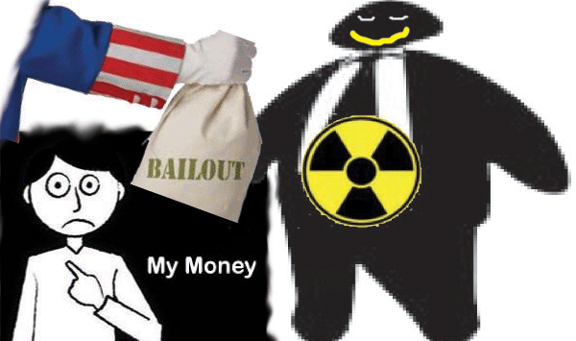 Exelon to Close 2 Nuclear Sites; Still Pushing for Subsidies http://abcnews.go.com/Politics/wireStory/exelon-close-illinois-nuclear-plants-39555124 By JOHN O’CONNOR, AP POLITICAL WRITER SPRINGFIELD, Ill. — Jun 2, 2016 Exelon Corp. says it will shut two Illinois nuclear plants because of legislative inaction on state financial support, but the company is still lobbying for the plan.
An email obtained by The Associated Press that Exelon President and CEO Chris Crane sent to employees about Thursday’s decision also urged them to call a telephone number and record a message in favor of the legislators to be played for lawmakers and Gov. Bruce Rauner.
Exelon announced earlier Thursday it would close unprofitable plants in Clinton and the Quad Cities by 2018 after lawmakers adjourned without approving a plan for Exelon to share in state subsidies for carbon-free electric generation.
The telephone number’s greeting encourages employees to say immediate legislative action could save the plants.
Exelon spokesman Paul Adams confirmed the closure decision is not irreversible.
Ontario Power Generation wants a whopping 69 per cent increase in price it gets for nuclear power
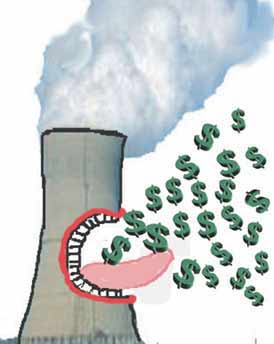
 OPG applies for rate increases to fund nuclear station refurbishing Hamilton Spectator By Keith Leslie TORONTO, 2 June 16 — Ontario Power Generation has applied for a whopping 69 per cent increase in the amount it is paid for nuclear power over the next five years.
OPG says it needs the increase to help pay for the $12.8-billion refurbishment of the Darlington nuclear station, which the government announced in January to extend the life of the reactors by another 30 years.
The government-owned utility is also asking for a small increase — less than the rate of inflation — in the rate it’s paid for hydroelectric power……
The Ontario Clean Air Alliance says OPG’s application shows it wants nine cents a kilowatt hour for the power produced from Darlington, which is more expensive than the 8.6 cents a kWh it pays for wind power.
“Our electricity rates are already too high, and we shouldn’t increase them even further when we can actually lower our bills by choosing a cleaner and safer option,” said Alliance chair Jack Gibbons.
“Why are we putting our children at risk of a nuclear accident when there are lower-cost options?”
Gibbons said Ontario should also consider signing long-term contracts to import more clean, renewable electricity from Quebec to offset the nuclear generation……
In addition to the Darlington refurbishment, which is supposed to extend its life until 2050, OPG is also undertaking work to squeeze about four more years of life out of reactors at the Pickering nuclear generating station.
And Bruce Power is spending $13 billion to refurbish six reactors at the nuclear generating station it operates under contract to the government near Kincardine……
Ontario pouring good money after bad in its failing nuclear dream
Ontario’s misguided love affair with nuclear power, The Star, 31 May 16 Instead of seeing principled leadership in Ontario, we are seeing the opposite – a stealthy effort to keep an old and uneconomic nuclear dinosaur on life support. By JACK GIBBONS
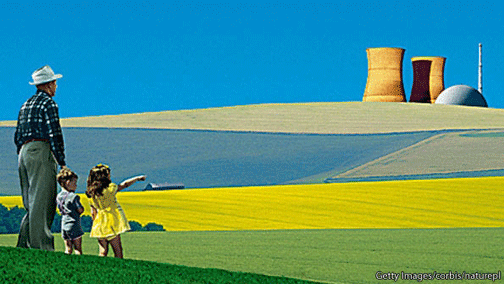
Construction on Pickering began in the 1960s and its first reactors were powered up in 1971 – the same year Led Zepplin released Stairway to Heaven. Despite 45 years of operation, its owner, Ontario Power Generation (OPG), only recently decided to see if the millions of people living around the plant are aware of its plans for what they should do in the event of an emergency at the plant. It quickly found out that a) local residents had no clue what they were supposed to do; and b) they weren’t buying OPG’s plan to “shelter in place” (stay put) during a high-level emergency.
No other nuclear plant in North America even comes close to having as many people on its doorstep as the Pickering Nuclear Generating Station. …….
Pickering is already sucking up $900 million per year in out-of-market subsidies for its power. As one of the highest-cost nuclear plants on the continent, keeping Pickering running means higher electricity rates.
And it’s not like we need its power: In 2015, Ontario exported more power than Pickering produced – and lost money doing it.
So why after promising to close Pickering by 2020 at the latest are the Liberals now working to keep it limping along? It could be like your Buick: You bit the bullet on that costly new transmission and just can’t admit it was a big mistake. Repairs to Pickering’s reactors in the late 1990s went massively over budget and were years late in being completed.
The truth is, however, that “fixing” Pickering is like fixing your aging Buick – it is an ongoing and costly battle. One reactor has recently been offline for months for repairs and breakdowns and “incidents” are regular occurrences at North America’s fourth oldest nuclear station. Pickering was the site of the worst loss of coolant accident at a Canadian reactor, during which workers had to siphon heavy water off the floor of the containment building and back into the reactor in 1984.
Designed in the 1950s and ‘60s, Pickering is an unusual nuclear facility: It has multiple reactors sharing a single containment building and has no secondary fast shutdown system. Separate containment for individual reactors and redundant fast shutdown systems have been standard issue for most nuclear plants for years.
The real reason the government wants to keep Pickering going is that our energy planners remain some of the last people on the planet who still believe that nuclear energy is the best way to meet our need for a brightly lit home or a cold drink. Only France outranks us for dependence on nuclear energy……
The problem is, we are all going to pay the price for their love affair with this outdated technology. https://www.thestar.com/opinion/commentary/2016/05/30/ontarios-misguided-love-affair-with-nuclear-power.html
UK: Secrecy over nuclear waste plans regarding EDF’s Hinkley Point deal
 EDF’s Hinkley Point deal over radioactive waste sparks anger https://www.theguardian.com/business/2016/may/30/edf-hinkley-point-deal-radioactive-waste-sparks-anger?utm_source=esp&utm_medium=Email&utm_campaign=GU+Today+main+NEW+H+categories&utm_term=174833&subid=12125&CMP=EMCNEWEML6619I2
Expert criticises ministers over refusal to disclose agreement with energy supplier for planned nuclear plant Guardian, Terry Macalister, 31 May 16, A furious row has broken out after the Department of Energy and Climate Change (DECC) refused to disclose the arrangement with EDF for dealing with radioactive waste at the planned Hinkley Point C nuclear plant.
The information commissioner’s office has turned down a freedom of information (FoI) request for state aid arrangements between the UK and the European commission to be made public.
The FoI complainant, David Lowry, has launched an appeal, claiming it is in the public interest for British citizens to be able to judge whether their government had made the right decision about the new reactors in Somerset.
Lowry, a British-based senior research fellow with the Institute for Resource and Security Studies in the US, said: “I do not believe the balance of judgment should be in favour of a foreign company, EDF Energy, who will potentially make huge multibillion-pound financial gain from the continued non-disclosure, and hence non scrutiny, over myself as a British tax and electricity bill payer.”
The government said that anyone building new reactors in Britain must manage and pay for the cost of handling waste products, unlike the existing situation where all radioactive materials are effectively dealt with through the public purse via the Nuclear Decommissioning Authority.
However, although the operator must agree to take responsibility for the spent fuel and other radioactive waste, the cost is expected to be passed on to the domestic electricity user through higher bills.
Under the new arrangements, the prospective nuclear operators must enter into a waste transfer contract (WTC). Those contracts, like the one covering Hinkley, must be submitted for scrutiny by the EC under its state aid rules. It is the pricing methodology of the WTC that Lowry wished to review and which remains under wraps.
Greenpeace said Lowry raised critical issues that went to the heart of whether the £18.5bn project was good or bad value for the taxpayer and British energy consumers.
John Sauven, the executive director of Greenpeace, said: “The government has repeatedly said that Hinkley is great news for the British public and our energy security. But they refuse to back this up with hard evidence. In fact, DECC is incredibly cagey and is failing to answer questions on where the dangerous radioactive waste will go or how much Hinkley will cost us.
“If Hinkley is such a good deal, it should be no problem for the government to release the information to prove it. Their failure to do so leaves us to believe that their assumptions are correct – it’s a terrible deal for bill payers and they simply don’t know what to do with the nuclear waste.”
DECC turned down the original request under regulation 12(5)(a) of the Environmental Information Regulations 2004 arguing, “disclosure would adversely affect international relations, defence, national security or public safety”.
This argument was accepted by the information commissioner who believed that disclosure of the state aid discussions with the EC “would adversely affect the relationship between the (UK) government and the commission’s ability to work effectively together”.
Lowry said he thought the real reason the government did not want to disclose the information was to save ministers from embarrassment. “I think the concern is if the truth were to come out with documents being made public would adversely affect the credibility of the government submissions as their threadbare content would be laid bare for all to see,” he said.
DECC declined to comment, saying it was a matter for the information commissioner.
Our only hope against nuclear pollution and annihilation – an informed citizenry
 Extremely Cautionary Catastrophes: Fukushima And Chernobyl, By Robert Snefjella, 28 May, 2016, Countercurrents.org “………wherein does our best chance lie of reducing the harm and risk of our nuclear folly? How do we provide the basis by which we could begin to dismantle our folly and reconstruct cultures that are viable.
Those iconic personages Albert Einstein and Dwight Eisenhower are among the many concerned people who have located hope for policy sanity in an informed public:
Einstein found our “only hope” [regarding nuclear technology] in “an informed citizenry” [that] “will act for life and not for death.”
Eisenhower offered that
“only an alert and knowledgeable citizenry can compel the proper meshing of the huge industrial and military machinery of defense with our peaceful methods and goals, so that security and liberty may prosper together.”
Note well: they did not base their hope on experts or oligarchs or generals or silly people who are enthralled by the illusion of their own extraordinary intelligence. They based hope on a well informed us.
Implied in Einstein and Eisenhower’s hope is that the broad public, well informed, has a far greater potential repository of creativity and common sense and decency and such – beneficent functionality – than any cult, tribe, institution or faction thereof. Continue reading
Taiwan definitely to abandon nuclear power

 Gov’t to end nuclear power in 2025: MOEA
|
The China Post news staff
May 26, 2016, Economics Minister Lee Shih-guang Wednesday stressed that Taiwan will definitely abandon nuclear power in 2025, amid renewed speculation about the fate of the nearly completed Fourth Nuclear Power Plant. Lee said there has been a national consensus on turning Taiwan into a “nuclear-power free home,” a goal that many hope will be achieved by 2025. The policy is against extending the service lives of the three currently operational nuclear power plants, he said. “There is no room for discussion. When 2025 comes, nuclear power will be abandoned,” Lee said at his first press conference since taking office on May 20, reiterating President Tsai Ing-wen’s promise of giving up nuclear power…….http://www.chinapost.com.tw/taiwan/national/national-news/2016/05/26/467321/Govt-to.htm |
‘Nuclear energy has no sustainable, democratic future in Japan’,
‘Nuclear energy has no sustainable, democratic future in Japan’, DW, 29 May 16 Despite the majority of Japanese opposing a restart of the nation’s nuclear reactors, the government continues to press for a full resumption of nuclear power. Energy expert Tetsunari Iida tells DW the reasons behind it. “…….Tokyo plans to increase nuclear power as a share of the country’s energy profile to between 20 and 22 percent by 2030.
However, public opposition to nuclear energy remains steadfast, as the disaster continues to loom in the Japanese psyche and many harbor safety concerns in the earthquake-prone country.
Kansai Electric Power Co. announced on January 28 plans to restart the nation’s third nuclear reactor, after it cleared new post-Fukushima safety regulations.
In a DW interview, sustainable energy policy expert Tetsunari Iida says the nuclear lobby in Japan has not only economic interests, but also a strong conviction in the conservative energy policy concept, which gives nuclear power a major role in the energy policy mix.
DW: Why has the government decided to restart some of the reactors despite protests from the population?
Tetsunari Iida: There is a strong belief among certain sections in Japan that nuclear power is one of the most important components of the energy mix. This is an old-fashioned and conservative energy policy concept shared by those at the center of Japan’s energy policy circle, such as the ruling Liberal Democratic Party (LDP) and the country’s industry association Keidanren.
For them, the resumption of nuclear power generation is of utmost importance. That is why Japan’s government has been strongly urged to restart the nuclear reactors.
Is the conservative government of PM Abe not taking the concerns of the population seriously?
No, I do not believe PM Abe takes the concerns of the population seriously. I am of the view that Abe still believes nuclear energy is safe, cheap and stable, even after the Fukushima disaster.
According to nuclear energy opponents, many Japanese are afraid of the potential consequences of restarting the nuclear reactors, and demand a change in energy policy. So why isn’t there much more public resistance to the government’s plans?
The majority of people in Japan have been against the Abe government’s plans to restart the nuclear reactors. This opposition, however, is not necessarily having an impact on the people’s political affiliations and their voting tendencies……….
Of course, renewable energy is really helpful to achieve energy independence. But the benefits are not solely limited to securing energy independence, as renewables also help to mitigate climate change, create jobs and boost economic growth.
Speaking in ecological and economic terms, which renewable energy sources are best suited for an industrialized nation such as Japan?
From resource potential point of view, wind and solar power are the best suited for Japan…….
Japan can afford to completely give up nuclear power. In fact, sticking to nuclear represents an old-fashioned economy, whereas renewable energy is a symbol of a new industrial revolution……. http://www.dw.com/en/nuclear-energy-has-no-sustainable-democratic-future-in-japan/a-19011468
Consumers keep footing the bill for nuclear project
 Post and Courier, BY TERESA ARNOLD May 29 2016 Did you know that South Carolina law allows utility companies to charge consumers more for cost overruns on big projects like building a nuclear power plant?
It sounds shocking, but the Office of Regulatory Staff (ORS) just published a report showing that SCE&G’s V.C. Summer project has cost $1.5 billion more than originally estimated.
And guess who is footing the bill? South Carolina consumers, many of whom live on modest incomes and cannot afford these additional costs.
AARP South Carolina continues to raise concerns about the cost overruns that have resulted during the current SCE&G capital improvement projects. The most serious questions we raised about the state regulations that allow SCE&G to charge consumers for cost overruns remain unanswered.
AARP South Carolina asked the Office of Regulatory Services to answer the following questions:
1) Is there less incentive for a utility like SCE&G, operating under current state law, to prevent “risk shifting,” since the monetary risk or cost overruns are being borne by consumers, rather than the traditional method that expects the utility to bear that risk? The analysis ORS commissioned does not answer this question.
2) ORS has acknowledged that the current state law governing utility capital improvements, in this case — V.C. Summer nuclear plants — prevents refunds or rebates to the consumer, if a project goes bad. But are there any actions that ORS could take under the law to ensure that cost overruns are not borne by captive consumers? Or does state law prevent ORS from taking action to protect consumers from cost overruns?
3) Is there any other provision in current law that would allow SCE&G to provide voluntary rebates or future rate increase offsets to consumers?……….http://www.postandcourier.com/20160529/160529294/consumers-keep-footing-the-bill-for-nuclear-project
Political scandal hangs over South Africa’s nuclear energy plans
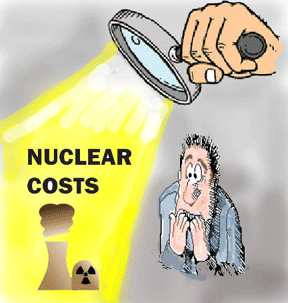 How the state capture controversy has influenced South Africa’s nuclear build , Sunday Times, 29 May 16 South Africa is facing a critical decision that could see it investing about R1 trillion – or US$60 billion to $70 billion – in a fleet of new nuclear power stations. Proponents argue that it will greatly increase electrical base-load capacity and generate industrial growth. But opponents believe the high cost would cripple the country economically.
What should be an economic decision has now been clouded by controversy, with political pressure to push through the nuclear build and the increasingly apparent rewards it would bring to politically linked individuals.
The nuclear expansion programme needs to be considered exceptionally carefully given that the required financial commitment is roughly equal to the total South African annual tax revenue. Loan repayments could place a devastating long-term burden on the public and on the economy as a whole……..
South Africa has had remarkable success with speedy, cost-effective installation of renewable energy power plants. In addition to this, technologies for harvesting South Africa’s plentiful wind and solar energy resources are rapidly becoming cheaper, raising the question of whether the country should not invest more in these options rather than in going nuclear.
The argument that nuclear energy provides a stable base load, independent of weather conditions, is mitigated by improvements in energy storage technologies……
 Zuma and the Russians The nuclear debate gained a political dimension when President Jacob Zuma and his Russian counterpart, Vladimir Putin, started to develop an unusually close relationship. It culminated in an announcement that the Russian nuclear developer, Rosatom, had been awarded the potentially highly lucrative contract to build the new reactors. The agreement was later denied.
Rosatom was considered the preferred contender, with other bidders only there to lend the process legitimacy, according to some observers. The lack of transparency surrounding the process, coupled with a history of corruption in South African mega-projects like the arms deal, has made the whole scheme seem suspicious to the broader public.
A thickening plot
A crucial thread in this saga involves the Shiva uranium mine, about 30km north-west of Pretoria, the country’s executive capital. It originally belonged to a company called Uranium One, a subsidiary of Russia’s Rosatom. It was sold in 2010 to Oakbay Resources, a company controlled by members of the politically connected Gupta family and the president’s son, in a deal that greatly surprised economists.
The mine was deemed unprofitable and thus unattractive to other mining companies. But it was still considered worth a whole lot more than the R270 million paid by Oakbay. The mine would, however, become highly profitable if it became the uranium supplier to the new nuclear power stations. Oakbay and its associates therefore have a very strong incentive for this nuclear build to happen.
 It is here that the nuclear build drama feeds into the recent major controversy surrounding alleged state capture, meaning a corrupt system where state officials owe their allegiance to politically connected oligarchs rather than the public interest. This was highlighted by the shock dismissal of Finance Minister Nhanhla Nene, a reported nuclear build sceptic, but also by subsequent allegations of ministerial positionsbeing offered to people by members of the Gupta family.
Political, legal and civil opposition
The nuclear build’s association with the Zuma faction in the ruling African National Congress (ANC) will be a political hot potato for decades to come. ……
A negative nuclear outlook
Building these plants is a risky business proposition, especially for Rosatom, which is implicated in the developing scandal. The recent political mood swing against state capture and a likely credit rating downgrade add to the risk.
Rosatom has suggested a nuclear build financing option that effectively amounts to it providing a loan. It is, however, conceivable that a future government may not honour debt repayments if there is a view that the construction deal was secured irregularly.
The narrow public support base and downright hostility in some quarters to a nuclear build has already effectively stalled local nuclear construction plans. The level of controversy, high costs and potential for further disruption mean that the planned implementation could only proceed under severe social strain.
Such a scenario could very well cost the ruling ANC the 2019 national elections. And the party is becoming increasingly aware of this. As such, it is posited that the nuclear build will not happen any time as soon as planned.
– Hartmut Winkler, Professor of Physics, University of Johannesburg http://www.timeslive.co.za/sundaytimes/opinion/2016/05/27/How-the-state-capture-controversy-has-influenced-South-Africa%E2%80%99s-nuclear-build
Hinkley nuclear project’s future is in doubt – French unions not happy with Hinkley plan


 Hinkley Point: French unions put nuclear plant’s future in doubt By Jake Morris & Chris Cook BBC Newsnight 27 May 2016
The future of the planned new nuclear power plant at Hinkley Point remains in doubt as key French unions still oppose the project, BBC Newsnight has learned.
EDF, which would build the plant, had delayed a decision on the project in Somerset until the summer while it consulted French union representatives.
The company, which is 85% French state-owned, had hoped to win support from a committee of workplace representatives.
But the committee said staff had not been reassured about the plant’s costs.
Trade union representatives hold six of the 18 seats on EDF’s board.
‘Several reservations’
Jean-Luc Magnaval, secretary of the Central Works Committee that EDF consulted with, told Newsnight that staff feared the cost of the project would cripple EDF.
He said: “We have reservations about several aspects of the project: organisation, supply chain, installation, and procurement.
“The trade unions are unlikely to give their blessing to the project in its current state.
“We are not reassured by the documents we have received. We have been given a marketing folder, not the full information we require.
“We got the documents on 9 May – we are sending EDF a request for more explanations.”…….
EDF chief executive Vincent de Rivaz also told MPs on the committee that he did not know when a final decision on the project would be made…….
While one third of the £18bn capital costs of the project are being met by Chinese investors, Hinkley Point would remain an enormous undertaking for the stressed French company……..http://www.bbc.com/news/business-36394601
Nuclear energy has no place in New York State renewable energy plan
 “The proposed Clean Energy mandate also includes a proposal to support emissions-free upstate nuclear power.”
The inclusion of nuclear power in the New York State renewable energy plan is drawing national attention.
“Hitting on state taxpayers to pay for steadily rising nuclear costs while wind and solar energy are less and less expensive makes no sense in a 21st Century economy,”
the inclusion of nuclear power in the state plan would take resources away from true clean, green energy.
Long Island as a Nuclear Park, CounterPunch, by KARL GROSSMAN MAY 27, 2016 “……..PSEG has had a very sorry record as THE Long Island utility.
This bad record is continuing with intensity.
Last month, for example, PSEG took a blow at solar energy on the island asking the state Public Service Commission to “minimize” and “later eliminate” benefits received by homeowners and business owners utilizing solar energy. PSEG wants to hike the charge to solar customers for being connected to the grid and reduce what they get for sending electricity into it.
“We should encourage homeowners and business owners to invest in rooftop solar systems—but PSEG wants to penalize them,” says Gordian Raacke, executive director of Renewable Energy Long Island. ‘This runs counter to the idea of getting more renewable energy into the grid and of the New York State energy plan which seeks to get half of the state’s electricity from renewable sources by 2030.”…….
And regarding nuclear power, a fundamental focus of LIPA was to lead in bringing safe, clean, renewable—and not nuclear—energy to Long Island. This was in keeping with its formation being instrumental in stopping LILCO’s plan to build many nuclear power plants on the island with Shoreham the first.
Another U.S. utility that’s been as bullish on nuclear power—and still is: PSEG.
In the 1970s, PSEG embarked on a plan to build a line of “floating” nuclear power plants in the Atlantic Ocean off New Jersey with the last just south of Long Island. Millions were spent before this scheme was jettisoned………
What the state is calling a “50 by 30” plan, advanced by Andrew Cuomo, is formally titled a “Clean Energy Standard.” As the Department of Public Service explained in a statement: “Governor Cuomo directed the Public Service Commission to design and enact a new Clean Energy Standard mandating that 50 percent of all electricity consumed in New York by 2030 come from clean and renewable energy sources.” However, the next line in the statement is: “The proposed Clean Energy mandate also includes a proposal to support emissions-free upstate nuclear power.” That component of the state plan drew strong criticism at the public hearing.
“Nuclear energy is neither clean nor renewable,” testified Pauline Salotti, vice chair of the Green Party of Suffolk County. “No way should it be considered renewable.”
Raacke said New York should not seek to “prop up nuclear power” and spoke of the Shoreham “nuclear folly” that went on “for years” on Long Island and the successful struggle against it. He objected to a “revisit to that past in the plan.”…..
The boosting of “upstate nuclear power” in the state plan follows Andrew Cuomo’s support for the continued operation of nuclear power plants in upstate New York despite his opposition to the Indian Point nuclear power plants downstate, 26 miles north of New York City, which he’s been demanding be shut down. ……
The Syracuse Post Standard, in an article by Tim Knauss headlined “Cuomo’s Renewable Energy Plan Includes Boost for Upstate Nuclear Plants,” quotes Syracuse attorney Joe Heath, counsel to the Onondaga Nation, as opposing this. Said Heath: “We should…not think that nukes are the answer.”
The upstate nuclear plants that Cuomo is backing—and that his plan claims produce renewable energy—include the long-troubled Nine Mile Point and FitzPatrick nuclear plants in Scriba, although the current owner of FitzPatrick want to close it this year because, says Entergy, it is not financially viable to operate……
The inclusion of nuclear power in the New York State renewable energy plan is drawing national attention. “Cuomo is mistaken to squander his political clout on beating the dead horse that nuclear power has become in the State of New York,” says Paul Gunter, director of the Reactor Oversight Project for the organization Beyond Nuclear.
“Hitting on state taxpayers to pay for steadily rising nuclear costs while wind and solar energy are less and less expensive makes no sense in a 21st Century economy,” declares Gunter. “It’s time to offer retraining to the nuclear work force to install renewable energy, expand state-of-the-art energy storage systems like Tesla’s PowerWall and make energy efficiency and conservation part of every home, business and industry in the state.” Moreover, says Gunter, the inclusion of nuclear power in the state plan would take resources away from true clean, green energy.
Karl Grossman, professor of journalism at the State University of New York/College of New York, is the author of the book, The Wrong Stuff: The Space’s Program’s Nuclear Threat to Our Planet. Grossman is an associate of the media watch group Fairness and Accuracy in Reporting (FAIR). He is a contributor to Hopeless: Barack Obama and the Politics of Illusion. http://www.counterpunch.org/2016/05/27/long-island-as-a-nuclear-park/
1 This Month

Protect Sazan Island from the Trump family! https://secure.avaaz.org/campaign/en/protect_sazan_island_from_the_trump_family_loc/?bqFCVab&v=174511&cl=22707147157&_checksum=5e9dde668860e8231c33699735e16a1fbf22ab2cb01da50c999fe8732b9775ef&utm_source=email&utm_medium=blast_email&utm_campaign=174511

25 June- THE PUKE ON NUKES
Thursday, June 25, 2026
7pm Central Time (8pm ET, 6pm MT, 5pm PT) UTC – 5
From NRC & DOE Deregulation to Techno-Fascist Billionaires Going Nuclear, Plus a Few Songs from Atomic Cabaret REGISTER
26 June – Radiation Trainwreck at the NRC / Join the Protect Better Campaign – https://us02web.zoom.us/meeting/register/4ZlZ5_qLSHGiLSCg8FF6Bg#/registration


Cuba Is Not a Failed State – It Is a Besieged State
PETITION: “Global Appeal to Endorse Palestinian Right of Return of Refugees”
To see nuclear-related stories in greater depth and intensity – go to https://nuclearinformation.wordpress.com
-
Archives
- June 2026 (152)
- May 2026 (306)
- April 2026 (356)
- March 2026 (251)
- February 2026 (268)
- January 2026 (308)
- December 2025 (358)
- November 2025 (359)
- October 2025 (376)
- September 2025 (257)
- August 2025 (319)
- July 2025 (230)
-
Categories
- 1
- 1 NUCLEAR ISSUES
- business and costs
- climate change
- culture and arts
- ENERGY
- environment
- health
- history
- indigenous issues
- Legal
- marketing of nuclear
- media
- opposition to nuclear
- PERSONAL STORIES
- politics
- politics international
- Religion and ethics
- safety
- secrets,lies and civil liberties
- spinbuster
- technology
- Uranium
- wastes
- weapons and war
- Women
- 2 WORLD
- ACTION
- AFRICA
- Atrocities
- AUSTRALIA
- Christina's notes
- Christina's themes
- culture and arts
- Events
- Fuk 2022
- Fuk 2023
- Fukushima 2017
- Fukushima 2018
- fukushima 2019
- Fukushima 2020
- Fukushima 2021
- general
- global warming
- Humour (God we need it)
- Nuclear
- RARE EARTHS
- Reference
- resources – print
- Resources -audiovicual
- Weekly Newsletter
- World
- World Nuclear
- YouTube
-
RSS
Entries RSS
Comments RSS
 nuclear-news