Trump keeping ‘open mind’ on climate
 US President-elect Donald Trump thinks there is some connection between climate change and human activity and “clean air is vitally important,” a New York Times reporter has tweeted.
Trump, who met Times reporters and editors in New York, “says he is keeping ‘an open mind'” on the issue, the Times’ reporter wrote on Twitter on Tuesday.
Trump has previously called man-made global warming a hoax.
“I think there is some connectivity” between humans and climate change, Trump said in the Times interview.
UK government’s huge legal fees for Hinkley nuclear project
Slaughters earns £12m for advice to government on Hinkley Point nuclear power plant http://www.legalweek.com/sites/legalweek/2016/11/22/slaughters-rakes-in-12m-for-advice-to-government-on-hinkley-point-c-nuclear-power-plant/?slreturn=20161022154621 James Booth Slaughter and May has received £12m in legal fees from the government in relation to its advice on the Hinkley Point C nuclear power plant project.
The magic circle firm has been advising the Department of Energy and Climate Change in connection with the £18bn plans to build Hinkley Point C, which will be the UK’s first new nuclear power station for 20 years.
The fees were revealed in a freedom of information (FoI) request by The Times, which showed that Slaughters received nearly three times more in fees than the next best paid adviser, big four accountant KPMG, which received £4.4m. Financial adviser Lazards has been paid £2.6m, with management consultancy Leigh Fisher securing £1.2m according to the FoI.
Slaughters’ team on the long-running matter is being led by financing partner Paul Stacey, banking partner Robert Byk, corporate partner Robert Chaplin and competition special adviser Jackie Holland.
The controversial development has secured roles for numerous firms, including Herbert Smith Freehills (HSF), which advised French energy company EDF on its planning application; Pinsent Masons, which advised the local authorities on the planning application; Eversheds, which advised China National Nuclear Corporation (CNNC) on its investment in the project; and Ashurst, which acted for China General Nuclear Power Corporation on the deal.
HSF fielded a team of more than 30 lawyers on the project, led by planning partner Matthew White. Other HSF partners to have been involved in the project include UK real estate head Julian Pollock, energy partner Julia Pyke and disputes partner Nusrat Zar.
Clifford Chance (CC) is also acting for EDF on matters such as the £6bn investment in the project by CNNC and on helping secure European state aid approval from the European Commission.
The CC team is being led by London energy partner John Wilkins and also includes Paris energy partner Richard Tomlinson, London corporate partner Jenine Hulsmann and Paris corporate partner Thierry Schoen.
Pinsents’ team for the local authorities was led by planning partners Richard Ford and Jonathan Riley, Eversheds’ was led by Beijing corporate partner Jay Ze and London energy partner Rob Pitcher, and the lead Ashurst partners were energy lawyer David Wadhamand corporate partner Robert Ogilvy-Watson.
The Somerset-based power plant is expected to be first operational in 2025.
Slaughters declined to comment.
Canadian government to review plan to dump nuclear waste close to Great Lakes
“No matter what process is followed, burying and abandoning radioactive nuclear waste in the Great Lakes Basin will always be a bad idea” “The Trudeau government’s environmental credibility is on the line.”
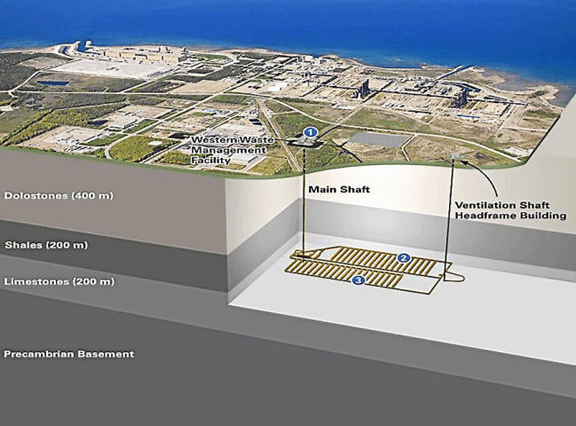
Ottawa to hold public review of new material on proposed nuclear waste dump
OPG to submit information to Canadian government in December By Jim Bloch For The Voice, 20 Nov 16 Next month, Ontario Power Generation will submit to the Canadian government new information about its proposed Deep Geological Repository for low- and intermediate-level nuclear waste.
Arctic ocean protection: Obama blocks new oil, gas drilling
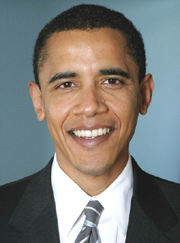 Obama blocks new oil, gas drilling in Arctic Ocean, USA Today WASHINGTON (AP) — The Obama administrationis blocking new oil and gas drilling in the Arctic Ocean, handing a victory to environmentalists who say industrial activity in the icy waters will harm whales, walruses and other wildlife and exacerbate global warming.
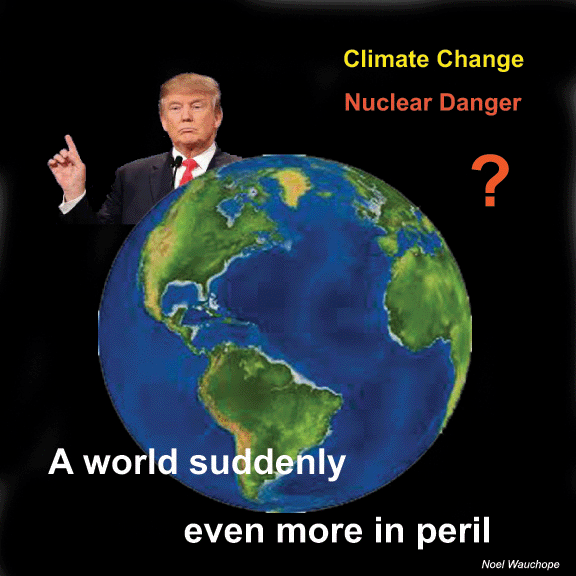
Will Trump change personality and policies? The signs are not good.
 Which Trump? Early Signs Not Good http://commondreams.org/views/2016/11/17/which-trump-early-signs-not-good?utm_campaign=shareaholic&utm_medium=twitter&utm_source=socialnetwork by Ralph Nader ,
The Trump ascension – the positive, and the negatives
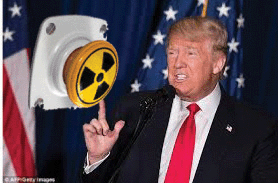 That so much power over the U.S. nuclear arsenal is placed in the hands of one man – any man – bodes ill for humanity, while completely undermining the war power granted to Congress in the U.S. constitution. That the man in question should be Donald Trump, with all his personal flaws, challenges the United States and the world as never before in human history.
Trump, Nuclear Weapons and the Human Future,CounterPunch, “………The most positive policy proposal Trump will bring to the table as president is his desire to improve and strengthen relations between the U.S. and Russia, which have deteriorated badly in recent years. This is one hopeful sign that could lead to renewed efforts by the two countries to reduce their nuclear arsenals and reverse current plans to modernize these arsenals.
The Numerous Negatives
Trump’s behavior during the presidential campaign was often erratic, seemingly based on discernable personality traits, including narcissism, arrogance, impulsiveness, and a lack of predictability. If these traits provide a fair characterization of Trump’s personality, what do they suggest for his control of the U.S. nuclear arsenal?
Trump’s narcissism seems to be reflected in his need to be liked and treated positively. During the primaries, if another candidate criticized him, Trump would respond with even stronger criticism toward his attacker. On the other hand, if someone praised Trump, he would respond with praise. This could result in creating a spiral in either a positive or negative direction. A negative spiral could potentially get out of hand, which would be alarming with regard to anyone with a hand hovering near the nuclear button.
His narcissism was also reflected in his need to be right. Even though Trump is reported to not read very much and to have a limited range of experience, he is often certain that he is right and boldly asserts the correctness of his positions. At one point, for example, he argued that he knew much more than military leaders about the pursuit and defeat of ISIS. His assuredness of his own correctness seems also rooted in arrogance reflecting his fundamental insecurity. This insecurity and his belief in his own rightness, when combined with his success at making money, leads him to be self-reliant in his decision-making, which could result in his taking risks with threatening or using nuclear weapons. He said on MSNBC’s Morning Joe program, “My primary consultant is myself.” While this may make consensus easy, the range of perspective is dangerously narrow.
Two other personality traits could also make more likely Trump’s use of nuclear weapons: his impulsiveness and his lack of predictability. Impulsiveness is not a trait one would choose for a person with the power to launch the U.S. nuclear arsenal. When it comes to deciding to use the Bomb, a personality that is calm, clear and measured would seem to inspire more confidence that caution would be employed. Predictability would also seem to inspire confidence that a President Trump would refrain from deciding to respond with overwhelming force when he is in a negative spiral and out of patience with a country or terrorist organization that is challenging the U.S., which he may interpret as mounting a challenge to himself personally.Where Does Trump Stand?
On many issues, including on the use of nuclear weapons, it is not clear where Trump stands, due to his contradictory statements. Here is what Trump said in March 2016 at a town hall event when host Chris Matthews asked him if he might use nuclear weapons:…..
ConclusionPerhaps the singular positive of Trump’s desire to improve the deteriorating relations between the U.S. and Russia will lead to achieving progress toward a world free of nuclear weapons. A lot will depend on who Trump chooses for key cabinet positions, but even more will depend on his consultations with his key advisor (himself).
That so much power over the U.S. nuclear arsenal is placed in the hands of one man – any man – bodes ill for humanity, while completely undermining the war power granted to Congress in the U.S. constitution. That the man in question should be Donald Trump, with all his personal flaws, challenges the United States and the world as never before in human history.David Krieger is president of the Nuclear Age Peace Foundation (www.wagingpeace.org). http://www.counterpunch.org/2016/11/18/trump-nuclear-weapons-and-the-human-future/
American environmental officials appointed by Trump will be climate deniers
 Trump begins filling environmental posts with clowns http://www.skepticalscience.com/trump-environmental-posts-clowns.html 17 November 2016 by John Abraham Come on, you can admit it. I admit it. I admit that after Trump’s election victory, I secretly hoped and even though that his rhetoric was worse than its bite. He only said those crazy things during the campaign to get elected. He wouldn’t really follow through on his plans to completely gut the US commitment to keeping the Earth habitable. Oh how naive we were. Trump’s plan to fill positions in his administration shows things are worse than we could have ever feared.
According to recent reports, Trump has picked long-time climate denier and spokesperson for the fossil fuel industry Myron Ebell to head the Environmental Protection Agency transition. This basically means the EPA will either cease to function or cease to exist. It also appears that the US will pull out of any agreements to limit greenhouse emissions.
It means we have missed our last off-ramp on the road to catastrophic climate change. That may sound hyperbolic, but I study the rate that climate change is happening – the amount of heat accumulating in the Earth’s system. We didn’t have any time to waste in implementing Obama’s aggressive plans, and Trump will result in a decade of time lost.
So who is Myron Ebell? He is a director at the Competitive Enterprise Institute and chair of the Cooler Heads Coalition. Where did he get his PhD in science? Nowhere. In fact, he isn’t a scientist at all, but he does have a degree in economics. Yeah!
Is there any conflict that Ebell’s Competitive Enterprise Institute is funded by companies such as ExxonMobil and groups such as the Charles Koch Charitable Foundation? Surely not.
Myron Ebell is not new to obstructing action on climate change. Years ago, it was reported that he favored editing Bush-era scientists’ reports on climate change.
It isn’t just Ebell. Trump has other insiders, some of who represent fossil fuel companies, working on the transition.
What this selection also tells us about Trump is that he is surrounding himself with people who are not knowledgeable in a topic and will not effectively educate him. Not that educating Trump was ever possible. But there was always the outside chance he would take his contrarian streak to a new level and be contrarian to the contrarians. We now see that is not going to happen. If Trump listens to anyone, it will be people who think like he does and represent special interests who would be most affected by his policies. We have a fox guarding the hen house.
I know Trump won’t listen, but I have a wager for him. I could randomly pull an Earth scientist’s name out of a hat and any name I pulled would be better than Myron Ebell. I challenge Trump and his administration to actually include real scientists in forming legislation and action on environmental issues. And I am not talking about scientists that are connected to rightwing thinktank groups. I am talking about independent unaffiliated scientists. Cripes, just go down to the neighborhood university, pick anyone – they will be better than what you have now.
Or Trump could attend the world’s largest geophysics meeting, which occurs in just a few weeks (American Geophysical Union Fall Meeting).
World environment movement ready to fight Trump on climate change
 Global green movement prepares to fight Trump on climate change
Election of a climate sceptic as US president sparks outpouring of donations and a surge in planned protests and court challenges, Guardian, Oliver Milman, 19 Nov 16, The global green movement is preparing for the fight of its life against efforts by Donald Trump to rollback action on climate change, with a surge in fundraising, planned court challenges and a succession of protests.
Environmental activists said the election of a climate change denier as US president, along with the prospect of former vice-presidential nominee Sarah Palin and various oil billionaires holding senior posts, has prompted an “outpouring” of donations.
This week, comedian, John Oliver, used his show to urge viewers to give to the Natural Resources Defense Council, while EarthJustice, a specialist in environmental law, reported a “substantial increase” in donations to wage the expected legal battles ahead. The Sierra Club said it has had 9,000 new monthly donors since election day, more than they had in the year to date.
After spending eight years cheering and occasionally scolding Barack Obama, environmentalists are now moving on to a war footing. Campaigns will be pitched around climate action and protecting national parks, with green groups claiming that public support for these things means that Trump has no mandate to tear them apart.
With Congress and the White House in Republican hands, the message will have to resonate in conservative ears rather than just energise the base…….
Environmentalists said that, while Trump’s hand in the courts and Congress might be stronger than it was when they fought against George W Bush, one key difference was that businesses were now convinced of the need for curbing emissions. At the UN climate talks this week in Marrakech, a coalition of businesses including Kellogg’s and Mars, urged leaders to commit to long-term carbon plans.
“Ten years ago, US business wasn’t on board about tackling climate change,” said Craig Bennett, CEO of Friends of the Earth in the UK. “This time round you have a situation where US businesses and businesses more globally [support action], so this time around the environmental movement does not feel like it is on its own. We’re much better placed to fight this.”
In the UK, a cross-party group of MPs and environment groups has already begun meeting to discuss how to respond to anti-environmental rhetoric from the Trump administration, and how to deal with the consequences of the president elect delivering on his promise to withdraw from the Paris climate agreement……..
In Australia, the Trump victory is driving an intensified focus from environmentalists to put a stop to a proposed coalmine there, which would be the biggest in the already coal-rich nation, and one of the biggest in the world…… https://www.theguardian.com/environment/2016/nov/18/global-green-movement-prepares-to-fight-trump-on-climate-change
3 nuclear dangers, 3 opportunities – with President Trump
Nuclear Trump: 3 Dangers and 3 Opportunities The man whom advisers did not trust with a Twitter account will soon have the unfettered opportunity to launch nuclear war. The Nation By Joseph Cirincione , NOVEMBER 16, 2016
“…….The man who can be baited with a tweet, the man whose campaign team did not trust with a Twitter account, the man whose unpredictability and wild temperament made him an unacceptable choice for the majority of voters this November, will have, from that moment forward, the unfettered ability to launch nuclear war.
There is no institutional check on a president’s ability to fire nuclear weapons should he or she wish to do so. President Trump will be able to launch, within minutes, one or one thousand nuclear weapons without any vote, any check, or even any serious deliberation.
The nuclear lobby gives its orders to the USA government
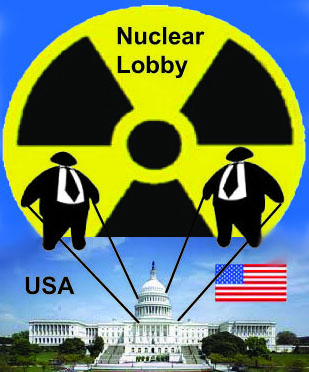
Act now for nuclear future, US Senate committee told http://www.world-nuclear-news.org/NP-Act-now-for-nuclear-future-US-Senate-committee-told-1811167.html 18 November 2016 The USA must take action now if it wants to have a “nuclear energy option” by 2030, a Senate Appropriations subcommittee was told on 16 November.
John Deutch, chairman of the Secretary of Energy’s Advisory Board (SEAB), presented the results from a task force study on the future of nuclear power to the Senate Appropriations Subcommittee on Energy and Water Development, at the second of two oversight hearings on the future of nuclear power in the USA.
The task force was asked by US Energy Secretary Ernest Moniz to describe an initiative leading to a revitalised US nuclear industry of a scale able to deploy 5000 to 10,000 MWe of nuclear power annually, between 2030 and 2050. The report was approved by the full SEAB in September.
“If the country is going to have a nuclear [energy] option in 2030, it must an initiative of the scope and size that this committee [the Task Force] describes,” Deutch said. “If you do not undertake a major initiative now, it is inevitable that in 2030 the country will not have a nuclear option,” he said. Any such initiative would require time, significant public resources, a redesign of electricity markets, and “sustained and skilled” management. “There is no shortcut to doing this,” he said.
The task force called for market restructuring to avoid the premature retirement of nuclear power plants as a prerequisite for the success of any nuclear power initiative. It called for the carbon free nature of nuclear to be recognised in order to diminish the “cost disparity” between new nuclear – with high overnight capital costs of $5000 per kWe – and natural gas-fired generating capacity – with overnight costs of $1000 per kWe. This could be achieved through either a direct production payment proportional to the cost of carbon avoided – recommended by the task force as 2.7 cents per kilowatt-hour – or by the imposition of a carbon charge on the emissions from gas-fired generation.
Two-part program for new reactors
The task force recommended the USA pursues a two-stranded program to support the development of new plants. Reactors based on proven light-water reactor (LWR) technology would not need any additional federal support beyond the proposed 2.7 cents per kilowatt-hour production payment, although Department of Energy assistance with Nuclear Regulatory Commission (NRC) licensing and possibly siting early reactors on federally-owned sites “would be appropriate and helpful”, it said.
For advanced reactors based on new technology, the task force recommended a four-part program to bring a reactor from early concept to construction of commercial plant. It estimated such a program, including technology selection and construction of a first-of-a-kind commercial plant, would take up to 25 years and about $11.5 billion. The cost would be shared equally between the government and the private sector entity undertaking the project, with the government’s contribution coming in the earlier phases of the program.
The task force recommended the creation of an independent quasi-public corporation to manage the proposed advanced reactor initiative. It underscored the importance of addressing fuel cycle and waste management as part of the proposed initiative, noting that advanced reactors will raise different issues from LWRs for the front and back end of the fuel cycle. Deutch said committee staff had suggested a single entity could be created to manage both the advanced nuclear initiative and the implementation of the nuclear waste plans from the 2012 Blue Ribbon Commission on America’s Nuclear Future.
The NRC should develop a staged approach for the licensing of advanced reactors, in consideration of the time and cost associated with obtaining construction and operation licences. The regulator already has the authority to proceed “and should do so now”, although it may require more budgetary support to do so, Deutch said. New advanced reactors constructed and licensed abroad would still require a full NRC review, he added.
The SEAB provides advice and recommendations to the secretary of energy on the department’s basic and applied research and development activities, economic and national security policy, educational issues, operational issues and any other departmental activities and operations as the secretary may direct. The duties of the board are solely advisory.
Exelon behind Illinois massive energy bill to subsidise and save uneconomic nuclear power plants
 Exelon’s Illinois energy bill greeted by vociferous opposition, Utility Dive, Peter Maloney Nov. 17, 2016
Illinois lawmakers have introduced a massive energy bill backed by Exelon that would implement a sweeping restructuring of utility bills in the state to pay for a variety of incentives and programs, including subsidies to keep two nuclear power plants scheduled for closure operating, media sources report.
The bill also includes capacity charges for coal plants in the south of the state, as well as provisions for utility energy efficiency programs, utility microgrids and community solar projects. It would also institute mandatory residential demand charges while replacing net metering with a one-time rebate.
The bill was introduced into the General Assembly’s shortened “veto session,” which runs for three days this week and three days the week after Thanksgiving, and has attracted vocal criticism from a variety of constituencies.
Dive Insight: The day it was introduced, opponents of the Future Energy Jobs Bill spoke out in opposition to the proposed legislation.
“This is going to be the largest rate hike in U.S. history,” Dave Lundy, head of the BEST Coalition, a business group opposed to the bill, said at a press conference shortly after the bill was introduced.
Lundy was objecting to the subsidies the bill would provide to not only Exelon nuclear plants, but to southern Illinois coal plants as well. He said that Illinois generates 41% more electricity than the state needs, so payments to the coal and nuclear plants would be subsidizing rates for customers in other states.
Abe Scarr, director of Illinois Public Interest Research Group, called the mandatory demand charges in the bill “an end run around the Illinois Commerce Commission.”
Sheila Garland, with National Nurses United, said the charges would who would harm low-income and minority residents.
Solar advocates spoke out as well, decrying the demand charge and net metering reform they said would kill rooftop solar in the state.
“With the radical demand charges and elimination of net metering, [lawmakers] are also eliminating the options for residents to do anything about the rate hike,” Amy Heart, director of public policy at Sunrun, told Midwest Energy News. …..http://www.utilitydive.com/news/exelons-illinois-energy-bill-greeted-by-vociferous-opposition/430590/
Even Isreal and Republicans now urging Trump not to destroy Iran nuclear agreement
Iran deal critics to Trump: Please don’t rip it up, They hated the nuclear agreement. But now they’re urging Trump not to kill it. Politico, By NAHAL TOOSI, 11/16/16
President-elect Donald Trump spent much of his campaign railing against the Iran nuclear deal, even raising the possibility of scrapping the agreement immediately upon taking office.
But many of the deal’s most ardent critics are now saying: “Slow down.”
As the reality of Donald Trump’s White House win sinks in among nuclear deal opponents, some are insisting that pulling out of the agreement is unwise. Instead, they say, Trump should step up enforcement of the deal, look for ways to renegotiate it, and pursue measures to punish Iran for its non-nuclear misbehavior. Such a multi-pronged, get-tough approach may even give Trump cover to fend off any criticism he may get for keeping the deal.
It’s a remarkable moment for the anti-deal crowd, which includes Israel’s prime minister, Saudi princes and Republican lawmakers. Many tried to keep the deal from ever being reached, accused outgoing President Barack Obama of appeasing an enemy and used the agreement to knock Democrats during the 2016 campaign. Now that they have a shot at scuttling the deal they hate so much, they are urging caution.
GOP Sen. Bob Corker, who opposed the deal as chairman of the Senate Foreign Relations Committee, spoke out against immediately discarding the deal in interviews with cable channels on both Wednesday and Tuesday. The problem is that, as part of the agreement, Iran already has accessed billions of dollars in once-frozen assets, Corker said. Plus, the U.S. is just one of seven countries involved in the deal, in which the United Nations and the European Union also play a role.
“We gave up … all of our leverage on the front end when we gave away the moneys that were stashed in various countries around the world and so now the leverage is with them,” Corker told MSNBC on Tuesday. “I think the beginning point is for us to cause them to strictly adhere [to the deal]. And I think that what we have to remember is, we have to keep the Europeans and others with us in this process.”
The July 2015 nuclear deal is not a treaty. It is a political arrangement put into force largely through presidential executive orders that suspended nuclear-related sanctions on Iran. In exchange for the lifting of such sanctions by the U.S., the EU and the U.N., Iran has dismantled its nuclear infrastructure………
“You don’t want all the blame for the deal falling apart to land on the U.S.,” argued David Ibsen, president of United Against Nuclear Iran, a group that has spent months trying to persuade companies around the world not to invest in Iran despite the lifting of sanctions.
Ibsen and others said Trump can still save face on Iran by making it clear he is serious about enforcing the nuclear deal while also cracking down on Tehran’s nefarious activities…. http://www.politico.com/story/2016/11/donald-trump-iran-nuclear-deal-231419
Should New York’s electricity customers be bailing out the uneconomic nuclear industry?
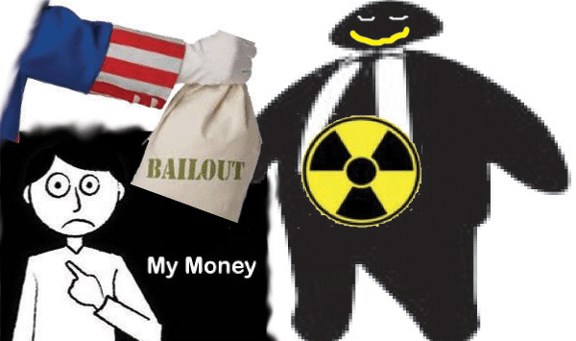
Should electric customers pay for NYS nuclear plants? WBFO88.7, By DAVE LUCAS , 15 Nov 16, The battle is heating up over a statewide electric rate increase to subsidize upstate nuclear power plants that pits Governor Andrew Cuomo against a coalition of “good-government groups.”
Members and leaders of the statewide campaign to “Stop the Cuomo Tax” and end the bailout of nuclear power in New York have made their intentions clear: they are calling on the governor to release alleged “secretive agreements with nuclear companies.”
Blair Horner with the New York Public Interest Research Group said the governor is proposing to keep three upstate nuclear power plants near Rochester and Oswego open for the next dozen years, using $7.6 billion of ratepayer money to make it happen.
The issue is part of the Public Service Commission’s broader Clean Energy Standard. The final installment on putting that deal together occurs in a vote before the Public Service Commission scheduled for Thursday.
“There is certainly an irony in the fact that the governor is hell-bent on closing the Indian Point nuclear power plant outside of the city of New York and yet providing billions and billions of dollars in subsidies for aging upstate ones,” said Horner. “The plants that he’s bailing out are ones that were ready for the scrap heap. They’d already outlasted their anticipated lifespan as power plants.”
He continued that this could be the single biggest transfer of wealth from ratepayers to companies in New York state history.
“The decision on this was conducted largely outside of public view. The public had, at best, only dim awareness that this was happening,” Horner said. “The governor’s ramming through a basically secretive decision that’s going to cost New Yorkers billions and billions of dollars and, for the 800,000 poorest New Yorkers, they’re gonna take a big, big hit.”
Horner said most of those 800,000 are in arrears and 20,000 have already had their service cut off.
“The governor’s proposed bailout of these nuke power plants will just jack up the price even harder for these struggling New Yorkers and it’s not even that it’s a great investment,” Horner said. “This is just to keep old Vietnam War-era nuke power plants running.”
Horner said there has been no public debate if this is a good idea……. http://news.wbfo.org/post/should-electric-customers-pay-nys-nuclear-plants
The Trump temper could bring about nuclear war between USA and Russia
Nuclear War with Russia Possible Scenario with Donald Trump’s Temper [RUMOR] http://www.citizenoracle.com/2016/11/14/nuclear-war-russia-possible-scenario-donald-trumps-temper-rumor/By November 14, 2016 The possibility of a nuclear war with Russia could start anytime soon if the newly-elected U.S. President, Donald Trump, will not keep his cool. It was also said that Trump must avoid letting his short temper make its way into global affairs. Because of this news, some people feared that the U.S. may face a nuclear war with Russia, something that might cause “global destruction.”
President Barack Obama repeatedly stated he would not trust Donald Trump with the nuclear launch codes of the nuclear missiles, given Trump’s temperament. He added that emotions could cloud Trump’s judgment when making decisions that would annihilate millions of lives. The worse-case scenario would be the relationships turning more confrontational; Moscow might misread a situation over Trump’s administration.
Moreover, one of the shortcomings of President Obama’s administration is managing its relationship with Russia resulting to several war threats and misunderstandings in the past years. President-elect Donald Trump’s biggest test will be forming a good relationship with the Russian President, Vladimir Putin, in order to deal with the threat of nuclear war with Russia.
The question of war and peace has been one of the major issues on the news and social media ever since Donald Trump was elected as the next President of the United States. The U.S. president’s power to execute war is quite extensive. Most importantly, he can take military actions without specific authorization from the Congress. Whether people like it or not, President Donald Trump will have a large say over the question of peace or a nuclear war with Russia.
1 This Month
15 October. Joint Appeal for Nuclear Abolition Day -presentation to the UN on October 15 will be live on UNWebTV
Endorse the Nuclear Abolition Day Appeal
23-25 October – on Zoom – World BEYOND War’s annual global conference

To see nuclear-related stories in greater depth and intensity – go to https://nuclearinformation.wordpress.com
-
Archives
- October 2026 (139)
- September 2026 (339)
- August 2026 (330)
- July 2026 (355)
- June 2026 (287)
- May 2026 (306)
- April 2026 (356)
- March 2026 (251)
- February 2026 (267)
- January 2026 (308)
- December 2025 (358)
- November 2025 (359)
-
Categories
- 1
- 1 NUCLEAR ISSUES
- business and costs
- climate change
- culture and arts
- ENERGY
- environment
- health
- history
- indigenous issues
- Legal
- marketing of nuclear
- media
- opposition to nuclear
- PERSONAL STORIES
- politics
- politics international
- Religion and ethics
- safety
- secrets,lies and civil liberties
- spinbuster
- technology
- Uranium
- wastes
- weapons and war
- Women
- 2 WORLD
- ACTION
- AFRICA
- Atrocities
- AUSTRALIA
- Christina's notes
- Christina's themes
- culture and arts
- Events
- Fuk 2022
- Fuk 2023
- Fukushima 2017
- Fukushima 2018
- fukushima 2019
- Fukushima 2020
- Fukushima 2021
- general
- global warming
- Humour (God we need it)
- Nuclear
- RARE EARTHS
- Reference
- resources – print
- Resources -audiovicual
- Weekly Newsletter
- World
- World Nuclear
- YouTube
-
RSS
Entries RSS
Comments RSS

