US Military Helping Trump to Build Massive Network of ‘Concentration Camps,’ Navy Contract Reveals
The Department of Homeland Security is using a repurposed $55 billion Navy contract to convert warehouses into makeshift jails and plan sprawling tent cities in remote areas.
Stephen Prager, Feb 02, 2026, https://www.commondreams.org/news/military-contract-concentration-camps
In the wake of immigration agents’ killings of three US citizens within a matter of weeks, the Department of Homeland Security is quietly moving forward with a plan to expand its capacity for mass detention by using a military contract to create what Pablo Manríquez, the author of the immigration news site Migrant Insider calls “a nationwide ‘ghost network’ of concentration camps.”
On Sunday, Manríquez reported that “a massive Navy contract vehicle, once valued at $10 billion, has ballooned to a staggering $55 billion ceiling to expedite President Donald Trump’s ‘mass deportation’ agenda.”
It is the expansion of a contract first reported on in October by CNN, which found that DHS was “funneling $10 billion through the Navy to help facilitate the construction of a sprawling network of migrant detention centers across the US in an arrangement aimed at getting the centers built faster, according to sources and federal contracting documents.”
The report describes the money as being allocated for “new detention centers,” which “are likely to be primarily soft-sided tents and may or may not be built on existing Navy installations, according to the sources familiar with the initiative. DHS has often leaned on soft-sided facilities to manage influxes of migrants.”
According to a source familiar with the project, “the goal is for the facilities to house as many as 10,000 people each, and are expected to be built in Louisiana, Georgia, Pennsylvania, Indiana, Utah, and Kansas.”
SUBSCRIBE TO OUR FREE NEWSLETTER
Daily news & progressive opinion—funded by the people, not the corporations—delivered straight to your inbox.
Now Manríquez reports that the project has just gotten much bigger after a Navy grant was repurposed weeks ago. It was authorized through the Worldwide Expeditionary Multiple Award Contract (WEXMAC), a flexible purchasing system that the government uses to quickly move military equipment to dangerous and remote parts of the world.
The contract states that the money is being repurposed for “TITUS,” an abbreviation for “Territorial Integrity of the United States.” While it’s not unusual for Navy contracts to be used for expenditures aimed at protecting the nation, Manríquez warned that such a staggering movement of funds for domestic detention points to something ominous.
“This $45 billion increase, published just weeks ago, converts the US into a ‘geographic region’ for expeditionary military-style detention,” he wrote. “It signals a massive, long-term escalation in the government’s capacity to pay for detention and deportation logistics. In the world of federal contracting, it is the difference between a temporary surge and a permanent infrastructure.”
He says the use of the military funding mechanism is meant to disburse funds quickly, without the typical bidding war among contractors, which would typically create a period of public scrutiny. Using the Navy contract means that new projects can be created with “task orders,” which can be turned around almost immediately, when “specific dates and locations are identified” by DHS.
“It means the infrastructure is currently a ‘ghost’ network that can be materialized anywhere in the US the moment a site is picked,” Manríquez wrote.
Amid its push to deport 1 million people each year, the White House has said it needs to dramatically increase the scale of its detention apparatus to add more beds for those who are arrested. But Manríquez said documents suggest “this isn’t just about bed space; it’s about the rapid deployment of self-contained cities.”
In addition to tent cities capable of housing thousands, contract line items include facilities meant for sustained living—including closed tents likely for medical treatment and industrial-sized grills for food preparation.
They also include expenditures on “Force Protection” equipment, like earth-filled defensive barriers, 8-foot-high CONEX box walls, and “Weather Resistant” guard shacks.
Eric Feigl-Ding, an epidemiologist and health economist, said the contract’s provision of materials meant to deal with medical needs and death was “extra chilling.” According to the report, “services extend to ‘Medical Waste Management,’ with specific protocols for biohazard incinerators.”
The new reporting from Migrant Insider comes on the heels of a report last week from Bloomberg that US Immigration and Customs Enforcement (ICE) has used some of the $45 billion to purchase warehouses in nearly two dozen remote communities, each meant to house thousands of detainees, which it said “could be the largest expansion of such detention capacity in US history.”
The plans have been met with backlash from locals, even in the largely Republican-leaning areas where they are being constructed:
This month, demonstrators protested warehouse conversions in New Hampshire, Utah, Texas and Georgia after the Washington Post published an earlier version of the conversion plan.
In mid-January, a planned tour for contractors of a potential warehouse site in San Antonio was canceled after protesters showed up the same day, according to a person familiar with the scheduled visit.
In Salt Lake City, the Ritchie Group, a local family business that owns the warehouse ICE identified as a future “mega center” jail, said it had “no plans to sell or lease the property in question to the federal government” after protesters showed up at their offices to pressure them.
On January 20, Sen. Chris Van Hollen (D-Md.) joined hundreds of protesters outside a warehouse in Hagerstown, Maryland, that was set to be converted into a facility that will hold 1,500 people.
The senator called the construction of it and other detention facilities “one of the most obscene, one of the most inhumane, one of the most illegal operations being carried out by this Trump administration.”
Reports of a new influx of funding from the Navy come as Democrats in Congress face pressure to block tens of billions in new funding for DHS and ICE during budget negotiations.
“If Congress does nothing, DHS will continue to thrive,” Manríquez said. “With three more years pre-funded, plus a US Navy as a benefactor, Secretary Kristi Noem—or any potential successor—has the legal and financial runway to keep the business of creating ICE concentration camps overnight in American communities running long after any news cycle fades.”
Is the UK keeping up with the nuclear revival?

Steve Thomas: Since the Starmer government came to power in 2024, it has
made a series of announcements that have placed the UK at the forefront of
the so-called Nuclear Renaissance. The government talks about a “Golden Age
of Nuclear Power” in the country. However, a closer look shows that these
announcements primarily concern what the government hopes to do and what it
hopes to achieve, in the absence of new projects in the pipeline.
Currently, the burden of submitting proposals falls on the private sector.
Regarding current nuclear projects, there is one under construction,
Hinkley Point C; another, Sizewell C, for which an investment decision has
been made and construction could begin in two to three years; and a project
for three Rolls-Royce small modular reactors (SMRs) for the Wylfa site,
where an investment decision is hoped for 2029.
The Hinkley Point C project
for two French European Pressurized Reactors (EPRs, 3.2 GW) is seven years
behind schedule, is 90% over budget, and requires at least six years to
complete. The Sizewell C project is expected to be built along the lines of
the Hinkley design and was supposed to be built approximately two years
after Hinkley, so that the workforce could seamlessly transfer from Hinkley
to Sizewell.
This means it is at least nine years behind schedule. Even if
the government’s estimated completion date is met, Sizewell will not begin
generating power until 2039. The estimated cost of this plant, £40.5
billion (2024 funding), is 70% higher than the actual estimated cost of the
Hinkley Point project at the time of the Final Investment Decision.
This ridicules claims that Sizewell would be cheaper than Hinkley due to the
“expertise” built at Hinkley Point. If it goes ahead, the Wylfa project
will not begin generating power until 2035. If there are no further delays
to these projects, it will be 2040 before the UK’s nuclear capacity returns
to 2015 levels, or approximately 9 GW. In 2022, Boris Johnson’s government
set a target of “up to 24 GW” of new nuclear capacity, in addition to the
Hinkley project, to be achieved by 2050. The “up to” specification left
room for vagueness, and in fact the Starmer government has clearly not
adopted this target.
So why is it so difficult and takes so long to build
nuclear capacity? And has the UK not performed well in this regard?
Research commissioned by the UK government found that, on average,
globally, the construction of a nuclear power plant, from the investment
decision to first start-up, takes 13-17 years. Add to this the time
required to reach the final investment decision. This includes: choosing
the supplier and technology; project assessment by the national safety
regulator; identifying and verifying the suitability of the chosen site;
and defining a financial model to provide the capital, own the plant, and
purchase the energy.
This process is unlikely to take less than five years;
in fact, it could take longer. Therefore, the construction time for a
nuclear project is likely at least 20 years.
Rienergie 12th Feb 2026, https://rienergia.staffettaonline.com/articolo/35901/UK+sta+al+passo+con++la+rinascita+nucleare++++/Steve
France slashes renewable energy targets, expands nuclear power with new law
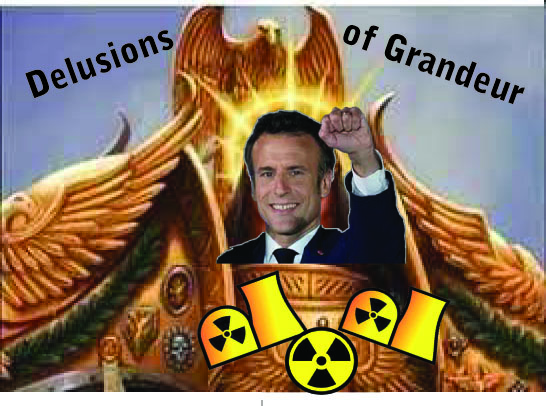
FRANCE 24, 12/02/2026 https://www.france24.com/en/france/20260212-france-slashes-renewable-energy-targets-favour-of-nuclear-power-new-energy-law
France is this week set to pass by decree a new energy law slashing the country’s renewable energy targets and massively expanding nuclear power production. The law change comes as a relief for state-run electricity provider EDF, which had been mandated to close some of its nuclear plants and is struggling to compete with price pressure from European solar and wind power producers.
France set out a new energy law after years of wrangling on Thursday which slashes its wind and solar power targets and drops a mandate for state-run firm EDF to shutter nuclear plants.
“We need to stop our internal family squabbling. We need both nuclear and renewables,” Finance Minister Roland Lescure told reporters.
The law, to be pushed through by decree on Friday after almost three years of bitter disagreement among lawmakers, also reverses a previous legal mandate to shut 14 reactors.
That was a 2017 campaign promise of President Emmanuel Macron, who later changed course, backing nuclear expansion with a plan for at least six new reactors.
The move to pare back renewables should help shield EDF, which operates a fleet of 57 reactors, as power demand grows more slowly than expected over the next decade. The company is struggling to remain competitive as abundant wind and solar in Europe have pushed down power prices and forced reactors to lower output.
The new 10-year framework, known as the PPE, aims for EDF to produce 420 terawatt-hours of power from its existing fleet in 2035, a 5 percent increase.
“Nuclear is the backbone of our electricity system,” said Lescure, adding that a first new reactor should be inaugurated by 2038.
EDF CEO Bernard Fontana welcomed the proposal, saying it would allow the company to advance toward its objectives. The law had triggered fierce debate among lawmakers pitting support for renewable subsidies against financing new nuclear at a time when France is struggling with high debt. The PPE also governs wind and solar tenders, and a decision on the matter is expected to be welcomed by the wind industry, which has struggled amid uncertainty over the plans and delayed tenders.
Still, wind and solar targets were lowered, to 105-135 gigawatts (GW) of installed capacity by 2035 from drafts that had called for 133-163 GW.
“If this PPE is more than two years late on paper, it’s at least a decade behind in its vision of an energy transition,” Greenpeace France said in a statement.
It lowers France’s 2035 target for installed offshore wind capacity to 15 GW from 18 GW the government had submitted for consultation in 2024.
The target for onshore wind capacity drops to 35-40 GW from the 45 GW previously communicated.
Solar capacity will be 55-80 GW by 2035, the report added, down from a previous forecast of 75-100 GW. The law calls for France to consume 60 percent of its own energy from decarbonised electricity by 2030, shifting from 60 percent of energy from fossil fuels currently, and up to 70 percent from decarbonised electricity by 2035.
The new law is unlikely to lead to lower prices for end-users, said Emeric de Vigan, managing director of energy consultancy 42 Advisors, adding this could keep them from switching to electricity from oil and gas-based fuels.
In Australia The Police Beat You Up For Opposing Genocide.
Caitlin Johnstone, Feb 10, 2026, https://www.caitlinjohnst.one/p/in-australia-the-police-beat-you?utm_source=post-email-title&publication_id=82124&post_id=187467234&utm_campaign=email-post-title&isFreemail=true&r=1ise1&triedRedirect=true&utm_medium=email
Australian authorities were fully aware that inviting Israel’s president for a visit was going to ignite unrest and furious opposition. They invited him anyway, and sent in the police to assault the protesters.
I saw a video of two cops pinning a kid in a keffiyeh face down on the ground and proceeding to punch him over and over again long after he’d been subdued.
I saw another video of police repeatedly punching a middle-aged man who was holding his hands in the air until he fell to the ground.
I saw another video of police repeatedly pepper spraying a demonstrator directly in the face as he was visibly complying with their demands to move and providing no resistance whatsoever.
I saw another video of police manhandling Muslim men who were literally on their knees praying, presenting no possible threat of any kind.
That’s right kids, welcome to Australia, where the government invites the head of a genocidal apartheid state for a happy cuddle party and then beats the shit out of anyone who opposes this.
It’s a testament to the courage and vitality of the pro-Palestine movement in Australia that people keep showing up to anti-genocide protests even as authorities do everything they can to create a chilling effect on them.
After all, this happens as the state of Queensland moves to make it illegal to utter the pro-Palestine phrases “from the river to the sea” or “globalise the intifada”, with violations punishable by two years in prison. This is easily the single most bat shit insane speech suppression legislation in Australian history, and that’s an extremely high bar.
To be clear, not one person sincerely believes that “from the river to the sea, Palestine will be free” is a genocidal or antisemitic statement. This is one of those many, many instances in which Israel supporters are pretending to believe something they do not actually believe in order to further outlaw criticism of Israel.
They’re trying to make it so that nobody feels comfortable opposing Israel’s abuses without first consulting with a lawyer about what exactly they are legally permitted to say in that moment, thereby throwing a chilling effect on pro-Palestine activism throughout the nation.
This comes weeks after the Australian government passed frightening new “hate speech” laws in the name of “combatting antisemitism” which will make it much easier to designate activist groups as “hate groups”. Australian officials have conspicuously refused to say that the new laws will not be used to ban groups for speech that is critical of Israel, which tells you all you need to know about the real intentions at work here.
This also comes as the state of New South Wales cracks down on protests with extreme aggression, banning protests in certain areas and seeking to outlaw the use of the phrase “globalise the intifada” to appease Australia’s obscenely powerful Israel lobby. Premier Chris Minns is presently defending the actions of the police he sent in to crack skulls at the Herzog protests on Monday.
Just two months ago a prominent member of the Australian Israel lobby publicly announced that he wants a total ban on pro-Palestine protests throughout the nation, and said it is criticism of Israel that is the problem, not just hatred toward Jews. Joel Burnie, Executive Manager of the Australia/Israel & Jewish Affairs Council (AIJAC), explicitly said that what he wants is “No more protests! No more protests!” in Australia.
“I for one as a Jewish leader will no long talk about antisemitism in isolation from Israel, because it’s the rhetoric and language on Israel that motivates the people to come and kill us,” Burnie said during a video conference, later adding that “ language on Israel invading all of our social spaces in Australia have made this country a very unsafe space and place for Jews.”
Increment by increment, Joel Burnie and his ilk have been getting their wish ever since. Australian civil rights are indeed being disintegrated to protect the information interests of a genocidal apartheid state.
Albanese v Albanese

Then there is the damning evidence of Anthony Albanese’s Italian namesake, Francesca Albanese, by now an expert and fearless forensic rapporteur on Gaza, genocide and Israel.
She bows to no president or prime minister and wears the onslaught of their wrath as a badge of honour.
A United Nations Special Rapporteur on the Occupied Palestinian Territories, Albanese’s courageous reports have become a reliable touchstone for historians, academics, students, journalists, so-called ‘ordinary people’ humanitarians, intelligence personnel and key actors of all involved in the Gaza ‘Crime Scene.’
10 February 2026, Tess Lawrence, https://theaimn.net/albanese-v-albanese/
ALBANESE v ALBANESE
HERZOG, GENOCIDAL TERRORIST?
The Australian Government has rolled out the red carpet for Israel’s President Isaac Herzog, a carpet sodden in the blood of more than 71,000 people murdered in Gaza since the Hamas led terrorist invasion of October 7, 2023.
That audacious Hamas massacre and hostage taking of mostly civilians attending the Nova Festival, was a precision operation that easily penetrated Israel’s so-called invincible ‘iron dome’ in what was indisputably a monumental military embarrassment and collective security fail by all of Israel’s lauded security tiers as well as by self lauded ‘Mr Security’ himself, Prime Minister Benjamin Netanyahu, indicted on criminal charges in his own country and cited as a genocidal criminal, outside of it.
In an untidy and hasty attempt to assuage volatile community anger, unrest and widespread political dissent caused by Australia’s own security fail, the Bondi Beach Islamic State inspired terrorist attack on December 14, that also targeted Jews and others celebrating the festival – Hanukkah – Australia’s Prime Minister Anthony Albanese thought it wise to capitulate to a babel of political, religious and public dialects and invite a racist man of war to Australia, rather than a person of peace.
The notion that a visit by the rabid war mongering Herzog will help ameliorate swelling anti-semitism is preposterous. He may well bring comfort to some Australian jews and those who support Netanyahu’s fascist Far Reich but the reality is that not all Australian jews want this avowed genocidal terrorist to visit Australia or indeed for him to be deemed as representative of all jewish Australians, let alone jews in Israel. The constants protests and marches against Netanyahu in Israel atest to the latter.
Netanyahu’s Take On Nazism
Typically, jewish dissenters do not receive as much attention in both mainstream and indie media and endure all manner of toxic insult, including being branded by jewish Netanyahu supporters in the diaspora, as Hamas stooges, jewish traitors, et cetera, et cetera, et cetera. Hurled epithets of being ‘self-loathing jews’ have long worn thin as a horrified world – including horrified jews – are confronted with the ugly reality of Netanyahu’s latter day take on nazism and industrial strength ethnic cleansing.
Last month, a number of groups, the majority of them representing jewish organisations, wrote to Governor-General Sam Mostyn and Prime Minister Albanese, asking that Herzog’s invitation to visit Australia, be retracted:
Her Excellency the Honourable Ms Sam Mostyn AC
Governor-General of the Commonwealth of Australia
Government House
Dunrossil Drive
YARRALUMLA ACT 2600The Hon Anthony Albanese MP
Prime Minister
Parliament House
CANBERRA ACT 2600Monday, 5 January 2026
Dear Governor-General and Prime Minister,
We write to urgently ask for the retraction of the Australian Government’s invitation to President Isaac Herzog of Israel.
This invitation risks violating Australia’s international obligations and exacerbating racism and antisemitism during an incredibly fragile moment.
President Herzog is not a neutral or ceremonial head of state. The UN Commission of Inquiry on the Occupied Palestinian Territory concluded in September 2025 that Israeli President Isaac Herzog had “incited the commission of genocide and that Israeli authorities have failed to take action against them to punish this incitement.”
In October 2023, he publicly attributed collective responsibility to the civilian population of Gaza, stating: “It’s an entire nation out there that is responsible. This rhetoric about civilians not being involved – it’s absolutely not true. They could have risen up… And we will fight until we break their backbone.”
Herzog’s comments have been cited by international legal scholars and human rights organisations as normalising collective punishment, prohibited under international humanitarian law, and form part of the evidentiary context before the International Court of Justice (ICJ).
Australia’s obligations under the Convention on the Prevention and Punishment of the Crime of Genocide are clear. Article 1 imposes an obligation to prevent genocide that arises once a State becomes aware, or ought reasonably to have become aware, of a serious risk that genocide may be committed. Article III further prohibits not only genocide itself but also complicity, including conduct that knowingly aids, abets, or legitimises the commission or incitement of genocidal acts. The International Court of Justice’s provisional measures in South Africa v Israel place all States Parties on notice of a plausible risk of acts falling within the scope of the Convention. In these circumstances, proceeding with an official visit by President Isaac Herzog would expose Australia to credible claims that it has engaged in conduct inconsistent with its obligations under international law.
Herzog has been fully implicated in Israel’s military aggression. In December 2023 he was witnessed signing an artillery shell bound for Gaza and in 2024 he falsely denied Israeli responsibility for the illegal attacks using pagers and walkie-talkies in Lebanon, killing twelve people, including children, and wounding three thousand.
Facilitating this visit does nothing to support the healing of Jewish communities in Australia, following the horrific massacre in Bondi. Hosting a figure publicly associated with the continuation of the genocide of Palestinians in Gaza, and the ongoing occupation and displacement within Palestinian territories, risks further deepening divisions within a community already grappling with the harmful conflation of Zionism (a political ideology), Judaism (a religion), and Jewish identity and will further alienate our own community while increasing the risk of antisemitism. Publicly hosting this head of state risks exacerbating antisemitism by implicitly associating Jewish Australians with alleged war crimes over which they have no control.
Jewish communities are not united. Some, both religious and secular, are not Zionist or identify as anti-Zionist. Many fundamentally disagree with Israel’s brutal occupation and apartheid regime and are outspoken about the Gaza genocide and Australia’s complicity in it.
Mass protests must be expected if President Herzog arrives in Australia. Protests will include a very large contingent of Jewish participants, reflecting moral opposition to ongoing atrocities.
Official engagement in the face of such demonstrable community opposition would risk inflaming tensions, fracturing social cohesion, and undermining public safety. It would further undermine Australia’s credibility as a defender of international law and inflame anti-Palestinian racism by further dehumanising Palestinians. These consequences are foreseeable, preventable, and incompatible with Australia’s legal and moral responsibilities.
A principled decision to retract the invitation would affirm the Australian Government’s commitment to ethical values, international law and the protection of all communities from racism and antisemitism.
Yours sincerely,
Jewish Council of Australia
Jews for Palestine (WA)
Loud Jew Collective
Jews Against the Occupation ’48
Jewish Voices of Inner Sydney
Coalition of Women for Justice and Peace
Jewish Advocates for Understanding Antisemitism
Jews for Justice
Anti-Zionism Australia
Jews for a Free Palestine
Jewish Women 4 Peace Action Ready Group
Jews Who Do Not Support Netanyahu And Who Do Support
Two State Solution Don’t Get Equal Media Time
Typically, in mainstream and even indie media at times, the views of jews who support a two state solution for Palestine and Israel and who do NOT support Netanyahu, Herzog et al or their murderous genocidal implementation of a final solution to annihilate Palestine and Palestinians in this Holocaust 2, perpetrated by the Netanyahu Government, simply don’t get equal media time.
“Inviting a foreign head of state who is implicated in an ongoing genocide as a representative of the Jewish community is deeply offensive and risks entrenching the dangerous and antisemitic conflation between Jewish identity and the actions of the Israeli state. This does not make Jews safer. It does the opposite.” Sarah Schwartz, Executive Officer of the Jewish Council of Australia.
The Jewish Council of Australia
DIGNITY. EQUALITY. FREEDOM. FOR ALL.
‘The Jewish Council of Australia is an organisation of Jewish people in Australia who are committed to the Jewish values of tikkun olam (repairing the world), calling out injustice, challenging assumptions and promoting debate. We work towards ending antisemitism and all forms of racism and we support Palestinian freedom and justice.’
On January 28th, the Jewish Council of Australia issued a second statement condemning Herzog’s visit:
Read more: Albanese v AlbaneseJewish Council calls on Albanese to rescind Herzog invitation
28 January, 2026 / Media Release
The President of Israel, Isaac Herzog, has confirmed today that he will visit Australia from 8 to 12 February and will meet with members of the Australian Jewish community.
The Jewish Council of Australia as expressed outrage that the Albanese Government would fuel the flames of division by inviting Herzog to visit Australia, warning that his trip is completely inappropriate and offensive and will rightly spark mass protests.
President Isaac Herzog is directly implicated in Israel’s genocide against Palestinians in Gaza. He has made public statements, including that an “entire nation is responsible” for October 7, which have been cited by the International Court of Justice and other international bodies examining breaches of the Genocide Convention.
This should be a moment for collective mourning, reflection and care. It is not a moment to host the head of a state which has been found to have committed a genocide in Gaza.
“By inviting Herzog to visit, Albanese is using Jewish grief as a political prop and diplomatic backdrop,” said Sarah Schwartz, Executive Officer of the Jewish Council of Australia.
“Inviting a foreign head of state who is implicated in an ongoing genocide as a representative of the Jewish community is deeply offensive and risks entrenching the dangerous and antisemitic conflation between Jewish identity and the actions of the Israeli state. This does not make Jews safer. It does the opposite.”
Instead of proceeding with this visit, the Jewish Council urges the Government to pursue concrete actions, supported by over 60,000 Australians who have signed the Jewish Council’s petition, that address the root causes of violence, racism and impunity, and that uphold international law.
“Our safety will not come from aligning with Netanyahu or Trump,” said Schwartz. “It will come from dismantling racism, rejecting collective punishment, and standing consistently for human rights and justice for all.”
“Growing numbers of Jews in Australia and globally oppose the actions of the Israeli government and reject its attempts to speak in our name. We refuse to be ignored or silenced.”
“Conflating Judaism with the policies of a state accused of genocide and crimes against humanity erases our voice and fuels antisemitism rather than combating it.”
The last time I visited their website, 63,885 people had signed the JCA petition for Australians to unite against attempts to divide the community.
From the website:
”… Pitting Jewish safety against Palestinians, Muslims and migrant communities, and eroding all of our civil liberties, doesn’t make Jews safer. It makes the real fight against antisemitism harder… “
On January 30th, Medianet published a press release by The Jewish Council of Australia, the Australian National Imams Council and The Hind Rajab Foundation announcing that esteemed barrister Robert Richter KC had filed a formal legal complaint sent to Attorney-General Michelle Rowland, Home Affairs Minister Tony Burke and the Australian Federal Police (AFP) alleging that “Herzog has incited genocide and aided and abetted war crimes, rendering him unfit to enter the country under Australian law.”
The 30 page submission warns that the visit of President Herzog is “highly infammatory.”
From the press release:
The groups are calling on the AFP to initiate a criminal investigation of Herzog under the Commonwealth Criminal Code.
The urgent request details a “sustained pattern of incitement and hate speech” by the President, specifically citing:
- The “Entire Nation” Declaration: Herzog’s October 2023 statement that there are no “uninvolved” civilians in Gaza, which the groups argue stripped 2.3 million people of their protected status under international humanitarian law and urged the IDF to treat the entire population as a military target.
- Famine Denial: Herzog’s August 2025 claims that images of starving Gazan children were “staged – a statement made while famine was setting in and which the brief describes as a “conscious effort to obscure war crimes.”
- Endorsement of Military Operations Involving War Crimes: A December 2023 visit to the Nahal Oz military base where Herzog reportedly “encouraged” troops 48 hours before the “wanton destruction” and “flattening” of the Palestinian town of Khuza’a.
The submission rejects any claim that Herzog has diplomatic immunity, citing the Nuremberg Principles and international law to argue that heads of state have no shield against charges of genocide or war crimes. The groups warn that if the government fails to act, it would signal “acquiescence to genocidal rhetoric.”
“If the Prime Minister of Israel is not permitted to visit Australia, the President should not be allowed to act as his surrogate,” the complaint states, referencing the International Criminal Court’s arrest warrants for Israeli Prime Minister Benjamin Netanyahu.”
Bilal Rauf, Senior Advisor, Australian National Imams Council (ANIC):
“In recent times, Australia’s social cohesion has been under threat. Now more than ever, it is incumbent upon all of us, particularly our political leaders, to seek to protect our social cohesion as a country and society and ensure that individuals who may inflame the situation by their very presence, are not permitted into our country. The proposed visit by the Israeli President Isaac Herzog, a highly controversial foreign head of state accused of serious international crimes, risks inflaming social tensions, undermining Australia’s hate-speech protections, and placing Australian communities at risk. ANIC calls on the Government, which has hurriedly passed laws in the name of social cohesion, to refuse or cancel any visa held by President Herzog. In pursuing this, among other outcomes, ANIC joins with the Jewish Council of Australia and the Hind Rajab Foundation, in pursuing the complaint.”
Dyab Abou Jahjah, Hind Rajab:
“When a head of state publicly denies civilian protection, dismisses famine, and encourages military operations marked by widespread civilian harm and destruction, those acts carry legal consequences everywhere. No country – including Australia – should become a safe haven for individuals credibly accused of inciting genocide or aiding and abetting war crimes. Australia has a duty to uphold the rule of law and protect its communities from such threats.”
Ohad Kozminsky, Executive Member, Jewish Council of Australia:
“President Herzog represents a state found to be committing genocide in Gaza. His presence in Australia would identify this state with Australian Jews, which risks exacerbating social division and endangering Australian Jewish communities. We stand firmly against all forms of racism, and President Herzog’s statements attributing collective guilt to an entire people are a textbook manifestation of anti-Palestinian racism and Israel’s ongoing campaign of dehumanisation.”
Francesca Albanese
Then there is the damning evidence of Anthony Albanese’s Italian namesake, Francesca Albanese, by now an expert and fearless forensic rapporteur on Gaza, genocide and Israel.
She bows to no president or prime minister and wears the onslaught of their wrath as a badge of honour.
A United Nations Special Rapporteur on the Occupied Palestinian Territories, Albanese’s courageous reports have become a reliable touchstone for historians, academics, students, journalists, so-called ‘ordinary people’ humanitarians, intelligence personnel and key actors of all involved in the Gaza ‘Crime Scene.’
AIMN will publish some of her work in full, so readers can learn from the source herself, without filters and without selective reduction by we journalists.
You will come to understand why she is feared by both the Hamas led terrorist cohort in Gaza and Netanyahu and his Far Reich.
She exposes the atrocities of these murderous thugs without fear or favour and goes to war against genocide and perpetrators, weaponless and without flak jacket, armed only with her brief to bear witness for the world. For us. For them. For the least of us.
Sheikh who led prayer at Sydney protest against Herzog says police were ‘unhinged and aggressive’
Ben Doherty and Jordyn Beazley, 10 Feb 26, https://www.theguardian.com/australia-news/2026/feb/10/sheikh-who-led-prayer-at-sydney-protest-against-herzog-says-police-were-unhinged-and-aggressive-ntwnfb
Any officers who acted unlawfully should face prosecution for actions, Muslim groups say
New South Wales police who grabbed men kneeling in prayer during a protest in Sydney against Israeli president Isaac Herzog’s visit should face prosecution, a coalition of Muslim organisations has said.
The joint statement demanded an apology from the state premier and called for the resignation of the NSW police commissioner after the incident on Monday night, with the man leading the prayer calling the police response “unhinged” and “aggressive”.
Video shot at a protest in Sydney on Monday night showed about a dozen men, led by Sheikh Wesam Charkawi, kneeling in prayer in two straight lines in the forecourt of Sydney Town Hall. The men did not appear to be blocking a road or marching, which is effectively banned in designated areas under a NSW law passed after the Bondi antisemitic terror att
Any officers who acted unlawfully should face prosecution for actions, Muslim groups say
New South Wales police who grabbed men kneeling in prayer during a protest in Sydney against Israeli president Isaac Herzog’s visit should face prosecution, a coalition of Muslim organisations has said.
The joint statement demanded an apology from the state premier and called for the resignation of the NSW police commissioner after the incident on Monday night, with the man leading the prayer calling the police response “unhinged” and “aggressive”.
Video shot at a protest in Sydney on Monday night showed about a dozen men, led by Sheikh Wesam Charkawi, kneeling in prayer in two straight lines in the forecourt of Sydney Town Hall. The men did not appear to be blocking a road or marching, which is effectively banned in designated areas under a NSW law passed after the Bondi antisemitic terror attack.
Video showed that, as the men prayed, police officers descended on the group, grabbing those at the edge of the prayer group and dragging them along the ground.
The men in prayer did not respond and continued to pray. Other protesters yelled at police “Leave them” and “They’re fucking praying”.
Charkawi said police had used violence at an otherwise peaceful protest.
“[Police were] so unhinged, so aggressive and so violent and had zero regard for anyone and anything in their way, even peaceful worshippers who were not in anyone’s way.”
Charkawi said he and his fellow worshippers were about 15 minutes behind schedule to hold sunset prayer towards the end of the demonstration.
He said as he prayed, “we could obviously hear a big ruckus behind us. And I saw people … being flung off on my right, flung off on my left.”
In the footage, Charkawi can be seen continuing to kneel in prayer.
“When you’re in prayer, you’re not allowed to break it for any reason. There’s got to be a catastrophe, or some type of emergency that is happening, for us to do that,” he said.
As he was pulled by police, he said he felt like his shoulder was nearly ripped out of its socket.
“We weren’t disobeying any police commands. We were simply making our prayers and we had our back turned,” he said. “What an unacceptable thing that they have done.”
Charkawi, a support officer at Granville Boys high school, was last year ordered to work from home after posting a video in response to the Bankstown hospital nurses footage, in which he criticised “selective outrage”.
In his video, Charkawi said the nurses’ comments were “never meant to be literal or intended to be a threat to patient care” and criticised people who had spoken out about them but remained silent on Israel’s actions.
The NSW Greens MLC Abigail Boyd said she was punched in the head and shoulder by police officers, and then saw Muslim men who were on their knees praying being dragged away by police.
“[Police] then went in and grabbed those who were praying – you can’t get anything more peaceful than prayer – picking them up and just throwing them on the ground again.
“People were just treated so incredibly poorly. That is not social cohesion. This was a peaceful protest, standing for people who were protesting a genocide on the other side of the world, but had made it explicit that we were inclusive of Jewish people. We are against antisemitism.”
Muslim groups urge police to apologise
At least 38 Muslim and legal organisations across Australia have demanded the resignation of the NSW police commissioner, Mal Lanyon, with the group saying his “leadership bears responsibility for a policing culture in which such conduct was permitted to occur”. Lanyon has spent nearly 40 years in the NSW police force and has been commissioner for five months.
The group said the NSW premier, Chris Minns, should apologise for the police “abuse of power”.
The coalition of Muslim organisations said the use of force against worshippers during a lawful and peaceful protest was unacceptable.
“Police officers knowingly intervened in a moment of religious observance, forcibly interrupted prayer and used physical force against individuals who posed no threat to public safety. Some worshippers were dragged away and thrown to the ground,” the group said in a statement.
“This was an abuse of power and a serious failure of judgment.”
The group argued no other faith community would be expected to accept sacred practices being forcibly disrupted by police.
“Muslims should not be held to a different standard, nor should our religious expression be treated as a problem to be managed or suppressed,” the statement said.
The group called for an independent inquiry into the incident, and accountability – including potentially criminal charges – for individual officers found to have acted unlawfully.
The Australian National Imams Council said it was outraged by the police’s “heavy-handed” and unprovoked physicality.
“Police are entrusted to protect the community, uphold public safety and de-escalate tensions, not to interfere with religious worship or inflame an already sensitive situation.”
Lanyon defended his officers’ actions, saying they showed “remarkable restraint”.
“Speakers were inciting the crowd to march. We had made it clear throughout the week [that a] march through the CBD was not acceptable.
“We wanted a respectful and responsible protest. That’s not what we got last night. Our police took action to disperse that protest.”
Minns said while he understood there had been criticisms of the police, officers needed to keep protesters separated from more than 7,000 people who were at an event with Herzog at Darling Harbour, mourning the Bondi beach attacks.
Police “were caught in an impossible situation,” the premier said.
“They did their job by keeping those groups separate, and we want to thank them for their service to the people of NSW.”
Minns insisted police had a “strong and cooperative relationship” with Sydney’s Muslim community.
“I want to make it clear there is no suggestion, under any circumstances, that police would have wanted to prevent people praying or get in the way of people lawfully exercising their religion.
“But context is important here, and the circumstances facing NSW police was incredibly difficult. It was, in effect, in the middle of a riot. Police have to make critical early decisions in those circumstances. It wasn’t designed to pick on or target a particular community.”
The prime minister, Anthony Albanese, raised the issue of police action against praying protesters in parliament, saying he would “allow police to do their job” in investigating. He said many in Australia “will want to know all of the circumstances around that”.
Japan to restart world’s biggest nuclear plant on Monday
Japan Today 8th Feb 2026, https://japantoday.com/category/national/japan-to-restart-world’s-biggest-nuclear-plant
Japan will switch the world’s largest nuclear power plant back on next week, after a glitch with an alarm forced the suspension of its first restart since the 2011 Fukushima disaster.
The announcement came after TEPCO restarted the reactor on January 21 but shut it off the following day after an alarm from the monitoring system sounded.
Due to an error in its configuration, the alarm had picked up slight changes to the electrical current in one cable even though these were still within a range considered safe, Takeyuki Inagaki, the head of the Kashiwazaki-Kariwa plant run by Tokyo Electric Power (TEPCO), said.
The firm has now changed the alarm’s settings as the reactor is safe to operate, Inagaki said.
The commercial operation will commence on or after March 18 after another comprehensive inspection, he said.
Kashiwazaki-Kariwa is the world’s biggest nuclear power plant by potential capacity, although just one reactor of seven will restart.
The facility had been offline since Japan pulled the plug on nuclear power after a colossal earthquake and tsunami sent three reactors at the Fukushima atomic plant into meltdown in 2011.
Resource-poor Japan now wants to revive atomic energy to reduce its reliance on fossil fuels, achieve carbon neutrality by 2050 and meet growing energy needs from artificial intelligence.
Kashiwazaki-Kariwa is the first TEPCO-run unit to restart since 2011. The company also operates the stricken Fukushima Daiichi plant, now being decommissioned.
Public opinion in the area around the plant is deeply divided: Around 60 percent of residents oppose the restart, while 37 percent support it, according to a survey conducted by Niigata prefecture in September.
In January, seven groups opposing the restart submitted a petition signed by nearly 40,000 people to TEPCO and Japan’s Nuclear Regulation Authority, saying that the plant sits on an active seismic fault zone and noted it was struck by a strong quake in 2007.
Precarious Invitations: Israel’s President Isaac Herzog’s Visit to Australia
4 February 2026 Dr Binoy Kampmark AIM Extra, https://theaimn.net/precarious-invitations-israels-president-isaac-herzogs-visit-to-australia/
Things are getting rather ropey on the invitation of Israeli President Isaac Herzog to visit Australia on February 8. It came amidst the anguish following the Bondi Beach attacks of December 14, 2025 on attendees of a Hanukkah event by two gunmen, leaving 15 dead. Australian Prime Minister Anthony Albanese obviously thought it a sensible measure at the time. For months, his government has been snarled at by Israeli Prime Minister Benjamin Netanyahu for providing succour to antisemitism. The wretched thesis: that Australia’s recognition of a Palestinian State at September’s UN General Assembly meeting somehow stirred it.
Albanese had thought dealing with the gargoyle of antisemitism and engendering good will could be achieved by inviting Herzog. “We need to build social cohesion in this country,” he insists. The Australia/Israel Jewish Affairs Council (AIJAC) also thought the invitation sound, sending “a powerful message of solidarity and support… following the tragic events at Bondi and the surge of antisemitism across the country.”These claims of fluffy approval ignore the serious and blindingly obvious prospect that legal grounds might arise regarding Herzog’s visit, not to mention the public protest and agitation it will cause. Australia, being a party both to the UN Genocide Convention and the Rome Statute which establishes the International Criminal Court, must always be wary about the injunctions of membership. A determined opposition, armed with legal arguments and indignation, has shown itself keen on foiling the visit.
On January 30, the Hind Rajab Foundation (HRF), the Jewish Council of Australia, and the Australian National Imams Council (ANIC), announced that a joint legal complaint to have Herzog arrested or barred from entering Australia had been sent to the Australian Attorney-General Michelle Rowland, Home Affairs Minister Tony Burke and the Australian Federal Police (AFP). As Netanyahu would be unlikely to visit Australia without discomfort, given an arrest warrant issued by the International Criminal Court, the complaint asserted that as “the Prime Minister of Israel is not permitted to visit Australia, the President should not be allowed to act as his surrogate.”
The complaint implores the Australian authorities to do any of three things: refuse or cancel any visa held by Herzog under the Migration Act 1958 (Cth), which covers character and public interest grounds; refer him to the AFP for investigation under the Criminal Code Act 1995 (Cth), the Geneva Conventions Act 1957 (Cth) and Australian hate crime legislation; and ensure Australia’s compliance with international obligations to investigate and prosecute who enter the country who are reasonably suspected of committing serious international crimes.
In their body of evidence, the group cites the President’s “Entire Nation” declaration of October 2023 claiming that no civilians in Gaza were “uninvolved” in that month’s attack on Israel by Hamas; the grotesque denials of famine in August 2025, suggesting that images of chronic starvation featuring Palestinian children had been “staged”; and the broader endorsement of military operations entailing the commission of war crimes. Reference in the complaint is made to a December 2023 visit by Herzog to the Nahal Oz military base where he provided encouragement to troops two days before their “wanton destruction” and “flattening” of the town of Khuza’a in Khan Yunis.
The complaint also rejects any application of Head of State immunity, citing the Nuremberg Principles and international law as removing that shield when it comes to the commission of such grave offences as genocide and war crimes.
The complaint is certainly accurate in drawing attention to Herzog’s incitements to collectively punish an apparently complicit populace in Gaza. South Africa’s filing of proceedings against Israel in the International Court of Justice alleging acts of genocide in Gaza cites his remarks from October 12, 2023: “It’s an entire nation out there that is responsible. It’s not true this rhetoric about civilians not aware, not involved. It’s absolutely not true… and we will fight until we break their backbone.” The submission also notes a social media post by Herzog showing him addressing reservists and writing messages on bombs destined to be used on Palestinians.
The September 2025 analysis by the UN Independent International Commission of Inquiry on the occupied Palestinian territory, including East Jerusalem, and Israel, which found Israel’s conduct in Gaza after October 7, 2023 to be genocidal in nature, also references Herzog’s October 12, 2023 remark, further adding those words of blame that Gazans “could have risen up.” In the Commission’s view, the President had damned Palestinians to equal responsibility for the attacks on Israel on October 7 that year. Such a statement, along with those of similar kidney made by Israeli Prime Minister Benjamin Netanyahu and then Israeli Defence Minister Yoav Gallant, constituted “direct and public incitement to commit genocide” under the Genocide Convention.
AFP Commissioner Krissy Barrett has also been reminded in a submission by the Australian Centre for International Justice, along with two Palestinian non-government human rights organisations, the West Bank-based Al-Haq and the Gaza-based Al Mezan Center for Human Rights, that Australia has obligations to investigate “credible allegations of serious international crimes” and has domestic laws permitting “the initiation of an investigation” into their commission. Even if immunity was enlivened for the Israeli President, it would not prevent the AFP “from undertaking preliminary investigative steps, including seeking a voluntary interview with Herzog upon his arrival to Australia.”
The AFP states that Division 268 of the Criminal Code Act grants the Commonwealth “jurisdiction to investigate core international crimes that occur offshore. However, it is not usually practical for the AFP to do so.” With something of a shrug, the AFP would rather that the country where such alleged offences had taken place pursue the matter. (What a rosy convenience that would be.) Investigating such crimes would also pose problems, among them evidentiary matters regarding location, identifying and locating witnesses, the occurrence of crimes in an ongoing conflict, the unwillingness of foreign governments to assist.
Australian lawmakers have also shown themselves reluctant to block the visit. The waters were tested in an attempt by the Greens Senator David Shoebridge on February 3 to suspend standing orders to move a motion seeking the government’s rescinding of Herzog’s invitation. “When someone is accused by the United Nations of inciting genocide, you don’t invite them for tea, you don’t give them a platform, and you certainly don’t welcome them as a guest of honour.”
His effort was thwarted by a large Senate majority. At this point, Herzog’s five-day visit, with all its combustible precariousness and legal freight, is scheduled to take place. A citizen’s arrest might be in order.
One year on, the Green party continues to voice concerns about the Last Energy Nuclear Power plant in the Llynfi Valley

However, Green Party policy is clear. We are against the development of nuclear power and nuclear weapons under any circumstances. Wales has the capacity for energy self-sufficiency in solar, wind and tidal power. Moreover, it is quicker, safer, cheaper and has proven technology to develop renewable energy.
The Nuclear industry is not welcome in Wales. We can and should focus on solar, wind and tidal power.
We are not alone in our concerns. Local people and environmental organisations are also increasingly asking questions about why the Llynfi Valley has been chosen as a potential site for four nuclear reactors.
February 3, 2026 Editor Bridgend, Energy, News , https://bridgend-local.co.uk/2026/02/03/one-year-on-the-green-party-continues-to-voice-concerns-about-the-last-energy-nuclear-power-plant-in-the-llynfi-valley/
Last Energy Nuclear Power is an American company funded by venture capitalists, with no previous experience of building, operating or managing nuclear power stations. It is a very ambitious company, and is also involved in talks with NATO. The Welsh Government will not have to fund the initial costs of this development. So why does the Green Party think this is such a betrayal of people in the Valleys?
At the first meeting I attended, in Pencoed College, the skills, knowledge and understanding of the presenters representing Last Energy were questionable. Their PowerPoint Presentation computer indicated that it had low power and the panicked presenters rushed around fiddling with various wires. Eventually they ascertained that they had not switched on the plug point at the wall. Last Energy were proud to announce that they would fund food banks as part of their contribution to the local community. When I pointed out to them that what locals needed was a fair day’s wage for a fair day’s work, without having to rely on food banks, this appeared to surprise them.
Over the following months in 2025 I attended many of the Last Energy consultation meetings, held throughout Bridgend County Borough. They were very poorly attended, and I questioned how they had informed local people that they were having these consultation meetings. At first Last Energy were adamant that every household had a leaflet inviting them to a meeting. It transpired that there were leaflets being delivered, frequently too late for locals to know about the meetings, and definitely not to every household. Many locals never had a leaflet. At one meeting a man described a leaflet he received as akin to a takeaway menu, beige and uninteresting in design. He almost threw the leaflet in the bin before noticing the word nuclear, in very small print.
Eventually Last Energy admitted that they had not delivered the leaflets door to door in a timely fashion, nor approached the local schools and parents to discuss how a nuclear power plant may affect their children. Last Energy agreed to run the consultation meetings again, starting in September 2025, this time inviting the public to attend. No such meetings have been widely advertised, and it is now February 2026.
I question whether Last Energy has been advised to cease communications with the public, in order to wait for the results of the Senedd Election. Locals have written to Senedd and Westminster representatives. Responses by Labour representatives are generally in favour of the nuclear development. Plaid Cymru has yet to reveal its policy on nuclear plant development.However, Green Party policy is clear. We are against the development of nuclear power and nuclear weapons under any circumstances. Wales has the capacity for energy self-sufficiency in solar, wind and tidal power. Moreover, it is quicker, safer, cheaper and has proven technology to develop renewable energy.
Locals are particularly concerned that the proposed build is on a flood plain and next to the River Llynfi. Natural Resources Wales has said that ‘The PWR-20s will be constructed, operated and decommissioned in groundwater and therefore introduce a significant risk to the environment’. Otters, bats, dormice and great crested newts are all known to live within a few kilometres of the site.
The Last Energy site would be accessed via the only road from Bridgend to Maesteg, a road known to have daily heavy traffic. Safe access to Maesteg and the Garw Valley from Bridgend and back is already an issue for those needing emergency transfer to a hospital. It is hard to fathom why this site has been chosen.
There is a grid connection on the site, which could be brought back into use by establishing an energy battery storage station, supplied by renewable energy. This would address a real need for the
Valleys as it would improve energy supply resilience. Bettws lost power for days after the December 2024 storm. We need to strengthen our resilience by improving our grid system and this is an obvious opportunity that should not be sidelined due to the next government’s failure to prioritise the needs of the local communities over men in smart suits with smiling eyes. The novel ‘The Rape of the Fair Country’ by Alexander Cordell will resonate once more with our Valleys communities. History must not be allowed to repeat itself.
Essentially, if the planning application is granted, a private, profit focused company known as Last Energy will supply soon to be built data centres with energy by direct wire transfer. Private companies are investing in nuclear power in order to make a profit during the years of electricity production. Private companies are building data centres, known for their high energy and water consumption. Both businesses will employ very few local people. These businesses would be owned by people outside of Wales, and any profits made will not be spent in our communities.
We need developments that bring long term skilled jobs to our communities. This can be accomplished if we pay attention to what we want, and demand that our government is of the people, for the people and by the people.
Planning permission has not yet been granted for the nuclear power plant. If enough people voice their concerns then Welsh Government must listen.
The people of the Llynfi Valley deserve a just transition to renewable energy. Insulating buildings and retrofitting homes with the correct materials can bring safe and healthy jobs, housing security and even prosperity back to our valleys.
None of the benefits of this development will be for local people. The power is mostly going to be sold to big businesses. Any profits will stay in the hands of private companies’ owners. Bridgend has been declared to be a AI growth zone by the UK government. Many decisions directly impacting on Bridgend’s future generations are being made outside Wales. However, the planning application will either be accepted or rejected by Welsh Government.
The real risks – if this nuclear factory goes ahead – will be taken by the local people and future generations. Will our children thank us for allowing this development to go ahead? Imagine how the children will feel in the local schools when in addition to practicing fire evacuation drills they will have to learn the emergency drill if there is a nuclear incident. Schools and families within a 30 kilometre radius of a nuclear power station should typically have supplies of iodine tablets, according to Dr Ian Fairlie, who gave evidence to the UK parliamentary committee. This minimises the risks of thyroid cancer to which children are typically more prone after a radiation incident.
Some argue that nuclear power is a low carbon fuel. This is only true for the initial generation stage. Nuclear power has long term risks for radioactive waste. We do not have safe storage for nuclear waste anywhere in the UK, and an underground safe storage site is at least decades from being constructed. Last Energy expects to produce fuel for 42 years, followed by an 8 year cooling off period, then decommissioning will take 10 years. The burden of clearing the site is highly likely to fall on the tax payers of the future.
The Last Energy nuclear power plant is considered to be a development of National Significance. Planning Environment Decisions Wales (PEDW) is the “planning authority” The final decision will be made by the Welsh Government Cabinet Secretary for Energy. In order to comply with due process the planning application has to be submitted by February, 2026, since this is the date listed on the PEDW website as the deadline for the submission of the application. There are mechanisms in place for extending the deadline of the application, which may be triggered in order to take account of the next Senedd Election. Consultation will be open for a minimum of 5 weeks.
When the application is assessed they must focus on public interest, local impacts on communities and public health. They must also take into account national government plans and policy statements.
Where does nuclear power sit in Welsh policy?
Welsh government has committed to meeting 100% of our energy demand by renewable energy by 2035. Planning Policy Wales (PPW12) makes no reference to nuclear power. Importantly, Wales has passed the Future Generations Act in 2015.
Bridgend’s Local Development Plan.
There is a presumption against industrial development in the countryside. Proposals for development other than for wind energy within the countryside will only be permitted where it can be demonstrated that they would not unacceptably prejudice the renewable energy potential. The special landscape area of Western Uplands is very close to the site. Importantly, Bridgend County Borough Council is a signatory and member of Nuclear Free Local Authorities.
Coalition of Opposition Local Authorities (COLA)
Mid Glamorgan County Council is the precursor of Bridgend County Council. It is a member of COLA, it opposed Hinkley Point C in the 1980’s and submitted lots of evidence to the Hinkley Point C enquiry. Bridgend has a long history of objecting to, and voicing concerns regarding nuclear energy and nuclear weaponry.
Locals continue to organise local meetings throughout the Bridgend County Borough Council area. There was a stall in Bridgend during the Christmas Lights 2025 switch on.
Locals are encouraged to access more information about Last Energy. Volunteers knocked 700 doors in the immediate area of the planned nuclear power site to share information with locals.
Locals who know about these developments have been organising consultation meetings, to share the plans with their local communities. Still many more are unaware of the potential of a nuclear power plant being built in their community. True consultation does require sharing the plans in ways that actually can be seen and heard by the local community.
Bridgend Green Party
Our message is clear and unequivocal. We do not support the development of Nuclear power and Nuclear weapons. We would not support them even if the nuclear power plants were publicly owned or freely gifted to the people of the Llynfi Valley, or indeed in any part of Wales.
The Nuclear industry is not welcome in Wales. We can and should focus on solar, wind and tidal power.
Trump to Congress: “I don’t need your stinkin’ approval to fund Israeli genocide in Gaza”
4 February 2026 AIMN Editorial Walt Zlotow, West Suburban Peace Coalition Glen Ellyn IL https://theaimn.net/trump-to-congress-i-dont-need-your-stinkin-approval-to-fund-israeli-genocide-in-gaza/
Trump is so anxious to continue funding Israel’s genocide of Palestinians Gaza that he won’t wait for customary congressional approval.
He authorized a mammoth weapons tranche of $6.6 billion to Israel which includes:
- AH-64E Apache Helicopters and related equipment costing $3.8 billion
- Joint Light Tactical Vehicle and related equipment costing $1.98 billion
- Armored Personnel Carrier equipment and related logistics support costing $740 million
- AW119Kx Light Utility Helicopters and related equipment costing $150 million
Rep. Gregory Meeks (D-NY), the ranking member of the House oversight committee, blasted Trump’s action.
“Just one hour ago, the Trump administration informed me it would disregard congressional oversight and years of standing practice, and immediately notify over $6 billion in arms sales to Israel. Shamefully, this is now the second time the Trump administration has blatantly ignored long-standing Congressional prerogatives while also refusing to engage Congress on critical questions about the next steps in Gaza and broader US policy,”
Trump has no interest in using our tax dollars to fund decent health care, education, affordable housing, green energy, infrastructure; indeed everything needed to uplift the commons. But like predecessor Biden did when Israeli Prime Minister calls for more genocide weapons, Trump listens… then stands and delivers.
Lawmakers spark backlash with controversial fee imposed on residents: ‘Colossal financial risk’
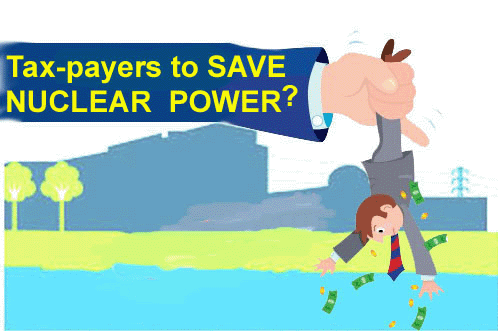
There’s a political battle unfolding in Scotland over a new charge critics
are calling a “nuclear tax” — a levy that could leave Scottish households
paying for nuclear construction projects hundreds of miles away. At the
center of the dispute is England’s Sizewell C nuclear power station, a
project that has ballooned beyond its original budget and is raising
questions about who should foot the bill.
According to The National,
Scottish lawmakers are raising alarms over a levy introduced by Westminster
to help fund the plant in Suffolk, which is now projected to cost £38
billion ($51.9 billion) — nearly double its original estimate of £20
billion ($27.3 billion). Scottish bill payers could contribute around £300
million ($409.3 million) over the next decade even though the plant is
being built in England.
The Scottish National Party has criticized Labour
leadership for not opposing the tax, arguing that residents are paying for
a project they did not approve and may never directly benefit from. “Your
support for these projects in Scotland would see us exposed to colossal
financial risk and undermine our renewables future,” SNP lawmaker Graham
Leadbitter said.
However, Labour representatives argue that nuclear power
is an important part of the United Kingdom’s long-term energy mix. Gregor
Poynton has said Scotland risks missing out on jobs and investment by
turning away from new nuclear technologies such as small modular reactors.
TCD 2nd Feb 2026, https://www.thecooldown.com/green-business/nuclear-tax-scotland-household-energy-bills/
Labour backbenchers revolt over Starmer’s nuclear plans

Ministers accused of scapegoating protected species for construction failures
Matt Oliver, 02 February 2026
Sir Keir Starmer’s plan for a nuclear renaissance faces a rearguard action
from Labour MPs and wildlife charities over claims it will be a
“catastrophe” for nature. As many as 40 backbenchers are rallying
against the Prime Minister’s proposal to overhaul environmental regulations
after an independent review said red tape was frustrating the construction
of new power stations.
The MPs and a coalition of environmental charities
including the Wildlife Trusts, the RSPB, the National Trust and the
Woodland Trust have accused ministers of scapegoating protected species
such as bats and newts for planning failures.
It comes ahead of a plan
expected to be published by ministers this month, setting out how they will
implement the review’s recommendations and whether they will adopt them in
full. Labour is also under pressure from an opposing group of pro-nuclear
campaigners, businesses and think tanks who argue reform is “essential if
we want to create jobs, tackle climate change, and cut energy bills”.
Britain is currently the most expensive place in the world to build nuclear
reactors, with critics blaming nature rules that have added hundreds of
millions of pounds of extra costs to construction. The review of nuclear
regulations, led by the economist John Fingleton, criticised regulators
such as the Office for Nuclear Regulation, the Environment Agency and
Natural England for presiding over a confusing and “duplicative” system
that prioritised “process over outcomes”.
A briefing circulated in
Parliament by the Wildlife Trusts claims that the review’s proposed changes
to habitat regulations “will do little to speed up planning decisions
but, instead, will turn the nature crisis into a catastrophe.” It argues
that the suggestion of a nature fund may be suitable in some cases but not
in the case of “irreplaceable habitats or species that cannot
re-establish elsewhere easily.”
The briefing adds: “The Government must
reject the nuclear regulatory review recommendations on environmental
regulations and end its confected war on nature as a barrier to
planning.” Chris Hinchcliffe, the Labour MP for North East Hertfordshire
who is coordinating the rebellion, said “a good number of colleagues”
shared the concerns. He said: “There is very clear polling on the
importance of nature to the British public and their desire to seek
stronger, not weaker, protections for nature. “Getting this wrong is a
real vote-loser, and is a misstep that the Government cannot afford.”
Responding to the findings in November, ministers vowed to present “a
full implementation plan” by late February and to push through the
changes within two years. On Monday, the campaign group Britain Remade
published a letter signed by businesses and think tanks urging ministers to
press ahead. The letter said: “If the Government is serious about growing
the economy, reducing bills, and delivering a new golden age of nuclear
energy, its implementation plan must back the Fingleton reforms in full.
“Nuclear energy is the most land-efficient zero-carbon technology we
possess. A single power station can power millions of homes. “If we are
serious about halting climate-driven nature loss, then nuclear energy must
expand in a safe, secure and sustainable way. “We cannot afford for the
Government to U-turn.”
Telegraph 2nd Feb 2026 https://www.telegraph.co.uk/business/2026/02/02/labour-backbenchers-revolt-over-starmer-nuclear-plans/
Iran resumes activity at nuclear sites, satellite images show.
Iran has attempted to salvage material from its bombed nuclear sites, new
satellite images suggest. Aerial pictures from Planet Labs PBC, a US
earth-imaging company, show roofs have been rebuilt over two damaged
buildings at the Isfahan and Natanz facilities, the first significant
activity observed there since the end of the war.
Experts said the
construction could indicate Iranian scientists attempting to recover key
nuclear assets that may have survived the bombing without detection by
Israel or the United States. The activity at the sites occurred since the
beginning of December, during which time Iran was gripped by protests and
faced subsequent threats of US military action.
Telegraph 31st Jan 2026, https://www.telegraph.co.uk/world-news/2026/01/31/iran-resumes-activity-at-nuclear-sites-satellite-images-sho/
Malaysian Officials take action as concerns arise about nuclear power plants: ‘Preparing for that possibility’

It also requires clearer decommissioning plans and long-term waste management strategies
Malaysia will only decide on the use of nuclear energy for electricity after 2030
“We cannot begin preparations only after a decision has been made.”
by Christine Dulion, January 31, 2026, https://www.thecooldown.com/green-business/nuclear-regulatory-law-malaysia-amendment/
Malaysia has taken a major step toward strengthening public and environmental safety with the rollout of a newly amended nuclear regulatory law. Officials say it’s designed to tighten oversight as the country weighs nuclear power as part of its long-term energy future.
The Atomic Energy Licensing Bill (Amendment) 2025 officially took effect on Dec. 1, according to the Edge Malaysia. The changes come as the government evaluates whether nuclear energy could help meet its goal of reaching net-zero pollution by 2050, while also addressing concerns around safety, waste, and accountability.
Under the updated law, anyone involved with atomic energy is required to be licensed, including for the possession or use of radioactive materials, operation of radiation generators, management of radioactive waste, and the construction or decommissioning of nuclear-related facilities. The amendment also introduces a new permit system for cross-border activity, making it illegal to import, export, or transport nuclear materials or technology without government approval.
Violations can carry serious consequences. . Anyone found illegally moving nuclear or radioactive materials across borders could face up to 10 years in prison, fines of up to $123,300, or both. The law also criminalizes the intentional misuse of radioactive materials if it is meant to cause injury, death, or environmental damage.
Supporters say the law reassures residents that any future nuclear activity, such as recycling radioactive waste, will be tightly regulated. It also requires clearer decommissioning plans and long-term waste management strategies, making sure radioactive materials are monitored throughout their entire lifecycle.
Nuclear energy is a complex topic. While it can produce large amounts of low-pollution electricity and support energy security, it also raises concerns around radioactive waste, high upfront costs, and long-term safety. Malaysia’s new legislation doesn’t settle that debate, but it does put firmer rules in place before decisions are made.
“Although Malaysia will only decide on the use of nuclear energy for electricity after 2030, this amendment represents a step in preparing for that possibility, as we cannot being preparations only after a decision has been made,” said Science, Technology, and Innovation minister Chang Lih Kang.
‘Deeply ideological’: the rationale behind Iran’s insistence on uranium enrichment
Tehran’s nuclear ambitions date back to the shah and the 1970s and remains undimmed despite the damage caused by sanctions.
A desperate effort to avert war between the US and Iran is once again under way, but trying to locate common ground between the two countries over Tehran’s nuclear programme has been made more difficult by escalating US demands, and by Iran’s ideological, deeply nationalist attachment to the right to enrich uranium.
Iran’s ambitions to run its own nuclear programme pre-date the arrival of the theocratic state in 1979, and can be traced back to the mid-1970s when the shah announced plans to build 20 civil nuclear power stations. This prompted an undignified scramble among western nations to be part of the action, with the UK energy secretary at the time, Tony Benn, having more than a walk-on part. At the heart of the programme was a desire for national sovereignty and power, symbolised by the ability
to enrich uranium.
Guardian 30th Jan 2026, https://www.theguardian.com/world/2026/jan/30/rationale-behind-iran-uranium-enrichment-nuclear-ambitions
1 This Month

of the week – Shut Down Drone Warfare!


Tell the Ukrainian Government to Drop Prosecution of Peace Activist Yurii Sheliazhenko

Petition to revoke the licensing of the Near Surface Nuclear Disposal Facility (NSDF) at Chalk River. https://www.ourcommons.ca/petitions/en/Petition/Details?Petition=e-7247
To see nuclear-related stories in greater depth and intensity – go to https://nuclearinformation.wordpress.com
-
Archives
- March 2026 (251)
- February 2026 (268)
- January 2026 (308)
- December 2025 (358)
- November 2025 (359)
- October 2025 (376)
- September 2025 (257)
- August 2025 (319)
- July 2025 (230)
- June 2025 (348)
- May 2025 (261)
- April 2025 (305)
-
Categories
- 1
- 1 NUCLEAR ISSUES
- business and costs
- climate change
- culture and arts
- ENERGY
- environment
- health
- history
- indigenous issues
- Legal
- marketing of nuclear
- media
- opposition to nuclear
- PERSONAL STORIES
- politics
- politics international
- Religion and ethics
- safety
- secrets,lies and civil liberties
- spinbuster
- technology
- Uranium
- wastes
- weapons and war
- Women
- 2 WORLD
- ACTION
- AFRICA
- Atrocities
- AUSTRALIA
- Christina's notes
- Christina's themes
- culture and arts
- Events
- Fuk 2022
- Fuk 2023
- Fukushima 2017
- Fukushima 2018
- fukushima 2019
- Fukushima 2020
- Fukushima 2021
- general
- global warming
- Humour (God we need it)
- Nuclear
- RARE EARTHS
- Reference
- resources – print
- Resources -audiovicual
- Weekly Newsletter
- World
- World Nuclear
- YouTube
-
RSS
Entries RSS
Comments RSS
 nuclear-news