Israeli opposition leaders sign pact to replace Netanyahu

Opposition leaders pledge cooperation despite ideological differences ahead of the vote.
Sakina Fatima Follow on Twitter| 27th September 2026 , https://www.siasat.com/israeli-opposition-leaders-sign-pact-to-replace-netanyahu-3549129/
Yair Lapid, Gadi Eisenkot, Naftali Bennett, Avigdor Lieberman and Yair Golan signed the principles document at Lapid’s home in Tel Aviv on Saturday, September 26
The leaders acknowledged their ideological differences but agreed that forming a new government focused on “repair and rebuilding” was their shared objective.
Under the agreement, none of the leaders, or anyone acting on their behalf, will attack another party in the bloc or its leader until a new government is formed.
They also pledged to cooperate immediately after the election and work to increase voter turnout across different sections of the electorate.
Opposition bloc sets up three joint working groups
The pact requires three joint working groups to be established within 48 hours.
The first will handle voter mobilisation, election-day preparations and measures to safeguard the integrity of the vote.
The second will formulate the basic guidelines for a potential new government. Its agenda includes equal sharing of service obligations, a state commission of inquiry into the October 7, 2023 events, term limits for the prime minister, a constitution and a plan for the government’s first 100 days.
The third group will coordinate communications between the parties and work to counter fake news and smear campaigns.
Prime minister candidate decision deferred
The parties have not selected a joint candidate for prime minister. Disagreements over the issue have emerged particularly among Eisenkot, Bennett and Lieberman.
The agreement instead focuses on cooperation before and immediately after the election, leaving the leadership question to be addressed after the vote.
Benny Gantz’s Blue and White party was not part of the meeting.
Netanyahu responds
Netanyahu criticised the agreement in a post on X, claiming that Eisenkot would seek to form a government with the other opposition leaders and Arab parties.
He also shared an AI-altered version of the leaders’ group photograph that added United Arab List leader Mansour Abbas and Hadash-Ta’al leader Ahmad Tibi, neither of whom attended the meeting.
Israel is scheduled to elect all 120 members of the Knesset on October 27. The results will determine the composition of the next parliament and the parties involved in forming the government.
Given the Chance, Ukrainians Would Give Zelensky the Boot

A fifth of those who say they do not trust him cite corruption as the main reason, and 59 percent of Ukrainians blame Zelensky personally for the extent of corruption in Ukraine today.
The wartime leader’s favorability ratings have plummeted.
Ted Snider, Nicolai N. Petro, Sep 18, 2026, https://www.theamericanconservative.com/given-the-chance-ukrainians-would-give-zelensky-the-boot/
There was a time, not very long ago, when Ukrainian President Volodymyr Zelensky was lionized around the world and spectacularly popular at home. But, if elections were held today, he would struggle to finish in the top three.
Zelensky came to power in a landslide victory in 2019. His term, constitutionally limited to five years, has now stretched to over seven years because of the war. Although it is true that 57 percent of Ukrainians say they do not want to hold elections during the war, it is simply not true that it is unconstitutional to hold presidential elections until the fighting stops.
The western media has provided cover for Zelensky by reporting that presidential elections are not permitted by Ukraine’s constitution at time of war. But while Ukrainian law prohibits parliamentary, presidential, and local elections under martial law, the highest law in the land, the Ukrainian constitution (Article 83), speaks only of the parliament as being able to extend its authority in the event that martial law is declared and elections cannot be held. It pointedly says nothing about extending the term of the president.
This omission was deliberate: The authors of the constitution feared that some future president might declare martial law precisely to prevent removal from office. Indeed, Zelensky’s predecessor, Petro Poroshenko, was accused by three former presidents of Ukraine of trying this very maneuver in late 2018 in order to derail the elections that he later lost.
Setting aside tricky legal matters, where do things stand politically? Were elections to be held today, three key metrics suggest that Zelensky would suffer a similar devastating loss.
The most obvious is recent polling. Only 28 percent of Ukrainians say they want to see Zelensky remain president after the war. Other recent polls show that only around 21 percent of Ukrainians would vote for him in the next election—putting Zelensky just one point ahead of his rival, former Commander-in-Chief Valeriy Zaluzhny—while other polling suggests that Zelensky would lose to Zaluzhny. Meanwhile, a number of “closed polls,” those commissioned by the government for internal use only, apparently show that he would probably lose to Kyrylo Budanov, the former intelligence chief and Zelensky’s current chief of staff.
The second metric may be even more important. Current polling shows that no candidate would win the required majority in the first round, thus necessitating a runoff round. Since he has the highest number of Ukrainians who say they would not vote for him under any circumstances, one can infer that Zelensky would be soundly defeated in this round under any scenario. A recent poll indicates that Zaluzhny would defeat him by a margin of 66 to 34 percent; Budanov would defeat him by 60 to 40 percent; and even the recently fired minister of defense, Mykhailo Fedorov, would beat him by a whopping 64 to 36 percent.
The third metric is trust. In an ever-shifting field of hypothetical candidates, how much Ukrainians trust their candidate may be the most important question of all. And here, Zelensky does even worse. When the question is trust, Zelensky places a distant sixth.
Zaluzhny comes in first with 28 percent of respondents fully trusting him, 37 percent trusting him somewhat, 12 percent somewhat distrusting him, and 18 percent not trusting him at all. Fedorov and Budanov are more trusted than Zelensky, as are Mykhailo Drapatyi, the current commander of the Ukrainian armed forces, and even Robert Brovdi, commander of the Unmanned Systems Forces. Only 18 percent say they fully trust Zelensky and 25 percent somewhat trust him, while 37 percent say they do not trust him at all.Government corruption is a big reason for Zelensky’s collapse. A fifth of those who say they do not trust him cite corruption as the main reason, and 59 percent of Ukrainians blame Zelensky personally for the extent of corruption in Ukraine today. And this perception is unlikely to change for the better, as new corruption scandals are exposed. They already reach deep into Zelensky’s inner circle and personal staff. Last year, these scandals took out Zelensky’s powerful chief of staff, Andriy Yermak. More recently, they have hit three deputy chiefs of staff and Yermak’s successor, Budanov, not to mention several government ministers and Ukraine’s chief prosecutor.
Popular reluctance, as well as the logistics of holding elections under the strain of war, will prevent elections from taking place any time soon. But when this horrible war finally ends and Ukrainians return to the polls, if democracy is permitted a full and unimpeded voice, then Zelensky, Ukraine’s acclaimed wartime president, will probably not be its peacetime president.
‘UK spends twice as much switching off windfarms as it does on small nuclear reactors’

More than £1 billion has been forked out in constraint
payments this year until the end of August – a 60 per cent increase on last
year. The UK government has paid almost twice as much to turn off windfarms
in Scotland as it plans to spend on developing small modular nuclear
reactors by the end of this decade, industry leaders have said. The Nuclear
Industry Association said ministers plan to invest £2.8 billion in the
technology, compared with £5.1bn in so-called constraint payments that
have been made since 2021. Some £1.04bn was forked out in constraint
payments this year up until the end of August. This is up from £648m in
the same period last year.
Scotsman 26th Sept 2026 https://www.scotsman.com/news/politics/uk-spends-twice-as-much-switching-off-windfarms-as-it-does-on-small-nuclear-reactors-9176795
Stop Mad King Donald’s Iran War: An Open Letter to Members of the US Congress

Trump is emboldened in his contempt for Congress because the Republican members of Congress have abdicated their constitutional responsibilities, terrified of their own president, and forsaking their constituents for campaign lucre from AIPAC and the military-industrial complex.
Many of you receive campaign contributions from military contractors and technology companies deeply involved in the war. Many of you take money from AIPAC, which champions the war that Netanyahu did so much to help launch. This has to stop, as it is a dereliction of your constitutional duty and a violation of your oath.
The war with Iran is Trump’s folly but Congress’s disgrace for not stopping it.
Jeffrey D. Sachs, Sep 23, 2026Common Dreams
Dear Members of Congress,
In truly deranged remarks to world leaders at the UN, Donald Trump declared that “I have a big decision to make,” whether to negotiate a deal with Iran or instead to “annihilate the Islamic Republic” and drive Iran “into hell with no chance of survival.”
He posed it as his personal choice. The fact that the American people are dead set against Trump’s war means nothing. And as for the voters, he added that he gives “absolutely no credence” to the coming midterm elections in deciding on his actions and on Iran’s fate.
The President’s threat to annihilate a member state of the United Nations, delivered from the General Assembly podium, disgraced Trump in front of the world.
Nothing binds this President. He is not bound by law, the Constitution, the UN Charter, or public opinion at home and abroad. When asked at the start of the year whether he has any limits on his power, he said “Yeah, there is one thing. My own morality. My own mind. It’s the only thing that can stop me.”
Trump opened his speech with the 250th anniversary of the Declaration of Independence, hailing America’s freedom. The fact is that Trump’s authoritarianism far outdoes that of King George III, against whom the colonies rebelled. Among the founders’ indictments of Mad King George was that “He has affected to render the Military independent of and superior to the Civil power.” Yet our own mad king has decided that the survival of a whole civilization is in his hands alone.
Trump is emboldened in his contempt for Congress because the Republican members of Congress have abdicated their constitutional responsibilities, terrified of their own president, and forsaking their constituents for campaign lucre from AIPAC and the military-industrial complex.
The Constitution is unambiguous regarding Congress’s responsibility. Article I, Section 8 assigns Congress, not the President, the sole power to declare war. That is not a choice or an option. The Constitution doesn’t say that Congress can play dead and let the President declare war. The Framers made this choice deliberately, because they were explicitly rejecting the power of a king to take the nation to war.
In Federalist 69, Hamilton assured the public that the President’s war powers would be far less than the British monarch’s. Madison stated the principle plainly in a letter to Jefferson in 1798: “The constitution supposes, what the History of all Govts demonstrates, that the Ex. is the branch of power most interested in war, & most prone to it. It has accordingly with studied care vested the question of war in the Legislature.”
The founders’ careful design has been overturned because of the unconstitutional subservience of the Republican members of Congress to Trump and to the military-industrial-digital complex. And yes, under Democratic presidents, most Democratic members of Congress also looked the other way when those presidents chose to go to war.
The war with Iran is Trump’s folly but Congress’s disgrace for not stopping it. It is a war without a purpose that has created mass suffering in Iran, tens of billions of dollars of direct outlays, and staggering damage to American military bases in eight countries of the Middle East. The closure of the Strait of Hormuz has sent world and American prices soaring for oil, gas, fertilizers, and more. And the world has duly noted that Iran can hold its own against US aggression, albeit at great sacrifice to the people of Iran and the region.
America’s much vaunted AI battlefield has been exposed in the most horrifying way. On the first day of the war, an American missile struck the girls’ elementary school there, killing more than 150 people, most of them girls aged seven to twelve, and the military’s own inquiry reportedly found that overreliance on artificial intelligence contributed to the targeting. Trump blamed “Iran or somebody else,” and seven months later the administration has offered no findings, no apology and no compensation to the families.
The President’s threat to annihilate a member state of the United Nations, delivered from the General Assembly podium, disgraced Trump in front of the world. It also violated Article 2(4) of the UN Charter, which prohibits even the threat of force against another state. Nearly all the world stands aghast.
I write to you because you cannot simply walk away from Trump’s recklessness, shaking your heads silently. You have a job to do, so do it. The craven Republican Party has to find even a minimal level of guts to tell Trump, “No, you do not have the power to destroy Iran. Any war with Iran depends on us, and we don’t support you and our constituents want this war to stop.” A clear majority of Americans oppose this war, and poll after poll shows that the opposition to the war is growing. A few Republicans have found that courage. Last week three more Republicans broke ranks to support ending the war. Their colleagues should follow.
Many of you receive campaign contributions from military contractors and technology companies deeply involved in the war. Many of you take money from AIPAC, which champions the war that Netanyahu did so much to help launch. This has to stop, as it is a dereliction of your constitutional duty and a violation of your oath.
Congress holds the power of the purse. The fiscal year ends on September 30, and every bill that funds the Pentagon is your opportunity to prohibit funds for unauthorized offensive operations against Iran.
The right course for the US is simple. Congress should cut off funding, and the US should stop further attacks and go home. We need no agreement with Iran or anyone else to stop the war that we started. By ending the war you will immediately restore some sanity and safety to the world energy markets, food supplies, and prices faced by Americans and others around the world.
How America has declined from the glorious moment when John F. Kennedy stood at the same podium at the UN on September 20, 1963, after having negotiated the Partial Nuclear Test Ban Treaty with the Soviet Union. He told the assembled leaders that the treaty can be a lever, and Archimedes, in explaining the principles of the lever, was said to have declared to his friends: “Give me a place where I can stand—and I shall move the world.” My fellow inhabitants of this planet: Let us take our stand here in this Assembly of nations. And let us see if we, in our own time, can move the world to a just and lasting peace.
Members of Congress, to save our nation’s honor and our Constitution, you must do your duty to stop this war, and stop Trump’s brazen, destructive, and unconstitutional grab for power.
Respectfully,
Jeffrey D. Sachs
University Professor, Columbia University
Big Tech’s Plans for AI Are Bringing Nuclear Power Back to New England

Nuclear energy is as dangerous as it always was—even more so now that Trump is peeling away traditional regulatory safeguards.
If there’s any good news in this grim scenario, it’s that citizens groups are pushing back not only on AI data centers but also on nuclear 2.0.
To pave the way for AI data centers, New England governors are aligning with Trump’s plans for nuclear. But why?
Tom Valovic, 22 September 26, https://www.commondreams.org/opinion/big-tech-nuclear-new-england
As you may have noticed, nuclear power is back. Many establishment Democrats have now not only abandoned bread-and-butter working-class issues, they’re also busy jettisoning some of the hard-won core principles of the environmental movement hammered out painstakingly over decades. Apparently, someone has waved a magic wand when we weren’t looking and nuclear power is now a “green” source of energy. Is that because if you become irradiated you start to turn green?
Nuclear Power is Green? This is Corporate Marketing Hype. Don’t Believe it.

How did this happen? We can start by taking a look at what’s been happening in New England, especially Massachusetts, which offers a good case study. In that bluest of blue states, Gov. Maura Healey is eager to bring nuclear power back despite a 1982 voter referendum—now law—that prohibits it unless stringent safeguards are put in place and full statewide voter approval enacted. She’s not alone. In March 2026, a group of New England Governors—mostly Democrats—directed their state energy agencies to explore advanced nuclear energy technologies while also continuing to support the region’s existing nuclear resources.
The press release from Gov. Healey’s office described nuclear power as a “pillar of New England’s electric system.” The statement also eagerly encouraged the development of public-private partnerships. Unfortunately, this widely endorsed bipartisan concept has now become the working model for corporate exploitation of public resources and is a key latter-day building block of continuing deregulation. The press release gushed with enthusiasm for nuclear power, noting that “by ensuring both the continued operation of our existing nuclear fleet and setting our region on a path to explore next generation resources, including advanced nuclear energy technologies, the New England states will continue our leadership in grid modernization and energy innovation as we jointly work to meet the region’s current and future energy needs.”
The Hidden Connection: AI Data Centers and Nuclear Power
It seems important to explore the convoluted corporate and political forces behind this troubling step backward in our nation’s environmental progress. It’s a bit startling to realize how well the New England governors’ position aligns with President Donald Trump’s AI and energy policy. It also reveals a certain political and cultural amnesia about the very real risks of nuclear power. In trying to untangle this Gordian knot, we (surprise!) bump up against the usual suspect: Big Tech’s aggressive and often hidden technocratic agenda and power grab across all levels of government.
In the long-form version (which I’ll just briefly touch upon here),
In the long-form version (which I’ll just briefly touch upon here), the background traces back to the deal with the devil made by President Bill Clinton when he sold out the Democratic Party to neoliberal interests. That was the structural beginning of what some now call the uniparty—an unholy and often unspoken alliance between establishment Republicans and Democrats on key issues, operating as an inchoate blob of distinctions without a difference. It signifies core agreement between the two parties concerning three of the most important drivers of our current political morass: hyper-militarization; excessive deregulation leading to the current privatization spree that’s green-lit corporate greed and overreach; and letting the Big Tech genie out of the bottle to replace democracy with technocratic governance.
What’s happening with nuclear power in New England represents a good case study in how formerly staunch political values have been eroded through back-door workarounds (such as non-disclosure agreements) operating in the shadows of democracy. So, why then are Gov. Healey and other New England governors so comfortable with nuclear 2.0? Are they simply responding to pressures and influences from the Trump administration while also kowtowing to Big-Tech special interests and (needless to say) just following the money?
It’s no secret that Trump is solidly—one might even be tempted to say mindlessly—supporting the Big Tech power brokers racing to force-feed the American public AI data centers regardless of their well-known negative impacts on environmental integrity, water supplies, energy costs, and overall quality of life. But the hastily planned deployment of nuclear reactors to provide energy for AI data centers is an important key to Big Tech’s strategy. This is evident from Microsoft’s plan to use the Three-Mile Island nuclear facility for AI power generation.
In the March 2026 announcement, the New England governors were signaling their intent to fall into line with the Trump administration’s massive $17.5 billion fund to help utilities speed the nationwide construction of nuclear reactors to support AI data centers. They also signaled their intent to explore new approaches such as the emerging but unproven technology of SMRs or small modular reactors and nuclear fusion. Trump is, of course, doing this while actively discouraging viable green energy solutions such as wind farms, solar, and renewables. Projects already well underway have been abruptly cancelled, and he announced he would pay $765 million to Invenergy simply to not develop four wind farms in a number of states including Maine and New York.
Parsing The “Zero Carbon” Sleight of Hand
Nuclear proponents are now using the “zero carbon” tagline to bamboozle the public into thinking that nuclear energy is now safe and “green.” With this clever inversion, they’re betting on large doses of cultural amnesia about disasters such as Fukushima (still ongoing), Chernobyl (still ongoing), and Three-Mile Island. They’re also conveniently sidestepping the fact that the nuclear waste problem persistently shows no easy resolution, although some in the industry are now claiming it can be recycled and repurposed.
Nuclear energy is as dangerous as it always was—even more so now that Trump is peeling away traditional regulatory safeguards. Environmental organizations such as the Sierra Club and Greenpeace oppose it vigorously. The Sierra Club website advises that it “opposes the licensing, construction, and operation of new nuclear reactors utilizing the fission process, pending resolution of the significant safety problems inherent in reactor operation, disposal of spent fuels, and possible diversion of nuclear materials capable of use in weapons manufacture.”
The fact that Gov. Healey and other New England governors have more or less fallen into line with both Trump and Big Tech’s AI plans is obviously troubling. As mentioned, equally troubling is how Healey attempted to subvert a 1982 voter referendum that placed significant restrictions on nuclear power in the state and is now on the books as law. Fortunately, the Massachusetts state senate stepped up to oppose Healey’s attempt to undemocratically bypass the referendum. And while to her credit, she did recently champion proactive legislation to curb the excesses of AI data center buildouts, reading the fine print reveals that the initiative subtly paves the way for many more nuclear facilities to be developed to support those data centers.
If there’s any good news in this grim scenario, it’s that citizens groups are pushing back not only on AI data centers but also on nuclear 2.0. These efforts include organizations such as The Commonwealth Coalition for Democracy and Safe Energy (CCDSE), a collaborative effort of more than 15 groups, including Mass. Power Forward, Sierra Club, Clamshell Alliance, Massachusetts Peace Action, Cape Downwinders, Save Our Bay Massachusetts, and Citizens Awareness Network. All of these organizations were united in opposition to nuclear and successfully lobbied in support of the Massachusetts Senate’s wise decision to favor democracy and safe energy over Big Tech cronyism.
Britain’s elites want you ready to die for a war they keep imagining

As the warnings about Russia grow louder, the public is being told to fear more, question less and prepare for war
Tarik Cyril Amar, 24 Sep, 2026, https://www.rt.com/news/646177-britains-elites-want-you-die/
Great Britain is going through a war scare. Or to be precise, its combined political and media establishment is subjecting its people to a relentless propaganda (in up-to-date NATO-speak “cognitive warfare”) campaign to create a sense of impending war against Russia.
As you would expect, that war is, of course, framed as strictly defensive. In propaganda textbook manner, the message is both very simple and very repetitive: The UK is in great danger of a Russian attack, and its whole population must prepare itself to withstand and resist it.
It goes without saying that Moscow’s repeated declarations of having no such intention make no difference.
Britain is certainly not alone in its establishment-induced hysteria. Much of NATO-EU Europe is undergoing, in essence, the same treatment. In France, for instance, President Emmanuel Macron has called a theatrical all-manicured-hands-on-deck meeting to give what can only be called a national scare talk about “Russian hybrid warfare”; in Germany, Berlin and its mainstream media won’t stop stirring the pot about the murky drone affair at Leipzig-Halle airport.
Yet, over the last weeks, within a crowded field of European panic-mongering, Britain has stuck out as especially virulent. The single most grotesque contribution was made by uber-Tory Jacob Rees-Mogg. Comfortably seated against a backdrop that screamed country-squire probity, Rees-Mogg held forth on war within the next few years, ancient Rome (he’s been to Eton, he wants you to know) and, most importantly, “circumstances where people may have to die.” Either that or – so Rees-Mogg’s stern message – decline and fall, as happened to those Romans, who let mercenaries do their fighting and thus lost their empire.
So much to unpack. For one thing, the reference to paying others to fight – and die – must be a Freudian slip. Surely, Sir Jacob cannot have meant to refer to how the West, Britain very much included, has paid the Kiev regime to send its subjects – if need be, after kidnapping them – into the folly of a proxy war meatgrinder to demote Russia. And then, that Roman Empire analogy? Clearly, Rees-Mogg, true to type, is still struggling with the fact that Britain has its imperial collapse well behind it already.
Yet, sour oddball as he is, the arch-conservative – and multimillionaire – Rees-Mogg is perfectly representative of the current British establishment trend. Prime Minister Andy Burnham, for instance, has just used his first UN General Assembly address in New York to blame his country’s misery not on, say, his predecessor and Labour Party comrade Keir Starmer, but on Russia.
Meanwhile, at home, Sky News is rolling out ‘The Wargame’, a bizarre “docu”-fantasy in four parts, built on the premise that the Russians are coming, no, they really, really ARE this time!
Pretending to be a sort of “realistic” account of what a British government would do in case of Moscow launching a series of escalating attacks, this production – from available reviews – is unusually awful shlock. It features has-been politicos doubling as un-reality TV stars, such as Michael Gove and Nicola Sturgeon, and living out their inner Tom Clancy by pretending to be serious, decisive, and, most of all, terribly important to the nation’s survival.
Unintentionally funny, though, as it may be, ‘The Wargame’ clearly has substantial political support and much hype around it. Propaganda can easily look ridiculous and be highly toxic at the same time. Because effective propaganda is, above all, one simple thing: the psychological manipulation of the many by the few. This is such a case. The viewers of ‘The Wargame’ are fed a silly but efficiently dramatized story, with the whole bag of well-worn but powerful tricks: suspense, shock, and, last but not least, a thrilling score.
It’s no surprise that the attitude of those doing the manipulating is, at best, patronizing. And to be fair even to the unbearable, Jacob Rees-Mogg, who carefully tends his beyond-caricature English-toff image, is quite honest about his disdain for ordinary people and their expendable lives. From his always obstinately ill-fitting yet clearly expensively tailored suit to the diction of a terribly bored yet forbearing Eton headmaster, his performance oozes good old upper-class condescension.
When Rees-Mogg tells you that you may have to die, you know he won’t lose sleep over it, because you are you, and he – well, he is something entirely different and, really, much better (and, as it happens, richer, too), of course.
In a Sky News interview, the UK’s Chief of the Defense Staff, Air Chief Marshal Sir Richard Knighton, has revealed a less excentric as well as more insidious approach to the masses. Referring to a “national conversation on defense,” both he and his interviewer took it for granted that the purpose of such a conversation is to remedy “what the British public hasn’t got, […] haven’t understood.”
What a delicate way to start a “conversation”: let me tell you how damn slow you are and where you need to catch up. Not: Let’s exchange views and respect each other as equal citizens. Indeed, it’s not only very rude – what has happened to English manners? – but positively Orwellian to call such offensively complacent preaching a “conversation.”
Marshal Knighton’s idea of how the British can and must do better was no less revealing: In essence, be more like the Estonians or, at least, the Swedes. Because in Estonia “the threat from Russia” is “part of normal daily conversation,” and in Sweden, they are at least trying to achieve the same single-minded obsessiveness.
There you have it, chums on the homefront: Make an effort, will you now? Learn from the worst, get a grip, and make your whole life turn around the fear we tell you to feel.
And don’t you dare notice that – how embarrassing, really – it is precisely the Estonian authorities who, notwithstanding their generally record-level Russophobia – have just called on everyone in NATO-EU Europe to cool it.
Because, those unpredictable Estonians tell us, the Russia-at-the-gates narrative “has been blown completely out of proportion. For example, Russia makes some adjustments on the other side of the Narva River and now everyone across NATO is losing their heads and hyperventilating over it,” while, in reality, “there is absolutely no reason to believe that Russia is imminently going to launch a military attack on NATO, Estonia, or the Baltic states.” Oops.
Unfortunately, war propaganda is almost immune to its own absurdities, inconsistencies, and plain silliness. Because it is designed to operate not by appealing to reason but to fear, stereotypes, and conformism. A conformism that some British establishment members already openly want to reinforce by locking up any dissenters.
The true weak spot of this warmongering may be its arrogance. There are signs on social media that many Brits do not appreciate their establishment’s latest efforts to scare and mobilize them for senseless war. Let’s hope that the mix of threats and condescension – displayed by a snob as gleefully aloof as Rees-Mogg, an officer-bureaucrat as clumsily tactless as Knighton, and the makers of something as slick as ‘The Wargame’ – rubs much of the country the wrong way. The “elites” are insane and malevolent. Any hope for peace and a return to reason will have to come from below.
40 years after Chernobyl, Italy greenlights a return to nuclear energy
Italy´s Senate on Wednesday gave final approval to legislation paving the
way for a return to nuclear power nearly four decades after the Chernobyl
disaster prompted the country to abandon atomic energy. The measure cleared
the upper house 81-51 with seven abstentions. It marks a major step in
Premier Giorgia Meloni´s drive to bolster energy security and meet climate
goals, even though the construction of possible new reactors is still years
away. The bill, which earlier passed the lower Chamber of Deputies,
establishes a legal framework for next-generation nuclear technologies. It
authorizes the government to draft implementing decrees over the next 12
months covering reactor licensing, safety standards, waste management and
criteria for future sites.
Daily Mail 23rd Sept 2026 https://www.dailymail.com/wires/ap/article-16154865/Italys-parliament-paves-way-return-nuclear-energy.html
A bit more clarity about Volodymr Zelensky

A comment from Steve on https://theaimn.net/volodymr-zelensky-the-exceptional-leader/#comment-34519
For those who like Zelensky and for whom nothing will change their minds, this from MSN this morning — Brussels is stepping up expectations on Kyiv to accelerate reforms indispensable for unlocking €20 billion in financial assistance, which the country badly needs as the budget deficit swells and Russia escalates the war.
EU officials have raised the alarm about the slow legislative pace in the Rada, Ukraine’s parliament, where several laws are stalled. Two separate payments, one of €3.9 billion and another of €2.9 billion, have been delayed as a result.
As my colleague Jorge Liboreiro reports, the situation stands in stark contrast with the public messages from Zelenskyy and his deputies, who are asking allies to mobilise additional resources to plug a €23 billion gap in the Ministry of Defence. Separately, the country faces a €32.6 billion hole in next year’s budget.
Could this reform delay have something to do with Ukraine’s long-standing reputation as the most corrupt country in Europe?
State corruption in Ukraine was reported by journalist Seymour Hersh a few years ago.
He wrote that the CIA assesses that Ukrainian officials, including Zelenskyy, have embezzled $400 million from money the U.S. sent Ukraine to buy diesel fuel for its war effort, and that Ukrainian government ministries literally compete with each other to sell weapons paid for by U.S. taxpayers to private arms dealers in Poland, the Czech Republic and around the world.
A press release from the European Court of Auditors, Luxembourg, 23 September 2021, adds some weight to the claims by Hersh.
The report heading reads — EU support for reforms in Ukraine ineffective in fighting grand corruption.
It continues;
“Grand corruption and state capture are still widespread in Ukraine despite EU action, according to a special report published by the European Court of Auditors (ECA). The EU has been trying to address corruption in Ukraine as a cross-cutting priority; it has channelled funds and efforts through a variety of sectors, from the competition environment to the judiciary and civil society. But the support and measures put in place have not delivered the expected results, the auditors say…Grand corruption and state capture are endemic in Ukraine; as well as hindering competition and growth, they also harm the democratic process.”
EU support for reforms in Ukraine ineffective in fighting grand corruption??
That report came out 5 years ago!
What can we say?!
The EU has been oh, so relentless in pulling Ukraine into line.
About as relentless as they were in stopping Ukraine from murdering its citizens in the Donbass, even though the OSCE ( Organization for Security and Co-operation in Europe) was a signatory to the Minsk 1 Protocol.
The entire mainstream narrative of what happened in Ukraine, Crimea and Donbass since 2014 was fraudulent.
The countries of Europe wanted the war with Russia, and they want it to continue.
Simon Daigle lists the public concerns that must be addressed in planned development of BWRX-300 small nuclear reactors – Submission to Canadian Nuclear Safety Commission


Submission Concerning the Proposed Development of BWRX-300 – multiple reactors at the Darlington Site (Ontario)
Submitted November 19,2023 by Simon J Daigle, Simon J Daigle, B.Sc., M.Sc., M.Sc(A) Montreal, Quebec Canada
Response to the proposed development of OPGs BWRX-300 reactors at the Darlington CANDU reactors site and the items below are all real public concerns and must all be addressed independently and individually, as per the following categories:
CNSC licensing of the BWRX-300 reactors & Multiple Reactors nearby a NPP is inadequate [References: 1, 2, 4, 5]
- BWRX-300 stands for Boiling Water Reactor eXperimental 300 and developed by GE Hitachi Nuclear Energy (GEH) and will not aim to address any key challenges faced by traditional nuclear power plants. In fact, they will be costly, and generate extremely toxic nuclear wastes more than what would be expected by traditional NPP plants. [Ref. 4].
- This experimental compact design will not reduce construction costs, will not simplify operation nearby one NPP, or will ever enhanced safety measures. In fact, it will do the exact opposite as per IAEA [Ref. 1 and 5].
- It is questionable to say the least that by utilizing natural circulation and passive safety systems you will eliminate the need for external pumps and active cooling mechanisms because during a meltdown, fire or catastrophic event (lightening, flooding, extreme air temperatures over decades because of climate change), who will shut it off? A worker? I’m more reassured when a Pilot on commercial flight is present when he or she is using the auto-pilot function [Ref. 1].
- CNSC license to built an experimental reactor based on the CNSC’s decision that OPG has met the recommendations of the 2011 Environmental Assessment Report by the JRP is not objectively verifiable or can be validated based on the 2023 Update report [Ref. 2].
- No objective evidence is available to validate what specific recommendations of the JRP have been adopted, analysed and/or implemented by OPG or CNSC. [Ref. 2].
- No BWRX-300 reactors are operating anywhere in the world and is a real public concern for the citizens living nearby as well as the potential impacts of a catastrophic environmental event that could be transboundary across many municipalities.
Engineering Design Risks: Experimental, Natural water cooling & neutron leakage [4,5].
- Water cannot be used to cool a reactor as it is experimental design reactor that will use use low pressure water to remove heat from the core. A distinct feature of this reactor design is that water is circulated within the core by natural circulation and yet no data is measured or validated by any laboratory confirmed analysis or modelling study.
- Neutron leakage will be problematic for any SMR design as well as for the BRMX-300 reactor as no proof of any safe SMR reactor system can be validated or compared too to this very day.
- This is no experimental data to elude or conclude that this experimental reactor will work in terms of an internal cooling system of the core.
- BWRX-300 is by all means not small as it covers a full football field.
- No BWRX-300 reactors are operating anywhere in the world.
- The proposed design and operation of a BWRX-300 is entirely different from the CANDU design and involves a structure and a method of operating which is, in large part, below ground level.
- No data on any potential meltdown of the core of any modular nuclear including BWRX-300 including catastrophic events cascading located nearby a Nuclear Power Plant.
- Neutron leakage is a huge problem with SMRs and will be as well with the BWRX-300.
- SMR Neutronics and Design: [Ref. 4].
- “A nuclear reactor is designed to sustain criticality, a chain reaction of fission events that generates energy (∼200 MeV per fission event) and extra neutrons that can cause fission in nearby fissile nuclides.
- The neutron “economy” of a reactor depends on the efficiency of the chain reaction process; the fate of neutrons absorbed by abundant nuclides, such as 238U or 232Th; the fission of newly generated fissile nuclides, such as 239Pu and 233U; and the loss of neutrons across the fuel boundary.
- These “lost” neutrons can activate structural materials that surround the fuel assemblies. Each of these physical processes generates radioactive waste.
- Thus, the final composition of the SNF and associated wastes depend on the initial composition of the fuel, the physical design of the fuel, burnup, and the types of structural materials of the reactor.
- The probability of neutron leakage is a function of the reactor dimensions and the neutron diffusion length, the latter of which is determined by the neutron scattering properties of the fuel, coolant, moderator, and structural materials in the reactor core.
- The neutron diffusion length will be the same in reactors that use similar fuel cycles and fuel–coolant–moderator combinations; thus, the neutron leakage probability will be larger for an SMR than for a larger reactor of a similar type.”
- Public Consultation, indigenous peoples and social acceptability: [Ref. 2].
- No objective evidence has been elucidated or clearly documented with transparency.
- EIA Impact statement: page 84 of [Ref. 2].
- EIA impact statement, nor final PPE parameters, did not follow IAEA Multi-Unit Probabilistic Safety Assessment required for 1 or 4 experimental reactors nearby a Nuclear Power Plant despite the fact that EIA significance analysis had assessed all the residual adverse effects [Ref. 1, 5]. Please refer to the list of EIA and PPE selected quotes below as the reference to compare with the IAEA Multi-Unit Probabilistic Safety Assessment that is lacking [Ref. 1, 5].
EIA and PPE selected quotes:
“EIS significance analysis had assessed all the residual adverse effects to be “Not Significant”. Of the likely residual adverse effects that were forwarded for assessment of significance in the EIS:
• Seven (7) were also determined to result in minor residual adverse effects from the BWRX-300 but less than that described in the EIS,
• Four (4) were not applicable to the BWRX-300 reactor,
• Five (5) were determined to have residual adverse effects not significant after completion of additional studies to assess the likely effects to retained terrestrial features not considered in the EIS.
- The PPE Of the 198 PPE parameters, 60 PPE parameters were not applicable to the BWRX-300. Of the 138 applicable PPE parameters evaluated, eight (8) BWRX-300 parameters are currently not within their respective PPE parameters. These are largely due to characteristics inherent to the design of the GEH reactor technology. These eight parameters are related to the following topics:
- The rate of fire protection water withdrawal and the quantity of water in storage,
- Deeper foundations (38 m below grade) than the reactors previously assessed in the EIS (13.5 m),
- Airborne releases of radioactive contaminants and normal operation minimum release height above finished grade,
- The different proportions of radionuclides in solid wastes generated by the operation of the BWRX-300,
- The weight of the cask used to transport the BWRX-300 spent fuel on site, and
- The multiplication factors applied to basic wind speed to develop the plant design.
- A full environmental impact assessment is required to fulfill provincial and federal jurisdiction best practices for air, water and soil & biosphere impacts during a catastrophic event or meltdown of this experimental reactor as well as maritime and lake biosphere impacts.
Nuclear accidents, incidents, multiple explosion risks or 1 or 4 BMRX-300 reactors nearby a NPP, Soil Stability, hydrogeology, lithospheric & seismic Risks: [Ref. 1,2, 5].
- No objective risk assessment has been completed by OPG or CNSC as per the required IAEA Multi-Unit Probabilistic Safety Assessment required for 1 or 4 experimental reactors nearby a Nuclear Power Plant. [Ref. 1,5].
- The appropriateness of building 1 or 4 untested reactors next to the 4 existing CANDUs at Darlington as well as the current and potential stored nuclear waste is questionable given the fact that the probabilistic safety assessment was not completed according to the IAEA methodology [Ref. 1].
- JRP recommendations concerning the physical conditions of the Darlington site need to be applied with transparency by OPG and the CNSC. [Ref. 2].
Other public and safety concerns: these issues need to be addressed
- Climate change impacts have not been included in the EIS report.
- Unknown: reliability data to reduce the risk of potential accidents.
- Unknown: demonstrating that the BMRX-300 is a clean and reliable source of electricity, capable of generating vast amounts of energy without producing greenhouse gas emissions as it is only an experimental design.
- Concerns surrounding safety, waste disposal, and cost have hindered its widespread adoption globally. A handful of countries have adopted this design but no data on the true financial costs to governments or to that taxpayer. [Ref. 4].
Unknown: BWRX-300 did not address safety concerns, efficiency, efficacy as a cost-effective alternative compared to renewables such as hydro, solar or wind energy generation.
Unknown: sustainability and reliability compared to wind and solar energies to meet the growing demand for electricity.- BWRX-300 represents a significant step backwards in power technology. It is not compact, it does not meet nuclear wastes (as per the IAEA ALARA principle) that will last for thousands of years, and most certainly, it is not cost effective over time to store and monitor SMR or BWRX-300 nuclear wastes based on the probability of any heat instability of the nuclear core over time and the generation of highly toxic nuclear waste. You cannot turn off radioactivity like an electrical light bulb as there are no fuse switch off for ionizing radiation.
Swiss to vote on referendum against new nuclear power plants

the public has “clearly” spoken out three times in favour of a future based on renewable energy: through the adoption of the Energy Strategy 2050 in 2017, the Climate Protection Act in 2023 and the Electricity Act in 2024.
the public has “clearly” spoken out three times in favour of a future based on renewable energy: through the adoption of the Energy Strategy 2050 in 2017, the Climate Protection Act in 2023 and the Electricity Act in 2024.
20 September 2026, https://www.swissinfo.ch/eng/energy-transition/swiss-referendum-against-new-nuclear-power-plants/92088172
The Swiss are set to vote against the possibility of building new nuclear power stations. In a span of three months, more than 125,000 people signed the referendum petition against the government proposal that was approved by parliament in June.
“The success of this petition shows that the public rejects a return to nuclear power, a costly and dangerous technology that increases our dependence on uranium imports, particularly from Russia,” wrote the “No to New Nuclear Power Stations” coalition in a press release.
During the summer session, parliament had approved the government’s indirect counter-proposal to the “Stop the Blackout” (Electricity for All at All Times) popular initiative. The proposal aims to lift the ban on building new nuclear power stations in Switzerland.
With this proposal, the government and parliament are “ignoring the will of the people”, the coalition for the referendum protested. It points out that the public has “clearly” spoken out three times in favour of a future based on renewable energy: through the adoption of the Energy Strategy 2050 in 2017, the Climate Protection Act in 2023 and the Electricity Act in 2024.
For the referendum committee, “this approach is bearing fruit: Switzerland is increasingly meeting its energy needs through locally produced solar, wind and hydro power.” Conversely, the costs and risks associated with nuclear power are considered “too high”.
The “No to New Nuclear Power Stations” coalition brings together the Greens, the Social Democrats, the Green Liberals, part of the Centre Party and around thirty organisations such as WWF, Greenpeace, Pro Natura and Swissolar.
Polish Polarization Over Ukraine Is Likely The New Normal

Andrew Korybko, Aug 07, 2026, https://korybko.substack.com/p/polish-polarization-over-ukraine
What was once one of the most Ukrainophilic societies on earth in recent years is now becoming one of the most critical.
The spiraling Polish-Ukrainian dispute that was sparked by Zelensky’s state-level glorification of the Volhynia Genocide’s OUN-UPA culprits has polarized Poles over Ukraine in unprecedented ways that would have been unthinkable just several months ago. Nowadays nearly 60% of Poles oppose Ukraine’s membership in the EU, slightly over half no longer want to accept more Ukrainian refugees, and a little less than half want to stop arming Ukraine. All of this is directly due to their political tensions.
As difficult as it may be for astute observers to accept, few Poles knew about Ukraine’s glorification of the OUN-UPA till recently, and those who were aware of it were told by their ruling duopoly and “NGOs” that they’re a “Russian footwrap” (“Ruska onuca”) for believing this. It wasn’t till conservative President Karol Nawrocki threatened to revoke Poland’s highest honor from Zelensky, actually went through with it, and then Ukrainian society and the state viciously reacted that this finally became public knowledge.
Nawrocki raised the greatest awareness of Ukraine’s glorification of the OUN-UPA among his compatriots, around which time the conservative opposition with which he’s affiliated (he’s officially an independent) did the same for electioneering reasons ahead of fall 2027’s next Sejm elections. For background, they donated Poland’s entire stockpile to Ukraine and spent 4.91% of their country’s GDP on supporting it (mostly supporting refugees), all without any Volhynia-related political strings attached.
Shortly after, the ruling liberal coalition was then pushed by public pressure into hardening their own approach to Ukraine as well, but they too already discredited themselves on this issue. That’s why the two libertarian-nationalist opposition parties now have more support (26.3%) than the newly divided conservative one (24.3%) per reputable polling since they consistently advocated for strings-attached aid and condemned Ukraine’s cult of Bandera. They could all possibly form a coalition if this trend persists.
While it’s difficult to predict how fall 2027’s next Sejm elections will play out, the trend is that Poles are polarized over Ukraine like never before, and this will almost certainly remain a major political issue. The newfound awareness among them over Ukrainians’ support for the OUN-UPA genocidaires of their ancestors contributed to more of them feeling uncomfortable with so many of these refugees remaining in Poland. Highly publicized crimes by this community haven’t helped their reputation either.
On the foreign front, “Poland Finally Realizes The Geostrategic Challenge Posed By Ukraine”, namely as a German–backed rival for leadership over Central & Eastern Europe. Poles are also unsettled by Ukrainian trolling on social media, which includes justifying the Volhynia Genocide, and Ukraine’s plans to build a “national pantheon” that’ll likely inter the remains of OUN-UPA leaders. The negative impressions of Ukraine and its people that the latest developments have made upon them won’t be forgotten.
For these reasons, Polish polarization over Ukraine is likely the new normal, one that’ll also have far-reaching electoral consequences ahead of fall 2027’s next Sejm elections. What was once one of the most Ukrainophilic societies on earth in recent years is now becoming one of the most critical. Zelensky is entirely to blame for setting this process into motion with his unnecessary state-level glorification of the Volhynia Genocide’s OUN-UPA leaders aimed solely at boosting his people’s sagging morale.
How Palantir Turned Ukrainians Into Lab Rats (And Helped Ruin Ukraine)
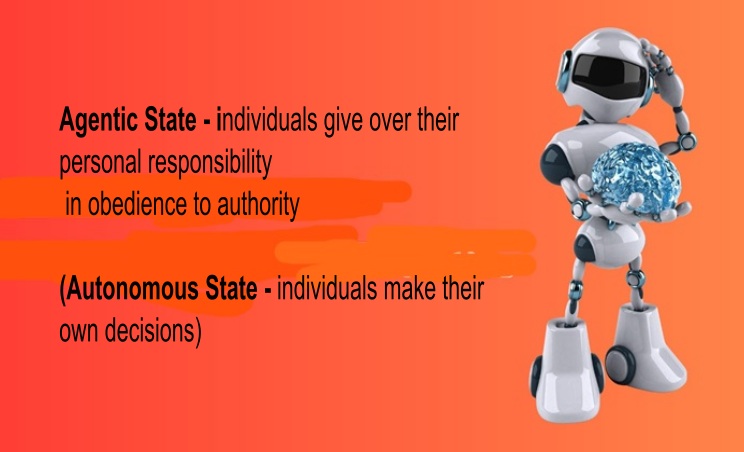


Today, Palantir software helps power Ukraine’s domestic security services, its education system, and is at the forefront of the country’s efforts to digitise all government functions and create what Ukraine calls the world’s first AI-powered “agentic state.”
Nate Bear, Sep 16, 2026, https://www.donotpanic.news/p/how-palantir-turned-ukrainians-into
AI war-tech firm Palantir has embedded itself deeply within Ukrainian military systems and civil society, turning the country into a laboratory for its dystopian technologies of tracing, surveillance and kill-targeting.
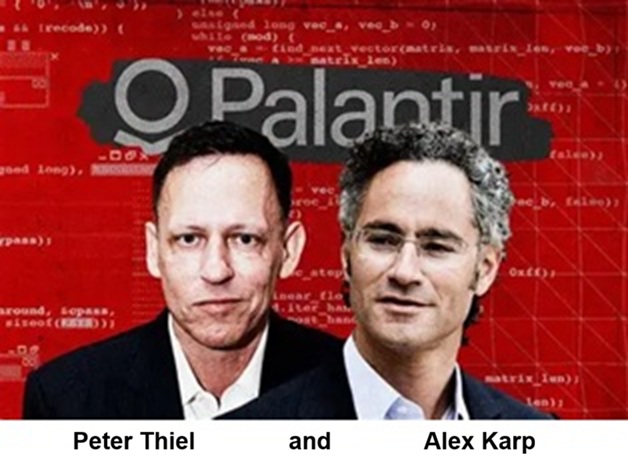
Palantir, founded by technofascist warlord Peter Thiel and currently run by Jewish supremacist Alex Karp, began providing Ukraine with data systems that control and accelerate the military “kill-chain” shortly after the outbreak of war with Russia in 2022. The kill-chain, which aggregates huge amounts of data to track a target to the point of a strike, or death, is controlled by an AI system made by Palantir called maven. Another Palantir system, prisma, directs drone attacks, while a third Palantir product, metaconstellation, assigns low earth orbit satellites to survey a designated area anywhere on the planet before calling in a strike.
Following this initial military partnership, Palantir rapidly expanded its influence in the country, becoming integral to the functioning of the Ukrainian state itself. In 2023 Ukraine announced that Palantir had established a “point of entry” through Ukraine’s digital transformation ministry and had begun working with “many Ukrainian governmental institutions.” Today, Palantir software helps power Ukraine’s domestic security services, its education system, and is at the forefront of the country’s efforts to digitise all government functions and create what Ukraine calls the world’s first AI-powered “agentic state.”
The most dystopian expression of Ukraine’s transformation into an “agentic state” is its tracking and tracing of military-age men to snatch off the street and feed into the meat-grinder. To achieve this, Ukraine digitised its national military database, known as Oberih, and consolidated the data into a system known as Reserve+. This system merges Oberih data with data from the country’s state registries alongside a wealth of other personal information, including tax and employment records, residence information, and medical records. Once a complete picture of a person has been established, the system uses AI to determine a person’s fitness and status for military conscription.
And it is this Reserve+ system which powers Ukraine’s detested programme of forced mobilisation. The videos documenting Ukraine’s mobilisation units kidnapping men while shopping in supermarkets, or off the streets, often in front of their families, bundling them into minivans before sending them to an almost-inevitable death on the front-lines, have become ubiquitous, daily occurrences on Ukrainian Telegram channels.
While neither Palantir nor Ukraine have confirmed the company is behind the digitisation of Ukraine’s military systems, the circumstantial evidence is extremely strong, given that Palantir’s technology is designed specifically to connect multiple databases and derive relationships and patterns from them. This is precisely what the Reserve+ system does. And Palantir has an open door into all of Ukraine’s governmental institutions.
It is also no coincidence that these mobilisation units bear a striking resemblance to the ICE snatch squads which roam the US with impunity, given that Palantir has been working with ICE and supplying it with AI and data tools for over a decade. Palantir’s Investigative Case Management platform is used by ICE to scrape and aggregate massive amounts of data on individuals including school status, family relationships, employment information, phone records, personal connections, biometric information and residential addresses. In both Ukraine and the US, then, the underlying software leading to the physical apprehension of a person is almost identical. And Palantir is the thread connecting the two.
Palantir is also bringing misery on Ukrainians by directing the so-called “deep strikes” into Russia. This campaign, much heralded and hyped in western media and by western elites, has achieved no gains of strategic note but instead has provoked Russia into far more devastating counterattacks which have brought even greater misery on Ukrainians. These counterattacks have closed the Odessa ports, effectively turned Ukraine into a land-locked country, depriving Ukrainians of vital imports, and have also targeted critical warehouses and power infrastructure. According to recent statements from Ukrainian officials, Russian strikes have destroyed about 90% of Ukraine’s food-logistics infrastructure and 80% of Ukraine’s power generation.
But Karp and Thiel don’t care about the suffering of Ukrainians. The strikes may have been counterproductive and led to greater misery for ordinary people, but the data gleaned from the campaign will be fed back into Palantir systems and allow the company to refine and market future AI war-tech products.
Palantir, in case you needed reminding, is not on the side of the good. It is not helping Ukraine because it cares about democracy or human rights or any of the propaganda that we’re sold about why the west must support Ukraine against Russia.
This, after all, is the company which helped Israel commit the genocide of Gaza. Palantir, which has been active in Israel since 2014, held its first board meeting of 2024 in Tel Aviv to celebrate Israel’s genocidal campaign in Gaza, and shortly after began supplying the IDF with AI tools to help the colony execute its mass slaughter. This is the company whose maven AI system is the core system for the US military and was used to massacre 120 children in Minab, Iran, on the first day of the US-Israeli attack on the country.
It is the company run by a man who says that “the west has a superior way of living and organising itself” and in a letter to Palantir shareholders said that “the rise of the west was not made possible by the superiority of its ideas or values or religion, but rather by its superiority in applying organized violence.” A man who called the mass murdered of Gaza “useful idiots.” This is a deeply violent individual dedicated to employing techno-militarism to advance American barbarity and hegemony.
It is the company founded by Epstein associate Peter Thiel, an arch Zionist and significant funder of Israeli tech whose rise was aided by neo-Nazi groups. It is the company Thiel founded alongside Joe Lonsdale who said recently that Palantir was set up to kill communists.
The West is watching the wrong Ukrainian collapse

The detachment of the Ukrainian state from society did not begin yesterday. It started the moment the Ukrainian authorities placed the interests of their Western masters above those of their country.
As winter approaches, Ukraine again finds itself at a crossroads. And it appears to be once again choosing the path of war, a path that it’s being desperately pushed onto by Europe’s anti-Russia coalition.
Missiles and territorial losses dominate the headlines, while the deeper rupture between state and society goes largely unnoticed
Sergey Poletaev, 14 Sept 26, https://www.rt.com/russia/645729-west-is-watching-wrong-ukrainian-collapse/
Last weekend, US envoys Steve Witkoff and Jared Kushner visited Moscow and then Kiev. This was the first such visit in a long time, since all trilateral contacts between Russia, the US, and Ukraine were practically halted following the start of the conflict in Iran this February.
Following the visit, leaks regarding the talks emerged from Kiev; reportedly, the US envoys presented the Ukrainian side with a 28-point Russian peace plan that had been agreed upon a year earlier. Jared Kushner indirectly confirmed this on Saturday, stating that the territorial issue was the only point of the peace plan that remained unresolved.
Is it true that Ukraine accepted all the other fundamental demands of the Russian side – such as the points concerning the Russian language and the status of the Orthodox Church, the renunciation of military cooperation with NATO, the recognition of territorial changes, the reduction of the army, and so on? (Spoiler: no, it didn’t.)
Is Ukraine really losing the war, as many recent statements and publications suggest? Spoiler: yes, but not in the way you’d think.
Let’s take a look at what this means.
Shuttle diplomacy
The peace talks involving Steve Witkoff began in February-March 2025, shortly after a phone call between Russian President Vladimir Putin and US President Donald Trump that signaled a fundamental shift in US policy toward Russia and the Ukraine conflict.
Trump’s top priority was to avoid direct involvement, positioning America – as far as possible – at an equal distance from the parties. Of course, to truly achieve this, the conflict would have to be frozen; this would allow the US to restore relations with Russia, counterbalancing China.
Naturally, freezing the conflict (or, in Trump’s words, ending the war in one day) proved impossible; consequently, the US made the most out of the situation as the war dragged on: it shifted the entire burden onto Europe and stepped aside. This strategy allowed the US to maintain working contacts with Russia, reap maximum benefits from the ongoing fighting, and insulate itself from the risks of Ukraine’s potential defeat while still keeping the door open to capitalize on Ukraine’s hypothetical victory over Russia.
In short, Trump decided to sit on the sidelines and watch who would emerge victorious.
For Moscow, too, contacts with Washington are incredibly valuable. It proved impossible to decouple Russia-US relations from the Ukraine issue, and relations between the two countries have effectively remained frozen. Yet the fact that the US is disengaging from the Ukraine conflict – and, more broadly, from European affairs – deprives Europe of confidence in US backing and consequently strips it of strategic depth.
The flip side of this maneuver is that the US has effectively relinquished its decisive say regarding Ukraine. Putin and Trump could reach any agreement whatsoever, but Ukraine is now entirely dependent on Europe. This means that it is Europe that will ultimately determine the final terms. As a Russian saying goes, “He who pays for the girl’s dinner gets to dance with her.”
Surely, Trump could exert pressure on all sides, but why bother? He is essentially satisfied with the current situation and needs nothing more from Moscow. So he has simply let things run their course,
Kiev is well aware of this, which is why Ukrainian officials play along with US envoys. Though direct opposition is out of the question – after all, they still need American missile defense systems – they can avoid any action and buy time. And that’s precisely what Kiev is doing.
The fact that Zelensky visited Canada last week but not the US clearly shows that Kiev no longer sees Washington as the primary center of decision-making. Consequently, the negotiation track involving Witkoff and Kushner is seen by the Ukrainian side as little more than a mandatory part of the show.
Is Ukraine losing? Yes, but not in the way you might think
On September 8, British magazine The Spectator published an editorial titled ‘Ukraine is losing the war’. A week before, several prominent Ukrainian figures – including former Defense Minister Mikhail Fyodorov and the current head of Zelensky’s office, Kirill Budanov – had expressed similar sentiments.
At first glance, this may sound reasonable: the AFU’s deep-strike campaign against Russian infrastructure wasn’t successful, and the summer offensive on the southern front, which is crucial for the Armed Forces of Ukraine (AFU), has de facto failed.
Moreover, Ukraine was unprepared for retaliatory strikes targeting port facilities, logistics, energy infrastructure, and transport networks. This confirmed what experts had been saying for over a year: Ukraine’s air defense systems, which are entirely dependent on US supplies and severely depleted, could barely cope with the previous intensity of air raids; now they can shoot down one ballistic missile out of a dozen, at best. This has made it possible for the Russian Army to launch massive attacks on the Ukrainian rear.
Of course, massive raids by Ukrainian drones and, occasionally, cruise missiles also inflict damage on the Russian rear. This summer was marked by a gasoline shortage and long lines at gas stations. Dozens of warehouses in the European part of Russia are in flames, and other targets are under attack as well.
However, the scale of these attacks is incomparable: by various estimates, the AFU managed to disable up to 3% of Russia’s warehouse storage capacity, whereas Russia has disabled between 30% and 60% of Ukraine’s capacity. Ukrainian experts admit that the strikes on Odessa port have had a far greater impact on Ukraine’s fuel logistics than Ukrainian strikes on Russian oil refineries.
For instance, the price of diesel fuel in Ukraine has topped 100 hryvnias, which is nearly three times the cost in Russia. For the first time since the start of the conflict, fuel rationing is being introduced for the AFU (no such measures have ever been implemented for the Russian Armed Forces).
Russian strikes have effectively halted Ukrainian grain exports by sea, depriving the national budget of a key revenue stream. Retail businesses are closing en masse, undermining what is arguably the economy’s last remaining civilian sector.
This looks like an obvious reason why Ukraine is losing the war. So does this mean that all those hysterical reports and articles are actually true?
Not quite. I would venture to say that all the above-mentioned factors are merely temporary difficulties to which Ukraine can adapt, and which have little impact on the situation at the front. It’s true that there is a gaping hole worth tens of billions of dollars in the Ukrainian budget; likewise, it’s true that the civilian population will face a harsh winter; and yes, what remains of the energy and industrial sectors is under constant attack.
But all this means that the additional financial burden will fall on Europe’s shoulders, while the civilian sector and the state’s capacity to fulfill social obligations will continue to deteriorate; the people will be left to their fate.
All this will affect not only ordinary citizens but entrepreneurs as well. Ukrainian businesses, which largely supported the Kiev regime and the war simply because there were no other options (given that their future was directly tied to that of the central government), are also being left to fend for themselves.
The central tension in Ukrainian society right now is the smoldering civil conflict between Territorial Centers of Recruitment (TCRs) and the men who are being conscripted by force. The destruction of the civilian economy is likely to spawn similar scenarios: bankrupt entrepreneurs, an impoverished middle class, and the unemployed will all see that the Ukrainian state is doing them more harm than good. As a result, the state itself, and not just state-controlled TCRs, will become the enemy.
One might argue that as opportunities and funds in the civilian sector decline, the military sector becomes more attractive. However, there are no new opportunities in military production and logistics (after all, Ukraine has no money), and fewer people are willing to die on the front lines.
All of this will lead to an even greater disconnect between the Ukrainian state and society. And a state severed from society is essentially a military organization. History offers us many such examples, the most recent being ISIS.
A military organization that lacks the support of civil society cannot hold the front line, especially one stretching 1,500 kilometers. There are no historical precedents for this.
A collapse of the front would mean the end of Ukraine in its current form. Kiev understands this perfectly well, which is why it undertakes superhuman efforts to hold the line – even at the cost of a smoldering civil war on the home front.
The detachment of the Ukrainian state from society did not begin yesterday. It started the moment the Ukrainian authorities placed the interests of their Western masters above those of their country.
As winter approaches, Ukraine again finds itself at a crossroads. And it appears to be once again choosing the path of war, a path that it’s being desperately pushed onto by Europe’s anti-Russia coalition.
That is precisely why Witkoff and Kushner left Kiev empty-handed, and why the war will continue – first until the Kiev regime is completely severed from Ukraine, and then until that regime is utterly destroyed.
If you need an example, just look at ISIS.
Don’t get ‘locked in’ by EU rules, top nuclear adviser warns Burnham
John Fingleton tells POLITICO “risk aversion” in Whitehall must not
slow Britain’s dash for new nuclear. Britain should not feel “locked
into” pre-Brexit EU environmental rules as it tries to rapidly boost its
nuclear power capacity, a top adviser to the government has warned. John
Fingleton, author of an influential government-commissioned review into how
red tape is blocking new U.K. nuclear projects, said in an interview that
Whitehall should not dampen efforts to boost domestic capacity through
“risk aversion.” “I think on some of the environmental things there’s
a risk that people in the system legally think we’re locked into EU
regulation circa 2022 when we left [the EU],” he said.
Politico 17th Sept 2026,
https://www.politico.eu/article/eu-rules-nuclear-power-adviser-john-fingleton-andy-burnham/
Japan aims to increase its reliance on nuclear power, but headwinds remain
the government secured passage of a revised electricity business law in July, enabling public financing for reactor replacement projects.
Efforts to address spent nuclear fuel generated by nuclear power plants remain stalled. The nuclear fuel cycle policy, which calls for reprocessing and reusing spent fuel, lacks a clear path forward, as completion of the key reprocessing plant in the village of Rokkasho, Aomori Prefecture, has been repeatedly postponed.
A final disposal site has also yet to be selected for the high-level radioactive waste produced through reprocessing.
Sep 16, 2026 , https://www.japantimes.co.jp/news/2026/09/16/japan/nuclear-power-five-rebuild-2040/
The Japanese government has set a target of replacing up to five nuclear reactors by the 2040s and as many as 14 by the 2050s.
In the July decision to revise its nuclear energy policy guidelines, the government presented specific numerical targets for reactor replacement for the first time since the triple meltdown at Tokyo Electric Power Company’s Fukushima No. 1 nuclear power plant in March 2011.
The government also reaffirmed its policy of making “maximum use” of nuclear power, seeking to encourage investment in related industry sectors and to foster skilled personnel.
Important step
After the Ministry of Economy, Trade and Industry released draft revisions to the guidelines in June, Nozomu Mori, chairman of the Federation of Electric Power Companies of Japan and president of Kansai Electric Power, welcomed the move.
“This sends a powerful message that Japan will continue to utilize nuclear power in the future,” Mori told a news conference. “An extremely important step has been taken.”
The previous guidelines, adopted in 2023, effectively extended the maximum operating life of nuclear reactors beyond the standard 60-year limit and called for making maximum use of existing facilities.
The latest revision goes further by adopting a more proactive approach to replacing reactors that are to be decommissioned after reaching the end of their operating lives.
Within the industry, Kansai Electric has already begun geological surveys in preparation for the possible construction of a new reactor at its Mihama nuclear power plant in Fukui Prefecture.
Another proposal calls for building a reactor at Kyushu Electric Power’s Sendai nuclear power plant in Kagoshima Prefecture e while decommissioning reactors at the utility’s Genkai nuclear power plant in Saga Prefecture.
Data centers
With electricity demand expected to rise sharply amid the construction of data centers and semiconductor plants, the government regards nuclear power, together with renewable energy, as a key source of decarbonized electricity.
Under the Strategic Energy Plan approved by the Cabinet in 2025, the government aims to increase nuclear power’s share of the electricity generation mix to around 20% in fiscal 2040.
The revised guidelines set numerical targets for reactor replacement on the basis of estimates that nuclear generating capacity could fall as much as 5.5 million kilowatts short of the level needed to meet that goal by the 2040s and up to 16 million kilowatts short by the 2050s.
By establishing specific targets, the government hopes to create a business environment conducive to large-scale investments and strengthen efforts to develop skilled personnel.
The number of people seeking employment in the nuclear power industry has declined since the accident at the disaster-stricken Fukushima No. 1 plant. Nuclear power projects typically take about 20 years from the start of construction to the launch of operations and can cost trillions of yen, making it difficult to raise funds and recoup investments.
Against this backdrop, the government secured passage of a revised electricity business law in July, enabling public financing for reactor replacement projects.
At a meeting of ministers responsible for nuclear energy policy, in which the revisions to the guidelines were adopted, participants agreed to provide funding for nuclear power projects through the New Energy and Industrial Technology Development Organization and to draw up a road map for workforce development.
“We will make maximum use of nuclear power, which contributes to energy security and decarbonization,” Prime Minister Sanae Takaichi said at the meeting.
Nuclear fuel cycle issues
Efforts to address spent nuclear fuel generated by nuclear power plants remain stalled. The nuclear fuel cycle policy, which calls for reprocessing and reusing spent fuel, lacks a clear path forward, as completion of the key reprocessing plant in the village of Rokkasho, Aomori Prefecture, has been repeatedly postponed.
A final disposal site has also yet to be selected for the high-level radioactive waste produced through reprocessing. As part of the repository selection process, a first-stage survey has started on Minamitorishima, a Pacific island administered by the Tokyo village of Ogasawara. Still, Ogasawara is only the fourth municipality nationwide to accept such a survey.
In late August, the industry ministry asked Hitachiomiya, a city in Ibaraki Prefecture, to accept a first-stage survey for the final disposal site selection.
With no clear prospect for any further increase in the number of candidate sites, officials in affected local governments have voiced criticism. One asked, “Is it really appropriate to allow discussions on reactor construction alone to continue moving forward?”
1 This Month
15 October. Joint Appeal for Nuclear Abolition Day -presentation to the UN on October 15 will be live on UNWebTV
Endorse the Nuclear Abolition Day Appeal
23-25 October – on Zoom – World BEYOND War’s annual global conference

To see nuclear-related stories in greater depth and intensity – go to https://nuclearinformation.wordpress.com
-
Archives
- October 2026 (139)
- September 2026 (339)
- August 2026 (330)
- July 2026 (355)
- June 2026 (287)
- May 2026 (306)
- April 2026 (356)
- March 2026 (251)
- February 2026 (267)
- January 2026 (308)
- December 2025 (358)
- November 2025 (359)
-
Categories
- 1
- 1 NUCLEAR ISSUES
- business and costs
- climate change
- culture and arts
- ENERGY
- environment
- health
- history
- indigenous issues
- Legal
- marketing of nuclear
- media
- opposition to nuclear
- PERSONAL STORIES
- politics
- politics international
- Religion and ethics
- safety
- secrets,lies and civil liberties
- spinbuster
- technology
- Uranium
- wastes
- weapons and war
- Women
- 2 WORLD
- ACTION
- AFRICA
- Atrocities
- AUSTRALIA
- Christina's notes
- Christina's themes
- culture and arts
- Events
- Fuk 2022
- Fuk 2023
- Fukushima 2017
- Fukushima 2018
- fukushima 2019
- Fukushima 2020
- Fukushima 2021
- general
- global warming
- Humour (God we need it)
- Nuclear
- RARE EARTHS
- Reference
- resources – print
- Resources -audiovicual
- Weekly Newsletter
- World
- World Nuclear
- YouTube
-
RSS
Entries RSS
Comments RSS

