EDF May Have to Shut Up to 17 Reactors, Ecology Minister Says, Bloomberg, By Francois De Beaupuy, July 10, 2017,
Electricite de France SA, the state-controlled operator of 58 nuclear reactors in France, may have to shut as many as 17 to fulfill government plans to reduce the share of atomic power in the country’s electricity output to 50 percent by 2025, Ecology Minister Nicolas Hulot said…….
While the government has pledged to boost renewables, it’s not yet evident how they would make up for the shutdown of almost a third of EDF’s reactors. The state would also face calls from the company to compensate it for potential loss of revenue and the cost of dismantling earlier than planned.
In January, EDF reached a compromise with the government in which the utility would receive 490 million euros ($559 million) and possible subsequent payments if the two reactors of the Fessenheim nuclear plant are taken offline.https://www.bloomberg.com/news/articles/2017-07-10/edf-may-have-to-shut-up-to-17-reactors-ecology-minister-says
July 14, 2017
Posted by Christina Macpherson |
France, politics |
1 Comment
 Russian media tell us that Kirienko and his PR team are off to the Kremlin to prepare Putin’s next
  election campaign. Looking at Kirienko’s 11 years as head of Russia’s nuclear power industry, we can say that in terms of spending and achievements on paper, Rosatom’s former head has few equals. Kirienko’s team are experts at working with the media, putting pressure on dissenters and forging loyalty
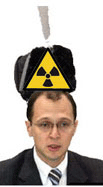 Sergey Kirienko, from nuclear to political power, Open Democracy VLADIMIR SLIVYAK 11 October 2016 After ten years as head of Rosatom, Sergey Kirienko is now deputy head of Russia’s Presidential Administration. What will he bring to the job? “…….
Information and secrecy
News of these two appointments came out rather oddly. Prior to 24 September, when RBC broke the story of Kirienko’s appointment, there had been no rumours at all about Kirienko’s move, and another two weeks passed before he was officially given his new job…….
This fact illustrates the effectiveness of Kirienko’s PR team. All of Rosatom’s information channels are hermetically sealed, and if any important news appears, it is only by the grace of the residents of the agency’s enormous headquarters building on Moscow’s Bolshaya Ordynka street. There has been the odd information leak, but usually involving foreign media, which Rosatom has little control over.
The way Kirienko’s appointment has developed as a story demonstrates the level of openness, or rather lack of it, which Kirienko’s team has created in recent years. If a major accident had occurred at a nuclear power plant in Russia during Kirienko’s time at Rosatom, it is unlikely that anyone would have heard about it for some time. Instead, there would have been a scenario reminiscent of 1986, when the Soviet government tried to hush up the scale of the Chernobyl disaster for as long as possible.
This lack of transparency is dangerous precisely because in the case of another nuclear accident, it could be a matter of life and death. And this is not a question of official secrets or nuclear weapons. Rosatom is funded by Russia’s taxpayers and has to be accountable to them — not in terms of reporting how many “mini-Olympics” have taken place at nuclear power plants, but in terms of public safety.
Paper power plants
Kirienko’s legacy at Rosatom is a separate issue. Given this recent appointment, he is, it seems, highly regarded by the Kremlin.
There may have been two to three times fewer nuclear power plants built on his watch than were planned. There may have been plenty of corruption scandals involving the arrest of senior staff, including Kirienko’s deputies, on embezzlement charges. But the corporation’s “portfolio” for power plants to be built abroad is worth an astronomical $100bn. And for the Kremlin, which periodically uses energy supply threats to put pressure on countries it is displeased with, nuclear power is not just a question of prestige and money.
To assess Kirienko’s effectiveness as a manager, however, we need to look inside Rosatom’s commission portfolio. These “orders” are not contracts specifying delivery dates, costs and a clear timescale for loan repayments (in most cases the money lent by Russia for power plant construction comes with a repayment date). Eighty to ninety per cent of these reported arrangements are agreements in principle that are vague on details, and in the overwhelming majority of cases the contracts aren’t worth the paper they’re printed on.
Russian media frequently give the impression that Rosatom is building reactors all over the world. It is true that there have been orders from over 20 countries, but they are actually being built in only three places — China, India and Belarus. And in the case of the first two, international cooperation began long before Kirienko joined the nuclear energy sector.
So it is clear that Kirienko’s team has been excellent at drawing up and signing papers, and providing an information blockade for the industry. Actually building nuclear plants seems to be beyond them.
But only abroad… https://www.opendemocracy.net/od-russia/vladimir-slivyak/sergey-kirienko-from-nuclear-to-political-power
July 10, 2017
Posted by Christina Macpherson |
politics, Reference, Russia |
Leave a comment
 Global Meltdown? Nuclear Power’s Annus Horribilis, Jim Green, New Matilda, 9 July 2017 https://newmatilda.com/2017/07/09/global-meltdown-nuclear-powers-annus-horribilis/
This year will go down with 1979 (Three Mile Island), 1986 (Chernobyl) and 2011 (Fukushima) as one of the nuclear industry’s worst ever ‒ and there’s still another six months to go, writes Dr Jim Green.
Two of the industry’s worst-ever years have been in the past decade and there will be many more bad years ahead as the trickle of closures of ageing reactors becomes a flood ‒ the International Energy Agency expects almost 200 reactor closures between 2014 and 2040. The likelihood of reactor start-ups matching closures over that time period has become vanishingly small.
In January, the World Nuclear Association anticipated 18 power reactor start-ups this year. The projection has been revised down to 14 and even that seems more than a stretch. There has only been one reactor start-up in the first half of the year according to the IAEA’s Power Reactor Information System, and two permanent reactor closures.
The number of power reactors under construction is on a downward trajectory ‒ 59 reactors are under construction as of May 2017, the first time since 2010 that the number has fallen below 60.
Pro-nuclear journalist Fred Pearce wrote on May 15: “Is the nuclear power industry in its death throes? Even some nuclear enthusiasts believe so. With the exception of China, most nations are moving away from nuclear ‒ existing power plants across the United States are being shut early; new reactor designs are falling foul of regulators, and public support remains in free fall. Now come the bankruptcies…. The industry is in crisis. It looks ever more like a 20th century industrial dinosaur, unloved by investors, the public, and policymakers alike. The crisis could prove terminal.”
Pro-nuclear lobby groups are warning about nuclear power’s “rapidly accelerating crisis“, a “crisis that threatens the death of nuclear energy in the West“, and noting that “the industry is on life support in the United States and other developed economies“.
United States
The most dramatic story this year has been the bankruptcy protection filing of US nuclear giant Westinghouse onMarch 29. Westinghouse’s parent company Toshiba states that there is “substantial doubt” about Toshiba’s “ability to continue as a going concern”. These nuclear industry giants have been brought to their knees by cost overruns ‒estimated at US$13 billion ‒ building four AP1000 power reactors in the U.S.
The nuclear debate in the US is firmly centred on attempts to extend the lifespan of ageing, uneconomic reactors with state bailouts. Financial bailouts by state governments in New York and Illinois are propping up ageing reactors, but a proposed bailout in Ohio is meeting stiff opposition. The fate of Westinghouse and its partially-built AP1000 reactors are much discussed, but there is no further discussion about new reactors ‒ other than to note that they won’t happen.
Six reactors have been shut down over the past five years in the US, and another handful will likely close in the next five years. How far and fast will nuclear fall? Exelon ‒ the leading nuclear power plant operator in the US ‒ claims that “economic and policy challenges threaten to close about half of America’s reactors” in the next two decades. According to pro-nuclear lobby group ‘Environmental Progress‘, almost one-quarter of US reactors are at high risk of closure by 2030, and almost three-quarters are at medium to high risk. In May, the US Energy Information Administration released an analysis projecting nuclear’s share of the nation’s electricity generating capacity will drop from 20 per cent to 11 per cent by 2050.
There are different views about how far and fast nuclear will fall in the US ‒ but fall it will. And there is no dispute that many plants are losing money. More than half in fact, racking up losses totalling about US$2.9 billion a year according to a recent analysis by Bloomberg New Energy Finance. And a separate Bloomberg report found that expanding state aid to money-losing reactors across the eastern US may leave consumers on the hook for as much as US$3.9 billion a year in higher power bills.
Japan
Fukushima clean-up and compensation cost estimates have doubled and doubled again and now stand at US$191 billion. An analysis by the Japan Institute for Economic Research estimates that the total costs for decommissioning, decontamination and compensation could be far higher at US$443‒620 billion.
Only five reactors are operating in Japan as of July 2017, compared to 54 before the March 2011 Fukushima disaster. The prospects for new reactors are bleak. Japan has given up on its Monju fast breeder reactor ‒ successive governments wasted US$10.6 billion on Monju and decommissioning will cost another US$2.7 billion.
As mentioned, Toshiba is facing an existential crisis due to the crippling debts of its subsidiary Westinghouse. Toshibaannounced on May 15 that it expects to report a consolidated net loss of US$8.4 billion for the 2016‒2017 financial year which ended March 31.
Hitachi is backing away from its plan to build two Advanced Boiling Water Reactors in Wylfa, Wales. Hitachi recentlysaid that if it cannot attract partners to invest in the project before construction is due to start in 2019, the project will be suspended.
Hitachi recently booked a massive loss on a failed investment in laser uranium enrichment technology in the US. A 12 May 2017 statement said the company had posted an impairment loss on affiliated companies’ common stock of US$1.66 billion for the fiscal year ended 31 March 2017, and “the major factor” was Hitachi’s exit from the laser enrichment project. Last year a commentator opined that “the way to make a small fortune in the uranium enrichment business in the US is to start with a large one.”
France
The French nuclear industry is in its “worst situation ever” according to former EDF director Gérard Magnin. France has 58 operable reactors and just one under construction.
French EPR reactors under construction in France and Finland are three times over budget ‒ the combined cost overruns for the two reactors amount to about US$14.5 billion.
Bloomberg noted in April 2015 that Areva’s EPR export ambitions are “in tatters“. Now Areva itself is in tatters and is in the process of a government-led restructure and another taxpayer-funded bailout. On March 1, Areva posted a €665 million net loss for 2016. Losses in the preceding five years exceeded €10 billion.
In February, EDF released its financial figures for 2016: earnings and income fell and EDF’s debt remained steady at €37.4 billion. EDF plans to sell €10 billion of assets by 2020 to rein in its debt, and to sack up to 7,000 staff. The French government provided EDF with €3 billion in extra capital in 2016 and will contribute €3 billion towards a €4 billioncapital raising this year. On March 8, shares in EDF hit an all-time low a day after the €4 billion capital raising was launched; the share price fell to €7.78, less than one-tenth of the high a decade ago.
Costs of between €50 billion and €100 billion will need to be spent by 2030 to meet new safety requirements for reactors in France and to extend their operating lives beyond 40 years.
EDF has set aside €23 billion to cover reactor decommissioning and waste management costs in France ‒ just over half of the €54 billion that EDF estimates will be required. A recent report by the French National Assembly’s Commission for Sustainable Development and Regional Development concluded that there is “obvious under-provisioning” and that decommissioning and waste management will take longer, be more challenging and cost much more than EDF anticipates.
In 2015, concerns about the integrity of some EPR pressure vessels were revealed, prompting investigations that are still ongoing. Last year, the scandal was magnified when the French Nuclear Safety Authority (ASN) announced that Areva had informed it of “irregularities in components produced at its Creusot Forge plant.” The problems concern documents attesting to the quality of parts manufactured at the site. At least 400 of the 10,000 quality documents reviewed by Areva contained anomalies. Work at the Creusot Forge foundry was suspended in the wake of the scandal and Areva is awaiting ASN approval to restart the foundry.
French environment and energy minister Nicolas Hulot said on June 12 that the government plans to close some nuclear reactors to reduce nuclear’s share of the country’s power mix. “We are going to close some nuclear reactors and it won’t be just a symbolic move,” he said.
India
Nuclear power accounts for just 3.4 percent of electricity supply in India and that figure will not rise significantly, if at all. In May, India’s Cabinet approved a plan to build 10 indigenous pressurized heavy water reactors (PHWR). That decision can be read as an acknowledgement that plans for six Westinghouse AP1000 reactors and six French EPR reactors are unlikely to eventuate.
The plan for 10 new PHWRs faces major challenges. Suvrat Raju and M.V. Ramana noted: “[N]uclear power will continue to be an expensive and relatively minor source of electricity for the foreseeable future…. The announcement about building 10 PHWRs fits a pattern, often seen with the current government, where it trumpets a routine decision to bolster its “bold” credentials. Most of the plants that were recently approved have been in the pipeline for years. Nevertheless, there is good reason to be sceptical of these plans given that similar plans to build large numbers of reactors have failed to meet their targets, often falling far short.”
South Africa
An extraordinary High Court judgement on April 26 ruled that much of South Africa’s nuclear new-build program is without legal foundation. The High Court set aside the Ministerial determination that South Africa required 9.6 gigawatts (GW) of new nuclear capacity, and found that numerous bilateral nuclear cooperation agreements were unconstitutional and unlawful. President Jacob Zuma is trying to revive the nuclear program, but it will most likely be shelved when Zuma leaves office in 2019 (if he isn’t removed earlier). Energy Minister Mmamoloko Kubayi said on June 21 that South Africa will review its nuclear plans as part of its response to economic recession.
South Korea
South Korea’s new President Moon Jae-in said on June 19 that his government will halt plans to build new nuclear power plants and will not extend the lifespan of existing plants beyond 40 years. President Moon said: “We will completely re-examine the existing policies on nuclear power. We will scrap the nuclear-centred polices and move toward a nuclear-free era. We will eliminate all plans to build new nuclear plants.”
Since the presidential election on May 9, the ageing Kori-1 reactor has been permanently shut down, work on two partially-built reactors (Shin Kori 5 and 6) has been suspended pending a review, and work on two planned reactors (Shin-Hanul 3 and 4) has been stopped.
Taiwan
Taiwan’s Cabinet reiterated on June 12 the government’s resolve to phase out nuclear power. The government remains committed to the goal of decommissioning the three operational nuclear power plants as scheduled and making Taiwan nuclear-free by 2025, Cabinet spokesperson Hsu Kuo-yung said.
UK
Tim Yeo, a former Conservative politician and now a nuclear industry lobbyist with New Nuclear Watch Europe, saidthe compounding problems facing nuclear developers in the UK “add up to something of a crisis for the UK’s nuclear new-build programme.”
The lobby group noted delays with the EPR reactor in Flamanville, France and the possibility that those delays would flow on to the two planned EPR reactors at Hinkley Point; the lack of investors for the proposed Advanced Boiling Water Reactors at Wylfa; the acknowledgement by the NuGen consortium that the plan for three AP1000 reactors at Moorside faces a “significant funding gap”; and the fact that the Hualong One technology which China General Nuclear Power Corporation hopes to deploy at Bradwell in Essex has yet to undergo its generic design assessment.
The only reactor project with any momentum in the UK is Hinkley Point, based on the French EPR reactor design. The head of one of Britain’s top utilities said on June 19 that Hinkley Point is likely to be the only nuclear project to go ahead in the UK. Alistair Phillips-Davies, chief executive officer of SSE, an energy supplier and former investor in new nuclear plants, said: “The bottom line in nuclear is that it looks like only Hinkley Point will get built and Flamanville needs to go well for that to happen.”
There is growing pressure for the obscenely expensive Hinkley Point project to be cancelled. The UK National Audit Office report released a damning report on June 23. The Audit Office said: “The Department for Business, Energy and Industrial Strategy’s deal for Hinkley Point C has locked consumers into a risky and expensive project with uncertain strategic and economic benefits… Today’s report finds that the Department has not sufficiently considered the costs and risks of its deal for consumers…. Delays have pushed back the nuclear power plant’s construction, and the expected cost of top-up payments under the Hinkley Point C’s contract for difference has increased from £6 billion to £30 billion.”
Writing in the Financial Times on May 26, Neil Collins said: “EDF, of course, is the contractor for that white elephant in the nuclear room, Hinkley Point. If this unproven design ever gets built and produces electricity, the UK consumer will be obliged to pay over twice the current market price for the output…. The UK’s energy market is in an unholy mess… Scrapping Hinkley Point would not solve all of [the problems], but it would be a start.”
And on it goes. Hinkley Point is one of the “great spending dinosaurs of the political dark ages” according to The Guardian. It is a “white elephant” according to an editorial in The Times.
EDF said on June 26 that it is conducting a “full review of the costs and schedule of the Hinkley Point C project” and the results will be disclosed “soon”. On July 3, EDF announced that the estimated cost of the two Hinkley reactors has risen by €2.5 billion (to €23.2 billion, or €30.4 billion including finance costs). In 2007, EDF was boasting that Britons would be using electricity from Hinkley to cook their Christmas turkeys in December 2017. But in its latestannouncement, EDF pushes back the 2025 start-up dates for the two Hinkley reactors by 9‒15 months.
Oliver Tickell and Ian Fairlie wrote an obituary for Britain’s nuclear renaissance in The Ecologist on May 18. Theyconcluded: “[T]he prospects for new nuclear power in the UK have never been gloomier. The only way new nuclear power stations will ever be built in the UK is with massive political and financial commitment from government. That commitment is clearly absent. So yes, this finally looks like the end of the UK’s ‘nuclear renaissance’.”
Switzerland
Voters in Switzerland supported a May 21 referendum on a package of energy policy measures including a ban on new nuclear power reactors. Thus Switzerland has opted for a gradual nuclear phase out and all reactors will probably be closed by the early 2030s, if not earlier.
Germany will close its last reactor much sooner than Switzerland, in 2022.
Sweden
Unit 1 of the Oskarshamn nuclear power plant in Sweden has been permanently shut down. Unit 2 at the same plant was permanently shut down in 2015. Ringhals 1 and 2 are expected to be shut down in 2019‒2020, after which Sweden will have just six operating power reactors. Switzerland, Germany and Taiwan have made deliberate decisions to phase out nuclear power; in Sweden, the phase out will be attritional.
Russia
Rosatom deputy general director Vyacheslav Pershukov said in mid-June that the world market for the construction of new nuclear power plants is shrinking, and the possibilities for building new large reactors abroad are almost exhausted. He said Rosatom expects to be able to find customers for new reactors until 2020‒2025 but “it will be hard to continue.”
China
With 36 power reactors and another 22 under construction, China is the only country with a significant nuclear expansion program. However nuclear growth could take a big hit in the event of economic downturn. And nuclear growth could be derailed by a serious accident, which is all the more likely because of China’s inadequate nuclear safety standards, inadequate regulation, lack of transparency, repression of whistleblowers, world’s worst insurance and liability arrangements, security risks, and widespread corruption.
Dr Jim Green is the national nuclear campaigner with Friends of the Earth, Australia, and editor of the World Information Service on Energy’s Nuclear Monitor newsletter.
July 10, 2017
Posted by Christina Macpherson |
2 WORLD, business and costs, China, France, Germany, India, Japan, politics, Russia, South Africa, South Korea, Sweden, Switzerland, Taiwan, UK, USA |
Leave a comment
Brexit will cause an ‘alarming mess’ for UK nuclear power, scientists warn, Independent, 9 Jul 17
Ben Kentish “….Scientists say leaving the Euratom agency that oversees nuclear safety in Europe will cause widespread confusion and have a potentially devastating impact on the industry in Britain.

Possible consequences include a reduction in foreign investment in UK nuclear power facilities, the loss of thousands of jobs and Britain losing its place as a world leader in new nuclear technologies.
Professor Roger Cashmore, chair of the UK Atomic Energy Agency, told Buzzfeed News the current situation was “alarming” and “a mess”.
Although the treaties relating to Euratom are separate to those keeping Britain in the EU, the agency requires members to be under the jurisdiction of the European Court of Justice (ECJ), which Theresa May has insisted the UK must withdraw from as part of Brexit.
It is unclear how the UK will replace the procedures and regulations currently managed by Euratom. These cover the transportation of nuclear materials around Europe. Britain is a major producer of enriched uranium, which is used in nuclear fuel, and exports much of the material to other EU countries. The UK Government also owns a third of Urenco, the European uranium-enrichment company.
Unless new treaties relating to the transportation of nuclear materials between Britain and the EU are agreed quickly, the UK could run out of nuclear fuel within two years, meaning nuclear power stations would be unable to produce energy…….http://www.independent.co.uk/news/uk/home-news/brexit-nuclear-power-euratom-hinckley-point-risks-nuclear-fusion-energy-bills-a7832136.html
July 10, 2017
Posted by Christina Macpherson |
politics, UK |
Leave a comment

 Russia signs MOU for Vietnam nuclear research centre,WNN, 04 July 2017 A memorandum of understanding (MOU) has been signed by Russian state nuclear corporation Rosatom and Vietnam’s Ministry of Science and Technology on the construction of a nuclear science and technology centre in Vietnam. An inter-governmental agreement to build the centre was signed between Russia and Vietnam in 2011.
The MOU was signed in Moscow on 29 June by Rosatom director general Alexey Likhachov and Vietnam’s deputy minister of science and technology Tran Dai Thanh. The signing was witnessed by Russian President Vladimir Putin and the President of Vietnam Tea Dan Quang.
Vietnam and Russia intend to promote further cooperation in the construction of the nuclear science and technology centre, in particular to work out the next steps once the Vietnamese government approves the project’s pre-feasibility study. The MOU also provides for consultation on the terms and conditions for financing the project. In addition, the two sides will develop a plan for further cooperation in the development of Vietnam’s nuclear infrastructure.
The nuclear science and technology centre will be equipped with Russian-designed research reactors, a multipurpose cyclotron, as well as research laboratories, an engineering complex, equipment and infrastructure to ensure the safe operation of the centre. It will be used for training staff for Vietnam’s nuclear power program………
The Ninh Thuan 2 plant at Vinh Hai, on Cam Ranh Bay about 20 kilometres northeast of Phouc Dinh, was to be developed under a partnership with Japan.
However, last November Vietnam’s legislature endorsed the government’s decision to abandon plans to build the country’s first two nuclear power plants in favour of renewable energy and power imports amid lower crude oil and coal prices……http://www.world-nuclear-news.org/NN-Russia-signs-MOU-for-Vietnam-nuclear-research-centre-0407175.html
July 7, 2017
Posted by Christina Macpherson |
marketing, politics, Vietnam |
Leave a comment
Russia makes new big cuts in Arctic spending The country’s Ministry of Economic Development wanted 209 billion rubles (€3.1 billion) for the new national Arctic Program. It might get only 12 billion (€177 million). Barents Observer, By Atle Staalesen July 05, 2017
The revised funding scheme for the Arctic program, which is to cover the period until year 2020, is 17 times lower than the original sum, RBC reports.
That is a serious blow to Russia’s ambitious development plans for the region. The Ministry of Economic Development originally wanted to include a number of grand investment projects in the program, among them the development of the new class of nuclear-powered icebreakers, the «Lider», as well as a fleet of vessels for Arctic environmental protection and shelf research. As much as 80 billion (€1.2 billion) was to be spent on the «Lider» alone.
None of that will come, for now. The increasingly strained Russian economy does not allow for the previously announced Arctic super-projects.
The key investment object in the revised program is the development and building of an ice-class drifting platform for Arctic research. The platform, which will get the name «North Pole», is to be used by the State Hydrometeorology Service for Arctic studies and ice measurements.
The platform has a preliminary price tag of seven billion rubles and will consequently consume more than half of the program budget.
The platform is increasingly needed by researchers as Arctic ice layers are getting thinner and traditional drifting ice stations can no longer be applied, the Russian Ministry of Natural Resources says.
Another one billion rubles of the revised program is reported to be spent on regional anti-terrorist measures managed by the Russian National Guard. …….https://thebarentsobserver.com/en/arctic/2017/07/russia-makes-new-big-cuts-arctic-spending
July 7, 2017
Posted by Christina Macpherson |
business and costs, politics, Russia |
Leave a comment
French ecology minister hopes to cut down on nuclear power by 2025, PARIS, July 6 (Xinhua) — French ecology minister Nicolas Hulot expressed his hopes on Thursday to meet the commitment of reducing the share of nuclear energy in the country’s electricity output by 2025.
Unveiling an action plan for the country’s energy transition, the environmental activist said cutting electricity generated by nuclear power to 50 percent by 2025 from the current 75 percent was France’s “objective.”
“I hope (the target) will be held. My wish is to engage irreversible trajectories and dynamics,” Hulot told reporters…….http://news.xinhuanet.com/english/2017-07/06/c_136423323.htm
July 7, 2017
Posted by Christina Macpherson |
France, politics |
Leave a comment
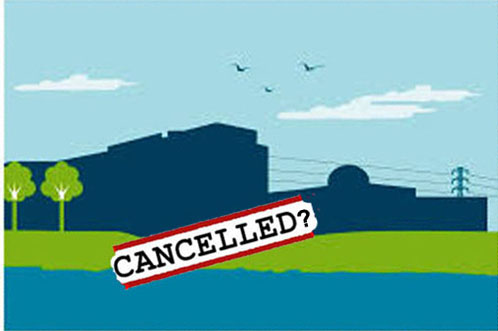 The Hinkley C nuclear power plant will be a costly mistake – we can still stop it Spiralling bills and delays show why we should abandon this white elephant. http://www.newstatesman.com/politics/energy/2017/07/hinkley-c-nuclear-power-plant-will-be-costly-mistake-we-can-still-stop-it
4 Jul 17 With every day that passes, the proposed new Hinkley Point power station looks less flagship and more shipwreck. But we don’t have to go down with this one.
Yesterday’s announcement that the cost of building the new nuclear plant has risen again, this time by a staggering £1.5bn, came just ten days after the National Audit Office confirmed what campaigners have been saying for years – that the deal is overpriced and risky.
According to a 2015 report from the Nuclear Energy Agency (NEA), Hinkley would make new nuclear power in the UK the world’s most costly. In fact the power station would, according to Greenpeace, be the most expensive object in history.
French state-owned company EDF will join China in paying for the plant, but taxpayers and consumers will cough up £30bn in subsidies for the energy produced. This could rise to an eye-watering £50bn.
With the cost of renewable energy now falling faster than anyone anticipated, it’s hard to imagine a more expensive way of producing power, or indeed a common sense reason for continuing with such a folly.
In 2007, EDF chief executive Vincent de Rivaz said Hinkley C could be providing the power to cook Christmas turkeys by 2017. That slipped to 2025. Now we are told it could be another 15 months more – and this with a reactor design which has yet to be shown to work anywhere else in the world. The project threatens to sink into a whirlpool of expensive defensiveness and self-justification, all for a terrible deal which we will all be locked into, and paying for, for years to come.
But it doesn’t have to be like this. Over the past month, Theresa May’s administration has crumbled. Propped up by the Democratic Unionist Party, unable to implement its manifesto promises and derided in Europe, the disastrous election has left this government on its knees. But this moment of weakness creates an opportunity – we have the real chance to stop Hinkley in its tracks and think again.
The government appears committed, come what may, but if politicians from across political divides speak up against this expensive white elephant, we can force May to take the courageous decision needed to cancel the project.
It’s well known that politicians share a penchant for big projects like Hinkley – Heathrow expansion and HS2 to name but two – but even in this case it’s hard to see what is actually keeping the idea afloat.
Although the plans may be fatally holed, it is the lack of any real opposition holding the government to account that is stopping it going under completely. Labour and the Lib Dems both support the project. But it’s time to break away from the old school consensus around the often illusory benefits of building big new things. An opposition working together, along with a few sympathetic Tories, could consign Hinkley to the dustbin of history.
We know that alternative plans are available. There are many, much cheaper options. Germany, which is phasing out nuclear, is breaking renewable records and we can, too. You can’t have your cake and eat it when it comes to environment policy, any more than you can have your cake and eat it on Brexit. We need to make the right choices and ploughing such colossal subsidies into Hinkley sucks resources from where they are really needed: investment in renewables.
The New Economics Foundation has suggested we could provide more than six times our annual electricity needs through a Blue New Deal, getting renewable offshore energy through wind and wave while rejuvenating our coastal communities with 160,000 new jobs. Green MEP Molly Scott Cato has shown how the South West alone could meet all its energy needs through renewables, creating more than 100,000 new jobs. This puts the 900 full-time posts expected to be available at Hinkley, if construction is ever completed, into sharp perspective.
But to transition to this jobs-rich, decentralised, renewable energy economy, we need to make the right political choices now. In the case of Hinkley that means politicians holding the government to account when it is wasting taxpayers’ money on a project that is not fit for purpose – and simply won’t deliver what we need for the future. Jonathan Bartley is co-leader of the Green party. He was formerly the co-director of the thinktank Ekklesia.
July 5, 2017
Posted by Christina Macpherson |
politics, UK |
Leave a comment
JFK Had a Super Secret Nuclear War Bunker in Florida,National Interest, Darien Cavanaugh, 2 Jul 17, This place wouldn’t have survived a direct hit,” Anthony Miller of the Palm Beach Maritime Museum told VisitFlorida.com, Florida’s official Website for promoting tourism.
In December 1960, the SeaBees – the U.S. Navy’s construction force — supposedly began the mundane task of building a munitions depot behind the Coast Guard station on Peanut Island, Florida.
Known as “Operation Hotel,” the SeaBees actually built a secret nuclear fallout shelter for president-elect John F. Kennedy, who often spent his winters at a nearby estate on Palm Beach.
It took the SeaBees less than two weeks to complete the underground bunker, which consisted of a corrugated steel shelter covered with 25 feet of concrete, earth and lead. Official documents referred to the site as “Detachment Hotel,” and the government didn’t formerly acknowledge its existence until 1974……. http://nationalinterest.org/blog/the-buzz/jfk-had-super-secret-nuclear-war-bunker-florida-21406
July 3, 2017
Posted by Christina Macpherson |
history, politics, weapons and war |
Leave a comment
Science division of White House office left empty as last staffers depart, By JACQUELINE ALEMANY CBS NEWS June 30, 2017, WASHINGTON –– The science division of the White House’s Office of Science and Technology Policy (OSTP) was unstaffed as of Friday as the three remaining employees departed this week, sources tell CBS News.
All three employees were holdovers from the Obama administration. The departures from the division — one of four subdivisions within the OSTP — highlight the different commitment to scientific research under Presidents Obama and Trump.
Under Mr. Obama, the science division was staffed with nine employees who led the charge on policy issues such as STEM education, biotechnology and crisis response. It’s possible that the White House will handle these issues through staff in other divisions within the OSTP.
On Friday afternoon, Eleanor Celeste, the assistant director for biomedical and forensic sciences at the OSTP, tweeted, “Science division out. Mic drop” before leaving the office for the last time…….http://www.cbsnews.com/news/science-division-of-white-house-office-now-empty-as-last-staffers-depart/
July 3, 2017
Posted by Christina Macpherson |
politics, USA |
Leave a comment
THE ASAHI SHIMBUN June 29, 2017 SHIZUOKA–The re-elected governor here has given an emphatic “No” to the question of whether the Hamaoka nuclear power plant, often described as the most dangerous facility of its kind in Japan, should be restarted.
Heita Kawakatsu declared his opposition to the planned restart at a news conference June 27, two days after he was re-elected for a third term as governor……
At his own news conference, Kawakatsu said there are no signs that the Hamaoka plant will resume operations during the coming four years of his term in office. “I will definitely oppose the restart if there is any move to bring it online,” he said.
He cited danger in the event of an accident and the utility’s limited reliance on nuclear power generation as reasons for his objection. ….
The Hamaoka plant has been described as the most dangerous nuclear plant in Japan because of its proximity to a long-anticipated huge earthquake under the Nankai Trough off the prefecture. http://www.asahi.com/ajw/articles/AJ201706290045.html
July 1, 2017
Posted by Christina Macpherson |
Japan, politics |
Leave a comment
http://www.tri-cityherald.com/news/local/hanford/article158751159.html BY ANNETTE CARY acary@tricityherald.com A bill that would allow ill Hanford workers to more easily get worker compensation claims approved has popped up very late in the state legislative session.
It’s essentially the same as a bill passed earlier this year by the House. But the initial bill failed to be scheduled for a vote to pass out of the Senate Commerce, Labor and Sports Committee before an early April deadline.
Since then, three Democratic state senators from the west side of the state have introduced a new Senate bill that was scheduled to be discussed on Wednesday in an executive session of the same Senate committee. But the executive session was canceled after a hearing on another bill ran long.
Now the committee is unlikely to meet again this session as the Legislature works to pass a budget by Friday, making chances slim that the bill will advance this year. But the introduction of the new bill signals continued interest by lawmakers in the issue.
Sen. Karen Keiser, D-Kent, introduced the new Hanford worker bill, SB 5940, out of concern for worker safety after the partial collapse of Hanford tunnel storing highly radioactive waste was discovered in May, according to her staff. Sen. Steve Conway, D-Tacoma, and Sen. Guy Palumbo, D-Maltby, also are sponsors.
The breach in the tunnel resulted in an emergency order for more than 3,000 workers to shelter in place, some for hours, before it was determined that no airborne radioactive material had been released. No one was injured.
But concern remains because of aging infrastructure at Hanford, some dating to the 1940s, while the Department of Energy is expected to continue cleanup of radioactive and hazardous chemical contamination at the nuclear reservation for decades to come. Hanford produced plutonium for the nation’s nuclear weapons programs from World War II through the Cold War.
Proving a worker compensation claim can be impossible for workers, when even DOE may not know precisely what workers are exposed to at Hanford, said workers and former workers who testified at hearings on HB 1723.
The state Department of Labor and Industries requires proof that an exposure to chemical vapors or other hazardous chemical or radioactive materials at Hanford caused a worker’s illness.
But the original bill that passed the House, HB 1723, and the new Senate bill, SB 5940, would require the state agency to presume that a wide range of illnesses were caused by working at Hanford. A worker would have to be assigned to just one eight-hour shift anywhere at Hanford to be covered.
DOE, which is self-insured and hires a contractor to administer worker claims, could rebut the presumption that disease was caused by Hanford exposure with evidence about a worker’s health, including smoking, weight, lifestyle, hereditary factors or exposure from other activities.
Covered diseases would include a wide range of cancers, respiratory disease, any heart problems experienced within 24 hours of an exposure, and neurological disease. The coverage would continue for a worker’s lifetime.
The Washington Self-Insurers Association opposed the bill, pointing out that one eight-hour shift on a site half the size of Rhode Island would entitle a worker to a presumption of coverage for life.
July 1, 2017
Posted by Christina Macpherson |
health, politics, USA |
Leave a comment
 House panel votes to advance Yucca Mountain nuclear waste project, The Hill, BY TIMOTHY CAMA – 06/28/17 A House committee voted overwhelmingly Wednesday to advance a bill meant to move along the stalled Yucca Mountain nuclear waste repository in Nevada.
June 30, 2017
Posted by Christina Macpherson |
politics, USA, wastes |
Leave a comment
“If President Trump wanted the United States to be truly ‘energy dominant,’ he’d invest in clean energy innovation instead of slashing renewable energy research. He’d have us lead on climate change, instead of retreating from leadership on the world stage by withdrawing the Paris climate agreement”
“Want to know what Trump’s idea of energy dominance looks like? Look no further than his crony cabinet. Thanks to this administration, Washington is more dominated by Big Oil, Gas and Coal executives and their shills than ever — and they’re having their way with American democracy,”

Trump’s road to ‘energy dominance’ excludes renewables http://reneweconomy.com.au/trumps-road-energy-dominance-excludes-renewables-16457/, By Mark Hand on 30 June 2017 ThinkProgress
President Donald Trump on Thursday touted a list of actions that he said will allow the United States to achieve “new era of American energy dominance,” while environmental groups decried the actions as gifts to corporate polluters that will harm both the climate and the clean energy sector.
The full potential of the nation’s “vast energy wealth” can be realized only “when government promotes energy development,” Trump said in a speech at the Department of Energy’s headquarters in Washington, D.C.
However, experts counter that the nation’s economic security depends on taking measures to address climate change. The vast amounts of fossil fuels in the United States and around the world will have to be left in the ground to prevent dangerous climate change.
Trump told energy executives in the audience that they have “gone through eight years of hell.” Under his administration’s initiatives, “the golden era of American energy is now underway,” the president said. The president’s statement overlooked the tremendous growth in natural gas production and renewable energy that occurred during President Barack Obama’s two terms in office.
Declaring an end to the “war on coal,” Trump announced that the Department of Treasury will remove barriers to U.S. government financing of new coal plants overseas. Led by the Obama administration, the Organisation for Economic Co-operation and Development reached an agreement in 2015 that removed financial support for large coal-fired power plants, while allowing support for smaller coal plants in developing countries.
Studies show that building new coal-fired plants, including in developing countries, will disproportionately affect the world’s poor and. With most of the households in developing countries beyond the reach of electricity grids, new coal-fired power plants will unlikely bring them electricity.
Most experts also agree that low natural gas prices, not federal regulations or policy decisions, have had the greatest impact on declining coal production in the United States.
Other prominent items on the list were a presidential order to conduct a review of the nation’s nuclear energy policy. Trump also said his administration will implement a new offshore oil and gas leasing program that will create access to “the energy wealth right off our shores.” The Interior Department said Thursday that it is publishing a “request for information,” seeking comments from the public on what areas should be open for drilling, the first step in redoing the Bureau of Ocean Energy Management’s five-year plan.
As part of the theme of using exports to create “energy dominance,” Trump said the Department of Energy plans to approve two new applications for liquefied natural gas exports from the Lake Charles export terminal in Louisiana. He also said he has approved plans to build a new petroleum pipeline from the United States to Mexico. “It’ll go right under the wall,” Trump said.
With newly elected South Korean president Moon Jae-in scheduled to meet with Trump on Thursday, the president noted that San Diego-based Sempra Energy has formally agreed to negotiate a potential LNG export contract with South Korea.
Environmental groups condemned the administration’s list of actions. “Trump’s rhetoric on energy falls short of the reality in which he’s cancelling life-saving public health standards that protect clean air and water just to boost the profits of fossil fuel executives,” Sierra Club Executive Director Michael Brune said in a statement.
Trump’s speech marked an “appalling conclusion” to what the administration has called “energy week,” said Tiernan Sittenfeld, senior vice president of government affairs for the League of Conservation Voters.
“If President Trump wanted the United States to be truly ‘energy dominant,’ he’d invest in clean energy innovation instead of slashing renewable energy research. He’d have us lead on climate change, instead of retreating from leadership on the world stage by withdrawing the Paris climate agreement,” Sittenfield said in a statement. “Without a doubt, Trump’s dirty energy week was a failure, with only vague policies that would benefit corporate polluters, while putting our natural heritage, our families’ health and our economic well-being at risk.”
Trump’s speech was preceded by a roundtable, moderated by energy industry consultant and author Daniel Yergin, that included Energy Secretary Rick Perry, Interior Secretary Ryan Zinke, and EPA Administrator Scott Pruitt. Perry explained it was research conducted at the DOE’s national laboratories that helped create early-stage directional drilling that allowed companies to extract natural gas at a much cheaper cost.
As part of its budget, though, the Trump administration requested a cut that would take about $900 million from the Office of Science, which oversees the DOE’s 10 national laboratories.
Pruitt said the job of the EPA is to “let the markets make decisions on what provides stable, cost-effective fuel to generate electricity” and not stand in the away of technology that helps to meet emissions standards.
David Turnbull, campaigns director at Oil Change International, said the “energy dominance” tagline “reveals an attitude toward our environment and energy policy that would destroy communities and our climate in order to feed his own desire to feel powerful over others.”
“Want to know what Trump’s idea of energy dominance looks like? Look no further than his crony cabinet. Thanks to this administration, Washington is more dominated by Big Oil, Gas and Coal executives and their shills than ever — and they’re having their way with American democracy,” Turnbull said in a statement. “Someone should put the leash back on Donald Trump, while the rest of us keep working to make America the leader it needs to be in renewable energy innovation and job creation.”
Also in his speech Thursday, Trump again addressed his decision to withdraw the United States from the Paris climate agreement, describing it as “one-sided” and burdensome to U.S. businesses. The president left the door open for re-joining the agreement. “Maybe we’ll be back into it some day, but it will be on better terms. It will be on fair terms,” he said. “We’ll see what happens.”
June 30, 2017
Posted by Christina Macpherson |
ENERGY, politics, USA |
Leave a comment
 Utility Week 27th June 2017,The government has set up a new team to spearhead the UK’s withdrawal
from Euratom, a senior official said this morning. In a speech at a Nuclear
Industry Association conference this morning, Matt Clarke of the civil
nuclear and resilience directorate at the department for business, energy
and industrial strategy (BEIS) said the new team had been set up within the
department.
He told delegates at the Nuclear New Build conference that the
team would be involved in negotiations with the EU about establishing a
nuclear co-operation arrangements with key partner states and establishing
a new domestic nuclear safeguarding arrangements.
Last week’s Queen’s Speech contained a bill to create a domestic nuclear safeguarding regime to
replace the existing pan-European arrangements provided by Euratom. Clarke
said: “Exit [from Euratom] does not affect the government’s aims of
maintaining close co-operation on civil nuclear safety with Euratom members
and the rest of the world.”
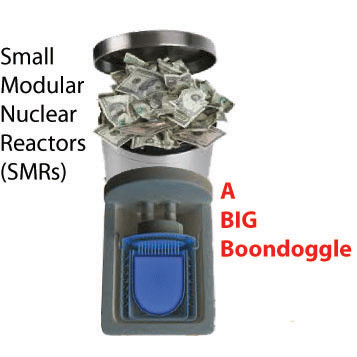
 He also tried to reassure the conference that the government remains committed to its small modular reactors (SMRs)
competition despite a lack of progress since its launch last March. Clarke said: “The government recognises the pot of SMRs. There are a number of potential benefits in terms of providing a secure, low carbon energy source
as well as broader industrial benefits and high value jobs.” He said that BEIS had met the companies which had submitted entries to the competition and would be “communicating next steps in due course.” He added that deciding how SMRs fit into the government’s wider industrial strategy was one of the “key questions” being addressed by NIA chair Lord Hutton,
who is leading work on shaping a tailored “sector deal” for the nuclear industry.
http://utilityweek.co.uk/news/BEIS-task-force-to-execute-Euratom-exit/1306162
June 30, 2017
Posted by Christina Macpherson |
politics |
Leave a comment