Taxpayer bankrolls £15bn nuclear plant at Wylfa in Wales
 John Collingridge The Sunday Times
 The government will commit to taking a direct stake in the Wylfa plant on Anglesey, planned by the Japanese industrial giant Hitachi, after more than two years of negotiations.
It is understood the government will also provide the vast bulk of the £9bn debt. State equity will slash the cost of borrowing, but leave the taxpayer exposed if costs balloon or the project overruns.
It has, though, helped ministers to negotiate a strike price — a guaranteed payment for the plant’s electricity — of about £77.50 per megawatt hour. The government was determined to achieve a cheaper price than the £92.50 agreed…… (subscribers only) https://www.thetimes.co.uk/article/taxpayer-bankrolls-15bn-nuclear-plant-at-wylfa-in-wales-0p7dnxfhq
USA government to use Emergency Measures to prop up coal and nuclear industries
Trump orders Energy Secretary Perry to halt shutdown of coal and nuclear plants, https://www.washingtonpost.com/business/economy/trump-officials-preparing-to-use-cold-war-emergency-powers-to-protect-coal-and-nuclear-plants/2018/06/01/230f0778-65a9-11e8-a69c-b944de66d9e7_story.html?utm_term=.5abb572447d6, By Steven Mufson Email the author 1 June 18, President Trump on Friday ordered Energy Secretary Rick Perry to halt the shutdown of ailing coal and nuclear power plants that he said were needed to maintain the nation’s energy mix, grid resilience and national security.
“Unfortunately, impending retirements of fuel-secure power facilities are leading to a rapid depletion of a critical part of our nation’s energy mix, and impacting the resilience of our power grid,” the White House said in a statement.
The Trump administration has been preparing to invoke emergency powers granted under Cold War-era legislation to order regional grid operators to buy electricity from ailing coal and nuclear power plants. There have been meetings this week at the Cabinet deputies’ level and at the National Security Council.
One likely plan, laid out in a 41-page draft memorandum posted online by Bloomberg News and Utility Dive, would favor certain power plants in the name of national security. Those plants are owned by some of the president’s political allies in the coal industry.
According to the draft memo, the Energy Department would exercise its emergency authority to order grid operators to give preference to plants “that have a secure on-site fuel supply” and that “are essential to support the Nation’s defense facilities, critical energy infrastructure, and other critical infrastructure.” Only coal and nuclear plants regularly keep fuel on site.
The Energy Department would also establish a “Strategic Electric Generation Reserve.” The memo added that “federal action is necessary to stop the further premature retirements of fuel-secure generation capacity.” The emergency rules would be a “prudent stopgap measure” that would last two years while the Energy Department did further study.
“President Trump believes in total energy independence and dominance, and that keeping America’s energy grid and infrastructure strong and secure protects our national security, public safety and economy from intentional attacks and natural disasters,” the White House said.
The idea of declaring an emergency under the Defense Production Act of 1950 (used by President Harry S. Truman for the steel industry) and Section 202 of the Federal Power Act has been promoted by the chief executives of the coal-mining firm Murray Energy and the Ohio utility FirstEnergy, both of whom have contributed heavily to Trump’s political activities.
Robert Murray presented a proposal to Energy Secretary Rick Perry in March 2017, the month Perry took office. And on April 2 of this year, FirstEnergy appealed for emergency help after a subsidiary operating ailing power plants filed for bankruptcy protection.
The Federal Energy Regulatory Commission, an independent agency, unanimously rejected an earlier proposal by the Energy Department that would have favored coal and nuclear plants.
In a recent appearance at a Washington Post Live event, FERC Chairman Kevin McIntyre said that using the emergency powers was “perhaps not the most obvious fit.”
He said using that section of the Federal Power Act “tees off the concept of continuance of a war in which the United States is involved as being kind of the baseline circumstance that would justify a DOE order to certain types of facilities to either begin operating or continue operation.”
Environmental groups, natural-gas producers, and Republicans and Democrats who have pushed for greater competition in electricity markets all condemned the latest signal that the administration might be moving closer to imposing the Energy Department’s plan.
They noted that the coal and nuclear power plants that would benefit have failed to compete against natural gas, solar and wind. Many of the plants have operated far longer than anticipated when they were built.
“Uneconomic, dirty coal plants retiring does not represent a national security risk,” Michael Panfil, director of federal energy policy and senior attorney with the Environmental Defense Fund, wrote on his blog. “If Trump chooses to bail out these failing coal plants, he’ll be forcing Americans to pay for dirty energy that pollutes our environment and makes people sick.”
Katie Bays of Height Capital Markets, an investment research firm, wrote in a commentary: “If DOE proceeds as the memo suggests, a selection of coal and nuclear plants, ostensibly those at risk of retirement, would receive subsidized payments . . . under a stitched-together ‘Frankenstein’s monster’ of federal authorities. Above all, the subsidy would be a major victory for FirstEnergy as it negotiates with bondholders over the value of coal and nuclear plants owned by its bankrupt FirstEnergy Solutions subsidiary.”
FirstEnergy’s top lobbyist last year was Jeff Miller, who was campaign manager for the presidential campaign of Perry, now energy secretary. Trump attended a private dinner with Miller and a handful of political advisers in early April.
Trump about to massively bail out polluting industries owned by his special donors
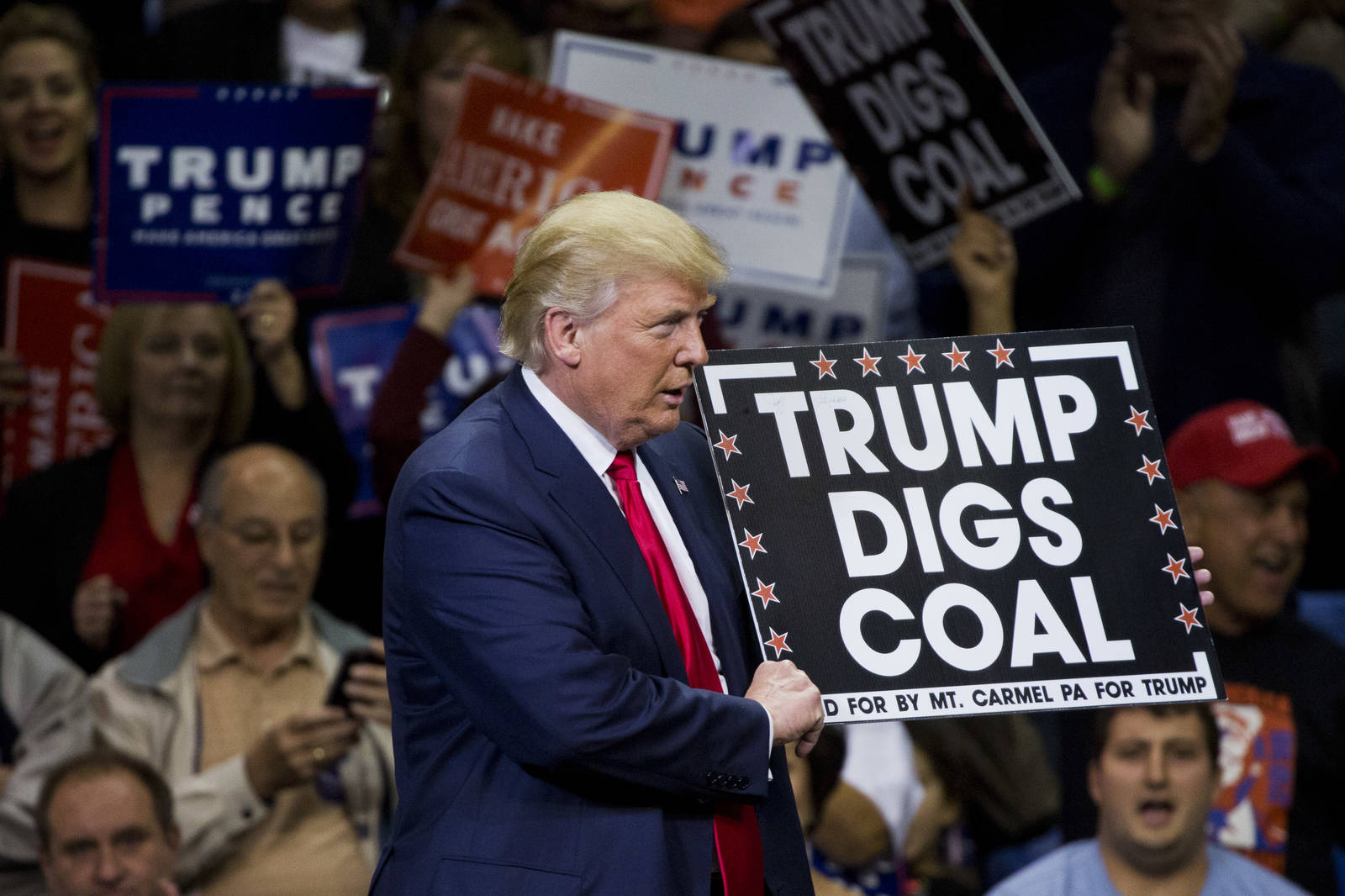 Trump wants taxpayers to bail out his polluter donors https://shareblue.com/trump-coal-energy-rick-perry-robert-murray-taxpayer-bailout/ By Oliver Willis June 1, 2018
The trials and tribulations of France’s Flamanville EPR nuclear reactor

Montel 31st May 2018 French utility EDF will reveal “in the next few days” whether
sub-standard welding identified at France’s first European pressurised
reactor (EPR) in Flamanville will lead to further start-up delays, a
spokeswoman said on Thursday. However, she refused to comment on Montel’s
interview with a senior official of the ASN watchdog’s technical arm –
the IRSN – who said the commissioning of the unit faced further delays
“of at leastseveral months”.
https://www.montel.no/en/story/edf-to-reveal-possible-epr-start-up-delay-in-days/905717
Jeremy Leggett 31st May 2018 French nuclear regulator fears “epidemic” safety-culture collapse at
Flamanville: disaster looms for EDF. Almost 150 more weld failures (beyond
those discovered earlier, as reviewed in the article) mean the nuclear
plant scheduled online in 2012 at a cost of €3.5bn is now delayed to
2020, probably, at a cost of €10.5bn, and counting.
Thierry Charles, deputy director general, Institute for Radiation Protection and Nuclear
Safety (IRSN), the technical arm of the Nuclear Safety Authority (ASN):
“The expected high level of quality was not specified (Editor’s note:
by EDF), the conformity of supplies to the specification could not be
attested”, plus “the qualification of the welding procedures […] ]
does not respect all the rules of art. Charles cites concerns over “other
categories of mechanical equipment” than the pipes of the secondary
circuit. He flags “human and organizational failures” and “lack of
rigor of suppliers”.
He ascribes all this to the “inadequacies of the
monitoring system put in place by EDF” to check the conformity of the
work of its subcontractors and he fears “dysfunction potentially damaging
to safety”. He has invited the ASN to summon EDF to thoroughly review its
organization “to improve the quality of realization of welds and make its
monitoring system more effective”. In a final, potentially lethal, blow
to EDF he argues that “additional controls will be requested on other
circuits of the reactor to verify that there is no epidemic.”
https://jeremyleggett.net/2018/05/31/french-nuclear-regulator-fears-safety-culture-collapse-at-flamanville-disaster-looms-for-edf/
Liberation 31st May 2018 [Machine Translation] The Flamanville EPR is likely to see its start
postponed to 2020. The weld quality problem detected on the EPR reactor
could differ by almost a year from its commissioning. The nuclear policeman
should demand that the work be redone.
A blow for EDF. A month and a half
after the discovery of new quality defects on 150 welds of the main
secondary circuit of the EPR reactor of the Flamanville power station, in
the Channel , EDF is preparing to post a further delay of several months in
the commissioning of what was to be the new flagship of the atom made in
France.
The EPR was due to start no later than early 2019. But according to
a source very familiar with the file questioned by Libération, the start
of the EPR Flamanville could outright “suffer a year late and be postponed
to the end of 2019 or early 2020” ! Severely taxed by the gendarme of the
atom, EDF would indeed be forced to resume one by one “Almost all 150
welds” whose quality is not up to what was expected by the nuclear
policeman for this type of equipment under nuclear pressure.
http://www.liberation.fr/france/2018/05/31/l-epr-de-flamanville-risque-de-voir-son-demarrage-reporte-a-2020_1655448
Divisive discussions on the future of Florida’s Turkey Point nuclear plant
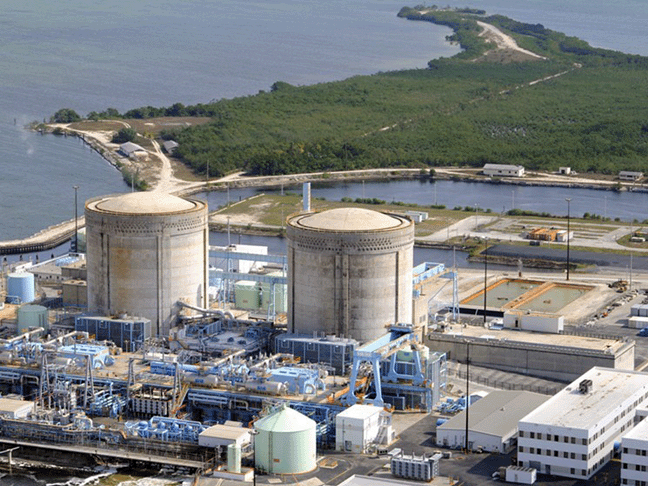 FPL, speakers clash on plan to run Turkey Point nuclear plant to 2053, Palm Beach Post By Charles Elmore – Palm Beach Post Staff Writer 1 June 18
Minnesota process protect ratepayers from being ripped off by the nuclear industry
Now That Xcel Won’t Get Its Nuclear Bill, What’s Next? Bulletin of the Atomic Scientists JESSICA COLLINGSWORTH, POLICY ANALYST, CLEAN ENERGY | JUNE 1, 2018 Earlier this month the Xcel Nuclear Plant Costs Bill (SF3504/HF3708) passed the Senate but failed to pass through the Minnesota House. The bill created a system of approving nuclear plant repair costs for Xcel Energy that would have circumvented the normal process of the Minnesota Public Utilities Commission (MN PUC) and left ratepayers to shoulder potentially excessive costs of keeping Xcel’s nuclear plants running.
Trying to keep Xcel’s nuclear fleet in the blackXcel’s nuclear fleet is struggling to stay profitable in the face of cheaper alternatives (like renewable energy and natural gas) and looming upkeep costs. Xcel estimates it will need at least $1.4 billion dollars in repairs over the next 17 years for its Monticello and Prairie Island nuclear plants. To provide certainty that Xcel would be able to recover those costs from ratepayers, they introduced legislation that would have allowed the company to get upfront approval from the PUC for its future nuclear expenses instead of approval after those investments have been made (how it works currently). The legislation would have provided certainty for Xcel that they would be able to recover these maintenance costs from ratepayers.
This is a bad deal for ratepayers because the legislation dilutes the PUC’s authority, and attempts to bypass the PUC’s current process for reviewing costs to determine if they’re prudent. That’s why UCS opposed the bill: it was an attempt to avoid the existing regulatory review process and shift financial risk from Xcel’s shareholders to ratepayers. This is not the first legislative attempt to dilute the power of the MN PUC.
Maintaining the current process for approving costs is important
Xcel is due to file their next Integrated Resource Plan (IRP), also known as their 15-year business plan, in February 2019. The IRP process allows for a comparison of electricity options to make sure consumers are getting the most bang for their ratepayer bucks. The IRP process is where Xcel will detail how they plan to generate and supply power to their customers over the next 15 years, including any expected expenses to keep its nuclear plants up and running.
A successful IRP includes evaluation of existing resources, a robust economic analysis of different supply-side and demand-side options under a range of scenarios and assumptions, including future environmental costs and fuel prices, opportunities for stakeholder engagement, adequate reporting requirements, and a robust set of criteria of which to base approval or denial of utility plans to spend ratepayer dollars.
It’s important to keep the current process because it protects ratepayers from excessive charges. By separating out the nuclear plant upkeep costs, we’re not comparing them to other options that would maintain a reliable and affordable energy supply for less cost to ratepayers. The legislation would have pre-approved these costs, meaning any cost overruns due to mismanagement by Xcel would have been automatically passed on to ratepayers. To protect Minnesota consumers, it’s important to keep the robust IRP process and maintain the PUC’s authority to scrutinize Xcel’s expenditures……..https://blog.ucsusa.org/jessica-collingsworth/xcel-nuclear-bill-whats-next
UK wind power – much cheaper than planned Wylfa nuclear power plant
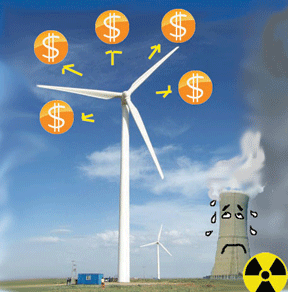
 ‘Cheap’ power at Wylfa nuclear plant blown away by wind, The Times, Emily Gosden, Energy Editor, 2 June 18 The electricity generated by the Wylfa nuclear plant could be about a fifth
cheaper than Hinkley Point’s but is likely to be much more expensive than
power from the latest offshore wind farms. It is understood that a figure
of close to £75 per megawatt-hour is under discussion as the “strike
price” that Hitachi, the Japanese conglomerate developing the Anglesey
plant, would be guaranteed by the government for the electricity it
produces. The difference between the guaranteed price and the wholesale
price — currently £50 per MWh — would be paid for by consumers through
levies on their energy bills.
Ministers are preparing to announce next week
the outline of a deal to fund the proposed Wylfa plant, which could cost in
excess of £15 billion. The twin-reactor plant could generate 2.9 gigawatts
of electricity, enough to power five million homes. It is due to start
generating in the mid 2020s. The government plans to invest directly in
Wylfa, as well as to offer extensive guarantee loans for the project. These
measures are designed to cut the cost of the project and so lower the price
that consumers will have to cover.
Critics of nuclear power are likely to
draw unfavourable comparisons with offshore wind. Two projects in UK waters
were awarded guarantees prices of £57.50 per MWh last year. Some onshore
wind and solar projects are being built without any subsidy.
https://www.thetimes.co.uk/article/cheap-power-at-nuclear-plant-blown-away-by-wind-3bzc2h5qm
Hitachi ‘won’t pay’ for nuclear accidents at proposed Wylfa plant on Anglesey
 Times 30th May 2018 Hitachi ‘won’t pay’ for nuclear accidents at proposed Wylfa plant on Anglesey. Hitachi could seek to absolve itself of financial responsibility for any accidents at its proposed new nuclear power station in north Wales.
The Japanese conglomerate has decided to continue with work developing the planned Wylfa plant on Anglesey after progress in financing talks with the government, which Hitachi is already relying on for a package of loan guarantees, subsidies and potential direct investment to make the project viable.
However, the company wants further concessions to reduce its risks, the Japanese newspaper Nikkei reported. Reports in several Japanese media outlets have claimed that the Wylfa plant could cost as much as three trillion yen, or almost £21 billion — making it even more expensive than Hinkley Point C.
EDF decided to build Hinkley Point only thanks to a 35-year subsidy contract from the government, which locks consumers into paying a fixed price for the power it generates and has been criticised for its high cost.
The Nikkei reported that some of Hitachi’s directors also wanted “safeguards that reduce or eliminate Hitachi’s financial
responsibility for accidents at the plant”. Nuclear operators are already obliged to take out insurance to cover their liabilities in case of an accident. If they are unable to secure insurance from the market, the government is obliged to step in and provide it instead. It is unclear what alternative arrangement or safeguards Hitachi might be seeking.
https://www.thetimes.co.uk/edition/business/hitachi-wont-pay-for-nuclear-accidents-at-proposed-wylfa-plant-on-anglesey-gtm28q0k3
Persisting with the European Pressurized Reactor (EPR) has brought Franc e to a costly nuclear crisis
 Liberation 30th May 2018 [Machine Translation] “The impasse”, how the EPR sank French nuclear.
France 5 broadcasts this Wednesday night “Nuclear, the French impasse”, a documentary against the declining reign of the atom. This film investigates EDF’s crazy gamble: risking its survival on the EPR, a reactor that accumulates trouble.
Will the EPR be the Titanic of French nuclear power? This is the shocking question posed by a film investigated by director Patrick Benquet broadcast tonight on France 5 which points to the “impasse”
in which the “most nuclearized country in the world” has locked up by equipping itself with 58 reactors. the 70s-80s. A fleet of 19 aging plants, which still produces 75% of French electricity, and which EDF wants to keep at all costs by launching a new generation of pressurized water reactor:
the EPR, “the most powerful never built, able to supply electricity to a metropolis like Paris. It must have been the deadly weapon of the nuclear lobby to defend the reign of the atom undermined by the Fukushima disaster and the rise of green energies.
EDF dreamed of exporting it all over the world by selling this “new nuclear” as the best lever against global warming. But things did not go at all as planned. And today EDF is going through a crisis that threatens the very existence of the “public service preferred by the French,” says the documentary.
There are these hidden costs of the atom, put under the carpet for decades, which rise to the surface: the enormous costs of reprocessing radioactive waste, is added the bill of the “great refit”: these works of Hercules designed to extend the lifespan of aging plants from 40 to 50 years. ”
EDF promised cheap electricity, but the real cost of nuclear energy today is in the tens and tens of billions. And ultimately it is the taxpayer who will pay, announces the implacable voice off. Yet, EDF, the nuclear state in the state, will launch the EPR at all costs. By assigning a strategic mission: take over
the old reactors that will gradually retire by 2035.
http://www.liberation.fr/france/2018/05/30/l-impasse-comment-l-epr-a-coule-le-nucleaire-francais_1655363
Ontario could save $1.2B by closing Pickering plant, buying power from Quebec – Greens
 Ontario Greens would close nuclear plant this summer
Province could save $1.2B by closing Pickering plant, buying power from Quebec, leader says CBC News
Energy politics – why renewables are winning over nuclear power
 Why are renewables suddenly trouncing nuclear energy? City Metric, By David Toke, 31 May 18
If recent trends continue for another two years, the global share of electricity from renewables excluding hydropower will overtake nuclear for the first time. Even 20 years ago, this nuclear decline would have greatly surprised many people – particularly now that reducing carbon emissions is at the top of the political agenda.
On one level this is a story about changes in relative costs. The costs of solar and wind have plunged while nuclear has become almost astoundingly expensive. But this raises the question of why this came about. As I argue in my new book, Low Carbon Politics, it helps to dip into cultural theory.
Culture wars
The seminal text in this field, Risk and Culture (1982), by the British anthropologist Mary Douglas and American political scientist Aaron Wildavsky, argues the behaviour of individuals and institutions can be explained by four different biases:
- Individualists: people biased towards outcomes that result from competitive arrangements;
- Hierarchists: those who prefer ordered decisions being made by leaders and followed by others;
- Egalitarians: people who favour equality and grassroots decision-making and pursue a common cause;
- Fatalists: those who see decision-making as capricious and feel unable to influence outcomes.
The first three categories help explain different actors in the electricity industry. For governments and centralised monopolies often owned by the state, read hierarchists. For green campaigning organisations, read egalitarians, while free-market-minded private companies fit the individualist bias.
The priorities of these groups have not greatly changed in recent years. Hierarchists tend to favour nuclear power, since big power stations make for more straightforward grid planning, and nuclear power complements nuclear weapons capabilities considered important for national security.Egalitarians like Greenpeace and Friends of the Earth usually oppose new nuclear power plant and favour renewables. Traditionally they have worried about radioactive environmental damage and nuclear proliferation. Individualists, meanwhile, favour whichever technologies reduce costs.
These cultural realities lie behind the problems experienced by nuclear power. To compound green opposition, many of nuclear power’s strongest supporters are conservative hierarchists who are either sceptical about the need to reduce carbon emissions or treat it as a low priority. Hence they are often unable or unwilling to mobilise climate change arguments to support nuclear, which has made it harder to persuade egalitarians to get on board. ………..
even hierarchists cannot ignore economic reality entirely. The South Carolina project has been abandoned and the Georgia project only survives through a very large federal loan bailout.
Contrast this with casino complexes in Nevada like MGM Resorts not only installing their own solar photovoltaic arrays but paying many millions of dollars to opt out from the local monopoly electricity supplier. They have campaigned successfully to win a state referendum supporting electricity liberalisation.
The UK, meanwhile, is an example of how different biases can compete. Policy has traditionally been formed in hierarchical style, with big companies producing policy proposals which go out to wider consultation. It’s a cultural bias that favours nuclear power, but this conflicts with a key priority dating back to Thatcher that technological winners are chosen by the market.
This has led policymakers in Whitehall to favour both renewables and nuclear, but the private electricity companies have mostly refused to invest in nuclear, seeing it as too risky and expensive. The only companies prepared to plug the gap have been more hierarchists – EDF, which is majority-owned by France, and Chinese state nuclear corporations.
Even then, getting Hinkley C in south-west England underway – the first new nuclear plant since the 1990s – required an extensive commitment by the UK treasury to underwrite bank loans. There is also an embarrassingly high price to be paid for the electricity over a very long 35-year period. Such has been the bad publicity that it’s hard to imagine a politician agreeing to more plant on such terms.
Where does this reality leave hierarchists? Increasingly having to explain prohibitive nuclear costs to their electorates – at least in democracies. The alternative, as renewable energy becomes the new orthodoxy, is to embrace it.
In Australia, for example, a big utility company called AGL is trying to seduce homeowners to agree to link their solar panels to the company’s systems to centralise power dispatch in a so-called a “virtual power plant”.
 When the facts change, to misquote John Maynard Keynes, you can always change your mind.
David Toke, Reader in Energy Policy, University of Aberdeen.
This article was originally published on The Conversation. Read the original article. https://www.citymetric.com/horizons/why-are-renewables-suddenly-trouncing-nuclear-energy-3779
Measures to compensate Arizona “Downwinders” approved by USA Congress
U.S. House Approves Measure to Compensate Arizona ‘Downwinders’ http://knau.org/post/us-house-approves-measure-compensate-arizona-downwinders, By RYAN HEINSIUS 31 May 18 • Many Southwesterners sickened by Cold War nuclear weapons testing were excluded from a 1990 federal compensation program. Now the U.S. House has approved a measure aimed at providing relief to the residents known as downwinders. KNAU’s Ryan Heinsius reports.
The original Radiation Exposure Compensation Act left out parts of Mohave County, the Hualapai Reservation, and southern Nevada, despite high rates of cancer and other diseases thought to be caused by nuclear fallout. The new House amendment orders the National Cancer Institute and the Centers for Disease Control and Prevention, to assess whether thousands are eligible for assistance.
“The American government made a promise with RECA, with the bill, and, by darn, we ought to follow through with it to make sure that anybody that was affected to be included in this process,” says Arizona Republican Paul Gosar who authored the measure.
Residents who’ve developed some diseases could be eligible for a $50,000 payment, and have until July 9, 2022 to file claims.
Nearly 200 atmospheric weapons were tested north of Las Vegas between 1945 and 1962. In the last three decades, more than 20,000 downwinder claims have been filed with the Justice Department, totaling more than $2 billion.
Congress has the power to stop squandering the public purse on new nuclear weapons

Congress should shoot down new nuke plan [Editorial] https://www.houstonchronicle.com/opinion/editorials/article/Congress-should-shoot-down-new-nuke-plan-12945344.php
Do we really need to spend more taxpayer money making new types of nuclear bombs?
The United States already has 6,800 nuclear weapons, according to the latest figures from the Federation of Atomic Scientists. But frankly the published data on America’s atomic arsenal varies so wildly it seems nobody knows how to count all of our nukes. Suffice to say the United States already has enough atomic firepower to blow the world to kingdom come.
Nonetheless, the House Armed Services Committee recently authorized $65 million for development of a new type of nuclear weapon, a low-yield warhead that would be attached to a long-range submarine-launched ballistic missile. During this Memorial Day weekend, a time when we honor those who’ve lost their lives in service of our country, spending that money on veteran services makes a lot more sense than buying more bombs that will be detonated only in the unlikely event of an atomic cataclysm. This proposal is now wending its way around Capitol Hill, and Congress needs to shoot it out of the sky.
Pentagon officials reportedly used some cockamamie logic to justify the expenditure, arguing that if the Russians use tactical nukes on the battlefield, the United States needs the capability to respond with a limited nuclear strike instead of a full-scale attack involving hundreds of warheads. If our planes are rendered incapable of delivering any of the 200 low-yield weapons already in Europe, they reasoned, we need to be able to launch them toward Russia from submarines.
As Walter Pincus, a respected former national security reporter for the Washington Post, pointed out, the problem is that the Russians won’t know the missiles launched from those submarines are carrying low-yield nukes. They’ll probably assume they’re under attack from the more powerful nuclear weapons typically carried by submarines as part of a first-strike intended to destroy their capacity to launch a full-scale response against the United States.
Pentagon officials argued the new bombs would deter the Russians from using tactical nukes, because they’d know the United States could respond with similar low-yield weapons. But the idea that the superpowers can fire smaller nuclear bombs at each other without escalating the conflict to Armageddon stretches credulity.
Adding even more nuclear weapons to the nation’s atomic arsenal won’t enhance deterrence. The United States already spends more on defense than the next eight top defense spending nations combined. It’s noteworthy that Director of National Intelligence Dan Coats recently warned lawmakers the spiraling federal debt could jeopardize national security. Wasting money deploying more nuclear weapons would be a step in the wrong direction
Britain’s “nuclear renaissance” in the balance as Hitachi ponders Wylfa nuclear project
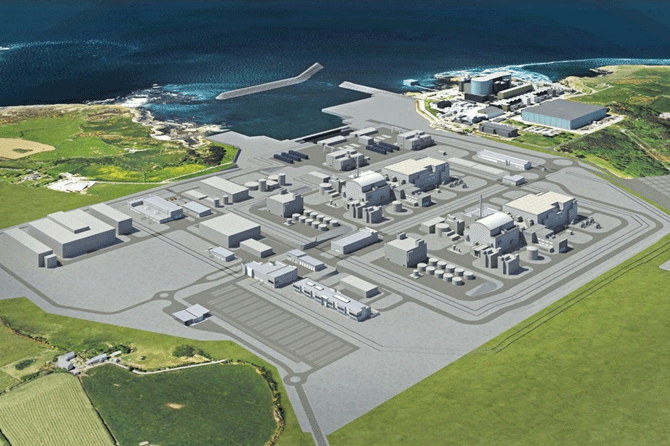 Times 27th May 2018 , The fate of a £15bn-plus nuclear power station is set to be decided this
week — and with it the future of Britain’s atomic renaissance.
The Japanese industrial giant Hitachi is due to decide Monday whether to
proceed with Wylfa. Hitachi’s decision has huge implications for
industrial collaboration between Britain and Japan and the country’s
nuclear power industry.
The project hinges on winning financial support
from Westminster. This weekend, ministers are expected to set out their
offer to Hitachi in a letter ahead of the crucial meeting. The proposal is
expected to include UK taxpayers taking a direct stake in the plant,
alongside Hitachi and the Japanese state, as well as guaranteeing loans. In
return, Westminster wants Hitachi to substantially undercut on price the
£20bn Hinkley Point plant in Somerset, which is being built by EDF.
TheFrench company struck a deal with the government for a guaranteed payment
of £92.50 per megawatt hour for 35 years. Ministers are expected to make
an announcement once they return from this week’s parliamentary recess.
They will herald it as an example of the type of post-Brexit trade deal
Britain can expect.
https://www.thetimes.co.uk/edition/business/deadline-day-for-japans-hitachi-over-wales-15bn-horizon-nuclear-plant-mdxhnj9x8
President Trump’s Washington swamp – the nuclear lobby/politics revolving door
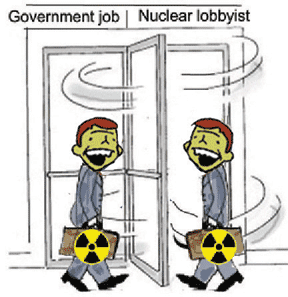 New swamp: Ex-Perry adviser lobbies for energy firm bailout AP, By MATTHEW DALY and RICHARD LARDNER, 29 May 18, WASHINGTON — At a West Virginia rally on tax cuts, President Donald Trump veered off on a subject that likely puzzled most of his audience.
“Nine of your people just came up to me outside. ’Could you talk about 202?’” he said. “We’ll be looking at that 202. You know what a 202 is? We’re trying.”
One person who undoubtedly knew what Trump was talking about last month was Jeff Miller, an energy lobbyist with whom the president had dined the night before. Miller had been hired by FirstEnergy Solutions, a bankrupt power company that relies on coal and nuclear energy to produce electricity. His assignment: push the Trump administration to use a so-called 202 order — named for a provision of the Federal Power Act — to secure a bailout worth billions of dollars.
Although Trump didn’t agree to the plan — he still hasn’t — for Miller, a president’s public declaration of interest amounted to a job well done.
How a single lobbyist helped carry a long-shot idea from obscurity to the presidential stage is a twisty journey through the new swamp of Trump’s Washington. Rather than clearing out the lobbyists and campaign donors that spend big money to sway politicians, Trump and his advisers paved the way for a new cast of powerbrokers who have quickly embraced familiar ways to wield influence.
Miller is among them. A well-connected GOP fundraiser, he has served as an adviser to California Gov. Arnold Schwarzenegger and Texas Gov. Rick Perry, also a close friend. He ran Perry’s unsuccessful presidential campaign in 2016. And when Trump tapped Perry to lead the Energy Department, Miller shepherded his friend through confirmation, sitting behind him, next to the nominee’s wife, at the Senate hearing.
When Perry came to Washington, Miller did, too. He launched his firm, Miller Strategies, early last year and began lobbying his friend and other Washington officials.
Besides Perry, Miller is close to other Trump-era power players. He is among House Majority Leader Kevin McCarthy’s best friends, their relationship dating back decades to Miller’s days in California. In more recent years, Miller developed a friendship with Vice President Mike Pence adviser Marty Obst.
“He’s very influential in Washington, a leading fundraiser,” Obst said of Miller.
Now, after 14 months in business, the 43-year-old Miller has collected more than $3.2 million from a roster of clients that includes several of the nation’s largest energy companies, among them Southern Co., a nuclear power plant operator headquartered in Atlanta, and Texas-based Valero Energy, according to federal filings.
Miller also has continued to raise money for GOP politicians. He contributed nearly $37,000 of his own over the past year to Republicans, including Sen. Ted Cruz of Texas and Greg Pence of Indiana, who’s seeking the congressional seat once held by his younger brother, the vice president, according to federal campaign records.
He is an active supporter of America First Action, a pro-Trump super PAC that raised $4.7 million in the first three months of 2018.
…….. Miller registered as a lobbyist in Washington in February 2017, just after Trump took office. He was hired by FirstEnergy in July 2017. Lobbying disclosure records show he was paid to target the highest levels of American government: the White House — including the offices of Trump and Pence — and Perry’s Energy Department. Miller has earned $330,000 from FirstEnergy since last year, making him one of the company’s highest-paid outside lobbyists……..https://apnews.com/e620b6cb527d41ebbb1c27974d771822
-
Archives
- October 2026 (104)
- September 2026 (339)
- August 2026 (330)
- July 2026 (355)
- June 2026 (287)
- May 2026 (306)
- April 2026 (356)
- March 2026 (251)
- February 2026 (267)
- January 2026 (308)
- December 2025 (358)
- November 2025 (359)
-
Categories
- 1
- 1 NUCLEAR ISSUES
- business and costs
- climate change
- culture and arts
- ENERGY
- environment
- health
- history
- indigenous issues
- Legal
- marketing of nuclear
- media
- opposition to nuclear
- PERSONAL STORIES
- politics
- politics international
- Religion and ethics
- safety
- secrets,lies and civil liberties
- spinbuster
- technology
- Uranium
- wastes
- weapons and war
- Women
- 2 WORLD
- ACTION
- AFRICA
- Atrocities
- AUSTRALIA
- Christina's notes
- Christina's themes
- culture and arts
- Events
- Fuk 2022
- Fuk 2023
- Fukushima 2017
- Fukushima 2018
- fukushima 2019
- Fukushima 2020
- Fukushima 2021
- general
- global warming
- Humour (God we need it)
- Nuclear
- RARE EARTHS
- Reference
- resources – print
- Resources -audiovicual
- Weekly Newsletter
- World
- World Nuclear
- YouTube
-
RSS
Entries RSS
Comments RSS

