Because of Brexit, the clean-up of UKs radioactive Dalgety Bay is stalled

Delay in Dalgety Bay radiation remediation work ‘due to Brexit’, Courier UK by November 19 2018 A further delay in the project to contain radiation at Dalgety Bay has been blamed on Brexit.
It was hoped remediation work to contain radioactive particles at the contaminated shore would be complete by the end of next summer.
Spain will close the last of its nuclear reactors and coal power plants before 2030
before 2030, according to State Secretary for Energy José Dominguez, who
made the announcement shortly after Madrid pledged to work towards a
completely renewable electricity system. Dominguez said on Thursday (15
November) that the current socialist government does not plan to extend the
lifespan of any of its nuclear reactors beyond their current 40-year
shelf-life. Spain’s oldest reactor is more than 37 years old, so
according to current plans will shut up shop in 2021, while its newest just
celebrated its third decade of operation, and will go offline in 2028.
https://www.euractiv.com/section/energy/news/spain-to-nix-nuclear-and-coal-power-by-2030/
UK’s Moorside nuclear project will not go ahead unless the taxpayer pays for it
 In Cumbria 16th Nov 2018 A nuclear power station for West Cumbria is unlikely to ever get the
go-ahead without the backing of public money. That was the conclusion of a
heated debate at a full meeting of Cumbria County Council, which saw an
urgent notice of motion agreed after tempers flared among the 80
councillors gathered.
It was the first time the council had met following
the decision by Toshiba to win up NuGen, the developer behind the £15
billion Moorside power station plans in West Cumbria.
The motion raised by David Southward (Lab, Egremont) and seconded by council leader Stewart
Young (Lab, Carlisle) read: “Council calls on the Government to enter
into urgent discussions with all interested parties and to take any
necessary steps to ensure that the nuclear power plant construction project
at Moorside goes ahead.
“Council considers that due to the level of commercial risk involved in projects of this nature, they are highly
unlikely to proceed without Government support, whether that be by way of
equity acquisition, underwriting potential losses or guaranteeing the
strike price.” Cllr Southward called the decision a “devastating
blow” and meant the area missing out on 5,000 construction jobs lasting
eight years, and a further 1,000 operational jobs.
http://www.in-cumbria.com/Moorside-Nuclear-power-plans-for-West-Cumbria-need-public-cash-2ebfba47-e6c9-4fb6-8a1b-1df5e4748f99-ds
France’s Environment Minister questions viability of EPR nuclear. France to cut back on nuclear power
France to cut nuclear energy reliance by 2035 – minister, Channel News Asia. 18 Nov 18 France aims to reduce the share of electricity produced by nuclear reactors to 50 percent from 75 percent now by 2035, Environment Minister Francois de Rugy said on Sunday. PARIS: France aims to reduce the share of electricity produced by nuclear reactors to 50 percent from 75 percent now by 2035, Environment Minister Francois de Rugy said on Sunday.
The French government has long outlined plans to shrink the country’s reliance on nuclear energy to 50 percent, though the deadline for that goal had remained less clear.
A long-awaited government update on France’s long-term energy strategy is expected to be released later this month, setting out in greater detail how it will cut the share of nuclear in its power generation……….
The new environment minister has said he expected there would be fewer nuclear reactors in France in 10 year’s time, though he has given few details on how many of state-owned EDF’s 58 plants will have to close.
De Rugy raised further doubts on Sunday over plans to build more plants using the European pressurized reactor (EPR) design, having previously questioned whether this new generation of reactors were viable……….
Read more at https://www.channelnewsasia.com/news/world/france-to-cut-nuclear-energy-reliance-by-2035—minister-10944548
UK nuclear regulator completes 2nd stage of assessing Chinese nuclear reactor for Bradwell, in Essex
 Reuters 15th Nov 2018 , The first Chinese-designed atomic reactor for use in Britain moved a step
closer to fruition on Thursday as the UK nuclear regulator said it had
completed the second stage of its assessment of the technology. General
Nuclear Services, an industrial partnership between China General Nuclear
Power Corp (CGN) IPO-CGNP.HK and French utility EDF, hopes to use the
design at a nuclear plant planned to be built at Bradwell in Essex, eastern
England.
https://uk.reuters.com/article/nuclearpower-britain-china/update-2-china-designed-uk-nuclear-reactor-plan-clears-second-assessment-stage-idUKL8N1XQ4A1
USA’s next chairman of the House Armed Services Committee aims to scrap Trump’s nuclear weapons policy
Smith aims to scrap Trump’s nuclear weapons policy, Defense News , 13 Nov 18WASHINGTON — Rep. Adam Smith — set to become the next chairman of the House Armed Services Committee in the new Congress — and other Democratic lawmakers said Wednesday they hope to use their party’s takeover of the House to check the Trump administration’s expansive policies toward nuclear weapons.
USA’s Office of Nuclear Energy – subsidies to “new nuclear: hopefuls now total $25 million
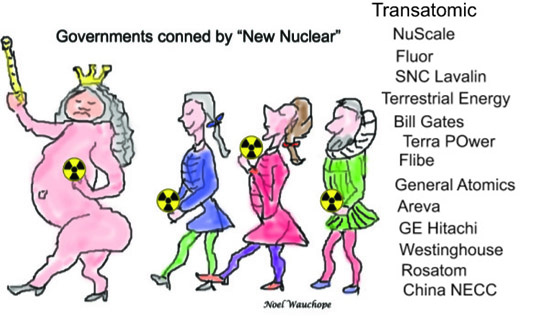
U.S. Advanced Nuclear Technology Projects to Receive $18 million from the U.S. Department of Energy, Office of Nuclear Energy, NOVEMBER 13, 2018 ,DOE AWARDS $18 MILLION FOR U.S. ADVANCED NUCLEAR TECHNOLOGY PROJECTS
WASHINGTON, D.C. – The U.S. Department of Energy (DOE) today announced funding selections for eleven domestic advanced nuclear technology projects. These projects, located across six states, will receive varying amounts for a total of approximately $18 million in funding, with project values totaling approximately $25 million. The projects are cost-shared and will allow industry-led teams, including participants from federal agencies, public and private laboratories, institutions of higher education, and other domestic entities, to advance the state of U.S. commercial nuclear capability…….https://www.energy.gov/ne/articles/us-advanced-nuclear-technology-projects-receive-18-million-us-department-energy
Britain’s Wyfa nuclear power project – one hell of a cost to the taxpayer.
 Dave Toke’s Blog 11th Nov 2018 ,Greg Clark looks likely to go down in history as the Minister who signs off
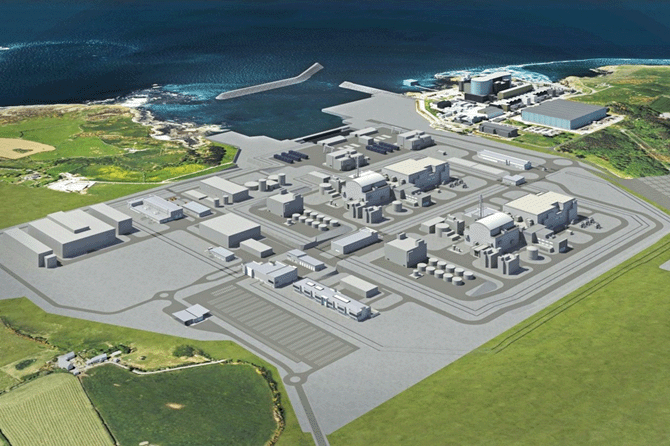
on a nuclear construction deal with Hitachi for the proposed Wylfa power plant that led to a stupendous loss for the taxpayer. That loss might be £20 billion or more.
Clark has apparently put no discernable effort into the objective of securing ‘subsidy’ free contracts for onshore wind and solar. However, he has been spending a lot of time concocting a plan to finance the Wylfa nuclear power plant that will, on the basis of past performance, generate huge losses for the public purse years down the line.
All the talk from BEIS (the energy ministry) is of the new ‘Regulated Asset Base’ (RAB) financing of nuclear power plant. Except that what’s really happening is not really an RAB model at all. It’s a piece of brownwash to obscure the reality of Government blank cheque to cover whatever it costs to build the nuclear plant. That’s because the whole plan hinges on the constructors being able to pass on cost-overruns onto the Government.
And that’s the point. Nuclear power stations being built in the west have almost always tended to have large cost overruns. Recent ones have ALL suffered horrendous cost overruns – in the USA (4), France (1) and Finland (1).
Yet, some otherwise sensible, financial analysts seem to ignore this fact as they extol the virtues of RAB financing. They implicitly assume that Wylfa will proceed precisely on target, in which case, they say the Government will deliver the project at a ‘cheaper’ price than Hinkley C through the provision of Government loans with low interest rates.
Sure, the headline price that will be paid by the electricity consumer, over 35 years, will be a bit cheaper. But that’s likely to be at one hell of a cost to the taxpayer.
http://realfeed-intariffs.blogspot.com/2018/11/how-greg-clarks-hitachi-deal-could-lead.html
With Democrat majority in U.S. Congress, Trump’s plans for nuclear arsenal, space weapons, will meet opposition

 Divided Congress to clash over Space Force, nuclear arsenal, The Hill, BY REBECCA KHEEL – 11/11/18
Democrats next year will control the gavels for the defense and foreign policy committees in the House for the first time since 2010.
The party has been itching to check President Trump on a host of issues, from his relationship with Saudi Arabia to the ballooning defense budget.
But to get legislation through Congress, House Democrats will need to work with the Senate, which is still in Republican hands. And the chairmen poised to lead the defense and foreign policy panels in the upper chamber are seen as staunch Trump allies.
Here are the top foreign policy and defense fights to watch in a divided Congress:
U.S.-Saudi relations
Lawmakers in both parties have been eyeing ways to punish Saudi Arabia over the killing of U.S.-based journalist and Saudi critic Jamal Khashoggi.
House Democrats have said responses should include an end to U.S. military support for the Saudi-led coalition in neighboring Yemen’s civil war. Democratic lawmakers were already opposed to U.S. backing because of civilian casualties, but Khashoggi’s murder has given the issue new urgency……….
Space Force
The Trump administration has said it wants the establishment of a “Space Force” included in next year’s defense policy bill. That position has contributed to increasingly diverging opinions between House and Senate lawmakers……….
Defense budget
Smith [Rep. Adam Smith (D-Wash.), who’s poised to be chairman of the House Armed Services Committee] has said this year’s defense budget of $716 billion is “too high,” and in a Thursday letter announcing his run for chairman he vowed to target “inefficiency and waste” at the Pentagon……….
Nuclear weapons
One of Smith’s longtime concerns has been the U.S. nuclear arsenal. He opposed the Obama administration’s modernization plans, arguing they weren’t affordable.
With the Trump administration’s Nuclear Posture Review calling for new capabilities, Smith has stepped up his criticism, vowing to scrutinize the nuclear budget to look for savings in the overall defense budget.
In his Thursday letter, Smith said Democrats must “take substantial steps to reduce America’s overreliance on nuclear weapons.”
Adding to Democrats’ nuclear anxiety is Trump’s intention to withdraw from a Cold War-era arms accord with Russia known as the Intermediate-Range Nuclear Forces (INF) Treaty. Smith and Engel wrote a letter to the administration last month warning they “will neither support, nor enable, a precipitous course of action that increases the risk of an unconstrained nuclear arms race.”
Congress is limited in its power to prevent Trump from withdrawing from the treaty, but it could block funding for any new missiles that would be out of compliance with the accord……… https://thehill.com/policy/defense/415935-divided-congress-to-clash-over-space-force-nuclear-arsenal
For Britain’s next nuclear boondoggle – Wylfa project, households might have to pay upfront for the construction.
 Times 11th Nov 2018 The business secretary Greg Clark held a crunch meeting with Hitachi in Tokyo last week over its planned £15bn Welsh nuclear power station, as a rival Japanese project collapsed. Toshiba killed off its NuGen power station plan in Cumbria last week after the ailing industrial giant struggled to find a buyer – denting Britain and Japan’s nuclear ambitions.
Toshiba’s exit leaves Britain’s nuclear power renaissance reliant on France’s EDF and Japan’s Hitachi. Clark is understood to have attended a dinner with the Hitachi chairman Hiroaki Nakanishi during a visit to Japan, where they discussed sealing a deal on Hitachi’s Horizon power station on Anglesey by Easter.
The British and Japanese governments are expected to take equal equity stakes in Horizon alongside Hitachi. Whitehall is also expected to provide all the debt for the 2.7 gigawatt project, which would be sold once it has started generating power. Clark agreed to help bankroll the Horizon project in June, marking a departure from previous policy.
Ministers want Horizon and Hinkley to replace a string of ageing coal and nuclear power plants that are due to close over the next decade. Under pressure from ministers, Hitachi is considering using a different form of financing – a regulated asset base – for future reactors on Anglesey and in Gloucestershire.
However, that risks further controversy as it would mean households fund the project before it has been completed. Clark’s latest visit also reflects growing tension between Tokyo and London over Brexit.
https://www.thetimes.co.uk/article/97c7a1de-e514-11e8-aa8a-1a554b586cbd
Democrat dominated Congress can put the brakes on Trump’s nuclear weapons folly
Dem-led House can return sanity to nuclear weapons debate https://thehill.com/opinion/national-security/415923-dem-led-house-can-return-sanity-to-nuclear-weapons-debate, BY TOM Z. COLLINA, 11/09/18 Since the election of President Donald Trump two years ago, advocates of sane nuclear policy have been faced with a serious deficit of enlightened political leadership in key positions of power.
President Trump has called for new and more “usable” nuclear weapons, is seeking to abandon key arms control agreements, and Congress has been plowing ahead with a $2 trillion shopping spree to rebuild the Cold War nuclear arsenal. There has been essentially no effective check on this excessive and dangerous spending.
As of Tuesday night, that will change in January when Democrats take over the House.
Without real oversight, pro-nuclear bomb enthusiasts have had a free hand to promote Trump’s new “low-yield” warhead for Trident missiles; to undermine crucial international agreements like the Intermediate-Range Nuclear Forces (INF) Treaty; and to push for high-cost missile, submarine and bomber programs that we do not need.
Once these programs get off the ground, they become too big to stop. If we don’t act soon, we will be locked in to an excessive Cold War-style arsenal for the next 50 years. As new U.S. weapons are built, and Russia responds in kind, we will find ourselves back in an arms race that only defense contractors can win.
But now there is hope on the horizon. The elections have brought new leaders into power who share the widespread conviction that the United States has more nuclear weapons than it needs to be secure and that spending less on nukes can actually make us safer.
Rep. Adam Smith (D-Wash.) is poised to be the next chairman of the House Armed Services Committee. Rep. Smith has been a leading voice calling for saner nuclear policies for years and shows no signs of letting up.
Speaking at a conference in September, Smith said that, if he gets the gavel, nuclear weapons policy would be at the top of his list of things that will change.
“I think the Republican party and the nuclear posture review contemplates a lot more nuclear weapons than I — and I think most Democrats — think we need. We also think the idea of low-yield nuclear weapons are extremely problematic going forward,” Smith said. “When we look at the larger budget picture, that’s not the best place to spend the money.”
Smith added that the expected price tag for building new nuclear weapons meant the U.S. “certainly can’t afford it.
When Smith becomes the committee’s next chairman in January, proponents of nuclear sanity can once again start to think big. In addition to cancelling the “low-yield” and dangerous Trident warhead, Smith may seek to cancel the destabilizing $30 billion nuclear air-launched cruise missile, which he has said would “siphon limited resources from preserving nuclear deterrence without adding to our national security.”
Next, he could take on the wasteful and dangerous $200 billion program to build new ground-based nuclear missiles. Cancelling this weapon would help to reduce the risk of the United States accidentally or mistakenly launching its nuclear missiles in response to a false warning of a nuclear attack.
Finally, there is greater public concern than ever that President Trump cannot be trusted with his absolute and sole authority to launch nuclear weapons.
Most Americans do not realize that the president has unlimited nuclear launch authority with no real checks or balances from anyone. But once informed, they are very concerned. President Trump could order a nuclear war as easily as he could send a tweet.
This situation is both dangerous and unnecessary. The risks of having nuclear weapons ready to launch within minutes outweigh any perceived benefits, especially if the sole decision-maker cannot be trusted.
Rep. Smith has introduced a bill to make it U.S. policy to never launch nuclear weapons first in a conflict. Other bills would prohibit the first use of nuclear weapons without congressional approval.
These fixes would put legal limits on the president’s ability to launch nuclear weapons unilaterally, without provocation, and would provide a tremendous safeguard to our democracy and our national security.
Congress has been a blank check for the forces of nuclear overkill and overspending for far too long. It is time to bring bold, principled leadership back to nuclear policy, before it is too late.
Tom Z. Collina is director of policy for Ploughshares Fund, a public grantmaking foundation that supports initiatives to prevent the spread and use of nuclear weapons, and to prevent conflicts that could lead to their use.
New Bill in U.S. Congress would block a nuclear deal with Saudi Arabia
 House Democrat to introduce new bill punishing Saudi Arabia over Khashoggi, It would block a controversial nuclear deal that’s very important to Saudi Arabia. Vox By A House Democrat will soon introduce legislation to punish Saudi Arabia over the murder of journalist Jamal Khashoggi — by trying to halt an impending nuclear deal with the country.
Obtained exclusively by Vox, the bill — nicknamed the “No Nuclear Weapons for Saudi Arabia Act of 2018” — if passed would be the strongest rebuke to Saudi Arabia yet since the uproar over Khashoggi’s fate.
Khashoggi, a US resident, was killed by Saudi officials inside the country’s consulate in Istanbul last month. That led to a major international outcry over his death, including from many in the US who wanted to see the Washington-Riyadh relationship curtailed.
Most of the discussions on how to do that center on stopping billions of dollars in arms sales to the kingdom, but President Donald Trump has repeatedly said he doesn’t want to jeopardize money coming into the United States, and some members of Congress privately worry that stopping weapons shipments to Saudi Arabia might negatively impact jobs.
So instead of doing that, Rep. Brad Sherman (D-CA) wants to stop a major nuclear deal between the US and Saudi Arabia that’s been under negotiation for months, and which he has long railed against.
“I don’t think this bill would’ve passed prior to the events in Istanbul,” Sherman told me. “Now I think we have a chance.” It’s also very possible a Republican will co-sponsor the bill when it’s officially introduced in the next 10 congressional days.
The legislation would do three main things:
- Force Trump to submit a “123 Agreement,” or a set of rules that make it legal for the US to sell nuclear technology to another country, for congressional approval.
-
- Force the administration to tell Congress that Saudi Arabia will abide by the agreement’s “Gold Standard” (more on that below) and an inspections agreement with the International Atomic Energy Agency, the world’s nuclear watchdog
- Require the administration to write reports on Saudi Arabia’s probe into Khashoggi’s murder and the state of human rights in the kingdom
Sherman’s bill could completely block Saudi Arabia’s plans to obtain nuclear technology from the United States, especially since there’s growing bipartisan support to reprimand Riyadh over Khashoggi.It would come as a big blow to Saudi Arabia: Crown Prince Mohammed bin Salman, the kingdom’s de facto ruler, more commonly known as MBS, launched a project on Monday to build his country’s first nuclear research reactor.
There’s also some bipartisan support to stop nuclear talks with Riyadh in the Senate.
Sens. Edward Markey (D-MA) and Marco Rubio (R-FL), for example, have sent letters to Trump requesting he at least suspend negotiations with Saudi Arabia over the nuclear deal. It’s unclear if either of them will draft parallel legislation to the House version, although a spokesperson for Rubio’s office told me the senator “possibly” could consider a bill in the future. …….
American companies have already lined up to sell and build nuclear parts for Saudi Arabia, …….
-
Saudi Arabia could accelerate a nuclear arms race in the Middle East
There’s legitimate concern about what Riyadh would do with a brand new nuclear reactor if this indeed happens.
On March 18, MBS openly admitted on CBS’s 60 Minutes that obtaining a nuke was a possibility……..
- There are other signs that Saudi Arabia’s burgeoning nuclear program is really all about weapons — and not mainly for energy — like it repeatedly says. One possible indicator is that Riyadh has focused on nuclear energy and not renewable energy to bring power to its millions of citizens. …….https://www.vox.com/2018/11/9/18072660/saudi-arabia-nuclear-deal-congress-123-agreement-sherman?fbclid=IwAR1-MMsdZfBxfPVPs0jxhEm1k8eWPzi22OTWpOCHavjtdWa5MKBcBhWGj9Y
Hundreds of Taiwanese academics urge public to vote for nuclear power shut-down
 Taiwan’s academics urge public to vote for nuclear power shut-down, Nature, 9 Nov 18
Open letter encourages voters to support the phase out of nuclear power plants in an upcoming referendum. Hundreds of researchers in Taiwan have signed an open letter urging the public to vote to continue the phase out of nuclear power in an upcoming referendum.
Last year, Taiwanese legislators added a clause to the island’s electricity act to shut down all nuclear power plants by 2025……
In October, proponents of nuclear power gathered enough signatures — more than 1.5% of the electorate in Taiwan — to force a referendum that will ask the public to agree to removing the phase-out clause from the act. ……Fifty academics, including environmental sociologist Chiu Hua-Mei at National Sun Yat-sen University in Kaohsiung, released the letter on 3 November, asking the public to vote to keep the clause. More than 400 others have now signed the letter.
Risky business
Chiu says that earthquakes and tsunamis, events that can damage nuclear power stations with devastating effects, are major threats to Taiwan, and there is no feasible long-term solution yet for dealing with the radioactive waste. It is currently stored at the power stations or on Orchid Island off the east coast. “It’s too risky for Taiwan to use nuclear power,” she says.
The academics who signed the letter felt compelled to advise the public about the risks of continuing to use nuclear power in Taiwan, Chiu says. “We think that scholars should say something for us, for Taiwan.”
Even if the phase-out clause ends up being removed from the act, it is not clear what president Tsai will do in response.
Fifty academics, including environmental sociologist Chiu Hua-Mei at National Sun Yat-sen University in Kaohsiung, released the letter on 3 November, asking the public to vote to keep the clause. More than 400 others have now signed the letter.
Britain’s Bradwell nuclear project under scrutiny- risks of flooding, water overuse, environmental degradation
BANNG 7th Nov 2018 , BANNG’s visit to the Bradwell B site (reported on in the October edition)
gave an opportunity to discuss the early site assessment undertaken by the
company.
The question in all our minds was: ‘is this a suitable site for
the Bradwell B nuclear complex?’ At this stage the developer’s answer
is nuanced: a case of we hope so but we are a long way from knowing.
The Bradwell project is currently under scrutiny by the regulatory authorities
in a process known as Generic Design Assessment. Taken together the site
assessment and the GDA provide an opportunity for BANNG to press concerns
about three key issues which, we believe, make the site wholly unsuitable
and unsustainable.
The first is the high probability risk of flooding
‘especially during the later stages of operation and decommissioning of a
potential nuclear power station’. Second, is the issue of providing the
vast quantities of water needed to cool the reactors. The third issue is
the environmental destruction this project would cause.
https://www.banng.info/news/bradwell-b-an-unsuitable-site-for-development/
? Canada’s nuclear regulator wants Small Nuclear Reactors exempted from full Environmental Assessment

Federal nuclear regulator urges government to exempt smaller nuclear
reactors from full Environmental Assessment panel review, Globe and Mail 6th Nov 2018 -(subscribers only)
https://www.theglobeandmail.com/business/article-federal-nuclear-regulator-urges-liberals-to-exempt-smaller-reactors/
-
Archives
- October 2026 (91)
- September 2026 (339)
- August 2026 (330)
- July 2026 (355)
- June 2026 (287)
- May 2026 (306)
- April 2026 (356)
- March 2026 (251)
- February 2026 (267)
- January 2026 (308)
- December 2025 (358)
- November 2025 (359)
-
Categories
- 1
- 1 NUCLEAR ISSUES
- business and costs
- climate change
- culture and arts
- ENERGY
- environment
- health
- history
- indigenous issues
- Legal
- marketing of nuclear
- media
- opposition to nuclear
- PERSONAL STORIES
- politics
- politics international
- Religion and ethics
- safety
- secrets,lies and civil liberties
- spinbuster
- technology
- Uranium
- wastes
- weapons and war
- Women
- 2 WORLD
- ACTION
- AFRICA
- Atrocities
- AUSTRALIA
- Christina's notes
- Christina's themes
- culture and arts
- Events
- Fuk 2022
- Fuk 2023
- Fukushima 2017
- Fukushima 2018
- fukushima 2019
- Fukushima 2020
- Fukushima 2021
- general
- global warming
- Humour (God we need it)
- Nuclear
- RARE EARTHS
- Reference
- resources – print
- Resources -audiovicual
- Weekly Newsletter
- World
- World Nuclear
- YouTube
-
RSS
Entries RSS
Comments RSS

