France’s ‘public consultation’ on old nuclear reactors – full of bureaucratic jargon – no debate took place
|
Mediapart 1st April 2019 , The public consultation on the extension of the oldest French nuclear
reactors has just ended in general indifference. The debate is impaired by the technicality of the exchanges, the bureaucracy of the procedures and the lack of will to make room for the citizens. Sunday, March 31 closed a debate that did not take place: the public consultation on the improvement
of nuclear reactors 900 megawatts (MW), the oldest, as part of the review they must undergo at their fortieth year of operation. The stakes are high: under what conditions can the oldest EDF power stations continue to produce electricity, even though they are reaching an age originally planned as a terminal?https://www.mediapart.fr/journal/france/010419/nucleaire-le-debat-qui-n-pas-lieu |
|
15 USA senators re-introduce bill to promote new nuclear reactors
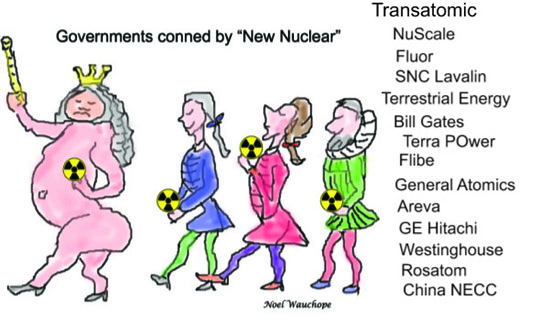
Senate re-introduces bill to help advanced nuclear technology, Legislation was praise by Bill Gates, who has  funded an advanced nuclear company. Ars Technica, MEGAN GEUSS – 4/1/2019,
Last week, a bipartisan group of 15 US senators re-introduced a bill to instate the Nuclear Energy Leadership Act (NELA), which would offer incentives and set federal goals for advanced nuclear energy. A smaller group of senators originally introduced the bill in September of last year, but the Congressional session ended before the Senate voted on it.
Specifically, the bill authorizes the federal government to enter into 40-year power purchase agreements (PPAs) with nuclear power companies, as opposed to the 10-year agreements that were previously authorized. Securing a 40-year PPA would essentially guarantee to an advanced nuclear startup that it could sell its power for 40 years, which reduces the uncertainty that might come with building a complex and complicated power source.
……. In addition to supporting a 40-year PPA to improve the economics of advanced nuclear reactor research from the private market, the bill directs the Department of Energy’s Office of Nuclear Energy to develop a 10-year strategic plan to support advanced nuclear reactor research. The DOE must also “construct a fast neutron-capable research facility” if the bill passes, which Senate materials say “is necessary to test important reactor components, demonstrate their safe and reliable operation, and ultimately license advanced reactor concepts.”
The bill also directs the federal government to make available some “high-assay low-enriched uranium” for research and testing in advanced reactors. Traditional light-water reactors use low-enriched uranium in which the active U-235 isotope constitutes 3 to 5 percent of the nuclear fuel, according to the World Nuclear Association. High-assay low-enriched uranium, on the other hand, pushes enrichment levels to about 7 percent of the fuel and, in some cases, can go as high as 20 percent.
Finally, the bill directs the DOE to create “a university nuclear leadership program” to train the next generation of nuclear engineers.
On Thursday, Microsoft mogul Bill Gates tweeted his support for the bill. Gates is currently the chairman for an advanced nuclear reactor company called Terrapower, which is developing a traveling wave reactor that uses depleted uranium as fuel (depleted uranium is a by-product of uranium enrichment). Terrapower suffered a political setback earlier this year, as US rules against sharing nuclear technology with China forced the company to abandon its plans for conducting preliminary trials of its technology in that country.
Gates praised this new bill, writing “I can’t overstate how important this is.”
…….. NuScale Power, a company that has made significant progress toward building a small modular reactor in Idaho, also praised the bill. In a statement to a market research company called The Morning Consult, chief strategy officer of NuScale Power Chris Colbert said that “the bill would ‘absolutely’ make it easier and more certain to reach deployment.” https://arstechnica.com/science/2019/03/senate-re-introduces-bill-to-help-advanced-nuclear-technology/
Concerns in USA Congress as the Trump administration OKs nuclear energy transfers to Saudi Arabia
|
Trump administration OKs nuclear energy transfers to Saudi Arabia, sparking new battle with Congress
CNBC, MAR 29 2019 Tom DiChristopher@TDICHRISTOPHER
|
|
Trump budget for fiscal year 2020 to sepnd up big on nuclear weapons
 Trump Budget Boosts Nuclear Efforts Arms Control Association, By Kingston Reif April 2019, Consistent with the recommendations of the 2018 Nuclear Posture Review (NPR), the Trump administration’s fiscal year 2020 budget request would continue plans to expand U.S. nuclear weapon capabilities.
The ultimate fate of the request, submitted to Congress March 11, remains uncertain as Democrats, particularly in the House, have signaled strong opposition to several controversial funding proposals. Their concerns include administration plans to develop two additional low-yield nuclear weapons and two conventionally armed, ground-launched missiles currently prohibited by the 1987 Intermediate-Range Nuclear Forces (INF) Treaty.
The budget submission illustrates the rising cost of the nuclear mission and the challenge those expenses may pose to the administration’s other national security priorities.
A Congressional Budget Office report in February estimates that the United States will spend $494 billion on nuclear weapons from fiscal years 2019 through 2028. That is an increase of $94 billion, or 23 percent, from the CBO’s previous 10-year estimate of $400 billion, which was published in January 2017. (See ACT, March 2019.)
The Trump administration’s budget proposal contains increases for several Defense and Energy department nuclear weapons systems. The request does not change the planned development timelines for these programs.
The largest increase sought is for the nuclear weapons account of the Energy Department’s semiautonomous National Nuclear Security Administration (NNSA). The budget request calls for $12.4 billion, an increase of $1.3 billion above the fiscal year 2019 appropriation and $530 million above the projection in the fiscal year 2019 budget request.
The request includes funds for the continued development of two missile systems with ranges prohibited by the INF Treaty, but despite numerous queries by Arms Control Today and other outlets, the Pentagon has yet to divulge the amount.
Defense Department officials told a group of reporters March 13 that the Pentagon is planning to test a ground-launched cruise missile and a ballistic missile by the end of this year.
The announcement came just over a month after the Trump administration announced on Feb. 2 that it would withdraw from the treaty on Aug. 2 unless Russia corrects alleged compliance violations with the agreement. (See ACT, March 2019.)
The budget request for nuclear weapons programs is part of the overall $750 billion request for national defense. That figure includes the Defense Department’s regular budget activities and the Energy Department’s nuclear weapons programs.
New Nuclear Capabilities
The budget request would finish development of a small number of low-yield nuclear warheads for submarine-launched ballistic missiles (SLBMs) and begin studies of a new fleet of sea-launched cruise missiles (SLCMs)…….. https://www.armscontrol.org/act/2019-04/news/trump-budget-boosts-nuclear-efforts
UK Parliament: protesters disrupt Brexit debate by baring bottoms over inaction on climate change
ABC News 2 Apr 19, While some view the British parliament as a symbol of political stasis since the 2016 Brexit referendum, other Brits have utilised Westminster’s symbolic power to press — literally and figuratively — for faster action on climate change.
On Monday, members of climate change action group Extinction Rebellion stripped half-naked in the House of Common’s glass-walled public gallery during a Brexit debate, and some appeared to have glued themselves to the glass.
As MPs started yet another day of lengthy debate on how or even whether the country should leave the European Union, 14 protesters stripped to their underpants to show slogans painted on their backs, including: “Climate justice now”.
……. more acts of civil disobedience would occur in the lead up to the group’s ‘International Rebellion’ on climate change inaction slated for April 15.
In the moments afterward, numerous people took to Twitter to poke fun at a parliament that has otherwise been considered stale and mired in a prolonged Brexit debate….. https://www.abc.net.au/news/2019-04-02/british-protesters-bare-bottoms-in-parliament-to-protest-climate/10961468
India is waking up from nuclear energy dream, as renewables become safer, cheaper
|
Around the world, nuclear energy has taken a back seat because of the risks that reactors bring with them. The report that the US will help build six nuclear power plants in India should be taken with the proverbial pinch of salt. When it comes to the US, inter-governmental declarations are not how business gets done. It requires working through a labyrinth of terms and conditions with companies and financial institutions. And, the nuclear-reactor business is not too healthy in the US.The six reactors to be set up in Kovvada, Andhra Pradesh are Westinghouse-designed AP1000 Pressurised Water Reactors (PWR). Westinghouse has just emerged from a Chapter 11 bankruptcy settlement on account of the construction of four AP1000 reactors in Georgia and South Carolina. The announcement, which came during foreign secretary Vijay Gokhale’s visit to the US, seems aimed at pleasing Washington at a time when bilateral trade ties appear to have hit turbulence. It is also a token genuflection towards the Indo-US nuclear deal of 2008 that was justified by the US desire to promote civil nuclear cooperation. This deal, with its commitment to promote US nuclear reactor sales to India, came unstuck after India passed a stringent liability law that made the manufacturers, rather than the operator, primarily liable for damage in the event of an accident. India has 22 functioning reactors, most of them pressurised heavy water reactors (PWHRs), which provide three per cent of the country’s electricity. Seven units, one of them a prototype fast breeder reactor, are under construction. India’s nuclear power sector was coddled by the government because it served the dual purpose of providing the capacity to produce nuclear weapons and also the promise of limitless sources of energy. This was premised on Homi Bhabha’s three-stage plan that involves making fast breeder reactors (FBR) to use plutonium reprocessed from the spent fuel from the first stage PWHR plants. Stage 2 FBRs will use a mixed oxide fuel to produce more plutonium than they consume. In Stage 3, thorium would be used to blanket the reactor to yield Uranium 233 for the third-stage reactor, which can be refuelled by abundant natural thorium after its initial fuel charge. Nuclear energy received the bulk of the government’s research and development (R&D) funding during the 1950-1970 period. It got some 15 per cent in the 1990s, at a time when Indian Space Research Organisation (Isro) got 20 per cent and renewables got less than one per cent. While ISRO achieved world-class launch and satellite capability, despite embargoes, the department of atomic energy found it hard to even scale up the 220 MWe Canadian reactor it had got in the 1960s to 700 MWe. We have just about managed to get one going in Andhra Pradesh’s Kakrapar in 2018. The world norm for power reactors is 1,000-1,500 MWe. The country was promised a 10,000 MWe capacity by the year 2000, but even now it has only touched 7,000 MWe. After the nuclear deal there was talk of boosting nuclear energy to 63,000 MWe by 2032. But in 2011, following the blow-back from the nuclear liability legislation, this was scaled down to 14,600 MWe by 2020 and 27,500 by 2032. We will be lucky if we meet the 2000 target in 2020. In contrast to nuclear power, India has usually exceeded its targets, at far lesser investment, in the area of renewable energy. The country’s installed wind-power capacity is 34,000 MW, hydropower 44,000 MW and solar power 25,000 MW, with a target of 100,000 MW by 2022. Wind and solar power have not been provided the kind of investment that has been made in nuclear energy. Around the world, nuclear energy has taken a back seat because of the risks that reactors bring with them. Three Mile Island, Chernobyl and Fukushima have dampened the ardour of the developed world. The US, which has over 100,000 MWe capacity, stopped issuing licences for nuclear plants between 1979 and 2012. Even now, just two are under construction, while 34 have been shut down. It is not safety alone that is a concern. The economics of nuclear power is another issue. Huge sums of money go into setting up of power plants. Most face delays and cost over-runs. Operating costs per unit of electricity tends to be higher than alternative energy sources. There are a range of experimental reactors that promise greater safety and economy but they are yet to reach maturity. China is investing big in new reactor technologies. The stakes are huge. Nuclear technology has always had two faces—the promise of incredible bounty and its enormously destructive capacity. As of now, India remains fixated on its three-stage plan. We will reach Stage 3 only by 2050 or so; we’re still mainly in Stage 1. Caution is needed, especially since the record of our nuclear R&D and industry is not great. We need to hedge our risks by working on alternatives, not just in the field of nuclear energy, but also renewables, where our performance has been much better. |
|

Proof now clear with evidence that Canadian government lied about the SNC Lavalin corruption case

 Corbella: Wilson-Raybould’s version behind scandal is indisputable and nuclear, Calgary Herald, LICIA CORBELLA March 29, 2019 Was she or wasn’t she (inappropriately pressured?) That is the central question behind the SNC-Lavalin controversy. All other questions are peripheral.
Licia Corbella is a Postmedia opinion columnist. lcorbella@postmedia.com
i.

USA Dept of Energy just keeps on giving finds to the nuclear industry
Department of Energy Further Advances Nuclear Energy Technology through Industry Awards of $19 Million,, Office of Nuclear Energy, MARCH 27, 2019 WASHINGTON, D.C. – The U.S. Department of Energy (DOE) today announced funding selectees for multiple domestic advanced nuclear technology projects. Four projects in two states will receive varying amounts for a total of approximately $19 million in funding. The projects are cost-shared and will allow industry-led teams, including participants from federal agencies, public and private laboratories, institutions of higher education, and other domestic entities, to advance the state of U.S. commercial nuclear capability.
Nuclear Bailouts – A Radioactive Cost to Taxpayers
https://www.cagw.org/thewastewatcher/nuclear-bailouts-radioactive-cost-taxpayers March 29, 2019 – 10:11 — Allen 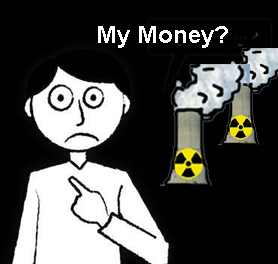 Johnson
On March 22, 2019, the Trump Administration took another step to act on the president’s campaign promise to financially support coal and nuclear power.
The Department of Energy announced that it would be providing a $3.7 billion loan guarantee to the Vogtle Electric Generation Plant located in near Waynesboro Georgia. That brings the total government financing on this project to $12 billion.
President Obama allocated an $8.3 billion loan to complete the Vogtle facility back in 2010 with the goal of constructing of the first new nuclear plant in the U.S. in 30 years. However, since President Obama’s initial loan, cost increases and delays (in part due to a contractor’s bankruptcy) have left the plant unfinished. Yet, taxpayers will now be forced to throw further good taxpayer money after bad.
Our March 22, 2019, blog highlighted how state-level bailout plans for failing nuclear power generation plants are gaining steam in several states, with the administration’s encouragement. The saga at Vogtle Electric underscores the hefty risk taxpayers would incur as bailouts continue across the country. For an administration keen on cutting wasteful government spending, an additional $3.9 billion loan undercuts that commitment and could be the first step toward a larger grid-intervention policy that will cost taxpayers dearly.
A July 19, 2018, report by the Brattle Group estimated it will cost taxpayers $34 billion over two years if every coal and nuclear plant in the country were bailed out as the administration originally proposed. That is a steep price to pay when those funds could be used for more practical measures like strengthening the nation’s energy grid, investing in cyber-protection technologies, or upgrading general infrastructure to bolster the nation’s natural gas supply.
To bailout a power plant that a private corporation has failed to keep within budget and on schedule brings this flawed policy to a new level. The latest announcement from Secretary Perry signals unnecessary political interference in energy markets. A corporation that cannot manage its projects properly doesn’t deserve a federal bailout by taxpayers. Taxpayer dollars are intended to serve the public, not support corporate irresponsibility.
Illinois lawmakers ready t o subsidise nuc lear power stations
 Illinois lawmakers move ahead with bill to benefit nuclear power plants, The Neighbour, By Cole Lauterbach | Watchdog.org, 29Mar19, Illinois lawmakers have set the wheels in motion to allow for power provider Exelon’s nuclear fleet, as well as wind and solar power providers, to sell energy to a state authority that opponents say will give it preferential pricing over coal and natural gas sources.
Japan – Nuclear Energy Policy after the Fukushima Nuclear Accident
DOI: 10.5772/intechopen.83435
The Tokyo Electric Power’s Fukushima Daiichi nuclear accident in 2011 was a turning point for Japan’s nuclear energy and overall energy policy. In reality, Japan has reduced its dependence on nuclear energy drastically despite the government’s policy to maintain nuclear energy as a major power source. Even with sharp drop in production from nuclear energy, Japan could achieve carbon reduction of around 60–70% by 2050 even without nuclear power. But the biggest impact of the Fukushima accident is the loss of public trust. The policy debate on nuclear energy is now divided between “pro” and “anti” of nuclear power. The aim of this study is to analyze why such “polarized debate” has not been resolved and find a way to restore public trust. This study analyzes three important nuclear energy policy issues, i.e., decommissioning of Fukushima Daiichi nuclear plant, spent nuclear fuel and waste management, and plutonium stockpile management. The analysis of these three cases suggest that lack of independent oversight organizations is a common cause of impasse of nuclear energy policy debate. The author argues that Japan needs to establish independent oversight organizations in order to gain public trust and solve important policy issues regardless of the future of nuclear energy………. https://www.intechopen.com/online-first/nuclear-energy-policy-after-the-fukushima-nuclear-accident-an-analysis-of-polarized-debate-in-japan?fbclid=IwAR1UJO5oepfNQeoUK82tXQzZUDRwvP9GQclVPkI2ONiq3dQ56w4LBRhbQIY
As all their “selling points” fail, the nuclear lobby jumps on the climate change bandwagon

Nuclear Energy Institute Seizes on Climate Momentum to Push for Policy Boost
“The answer to the climate crisis won’t be as simple as replacing carbon with renewables and batteries,” according to NEI’s president and CEO. Greentech Media
Korsnick argued that nuclear’s cultural capital is on the rise, helped along by concerns about climate change and calls for 100 percent clean energy, but she suggested the industry needs better federal and state policy to grow.
….. Energy Secretary Rick Perry announced $3.7 billion in additional loan support for the expansion of the Vogtle nuclear plant in Georgia. …..
Vogtle is a polarizing but important point of focus for the nuclear industry’s future. The Georgia expansion is the only large-scale nuclear project underway in the nation — another, V.C. Summer in South Carolina, was canceled in 2017 — and the first to be built in the U.S. in decades. It’s also billions of dollars over budget and significantly behind schedule, in part because key contractor Westinghouse announced Chapter 11 bankruptcy during construction.
……. Korsnick said more states should follow Connecticut, New Jersey, New York and Illinois in allowing nuclear plants to compete as carbon-free sources or receive credits. Efforts to advance similar policies failed in Minnesota and are currently underway in Ohio and Pennsylvania.
Though environmental groups have mixed views on nuclear, groups in both Ohio and Pennsylvania have spoken out against the support packages.
But Korsnick said a boost in conversations around climate action, the Green New Deal and state-level clean energy goals is bringing more positive attention to the technology.
“It’s this realization that 100 percent renewables — it’s not going to happen,” she said.
Not everyone agrees. On Monday, Puerto Rico committed to 100 percent renewables, joining Hawaii and Washington, D.C. Illinois is considering a similar measure. …. https://www.greentechmedia.com/articles/read/nei-climate-momentum-boost-nuclear#gs.35vnl9
Pro nuclear governor and lawmakers to bail out Ohio nuclear plants?
 Bailout chances may be good for FirstEnergy Solutions’ Ohio nuclear plants, Crains Cleveland Business
Ontario’s govt about to sabotage energy saving systems, – in the interests of the nuclear lobby
 Nuclear power company backs Ford government energy plan, Canada’s National Observer , March 21st 2019 Premier Doug Ford’s Progressive Conservative government said on Thursday it will reform Ontario’s electricity system in a bid to reduce costs overall and lower rates for businesses, a move critics say limits the most efficient way to save money in the power grid and threatens thousands of clean energy jobs.
The plan, announced by Energy Minister Greg Rickford, confirm details reported exclusively by National Observer on Wednesday about a series of cuts to programs that were designed to save energy in buildings. …….
Environmental groups and opposition political parties say the moves don’t make economic sense, pointing to the IESO’s estimates that it costs more than four times more to produce nuclear energy than to conserve electricity, with nuclear costs likely to double in coming years.
The IESO estimates that it costs 1.7 cents to save a kilowatt hour (kWh) of electricity while Ontario Power Generation’s (OPG) nuclear electricity costs 8.8 cents per kWh and is forecast to rise to 16.5 cents per kWh by 2025 to pay for the re-building of the Darlington Nuclear Station.
“I’m worried that today’s announcement might set the stage for the abandonment of energy efficiency efforts while going all-in on expensive, outdated nuclear power,” Ontario Green Party Leader Mike Schreiner said in a statement.
Rickford’s plan would also threaten thousands of jobs in companies working on energy efficiency projects, according to Efficiency Canada, a lobby group that represents companies that provide energy efficiency products and services.
Corey Diamond, executive director of Efficiency Canada, said that this field of the economy has the potential to create over 14,000 jobs per year.
“Energy efficiency is the best bang for the buck for the people of Ontario,” said Diamond in a statement. “Scaling back on programs means fewer local jobs in communities across the province,” he said.
The group representing local power distributors also criticized the changes, citing IESO data showing local hydro utilities had saved over 5.8 billion kWh, enough to power more than 640,000 homes for a full year.
Local distribution companies “have made a vital contribution to delivering savings to all customers across Ontario, including families, small businesses, farmers, medium and large businesses,” said Teresa Sarkesian, president and CEO of the Electricity Distributors Association (EDA).
Ontario NDP energy and climate change critic Peter Tabuns said he agreed that the previous government’s plan was disastrous, but said that the Ford government was about to make the situation worse.
“For years, families saw their utility bills skyrocket under the Wynne Liberals and were left struggling to make ends meet each month,” Tabuns said. “Instead of making things better, and dropping the disastrous Liberal hydro borrowing scheme, the Conservatives are ripping up programs that help everyday families save money on their utility bills, so families and businesses will see their bills jump, yet again.” https://www.nationalobserver.com/2019/03/21/news/nuclear-power-company-backs-ford-government-energy-plan
1 This Month
Tell Congress: Prevent Nuclear Catastrophe in Iran

Tell Congress: Prevent Nuclear Catastrophe in Iran

Read the Public Inquiry Report, the Commissioners’ report, Surrendering Australia: The AUKUS Deception is available to download for free at aukuspublicinquiry.com. Or just watch the replay of the National Press Club Luncheon.


Shut down the radiation-damaged Heysham nuclear reactors now
To see nuclear-related stories in greater depth and intensity – go to https://nuclearinformation.wordpress.com

Say No to NASA’s Reckless Nuclear Reactor on the Moon
Say No to NASA’s Reckless Nuclear Reactor on the Moon
-
Archives
- November 2026 (246)
- October 2026 (302)
- September 2026 (339)
- August 2026 (330)
- July 2026 (355)
- June 2026 (287)
- May 2026 (306)
- April 2026 (356)
- March 2026 (251)
- February 2026 (267)
- January 2026 (308)
- December 2025 (358)
-
Categories
- 1
- 1 NUCLEAR ISSUES
- business and costs
- climate change
- culture and arts
- ENERGY
- environment
- health
- history
- indigenous issues
- Legal
- marketing of nuclear
- media
- opposition to nuclear
- PERSONAL STORIES
- politics
- politics international
- Religion and ethics
- safety
- secrets,lies and civil liberties
- spinbuster
- technology
- Uranium
- wastes
- weapons and war
- Women
- 2 WORLD
- ACTION
- AFRICA
- Atrocities
- AUSTRALIA
- Christina's notes
- Christina's themes
- culture and arts
- Events
- Fuk 2022
- Fuk 2023
- Fukushima 2017
- Fukushima 2018
- fukushima 2019
- Fukushima 2020
- Fukushima 2021
- general
- global warming
- Humour (God we need it)
- Nuclear
- RARE EARTHS
- Reference
- resources – print
- Resources -audiovicual
- Weekly Newsletter
- World
- World Nuclear
- YouTube
-
RSS
Entries RSS
Comments RSS

