ABC News 28 Feb 19 Pakistan’s Prime Minister Imran Khan will stage an emergency parliamentary session and meet with the body in control of Islamabad’s nuclear arsenal in response to India’s first air strikes on Pakistan since 1971.
Key points:
- Indian fighter jets struck an area 50 kilometres into Pakistan on Tuesday
- India said the strike was in response to a terrorist attack that killed 44 Indian police
- Pakistan said its own warplanes had scattered Indian jets, forcing them to drop their payload over uninhabited areas
The two nuclear-armed neighbours have fought three wars since partition in 1947, and the majority of them have been over Kashmir — a territory both India and Pakistan claim in full…….https://www.abc.net.au/news/2019-02-27/imran-khan-stages-meetings-response-to-indian-air-strikes/10853290
March 2, 2019
Posted by Christina Macpherson |
Pakistan, politics |
Leave a comment
THE BIG PICTURE: Japan’s Nuclear Comeback [excellent graphic on original] https://www.powermag.com/the-big-picture-japans-nuclear-comeback/
03/01/2019 | Sonal Patel After the Great Tohoku Earthquake and tsunami, and ensuing crisis at the Fukushima Daiichi nuclear plant in March 2011, Japan issued stringent safety regulations and reviews that affected its entire 50-reactor fleet. It meant that as each Japanese nuclear reactor entered its scheduled maintenance and refueling outage, it could not returned to operation until restart was approved by both Japan’s Nuclear Regulation Authority (NRA) and the central government. Nuclear operators also need consent from governments of local prefectures.
Between September 2013—when Ohi 3 and 4 were shut down—and August 2015, when Sendai 1 and 2 restarted, Japan’s entire reactor fleet went black. In 2013, though there was no consensus on how long the approval process could take, some industry observers forecast reactors under NRA review could be back online within a year. As of December 2018, only nine reactors had restarted. Sixteen others were under review by the NRA, where average review duration stretched beyond 1,000 days, owing to staffing issues. Japan’s fleet of operable reactors, meanwhile, has dwindled to 38, owing to announced retirements.
According to Japan’s Institute of Energy Economics, safety investment costs for the current fleet were estimated at 4.4 trillion yen ($39 billion today) as of April 2018. “Given that detailed designs are still left undecided for severe accident management facilities at some plants, the estimated costs may increase further as safety examinations make progress.”
March 2, 2019
Posted by Christina Macpherson |
Japan, politics |
Leave a comment
Levin, Amash say Saudi Arabia must not be allowed to build a nuclear bomb https://www.freep.com/story/news/local/michigan/2019/03/01/saudi-arabia-nukes-andy-levin/3017833002/
“We cannot allow a civilian nuclear deal with Saudi Arabia to create a pathway to a nuclear bomb, period,” Levin said. “Recent events, including the horrific murder of Jamal Khashoggi, have made it all the more clear why we must insist on the highest possible nonproliferation standard.”
The House resolution mirrors one already introduced in the Senate by Sen. Jeff Merkley, D-Ore. Khashoggi, a Washington Post columnist, was murdered inside the Saudi consulate in Istanbul last year.
In February, the House Committee on Oversight and Reform released a report indicating that Trump administration officials had pushed for a plan to build nuclear power plants in Saudi Arabia despite concerns that doing so could violate federal law.
The committee report suggested some people involved in the effort were interested in financial gain.
The transfer of nuclear technology is typically approved through a closely regulated process and a nuclear cooperation agreement signed off on by Congress.
Levin, who is a member of the House Foreign Affairs Committee, said that if such a deal is developed, it must include rules that prohibit Saudi Arabia from enriching uranium or separating plutonium or any other activities that could result in weapons-grade material.
March 2, 2019
Posted by Christina Macpherson |
politics, USA |
Leave a comment
|
A resolution offering support to Utah cities considering nuclear energy is headed to the governor. Environmentalists oppose it. The Salt Lake Tribune, By Taylor Stevens, 1 Mar 19,
A bill that would offer support to Utah cities participating in a project to add nuclear energy to their power portfolios received final passage in the House on Wednesday.
|
|
March 2, 2019
Posted by Christina Macpherson |
politics, USA |
Leave a comment

|
 A resolution offering support to Utah cities considering nuclear energy is headed to the governor. Environmentalists oppose it. The Salt Lake Tribune, By Taylor Stevens, 1 Mar 19, A resolution offering support to Utah cities considering nuclear energy is headed to the governor. Environmentalists oppose it. The Salt Lake Tribune, By Taylor Stevens, 1 Mar 19,
A bill that would offer support to Utah cities participating in a project to add nuclear energy to their power portfolios received final passage in the House on Wednesday.
|
|
March 2, 2019
Posted by Christina Macpherson |
politics, USA |
Leave a comment
https://www.counton2.com/news/local-news/berkeley-county-news/santee-cooper-continues-search-for-new-owner-after-failed-nuclear-project/1820291050 MONCKS CORNER, SC – A special legislative committee is looking into what to do with state-owned utility, Santee Cooper.
The company is in billions of dollars in debt because of the failed nuclear reactor project in Fairfield County.
The State newspaper reports that this week the committee authorized co-chairmen State Senator Paul Campbell of Charleston and State Representative Murrell Smith of Sumter to hire an outside consultant.
That hire will eventually evaluate bids to buy Santee Cooper and negotiate with those potential buyers.
March 2, 2019
Posted by Christina Macpherson |
business and costs, politics, USA |
Leave a comment

These assertions stand scientific consensus on its head. Most experts say to the contrary that even low doses of radiation cause cell damage that years later can promote uncontrolled cell growth and replication, and that children and fetuses are particularly susceptible to harm. That seven-decade-old view was reaffirmed as recently as last April in a study by a congressionally chartered nonprofit organization, the National Council on Radiation Protection and Measurement.
The study, overseen by a dozen experts from the government, academia, and industry, and funded by the NRC, considered 29 contemporary scientific studies of the effects of low-dose radiation in reaffirming that even low-level radiation should be avoided to the extent possible.
 RADIATION IS GOOD FOR YOU? THE FRINGE VIEWPOINT GAINS GROUND IN THE TRUMP ADMINISTRATION, https://publicintegrity.org/national-security/radiation-is-good-for-you-the-heretical-view-gains-ground-under-trump/The Nuclear Regulatory Commission is actively considering claims that low-dose radiation protections should be lifted because exposures make you healthier, a potential boon to radiation-related industries.
Since World War II, virtually every American business where radiation is present – hospital emergency rooms and cancer wards, uranium mines, nuclear power plants, and others – has operated under rules generally requiring that exposures be kept as low as possible. The rules are based on a widely-accepted scientific dicta that even small amounts of extra radiation can be harmful to human health.
Following those rules, though, is costly and often cumbersome, and so the requirement for low-dose radiation protections – known as the ALARA standard for “as low as reasonably achievable” – has long been annoying to a large swath of American industry. Estimates of the costs associated with these protections run into the billions of dollars.
Until the Trump era, opponents of the rules have gotten little traction in trying to upend low-dose radiation protections – such as isolation units, elaborate shielding, specialized air cleaners, and elaborate worker training — in federal regulations. But proposed relaxations have been percolating in recent months, courtesy of a little-known advocacy group called Scientists for Accurate Radiation Information, or SARI.
 Members of the group, which claims its ideas have been wrongly dismissed and belittled by mainstream scientists, subscribe to a minority theory known as “hormesis.” It defies conventional wisdom by holding that damaging things that are dangerous in high doses might actually be beneficial to human health in small doses.
Despite swimming against the tide in the past, one of the group’s members has just been appointed to head a Radiation Advisory Panel at the Environmental Protection Agency, which helps set federal standards for radiation doses received by the public and by workers. And several of its recommendations to ease radiation protections are presently under active consideration by the Nuclear Regulatory Commission.
SARI’s members typically have more day-to-day connections to radiation than others, and potentially more influence: They have held jobs connected to radiation protection at the EPA, the Department of Labor, the Energy Department and its sub-agency responsible for building nuclear weapons at nine factories across the country. Practitioners of nuclear medicine, people employed in the nuclear industry, and professors who teach nuclear medicine or industrial hygiene also populate SARI.
The NRC’s consideration of the SARI views got started when three members of the group petitioned it in 2015 to abandon its current approach and accept that radiation in low doses is not only benign, but improves health. That was two years after SARI’s founding by industry officials trying to tamp down public concerns about the radiation that spilled from the 2011 Fukushima nuclear disaster.
The NRC took the petitions seriously. Its staff created a working group to study the issue, and insiders now say that work is done. According to Scott Burnell, an NRC spokesman, the five members of the commission as a result will take up the issue this spring. Continue reading →
February 28, 2019
Posted by Christina Macpherson |
politics, radiation, Reference, spinbuster |
1 Comment
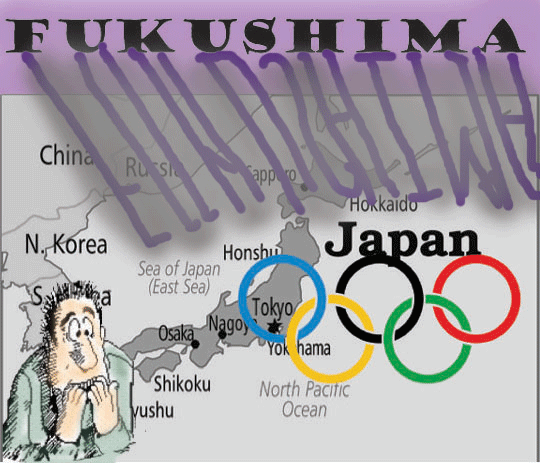
Reconstruction Olympics’ theme said not to have gathered momentum https://www.japantimes.co.jp/news/2019/02/27/national/reconstruction-olympics-theme-said-not-gathered-momentum/#.XHcN_IkzbGg KYODO AOMORI – Half of 42 municipalities in northeastern Japan hit by a massive earthquake in 2011 said the public is not fully aware of the government’s efforts to showcase the region’s recovery from the disaster through the 2020 Tokyo Olympics, a Kyodo News survey showed Wednesday.
The heads of 21 local governments in Fukushima, Iwate and Miyagi prefectures said in the survey that the “reconstruction Olympics” theme has yet to fully catch on among the public.
Asked whether the slogan has gained public attention, two mayors said “it has not” while 19 mayors said “it mostly has not.” Eighteen said “it has a little” and two said “it has.” The remaining municipality — the Fukushima city of Soma — did not answer.
“The phrase ‘reconstruction Olympics’ was thought up but no substantial progress has been made and the affected areas feel left behind,” said an official of the town of Minamisanriku in Miyagi Prefecture. “We have limited manpower and cannot spare personnel for Olympic events.”
“The sporting event will be held under the banner of the ‘reconstruction Olympics’ but venues are centered on Tokyo,” said an official of Otsuchi, Iwate Prefecture.
The Tokyo Organising Committee has promoted projects involving the disaster-stricken areas, such as holding baseball and softball games in Fukushima and starting the Japan leg of the Olympic torch relay in the prefecture, which was hit by a nuclear crisis in the wake of the earthquake and subsequent tsunami.
Before the relay, the flame will be displayed in the three northeastern prefectures. The Fukushima city of Iwaki expressed appreciation over the move to highlight the recovery of the affected areas in the Summer Olympics. “Fukushima will be hosting some games and the torch relay will start here. We have been given certain roles to play,” a city official said.
Asked what they expect from the Tokyo Games in a multiple-choice question, the biggest group, of 36 mayors, picked “promoting our progress toward recovery,” while 20 mayors, mainly from Fukushima, chose “overcoming reputational damage.”
“We want to use the Olympics as a chance to regain sales channels for our farm products,” said an official of the Fukushima town of Namie.
Hisashi Sanada, a professor of the anthropology of sport and Olympic history at the University of Tsukuba, said efforts by the central government and the organizing committee to promote reconstruction through the sporting event were “not enough.”
“The state needs to explain in detail to municipalities what kind of support it can offer, and the local governments should also rack their brains about how to link (the Olympics) to regional development,” Sanada said.
February 28, 2019
Posted by Christina Macpherson |
Japan, politics, spinbuster |
Leave a comment
Trump Selling Nuclear Technology to Saudi Arabia Is a New Moral Low, Inderjeet Parmar, The Wire, 27 Feb 19
In doing so, he has declared the return of great power global rivalries, with China and Russia as the biggest threats to US power.
The Trump administration’s plan to sell nuclear technologies to the Saudi Arabian regime is a case study in the decay of American imperial power, the essential corruption of the Trump White House and the self-serving and reckless character of the military-industrial complex. After two years of this administration, it is shocking, if unsurprising, that President Trump shows flagrant disregard for the law, is hypocritical with regard to his claimed desire to ‘drain the swamp’ of big money lobbying and is enabling the intensified militarisation of great power geopolitical rivalries.
In so doing, Trump has accelerated longer-term trends begun under successive previous presidents since the end of Second World War. He has declared the return of great power global rivalries, with China and Russia as the biggest threats to US power.
But Trump is not alone in this drive to further destabilisation: the Saudis have also shortlisted Russia, China, France and South Korea to bid for nuclear contracts. Russia has already signed nuclear power agreements or understandings with Egypt, Jordan and Turkey. And China’s Belt and Road Initiative features plans to build nuclear plants in dozens of countries on the Silk Road; China has signed nuclear cooperation agreements with Saudi Arabia, Egypt, Armenia and the UK.
There have been reports that Russian and Chinese firms would cooperate with other states’ nuclear plans in West Asia, including Trump’s, but that Obama-era US sanctions on Russia stood in the way. If taken seriously by the numerous investigating bodies focused on the Trump White House, this may well prove to be a key driver of Trump’s relatively non-hostile rhetoric towards President Putin.
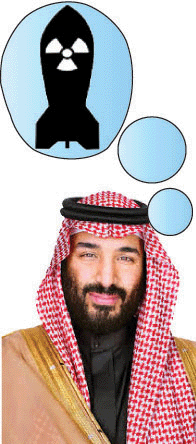
But this ramped up cooperative competition for markets and contracts, and other pending arms deals, may also explain the immediate reasons why the Republican president ignored CIA intelligence that Saudi Crown Prince Mohammed bin Salman had ordered and directed the killing and dismemberment of regime critic and Washington Post columnist Jamal Khashoggi.
The gruesome killing of the journalist – a member of Trump’s “enemy of the people” fake media, as opposed to his supporters at Fox News – could hardly be expected to hold up the brutal jockeying for advantage in the world’s most volatile – and tragic – region.
An interim report by the Democrat Elijah Cummings-chaired House Committee on Oversight and Reform, based largely on credible whistleblower accounts – including emails and other documents from within the White House itself – suggests that Trump and his trusted lieutenants, in particular, Jared Kushner, regardless of legal advice to the contrary, are finalising plans that may violate the Atomic Energy Act 1954, which provides powers to Congress to oversee the sale and use of nuclear technologies……..
Conflicts of interest abound in this matter. Trump acolytes are looking to make billions of dollars by winning fees, commissions and contracts in Saudi Arabia. What is sold as an attempt to make Saudi Arabia less reliant on fossil fuels for revenues, and more secure against regional powers like Iran and Syria, appears to be a rather unsubtle money grab. At the centre of the controversy is IP3 International, a firm whose leadership reads like the membership list of the morally and intellectually bankrupt military-industrial complex. Its name, according to its website, is an abbreviation for ‘international peace, power and prosperity’.
Before digging a little deeper into IP3 International, it’s worth looking at where within the Trump camp this scheme originated and developed. Retired General Michael Flynn’s name is all over this plan. His Flynn Intel Group consultancy is closely linked with IP3 International’s plan to build dozens of nuclear reactors in Saudi Arabia and across the Gulf states. Flynn pushed the Saudi plan before and after the 2016 election, once he was named national security adviser and even after he had been dismissed for lying about his discussions with the Russian ambassador about US sanctions; he’s currently awaiting sentencing for lying to the FBI, among other things.
Kushner, Trump’s son-in-law, troubleshooter and West Asia peace envoy, has been praising and protecting the Saudi crown prince as some sort of Kemal Ataturk-like visionary set to drag the kingdom and the region into the 21st century. Kushner has links with Westinghouse Electric Company – a nuclear services breakaway from the original Westinghouse Electric Corporation – and its current major shareholder, Brook Asset Management, which is closely linked with IP3 International.
Trump’s inauguration lead and close confidant, Tom Barrack, was reported by the New York Times as having raised investments topping $7 billion since Trump’s nomination, with a quarter of that deriving from the UAE and Saudi Arabia. Barrack justified his and the Trump administration’s business dealings with Saudi Arabia by praising the economic vision of the kingdom’s “young, brilliant new leader”. He justified the killing of Khashoggi thus: “Whatever happened in Saudi Arabia, the atrocities in America are equal or worse than the atrocities in Saudi Arabia.” Skullduggery, falsehood and self-interest justified by a self-serving admission of truth, while Trump’s brutal anti-immigrant policies and defence of police killings continue apace.
IP3 International and Flynn Intel Group are core drivers of the programme, as are ACU Strategic Partners – a nuclear power consultancy led by Alex Copson, who was advised by Michael Flynn; and Colony NorthStar, Tom Barrack’s real estate investment firm.
IP3 International’s leadership team is almost a case study of the military-industrial complex. Of its leadership team of 21, there are five retired US generals and four retired US Navy admirals. Among its three co-founders are General John ‘Jack’ Keane and Robert ‘Bud’ McFarlane. An architect of Reagan’s Star Wars nuclear programme, McFarlane is a convicted felon from the Iran-Contra scandal – found guilty of illegally selling arms to Iran during the Iran-Iraq war to illegally fund the Contras fighting the revolutionary-democratic Sandinista administration in Nicaragua. Congress had banned US aid to the Contras at the time. McFarlane spends some of his time promoting US wars via the Committee on the Present Danger. He is a non-executive director of the British military corporation Aegis Defence Services, which has ‘offices’ across West Asia.
General Keane retired from the military in 2003, became an analyst with Fox News and advised on the US occupation of Iraq. He was an architect, along with Fred Kagan, of the murderous 2007 “surge” in Iraq. Keane is a director of General Dynamics, consultant-advisor for the Erik Prince-founded private military company Blackwater, now called Academi, and executive chair of the Humvee manufacturer AM General.
Finally, ambassador Denis Ross is on IP3 International’s advisory board. Ross, a Democrat, has faithfully served American imperial power for decades – under both Republican and Democratic presidents. IP3 International opens its coffers and serves both parties. Ross is an arch-Zionist, indeed named as such in Walt and Mearsheimer’s The Israel Lobby as a key supporter of AIPAC. He advised Hillary Clinton on West Asian affairs, and considers the Saudi crown prince a true “revolutionary”……….
Kushner heads off to West Asia in the final days of this month to continue discussions on the nuclear programmes. President Trump is reported to have attended a meeting on February 12 at the White House with private nuclear corporations including Westinghouse, General Electric, and AECOM, “led by General Keane… ,” according to the congressional report.
The military-industrial complex has made the US government and geopolitical interests inseparable from their own personal and corporate interests. A remarkable March 4, 2017 email from McFarlane to the National Security Council’s Derek Harvey, titled “We’re Very Close to Losing Our Position in the Middle East” and reproduced in the House committee’s interim report, makes this all too clear……..https://thewire.in/world/trump-selling-nuclear-technology-to-saudi-arabia-is-a-new-moral-low
February 28, 2019
Posted by Christina Macpherson |
business and costs, politics, secrets,lies and civil liberties |
Leave a comment
 Why proposals to sell nuclear reactors to Saudi Arabia raise
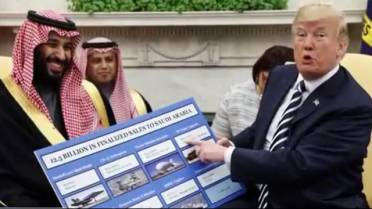
 red flags, The Conversation, Chen Kane,Director, Middle East Nonproliferation Program, Middlebury, February 23, 2019 According to a congressional report, a group that includes former senior U.S. government officials is lobbying to sell nuclear power plants to Saudi Arabia. As an expert focusing on the Middle East and the spread of nuclear weapons, I believe these efforts raise important legal, economic and strategic concerns.
It is understandable that the Trump administration might want to support the U.S. nuclear industry, which is shrinking at home. However, the congressional report raised concerns that the group seeking to make the sale may have have sought to carry it out without going through the process required under U.S. law. Doing so could give Saudi Arabia U.S. nuclear technology without appropriate guarantees that it would not be used for nuclear weapons in the future.
A competitive global market
Exporting nuclear technology is lucrative, and many U.S. policymakers have long believed that it promotes U.S. foreign policy interests. However, the international market is shrinking, and competition between suppliers is stiff.
Private U.S. nuclear companies have trouble competing against state-supported international suppliers in Russia and China. These companies offer complete construction and operation packages with attractive financing options. Russia, for example, is willing to accept spent fuel from the reactor it supplies, relieving host countries of the need to manage nuclear waste. And China can offer lower construction costs.
Saudi Arabia declared in 2011 that it planned to spend over US$80 billion to construct 16 reactors, and U.S. companies want to provide them. Many U.S. officials see the decadeslong relationships involved in a nuclear sale as an opportunity to influence Riyadh’s nuclear future and preserve U.S. influence in the Saudi kingdom.
Why does Saudi Arabia want nuclear power?
With the world’s second-largest known petroleum reserves, abundant untapped supplies of natural gas and high potential for solar energy, why is Saudi Arabia shopping for nuclear power? Some of its motives are benign, but others are worrisome. ………..
US nuclear trade regulations
Under the U.S. Atomic Energy Act, before American companies can compete to export nuclear reactors to Saudi Arabia, Washington and Riyadh must conclude a nuclear cooperation agreement, and the U.S. government must submit it to Congress. Unless Congress adopts a joint resolution within 90 days disapproving the agreement, it is approved. The United States currently has 23 nuclear cooperation agreements in force, including Middle Eastern countries such as Egypt (approved in 1981), Turkey (2008) and the United Arab Emirates (2009).
The Atomic Energy Act requires countries seeking to purchase U.S. nuclear technology to make legally binding commitments that they will not use those materials and equipment for nuclear weapons, and to place them under International Atomic Energy Agency safeguards. It also mandates that the United States must approve any uranium enrichment or plutonium separation activities involving U.S. technologies and materials, in order to prevent countries from diverting them to weapons use.
American nuclear suppliers claim that these strict conditions and time-consuming legal requirements put them at a competitive disadvantage. But those conditions exist to prevent countries from misusing U.S. technology for nuclear weapons. I find it alarming that according to the House report, White House officials may have attempted to bypass or sidestep these conditions – potentially enriching themselves in the process.
According to the congressional report, within days of President Trump’s inauguration, senior U.S. officials were promoting an initiative to transfer nuclear technology to Saudi Arabia, without either concluding a nuclear cooperation agreement and submitting it to Congress or involving key government agencies, such as the Department of Energy or the Nuclear  Regulatory Commission. One key advocate for this so-called “Marshall Plan” for nuclear reactors in the Middle East was then-national security adviser Michael Flynn, who reportedly served as an adviser to a subsidiary of IP3, the firm that devised this plan, while he was advising Trump’s presidential campaign.
The promoters of the plan also reportedly proposed to sidestep U.S. sanctions against Russia by partnering with Russian companies – which impose less stringent restrictions on nuclear exports – to sell reactors to Saudi Arabia.
Flynn resigned soon afterward and now is cooperating with the investigation into Russian interference in the 2016 campaign. But IP3 access to the White House persists: According to press reports, President Trump met with representatives of U.S. industry, a meeting organized by IP3 to discuss nuclear exports to Saudi Arabia as recently as mid-February 2019……..https://theconversation.com/why-proposals-to-sell-nuclear-reactors-to-saudi-arabia-raise-red-flags-112276
February 25, 2019
Posted by Christina Macpherson |
business and costs, politics, politics international, Saudi Arabia, USA, weapons and war |
1 Comment
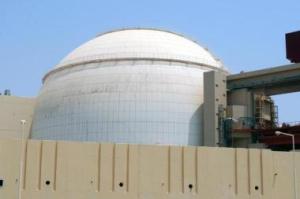 Financial Future Of Iranian Nuclear Power Plant In Question, February 24, 2019, Radio Farda
While the parliament weighs President Hassan Rouhani’s budget for the new Iranian year (beginning March 21), senior officials at the Atomic Energy Organization of Iran (AEOI) have complained of the “minimal” budget allocated to the Bushehr nuclear power plant.The head, deputy head, and spokesman for AEOI have all criticized the government, saying the budget allocated to the plant in southern Iran is so low that it endangers the future of the nuclear reactor.
The Energy Ministry “pays peanuts” for electricity produced at Bushehr, AEOI and former Foreign Minister Ali Akbar Salehi said on February 23. “For each kilowatt per hour of electricity produced at Bushehr, ME pays half a cent but exports electricity for nine cents,” he said.
Speaking at an industrial seminar, Salehi said, “The electricity produced at Bushehr reactor is bought for $40 million, while the annual budget needed for running the plant is $120 million. There’s a deficit of $80 million for which we don’t know how to compensate.”
Iran is currently suffering from an acute economic crisis and has been unable to issue a budget for the upcoming Iranian fiscal year. U.S. economic sanctions have halved Iran’s oil exports, which provide the hard currency needed for government operations.
AEOI spokesman Behrooz Kamalvandi says that given the budget allocated to Bushehr, the fate of Iran’s only nuclear power plant now hangs in the balance.
Bushehr’s construction started during the reign of Shah Mohammad Reza Pahlavi in 1975 by Kraftwerk Union, a Siemens company, along with several other German firms.
Following the downfall of the monarchy, work on the nuclear reactor ground to a halt.
A veteran Iranian diplomat and former foreign minister, Abbas Khalatbari, was executed by firing squad in April 1979 for charges that included signing a contract with Germany for the power plant’s construction.
However, in 1988, Russia signed a contract with Iran to complete the project……..
Based on a parliamentary motion endorsed by the parliament 14 years ago, the Iranian government is obliged to construct 13 more plants with output similar to Bushehr’s.
Opponents have long insisted that since Iran is rich in oil and natural gas resources and poor in uranium ore deposits, the viability of its nuclear program is questionable. …….. https://en.radiofarda.com/a/financial-future-of-irn-nuclear-power-plant-uncertain-salehi/29787790.html
February 25, 2019
Posted by Christina Macpherson |
business and costs, Iran, politics |
Leave a comment
A winner: Alexandria Ocasio-Cortez’s Green New Deal, Independent Australia
By
Dr Steven Hail | 24 February 2019,
The Green New Deal offers a unique chance to stop the worst effects of climate change, writes Dr Steven Hail.YOU MUST HAVE noticed the emergence of a new political phenomenon in Washington D.C. – Alexandria Ocasio-Cortez. The youngest ever Congresswoman – she has the values, the attitude and the agenda you might expect from a progressive millennial from the Bronx. More than that, she has charisma. For many of us, she is a beacon of hope.
For the Trumpian Republicans, she is their worst nightmare.
Her most important contribution so far is the Green New Deal. Its objective is to, finally, confront the threat of imminent and potentially catastrophic climate change, and the role the U.S. economy and its energy system are playing in driving global carbon emissions and the resulting apparently inexorable increase in the concentration of carbon dioxide and other greenhouse gases in our atmosphere.
You have probably read numerous articles referring to the Green New Deal – some enthusiastic and supportive; some (from the conservative side, and what a misnomer the word “conservative” is when used to refer to destructive climate change deniers) aggressively dismissive; and some (from the establishment democrat side) affirming its ideals, but bemoaning its lack of realism, and offering to devise a more “pragmatic” approach.
What does the Green New Deal actually involve? You can read it for yourself. It is House Resolution 109 in the 116th Congress (2019-20).
This resolution accepts the evidence from climate scientists that climate change is driven by human activity. It accepts that warming of more than two degrees over pre-industrial levels will have a series of catastrophic consequences, which it lists. It accepts the scientific evidence that major emissions reductions are needed within ten years and that net-zero emissions worldwide must be achieved within thirty years if we are to be confident of avoiding this outcome……..https://independentaustralia.net/environment/environment-display/a-winner-alexandria-ocasio-cortezs-green-new-deal,12393
February 25, 2019
Posted by Christina Macpherson |
politics, USA |
Leave a comment
Nuclear energy is not the same as clean energy https://chicago.suntimes.com/opinion/illinois-clean-energy-policy-nuclear-energy/ Gail Snyder, board president, Nuclear Energy Information Service , 21 Feb 19, “…… While legislation advancing renewable energy and energy efficiency is to be applauded, the $2.3 billion bailout to three privately owned Exelon nuclear energy facilities should be evaluated for its costs and the impact on expanding renewable energy. Of course, legislators should do so promptly, as it seems Exelon did so well with their last bailout that they are going to come back for another.

As energy legislation hits Springfield again, the public will be inundated with the terms “clean,” “renewable,” “green,” “low carbon,” “carbon neutral,” “carbon free,” “non-carbon,” and “net-zero emissions.” These terms will be used interchangeably, which only serves to confuse this fact: Nuclear waste and radioactive releases are not part of the calculus when the nuclear industry and others try to sell nuclear energy as “clean.” It is not.
Legislation that speaks only to “clean” as it relates to managing carbon emissions, without considering the 10,000 tons of nuclear waste in Illinois (the most nuclear waste of any state) is misleading. Also, consideration of the entire nuclear fuel cycle and storage of nuclear waste is carbon- intensive, which is not part of the “clean” calculus either.
We would also like to see Illinois legislators ‘step in’ again on energy policy, but this time with both the “carbon footprint” and the “nuclear footprint” included.
February 23, 2019
Posted by Christina Macpherson |
politics, spinbuster, USA |
Leave a comment
|
Trump administration ‘pushing Saudi nuclear deal’ which could benefit company linked to Jared Kushner
Congressional report cites ‘abnormal acts’ in White House regarding proposal to build reactors in kingdom, The Independent UK Tom Embury-Dennis20 Feb 19. Senior Trump administration officials pushed a project to share nuclear power technology with Saudi Arabia over the objections of ethics officials, according to a congressional report, in a move that could have benefitted a company which has since provided financial relief to the family of Jared Kushner.
Citing whistleblowers within the US government, the report by the Democrat-led House oversight and reform committee alleges “abnormal acts” in the White House regarding the proposal to build dozens of nuclear reactors across the kingdom.
The committee on Tuesday opened an investigation into the allegations, which include concerns over whether White House officials in the early months of the Trump administration sought to work around national security procedures to push a Saudi deal that could have financially benefited close supporters of the US president.
According to the report, the nuclear effort was pushed by former national security adviser Michael Flynn, who was fired in early 2017 and is awaiting sentencing for lying to the FBI in the Russia investigation.
Derek Harvey, a National Security Council official brought in by Flynn, continued work on the proposal, which has remained under consideration by the Trump administration.
Relying on the whistleblower accounts, email communications and other documents, the committee’s report details how National Security Council and ethics officials repeatedly warned the actions of Flynn and a senior aide could run afoul of federal conflicts of interest law and statutes governing the transfer of nuclear technology to foreign powers.
The report also notes one of the power plant manufacturers that could benefit from such a deal includes Westinghouse Electric, a subsidiary of Brookfield Asset Management, a company which struck a deal in August to rescue the Kushner family’s 666 Fifth Avenue tower in Manhattan from massive debts.
Detailing the White House’s continued efforts to promote the deal, the report highlights how in May, energy secretary Rick Perry told a congressional committee he “tried to really drive home” to Saudi Arabia how “you have to use Westinghouse” for “the best reactors in the world”.
It also notes Mr Kushner, the president’s son-in-law and adviser, allegedly remains “directly involved” with those efforts, and that he would be travelling to Saudi Arabia in late February to “share elements of the economic plan” of a US peace proposal in the Middle East. …….. https://www.independent.co.uk/news/world/americas/us-politics/trump-administration-saudi-arabia-nuclear-deal-jared-kushner-666-fifth-avenue-westinghouse-a8787786.html
|
|
February 21, 2019
Posted by Christina Macpherson |
politics, Russia, secrets,lies and civil liberties |
Leave a comment