GDF Watch 17th March 2019 The sociopolitical challenges RWM faces were starkly revealed by the
community sector’s response to a recent major Government funding
announcement. Their reaction suggests that the package of GDF-related
investment and other funding, while being ‘necessary’, is not
necessarily ‘sufficient’ to secure a community’s consent to start
initial discussions or formally enter the siting process. At the forefront
of the sectors’ concerns is ‘collaboration’, and more active
involvement in shaping policy and how it is implemented. This aspiration,
particularly in the context of a ‘consent-based’ siting process, is
likely to become a key area of discussion as RWM seeks to build awareness,
trust and confidence with communities. The evidence for this analysis can
be found in the community/civil society sector reaction to the
Government’s recent £1.6 billion ‘Stronger Towns Fund’ announcement.
Instead of welcoming the extra cash, across the board there was frustration
and concern that once again there had been no consultation with those
affected, that this was another top-down solution, and was throwing good
money at bad means of delivering real benefits to communities.
http://www.gdfwatch.org.uk/2019/03/17/to-consult-or-to-collaborate-that-is-the-community-question/
March 20, 2019
Posted by Christina Macpherson |
politics, UK |
Leave a comment
Dave Toke’s Blog 17th March 2019, Labour’s energy spokesperson, Rebecca Long-Bailey, having previously pledged to put renewable energy on top of the energy agenda has now relegated it far below nuclear power. They have done this with a pledge to take partial state ownership of new nuclear power projects and saying they will do this for nuclear projects that have been abandoned. But giving state priority to these projects, far from keeping the lights on will actually ruin the chances of aspiring renewable energy generators.
The figures speak for themselves. Bailey pledges to reverse what she calls the Government’s ‘cancellations’ of new nuclear projects (Moorside, Oldbury, Wylfa) (factcheck; it was the developers who cancelled them despite being promised tens of billions of state aid). If these projects are brought on line (in addition to the existing Sizewell B and still-not-cancelled projects of Hinkley C and Sizewell C) then nuclear generation will climb to at least 35 per cent of current generation – and even that does not count the Chinese led project at Bradwell.
Meanwhile renewable energy generated 33% of UK electricity in 2018, a figure that, with the recently announced ‘sector deal’ for offshore wind, will increase to around 65% by 2030 even without any more onshore wind and solar pv which the Labour Party claims to support. It doesn’t need a mathematical genius to work out that with 35% coming from nuclear power, there simply will not be any market space for any more renewable energy.
Yet renewable energy, as we have discussed is cheap, becoming cheaper, and needs little or no public subsidy – a big contrast with nuclear, which despite all the promised support, high consumer subsidies, public guarantees of loan funding (none of which is available for new renewable schemes) has failed so far to generate a single kWh. And it will not until at least 2026 even if EDF’s schedules for Hinkley C construction prove (miraculously in the light of recent nuclear construction history) to be achievable………..
Labour have come out with a daft policy that threatens to take us back to the dinosaur age by comparison.
I really hate to say this, but because the Tories have actually (so far) stopped short of the financial insanities involved in getting all of the projected new more nuclear power stations online and are thus leaving some space for new renewable energy schemes, there is actually a plausible argument to say that now, compared to Labour’s new policy position the Conservative Party policy actually favours renewable energy more than Labour! http://realfeed-intariffs.blogspot.com/2019/03/labour-undermines-renewable-energy.html
March 20, 2019
Posted by Christina Macpherson |
politics, UK |
Leave a comment
FROM JOSEPH FARAH’S G2 BULLETIN
DEMS PROPOSE U.S. GIVE UP FIRST-STRIKE NUCLEAR OPTION https://www.wnd.com/2019/03/dems-propose-u-s-give-up-first-strike-nuclear-option/ Plan would pledge to use nukes only in response to attack
18 Mar 19, Democrats are proposing in Congress that the United States give up the option for a nuclear first strike – for any reason, reports Joseph Farah’s G2 Bulletin.
The policy for decades deliberately has been one of “calculated ambiguity.” It stemmed from a Cold War era in which the U.S. and NATO faced “numerically superior” Soviet and Warsaw Pact conventional forces in Europe, explains a document prepared by the Congressional Research Service.
“At the time, the United States not only developed plans to use nuclear weapons on the battlefield to disrupt or defeat attacking tanks and troops, but it also hoped that the risk of a nuclear response would deter the Soviet Union from initiating a conventional attack. This is not because the United States believed it could defeat the Soviet Union in a nuclear war, but because it hoped the Soviet Union would know that the use of these weapons would likely escalate to all-out nuclear war, with both sides suffering massive destruction.”
That policy of ambiguity has been continued, with even the Obama administration promising that the U.S. “would only consider the use of nuclear weapons in extreme circumstances,” far short of a promise never to use them first.
Democrats now are demanding to change that.
Sen. Elizabeth Warren, D-Mas., and Rep. Adam Smith, D-Wash., have proposed legislation, S. 272 and H.R. 921, that would adopt the statement: “It is the policy of the United States to not use nuclear weapons first.”
Other members of Congress are divided,” the report from the CRS explained, with Sen. Deb Fischer, R-Neb., warning the Democrats’ plan “betrays a naïve and disturbed world view.”
Read more at https://www.wnd.com/2019/03/dems-propose-u-s-give-up-first-strike-nuclear-option/#6cgKvfB7PXt22tiR.99
The Trump administration already had rejected the idea, in its 2018 Nuclear Posture Review, which said the weapons contribute to “deterrence of nuclear and non-nuclear attack; assurance of allies and partners; achievement of U.S. objectives if deterrence fails; and the capacity to hedge against an uncertain future.”
For the rest of this report, and more, please go to Joseph Farah’s G2 Bulletin.
March 18, 2019
Posted by Christina Macpherson |
politics, USA, weapons and war |
Leave a comment
Internal emails uncovered by The Ferret reveal that the First Minister was advised to turn down a request for a meeting in 2018 so as not to become a “focus for criticism”. But officials said the public reason given for her refusal would be “on the standard basis of diary pressures”.
Campaigners reacted with sadness, saying that the Scottish Government’s “ears are closed”. The government stressed that it had “very limited scope” to address the issues raised.
Nuclear fuel was sent from an Australian research reactor to Dounreay on the north coast of Scotland for reprocessing in the 1990s. The resulting radioactive waste, amounting to 51 cemented drums, was originally due to be returned to Australia for disposal.
But under the terms of a waste substitution deal in 2014, Scottish and UK governments agreed that the drums should stay at Dounreay. Instead, the plan is to send four containers of “radiologically equivalent” waste to Australia from the Sellafield nuclear complex in Cumbria.
Two sites have been identified for a planned store for the waste in south Australia – Wallerberdina Station, near Hawker, and Kimber – both of which face opposition from indigenous communities. The Ferret reported in February that Scottish ministers had been advised that they had powers to prevent the waste being exported to protect human rights.
March 16, 2019
Posted by Christina Macpherson |
AUSTRALIA, politics, politics international, UK |
Leave a comment
 US senators seek probe of Trump admin nuclear energy talks with Saudi Arabia https://www.middleeastmonitor.com/20190315-us-senators-seek-probe-of-trump-admin-nuclear-energy-talks-with-saudi-arabia/A Democratic US senator and his Republican counterpart on Friday asked Congress’ investigative arm to probe Trump administration talks with Saudi Arabia over sharing nuclear power technology, Reuters
 reports.
In the latest effort by lawmakers to shed light on the potential deal, Democratic Senator Bob Menendez and Republican Senator Marco Rubio asked the Government Accountability Office, or GAO, to investigate the talks as soon as possible. They also asked the GAO to review executive branch negotiations with Saudi Arabia on nuclear energy since 2009, when Democrat Barack Obama was president.
Rubio and Menendez, members of the Senate Foreign Relations Committee, want to ensure any agreement “includes rigorous nonproliferation safeguards and other conditions to prevent nuclear cooperation with Saudi Arabia from undermining or threatening regional or international security,” said their letter to the GAO, a copy of which was seen by Reuters.
Saudi Arabia, which is seeking to build at least two nuclear power plants, has been in talks with the United States for years on importing technology.
The OPEC member, which is also in talks with countries including Russia, China and France, has at times resisted US standards on sharing nuclear technology that prevent uranium enrichment and spent fuel repossessing.
Both of those techniques are potential paths to clandestinely making fissile material for nuclear weapons.
Nonproliferation experts worry that if Saudi Arabia is not held to such a “gold standard,” in what is known as a 123 agreement, it could risk a nuclear arms race in the Middle East. The United Arab Emirates, which recently built reactors, could renegotiate its nonproliferation agreements if Saudi Arabia is allowed to bypass the standards.
Concerns in Congress rose last year after Saudi Crown Prince Mohammed bin Salman told CBS News his kingdom would develop nuclear weapons if archrival Iran did. The killing of journalist and US resident Jamal Khashoggi in a Saudi consulate in Istanbul last year has also sparked backlash against any deal.
US Energy Secretary Rick Perry has had quiet talks with Saudi officials, including his friend, Energy Minister Khalid al-Falih, on nuclear power.
The Department of Energy and the National Security Council did not immediately respond to requests for comment.
The senators said the negotiations are occurring in a “very opaque manner” and that the Trump administration is not keeping their committee informed.
Perry has said he told Saudi Arabia it is important for the kingdom to be seen around the world as strong on nonproliferation. He also said that part of the talks center on making sure any nuclear inspections would not be intrusive for sensitive areas in the kingdom.
Perry told the Financial Times this week that talks with Saudi Arabia were at a pace “closer to one mile an hour than to Mach 1.2.”
Last month, Democratic House members alleged in a report that top White House aides ignored warnings they could be breaking the law as they worked with former U.S. officials in a group called IP3 International to advance a multibillion-dollar plan to build nuclear reactors in the Middle East, including Saudi Arabia.
March 16, 2019
Posted by Christina Macpherson |
politics, USA |
Leave a comment
The Department of Energy needs better financial oversight of the subcontractors hired at sites like Hanford, concluded a Government Accounting Office report released Tuesday.
It found issues with a lack of audits covering costs charged to the federal government and conflicts of interest — citing a Hanford nuclear reservation civil case as an example of what could allegedly go wrong.
Most of the $30 billion DOE budget goes to contractors, most of which spend money on subcontracts, the GAO said.
“Yet (the Department of) Energy has not clarified which subcontracts should be audited and what an audit should entail,” said the report.
March 16, 2019
Posted by Christina Macpherson |
business and costs, politics, USA |
Leave a comment
PSEG DISPUTES NEW ESTIMATE OF NUCLEAR PROFITS, AWAITS ANSWER ON STATE SUBSIDIES, NJ Spotlight, TOM JOHNSON | MARCH 15, 2019
Independent market monitor concludes that South Jersey plants, for which company is seeking $300 million in annual state aid, will net big profits over the next few years.
Coal and nuclear plants increased their profits last year, a finding in a new report that might undercut efforts to win subsidies for New Jersey’s three nuclear power plants.
In its annual State of the Market Report for the regional transmission organization PJM, the independent market monitor concluded that energy prices are not too low in the nation’s largest power grid, which includes New Jersey. Net revenues increased for all types of power plants, significantly so for coal and nuclear units, in 2018, according to the report.
The assessment differs sharply from what PSEG Nuclear has argued to legislators and state regulators in seeking up to $300 million in annual ratepayer subsidies to avert the closing of its three nuclear units in South Jersey. Without the subsidies, PSEG executives have said the plants will close, possibly beginning this fall with its Hope Creek unit.
The report, prepared by Joseph Bowring, the market monitor, used publicly available data, to assess the competitiveness of the energy market and to address, the economic viability of nuclear units within the PJM. Bowring also is an intervenor in the nuclear subsidy case before the New Jersey Board of Public Utilities.
Of 18 nuclear plants in the region only three are operating with shortfalls, and these are scheduled to close, according to the report. (Two of the three plants are in Ohio; the other is Three Mile Island in Pennsylvania.)
Proof the plants ‘do not need’ to be subsidized
On the other hand, PSEG’s plants would net a surplus over each of the next three years, ranging about $50 million annually for Hope Creek, and around $100 million a year for the two Salem units, according to the report.
“This is confirmation that the plants do not need to be subsidized,’’ said John Shelk, president and CEO of the Electric Power Supply Association, a trade group of power companies that has opposed the subsidies……..
The report also downplayed the prospect of increased retirement of coal and nuclear plants. “The level of retirements does not pose a reliability issue in PJM and does not imply a fuel security issue,’’ according to the report.
The state is expected to make a decision on whether to give the nuclear units a subsidy by mid-April. However, that may not end the debate over the future of nuclear power in New Jersey, according to one analyst.
“Regardless of what happens over the next three years, there’s more to this issue over the long term,’’ said Paul Patterson, an energy analyst at Glenrock Associates. “You are looking at efforts to reduce energy consumption and increase the use of renewables by 50 percent in 10 years. You have to wonder what this means for nuclear power.’’ https://www.njspotlight.com/stories/19/03/14/pseg-disputes-new-assessment-of-nuclear-profits-awaits-answer-on-state-subsidies/
March 16, 2019
Posted by Christina Macpherson |
politics, USA |
Leave a comment
By Harvey Wasserman, Reader Supported News
 ight years ago this week apocalyptic radiation clouds began pouring out of Fukushima.
They haven’t stopped.
Nor have the huckster holocaust deniers peddling still more of these monsters of mass destruction. Some even deny the health impacts from Fukushima fallout that’s already more than 100 times greaterthan Hiroshima and Nagasaki’s.
Many push fake “new generation” reactors already priced out of by renewables.
But far more deadly is their demand to operate the old, crumbling reactors that daily grow more dangerous.
Here are some inconvenient truths:
-
- About 450 reactors now spew huge quantities of waste heat that kill our global weather patterns.
-
- All daily emit carbon and more during “normal” operations and the mining, milling, and enrichment of radioactive fuel.
-
- All daily kill millions of marine creatures with hot offal dumped into oceans, lakes, and rivers.
-
- Many kill birds and bats with tall cooling towers that spew radioactive and chemical pollutants.
-
- None can safely manage their uber-intense radioactive waste.
-
- All see human infant death rates drop when they shut.
-
- All daily risk more partial explosions as at Fermi I (1966) and Three Mile Island 2 (1979), and full ones like Chernobyl 4 (1986) and Fukushima 1, 2, 3 and 4 (2011).
-
- Many sit on or near active earthquake faults.
-
- Many are vulnerable to death by tsunami.
-
- Most are vulnerable to lightning strikes and air attack.
-
- All are embrittled by decades of constant heat, pressure, and radiation that make them likely to shatter in an accident.
-
- Nowhere are there credible evacuation plans.
-
- Bankrupt nuclear utilities can’t manage their basic grid, let alone run dying reactors.
-
- Diablo Canyon’s owner is under federal criminal probation for killing eight people in a 2010 San Bruno gas explosion caused by its faulty pipes.
-
- PG&E’s faulty power lines sparked 2017-2018 fires that killed more than 80 people, incinerated more than 10,000 structures, drew $10 billion in lawsuits, and destroyed one of the world’s most precious ecosystems.
-
- In bankruptcy, it’s now stiffing fire victims it promised to compensate.
- A month ago, it burned down five buildings in San Francisco.
The forever “Nuke Renaissance” still fantasizes about new reactors that won’t be built.
The small ones are already priced out. The big ones are behind schedule and over budget.
Tax/ratepayer billions are being scammed to support dangerous, decrepit old nukes that can’t compete with wind, solar, batteries, and LED.
Their owners don’t want them inspected.
When the next Fukushima blows, they’ll yell that no one will be hurt, the climate won’t be heated, and the oceans will be safe.
But today our lives depend on moving those wasted trillions into our vital Solartopian transition.
ALL those Fukushimas-in-waiting must shut NOW.
And never again – like eight years ago this week – can we let exploding nukes destroy our climate, poison our oceans, kill our children, and threaten all life on earth.
March 14, 2019
Posted by Christina Macpherson |
2 WORLD, politics |
1 Comment
Trump Budget Would Cut Spending for Nearly Every Agency Except Pentagon, Truthout, Lindsay Koshgarian, March 12, 2019 The budget request President Trump released on Monday represents a conservative vision taken to the extreme. It would shoot military spending skyward while dismantling domestic programs piece by piece, with few exceptions.
The budget peels back many of the promises the president made either on the campaign trail or in tweets. For instance, the president has stated an intention to pull back from military interventions in Syria, Afghanistan and elsewhere — but his budget insists on an even bigger military budget. And the cash flow to the Pentagon, combined with ongoing tax cuts for the rich, puts the lie to the idea that Republicans care about deficits and balanced budgets.
The budget calls for $750 billion in military spending, a nearly 5 percent increase over 2019 spending. And it calls for a 9 percent cut in all other discretionary spending, which covers nearly everything else — including priorities like education, affordable housing, environmental protection, scientific and medical research, public health, and diplomacy, among others — taking it from $597 billion in 2019 to $543 billion in 2020. The proposal also calls for additional cuts to Medicare, Medicaid and Social Security…….. https://truthout.org/articles/trump-budget-would-cut-spending-for-nearly-every-agency-except-pentagon/
March 14, 2019
Posted by Christina Macpherson |
politics, USA |
1 Comment
Pennsylvania Nuclear Bailout Bill Draws Fire From Ratepayer, Natural Gas and Enviro Groups
The latest state policy effort to support nuclear power faces opposition on costs, market impacts and lack of clean energy guarantees. Greentech Media,
JEFF ST. JOHN MARCH 12, 2019 Pennsylvania legislators have introduced a bill to shore up two money-losing nuclear power plants that would otherwise close by 2021, by folding them into the state’s 2004 alternative energy portfolio standard for wind, solar and a handful of other energy technologies.
But the long-awaited proposal is facing pushback from ratepayer advocates, natural-gas producers and environmental groups that say it’s a flawed approach…….
Opponents, including the AARP and other consumer advocates, have rallied against the bill, claiming it would add more costs than its sponsors have recognized by unnecessarily subsidizing the state’s still-profitable nuclear plants — a move that the state’s natural gas industry and energy analysts say will undermine the state’s competitive electricity market.
Environmental groups are opposed to a bill that lacks broader efforts to increase the state’s share of clean energy….
critics of the Pennsylvania bill, which was leaked in draft form two weeks ago, say that its flaws outweigh its potential benefits. An independent economic analysis of the bill found it could increase ratepayer costs by as much as $900 million per year, or roughly $5 per month for a typical household bill, compared to the author’s projections, raising the ire of ratepayer advocates.
Opponents have also questioned the wisdom of relenting to pressure from Exelon, owner of the Three Mile Island reactor, and FirstEnergy, owner of the Beaver Valley Nuclear Power Station, which have both announced plans to close the plants by 2021. While the Three Mile Island plant is losing money, Beaver Valley is still profitable. But parent company FirstEnergy Solutions, which filed for bankruptcy protection last year, has threatened to close the plant, along with money-losing coal and nuclear plants in Ohio, absent some form of state intervention.
At the same time, the bill could also extend financial support to the three nuclear power plants that have no plans to close and are projected to remain profitable through 2021, a feature that’s drawn criticism from ratepayer groups that call it an unnecessary subsidy.
Meanwhile, Pennsylvania’s significant natural-gas industry opposes the bill on the grounds that it would increase the share of the state’s energy subject to out-of-market subsidies from its current 18 percent-by-2021 goal, to more than half of the state’s total generation mix — a move they say could undermine its participation in the energy markets of mid-Atlantic grid operator PJM.
Finally, the bill’s impacts may not be enough to save the money-losing Three Mile Island plant, according to a November report by PJM’s independent marketing monitor. Stu Bresler, PJM’s senior vice president of operations and markets, told The Inquirer that the bill will likely result in “upward pressure” on some market prices, but that these pressures may not be enough to save any particular unprofitable power plant from closure.https://www.greentechmedia.com/articles/read/pennsylvania-nuclear-bailout-bill-draws-fire#gs.0sasyx
March 14, 2019
Posted by Christina Macpherson |
politics, USA |
Leave a comment
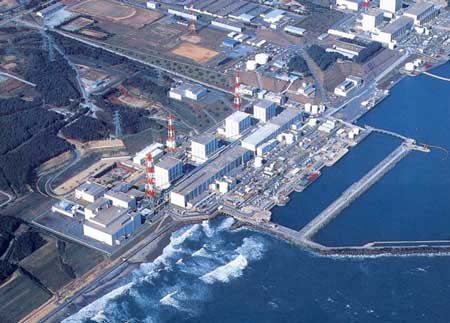
Japan’s Tepco fights for return to nuclear power after Fukushima, DW, 11 Mar 19
Eight years after the accident in Fukushima, preparations are underway to restart the Kashiwazaki-Kariwa nuclear power plant operated by Tepco. But residents fear a second disaster. Kiyo Dörrer reports from Kashiwazaki.
Decades ago, nuclear power was supposed to be the perfect solution for Japan’s thirst for energy and for its rural economies. And in the sleepy town of Kashiwazaki, in the prefecture next to Fukushima, the solution was supposed to be the Kashiwazaki-Kariwa nuclear power plant, run by the power company Tepco — the company responsible for the 2011 Fukushima accident.
When in full operation, the Kashiwazaki-Kariwa power plant is the biggest in the world, capable of servicing 16 million households. But all of its seven reactors have been idle since the nuclear accident at Fukushima Daiichi. This is Tepco’s only remaining nuclear power plant apart from the tsunami-stricken plants in Fukushima, in the neighboring prefecture.
Tepco has been repeatedly criticized for its negligence and has been ordered to pay compensation to the residents. The cleanup of the Fukushima power plant has been causing major headaches, while the reasons for the accident have yet to be clarified even eight years later.
But amid the controversy, in 2017 Japan’s nuclear regulation authority gave the go-ahead to launch the lengthy process toward a restart of two of Tepco’s reactors, which are located about 250 km (155 miles) east of the Fukushima plants, on the coast of the Sea of Japan. The reactors No. 6 and No. 7 at the Kashiwazaki-Kariwa power plant, which are being prepared for a restart, are both the same type as those that melted down in Fukushima.
This time everything is going to be different, the deputy head of the Kashiwazaki-Kariwa plant, Toshimitsu Tamai, assures visitors on a tour of the facility. To banish fears of a second Fukushima, Tepco has built a 15-meter (49-foot) wall that is supposed to be able to withstand the highest tsunamis imaginable………..
Majority of residents against the nuclear reactors
But the local residents aren’t all buying Tepco’s story. Hopes of an economic boost ring hollow in the almost deserted shopping streets; the once bustling town center is now full of shuttered storefronts. Like many other country towns, Kashiwazaki has fallen victim to economic problems caused by the aging population and a growing rural exodus — trends no nuclear power plant can change.
According to the exit polls held in last year’s governor’s race, over 60 percent of residents of Niigata Prefecture, in which Kashiwazaki lies, are against the restart of the nuclear power plant. Locals have been alarmed by multiple mishaps during the preparations. In December 2018, the cables connecting reactor No. 7 with emergency backup power caused a fire for unknown reasons. And as recently as February 28, radioactive water leaked out of the core inside one of the idle reactors.
“To be honest, we just keep thinking: not again! They take one step forward and three steps back,” says Tsutomu Oribe, who runs a sushi restaurant in central Kashiwazaki. “We’ve all learned too well what could happen.”
“I don’t think that anybody should entrust Tepco with restarting a nuclear power plant if the company doesn’t even know what happened in Fukushima,” says Kazuyuki Takemoto, a retired local councilor and veteran anti-nuclear activist.https://www.dw.com/en/japans-tepco-fights-for-return-to-nuclear-power-after-fukushima/a-47836968
March 12, 2019
Posted by Christina Macpherson |
Japan, politics |
Leave a comment
Lee Yuan-tseh pushes nuclear phase-out http://www.taipeitimes.com/News/taiwan/archives/2019/03/12/2003711332 By Lin Chia-nan / Staff reporter Local industries should upgrade their production techniques to curb carbon emissions, and the nation should phase out nuclear power to avoid leaving more nuclear waste to future generations, former Academia Sinica president Lee Yuan-tseh (李遠哲) told an energy conference in Taipei.The conference was hosted by the Taiwan Environmental Protection Union (TEPU) and other anti-nuclear groups, following another energy forum on Sunday organized by former president Ma Ying-jeou (馬英九) and former premier Jiang Yi-huah (江宜樺) that called for maintaining nuclear power.
Advocates of nuclear power have gained more momentum after most people voted in favor of abolishing the “nuclear-free homeland by 2025” policy in a referendum on Nov. 24 last year.
Attendees — including Democratic Progressive Party Legislator-at-large Chen Man-li (陳曼麗) and New Power Party Legislator Huang Kuo-chang (黃國昌) — first prayed for victims of the Fukushima Dai-ichi nuclear power plant disaster on March 11, 2011.
Phasing out nuclear power is not only a security concern, but would also curb nuclear waste, said Lee, Taiwan’s first Nobel laureate in chemistry in 1986, adding that the older generation should not leave nuclear waste to future generations for their own convenience.
The nation needs to develop small-scale renewable energy generation systems to curb fossil fuel pollution and global warming, he said.
The global community might start tracking companies’ carbon footprints in two or three years, so local firms should start cutting their use of fossil fuels, he said, reiterating his suggestion that the government implement a carbon tax to curtail emissions.
The TEPU is working on two referendum proposals, including one recommending that the mothballed Fourth Nuclear Power Plant compound be converted into a site for renewable power research and development, union founding chairman Shih Shin-min (施信民) said.
The second proposal asks: “Do you agree that any construction or extended operation plans for nuclear power plants can only begin after they are approved by local referendum voters within the 50km-radius of the plants?”
The proposals are aimed at countering two referendum proposals by nuclear power advocates that seek to continue construction of the mothballed plant and to extend the permits of three operational nuclear power plants, Shih said.
The annual parade against nuclear power is scheduled for April 27, which would focus on renewable power development, Green Citizens’ Action Alliance deputy secretary-general Hung Shen-han (洪申翰) said.
Separately, President Tsai Ing-wen (蔡英文) wrote on Facebook that the Fukushima Dai-ichi disaster pushed Taiwanese to seriously consider energy issues and the then-Chinese Nationalist Party (KMT) administration to mothball the plant.
While people hold varied views about when the nuclear-free homeland policy should be achieved, it is the nation’s common goal to ensure that the next generation has safe power generation, Tsai wrote.
March 12, 2019
Posted by Christina Macpherson |
politics, Taiwan |
Leave a comment
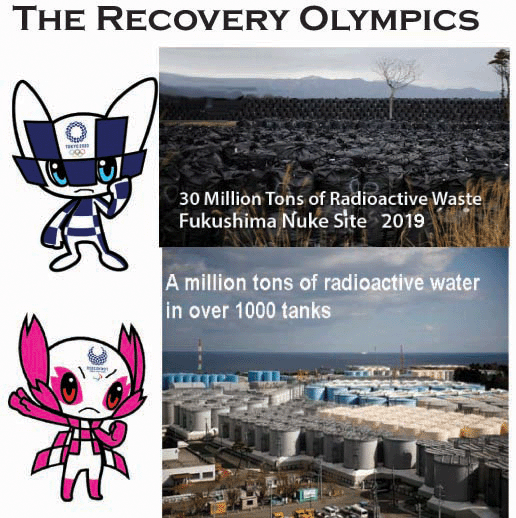
‘Recovery Olympics’ moniker for 2020 Games rubs 3/11 evacuees the wrong way, Japan Times, BY MAGDALENA OSUMISTAFF WRITER, 11 Mar 19, This is the fourth in a series examining how the northeast and the nation are progressing with efforts to deal with the March 2011 earthquake, tsunami and nuclear crisis.
ISHINOMAKI, MIYAGI PREF. – The town of Rifu on the outskirts of Sendai is set to host 10 soccer matches during the 2020 Olympics and Paralympics in line with the organizers’ plan to tout the games as the “Recovery Olympics.”
For Rifu, expectations are high the 2020 Games will draw international attention and lure more tourists, as Tohoku’s tourism sector struggles to recover from the Great East Japan Earthquake and ensuing tsunami on March 11, 2001. As part of the plan, an arena in Miyagi Prefecture is set to get a face-lift for the games. …….
The central government hopes the quadrennial sports event will serve as a platform to show that the nation has recovered from the disasters.
But recovery wasn’t one of the original themes for the Tokyo Games. The concept was added when it became apparent Tokyo wouldn’t be able to secure all the venues needed in the capital or its vicinity. When organizers thus turned to the disaster-hit prefectures of Miyagi and Fukushima, which will host the softball and baseball games, the recovery spin was born, with officials saying the event would contribute to reconstruction.
Moreover, the reconstruction plan for the Tohoku region is expected to end when fiscal 2020 closes in March 2021, putting an end to various central government subsidies that helped both victims and municipalities.
“The Tokyo 2020 Games have become a goal for us to show the region has recovered,” said Yasuki Sato, a Miyagi Prefecture official tasked with coordinating the preparations.
But residents in the area view the preparations as something happening in the background. In fact, some believe they are actually hindering the region’s recovery……. https://www.japantimes.co.jp/news/2019/03/10/national/recovery-olympics-moniker-2020-games-rubs-3-11-evacuees-wrong-way/#.XIXon8kzbGg
March 10, 2019
Posted by Christina Macpherson |
Japan, politics |
1 Comment

As someone who believes he was deceived by the nuclear power lobby during his time as prime minister, he sees it as his duty.
“Just as Confucius said, for someone not to correct themselves after making a mistake — that is a true mistake.”
As Japan’s leader, Junichiro Koizumi backed nuclear power. Now he’s a major foe. WP By Simon Denyer, Akiko Kashiwagi contributed to this report.March 10 TOKYO — With his shock of white hair, his love for Elvis and his reputation as a maverick, Junichiro Koizumi was a burst of color in the sober, dark-suited world of Japanese politics more than a decade ago.
Today, Koizumi has come out of retirement to join a battle against the entrenched business and political interests he had tangled with in the past. A man known for his simple catchphrases has a new one to impart: “Zero nuclear power.”
Eight years after the March 11, 2011, nuclear meltdown at the Fukushima Daiichi Nuclear Power Plant, Koizumi is back in the spotlight, trying to harness the public’s growing distrust of nuclear power and rid his country of an industry he once promoted as prime minister from 2001 to 2006.
His reversal on nuclear power reflects a wider reconsideration across Japan after the Fukushima disaster, which was triggered by an earthquake and tsunami.
A February 2018 poll by Japan’s Asahi Shimbun newspaper found 61 percent of respondents against the nation’s nuclear power plants being restarted and 27 percent in support.
“Momentum is building,” Koizumi said in an interview. “I am getting a strong response. It’s only a matter of time.”
Embarrassed by his own role in advocating nuclear power, Koizumi says he has learned from his mistakes. But Japan’s establishment remains firmly behind nuclear plants, even as other nuclear critics often point out the dangers posed by Japan’s quakes and tsunamis, a word Japan gave the world.
“The disaster brought a severe crisis, but we can turn crisis into opportunity. We can manage ourselves with renewables,” he said. “Take Germany, for example. They saw the disaster in Japan and changed their energy policy. But of all countries, Japan has not changed. It’s truly incomprehensible.”
Japan shut down all of its 54 reactors after the Fukushima catastrophe. Explosions in three reactors sent a cloud of radioactive dust across vast swaths of northeastern Japan and forced 165,000 people to flee their homes.
But since Shinzo Abe was reelected prime minister in 2012, his government has been on a mission to get the nuclear power industry back on its feet.
Nine reactors have already been restarted, six more applications to restart have been approved by a new, nominally independent Nuclear Regulation Authority, and the government wants nuclear power to contribute 20 percent to 22 percent of the nation’s energy by 2030.
….A damning report by an independent parliamentary panel in 2012 concluded that the Fukushima Daiichi disaster was “profoundly man-made,” caused by a disregard of the risks of earthquakes by an industry determined to preserve the illusion that nuclear power was absolutely safe.
Instead of supervising the nuclear power industry, METI colluded with it, the report said. It said the risks of nuclear power were downplayed in a culture of “reflexive obedience” and a “reluctance to question authority.”
…… why are elected politicians so determined to press ahead? The answer, Koizumi asserted, lies in those same vested interests he has spent the best part of his career fighting.
……. So much money has also been invested in the industry that there is a reluctance to write investments off. But Koizumi says nuclear power is neither economic nor necessary. The country, he noted, survived without it for two years without a single blackout.
……. Other voices of criticism struggle to be heard.
Shigeaki Koga, an energy industry expert, says his career was sidelined at METI after he expressed doubts about the safety of nuclear power, until he was ultimately forced to resign. He has since emerged as a leading public critic of nuclear power.
Kunihiko Shimazaki, one of Japan’s leading seismologists, warned of the risks of earthquakes and tsunamis along the country’s northeast coast for years before the disaster struck, but his reports were generally ignored or buried. After March 2011, he served for two years with the nuclear regulator, and spoke out forcefully, but his term was not renewed.
……….. As someone who believes he was deceived by the nuclear power lobby during his time as prime minister, he sees it as his duty.
“Just as Confucius said, for someone not to correct themselves after making a mistake — that is a true mistake.”
https://www.washingtonpost.com/world/asia_pacific/as-japans-leader-junichiro-koizumi-backed-nuclear-power-now-hes-a-major-foe/2019/03/09/d1106ee8-4037-11e9-85ad-779ef05fd9d8_story.html?utm_term=.fdaa32b9fba7
March 10, 2019
Posted by Christina Macpherson |
Japan, politics |
Leave a comment

Bailout bill proposed for Three Mile Island nuclear plant, 21 News, by Jessie McDonough, March 9th 2019 MIDDLETOWN, PA — A 981-million dollar bailout will be proposed next week to keep Three Mile Island Nuclear Plant afloat.
Republican representatives want to amend Pennsylvania’s Alternative Energy Portfolio
MIDDLETOWN, PA — A 981-million dollar bailout will be proposed next week to keep Three Mile Island Nuclear Plant afloat.
Republican representatives want to amend Pennsylvania’s Alternative Energy Portfolio Standard by adding nuclear energy to the plan. Energy providers will have to buy a certain percentage of nuclear which would lead high utility bills for you the consumer.
The proposal would bail out two nuclear energy plants. One of those is Exelon’s Three Mile Island.
Not everyone is on board with the proposal and its’ hefty price tag.
“We are talking almost a billion dollar nuclear bailout and basically it is a tax on consumers. It is going to force energy prices to be higher”, said Commonwealth of Pennsylvania CEO Nathan Benefield.
Some residents in Middletown where the plant is located are also worried about increases in their electric bill……. https://local21news.com/news/local/bailout-bill-proposed-for-three-mile-island-nuclear-plant
March 10, 2019
Posted by Christina Macpherson |
business and costs, politics, USA |
Leave a comment