Zionist Billionaires Openly Acknowledge Manipulating The US Government.
Caitlin Johnstone, Jan 19, 2026, https://www.caitlinjohnst.one/p/zionist-billionaires-openly-acknowledge?utm_source=post-email-title&publication_id=82124&post_id=185023681&utm_campaign=email-post-title&isFreemail=true&r=1ise1&triedRedirect=true&utm_medium=email
Speaking together at the Israeli-American Council Summit on Saturday, billionaire Zionist megadonors Miriam Adelson and Haim Saban strongly implied that they are engaged in some extremely shady activities to manipulate the US government in advancement of Israeli interests.
There’s a guy I follow on Twitter named Chris Menahan who’s always posting clips from Zionist events which might otherwise go unnoticed, frequently turning up jarring admissions from pro-Israel operatives who tend to loosen their lips a bit when addressing an audience of like-minded individuals. I recently cited a clip he spotted featuring former Obama speechwriter Sarah Hurwitz decrying the way social media has allowed the public to view evidence of Israeli atrocities in Gaza.
Menahan has spotlighted some very revealing moments from Adelson and Saban, both of whom are dual US-Israeli citizens, and both of whom have provided funding to the Israeli-American Council (IAC). In 2014, The Nation’s MJ Rosenberg wrote that Saban and Miriam Adelson’s late husband Sheldon were using influence operations like the IAC to become “the Koch brothers on Israel.”
Here’s a transcript of a very revealing interaction between Adelson and event host Shawn Evenhaim:
Evenhaim: Miri, you and Sheldon created a lot of relationships over the years with politicians, at the state level, and especially at the federal level. I want you to share with everyone why is it so important and how you do it, and again, writing cheques is a part of it, but there is more than writing just cheques so, how do you do it?
Adelson: Shawn, can you allow me not to answer?
Evenhaim (shrugs): You choose!
Adelson: I want to be truthful and there are so many things that I don’t want to talk about.
Evenhaim: Yeah, I mean we don’t want specifics but that’s okay.
Miriam Adelson is here admitting that in addition to the hundreds of millions of dollars that she and Sheldon are known to have poured into the political campaigns of Donald Trump and other Republican politicians, they have also been manipulating US politics behind the scenes in ways that she would prefer to keep secret from the public. Presumably because it would cause a significant scandal if the public ever found out.
Trump, for the record, has repeatedly admitted that he provided political favors to Israel at the urging of the Adelsons during his first term, saying he moved the US embassy in Israel from Tel Aviv to Jerusalem and legitimized the Israeli annexation of the Golan Heights in order to please them.
And please them he did. He must have, because Miriam Adelson donated another $100 million to Trump’s 2024 campaign to help him become president again. And now he’s spent the first year of his administration bombing Iran and Yemen, working to take control of Gaza, and aggressively stomping out criticism of Israel in the United States.
Back in 2020, before all these blatant admissions, musician Roger Waters was smeared as an antisemite by the Anti-Defamation League and other Zionist groups for saying that Sheldon Adelson was using his wealth to exert influence over US politics.
Saban was even more guarded about his political operations than Adelson in his response to the same question from Evenhaim:
“I want to be cautious how I’m saying… (Pause) It’s a system that we did not create. It’s a system that’s in place. It’s a legal system and we just play within the system. And that’s it! I mean it’s really quite simple. If you support a politician, you, under normal circumstances, should have access to be able to share opinions and try to help them see your point of view. That’s what access grants you, and the contribution and the financial support grants you the access, sooooo… I mean…. (shrugs) those that give more have more access and those that give less have less access. It’s a simple math. Trust me.”
Haim Saban, whose campaign donations focus on the other side of the aisle with Democratic Party funding, has famously said “I’m a one-issue guy, and my issue is Israel.” In 2022 AIPAC’s superpac cited Saban’s financial clout to argue that deviating from support for Israel would cost the Democrats critical funding, saying “Our activist donors, who include one of the largest donors to the Democratic Party, are focused on ensuring that we have a U.S. Congress that, like President Biden, supports a vibrant and robust relationship with our democratic ally, Israel.”
As with Adelson, we can surmise that Saban said he wanted to be “cautious” how he described his influence operations because it would cause a major scandal if the American people understood what he’s been up to.
Some people will look at these clips and claim it’s antisemitic to even share them. Others will look at them and cite them as evidence that the world is ruled by Jews. For me they’re just evidence that the world is ruled by wealthy sociopaths, and that western democracy is an illusion.
I mean, you really couldn’t ask for a better illustration of the sham of American democracy than this. Two billionaires from supposedly opposite political parties publicly admitting that they use their obscene wealth to manipulate US politics to advance the military and geopolitical agendas of a foreign state on the other side of the planet.
And as Saban said, it’s all legal. Corruption is legal in the United States of America. Plutocrats are allowed to leverage their fortunes to manipulate the US government using campaign funding and lobbying for the advancement of their personal, financial, and ideological agendas. If you have a few million dollars to spare you can use them to make criminal charges go away, to roll back environmental regulations or worker protections which hurt the profit margins of your business, or even to get military explosives shipped to a foreign government for use in an ongoing genocide.
And it’s all being done with complete disregard for the will of the electorate. The American people have no control over what their government does under the current political system. They vote for one oligarchic puppet, then they vote for the oligarchic puppet in the other party when that doesn’t work out, going back and forth without realizing that at no point are they changing the actual power structure under which they live.
That power structure is called plutocracy. That’s only real political system the United States has.
Trump Lashes Out At Norway Over Nobel Peace Prize In Latest Push To Annex Greenland.

“I no longer feel an obligation to think purely of peace.”
blueapples, Jan 20, 2026, https://ddgeopolitics.substack.com/p/trump-lashes-out-at-norway-over-nobel?utm_source=post-email-title&publication_id=1769298&post_id=185048801&utm_campaign=email-post-title&isFreemail=true&r=1ise1&triedRedirect=true&utm_medium=email
Although the integrity of the Nobel Peace Prize had fallen into tatters long before President Donald J. Trump’s recent quest to have it awarded to him, a bizarre letter he penned to Norwegian Prime Minister Jonas Gahr Støre has taken the mockery of the prize to new heights. Trump declared he “no longer feels an obligation to think purely of peace” in the letter to Norway’s head of state, raising tensions even higher over the U.S.’ continued quest to annex Greenland after several NATO member states deployed troops to the Danish territory.
Trump reaffirmed his administration’s position that U.S. control of Greenland is necessary to secure the Western Hemisphere from the threat of Russian and Chinese infiltration. Trump’s claim that Denmark cannot protect Greenland from Russia or China is contravened by the fact that the Danish territory is covered by NATO’s collective security pact. By virtue of being a territory of Denmark, one of NATO’s founding member states, Greenland is protected by Article 5 of the North Atlantic Treaty. This means that any attack on Greenland by a nation such as Russia or China would constitute an attack against all member states, providing as much protection to Greenland as is provided to the U.S., Canada, or any European nation belonging to NATO.
The letter written by Trump to Støre was leaked after being forwarded to several European ambassadors in Washington, D.C., and reads as follows:
“Dear Jonas: Considering your country decided not to give me the Nobel Peace Prize for having stopped 8 wars PLUS, I no longer feel an obligation to think purely of peace, although it will always be predominant, but can now think about what is good and proper for the United States of America. Denmark cannot protect that land from Russia or China, and why do they have a “right of ownership” anyway? There are no written documents; it’s only that a boat landed there hundreds of years ago, but we had boats landing there also. I have done more for NATO than any other person since its founding, and now, NATO should do something for the United States. The world is not secure unless we have complete and total control of Greenland. Thank you! President DJT”
Although Trump alleges that the country of Norway decided not to award him the Nobel Peace Prize, the Norwegian government plays no role in determining its recipient. The prize is awarded by the Norwegian Nobel Committee, a five-member body elected by the Norwegian Parliament in accordance with the will of the late eponymous founder of the award, Alfred Nobel. The Nobel Peace Prize is the only award determined by the committee. The other five Nobel Prizes in physics, chemistry, medicine, literature, and economics are awarded by respective Swedish bodies, including the Royal Swedish Academy of Sciences, the Karolinska Institutet, and the Swedish Academy. Although the Norwegian Parliament does elect the members of the Norwegian Nobel Committee, it has no authority in determining who they vote to recognize as the laureate of the Nobel Peace Prize.
The Norwegian Nobel Committee voted to award the 2025 Nobel Peace Prize to María Corina Machado despite Trump and other world leaders, such as Israeli Prime Minister Benjamin Netanyahu, lobbying to have him selected as its laureate. Machado, the longtime opponent of the Venezuelan governments led by presidents Hugo Chávez and Nicolás Maduro, was awarded the prize on October 10th, 2025 for what the committee praised as her setting “one of the most extraordinary examples of civilian courage in Latin America in recent times.”
Despite that acclaim, Machado is seen by much of the world as a puppet of the West being used to expand its control over South America. Just weeks after the U.S. deposed Venezuelan President Nicolás Maduro by executing Operation Absolute Resolve in the early morning hours of January 3rd, Machado visited the White House to hand over the 2025 Nobel Peace Prize to Trump. Machado’s decision to give Trump the prize came as the U.S. continues to determine its vision for the future of the governance of Venezuela in the wake of overthrowing Maduro. Despite being propped up to replace Maduro, the Trump administration has not endorsed Machado as his successor just yet, though her decision to give Trump the award appears designed to curry his favor by influencing that decision.
While Trump characterized Machado’s decision as a “wonderful gesture of mutual respect,” the gesture was a performative one, as the prize is non-transferable. In a statement released following Trump and Machado’s meeting, the Norwegian Nobel Committee stated, “The medal and the diploma are the physical symbols confirming that an individual or organization has been awarded the Nobel Peace Prize. The prize itself—the honor and recognition—remains inseparably linked to the person or organization designated as the laureate by the Norwegian Nobel Committee.” Trump’s decision to accept the award is ironic, considering how he and his MAGA acolytes have mocked participation trophies as symbols of the declining American culture they stand against. By choosing to accept the Nobel Peace Prize from Machado, Trump has effectively received his very own participation trophy.
Despite now having the 2025 Nobel Peace Prize firmly in his grasp, the letter Trump wrote to Norwegian Prime Minister Jonas Gahr Støre shows that being passed over for its actual awarding continues to leave a sour taste in his mouth. The letter also conveys the vindictiveness Trump has over the snub, which ostensibly is influencing his foreign policymaking as he uses it to continue to justify the U.S.’ territorial claim to Greenland.
As the Trump administration continues to escalate the pressure it places on the rest of the world in its quest to annex Greenland, most recently by vowing to implement tariffs on nations that oppose the U.S. acquiring the territory, the Nobel Peace Prize isn’t the only thing this saga has brought the fallacy of to light. The conflict also reveals the fallacy of NATO, which has deployed troops to protect itself against what it deems as a threat against it from its leading member state. That internal strife makes NATO appear to be an antiquated and entangled web of alliances, reminiscent of the pre-World War I world order. The disorder caused by those alliances ultimately erupted into a global conflict following the assassination of Austrian Archduke Franz Ferdinand. With NATO continuing to wage a proxy war against Russia in Ukraine, the internal conflict it finds itself in over the U.S.’ claim to Greenland may be the catalyst leading to the facade of its alliance crumbling, which the aftermath of risks leading to that history repeating itself all over again.
Australia’s Opposition Leader, Sussan Ley , tries to rewrite history
19 January 2026 AIMN Editorial, Palestine Action Group, https://theaimn.net/sussan-ley-tries-to-rewrite-history/
Today has witnessed a new low in the sickening attempt by some politicians to exploit the horrific massacre at Bondi in order to attack the mass protest movement in which hundreds of thousands of people have marched against the genocide in Gaza.
Opposition leader Sussan Ley, in particular, made a speech filled with obscene misinformation and outright lies. The complete abandonment of any commitment to the truth is a deeply worrying lurch toward the kind of politics Donald Trump has unleashed in the US.
Any suggestion that the Bondi massacre can be blamed on the millions of Australians who have opposed Israel’s genocide in Gaza is baseless, preposterous, hate-filled and hypocritical. There is no evidence of any link whatsoever. ISIS does not support the Palestinian cause, and all available evidence points to the killers being radicalised several years before 2023 or the Harbour Bridge March for Humanity.
The Palestine solidarity movement has always stood firmly and explicitly against antisemitism, and has since the very beginning been organised alongside Jewish people, who have marched in their thousands against the Israeli regime. In Sydney, almost every protest we have held for the past two years has been co-sponsored by Jews Against the Occupation ‘48, and featured Jewish speakers and MCs.
Antisemitism did not march on our streets, bridges and landmarks, nor did it camp in our university quadrangles, and not a shred of real evidence has ever been produced for such claims. On the incredibly rare occasions when genuine antisemites have tried to participate in our movement, they have been unanimously denounced and excluded. The same certainly cannot be said of the Liberal Party, or the Murdoch and other press outlets pushing these claims, who have often supported far right movements led by actual neo-Nazis.
Sussan Ley despicably ties the mass anti-genocide movement to firebombings of places of worship – attacks which the NSW Police and AFP have detailed were carried out by criminal elements, perhaps coordinated by someone in Iran. In other words, nothing to do with the protest movement!
Like others making such blatantly dishonest claims, Sussan Ley has supported the worst possible act of racist violence: genocide. Ley gives the impression she would like it to be a criminal offence to oppose the crimes of the state of Israel. She also seeks to weaponise one form of racism, antisemitism, to whip up another: Islamophobia. This is despicable politics and must be rejected by all who want to uphold universal principles of anti-racism, let alone a basic commitment to factual and rational debate.
Outside the Canberra bubble dominated by politicians, lobbyists and media executives, the fact that Israel has committed a genocide in Gaza is now an incontrovertible fact, confirmed by all human rights organisations and experts. Well over 100,000 Palestinians are estimated to have been massacred and starved to death since October 2023. This is why millions have marched, not because they hate Jews, but because they are against possibly the biggest racist atrocity of the 21st century, carried out by the state of Israel. And this is why they will continue to march, as Israel’s occupation and genocide of Gaza continues.
Founders of Deadly Gaza Humanitarian Foundation (GHF), ‘Shaping’ New US-Backed Administration for Gaza: Report
Netanyahu’s top military advisor is among those central to the new executive committee, which is due to operate under Trump’s ‘Board of Peace’
News Desk, JAN 14, 2026, https://thecradle.co/articles/founders-of-deadly-ghf-shaping-new-us-backed-administration-for-gaza-report
Many of the figures emerging as key players in the new US-backed administration for Gaza were central to Washington’s Gaza Humanitarian Foundation (GHF), the Financial Times (FT) reported.
The GHF was a deadly US-Israeli aid scheme introduced in May, which was responsible for the deaths of hundreds of starving Palestinian aid seekers.
According to the FT report, the Gaza executive committee set to be announced soon – which will operate directly under a Trump-led ‘Board of Peace’ – is being “shaped” by several people close to Israel.
This includes Israeli Prime Minister Benjamin Netanyahu’s chief military advisor, Roman Gofman, and US-Israeli investor Michael Eisenberg, who has been advising the Israeli premier since the start of the ceasefire.
Others involved are US-Israeli policymaker Aryeh Lightstone and Israeli cybersecurity entrepreneur Liran Tancman, who is Mossad-linked.
All four of these men were involved in the establishment of GHF. The deadly aid scheme resulted in the killing of around 2,000 Palestinians within half a year.
Under the pretext of humanitarian assistance, Palestinians were crammed into tight spaces and handed limited quantities of aid for months as Israeli troops and US contractors regularly opened fire at unarmed aid seekers.
The announcement of Trump’s ‘Board of Peace’ was meant to take place this week, but has been delayed. According to reports, the executive committee that will operate under the board could be announced as early as Wednesday.
“Eighteen Palestinian officials have received invitations to join the committee that will replace Hamas,” sources told the New Arab.
Ali Shaath, a former deputy planning minister in the Palestinian Authority (PA), has been designated to head the committee, while retired intelligence official Mohammed Nisman is expected to assume control over security.
According to the sources, the committee is scheduled to hold its meeting in Egypt’s capital on Thursday, the sources said.
The ‘Board of Peace,’ which will be announced later, is expected to include 15 world leaders from countries such as the UK, France, Germany, Saudi Arabia, Qatar, and Egypt.
Hamas has repeatedly vowed that it is ready to hand over governance to an independent body of technocratic Palestinians, as envisioned in the truce.
It rejects disarmament until an independent Palestinian state is formed, but has expressed openness to an initiative that would “freeze” its weapons for a period of time.
The group has stressed that the second phase of the ceasefire deal cannot commence until Israel halts all violations.
Israel has killed at least 442 Palestinians since the US-backed ‘ceasefire’ was reached in October last year, the Gaza Health Ministry reported. Over 1,200 have been injured.
Tel Aviv continues to indiscriminately target civilians, justifying the attacks under the pretext of alleged ‘security threats,’ while persisting in the violent pursuit of resistance leaders with no regard for the terms of the ceasefire agreement. The blockade on Gaza also remains in place, further deepening the humanitarian crisis.
Sources told Times of Israel in a report published on 11 January that the Israeli army has drawn up plans for a new assault in the Gaza Strip – aimed at expanding the areas under Tel Aviv’s control in violation of the ceasefire.
President Trump Urges Iran Protests To Continue, Says ‘Help Is on Its Way’

The president also said he cut off contact with Iranian officials
by Dave DeCamp | January 13, 2026 , https://news.antiwar.com/2026/01/13/president-trump-urges-iran-protests-to-continue-says-help-is-on-its-way/
President Trump on Tuesday called for the protests in Iran to continue and said “help is on its way,” suggesting he was making another threat of military intervention.
“Iranian Patriots, KEEP PROTESTING – TAKE OVER YOUR INSTITUTIONS!!! Save the names of the killers and abusers. They will pay a big price,” the president wrote on Truth Social.
The president also said he cut off contact with Iranian officials, a comment that came after he suggested he was open to diplomacy with Tehran. “I have cancelled all meetings with Iranian Officials until the senseless killing of protesters STOPS. HELP IS ON ITS WAY. MIGA!!!” Trump added.
“MIGA” refers to “Make Iran Great Again,” a slogan Trump used during the 12-day US-Israeli war against Iran back in June 2025 when he floated the idea of regime change in the country. He also recently posed with a “Make Iran Great Again Hat” alongside Sen. Lindsey Graham, who has said the president is ready to kill Iranian Supreme Leader Ayatollah Ali Khamenei.
Ali Larijani, the secretary of Iran’s Supreme National Security Council, responded to Trump’s post, saying the “names of the main killers of the people of Iran” were the US president and Israeli Prime Minister Benjamin Netanyahu. Also on Tuesday, Iran’s Islamic Revolutionary Guard Corps (IRGC) claimed it disrupted “Israeli-linked terror teams” and seized US-made weapons.
Iranian officials have warned that the US would face a severe response to any attack. “Come and see what will happen to American ships and military bases in the region,” the speaker of Iran’s parliament, Mohammad Baqer Qalibaf, said at a pro-government rally over the weekend.
“Come and burn in the fire of the Iranian nation so severely that it becomes a lasting lesson in history for all oppressive US rulers. Come and find out what will happen to you and to the region,” he added.
Reza Pahlavi vows to recognise Israel, end nuclear programme if he led Iran.
Reza Pahlavi, the son of Iran’s deposed Shah, set out key policies he would put in place if he ever returned to rule the country. Pahlavi said he would recognise Israel and end Iran’s nuclear programme. Pahlavi, who lives in the US, has backed calls to overthrow Iran’s leaders.
Do the Democrats Have the Guts to Outflank Trump on Defense Industry Looting?
Les Leopold, Jan 14, 2026, https://lesleopold.substack.com/p/do-the-democrats-have-the-guts-to
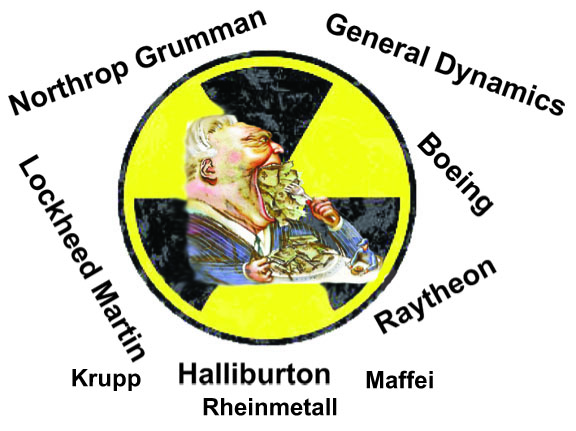
Trump has decided that the government should not give money to defense contractors who then reroute our tax dollars via stock buybacks to stockholders and executives. (A stock buyback is when a corporation repurchases its own shares, thus boosting the share’s price, a legalized form of stock manipulation. CEOs, who are paid mostly in stock incentives, and large investors directly benefit from stock buybacks, and unlike with dividends, don’t have to pay taxes until they sell their shares.)
This isn’t news. Studies show that defense contractors spent three times more on dividends and stock buybacks than on capital investments needed to fulfill their contracts over the last decade. In Europe it was the other way around with defense companies spending twice as much on capital investments than on dividends. (They don’t do stock buybacks.)
The New York Times cited a Department of Defense study during the Biden administration that “found that top U.S. defense contractors spent more on returning cash to shareholders in the form of dividends and stock buybacks between 2010 and 2019 compared to the previous decades, while spending on research and new or upgraded factories had declined.”
You’ve got to wonder why the Biden administration didn’t try to stop this scam. Maybe it feared looking anti-military. Or maybe it thought such an action would be too upsetting to their Wall Street donors who feast on stock buybacks?
Now we have Trump doing what the Democrats should have done long ago, announcing he will stop buybacks and cap executive salaries at profligate defense contractors:
- His Executive Order directs the Secretary of War to take steps to ensure that future contracts prohibit stock buybacks and corporate distributions during periods of underperformance, non-compliance, insufficient prioritization or investment, or insufficient production speed.
- The Secretary shall further take steps to ensure that future contracts permit the Secretary to, upon determining that a contractor is experiencing such issues, cap executive base salaries at current levels (with inflation adjustments permitted) while scrutinizing executive incentives to ensure they are directly, fairly, and tightly tied to prioritizing the needs of the warfighter.
How about Preventing Mass Layoffs?
If the Democrats wanted to show more concern for working people they would jump all over this executive order and push legislation to expand it to include a prohibition of compulsory layoffs at all defense contractors. If a contractor wants to change staffing levels, they should offer voluntary financial buyout packages. No one should be forced to leave.
This is an easy case to make. Why should taxpayers give money to corporations that then lay off taxpayers so that they can shovel more and more of our tax dollars to the wealthy? If the problem is that these defense contractors fail to deliver products on time they need more workers, not fewer.
Instead of wallowing in the Epstein files, the Democrats should declare again and again that mass layoffs are the weapon of choice to enrich executives and Wall Street. Fight for the damn jobs!
In April, the Labor Institute, in cooperation with the Center for Working Class Politics, produced a YouGov survey of 3,000 voters in Michigan, Ohio, Pennsylvania, and Wisconsin. In it we asked the surveyed voters to evaluate a state ballot initiative we invented that read:
“Corporations with more than 500 employees that receive taxpayer-funded federal contracts are prohibited from conducting involuntary layoffs of American workers. All layoffs during the life of a taxpayer-funded contract must be voluntary, based on employer financial incentives. No one shall be forced to leave.”
Overall, 42 percent supported the proposal, while 26 percent opposed it and 32 percent were not sure. The no-layoff proposal was brand new, unheard of by anyone before the survey was administered, yet it tied for fifth in popularity among 25 economic proposals. Furthermore, we reported that:
“Respondents from key demographic groups that Democrats have struggled to reach in recent electoral cycles showed robust support for the policy, which was tied for fifth among respondents without a four-year college degree and those whose family income was less than $50,000 per year, and tied for sixth among respondents who reported a declining standard of living and those who live in rural areas and small towns.”
This no-layoffs policy would be a big winner for the Democrats leading up to the mid-terms. But it would not be a winner for the financial backers of the party who cherish their stock buybacks.
So here we are again. Trump outflanking the Democrats on a populist economic proposal, like cancelling NAFTA, one that the Democrats failed to address while in power. In this case the Democrats could push Trump even further by tying job stability to federal defense contracts, something that working people would greatly value but would be upsetting to Wall Street.
The Democrats could push Trump, but will they dare to take that leap? One would hope so, but don’t hold your breath.
The failure to rigorously defend working people over the last forty years against needless mass layoffs may be why so many voters right now are willing to consider a new political party, independent of the two billionaire parties.
Much more on that to come.
‘Wall of money’ to invest in Scottish nuclear power if Labour win election
Prime Minister Keir Starmer said the SNP were saying Scotland was ‘shut for business’.
Danyel VanReenen, Politics Reporter, Jan 15th, 2026
The Prime Minister said the UK Labour Government is ready and willing to invest in nuclear power in Scotland if Anas Sarwar wins the Holyrood election in May.
The current SNP Government has consistently been against the creation of new nuclear power stations north of the border, with control of planning laws giving ministers an effective veto.
Keir Starmer said there is a “wall of money” Labour wants to invest in Scottish nuclear power, but he said the SNP are saying no “for ideological reasons”.
“If there’s a Labour Government in Scotland, we’ll be back the day after the election to make sure that money is translated into good, well-paying jobs in renewables and nuclear,” Starmer said.
“That can’t happen at the moment because the SNP is basically saying ‘we’re shut for business’.”…………………………………………………………………………………………. https://news.stv.tv/politics/wall-of-money-to-invest-in-scottish-nuclear-power-if-labour-win-election
Sizewell C injects nearly £1bn of tax-payers’ money into East of England as construction hits two-year milestone.
Sizewell C has awarded almost £1bn worth of contracts to businesses
across the East of England, as the project celebrates two years since
formal construction began on the Suffolk coast. The 3.2GW nuclear power
station – set to deliver 70% of its construction value to UK companies
and support tens of thousands of jobs nationwide – is committed to
investing £4.4bn in the East of England over the course of its build. This
contract milestone caps a hugely successful second year for Sizewell C,
highlighted by its Final Investment Decision last summer, which unlocked
£38bn of funding and made it the first majority British-owned nuclear
power station in more than 30 years.
Sizewell C 15th Jan 2026,
https://www.sizewellc.com/news-views/sizewell-c-injects-nearly-1bn-into-east-of-england-as-construction-hits-two-year-milestone/
Zelensky makes another move to avoid election.

12 Jan 26, https://www.rt.com/russia/630856-zelensky-election-martial-law/
The Ukrainian leader has submitted a bill to extend martial law, which would allow him to remain in power.
Ukraine’s Vladimir Zelensky has submitted two draft bills to the parliament to extend martial law and general mobilization for another 90 days, effectively postponing elections once again. The move comes despite pressure from US President Donald Trump and the Ukrainian leader earlier saying he was open to holding an election.
One of the draft laws submitted to the Verhovna Rada on Monday would extend martial law from February 3 to early May, which would effectively bar national elections for this period. Martial law has been renewed repeatedly in three-month increments since 2022. The other bill would prolong the controversial forced mobilization campaign on the same timetable.
Zelensky’s presidential term expired in May 2024. The Ukrainian leader refused to hold a new election, citing the conflict with Russia. Moscow subsequently declared him “illegitimate,” arguing that authority now rests with the Ukrainian parliament. Russian officials also noted that Zelensky’s dubious status is a major legal obstacle to signing a peace agreement.
This comes despite pressure from Trump – who labeled Zelensky “a dictator without elections” last year – to hold an election. In December, Zelensky said he was ready to hold an election within months if the West could provide Kiev with robust security guarantees.
A poll in January by Ipsos suggested that former Ukrainian commander-in-chief Valery Zaluzhny – widely viewed as Zelensky’s main rival – is leading potential presidential candidates with around 23% support, while Zelensky trailed at 20%.
If the second bill passes, Ukraine will prolong its mobilization campaign, which has been marred by numerous violent incidents between draft officers and reluctant recruits. Officials in Kiev have acknowledged a decline in enthusiasm to serve, but insisted that drastic measures are required to replenish growing battlefield losses.
Senate Republicans edging toward War Powers Resolution to curb Trump’s crazed Venezuelan war
Walt Zlotow West Suburban Peace Coalition Glen Ellyn IL, 11 Jan 26
In a rare pushback to one of Trump’s many illegal wars, 5 Senate Republicans joined all 47 Democrats to advance a War Powers Resolution to prevent President Trump from launching another attack on Venezuela without congressional authorization.
The procedural vote allows passage of the Senate resolution next week by simple majority (no filibuster allowed). Once approved it will go to the House where it’s also likely to pass. Alas, it’s unlikely to receive a veto proof majority, meaning it’s sure to be vetoed by war loving Trump who made Venezuela the seventh country he’s bombed in his first year of term two.
However, it might make Trump pause. In 2019 Congress passed a War Powers Resolution against Trump’s support of Saudi Arabia’s war on Yemen. Tho Trump vetoed it, he did cease refueling Saudi bombers shortly thereafter. We can only hope it may give him pause on further Venezuelan military action.
The vote is significant because it reverses the Venezuelan War Powers Resolution that failed last November when only 2 Senate Republicans joined the 47 Democrats voting in favor of returning the war power responsibility to Congress.
Trump howled in protest, clamoring that all 5 Republicans who vote against unilateral presidential war making should never be reelected to Congress.
Let’s hope more Senate and House Republicans will pivot from giving Trump unchecked war making power. Hopefully, they understand that even their MAGA base is not enamored of endless, senseless warfare while the economy remains gloomy for everyone but the billionaire class
Sanctions, Strategy and Spin: Venezuela Lobbying Soars Under Trump.

By Emma Sullivan, January 12, 2026, https://www.opensecrets.org/news/2026/01/sanctions-strategy-and-spin-venezuela-lobbying-soars-under-trump
An analysis of lobbying filings shows that U.S. energy companies and organizations linked to the Venezuelan government increased their influence campaigns on issues related to the South American nation in 2025, as the Trump administration intensified military and financial pressure in the run-up to the Jan. 3 capture of President Nicolás Maduro.
After months of U.S. escalation – including strikes on Venezuelan vessels, the seizure of oil tankers, and an expanded military presence off the country’s coast – U.S. forces captured Maduro and his wife, Cilia Flores, on Saturday. Trump has said the United States would assume control over Venezuela’s vast oil reserves and enlist U.S. companies to invest billions in rebuilding the oil industry. Venezuela holds the world’s largest proven crude oil reserves — about 303 billion barrels, or roughly 17 percent of global reserves.
As U.S. policy toward Venezuela hardened over the course of the year, federal lobbying activity accelerated. Twenty-three organizations reported lobbying on issues related to Venezuela through the third quarter of 2025, according to an OpenSecrets analysis of lobbying disclosure reports. According to data going back to 2008, an average of 11 organizations have lobbied on Venezuela each year, with 2025 having the second highest number of clients (23) after 2019, during which lobbyists reported representing 34 clients on such issues. (Lobbyists must report their fourth-quarter activities by Jan. 20.)
Energy and oil companies accounted for much of the lobbying, pressing U.S. officials on Treasury licenses, sanctions implementation, and regulatory rules governing Venezuelan oil and gas activity. The 23 that lobbied on Venezuela issues during the first nine months of 2025 are:
- American Seniors Housing Association
- Americas Alliance for Liberty & Prosperity
- Amnesty International USA
- Blockchain Association
- CASA de Maryland
- Chevron Corporation
- Footwear Distributors & Retailers of America
- FP Advocacy
- Friends Committee on National Legislation
- Human Rights First
- Mare Finance Investment Holdings
- Maurel & Prom
- National Cattlemen’s Beef Association
- National Pork Producers Council
- PBF Energy
- Phillips 66
- Shell Plc
- Sisters of Good Shepherd National Advocacy Center
- Solana Policy Institute
- Texas Cattle Feeders Association
- Tiryaki Agro Gida Sanayi Ve Ticaret
- U.S. Chamber of Commerce
- Women In Need (New York)
U.S. energy companies ramp up lobbying efforts
In 2007, then-President Hugo Chávez moved to bring Venezuela’s foreign oil projects under state control, prompting ExxonMobil and ConocoPhillips to exit the country while Chevron remained as a minority partner in joint ventures with PDVSA, the state-owned oil company. During Trump’s first term, the United States imposed sweeping sanctions on PDVSA, effectively barring most U.S. firms from dealing in Venezuelan crude without Treasury Department authorization. Chevron is the only major U.S. oil company authorized to operate in Venezuela.
Chevron mentioned Venezuela 12 times in its 2025 lobbying filings, up from eight mentions in both 2023 and 2024, citing “Venezuela energy issues” and “Venezuela sanctions.” The company engaged Washington on sanctions and authorization issues tied to maintaining its joint ventures and ongoing operations under U.S. policy. Chevron’s ability to expand oil exports is limited under U.S. sanctions on PDVSA. With the Trump administration now seeking to redirect Venezuelan crude away from China and instead toward U.S. ports and increase sanctioned sales to U.S. refiners, Chevron may stand to benefit from higher volumes of Venezuelan oil flowing to the U.S. market, according to Reuters.
Shell USA, the U.S. subsidiary of Shell Plc, also lobbied U.S. officials in 2025 over its role in Dragon, a proposed gas project off the coasts of Venezuela and Trinidad and Tobago, that requires authorization under U.S. sanctions. Earlier in the year, the Treasury Department’s Office of Foreign Assets Control revoked licenses that had allowed Shell to advance the project, halting plans to extract Venezuelan gas and pipe it to Trinidad for processing, before later issuing a narrower authorization reopening limited negotiations and preparatory work.
Notably, Gulf Coast refiners Phillips 66 and PBF Energy each cited Venezuela in their 2025 lobbying filings after not mentioning it in 2023 or 2024, signaling renewed engagement with U.S. energy and sanctions policy. According to Reuters, refiners are structurally well-positioned to process heavy, high-sulfur Venezuelan crude – the type that dominated U.S. imports before sanctions – and analysts have noted that a resumption or expansion of Venezuelan exports to the United States could lower fuel production costs, allowing refiners to make greater use of existing capacity if sanctions are eased or reconfigured.
But lobbying is not the only form of influence. The oil and gas businesses collectively donated $25.8 million to Trump’s 2024 campaign and outside groups that supported his candidacy, ranking the industry among his biggest supporters. Chevron also donated $2 million to Trump’s second inauguration, and Shell gave $500,000.
Energy Secretary Chris Wright outlined U.S. plans for selling Venezuelan oil on Wednesday. Wright, who founded an oilfield services company in 2011, owned between $500,000 and $1 million worth of stock in Chevron before joining the administration, but he sold those shares in February 2025.
State-linked entities increase foreign agent spending
Oil and financial authorities linked to the Venezuelan government also ramped up spending in recent years to influence U.S. policy on sanctions, control of frozen assets, and which entities are recognized as authorized to manage Venezuela’s oil revenue.
In 2024, government-linked entities reported more than $3.5 million in foreign-agent spending — including $1.1 million from the Banco Central de Venezuela’s ad hoc board, a U.S.-recognized authority created to manage the country’s overseas assets, and $2.5 million from the opposition-appointed of PDVSA, according to OpenSecrets data. Through the first three quarters of 2025, government-linked organizations already exceeded 2024 totals, reportedly spending more than $4.1 million.
U.S. lobbying by Venezuelan entities
Through September, the Venezuelan government and businesses had spent $4.5 million on lobbying in the United States. With final 2025 lobbying reports due Jan. 20, the country is on pace to shatter its previous lobbying record of $4.9 million, set in 2022.
The Foreign Agents Registration Act, a federal law enacted in 1938, requires foreign agents engaged in lobbying in the United States to register with the Department of Justice and disclose information about their relationships, activities and compensation. FARA filings show that U.S. agents conducted direct outreach to Congress on behalf of the opposition-appointed and U.S.-recognized PDVSA board in 2025 and advised on the legislative process. Other filings show that, alongside legal work, U.S. lobbying firms carried out advocacy and public relations efforts aimed at U.S. officials as litigation over control of PDVSA assets intensified in 2024 and 2025, including the creation of U.S.-facing websites and strategic advice on government affairs and sanctions-related legal issues tied to asset disputes.
The surge in lobbying and foreign-agent spending reflects an intensifying scramble by U.S. energy firms and Venezuelan state-linked actors alike to shape U.S. policy before the Trump administration locks in the rules governing sanctions, oil flows and control of Venezuelan assets.
‘Uninvestable’: Oil execs rebuff Trump’s demands for $100bn investment in Venezuela
The US Energy Secretary denies ‘stealing’ Venezuelan oil, despite a plan to hold revenues in offshore accounts under US control
News Desk, JAN 10, 2026, https://thecradle.co/articles/uninvestable-oil-execs-rebuff-trumps-demands-for-100bn-investment-in-venezuela
At a meeting at the White House on 9 January, the CEOs of major US energy firms expressed skepticism about participating in President Donald Trump’s scheme to invest $100 billion to “revive” Venezuela’s sanctions-battered oil sector.
The meeting took place one week after US Special Forces abducted Venezuelan President Nicolas Maduro and his wife and transferred them to New York to stand trial on trumped-up “narco-terrorism” charges.
After abducting Maduro, Trump said the US would “take over” Venezuela’s oil reserves, which are considered the largest in the world.
“It’s uninvestable,” ExxonMobil CEO Darren Woods told White House officials after hearing Trump’s proposal to invest in the country.
“There are a number of legal and commercial frameworks that would have to be established to even understand what kind of returns we would get on the investment.”
CNN reported that other executives “expressed similar reluctance,” warning Trump would need to provide extensive security and financial guarantees before beginning a long-term effort to revive an oil sector battered by decades of US sanctions.
ConocoPhillips CEO Ryan Lance and Chevron Vice Chairman Mark Nelson attended. Executives from oil services providers Halliburton, Valero, and Marathon were also present, among others.
Trump wants US oil companies will spend at least $100 billion to rebuild Venezuela’s energy sector, saying that the US military will provide security and protection so “they get their money back and make a very nice return.”
After the CEOs of the major energy firms hesitated to commit to Trump’s plan, he claimed that other smaller oil firms want the opportunity.
“If you don’t want to go in, just let me know, because I’ve got 25 people that aren’t here today that are willing to take your place,” he told the executives.
In addition to security concerns, multiple executives expressed concern that Trump could not guarantee that any deals he strikes with companies will remain in force after he leaves office or in the event of a future regime change in Venezuela.
Trump sought to reassure the group that they would have “total safety, total security,” but did not provide details of how he would do so, or how he would pay for it.
Before the meeting, Trump claimed he would decide which oil companies would be allowed to enter Venezuela, and that the White House would “cut a deal with the companies” within a few days.
“One of the things the United States gets out of this will be even lower energy prices,” Trump claimed.
Venezuela is estimated to have the largest proven crude oil reserves in the world at 303 billion barrels or about 17 percent of the global total.
In the 1990s, Venezuela’s oil production was 3.5 million barrels per day (bpd). However, decades of US sanctions have left its oil industry in poor condition.
Currently, Venezuela’s output has dropped to about 800,000 bpd, based on data from energy consulting firm Kpler.
Chevron is the only US oil company currently operating in Venezuela through a joint venture with state oil company Petróleos de Venezuela (PDVSA)
Exxon and Conoco exited the country after former President Hugo Chavez nationalized their assets in 2007.
“We’ve had our assets seized there twice, and so you can imagine, to re-enter a third time would require some pretty significant changes from what we’ve historically seen,” Exxon’s Woods said.
After the meeting, Energy Secretary Chris Wright stated that the US has taken control of Venezuela’s oil exports to pressure the government in Caracas.
He said that Venezuela will ship tens of millions of barrels to the US, which the Trump administration will then sell, holding the proceeds in offshore, but US-controlled, accounts.
The US is not stealing Venezuela’s oil, the energy secretary claimed.
“We need to have that leverage and that control of those oil sales to drive the changes that simply must happen in Venezuela,” Wright said.
Trump said Wednesday that the revenue from the oil will be used to purchase US-made products.
Ralph Nader: Ex-Presidents and Democratic Leaders Silent on the Impeachment of Donald Trump
Events can move very fast. First, Trump is the most powerful contributor to his own Impeachment. Day after day, this illegal closer of long-established social safety nets and services is alienating tens of millions of frightened and angry Americans.

By Ralph Nader, January 9, 2026, https://nader.org/2026/01/09/ex-presidents-and-democratic-leaders-silent-on-the-impeachment-of-donald-trump/
The staggering cowardliness by four ex-Presidents vis-à-vis Tyrant Trump’s wrecking of America cannot escape history’s verdict. However, there is still an opportunity for vigorous redemption by George W. Bush – whose life-saving AIDS Medicine Program in Africa was shut down by Trump – Bill Clinton, Barack Obama, and Joe Biden, if they have any self-respect for their patriotic duty.
As of now, these former Presidents are living lives of luxury and personal pursuits. They are at the apex of the ‘contented classes’ (see my column “Trump and the Contented Classes”, November 14, 2025) who have chosen to be bystanders to Trump’s tax cuts for the wRight off, they can upend the public discourse that Trump dominates daily with phony personal accusations, stunningly unrebutted by the feeble Democratic Party leaders. This counterattack with vivid, accurate words will further increase the majority of people who want Trump “Fired.” Just from their own observations of Trump’s vicious, cruel destruction of large parts of our government and civil service, which benefits and protects the populace, should jolt the former presidents into action.ealthy, deregulation, and the doling out of Trump’s corporatist welfare giveaways.
Imagine, if you will, what would happen if these four wealthy politicians, who still have most of their voters liking them, decided to band together and take on Trump full throttle. Privately, they believe and want Trump to be impeached (for the third time in the House) and convicted in the Senate. This time, on many impeachable actions that Trump himself boasts about, claiming, “With Article II, I can do whatever I want as President.”
Right off, they can upend the public discourse that Trump dominates daily with phony personal accusations, stunningly unrebutted by the feeble Democratic Party leaders. This counterattack with vivid, accurate words will further increase the majority of people who want Trump “Fired.” Just from their own observations of Trump’s vicious, cruel destruction of large parts of our government and civil service, which benefits and protects the populace, should jolt the former presidents into action.
Next, the bipartisan Band of Four can raise tens of millions of dollars instantly to form “Save Our Republic” advocacy groups in every Congressional District. The heat on both Parties in Congress would immediately rise to make them start the Impeachment Drive. Congressional Republicans’ fear of losing big in the 2026 elections, as their polls are plummeting, will motivate some to support impeachment. Congressional Republicans abandoned President Richard Nixon in 1974, forcing his resignation with Impeachment on his political horizon.
Events can move very fast. First, Trump is the most powerful contributor to his own Impeachment. Day after day, this illegal closer of long-established social safety nets and services is alienating tens of millions of frightened and angry Americans.
Daily, Trump is breaking his many campaign promises. His exaggerated predictions are wrong. Remember his frequent promise to stop “these endless wars,” his assurance that he would not impair government health insurance programs (tell that to the millions soon to lose, due to Trump, their Medicaid coverage), his promise of lifting people into prosperity (he opposes any increase in the federal minimum wage of $7.25 per hour) and he has signed GOP legislation to strip tens of millions of Americans from the SNAP food support and take away the Obama subsidies for Obamacare. Many Trump voters are among the vast number of people experiencing his treachery, where they live and raise their families, will lose out here. The catalytic opportunities of these four ex-presidents and their skilled operating teams are endless.
Further, this Band of Presidents, discovering their patriotic duty, will recharge the Democratic Party leaders or lead to the immediate replacement of those who simply do not want or know how to throw back the English language against this Bully-in-Chief, this abuser of women, this stunning racist, this chronic liar about serious matters, this inciter of violence including violence against members of Congress, this invader of cities with increasingly violent, law breaking storm-troopers turning a former Border Patrol force into a vast recruitment program for police state operators.
Trump uses the word “Impeachment” frequently against judges who rule against him, and even mentions it in relation to it being applied to him. Tragically, Democratic Party leaders Chuck Schumer and Hakeem Jeffries have made talk of Impeachment a taboo, arguing the time is not yet ripe. How many more abuses of power do they need to galvanize the Democrats in the House and Senate against the most blatantly impeachable president by far in American history? He keeps adding to his list – recently, he has become a Pirate and killer on the High Seas, an unconstitutional war maker on Iran and Venezuela, openly threatening to illegally seize the Panama Canal, Greenland, and the overthrow of the Cuban government.
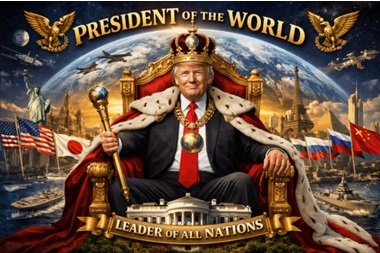
Constitutional scholar Obama can ask dozens of constitutional law professors the question: “Would any of the 56 delegates who signed our U.S. Declaration of Independence in 1776 and the 39 drafters who signed our U.S. Constitution in 1787, being told about Monarch King Donald Trump, oppose his immediate Impeachment and Removal – the only tool left he doesn’t control?” Not one, would be their studied response.
Trump, a serial draft dodger, pushes through another $150 billion to the Pentagon above what the Generals requested while starving well-being programs of nutrition for our children and elderly, and cutting services, by staff reductions, for American veterans, and stripmining our preparedness for climate violence and likely pandemics.
He promised law and order during the election and then betrayed it right after his inauguration, pardoning 1,500 convicted, imprisoned criminals, 600 of them violent, emptying their prison cells and calling them “patriots” for what they did to Congress on Jan. 6, 2021.
MR. EX-PRESIDENTS, JUST WHAT ARE YOU WAITING FOR? WHAT ARE YOUR ESCAPIST EXCUSES? Call your friends who are ranking members of the GOP controlled Committees of Congress and tell them to hold prompt SHADOW HEARINGS to educate the public through witnesses about the TRUMP DUMP, impeachable, illegal, and unconstitutional government. The media would welcome the opportunity to cover such hearings. Congressman Jamie Raskin thought this was “a good idea” before being admonished by his frightened Democratic leaders to bide his time and remain silent.
As more of Trump’s iron boots drop on people’s livelihoods, their freedoms, their worry for their children and grandchildren, their antipathy to more aggressive wars against non-threatening countries, and their demands at town meetings and mass marches for action against Trump’s self-enriching despotism, the disgraceful, craven cowardliness of our former presidential leaders will intensify. Unless they wake up to the challenge. With the mainstream media attacked regularly and being sued by Trump’s coercive, illegal extortion, the action by the Band of Four will bolster press freedom, press coverage, and their own redemption.
Send these four politicians, who are friendly with one another, petitions, letters, emails, satiric cartoons, or whatever communications that might redeem them from the further condemnation of history.
Rest assured, with Trump in the disgraced White House, THINGS ARE ONLY GOING TO GET WORSE, MUCH WORSE! For that is the predictable behavior from the past year and from his dangerously unstable, arrogant, vengeful, and egomaniacal personality
Spending big on nuclear
Ontario is investing billions into reactors — even as the rest of the world turns to solar and wind. Is this the wrong bet?
Toronto Star, MARCO CHOWN OVED, 11 Jan 2026, https://www.pressreader.com/article/281865829856772
In the race to prepare for an electrified future of AI, data centres, EVs and heat pumps, Ontario has placed a big bet on nuclear.
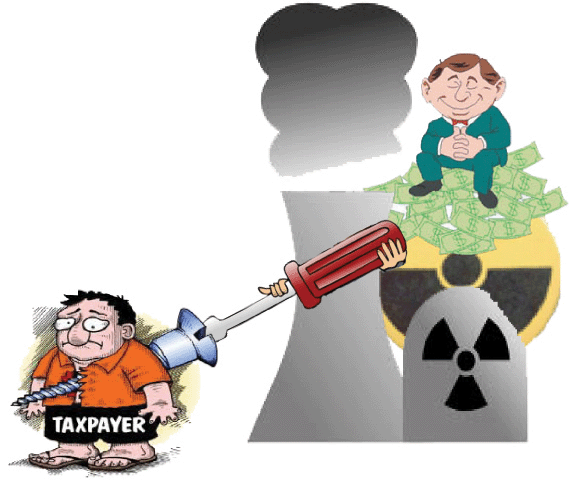
With more than $73 billion committed to building new and refurbishing old reactors — and two more plants in the pipeline that could add tens of billions more — Ontario taxpayers are counting on nuclear energy to pay off for decades to come.
Widely hailed for its ability to provide massive amounts of stable, emissionsfree power that the province will need to electrify the economy, nuclear has emerged as a solution advocates say is crucial to avoid the worst effects of climate change — all while supporting a wellestablished local industry. A single nuclear plant can provide the same amount of power as tens of thousands of solar panels and wind turbines — even when the wind isn’t blowing, and the sun isn’t shining.
“Nuclear brings a set of attributes and characteristics that you really can’t find with any other generating source,” said Brendan Frank, Director of Policy and Strategy at Clean Prosperity, a climate policy think tank. It’s large scale, [?] clean and reliable with a small land footprint, he says. “There’s a lot to like about nuclear.”
But the promise of nuclear power is tempered by the potential for peril.
Critics say nuclear proponents have never been able to address existing reactors’ significant shortcomings, including decadelong construction timelines, consistently large cost overruns, and the tiny but nonzero risk of catastrophic accidents. The cost considerations alone risk undermining the fight against climate change by making clean power more expensive than burning fossil fuels.
“Baked right into the nuclear option is centralization, a reliance on technical elites, the need for longterm stewardship and paramilitary security, a low tolerance for failure, and the acceptance of uninsurable risks,” said Ralph Torrie, the head of research with Corporate Knights and a veteran energy analyst.
And unlike nuclear opponents of the 1980s, today’s critics have a ready alternative in renewable energy, which is being built at an unprecedented speed and scale all over the world. Last year, more than 90 per cent of new power brought online globally has been wind and solar. Meanwhile, the nuclear industry has been mired in a 25year decline with more reactors decommissioned than built, according to the International Atomic Energy Agency.
Nuclear power is yesterday’s technology, the critics say.
“Every dollar we spend on new nuclear plants or reconditioning 20thcentury nuclear steam generators drives up the cost of building a sustainable energy system in Ontario and puts us further behind in the energy transition that is a defining feature of successful 21stcentury economies,” Torrie said.
In the search for climate solutions, the debate over nuclear power is particularly acute. For proponents, global warming cannot be addressed without a nuclear renaissance. For opponents, nuclear is a trap that diverts resources from better solutions while committing us for decades to a technology that has never lived up to its promises.
And Ontario has already picked its side.
“We’re doubling down on nuclear,” Energy Minister Stephen Lecce told the Star in an interview.
“If you care about jobs for Canadians, if you care about an ethical supply chain using a clean grid, not a coalfired grid, if you care about human rights, the rule of law, fundamental Canadian values, and the economic advantages for the workers, for the women and men who work in this province, then you will unapologetically defend and promote Ontario’s nuclear advantage, which is now an envy of the world.”
Why nuclear is considered a `very expensive’ option
This June, the province laid out a 25year road map for the electricity system that relies overwhelmingly on nuclear. It projects a massive 75 per cent increase in demand for power, the equivalent of adding fourandahalf Torontos to the grid. While there have been some investments in battery storage and hydro, most of this energy will come from refurbishing the existing fleet of reactors and building new ones, including one in Wesleyville — on the shore of Lake Ontario to the east of the existing Pickering and Darlington plants — that would be the world’s biggest nuclear plant. In doing so, the province would triple its nuclear generation, exceeding the entire electricity system’s output today.
“Ontario is putting a lot of eggs in a very expensive basket,” said David Pickup, an energy analyst at the Pembina Institute and the author of a report highlighting the risks of the province’s nuclear build out……………………………………………………………………………………………………………………………………………………………………. https://www.pressreader.com/article/281865829856772
1 This Month
15 October. Joint Appeal for Nuclear Abolition Day -presentation to the UN on October 15 will be live on UNWebTV
Endorse the Nuclear Abolition Day Appeal
23-25 October – on Zoom – World BEYOND War’s annual global conference

To see nuclear-related stories in greater depth and intensity – go to https://nuclearinformation.wordpress.com
-
Archives
- October 2026 (149)
- September 2026 (339)
- August 2026 (330)
- July 2026 (355)
- June 2026 (287)
- May 2026 (306)
- April 2026 (356)
- March 2026 (251)
- February 2026 (267)
- January 2026 (308)
- December 2025 (358)
- November 2025 (359)
-
Categories
- 1
- 1 NUCLEAR ISSUES
- business and costs
- climate change
- culture and arts
- ENERGY
- environment
- health
- history
- indigenous issues
- Legal
- marketing of nuclear
- media
- opposition to nuclear
- PERSONAL STORIES
- politics
- politics international
- Religion and ethics
- safety
- secrets,lies and civil liberties
- spinbuster
- technology
- Uranium
- wastes
- weapons and war
- Women
- 2 WORLD
- ACTION
- AFRICA
- Atrocities
- AUSTRALIA
- Christina's notes
- Christina's themes
- culture and arts
- Events
- Fuk 2022
- Fuk 2023
- Fukushima 2017
- Fukushima 2018
- fukushima 2019
- Fukushima 2020
- Fukushima 2021
- general
- global warming
- Humour (God we need it)
- Nuclear
- RARE EARTHS
- Reference
- resources – print
- Resources -audiovicual
- Weekly Newsletter
- World
- World Nuclear
- YouTube
-
RSS
Entries RSS
Comments RSS

