Labour backbenchers revolt over Starmer’s nuclear plans

Ministers accused of scapegoating protected species for construction failures
Matt Oliver, 02 February 2026
Sir Keir Starmer’s plan for a nuclear renaissance faces a rearguard action
from Labour MPs and wildlife charities over claims it will be a
“catastrophe” for nature. As many as 40 backbenchers are rallying
against the Prime Minister’s proposal to overhaul environmental regulations
after an independent review said red tape was frustrating the construction
of new power stations.
The MPs and a coalition of environmental charities
including the Wildlife Trusts, the RSPB, the National Trust and the
Woodland Trust have accused ministers of scapegoating protected species
such as bats and newts for planning failures.
It comes ahead of a plan
expected to be published by ministers this month, setting out how they will
implement the review’s recommendations and whether they will adopt them in
full. Labour is also under pressure from an opposing group of pro-nuclear
campaigners, businesses and think tanks who argue reform is “essential if
we want to create jobs, tackle climate change, and cut energy bills”.
Britain is currently the most expensive place in the world to build nuclear
reactors, with critics blaming nature rules that have added hundreds of
millions of pounds of extra costs to construction. The review of nuclear
regulations, led by the economist John Fingleton, criticised regulators
such as the Office for Nuclear Regulation, the Environment Agency and
Natural England for presiding over a confusing and “duplicative” system
that prioritised “process over outcomes”.
A briefing circulated in
Parliament by the Wildlife Trusts claims that the review’s proposed changes
to habitat regulations “will do little to speed up planning decisions
but, instead, will turn the nature crisis into a catastrophe.” It argues
that the suggestion of a nature fund may be suitable in some cases but not
in the case of “irreplaceable habitats or species that cannot
re-establish elsewhere easily.”
The briefing adds: “The Government must
reject the nuclear regulatory review recommendations on environmental
regulations and end its confected war on nature as a barrier to
planning.” Chris Hinchcliffe, the Labour MP for North East Hertfordshire
who is coordinating the rebellion, said “a good number of colleagues”
shared the concerns. He said: “There is very clear polling on the
importance of nature to the British public and their desire to seek
stronger, not weaker, protections for nature. “Getting this wrong is a
real vote-loser, and is a misstep that the Government cannot afford.”
Responding to the findings in November, ministers vowed to present “a
full implementation plan” by late February and to push through the
changes within two years. On Monday, the campaign group Britain Remade
published a letter signed by businesses and think tanks urging ministers to
press ahead. The letter said: “If the Government is serious about growing
the economy, reducing bills, and delivering a new golden age of nuclear
energy, its implementation plan must back the Fingleton reforms in full.
“Nuclear energy is the most land-efficient zero-carbon technology we
possess. A single power station can power millions of homes. “If we are
serious about halting climate-driven nature loss, then nuclear energy must
expand in a safe, secure and sustainable way. “We cannot afford for the
Government to U-turn.”
Telegraph 2nd Feb 2026 https://www.telegraph.co.uk/business/2026/02/02/labour-backbenchers-revolt-over-starmer-nuclear-plans/
Iran resumes activity at nuclear sites, satellite images show.
Iran has attempted to salvage material from its bombed nuclear sites, new
satellite images suggest. Aerial pictures from Planet Labs PBC, a US
earth-imaging company, show roofs have been rebuilt over two damaged
buildings at the Isfahan and Natanz facilities, the first significant
activity observed there since the end of the war.
Experts said the
construction could indicate Iranian scientists attempting to recover key
nuclear assets that may have survived the bombing without detection by
Israel or the United States. The activity at the sites occurred since the
beginning of December, during which time Iran was gripped by protests and
faced subsequent threats of US military action.
Telegraph 31st Jan 2026, https://www.telegraph.co.uk/world-news/2026/01/31/iran-resumes-activity-at-nuclear-sites-satellite-images-sho/
Malaysian Officials take action as concerns arise about nuclear power plants: ‘Preparing for that possibility’

It also requires clearer decommissioning plans and long-term waste management strategies
Malaysia will only decide on the use of nuclear energy for electricity after 2030
“We cannot begin preparations only after a decision has been made.”
by Christine Dulion, January 31, 2026, https://www.thecooldown.com/green-business/nuclear-regulatory-law-malaysia-amendment/
Malaysia has taken a major step toward strengthening public and environmental safety with the rollout of a newly amended nuclear regulatory law. Officials say it’s designed to tighten oversight as the country weighs nuclear power as part of its long-term energy future.
The Atomic Energy Licensing Bill (Amendment) 2025 officially took effect on Dec. 1, according to the Edge Malaysia. The changes come as the government evaluates whether nuclear energy could help meet its goal of reaching net-zero pollution by 2050, while also addressing concerns around safety, waste, and accountability.
Under the updated law, anyone involved with atomic energy is required to be licensed, including for the possession or use of radioactive materials, operation of radiation generators, management of radioactive waste, and the construction or decommissioning of nuclear-related facilities. The amendment also introduces a new permit system for cross-border activity, making it illegal to import, export, or transport nuclear materials or technology without government approval.
Violations can carry serious consequences. . Anyone found illegally moving nuclear or radioactive materials across borders could face up to 10 years in prison, fines of up to $123,300, or both. The law also criminalizes the intentional misuse of radioactive materials if it is meant to cause injury, death, or environmental damage.
Supporters say the law reassures residents that any future nuclear activity, such as recycling radioactive waste, will be tightly regulated. It also requires clearer decommissioning plans and long-term waste management strategies, making sure radioactive materials are monitored throughout their entire lifecycle.
Nuclear energy is a complex topic. While it can produce large amounts of low-pollution electricity and support energy security, it also raises concerns around radioactive waste, high upfront costs, and long-term safety. Malaysia’s new legislation doesn’t settle that debate, but it does put firmer rules in place before decisions are made.
“Although Malaysia will only decide on the use of nuclear energy for electricity after 2030, this amendment represents a step in preparing for that possibility, as we cannot being preparations only after a decision has been made,” said Science, Technology, and Innovation minister Chang Lih Kang.
‘Deeply ideological’: the rationale behind Iran’s insistence on uranium enrichment
Tehran’s nuclear ambitions date back to the shah and the 1970s and remains undimmed despite the damage caused by sanctions.
A desperate effort to avert war between the US and Iran is once again under way, but trying to locate common ground between the two countries over Tehran’s nuclear programme has been made more difficult by escalating US demands, and by Iran’s ideological, deeply nationalist attachment to the right to enrich uranium.
Iran’s ambitions to run its own nuclear programme pre-date the arrival of the theocratic state in 1979, and can be traced back to the mid-1970s when the shah announced plans to build 20 civil nuclear power stations. This prompted an undignified scramble among western nations to be part of the action, with the UK energy secretary at the time, Tony Benn, having more than a walk-on part. At the heart of the programme was a desire for national sovereignty and power, symbolised by the ability
to enrich uranium.
Guardian 30th Jan 2026, https://www.theguardian.com/world/2026/jan/30/rationale-behind-iran-uranium-enrichment-nuclear-ambitions
SNP rules out any new nuclear power plants in Scotland

By Neil Smith, Largs & Millport Weekly News 30th Jan 2026
THE Scottish Government has again ruled out building new nuclear power plants, despite a plea from West Scotland MSP Jamie Greene.
At Holyrood on Thursday, the Liberal Democrat member asked if the SNP government would continue its opposition to new nuclear plants.
A new plant to replace Hunterston A and B in North Ayrshire has been called for in recent years – to no avail.
Cabinet Secretary for Climate Action and Energy, Gillian Martin, responded: “We do not support the construction of new nuclear power stations in Scotland under current technologies.
“And while we recognise the role that nuclear has played, new nuclear would take decades to deliver, comes at a very high cost and creates long-term radioactive waste liabilities.
“Scotland has abundant resources with the clear potential to meet electricity demand through continued deployment of renewable energy and storage, and we are prioritising technologies that are quicker to deliver, lower cost and proven to maintain security of supply rather than the new nuclear projects that would take decades to materialise.”……………………….
“I have to point out the cost of nuclear, if you look at Hinkley Point C. It was expected to be completed in 2025 at a cost of £18 billion. Now the cost is estimated at £46 billion and it is delayed until 2031. I think that’s a lesson for all” https://www.largsandmillportnews.com/news/25808021.snp-rules-new-nuclear-power-plants-scotland/
Project 2025 : The Architecture of an American Upheaval

30 January 2026 Dr Andrew Klein, PhD, https://theaimn.net/project-2025-the-architecture-of-an-american-upheaval/
In an era of complex global challenges, a blueprint for the radical restructuring of the United States government and its role in the world has moved from the fringes of policy workshops to the centre of power. Known as Project 2025, this initiative is no mere political manifesto; it is a detailed, nearly thousand-page operational plan to consolidate executive power, dismantle long-standing federal institutions, and reorient American society and foreign policy according to a specific, hardline conservative vision.
While its architects publicly frame it as a preparatory tool for any conservative president, its DNA is unmistakably Trumpist. The project is a direct response to the perceived failures of Donald Trump’s first term, designed to ensure that a future administration is not hindered by a non-compliant bureaucracy or a lack of ideological clarity. An analysis found that just four days into his second term, nearly two-thirds of Trump’s executive actions “mirror or partially mirror” proposals from Project 2025. This is not a coincidence; it is the implementation of a premeditated design.
The Architects and the Blueprint
Project 2025 is the brainchild of The Heritage Foundation, a cornerstone of American conservative thought, which has orchestrated a coalition of over 100 partner organisations. The project’s director is Paul Dans, a former chief of staff in Trump’s Office of Personnel Management, and its president is Kevin Roberts, who has openly described the organisation’s role as “institutionalizing Trumpism.”
The initiative is built on “four pillars” that function as an integrated system for seizing the levers of government: a 920-page policy bible called the “Mandate for Leadership“; a personnel database of vetted, ideologically loyal individuals; a training academy for these recruits; and a secretive “Playbook” of draft executive orders for the first 180 days. The project operates with a stated budget of $22 million and is supported by a network of groups, with nearly half having received funding from a dark money network linked to Leonard Leo, a key architect of the conservative judiciary.
Core Aims and Ideological Drivers
The agenda laid out in Project 2025 is sweeping, touching upon nearly every aspect of governance and American life. Its central ideological drivers are the concentration of presidential power, the advancement of a Christian nationalist social agenda, and a dramatic rollback of the federal government’s regulatory and social welfare functions.
In the realm of government and power, the plan aims to dismantle the “administrative state” by reinstating “Schedule F,” a measure that would reclassify up to 50,000 career civil servants as political appointees, allowing for their replacement with administration loyalists. It also seeks to bring independent agencies like the Department of Justice and the FBI under direct presidential control.
On social policy, the blueprint is equally transformative. It proposes using the 1873 Comstock Act to criminalise the mailing of abortion pills and to reverse FDA approval of the abortion medication mifepristone. It aims to remove legal protections against anti-LGBTQ+ discrimination, mandate discrimination against transgender people in the military and in disaster assistance, and eliminate all Diversity, Equity, and Inclusion (DEI) programs across the federal government.
For the economy and environment, the project advocates for slashing corporate taxes, instituting a flat individual income tax, and cutting spending on social programs like Medicare and Medicaid. On the environment, it calls for the United States to withdraw from international climate agreements and to unleash maximum domestic fossil fuel production under a mantra of “drill, drill, drill,” with one proposal going so far as to suggest abolishing the National Oceanic and Atmospheric Administration (NOAA).
Regarding immigration and security, the plan outlines a policy of executing the arrest, detention, and mass deportation of undocumented immigrants. It also proposes ending birthright citizenship, dismantling the asylum system, and deploying the U.S. Armed Forces for domestic law enforcement.
The Trump-Project 2025 Nexus
Despite Donald Trump’s public attempts to distance himself, the connections are deep. The initiative is staffed by over 200 former Trump administration officials, and at least six of his former cabinet secretaries are authors or contributors to the project’s policy bible. Crucially, key figures behind the project have been appointed to Trump’s second-term administration. Russell Vought, a Project 2025 co-author, was reappointed as Director of the Office of Management and Budget. Stephen Miller, whose group advised the project, was appointed as a White House advisor. Tom Homan, a contributor, was appointed as “Border Czar,” and Pam Bondi, an ardent supporter, was nominated for U.S. Attorney General. This integration demonstrates that the project’s ultimate aim – to provide a “government in waiting” – has been realised.
Global Implications and the Australian Context
The project’s vision explicitly aims to reshape America’s role in the world. Its foreign policy prescriptions include a “pivot” to counter China, which analysts suggest would come at the expense of focus on Russia and European democracies. It advocates for a “comprehensive cost-benefit analysis of U.S. participation in all international organizations,” signaling a strong isolationist and unilateralist turn. Furthermore, it would embed conservative religious goals into foreign policy, for instance, by making “protecting life” a “core objective” of foreign assistance.
For Australia, the direct mentions in the project’s materials are few, primarily suggesting greater defence collaboration. However, the indirect consequences would be profound. A U.S. withdrawal from climate agreements and a massive increase in fossil fuel production would cripple global efforts to combat climate change, a dire outcome for a region highly vulnerable to its effects. A shift in U.S. commitment to international institutions would create significant uncertainty and force a realignment of strategic partnerships in the Indo-Pacific. The Heritage Foundation’s open admiration for Viktor Orban’s Hungary as “the model” for conservative statecraft indicates a foreign policy more friendly to authoritarian leaders, potentially altering the global democratic landscape in which Australia operates.
A Contested Legacy
Project 2025 is celebrated by its proponents as a necessary measure to dismantle an unaccountable bureaucracy. Its critics, including pro-democracy advocates and civil liberties unions, have labeled it an authoritarian and Christian nationalist plan that would undermine the rule of law, separation of powers, and civil liberties.
The implementation of this project represents a fundamental test for the American system of government. It is a deliberate, well-funded, and systematic effort to transform the structure of the state itself. As this blueprint becomes reality, its effects will reverberate far beyond Washington, D.C., challenging democratic norms and international alliances, and forcing nations like Australia to navigate a world reshaped by an America that has chosen a radically different path.
As Trump’s ‘Board of Peace’ presses forward, Palestinians in Gaza fear what lies ahead.
“I’m afraid that this committee will be the thing that enforces Trump’s plan on Gaza to turn our homeland into a place that’s not for us,
Mondoweiss spoke with Gazans after the announcement of the Palestinian technocratic committee that will oversee Gaza under Trump’s ‘Board of Peace’. While some hope for change, many fear the committee will ultimately serve U.S. and Israeli interests.
Mondoweiss, By Tareq S. Hajjaj January 27, 2026
On January 22, the long-awaited Palestinian technocratic committee, which is set to administer Gaza under the direction of the U.S. President Donald Trump’s so-called ‘Board of Peace’, was finally announced.
In his first address to the people of Gaza, the committee’s director, Ali Shaath, said that the Rafah crossing with Egypt, which has been unilaterally closed by Israel since May 2024, will be reopened in both directions. The announcement went viral in Gaza, and brought to the forefront a flurry of questions on the minds of Gazan society right now.
Is Trump’s plan for Gaza actually moving forward? What kind of power will this committee actually have? Will Israel actually allow for this next phase of the so-called “ceasefire” to move forward? What comes next for the people of Gaza?
And while Hamas has officially welcomed the committee and expressed its commitment to handing over administrative power in the Strip to the committee known as the National Committee for the Administration of Gaza (NCAG), people in Gaza are nevertheless skeptical over how and when a transfer of power will happen, and whether the committee will actually produce positive results for Gazans, or be just another tool in Israeli and U.S. domination.
“The committee will not end the crisis immediately, but at least there is a committee that has a green light from the U.S. and mediators to make a difference,” Anwar Abu Jabal, 33, a Gaza resident, said.
Abu Jabal, like many in Gaza, is primarily concerned with reconstruction, and who is going to be able to change the daily living conditions of the millions of people living in tents and bombed-out buildings. He hopes that the committee will be able to rebuild Gaza, or at least, play a role in it. But he remains skeptical and distrustful of the U.S. role in overseeing the committee.
“We have hope in this committee to rebuild Gaza, especially as it is supported by Trump. However, the same reason we put our hope in this committee can be used against us, because Trump does not care about people in Gaza. We hope this committee cares and starts to get us back to our places first,” he said.
For Abu Jabal and others, the presence of familiar names in Gaza on the committee, like Husni al-Mughanni, a well-known tribal leader in Gaza, provides some hope or reassurance that the committee may help alleviate the suffering of Gazans. “We all in Gaza want one thing: to live in safety and stability, and to have our needs and requirements met without hardship or suffering,” Abu Jabal said.
Others, in fact, most of the Palestinians in Gaza that spoke to Mondoweiss, are not as hopeful. Many Gazans, like 21-year-old Moaz Zayed, a resident of Nuseirat refugee camp, are concerned about the ultimate control that Trump’s ‘Board of Peace’, of which Israel is a member, has over Gaza and the Palestinian NCAG.
“If this committee’s power is confined to managing crossings and aid trucks, then it’s nothing but a play [by the U.S. and Israel] to lead people to think that Palestinians in Gaza have a government now, and that their issues are [being solved],” Zayed said, likening the committee to the ceasefire, which has continuously been violated by Israel since it went into effect, to little international attention or outrage.
To him, while reconstruction is important, opening the Rafah crossing and allowing in aid is secondary to Israel withdrawing its troops from Gaza, the return of all the displaced people to their homes on the Israeli-occupied side of the ‘yellow line’, and the guarantee of safety and basic human rights for Palestinians in Gaza in their own homeland – none of which, he pointed out, is currently guaranteed.
“I’m afraid that this committee will be the thing that enforces Trump’s plan on Gaza to turn our homeland into a place that’s not for us,” Zayed said. “Where are they? Why are they not here in Gaza among the people? My biggest fear is that this committee will be working and ruling the Gaza Strip according to Trump’s and Israel’s instructions.”
Israel’s role
While reactions and attitudes in Gaza towards the committee are mixed, there is one sentiment that all Gazans share: the feeling of near certainty that Israel will sabotage any kind of progress for Gaza.
Abdel Hadi Farhat, a journalist from the Gaza Strip, points out that Israel did not adhere at all to the first phase of the ceasefire, and that there is no guarantee it will adhere to the second phase, which includes the work of this newly formed committee………………………………………………………………………………………………………..https://mondoweiss.net/2026/01/as-trumps-board-of-peace-presses-forward-palestinians-in-gaza-fear-what-lies-ahead/
U.S. Department of Energy signs additional OTAs to accelerate nuclear reactor pilot projects

Energies Media, by Warren, January 24, 2026
The U.S. is aiming to lead the surge in new nuclear energy developments across the international market
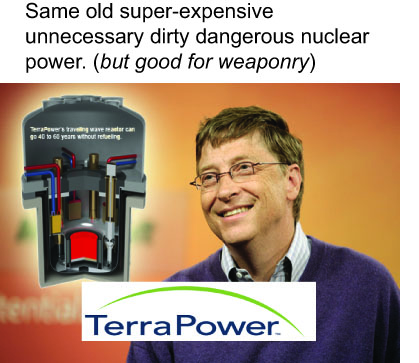
Since taking office for his second term, Donald Trump has shaken the U.S. energy market to its core. Trump signed several executive orders aimed at increasing the oil and gas production in the U.S., and has actively been approving the nuclear buildout as part of the government’s efforts to increase nuclear energy output in the United States.
The U.S. DOE has now finalized two new Other Transaction Agreements with Terrestrial Energy and Oklo. The new OTAs form part of the U.S. Reactor Pilot Program, which has outlined a target of fast-tracking the deployment of the reactors by July 4 of this year.
The context behind the new nuclear development in the U.S.
In August of 2025, the U.S. DOE formally selected ten companies as part of the Reactor Pilot Program, a new path for nuclear energy developers to leverage the accelerated DOE approval instead of the standard Nuclear Regulatory Commission licensing process. Initially, the U.S. was targeting to get up to three reactors online within a year, but that target was amended by Energy Secretary Chris Wright at the 2025 ANS Winter Conference & Expo.
Other notable selections by the Department as part of the Reactor Pilot Program include:
- Aalo Atomics
- Deep Fission
- Last Energy
- Natura Resources
- Standard Nuclear
Oklo and Terrestrial Energy will boost the U.S. nuclear energy output capacity
Oklo is as unique as it gets within the framework of the Reactor Pilot Program, as it has three distinct nuclear energy projects in the United States, namely the Aurora Powerhouse development, the Pluto reactor, and a third reactor being developed by the company’s subsidiary, Atomic Alchemy…….
Terrestrial Energy, on the other hand, follows a more conventional OTA process. The company’s Project Tetra has been slowly developing over the past few months and has now been added to the Reactor Pilot Program by the U.S. authority………………………. https://energiesmedia.com/us-department-of-energy-signs-additional-otas/
Inside Japan’s Controversial Shift Back to Nuclear Energy
Oil Price, By Felicity Bradstock – Jan 24, 2026
- Japan is shifting its energy policy to redevelop its nuclear energy capacity, aiming for 20 percent of its power from nuclear energy by 2040 to support climate goals.
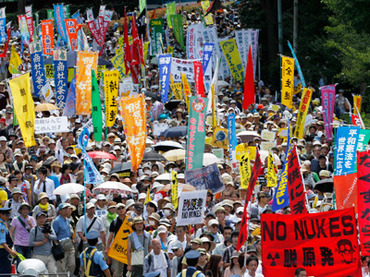
- The world’s largest nuclear facility, the Kashiwazaki-Kariwa plant, is preparing to restart operations, which marks a major step in the government’s nuclear deployment plans despite significant public opposition and safety concerns.
- Public confidence in the nuclear sector has been harmed by the 2011 Fukushima disaster and further damaged by recent news of a utility, Chubu Electric Power, fabricating seismic risk data.
Alongside plans to establish a strong renewable energy sector, Japan aims to redevelop its nuclear energy capacity to boost its power and support its climate goals. However, with memories of the Fukushima nuclear disaster still fresh, many in Japan are worried about the risks involved with developing the country’s nuclear capacity. Nevertheless, the government has big plans for a new nuclear era, commencing with the restarting of the world’s biggest nuclear facility…………………………………………………………..
The Fukushima accident prompted a widespread distrust of nuclear power in Japan for more than a decade. However, in February 2025, Japan’s Economy, Trade and Industry Ministry published a draft revision of the national basic energy plan, in which the statement on moving away from nuclear power has been removed. Later that month, the Cabinet approved the revised Seventh Strategic Energy Plan, which stated the aim of producing 20 percent of power from nuclear energy by 2040. This marked a significant shift in Japan’s approach to nuclear power.
Before 2011, Japan had 54 reactors that provided around 30 percent of the country’s electricity. At present, just 14 of 33 operable reactors are producing power, while efforts to restart others have been thwarted due to public opposition.
Japan is home to the world’s largest nuclear facility, the 8.2 GW Kashiwazaki-Kariwa plant, which covers 4.2 km2 of land in Niigata prefecture, 220km north-west of Tokyo. The facility was developed in 2012, but it has yet to come online, as, following the Fukushima disaster, the poor public perception of safety in the nuclear sector led the government to shut down several nuclear reactors.
Kashiwazaki-Kariwa is operated by Tokyo Electric Power (Tepco), the same utility that managed Fukushima. Tepco aimed to restart one of the seven reactors at Kashiwazaki on 19th January, but was forced to delay the restart as an alarm malfunctioned during a test of equipment, although the company expects to bring it online within the next few days. The restarting of reactor No. 6 will increase Tokyo’s electricity supply by around 2 percent, as well as mark a major step forward in the government’s plans to deploy more nuclear power in the coming years.
However, many in Japan are still wary about the risks involved with nuclear power projects. Many of those living with proximity to Kashiwazaki-Kariwa are worried about the potential for another Fukushima-scale event, which could lead up to 420,000 residents to be evacuated from across a 30 km radius…………………..
public confidence in nuclear power companies in nuclear power companies has been further harmed due to recent news of a firm fabricating data. It was found that Chubu Electric Power, a utility in central Japan, fabricated seismic risk data during a regulatory review, ahead of a possible restart of two reactors at its idle Hamaoka plant. In response, Japan’s Nuclear Regulation Authority (NRA) scrapped the safety screening at the plant, which is located on the coast, around 200 km west of Tokyo, in an area prone to Nankai Trough megaquakes. The NRA is now considering inspecting Chubu’s headquarters.
…………Despite overwhelming public opposition to the development of Japan’s nuclear power sector, the government plans to gradually restart several reactors and expand nuclear capacity in the coming decades to support decarbonisation aims. https://oilprice.com/Alternative-Energy/Nuclear-Power/Inside-Japans-Controversial-Shift-Back-to-Nuclear-Energy.html
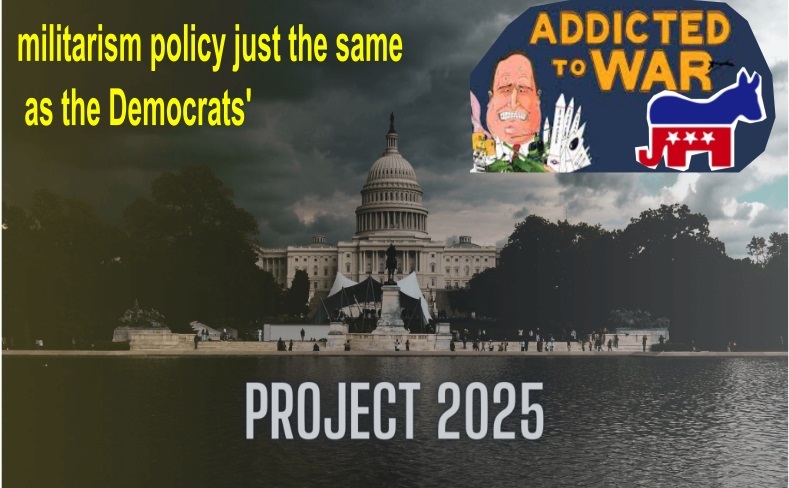
Is Trump a Useful Idiot? Project 2025 Is in Power Now.
January 24, 2026, by Joshua Scheer, https://scheerpost.com/2026/01/24/is-trump-a-useful-idiot-project-2025-is-in-power-now/
With Project 2025 in full effect, Chris Hedges explains that Trump is neither necessary nor a real player. The “death grip” on our society is already in full force—this goes beyond Trump, threatening to destroy the very fabric of our existing ways of resisting it.
The very idea of elections being free, fair, or even occurring at all is now in question. Far more alarming than Trump’s musings about canceling the midterms was what the president told the New York Times in another Oval Office interview. he admitted that he “regretted not ordering the National Guard to seize voting machines in swing states after his loss in the 2020 election.”
One of the central tenets of Project 2025 will be a direct assault on election officials. The Brennan Center warns that Project 2025 “threatens to reverse progress made over the last four years by stripping crucial federal resources from election officials and weaponizing the Department of Justice against officials who make decisions the administration disagrees with.”
With many Americans—and the other useful idiots in the Democratic Party—counting on elections to save us, we are living in a perilous moment that demands action, not hope. Chris Hedges warns that the U.S. has entered an age of authoritarian consolidation, where meaningful resistance must be rebuilt from the ground up. In a fractured society marked by economic precarity, surveillance, and the hollowing out of collective power, traditional movements have been systematically dismantled, leaving dissenters vulnerable. True resistance, Hedges insists, requires disciplined, long-term organizing—starting from zero—because corporate and state power is more entrenched and repressive than ever.
Another crucial step is supporting all independent media, because the New York Times and other media monopolies are not serving our interests. Real resistance requires amplifying voices outside the corporate mainstream.
Democrats vote to hand Trump hundreds of billions for immigration crackdown and global war.

Andre Damon, 24 Jan 26, https://www.wsws.org/en/articles/2026/01/24/vmym-j24.html
As the Trump administration proceeds with the military-police occupation of Minnesota in the face of mass resistance, and wages war all over the world, the majority of Democrats have joined with Republicans to pass a record military spending bill.
On Thursday, the House passed the combined defense and consolidated spending bills (H.R. 7148) by a vote of 341-88, with 149 Democrats voting yes and only 64 voting no. A separate bill funding the Department of Homeland Security and Immigration and Customs Enforcement (H.R. 7147) passed 220-207, with seven Democrats crossing the aisle to vote yes.
Republicans made no secret of what Democrats were voting for. After the vote Thursday, Representative Tom Cole, chairman of the House Appropriations Committee, declared the legislation would “champion American military power, ensuring that our brave warfighters have the tools, weapon systems and capabilities to meet any foe anywhere in the world at any time.” He summarized the bill’s purpose in three words: “America First, Fully Funded.”
Representative Ken Calvert, chairman of the Defense Subcommittee, said the bill “protects the administration’s ‘America first’ defense agenda.”
The House Appropriations Committee issued a statement hailing the “Republican-led funding that puts America First. These bills advance President Trump’s agenda.”
Despite Republicans openly proclaiming that the legislation would fund Trump’s fascistic agenda, nearly two-thirds of House Democrats voted in favor of the defense and consolidated spending bill.
An “opposition” party that votes this way is not in opposition, but an active collaborator. The Democratic Party is an instrument of the same ruling class that stands behind Trump.
The total defense appropriations amount to $839 billion, some $8.4 billion above what even Trump requested. The bill funds $27.2 billion for 17 warships, including a Columbia-class nuclear ballistic missile submarine and two Virginia-class fast attack submarines. It allocates $7.6 billion for 47 F-35 stealth fighters, $3 billion for the Air Force’s sixth-generation F-47 fighter, $1.9 billion for the B-21 Raider stealth bomber, and $4.5 billion for hypersonic weapons systems. The legislation fully funds the ongoing “modernization” of the nuclear triad—the B-21, the Columbia-class submarine, and the Sentinel intercontinental ballistic missile.
The Department of Homeland Security receives $64.4 billion, with approximately $10 billion earmarked for ICE. While the vote totals differed between the two bills, the fundamental intention is the same: the Democratic Party is systematically enabling the Trump administration’s assault on democratic rights and its preparations for global war.
The seven Democrats who voted for the DHS funding bill—Don Davis, Henry Cuellar, Laura Gillen, Marie Gluesenkamp Perez, Vicente Gonzalez, Jared Golden and Tom Suozzi—voted to fund the military occupation of Minnesota currently terrorizing immigrant communities. More than 2,000 ICE officers have been deployed across the state. Earlier this month, Renée Nicole Good, a 37-year-old Minneapolis woman and US citizen, was shot dead by a federal immigration agent. A 5-year-old boy was detained by ICE officers. On Wednesday, whistleblowers leaked an internal ICE memo authorizing agents to enter homes without judicial warrants.
The passage of the military spending bill comes after the Trump administration invaded Venezuela, overthrew the Maduro government and seized the country’s oil resources as part of Washington’s drive to consolidate its grip over Latin America in preparation for confrontation with China.
On Friday, US President Donald Trump announced that a “massive American fleet” is heading toward Iran, “just in case.” The USS Abraham Lincoln carrier group has reportedly been redeployed from the South China Sea to the Middle East. This follows Trump’s bombing of Iranian nuclear facilities last year.
World’s Largest Nuclear Station or Lower Electricity Bills?

Nuclear Power: The Most Expensive and Slowest Option
Nuclear reactors are the highest cost option to meet Ontario’s electricity needs – up to 10 times higher than energy efficiency, and 2 to 8 times higher than new wind and solar energy.
They are also far too slow. According to OPG, these new nuclear reactors would not come online until 2040 – 2048. That means more than 20 years of construction, cost overruns, and continued reliance on polluting gas.
By contrast, new wind and solar projects can be built in 6 months – 2 years, reducing emissions and lowering bills quickly.
A Risky Dependence on Foreign Fuel
To make matters worse, OPG is considering purchasing American-designed reactors from GE-Hitachi or Westinghouse. These reactors would require Ontario to import enriched uranium from the United States to fuel them. Does that seem like a good idea given the current political craziness unfolding south of the border?
The Better Alternative
OPG’s proposal fails to examine crucial alternatives.
Could Ontario meet its electricity needs more cheaply, more quickly, and more safely by investing in energy efficiency, wind power, solar energy, and energy storage (such as batteries and compressed air storage)?
This is a question that the Impact Assessment Agency of Canada (IAAC) must examine during its mandatory review. That will only happen if the public demands it.
What you can do
 Submit Public Comments – Deadline: Midnight, Wed. Feb. 11
The IAAC is accepting public comments on OPG’s application.
Submit your comments through the IAAC portal or email them to: wesleyville@iaac-aeic.gc.ca
Ask the IAAC to direct OPG to evaluate whether energy efficiency, renewables, and energy storage are lower-cost, faster, safer, and more secure ways to meet Ontario’s electricity needs than building a massive new nuclear station at Port Hope
Australia’s Frightening New “Hate Speech” Laws Are Clearly Aimed At Pro-Palestine Groups
Caitlin Johnstone, Jan 21, 2026, https://www.caitlinjohnst.one/p/australias-frightening-new-hate-speech?utm_source=post-email-title&publication_id=82124&post_id=185285586&utm_campaign=email-post-title&isFreemail=true&r=1ise1&triedRedirect=true&utm_medium=email
Australia’s Labor government has successfully passed a “hate speech” bill that’s plainly aimed, at least in part, at suppressing pro-Palestine organizations as “hate groups”.
Free speech advocates are sounding the alarm about the new laws, saying their extremely vague wording, lack of procedural fairness and low thresholds for implementation mean groups can now be banned if they make people feel unsafe or upset without ever actually posing any physical harm to anyone.
For me the most illuminating insight into what these laws are actually designed to do came up in an ABC interview with Attorney-General Michelle Rowland on Tuesday. Over and over again throughout the interview Rowland was asked by ABC’s David Speers to clarify whether the new laws could see activist groups banned for criticizing Israel and opposing its genocidal atrocities in a way that causes Jewish Australians to feel upset feelings, and she refused to rule out the possibility every single time.
“Let’s just go to what it means in practice: would a group be banned if it accuses Israel of genocide or apartheid, and as a result, Jewish Australians do feel intimidated?” Speers asked.
Rowland didn’t say no, instead saying “there are a number of other factors that would need to be satisfied there” and saying that agencies like the AFP and ASIO would need to make assessments of the situation.
“Okay, just coming back to the practical example though, if a group is suggesting that Israel is guilty of genocide, what other measures or factors would need to be met before they can be banned?” Speers asked.
“Under the provisions that are now before the parliament, there would also need to be able to demonstrate that there are for example, some aspects of state laws that deal with racial vilification that have been met as well,” Rowland responded, again leaving the possibility wide open.
(It should here be noted that Greens justice spokesperson David Shoebridge has pointed out that “state laws that deal with racial vilification” can include “tests like ‘ridicule’ and ‘contempt’,” meaning people could wind up spending years in prison for associating with groups that were essentially banned for upsetting someone’s feelings.)
“Just to be clear, if a group is saying Israel is engaged in genocide, or they’re saying that Israel should no longer exist, that is not enough for that group to be banned?” asked Speers.
“Well, again, that would depend on the other evidence that is gathered, David, so I would be reluctant to be naming and ruling in and ruling out specific kinds of conduct that you are describing here,” Rowland replied.
All this waffling can safely interpreted as a yes. Rowland is saying yes. Speers pushed this question three different times from three different angles because it’s the most immediate and obvious concern about these new laws, and instead of reassuring the public that they can’t be used to target pro-Palestine groups and aren’t intended for that purpose, the nation’s Attorney General confirmed that it was indeed possible.
So that’s it then. Under the new laws we can expect to see the Israel lobby crying about Jewish Australians feeling threatened and unsafe by every pro-Palestine group under the sun, and then from there all it takes is the thumbs-up from ASIO to put the group on the banned list and cage anyone who continues associating with it for up to 15 years.
The bill that ended up making it through Parliament is actually a narrowed down version of an even scarier bill that was scrapped by Labor due to lack of support which went after individuals as well as groups. The earlier version contained “racial vilification” components which could have been used to target any individual who voices criticisms of Israel or Zionism — so it doesn’t look like I’ll be doing any prison time for my writing any time soon. The new version moved its crosshairs to groups with the obvious intent to disrupt pro-Palestine organizing in Australia.
And we’re already seeing the Israel lobby pushing to resurrect the laws targeting individuals. A new ABC article titled “Jewish leaders call for vilification offence to be revisited as Coalition splits over watered-down hate laws” cites Zionist Federation of Australia president Jeremy Leibler and Executive Council of Australian Jewry co-chief executive Peter Wertheim arguing that the new laws don’t go far enough.
So we can expect the Australian Israel lobby to both (A) push to get pro-Palestine groups classified as “hate groups” under the new laws and (B) keep pushing to make it illegal for individuals to criticize Israel in the form of new “racial vilification” laws. They’ll keep trying over and over again, from government to government to government, until they get their way.
This comes after Australia/Israel & Jewish Affairs Council Executive Manager Joel Burnie publicly stated that he wants to ban pro-Palestine protests and criticism of Israel throughout the nation, and as prosecutors drag an Australian woman to court for an antisemitic hate crime because she accidentally butt-dialed a Jewish nutritionist and left a blank voicemail.
So things are already ugly, and they’re getting worse.
It’s so creepy knowing I share a country with people who want to destroy my right to normal political speech. It would never occur to me to try to kill Zionists’ right to free speech, but they very openly want to kill mine. They want to permanently silence me and anyone like me. I find that profoundly disturbing.
Israel supporters are horrible people. And I hope my saying that hurts their feelings.
Europe Economic Panic
Lorenzo Maria Pacini, January 18, 2026, https://strategic-culture.su/news/2026/01/18/europe-economic-panic/
Europeans are tired. They want peace, stability, and the quiet dignity of prosperity.
When a prime minister advises his staff to rest because the coming year will be much more difficult, it is neither black humor nor fatigue. It is a moment of sincerity, the kind that only emerges when internal projections no longer support the public narrative.
Giorgia Meloni was not addressing the electorate. She was addressing the machinery of the state itself, the administrative core charged with implementing decisions whose effects can no longer be hidden. Her observation was not about a normal increase in workload. She was talking about constraints, about limits being reached, about a Europe that has moved from crisis response to a phase of controlled contraction, fully aware that 2026 is the year when deferred costs will eventually converge.
What has leaked out is what European ruling circles have already understood: the Western strategy in Ukraine has run up against material limits. Not with Russian messages, not with disinformation, not with populist dissent, but with steel, ammunition, energy, manpower, and time. Once these realities assert themselves, political legitimacy begins to erode.
The EU cannot sustain this war economically. Europe can strike poses of readiness. It cannot manufacture war.
After years of high-intensity conflict, both the US and Europe are rediscovering a long-forgotten truth: wars of this nature cannot be sustained with speeches, sanctions, or the abandonment of diplomacy. They require bullets, missiles, trained personnel, maintenance cycles, and industrial production that consistently exceeds battlefield losses. None of this exists, not in sufficient quantities, and it is not feasible in the timeframe preached in Brussels.
Russia is producing artillery ammunition in quantities that Western officials now openly admit exceed NATO’s total production. Its industrial base has shifted to near-continuous wartime production, with centralized procurement, streamlined logistics, and state-led manufacturing, without even total mobilization. Estimates place Russian production at several million artillery shells per year, already delivered, not just projected.
Europe, meanwhile, spent 2025 congratulating itself on targets it is structurally incapable of achieving. The EU’s stated commitment of two million shells per year depends on facilities, contracts, and labor that will not be available by the decisive period of the war, if ever. Even if achieved, the figure would still be less than Russian production. The US, despite emergency expansion, expects about one million shells per year once full ramp-up is complete, and only if that happens. Even on paper, combined Western production struggles to match what Russia is already producing in practice. The imbalance is clear.
This is not just a deficit, but a misalignment of timing. Russia is producing now. Europe is planning for the future. And time is the only factor immune to sanctions.
Washington, in fact, cannot indefinitely compensate for Europe’s eroded capacity because it faces its own industrial difficulties. Patriot interceptor production remains in the order of a few hundred per year, while demand simultaneously concerns Ukraine, Israel, Taiwan, and the replenishment of US stocks: an imbalance that, as Pentagon officials admit, cannot be resolved quickly. Shipbuilding tells a similar story: submarines and surface ships are years behind schedule due to labor shortages, aging infrastructure, and skyrocketing costs, pushing significant expansion toward 2030. The assumption that America can indefinitely support Europe is no longer in line with reality. This is a systemic Western problem.
Unfounded war rhetoric
European leaders talk about a “state of war” as if it were a rhetorical position, but in reality, it is an industrial condition that Europe does not meet.
New artillery lines take years to reach stable production. Air defense interceptors are produced in long, batch-based cycles, not in sudden spikes. Even basic components such as explosives remain a critical issue, with plants that closed decades ago only now reopening and some not expected to reach full capacity until the late 2020s. This timeline is in itself an admission.
Europe’s weakness is not intellectual, but institutional: huge sums have been authorized, but procurement inertia, fragmented contracts, and a depleted supplier base have meant that deliveries are years behind schedule. France, often described as Europe’s most capable arms manufacturer, is capable of building advanced systems, but only in limited quantities, counted in dozens, while a war of attrition requires thousands. EU ammunition initiatives have expanded capacity on paper, while the front has exhausted ammunition in a matter of weeks.
These are not ideological shortcomings, but administrative and industrial failures, which are exacerbated in stressful situations. It is yet another example of the failure of European Community policy, so much so that the structural contrast is stark. Western industry has been optimized for shareholder returns and peacetime efficiency, while Russian industry has been reoriented to withstand pressure. NATO announces aid packages. Russia counts deliveries. You can already guess what the outcome of this situation will be, right?
This industrial reality explains why the debate on asset freezing was so important and why it failed. Europe did not pursue the seizure of Russian sovereign assets out of legal ingenuity or moral determination, but because it needed time: time to avoid admitting that the war was unsustainable in Western industrial terms, time to replace production with financial maneuvers.
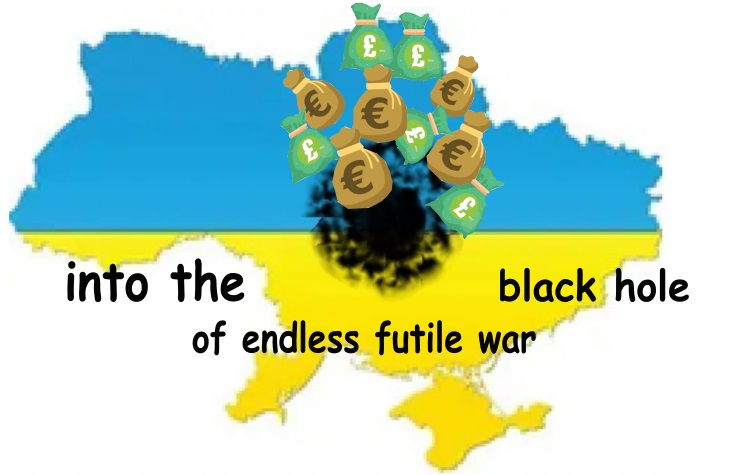
When the effort to confiscate some €210 billion in Russian assets failed on December 20, blocked by legal risks, market repercussions, and opposition led by Belgium, with Italy, Malta, Slovakia, and Hungary opposing total confiscation, the Brussels technocracy settled for a reduced alternative: a €90 billion loan to Ukraine for 2026-27, with interest payments of around €3 billion per year. This further mortgages Europe’s future. This is not a strategy, but emergency triage. A collapsing political hospital. Pure panic.
Narrative, crisis, disaster
The deeper reality is that Ukraine is no longer primarily a military dilemma, it is a question of solvency. Washington recognizes this, because it cannot absorb the reputational discomfort, but they cannot take on unlimited responsibility forever. A way out is being explored, discreetly, inconsistently, and shrouded in rhetorical cover.
Europe cannot admit the same necessity, because it has ultimately adopted ‘Putin’s version’, i.e. it has framed the war as existential, civilising, moral – but do you remember when European politicians enjoyed calling Putin crazy for talking about a clash of civilisations?
Compromise has become appeasement, negotiation surrender. In doing so, Europe has eliminated its own escape routes. Well done, ladies and gentlemen!
On the narrative front, greetings to all. The aggressive enforcement of the EU’s Digital Services Act has less to do with security than with containment: building an information perimeter around a consensus that cannot survive open scrutiny. Translated: censorship as a solution. The truth of the matter must not be made known, and those who try to do so must be suppressed in an exemplary manner. This also explains why regulatory pressure now extends beyond European borders, generating transatlantic friction over freedom of expression and jurisdiction. Confident systems welcome debate. Fragile ones suppress it. In this case, censorship is not ideology, but a form of insurance.
The information crisis, rest assured, will very soon become… a social crisis ready to detonate into domestic conflict.
And the crisis is also one of resources and energy. We are witnessing the securitization of decline, whereby obligations are postponed while the productive base needed to sustain them continues to shrink. It’s a cat chasing its tail. Here too, you know how it will end, don’t you?
Europe has not only sanctioned Russia. It has sanctioned itself. European industry will continue to pay energy prices well above those of its competitors in the United States or Russia throughout 2026. Take a trip around Europe, read the headlines in local newspapers, look at people’s faces: the fabric of small and medium-sized enterprises, the true beating heart of entire EU countries, is quietly disappearing. And this is logically reflected in large companies too. This is why Europe cannot increase its production of ammunition and why rearmament remains an aspiration rather than a concrete operation.
Energy, we said. Low-cost energy was not a convenience, it was essential. If it is eliminated through self-inflicted damage, the entire structure is emptied. Even the most ambitious plans preached for years, such as the IMEC corridor, are still a mirage. There is a stampede towards Turkey, Azerbaijan, and Georgia to try to scrape together a few kilowatts. A ridiculous attempt to save what is now tragically unsalvageable.
China, observing all this, represents the other half of Europe’s strategic nightmare. It controls the world’s deepest manufacturing base without having entered into a position of war. Russia does not need China’s full capacity, only its strategic depth in reserve. Europe has neither.
A frightening 2026
2026 therefore looks set to be a terrible year, I’m sorry to say. The European elites find themselves losing control on three fronts at once. On finance, because the budget will be bitter and the money for the insane support to Kiev will no longer be the same. On narrative, because the question citizens will ask themselves will be ‘what was the point of all this?’. On the cohesion of the Alliance, both NATO and the EU, because Washington’s disengagement will force a review of the balance of power on the European continent to the point of no return and, perhaps, a break between the two sides divided by the ocean.
Panic, again. Not a sudden defeat, but the slow erosion of legitimacy as reality creeps in through gas that costs as much as gold, closed plants, empty stockpiles, obsolete rifles, and a future that is turning away.
This is not just a difficult situation for Europe, but a matter of civilization. A system incapable of producing, supplying, speaking honestly, or retreating without collapsing in credibility has reached its limit. When leaders begin to prepare their institutions for worse years, they are not anticipating inconveniences, but recognizing structural failure.
Empires proclaim victory loudly. Declining systems quietly lower expectations or, in this case, momentarily say the quiet part out loud. But the truth is that nothing is the same as before, and it is obvious.
For most Europeans, the reckoning will not come as an abstract debate about strategy or supply chains, but as a simple realization: this was never a war they consented to. It did not defend their homes, their prosperity, or their future. And so, again, how do you think it will end?
An ideological war has been fought in the name of imperial ambition and financed through declining living standards, industrial decline, and the prospects of their children. In the name of big pro-European capital, of the privileged few with robes, stars, and crowns.
For months, even years, it was said that “there was no alternative” and that this was the only course of action. And now?
Europeans are tired. They want peace, stability, and the quiet dignity of prosperity: affordable energy, a functioning industry, and a future unencumbered by conflicts they NEVER chose and, above all, they do not want the decline of millennia-old civilizations.
And when this awareness has taken hold, when the fear has faded and the spell has been broken, the question Europeans will ask themselves will not be technical or ideological. It will be existential. And all existential questions lead to radical choices, even terrible ones.
May this dramatic fear keep the mad leaders of this Europe awake at night.
15 years after Fukushima, Japan prepares to restart the world’s biggest nuclear plant.
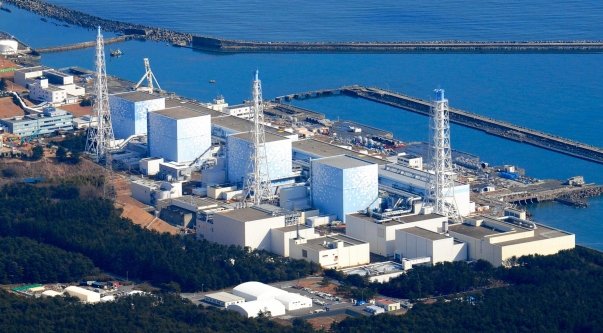
Tepco is set to defy local public opinion and restart one of Kashiwazaki-Kariwa’s seven reactors.
for many of the 420,000 people living within a 30km (19-mile) radius of Kashiwazaki-Kariwa who would have to evacuate in the event of a Fukushima-style incident, Tepco’s imminent return to nuclear power generation is fraught with danger.
A return to nuclear power is at the heart of Japan’s energy policy but, in the wake of the 2011 disaster, residents’ fears about tsunamis, earthquakes and evacuation plans remain
Justin McCurry Guardian, in KashiwazakiMon 19 Jan 2026
The activity around the Kashiwazaki-Kariwa nuclear power plant is reaching its peak: workers remove earth to expand the width of a main road, while lorries arrive at its heavily guarded entrance. A long perimeter fence is lined with countless coils of razor wire, and in a layby, a police patrol car monitors visitors to the beach – one of the few locations with a clear view of the reactors, framed by a snowy Mount Yoneyama.
When all seven of its reactors are working, Kashiwazaki-Kariwa generates 8.2 gigawatts of electricity, enough to power millions of households. Occupying 4.2 sq km of land in Niigata prefecture on the Japan Sea coast, it is the biggest nuclear power plant in the world.
Since 2012, however, the plant has not generated a single watt of electricity, after being shut down, along with dozens of other reactors, in the wake of the March 2011 triple meltdown at Fukushima Daiichi, the world’s worst nuclear accident since Chornobyl.
Located about 220km (136 miles) north-west of Tokyo, the Kashiwazaki-Kariwa plant is run by Tokyo Electric Power (Tepco), the same utility in charge of the Fukushima facility when a powerful tsunami crashed through its defences, triggering a power outage that sent three of its reactors into meltdown and forcing 160,000 people to evacuate.
Weeks before the 15th anniversary of the accident, and the wider tsunami disaster that killed an estimated 20,000 people along Japan’s north-east coast, Tepco is set to defy local public opinion and restart one of Kashiwazaki-Kariwa’s seven reactors.
On Monday, Tepco said it would delay the restart, originally scheduled for the following day, after an alarm malfunctioned during a test of equipment over the weekend, according to public broadcaster NHK. The reactor is now expected to go back online in the coming days, NHK added.
Restarting reactor No 6, which could boost the electricity supply to the Tokyo area by about 2%, will be a milestone in Japan’s slow return to nuclear energy, a strategy its government says will help the country reach its emissions targets and strengthen its energy security.
But for many of the 420,000 people living within a 30km (19-mile) radius of Kashiwazaki-Kariwa who would have to evacuate in the event of a Fukushima-style incident, Tepco’s imminent return to nuclear power generation is fraught with danger.
They include Ryusuke Yoshida, whose home is less than a mile and a half from the plant in the sleepy village of Kariwa. Asked what worries him most about the restart, the 76-year-old has a simple answer. “Everything,” he says, as waves crash on to the shore, the reactors looming in the background.
“The evacuation plans are obviously ineffective,” adds Yoshida, a potter and member of an association of people living closest to the facility. “When it snows in winter the roads are blocked, and a lot of people who live here are old. What about them, and other people who can’t move freely? This is a human rights issue.”……………………………..
“The core of the nuclear power business is ensuring safety above all else, and the understanding of local residents is a prerequisite,” says Tatsuya Matoba, a Tepco spokesperson.
That is the one hurdle residents say Tepco has failed to overcome after local authorities ignored calls for a prefectural referendum to determine the plant’s future. In the absence of a vote, anti-restart campaigners point to surveys showing clear opposition to putting the reactor back online.
They include a prefectural government poll conducted late last year in which more than 60% of people living within 30km of the plant said they did not believe the conditions for restarting the facility had been met…………
Kazuyuki Takemoto, a member of the Kariwa village council, says seismic activity in this region of north-west Japan means it is impossible to guarantee the plant’s safety.
“But there has been no proper discussion of that,” says Takemoto, 76. “They say that safety improvements have been made since the Fukushima disaster, but I don’t think there is any valid reason to restart the reactor. It’s beyond my comprehension.”
‘The priority should be to protect people’s lives’
Just weeks before the planned restart, the nuclear industry attracted fresh criticism after it emerged that Chubu Electric Power, a utility in central Japan, had fabricated seismic risk data during a regulatory review, conducted before a possible restart, of two reactors at its idle Hamaoka plant.
“When you look at what’s happened with Hamaoka, do you seriously think it’s possible to trust Japan’s nuclear industry?” Takemoto says. “It used to be said that nuclear power was necessary, safe and cheap … We now know that was an illusion.”
Adding to local concerns are the presence of seismic faults in and around the site, which sustained damage during a 6.8-magnitude offshore earthquake in July 2007, including a fire that broke out in a transformer. Three reactors that were in operation at the time shut down automatically.
The Kashiwazaki-Kariwa restart is a gamble for Japan’s government, which has put an ambitious return to nuclear power generation at the centre of its new energy policy as it struggles to reach its emissions targets and bolster its energy security.
Before the Fukushima disaster, 54 reactors were in operation, supplying about 30% of the country’s power. Now, of 33 operable reactors, just 14 are in service, while attempts to restart others have faced strong local opposition.
Now, 15 years after the Fukushima meltdown, criticism of the country’s “nuclear village” of operators, regulators and politicians has shifted to this snowy coastal town.
Pointing out one of the many security cameras near the plant, Yoshida says the restart has been forced on residents by the nuclear industry and its political allies. “The local authorities have folded in the face of immense pressure from the central government,” he says.
“The priority of any government should be to protect people’s lives, but we feel like we have been deceived. Japan’s nuclear village is alive and well. You only have to look at what’s happening here to know that.” https://www.theguardian.com/world/2026/jan/19/japan-nuclear-plant-restart-kashiwazaki-kariwa-fukushima
1 This Month
15 October. Joint Appeal for Nuclear Abolition Day -presentation to the UN on October 15 will be live on UNWebTV
Endorse the Nuclear Abolition Day Appeal
23-25 October – on Zoom – World BEYOND War’s annual global conference

To see nuclear-related stories in greater depth and intensity – go to https://nuclearinformation.wordpress.com
-
Archives
- October 2026 (149)
- September 2026 (339)
- August 2026 (330)
- July 2026 (355)
- June 2026 (287)
- May 2026 (306)
- April 2026 (356)
- March 2026 (251)
- February 2026 (267)
- January 2026 (308)
- December 2025 (358)
- November 2025 (359)
-
Categories
- 1
- 1 NUCLEAR ISSUES
- business and costs
- climate change
- culture and arts
- ENERGY
- environment
- health
- history
- indigenous issues
- Legal
- marketing of nuclear
- media
- opposition to nuclear
- PERSONAL STORIES
- politics
- politics international
- Religion and ethics
- safety
- secrets,lies and civil liberties
- spinbuster
- technology
- Uranium
- wastes
- weapons and war
- Women
- 2 WORLD
- ACTION
- AFRICA
- Atrocities
- AUSTRALIA
- Christina's notes
- Christina's themes
- culture and arts
- Events
- Fuk 2022
- Fuk 2023
- Fukushima 2017
- Fukushima 2018
- fukushima 2019
- Fukushima 2020
- Fukushima 2021
- general
- global warming
- Humour (God we need it)
- Nuclear
- RARE EARTHS
- Reference
- resources – print
- Resources -audiovicual
- Weekly Newsletter
- World
- World Nuclear
- YouTube
-
RSS
Entries RSS
Comments RSS

