Nuclear power, then nuclear weapons? for United Arab Emirates
 Why is the UAE, where solar energy is abundant, about to open four nuclear reactors? https://theconversation.com/why-is-the-uae-where-solar-energy-is-abundant-about-to-open-four-nuclear-reactors-130248 Paul Dorfman, 11 Mar 20, Why is the UAE, where solar energy is abundant, about to open four nuclear reactors? https://theconversation.com/why-is-the-uae-where-solar-energy-is-abundant-about-to-open-four-nuclear-reactors-130248 Paul Dorfman, 11 Mar 20, Honorary Senior Research Associate, Energy Institute, UCL March 11, 2020 The United Arab Emirates (UAE) is building the world’s largest concentrated solar power plant, capable of generating 700 megawatts. During daylight, solar power will provide cheap electricity, and at night the UAE will use stored solar heat to generate electricity.But at the same time, four nuclear reactors are nearing completion in the UAE, built by the South Korean Electric Power Corporation, KEPCO. The nuclear power plant is named Barakah – Arabic for divine blessing. The UAE’s investment in these four nuclear reactors risks further destabilising the volatile Gulf region, damaging the environment and raising the possibility of nuclear proliferation. Safety flawsThe UAE nuclear contract remains South Korea’s one and only export order, despite attempts by KEPCO to win contracts in Lithuania, Turkey, Vietnam and the UK. Barakah, construction of which began in 2011, is in the Gharbiya region of Abu Dhabi, on the coast. Although nuclear reactor design has evolved over time, key safety features haven’t been included at Barakah. This is important, since these reactors might not be able to defend against an accidental or deliberate airplane crash, or military attack. Particularly worrying is the lack of a “core-catcher” which, if the emergency reactor core cooling system fails, works to keep in the hot nuclear fuel if it breaches the reactor pressure vessel. Concrete cracking in all four reactor containment buildings hasn’t helped, nor has the installation of faulty safety relief valves. All this is further complicated by large-scale falsification of KEPCO quality control documents, which ended up in a far-reaching criminal investigation and convictions in 2013. Proliferation risksThe tense Gulf strategic geopolitical situation makes new civil nuclear construction in the region even more controversial than elsewhere, as it can mean moves towards nuclear weapon capability, as experience with Iran has shown. Following military strikes against Saudi oil refineries in late 2019, nuclear energy safety in the region increasingly revolves around the broader issue of security. This is especially the case since some armed groups may view the UAE’s military operations in Yemen as a reason to target nuclear installations, or intercept enriched uranium fuel or waste transfers. Such spillover from foreign policy – and politics more generally – will increasingly dovetail with nuclear safety considerations in the region. Perhaps disconcertingly, Yemeni rebels already claim to have fired a missile at the Barakah nuclear power plant site in 2017. Although UAE denied the claim, saying it had an air defence system capable of dealing with any threat, protection of Barakah won’t be an easy task. Time to scramble fighter aircraft or fire surface-to-air missiles may be limited, as the attacks in Saudi Arabia indicated. Not only that, but the increase in transport of radioactive materials into and through the Gulf once the reactors at Barakah start up will, unfortunately, present a major maritime risk. Environmental concernsThe Gulf is one of the most water-scarce regions in the world, and Gulf states rely on desalination. Radioactive release to the marine environment following an accident or deliberate incident at Barakah would have significant pollution consequences for desalination and drinking water in the region. And the UAE coast is a vulnerable environment, critically important for a very large range of marine life. Extensive mangrove habitats grow on and in coastal fine sediments and mudflats, notable for their ability to sequester radioactivity. Acting as a “sink” and concentrating radioactivity over time, normal operational nuclear discharge from Barakah will inevitably lead to human inhalation and ingestion. The debate over nuclear power and climate is hotting up, with some scientists suggesting new nuclear can help. Yet, the International Panel on Climate Change recently reported that extreme sea-level events will significantly increase, whether emissions are curbed or not. All coastal nuclear plants, including Barakah, will be increasingly vulnerable to sea-level rise, storm surges, flooding of reactor and spent fuel stores. The UAE’s governmental environmental assessment of global heating’s impact on Barakah is conspicuous by its absence. Since not all energy policy choices are equal, the case for nuclear power in the Middle East has never been strong. While lower CO₂ emissions and improvement in renewable technology is one explanation for the dynamic global ramp in new renewable generation and the fall in new nuclear – the main driver seems to be the plummeting costs of the former and the increasing costs of the latter. So it’s strange that the UAE has cast significant resources at nuclear power, when other viable options already exist. Since new nuclear seems to make little economic sense in the Gulf, which has some of the best solar energy resources in the world, the nature of Emirate interest in nuclear may lie hidden in plain sight – nuclear weapon proliferation. |
|
Peach Bottom nuclear station can struggle on for 80 years!

It’s getting a bit tiresome – this endless, mindless repetition of “carbon-free”  “clean energy” “zero-carbon” nuclear energy. Why don’t Larry Pearl and other writers, who otherwise provide thorough and well-researched information – why don’t they do their homework on the full carbon emissions of the entire nuclear fuel chain? Even the reactors themselves release a tiny an mount of Carbon 14. There is not only the chain of construction and demolition, but also the continuing fuel chain of mining through to radioactive waste disposal.
Exelon’s Peach Bottom becomes second US nuclear plant to get license 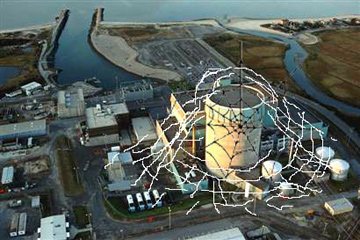 approval to 80 years, Utility Dive , By Larry Pearl March 9, 2020
Dive Brief:
- Exelon’s Peach Bottom plant became the second nuclear power reactor in the U.S. to get permission to operate out to 80 years, after the Nuclear Regulatory Commission approved another 20-year extension on Friday.
- Last December, Florida Power & Light’s Turkey Point units 3 and 4 got the first such approval as utilities work to retain a major source of carbon-free [?] as long as possible.
- Dominion has applied for a similar license extension for its Surry nuclear plant and plans to request for at least two more, while Duke plans to do the same for all 11 of its nuclear plants, Bloomberg reported last month.
Dive Insight:
Peach Bottom Unit 2 in York County, Pennsylvania, is now licensed to operate through August 2053 and Unit 3 through July 2054. The approvals come as more and more states move to adopt aggressive clean energy goals and the nuclear industry looks to advance a new generation of reactors.
But the economics of the current generation of U.S. reactors remains challenging, especially for new plants, and the industry and a number of states have adopted programs to recognize the zero emission attributes of nuclear.
While Exelon Nuclear’s Chief Nuclear Officer Bryan Hanson called the license extension, “good news for the environment, our employees and the community,” he noted that “nuclear plants must remain financially viable to continue to operate. ….
But FERC’s move in December to effectively raise the price floor for subsidized resources attempting to bid into the PJM wholesale capacity market complicates state efforts to support nuclear plants in Pennsylvania and elsewhere.
A variety of stakeholders have petitioned FERC to reconsider its decision.
The NRC’s decision to move forward with Peach Bottom’s license extension is also being challenged…. https://www.utilitydive.com/news/exelons-peach-bottom-becomes-second-us-nuclear-plant-to-get-license-approv/573690/
Government advisers warn Britain against costly new nuclear reactors

 Times 7th March 2020, Net Zero Report. Plans for nuclear plants in Britain face fresh uncertainty after government advisers warned against backing costly new reactors. The nuclear industry wants the government to commit to a funding system to back the construction of reactors, including EDF’s proposed Sizewell plant in Suffolk.
However, the National Infrastructure Commission, set up in 2015 to provide impartial advice to the government, reiterated concerns in a report about backing more nuclear plants. It noted that there had been cost reductions in renewable power technologies such as wind and solar over the past ten years, but “costs of building and running nuclear power stations have not
fallen consistently, even in countries that have built fleets of similar reactors”. Given the potential for other non-intermittent technologies to complement renewables, it said that this “weakened the case for committing to a new fleet of nuclear power stations”.
https://www.thetimes.co.uk/article/advisers-raise-doubts-over-new-nuclear-plants-8hd85cr6d
Deceit and Dark Money -Ohio’s nuclear subsidy saga

Dark money dominated Ohio’s nuclear subsidy saga ENERGY NEWS NETWORK, Kathiann M. Kowalski, March 5, 2020
FirstEnergy Solutions paid nearly $2 million to at least one group, but  most other data remains hidden.

After-the-fact filings show that FirstEnergy’s generation subsidiary paid nearly $2 million to Generation Now, one of the special interest groups that orchestrated ads, political donations and other efforts behind Ohio’s nuclear and coal bailout.
But legal loopholes make it harder to find out the total spent and who else was behind xenophobic advertising, dueling voter petitions, alleged intimidation and other claims of foul play. And none of those actions fully disclosed who was behind them.
The scant public filings that are available show additional connections to FirstEnergy Solutions (now Energy Harbor), as well as the law firm of an outspoken legislator who has long fought the state’s clean energy standard, and others with high-level political influence.
House Bill 6 gutted Ohio’s renewable energy and energy efficiency standards while putting ratepayers on the hook for nearly $1 billion in subsidies for nuclear power plants, plus an additional amount for aging coal plants. Multiple groups spent heavily to promote HB 6 and prevent a referendum on the law following its passage.
In some cases, nonprofit and for-profit organizations funded each other or shared the same spokesperson. Groups active in the HB 6 campaign also had links to some of the same lobbyists and consultants who acted for companies that stood to benefit from HB 6, or unions with workers at their plants. But only limited amounts of funding could be traced.
ON ORIGINAL – INTRIGUING INTERACTIVE DIAGRAM HERE _ shows interrelationships of individuals and groups Continue reading
Dark nuclear-lobby money effects political changes in Ohio, and where next?
 Support for HB 6 comes from beyond the state and reaches into some top levels of national politics.
The forces that passed Ohio’s subsidy law are poised for further action to shore up utilities and protect fossil fuel interests.
Dark money helped shift leadership in the General Assembly.Dark money dominated Ohio’s nuclear subsidy saga ENERGY NEWS NETWORK, Kathiann M. Kowalski, March 5, 2020 “…………..Dark money groups such as Generation Now and the Growth & Opportunity PAC spent roughly $1 million in the 2018 election cycle. That election replaced Kasich with Mike DeWine as governor.
Other groups were also active, sometimes popping up for just a few months. At least one group launched a $100,000 negative ad campaign against an Ohio representative running in a congressional primary after she opposed subsidies for FirstEnergy.
The 2018 election also led to a leadership shift in the Ohio House of Representatives. Larry Householder, R-Glenford, the new speaker, proved to be a major force shepherding HB 6 through the General Assembly, even to the point of holding up a budget agreement last summer until the subsidy bill passed.
Dark money efforts while the bill was pending included advertising, coordination of bill testimony, and blocking a referendum effort that would have let voters reject HB 6 this November. Groups’ actions sparked critics to complain about misleading ads, alleged harassment of signature collectors, buyouts of petition workers, and even alleged assault.
At the end of the day, someone paid big money” for all those efforts, Hill said. “They didn’t do that [as] an un-self-interested contribution to a public policy debate.”
Groups’ efforts overlapped and linked with each other from before 2017 through the present.
Public reports reflect partial funding and cross-transfers among organizations whose backers remain secret.
Generation Now formed in 2017 as a tax-exempt organization under Section 501(c)(4) of the Internal Revenue Code. That code section covers a broad range of civic and “social welfare” organizations. An IRS filing identified its president/secretary as JPL & Associates, rather than a specific individual.
Generation Now gave $1,050,000 to the Growth & Opportunity PAC in 2018, which in turn ran ads and took other steps to support candidates who would favor Householder’s selection as House speaker, preparing the way for the subsidy bill. In 2019, Generation Now continued to spend money for pro-HB 6 ads and to discourage voters from signing referendum petitions. The total amount of its spending is not yet known.
Neither Generation Now spokesperson Curt Steiner nor Jeff Longstreth, a principal at JPL & Associates, responded to questions about the organization’s funding and its activities.
Unions reported giving $840,000 to Generation Now in 2018 and 2019. Generation Now also got money from other 501(c)(4) organizations, according to IRS filings. A group called Empowering Ohio’s Economy gave $100,000 to Generation Now in 2017 and another $50,000 for advocacy in 2018. That group also gave $200,000 for public advocacy to the Coalition for Growth & Opportunity in 2017, which in turn gave $59,000 to Generation Now over the course of 2017 to 2018.
The Coalition for Growth & Opportunity has also donated money to the Growth & Opportunity PAC. And it paid roughly $103,000 in 2018 for services from Communications Counsel, Inc., a public relations firm that has represented many Republicans in Ohio politics. Mark Weaver, a principal in the firm, is also an attorney with the Isaac Wiles law firm in Columbus. Other lawyers there filed incorporation papers and serve as registered agents for Ohioans for Energy Security. That group was formed on July 30, a week after Gov. DeWine signed HB 6.
When asked about that organization, Weaver said the law firm “represent[s] a wide range of political action committees and non-profit organizations” that have free speech rights and that its lawyers “follow the law and ethical rules in every respect.” He did not answer questions about the group’s funding.
As a for-profit entity, Ohioans for Energy Security doesn’t have to report its funding sources or spending. The group’s print and video ads featured a debunked Chinese conspiracy claim. The group also took part in some blocking activities related to the referendum, such as working to hire or otherwise “buy out” workers who had been hired to collect signatures from voters.
An affidavit filed in federal court in October provides a copy of a form contract for one of those proposed buyouts. The contracting party is shown as Ohioans for Energy Security. However, it said, any notices for Ohioans for Energy Security should go to Generation Now, care of Jeff Longstreth in Columbus.
Additional blocking efforts included the circulation of rival petitions, arranged by Ohioans for Energy Security. Those petitions had no binding value. Yet they looked enough like the real thing to cause some confusion, said critics, such as Hill.
“Under the shroud of disclosure loopholes, corporations can outright lie to voters without any accountability,” said Jen Miller, executive director of the League of Women Voters of Ohio. “This is particularly concerning about complex issues like Ohio’s energy policy, which ultimately will affect Ohioans economically and environmentally for years to come.”
Yet another group, Protect Ohio Clean Energy Jobs, bought Facebook ads urging people to remove their names from referendum petitions. Its treasurer, Alex Thomas, also played a coordinating role for the Ohio Clean Energy Jobs Alliance. The alliance’s website says it’s a “coalition of Ohio community leaders and organizations” and is “powered by FirstEnergy Solutions.” The spokesperson, Carlo LoParo, also acted as spokesperson and president for Ohioans for Energy Security.
LoParo did not answer questions about funding for either Ohioans for Energy Security or the Ohio Clean Energy Jobs Alliance.
FirstEnergy Solutions is connected to dark money groups through its spending and through several consultants and lobbyists.
Even before the July 2019 wire payment from FirstEnergy Solutions to Generation Now, its lobbyists, Matt Borges and Alex Thomas, then with Roetzel Consulting Services, worked behind the scenes for passage of HB 6. During that time, Thomas helped get organizations to sign on to a June 12 letter to the Ohio Senate Energy and Public Utilities Committee in support of HB 6. Committee records show that letter as coming from the Ohio Clean Energy Jobs Alliance.
Other FirstEnergy Solutions lobbyists and consultants coordinated efforts on HB 6. Among other things, materials in the FirstEnergy Solutions bankruptcy case reflected payments to help get the Ohio Clean Energy Jobs Alliance underway. A former FirstEnergy external affairs director, Murphy Montler, who is now deceased, was a consultant for FirstEnergy Solutions. He provided local public officials linked to the alliance with drafts of their testimony on HB 6.
Labor unions that provided funds to Generation Now also appear to have members who work at the Davis-Besse and Perry nuclear power plants. The political education arm of International Union of Operating Engineers, Local 18 gave $250,000 in 2018 and another $105,000 through November 2019. The AFL-CIO also ran anti-referendum ads in 2019. And an AFL-CIO affiliate gave $250,000 to Generation Now in 2018.
Meanwhile, employee “contests” at the Davis-Besse and Perry nuclear plants recruited workers as part of the Ohio Clean Energy Jobs Alliance’s “employee ambassador” program. FirstEnergy Solutions employees appeared in a pro-HB 6 ad presented by the Ohio Clean Energy Jobs Alliance.
At least two employees at FirstEnergy Solutions’ nuclear plants are also in a video ad from Ohioans for Energy Security. “Don’t sign the petition to allow China to control Ohio’s power,” the ad’s voiceover announcer said.
FirstEnergy Solutions’ spokesperson declined to answer questions about the company’s relationship with the nonprofits.
Law firm links also factor prominently in activities linked to HB 6.
Australia’s former foreign minister calls on Australian govt to intervene to release Julian Assange
As anger mounts over Assange’s persecution, former foreign minister Carr calls for moral appeals to Australian government, WSWS, By Richard Phillips, 6 March 2020
Popular opposition to the ongoing imprisonment and state persecution of WikiLeaks publisher Julian Assange is increasing following last week’s extradition hearing in Britain. The four-day show trial, which blatantly violated Assange’s basic legal rights and subjected him to even more psychological torture, has deeply shocked many people and intensified the determination of those fighting for Assange’s release.
Addressing a public meeting last week in the New South Wales (NSW) parliament, Bob Carr, a former federal foreign minister and state Labor premier from 1995–2005, denounced the bogus espionage charges against Assange and warned that if extradited to the US, he would die.
Carr and other speakers, including Assange’s Australian lawyer Greg Barns and former SBS television journalist Mary Kostakidis, insisted, however, that those defending Assange should concentrate on lobbying state and federal MPs.
This orientation, they suggested, would pressure the Liberal-National Coalition government and Foreign Minister Marisa Payne to ask Washington to release the WikiLeaks publisher.
Carr called for Payne to have a “friendly chat” with Mike Pompeo, the former CIA chief and current US Secretary of State, and offered some talking points…….
Carr said nothing about Pompeo’s threatening denunciations of WikiLeaks as a “non-state hostile intelligence service,” his visit to Sydney last August when he demanded greater Australian involvement in Washington’s aggressive confrontations with Beijing and Iran, or his role as former CIA chief.
As for Payne, she rejected any defence of Assange, declaring in the Senate a day earlier that the WikiLeaks publisher would receive a fair trial and disparaging UN Special Rapporteur on Torture Nils Melzer’s reports on the decade-long persecution of Assange.
Carr’s opposition to the US-led vendetta against Assange, which he first voiced in May, appears to constitute a remarkable political turn around. Eight years ago, as foreign minister in the Labor government of Prime Minister Julia Gillard—from early 2012 to September 2013—Carr, like other federal Labor MPs and the party as a whole, was virulently hostile to Assange…….
The demonisation of Assange by Australia’s political establishment and the corporate media, which is part and parcel of its commitment to the US alliance, has not convinced tens of thousands of ordinary Australians. Important layers of workers, young people, students and middle-class people have taken up Assange’s defence as part of a growing international movement. …… https://www.wsws.org/en/articles/2020/03/06/carr-m06.html
We can now see the full horror of nuclear plans for Bradwell B
|
BANNG 4th March 2020, Bradwell B to use Cooling Towers. At last we can see the full horror of what is proposed for Bradwell B! The pre-application for planning permission public consultation documents have just been published by the Chinese developer.
TV 4th March 2020, People in Bradwell-on-Sea in Essex will get to have their say on plans for a new nuclear power station from today. A 12 week public consultation is starting on proposals for Bradwell B – a twin reactor on the same site as a power station which stopped operating in 2002. The consultation will include fifteen exhibition events across Essex which will give local residents the chance to review the proposals. |
|
In pre-Olympics propaganda, Japan’s govt opens just 4% of Futaba town
 Japan opens part of last town off-limits since Fukushima nuclear disaster, Japan Times, AP, JIJI, MAR 4, 2020 The government on Wednesday opened part of the last town that had been off-limits due to radiation since the Fukushima nuclear disaster nine years ago, in a symbolic move to show the region’s recovery ahead of the Tokyo Olympics.
The entire population of 7,000 was forced to evacuate Futaba after three reactors melted down, when the nuclear plant in the town was damaged by a magnitude 9 earthquake and tsunami on March 11, 2011.
The partial lifting of the entry ban comes weeks before the Olympic torch is carried through another town in Fukushima. The torch could also pass through Futaba, about 4 kilometers (2.4 miles) from the wrecked nuclear plant.
The town also saw the first easing of the evacuation order that was issued after the nuclear disaster. The move also marked the first such loosening of restrictions for a “difficult-to-return” zone with relatively high radiation levels.
Unrestricted access, however, is only being allowed to an area in the northeastern part of Futaba, or 4 percent of the town’s total area, as well as difficult-to-return zones around Futaba Station on East Japan Railway Co.’s Joban Line. The station will reopen later this month to reconnect it with the rest of the region for the first time since the accident. Access to the vast majority of Futaba is restricted to those who can secure permission for a day visit.
The three reactor meltdowns at the town’s Fukushima No. 1 nuclear power plant caused the release of massive amounts of radiation that contaminated the surrounding area and, at the disaster’s peak, forced more than 160,000 people to flee.
At midnight on Tuesday, the gate at a checkpoint was opened, and Futaba officials also placed a signboard at their new town office……
Town officials say they hope to see Futaba’s former residents return, but prospects are grim because of lingering concern about radiation. Many residents also found new jobs and ties in other communities after evacuating, and only about 10 percent say they plan to return.
The number of residents registered in Futaba has already decreased by 1,000 from the town’s pre-disaster population of 7,000. After long bus trips, stopovers and time spent staying in shelters at an athletic arena and an abandoned high school, many evacuees ended up remaining in the city of Kazo, Saitama Prefecture. Futuba’s government reopened in a makeshift office in Iwaki, another Fukushima town…….. https://www.japantimes.co.jp/news/2020/03/04/national/japan-opens-part-of-futaba-fukushima/#.XmANQKgzbIU
Japan won’t back U.N. exhibition unless Fukushima references removed, hibakusha say
|
Japan won’t back U.N. exhibition unless Fukushima references removed, hibakusha say https://www.japantimes.co.jp/news/2020/03/04/national/japan-pushes-remove-fukushima-references-u-n-exhibition/#.XmAll6gzbIUKYODO The Foreign Ministry has said it may withdraw its backing for an upcoming exhibition at the United Nations unless references to the Fukushima nuclear disaster are removed, a group representing hibakusha has said.
The Japan Confederation of A- and H-Bomb Sufferers Organizations is set to mount the exhibition during the review conference for the Nuclear Non-Proliferation Treaty, from April 27 to May 22. The ministry, which has supported the confederation’s three previous exhibitions, suggested it could halt such support unless the requested changes are made, said Sueichi Kido, the group’s secretary general. The exhibition in the lobby of the U.N. headquarters in New York will consist of around 50 panels mainly describing the horrors of nuclear weapons, including the aftermath of the 1945 atomic bombings of Hiroshima and Nagasaki. Two of the panels will touch on the nuclear disasters at the Fukushima No. 1 power plant in 2011 and Ukraine’s Chernobyl power plant in 1986. According to Kido, the ministry claims the panels contradict the spirit of the nonproliferation treaty, which allows for the peaceful use of nuclear technology. A ministry official said its support for the exhibition was under review and declined to confirm whether any pressure had been applied to change its content. Kido said there had been a “breach of trust” and that the confederation, which represents survivors of the atomic bombings, plans to hold the exhibition as planned with or without the ministry’s support. “Atomic bombs and nuclear accidents are the same in the sense that they cause harm through radiation. As a victim of atomic bombing, Japan has a responsibility to work toward the elimination of nuclear weapons,” Kido added. |
|
France starts a series of nuclear power shutdowns
|
France begins winding down its reliance on nuclear powerFrance began shutting down its oldest nuclear plant last month after 43 years of operation, the first in a series of closures the government has proposed though the the country won’t altogether abandon its reliance on nuclear power. Bellona March 4, 2020 by Charles Digges
France began shutting down its oldest nuclear plant last month after 43 years of operation, the first in a series of closures the government has proposed though the the country won’t altogether abandon its reliance on nuclear power. Yet the closure of the two reactors at the Fessenheim plant along the Rhine River on France’s border with Switzerland and Germany, is part of a broad energy strategy to rely more on renewable energy sources. That strategy would see French dependence on nuclear energy from supplying three-quarters of its electricity to about half by 2035. The shutdown has also been a key goal of anti-nuclear campaigners since the Fukushima disaster in 2011. Experts have noted that the reactors at Fessenheim, brought online in 1977, fall far short of even those reactors at Fukushima, with some warning that seismic and flooding risks in the Alsace region have been underestimated. Prime Minister Edouard Philippe says the plant’s second reactor will be shut down in June 30 – though it will be several months before both reactors go cold and their used fuel can start to be removed. Another dozen reactors that will soon exceed their 40-year age limit must close by 2035 to meet the phase-down target. The plan also sees France closing its remaining coal plants, and moving to renewables like solar and wind to close the energy gap and help fight climate change. But at the same time, state-owned energy giant EDF is racing to get its first next-generation reactor running at the Flamanville plant in 2022– already 10 years behind schedule – and more may be in the pipeline. France’s history with nuclear power runs deep. The country runs 58 nuclear power plants, which sprang up largely as a response to the oil crisis in the 1970s. Those were built on the foundation of the CEA atomic energy commission, which was established in the wake of World War II in an effort to reestablish the nation’s sovereignty. Activists like Charlotte Mijeon, who is the spokesperson for the anti-nuclear group Sortir du nucléaire, told Voice of America news the Fessenheim closure is welcome news, but contended it doesn’t go far enough. “The government is closing one nuclear power plant, but it should not make us forget that the rest of the nuclear fleet is aging,” she told the agency. She also pointed to the huge subsidies nuclear power receives from the government, which they say makes it difficult for renewable power to compete……… France’s long insistence on using nuclear power has irritated Germany and Switzerland, which, as minority shareholders in Fessenheim, have long urged its shutdown. Germany also has plans of its own to phase out its nuclear power plants completely, a task it says it will finish by 2022. Polls among the French show growing resistance to nuclear power, with one survey taken in 2018 showing 53 percent of the population against the technology. https://bellona.org/news/nuclear-issues/2020-03-france-begins-winding-down-its-reliance-on-nuclear-power |
|
Strange turnaround for South Africa’s EFF leader Julius Malema – nuclear best for blacks, renewables for white elites??
Malema goes nuclear on Eskom’s future, Daily Maverick, By Ferial Haffajee• 1 March 2020 Twice in the past month, EFF leader Julius Malema has used high-profile platforms to bat for nuclear energy as a key plank of South Africa’s energy planning. It’s a clear U-turn for the populist leader who was for years vehemently opposed to Zuma’s proposed nuclear deal with Russia.
On Friday, capping a march of thousands of supporters to the Eskom HQ, EFF leader Julius Malema handed over a memorandum to CEO Andre de Ruyter.
In it, he stated a demand he had first made in February in his debate on the state of the nation:
“Eskom should build nuclear power stations using a build, operate and transfer model with a clear illustration of how the private sector will use their money, operate them for an agreed period, transfer operation and maintenance skills to state-employed engineers, artisans, electricians and other skills needed to operate a nuclear power station.”
In his speech in the pouring rain outside Eskom, Malema did not mention nuclear energy, but it is a prominent part of the three-page memorandum, now in Eskom’s hands.
The red sea of EFF marchers who marched for nine kilometres from the Innes Free Park to Megawatt Park signals that Malema and the EFF have entered the energy battle as key protagonists. He appears to now be the political leader of a loose coalition of interests pushing for nuclear energy procurement, the maintenance of coal as a key feedstock for the national grid as well as a slowdown in the pace of renewable energy production.
This places Malema in clear opposition to the “green revolution” pledged by President Cyril Ramaphosa in his 2019 State of the Nation Address and the much larger role for the private sector in energy production outlined by Finance Minister Tito Mboweni in #Budget2020 last week. ….
Nuclear — the black option?
Malema and his deputy president Floyd Shivambu have been long-term opponents of independent power producers selling renewable energy in bid windows opened by Eskom.
There is a growing view across the EFF and sections of the ANC that nuclear is a “black option” for energy professionals who want in on a new market while “renewable energy” is dominated by white capital, in South Africa’s race short-hand.
The reason for this is that the first bid windows featured many European and US multinational companies making a gambit for some of what were then the biggest renewable energy deals in the developing South and also among the most expensive.
Malema’s audacious Eskom march on Friday also revealed a new political front opening up in the energy wars. The EFF aligned with Transform RSA, the movement led by nuclear energy proponent Adil Nchabeleng who is the most prolific and powerful mover behind the lobby opposing renewable energy procurement by Eskom. Nchabeleng was on the EFF stage on Friday; he is also well regarded in the ANC…….
Rosatom, the Russian nuclear agency, uses a build, operate and transfer model across the continent where it has enjoyed great success in getting deals from African leaders.
In addition, it also provides the start-up capital for nuclear power stations in vendor financing deals. Rosatom was close to signing an estimated R1-trillion deal which was strongly punted by former president Jacob Zuma who fired two finance ministers for slow-footing his nuclear ambitions. The company is still hoping South Africa will see the light on energy.
Zuma almost achieved the deal with Russia, but it was stopped in court when Judge Lee Bozalek in April 2017 ruled in favour of the case brought by Earthlife Africa Johannesburg and the Southern African Faith Communities’ Environment Institute (Safcei) against government’s plans to build a fleet of nuclear power stations.
In 2016, Malema set his stall against the nuclear deal. …..
SA’s IRP downgrades nuclear
The pro-nuclear lobby has lost governing party political influence in South Africa – the integrated resource plan launched by Mineral Resources and Energy minister Gwede Mantashe in late 2019 suggested a limited role for nuclear in the future.
It now appears to have powerful new friends in the EFF which has switched its opposition to nuclear power to active support.
While the pro-nuclear, anti-renewables energy lobby says the costs of nuclear are more competitive, the cost of water, solar and other power is steadily coming down. Coal-fired power stations are also quickly losing investor interest as financiers turn away from fossil fuels.
Daily Maverick approached two EFF spokespersons for comment, but did not get a response. DM https://www.dailymaverick.co.za/article/2020-03-01-malena-goes-nuclear-on-eskoms-future/
Nuclear power a very bad option for the Philippines
Greenpeace: Proposal to add nuclear to country’s energy mix ‘plain irresponsible, irrational’ Gaea Katreena Cabico (Philstar.com) – March 4, 2020 MANILA, Philippines — The inclusion of nuclear power in the Philippines’ energy mix will only bring more problems and debt to Filipinos, an environmental organization said as it urged the government to reject the proposal of the Energy department.
Energy Secretary Alfonso Cusi sought President Rodrigo Duterte’s nod for a proposed executive order to add nuclear power to the country’s energy sources, Malacañang said Tuesday.Presidential spokesperson Salvador Panelo said Cusi claimed that tapping nuclear power can help solve the country’s energy gap.’
According to environmental group Greenpeace Philippines, there is no rational reason for the Energy department to push a nuclear power agenda.
“Nuclear power is the most dangerous source of electricity and throughout their life cycle, nuclear plants contribute significantly to climate change. In other parts of the world, nuclear facilities are being decommissioned and phased out from energy plan,” Greenpeace campaigner Khevin Yu said.
From the 1960s until the mid 1980s, Ferdinand Marcos adopted a nuclear energy program and built the Bataan Nuclear Plant, called by critics the “monster” of Morong town. It was mothballed after President Corazon Aquino assumed office in 1986 due to safety concerns.
Nuclear power a costly option
Yu also said that nuclear is the most costly option for power generation.
In 2003, the Massachusetts Institute of Technology estimated the cost of a plant without financing would be US$2,000 per kilowatt. In their updated study released in 2009, the estimated cost was at US$4,000.
“Nuclear power will bring more problems and debt to the Filipino people,” Yu said, adding that pushing it as an energy source is “plain irresponsible and irrational.”
Safety concerns
Another big issue is the absence of safe and permanent storage of radioactive spent fuel, Yu said.
In 2018, Philippine Nuclear Research Institute Director Carlo Arcilla stressed the need to put forward radioactive waste management for discussion.
“It’s (nuclear power development) like putting up a mansion without toilets if you’re not talking of radioactive wastes,” Arcilla said then.
Duterte in 2018 said safety should be the priority when deciding whether to tap nuclear energy for the power needs of Filipinos.
Focus on renewable energy instead……https://www.philstar.com/headlines/2020/03/04/1998107/greenpeace-proposal-add-nuclear-countrys-energy-mix-plain-irresponsible-irrational
Trump picks nuclear envoy – Marshall Billingslea, formerly involved in torture program
 Trump picks official involved in Bush-era torture program as his nuclear envoy
- Marshall Billingslea oversaw Guantánamo detainees’ treatment
- Trump wants to negotiate new deal with Russia and China, Julian Borger in Washington, 5 Mar 2020 The Trump administration has chosen a special envoy for nuclear talks, with the principal task of negotiating a new arms control agreement with Russia and China, according to congressional sources and former officials. The proposed special negotiator, Marshall Billingslea, is currently the under-secretary for terrorist financing at the US Treasury. His nomination last year for a top human rights job at the state department was stalled by controversy over the extent of his involvement in the torture programme established by the George W Bush administration, in which he oversaw the conditions of detainees in Guantanamo Bay.
Neither the state department nor the Treasury responded to a request for comment, but congressional staffers and former officials said Billingslea had accepted the post.
The Trump administration has been trying to recruit a high-level arms control negotiator for several months, but several former Republican officials with significant experience in the field turned down the offer.
Billingslea, who has a long record as a hawk on nuclear weapons issues, faces a daunting task. Donald Trump wants to negotiate a new agreement to reduce the vast nuclear weapons arsenals of the major powers, to replace the New Start deal with Russia agreed by Barack Obama.
Trump wants China to be included in a new agreement but Beijing has so far refused on the grounds that the Chinese arsenal is a small fraction (estimated at about a 20th) of its US and Russian counterparts.Trump has accepted an invitation from Vladimir Putin to take part in talks on nuclear arms control and other strategic issues at a summit meeting of the five permanent members of the UN security council, most likely at the time of the UN general assembly in September.
One of Billingslea’s tasks would be to prepare for the summit, but in the absence of a major shift by China, he would have to advise Trump on whether or not to extend the New Start deal – the last nuclear arms control agreement to have survived the Trump era – as an interim measure. That is something the president is highly reluctant to do, because the 2010 agreement is part of the Obama legacy Trump has been eager to expunge.
Billingslea is a former aide to the late Republican senator Jesse Helms, who was a fervent opponent of arms control efforts during the cold war, for example blocking US ratification of the Comprehensive Test Ban Treaty, and campaigning for the US withdrawal from the Anti Ballistic Missile treaty. AT TOP https://www.theguardian.com/us-news/2020/mar/04/trump-nuclear-talks-envoy-marshall-billingslea
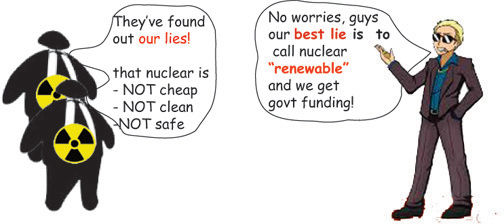
Bill in California to call nuclear power “renewable”!
|
Should California classify nuclear power as renewable? San Diego Union Tribune By ROB NIKOLEWSKI, MARCH 3, 2020
Although he admits it’s a long shot, a member of the California Legislature from the district that includes the Diablo Canyon nuclear plant has introduced a bill that would add nuclear power to the state’s list of renewable energy sources……..
Established in 2002, California’s Renewables Portfolio Standard spells out the power sources eligible to count toward the state’s goals to wean itself of fossil fuels. The list includes solar, wind, biomass, geothermal, small hydroelectric facilities and even tidal currents. The standard has been updated, currently calling for 60 percent of California’s electricity to come from renewables by 2030 and 100 percent from carbon-free sources by 2045. Nuclear power is not part of the portfolio standard and Diablo Canyon — the only remaining nuclear plant in California — is scheduled to stop producing electricity by 2025. Pacific Gas & Electric, the operators of Diablo Canyon, announced in 2016 an agreement with a collection of environmental and labor groups to shut down the plant. PG&E said Diablo will become uneconomical to run due to changes in California’s power grid — such as growth of renewable energy sources, increased energy efficiency measures and the migration of customers from traditional utilities to community choice energy programs. But Cunningham thinks the passage of Assembly Bill 2898, which he introduced last week, could give the plant literally a new lease on life…….. When told of Cunningham’s bill, David Weisman, outreach coordinator for the Alliance for Nuclear Responsibility, said flatly, “Diablo Canyon has become a burdensome, costly nuclear white elephant.” Critics say nuclear power by definition cannot be considered renewable because it leaves behind waste in the form of spent nuclear fuel that then has to be stored. The federal government has not found a site to deposit the waste that has built up over decades from commercial nuclear power plants……. https://www.sandiegouniontribune.com/business/energy-green/story/2020-03-03/should-california-count-nuclear-power-count-as-renewable |
|
Nuclear power project Bradwell B public consultation to go live this week
Nuclear power project Bradwell B public consultation to go live this week, Maldon Standard , 4 Mar 20, By Pape Gueye @PMGueye “……… Proposals for Bradwell B were unveiled today as the first stage of consultation gets under way.
The consultation will run for 12 weeks until May 27, with exhibitions taking place at 15 venues across Essex…..
The proposals for Bradwell B will be developed over several years before the project submits an application to the UK Planning Inspectorate.
The final decision whether to grant permission will be taken by the Secretary of State.
A group campaigning against Bradwell B is urging residents to attend the EDF energy and Chinese General Nuclear stage one consultation events and make their views known.
Blackwater Against New Nuclear Group (BANNG) has been campaigning against the power station plan.
A spokesman said: “Any support will be gratefully welcome, ranging from just turning up to spending the whole time at a venue demonstrating your concern.”
The first consultation takes place tomorrow at Steeple Village Hall from 2pm until 8pm.
To see the other consultation dates, visit banng.info. https://www.maldonandburnhamstandard.co.uk/news/18280459.nuclear-power-project-bradwell-b-public-consultation-go-live-week/
Visit bradwellb.co.uk.
1 This Month





PLEASE OPPOSE HR 8255 AND S.3639 – bills would accelerate satellite deployment, with no environmental review or safeguards – https://ncstd5li.quorum.us/campaign/169331/
To see nuclear-related stories in greater depth and intensity – go to https://nuclearinformation.wordpress.com
-
Archives
- October 2026 (58)
- September 2026 (339)
- August 2026 (330)
- July 2026 (355)
- June 2026 (287)
- May 2026 (306)
- April 2026 (356)
- March 2026 (251)
- February 2026 (267)
- January 2026 (308)
- December 2025 (358)
- November 2025 (359)
-
Categories
- 1
- 1 NUCLEAR ISSUES
- business and costs
- climate change
- culture and arts
- ENERGY
- environment
- health
- history
- indigenous issues
- Legal
- marketing of nuclear
- media
- opposition to nuclear
- PERSONAL STORIES
- politics
- politics international
- Religion and ethics
- safety
- secrets,lies and civil liberties
- spinbuster
- technology
- Uranium
- wastes
- weapons and war
- Women
- 2 WORLD
- ACTION
- AFRICA
- Atrocities
- AUSTRALIA
- Christina's notes
- Christina's themes
- culture and arts
- Events
- Fuk 2022
- Fuk 2023
- Fukushima 2017
- Fukushima 2018
- fukushima 2019
- Fukushima 2020
- Fukushima 2021
- general
- global warming
- Humour (God we need it)
- Nuclear
- RARE EARTHS
- Reference
- resources – print
- Resources -audiovicual
- Weekly Newsletter
- World
- World Nuclear
- YouTube
-
RSS
Entries RSS
Comments RSS

