Experts wonder why Oil-rich UAE is opening the Arab world’s first nuclear power plant.
Oil-rich UAE opens the Arab world’s first nuclear power plant. Experts question why, By Ivana Kottasová and Mohammed Tawfeeq, CNN, August 1, 2020, Why oil rich UAE is developing nuclear power 02:35
The United Arab Emirates has launched a nuclear energy plant on Saturday, the first such project in the oil-rich Arab world.
Does UK nuclear energy have any future? The industry has big doubts

 Ministers challenged on future of UK nuclear energy
Industry dogged by doubts about China and rise of renewables calls for clarity, Ft.com, Harry Dempsey in Somerset and David Sheppard in London 31 Jul 20,
Japan’s trouble-plagued nuclear fuel reprocessing plant Rokkasho should be shut down

Rokkasho plant should be shut down in energy policy shift, Asahi Shimbun, July 31, 2020 “…….. The Nuclear Regulation Authority on July 29 approved an outline of safety measures for the trouble-plagued nuclear fuel reprocessing plant Japan Nuclear Fuel Ltd. is building in Rokkasho, Aomori Prefecture…..
The Nuclear Regulation Authority on July 29 approved an outline of safety measures for the trouble-plagued nuclear fuel reprocessing plant Japan Nuclear Fuel Ltd. is building in Rokkasho, Aomori Prefecture
It is also nearly impossible to find a site for building a new nuclear plant. As aged reactors will be decommissioned one after another in the coming years, the importance of nuclear power generation for Japan’s energy supply will steadily diminish.
Over the long term, Japan needs to phase out nuclear power generation to remove public anxiety about a large-scale accident.
Nuclear fuel recycling can have no great significance in this new era when Japan has to start shifting away from atomic energy. Many industrial nations have long given up nuclear reprocessing as economically unviable.
Another big problem with reprocessing the spent fuel is that it produces plutonium, a material that can also be used to make nuclear weapons.
Japan has a stockpile of some 46 tons of plutonium, stored both at home and abroad, an amount enough to make 6,000 atomic bombs. It is fueling fears and drawing criticism internationally.
Japan Nuclear Fuel’s plant in Rokkasho is designed to have the capacity of reprocessing 800 tons of spent nuclear fuel annually to recover 7 tons of plutonium.
But the plan to develop a fast neutron reactor that can “consume” plutonium by transforming it into other forms of nuclear waste, the key technology for plutonium consumption, has gone awry with the decision to decommission Japan’s “Monju” prototype sodium-cooled fast-breeder reactor.
There are clearly also limitations to the plan to burn so-called MOX (mixed oxide) fuel, which is usually plutonium blended with natural uranium, in existing nuclear reactors.
The government has promised the international community to reduce the nation’s surplus plutonium. That means the reprocessing operation at the Rokkasho plant will have to be restricted so that the amount of plutonium recovered will not exceed consumption.
It simply does not make sense to spend as much as 14 trillion yen ($134.33 billion) on building the plant to recover a small amount of plutonium.
Given that this huge cost will be passed onto consumers through higher electricity bills, it is impossible to win broad public support for the project.
If the government decides to pull the plug on the fuel recycling program, it will have to face tough policy challenges it has long avoided tackling, such as how to dispose of spent fuel. But the nation cannot make the inevitable leap into the new age of energy if it continues spending huge amounts on nuclear power generation, which is beset by so many problems.
There is a growing global trend toward renewable energy sources such as solar and wind power. This is the time for the government to make a radical shift in its energy policy. http://www.asahi.com/ajw/articles/13594167
New Mexico Governor opposes nuclear waste dump in that state
Gov. argues against Holtec nuclear storage site, Albuquerque Journal , BY THERESA DAVIS / JOURNAL STAFF WRITER Tuesday, July 28th, 2020 Gov. Michelle Lujan Grisham sent a letter to President Donald Trump on Tuesday, arguing against a proposed nuclear waste interim storage facility in southeast New Mexico.
The proposed Holtec International site would store 500 stainless steel canisters of the nation’s spent nuclear fuel on 1,000 acres between Carlsbad and Hobbs, with a full storage capacity of 10,000 canisters.
“New Mexico has grave concerns for the unnecessary risk to our citizens and our communities, our first responders, our environment, and to New Mexico’s agriculture and natural resource industries,” Lujan Grisham wrote in the letter……
The governor said it would be “economic malpractice” to store spent nuclear fuel underground in a region that depends on agriculture and oil and gas. She added that a “perceived or actual nuclear incident” could disrupt those industries.
“The proposed (facility) would join the ranks of uranium mining, nuclear energy and defense-related programs that have long created risks to public health and the environment in the state of New Mexico that are disproportionately greater than such risks to the general population of the United States,” she wrote…… https://www.abqjournal.com/1480362/gov-argues-against-holtec-nuclear-storage-site.html
Union of Concerned Scientists, nuclear watchdogs and environmentalists urge against funding for nuclear tests
Groups Push to Remove Proposed Funding for Nuclear Testing https://www.manufacturing.net/home/news/21141496/groups-push-to-remove-proposed-funding-for-nuclear-testing Jul 28th, 2020 ALBUQUERQUE, N.M. (AP) A Senate defense bill includes funding to resume live testing for the first time in nearly three decades.
Deep within a multibillion-dollar defense spending measure pending in Congress is an apology to New Mexico, Nevada, Utah and other states affected by radiation from nuclear testing over the decades.
But communities downwind from the first atomic test in the New Mexico desert on July 16, 1945, are still holding out for compensation for health effects that they say have been ongoing for generations due to fallout from the historic blast.
So far, their pleas for Congress to extend and expand a federal radiation compensation program have gone unanswered. The program currently covers workers who became sick as a result of the radiation hazards of their jobs and those who lived downwind of the Nevada Test Site.
“When you talk about enhancing plutonium pit production and defense spending in the trillions, you can’t tell us there’s not enough money to do this,” she told The Associated Press. “You can’t expect us to accept that any longer and that adds insult to injury. It’s as if we count for nothing.”
U.S. Rep. Ben Ray Lujan, the New Mexico Democrat who advocated for the apology, continues to push for amendments to the radiation compensation program. His office recently convened a meeting among downwinders, uranium miners, tribal members, other advocates and staff in House Speaker Nancy Pelosi’s office.
“The congressman believes that the need for medical and monetary compensation has never been more urgent,” said Monica Garcia, a spokeswoman for the congressman.
The concerns of Cordova and other advocates are growing amid rumblings about reported discussions within the Trump administration about whether to conduct live nuclear weapons testing.
The discussions come as the New START treaty between the U.S. and Russia nears expiration in 2021. Russia has offered to extend the nuclear arms control agreement while the Trump administration has pushed for a new pact that would also include China.
While the U.S. House has adopted language that would prohibit spending to conduct or make preparations for any live nuclear weapons tests, a group of senators has included $10 million for such an effort in that chamber’s version of the bill.
The Union of Concerned Scientists, nuclear watchdogs and environmentalists all are pushing for the funding to be eliminated. They sent letters this week in opposition and plan to lobby lawmakers.
“A U.S. resumption of nuclear testing would set off an unpredictable and destabilizing international chain reaction that would undermine U.S. security,” reads one letter.
Kevin Davis with the Union of Concerned Scientists’ global security program said resuming live testing would be unnecessary because the U.S. has been able to do sub-critical experiments and use its super computers along with data from past testing to run simulations on the nation’s nuclear stockpile.
The last full-scale underground test was done Sept. 23, 1992, by scientists with Los Alamos National Laboratory at the Nevada Test Site northwest of Las Vegas. Less than two weeks later, then President George H.W. Bush signed legislation mandating a moratorium on U.S. underground nuclear testing.
Democrat Rep. Ben McAdams of Utah is among those leading the effort to ban spending for testing. He said thousands of residents in his state are still dealing with trauma and illness as a result of previous testing.
Dozens of groups also signed on to a letter sent to congressional leaders in May advocating for the expansion of the radiation compensation program.
“We can’t continue to allow the government to walk away from their responsibility,” Cordova said.
Should aging nuclear reactors get propped up with subsidies? Ohio scandal highlights this question
 After $60M Bribery Charges, Questions Renewed over Ratepayer Subsidies for Nuclear Power https://www.njspotlight.com/2020/07/after-60m-bribery-charges-questions-renewed-over-ratepayer-subsidies-for-nuclear-power/ TOM JOHNSON | JULY 28, 2020
FirstEnergy Corp. CEO Chuck Jones was more than halfway through his second-quarter earnings call Friday, when he could no longer hold in his frustrations. “It’d be really nice,’’ he said softly, ‘’we have 15 minutes left if we could actually talk about the great quarter that we had at some point here.’’
Unfortunately for him, analysts were not interested. Instead, they sought to gauge the Ohio energy giant’s risks and exposure following the announcement three days earlier of its role in the $60 million bribery scandal related to the bailout of two nuclear plants formerly owned by the company. The federal investigation led to the arrest of Ohio’s speaker of the House, his chief political aide and three lobbyists.
The alleged scheme involved using funds from FirstEnergy, its former subsidiary and operator of the plants, and another subsidiary, to help pass a bill last year to keep the plants open with a $1.3 billion subsidy paid for by utility customers. Once enacted into law, funds funneled to a dark-money nonprofit set up by the Ohio Speaker Larry Householder were used to block a referendum seeking to overturn the law.
The scandal has revived questions about whether these aging nuclear plants deserve the subsidies and how they were awarded. New Jersey was one of four states to allow ratepayer subsidies to avoid closing nuclear power plants.
At this juncture, there are more questions than answers relating to FirstEnergy’s , involvement. FirstEnergy, which owns Jersey Central Power & Light and its subsidiaries, is cooperating with the investigation, Jones said. “I believe First Energy acted properly in this matter,’’ Jones told analysts. None of the money from the bailout went to FirstEnergy, he said.
FirstEnergy source of some funds
In the call, peppered repeatedly with questions about the probe, Jones acknowledged about one-quarter of the $60 million in funds diverted to the nonprofit Generation Now came from FirstEnergy. “We do make prudent decisions to spend corporate funds on issues that we believe that are important to our customers and shareholders,’’ he said.
The lobbyists arrested and identified in the 82-page affidavit never worked for FirstEnergy on the nuclear bailout bill, according to Jones. “Who they worked for, I’m not sure, but I know they did not work for us.’’
The Justice Department affidavit never specifically identified companies or entities involved in the scheme, leading to confusion about where in the corporate structure the illegal activity is coming from, according to one analyst.
Renewed criticism about ratepayer subsidies
Still, the affidavit renewed criticism from some in the energy sector over states subsidizing bailout of nuclear power plants, a process that has also occurred in New York, New Jersey and Illinois. In New Jersey, Public Service Enterprise Group and Exelon Corp. won subsidies amounting to $300 million a year to prevent their three plants in South Jersey from closing after a bitter two-year legislative battle.
“This should raise questions in New Jersey whether the ZEC (zero-emission certificate) legislation is necessary,’’ said Glen Thomas, president of the P3 Group, a coalition of energy suppliers that opposes nuclear subsidies. “We now know in Ohio the only reason these bills passed (was) legislators were being bribed.’’
Last week, Ohio Gov. Mike DeWine, reversing a stance he took only the day before, called for the repeal of the law, saying Householder’s alleged bribery scheme ‘’tainted’’ it.
Others were more circumspect. Paul Patterson, an analyst with Glenrock Associates, asked Jones a question on Friday’s call wondering what, if any, illegal activity was cited in the affidavit against the company. Jones said he would let his prepared remarks answer that question.
“If this is the rules that are set up, and if you are so dependent on government policies, then why are people so surprised that they then try to influence policies,’’ Patterson said in an interview with NJ Spotlight.
According to the Justice Department affidavit, companies in the alleged scheme paid out $60.8 million over a three-year period. Householder was elected speaker in January 2019. Three months later, HB6, the nuclear bailout bill, was introduced and it passed in late May 2019.
Money kept flowing
Even after the bill was enacted, the money still flowed freely, according to the affidavit. At least $450,000 was paid out to 15 signature-collection firms so they would be conflicted by working on behalf of the ballot campaign, the affidavit said. In addition, funds were found to bribe workers collecting signatures, including to find out details about how well the signature signups were going.
In the end, the groups opposing the subsidy failed to collect enough signatures to put the issue on the ballot.
“These are matters of utmost public concern,’’ said Steven Goldenberg, a lawyer actively involved in the nuclear subsidy case in New Jersey. “It is critical they are decided on their merits, not on behalf of undue political influence.’’
Czech Republic and CEZ sign nuclear power plant expansion agreement: require EU approval
|
Czech Republic and CEZ sign nuclear power plant expansion agreement, Power Technology 29 July 20, The Government of the Czech Republic has signed agreements with state-controlled utility company CEZ for the expansion of the Dukovany nuclear power plant.
Reuters reported that the agreement includes a general framework as well as details of the expansion’s initial phase. It will also include a tender in which CEZ will outline a preferred list of its suppliers by 2022. It would then finalise the contract with a supplier by 2024. CEZ has planned to launch the supplier tender by the end of 2020. It is estimated that the construction of the new unit would cost $7.04bn (€6bn). The nuclear power plant expansion would require approval from the European Commission to ensure the project meets EU state aid rules……. https://www.power-technology.com/news/czech-republic-cez-sign-agreement-dukovany-nuclear-power-plant-expansion/ |
|
|
Nuclear Energy Leadership Act (NELA), sneaked into National Defense Bill: it will go back to U.S. Congress
 US Senate passes Nuclear Energy Leadership Act, WNN, 27 July 2020 US Senate passes Nuclear Energy Leadership Act, WNN, 27 July 2020
The US Senate has passed the Nuclear Energy Leadership Act (NELA) after it was included as an amendment to an act authorising defence appropriations and policies for fiscal 2021. NELA aims to re-establish US leadership in nuclear energy, with a focus on the demonstration of advanced reactors.
NELA (S 903) was introduced as an amendment to the National Defense Authorisation Act for Fiscal Year 2021 (NDAA, S 4049) by Senators Lisa Murkowski and Cory Booker during a floor debate on 23 July. The NDAA was passed the same day, with 86 senators voting in favour and 14 against. ……. The Department of Defense is a logical first customer for advanced reactors,…… Bills to instate NELA were introduced into the House and Senate last year. The legislation would focus US Department of Energy efforts on the demonstration of advanced reactor concepts, providing fuel for initial advanced nuclear reactors, and developing the nuclear energy workforce…… NELA was not included in the House of Representatives version of the NDAA, which was passed on 21 July. A final version of the legislation on which both House and Senate agree must be drawn up before it can become law. https://www.world-nuclear-news.org/Articles/US-Senate-passes-Nuclear-Energy-Leadership-Act |
|
Looks as if 20 municipalities in Utah have been NuScammed for those not so small nuclear reactors

readers may wonder how UAMPS convinced some members to sign an “option” contract, which eventually converts to a “hell-or-high-water” contract, meaning that the buyer has no right, under any circumstances, to abandon the contract once construction, the Achilles heel of nuclear projects, is authorized.
|
|
Over 20 municipalities, primarily located in Utah, have signed a contract with Utah Associated Municipal Power Systems (UAMPS) to purchase entitlement shares for a first-of-a-kind nuclear power plant based on NuScale’s unproven small modular reactor (SMR) design. [and they’re not really small at all]
Ignoring the history of commercial nuclear plant construction, advocates have promoted the SMR project as a cost-effective energy resource without fully addressing the economic, contractual and litigation risks with stakeholders. Between 1953 and 2008, approximately 250 commercial nuclear reactors were ordered in the United States. During this period, ratepayers (and investors) bore the burden for well over $200 billion (in 2009 dollars) in costs for completed and abandoned nuclear plants. For example, one of the largest municipal bond defaults occurred in 1982 when the Washington Public Power Supply System defaulted on $2.25 billion in bonds for two nuclear power plant construction projects. In an effort to reduce their losses, bondholders sued a group of utilities (including several Idaho cities) that entered into contracts to pay for the plants.
Well, what about the UAMPS SMR project, including the $65 dollars per megawatt-hour (price cost of electricity) sales pitch? During a 2018 Los Alamos County Council meeting, held to consider approval of the UAMPS power sales contract, a council member asked a UAMPS lawyer, “There’s been mention of a target of $65 a megawatt-hour. How did we come up with that number?” Another council member, probing into the terms of the contract, expressed additional concern. The councilor stated, “I feel like we’re being sold a bill of goods with $65 a megawatt-hour.” With that said, readers may wonder how UAMPS convinced some members to sign an “option” contract, which eventually converts to a “hell-or-high-water” contract, meaning that the buyer has no right, under any circumstances, to abandon the contract once construction, the Achilles heel of nuclear projects, is authorized. Having a similar concern, especially given the history of nuclear plant construction, a sincere effort was made to address project risks with the UAMPS SMR project chair, including sharing concerns about transparency and proposing possible ways to minimize risks to ratepayers, including contract modifications such as price guarantees and redefining the construction period. Unfortunately, my questions and concerns fell on deaf ears. |
|


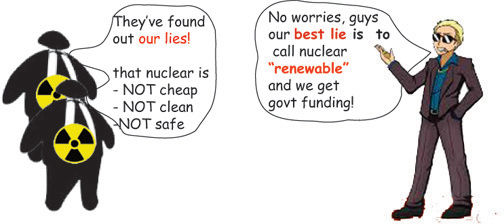
U.S. International Development Finance Corporation now calling nuclear projects “renewable”
|
DCF Opens Door to Fund Nuclear Power Projects Abroad, JDSupra, Sachin Desai, Amy Roma
On July 23, 2020, the U.S. International Development Finance Corporation (DCF) announced its intention to open the door to funding opportunities for nuclear projects abroad. In a summary of its decision following a voluntary 30-day comment period, DCF announced that it has enabled “its full suite of finance products to support all civil nuclear projects that meet the United States’ highest safety security, and nonproliferation standards and laws.” In doing so, it modified the definition of “renewable energy” in its Environmental and Social Policy and Procedures (ESPP) to allow for consideration of nuclear projects. The former ESPP specifically excluded nuclear power from the definition of renewable energy. Removing this prohibition aligns the definition with the United States Energy Information Administration’s definition, as discussed in our previous blog, “US Government Proposes to Lift Ban on Financing Nuclear Energy Projects Overseas.” DCF CEO Adam Boehler boasted that this decision will “accelerate growth in developing economies with limited energy resources,” after the proposal received over 800 comments with overwhelming support and bi-partisan participation. ……… Some comments did pose concerns that nuclear energy would not help those communities that lacked access to energy and argued the benefits of renewables over nuclear energy. However, DCF responded that it will continue to prioritize developing countries, pursuant to the BUILD Act. Advancing U.S. Foreign Policy: Commenters largely viewed the proposed change as a way to increase U.S. competitiveness in the nuclear industry. … Additionally, comments discussed that DCF funding will carry great weight not only as a monetary mechanism, but also as a demonstration of government support. Generating Returns for American Taxpayers: Comments that fell into this category were also largely supportive and posited that the proposed changes would lead to an increase in jobs as well as a return on investment to fund future nuclear research and development. While a few comments demonstrated concern that DCF might fund “unproven technologies”… https://www.jdsupra.com/legalnews/dcf-opens-door-to-fund-nuclear-power-61753/ |
|
Ohio’s tainted House Bill 6 likely to be repealed. What now for the nuclear power plants?

 Ohio’s nuclear plants face new uncertainty as HB 6 comes under attack, Crains Cleveland Business, DAN SHINGLER 26 Jul 20, So what happens to Ohio and its nuclear plants now?
It’s becoming apparent that 2019’s House Bill 6, the now-tainted law that provides about $150 million a year in subsidies primarily to Ohio’s two nuclear plants, likely will be repealed.
But will it be replaced? And if so, will the plants, which Ohioans were told would close without the subsidies, be saved?
Those are questions now causing angst from Columbus, where state lawmakers are grappling with the issue, to the Toledo area and Lake County, where the affected Davis-Besse and Perry nuclear plants are respectively located. The companies involved, FirstEnergy Corp. of Akron and its former subsidiary, Energy Harbor, which owns the plants, have yet to say how they might address the matter and have declined interview requests.
Legislators, economic developers and others across the state expressed their disgust with the situation — which already has become one of the largest scandals in Ohio’s history and resulted in the July 21 arrest of House Speaker Larry Householder and four others for what federal officials say was a $60 million bribery scheme to pass the law…….
Cirino said he would like to see HB 6’s subsidies remain in place, but he’s resigned to the bill likely being repealed. A number of lawmakers have already announced legislation to undo HB 6, and Gov. Mike DeWine, who said he supported keeping the law in place when the scandal broke, had reversed course by July 23 and joined calls for it to be repealed. ………
some GOP lawmakers working to repeal HB 6 are expressing support for renewables.
“Renewable energy in the long run will save the consumer a lot of money, in addition to the job development,” said Rep. Laura Lanese, R-Grove City, who is working on legislation to repeal HB 6. She and other lawmakers, from both parties, are calling for Ohio to start over on a new energy policy.
“We need to start afresh with any new energy legislation going forward,” Lanese said at a July 23 news conference. …………. https://www.crainscleveland.com/government/ohios-nuclear-plants-face-new-uncertainty-hb-6-comes-under-attack
Tory MPs angry about China’s involvement in British nuclear power plant
UK China threat: MPs demand answers on Beijing’s role in British nuclear power plant, CHINA’S role in Britain’s Hinkley Point C nuclear facility should be urgently reviewed amid claims its involvement in the plant is much deeper than previously thought, according to MPs. Express UK, By SIMON OSBORNE, Sun, Jul 26, 2020 Former Tory leader Sir Iain Duncan Smith claims ministers were misled when they gave the green light for Beijing-controlled China General Nuclear (CGN) to become a stakeholder in the £22.5billion reactor. Sir Iain said Theresa May’s government was assured the energy firm would only be a financial partner when it took a 33.5 percent stake in the Somerset plant with French energy giant EDF in 2016. But insiders claim CGN role goes beyond financial support, with EDF heavily reliant on Chinese technical expertise.
This information tells you everything you need to know to back the call to have an independent, strategic review into our dependency on China.”
Nick Timothy, Mrs May’s top adviser when the deal was struck four years ago, said he tried to block the Chinese approach.
Plan for Scotland to be free of nuclear weapons
The National 26th July 2020, SCOTLAND could see the end of nuclear weapons on the Clyde within three
years of a Yes vote under radical new plans be put to the SNP annual
conference. A resolution is to be submitted to the event this October
setting out the time frame for the first time.
https://www.thenational.scot/news/18607658.snp-debate-three-year-timetable-axe-trident-yes-vote/
Union of Concerned Scientists, nuclear watchdogs and environmentalists push for elimination of funding for nuclear testing
|
Groups push to remove proposed funding for nuclear testing https://www.standard.net/news/groups-push-to-remove-proposed-funding-for-nuclear-testing/article_dc69a416-87e2-53cc-b7bd-3cc447ccd8da.html, By SUSAN MONTOYA BRYAN, Associated Press, Jul 25, 2020 ALBUQUERQUE, N.M. — Deep within a multibillion-dollar defense spending measure pending in Congress is an apology to New Mexico, Nevada, Utah and other states affected by radiation from nuclear testing over the decades.
But communities downwind from the first atomic test in the New Mexico desert on July 16, 1945, are still holding out for compensation for health effects that they say have been ongoing for generations due to fallout from the historic blast. So far, their pleas for Congress to extend and expand a federal radiation compensation program have gone unanswered. The program currently covers workers who became sick as a result of the radiation hazards of their jobs and those who lived downwind of the Nevada Test Site. Those excluded from the program include residents downwind of the Trinity Site in New Mexico, additional downwinders in Nevada, veterans who cleaned up radioactive waste in the Marshall Islands and others.
Tina Cordova, a cancer survivor and co-founder of the Tularosa Basin Downwinders Consortium, said the excuse always has been that the federal government doesn’t have enough money to take care of those affected. She said the need is even greater now since the coronavirus is disproportionately affecting those with underlying health conditions and downwinders fall into the category because of their compromised health “When you talk about enhancing plutonium pit production and defense spending in the trillions, you can’t tell us there’s not enough money to do this,” she told The Associated Press. “You can’t expect us to accept that any longer and that adds insult to injury. It’s as if we count for nothing.” U.S. Rep. Ben Ray Lujan, the New Mexico Democrat who advocated for the apology, continues to push for amendments to the radiation compensation program. His office recently convened a meeting among downwinders, uranium miners, tribal members, other advocates and staff in House Speaker Nancy Pelosi’s office. “The congressman believes that the need for medical and monetary compensation has never been more urgent,” said Monica Garcia, a spokeswoman for the congressman. The concerns of Cordova and other advocates are growing amid rumblings about reported discussions within the Trump administration about whether to conduct live nuclear weapons testing. The discussions come as the New START treaty between the U.S. and Russia nears expiration in 2021. Russia has offered to extend the nuclear arms control agreement while the Trump administration has pushed for a new pact that would also include China. While the U.S. House has adopted language that would prohibit spending to conduct or make preparations for any live nuclear weapons tests, a group of senators has included $10 million for such an effort in that chamber’s version of the bill. The Union of Concerned Scientists, nuclear watchdogs and environmentalists all are pushing for the funding to be eliminated. They sent letters this week in opposition and plan to lobby lawmakers. “A U.S. resumption of nuclear testing would set off an unpredictable and destabilizing international chain reaction that would undermine U.S. security,” reads one letter. Kevin Davis with the Union of Concerned Scientists’ global security program said resuming live testing would be unnecessary because the U.S. has been able to do sub-critical experiments and use its super computers along with data from past testing to run simulations on the nation’s nuclear stockpile. The last full-scale underground test was done Sept. 23, 1992, by scientists with Los Alamos National Laboratory at the Nevada Test Site northwest of Las Vegas. Less than two weeks later, then President George H.W. Bush signed legislation mandating a moratorium on U.S. underground nuclear testing. Democrat Rep. Ben McAdams of Utah is among those leading the effort to ban spending for testing. He said thousands of residents in his state are still dealing with trauma and illness as a result of previous testing. Dozens of groups also signed on to a letter sent to congressional leaders in May advocating for the expansion of the radiation compensation program. “We can’t continue to allow the government to walk away from their responsibility,” Cordova said. |
|
1 This Month





PLEASE OPPOSE HR 8255 AND S.3639 – bills would accelerate satellite deployment, with no environmental review or safeguards – https://ncstd5li.quorum.us/campaign/169331/
To see nuclear-related stories in greater depth and intensity – go to https://nuclearinformation.wordpress.com
-
Archives
- October 2026 (54)
- September 2026 (339)
- August 2026 (330)
- July 2026 (355)
- June 2026 (287)
- May 2026 (306)
- April 2026 (356)
- March 2026 (251)
- February 2026 (267)
- January 2026 (308)
- December 2025 (358)
- November 2025 (359)
-
Categories
- 1
- 1 NUCLEAR ISSUES
- business and costs
- climate change
- culture and arts
- ENERGY
- environment
- health
- history
- indigenous issues
- Legal
- marketing of nuclear
- media
- opposition to nuclear
- PERSONAL STORIES
- politics
- politics international
- Religion and ethics
- safety
- secrets,lies and civil liberties
- spinbuster
- technology
- Uranium
- wastes
- weapons and war
- Women
- 2 WORLD
- ACTION
- AFRICA
- Atrocities
- AUSTRALIA
- Christina's notes
- Christina's themes
- culture and arts
- Events
- Fuk 2022
- Fuk 2023
- Fukushima 2017
- Fukushima 2018
- fukushima 2019
- Fukushima 2020
- Fukushima 2021
- general
- global warming
- Humour (God we need it)
- Nuclear
- RARE EARTHS
- Reference
- resources – print
- Resources -audiovicual
- Weekly Newsletter
- World
- World Nuclear
- YouTube
-
RSS
Entries RSS
Comments RSS

