Opponents of the Ohio bailout of nuclear industry want more than just a freeze on this law
|
Opponents of HB6 Say Nuclear Bailout Freeze is not Enough https://www.wksu.org/government-politics/2020-12-08/opponents-of-hb6-say-nuclear-bailout-freeze-is-not-enough
The Statehouse News Bureau | By Andy Chow December 8, 2020, New charges are set to appear on everyone’s electric bills in Ohio to support a nuclear power plant bailout. While that bailout is linked to an alleged bribery scheme, House Republicans seem poised to freeze the law rather than repeal it. House leadership is signaling a freeze to the bailout, HB798, will be the vehicle used to address the energy laws created through HB6. The energy law allows for new charges of up to $2.35 a month on electric bills for nuclear, coal, and solar subsidies. Rachael Belz with Ohio Consumers Power Alliance says a freeze on the new charges doesn’t truly help the ratepayers. “It’s more like pushing something off that you never intend to get back to,” Belz said. Talk of an HB6 repeal began after House Speaker Larry Householder was arrested about five months ago accused of a bribery scheme that helped him rise to leadership and HB6 become law. It’s believed FirstEnergy funneled millions of dollars into the alleged scheme. HB6 accomplishes several things on the company’s legislative agenda. The nuclear and solar subsidies amount to a $0.85 monthly charge on electric bills. That new charge generates $150 million a year for two nuclear power plants in Ohio and $20 million for existing solar farms. HB798 would not repeal the provisions in HB6 that cuts renewable energy standards and eliminates energy efficiency standards. |
|
Iran hastens nuclear legislation in response to the assassination of its nuclear scientist
Iran vows to build two new nuclear facilities, alarming observers https://www.sciencemag.org/news/2020/12/iran-vows-build-two-new-nuclear-facilities-alarming-observers By Richard StoneDec. 8, 2020,
|
Iran’s possible responses to the assassination of a prominent nuclear scientist go well beyond boosting uranium enrichment and expelling weapons inspectors, two provisions of a law passed by Iran’s parliament that alarmed nonproliferation experts last week. Equally worrisome are new facilities the law requires, which could enable Iran to make plutonium and fashion uranium into bomb components. The legislation had been in the works for months, but parliament fast-tracked it after the 27 November killing of Mohsen Fakhrizadeh, director of a Revolutionary Guard research unit who had previously led a secret nuclear weapons program shuttered in 2003, according to the International Atomic Energy Agency (IAEA). Iran’s powerful Guardian Council last week approved the law. The potential limits on IAEA monitoring are of particular concern, says a European diplomat involved in negotiations with Iran. “IAEA would go blind in many areas of Iran’s nuclear establishment.” Posing a fresh proliferation risk are the new facilities the bill mandates: a lab for working with uranium in metal form—a vital skill if Iran were to make nuclear weapons—and a heavy water reactor that could accumulate plutonium in its spent fuel. “If either was to proceed, that would stand out as a major proliferation concern,” says Richard Johnson, senior director for fuel cycle and verification at the nonprofit Nuclear Threat Initiative. Iranian President Hassan Rouhani’s administration opposed the legislation. However, Foreign Minister Mohammad Javad Zarif told an international forum last week, “We will implement it. We have no other choice.” But Zarif noted the law is reversible. “The remedy is very easy,” he said: Iran would shelve the law if the United States returns to the 2015 nuclear deal, formally called the Joint Comprehensive Plan of Action (JCPOA), which restrained Iran’s nuclear program in return for relief from economic sanctions. The Trump administration pulled out of the JCPOA in 2018; President-elect Joe Biden has pledged to rejoin it. The JCPOA, proponents say, lengthened the time Iran would need to accumulate enough fissile material for a bomb, from several weeks to at least 1 year. A key provision is a cap on uranium enrichment at 3.67% of the fissile isotope uranium-235 (U-235), which is a level sufficient for civilian nuclear reactors. One year after the U.S. withdrawal from the JCPOA, and after Europe’s failure to deliver promised economic relief, Iran began to breach the pact, including increasing enrichment to 4.5%. A hike to 20%—which last week’s law requires—is a big step toward weapons-grade uranium, which is generally defined as greater than 90% U-235. A heavy water reactor would pose another headache. Before the JCPOA, Iran was building a 40-megawatt heavy water reactor in Arak to produce radioisotopes for medicine. As originally designed, the reactor would have accumulated one or two bombs’ worth of plutonium each year in its spent fuel. The JCPOA required that the facility, not yet complete, be redesigned as a 20-megawatt reactor that largely eliminates plutonium production. But the redesign stalled after the U.S. Department of State in May canceled sanction waivers permitting import of necessary equipment and technology. The new law orders the Atomic Energy Organization of Iran (AEOI) to complete the 40-megawatt reactor—apparently the configuration originally planned at Arak—and design a second 40-megawatt heavy water reactor; a timetable for completion of both projects is due in early January 2021. The law also mandates that AEOI inaugurate a “metallic uranium factory” in Isfahan within 5 months. Iran had agreed under the JCPOA to a 15-year moratorium on uranium and plutonium metallurgy. Any provocation from the West could spur the Iranian government to implement the law even faster. “Many things could go wrong in the next several weeks,” the European diplomat says. And a U.S. return to the pact would not be instantaneous. “We can’t just snap our fingers and say, ‘We’re back in,’” Johnson says. The Biden administration would have to rescind sanctions that run contrary to the JCPOA, while Iran would have return to compliance by mothballing advanced centrifuges, for example, and steeply reducing a growing stockpile of enriched uranium. |
|
Botches and crisis in France’s nuclear energy system
|
Sueddeutsche Zeitung 7th Dec 2020, Group therapy with President. In the industrial forge in Le Creusot, components for nuclear power stations were tampered with. Now the French President wants to give the nuclear industry new impetus. Le Creusot, important components for France’s nuclear power plants and nuclear weapon systems are manufactured. In a country that gets 70 percent of its electricity from nuclear fission and believes in its status as a nuclear power, Le Creusot can see itself as a critical infrastructure. Emmanuel Macron is going there this Tuesday.
**************
The critical branch of the nuclear industry is itself in a critical condition after costly breakdowns and scandals. So the President wants to give encouragement to the industry that, after the Second World War, contributed more than any other to theFrench self-image.
**************
Macron will assure the top managers of the energy company EDF, the power plant builder Orano and the military shipyard Naval
Group, who have gathered in Le Creusot, that they are still “a trump card”, as it is called in Macron’s environment. And: the man who rules France’s nuclear button will announce the construction of a new nuclear submarine. **************
Nevertheless, French nuclear power is in crisis. A few days ago, the network operator RTE warned that electricity would be scarce in winter: Many of the 56 reactors in the country, which once knew an abundance of nuclear power, urgently need maintenance and are therefore shut down. The shutdown of the breakdown-prone power plant in Fessenheim, Alsace, in the summer, which was also carried out under pressure from Germany, is less significant. The shortage is exacerbated by the abandonment of coal-fired
electricity in recent years and the slow expansion of renewable energies. Macron wants to drive that forward. **************
At the same time, the life of the old nuclear power plant is to be extended – and up to six new, more powerful
reactors are likely to be built. Even if the prototype of these reactors, which is currently being built in Normandy, costs more than twelve billion euros instead of the originally estimated 3.5 billion euros. The botch in Le Creusot is also to blame for the rise in costs.https://www.sueddeutsche.de/wirtschaft/atomkraft-macron-frankreich-1.5140488 |
European Commission excludes nuclear power from the EU’s proposed green finance taxonomy,
  Energy Transition 8th Dec 2020, As we approach the end of a tumultuous 2020, with the UK finally to leave the European Union on 31 December after its transition period expires, the EU – primarily the Commission – itself has continued to refine the parameters of its sustainable energy strategy, which has been constructedvery much in the face of the pressures of the unprecedented global pandemic. David Lowry has the details. One big issue has been whether nuclear power should have any role, and if so, what? This debate has had a long gestation period. For example, the green taxonomy, which some see as the most sensitive part of a European Commission plan on sustainable finance – which aims at shifting financial flows towards the decarbonisation of the economy – were presented in May 2018 by then Commission Vice-President Valdis Dombrovskis, who underlined that financing the energy transition could not be financed with public money alone.
Then, on 28 March 2019, the European Parliament voted on the proposed classification for sustainable assets, which would have excluded nuclear power from receiving a green stamp of approval on financial markets. The text voted in Parliament also excludes fossil fuels and gas infrastructure from the EU’s proposed green finance taxonomy, which aims to divert investments away from polluting industries into clean technologies.
|
Federal funding for new nuclear reactors is a serious mistake that blocks swift ation on climate
|


France and European Union have not yet agreed on nuclear reform
France yet to agree with EU over nuclear reform: official, By Gwénaëlle Barzic-PARIS (Reuters) 7 Dec 20, – France and the European Union are yet to reach a firm agreement over Paris’s plans for a reform of its nuclear industry, an Elysee presidential palace official said on Monday, amid talks that will entail a reorganisation of power group EDF.
The talks between France and the European Commission include the ARENH price mechanism under which competitors can get access to nuclear energy produced by EDF. Because EDF is a state-owned utility, the EU has a say on its reform on competition grounds.
The looming reform, which would see EDF’s nuclear business separated from others such as renewable energy, has already raised hackles among labour unions, fearful that a split will have consequences for jobs.
“There is not yet an agreement with the Commission on some of the key parametres,” an official with the Elysee presidential palace said, speaking ahead of President Emmanuel Macron’s visit to a nuclear equipment factory run by a EDF subsidiary Framatome on Tuesday.
The official said it was too soon to say when the new legislation on the nuclear sector could emerge.
France is due to cut its reliance on nuclear energy from 75% to 50% by 2035, but must also decide by 2023 whether to commission next generation EPR reactors.
The government will be seeking more information from EDF by the middle of next year about the cost, timeframe and feasibility of new projects, the Elysee official said.
USA Republicans and Democrats can’t agree on funding to help Covid-9 victims, but there’s always money for war.
|
by
The annual approval of the gargantuan U.S. military budget is one of the most reliable rituals in Congress. It is so ordinary and overwhelmingly bipartisan, it’s barely considered newsworthy, and few outlets follow the details of exactly how much the government is allocating to a nuclear weapons buildup, or deployments to the Asia Pacific, or the steady creep of U.S. military bases across the continent of Africa. Even under President Trump, when the Democratic leadership claims to have struck a more confrontational posture, those same leaders have repeatedly handed him bloated military budgets, as we saw Wednesday with Congress’ bicameral approval of a roughly $740 billion military budget for 2021. ,,,,,,,,,,,,, this is no ordinary year. As Congress races to pass the NDAA for 2021, it does so in a country that is hurtling toward months that could be among “the most difficult in the public health history of this nation,” according to Dr. Robert Redfield, the director of the Centers for Disease Control and Prevention. Along with this health crisis, whose scale in the United States was entirely preventable, comes economic devastation: Lines for food banks are stretching for miles and, according to one study, one in six people is food insecure. As of September, one in six adults said they live in a house that’s behind on rent. ………. As the pandemic was raging, Congress had no problem passing legislation to continue U.S. military violence. The Senate version of the NDAA passed on July 23 in a vote of 86 – 14, while the House version was approved July 21 by 295 – 125. This defense bill was then approved December 2 by both chambers of Congress. …………
While entirely routine at this point, it’s useful to highlight on the eve of yet another massive Pentagon handout how the budget for war could instead go toward life-preserving social goods. This is useful, not to buy into austerity notions of scarcity, but simply to show the profound immorality of where our public resources go. When it comes to military spending, the sky is the limit. Space Force? Sure. Roughly $21.9 billion for nuclear weapons programs? No problem. But when it comes to keeping people alive, U.S. political imagination is significantly more constrained. Right off the bat in March, Democratic leader Rep. Nancy Pelosi (Calif.) shot down universal, robust cash payments to keep people afloat, even as high-profile figures like Sen. Bernie Sanders (I‑Vt.) and Rep. Rashida Tlaib (D‑Mich.) called for such measures. ………
we should not allow bipartisan agreement on military spending to simply fade into the background, as an unremarkable and immutable fact of U.S. politics. That we can find the money for war but not for coronavirus relief exposes the moral rot at the center of U.S. politics, a rot that must be dug out and expunged if we are to get through this crisis. https://www.commondreams.org/views/2020/12/04/congress-deadlocked-covid-relief-came-together-fund-pentagon-740-billion?utm_campaign=shareaholic&utm_medium=Social&utm_source=twitter
|
|


Reject Michele Flournoy as U.S. Defense Secretary – too close to military-industrial-complex

|
Rejecting Michèle Flournoy, Progressives Demand Biden Pick Pentagon Chief ‘Untethered’ From Military-Industrial Complex
“We urge President-elect Joe Biden and U.S. senators to choose a secretary of defense who is unencumbered by a history of advocating for bellicose military policies and is free of financial ties to the weapons industry.” Common Dreams, Jake Johnson, staff writer-4 Dec 20, |
|
Analysis: why Michèle Flournoy should not be U.S. Secretary of Defense
|
Keep in mind Flournoy‘s extensive defense industry ties. In 2002 she went from positions in the Pentagon and the National Defense University to the mainstream but hawkish Center for Strategic and International Studies, which is largely funded by industry and Pentagon contributions. Five years later, she co-founded the second-most heavily contractor-funded think tank in Washington, the highly influential Center for a New American Security (CNAS). That became a stepping stone to her role as under secretary of defense for policy in the Obama administration. From there she rotated to the Boston Consulting Group, after which the firm’s military contracts expanded from $1.6 million to $32 million in three years. She also joined the board of Booz Allen Hamilton, a consulting firm laden with defense contracts. In 2017 she co-founded WestExec Advisors, helping defense corporations market their products to the Pentagon and other agencies. Though WestExec Advisors does not reveal its clients, Flournoy has stated, “Building bridges between Silicon Valley and the U.S. government is really, really important,” even a “labor of love.” WestExec is also careful not to designate Flournoy as a lobbyist, which could run afoul of Biden’s likely prohibitions against appointing “lobbyists” to senior positions. But a WestExec source did tell an interviewer, “We’ll tell you who to go talk to” and what to tell them. This simply circumvents the legalities; it is lobbying by remote control. In a CNAS article this July, Flournoy laid out a plan embraced by candidate Biden and other Democrats, “Sharpening the U.S. Military’s Edge: Critical Steps for the Next Administration.” The piece reveals Flournoy’s corporate outlook and outlines how the next secretary of defense should manage the Pentagon. The nature of any Pentagon administration stems from the quality of the people selected to run it. Addressing this central question, Flournoy states:
Nowhere does she list ethics, character, objectivity, or independence from contractor, service, or political biases, all qualities stunningly missing from Trump’s Pentagon as well as earlier ones………….. Pork, unmentioned by name, also rears its head in the Flournoy article. She advocates various funds, organizations, and a “center of excellence” to monetize technology. Again, history counts. In 2010 the House initiated a Rapid Innovation Fund to support technology development, just as Flournoy proposes. In actuality, it turned out to be an earmarking slush fund so members of Congress could satisfy local interests and circumvent new rules in Congress to pretend to end earmarks. Flournoy would likely expand this contractor self-funding process inside the Defense Department. Once it shows up in a Pentagon spending bill, the congressional add-ons will proliferate, given how voraciously today’s Congress stuffs earmarks into defense bills. Another word that does not appear in the Flournoy article is “audit.” The Defense Department is the only major federal agency that has never passed an audit, despite statutory and constitutional mandates. Some feeble progress has been made in recent years, but without far stronger action, it will be many years before the department delivers to Congress and the public clean audits of contractor spending and profits, much less routine audits of agency and contractor fraud. Under an uninterested Flournoy, it would be an even longer time…………… None of the Biden/Flournoy/Clinton thinking is new. Recall slogans from the George W. Bush and Clinton administrations like “transformation” and “revolution in military affairs” that promised modernized forces for affordable costs. In reality, the outcome of those promises has been shrinking combat forces, more program failures, weapon fleets growing steadily older, and troops training less—all at ever-growing cost. To explain, we need to examine some Pentagon budget history. Defense spending is now at an all-time post-World War II high no matter how you adjust for inflation—barring three years, 2010 to 2012, of even higher spending under President Barack Obama. Looking at yearly appropriations since the Korean War (unadjusted for inflation in order to avoid the Pentagon’s doctored inflation indices), the figure below reveals that the Pentagon budget has never fallen below a steady 5% growth curve, except for a brief departure in the late Obama and early Trump years. This 65 years’ worth of inexorable spending growth has been unaffected by dramatic changes in America’s actual national security needs, revisions of U.S. national strategies, the rise or collapse of perceived enemies, or—for the most part—who is president or whether we are at war or peace. Second, throughout this perpetual budget expansion, the Army, Air Force, and Navy have been shrinking—with the shrinkage accelerating during the period of highest spending growth: the period since 9/11. Moreover, the added money and smaller forces have not resulted in overall modernization. Our smaller inventories of armored vehicles, ships and aircraft are all today dramatically older, on average, than at any time in modern history. Nor are these forces better trained, nor their equipment better maintained. Indeed, all of these measures have been declining significantly, especially now. How can so much more money lead to smaller, older, less effective forces? ………….. Beyond hardware and technology, we need to do a far more intelligent job of understanding the never-ending evolution of tactics and forms of warfare……….. Mercenary parties have no part in that process. We need to listen to military leaders who have experienced both defeat and victory on the battlefield while remaining free of industry influence and careerism; engineers and scientists who have developed proven, useful technologies; and industry leaders who have delivered successful, affordable products and eschewed self- and corporate-interest. The Flournoy plan proposes no such rigorous evaluation or evaluators of new ideas and new weapons. Under her plan, the students wouldn’t just grade their own exams; they would write them and then demand we reward them handsomely for doing so. Instead of this toxic plan, we need to select, nominate, and confirm a new generation of defense leaders who have demonstrated the ethics, competence, independence, and spine to produce a stronger national defense and a more honest system for delivering it. The president-elect should be asking who those people are. https://www.pogo.org/analysis/2020/11/should-michele-flournoy-be-secretary-of-defense/ |
|
Biden’s team includes top posts linked to corporations and military contractors
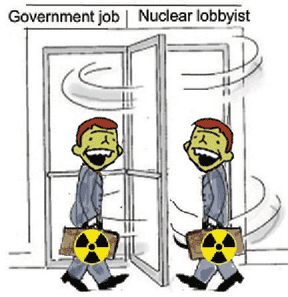 Biden Aides’ Ties to Consulting and Investment Firms Pose Ethics Test
Some of the president-elect’s choices for top posts have done work for undisclosed corporate clients and aided a fund that invests in government contractors. NYT, By Eric Lipton and Kenneth P. Vogel, Dec. 1, 2020
WASHINGTON — One firm helps companies navigate global risks and the political and procedural ins and outs of Washington. The other is an investment fund with a particular interest in military contractors.
But the consulting firm, WestExec Advisors, and the investment fund, Pine Island Capital Partners, call themselves strategic partners and have featured an overlapping roster of politically connected officials — including some of the most prominent names on President-elect Joseph R. Biden Jr.’s team and others under consideration for high-ranking posts.
Now the Biden team’s links to these entities are presenting the incoming administration with its first test of transparency and ethics.
The two firms are examples of how former officials leverage their expertise, connections and access on behalf of corporations and other interests, without in some cases disclosing details about their work, including the names of the clients or what they are paid.
And when those officials cycle back into government positions, as Democrats affiliated with WestExec and Pine Island are now, they bring with them questions about whether they might favor or give special access to the companies they had worked with in the private sector. Those questions do not go away, ethics experts say, just because the officials cut their ties to their firms and clients, as the Biden transition team says its nominees will do.
WestExec’s founders include Antony J. Blinken, Mr. Biden’s choice to be his secretary of state, and Michèle A. Flournoy, one of the leading candidates to be his defense secretary. Among others to come out of WestExec are Avril Haines, Mr. Biden’s pick to be director of national intelligence; Christina Killingsworth, who is helping the president-elect organize his White House budget office; Ely Ratner, who is helping organize the Biden transition at the Pentagon; and Jennifer Psaki, an adviser on Mr. Biden’s transition team.
WestExec did not respond when asked for a list of its clients. But according to people familiar with the arrangement, they include Shield AI, a San Diego-based company that makes surveillance drones and signed a contract worth as much as $7.2 million with the Air Force this year to deliver artificial intelligence tools to help drones operate in combat missions.
At the same time, Mr. Blinken and Ms. Flournoy have served as advisers to Pine Island Capital, which this month raised $218 million for a new fund to finance investments in military and aerospace companies, among other targets.
The team recruited by Pine Island Capital Partners — which is led by John Thain, the chief executive of Merrill Lynch at the time of its collapse in 2008 during the recession and sale to Bank of America — was chosen based on its members’ “access, network and expertise” to help the company “take advantage of the current and future opportunities present in the aerospace, defense and government services industries,” including artificial intelligence, according to a Securities and Exchange Commission filing in September describing the new fund, Pine Island Acquisition Corporation.
Pine Island Capital has been on something of a buying spree this year, purchasing the weapons system parts manufacturer Precinmac and a company until recently known as Meggitt Training Systems and now known as InVeris, which sells computer-simulated weapons training systems to the Pentagon and law enforcement agencies.
Another person listed as a member of the Pine Island team is Lloyd J. Austin III, a retired Army general who is also under consideration for defense secretary, according to a person familiar with the selection process……..
Mr. Biden’s team has faced pressure from the left and government watchdogs to outline steps to minimize the sort of corporate influence and conflicts of interest that marked President Trump’s tenure from the start.
These groups worry not only that Mr. Biden’s aides could shape government policies in ways that could benefit companies that paid their firms, but also that the firms could become magnets for access seekers in the Biden administration……….. https://www.nytimes.com/2020/11/28/us/politics/biden-westexec.html?smid=tw-share
Doubts on safety of extending life of France’s nuclear reactors: public consultation until 15 December
20Minutes 3rd Dec 2020, This Thursday and until January 15, the Nuclear Safety Authority (ASN) is opening a public consultation on the conditions for the continued operation, beyond 40 years, of the 34 900 MWe (electric megawatt) reactors in France. The subject is very sensitive. “France has not prepared any alternatives so that the non-extension of these reactors can be an option”, deplores Greenpeace.
The challenge then is that these reactors provide the same levels of safety as the EPRs, new generation reactors. Is it
possible ? Yves Marignac, at NegaWatt, like Roger Spautz, at Greenpeace, doubt it. Above all, they question the technical and financial capacities of EDF to carry out the adjustments requested by ASN to allow these extensions.
https://www.20minutes.fr/planete/2920535-20201203-nucleaire-prolongation-reacteurs-dela-40-ans-serieux
tion.wordpress.com/
Grid flexibility a better choice than nuclear – could save UK $millions

Christina Macpherson’s websites & blogs
When even a right wing news medium like Forbes start questioning the ”wisdom” of nuclear development , that industry must be getting worried.
Ditch Nuclear And Save $860 Million With Grid Flexibility, U.K. Told, Forbes, David Vetter Senior Contributor, 30 Nov 2,
The U.K. could save money, reduce the risk of blackouts and more quickly achieve its carbon-cutting goals by abandoning plans to build more nuclear power facilities and instead invest in a flexible electricity grid, new analysis has found.
According to the report from Finnish energy tech firm Wärtsilä, the U.K. would stand to save $860 million per year if, instead of new nuclear power, the government backed grid flexibility measures, such as battery storage and thermal generation. That equates to a saving of about $33 dollars per British household per year. Crucially, the analysis revealed that even if energy generation was to remain the same as it is today, Britain could increase renewables’ share of that generation to 62% simply by adding more flexibility (renewables currently account for around 47% of electricity used, according to the government).
The Wärtsilä report is timely because, in a ten-point plan released earlier this month, prime minister Boris Johnson promised an additional $684 million for the nuclear sector, and the building of new large and small nuclear power stations. Notably, grid flexibility was not mentioned in the plan.
The report also raises questions about the necessity of the 3.2 gigawatt Hinkley Point C nuclear power station, under development in Somerset, southwest England, which has been dogged by controversy and delays since its inception. In addition to coming with all the usual challenges associated with nuclear fission—not least the storage of radioactive waste—the project is at least $3.6 billion over budget and has been the target of numerous lawsuits and both local and international complaints.
Speaking to Forbes.com, Ville Rimali, growth and development director at Wärtsilä Energy, explained why his firm determined that grid flexibility is a preferable alternative to nuclear, as Britain looks for a pathway to achieve net zero carbon emissions by 2050.
“Flexibility unlocks more renewable energy by balancing the intermittency of wind and solar power to ensure the power supply always matches demand,” Rimali said. “For example, when more power is generated than needed, you can store the surplus in batteries to be used later. The alternative is paying renewables to switch off, which is expensive and inefficient.”
“It’s a bit like running a bath where the volume of water and the size of the plug keep changing,” he explained. “The smaller the bathtub, the more likely the water is to overflow or run out. Flexibility is like having a bigger bathtub—you can pour more water in, without the risk of running out or overflowing.” ………
investing in nuclear power could, according to Wärtsilä, entrench an inflexible grid while making renewables such as solar and wind less cost-effective.
“New nuclear sites will rely heavily on government subsidies, negatively impact market prices and ultimately weaken the business case for renewables and flexibility,” Rimali said……… https://www.forbes.com/sites/davidrvetter/2020/11/30/ditch-nuclear-and-save-860-million-with-grid-flexibility-uk-told/?sh=2733622b1975
Britain’s Nuclear Decommissioning Authority doesn’t know how much the waste clean up wiill cost or when it will finish

David Lowry’s Blog 27th Nov 2020, The nuclear industry has perpetrated a lot of untruths in six decades of dissembling. But the brazen atomic assertion repeated endlessly in the1950s that atomic energy would produce power “too cheap to meter” ( originally said by the then chairman of the US Atomic Energy Commission, Lewis Stauss, on 16 September 1954, speech to the US National Association of Science Writers when he opined: “It is not too much to expect that our children will enjoy in their homes electrical energy too cheap to meter..”)
progress.”
http://drdavidlowry.blogspot.com/2020/11/nuclear-dissembling-from-too-cheap-to.html
Japanese local governments depend on “nuclear money”

|
Japanese town’s approval of nuclear reactor restart reflects subsidy dependence , https://mainichi.jp/english/articles/20201129/p2a/00m/0na/001000c 29 Nov 20, TOKYO — Japanese local governments’ dependence on “nuclear plant money” distributed by the national government was starkly highlighted recently when one town granted their approval for a reactor restart at one power plant badly damaged in the March 2011 Great East Japan Earthquake and tsunami.
TOKYO — Japanese local governments’ dependence on “nuclear plant money” distributed by the national government was starkly highlighted recently when one town granted their approval for a reactor restart at one power plant badly damaged in the March 2011 Great East Japan Earthquake and tsunami.
However, the Japanese government has taken measures such as changing both the subsidies’ name and their governing mechanisms after the 2011 disaster, so that local governments can still get the money even when the power plant in their jurisdiction has been off-line for long periods. At least some 115 billion yen (around $1.11 billion) has been distributed as subsides and aid from the national government to local hosts of nuclear power plants this fiscal year alone. According to the town of Onagawa, it received about 530 million yen (approximately $5.1 million) in subsidies based on the Three Power Source Development Laws in fiscal 2010, the year before the Great East Japan Earthquake. That has increased following the disaster, with subsidies reaching over 1.4 billion yen (roughly $13.5 million) in fiscal 2017 and 2018. This included payments totaling 1.08 billion yen (roughly $10.4 million) connected to two reactors at the plant in service for more than 30 years.
Onagawa’s total fiscal 2019 spending stood at 34 billion yen (roughly $327.4 million). If the fixed property taxes paid for the nuclear power plant (about 2.7 billion yen, or roughly $26 million) are added to the subsidies stemming from the Three Power Source Development Laws, money derived from the nuclear plant accounts for over 10% of the town’s annual revenue. “We are being greatly helped in terms of finance,” a municipal government official commented. Of the monies based on the Three Power Source Development Laws, Onagawa reaped about 350 million yen (about $3.37 million) more than previously in one subsidy for enhancing the area around the plants — a category designed to gain cooperation from communities hosting the plants. In fiscal 2019, the subsidies were put toward the salaries of seven local social welfare council employees (about 28 million yen, or roughly $270,000), updating a hospital’s electronic medical record system (about 77 million yen, or some $742,000), and renovating a gymnasium, tennis court and baseball field (about 240 million yen, or roughly $2.31 million), among other purposes. Such subsidies can be used for various purposes under the name of enhancing public services. According to municipal project guidelines, although there were many cases where local tax revenue accounted for around 10-20% of expenses, renovation costs for the athletic facilities were covered entirely by the subsidies. Onagawa’s situation is hardly unique. Local governments hosting nuclear power plants generally rely heavily on the large subsidies. National government policies contribute greatly to the increasing subsidies handed out even as nuclear power stations remain shuttered. The Ministry of Economy, Trade and Industry reviewed regulations following the nuclear disaster such that the plants would be deemed as “in operation” to a certain extent even while their reactors were off-line. Takeo Kikkawa, professor at International University of Japan, suggested that the national government “may have been distributing generous subsidies even when the plants were suspended to make it easier for local governments to approve reactor restarts.” According to the Onagawa government, reforms that allowed local bodies to receive more funding based on the years a power station has been in service was also one of the factors behind the town’s increased subsidy take. Central government figures have raised concerns over this particular change to the subsidy system, including that the economy minsitry is doing it “for its own convenience.” Furthermore, public relations and research-related subsidies received by Onagawa to cover nuclear power plant tours, information circulars and other costs, among other purposes, recovered to the same level as before the 2011 disaster (around 10 million yen annually, or roughly $96,300) since fiscal 2015. A senior official at a major electric power company commented, “Thorough PR activities are indispensable for getting reactors restarted.” It was revealed in the town’s project assessment report that a large majority of the contracts to enhance public services and conduct PR-related activities were negotiated without any competition. Once the No. 2 unit at the Onagawa nuclear station is back on-line, the town is also set to receive subsidies from the nuclear fuel tax, collected from the power company based on the nuclear plant’s performance. The community also reaps further benefits when employees of power companies, including subcontractors, frequent local eateries and other businesses during regular inspections. Hideaki Tanaka, a tax law professor at Meiji University, commented, “This nuclear plant money is an extreme example of the government’s subsidy and aid regime.” And so the town of Onagawa’s approval of the restart at their local nuclear plant could be considered inevitable, so dependent on nuclear money have host municipalities become. (Japanese original by Yuki Takahashi, Business News Department)
|
|
UK taxpayers foot huge bill for the incompetence of The Nuclear Decommissioning Authority (NDA)
 UK’s nuclear sites costing taxpayers ‘astronomical sums’, say MPs
Public accounts committee says ignorance, incompetence and weak oversight to blame, Guardian, Damian Carrington Environment editor @dpcarrington Fri 27 Nov 2020 The Nuclear Decommissioning Authority (NDA) has a perpetual lack of knowledge about the state and location of waste on the 17 sites it is responsible for making safe, a powerful committee of MPs has found.
This results from decades of poor record keeping and weak government oversight, the MPs said. Combined with a “sorry saga” of incompetence and failure, this has left taxpayers footing the bill for “astronomical sums”, they said.
The NDA acknowledges that it still does not have full understanding of the condition of its sites, including 10 closed Magnox stations from Dungeness in Kent to Hunterston in Ayrshire, the MPs report said.
The NDA’s most recent estimate is that it will cost current and future generations of UK taxpayers £132bn to decommission the civil nuclear sites, with the work not being completed for another 120 years.
Since 2017, the NDA’s upper estimate of the cost of the 12-15-year programme just to get the sites to the ”‘care and maintenance” stage of the decommissioning process has increased by £3.1bn to £8.7bn. “Our past experience suggests these costs may increase further,” said the MPs’ report.
The lack of knowledge of the sites was a significant factor in the failure of a 2014 contract the NDA signed with a private sector company to decommission the Magnox sites. The government was forced to take back the contract in 2018 and the botched tender has now cost taxpayers £140m, the MPs found.
Sir Geoffrey Clifton-Brown, deputy chair of the public accounts committee (PAC), said: “Although progress has been made since our [2018] report, incredibly, the NDA still doesn’t know even where we’re currently at, in terms of the state and safety of the UK’s disused nuclear sites. Without that, and after the Magnox contracting disaster, it is hard to have confidence in future plans or estimates.” ……….
The UK has eight operating nuclear power plants, with all but one due to retire in the next decade. Only one new plant is being built, at Hinkley Point in Somerset, and it is years behind schedule and billions over budget.
Despite recent speculation over another new plant being given the go-ahead at Sizewell in Suffolk, Boris Johnson failed to announce this in his green industrial revolution plan last week. The government’s new national infrastructure strategy, published on Wednesday, said: “The government is pursuing large-scale nuclear projects, subject to clear value for money for both consumers and taxpayers.”
In 2015, the government stripped another private consortium of a £9bn contract to clean up the nuclear waste site at Sellafield. The company had been heavily criticised for its executives’ expense claims which included a £714 bill for a “cat in a taxi”. https://www.theguardian.com/environment/2020/nov/27/uks-nuclear-sites-costing-taxpayers-astronomical-sums-say-mps#_=_
1 This Month



Shut down the radiation-damaged Heysham nuclear reactors now
To see nuclear-related stories in greater depth and intensity – go to https://nuclearinformation.wordpress.com

Say No to NASA’s Reckless Nuclear Reactor on the Moon
Say No to NASA’s Reckless Nuclear Reactor on the Moon
-
Archives
- October 2026 (256)
- September 2026 (339)
- August 2026 (330)
- July 2026 (355)
- June 2026 (287)
- May 2026 (306)
- April 2026 (356)
- March 2026 (251)
- February 2026 (267)
- January 2026 (308)
- December 2025 (358)
- November 2025 (359)
-
Categories
- 1
- 1 NUCLEAR ISSUES
- business and costs
- climate change
- culture and arts
- ENERGY
- environment
- health
- history
- indigenous issues
- Legal
- marketing of nuclear
- media
- opposition to nuclear
- PERSONAL STORIES
- politics
- politics international
- Religion and ethics
- safety
- secrets,lies and civil liberties
- spinbuster
- technology
- Uranium
- wastes
- weapons and war
- Women
- 2 WORLD
- ACTION
- AFRICA
- Atrocities
- AUSTRALIA
- Christina's notes
- Christina's themes
- culture and arts
- Events
- Fuk 2022
- Fuk 2023
- Fukushima 2017
- Fukushima 2018
- fukushima 2019
- Fukushima 2020
- Fukushima 2021
- general
- global warming
- Humour (God we need it)
- Nuclear
- RARE EARTHS
- Reference
- resources – print
- Resources -audiovicual
- Weekly Newsletter
- World
- World Nuclear
- YouTube
-
RSS
Entries RSS
Comments RSS

