Pentagon review: What happens if ‘nuclear football’ is lost?
Pentagon review: What happens if ‘nuclear football’ is lost? Questions about security procedures arose after Jan. 6, when Vice President Mike Pence was escorted to safety along with a military aide carrying the backup communications system.. 6, when Vice President Mike Pence was escorted to safety along with a military aide carrying the backup communications system.
By The Associated Press NBC News, 21 July 21, WASHINGTON — The Pentagon is taking a rare look at whether it is prepared to deal with the theft or compromise of the portable communications system nicknamed the “nuclear football,” which enables the president or a stand-in to order a nuclear attack.
In announcing the probe Tuesday, the Pentagon inspector general’s office did not disclose what precipitated it, but questions about security procedures arose in the aftermath of the Jan. 6 insurrection at the Capitol.
Vice President Mike Pence was seen on security camera video being escorted to safety, along with a military aide carrying the backup “nuclear football,” as rioters entered the Capitol.
A backup system always accompanies the vice president so that he is able to communicate in the event the president cannot. The “football,” officially called the Presidential Emergency Satchel, enables communication with the office inside the Pentagon that transmits nuclear attack orders.
The inspector general’s office said its review began this month. It gave no timeline for completing it.
“The objective of this evaluation is to determine the extent that DoD processes and procedures are in place and adequate to alert DoD officials in the event that the Presidential Emergency Satchel is lost, stolen, or compromised,” Randolph R. Stone, an assistant inspector general, wrote in a July 19 letter to the director of the White House military office and the director of the Joint Staff at the Pentagon. “This evaluation will also determine the adequacy of the procedures the DoD has developed to respond to such an event.”
Two Democrats who had asked the Pentagon inspector general to review the matter, Reps. Stephen Lynch of Massachusetts and Jim Cooper of Tennessee, said in a joint statement that the Jan. 6 riot raised questions about whether the Pentagon was even aware that Pence’s “nuclear football” was potentially in danger of falling into the hand of insurrectionists………..
“U.S. Strategic Command, which is responsible for U.S. strategic deterrence and nuclear operations, was reportedly unaware that Vice President Pence, his military aide, and the nuclear football were all potentially in danger and only came to understand the gravity of the incident several weeks later when security camera footage was played as a video exhibit during the Senate impeachment trial,” they wrote. https://www.nbcnews.com/politics/national-security/pentagon-review-what-happens-if-nuclear-football-lost-n1274582
City Council in Calgary, Canada, not happy about ”rushed” agreement to own stranded nuclear wastes in Maine.

The 11-acre temporary storage site is patrolled around the clock by armed security guards.
The situation concerns Coun. Evan Woolley, who said that Enmax never mentioned the spent nuclear fuel site when the utility briefed city council on its bid for Versant.
Calgarians have a stake in Maine nuclear fuel storage facility https://mail.google.com/mail/u/0/?tab=rm&ogbl#inbox/KtbxLthlxCLcsbdhrlMgpmhjJQTWxmvSdV?compose=new
Facility part of the deal when Enmax bought U.S. utility for $1.8 billion, including debt
Scott Dippel · CBC News · Jul 19, 2021 Enmax’s acquisition of a utility in Maine last year came with a nuclear surprise that city council members say they weren’t told about.
When the city-owned Enmax closed on its deal to buy Versant Power (formerly Emera Maine) in March of 2020, it also acquired Versant’s interest in a former nuclear power plant.
The Maine Yankee plant operated from 1972 to 1996 and was decommissioned in 2005.
Versant owned 12 per cent of the electricity generated by the power plant. Its ratepayers also paid up front for 12 per cent of the decommissioning costs.
The plant was torn down and tonnes of spent nuclear fuel rods from the facility were temporarily encased in 64 concrete silos at a protected site in Wiscassett, Maine.
Part of the deal
The president of Versant Power, John Flynn, tells CBC News that Enmax couldn’t avoid taking on the Maine Yankee obligation when it purchased Versant.
“As part of the acquisition, Enmax really didn’t have the opportunity to pick and choose the assets or relationships or obligations it wanted,” said Flynn. “It was making a bid for the entire company.”
He said there isn’t a market for a temporary nuclear waste storage facility, so any buyer of Versant would have had to take on that obligation.
There are approximately $10 million US in annual costs related to the safe operation of the spent nuclear fuel storage site, including monitoring, maintenance and security.
About 38 people work at the site.
But Flynn said this doesn’t actually cost Versant or Enmax any money.
It’s covered by a trust fund which includes legal settlements from the US Department of Energy (DOE), which has a legal responsibility to ultimately remove the tonnes of spent fuel and find a permanent storage site.
Temporary site may be used for years
Flynn said there’s currently no estimate from the DOE on when it may move the materials to a final storage site.
He said the trust fund has enough money in it that the operation of the temporary facility will be covered for years to come.
In some years, Flynn said annual payments from the fund have been made to Versant customers who prepaid the decommissioning costs during the years the nuclear power plant was in operation.
The 11-acre temporary storage site is patrolled around the clock by armed security guards.
“The entire site is surrounded by a security perimeter that has 24/7 security that is of the level you would expect to see on an army base, so it is a hyper-secure site.”
While Enmax says it doesn’t own the spent nuclear fuel, it does list in its annual financial report the historical 12 per cent interest in Maine Yankee.
Council kept in dark
The situation concerns Coun. Evan Woolley, who said that Enmax never mentioned the spent nuclear fuel site when the utility briefed city council on its bid for Versant.
He is one of several council members contacted by CBC News who said they were unaware of that part of the $1.3 billion acquisition, which also included $500 million in debt.
Owning 12 per cent of a company that owns a bunch of nuclear waste has not only reputational risk but also real risk in terms of the world that we live in,” said Woolley.
The Ward 8 councillor, who is also the chair of council’s audit committee, said he would have liked to have known this information before council approved Enmax’s purchase.
“For us to not have been made aware of that is unacceptable,” said Woolley.
“Enmax and now Versant Power, which was Emera Maine, is owned by Calgarians. So council and the shareholder are accountable for that decision.”
Outside eyes needed
He describes Enmax’s pitch to city council to approve its takeover of the company in Maine as “rushed.”
His preference is that in future, a third party could assess such business opportunities for council and make a recommendation.
That perspective could come from the city’s chief financial officer, the city solicitor or an external consultant.
A report is expected before the audit committee in September, which he said could result in changes that could help ensure Enmax and all of the city’s wholly-owned subsidiaries are on the same page as city council in the future.
He describes Enmax as “the massive gorilla in the room in terms of its size and scale.” “The risk appetite of Enmax versus the risk appetite of a shareholder are different. And that’s where we need to provide better alignment,” said Woolley.
If council approves of any changes for its subsidiaries, he said it would mean that another transaction like the Versant purchase could not occur in the way that it did.
The 11-acre temporary storage site is patrolled around the clock by armed security guards.
The situation concerns Coun. Evan Woolley, who said that Enmax never mentioned the spent nuclear fuel site when the utility briefed city council on its bid for Versant.
Calgarians have a stake in Maine nuclear fuel storage facility AT TOP https://mail.google.com/mail/u/0/?tab=rm&ogbl#inbox/KtbxLthlxCLcsbdhrlMgpmhjJQTWxmvSdV?compose=new
Facility part of the deal when Enmax bought U.S. utility for $1.8 billion, including debt
Scott Dippel · CBC News · Jul 19, 2021 Enmax’s acquisition of a utility in Maine last year came with a nuclear surprise that city council members say they weren’t told about.
When the city-owned Enmax closed on its deal to buy Versant Power (formerly Emera Maine) in March of 2020, it also acquired Versant’s interest in a former nuclear power plant.
The Maine Yankee plant operated from 1972 to 1996 and was decommissioned in 2005.
Versant owned 12 per cent of the electricity generated by the power plant. Its ratepayers also paid up front for 12 per cent of the decommissioning costs.
The plant was torn down and tonnes of spent nuclear fuel rods from the facility were temporarily encased in 64 concrete silos at a protected site in Wiscassett, Maine.
Part of the deal
The president of Versant Power, John Flynn, tells CBC News that Enmax couldn’t avoid taking on the Maine Yankee obligation when it purchased Versant.
“As part of the acquisition, Enmax really didn’t have the opportunity to pick and choose the assets or relationships or obligations it wanted,” said Flynn. “It was making a bid for the entire company.”
He said there isn’t a market for a temporary nuclear waste storage facility, so any buyer of Versant would have had to take on that obligation.
There are approximately $10 million US in annual costs related to the safe operation of the spent nuclear fuel storage site, including monitoring, maintenance and security.
About 38 people work at the site.
But Flynn said this doesn’t actually cost Versant or Enmax any money.
It’s covered by a trust fund which includes legal settlements from the US Department of Energy (DOE), which has a legal responsibility to ultimately remove the tonnes of spent fuel and find a permanent storage site.
Temporary site may be used for years
Flynn said there’s currently no estimate from the DOE on when it may move the materials to a final storage site.
He said the trust fund has enough money in it that the operation of the temporary facility will be covered for years to come.
In some years, Flynn said annual payments from the fund have been made to Versant customers who prepaid the decommissioning costs during the years the nuclear power plant was in operation.
The 11-acre temporary storage site is patrolled around the clock by armed security guards.
“The entire site is surrounded by a security perimeter that has 24/7 security that is of the level you would expect to see on an army base, so it is a hyper-secure site.”
While Enmax says it doesn’t own the spent nuclear fuel, it does list in its annual financial report the historical 12 per cent interest in Maine Yankee.
Council kept in dark
The situation concerns Coun. Evan Woolley, who said that Enmax never mentioned the spent nuclear fuel site when the utility briefed city council on its bid for Versant.
He is one of several council members contacted by CBC News who said they were unaware of that part of the $1.3 billion acquisition, which also included $500 million in debt.
Owning 12 per cent of a company that owns a bunch of nuclear waste has not only reputational risk but also real risk in terms of the world that we live in,” said Woolley.
The Ward 8 councillor, who is also the chair of council’s audit committee, said he would have liked to have known this information before council approved Enmax’s purchase.
“For us to not have been made aware of that is unacceptable,” said Woolley.
“Enmax and now Versant Power, which was Emera Maine, is owned by Calgarians. So council and the shareholder are accountable for that decision.”
Outside eyes needed
He describes Enmax’s pitch to city council to approve its takeover of the company in Maine as “rushed.”
His preference is that in future, a third party could assess such business opportunities for council and make a recommendation.
That perspective could come from the city’s chief financial officer, the city solicitor or an external consultant.
A report is expected before the audit committee in September, which he said could result in changes that could help ensure Enmax and all of the city’s wholly-owned subsidiaries are on the same page as city council in the future.
He describes Enmax as “the massive gorilla in the room in terms of its size and scale.” “The risk appetite of Enmax versus the risk appetite of a shareholder are different. And that’s where we need to provide better alignment,” said Woolley.
If council approves of any changes for its subsidiaries, he said it would mean that another transaction like the Versant purchase could not occur in the way that it did.
Pro nuclear U.S. lawmakers again introduce Bill to promote nuclear industry
WASHINGTON, D.C. 19 July 21, – U.S. Senator Shelley Moore Capito (R-W.Va.), Ranking Member of the Senate Environment and Public Works (EPW) Committee, along with Senators Sheldon Whitehouse (D-R.I.), John Barrasso (R-Wyo.), Cory Booker (D-N.J.), and Mike Crapo (R-Idaho) reintroduced the American Nuclear Infrastructure Act (ANIA)
……. pecifically, ANIA will:
- Reestablish American international competitiveness and global leadership;
- ANIA empowers the Nuclear Regulatory Commission (NRC) to lead a consensus-building process in international forums to establish regulations for advanced nuclear reactor designs.
- ANIA provides the NRC authority to deny imports of Russian nuclear fuel on national security grounds.
- Expand nuclear energy through advanced nuclear technologies;
- ANIA creates a prize to incentivize the successful licensing process of next generation nuclear technologies and fuels.
- ANIA requires the NRC to identify and resolve regulatory barriers to enable advanced nuclear technologies to reduce industrial emissions.
- Preserve existing nuclear energy; and
- ANIA authorizes a targeted credit program to preserve nuclear plants at risk of prematurely shutting down.
- ANIA modernizes outdated rules that restrict investment in nuclear energy.
- Revitalize America’s nuclear supply chain infrastructure.
- ANIA identifies modern manufacturing techniques to build nuclear reactors better, faster, cheaper, and smarter. https://www.capito.senate.gov/news/press-releases/capito-whitehouse-barrasso-booker-crapo-introduce-legislation-to-preserve-and-expand-americas-nuclear-energy-sector
Macron dithers on nuclear power investment as issue divides France.
Macron dithers on nuclear power investment as issue divides France.
Emmanuel Macron has been a vocal supporter of nuclear power, insisting in December that the carbon emission-free energy was key to France’s green transition. But less than a year before presidential elections, the French leader is leaving the multibillion question of adding new reactors undecided as the issue becomes increasingly divisive.
An estimated €49bn by 2025 has been earmarked to extend the working lives of France’s 56 nuclear reactors, and Macron has yet to commit to any new reactor, beside the one that
state-owned company EDF is building in Flamanville, in the north-west.
FT 19th July 2021
https://www.ft.com/content/137841f9-1c34-4b43-bcad-5923e27c1515
Green energy suppliers protest at UK government’s funding plan to promote nuclear power, with residents exposed to nuclear cost overruns.
Green energy suppliers oppose bills surcharge for new nuclear plants, Critics warn the UK government’s plans could expose households to cost overruns.
Ft.com Nathalie Thomas in Edinburgh Green energy suppliers are protesting at the prospect of having to add a surcharge to household bills to pay for new nuclear plants in Britain when their customers purposely choose not to support the divisive technology.
UK ministers are aiming to introduce legislation in the autumn that would allow for a large nuclear power plant proposed for Sizewell on England’s east coast to be financed via a “regulated asset base” model. The scheme would see households help fund the construction of the £20bn plant via a surcharge on their energy bills, regardless of their supplier.
Households already pay for a number of policy costs via their energy bills, such as subsidies for wind and solar schemes, yet a nuclear surcharge would prove particularly difficult to stomach for companies that offer their customers “100 per cent renewable energy” deals, which do not include nuclear power.
Dale Vince, the founder of Ecotricity, the first company in Britain to have offered customers green electricity, told the Financial Times: “It’s bonkers we would all have to pay this subsidy for at least a decade of construction and not for power generated.”
“The government is reluctant to fund nuclear projects itself, so allowing Sizewell [C] to access the RAB [regulated asset base] system is simply dumping the cost on consumers — even those who have gone renewable, and that’s just unfair,” added Vince.
Kit Dixon, policy manager at Good Energy, the UK’s first supplier to offer customers 100 per cent renewable electricity, said that “we should be deeply concerned” by the nuclear industry potentially being offered such a deal to build expensive new plants “with little incentive to deliver on time or within budget”.
“We’ve got to stop seeing customers’ bills as a sort of cash machine for folly projects,” said another energy chief executive who asked not to be named.
…………………….Critics of the regulated asset base model warn that it would expose households to cost-overruns, which have proved common in the nuclear industry.
Environment groups oppose nuclear on the grounds that it is more expensive than technologies such as offshore wind and leaves a legacy of highly toxic waste that takes more than 100,000 years to decay.
Bulb, Britain’s seventh biggest supplier by market share, also warned in a response to a consultation on the regulated asset base model that using the financing mechanism for nuclear plants “doesn’t protect customers who choose to be on a renewable tariff but adds costs to their bills for a technology they won’t directly benefit from”……….. https://www.ft.com/content/a12bc937-a91f-4341-ba3e-25d7f7edc6d2
UK government’s pointless pursuit ofnuclear power, as renewable energy proving to be cheaper and faster.
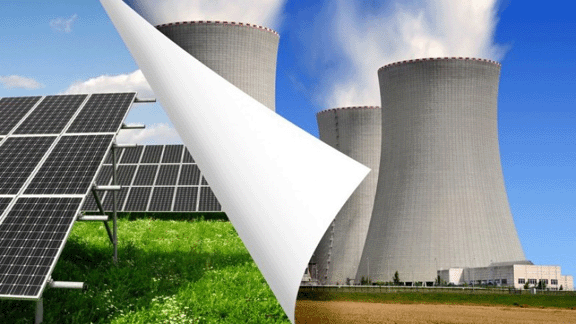
Renewable energy, mainly wind and solar, is rising on the back of rapidly falling costs. So much so that the International Energy Agency, which has in the past been rather guarded about their potential, has switched over to seeing them as the main way ahead, supplying 90% of global electric power by 2050.
| Dave Elliott: No room for nuclear. As noted in an article in Regional Life, a local conservation e-magazine linked to a local anti nuclear group, the flat landscape of the Dengie peninsula in Essex is punctuated by a line of tall wind turbines, slowly turning and the massive grey-blue hulk of the former Bradwell ‘A’ nuclear power station. These two features it says graphically express the contrast between rise of renewable energy and the demise of nuclear power, the past and the future of electricity generation. Renewable energy, mainly wind and solar, is rising on the back of rapidly falling costs. So much so that the International Energy Agency, which has in the past been rather guarded about their potential, has switched over to seeing them as the main way ahead, supplying 90% of global electric power by 2050. That is actually quite conservative compared to some projections for the UK: renewables are supplying over 43% of UK power at present and the Renewable Energy Association says that reaching 100% is possible by 2032 – indeed Scotland is already almost there. All of which raises thequestion of why we are still pursuing nuclear power- which just about everyone agrees is very much more expensive than wind and solar. The recent BBC TV documentary series on construction work at Hinkley Point C in Somerset made stunningly clear the massive scale and environmental footprint of nuclear projects like this. Especially notable was the vast amount of concrete that had to be poured- the production of which involves significant release of carbon dioxide gas. That is one reason why nuclear plants are not zero carbon options, another being the fact that mining and processing uranium fuel are energy and carbon intensive activities. By contrast, renewable energy systems like solar cells and wind turbines need no fuel to run, and, although energy is needed to make the materials used in their construction, the net carbon/energy lifetime debt is less than for nuclear- one study suggested nuclear produces on average 23 times more emissions than onshore wind per unit electricity generated. The Government’s stated aim is to generate ‘enough electricity from offshore wind to power every home by 2030’. That means many more offshore wind farms, off the East coast and also elsewhere around the UK. With the other renewables also added in and more of them planned (we have 14 GW of solar capacity so far) it is hard to see what the nuclear plants are for – the 9 GW or so of old plants and the new 3.2 GW Hinkley Point C plant, much less any other proposed new ones. The nuclear lobby sometimes argues we need more nuclear to replace nuclear plants that are being closed and also to back up renewables. It is hard to see how that could work, unless the new plants were flexible, and able to compensate for the variable output of the 30GW or so of wind and solar capacity we have at present. As yet there are no plans to run the Hinkley Point C plant that way, or for that matter, the proposed 3.2 GW Sizewell C. In which case, adding more nuclear will mean that, at times of low demand, some cheap renewable output, or some low cost flexible gas plant output, would have to be curtailed. What a waste! All of this to keep the £22bn Hinkley Point, and any that follow, financially viable. Renew Extra 17th July 2021 https://renewextraweekly.blogspot.com/2021/07/no-room-for-nuclear.html |

Greenland moves toward a stricter ban on uranium mining.
Greenland has taken the first step towards outlawing uranium mining after lawmakers there proposed a stricter version of a ban that the country’s national assembly overturned in 2013. Only July 2, the elected government began a month-long public consultation period for a proposed bill that, in addition to mining uranium, would prohibit the feasibility studies and exploration activities that must be completed before a mining project can be considered for a license to begin operation.
According to proposal, Naalakkersuisut, the elected government, is hoping that a reinstatement of what was known as the zero-tolerance policy, to achieve its goal of ensuring that “Greenland neither produces nor exports uranium.”
Artic Today 14th July 2021
A new problem for France’s nuclear company EDF threatens to further delay its plans for new model European Pressurised Reactor (EPR2)
EPR2**
In a discreetly published notice in March, the Institute for Radiation Protection and Nuclear Safety (IRSN) – the technical office of the Nuclear Safety Authority (ASN) – asks the State-owned company EDF to identify the origin of the vibrations affecting the circuit primary water from EPRs, already built or under construction.
And to find a solution to this problem, so that it does not reproduce on its new model of reactor, called EPR 2.
Passed under the radar, the news is yet another hard blow in a story with twists and turns. Indeed, EDF has to date no idea how to solve it.
Consequently, we can already anticipate new years of additional delay inthe development of a technology, supposedly easier to produce and therefore more competitive, on which the group led by Jean-Bernard Levy plays very heavily.
Blast 17th July 2021
New book ”I Alone Can Fix It” -raises question that Trump could have been ready to launch a nuclear war.
Pelosi feared Trump would launch nuclear weapons in final days, book claims, https://thehill.com/blogs/blog-briefing-room/news/563125-pelosi-feared-trump-would-launch-nuclear-weapons-in-final-daysBY LEXI LONAS – 07/15/21 Speaker Nancy Pelosi (D-Calif.) was fearful former President Trump would launch nuclear weapons in his final days in the White House, according to a new book.
Washington Post journalists Carol Leonnig and Philip Rucker write in “I Alone Can Fix It” that Pelosi called Gen. Mark Milley, the chairman of the Joint Chiefs of Staff, after the Capitol riot to express her concerns about Trump’s behavior, the newspaper reported.
According to the book, she wanted to ensure Trump could not start a war and launch nuclear weapons as one of his final acts in power
“This guy’s crazy,” Pelosi reportedly told Milley. “He’s dangerous. He’s a maniac.”
“Ma’am, I guarantee you that we have checks and balances in the system,” Milley responded, Leonnig and Rucker write.
Trump responded to the excerpts from the book by saying that Pelosi is a “nut job.”
“Nancy Pelosi is a known nut job. Her enraged quotes that she was afraid that I would use nuclear weapons is just more of the same. In fact, I was the one who got us out of wars, not into wars,” Trump said.
They also state that Milley and other military officials feared Trump would attempt a coup to stay in power and considered resigning.
“They may try, but they’re not going to f—— succeed,” Milley reportedly told his deputies when discussing the potential of a coup. “You can’t do this without the military. You can’t do this without the CIA and the FBI. We’re the guys with the guns.”
Milley thought Trump was “the classic authoritarian leader with nothing to lose,” the authors write.
Trump in a statement on Thursday dismissed the allegations in the new book, saying he “never threatened, or spoke about, to anyone, a coup of our Government.”
“So ridiculous!” he said while repeating unfounded allegations of massive election fraud and saying he lost respect for Milley last summer.
The authors interviewed more than 140 people for the book, due out on Tuesday, including Trump himself for more than two hours.
Japanese government considers extending maximum nuclear reactor lifespan beyond 60 years
Japan mulls extending maximum nuclear reactor lifespan beyond 60 years, KYODO NEWS – Jul 16, 2021 Japan is considering extending the maximum service period for its nuclear reactors beyond 60 years due to anticipated public opposition to the construction of new plants, sources close to the matter said Thursday.
The government is seeking to make long-term use of existing nuclear plants rather than building new ones or replacing reactors, as sought by the ruling Liberal Democratic Party and some business circles.
But such an extension could spur concerns about the safety of aging reactors that are prone to accidents.
………….The government plans to submit a bill to amend the law regulating nuclear reactors to the ordinary Diet session next year.
It will also discuss inspection and assessment methods to determine whether a reactor should be approved to operate for more than 60 years, referring to cases abroad such as in the United States where they can operate for up to 80 years.
In June, the No. 3 unit at Kansai Electric Power Co.’s Mihama plant in Fukui Prefecture, central Japan, became the country’s first reactor to operate beyond 40 years under the new rules.
According to government sources, a proposal has been floated to revise the law to allow multiple extensions beyond 60 years providing screening standards are met.
There are also calls within the LDP to exclude from the 40-year cap reactors that have been suspended since the Fukushima disaster.
Japan currently has 33 operable nuclear reactors, with another three under construction. But with several set to reach their 60-year maximum lifespan in the 2040s, only about 20 reactors are expected to still be in operation by 2050 under the current rules.
As part of the 2018 basic energy plan, which is being reviewed, the government is aiming for nuclear power to account for 20 to 22 percent of the country’s electricity generation in fiscal 2030 to meet its greenhouse gas emissions reduction goal.
The government estimates that about 30 reactors will be required to cover that level of power generation. https://english.kyodonews.net/news/2021/07/c9d4d95b4cfa-japan-mulls-extending-maximum-reactor-lifespan-beyond-60-years.html
UK government plan – residents on the hook in advance for costly Sizewell nuclear plan that will be useless to combat climate change
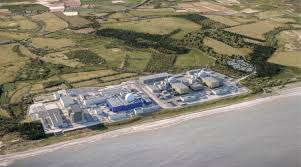
A remote area on England’s east coast, halfway between the seaside towns of Felixstowe and Lowestoft, is set to become the centre of debate about Britain’s future energy security. UK ministers are aiming to bring
forward legislation in the autumn to support the financing of a 3.2 gigawatt nuclear power station in Sizewell, East Suffolk….
Ministers have been in formal negotiations with EDF about how to fund the proposed £20bn Sizewell C
plant since December, and the government and the French state-backed utility have had discussions about replacing Britain’s ageing nuclear reactors for years.
However, the question of whether Britain should build more large plants took on added urgency last month, when EDF closed the 1.1GW Dungeness B station in Kent seven years early. It also raised the prospect that other reactors may also be decommissioned ahead of schedule, owing to problems with their graphite cores……….

“If there was [a capacity issue], what good is Sizewell going to do given it won’t come on line until 2034
according to EDF?” asks Stephen Thomas, emeritus professor of energy policy at the University of Greenwich. Nuclear sceptics have long argued that money would be better spent on clean energy technologies, such as
offshore wind, and reducing electricity demand through measures including insulation.
Under a RAB model, consumers would pay towards a new plant through their energy bills long before any electricity is generated. Opponents of the model warn that consumers would also be on the hook for
cost overruns.
FT 14th July 2021
https://www.ft.com/content/3f2bfc76-5b74-437c-8b18-67f9cde991af
Japan’s government acknowledges that solar power will be cheaper than nuclear
Solar power eclipses nuclear energy in terms of costs, Asahi Shimbun, By SATOSHI SHINDEN/ Staff Writer, July 13, 2021 For businesses looking ahead to reduce costs, solar power would definitely seem to be the way to go. Households could possibly benefit as well.
A new estimate by the industry ministry on future costs of power generation found that solar power will eclipse nuclear energy in terms of costs as of 2030.
The finding, released July 12, is expected to have significant implications for the nation’s energy policy.
This is the first time for the Ministry of Economy, Trade and Industry to acknowledge that the cost to generate solar power will be lower than that for nuclear power.
The estimates were presented at a meeting of a working group of the Advisory Committee for Natural Resources and Energy the same day.
Estimated costs for nuclear power came to close to the 12 yen level or more per kilowatt-hour as of 2030, about 1 yen higher than the previous estimate in 2015.
Costs for solar power ranged from the lower 8 yen level to close to 12 yen for businesses. The rate for homes was estimated at between the last half of the 9 yen level to the first half of the 14 yen level.
The government and electric utilities have continued to champion nuclear power generation even after the 2011 triple meltdown at the Fukushima No. 1 nuclear plant, citing cost efficiency over other energy sources.
However, the latest estimates would seem to call the legitimacy of that argument into question and will likely have an impact on the government’s Basic Energy Plan, for which officials are working to revise.
The Basic Energy Plan is updated almost every three years.
“The industry ministry has finally acknowledged it can no longer maintain the position that nuclear power is the most economical source of energy,” noted Kenichi Oshima, a professor of environmental economics at Ryukoku University who studies the nation’s nuclear policy, referring to the latest findings about costs.
The estimated costs for generating electricity with nuclear energy have risen each time calculations were made.
The ministry was forced to include ballooning costs for decommissioning of nuclear reactors and decontaminating crippled facilities in the aftermath of the Fukushima nuclear disaster…..
solar energy is getting cheaper.
The latest estimate for solar power was down from the previous calculation in 2015 because the costs of installing solar panels are dropping.
Charges for generating electricity are calculated as follows: the total cost of building a new power facility, operating it for decades and finally dismantling it divided by the overall amount of power produced during the period…… https://www.asahi.com/ajw/articles/14394069
French nuclear company EDF struggles with increasing debt and poor prospects for its nuclear fleet.
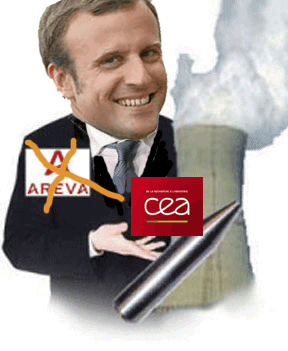
Telegraph 11th July 2021, Macron’s battle to rewire EDF. French President Emmanuel Macron wants to restructure EDF and separate the costly nuclear power arm from the rest of the business. Jean-Bernard Lévy has developed a remarkable level of patience in his role leading utilities giant EDF. The French state-controlled company oversees some of the longest-running infrastructure projects in the world, operating 73 reactors globally.
But even Lévy is bound to have grown frustrated by the lack of progress in the French government’s effort to improve the company’s prospects. In what has been code-named Project Hercules, France wants to overhaul competition rules and separate EDF’s costly nuclear power arm from other areas of its business.
It is hoped the move could allow EDF to double its growth target in renewable energy to 100 gigawatts (GW) by 2030 and help it manage its debts. Brussels must first give approval for EDF’s reorganisation, but talks appear to have stalled and time is running out before France’s general election in April.
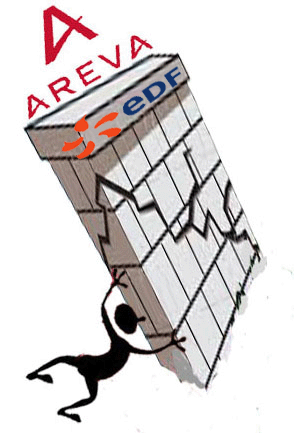
Its expensive nuclear fleet is one reason for its heavy net debt of €42bn. Multi-billion euro investment is needed in coming years to decommission, maintain and build new plants. S&P Global says nuclear projects “represent the highest risk to the group’s credit quality”.
It expects net debt to rise to €50bn-€52bn by the end of 2023. EDF argues it is disadvantaged by rules in France allowing competitors to buy a quarter of the electricity generated by its nuclear fleet at a fixed price of €42 per MwH, to make up for its monopoly in themarket. The price is too low and inflexible, EDF argues.
Meanwhile, EDF’s spending grows. The company is building several large assets without yet getting paid, including the £22bn-23bn nuclear power plant Hinkley Point C Somerset. For its next planned nuclear power station in the UK, Sizewell C in Suffolk, a different funding mechanism is being discussed with the
Government that would allow EDF to recoup costs from household bills during construction, rather than having to wait until the plant is generating.Ministers are believed to be preparing to introduce legislation this
autumn.
https://www.telegraph.co.uk/business/2021/07/11/macrons-battle-rewire-edf/
Reaching net zero without nuclear

Our latest Talking Points makes the case
Not only is it possible, it’s essential https://beyondnuclearinternational.org/2021/07/11/reaching-net-zero-without-nuclear/

The fourth in our series of Talking Points draws on the new report by Jonathon Porritt, New Zero Without Nuclear: The Case Against Nuclear Power. Given the far-off illusory promise of new reactor designs; the enormous costs; the limited capacity for carbon reductions compared to renewables; the unsolved waste problem; and the inflexibility and outdatedness of the “always on” baseload model, nuclear power is in the way of — rather than a contributor to — climate mitigation. You can download the Net Zero Without Nuclear Talking Points here. This is the fourth in our series. You can find all four here.
By Jonathon Porritt 10 July 21
I first took an interest in Greenpeace back in 1973, before I joined Friends of the Earth, CND and the Green Party (then the Ecology Party) a year later. I’d followed the campaigns against the testing of nuclear weapons in Amchitka (one of the Aleutian islands in Alaska), and then in the French nuclear testing area of Moruroa in the Pacific. I was 23 at the time, with zero in-depth knowledge, but it just seemed wrong, on so many different fronts.
That early history of Greenpeace seems much less relevant now, given all its achievements over the last 50 years in so many other areas of critical environmental concern. But it still matters. Greenpeace has been an ‘anti-nuclear organisation’ through all that time, sometimes fiercely engaged in front-line battles, sometimes maintaining more of a watching brief, and nuclear power plays no part in Greenpeace’s modelling of a rapid transition to a Net Zero carbon world. It’s been very supportive of my new report, ‘Net Zero Without Nuclear’.
I wrote this report partly because the nuclear industry itself is in full-on propaganda mode, and partly because that small caucus of pro-nuclear greens (that’s existed for as long as I can remember) seems to be winning new supporters.
And I can see why. The Net Zero journey we’re now starting out on for real (at long last!) is by far the most daunting challenge that humankind has ever faced. Writing in the Los Angeles Review of Books in June 2019, author and Army veteran Roy Scranton put it like this:
‘Climate change is bigger than the New Deal, bigger than the Marshall Plan, bigger than World War II, bigger than racism, sexism, inequality, slavery, the Holocaust, the end of nature, the Sixth Extinction, famine, war, and plague all put together, because the chaos it’s bringing is going to supercharge every other problem. Successfully meeting this crisis would require an abrupt, traumatic revolution in global human society; failing to meet it will be even worse.’
Not many people see it like that – as yet. But more and more will, as signals of that kind of chaos start to multiply. And we already know that the kind of radical decarbonisation on which our future depends is going to be incredibly hard. So why should we reject a potentially powerful contribution to that decarbonisation challenge?
I became Director of Friends of the Earth in 1984. The same year that my first book, ‘Seeing Green’, was published. Looking back on what I said then, I was indeed fiercely critical of nuclear power, but have to admit that my advocacy of renewables (as the principal alternative) was somewhat muted. Apart from a few visionaries in the early 1980s (including Friends of the Earth’s Amory Lovins and Walt Patterson), no-one really thought that renewables would be capable of substituting for the use of all fossil fuels and all nuclear at any point in the near future. And anyone expressing such a view in official circles was rapidly put back in their box.
Given the scale of the challenge we face, we need to have very strong grounds for keeping nuclear out of today’s low/zero-carbon portfolio. Not least as nuclear power, historically, has already made a huge contribution to low-carbon generation. Since the early 1960s, nuclear power has provided the equivalent of 18,000 reactor years of electricity generation. We’d be in a much worse place today if all that electricity had been generated from burning coal or gas.
Happily, there is no longer any doubt about the viability of that alternative. In 2020, Stanford University issued a collection of 56 peer-reviewed journal articles, from 18 independent research groups, supporting the idea that all the energy required for electricity, transport, heating and cooling, and all industrial purposes, can be supplied reliably with 100% (or near 100%) renewable energy. The solutions involve transitioning ASAP to 100% renewable wind – water – solar (WWS), efficiency and storage.
The transition is already happening. To date, 11 countries have reached or exceeded 100% renewable electricity. And a further 12 countries are intent on reaching that threshold by 2030. In the UK, the Association for Renewable Energy and Clean Technology says we can reach 100% renewable electricity by 2032. Last year, we crossed the 40% threshold.
There is of course a world of difference between electricity and total energy consumption. But at the end of April, Carbon Tracker brought out its latest analysis of the potential for renewables, convincingly explaining why solar and wind alone could meet total world energy demand 100 times over by 2050, and that fears about the huge amount of land this would require are unfounded. The land required for solar panels to provide all global energy would be 450,000 km2, just 0.3% of global land area – significantly less than the current land footprint of fossil fuel infrastructures. As the Report says:
The technical and economic barriers have been crossed and the only impediment to change is political. Sector by sector and country by country the fossil fuel incumbency is being swamped by the rapidly rising tide of new energy technologies. Even countries where the technical potential is below 10 times energy demand. . . have devised innovative approaches to energy generation.
The fossil fuel industry cannot compete with the technology learning curves of renewables, so demand will inevitably fall as wind and solar continue to grow. At the current 15-20% growth rates of solar and wind, fossil fuels will be pushed out of the electricity sector by the mid-2030s and out of total energy supply by 2050.‘
The unlocking of energy reserves 100 times our current demand creates new possibilities for cheaper energy and more local jobs in a more equitable world with far less environmental stress.‘
Poor countries are the greatest beneficiaries. They have the largest ratio of solar and wind potential to energy demand and stand to unlock huge domestic benefits.’
Nuclear plays no part in any of these projections, whether we’re talking big reactors or small reactors, fission or fusion. The simple truth is this: we should see nuclear as another 20th century technology, with an ever-diminishing role through into the 21st century, incapable of overcoming its inherent problems of cost, construction delay, nuclear waste, decommissioning, security (both physical and cyber), let alone the small but still highly material risk of catastrophic accidents like Chernobyl and Fukushima. My ‘Net Zero Without Nuclear’ report goes into all these inherent problems in some detail.
So why are the UK’s politicians (in all three major parties) still in thrall to this superannuated technology? It’s here we have to go back to Amchitka! Some environmentalists may still be taken aback to discover that the Government’s principal case for nuclear power in the UK today is driven by the need to maintain the UK’s nuclear weapons capability – to ensure a ‘talent pool’ of nuclear engineers and to support a supply chain of engineering companies capable of providing component parts for the nuclear industry, both civilian and military. The indefatigable work of Andy Stirling and Phil Johnston at Sussex University’s Science Policy Research Unit has established the depth and intensity of these interdependencies, demonstrating how the UK’s military industrial base would become unaffordable in the absence of a nuclear energy programme.
What that means is that today’s pro-nuclear greens are throwing in their lot not just with a bottomless pit of hype and fantasy, but with a world still dangerously at risk from that continuing dependence on nuclear weapons. That’s a weird place to be, 50 years on from the emergence of Greenpeace as a force for good in that world.
Fukushima’s ”nuclear recovery Olympics” has gone even more wrong, as spectators banned.

Fukushima to ban Olympic spectators as Covid cases rise,
U-turn deals blow to Japan’s hopes of using Games to showcase recovery from 2011 tsunami, Guardian, 10 Jul 21,
, The Fukushima prefecture of Japan will bar spectators from the Olympic events it hosts this summer owing to rising Covid-19 infections, its governor said on Saturday, reversing a position announced two days earlier by organisers.
The decision deals another blow to Japan’s hopes of using the Olympics to showcase its recovery from a devastating earthquake and tsunami that hit the northern coast in 2011, destroying a nuclear power station in Fukushima in the worst nuclear accident since Chernobyl.
Organisers had said on Thursday there would be no spectators in the host city, Tokyo, as a resurgent coronavirus forced the prime minister, Yoshihide Suga, to declare a state of emergency in the capital that will run throughout the Games, which were already postponed by a year due to the pandemic……..
Fukushima’s move comes a day after the Australian Olympic Committee president, John Coates, expressed optimism about audiences in Fukushima. Japan take on Australia in a softball game that will be the first competition of the Olympics on 21 July, two days before the opening ceremony.
………. Organisers said there was no change to plans for limited crowds in Miyagi, Shizuoka and Ibaraki prefectures. https://www.theguardian.com/sport/2021/jul/10/fukushima-to-ban-olympic-spectators-as-covid-cases-rise
1 This Month
23-25 October – on Zoom – World BEYOND War’s annual global conferenc


Shut down the radiation-damaged Heysham nuclear reactors now
To see nuclear-related stories in greater depth and intensity – go to https://nuclearinformation.wordpress.com

Say No to NASA’s Reckless Nuclear Reactor on the Moon
Say No to NASA’s Reckless Nuclear Reactor on the Moon

-
Archives
- October 2026 (209)
- September 2026 (339)
- August 2026 (330)
- July 2026 (355)
- June 2026 (287)
- May 2026 (306)
- April 2026 (356)
- March 2026 (251)
- February 2026 (267)
- January 2026 (308)
- December 2025 (358)
- November 2025 (359)
-
Categories
- 1
- 1 NUCLEAR ISSUES
- business and costs
- climate change
- culture and arts
- ENERGY
- environment
- health
- history
- indigenous issues
- Legal
- marketing of nuclear
- media
- opposition to nuclear
- PERSONAL STORIES
- politics
- politics international
- Religion and ethics
- safety
- secrets,lies and civil liberties
- spinbuster
- technology
- Uranium
- wastes
- weapons and war
- Women
- 2 WORLD
- ACTION
- AFRICA
- Atrocities
- AUSTRALIA
- Christina's notes
- Christina's themes
- culture and arts
- Events
- Fuk 2022
- Fuk 2023
- Fukushima 2017
- Fukushima 2018
- fukushima 2019
- Fukushima 2020
- Fukushima 2021
- general
- global warming
- Humour (God we need it)
- Nuclear
- RARE EARTHS
- Reference
- resources – print
- Resources -audiovicual
- Weekly Newsletter
- World
- World Nuclear
- YouTube
-
RSS
Entries RSS
Comments RSS

