Green party makes gains in East Suffolk Council by-election – area that includes planned Sizewell nuclear station
The Green Party has taken one of two seats up for grabs in the Aldeburgh and Leiston ward in Thursday’s East Suffolk Council by-election – and came within two votes of winning the other.
Tom Daly is the first Green councillor elected in the area which includes much of the site of the proposed new Sizewell C power station. He will be joined on the council by Conservative Russ Rainger – who was a county councillor for the area before standing down in May.
The second Green candidate, Matt Oakley, came only two votes behind Mr Rainger. Suffolk Coastal Green Party chairman Julian Cusak said on Facebook: “Great result for the Green Party last night.
Aldeburgh and Leiston now has its first Green councillor on East Suffolk Council.
East Anglian Daily Times 9th July 2021
U.S. nuclear lobby wants to sell advanced nuclear technology to China, on the spurious claims of ”safety” and ”advancing climate action”
Nuclear Advocates Urge Biden, Congress To Reverse Trump Policy, Open China To U.S. Nuclear, Forbes, Dipka Bhambhani 9 July 21

A growing chorus of nuclear energy stakeholders is asking the Biden administration and Congress to reverse course and open up the Chinese market to U.S. nuclear energy companies in the name of safety and climate change.
At issue: a pair of Senate and House bills—S. 1260, the Endless Frontiers Act, and H.R. 3524, Ensuring American Global Leadership and Engagement Act—both of which effectively end bilateral cooperation with China on civil nuclear projects.
China’s unique policy allows it to share nuclear technology between its civil and military sector
A growing chorus of nuclear energy stakeholders is asking the Biden administration and Congress to reverse course and open up the Chinese market to U.S. nuclear energy companies in the name of safety and climate change.
President Biden is continuing former President Trump’s 2018 nuclear energy policy restricting U.S. nuclear energy companies from exporting to, or developing nuclear energy technology with, China.
Some say restricting American nuclear energy companies from the Chinese market threatens global nuclear energy safety, undermines global climate change efforts to reduce emissions worldwide, and reflects an incongruent trade policy.
Meanwhile Congress is preparing to codify that Trump policy.
In a memo obtained by Forbes, the Nuclear Energy Institute (NEI) told stakeholders, “Growing anti-China sentiment in Congress has put U.S.-China nuclear cooperation in increasing jeopardy. Cutting off cooperation is of great concern to the entire U.S. nuclear industry because of the potential harm to global nuclear safety cooperation and the U.S. supply base.”
NEI predominately represents U.S. nuclear power plant owners and operators but its membership also includes reactor developers and other companies across the supply chain, universities, research labs, law firms, labor unions and international electric utilities.
At issue: a pair of Senate and House bills—S. 1260, the Endless Frontiers Act, and H.R. 3524, Ensuring American Global Leadership and Engagement Act—both of which effectively end bilateral cooperation with China on civil nuclear projects.
The House Foreign Affairs Committee could advance H.R. 3524 as early as this month, which could include more restrictive measures in the form of amendments.
At stake: a global nuclear construction marketplace expected to be $5 trillion by 2050.
ANS represents more than 10,000 professionals in nuclear science and technology.
Piercy said locking U.S. companies out of the Chinese market threatens operational safety of nuclear power plants in China and those built by China around the world. And it reduces U.S. influence.
“We want to make sure that we have the ability to influence international safety norms and understand what is happening in global markets,” Piercy told Forbes.
The global Nuclear Nonproliferation Treaty already allows the U.S. nuclear energy industry to work freely to share its technology. Though China’s unique policy allows it to share nuclear technology between its civil and military sector, there is a way to protect U.S. commercial interests, Piercy said.
“Can we conduct commerce without giving away the U.S. crown jewels in this area?” Piercy said. “The answer is yes. We do not have to pick up our ball and go home because we’re afraid that we’re going to get taken.”
Intellectual property protection, keeping U.S. technology from being copied unfairly, are all possible while working in and with China, he said.
According to a recent Forbes article on nuclear energy, 96 nuclear reactors have been connected to the grid in 13 countries over the past 20 years. Of these, 45 were constructed in China.
The U.S. has an opportunity “to steer the way the global renaissance unfolds,” Piercy said. “It’s going to happen, whether the U.S. participates in it or not.”
According to the U.S.-China Business Council, a nonprofit nonpartisan group that represents 200 companies that do business with China, sales of nuclear energy technology have totaled about $170 million before 2018, a number they said was “not significant,” when then-President Trump restricted newer U.S. nuclear technology from export. Technology export is now limited to replacement parts for older reactors. But China needs smaller reactors that can float or power ships, the group said.
For new technology export, American companies could request a waiver from the U.S. Commerce Department, but there is a presumption of denial, so no U.S. nuclear energy companies, including Bill Gates’ TerraPower, were allowed into the Chinese market.

TerraPower, which had announced in 2017 it would build a test reactor south of Beijing with China National Nuclear Corp. (CNNC), had to pivot once Trump announced his policy.
Sources close to the deal say Gates was furious and petitioned DOE. There was some consolation for the company.
Forbes reported in December that the U.S. Department of Energy awarded TerraPower $80 million to build advanced reactors that could be used in the U.S. and overseas.
Trump’s then Assistant Secretary for Nuclear Energy, Dr. Rita Baranwal, also awarded TerraPower and GE-Hitachi $80 million to demonstrate their unique Natrium reactors, sodium-cooled fast reactors, in Wyoming in a partnership with PacifiCorp, in lieu of its deal with Beijing’s CNNC.
The funding came from DOE’s $230 million Advanced Reactor Demonstration Program which Baranwal launched last Fall………………….
Biden is continuing to allow the U.S. International Development Finance Corporation to grant loans for nuclear power projects abroad, another Trump administration policy to expand the use of U.S. nuclear technology in the developing world.
And that declaration that climate change is a matter of national security invites the Defense Department, the intelligence community, and others into the conversation, said Retired Rear Admiral Michael Hewitt, CEO of Allied Nuclear and its parent IP3.
“It opens up the aperture to the conversation of nuclear power through the lens of climate change and national security that was missing before,” Hewitt said.
Allied Nuclear is a U.S.-based global nuclear energy adviser, a start-up that helps foreign governments procure nuclear technology from American and commercially driven international companies, tailors financing and helps countries start nuclear energy programs……..
Biden’s Energy Secretary Jennifer Granholm told NEI in June at its Nuclear Energy Assembly that nuclear energy must be used to meet U.S. climate goals. She asked the President for $1.85 billion in his Fiscal 2022 budget for nuclear energy, a 23% increase over the previous year.
While Granholm told World Nuclear News that nuclear is essential for the U.S. to reduce carbon emissions 52% by the end of 2030, she fell short of addressing how U.S. nuclear technology could help the rest of the world do so……………..
Not everyone is in agreement on how open China should be to U.S. companies……… https://www.forbes.com/sites/dipkabhambhani/2021/07/09/nuclear-advocates-urge-biden-congress-to-reverse-trump-policy-open-china-to-us-nuclear/?sh=370a04c02bc4,
The nuclear rort in Georgia. Consumers may end up paying for billions of dollars in cost overruns on the Plant Vogtle nuclear expansion.
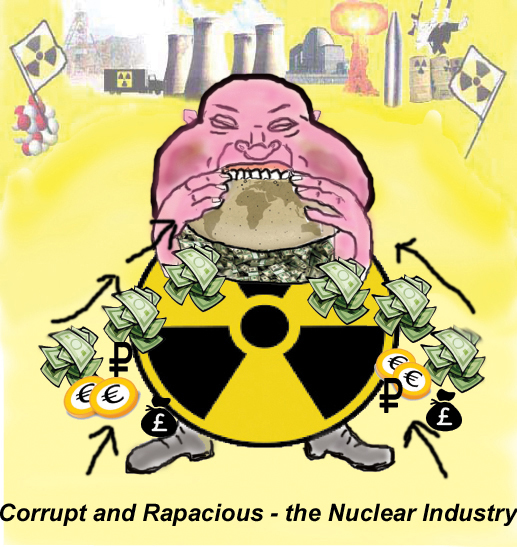
Nuclear cost overrun could mean billions in extra Georgia Power profit, By Matt Kempner, The Atlanta Journal-Constitution, 9 July 21, The more utility spends, the more it can earn; consumers pay price.
Consumers may end up paying for billions of dollars in cost overruns on the Plant Vogtle nuclearexpansion.
But for Georgia Power and its parent Southern Co., the extra costs could represent a huge financial windfall: billions of dollars in extra profit.
That’s because the electric utility’s profit from the sprawling project is tied largely to how much it spends, not whether it stays within budget.
The tab for 2.6 million Georgia Power customers — and the profit for Southern and its shareholders — could start becoming clearer this fall, when elected state regulators hold hearings to determine how much of Vogtle’s initial construction expenses can be added to electric bills for the first time.
By state law, Georgia Power can charge its customers for reimbursement of “prudent and reasonable” capital costs, such as from building a new plant, and for profit set as a percentage of those expenses. The higher the allowed costs, the greater the profit.
The Georgia Public Service Commission, which regulates the electric monopoly, could rule that many of Vogtle’s cost overruns weren’t prudent or reasonable, sharply limiting increases in consumer bills and reducing Georgia Power’s total profits.
But so far there are no indications that will happen, at least not in the long term.
Stock analysts, bond-rating agencies and the company’s own executives cite the risk, but they also often praise regulators’ “constructive” relationship with Georgia Power. In late 2019, the PSC agreed to let Georgia Power collect one of the highest rates of return among its peers around the nation.
“Their decisions, for lack of a better term, have been protective of or supported investments of Georgia Power,” saidJeff Cassella, a senior credit officer for bond-rating firm Moody’s Investors Service. He said he’s seen no indication the PSC will deny Vogtle costs.
Vogtle basics
Project: Build two new nuclear reactors near two existing reactors at Plant Vogtle south of Augusta, near the South Carolina line.
Owners: Georgia Power (45.7%), Oglethorpe Power (30%, represents electric membership cooperatives), the Municipal Electric Authority of Georgia (22.7%, represents city utilities), Dalton Utilities (1.6%).
Benefits: Expected to provide a reliable, stable power supply for at least 60 years….
Downsides: Beyond concerns such as toxic nuclear waste, the all-in-cost of the new electricity is projected to be higher than that from competing forms of electricity generation, according to state staffers.
Costs: Georgia Power’s portion of the total project cost was slated to be $6.1 billion. So far, it’s increased to $11.1 billion.
How Georgia Power’s portion of the project will be paid for: The company’s customers are already paying a fee in monthly bills for a portion of Vogtle financing costs and company profits on the project. It’s estimated that average residential Georgia Power customer will have paid over $850 in such fees before the project is completed. Then their bills are expected to rise higher to cover all “prudent” and “reasonable” construction costs and company profits that rise with those costs.
Who decides what costs are prudent and reasonable: The five elected members of the Georgia Public Service Commission, which regulates Georgia Power, a territorial monopoly that is part of Southern Company.
Had Georgia Power met its original budget and schedule, it would have made $7.4 billion in profits on the project, according to testimony of state independent monitors and PSC staff. But because costs have soared by billions of dollars, those profits could rise to $12.6 billion over the decades-long life of the two new reactors under construction, they testified in 2017.
Costs at Vogtle have continued to climb since 2017. As a result, profits could rise higher, too……………..
Vogtle’s expansion, meanwhile, has been riddled with problems and delays since the PSC approved the project in 2009. The company negotiated a contractor deal with Westinghouse to insulate the utility and customers from some of the worst of the possible overruns, but that was negated after Westinghouse filed for bankruptcy protection.
Georgia Power’s share of the initial estimated total project cost, $6.1 billion, has ballooned to $11.1 billion at the latest estimate.
The reactors were supposed to go into operation in 2016 and 2017, but the timetable has been repeatedly extended. Now, Georgia Power predicts the first unit will be finished in the first quarter of next year. A monitor for the state, though, says the earliest would be the summer of 2022, followed by the second reactor a year later, at best. And he cautioned that constructioncosts for Georgia Power and its partners could rise another $2 billion…………
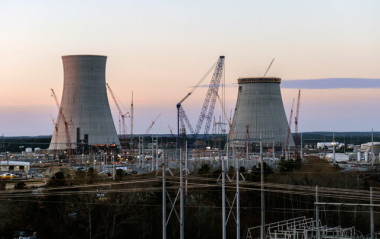
Vogtle was set up for streamlined U.S. regulatory approvals, billions of dollars in federal loan guarantees and dibs on hundreds of millions of dollars in federal tax credits. Georgia’s legislators and then-Gov. Sonny Perdue allowed the company to collect financing costs and some profits years before any electricity was produced.
As a result, the average Georgia Power residential customer will have paid $854toward the project before it goes into operation. That doesn’t include the actual costs of construction, which keep growing.
Echols, the PSC’s vice chairman, said in an email that the enactment of short-term profit reductions shows the regulator is holding the company accountable and “sends a painful and embarrassing message to Georgia Power.”
Those cuts essentially last until the first new reactor goes into operation. Then profit rates can rise back up for what could be decades to come, dwarfing the initial penalties………
Georgia isn’t alone in allowing regulated utilities to potentially profit on project overruns. A number of other states in the Southeast operate under a similar framework, according to the National Association of Regulatory Utility Commissioners………. https://www.ajc.com/news/business/nuclear-cost-overrun-could-mean-billions-in-extra-georgia-power-profit/YIA3T3YHZRHI5A7GCZHREIXCPE/
France’s government helps settle the debts of bankrupt nuclear company AREVA (which is now resuscitated as ORANO)
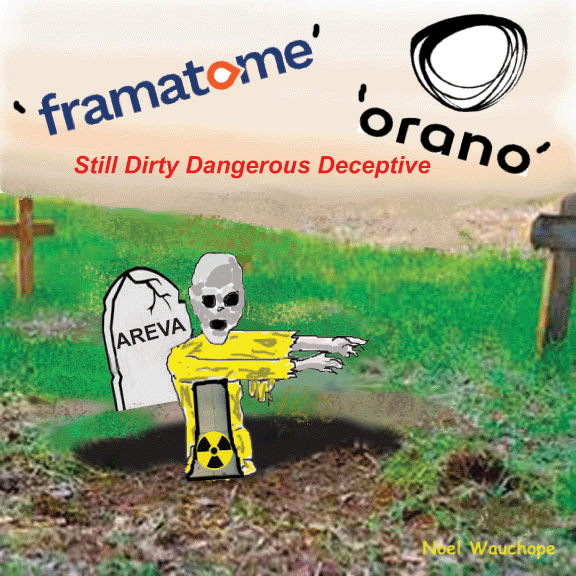
French state helps Areva settle Finnish EPR liabilities. To settle a new additional cost of 600 million euros, the State will buy back from the company, for 994.1 million euros, part of the shares it holds in the capital of Orano, the group responsible for managing the fuel cycle.
Le Monde 8th July 2021
UK residents face higher electricity bills, paying in advance, for the construction of new nuclear reactors
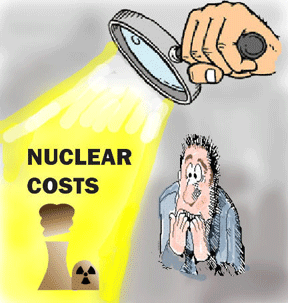
Consumers face higher energy bills to pay for new nuclear power. EDF wants to recoup some of the £20bn cost of the new Sizewell C plant in Suffolk before it starts producing electricity. Households face higher energy bills to help pay for the planned £20bn Sizewell C plant in Suffolk as the Government seeks to replace the UK’s ageing nuclear power stations.
Ministers are preparing to introduce legislation so that nuclear developers can recoup some of their costs through energy bills while a new plant is being built, rather than having to wait until it has been developed, the Financial Times reported. Supporters stress the so-called regulated asset base model can help cut the huge costs of nuclear power because it reduces risk for developers, although critics argue it unfairly heaps risk onto consumers. EDF has been in negotiations with the Government since December over a funding deal for its proposed Sizewell C plant amid public debate about the role nuclear power should play in the energy ecosystem.
It was estimated in 2019 that energy bills could rise by about £6 a year if the regulated asset base model is used for Sizewell. The financing model is used for other infrastructure projects such as the Thames Tideway Tunnel
but not yet for power generation, meaning new legislation is needed. The nuclear industry has been increasingly vocal in recent months about the importance of replacing the UK’s nuclear plants, most of which are due to close by the end of the decade.
Telegraph 7th July 2021
Investors won’t back the nuclear ”white elephant”, neither should the UK taxpayers

The City won’t back new nuclear power stations – so why should we? The nuclear industry has a wretched track record when it comes to building new reactors. Giant cost overruns are practically a given; so too extraordinary delays.
Take EDF, the French state-backed outfit. Its nuke in Flamanville, Normandy was originally meant to come on line in 2009. Instead it won’t be ready until next year, 14 years later than originally planned and £10bn over budget.
Then there’s Hinkley Point C, Britain’s first new nuclear plant in three decades. Initially pencilled in for completion in 2017, it is now not expected until 2026 with a £23bn bill instead of £16bn.
No wonder, then, that the City has baulked at helping to finance Sizewell C, a project so radioactive that Sir Iain Duncan Smith has dubbed it “the next Huawei” because of the involvement of Beijing-backed CGN. The politics of
that are enough to put off most investors, but there are plenty of other risks that traditional fund managers will struggle to square with the environmental, social and governance (ESG) guidelines they are increasingly governed by.
But is this really the way to go about it? It is eight years since the influential Energy and Climate Change Committee called for the Government to come up with a plan B because of repeated problems with building new nuclear power. Yet we seem no closer to having one.
T elegraph 7th July 2021
https://www.telegraph.co.uk/business/2021/07/07/city-wont-back-new-nuclear-power-stations-should/
As wind power becomes half the price of nuclear, nuclear power may not be an election winner.

this is not a time to invest in nuclear technology, but offshore wind looks increasingly attractive.
The problem seems to be that getting the Hinkley Point C reactors off the ground brought out into the open how expensive and delay-prone building a new nuclear plant has become.
Nuclear Resurgence Fades In The UK; Huge Expectations For Offshore Wind, Seeking Alpha 4th July 2021
Approximately, 16% of UK power comes from nuclear reactors, which are almost all due to close soon. The UK Government has gone quiet about nuclear renewal.
In late June, the UK All-Party Parliamentary Group (APPG) on Nuclear Energy has called for urgent action to revitalise the industry, a call which seems too late to be viable.
New UK report suggests massive expansion of offshore wind to 108 GW; this will drive new power needs in the UK. Investors might consider the risks of investing in nuclear technology now and instead consider the rise of companies involved with offshore wind. Four years ago, I wrote about the struggling global nuclear industry and specifically nuclear power in the UK.
I updated the UK situation earlier this year. Very recent developments suggest that a further update is timely because what happens in the UK will impact the global nuclear industry.
Here I suggest that this is not a time to invest in nuclear technology, but that offshore wind looks increasingly
attractive. It takes a long time to get nuclear permitting sorted out and construction commissioned. The clock is ticking for the renewal of the UK nuclear fleet which currently provides ~16% of UK power requirements, but all but one of the existing fleet of 15 reactors plans to close by 2030.
The problem seems to be that getting the Hinkley Point C reactors off the ground brought out into the open how expensive and delay-prone building a new nuclear plant has become.
Probably focusing the Government’s mind is the fact that financing Hinkley Point C has left the public with a “strike price” of 92 pounds/MWh and 35 year inflation adjusted bill, which is already more than double the cost of a major wind farm (e.g. Dogger Bank wind farm has a strike price of 40 pounds/MWh, IRR of 5.6% and payback time 17 years).
No doubt the recently updated 100+ year program to decontaminate the UK’s 17 old nuclear facilities is another confronting fact that may not be an election winner.
New Mexico leaders oppose Holtec nuclear waste site proposal

The opposition contended the project posed too much risk and could upend other major industries in the region like agriculture …
”This leaves us extremely concerned that ‘interim’ storage sites …. will become the country’s de facto permanent nuclear waste storage facilities. We cannot accept that result.”
New Mexico leaders oppose Holtec International nuclear waste site proposed near Carlsbad, Adrian HeddenCarlsbad Current-Argus 6 Jul 21, New Mexico’s top Democrat political leaders voiced their opposition to a proposed storage facility for nuclear waste to be built near Carlsbad and Hobbs, warning the U.S. Department of Energy that the site could become a perpetual dumping ground as a permanent repository does not exist.
Holtec International applied for a 40-year license to build a consolidated interim storage facility (CISF) at a remote location near the Eddy-Lea county line, through the federal Nuclear Regulatory Commissions (NRC) in 2017.
The company signaled it planned to file for subsequent licenses to continue to operate the facility during 20 phases which would total more than 100,000 metric tons of waste when complete.
The site would be designed to hold spent nuclear fuel rods, brought in via rail from nuclear power plants around the country, on a temporary basis while a permanent repository is built….
The opposition contended the project posed too much risk and could upend other major industries in the region like agriculture and fossil fuels.
In the July 2 letter, New Mexico Democrat U.S. Sens. Martin Heinrich and Ben Ray Lujan, U.S. Rep. Melanie Stansbury (D-NM) and New Mexico Gov. Michelle Lujan Grisham said Holtec’s proposal contained no plan for permanent disposal of the waste and thus risked leaving it in New Mexico forever.
Lujan Grisham was a frequent critic of the project since its inception, calling the proposal “economic malpractice” for the risk she said it posed to other industries.
The lawmakers also opposed a similar proposal to expand a facility owned by Waste Control Specialists in Andrews, Texas along that state’s western border with New Mexico, to also hold the spent fuel.
“We are strongly opposed to the interim storage of spent nuclear fuel (SNF) and high-level waste (HLW) in New Mexico. There is currently no permanent disposal strategy for SNF and HLW in place at the Department of Energy,” the letter read.
“This leaves us extremely concerned that ‘interim’ storage sites with initial 40-year leases, like one proposed for (the NRC) licensing in New Mexico, will become the country’s de facto permanent nuclear waste storage facilities. We cannot accept that result.”
New Mexico had already seen the impacts of radiation exposure, the letter read, resulting from uranium mining and other activities in the state………….. https://www.currentargus.com/story/news/local/2021/07/06/new-mexico-leaders-oppose-holtec-nuclear-waste-site-near-carlsbad/7872429002/
British households will pay for nuclear construction long before it supplies any electricity, under the govt’s new plan
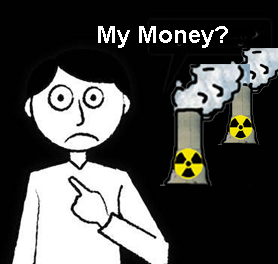
the model is deeply unpopular with nuclear sceptics, who have said it would expose consumers to construction risks, notably any cost overruns.
EDF and its junior partner in Hinkley Point C, the Chinese state-owned company CGN, are financing the plant in return for a generous electricity price of £92.50 per megawatt hour guaranteed by the government.
The price… was agreed in 2012 and rises in line with inflation.
UK households face energy bills surcharge to fund nuclear plants
Ministers plan legislation for new financing model to underpin building of £20bn Sizewell C reactor, Ft.com
Nathalie Thomas in Edinburgh and Jim Pickard in London, 7 jul 21,
British households face paying a surcharge on their energy bills to pay for new nuclear power stations in the UK as the government draws up legislation to underpin the new financing plan. Ministers aim to unveil legislation in the autumn that would enable Sizewell C, a £20bn nuclear power plant proposed by France’s EDF for England’s east coast, to go ahead through a financing model called the regulated asset base, said several people briefed on the government’s thinking. This model would mean that energy bill payers start contributing towards the cost of the plant at Sizewell in Suffolk long before it generates any electricity.
Boris Johnson has said he wants the government to reach a final investment decision on “at least one” new nuclear power station before the next general election ……….
Under the model, owners of a power station could add chunks of the value of a partly built plant to what would be its regulated asset base in stages during the risky construction phase. They could then charge an agreed regulatory return on this value to UK households through their energy bills, in a move designed to cover financing costs. State-backed EDF has said the steady returns guaranteed by the regulated asset base model would allow it to attract low-risk investors such as pension funds and would lead to overall savings for consumers.
But the model is deeply unpopular with nuclear sceptics, who have said it would expose consumers to construction risks, notably any cost overruns.
EDF is planning to use a design called the European Pressurised Reactor at Sizewell C, but budgets have spiralled at other projects deploying similar technology, including the Hinkley Point C plant under construction in Somerset. The Treasury is supportive of the regulated asset base model, said several people briefed on the department’s stance…..
EDF and its junior partner in Hinkley Point C, the Chinese state-owned company CGN, are financing the plant in return for a generous electricity price of £92.50 per megawatt hour guaranteed by the government.
The price, which was controversial with environmental groups, was agreed in 2012 and rises in line with inflation. UK ministers entered formal negotiations with EDF over the financing of Sizewell C in December. The government said at the time that consideration would be given “to the potential role of government finance in construction, provided there is clear value for money for consumers and taxpayers”.
Stephen Thomas, emeritus professor of energy policy at the University of Greenwich, said he imagined that the government would have to take a “strategic stake” in Sizewell C “as a signal to investors that this won’t be allowed to collapse, and ditto EDF”. It is not yet clear what role CGN will play in Sizewell C. CGN is financing 20 per cent of the development costs of the Suffolk plant alongside EDF but some Conservative MPs are opposed to Chinese involvement in critical UK infrastructure. CGN declined to comment. https://www.ft.com/content/d115c0bd-da17-4bbf-a070-b62b525c7fa1
William Perry and Jerry Brown address the unwisdom of spending $2 trillion on new nuclear weapons
Spending $2 trillion on new nuclear weapons is a risk to more than just your wallet, Business Insider, BILL PERRY, JERRY BROWN, JOHN GARAMENDIJUL 7, 2021,
- The US is pursuing the modernization of all three legs of the nuclear triad, at an estimated cost of $1.7 trillion over 30 years.
- Simultaneous modernization exceeds what’s needed for an effective nuclear deterrent and is an unnecessarily costly and risky way to achieve our deterrence requirements.
- Bill Perry is a former US secretary of defense. Jerry Brown is a former governor. John Garamendi is the US Representative for California’s 3rd Congressional District.
The world is witnessing a new, dangerous nuclear arms race. Tensions are rising between the Great Powers. As the US, Russia, and China rush to modernize their nuclear arsenals, the trip wire is becoming more taut by the day.
Observation and communication satellites and systems are increasingly vulnerable to attacks. All three countries are fielding stealth and hypersonic nuclear delivery systems designed to evade detection. The risks of a false alarm or a political miscalculation has always haunted the nuclear landscape, and they do even more today.
Last week, legislation was introduced in the US House of Representatives to address the misguided nuclear modernization strategy the US is currently employing and chart a safer, more cost-effective course for our modernization efforts – one that is predicated on deterrence rather than dominance.
As long as nuclear weapons exist, we must have a safe, secure, and effective nuclear deterrent. However, simultaneous modernization efforts across all three legs of the nuclear triad exceed that scope and are an unnecessarily costly and risky way to achieve our deterrence requirements.
The current US nuclear modernization strategy includes the Ground Based Strategic Deterrent (GBSD), the B-21 bomber, the Columbia-class submarine, the Long-Range Standoff (LRSO) air-launched cruise missile, the sea launched nuclear cruise missile, and new nuclear warheads.
The costs of these projects are extraordinary: a 2017 Congressional Budget Office (CBO) report estimated that the 30-year cost of nuclear weapons spending would be $1.2 trillion ($1.7 trillion adjusted for inflation).
As the Government Accountability Office recently noted, the current plan to modernize every part of the US nuclear arsenal simultaneously is a recipe for schedule delays and cost overruns.
The ICBM leg of the triad deserves special attention. The total price tag to procure the GBSD is projected to be at least $95 billion, and up to $264 billion when accounting for total life-cycle costs. A pause in the GBSD will help defray short-term costs for the Air Force and will also defer a long-term expenditure.
Additionally, the W87-1, the warhead that is being designed for the GBSD, will cost at least $12 billion to build – and is not part of the estimated GBSD procurement cost of $95 billion. To build new warhead cores for the W87-1, the National Nuclear Security Agency (NNSA) is expanding plutonium pit production, which will cost at least another $9 billion through the late 2020s according to the Congressional Budget Office…………..
Maintaining and upgrading the current Minuteman III missile is not only technically possible – it is also cost-effective. According to a 2017 CBO report, it would cost $37 billion less to maintain the MMIII than developing and deploying the GBSD through 2036.
It’s clear that replacing the Minuteman III for the GBSD is a wasteful and costly undertaking that is not in our national security interest. That’s why we are supporting the “Investing in Commonsense Ballistic Missiles (ICBM) Act of 2021,” which was introduced in the US House of Representatives last week by Congressman Garamendi.
This bill will simply pause the development of the GBSD, and the associated W87-1 nuclear warhead, and life extend the Minuteman III until 2040 – something that is both technically feasible and more cost-efficient. This extension provides time for arms control negotiations and additional debate on the utility of a ground-based system, which may make this program unnecessary.
This legislation will help deescalate the modern nuclear arms race and prevent the unnecessary spending of billions of taxpayer dollars. That’s why nine members of Congress joined Garamendi’s “ICBM Act” as original cosponsors, and it’s why 12 policy experts and arms control associations have joined us in endorsing the legislation.
The “ICBM Act” will strengthen our national security and save billions of tax-payer dollars by:
- Prohibiting the use of funds for the GBSD program and W87-1 warhead modification program for fiscal years 2022 through 2031;
- Extending the service life of the Minuteman III missiles until at least 2040, and requiring use of nondestructive testing methods and technologies similar to those used by the Navy for Trident II D5 SLBMs; and
- Transferring back to the Air Force all unobligated funds for the GBSD program, and transferring unobligated funds for the W87-1 warhead modification program from the National Nuclear Security Administration to the Treasury.
As a former US secretary of defense, governor of California, and current chair of the Armed Services Subcommittee on Readiness, we have an intimate understanding of this issue and the urgency with which we must address it.
We have visited the launch sites. We have met the young Air Force captains who sit in the buried bunker ready to turn the launch keys for atomic bombs capable of destroying a city three times the size of Hiroshima. It sobers the mind and underscores the need to chart a new course for our modernization strategy before we cross a line from which we cannot return.
Bill Perry is the former US secretary of defense who served under President Bill Clinton. Jerry Brown is the former governor of California and is currently the executive chair of the Bulletin of the Atomic Scientists. John Garamendi is the US Representative for California’s 3rd Congressional District and chair of the Armed Services Subcommittee on Readiness.https://www.businessinsider.com.au/nuclear-modernization-plans-are-unnecessarily-costly-and-risky-2021-7?r=US&IR=T
Time for US nuclear strategy to embrace no first use
Time for US nuclear strategy to embrace no first use
https://www.eastasiaforum.org/2021/07/04/time-for-us-nuclear-strategy-to-embrace-no-first-use/ 4 July 2021Author: Van Jackson, Victoria University of Wellington
It was one of the most potent lessons of the Cold War — nukes are good for deterring others from using nukes, but not much else. Weapons capable only of spasmodic mass violence are too crude as a credible tool of coercion in most circumstances.
If the United States seeks only deterrence, but not political advantage from nuclear weapons, then adopting a no-first use nuclear policy is not just low-risk — it’s necessary.
Most of the leading candidates campaigning for the 2020 Democratic presidential nomination publicly endorsed a no-first use policy. Legislation requiring it has growing support in the US Congress. Indeed, it is difficult to imagine any scenario where the United States gains from using nuclear weapons before an adversary, especially when Washington’s conventional arsenal has global reach.
A no-first use nuclear policy would therefore be honest nuclear policy. No sane president would use nuclear weapons before an adversary did, except perhaps out of tragic misperception. But since the Trump presidency, the imperative of a no-first use policy has grown more urgent.
Only a fool would trust in US strategic competence after the decision-making of the Trump era. Trump was a symptom not an anomaly of US politics today. He has spawned many imitators in the Republican Party, who traffic in conspiracy theories and promote antagonistic, militaristic and racialised foreign policies to score domestic political points.
Who wants to entrust a candidate of the far right with the authority to launch nuclear weapons? No first use is the most meagre of many measures needed to restrain US presidential authority in the nuclear realm.
While US President Joe Biden has spoken favourably about a no-first use policy in the past, his administration’s nuclear thinking is so far mostly indistinguishable from that of the Trump era. In the past four years, the United States has withdrawn from most arms control agreements, expanded investments in hypersonic glide vehicles, advanced development of low-yield ‘tactical’ nuclear weapons, threatened nuclear use in the most gratuitous ways, and committed to a US$1.5 trillion nuclear modernisation plan.
Why, then, would preserving a first-use nuclear option be a good idea, especially when the context is not one of US restraint but rather an uninhibited US arms build-up? Opponents of no first use offer three justifications.
First, nuclear advocates claim that China, Russia and North Korea won’t believe no-first use declarations. Yet the fact that it sometimes pays to deceive in statecraft does not repudiate a no-first use policy. If adversaries assume the worst about US nuclear planning, what’s the harm in claiming they need not worry about US nukes unless they use theirs?
If the credibility of a pledge is a priority, Washington can strengthen it through additional changes. Legislation constraining presidential authority is one mechanism, so is eliminating the ICBM component of the nuclear triad, re-entering arms control agreements abandoned during the Trump years, and curbing investments in intermediate-range ground-launched missiles and ‘tactical’ nuclear warheads. When multiple signals are combined with a common message — especially costly and hand-tying signals — the context in which judgments are made changes and declarations become credible.
Second, an ambiguous policy encourages enemy uncertainty about whether the United States could use nuclear weapons against them. This is supposed to keep adversaries from using nuclear weapons against the United States or its allies. But in what scenarios do Washington’s enemies think it will use nuclear weapons first when the United States has conventional munitions with global reach?
If a credible threat of nuclear retaliation cannot deter China, Russia or North Korea, why would an ambiguous US nuclear policy? US nuclear threats will not keep aggressors from making land grabs, threat-making or invading neighbouring territory. The notion that the United States should keep enemies guessing about its intentions on nuclear strategy imports battlefield logic into peacetime circumstances.
If the United States really saw fit to make nuclear first-use threats in conflict, shifting from no-first use to a declaratory policy of ambiguity would be better for ‘keeping the enemy guessing’. There is no peacetime deterrence gained from allowing the fog of war to shroud geopolitics at all times.
The third argument is that allies reliant on US extended nuclear deterrence would worry about Washington’s ability or willingness to deter threats on their behalf. So, what? No ally is in it just for the nukes. Because allies’ fears of abandonment or entrapment can never be fully mollified, the United States must be cautious about being held hostage to them.
In extremis, the absence of US extended deterrence for Japan, South Korea or Australia could mean them going nuclear. But the old bargain — Washington does arms-racing so allies don’t — makes no sense in a world where US politics is depressingly awry. Allied nuclear proliferation poses its own risks, but it may be a better alternative to US nuclear preponderance and presidential first-use launch authority.
While the arguments against a no-first use policy don’t add up on their merits, reasonable people have long debated these points. But circumstances have changed dramatically. Nuclear policy must reconsider giving a potentially unhinged or fascistic president the discretion to launch nuclear weapons before America’s enemies do.
If the aim is to make US foreign policy less reliant on nuclear weapons over time while minimising risks of nuclear war, adopting no first use is the least the United States can do to make a down payment on a saner world.
Van Jackson is Senior Lecturer in International Relations and Defence & Strategy Fellow at the Centre for Strategic Studies, Victoria University of Wellington. He is also a Senior Associate Fellow at the Asia-Pacific Leadership Network for Nuclear Non-Proliferation and Disarmament. He was previously a strategist and policy adviser in the Office of the US Secretary of Defense.
Under cover of the nation’s preoccupation with the pandemic, France changes the rules, to permit nuclear installations in urbanised areas.

A government decree authorizes the construction of nuclear installations in urbanized or urbanizable areas. While the media, health and political institutions are grinding the brains of citizens with a virus, the government continues to issue decrees spiraling out of control.
This time, on June 29, 2021, a decree dispensing with the town planning code will allow the establishment of nuclear installations in urbanized areas, including where people reside! The ministers of ecology and housing signed this crap. The whole territory is now at the mercy of nuclear predation. It’s radioactivity in your garden or on the balcony.
Insanity presides over autocratic political power and lobbying.
Co-ordination Antinucleaire 2nd July 2021
How Taishan almost became China’s Chernobyl.
How Taishan almost became China’s Chernobyl. https://www.spectator.co.uk/article/how-taishan-almost-became-china-s-chernobyl Ian Williams, 4 July 21,
Days after a nuclear power plant began spewing deadly radiation, the ruling Communist party pushed ahead with a huge and self-indulgent celebration of the sort that had become a hallmark of its rule. This was no time for bad news, and the party delayed, dithered and hid the truth about the deadly events that were unfolding.
That was the Chernobyl disaster in 1986. Soviet leaders allowed Kiev’s International Workers’ Day celebrations to go ahead. The participants, meanwhile, were oblivious to events at the stricken reactor just 60 miles away. The images of those May Day celebrations have come to symbolise the party’s criminal dishonesty, and they were nearly echoed after a technical glitch hit the Taishan nuclear power plant in Guangdong province early last month, just weeks before the Chinese Communist party’s centenary.
Thankfully it did not turn into another Chernobyl, but the response of the authorities in China was chillingly reminiscent of those dark days in Ukraine.
On 16 June, the Chinese government said that there had been an incident with the fuel rods at a nuclear plant, but this information took over a week to get out: a close reminder that authoritarian states repel uncomfortable truths. On 8 June, US authorities were reportedly informed that there was an ‘imminent radiological event’ at the Taishan Nuclear Power Plant in Guangdong Province, just 80 miles from Hong Kong. The Chinese safety authorities were reportedly raising the acceptable limits for radiation detection outside the plant in order to avoid having to shut it down. The French company who part-owned the plant, Framatome, needed to obtain a US waiver to obtain the technical information needed to solve the problem – a problem the Chinese authorities at the time had not even acknowledged existed.
After reports were broadcast by CNN, Framatome issued a statement saying it was trying to resolve a ‘performance issue’ at the plant, in which it has a 30 per cent stake. The Chinese firm, CGN, refused to comment, though the plant said that everything was ‘normal’. Only on 16 June did the Chinese government inform the International Atomic Energy Authority that there had been an issue with some damaged fuel rods. It described the issue as a common occurrence, which did not trigger safety concerns.
It could have been far worse. The technical details are reassuring, but they were far too slow to come out. Had this been a wholly-owned Chinese plant, we would still be completely in the dark. It is chillingly reminiscent not only of the early days at Chernobyl, but also the beginning of the Covid-19 outbreak. During those early days in Wuhan there was open speculation that Xi Jinping had finally reached his ‘Chernobyl moment’ – the disaster that would hasten the demise of a monolithic communist party.
There is visibly a pattern emerging in China which we have seen in authoritarian regimes before. Bad news is quashed and denied. The Chinese Communist party is secretive by nature, and regards itself as accountable to nobody. This has been exacerbated by Xi Jinping’s concentration of power. Officials are afraid to pass bad news up the food chain, preferring to tell the emperor what he wants to hear. In democracies, bad news travels to the top quickly. In autocracies, less so.
Britain has an especially pressing reason to pay attention to events at the Chinese power plant. The Chinese and French firms are also collaborating on the £22 billion Hinkley Point nuclear plant now under construction in Somerset, which will use the same technology. A second joint project in Suffolk has yet to begin construction. The Chinese firm is also angling to build its own reactor at Bradwell in Essex – the first Chinese-designed plant outside its own borders, with Beijing wanting to widen markets for its nuclear technology.
Allowing the Chinese firm which has close links to the Communist party to play such a crucial role in such a sensitive part of Britain’s most critical infrastructure was always foolhardy. It looks even more so in the light of the CCP’s behaviour at Taishan. The party is so wilfully lacking in transparency that it should never be in charge of a nuclear power plant in its own country, let alone on the coast of Britain. The British government has the power to do something about it. The question is whether it has the will.
UK Treasury’s new green savings bonds says YES to wind energy, NO to nuclear

the nuclear energy aspect had been scrapped in the process of working out suitable investments.
Yes to wind, no to nuclear: the green bonds investment planSavers can be part of £15bn scheme with just £100m
Sunday July 04 2021, The Sunday Times The money raised through the Treasury’s new green savings bonds will not be used to fund any nuclear energy projects, despite the power source being a crucial part of the government’s ten-point plan towards net zero.
The term net zero means achieving a balance between the carbon emitted into the atmosphere and the carbon removed from it.
Investors might be able to help fund the government’s plans to “build back better and greener” as early as September, when it is expected that the first tranche of bonds will be launched.
Farnam Bidgoli, the head of environmental, social and governance (ESG) solutions at HSBC, said that the nuclear energy aspect had been scrapped in the process of working out suitable investments. “When doing our market research,……….. (subscribers only) https://www.thetimes.co.uk/article/yes-to-wind-no-to-nuclear-the-green-bonds-investment-plan-9pcrz6rsw
United Kingdom will not finance any nuclear-energy related expenditures under its Green Financing Framework

Nuclear energy has been excluded from the UK government’s Green Financing Framework, while several EU Member States have written to the European Commission to oppose nuclear’s inclusion in the bloc’s green taxonomy.
The UK’s Green Financing Framework describes how the government plans to finance expenditures through the issuance of green gilts and the retail Green Savings Bonds that it says will be critical in tackling climate change and other environmental challenges. The framework, which was produced and published yesterday by the Treasury, sets out the basis for identification, selection, verification and reporting of the green projects that are eligible for such financing.
Under ‘exclusions’, the document says: “Recognising that many sustainable investors have exclusionary criteria in place around nuclear energy, the UK government will not finance any nuclear energy-related expenditures under the Framework.”
World Nuclear News 2nd July 2021
https://www.world-nuclear-news.org/Articles/UK-excludes-nuclear-from-green-taxonomy
1 This Month
23-25 October – on Zoom – World BEYOND War’s annual global conferenc


Shut down the radiation-damaged Heysham nuclear reactors now
To see nuclear-related stories in greater depth and intensity – go to https://nuclearinformation.wordpress.com

Say No to NASA’s Reckless Nuclear Reactor on the Moon
Say No to NASA’s Reckless Nuclear Reactor on the Moon

-
Archives
- October 2026 (209)
- September 2026 (339)
- August 2026 (330)
- July 2026 (355)
- June 2026 (287)
- May 2026 (306)
- April 2026 (356)
- March 2026 (251)
- February 2026 (267)
- January 2026 (308)
- December 2025 (358)
- November 2025 (359)
-
Categories
- 1
- 1 NUCLEAR ISSUES
- business and costs
- climate change
- culture and arts
- ENERGY
- environment
- health
- history
- indigenous issues
- Legal
- marketing of nuclear
- media
- opposition to nuclear
- PERSONAL STORIES
- politics
- politics international
- Religion and ethics
- safety
- secrets,lies and civil liberties
- spinbuster
- technology
- Uranium
- wastes
- weapons and war
- Women
- 2 WORLD
- ACTION
- AFRICA
- Atrocities
- AUSTRALIA
- Christina's notes
- Christina's themes
- culture and arts
- Events
- Fuk 2022
- Fuk 2023
- Fukushima 2017
- Fukushima 2018
- fukushima 2019
- Fukushima 2020
- Fukushima 2021
- general
- global warming
- Humour (God we need it)
- Nuclear
- RARE EARTHS
- Reference
- resources – print
- Resources -audiovicual
- Weekly Newsletter
- World
- World Nuclear
- YouTube
-
RSS
Entries RSS
Comments RSS

