UK public kept in the dark on household costs in paying for nuclear reactors before they’re built

it is somewhat dubious to replace a very expensive form of subsidy with one that promises to be merely expensive — and then claim that you have ‘saved’ money.
| How much longer is the government going to suppress the cost to households of achieving net zero carbon emissions, or try to imply, as business secretary Kwasi Kwarteng recently seemed to imply on the Today programme, that it won’t cost us at all? Even as he spoke Kwarteng was working on a new model for the funding of nuclear power stations that was unveiled yesterday in the form of the Nuclear Energy Finance Bill. The proposed legislation will impose levies on energy bills in order to subsidise the construction of new nuclear power stations. The new model of funding — called Regulated Asset Base — will replace the model by which Hinkley C is being constructed: the contracts for difference, or CfD, model which was used to entice EDF to undertake the project. The carrot is a guaranteed ‘strike’ price for electricity generated by the plant as soon as it starts generating electricity. Funding plants upfront may have the agreeable effect of cutting out Chinese finance. Moreover, the CfD model was failing to attract investors for other projects, such as the proposed new nuclear reactor at Wylfa, which Hitachi abandoned a year ago. But it will inevitably transfer risk to the consumer — should, say, the proposed new plant at Sizewell in Suffolk end up being abandoned before it begins generating power, taxpayers will already have paid towards the plant through their bills. Transferring that risk to the private sector was the whole reason for introducing the Hinkley form of funding in the first place. We don’t yet know how big the sting will be to energy consumers to finance Sizewell C through the new funding model — the Department for Business insists it will be ‘a few pounds a year’ per household during the early construction phases, followed by ‘less than £1 a month’ during the full construction phase. But it is somewhat dubious to replace a very expensive form of subsidy with one that promises to be merely expensive — and then claim that you have ‘saved’ money. Spectator 27th Oct 2021 https://www.spectator.co.uk/article/who-should-pay-for-nuclear- |
Nuclear has no place in Taiwan
While aiming for this ambitious goal, it is also paramount that the government considers national security, energy autonomy and the development of sustainable energy sources.
As a result, we need to focus our energies on developing renewables to achieve a green transition, and nuclear energy has no part in this.
https://www.taipeitimes.com/News/editorials/archives/2021/10/30/2003766999, By Pan Wei-yiu 潘威佑 Translated by Paul Cooper The public must be confused about the issue of whether it is appropriate to restart construction of the Fourth Nuclear Power Plant in New Taipei City’s Gongliao District (貢寮). The site has been sealed up for a long time, and the fuel rods have been shipped overseas. So why is a referendum needed on whether to restart construction of the mothballed plant?
The truth is that the plant has become something of a political ATM. If a political party wants to make it an issue for its own political benefit, it resurrects the debate.
However, not only is restarting construction of the plant inappropriate, it is imperative that the government remain committed to its policy of achieving a “nuclear-free homeland.”
There are three reasons that it is not appropriate to restart construction
First, with the development of any energy source, the protection of lives and property is paramount.
For Taiwan, a densely populated nation in an earthquake zone, if there were to be a nuclear accident, people would have to evacuate quickly. The harm and fear such an event would bring is difficult to imagine.
Second, from a purely economic point of view, construction of the plant, which commenced in 1999, has already cost more than NT$283.8 billion (US$10.2 billion) and the facilities that have been added are up to two decades old. Many of the components have degraded and no longer work.
If construction is to be restarted, those components would need to be replaced, a process that would take a lot of time and money — as a rough estimate, at least a decade and NT$80 billion.
It is questionable whether this process would be sufficient to provide the energy requirements for the rapid development in Taiwan.
Third, there is the question of environmental justice. Where is the nuclear waste to be stored? Nobody has proposed a satisfactory answer to this question. No one would accept having the waste near their home.
In the past, environmental justice was not taken seriously, but that does not mean this state of affairs should continue.
Restarting construction of the Fourth Nuclear Power Plant would be unsafe, uneconomical and unjust.
Would Taiwan suffer from electricity shortages if it continues to progress to a non-nuclear homeland? This is the unfounded argument pushed by pro-nuclear groups.
According to electricity generation figures in a Taiwan Power Co (Taipower) report this year, the proportion of electricity generated from nuclear sources has fallen over the years, providing only 12.7 percent of the nation’s electricity last year.
If Taiwan could increase the percentage of renewable energy sources to 20 percent of the total energy mix by 2025, nuclear power would be a nonissue.
Additionally, if the percentage of renewable energy sources continues to increase, as is planned, Taiwan would no longer require nuclear power
The world has reached a consensus that the way to mitigate climate change is by reducing carbon emissions. Countries the world over are calling for net-zero emissions by 2050, and Taiwan has also committed to this target.
While aiming for this ambitious goal, it is also paramount that the government considers national security, energy autonomy and the development of sustainable energy sources.
As a result, we need to focus our energies on developing renewables to achieve a green transition, and nuclear energy has no part in this.
In the interests of achieving environmental sustainability, many Taiwanese companies have joined the RE100 global initiative to achieve 100 percent of power from renewable sources by 2050. Again, nuclear power is not part of the plan.
In response to the rapid changes and challenges of international political and economic trends, and the energy environment, the world is going through a crucial period of energy transformation.
Green energy technologies and energy conservation development are the major drivers of this transition around the world. Even though the development of renewable energy sources is difficult, it is incumbent that nations rise to the challenge and meet the responsibility to later generations.
It is also the way for Taiwan to truly become a “green island” nation.
Pan Wei-yiu is secretary-general of the Northern Taiwan Society.
Doubts that the Flamanville nuclear reactor will start on the planned date
IRSN expresses doubts about the start date of the EPR. The Nuclear Safety
Authority (ASN) must take a position on an opinion from IRSN expressing
doubts about the commissioning of the Flamanville EPR on the planned date
of 2023, has said to Montel. This IRSN opinion is currently being
analyzed within ASN.
Montel 27th Oct 2021
https://www.montelnews.com/fr/news/1268065/lirsn-met-des-doutes-sur-la-date-de-dmarrage-de-lepr
Stiff opposition to Japan PM’snuclear push as election approaches

Japan PM’s nuclear push faces resistance ahead of election, By Sakura Murakami, KASHIWAZAKI, Japan, Oct 27 (Reuters) – Prime Minister Fumio Kishida’s push to restart Japanese nuclear power plants idled after the Fukushima disaster faces stiff opposition ahead of a general election on Sunday, where his future as leader hangs in the balance if the vote is tight.
A decade after triple meltdowns at Fukushima forced mass evacuations and a shut-down of the nuclear industry, Japan has restarted only a third of its 33 operable reactors.
Debate over whether to fire more of them back up is highly charged, with 40% of the population opposing the move.
It matters most in rural cities hosting the idled plants which had once relied on them for economic activity, such as Kashiwazaki, 265 km (165 miles) northwest of Tokyo – home to the world’s largest atomic power complex.
“The reason why we feel so strongly about this is because we feel the danger of the nuclear power plant – it hangs over our heads every day,” said Mie Kuwabara, a resident of a town close to Kashiwazaki and anti-nuclear activist.
Voters mostly care about economic recovery from the pandemic. But energy policy came into sharp focus last month, when Kishida beat a popular anti-nuclear candidate in the race for the Liberal Democratic Party (LDP) chief.
The architect of Kishida’s victory, party veteran Akira Amari, assumed a key party post and immediately pushed for restarts of 30 reactors while also promoting new, smaller reactors to replace ageing ones…….
Amari faces a tight race in his home district, where he is struggling to attract support from anti-nuclear junior coalition partner, Komeito.
Opposition to his plan is strong in Kashiwazaki too.
“This prefecture as a whole, even within the LDP, is united behind the idea that the nuclear power plant can’t be restarted,” said Mineo Ono, who runs the LDP’s local chapter where anti-nuclear proponent Taro Kono polled higher than Kishida in the leadership race vote.
Ono cited local distrust caused by what he called multiple mishaps by the plant’s operator, Tokyo Electric Power Holdings (Tepco) (9501.T).
………… even the local chamber of commerce, instrumental in wooing the plant which started operations in 1985, says it is tired of what it sees as Tepco’s repeated failures.
“It’s almost unbearable, seeing how shoddy they are,” said chamber of commerce chief Masao Saikawa………..
Reporting by Sakura Murakami; Additional reporting by Aaron Sheldrick; Editing by Antoni Slodkowski and Lincoln Feast https://www.reuters.com/world/asia-pacific/japan-pms-nuclear-push-faces-resistance-ahead-election-2021-10-27/
Electricite de France (EDF) will not proceed with Sizewell nuclear project unless the UK govt institutes tax – the Regulated Asset Base
Stop Sizewell C denounces the government’s announcement today of legislation for a new tax on consumer energy bills to help build nuclear power stations such as Sizewell C. The Regulated Asset Base (RAB) model would transfer substantial upfront costs, and considerable risk, onto consumers already struggling with rising energy bills and other tax
increases.
Developer EDF Energy estimates Sizewell C – which does not have planning consent and may never get it – would cost at least £20 billion and has made no secret that the project could not proceed without a RAB. The announcement is clearly earmarked for large-scale nuclear projects, as Rolls Royce says it doesn’t anticipate using RAB for Small
Modular Reactors. The government is moving with extreme haste, with the second reading of the bill tomorrow.
Stop Sizewell C 26th Oct 2021
https://stopsizewellc.org/category/news/
Ireland European Commissioner considers joining the push to classify nuclear as acceptable in the energy transition to sustainability.

McGuinness moves towards including gas and nuclear in green transition
Irish commissioner in eye of storm as member states row amid energy crisis
Irish Times, Oct 26, 2021, Naomi O’Leary Europe Correspondent . Ireland’s European Commissioner Maireád McGuinness is moving closer to classifying nuclear energy and gas as having a role to play in the transition to climate neutrality as an energy price crisis consumes the European Union.
Soaring electricity bills have made the issue politically explosive as the European Commission prepares to release the second part of its so-called taxonomy, which determines what activities are eligible for funding by green bonds, and therefore billions of euro in budget and Covid-19 stimulus cash directed towards the EU’s goal of reaching carbon neutrality by 2050.
France has lobbied intensely for nuclear energy to be classified as green, and plans to invest massively in the sector. But the inclusion of nuclear has been fiercely resisted by other countries, including Italy and Germany, which has almost completed a planned phase-out of the fuel begun in response to the 2011 Fukushima accident.
Other member states, including Greece, have demanded that natural gas be acknowledged as a good replacement for dirtier fuels though this is abhorred as “greenwashing” by climate groups……..
The deep divisions between member states over the energy issue were evident as they met in Luxembourg for an extraordinary summit on Tuesday dedicated to addressing the electricity cost crisis, which has been spurred by dramatic increases in the price of gas due to a combination of factors including demand in Asia and tight supplies from Russia.
Ireland was among a group of nine northern member states to back a quicker shift to renewable energy, and to reject a call led by Spain and France for EU-level intervention to change how the energy market works to counter price rises.
“We’re coming into the winter and the big concern not just in Ireland but across Europe. was how do we protect people from the rising price of energy, how do we keep vulnerable people warm in their homes this winter,” Minister of State Ossian Smyth said as he left the meeting.
“In the medium term, we also need to think about what we need to do to prevent this kind of crisis from happening again. How do we avoid dependence on foreign powers or unstable areas for our supply of gas, and how can we move faster towards energy independence in clean energy sources like renewables.” https://www.irishtimes.com/business/innovation/mcguinness-moves-towards-including-gas-and-nuclear-in-green-transition-1.4711205
Nuclear power is a divisive issue in France, leading up to the election.
Nuclear power, a surprise and divisive subject of the presidential
campaign. With the increase in energy prices and the climate emergency, the
future of the French nuclear fleet has become a central theme of the
electoral campaign. Six months before the ballot, the main candidates have
very disparate positions.
Les Echos 25th Oct 2021
UK government pledges Government pledges £1.7bn of public money to new nuclear plant

By making a direct investment in a nuclear plant through the new financial framework, known as a Regulated Asset Base (RAB) model, the government could effectively put both taxpayers and energy bill payers on the hook for costly construction delays.………
Government pledges £1.7bn of public money to new nuclear plant
The Guardian understands the funding is likely to be used to back the planned £20bn Sizewell C, Guardian, Jillian Ambrose Energy correspondentThu 28 Oct 2021 The government will make its first direct investment in a large-scale nuclear reactor since 1995 after pledging to plough up to £1.7bn of taxpayers’ money into a new power plant.
Treasury documents published alongside the autumn statement did not name which nuclear project would be in line for the public funds, but the Guardian understands it is most likely to be the planned £20bn Sizewell C plant in Suffolk.
Government officials are locked in talks with Sizewell C’s developer, the French state-backed energy company EDF, about how to finance its successor to the Hinkley Point C plant in Somerset………..
The government set out new legislation earlier this week for a financial support framework for nuclear plants which would make the projects more attractive to investors by piling part of the upfront cost on to household energy bills before the plants start generating electricity.
By making a direct investment in a nuclear plant through the new financial framework, known as a Regulated Asset Base (RAB) model, the government could effectively put both taxpayers and energy bill payers on the hook for costly construction delays……….
A spokesperson for the Treasury was not immediately available to comment.
The government’s nuclear ambitions are also backed by £385m for research and development of ‘advanced nuclear’ technologies, and it has set aside £120m to address the nuclear industry’s barriers to entry….. https://www.theguardian.com/environment/2021/oct/27/government-pledges-17bn-of-public-money-to-new-nuclear-plant
UK government could take a direct stake in risky Sizewell C nuclear development
The government plans to resuscitate the UK’s nuclear energy ambitions by
creating a financing model that could pile part of the upfront cost of the
£20bn Sizewell C power plant on to householders’ energy bills before it
starts generating electricity.
The energy secretary, Kwasi Kwarteng, set
out legislation on Tuesday that would share the early construction costs
with consumers, with the aim of reducing the UK’s reliance on overseas
funding for nuclear projects by making them more attractive to domestic
investors.
The long-awaited legislation could also pave the way for the
government to take a direct stake in the Sizewell C nuclear plant by using
tens of millions of pounds of public money during its risky development
phase – replacing the China General Nuclear Power Group (CGN), which has
a 20% share of the project.
Guardian 26th Oct 2021
UK govt slow to commit to Sizewell nuclear project in the long-awaited net zero strategy paper
| The government’s long-awaited net zero carbon strategy paper published within weeks of the COP 26 summit in Glasgow once again fails to give the Sizewell C project the sort of definitive support predicted by its French initiators, Électricité de France (EdF). In a statement which has drawn much criticism for being unambitious and unrealistic in its attempt to provide finance for the decarbonisation of the housing sector, the government could not even bring itself to do more than commit £120 million towards the development of nuclear projects through the Future Nuclear Enabling Fund, announcing that ‘There remain a number of optimal sites, including the Wylfa site in Anglesey.’ The only crumb of comfort for the beleaguered nuclear industry is the intention to support ‘one large scale nuclear project by the end of this Parliament’, but even this is conditional on the need to demonstrate ‘value for money’ and the ‘relevant approvals’, the first of which is a condition that is impossible to comply with from a UK consumer perspective and the second of which is subject to planning inspectorate and Secretary of State approval in the case of Sizewell. Pete Wilkinson, Chairman of Together Against Sizewell C, said today, ‘While the government has not ruled out Sizewell, its omission from the statement today as well as the absence of any funding decision beyond the tiny by comparison £120m future nuclear fund, gives us hope that the government recognises the Sizewell project as one of significant risk, of huge environmental cost and in a place which could not be more unsuited to such a massive development. Essex Magazine 20th Oct 2021 https://www.essexmagazine.co.uk/2021/10/boris-johnsons-net-zero-strategy-leaves-edf-and-the-nuclear-industry-in-limbo/ |
South Bruce citizens want a referendum on plan to permanently house Canada’s nuclear waste.

South Bruce, Ont. citizens push for referendum to decide location of nuclear waste, Scott Miller, CTV News London Videographer, 25 Oct 21, TEESWATER, ONT. – Michelle Stein is putting up signs around her community she hopes will lead to referendum on whether South Bruce should permanently house Canada’s most radioactive nuclear waste.“That’s the fair way to do it. People that see benefits from the project can vote yes, those of us that feel the risks are too great we get to vote no,” says the chair of Protect our Waterways, a citizens’ group opposing plans to bury high-level nuclear waste in the Municipality of South Bruce.
- Stein believes a binding referendum during next October’s municipal election would be the best way for the 5,600 citizens of the Municipality of South Bruce to determine their willingness to host Canada’s first permanent nuclear waste facility, under 1,500 acres of farmers fields north of Teeswater…………
The Nuclear Waste Management Organization say they’ll decide whether Ignace, QC or South Bruce will house Canada’s first permanent nuclear waste facility in 2023.
How communities decide their willingness to do so, is up to each community. South Bruce’s Willingness Study final report will be before council in November.
Protect our Waterways will be going door to door in South Bruce this month and next, to try and get residents to sign a petition urging South Bruce council to commit to a binding referendum on the nuclear waste topic in time for the 2022 municipal election.
“This is a decision that will forever change our community, and every single person deserves a voice, and deserves to have their vote counted,” says Stein. https://london.ctvnews.ca/south-bruce-ont-citizens-push-for-referendum-to-decide-location-of-nuclear-waste-1.5637381
Greece will never turn to nuclear energy
Greece will never turn to nuclear energy, EURACTIV.gr, 25 Oct 21,
Prime Minister Kyriakos Mitsotakis has said Greece would never switch to nuclear power because of frequent earthquakes in the region. However, he added that Athens would not oppose others using it.“Greece will never acquire nuclear energy because we are in an extremely seismic region,” Mitsotakis said after an EU summit on 22 October…….. https://www.euractiv.com/section/politics/short_news/greece-will-never-turn-to-nuclear-energy/
Japanese government’s energy policy concentrates on restarting old nuclear reactors

Japan remains focused on restarting nuclear reactors, Argus, 25 Oct 21, Japan will continue to focus on restarting nuclear reactors instead of building new reactors….Japanese premier Fumio Kishida and cabinet ministers on 22 October endorsed a basic energy policy that did not lay out any plans for construction or replacement of nuclear reactors and only focused on the restart of safe reactors. ………..6Under the latest energy policy, Japan plans to generate 20-22pc of power ou icy B1lop paJcOput from nuclear energy, with 36-38pc from renewables, 41pc thermal power and 1pc from hydrogen and ammonia in 2030-31, which were also unchanged from the draft plans…………………….
Japan will phase out nuclear reactors without any capacity additions. Under the current nuclear safety rules, all reactors are allowed to operate for 40 years with a one-time option to extend their lifespan to 60 years. This suggests that 15 of the existing 33 reactors with a combined capacity of 14,057MW will close by December 2030 and there will be no operational reactors in 2050, assuming a 40-year lifespan.
The future of the nuclear industry also depends on which political party will take majority seats in the 31 October lower house parliamentary election, as most parties have pledged a no-nuclear society. The current ruling liberal democratic party of Japan promotes the restart of safe reactors, without directly prohibiting building reactors. But the second largest the constitutional democratic party has pledged not to allow any new building of reactors in its manifesto.
Guess what – Georgia Power’s Vogtle nuclear project has new problems, new costs, is delayed again

Georgia Power’s Vogtle nuclear project hit with new delays, challenges, AJC, 22 Oct 21,
It’s the fourth such announcement the company has made just in the last six months about the troubled construction project, described as the largest in state history.
The delay of another three months is primarily tied to “the need for additional time to address continued construction challenges and to allow for the comprehensive testing necessary to ensure quality and safety standards are fully met,” Georgia Power said in a press release Thursday.
Now, the state’s largest electric utility said the first of the reactors won’t be in full operation until the third quarter of next year. That’s three months later than it had announced in late July. And the company now says the second new reactor also will be delayed another three months, to the second quarter of 2023…..
The latest announcement comes as elected members of the Georgia Public Service Commission are considering how much of the first wave of the Vogtle project’s construction costs should be added to the bills of Georgia Power customers. A territorial monopoly, Georgia Power needs sign off from the state regulators before increasing charges.
The PSC is expected to vote on the matter early next month.
For years, Georgia Power’s customers have been paying Vogtle financing costs and a portion of the company’s profits on the massive nuclear power project. Cumulatively, those payments alone will have topped $850 for the typical residential customer by the time the first of the new reactors is slated to begin producing electricity.
A proposed agreement struck earlier this month by the company and the PSC’s public interest advocacy staff would add $2.1 billion of Vogtle construction expenses into the company’s rate base once the first reactor is completed………
Additional Vogtle construction costs could be added to customers’ bills once the second of the new units is completed.
Georgia Power customers aren’t the only ratepayers likely to face higher charges because of Vogtle. Most electric cooperatives and city utilities in Georgia are financially tied to the project.
The first new reactor was originally slated to be in operation in the spring of 2016, followed by a second one a year later…..https://www.ajc.com/news/georgia-news/georgia-powers-vogtle-nuclear-project-hit-with-new-delays-challenges/DVQZTUH2VVDMXPJTFA3BZWSAFY/
Members of US congressional oversight committee press the Biden administration on the Marshall Islands’ legacy of nuclear waste contamination
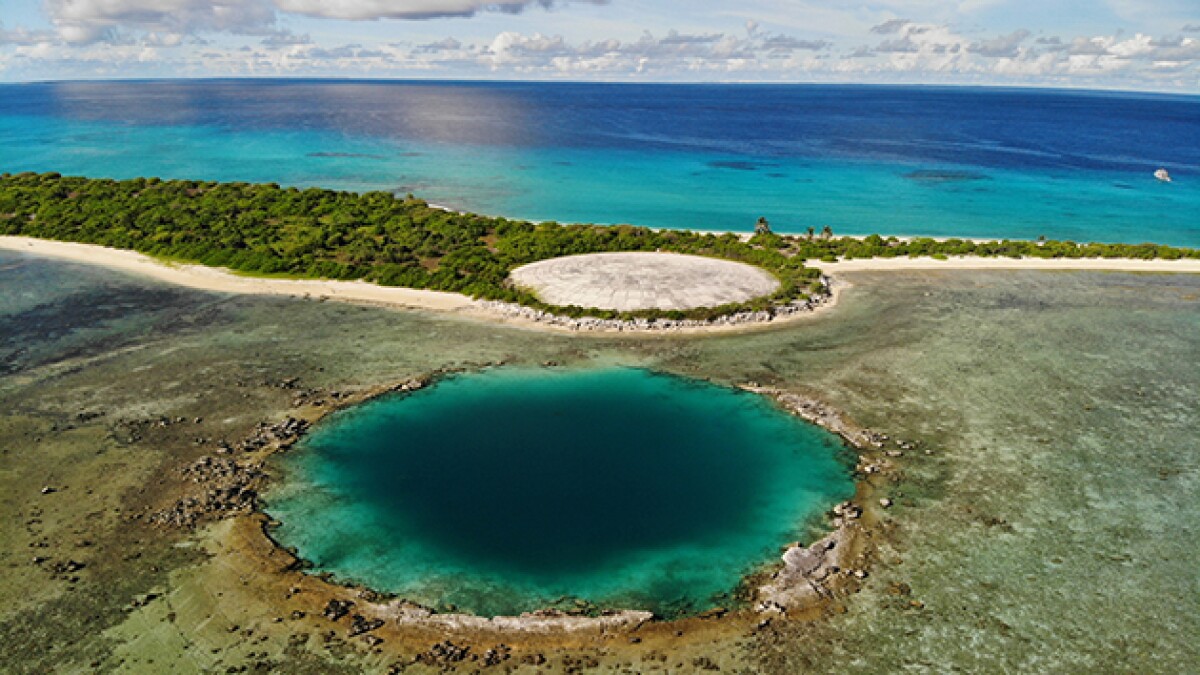
It’s a thorny point for the Marshallese, who are worried about the lingering effects of the nuclear waste left in their nation, decades of persistent health concerns, and a fear that United States officials have not been forthright or transparent about the risks the nuclear waste poses to their health and environmental well-being.
According to a U.S. government presentation delivered in 2019, Runit Dome is vulnerable to leakage caused by storm surge and sea level rise, and its groundwater, which is leaking into the lagoon and ocean, is severely contaminated with radioactive isotopes. Testing of sea creatures in the surrounding lagoon, including giant clams, shows high levels of radioactivity.
Rep. Katie Porter presses Biden team on Marshall Islands nuclear waste, gets few answers, https://www.latimes.com/environment/story/2021-10-22/marshall-islands-nuclear-waste-congressional-hearing-compact, SUSANNE RUST OCT. 22, 2021
For months, U.S. refusal to accept responsibility for a leaking dome of radioactive waste in the Marshall Islands has complicated negotiations with the Marshallese government on an international compact viewed as crucial for blunting Chinese influence in the central Pacific.
On Thursday, members of a congressional oversight committee scolded representatives of the Biden administration for not making more progress on negotiations and taking the Marshallese position more seriously. During the hearing, administration officials offered conflicting statements on U.S. obligations to the Marshall Islands, making it unclear where the White House stands on America’s history in the region. In addition, the U.S. State Department declined to participate.
“The point of the hearing today was to examine why the United States is not willing to discuss the nuclear legacy with the Marshallese,” said Rep. Katie Porter (D-Irvine), who along with a bipartisan panel of lawmakers stressed the critical role the Republic of the Marshall Islands plays in U.S. national security and safety.
Porter, who heads the Natural Resources Subcommittee on Oversight and Investigations, said negotiations will be difficult “unless we act on the moral and national security imperative that we have to address the nuclear legacy.”
The hearing was timed for the 35th anniversary of the signing of the agreement between the two nations, which is set to expire in 2023. It also comes as China develops friendly relations with nations of the central and South Pacific, part of a broader strategy to stem U.S. influence off its shores and worldwide.
The Marshall Islands’ Kwajalein Atoll is home to the Ronald Reagan Ballistic Missile Defense Test Site — where the U.S. tests its long- and mid-range missile defense system. Its location halfway across the Pacific allows the U.S. military to monitor hostile foreign forces, and it is also an important hub for the American space program.
Realizing its leverage, the Marshallese government is increasingly pressing U.S. officials to take ownership for cleaning up Runit Dome. The leaking nuclear repository holds 3.1 million cubic feet of radioactive waste, a byproduct of U.S. weapons testing during the Cold War, and a focus of a Times investigation in 2019.
For decades, the U.S. government has deflected. Instead, it insists the Marshall Islands is solely responsible for the waste site, even though Congress has required the Department of Energy, with funding from the Department of the Interior, to monitor it indefinitely.
Continue reading1 This Month
23-25 October – on Zoom – World BEYOND War’s annual global conferenc


Shut down the radiation-damaged Heysham nuclear reactors now
To see nuclear-related stories in greater depth and intensity – go to https://nuclearinformation.wordpress.com

Say No to NASA’s Reckless Nuclear Reactor on the Moon
Say No to NASA’s Reckless Nuclear Reactor on the Moon

-
Archives
- October 2026 (209)
- September 2026 (339)
- August 2026 (330)
- July 2026 (355)
- June 2026 (287)
- May 2026 (306)
- April 2026 (356)
- March 2026 (251)
- February 2026 (267)
- January 2026 (308)
- December 2025 (358)
- November 2025 (359)
-
Categories
- 1
- 1 NUCLEAR ISSUES
- business and costs
- climate change
- culture and arts
- ENERGY
- environment
- health
- history
- indigenous issues
- Legal
- marketing of nuclear
- media
- opposition to nuclear
- PERSONAL STORIES
- politics
- politics international
- Religion and ethics
- safety
- secrets,lies and civil liberties
- spinbuster
- technology
- Uranium
- wastes
- weapons and war
- Women
- 2 WORLD
- ACTION
- AFRICA
- Atrocities
- AUSTRALIA
- Christina's notes
- Christina's themes
- culture and arts
- Events
- Fuk 2022
- Fuk 2023
- Fukushima 2017
- Fukushima 2018
- fukushima 2019
- Fukushima 2020
- Fukushima 2021
- general
- global warming
- Humour (God we need it)
- Nuclear
- RARE EARTHS
- Reference
- resources – print
- Resources -audiovicual
- Weekly Newsletter
- World
- World Nuclear
- YouTube
-
RSS
Entries RSS
Comments RSS

