Japan has approved restarts of 10 nuclear reactors, but only 4 actually in operation
As of June 2022, 10 nuclear reactors at six power stations have been given
the go-ahead to restart in Japan but only 4 reactors are currently in
operation. Despite local governments agreeing to restart the reactors, some
have not yet become operational due to the time required to implement
safety measures and complete other construction work.
Nippon 29th June 2022
Campaigners are raising some very awkward questions about the financing of UK’s £20billion Sizewell C nuclear power plant.
Campaigners have raised questions after it was reported funding for a new
nuclear power station on the Suffolk coast is to be signed off by ministers
within a fortnight.
Funding for the £20billion Sizewell C plant is set to
be approved by the government by next month, paving the way for private
investment, according to The Telegraph. The decision would be a major boost
for EDF Energy, which is said to be in advanced talks with the government
over further cash to move the scheme forward ahead of a final investment
decision next year.
Reacting to the funding news, Alison Downes, from the
group, said: “Why do ministers appear willing to throw more cash at
Sizewell C, despite the risk and questionable value for money, when there
is none for hard stretched workers and – as Lord Deben pointed out – when
the nuclear industry ‘doesn’t deliver things on time and it doesn’t
deliver them to budget’?
“Nobody is even owning up to how much Sizewell C
would cost: the last estimate is more than two years out of date.” A
funding deal is not expected until after planning consent for Sizewell C is
granted, with the deadline for that decision set for July 8.
East Anglian Daily Times 26th June 2022
https://www.eadt.co.uk/news/business/sizewell-c-funding-to-be-signed-off-9098750
Nuclear power turning out to be counter-productive for Europe as a means to cut Russian power supplies – France’s massive decine in nuclear output

| France, the European Union’s leader in nuclear energy, is seeing a massive decline in output. Though it has been relatively unfazed by the bloc’s ongoing energy crisis, declining nuclear production could pose a significant problem in the coming months. The collapse of French nuclear power generation and Putin’s retaliatory cutback on energy exports to Europe could be disastrous for the continent. A recent flurry of unexpected issues at the Électricité de France (EDF), the state nuclear power operator representing the largest nuclear fleet in Europe, has caused French nuclear energy output to tumble to its lowest levels in 30 years. Around half of the EDF’s massive nuclear fleet has been taken offline, delivering a massive blow to the EU’s energy independence and security in the midst of a worldwide energy crisis. France has become increasingly reliant on nuclear power in recent years. French President Emmanuel Macron has given nuclear energy an even bigger boost in his time in office. Indeed, in February, before the Russian invasion of Ukraine, he announced a €52 billion plan to revitalize the country’s “nuclear adventure.” He has also fought for the inclusion of the emissions-free power source as a “green investment” in the nomenclature of the European Union as the (supposedly !) emissions-free power source as a “green investment” in the nomenclature of the European Union as the continent moves toward establishing its green energy budget for the coming years. The European Union had hoped that France’s considerable nuclear power capacity would be key in allowing the bloc to move away from Russian energy as the West tries to shore up its energy independence and increase sanctions on the Kremlin in response to the Russian war in Ukraine. As recently as March of this year, the Council on Foreign Relations posited that nuclear power could be the answer to ending the continent’s crippling reliance on Russian energy. But now it might be the very thing that makes such a divorce impossible. Oil Price 25th June 2022 https://oilprice.com/Alternative-Energy/Nuclear-Power/France-Sees-Nuclear-Energy-Output-Plummet-At-The-Worst-Possible-Moment.html |
Dispute among Members of European Parliament over move to classify nuclear energy as ”green”
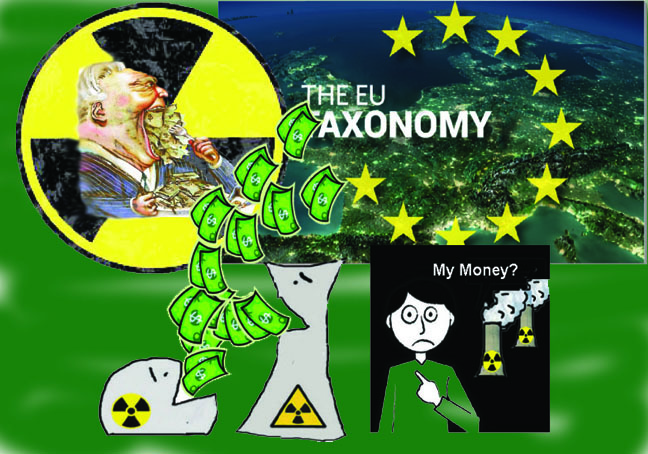
| THERE ARE DISAGREEMENTS between Government party MEPs on whether or not the EU should classify nuclear energy as green, as the European Parliament prepares to vote on the issue next month. The debate is being held after the European Commission sought changes to regulations to classify both nuclear power and gas as green energy until at least 2030. These regulations, known as ‘taxonomy’, are a set of multiple standards to help grow sustainable investment. The idea behind taxonomy is to encourage the financial sector to prioritise investing in eco-friendly and green initiatives. While MEPs within the European Parliament’s environment and economy committee voted down the proposals to add gas and nuclear power last week, a full vote is set to take place in Strasbourg in July. This has lead to significant debate between MEPs within the European Parliament, with some criticising the move by the Commission to add natural gas and nuclear power to the deal. The debate has also split Government MEPs, with some in Fianna Fáil and Fine Gael backing the change to taxonomy rules while the Green Party remain opposed to the Commission’s position. The Journal 25th June 2022 https://www.thejournal.ie/government-split-on-nuclear-power-5798800-Jun2022/ |
Rolls Royce wants fast-track approval of its small nuclear reactors, even though they are barely developed yet
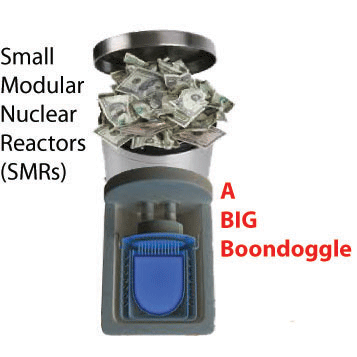
| Rolls-Royce is urging the UK Government to fast-track approval of its small modular nuclear reactors, despite the technology still being in the early stages of development. Trawsfynydd has been identified as a possible site for the reactors, and earlier this week the company established to develop a new reactor there set out plans to start work on a new nuclear development in 2027 – with the plant expected to go online in the early 2030s. UK Government sources have insisted the new reactors must go through exhaustive safety checks, but Rolls-Royce wants clearance to deploy its reactors from 2029 and is frustrated at the pace of the process to gain approval, which is not expected to be completed until 2026. Nation Cymru 25th June 2022 https://nation.cymru/news/uk-government-urged-to-fast-track-safety-approval-on-reactors-linked-with-trawsfynydd/ |
Predictable monstrosity: UK approves Assange extradition
https://independentaustralia.net/life/life-display/predictable-monstrosity-uk-approves-assange-extradition,16482, By Binoy Kampmark | 20 June 2022,
The only shock about the UK Home Secretary Priti Patel’s decision regarding Julian Assange was that it did not come sooner.
In April, Chief Magistrate Senior District Judge Paul Goldspring expressed the view that he was ‘duty-bound‘ to send the case to Priti Patel to decide on whether to extradite the WikiLeaks founder to the United States to face 18 charges, 17 grafted from the U.S. Espionage Act of 1917.
Patel, for her part, was never exercised by the more sordid details of the case. Her approach to matters of justice is one of premature adjudication: the guilty are everywhere and only multiply. When it came to WikiLeaks, such fine points of law and fact as a shaky indictment based on fabricated evidence, meditations on assassination, and a genuine, diagnosed risk of self-harm were piffling distractions.
The U.S. Department of Justice would not be denied.
Under the Extradition Act 2003,’ a nameless spokesman for the Home Office stated, ‘the Secretary of State must sign an extradition order if there are no grounds to prohibit the order being made. Extradition requests are only sent to the Home Secretary once a judge decides it can proceed after considering various aspects of the case.’
Evidently, overt politicisation, bad faith, and flimsy reassurances from the U.S. Department of Justice on how Assange will be detained, do not constitute sufficient grounds.
But the cue came from the courts themselves, which have done a fabulous job of covering the U.S. justice system with tinsel in actually believing assurances that Assange would not be facing special administrative detention measures (SAMs) or permanent captivity in the ADX Florence supermax in Colorado.
The statement read:
‘In this case, the UK courts have not found that it would be oppressive, unjust or an abuse of process to extradite Mr Assange.’
In such a scatterbrained and amoral cosmos that marks decision-making in the Home Office, no mention has been made of the surveillance operation against the publisher in the Ecuadorian embassy, orchestrated at the behest of the Central Intelligence Agency (CIA). None, either, of contemplated abduction or assassination, or the frail mental health Assange finds himself.
As late as 10 June, a letter from the group Doctors for Assange, comprising 300 doctors, psychiatrists and psychologists, noted that the Home Secretary’s ‘denial of the cruel, inhuman treatment inflicted upon Assange was then, and is even more so now, irreconcilable with the reality of the situation’.
In April, an umbrella grouping of 19 organisations dedicated to press freedom and free speech urged Patel, in reviewing the case, to appreciate that Assange would “highly likely” face isolation or solitary confinement in the U.S. ‘despite the U.S. Government’s assurances, which would severely exacerbate the risk of suicide’.
The co-chairs of the Courage Foundation’s Assange Defense Committee, Noam Chomsky, Daniel Ellsberg and Alice Walker, reflected on the depravity of the order in a statement.
They wrote:
‘It is a sad day for western democracy. The UK’s decision to extradite Julian Assange to the nation that plotted to assassinate him – the nation that wants to imprison him for 175 years for publishing truthful information in the public interest – is an abomination.’
As for the UK, it had:
‘… shown its complicity in this farce, by agreeing to extradite a foreigner based on politically motivated charges that collapse under the slightest scrutiny.’
Amnesty International expressed similar views, as did Reporters Without Borders. There was even concern from Conservative MP David Davis, who expressed his belief that Assange would not “get a fair trial.” The extradition law was, as matters stood, lopsided in favour of U.S. citizens.
Under the arrangement, individuals crossing the channel will receive one-way tickets to Rwanda to have their claims processed without the prospect of settling in the UK. The Rwandan Government, hostile to contrarians, the rule of law and refugees, will be subsidised for their pain and labour.
To this sadistic streak can be added her admiration for the Espionage Act being used to prosecute Assange. This fact should have disqualified her in any country operating under the rule of law. Even as Prime Minister Boris Johnson faced a Conservative no-confidence vote this month, Patel’s National Security Bill passed its second reading in Parliament.
The bill articulates an offence of ‘obtaining or disclosing protected information’ that includes ‘any information… which either is, or could reasonably be expected to be, subject to any type of restrictions of access for protecting the safety and interests of the UK’.
In a polite nod of deference to U.S. law, the proposed law states that an offence is committed when a person ‘obtains, copies, records or retains protected information, or discloses or provides access to protected information’ for a purpose ‘that they know, or ought reasonably to know, is prejudicial to the safety or interests of the United Kingdom’ and if ‘the foreign power condition is met’.
The requirement is that the act is ‘carried out for or on behalf of a foreign power’, including instances where ‘an indirect relationship’ exists.
Assange has 14 days to appeal this insidious rubber-stamping of judicially sanctioned brutality. His legal team are hoping to use the High Court as the route to highlight the political dimension of the case and draw attention back to the way the extradition law was read.
If the defence fails, Assange will be sent across the Atlantic, entrusted to officials, some of whom considered murdering him, to be made an example of.
It will be the clarion call to regimes across the world that punishing a publisher is something supposed liberal democracies can do as well, and as deviously, as anybody else.
Hungarian Greens: nuclear energy ‘severely pollutes the environment
Hungarian Greens: nuclear energy ‘severely pollute the environment’, https://dailynewshungary.com/hungarian-greens-nuclear-energy-severely-pollute-the-environment/ 18 June 22 Opposition LMP, as a member of the European Greens party group, called on Hungarian lawmakers in the European Parliament not to support “labelling nuclear energy and natural gas green”. Co-leader of the party Erzsébet Schmuck told an online press conference on Friday that she had written a letter jointly with László Lóránt Keresztes, head of parliament’s sustainable development committee, asking all Hungarian MEPs not to give their support.
She said that a resolution would go before the EP in July and the European Commission had submitted an amendment proposal to this resolution “under pressure” from the nuclear energy and natural gas lobby.
The resolution will serve as a guideline to investors concerning what sustainable projects to invest in, she said. Approving the amendment proposal would be a great drawback to Europe’s green transition plan, going against the target to achieve climate neutrality by the middle of the century, she added.
Schmuck said that these sources of energy severely pollute the environment. The EP’s economic and environmental protection committees have not supported the amendment, “but we have not yet won the battle and the unscrupulous pushiness of the nuclear and fossil energy lobbies must be reined in now,” she said.
Apprehension in Japan, about the idea of getting nuclear-powered submarines.
Kishida cautious about Japan acquiring nuclear-powered sub Nikkei Asia, June 19, 2022
Natsuo Yamaguchi, head of the LDP’s junior coalition partner Komeito, echoed Kishida’s view, calling the idea of a nuclear-powered submarine “unrealistic.”
Ichiro Matsui, leader of the Japan Innovation Party, and Yuichiro Tamaki, head of the Democratic Party for the People, called for acquisition of a nuclear-powered submarine to boost deterrence and reconnaissance capacity……….
The main opposition Constitutional Democratic Party of Japan’s leader Kenta Izumi was against acquiring a nuclear-powered submarine, saying the country’s defenses “won’t get stronger simply because some deluxe equipment is added.”………………. https://asia.nikkei.com/Politics/International-relations/Indo-Pacific/Kishida-cautious-about-Japan-acquiring-nuclear-powered-subs
Biden Proposes Changes to Help Rescue California Nuclear Plant
Biden Proposes Changes to Help Rescue California Nuclear Plant https://www.bloomberg.com/news/articles/2022-06-18/biden-proposes-changes-to-help-rescue-california-nuclear-plant#xj4y7vzkg
By Mark Chediak, 18 June 2022, The US Department of Energy is proposing changes requested by California Governor Gavin Newsom that will allow the state’s last nuclear power plant to qualify for federal financial assistance.
The Energy Department proposed removing a requirement that would have prevented PG&E Corp.’s Diablo Canyon nuclear power plant from getting a portion of $6 billion in funds the Biden Administration is making available to rescue reactors at risk of closing early because they are losing money. The Energy Department posted the suggested amendment on its website and asked for public comments by June 27.
Newsom is reconsidering a state plan to retire Diablo Canyon in 2025 because of projected electricity shortages that could lead to blackouts in the state. The effort to keep Diablo Canyon open would gain momentum if the plant can qualify for federal financial aid. California’s potential reversal of its anti-nuclear power stance underscores the crisis the state is facing as it seeks to decarbonize its grid.
Last month, Newsom asked the Energy Department to amend its nuclear funding criteria so Diablo Canyon would be eligible. The federal program was originally designed to help nuclear plants that were financially struggling in competitive wholesale power markets, which wasn’t the case with Diablo Canyon.
The Energy Department suggested that it would eliminate a requirement that a nuclear reactor applying for funds not recover more than 50% of its costs from regulated rates or contracts. The costs of PG&E’s Diablo Canyon plant are recovered through bill charges to its customers.
President-elect Ferdinand Marcos Jr. plans to confirm Duterte’s executiveorder to include nuclear power
President-elect Ferdinand Marcos Jr. plans to confirm Duterte’s executive
order to include nuclear power in the country’s energy mix. The first step
could be repurposing a plant already built under Marcos Sr by US company
Westinghouse in the early eighties not far from the capital, but which was
never fuelled. In Southeast Asia, the Philippines’ energy costs are
second only to Singapore’s.
Asia News 18th June 2022
https://www.asianews.it/news-en/Manila-to-reboot-the-Bataan-Nuclear-Power-Plant-56065.html
Why nuclear energy won’t work in Australia

Scott Ludlam, https://www.thesaturdaypaper.com.au/opinion/topic/2022/06/18/why-nuclear-energy-wont-work-australia#mtr Scott Ludlam is a writer and activist, and a former Greens senator. 18 June 22, There is something almost comical about the Liberals and Nationals throwing the forlorn spectre of nuclear power back into national energy debates, right after their loss in the 2022 “climate election”.
The incoming Energy minister, Chris Bowen, immediately slapped down the idea, calling it a “complete joke” and noting that nuclear is the most expensive form of energy. He’s right, and that should be the end of the argument, but we know it won’t be, because Peter Dutton and his colleagues are not engaged in a good faith debate about Australia’s future energy mix. For them, this is about something else entirely.
Not everyone who invites discussion on nuclear power acts in bad faith. In a climate emergency, it’s essential to have all viable, low-carbon energy sources on the table, which does entail a periodic assessment of where the nuclear industry actually stands. Has any progress been made on the intractable question of nuclear waste? How permeable is the barrier between civil and military applications? How are safety concerns over the world’s ageing reactor fleet being managed? How is the industry planning to clean up the enormous volumes of radioactive wastes left behind at uranium mines?
Can this technology compete against low-cost renewables?

It’s tempting to imagine the nuclear industry stumbling around like the Black Knight in Monty Python and the Holy Grail, bleeding freely, mortally wounded and yet stubbornly defiant and refusing to die.
The best independent analysis of the state of the industry is provided by the World Nuclear Industry Status Report. Since 2007, these reports have provided an annual, country-by-country snapshot of nuclear plant construction, start-ups, accidents and closures.
They make for forbidding reading, painting a picture of an industry in deep trouble. The number of reactors in operation has declined by two dozen since 2002, as the share of global electricity generation provided by nuclear power fell from about 17 per cent in 1996 to just above 10 per cent in 2020. Part of the problem is that the age of the industry is catching up with it. In the two decades to 2020, there were 95 new nuclear plant start-ups and 98 closures. As plants built in the 1970s and ’80s reach the end of their design life, and construction dries up nearly everywhere other than China, there is no real prospect of them being replaced at anything like the rate of closure. This decline is structural and inexorable.
There is an additional wildcard, which the industry refuses to acknowledge: the risk of future catastrophic reactor accidents. The industry insists it has learnt the lessons of Three Mile Island, Chernobyl and Fukushima, and it is true that plant redesigns and additional safety systems are a major factor driving up the costs of new reactors. But despite this, any accident, disaster or attack that shuts down the cooling system inside a nuclear power plant runs the risk of a meltdown. One study from 2017 analysed the frequency and intensity of 216 nuclear accidents between 1950 and 2014, estimating that “there is presently a 50 per cent chance that a Fukushima event (or larger) occurs every 60-150 years, and a Three Mile Island event (or larger) occurs every 10-20 years”.
These are shocking odds, both for host communities and for energy planners trying to manage the transition to zero-carbon electricity supply. People organising against nuclear power stations, waste dumps and uranium mines are commonly accused of being emotional, hysterical or delusional, when in fact these actions are usually informed by a willingness to look honestly at the difficult truths of this industry.
Someone who has seen those truths close up is Naoto Kan, who was prime minister of Japan at the time of the Fukushima disaster in 2011. In his introduction to the 2021 World Nuclear Industry Status Report, he writes: “The reactors in Units 1 to 3 suffered not only meltdowns, but also melt-through of the nuclear fuel, while the spent fuel pool at Unit 4 came close to evaporating entirely. Had this come to pass, it would have necessitated the evacuation of all residents within a radius of 250 kilometres – an area including the metropolis of Tokyo, the consequences of which would have been unimaginable.”
On the awful day we learn the name of the next Fukushima, whether it be in France, China, the United States or Russia, neither the industry nor its investors will be able to say they weren’t warned.
Surprisingly, it turns out these arguments are now accepted by a growing number of pro-nuclear advocates. Many of them tacitly or openly acknowledge that the technology they’ve been promoting for decades has no future. They have ceased arguing for the giant, water-cooled fission reactors that have been the backbone of the commercial nuclear energy sector since the 1960s.

Instead, they now advocate for a bewildering variety of experimental reactor types, fuelled by uranium or thorium or plutonium, cooled with helium or molten salt or liquid metal. These designs are proclaimed to be simultaneously cheap, safe and efficient, free of proliferation, waste and accident risks, and ready for commercial deployment any decade now.
What unifies many of them is not so much the technology type, but the smaller scale and the fact that they don’t really exist.
A pilot plant of one such small modular reactor (SMR) went into operation at Shidao Bay in China late in 2021, but outside the Chinese nuclear establishment, nobody knows how much it cost to build. According to the World Nuclear Industry Status Report, “There appear to be no plans to construct more reactors of the same design.” These plants are not an answer to climate change. Even the most ambitious estimates for commercial deployment of SMRs stretch into the 2030s and 2040s, long after the heavy lifting of global decarbonisation needs to have been done. Allison Macfarlane, the former chair of the US Nuclear Regulatory Commission, stated in 2021: “When it comes to averting the imminent effects of climate change, even the cutting edge of nuclear technology will prove to be too little, too late.”
This is where what Peter Dutton and his colleagues are really up to comes into sharper focus.
The speed and scale of low-cost solar and wind energy backed up by batteries and hydro power has hit critical mass worldwide. According to the International Renewable Energy Agency, 2015 was the first year that more renewable energy capacity was added to the grid than non-renewable, including fossil and nuclear. By 2021, clean energy technologies accounted for 81 per cent of new generation capacity globally. Closer to home, the signs are everywhere, from the early closure of AGL’s coal-fired power stations to the announcement of huge new renewable energy zones across multiple Australian states.
Into this fast-closing gap, the nuclear industry is making its final pitch before obsolescence: enormous public subsidies in exchange for an imaginary generation of small, cheap, safe reactors that exist nowhere but on paper. Complicating the message for those who still insist that there is no connection between nuclear weapons and nuclear power, the Morrison government’s reckless entry into the AUKUS agreement threatens to enmesh Australia in the trafficking and disposal of high-level spent nuclear fuel from submarine reactors, with all the public health, national security and proliferation risks this entails.
Importing this staggering debacle into Australian energy markets would be much more than just financially irresponsible: it would lock us into a high-risk dead end just as the clean energy revolution is finally under way at scale. But unlike the Black Knight, nuclear technology still retains the capacity to do enormous harm, even in its present enfeebled state. The UN Secretary-General’s special adviser on climate change, Selwin Hart, put it like this in a statement last year: “Where countries are depending on technologies that have not yet been developed, or indicating they intend to cut in the 2030 and 2040s, quite frankly, that’s reckless and irresponsible.”
The foundation of the global anti-nuclear movement has always been in the frontline communities that have suffered the harshest impacts of this technology. Whether it be the First Nations communities in Central and Western Australia, whose lands and health were sacrificed for nuclear weapons testing decades ago, or those who won an end to uranium mining in Kakadu or nuclear waste dumping in Central and South Australia: these debates are won and lost on Country, not in op-ed pages or analysts’ spreadsheets. So, while a combination of lived experience, mockery and hard data may be enough to put Dutton and his colleagues’ latest deranged foray to rest for the time being, the “debate” over nuclear power seems likely to hang around until the solar age puts it to the sword once and for all.
What I Know About Human Life as a Nuclear Downwinder

A government that knowingly harms its own citizens must be held accountable. Our lives are worth more than civilization-ending weapons. https://www.commondreams.org/views/2022/06/17/what-i-know-about-human-life-nuclear-downwinder MARY DICKSON, June 17, 2022
With Russia’s invasion of Ukraine in February, we unbelievably find ourselves on the brink of a new Cold War, ironically as casualties of the last Cold War are running out of time to seek the compensation and justice they deserve.
President Biden recently signed into law a stopgap bill to extend for another two years the Radiation Exposure Compensation Act, which pays partial restitution to select victims of atmospheric nuclear testing on American soil. While a welcome first step, it fails to address thousands more Americans who have been excluded from compensation despite the devastating harms they have suffered from radiation exposure. Time is running out as many are literally dying as they wait for justice.
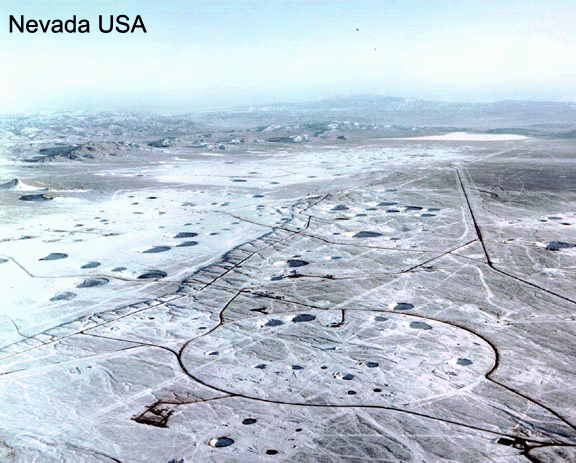
I am a casualty of the Cold War, a survivor of nuclear weapons testing. Growing up in Salt Lake City, Utah during the Cold War I was repeatedly exposed to dangerous levels of radioactive fallout from hundreds of detonations at the Nevada Test Site just 65 miles west of Las Vegas.
Our government detonated 100 bombs above ground in Nevada between 1951 and 1962 and 828 more bombs underground through 1992, many of which broke through the earth’s surface and spewed radioactive fallout into the atmosphere as well. The jet stream carried fallout far beyond the test site where it made its way into the environment and the bodies of unsuspecting Americans, while a government we trusted repeatedly assured us “there is no danger.”
In the spring before my 30th birthday, I was diagnosed with thyroid cancer. Children, especially those under the age of five at the time of radiation exposure, as I was, were most at risk.
I have been sliced, radiated and scooped out. I have buried and mourned the dead, comforted and advocated for the living, and worried with each pain, ache and lump that I am getting sick again. I survived thyroid cancer as well as subsequent health complications that left me unable to have children. My sister and others I grew up with were not so fortunate. They lost their lives to various cancers and other radiation-related illnesses. Before she died, my sister and I counted 54 people in a five-block area of our childhood neighborhood who developed cancer, autoimmune disorders, and other diseases that ravaged them and their families.
The government’s ambitious program of nuclear testing had tragic consequences for countless unsuspecting, patriotic Americans living downwind. “We are veterans of the Cold War, only we never enlisted and no one will fold a flag over our coffins,” a late friend of mine was fond of saying.
The U.S. government finally acknowledged its responsibility in 1990 when it passed the bipartisan Radiation Exposure Compensation Act (RECA), which paid partial restitution to some fallout victims in select rural counties of Utah, Arizona and Nevada. The bill never went far enough. We now know that the harm wreaked by fallout extends far beyond these counties. We also know that people are still getting sick. The suffering has not ended.
As part of a coalition of impacted community groups working with allied advocates nationwide, we have worked hard for the speedy expansion and extension of RECA through the Radiation Exposure Compensation Act Amendments of 2021. This bipartisan bill would add downwinders from all of Utah, Nevada, Arizona, Idaho, Montana, Colorado, New Mexico and Guam, as well as uranium miners who worked in the industry beyond 1971. It also would increase compensation from $50,000 to $150,00 for all claimants and extend the program for 19 years.
The House bill currently has 68 co-sponsors, the Senate bill 18, Republicans and Democrats from across the country. What we now need are their colleagues in both parties to join them.
As we reach out to Senators and Representatives asking them to support the bills, we are sometimes confronted with questions about cost. What, I ask in return, is a human life worth? Over the last 32 years, RECA has paid out $2.5 billion to 39,000 Americans. To put that into perspective, each year this country spends $50 billion just to maintain our nuclear arsenal. Are our lives not worth 0.5% of the cost of weapons that harmed us?
What is paramount is rectifying the mistakes of the past. As Rep. Diane Titus of Nevada said, “These people are Cold Warriors and we do not leave our warriors on the field.”
A government that knowingly harms its own citizens must be held accountable. Our lives are worth more than civilization-ending weapons. It’s a simple matter of priorities and justice.
UK government’s new financing plan for %20 tax-payer funded Sizewell C nuclear project will increase costs and delays, – is aimed to cut China out.
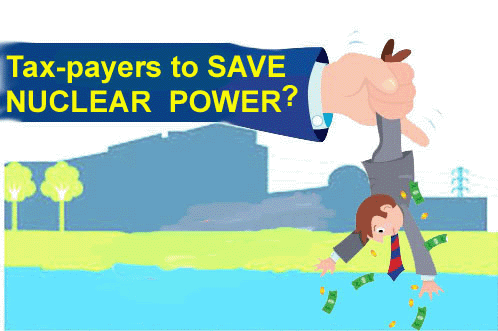
The government has bought an option to take a 20% stake in the Sizewell C nuclear power plant in a move that could ease China’s state nuclear company out of the project. Ministers took a £100m option to invest in Sizewell C’s holding company in January and said on Tuesday it would convert that into equity if the project reaches a final investment decision.
The venture on the Suffolk coast is jointly owned by EDF and China General Nuclear Power. The government is understood to be keen toremove CGN from the project amid concerns over China’s involvement in critical UK infrastructure. The business secretary, Kwasi Kwarteng, set out the taxpayer-funded financing model for Sizewell C and future projects on Tuesday.
The strategy the government plans to use – a regulated asset
base model – involves taxpayers taking on risk alongside private investors. The government is
attempting to inject urgency into a notoriously slow-moving industry amid a
drive to boost Britain’s domestic energy supplies.
In April Boris Johnson set out plans to approve up to eight reactors by the end of the decade. A
decision on whether to grant Sizewell C planning consent was last month delayed until 8 July. Research by the University of Greenwich Business School seen by the Guardian last month showed the project could cost UK taxpayers more than double government estimates and take five years longer to build.
Guardian 14th June 2022
Two European Parliamentary committees oppose inclusion of nuclear power and gas as environmentally sustainable
MEPs from the two responsible committees on Tuesday opposed the inclusion
of gas and nuclear power on the list of environmentally sustainable
economic activities. On Tuesday, at a joint meeting of the Committee on
Economic and Monetary Affairs and the Committee on the Environment, Health
and Food Safety, MEPs adopted by 76 votes for, 62 against and 4 abstentions
an objection the Commission’s proposal to include specific nuclear and gas
activities in the list of environmentally sustainable economic activities
covered by the EU taxonomy.
European Parliament 14th June 2022
Experts doubt Polish government’s plans to have nuclear by 2033
By Bartosz Sieniawski | EURACTIV.pl 13 June 22, The government’s plan to have its first nuclear plant by 2033 as part of the six reactors it aims to have in operation by 2043 is too ambitious, experts have said.
Poland, which relies heavily on fossil fuels and has no nuclear plants for commercial use, announced in August 2020 it would have six nuclear reactors in operation in the Baltic municipality of Choczewo in the north.
With the climate crisis and the need to become independent from Russian fuel, the government is now eager to build a nuclear power plant as soon as possible, with its representatives assuring that the first plant will be built as planned.
However, some energy experts, including the deputy editor-in-chief of Energetyka24.com, Jakub Wiech, question their optimism.
In an interview with Onet.pl, Wiech said 2033 was an “unrealistic deadline”. According to him, building such a highly specialised facility in a country where no other is standing will not be easy, and there will be delays. It may also be problematic to get the parts that are key to the power plant’s functionality, he added.
“We are talking about parts that have to be ordered well in advance. You have to queue up at factories that make, for example, reactor casings. Another issue is the training of appropriate personnel, who will manage such a unit,” he said………. https://www.euractiv.com/section/energy-environment/news/experts-doubt-polish-governments-plans-to-have-nuclear-by-2033/
1 This Month
23-25 October – on Zoom – World BEYOND War’s annual global conferenc


Shut down the radiation-damaged Heysham nuclear reactors now
To see nuclear-related stories in greater depth and intensity – go to https://nuclearinformation.wordpress.com

Say No to NASA’s Reckless Nuclear Reactor on the Moon
Say No to NASA’s Reckless Nuclear Reactor on the Moon

-
Archives
- October 2026 (199)
- September 2026 (339)
- August 2026 (330)
- July 2026 (355)
- June 2026 (287)
- May 2026 (306)
- April 2026 (356)
- March 2026 (251)
- February 2026 (267)
- January 2026 (308)
- December 2025 (358)
- November 2025 (359)
-
Categories
- 1
- 1 NUCLEAR ISSUES
- business and costs
- climate change
- culture and arts
- ENERGY
- environment
- health
- history
- indigenous issues
- Legal
- marketing of nuclear
- media
- opposition to nuclear
- PERSONAL STORIES
- politics
- politics international
- Religion and ethics
- safety
- secrets,lies and civil liberties
- spinbuster
- technology
- Uranium
- wastes
- weapons and war
- Women
- 2 WORLD
- ACTION
- AFRICA
- Atrocities
- AUSTRALIA
- Christina's notes
- Christina's themes
- culture and arts
- Events
- Fuk 2022
- Fuk 2023
- Fukushima 2017
- Fukushima 2018
- fukushima 2019
- Fukushima 2020
- Fukushima 2021
- general
- global warming
- Humour (God we need it)
- Nuclear
- RARE EARTHS
- Reference
- resources – print
- Resources -audiovicual
- Weekly Newsletter
- World
- World Nuclear
- YouTube
-
RSS
Entries RSS
Comments RSS

