Democrats urge Biden to keep pledge to limit nuclear weapons

Democrats urge Biden to keep pledge to limit nuclear weapons, https://www.theguardian.com/world/2022/jan/26/biden-democrats-white-house-nuclear-weapons Julian Borger in WashingtonThu 27 Jan 2022
Letter by 55 senators and members of Congress comes amid reports Biden will make only minor changes to nuclear posture review
Leading Democrats have written to Joe Biden appealing to him to stick to his promise to reduce the US reliance on nuclear weapons for its defence and to revive arms control.
The letter, signed by 55 senators and representatives, was sent on Wednesday while the White House was making final decisions on the US nuclear posture review (NPR), amid reports that Biden will make only minor adjustments to the vast nuclear modernisation plans inherited from his predecessors.
“Your NPR represents a once-in-a-generation opportunity to ensure that US nuclear doctrine reflects your recognition that a nuclear war cannot be won and must never be fought,” the letter said
During the election campaign, Biden said the US “does not need new nuclear weapons” and pledged that his administration would “work to maintain a strong, credible deterrent while reducing our reliance and excessive expenditure on nuclear weapons”.
The campaign also said it would make deterring and responding to a nuclear attack the sole purpose of the US nuclear arsenal. The current nuclear posture envisages its potential use against a range of threats, including an overwhelming cyber-attack.
Despite Biden’s campaign rhetoric, an advocate for restraint in nuclear weapon modernisation and arms control was removed last year from her Pentagon post overseeing the drafting of the NPR, after a campaign against her by hawks in the defence department and in Congress.
The draft NPR produced by the Pentagon is believed to be a conservative document, endorsing the existing modernisation plans, expected to cost well over $1tn.
Meanwhile, allies led by France have lobbied the Biden administration not to introduce a “sole purpose” policy, concerned about the global pressure it would bring on them to change their own doctrines. The White House insists that the president will have the last word in shaping the policy.
The Democrats behind the letter urged Biden to make the “sole purpose” policy part of the NPR and to scrap two new weapon variants introduced by Trump: a low-yield warhead for Trident missiles, and a planned nuclear sea-launched cruise missile, saying the moves “would further signal that the United States believes that deterrence, not war-fighting, is the sole purpose of nuclear weapons”.
Your forthcoming NPR should reflect your administration’s views, not embrace President Trump’s nuclear weapons programs,” the letter said. It was written by the two leading voices in the Senate for arms control, Ed Markey and Jeff Merkley, and their co-chairs of the Nuclear Weapons and Arms Control Working Group from the House, Donald Beyer and John Garamendi.
Failure to change the status quo would fuel a cold war-style arms race with Russia and China, the letter warned, arguing: “A clean break with President Trump’s policies can send a strong signal to Russia and China that the United States believes restraint and nuclear arms reduction are measures of a country’s great power status, not nuclear weapons overkill.”
Local MP has vision for a non-nuclear future for Hunterston
LOCAL MP Patricia Gibson has spoken of her vision for a non-nuclear future
for Hunterston. The Westminster politician has thrown her weight behind a
call to develop a green energy plan for the site. She said: “The closure of
Hunterston B is the end of an era for North Ayrshire, regardless of
anyone’s views on nuclear power. “Jobs have been lost, with many more to
follow over the next eight years as the plant defuels and is then
decommissioned. “A plan to transition to new green energy generation at
this prime location must now be taken forward with a renewed sense of
urgency.
Largs & Millport News 24th Jan 2022
Germany’s dramatic departure from the nuclear industry. Other European States follow.
On the last day of 2021, as final preparations were being made for the New
Year’s Eve firework display in central Berlin, outside the German capital
another era was drawing to a close. It was the beginning of the end of
Germany’s decades-long dalliance with nuclear power.
On December 31, Germany shut down three of its six remaining nuclear plants. By the end of
2022, the other three will be shut as well. Two decades after an agreement
to eliminate nuclear power became law, the country’s phaseout has been
dramatic. In 2002, Germany relied on nuclear power for nearly 30 percent of
its electricity. Within a year, that percentage will be zero.
Germany isn’t the only European nation reevaluating its relationship with nuclear
energy. Its neighbor Belgium currently sources nearly 40 percent of its
electricity from nuclear power but has committed to closing down its seven
remaining reactors by 2025.
To the south, Switzerland has already shut down
one of its five remaining nuclear power plants, the first stage in what
will eventually be a total phaseout. Switzerland’s phaseout was decided
in a 2017 referendum, when the majority of the public endorsed an energy
strategy that subsidized renewables and banned new nuclear power plants.
The Swiss referendum was driven by environmental concerns raised in the
wake of the 2011 Fukushima disaster, when three reactors melted after a
tsunami overwhelmed the power plant. That disaster, and concerns about the
disposal of nuclear waste, also hastened Germany’s nuclear shutdown.
Shortly afterward, then-chancellor Angela Merkel—who had previously said
she didn’t agree with shutting down nuclear plants early—announced that
Germany would no longer extend the operating life of existing plants.
Ars Technica 23rd Jan 2022
https://arstechnica.com/science/2022/01/europe-is-in-the-middle-of-a-messy-nuclear-showdown/
NB POWER seeks unprecedented 25-year licence for Point Lepreau nuclear power station

NB Power seeks unprecedented 25-year licence for Point Lepreau nuclear power station, Coast Reporter, 24 Jan 22, FREDERICTON — The licence for Atlantic Canada’s only nuclear power generating station expires in June, and the New Brunswick Crown corporation that operates the aging CANDU-6 reactor is seeking to renew it for an unprecedented 25-year term.
he Canadian Pressabout 12 hours ago
Updated about 11 hours ago FREDERICTON — The licence for Atlantic Canada’s only nuclear power generating station expires in June, and the New Brunswick Crown corporation that operates the aging CANDU-6 reactor is seeking to renew it for an unprecedented 25-year term.
The last two licences to operate the Point Lepreau Nuclear Generating Station, located about 40 km southwest of Saint John, N.B., were for five years each.
“We are asking for a 25-year licence, which would be a first in Canada, based on some improvements that the regulator has made, but also on the very strong safety and reliability performance that we’ve seen from all the Canadian nuclear stations,” Jason Nouwens, director of regulatory and external affairs for NB Power, told reporters in a briefing on Friday.
The Canadian Nuclear Safety Commission has scheduled the first phase of the application hearing on Wednesday in Ottawa.
Gail Wylie with the Coalition for Responsible Energy Development called the request for a 25-year licence “really absurd.”
Wylie will be one of the public interveners when the safety commission holds the second phase of the application hearings in Saint John in May.
“We are very much interested in renewable energy because we know it’s clean and we know the problems and history of nuclear energy here,” she said in a recent interview. “Nuclear inherently has got its risks and the radioactive waste.”
Wylie said she’s concerned that extending the life of the 660-megawatt nuclear generator will slow the transition to what she calls cleaner and cheaper forms of renewable energy.
Point Lepreau opened in 1983 and operated until 2008, when it closed for a major refurbishment intended to extend its lifespan by 25 years. It was reconnected to the power grid in October 2012.
Wylie said NB Power’s request for a licence until 2047 exceeds the lifespan targets that were announced after the refurbishment. She said she plans to ask questions about how the utility is dealing with staffing levels during the COVID-19 pandemic, threats of cyberattacks, and impacts of climate change.
Wylie also wants to know about how plans to develop advanced small modular nuclear reactors (SMRs) on the Lepreau site will impact the operation of the main reactor. Two companies, Moltex and ARC, are working with NB Power to develop the portable reactor technology.
Nouwens, however, said the licence application doesn’t include development of SMRs.
“The re-licensing process for Point Lepreau is completely separate from any licensing process for SMRs,” he said. “Our 25-year licence renewal covers the scope of what’s currently at Point Lepreau and what the plans would be for our current station operations.” …………….
Like Wylie, Dalzell said he also plans to ask questions about climate change and about how Point Lepreau’s location on the shore of the Bay of Fundy could be affected by sea-level rise and extreme weather events. Kevin Bissett, The Canadian Press https://www.coastreporter.net/the-mix/nb-power-seeks-unprecedented-25-year-licence-for-point-lepreau-nuclear-power-station-4985518
EDF’s costly EPR nuclear reactor failures – in France, UK, China
Emmanuel Macron hammers EDF as Britain’s nuclear energy future hangs in
the balance. The energy giant is our last hope in the push for big new
reactors. But the French president has handed it an almighty financial
headache.
Macron ordered the company to sell more electricity at knock-down
prices to its competitors, in order to keep a lid on soaring energy bills.
For Macron, it makes complete political sense. Three months out from an
election, he is keen to temper voter anger over energy costs, which, as in
the UK, have been pushed higher by surging gas prices.
EDF is 84 per cent owned by the French state and has to bow to its will — even when the
government’s intervention is “painful and defies good economic
sense”, as newspaper Le Monde put it. EDF calculated that Macron’s
demand would cost it €8.4 billion (£7 billion).
The company had no choice but to scrap its profit guidance for the year and warned investors
that it may need to seek more capital. Shares in EDF, listed in Paris,
plunged. In a leaked memo, chief executive Jean-Bernard Levy claimed that
Macron’s demand was a “real shock”. “It is going to weigh very
heavily on our results,” he added.
Trade union members at EDF have called
for a strike this week in protest at the president’s order.
Macron’sedict could not have come at a worse time for EDF, which was already facing
huge demands on its capital. On the same day that Kwarteng toured Hinkley,
the company cut its expected output of nuclear power this year by 8 per
cent, after warning that five faulty reactors in France would have to stay
offline while being serviced for longer than expected. This pushed the
total number of EDF reactors currently offline to nine.
EDF is midway through a long, slow upgrade of France’s fleet of 56 ageing nuclear
reactors; this project could cost it at least €50 billion. And, earlier
this month, it pushed back the start date and nudged up the expected cost
for its new reactor at Flamanville in France; the project’s cost has
quadrupled from initial estimates in 2004.
Flamanville’s overruns havetheir parallels at Hinkley Point, which is also years late and over budget.
It uses the same type of European pressurised water reactor (EPR) as
Hinkley, too. Other EPRs designed by EDF have run into problems: the
much-delayed Olkiluoto nuclear power plant in Finland is now finally
looking to start up this year; and Taishan — in Guangdong province in
China — has been offline since July because of a fault.
Taishan was supposed to be EDF’s “proof of principle for the EPR design”, said
Paul Dorfman, associate fellow in the science policy research unit at
Sussex University. “But that has not been the case. To shut down the
reactor is hugely expensive in terms of power, reputation, and in potential
safety … The EPR reactor has failed miserably in terms of cost overruns
everywhere that it’s been built.”
EDF remains confident that Hinkley
will be completed by 2026. Five and a half years into construction, it is
now at the halfway point. When operational, it will supply 7 per cent of
the UK’s electricity. About half of the £23 billion earmarked for
Hinkley has already been spent, and the remainder is expected to come from
EDF’s €27.5 billion cash pile. Hinkley, in other words, should be
completed despite the company’s travails. The outlook for EDF’s
Sizewell B in Suffolk, the next big nuclear project in the queue, is less
clear.
Times 23rd Jan 2022
https://www.thetimes.co.uk/article/emmanuel-macron-hits-nuclear-button-edf-hinkley-point-cpcvtccn3
13 wards in Cumbria recommended against their will, for UK’s nuclear waste dump
| This week our readers got talking about Allerdale potentially being the host to an underground disposal of nuclear waste. Having a Geological Disposal Facility (GDF) that would store higher level radioactive waste underground is hailed to be the safest and most secure method of disposal. The Allerdale GDF Working Group recommended a Search Area for consideration in 2021 comprised of 13 electoral wards: Aspatria; Broughton St Bridgets; Dalton; Ellen & Gilcrux; Flimby; Harrington & Salterbeck; Maryport North; Maryport South; Moorclose & Moss Bay; Seaton & Northside; St John’s; St Michael’s and Stainburn & Clifton. Cumbrian Lad added: “It is a very strange process which allows one individual, Andy Ross of GenR8 North, to volunteer the part of Allerdale in which he doesn’t live to be the burial site for the UK’s nuclear waste. The 13 wards who have been volunteered against their will, have no say in the matter until 15-20 years of investigations have taken place.” Carlisle News and Star 23rd Jan 2022 https://www.newsandstar.co.uk/news/19865839.nuclear-waste-disposal-allerdale-readers-talking/ |
Row over plans to reform groups at nuclear sites.
Rob Edwards The Ferret, January 23, 2022,
New guidelines which campaigners say could benefit communities around nuclear sites have been boycotted by a UK Government nuclear agency.
Internal documents seen by The Ferret reveal that the Nuclear Decommissioning Authority (NDA) has rejected proposed reforms because they had caused “a great deal of bad feeling”
Guidelines aimed at making local meetings about safety at nuclear sites across the UK more transparent, accountable and representative were put forward in a nuclear industry report.
There are 29 licensed nuclear sites around the UK, six of them in Scotland. They include nuclear power stations operating and being decommissioned, nuclear submarine bases, waste and processing plants.
All of the sites have stakeholder or local liaison groups aimed at keeping local communities informed about events, including shutdowns, safety incidents and radiation leaks. But they differ greatly in how they are run…………………………..
In 2017 the 50-strong group of nuclear-free local authorities in the UK published a report questioning whether the stakeholder and local liaison groups were “fit for purpose”. It concluded that there was an “urgent need” to reform them.
This prompted the nuclear industry’s Safety Directors’ Forum, which brings together senior managers from all the civil and military nuclear sites, to commission a report. It was researched and written by the industry’s industry’s Young Nuclear Professionals’ Forum.
The resulting “Good Practice Guide” was circulated in November 2021. “Nuclear sites often have a reputation of being opaque, secretive and unwilling to engage with the public,” it said.
“This negative reputation is actively damaging, from open opposition to the site’s existence to a general lack of understanding. Active engagement is key to undoing this, the nuclear industry must be open and honest.”
The report argued that local liaison groups at several unidentified nuclear sites had “no accountability”. This included “no terms of reference being in place, no clear action management process, inadequate minute taking and infrequent meetings.”
It pointed out that while some meetings were open to the public, others were not. Some groups only invited “selected stakeholders” and “diversity and inclusion is not always encouraged”.
Some of the groups didn’t have websites. “Meetings are not always accessible and, in some cases, not comprehensible due to the extensive use of acronyms, particularly for those who do not work in the nuclear industry,” the report added.
The report recommended that the groups should all have websites, clear and published constitutions and a “diverse range of stakeholders”. There should be a co-chair independent of the industry and members of the public should be allowed to ask questions.
correspondence released under freedom of information law has disclosed how the report has upset the NDA and some of the existing groups………………………………… https://theferret.scot/nuclear-sites-reforms-row/
France’s nuclear regulator warns on the ”security fragility” of both the reactors, and the reprocessing system
“The continued operation of EDF’s nuclear reactors should not be the
adjustment variable for French energy policy”. In an interview with “Le
Monde”, Bernard Doroszczuk, the president of the Nuclear Safety Authority,
warns about the lack of margins in terms of security of electricity supply.
First, the president of the Nuclear Safety Authority (ASN), Bernard
Doroszczuk, wishes to underline a reassuring point. Despite the
complications due to the health crisis, “the level of nuclear safety and
radiation protection was completely satisfactory in 2021, he says in the
preamble to his interview with Le Monde. In particular the conduct of the
fourth ten-yearly inspections of the oldest reactors”.
The French nuclear “policeman” however warns against “an unprecedented double
fragility”: both for the reactors, but also for the installations which
manufacture, reprocess or recover the fuel.
Le Monde 19th Jan 2022
Small nuclear reactors for Scotland? Expensive, unpopular, and not even small
Nuclear power in Scotland: ‘Small modular reactors’ are expensive, will be
unpopular and they’re not even small – Dr Richard Dixon. The final
shutdown of reactor number four at Hunterston and the announcement the two
reactors at Torness will cease operating in 2028 have led nuclear
enthusiasts to talk even more about small modular reactors. Even if you
were not worried about creating yet more radioactive waste for which we
have no long-term storage solution and the £132bn public-money bill for
decommissioning and you were not worried about terrorists blowing up
reactors or just the likely delays and cost over-runs, these small(ish)
reactors still aren’t likely to become a reality.
Scotsman 20th Jan 2022
Nuclear Safety Authority (ASN) warns France on problems, costs, safety in nuclear projects
The French nuclear industry will need a “Marshall plan” to carry out new
projects, warned Wednesday the Nuclear Safety Authority (ASN), which also
calls on France to re-examine the scheduled closure of 12 reactors and
alert on increasingly fragile management of spent fuel from the EDF fleet.
Les Echos 19th Jan 2022
Anglesey does not need nuclear energy – Nuclear Free Local Authorities (NFLA)
Anglesey does not need nuclear energy, says Welsh NFLA chair https://www.northwaleschronicle.co.uk/news/19853825.anglesey-not-need-nuclear-energy-says-welsh-nfla-chair/
By Matthew Chandler @chandler98_ 17 Jan 22, Report THE chair of the Welsh Forum of Nuclear Free Local Authorities (NFLA) has countered the recent suggestion by Isle of Anglesey County Council’s leader that nuclear energy is needed ‘now more than ever’.
Councillor Llinos Medi, made this claim to Guto Harri on S4C’s current affairs series, Y Byd yn ei Le.
Responding, the chair of the NFLA Welsh Forum, Councillor Ernie Galsworthy, said: “The council leader seems unaware of the reality that is nuclear power and unaware of her own party’s (Plaid Cymru’s) position on the subject.
“Nuclear energy projects are notorious for being delivered years late, being delivered massively over budget, and on occasions – as we have seen at Wylfa in the recent past – being delivered not at all.
“If the council leader really does want to keep the lights on for her electors then it is pointless looking to nuclear energy to deliver the goods.
“The small modular reactors that Councillor Medi talks of are reliant upon designs that are not yet proven and will not be operational until the mid-2030s at the earliest, and we need to tackle energy insecurity and climate change now.
“They would also be delivered at a massive cost to the Welsh taxpayer as everyone will face a ‘nuclear tax’ on their electricity bills to fund it, thanks to the Conservative Government’s Nuclear Energy (Financing) Bill.”
The NFLA is clear on its own position: Wales should move away from nuclear and make a commitment to powering the nation using 100 per cent renewables.
Councillor Galsworthy added: “The Scottish Government has set itself a target of meeting 100 per cent of their nation’s energy needs through renewables alone, and they are now up to 96 per cent, and the Welsh Government should look to do the same.
“Our nation is blessed with natural resources that can, and should, be utilised to meet our current and future energy needs.
“I would urge Councillor Medi not to become another Atomic Kitten. Wales does not ‘need’ nuclear and we do not have to ‘have’ it.
Solar, tidal, wind and hydro-electric power projects can all be delivered now using proven technology far more quickly and at much less cost than nuclear, and without the dangers associated with nuclear power or the need to store safely the resultant radioactive waste.
“Anglesey as the ‘energy island’ could be at the forefront of that renewables’ revolution bringing the many jobs, far more than nuclear, for that island community that would result.
“If Councillor Medi wishes to have a ‘conversation’ about bringing that vision to the island, the Welsh NFLA will be happy to have it.”
President Macron’s plan for electricity price cut could cost EDF €8 billion
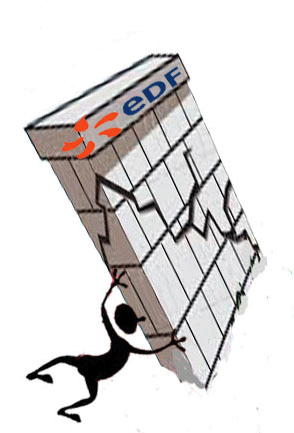
President Macron’s plan to avoid a politically explosive electricity price rise in France could cost EDF €8 billion, the French state-controlled energy group warned yesterday. The alert prompted a sharp sell-off in shares of EDF, which tumbled by 14.6 per cent, or €1.51, to close at €8.84 last night, as investors reacted with dismay to an order from the French government that the company must increase the amount of
cut-price electricity it sells to rivals to hold down prices for consumers.
EDF further spooked the markets by saying that it was extending the shutdowns of five nuclear reactors because of safety concerns, leading to a fresh cut to its electricity production forecasts. The group, which is leading the project to build Britain’s only new nuclear plant at Hinkley Point in Somerset, said that it was unable to calculate the exact financial consequences of the last salvo of bad news and withdrew its profit guidance for the year. It said that it would “consider appropriate measures to strengthen its balance sheet structure and any measure to protect its interests”.
Times 15th Jan 2022
Labour tries to curb cost overruns from Sizewell C development
Bill Bordass, Research and Policy Adviser for the Usable Buildings Trust said: ‘Surely the only sensible way to curb Sizewell C is to scrap it entirely? It is just good money after bad.’
Labour bids to curb cost overruns from Sizewell C development, https://100percentrenewableuk.org/labour-bids-to-curb-cost-overruns-from-sizewell-c-development, David Toke, 16 Jan 22, The Labour frontbench has put down an amendment to the Nuclear Financing Bill which would stop the automatic reimbursement of EDF for excess construction costs of the planned Sizewell C nuclear power plant. The amendment, put forward by Shadow Green New Deal and Energy Minister Alan Whitehead, has been defeated by the Conservative majority in the Commons, but will soon come up for a vote in the House of Lords.
The Nuclear Financing Bill sets up a so-called Regulated Asset Base (RAB) means of funding nuclear power. This means the constructors would be be paid for the construction costs before the plant was generating anything. It would save the constructors money whilst making the project a lot more expensive for the energy consumer in the (most likely) event that the project experienced considerable cost overruns.
Although the SNP has also put down useful amendments to make the Government publish details of the costs of the project, Labour’s proposed amendment is potentially significant in that it could, if taken literally, dissuade EDF from moving ahead with any deal to build Sizewell C. As Whitehead told the Commons, analysis of historical experience of building nuclear power plant it is a near certainty that there will be cost overruns on the project.
In fact Whitehead implied he was not trying to stop the project, but merely argued that cost overruns should not automatically be added to consumer bills. If there were cost overruns then the Government could find the extra money to pay for the project from some other source.
Amongst other things, the SNP amendments asked that the Government should have to make public whether Sizewell C was being given a guarantee that its generation would be paid a minimum price for each MWh produced. Labour also sought to block nuclear power plant being owned by foreign companies, although it was argued this would not affect Sizewell C.
Labour joined forces with the Conservatives to vote through the Bill on the Third Reading, with the SNP, the Liberal Democrats and the Green Party whipping against the Bill.
It ought to seem strange that at the very time there is concern about increased energy bills and strident calls to cut back on green levies from some Tory MPs, the very same MPs are unquestioningly voting through a piece of legislation that will add substantial sums onto consumer bills. EDF has said that Sizewell C will cost £20 billion. Considering that interest charges and also cost overruns will have to be added to this sum the total cost may very plausibly amount to £30 billion or more – and that represents more than £1000 for each household in the UK.
The amount of energy generated by Sizewell C will only be of the order of the next tranche of renewable energy projects (to be issued in the coming moths) that will cost the consumer effectively nothing. By contrast Sizewell C will likely not even be seriously begun until Hinkley C is completed (2027?) which means a 2035 or later start. The UK could have deployed a lot more renewable energy by then of course at much lower cost. The current nuclear crisis in France demonstrates how unreliable nuclear power can be.
Bill Bordass, Research and Policy Adviser for the Usable Buildings Trust said: ‘Surely the only sensible way to curb Sizewell C is to scrap it entirely? It is just good money after bad.’
The Commons debate details can be seen here. The House of Lords is due to vote on the Bill in the coming days.
Finland: no plans for new nuclear , and Fennovoima project hampered by the Ukraine crisis
Nuclear energy gains support, but current producers plan no new reactors, Finland: Finland’s nuclear power producers do not plan to build more reactors, although support for nuclear is at record levels. Meanwhile plans for an entirely new plant could be hampered by the Ukraine crisis.YLE NEWS, 16 Jan 22,
Finland’s current nuclear power producers have no plans to build more reactors, even though support for nuclear energy is at higher than at any time in the past three decades.
Teollisuuden Voima (TVO), which operates the Olkiluoto power plant in Eurajoki, southwest Finland, is concentrating on powering up its long-awaited third reactor (OL3), which was started up on 21 December. The company has abandoned plans for a fourth reactor at the site after extensive cost overruns and delays with the OL3 project, which was to have been completed in 2009.
Majority-state-owned Fortum, meanwhile, is looking toward a possible decision to extend the life of its two reactors in Loviisa, southeast Finland.
The operating licences for the Loviisa units will expire in 2027 and 2030. But if Fortum applies for and obtains a continuing license, the reactors, completed in 1978 and 1980 with Soviet technology, could be operational until the late 2040s.
On Friday the Ministry of Economic Affairs and Employment gave a preliminary green light to extending the licenses by up to 20 years…………. A final decision could come later this year, pending consideration by the Environment Ministry and other official bodies.
………… However nuclear remained less popular than many other forms of energy, including solar power, which 87 percent said should be used more. That was followed by wind power (81 percent), hydroelectric (52 percent) and wood and other biofuel (52 percent).
The ET survey of 1,000 adults in Finland was carried out in October by IROResearch, which estimated the margin of error at 3.2 percentage points.
Ukraine crisis could affect Fennovoima project
Meanwhile plans to build Finland’s first entirely new nuclear power plant on the west coast remain up in the air. The Fennovoima consortium, which includes Fortum, hopes to build the plant on the Hanhikivi peninsula in Pyhäjoki as a turnkey delivery supplied by the Russian state-owned Rosatom Group. The plant has not been granted a construction license.
It was originally to have begun operations in 2020, but last year the company has set a target date of 2029 for commercial operations.
The Radiation and Nuclear Safety Authority (Stuk) said in August that Fennovoima had not yet handed over all of the requested documentation to proceed with an evaluation of its preliminary safety report.
“No actual plans have been presented to Stuk regarding the safety arrangements for the power plant itself and its operating environment,” it said in late August, adding that there had been “little progress” in the project’s construction readiness.
On Friday the business daily Kauppalehti reported that the Ukraine crisis could further complicate the Fennovoima venture. It noted that the plant’s reactor pressure vessel is to be manufactured in eastern Ukraine, 40-50km from a combat zone.
Fighting in the area could make it impossible for Stuk to carry out required inspection visits to the factory site. The plant is partly owned by Rosatom, which could be hit by western sanctions if Russia attacks Ukraine……. https://yle.fi/news/3-12272789
France’s nuclear company EDF in trouble, and with election looming
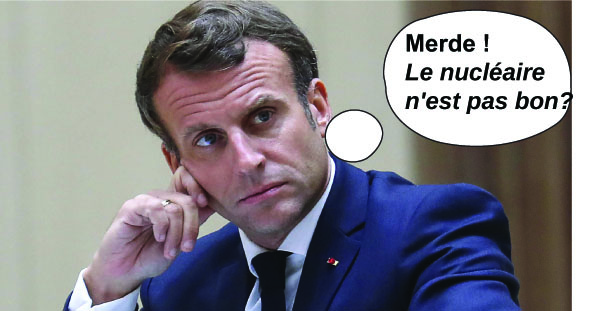
Emmanuel Macron facing the EDF and energy bomb. With the blocking of
regulated tariffs, to limit price increases to 4%. EDF will have to sell a
larger quantity of cheap nuclear electricity to its competitors. Panic wins
the company whose stock price has collapsed.
CEO Jean-Bernard Lévy has
just convened for Monday the “top 200”, the 200 highest executives of EDF.
We are already talking about a necessary recapitalization of EDF. Will the
state back to pot again? Or does the executive imagine calling on outside
investors? The question will be explosive three months before the
presidential election.
La Tribune 14th Jan 2022
1 This Month
26 April – Chernobyl: Inside the Meltdown airs on National Geographic on Sunday 26th April from 4pm

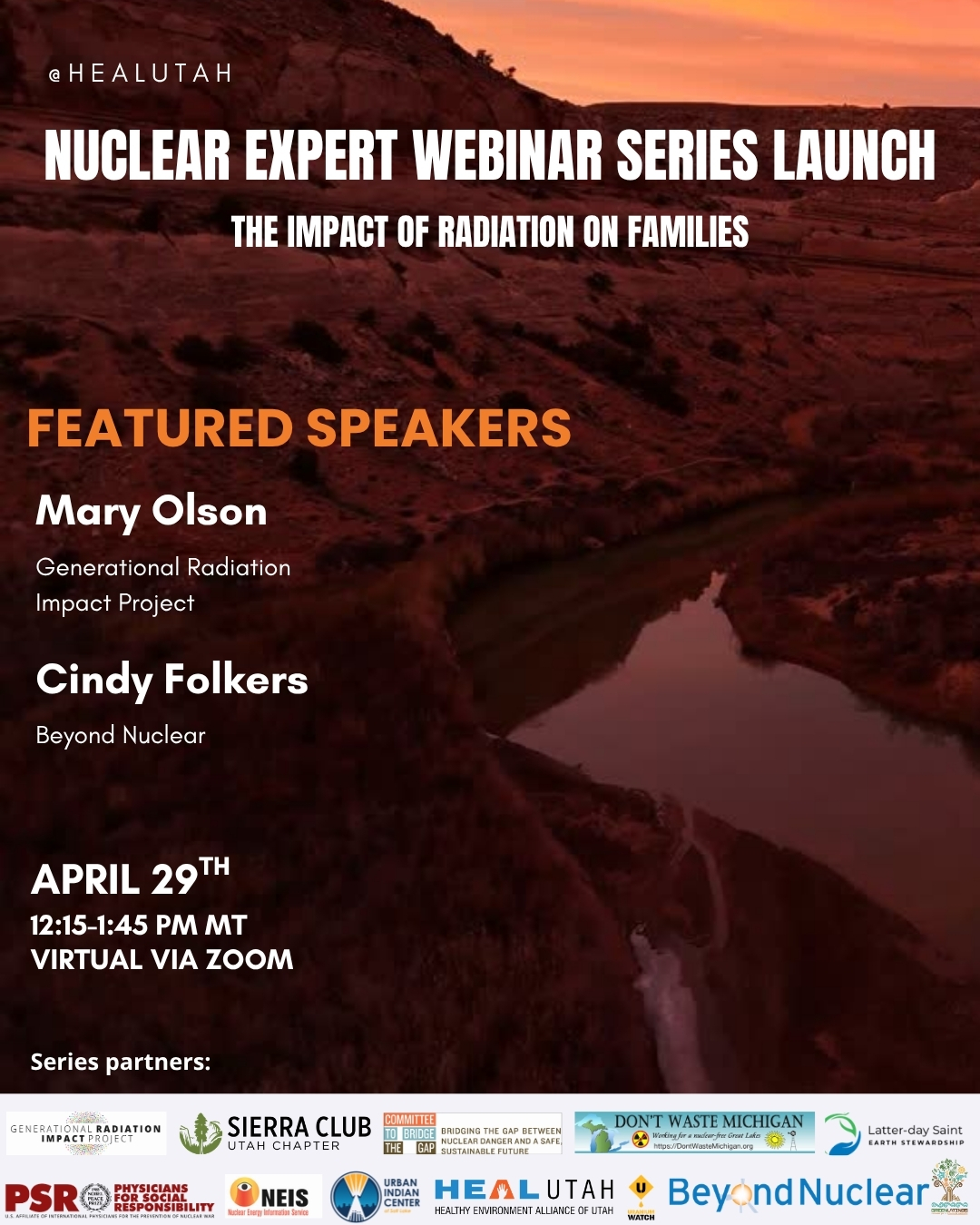
29 April – Nuclear Expert Webinar #1 – Radiation Impacts on Families with Mary Olson and Cindy Folkers
- 12:15 PM MT – 1:45 PM MT
- Location: Virtual – REGISTER TODAY

4 May -West Suburban Peace Coalition to discuss Iran war at May Educational Forum
Monday, May 4, 7:00 – 8:00 PM Central Standard Time
Title: : How Trump’s Narrative Tries to Shape the Reality of the War on Iran.
Contact Walt Zlotow, zlotow@hotmail.com 630 442 3045 for further information
14 May – online event From Bombs to Data Centres: the Face of Nuclear Colonialism

Pine Ridge Uranium is the real threat, not Tehran- Tell Burgum: Stop the Extraction.
Chernobyl: The Lost Tapes – A good documentary on Chernobyl on SBS available On Demand for the next 3 weeks– https://www.sbs.com.au/ondemand/tv-program/chernobyl-the-lost-tapes/2352741955560
To see nuclear-related stories in greater depth and intensity – go to https://nuclearinformation.wordpress.com
-
Archives
- April 2026 (317)
- March 2026 (251)
- February 2026 (268)
- January 2026 (308)
- December 2025 (358)
- November 2025 (359)
- October 2025 (376)
- September 2025 (257)
- August 2025 (319)
- July 2025 (230)
- June 2025 (348)
- May 2025 (261)
-
Categories
- 1
- 1 NUCLEAR ISSUES
- business and costs
- climate change
- culture and arts
- ENERGY
- environment
- health
- history
- indigenous issues
- Legal
- marketing of nuclear
- media
- opposition to nuclear
- PERSONAL STORIES
- politics
- politics international
- Religion and ethics
- safety
- secrets,lies and civil liberties
- spinbuster
- technology
- Uranium
- wastes
- weapons and war
- Women
- 2 WORLD
- ACTION
- AFRICA
- Atrocities
- AUSTRALIA
- Christina's notes
- Christina's themes
- culture and arts
- Events
- Fuk 2022
- Fuk 2023
- Fukushima 2017
- Fukushima 2018
- fukushima 2019
- Fukushima 2020
- Fukushima 2021
- general
- global warming
- Humour (God we need it)
- Nuclear
- RARE EARTHS
- Reference
- resources – print
- Resources -audiovicual
- Weekly Newsletter
- World
- World Nuclear
- YouTube
-
RSS
Entries RSS
Comments RSS
 nuclear-news