Biden Rebuked for ‘Openly Praising War Profiteering’ at Lockheed Martin

Critics said Biden’s visit to Lockheed Martin—whose CEO suggested to investors in January that the coming conflict would strengthen the company’s profits—offered a clear picture of the president’s current priorities
“This is all the [Democrats] can deliver,” said one critic. “War, policing, capital consolidation for warmongers, and more war
https://www.commondreams.org/news/2022/05/04/biden-rebuked-openly-praising-war-profiteering-lockheed-martin JULIA CONLEY. May 4, 2022
While reproductive rights advocates across the U.S. Tuesday called on the Democratic Party to do everything in its power to codify abortion rights into federal law, President Joe Biden called on Congress to approve more military aid for Ukraine after visiting a Lockheed Martin facility to praise its supply of weaponry.
Biden headed to Troy, Alabama to visit the factory where 600 workers have the capacity to produce more than 2,000 Javelin anti-tank missiles per year, applauding the facility for helping to defend “freedom and democracy itself” in Ukraine.
The U.S. has sent more than 5,000 Javelin missiles to Ukraine since Russian forces invaded the country in February, according to the White House.
“The weapons built here—now in the hands of Ukrainian heroes—are making all the difference,” the president said.
Critics said Biden’s visit to Lockheed Martin—whose CEO suggested to investors in January that the coming conflict would strengthen the company’s profits—offered a clear picture of the president’s current priorities following the collapse of his domestic agenda, the Build Back Better Act and its anti-poverty and climate action provisions.
“Update on Biden’s economic agenda,” tweeted Stephen Semler of the Security Policy Reform Institute. “He’s abandoned his Build Back Better agenda and is now openly praising war profiteering.”
Following Biden’s visit to Lockheed Martin, the president called on federal lawmakers to approve $33 billion in additional aid for Ukraine, including $20 billion in security and military assistance and funds to replenish the Pentagon’s own stockpiles “to replace what we’ve sent to Ukraine.”
The U.S. has sent more than $3 billion in military aid to Ukraine since the war began on February 24.
CodePink co-founder Medea Benjamin demanded to know how Lockheed Martin’s contributions are “saving civilization,” as the president said during his tour of the factory.
“Is war-making really civilized, no matter which side?” she asked.
Progressive political strategist Peter Daou denounced Biden for visiting the weapons facility as women’s rights in the U.S. apeared on the cusp of being effectively “gutted” following the leak of a Supreme Court draft opinion in which Justice Samuel Alito said Roe v. Wade “must be overruled.”
Since the leak Monday night, progressives have been demanding that Biden push every Democrat in the Senate to support eliminating the filibuster in order to pass the Women’s Health Protection Act, which would codify into federal law the right to obtain and provide abortion care. Right-wing Sens. Kyrsten Sinema (D-Ariz.) and Joe Manchin (D-W.Va.) do not support filibuster reform.
Steven Thrasher, a professor at Northwestern University and author of The Viral Underclass, said Biden’s visit demonstrated that “this is all the [Democrats] can deliver: war, policing, capital consolidation for warmongers, and more war.”
“They’ve no money for Covid. They won’t legislate on abortion,” Thrasher said. “Just war, war, war.
Governor Newsom Wants to Keep Dangerous California Nuclear Power Plants Open

Buzz Flash, July 16, 2022, By Harvey Wasserman
As he begins to campaign for the White House, Gov. Gavin Newsom is toying with extending operations at two of the world’s most dangerous atomic reactors, sited at the aptly named Diablo Canyon, nine miles west of San Luis Obispo.
The coastal nukes are surrounded by a dozen earthquake faults, just 45 miles from the San Andreas, whose eruption could send an apocalyptic radioactive cloud into Los Angeles County, just 180 miles downwind. Potential human casualties could far exceed ten millon. The economic and ecological devastation would be incalculable.
Newsom’s emergence as a potential atomic triggerman has been tortured and tragic. Long marketed as an environmentalist, Newsom has fiercely criticized the state’s largest utility, for good reason.
Since 2000, Pacific Gas & Electric has twice fled to bankruptcy……………………………
Nuclear Regulatory Commission site inspector Dr. Michael Peck warned that Diablo could not withstand a credible seismic shock and should be shut. Peck worked five years inside the plant. But the NRC trashed his warnings and forced him out.
The NRC also warned in 2003 that Diablo Unit One is dangerously embrittled, a flaw that risks an apocalyptic explosion. Critical welds were done with metal amalgams long since abandoned. Serious cracking indicated in key components has been ignored in expectation the reactors will soon shut.
Diablo uses an obsolete “once-through” cooling system that destroys the marine environment; state law now requires cooling towers, which PG&E does not want to build.
In 2016 a broad coalition of unions, the governor, Public Utilities Commission, local communities, state regulators and environmental groups struck a landmark deal to shut both reactors as their operating licenses expire in 2024 and 2025.
The agreement has let PG&E avoid critical maintenance on the assumption that the nukes would soon close. The site lacks sufficient short-term waste storage space for fuel burned after 2025. Extremely dangerous manipulations of spent fuel pools would be required to handle more highly volatile rods and assemblies.
The shut-down agreement includes generous buy-outs for retiring workers. Retraining is set for younger ones in renewables and other fields. Much of the workforce has planned to stay on for decommissioning.
But six years into the shutdown phase, an irreplaceable core of inherited knowledge about the dangerously complex reactors has been lost, putting future operations in deep peril.
The reactors’s electricity costs California rate payers more than $3.5 million per day—-$1 billion/year—-over market prices. Timely shut-downs would avoid $8 billion in over-market charges, easily enough to replace the reactors with renewables.
The nukes’ dirty, costly output regularly forces far cheaper renewable generation off the grid. Since 2016 PG&E has added to the grid thousands of megawatts of renewables.
Unlike nuclear power, wind and solar emit no heat or carbon. Just 1500 workers work at Diablo, which has no job growth potential. More than 70,000 Californians work in the fast-expanding wind, solar, battery and efficiency industries.
Looming above all is the chance one or both Diablo’s reactors could explode, sending apocalyptic radioactive clouds into Los Angeles, the Bay Area or across into the central valley and then across the continental US., with incalculable human, ecological and economic devastation.
As the reactors age, with an aging, disappearing work force, worsening operational and structural defects, and cost and environmental impacts soaring, the harsh realities at Diablo Canyon point to catastrophe.
Why Gov. Newsom would court disaster to break the 2016 shut-down agreement and force these much-hated reactor to continue operations beyond their license agreements remains a mystery. But the costs of his folly could be apocalyptic.
Harvey Wasserman wrote the PEOPLE’S SPIRAL OF US HISTORY (solartopia.org) and most Mondays convenes the Green Grassroots Emergency Election Protection zoom call (www.grassrootsep.org) https://buzzflash.com/articles/harvey-waserman-newsom-wants-to-keep-dangerous-california-nuclear-power-plants-op
France’s nationalisation of nuclear energy corporation EDF raises more questions than it answers
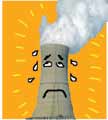
Just as Europe attempts to move away from its dependence on Russian gas and grapples with soaring power prices, problems at some of EDF’s existing 56 reactors in France have caused shutdowns and sent its energy output to multi-decade lows.
At the site of France’s first new nuclear reactor in more than 20 years, robots are whirring away fixing faulty welding as developer EDF races to open the plant after a decade of delays that have damaged its reputation.
Ahead of it lies a challenge of a different order of magnitude: a construction program to build six more, just as the French government, which owns 84 per cent of the business already, plans to take full control.
The full nationalization of EDF, which was announced earlier this month, comes as a series of crises pile pressure on the group’s finances.
In theory this will provide it with some relief away from the glare of public markets. So far, however, the state buyout has raised more questions than it has answered, including how the government thinks it might do a better job at fixing long-running industrial problems that have plagued projects at EDF, some of them as basic as a lack of experienced welders. “It’s not because the government will now have 100 percent that it’s going to suddenly take three years less to build a reactor,” one person close to the company said. “Right now, we’re in symbolic territory with this nationalization. It does not resolve any of the main problems we know the group is facing – will it allow EDF to bolster the skills it needs?” said Cécile Maisonneuve, a senior adviser at the center for energy and climate at French think thank IFRI. “None of the industrial or regulatory issues were linked to its capital structure.”
Just as Europe attempts to move away from its dependence on Russian gas and grapples with soaring power prices, problems at some of EDF’s existing 56 reactors in France have caused shutdowns and sent its energy output to multi-decade lows.
FT 17th July 2022
https://www.ft.com/content/7d7225ad-dd3b-4b95-95a6-c270a0089277
Push towards nuclear power in Japan, but delays, hurdles, opposition make it an unlikely development
To deal with concerns about electricity shortages this winter, Prime
Minister Fumio Kishida said Thursday that he will push to have up to nine
nuclear reactors in operation by then. But while 10 reactors are officially
listed as having been restarted, only five are actually providing power.
One of them, Genkai No. 4 in Saga Prefecture, will soon be offline to
finish necessary safety work for the winter. The other five are sitting
idle because they are either finishing safety work needed to be switched
back on, or they are offline for regular inspection.
While there are recent
signs that restarts are growing more acceptable to the public, given
concerns about rising energy prices, opposition nonetheless remains. A
nationwide poll conducted by NNN and the Yomiuri Shimbun on Monday and
Tuesday showed that, as long as reactors meet safety standards set by the
Nuclear Regulation Authority, 54% of respondents supported their restart,
while 37% were opposed.
Anti-nuclear groups could also slow the restart
process by filing requests for temporary injunctions or lawsuits in local
district courts over safety concerns. Victory could stop any restart effort
while the decision is appealed by the operator in a higher court.
Japan Times 15th July 2022
https://www.japantimes.co.jp/news/2022/07/15/national/kishida-nuclear-power-plants-online-winter/
Heatwave? No, it’s a national emergency, disrupting lives and threatening our health.

Will Hutton: Heatwave? No, it’s a national emergency, disrupting lives and
threatening our health. The idea of climate change as a distant problem
won’t survive the next stifling week. Tomorrow, as we seek shelter from a
burning sun, climate change will feel all too real.
Britain has suffered ever more vicious storms and floods over the past few years but the next
couple of days will drive home the menacing discontinuity with our idea of
normal, a step change in our collective awareness. The expected heat –
temperatures that may exceed 40C warns the Met Office – are not only a
record, but life-threatening.
Only some 70 parliamentarians turned up to last week’s presentation on climate change led by Sir Patrick Vallance and other scientific officials. None of the Tory leadership candidates was
among them.
The accepted Tory wisdom, driven by its right, is that, at
best, climate change commitments should be deferred until the cost of
living crisis is over – at worst, they should be scaled back indefinitely
or wholly reframed.
Finally, at Friday’s Channel 4 debate, three candidates
publicly committed to the legally enshrined target of net zero by 2050:
Rishi Sunak, Tom Tugendhat and Penny Mordaunt. The right’s frontrunner, Liz
Truss, offered a commitment, but carefully not to a date; and Kemi
Badenoch, the insurgent candidate from the right, wanted the whole issue
reframed.
If Badenoch and Truss were to watch Vallance’s presentation, they
would surely change their view. Global temperatures are rising. So is the
cumulative amount of carbon in the atmosphere. The polar ice caps are
melting at bewildering and accelerating speed. Sea levels are increasing.
So are extreme weather events. All are unambiguously the result of human
influence, says the Met Office.
A global commitment to net zero by 2050
could limit the temperature rise to 1.5C. The right is massively out of
step with science, evolving public opinion and the business opportunities –
a triple whammy of misalignment that will prove deadly.
The science is incontestable. So is our daily experience. What is less discussed is how
acting presents a massive opportunity. Already the best in business and
finance are committed to net zero by 2050. In the City, argument rages
whether it’s best to disinvest completely from fossil fuel companies or to
support them as they transition to a new business model; what is accepted
in a world far from rightwing thinktanks, columnists and chat rooms is that
the change must be made.
On climate change scepticism, the right is
unambiguously wrong – it might not even prove the route to the Tory
leadership. It is certainly not the route to winning general elections.
Observer 16th July 2022
Increasingly economical renewables mean now’s no time for South Korea to cling to nuclear power
In these changing times, it is unfortunate that Korea is choosing to cling to the nuclear industry, the marketability of which is becoming increasingly unclear.
https://english.hani.co.kr/arti/english_edition/english_editorials/1051124.html Jul.15,2022
The new administration’s nuclear power advocacy runs counter to global trends toward renewables.
A new report released by the International Renewable Energy Agency (IRENA) has revealed that global solar and wind power generation costs are down 13%-15% compared to one year ago.
According to IRENA’s “Renewable Power Generation Costs in 2021” report released on Wednesday, the global weighted average levelized cost of electricity (LCOE) of new onshore wind projects added in 2021 fell by 15% year on year while that of new utility-scale solar PV and offshore wind both declined by 13%.
The report explains that the LCOE of a given technology is the ratio of lifetime costs to lifetime electricity generation; it is used as a measure to compare the economic feasibility of the various methods of generating electricity.
In 2021, renewables’ share of total power generation capacity growth reached 81%. It seems that these figures continue to improve as the economy gets stronger.
In Korea, however, the perception that nuclear power equals cheap energy is still strong. This is despite the fact that globally, renewable energy dominates nuclear power in terms of economic feasibility.
According to a report released by Lazard, a global asset management company, in October of last year, the average cost of electricity per megawatt-hour (MWh) of solar power fell by 90%, from $359 in 2009 to $36 last year. Wind power also fell 72% from $135 to $38.
Comparatively, nuclear power saw a 36% increase in cost from $123 to $167 during the same period. In fact, nuclear power has already become 4.5 times more expensive than renewable energy.
This is because, while technology is developing day by day as investment into renewable energy increases in step with the global trend of transitioning to cleaner energy sources, construction costs for nuclear power plants are increasing as safety regulations are strengthened after the Fukushima incident.
Advanced economies, particularly those in Europe, are scrambling to come up with energy policies centered on renewable energy. To this end, the EU announced in May that it would increase the share of renewable energy from the current 22% to 45% by 2030. This is an upward revision of the 40% target set a year ago.
The change is reportedly aimed at quickly getting rid of Europe’s dependency on Russian energy. In other words, Europe seems to be choosing to expand its use of renewable energy as a solution to its current energy crisis.
South Korea, however, is running counter to this trend by advocating to become a leader in the nuclear power field. By 2030, the proportion of Korea’s energy mix derived from nuclear power will increase to more than 30% while the proportion of renewable energy will reportedly be adjusted to a “reasonable” level.
The plan is to lower the existing renewable energy target, which stands at 30.2% by 2030, because it is perceived as being too high.
In the near future, whether or not companies use renewable energy is likely to act as a new trade barrier. In these changing times, it is unfortunate that Korea is choosing to cling to the nuclear industry, the marketability of which is becoming increasingly unclear.
The Agency Responsible for Securing the U.S.’s Toxic Nuclear Waste Has Its Work Cut Out For It
Gizmodo Mack DeGeurin, July 14, 2022 Scattershot budgets, lack of coordination, stalling research and development, and rapid worker turnover are threatening the Department of Energy’s ability to sufficiently store and secure the nation’s ever-growing trash bin of toxic nuclear waste.
Those were some of the top concerns outlined today by experts and lawmakers during a congressional hearing probing the country’s nuclear waste cleanup response. The hearing, carried out by the House Committee on Science, Space, and Technology, specifically interrogated a series of Government Accountability Office reports highlighting potential deficiencies within the DOE’s Office of Environmental Management (EM).
The DOE’s EM office is responsible for the Herculean task of securing and cleaning up the country’s still-growing excesses of radioactive nuclear waste produced as a byproduct of nuclear weapons research and production dating back to World War II. Those diverse cleanup efforts can vary from addressing contaminated ground soil and groundwater, to decommissioning contaminated facilities, and building facilities to treat radioactive waste. That’s a challenging task under the best circumstance, and the office certainly isn’t operating at its best, according to the GAO.
One of the 2021 GAO reports found growth in DOE’s environmental waste liabilities and overall costs related to addressing cleanup have outpaced how much the agency spends on cleanup. A separate GAO report released that same year found the DOE had reduced research and development funding crucial for discovering new, undiscovered ways to reduce all that nuclear waste. While throwing more funding at the agency might sound like the most obvious answer to that second problem, GAO Natural Resources, and Environment Director Nathan Anderson wasn’t so sure when probed by lawmakers. Large chunks of DOE R&D money, he said, simply aren’t trackable.
“We asked the sites, we asked the labs what [money] was spent and there was a breakdown of internal controls at that point,” Anderson said……..
Anderson was directly involved in the GAO report, which determined the DOE as a whole simply lacks a “comprehensive approach to prioritising cleanup R&D.”……………..
In some cases, waste cleanup teams handling extremely hazardous materials appeared woefully under-equipped. ………………..
Issues around nuclear waste safety don’t simply cease to exist once the dangerous materials are secured underground either. Several of the speakers Wednesday expressed concerns that escalating environmental disturbances arising from climate change could potentially force the EM to reconsider some of its models around proper waste storage. What happens, for example, when an area selected to store hazardous materials is actually unearthed and made unviable due to climate change effects? Anderson said models made accounting for weather patterns 20 years ago may not accurately reflect the realities of climate impacts today…………………………………… https://www.gizmodo.com.au/2022/07/the-agency-responsible-for-securing-the-u-s-s-toxic-nuclear-waste-has-its-work-cut-out-for-it/
Biden moves US closer to confrontation with Russia
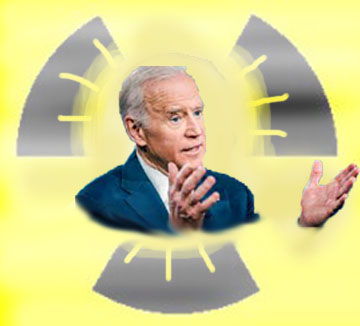
His latest step reflects his choice of war over peace — or as he might put it, his belief that peace can best be achieved through war.
For American strategic planners, this war has little to do with Ukraine. They see it as a battering ram against Russia. Since saving Ukrainian lives is not their priority, they view diplomacy as an enemy.
Negotiation would inevitably give Russia at least some of what it wants. Russia’s war with Ukraine, on the other hand, holds out the delicious prospect of bringing Russia to its knees. That’s why Congress voted to send Ukraine billions of dollars in weaponry, and why President Biden asserted when making his announcement that rather than send diplomats to the crisis zone, he prefers “stepping up” US military involvement there.
His announcement to step up military involvement in Europe reflects his choice of war over peace.
Boston Globe ,By Stephen Kinzer July 11, 2022,
The United States is sinking its flag deeper into European soil. President Biden announced late last monththat the American military will soon open a “permanent base” in Poland, deploy two squadrons of F-35 fighter jets to Britain, send more warships to our sprawling base in Spain, and increase our troop strength in Romania, Latvia, Lithuania, and Estonia. Instead of promoting diplomacy that could lead to peace, he chose a course guaranteed to increase tensions with Russia at a moment when they are already approaching an all-time high. This brings us one step closer to direct confrontation with another nuclear-armed power.
Biden and other promoters of this policy — a group that includes virtually everyone in Washington — say it is necessary to counter Russian aggression in Ukraine. In fact, it will have little effect in Ukraine. The true purpose of this American buildup is to threaten and intimidate Russia.
For complex reasons that are as much psychological as political, many Americans have come to regard Russia as a font of evil. Many in Washington dream of destroying Russia utterly and forever — stripping it of all power and then perhaps breaking it up into smaller states that would submit to American influence.
For American strategic planners, this war has little to do with Ukraine. They see it as a battering ram against Russia. Since saving Ukrainian lives is not their priority, they view diplomacy as an enemy. Negotiation would inevitably give Russia at least some of what it wants. Russia’s war with Ukraine, on the other hand, holds out the delicious prospect of bringing Russia to its knees. That’s why Congress voted to send Ukraine billions of dollars in weaponry, and why President Biden asserted when making his announcement that rather than send diplomats to the crisis zone, he prefers “stepping up” US military involvement there.
Outlines of what will probably be the peace settlement in Ukraine are already clear. Russia will withdraw its army, eastern regions of Ukraine will be guaranteed autonomy, and Ukraine will agree to keep Western troops out of its territory. Such a peace, however, would end the dream of inflicting a “strategic defeat” on Russia. That is why many in Washington consider it anathema — and why Secretary of State Antony Blinken refused to meet his Russian counterpart when both were at a summit in Bali last week.
An obsession with crushing Russia lies behind Washington’s passionate embrace of the Ukrainian cause. But there is another, more cosmic reason. We are seeing a textbook example of what geo-strategists call the classic security dilemma. One country takes steps to secure itself, but others see those steps as preparation for war. They respond with buildups of their own. Fears, accusations, and demonizing propaganda intensify until fighting breaks out.
This syndrome has led to countless wars. World War I is just one example. Germany began strengthening its navy to protect trade routes and overseas colonies. Britain, determined to “rule the waves,” took this as a threat and began producing radically more destructive warships. Germany presumed it was the intended target of those warships, and began building its own. The competition became so intense that it took only a single spark, an assassination in Bosnia, to set off the conflagration.
The same cascade of military pride and ambition — the same inability to see things from the other side’s point of view — led to the Ukraine war. Democrats and Republicans alike insist that we only ever wanted freedom for Ukraine, that we offered to bring it into the NATO military alliance in 2008 to guarantee that freedom, that we helped depose its Russia-friendly government in 2014 because it was corrupt, and that we are sending tens of billions of dollars in weaponry to Ukraine only to help it defend itself against aggression.
Russians see things quite differently: America is fiercely dedicated to destroying Russia; it is increasing troop strength in Europe to prepare for a future assault; and if Russia doesn’t stop this tide in Ukraine, it will sooner or later find itself defending Moscow against a US-led attack.
It’s not necessary to decide which of these versions is right, only to recognize that both exist. Like many Americans, Biden sees Russia through a lens at least as distorted as the one through which Russia views us. His latest step reflects his choice of war over peace — or as he might put it, his belief that peace can best be achieved through war. That will haunt the world long after the Ukraine conflict ends.
Stephen Kinzer is a senior fellow at the Watson Institute for International and Public Affairs at Brown University.
https://www.bostonglobe.com/2022/07/11/opinion/biden-moves-us-closer-confrontation-with-russia/
Macron’s nationalisation of nuclear energy corporation EDF will be a disaster for France
Macron’s energy power grab will be a disaster for France.
Nationalisation of the nuclear energy giant is an ill-thought-out, populist
response from a president overwhelmed by a political crisis. European
leaders have yet to come up with any convincing answers to the global
energy crisis. ………..
France’s energy system is in
complete disarray and Emmanuel Macron’s solution is arguably the worst of
the lot, in a decidedly crowded field – an ill-thought out, knee-jerk
populist response from a president battling a massive political crisis at
home. Faced with long delays and huge budget overruns on new nuclear plants
at home and abroad, corrosion problems at many of its existing reactors,
and the same spiralling cost of living crunch that has gripped most of
Europe, Macron has decided that now is the time to renationalise heavily
indebted electricity titan EDF.
. You can see the attractions, limited though
they are. As the country’s biggest utility by a sizeable margin, EDF has
become the face of France’s energy crisis. Taking EDF into state hands
removes it from the glare of the stock market, making it easier, in theory,
to tackle its huge financial and operational problems head on with the
approval of private shareholders no longer required.
Nevertheless, for all the political hype, it is a move that I am willing to bet will almost
certainly backfire – and in spectacular fashion, too. Whatever the
problem, nationalisation is rarely, if ever, the solution. History has
taught us that. It is even harder to believe that nationalisation will
improve EDF’s widespread operational issues.
One of the main reasons why
its finances are in such a sorry state is that scores of corroding reactors
have forced it to shut down many of its existing nuclear plants, strangling
output. It is also suffering from huge cost overruns and missed deadlines
on new projects. EDF is beset by a host of problems, almost none of which
are likely to be solved by vanishing into the bowels of the notoriously
inefficient, heavily technocratic, work-shy French state. Telegraph 13th July 2022
No end to nuclear costs for UK taxpayers
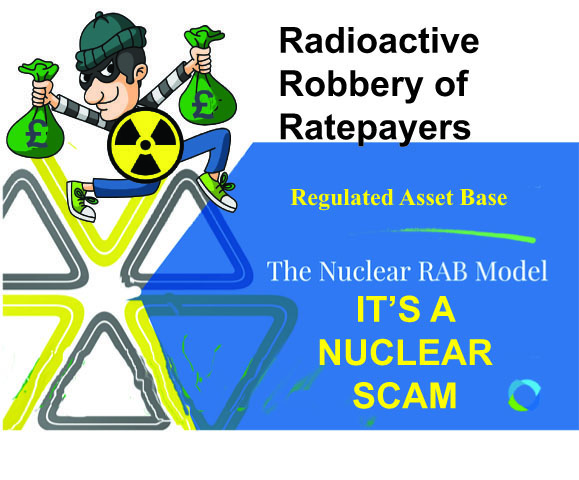
Varrie Blowers unpacks the impacts of the Nuclear Industry (Financing) Act
2022 in BANNG’s Regional Life column for June 2022.
Heard the fantasy about constructing an airport in the Thames estuary? And the one about
constructing a bridge from Scotland to Northern Ireland?
Well, there is a new fantasy going the rounds: that eight new nuclear power stations will be
constructed in the UK in the next decade. And where is the Government proposing to obtain the huge sums required for construction? From your pocket, of course! Under the Nuclear Industry (Financing) Act, 2022, it is intended that in order to attract investors a levy will be added to consumers’ energy bills to pay the upfront costs. Energy Minister, Kwasi Kwarteng, thinks this will be ‘a small amount’ but at this time of
soaring energy bills seems unable to reveal the actual figure. And, on top of this, taxpayers will be paying £1.7bn to enable a large-scale nuclear
plant to achieve a final investment decision in this Parliament.
BANNG 13th June 2022
U.S. China policy: a perilous arms race instead of waging critical co-operation

| U.S. belligerence will be met with more Chinese belligerence and vice versa as the perils and risk increase. |
| William Hartung (See, Center for International Policy) points out – a far brighter future would come from intense U.S. and China cooperation on the climate crises, averting pandemics, ocean preservation, and international arms accords including cybersecurity. Wage peace and pursue mutual self-interest as if our children and grandchildren matter. |
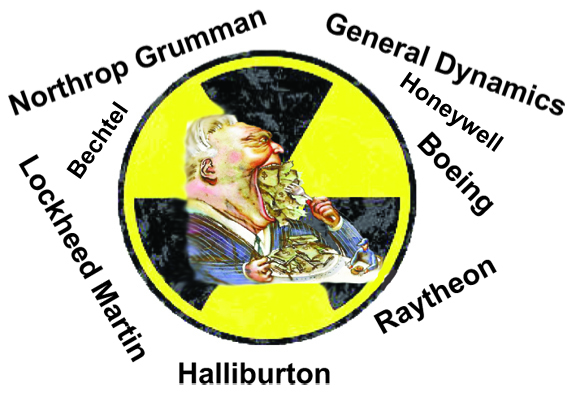
Relations between major nations are shaped by momentum in one direction or another. Both U.S. political parties have chosen a militant path without an exit strategy – one that must please Lockheed Martin and the rest of the military-industrial complex.
| Ralph Nader 12 July 22, Did the Biden officials know what they were doing when they announced a broad expansion of export controls on China? China is the world’s second-largest economy, which is intricately intertwined with the economy of the U.S. and other nations. This is mainly due to U.S. multinational companies exporting huge slices of our manufacturing economy to China for its cheap labor. What is the White House and the Department of Commerce thinking? China is not Venezuela nor is it Russia, a weak and dependent economy with a GDP smaller than Italy. Do these brazen Bidenites realize the consequences of a grand list of technologies and knowhow being barred from China? |
| As the dominant imperial world power, the U.S. is struggling to understand how to deal with an aggressive rising power like China building spheres of influence around the world through exports, loans, development contracts, and technical assistance. It’s okay that we have military bases in over 100 countries whose leaders know the U.S. as the premier overthrower of elected governments with policies displeasing to Washington and Wall Street. |
| As a result, the Bidenites are unleashing export controls, arrived at through administrative secrecy, that will surely invite black markets, high-tech smuggling, and retaliation to make these controls a nightmare to enforce |
| Provoking China to play its own cards is not smart. China, thanks to the greed of coddled and subsidized U.S. drug companies, produce much of our pharmaceuticals. These companies have left America, for example, with no production domestically of antibiotics – certainly a national security priority! |
| China possesses “rare earth” minerals and produces technology crucial to our own defense and high-tech industries. Its government allows U.S. factories to be built in China on the condition of a flow of latest “technology transfers.” Ask General Motors. |
| How are export controls – based on asserted national security grounds – going to work, other than to accelerate a new arms race? “We need to retain technological overmatch” declared Commerce Secretary Gina Raimondo, adding that export controls “are at the red hot center of how we best protect our democracies.” Tell that to the mass victims of the next round of viruses from China due to our minuscule weak public health programs and early detection systems, while we spend more than 2 ½ times as much as China on our military budget having had a huge head start in past years. |
| The New York Times reports that U.S. officials also don’t like China’s deep surveillance of its people. It is as if surveillance capitalism (See, The Age of Surveillance Capitalism: The Fight for a Human Future at the New Frontier of Power by Professor Shoshana Zuboff) and the NSA’s dragnet violations of the 4th amendment are chump change. |
| What is also well known, but not uppermost in people’s minds, is that China, Russia, and the U.S. have embedded malware in each other’s cyber worlds that if triggered could cause catastrophe. The concern about China’s tens of billions of dollars invested in U.S. Treasury bonds should also be an issue for Mr. Biden. |
| Another calculation underweighted is the quiet opposition to export controls by U.S. companies that salivate over the present and future profits with Chinese trade – Apple CEO Tim Cook (who, by the way, makes $833 a minute on a 40-hour week) got a special waiver treatment from Trump, continued by Biden, for importing tens of billions of dollars annually of iPhones and computers from its Chinese contractors without tariffs. |
| This is another way of noting that export controls invite both raw corruption and special lobbying for waivers. They were tried by the U.S. against the old USSR, which developed elaborate circumventions. |
| So here we go again. Of course, certain lethal products need to be embargoed by all countries protective of their people. The U.S is expanding its so-called “entity list” cutting off hundreds of foreign companies and groups from certain U.S. technologies unless U.S. suppliers get licenses to sell goods to them. Don’t these government officials know that blacklisted companies can mutate through other corporations chartered in tax havens or dictatorships abroad? |
| U.S. belligerence will be met with more Chinese belligerence and vice versa as the perils and risk increase. |
| William Hartung (See, Center for International Policy) points out – a far brighter future would come from intense U.S. and China cooperation on the climate crises, averting pandemics, ocean preservation, and international arms accords including cybersecurity. Wage peace and pursue mutual self-interest as if our children and grandchildren matter. |
| Where is our Department of Peace, once advanced by Congressman Jim McGovern (D-MA) and former Congressman Dennis Kucinich (D-OH), when we need it? |
| Relations between major nations are shaped by momentum in one direction or another. Both U.S. political parties have chosen a militant path without an exit strategy – one that must please Lockheed Martin and the rest of the military-industrial complex. |
| The forces for muscular peace and cooperation must show there is an alternative path to secure the common interests of the two nations. That’s called robust diplomacy in this era of recurring pandemics, expanding ransomware, bloated military budgets, and interconnected economies. |
Scotland not impressed with UK Tory government’s enthusiasm for nuclear power

THE Scottish Government has rejected UK Energy Minister Greg Hands plea to “rethink” its stance on new nuclear power stations in Scotland. The Tory minister said it’s a “great pity” Scotland has opposed the construction of any fission power plants amid the cost of living crisis and that he would be willing to sit down with First Minister Nicola Sturgeon and Scottish Energy Secretary Michael Matheson to hear their concerns.
It has been a longstanding Scottish Government and SNP policy to oppose nuclear, with the focus instead on the just transition to renewables.
Hands made the comments during a round table with Scottish journalists in London, where he also said there was no reason to re-assess licences for fossil fuel projects in the North Sea – despite persistent warnings from the United Nations on any more oil and gas fields being brought into production.
Scottish Net Zero Secretary Matheson has previously said safety concerns are the main reason the government has rejected any new nuclear sites, adding that “it is probably the most expensive form of electricity you can choose to produce”.
Following the closure of Hunterston B in North Ayrshire in January, due to cracks found in graphite bricks which make up the reactor core, the only functioning nuclear power station in Scotland is the Torness plant near Dunbar, East Lothian.
The UK Government has said it will not “impose” any new nuclear power on Scotland despite
plans to approve up to eight new fission reactors –by 2030, boosting overall capacity up to 24GW by 2050. But Hands has insisted the Scottish government should reconsider its stance.
When The National pointed out that nuclear power is expensive, takes a long time to be brought online and produces harmful toxic waste, Hands said: “This country has an amazing
safety record when it comes to nuclear. …………………..
. Maggie Chapman, the Scottish Greens MSP for North East Scotland, criticised his comments and said that renewables are “cheaper, cleaner and safer” than nuclear, and are easier to scale up.
She said: “Time and again the Tories have shown that they cannot be trusted with our environment. Nuclear power is neither safe nor reliable, and it leaves a toxic legacy that could last for centuries. “As Hinkley Point shows us, it is also very expensive. Any expansion would take years, and need to be paid for on top of skyrocketing bills.
The National 11th July 2022
Macron’s nationalisation of EDF could have major implications for the UK

EDF has a more fundamental problem than state ownership can fix: the expense and long build times of nuclear power, compared to other technologies. “[Nationalisation] may change the capacity of the state to directly back the plans, but it doesn’t change the fact that it won’t be profitable,” argues Yves Marignac, at the négaWatt Association think-tank. “Nuclear is profoundly uneconomic. The market has said no,” adds Dr Paul Dorfman, associate fellow at the University of Sussex.
What Macron takeover means for Britain and France’s ‘nuclear renaissance’.
EDF nationalisation could have major implications for the UK’s nuclear fleet. France’s prime minister Elisabeth Borne faced boos and heckling as she set our her government’s plans to the National Assembly last week, striving for coalition after President Emmanuel Macron lost his outright majority in June.
High on her list was an announcement for France to take full ownership of its debt-laden energy giant EDF, as the weakened president tries to tackle the deepening energy and cost of living crisis
rippling across Europe amid the war in Ukraine.
Across the Channel, political turmoil was also affecting EDF. An announcement on planning approval for its Sizewell C nuclear project in Suffolk was pushed back until July 20 amid the chaos surrounding Boris Johnson’s resignation.
The company has a massive role in the UK’s energy sector, as owner of the UK’s nuclear fleet and only developer currently forging ahead with the country’s nuclear renaissance. Yet ballooning debts, outages and delays have raised doubts about its abilities on both sides of the Channel.
Will nationalisation in France be enough to fix its problems? The company’s problems stretch back beyond the turmoil in energy markets this year. Its debts of €43bn have swelled over several years amid high capital costs and spells of low electricity prices. Each year, EDF has to sell a chunk of its output at a fixed price to rivals, under state efforts to encourage competition.
Meanwhile, development of its flagship next-generation EPR reactors has been troubled. Though the first EPR power plant started running in China in 2018, one of its units has had to be shut for repairs due to cracked fuel rods. EDF says the problems have been “investigated and understood” and a solution found, with no risk posed to people or the environment. A second plant opened in Olkiluoto, Finland, in March – more than 10 years late and €8bn over budget. A third EPR in Flamanville, France, is running more than a decade behind schedule.
Meanwhile, Hinkley Point C, the new EPR power plant that EDF is building in Somerset, is now not expected to start generating until June 2027, with the pandemicdisrupting work. Sceptics of nuclear power argue EDF has a more fundamental problem than state ownership can fix: the expense and long build times of nuclear power, compared to other technologies. “[Nationalisation] may change the capacity of the state to directly back the plans, but it doesn’t change the fact that it won’t be profitable,” argues Yves Marignac, at the négaWatt Association think-tank. “Nuclear is profoundly uneconomic. The market has said no,” adds Dr Paul Dorfman, associate fellow at the University of Sussex.
Telegraph 10th July 2022
France and the big nuclear energy mistake
The French government wants to expand nuclear production in France and it also wants EDF to spend big money on the rehabilitation of numerous nuclear power generating stations. It has put pressure on EDF to embrace those policies and we suspect that it could force the issue as the majority shareholder.
France plans to renationalize EDF, its giant utility. That doesn’t sound like a big deal because the government already owns 84% of EDF’s outstanding shares.
But here is how we read the story.
The French government wants to expand nuclear production in France and it also wants EDF to spend big money on the rehabilitation of numerous nuclear power generating stations. It has put pressure on EDF to embrace those policies and we suspect that it could force the issue as the majority shareholder.
But a board of directors, with a fiduciary responsibility to shareholders and other providers of capital, would have a hard time approving a strategy that looked too risky or economically uncompetitive. EDF is, after all, not a division of the ministry of defense, but rather a somewhat privatized company with the government as its biggest and controlling shareholder. At least that is the appearance it would want to give to its shareholders. If France requires more nuclear power for geopolitical or strategic reasons,
despite its seeming cost disadvantage in the marketplace, we have no quarrel with that decision.
Our issue is with the current policy—to require some non-governmental shareholders to bear national security burdens and take financial risks that really belong uniquely to the government. The French have approached the matter with admirable clarity.
Oil Price 8th July 2022
https://oilprice.com/Energy/Energy-General/Europes-Big-And-Expensive-Energy-Mistake.html
France’s parliament could block Macron’s plan to nationalise EDF
French parliament could block EDF reform – analyst. French government
plans to reform utility EDF face being blocked in parliament due to
bolstered opposition from far right and left-wing parties, an analyst said
this week. “You’re going to have a lot of potential blockages with the EDF
reform,” said Phuc-Vinh Nguyen of the Jacques Delors Institute think tank.
“It is one of the major issues of the five-year term, which will have a
major impact on the revival of nuclear power, renewables and energy policy.
Without an agreement, your hands are tied.” French president Emmanuel
Macron’s ruling Renaissance party lost its absolute majority in the lower
house in parliamentary elections in June. This was due to major gains by
the Eurosceptic far right party, RN, now the leading opposition group in
the National Assembly and the left-wing Nupes party, which opposes
Macron’s plan to build new nuclear reactors.
Montel News 8th July 2022
https://www.montelnews.com/news/1334284/french-parliament-could-block-edf-reform–analyst
1 This Month
23-25 October – on Zoom – World BEYOND War’s annual global conferenc


Shut down the radiation-damaged Heysham nuclear reactors now
To see nuclear-related stories in greater depth and intensity – go to https://nuclearinformation.wordpress.com

Say No to NASA’s Reckless Nuclear Reactor on the Moon
Say No to NASA’s Reckless Nuclear Reactor on the Moon

-
Archives
- October 2026 (199)
- September 2026 (339)
- August 2026 (330)
- July 2026 (355)
- June 2026 (287)
- May 2026 (306)
- April 2026 (356)
- March 2026 (251)
- February 2026 (267)
- January 2026 (308)
- December 2025 (358)
- November 2025 (359)
-
Categories
- 1
- 1 NUCLEAR ISSUES
- business and costs
- climate change
- culture and arts
- ENERGY
- environment
- health
- history
- indigenous issues
- Legal
- marketing of nuclear
- media
- opposition to nuclear
- PERSONAL STORIES
- politics
- politics international
- Religion and ethics
- safety
- secrets,lies and civil liberties
- spinbuster
- technology
- Uranium
- wastes
- weapons and war
- Women
- 2 WORLD
- ACTION
- AFRICA
- Atrocities
- AUSTRALIA
- Christina's notes
- Christina's themes
- culture and arts
- Events
- Fuk 2022
- Fuk 2023
- Fukushima 2017
- Fukushima 2018
- fukushima 2019
- Fukushima 2020
- Fukushima 2021
- general
- global warming
- Humour (God we need it)
- Nuclear
- RARE EARTHS
- Reference
- resources – print
- Resources -audiovicual
- Weekly Newsletter
- World
- World Nuclear
- YouTube
-
RSS
Entries RSS
Comments RSS

