French finance minister and MPs clash over future of nuclear power

to “all those who confuse reality with their fantasies […] nuclear power does not work”.
By Paul Messad | EURACTIV.fr | translated by Arthur Riffaud, Jul 29, 2022
Left-wing MPs and Economy Minister Bruno Le Maire came to heated debate in the French National Assembly over a reduction in nuclear power production during the vote on the rectifying finance bill.
On Tuesday night (26-27 July), French MPs adopted the rectifying finance bill, in which it was agreed the country’s public energy supplier EDF should be nationalised. At a minimum, it was agreed that the state will make a public offer to buy the remaining 16% of the company that it does not already own, a sum amounting to €9.7 billion……….
LFI MP Antoine Léaument said that the cost of the ‘Grand Carénage’ programme, aimed at extending the life of power plants, would represent the same budget as the construction of 33 to 76 offshore wind farms, which would produce more installed power than that of nuclear.
The themes of the discussion are not new. In June, LFI’s party leader Jean-Luc Mélenchon revived debate over nuclear’s votality, saying that while this is not a “fact”, the current situation of climate breakdown is such that “what was not intermittent yesterday will become more and more so.”
He added that “France is now the country lagging furthest behind in its renewable energy objectives” within the European Union.
On renewable profitability
On 18 July, the French Energy Regulation Commission (CRE) unveiled its assessment of the public service costs of energy to be compensated by the state for 2023.
The report concludes that renewables will generate revenue for the State in 2023, due to the current very high price of megawatt hours (MWh). When prices are set higher than the feed-in tariff set by the state, operators pay the difference to public authorities.
This has prompted some observers to insist on the profitability of renewable energies, in particular wind power.
“France is reactivating its coal power plants while at the same time there are currently 4.7 GW of wind projects and 3 GW of solar projects being put on hold”, said Anne-Catherine Tourtier, president of the France Energie Eolienne association.
The government has already announced a bill to speed up the development of renewable energies for the autumn. https://www.euractiv.com/section/energy-environment/news/french-finance-minister-and-mps-clash-over-future-of-nuclear-power/
However, the outcome was not easy to swallow, particularly for those on the left.
In reality, nuclear production is at half mast. France is significantly importing electricity: up to 10 GW on a single day, as the country’s transmission system operator RTE figures show, a noteworthy figure considering that the country is usually a net exporter.
Nuclear capacity
Currently, about thirty reactors are shut down, more than half of France’s fleet. Some are closed for maintenance, and 12 for problems with corrosion. Others have been impacted by the weather, with extreme temperatures endangering the cooling capacities of the plants.
EDF announced that it has lost €5.3 billion euros in the first half of the year, mainly associated with the forced closure of many of the nuclear plants.
The French Nuclear Safety Authority (ASN) extended a temporary derogation to the shutdown rules for such situations on Friday (22 July) to “ensure the safety of the electricity network” during this critical period. The power plants of Golfech, Saint-Alban, Blayais and Bugey will thus be permitted to operate until 7 August 2022.
Heated debate in the National Assembly
During the debate on the draft rectifying finance law in the National Assembly, Green MPs and others from the left-wing party La France Insoumise (LFI) condemned the government’s irresponsibility in its approach to nuclear energy.
Julien Bayou, Europe Écologie Les Verts (EELV) MP for Paris and party executive, repeatedly said: to “all those who confuse reality with their fantasies […] nuclear power does not work”.
SC nuclear fuel plant gets 40-year operating license – a ”license to pollute”
“It has been clear from the start of the license renewal process that the NRC was going to do what Westinghouse requested in spite of a long list of incidents at the facility and even an admission by the NRC that release of contaminants in the future was reasonably foreseeable,”
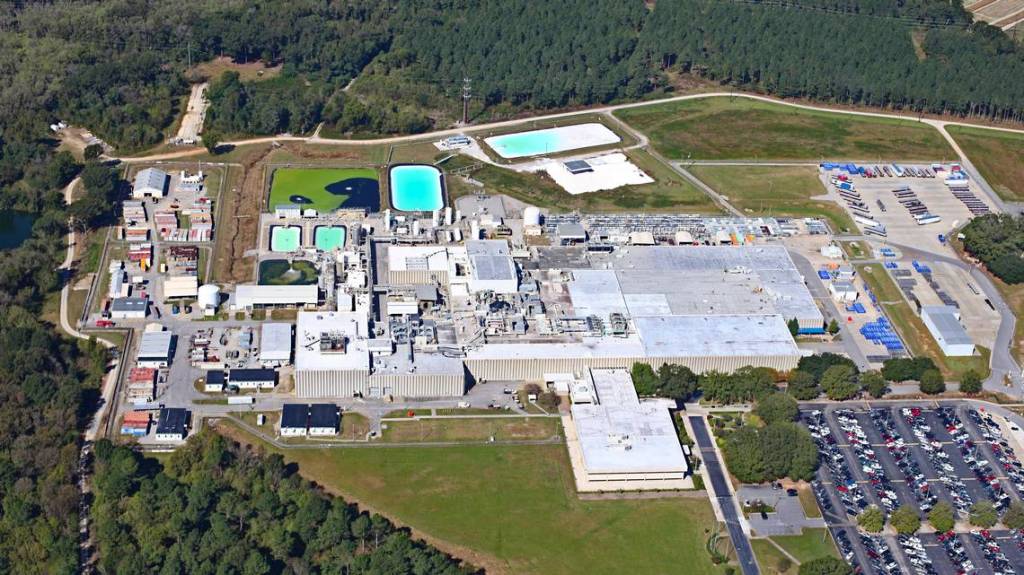
The State, BY SAMMY FRETWELL, JULY 29, 2022 ”…………………….. Federal regulators approved an environmental study that recommends the Westinghouse nuclear fuel factory southeast of Columbia receive a new 40-year license, virtually assuring that the license will be issued this fall. The U.S. Nuclear Regulatory Commission had considered issuing only a 20-year license because of the safety mishaps and pollution that have occurred at the Westinghouse plant on Bluff Road. But in a federal notice Friday, the NRC said its staff had reviewed a list of environmental issues associated with Westinghouse and determined the new license was warranted.
Westinghouse has tried for eight years to gain a new operating license for the plant, which sits on a 1,156-acre site in eastern Richland County about four miles from Congaree National Park. Groundwater contamination and spills of nuclear material are among the environmental problems Westinghouse has had, particularly in recent years — and neighbors have voiced displeasure with how the factory has operated in the predominantly Black community. Federal agencies, including the U.S. Department of the Interior and the U.S. Environmental Protection Agency, added weight to the chorus of concerns, saying last year the license should not be approved unless an array of environmental problems were resolved. The Interior Department even recommended a 20-year license, instead of 40, in part because of multiple leaks and spills that have polluted the ground and groundwater. The department oversees Congaree National Park.
Westinghouse’s troubles were pronounced enough that the NRC took the unusual step of conducting two major environmental studies to determine how the plant’s future operation might affect the environment. A first environmental study, which initially recommended continued operation, was deemed inadequate. The second study that was approved Friday, known as an Environmental Impact Statement, looked more deeply at the potential effect the plant would have on the surrounding environment if it continues to operate during the next 40 years.
The question has been whether the license should be for 40 years, as Westinghouse has said it should be, or for a lesser amount of time because of the environmental and safety concerns, many of which have surfaced in the past five years. Some environmentalists and people who live near the plant have said the license should be for 10 or 20 years —if issued at all. Westinghouse has said it is working to make improvements, and records indicate it has had fewer mishaps in the past two years. The company said it is happy with the NRC’s decision…………..
The NRC’s next step is to issue a safety review before the final licensing decision is made, the agency said. In a news release, the NRC said the final environmental study found that the plant would have only small to moderate impacts on the environment if the license is renewed. The department said the impacts in issuing a 20-year license would be similar to the impacts from issuing a 40-year license. The NRC last issued a license for Westinghouse in 2007. The biggest environmental impacts from continuing to operate the plant would be on groundwater and surface water, the final environmental impact statement said. Past operation of the plant has had a “noticeable effect’’ on groundwater quality, as well as the quality of surface water, such as creeks and ponds. Uranium, for instance, exceeds federal standards in the mud of Mill Creek, the report said. Even so, groundwater contamination is not forecast to spread offsite, the report said…………………………
Virginia Sanders, a Lower Richland environmental activist and Sierra Club official, said the plant’s continued existence threatens the environment, particularly as more intense rains related to the changing climate pound the Columbia area. The concern is pollution from the site could wash into the surrounding community. “That plant is over 50 years old. That plant should never have been put there in the first place,’’ Sanders said. “Anything in Lower Richland is on low land. And with the number of flooding events on the East Coast and other climate change events, that plant should not be operating there. I’m just waiting for the day when a catastrophe happens.’’
Tom Clements, a nuclear safety watchdog from Columbia, said he’s disappointed in Friday’s decision, but not surprised. He called on the NRC to reconsider its decision. “It has been clear from the start of the license renewal process that the NRC was going to do what Westinghouse requested in spite of a long list of incidents at the facility and even an admission by the NRC that release of contaminants in the future was reasonably foreseeable,” he said in an email to The State. “The 40-year license extension guarantees the risk of accidents and releases that will impact the environment and possibly human health over 40 years. Unfortunately, I now anticipate that careful behavior shown by Westinghouse during the period of the EIS preparation will be relaxed as Westinghouse is essentially now being given a license to pollute.’’
The Westinghouse plant’s environmental and safety challenges emerged within years of the plant opening in 1969. Many of the problems have centered on the company’s failure to handle materials so that they would not create small nuclear accidents that could endanger workers. Many of those concerns can be traced to the early 1980s. The problems continued until 2020. Since 1980, federal and state regulators have discovered more than 40 different environmental and safety problems at the plant, according to newspaper clippings and government records reviewed by The State.. In some cases, the NRC repeatedly told the company to make improvements, but Westinghouse did not move quickly enough to suit the agency. Two of the biggest incidents in the past 20 years involved the buildup of uranium, a nuclear material, in plant equipment — deficiencies that could have endangered workers. The NRC fined Westinghouse $24,000 in 2004 after learning uranium had accumulated in an incinerator to unsafe levels over eight years. The company had assumed the uranium levels were safe, but the problem was discovered in 2004 by an employee. The excess uranium could have caused a nuclear accident that could have injured or killed workers. In 2016, Westinghouse discovered that uranium had accumulated in an air pollution control device — known as a scrubber — to levels that were three times higher than a federal safety standard. Under pressure to explain why the buildup occurred, Westinghouse’s internal inspectors told the NRC that the company had not done enough to ensure employees knew enough about safety in the air scrubber. The company inspectors also said Westinghouse didn’t have strong enough procedures to keep uranium from building up and had a “less than questioning’’ attitude about procedures to prevent a nuclear accident. Two years later, a leak of uranium through a hole in the plant floor brought a barrage of complaints about Westinghouse, a major problem that led to the discovery that some groundwater pollution on the site had been known by the company for years but never reported to federal or state regulators. https://www.thestate.com/news/local/environment/article263833217.html
Nuclear reactors: Engie’s demands are prerequisites to any further extension of nuclear power in Belgium.
https://www.brusselstimes.com/belgium-news/264186/nuclear-reactors-engies-demands-are-prerequisites-to-any-further-extension,30 July 2022 By Lukas Taylor
Having agreed to extend their nuclear reactors by 10 years, Engie has confirmed that the Federal Government will meet the French energy company’s conditions.
On 21 July, the Federal Government and Engie reached an ‘agreement in principle‘ to extend two nuclear reactors until 2035. In reality, this agreement is a letter of intent upon which further negotiations will be held.
In a press statement announcing that their profits had more than doubled in the last six months, Engie maintained that the terms outlined in the letter are ‘intrinsic’ to the extension.
Nuclear conditioning
Engie set three prerequisites for extending Doel 4 and Tihange 3 reactors. Firstly, that the extension will begin within five years of the agreement’s signature.
They then stated that they want a shareholding company to be founded with a 50/50 involvement of the Belgian State and Electrabel, so that the government can play a role in strategic matters concerning the extension.
Finally, the letter of intent set a cap on Engie’s expenses of decommissioning the reactors, as well as the management of fissile materials and radioactive waste. This will come in the form of a fixed amount to be determined by the Nuclear Provisions Commission and the National Organisation for Radioactive Waste and Fissile Materials (Ondraf).
Pickering nuclear station is closing as planned, despite calls for refurbishment
Nationa lObserver , By Jessica McDiarmid | News | July 29th 2022 The Ontario government will not reconsider plans to close the Pickering nuclear station …………
In a report released this week, a nuclear advocacy group urged Ontario to refurbish the aging facility east of Toronto, which is set to be shuttered in phases in 2024 and 2025. The closure of Pickering, which provides 14 per cent of the province’s annual electricity supply, comes at the same time as Ontario’s other two nuclear stations are undergoing refurbishment and operating at reduced capacity.
Canadians for Nuclear Energy, which is largely funded by power workers’ unions, argued closing the 50-year-old facility will result in job losses, emissions increases, heightened reliance on imported natural gas and an electricity deficit.
But Palmer Lockridge, spokesperson for the provincial energy minister, said further extending Pickering’s lifespan isn’t on the table…………………………
The Ontario Clean Air Alliance, however, obtained draft documents from the electricity operator that showed it had studied, but not released publicly, other scenarios that involved phasing out natural gas without energy shortfalls, price hikes or increases in emissions.
One model suggested increasing carbon taxes and imports of clean energy from other provinces could keep blackouts, costs and emissions at bay, while another involved increasing energy efficiency, wind generation and storage.
“By banning gas-fired electricity exports to the U.S., importing all the Quebec water power we can with the existing transmission lines and investing in energy efficiency and wind and solar and storage — do all those things and you can phase out gas-fired power and lower our bills,” said Jack Gibbons, chair of the Ontario Clean Air Alliance.
https://www.nationalobserver.com/2022/07/29/news/pickering-nuclear-station-closing-despite-calls-refurbishment
Scotland’s government dithering about nuclear power
The SNP Government is facing calls to explain an apparent U-turn on energy
policy after revealing its ‘prospectus for independence’ will consider
nuclear power. Liam Kerr, Scottish Conservative Shadow Net Zero Secretary,
said the SNP administration needed to explain what brought about their
U-turn following years of opposition.
A freedom of information request
published by the Scottish Government includes questions about Scotland’s
energy supply and the impact of moving away from fossil fuels. One of the
questions asked if the government had factored in the effects of Scexit and
breaking up the United Kingdom.
The Scottish Government confirmed that in
the next stage of its independence prospectus it would look into
Scotland’s energy outlook. It revealed that the prospectus will
“consider future nuclear, oil and gas supply” in an independent
Scotland. The reply revealed that Scotland’s climate change plans
highlighted the importance of nuclear, oil and gas in reducing Scotland’s
energy systems. Officials said the move towards electric vehicles, heat
pumps and hydrogen would help Scotland move away from oil and gas but it
failed to confirmed if the plan would include moving away from nuclear.
They wrote: “Sector analyses and modelling conducted for Scotland’s
climate change plans show that nuclear, oil and gas can play a reducing
role in Scotland’s energy system, and this is necessary as we move
towards 2045 and our net zero legislated target.
Mr Matheson said in an
interview on Good Morning Scotland that the Scottish Government was against
nuclear power for three reasons: its long legacy in terms of construction
cost and nuclear waste, concerns around safety, and that it is the “most
expensive form of electricity”, with renewable alternatives being cheaper
to run and better at helping lower peoples household bills – adding that
nuclear is “heavily subsidised”.
Express 26th July 2022
https://www.scottishdailyexpress.co.uk/news/politics/snp-government-called-explain-u-27579843
The Great American Military Rebrand

A new defense bill crammed with political pork smashes records, but you likely didn’t hear the news, because War is Good again
Matt Taibbi Jul 21 Fifteen years ago……..A trifecta of scandals……………… exposed an intricate system of legalized payoffs both parties scrambled to oppose.
Earmarks, those handy appropriations tools congressfolk used to slip million-dollar favors into the budget, had been ballooning in number for over a decade and looked so bad upon reveal, “corruption and ethics” became the top issue in the 2006 midterms…………………. In return, the contractor showered the congressman with gifts — helping him finance a mansion in Rancho Santa Fe, a condo overlooking the nation’s capital, exclusive use of a yacht on the Potomac, antiques, private-jet travel and prostitutes.
Fast forward to last week. As January 6th hearings, a presidential fist-bump, and a Kardashian spawn’s gender reveal gobbled attention, the House quietly passed a monster $839 billion defense package. It was “the definition of a bipartisan bill,” chirped Alabama’s Mike Rogers, as 180 Democrats and 149 Republicans joined to smash by tens of billions previous records for military spending. With this already underreported story, just one news outlet, Roll Call, described a “first of its kind” report published by the Department of Defense Comptroller’s office, which revealed at least $58 billion of “congressional additions” above Joe Biden’s budget request.
As former Senate aide and defense budget analyst Winslow Wheeler puts it, these “additions” are “not (all) earmarks under either the House’s or Senate’s shriveled definition of them, but they are all earmarks… under the classic understanding……………. Billions of dollars in weapons the military did not seek, such as more than $4 billion worth of unrequested warships, many of them built by the constituents of senior appropriators.
……………………………….. the actual amount of “additions” is almost surely far higher than $58 billion.
…. Both the triumphant return of the earmark and the enormous defense hike should have been big stories. To put $58 billion (at least) in defense “increases” in context, the amount of overall federal earmarks in 2006, the infamous year that prompted so much outrage, was said to be $26 billion. Meanwhile Biden’s one-year arms increase exceeds the pace of Donald Trump’s infamous $200 billion collective defense hike between 2017-2019. These are major surges past the levels of both pork and weapons spending that had progressives roaring for “change,” yet there’s almost zero outcry now. Why?
It feels like just the latest echo in a prolonged, very successful re-marketing effort…………………
the U.S. embarked upon what geopolitical analyst Christopher Mott calls the “millennial rebrand of the neoconservative project,” and the Pentagon’s fortunes rose anew. In the Obama years, think-tankers, pundits, and other actors began to push inverted, left-friendly versions of Bush’s rejected military utopianism, this time focusing on using force to achieve social justice aims abroad. It worked, brilliantly……………..(Subscribers only) more https://taibbi.substack.com/p/the-great-american-military-rebrand
EDF worried that its delays in building Hinkley Point C nuclear station might lessen the huge subsidies it gets from the UK government
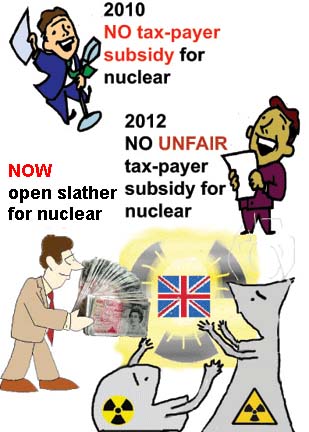
EDF pushes UK government to alter Hinkley Point C penalty clauses. EDF is trying to alter a key subsidy contract to avoid missing out on trillions of pounds in guaranteed revenue after the Covid-19 pandemic caused further delays to Hinkley Point C, the first new nuclear power station under construction in the UK in almost 30 years.
The French utility is in negotiations with the British government over penalty clauses in a
controversial agreement struck in 2013 to finance the building of the plant in Somerset.
EDF started work on the 3.2 gigawatt plant in 2016 but has repeatedly pushed back its completion date while costs have spiraled. In the latest setback, EDF warned in May that the first of Hinkley’s two reactors would not be completed until June 2027, 18 months behind schedule. It attributed 12 months of the delay to Covid-related problems, when it had to reduce staff on site from 5,000 to 1,500.
But the company cautioned that there was the possibility of a further 15-month delay to September 2028,
adding that date could slip again if there was another wave of pandemic or there were knock-on effects from the war in Ukraine.
Penalty clauses in the subsidy agreement — which guarantees a price that is more than double
those offered to developers of rival technologies such as offshore wind — would reduce the 35-year term if Hinkley is not generating electricity by May 2029.
EDF would lose one year of guaranteed payments for every year of delay up to 2033. If the delays extended beyond that date the government has the option to terminate the subsidy contract. EDF has already pushed the construction budget of Hinkley up several times with the revision in May raising the total cost by a further £3bn to as much as £26bn in 2015 prices, compared to an estimate of £18bn in 2016. Crooks said about a third of May’s revision to the budget was Covid-related. About £500mn was down to performance being “less than we would expect”, he added. The other cost overruns were due to issues such as completion of some of the outstanding design work and a failure to accurately estimate the quantities of materials, such as the number of bolts needed, to complete the build.
FT 21st July 2022
https://www.ft.com/content/cb715de2-1c95-4a13-8b48-33717b1dcc44
EDF seeks guarantees from UK government to keep its big subsidies
EDF is seeking to amend the controversial subsidy contract for its £26
billion Hinkley Point C nuclear plant so that it will not be penalised even
if the plant does not start to generate power until 2030.
Hinkley was
supposed to start up in 2025 but EDF has pushed this back to mid-2027,
primarily blaming Covid disruption, and warned of the risk of a further
15-month delay. Stuart Crooks, managing director of Hinkley Point C, said
at least some of this delay was now “likely” to materialise as the
project battles issues including labour shortages.
He revealed that EDF was
seeking extra leeway in the already contentious subsidy contract to protect
its revenues even if the plant suffers additional delays and does not start
up this decade. Further delays would also raise the prospect of additional
increases in costs, which have risen from £18 billion when it got the
go-ahead in 2016 to as much as £26 billion at 2015 prices.
Times 22nd July 2022
https://www.thetimes.co.uk/article/edf-seeks-hinkley-delay-guarantees-2g6tqt522
Shinzo Abe Failed to Rearm Japan. Let’s Keep It That Way

Houston Chronicle July 20, 2022, Koichi Nakano,
Japan had barely begun processing the shock of the former Japanese prime minister Shinzo Abe’s assassination by a gunman on July 8 before attention turned to whether his quest to remilitarize Japan, including the revision of its pacifist Constitution, would survive him.
Japan’s longest-serving prime minister, Mr. Abe was a towering presence at home and an influential statesman abroad. He advocated a more globally engaged Japan, was a driving force in the Quad alliance between the United States, Australia, India and Japan and is credited by some with initiating the very idea of the wider Indo-Pacific region.
He also envisioned a more militarily robust Japan, centered on his unfulfilled dream of revising its postwar Constitution, which prohibits his country from maintaining an offensive armed forces capability. His supporters have vowed to make these dreams — driven largely by fear of a more powerful China — a reality.
Yet it’s time for Japan to bid farewell not only to Mr. Abe but also to his nationalist rearmament agenda. Japan’s political and economic resources should be focused not on revising the Constitution and increasing defense spending but on maintaining peace through diplomacy and shoring up an economy left shaky by years of Mr. Abe’s trickle-down policies.
Critically, at a time when the United States is focused on confronting China, a humbler, more pacifist Japan could have an important role to play by re-engaging with Beijing to help decrease tensions between China and the United States.
Mr. Abe was shot while campaigning on behalf of his Liberal Democratic Party for parliamentary elections that were to be held just two days later. He leaves behind a personal legacy far more controversial and checkered than is warranted by the simplistic, fawning tributes that followed his demise.
………………………………… few aspects of Mr. Abe’s career threatened to alter Japan’s national character and role in the region as much as his crusade against Article 9, which renounces war as a means of solving international disputes and limits Japan’s military to a self-defense role. Mr. Abe unnerved millions of Japanese who see no reason to depart from a commitment to peace that kept Japan out of any direct involvement in war since 1945, allowing it to focus on becoming an economic power.
Mr. Abe failed to change the article despite two stints in power, from 2006 to ’07 and from 2012 to ’20. He settled instead for a reinterpretation that allows Japan to help close allies militarily under certain conditions but has been criticized as unconstitutional.
Japan looks no closer to revising Article 9 today, especially with the L.D.P.’s right wing now deprived of its uncontested standard-bearer. A commitment to peace runs deep in a country that was taken to war by a military government, causing huge suffering in Asia and ending in Japan’s total defeat and the distinction of being the only country attacked with nuclear weapons.
……………….. Attention now turns to Prime Minister Fumio Kishida, but it’s a measure of just how smothering Mr. Abe’s presence was — he forbade open dissent among party leaders — that the Japanese don’t really know what to expect from Mr. Kishida, who represents L.D.P. moderates who have opposed constitutional revision. After the election, Mr. Kishida promised greater defense spending and pledged renewed attention on Article 9 but gave no hint that this was more than a courteous nod to the departed Mr. Abe.
But there is no doubt that Mr. Kishida’s hand is strengthened. Mr. Abe left no clear right-wing successor, and his death throws the faction into disarray, allowing Mr. Kishida an opportunity to assert more control over the national agenda.
………………………
Stripping away the safeguards of Article 9 and remilitarizing Japan would only further inflame tensions with China and risk an arms race with potentially devastating consequences for Japan and the region. On the contrary, a reaffirmed commitment to peace would allow domestic resources to be focused on the economy and open the door for better relations with Japan’s neighbors founded on peace through diplomacy.
It’s time to beat Mr. Abe’s swords into plowshares. https://www.houstonchronicle.com/opinion/outlook/article/Opinion-Shinzo-Abe-failed-to-rearm-Japan-17320399.php
Calling Putin ‘Hitler’ to Smear Diplomacy as ‘Appeasement’
FAIR, JOSHUA CHO, 21 July 22 ‘‘………………………………. To say Ukraine is “filled” with Nazis is an obvious exaggeration, although even a relatively small number of Nazis has wielded disproportionate influence in the Ukrainian government (Kyiv Post, 3/26/19; Euronews, 8/4/21). Nevertheless, FAIR (3/7/14, 1/15/22, 1/28/22, 2/23/22) has covered the Western media’s denial of the far-right’s role in the Ukrainian 2014 coup, as well as their complicity in amplifying Ukrainian neo-Nazi publicity stunts during the war.
But if it’s true that falsely associating a government with Nazism is a manipulation worthy of condemnation, how then should one judge Western media efforts to tie Russian President Vladimir Putin to Nazi dictator Adolf Hitler?
FAIR (3/30/22) has previously noted how evidence-free caricatures in Western media of Putin as irrational (and perhaps psychotic) make diplomatic efforts to end the Ukraine crisis seem pointless. Tracing a connection between Putin and Hitler is an even more insidious attempt to make the idea of a negotiated end to the war seem like a moral outrage……………………………………………..
Russia’s brutal invasion of Ukraine is a violation of international law, condemned by 141 out of 193 countries in a UN General Assembly vote. But claims that Russia is committing genocide—a charge that carries automatic repercussions under international law—have to reckon with the comparison between the Ukraine invasion and the largest US military operation of the 21st century, the Iraq War. The UN’s count of civilian deaths in the first four months of Russia’s war was 4,677; the tally in the first four months of Iraq, according to Iraq Body Count, a project that monitored press accounts of civilian casualties, was 8,576.
Both numbers are horrific, and each surely underestimates the true civilian toll of these wars. But if Russia is committing genocide in Ukraine, what was the US doing in Iraq?
“I know it’s hard…to swallow that the carnage and destruction could be much worse than it is,” a US Defense Intelligence Agency analyst told Newsweek (3/22/22). “But that’s what the facts show. This suggests to me, at least, that Putin is not intentionally attacking civilians.”
If one genuinely wants to compare Putin’s brutality to Hitler’s, one has to look at the actual civilian toll of World War II. In the European theater alone, tens of millions of civilians were killed; some 14 million of these deaths were inflicted in the Soviet Union, which comprised both Russia and Ukraine. When you assert that the enemy of the day is as bad as Hitler, you’re also asserting that Hitler is no worse than the enemy of the day……………………………………
Diplomacy = ‘appeasement’
One inevitable feature of these Hitler comparisons is frequent reference to “appeasement” when reporting on the US’s dealings with foreign leaders. This presents any attempt at diplomatic negotiations with foreign leaders opposed by the US as a misguided or unprincipled effort to placate an irrational or evil dictator bent on expansionist conquest. ……………………………….
This is a false dichotomy. Although establishment Western pundits and officials like to claim that the Russian invasion was “unprovoked,” FAIR (1/28/22, 3/4/22) has pointed out that this self-serving narrative omits a record of conscious provocations against Russia via NATO expansion towards Russian borders, in violation of promises made to Soviet reformer Mikhail Gorbachev. …………………
Accusations of “appeasing” Russia or Putin have been raised towards influential Western officials who have either engaged in diplomacy or advocated de-escalation through negotiations. Zelenskyy has made contradictory remarks throughout the conflict, arguing that diplomacy is the only way to end the war, while also advocating for escalation through more NATO military support and setting up a “no-fly-zone.”…………………………………………..
The cost of ‘appeasement’ charges
The hyperbolic comparisons between Russia and Vladimir Putin to Nazi Germany and Adolf Hitler, as well as constant accusations that anyone who attempts to negotiate with Russia for a peaceful end to the war is engaged in “appeasement,” have cost the world opportunities to de-escalate. The Biden administration has not encouraged the Ukrainian government to engage in serious negotiations with Russia (Jacobin, 5/30/22)………………..
The extreme caricatures of Putin as equal to or worse than Hitler are setting up Ukraine and the world for a grim fate. A BBC report (6/20/22) last month featured NATO Secretary-General Jens Stoltenberg urging the West to “prepare to continue supporting Ukraine in a war lasting for years,” while the head of the British Army, Gen. Patrick Sanders, asserted that the “UK and allies needed to be capable of winning a ground war with Russia.” The frequent Nazi comparisons and Munich references made by Western media paint those who would prefer a negotiated settlement to years of bloodshed, the risk of World War III and nuclear war as “appeasers” of a Hitlerian dictator with genocidal ambitions. https://fair.org/slider/calling-putin-hitler-to-smear-diplomacy-as-appeasement/
Macron facing NUCLEAR nightmare as scorching heatwave cripples SIX reactors.

THE RAGING heatwave that currently engulfing Europe has threatened to worsen France’s energy crisis, as six nuclear power plants have been crippled this month.
https://www.express.co.uk/news/science/1643201/emmanuel-macron-france-facing-energy-nightmare-six-nuclear-reactors-scorching-heatwave By ANTONY ASHKENAZ, Jul 20, 2022 , Experts have warned that parts of France are currently facing a “heat apocalypse” as temperatures reach record levels across Europe. Aside from triggering horrifying forest fires, these scorching temperatures are now also threatening to worsen France’s energy crisis. As a result of higher temperatures, rivers like the Rhone and Rhine, which are used by nuclear power plants for cooling, have become too warm to be used in the energy generation process.
Without cooler water supplies, six nuclear power plants in France have been forced to reduce their output drastically.
Without cooler water supplies, six nuclear power plants in France have been forced to reduce their output drastically.
EDF’s nuclear plants along these rivers use the waters to regulate the temperature of their reactors, discharging warm water back into the waterway.
Regulations are in place that limits reactor production during times of high heat to prevent the process from damaging local wildlife.
However, these rules could soon be scrapped at the cost of regional flora and fauna, as France’s nuclear safety authority green-lighted “temporary modification” of regulations for Blayais, Golfech and St Alban nuclear power plants.
Energy expert Thibault Laconde tweeted: “To state the obvious, it also highlights the vulnerability of #nuclear power to climate change, in particular the vulnerability of ‘French-style’ nuclear power, with its large reactors, large power plants and therefore large cooling needs.
“Climate change has to be factored in nuclear projects.
“Especially as France is preparing to renew its fleet, it would be unimaginable to build reactors if we cannot demonstrate that they will be able to operate with the #climate they will experience throughout their lifetime”
The heatwave crippling nuclear power plants could be devasting for Mr Macron, as France has already been suffering a major energy crisis after half of EDF’s ageing nuclear power plants were forced to shut down recently over safety concerns.
Experts have previously warned Mr Macron of significant corrosion safety problems in EDF nuclear power plants in France as cracks were detected in some nuclear reactors.
Speaking to Express.co.uk, Dr Bernard Laponche, the co-author of a recent study on EDF’s reactors warned that cracks in the cooling systems of many of these reactors could result in horrifying disasters that are only comparable to events like “Three Mile Island or Fukushima”.
As a result of these corrosion problems, four 1500 MW, seven 1300 MW and one 900 MW reactors are shut down.
As a result of these reactor shut downs, EDF has been forced to lower its power output this year, amidst fears of a disastrous winter where fears grow Vladimir Putin could cut Europe off its gas supply.
Dr Laponche also warned that more reactor shutdowns could happen in the future, as EDF power stations are currently under investigation for similar reactor flaws.
Against advice of the Planning Inspectorate the UK’s interim government gives go-ahead to Sizewell C nuclear power plant.
UK government gives go-ahead to Sizewell C nuclear power plant, Decision goes against advice of Planning Inspectorate, which rejected project owing to impact,
Guardian, Alex Lawson Energy correspondent, Thu 21 Jul 2022 ,
The UK government has given planning consent to the £20bn Sizewell C nuclear power plant in Suffolk.
The decision by the business secretary, Kwasi Kwarteng, which had been repeatedly delayed, was finally announced on Wednesday and went against the advice of the independent Planning Inspectorate.
French energy company EDF wants to build the 3.2 GW, two-reactor plant next to its existing site at Sizewell B, which began operating in 1995.
However, the proposals have faced fierce opposition from local campaigners, who have argued against the project because of the environmental impact and the cost to energy billpayers. Campaigners now have six weeks to decide whether to appeal against the decision.
Planning permission was seen as a key hurdle for the project which remains subject to a further final investment decision, expected next year. It is hoped the plant can generate enough power for six million homes.
The approval process for Sizewell C has so far included four rounds of public consultation which began in 2012 and has involved more than 10,000 East Suffolk residents.
The Planning Inspectorate rejected the scheme because of concerns over the plant’s impact on protected species and habitats, and the long-term water supply at the site.
EDF worked with Chinese state-backed nuclear specialist CGN on the first phase of the project. However, it is understood the UK government is keen to ease CGN out amid concerns over Chinese involvement with sensitive assets.
Bankers at Barclays have been hired to secure new financial backing for the project alongside EDF and the UK government.
Boris Johnson’s government put £100m of funding behind the project in January to support its development………………………………………………..
Alison Downes, of the Stop Sizewell C campaign, said: “The wrong decision has been made but it’s not the end of our campaign to Stop Sizewell C. Not only will we be looking closely at appealing this decision, we’ll continue to challenge every aspect of Sizewell C, because – whether it is the impact on consumers, the massive costs and delays, the outstanding technical questions or the environmental impacts – it remains a very bad risk.”
Beccy Speight, the chief executive of the Royal Society for the Protection of Birds, said: “The construction of the proposed development will be damaging and it has been granted with insufficient consideration for the effects on nature as described by the government’s own experts. This is a ludicrous decision for an interim government to make.”
Greenpeace UK’s chief scientist, Dr Doug Parr, called the project a “red herring energy solution” as the UK attempts to move towards a low-carbon energy system……………………
The French government said on Tuesday it was prepared to pay €10bn (£8.5bn) to fully nationalise EDF amid concerns over its finances. Ministers in France want to keep a handle on soaring energy bills.
Johnson has set a target of making investment decisions on eight new nuclear projects by the end of the decade. https://www.theguardian.com/business/2022/jul/20/uk-government-gives-go-ahead-to-sizewell-c-nuclear-power-plant
France’s costly nationalisation of the nuclear industry
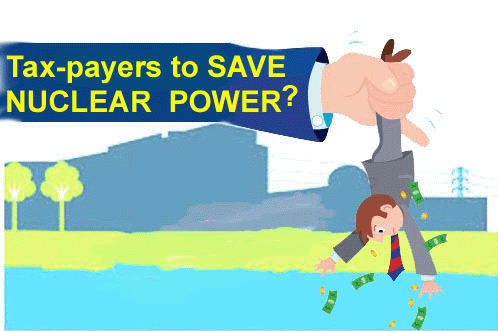
The French government is poised to pay nearly €10bn (£8.5bn) to fully
nationalise EDF as ministers attempt to tackle the European energy crisis.
The French finance ministry said on Tuesday it had offered €9.7bn or
€12 a share to buy the 16% of debt-laden EDF it does not already own. The
government of the French prime minister, Elisabeth Borne, government is
trying to shore up domestic energy supplies amid concerns over the finances
of the energy company, which is also building the Hinkley Point C nuclear
power station in Somerset.
Guardian 19th July 2022
https://www.theguardian.com/business/2022/jul/19/france-to-pay-nearly-10bn-to-fully-nationalise-edf
UK govt to decide on whether or not £20bn Sizewell C nuclear power plant should go ahead
A decision on whether to approve the building of a new £20bn nuclear
power plant is due later. The government was expected to make an
announcement about the application for Sizewell C in Suffolk two weeks ago.
Business minister Paul Scully said he had “set a new deadline of no later
than 20 July for deciding this application”. “This is to ensure there is
sufficient time to allow the secretary of state to consider the proposal,”
he said. The government was previously due to announce a planning decision
by 25 May, but it said it needed more time to look at new information and
it set a new deadline of 8 July.
BBC 20th July 2022
Nationalisation of EDF seen as ‘inevitable’ to carry out France’s nuclear plans
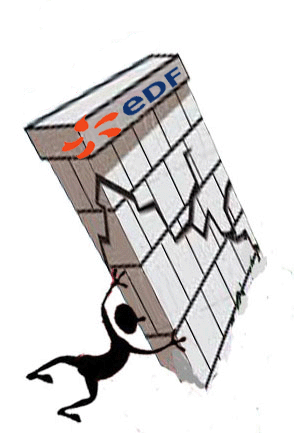
EDF’s market capitalisation has collapsed in the past few years, going from €150 billion in 2007 to less than €40 billion today.
A debt estimated at more than €43 billion, fuelled by delays in constructing its new fourth-generation reactors, also puts the company in a difficult spot.
https://www.euractiv.com/section/energy/news/nationalisation-of-edf-seen-as-inevitable-to-carry-out-frances-nuclear-plans/ By Paul Messad | EURACTIV.fr | translated by Daniel Eck 18 July 22
The government’s decision to nationalise Electricité de France, announced on 6 July, provoked mixed reactions in the French Parliament.
Yet, according to Jean-Michel Gauthier, director of the Energy & Finance Chair at HEC Paris, the decision was “inevitable” because of the regulatory constraints faced by the company.
Under French law, EDF must sell part of its nuclear electricity to the competition at a set price (€42/MWh) and buy it back on the market like any other supplier.
But because of the pandemic and the war in Ukraine, the current market price stands above €200/MWh, according to France’s electricity transmission system operator RTE.
This means EDF is selling at a loss to feed the competition, something unions and many observers have decried as a “plundering” of the French company.
On top of that, the state has also asked EDF to dish out €8 billion for the so-called “tariff shield” to limit gas prices in times of crisis.
EDF’s market capitalisation has collapsed in the past few years, going from €150 billion in 2007 to less than €40 billion today.
A debt estimated at more than €43 billion, fuelled by delays in constructing its new fourth-generation reactors, also puts the company in a difficult spot.
But according to Professor Gauthier, the company’s debt “is not at all the subject”. It is even “irrelevant, with regard to the major subjects of energy and industrial policy in France,” he told EURACTIV.
According to Gauthier, the main challenges lie in the company’s vast nuclear programme. First, EDF will have to spend more than €50 billion by 2030 to extend the life of existing nuclear power plants.
As announced by President Emmanuel Macron in February, the French energy giant must also adopt measures to build six new fourth-generation EPR-type reactors. According to the latest estimates, that effort will cost €50-60 billion.
Going under full state ownership will offer EDF a debt guarantee, as well as lower rates to raise additional debt, Gauthier says.
More worrying, according to him, is the number of key points the state has dropped from its nuclear industrial policy in recent years.
“These are the major issues: what is to be done with the EPR 2, the third generation reactors, the ASTRID project and the small modular reactors (SMR),” he said.
The professor also questioned the state’s means to meet its pledged energy ambitions.
Renewables in all this?
However, these multi-billion euro projects only deal with nuclear without addressing EDF’s capacity to deploy renewable energies – another major priority of the government.
“Today, given the bubble around green finance, there is no reason for the state to own solar or wind power capacity,” explained Gauthier.
“We can therefore imagine [that we] go back to square one […], i.e. that the State puts the portfolio of EDF Renewables, a subsidiary wholly owned by EDF, on the market,” he added. This project could revive divisions between the state and the unions if green-lighted.
For the time being, it is necessary “to keep a single EDF”, the company’s CEO Jean-Bernard Lévy told broadcaster BFM TV on Monday (11 July).
EDF without renewables would be a dark “utopia”, he also said.
When it comes to energy-related decisions, the state must be the “only pilot” on board and the “only decision-maker”, Gauthier concluded.
1 This Month
23-25 October – on Zoom – World BEYOND War’s annual global conferenc


Shut down the radiation-damaged Heysham nuclear reactors now
To see nuclear-related stories in greater depth and intensity – go to https://nuclearinformation.wordpress.com

Say No to NASA’s Reckless Nuclear Reactor on the Moon
Say No to NASA’s Reckless Nuclear Reactor on the Moon

-
Archives
- October 2026 (199)
- September 2026 (339)
- August 2026 (330)
- July 2026 (355)
- June 2026 (287)
- May 2026 (306)
- April 2026 (356)
- March 2026 (251)
- February 2026 (267)
- January 2026 (308)
- December 2025 (358)
- November 2025 (359)
-
Categories
- 1
- 1 NUCLEAR ISSUES
- business and costs
- climate change
- culture and arts
- ENERGY
- environment
- health
- history
- indigenous issues
- Legal
- marketing of nuclear
- media
- opposition to nuclear
- PERSONAL STORIES
- politics
- politics international
- Religion and ethics
- safety
- secrets,lies and civil liberties
- spinbuster
- technology
- Uranium
- wastes
- weapons and war
- Women
- 2 WORLD
- ACTION
- AFRICA
- Atrocities
- AUSTRALIA
- Christina's notes
- Christina's themes
- culture and arts
- Events
- Fuk 2022
- Fuk 2023
- Fukushima 2017
- Fukushima 2018
- fukushima 2019
- Fukushima 2020
- Fukushima 2021
- general
- global warming
- Humour (God we need it)
- Nuclear
- RARE EARTHS
- Reference
- resources – print
- Resources -audiovicual
- Weekly Newsletter
- World
- World Nuclear
- YouTube
-
RSS
Entries RSS
Comments RSS

