Boris Johnson plans to sign off on new £30bn nuclear plant in his final week in power.
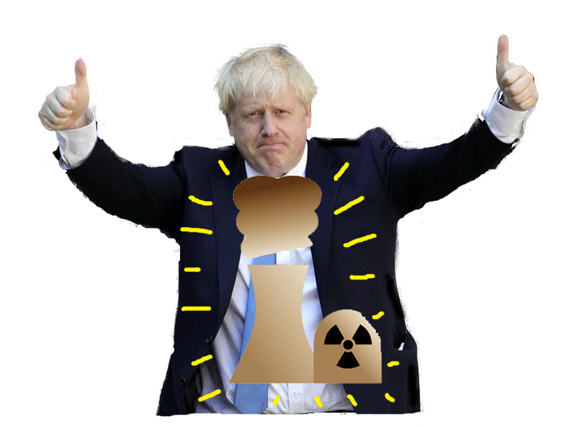
- He is hoping to push through the planned Sizewell C nuclear power station
- The new nuclear power station is expected to cost up to £30billion to build
By JASON GROVES POLITICAL EDITOR FOR THE DAILY MAIL, 29 August 2022
Boris Johnson will call for a massive increase in Britain’s domestic energy production this week, as he signs off on funding for a new nuclear power station.
The Prime Minister is expected to use his final speech in office to insist that a lasting solution to the current energy crisis must include a massive scaling up of the UK’s domestic energy resources.
He is also hoping to push through a decision on funding for the planned new Sizewell C nuclear power station in Suffolk, which would help guarantee Britain’s energy security.
Ministers have agreed in principle to sign off on the Sizewell C plant, which is expected to cost up to £30billion to build.
Whitehall sources suggested that both Liz Truss and Rishi Sunak have been consulted on the deal, which is expected to involve the Government taking a 20 per cent stake costing up to £6billion.
Final negotiations are continuing with French power firm EDF, which will operate the plant.
But Mr Johnson hopes to give the green light this week as a statement of intent on his plan to build one nuclear power station a year…………………………………………….
The result of the Tory leadership contest will be announced on 5 September and Mr Johnson is expected to leave office the following day. https://www.dailymail.co.uk/news/article-11155317/Boris-Johnson-plans-sign-new-30bn-nuclear-plant-final-week-power-sources-say.html
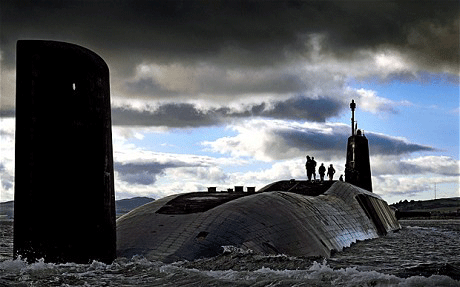
Liz Truss commits to keeping Trident nuclear weapons on the Clyde, despite Scottish opposition to them
The National, By Judith Duffy 28 Aug 22,
TORY leadership frontrunner Liz Truss has vowed to push ahead with renewing Trident if she wins the keys to Downing Street, as part of plans to “protect the UK”.
The Foreign Secretary has already pledged to boost defence spending to 3% of GDP by 2030 – a promise her rival Rishi Sunak has refused to match because he says he does not believe in “arbitrary targets” when it comes to security.
The Truss campaign has now set out her plan to “protect the UK”, including a “full renewal” of the nuclear deterrent, an update to the Government’s Integrated Review, and strengthened support for intelligence services………………………………..
The SNP have long committed to the removal of Trident nuclear missiles after independence.
The White Paper on independence published ahead of the 2014 independence referendum, promised the “speediest safe withdrawal of nuclear weapons from Scotland”.
In May, Nicola Sturgeon said it was her “expectation and hope” that Trident would be removed from the Faslane naval base on the Clyde in the first Holyrood term after a Yes vote. https://www.thenational.scot/news/20800761.liz-truss-commits-keeping-trident-nuclear-weapons-clyde/
Boris Johnson told: “It’s time to deliver justice for Britain’s nuclear test veterans”
Campaigners have asked the Prime Minister to use his last week in office to fulfil his promise to the victims of Cold War radiation experiments
Mirror. Susie Boniface, Reporter. 28 Aug 2022
Politicians and celebrities have joined forces with survivors of Britain’s nuclear tests to ask the Prime Minister to deliver justice in his last week in Downing Street.
They have written Boris Johnson an open letter, urging him to decide whether to “turn his back on our national heroes” or honour them before the 70th anniversary next month of the UK’s first atomic bomb.
The PM met families affected by the Cold War radiation experiments in June, but with only days left in Downing Street has yet to make any announcement about the medal they asked him for.
Both his potential successors have said they support it – but no decision has been made, with officials on leave and all eyes on the leadership campaign.
Mirror editor Alison Phillips said: “It is imperative this medal is delivered quickly, because these veterans are over 80 and have complex health problems. The window is closing for this PM to make a real difference to their need for recognition.”
Labour leader Sir Keir Starmer, who met the veterans a year earlier than the PM and promised them his support, said: “It’s appalling that Britain’s nuclear test veterans and their families shave not yet had justice after years of maltreatment, and I’m saddened that their long campaign is exceeding the life of so many of them.
“The PM has a very clear choice now: deliver on his promise to give real recognition ahead of the October 3 Plutonium Jubilee, or turn his back on our national heroes.”
He added: “The country owes a huge debt of honour to these veterans. The PM must act to deliver the appreciation, respect and justice they deserve, and Labour will continue to support their campaign every step of the way.”
The medal committee has been given fresh evidence to help its decision. Government insiders have told the Mirror that they have been trying to “force” a medal through, but have met a brick wall of officialdom, made worse by Tory turmoil.
“All it takes is for Boris to give this his attention,” said one. “If he just asked the Queen it could be done in a week.”
The letter has been signed by dozens of MPs, peers, famous faces, and everyone who was at the meeting with the PM. They include Operation Grapple veteran John Morris, 85, who saw four nuclear explosions and told Johnson: “It’s the ideal moment, Prime Minister, for you to look me in the eye and tell me, ‘you deserve a medal’. Or say, ‘sod off’.”
Nuclear descendants Steve Purse, Alan Owen, Laura Jackson, and Laura Morris have signed, along with Tory grandee Sir John Hayes and Labour’s Rebecca Long-Bailey, who secured the meeting between them.
Backing them are broadcaster Kirstie Allsopp, and comedians Al Murray, Rory Bremner and Mark Steel. Call The Midwife star Stephen McGann, and its scriptwriter, Heidi Thomas, also supported the call after a nuclear veteran featured in two series of their show.
McGann earlier likened the scandal to Hillsborough, and called on the PM to cut through the “Pooterish nonsense” that meant they were denied a medal.
Other supporters include shadow defence secretary John Healey, shadow attorney general Emily Thornberry, and SNP leader Ian Blackford, along with 47 other MPs from Labour, the SNP and Conservative Party, and the metro mayors Andy Burnham, Dan Jarvis and Steve Rotheram.
The veterans are also backed by Tory, Labour, and cross-bench peers Ruth Davidson, Shami Chakrabarti, John Hendy, Prem Sikka, Christine Blower, Pauline Bryan and Sayeeda Warsi.
Here is the letter in full…
* You can add your own name by clicking HERE
https://www.mirror.co.uk/news/politics/boris-johnson-justice-nuclear-veterans-27854059
Biden Pledges Nearly $3 Billion To Ukraine In Largest U.S. Military Aid Package Yet
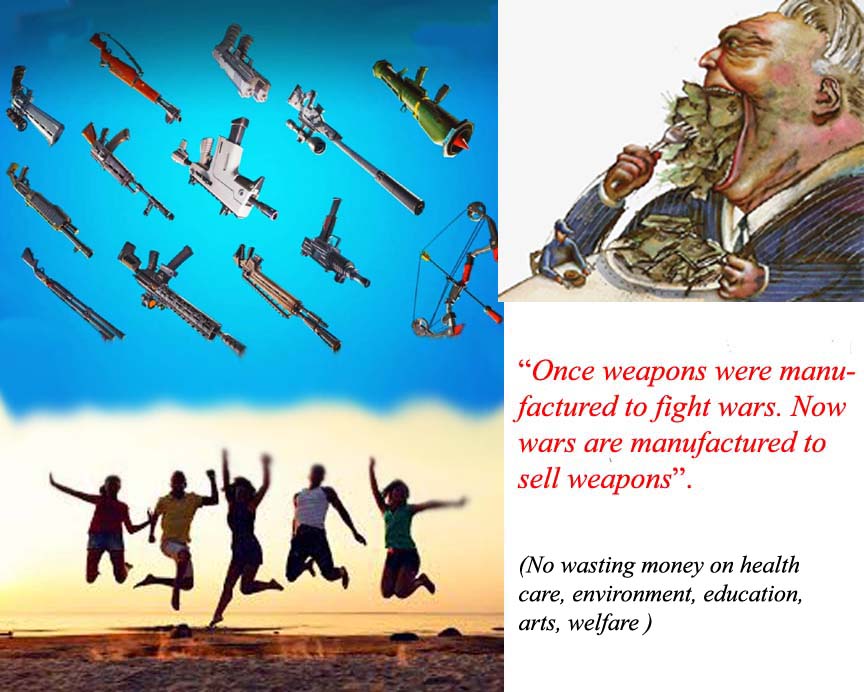
U.S. President Joe Biden has announced nearly $3 billion in new U.S. military aid for Kyiv as Ukraine marked its independence day six months after Russia invaded the country.
“On behalf of all Americans, I congratulate the people of Ukraine on their Independence Day,” Biden said in a statement on August 24.
“The United States of America is committed to supporting the people of Ukraine as they continue the fight to defend their sovereignty. As part of that commitment, I am proud to announce our biggest tranche of security assistance to date: approximately $2.98 billion of weapons and equipment to be provided through the Ukraine Security Assistance Initiative,” Biden said.
The financial package will allow Kyiv to obtain air-defense and artillery systems, ammunition, counter-unmanned aerial systems, and radars, the statement said…………….
Since Russia invaded Ukraine on February 24, the United States has provided $10.6 billion in military assistance to President Volodymyr Zelenskiy’s government.
On August 23, Germany said it will soon ship more than 500 million euros’ ($499.3 million) worth of weapons to Ukraine. https://www.rferl.org/a/biden-pledges-3-billion-military-aid-ukraine/32002639.html
Hungary approves construction of two Russian-built nuclear reactors
Work to begin in coming weeks in move that emphasises ties between Viktor Orbán and Vladimir Putin.
Agence France-Presse in Budapest,Sat 27 Aug 2022
Hungary has announced that the €12.5bn (£10.6bn) construction of two nuclear reactors by Russia’s Rosatom will begin in the coming weeks after regulators approved the project.
The war in Ukraine has not deterred Hungary’s interest in the project to add to the four reactors already operating at the Paks plant outside Budapest.
The fact it is moving forward is another indication of the close ties between Hungary’s nationalist prime minister, Viktor Orbán, and the Russian president, Vladimir Putin.
“This is a big step, an important milestone,” the Hungarian foreign minister, Péter Szijjártó, said on Facebook after the national regulator issued a permit on Thursday after numerous delays.
………………………….Russia is financing most of the project with a €10bn loan to Hungary, which is paying the remaining €2.5bn.
………… Hungary has obtained exceptions and has negotiated extra deliveries of natural gas………………………. https://www.theguardian.com/world/2022/aug/26/hungary-approves-construction-two-russian-built-nuclear-reactors
How the USA climate bill will promote the nuclear industry.

What the climate bill does for the nuclear industry, CNBC, Catherine Clifford, AUG 23 20222
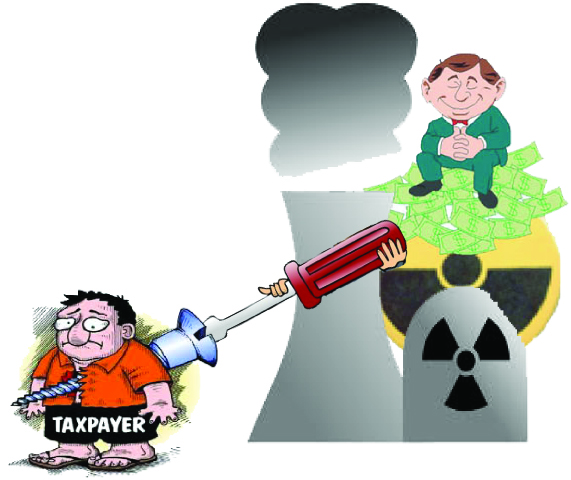
Production tax credit for existing nuclear power plants
Production tax credit for advanced nuclear power plants
Investment tax credit for new nuclear power plants
“………………………………………Production tax credit for existing nuclear power plants, Starting in 2024 and running through 2032, utilities will be able to get a credit of $15 per megawatt-hour for electricity produced by existing nuclear plants. If the price of power rises above $25 per megawatt-hour, then the credit will gradually decrease, but it doesn’t phase out completely until energy prices reach around $44 per megawatt-hour, explained Matthew Crozat, the executive director of strategy and policy at the Nuclear Energy Institute, a Washington, D.C.-based trade group.
“Every plant is different and some plants have a different revenue model but we can say that this credit will offer a reprieve from the low revenues that had forced more than a dozen reactors to close,” Crozat told CNBC.
To be eligible for the full $15 per megawatt-hour base tax credit, a nuclear power plant operator has to pay workers operating and doing maintenance on the power plant “prevailing wage requirements,” according to the Nuclear Energy Institute.
Production tax credit for advanced nuclear power plants
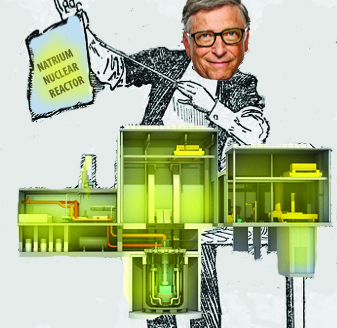
Several companies in the United States are working to commercialize new nuclear power plant designs that are meant to be safer and with a smaller capacity, making them ideally cheaper to build and maintain as well.
For example, Bill Gates’ nuclear innovation company, TerraPower, is developing a couple of advanced reactor designs, one of which is going to be built at a retiring coal facility in Wyoming as part of a demonstration program in partnership with the U.S. government.
Advanced nuclear reactors could benefit from the IRA by way of the Clean Electricity Production Tax Credit, a technology-agnostic production credit, which can be applied toward emissions-free power generation that goes online after 2025. The clean energy production credit is for at least $25 per megawatt-hour for the first ten years the plant is in operation, adjusted for inflation. The credit phases out in 2032 or when carbon emissions coming from electricity have fallen by 75% below the level of 2022, according to the Nuclear Energy Institute. The tax credit is increased by 10% for locating the zero-emissions power source where a coal plant previously lived.
Worth noting, there’s another Advanced Nuclear Production Tax Credit already on the books. That tax credit was established in the Energy Policy Act of 2005 and is for $18 per megawatt-hour for the first eight years that a nuclear power plant is operating, provided the nuclear power plant had not begun construction when the 2005 bill was signed into law, Crozat told CNBC. The third reactor unit of the Vogtle Power plant being constructed in Georgia will be the first power plant to take advantage of the 2005 Advanced Nuclear Production Tax Credit, according to Crozat.
A company can not take advantage of both tax credits — it has to pick. Going forward, the tax credits in the IRA just signed into law will be more attractive. “Since the new production tax credit has been indexed to inflation and last for two additional years, it will be considerably more valuable than the older version,” Crozat told CNBC.
Investment tax credit for new nuclear power plants
New nuclear power plants are eligible for claiming an Investment Tax Credit made available through the new law for facilities that generate energy with zero emissions and that go into service in 2025 or after.
The investment tax credit allows a nuclear power plant to get a tax credit for 30% of what was invested in building the zero-emissions energy production facility, which includes nuclear power plants, according to the Nuclear Energy Institute.
The investment tax credit is increased by 10% for locating the zero-emissions power source where a coal plant previously lived. It starts to phase when carbon emissions from the sector are 75% lower than 2022 levels.
Money to spur innovation

The law includes $700 million that will go towards the research and development of high-assay low enrichment uranium (HALEU) fuel sources in the United States through 2026, according to the Bipartisan Policy Center, a Washington DC-based think tank. That’s important because the advanced, next-generation reactors which are currently being developed by 20 companies in the United States, according to the U.S. Department of Energy, depend on HALEU fuel to operate.
The existing fleet of nuclear power reactors in the United States operate on uranium that has been enriched up to 5%. HALEU fuel has been enriched between 5% and 20%. Many advanced reactor designs are smaller builds than conventional nuclear reactors and so to make a nuclear reactor smaller, they need to get more power from smaller quantities of fuel, the Department of Energy says.
“Right now, the only commercially available source of HALEU is from the Russian Federation and the support for HALEU in the IRA signals an understanding that the federal government is needed to jumpstart domestic enrichment capabilities to support the coming wave of new nuclear technologies,” Rampal told CNBC.
It’s also just the first step, Rampal said. The nuclear industry needs multiple billions of dollars to invest in HALEU production over the next ten years, he told CNBC.
The IRA also includes $150 million for the Office of Nuclear Energy through 2027, according to the Bipartisan Policy Center. That money is for the Department of Energy to invest in its nuclear innovation research at its network of National Laboratories. ……………………………………..
Tax credits for making component parts
The IRA includes a manufacturing production provision that allows for a tax credit for component parts produced and sold after 2022, according to a summary of the benefits of the IRA for the nuclear industry from the law firm Morgan Lewis. https://www.cnbc.com/2022/08/22/what-the-climate-bill-does-for-the-nuclear-industry.html
Emotionless Liz Truss says she would unleash nuclear annihilation if necessary
Emotionless Liz Truss says she would unleash nuclear annihilation if
necessary. The Tory frontrunner told a hustings event in Birmingham that
ordering the use of nuclear weapons is an “important part of being Prime
Minister”.
Mirror 23rd Aug 2022
https://www.mirror.co.uk/news/politics/emotionless-liz-truss-says-would-27816744
Sacre Bleu: EDF Energy talk of lower bills, whilst planning to generate Britain’s most expensive electricity
Last week, EDF Energy called for the incoming British Prime Minister to work with the French-owned energy generator to reduce customer bills, whilst at the same time conspiring in the longer-term to put them up.
EDF Energy, operator of the UK’s nuclear power stations, is building a new power plant at Hinkley Point C that is already many years behind schedule and way over budget. At a whopping estimated cost of £26 billion (based on 2015 prices; actually, with inflation £29 billion today), EDF Energy plans to make a return on its investment for its backers, the French Government, by making its electricity the most expensive ever generated in Britain.
An agreement signed off with the UK Government in 2016 made EDF Energy responsible for meeting the upfront costs of building the 3.2 GW plant but granted them the concession to recoup costs by charging up to an astronomical £92.50 per MW/hour for the electricity Hinkley Point C eventually produces. If electricity does not retail at that price upon commission, British electricity customers will make up the difference with a surcharge on their bills, whether they are customers of EDF or not.
Provision was also made to make this figure index-linked to inflation, meaning the price if generation were taking place today would be an incredible £106 and this can only rise.
Not surprisingly, energy experts derided the deal at the time as outrageously favourable to the generator.
Contrast this with the recent Contracts for Difference round conducted by civil servants with renewable energy generators, where some providers contracted to generate electricity through offshore wind projects for less than £40 per MW/hour.
Nuclear fission is now the most expensive means to generate electricity, is never viable without huge government subsidies, and is fraught with operational and financial risk – and so is not an attractive proposition for private investors.

That is why the UK Government is introducing the RAB (the Regulated Asset Base) model by which to pass on the costs of developing future nuclear projects onto the shoulders of the already-overburdened British electricity customer through the imposition of a new nuclear tax on bills.
The most immediate beneficiary of this arrangement will be, unsurprisingly, EDF Energy which is the government’s approved partner to build the next large-scale nuclear power plant, at Sizewell C in Suffolk.
RAB means no more financial worries for EDF Energy as the Sizewell project invariably ratchets up massive cost overruns, like its forerunner at Hinkley, as the poor suffering consumer will be made to pay them. For the customer, it represents an ever-greater burden at a time when energy bills will continue to go ever higher, and, with colder days and darker nights on the horizon, many will struggle to heat their homes.
Even customers in receipt of the lowest means-tested benefits, or older customers who will not live long enough to see the Sizewell plant built, will currently be expected to pay their share of the nuclear tax – that is why the Nuclear Free Local Authorities call it ROB, a means to fleece the poor to renumerate industry fat-cats and want to see both it and plans for new nuclear scrapped.
Councillor David Blackburn, Chair of the NFLA Steering Committee said:
The Government’s nuclear ROB tax is an outrageous additional burden on the British people who have already seen their bills go through the roof. Rather than wasting a single penny more on the over-expensive and ridiculously-slow nuclear sector, we want to see government ministers invest billions in an emergency programme to retrofit Britain’s cold and damp homes to make them affordable and efficient to light and heat and we want to see investment in a range of renewable technologies to produce the cheaper, greener energy we so desperately need at a fraction of the price and much more-quicker than any nuclear delusion.”
Councillor Blackburn also had a sideswipe at EDF Energy’s senior management, adding:
“Whilst it is commendable that Monsieur Philippe Commaret, Managing Director of Customers at EDF, has called on government for urgent action over energy pricing, can I suggest that this appears to amount to ‘bill-washing’ as it offers nothing practical to reduce customers’ pain? Rather I suggest his company follow the example show by its French parent by introducing an absolute energy price cap on the bills of British EDF customers as they have in France. There bills only went up by 4%, on the direction of the principal shareholder of the company, French President Emanuel Macron. It is time for EDF Energy to do the same by its UK customers.”
UK’s Tory leaders oppose policies that would encourage people to conserve energy
The government has again rejected calls for it to launch a campaign to
encourage households and businesses to save energy, insisting that energy
use remains a “decision for individuals”. Speaking this morning, a
spokesperson for Number 10 declined to be drawn on whether the government
should advise people to save energy, given soaring energy bills and
concerns over energy supplies this winter.
“These decisions, in terms of
energy consumption, remain decisions for individuals,” they said.
“Households, businesses and industry can be confident that they will have
the electricity and gas that they need.” The Guardian also reported this
morning that Business Secretary Kwasi Kwarteng, who is hotly tipped to
become Chancellor if polls prove accurate and Liz Truss is elected Prime
Minister next month, is opposed to proposals that would see the government
call directly on households and businesses to change behaviour to curb
energy demand.
Business Green 23rd Aug 2022
https://www.businessgreen.com/news/4055138/government-rejects-calls-energy-saving-drive
The legacy of Shinzo Abe: a Japan divided about nuclear weapons

Bulletin of the Atomic Scientists, By Sayuri Romei | August 24, 2022, On August 1, Prime Minister Fumio Kishida became the first Japanese leader to ever attend the Review Conference for the Treaty on the Non-Proliferation of Nuclear Weapons (NPT), which is taking place this month at UN headquarters in New York. Kishida, whose family hails from Hiroshima, is one of the very few voices within Japan’s ruling party, the Liberal Democratic Party (LDP), to consistently emphasize the humanitarian impacts of the use of nuclear weapons and Japan’s unwavering commitment to nuclear disarmament. This contrasts with his most-recognized predecessor, former Prime Minister Shinzo Abe, whose assassination on July 8, 2022, shocked the entire world.
Abe’s views about nuclear weapons. Shinzo Abe was known to hold views that underscored the effectiveness of nuclear deterrence and the usefulness of nuclear weapons. He even hinted at the possibility that Japan could one day acquire such weapons. During his eight years as prime minister, Abe made Japan’s ambivalent nuclear policy emphasize the importance of the US nuclear umbrella. In doing so, he shifted further away from the brief momentum in favor of nuclear disarmament created by former US President Barack Obama and Abe’s predecessors. …………………..more https://thebulletin.org/2022/08/the-legacy-of-shinzo-abe-a-japan-divided-about-nuclear-weapons/
—
Zelensky ‘troubled’ as he questions inner circle’s loyalties – Erdogan
https://www.rt.com/news/561328-erdogan-zelensky-betrayal-cabinet-firings/ 22 Aug 22, The Ukrainian leader is surrounded by “people who deceive him a lot,” he allegedly told the Turkish president
Ukrainian President Vladimir Zelensky is concerned he is being taken advantage of by someone close to him, Turkish President Recep Tayyip Erdogan said, citing their conversation during the meeting in Lviv on Thursday.
Asked by a farmer about the Ukrainian leader’s “situation” on Monday during a visit to local vineyards, Erdogan claimed Zelensky was “very worried. There are people around him who deceive him a lot.”
Erdogan had not mentioned this confession during earlier public statements about the negotiations in western Ukraine, and he did not elaborate further on who Zelensky believed was deceiving him. The two men met with UN Secretary-General Antonio Guterres and signed an agreement on restoring Ukrainian infrastructure destroyed during the conflict.
The Ukrainian president has been firing high-ranking members of his administration at a fast clip since Russia’s military operation began in February. Special forces commander Grigory Galagan was removed last month.
First Deputy Secretary of the National Security and Defense Council Ruslan Demchenko was also let go last month, though for apparent health reasons, while Prosecutor General Irina Venediktova and Intelligence Bureau chief Ivan Bakanov were suspended and placed under investigation on suspicion of working with Russia.
Not content to merely behead the Ukrainian security service (SBU), Zelensky announced a personnel audit in the agency and fired several regional heads as well. He had apparently been planning to audit the SBU for some time, claiming that on February 24, the day Russia launched its offensive in the Donbass, some representatives of a law enforcement agency were “somewhere [else], instead of protecting their people.”
Germany rules out delay to nuclear phaseout
Germany’s three remaining nuclear power stations are due to close at the end of the year
DW, 21 Aug 22, Germany won’t extend the lifespan of three remaining nuclear power stations due to the energy crisis, Economy Minister Robert Habeck said. He also warned against public panic over a potential winter gas shortage.
Germany’s three remaining nuclear power stations are due to close at the end of the year
German Economy Minister Robert Habeck said Sunday that allowing the country’s three last nuclear power stations to remain operational would be of little help in solving the country’s energy crisis.
Speaking during a discussion with citizens at the government’s open-door day in Berlin, Habeck said extending the lifespan of the plants — which are due to close at the end of the year — would only save about 2% of gas use.
t is the “wrong decision given how little we would save,” Habeck, who is also Vice Chancellor, added.
One nuclear plant could stay open
However, the minister said he was open to extending the lifespan of one nuclear plant in Bavaria, subject to the results of a stress test of the country’s power system.
The results of the test, to calculate how the country will cope if Russia cuts off natural gas supplies this winter, are due out in a few weeks.
Bavaria is a major manufacturing hub that depends on gas-fired power plants and has few coal-fired plants and low wind power production.
Germany has been phasing out nuclear energy since legislation was passed by former Chancellor Angela Merkel’s government in the wake of the 2011 Fukushima nuclear accident in Japan.
But voices calling for some nuclear plants to be kept in use have grown louder since energy prices soared over the past year and tensions with one of Germany’s main suppliers, Russia, intensified. The government has not signaled that it would reconsider the Merkel-era policy.
No need to panic over winter gas supplies
Habeck also told the public not to panic about the prospect of a gas shortage during the colder months, noting if households and industry cut their usage by 15-20% “then we have a really good chance of getting through the winter.”
Even if Russia were to cut supplies entirely, there would be no situation where zero gas would reach Germany, the minister said,……….
Over the longer term, Habeck said Germany must expand its investment in renewable energies and phase out fossil fuels, which he said were the cause of many political conflicts and abuse of power…………. https://www.dw.com/en/germany-rules-out-delay-to-nuclear-phaseout/a-62880769
Boris Johnson has secretly committed Britain to costly tax-payer funding for Sizewell nuclear plant
Boris Johnson commits to Sizewell on the quiet. The prime minister’s decision to part-fund a new nuclear plant will ‘tie Liz Truss’shands’ in tackling the cost of living. Boris Johnson has secretly given the green light for a £30 billion nuclear power station — sparking concerns within Liz Truss’s team that the cost will limit her ability to cut taxes and help the public with the cost of living.
The government is proposing to buy a 20 per cent stake in the plant, at a cost to the taxpayer of around £6 billion. But experts believe the plans are at risk of cost overruns and delays. One of Truss’s senior aides complained that Johnson’s decision to take a taxpayer-funded stake in the project would eat into the headroom available to her.
Johnson and Zahawi, lame ducks both, are understood to see the new power station as vital to Britain’s
future energy security and to want to make the announcement themselves to burnish their legacies in office. An ally of Zahawi stressed that the decision was made with Kwasi Kwarteng, the business and energy secretary, who is set to become Truss’s chancellor and that “no one is more enthusiastic than Kwasi”.
In an interview with The Mail on Sunday, Kwarteng told voters that “help is on the way” but also stressed the need to raise domestic energy production. “We need to crack on with more nuclear power stations,” Kwarteng said, “back British-made small modular reactors, invest in cheap renewable energy like offshore wind, and lift the ban on shale gas extraction in England where there is local consent.”
Times 21st Aug 2022
https://www.thetimes.co.uk/article/boris-johnson-commits-to-sizewell-on-the-quiet-xdv79rrpf
South Africa’s nuclear sector has failed its test: the Koeberg nuclear plant life extension
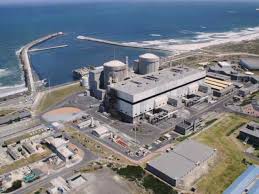
The Conversation, Hartmut Winkler, Professor of Physics, University of Johannesburg, August 21, 2022, South Africa’s only nuclear power plant, Koeberg, has frequently been in the news in 2022, all for the wrong reasons.
Its operating licence expires in 2024, and its continued operation thereafter depends on critical refurbishments and upgrades. Work on these finally began in January this year, but immediately ran into difficulties, forcing significant delays.
Koeberg is supplying only half of its power while work is in progress. This has amplified the crippling power shortages South Africa has been experiencing. This state of affairs, where the country effectively has 3% less generating power available than it would otherwise have, is expected to persist for the bulk of the next two years.
Other potential signs of turbulence linked to Koeberg include:
- the delayed application to the nuclear regulator to extend the plant’s licence
- the controversial dismissal of one of the regulator’s board members – an opponent of nuclear power – by the Minister of Mineral and Energy Resources
- resignations of senior Koeberg staff, though there is no evidence that these were due to friction.
All of this has led to speculation that the Koeberg life extension exercise is in difficulty. In turn it casts doubt on the capacity of South Africa’s nuclear sector, and is likely to put to bed the highly ambitious proposals still advocated within the sector to build new nuclear plants.
Koeberg’s history
Koeberg, Africa’s only operational nuclear power station, 27km north of the Cape Town city centre, is reaching the end of its scheduled life cycle.
The plant consists of two units of just over 900 megawatts each, and together these contribute roughly 5% of South Africa’s electricity.
Koeberg was built by the French company Framatome between 1978 and 1984. In line with international practice, the plant was granted a 40-year operational licence which will expire in July 2024. Licensing the plant for a further 20 years is possible, as long as it meets specific safety criteria. Typically these involve particular upgrades and the replacement of various components……………………
The upgrade is projected to cost R20 billion (US$1.2 billion). Most of this would go towards buying and installing six new steam generators.
The need to replace them was identified over 10 years ago, but protracted litigation over who would do the job held up the project. The operation was eventually scheduled for 2022.
Life extension project
The replacements and upgrades needed to secure a 20 year operating licence extension require each Koeberg unit to be shut down for a projected five months. Unit 2 was therefore switched off on 18 January 2022 and was supposed to reopen in June 2022. Unit 1 was then to go through the same process, starting in October.
Things then went wrong. The critical steam generator replacement was again postponed to 2023. The full reasons have not been officially disclosed. But there has been no denial of reports that the onsite storage facilities for the now radioactively contaminated old steam generators were not ready.
The delay in getting Koeberg Unit 2 up and running on schedule resulted in an additional 900 MW shortfall during South Africa’s most recent midwinter bout of severe power blackouts.
Unit 2 finally started operating again on 7 August, almost two months later than projected. Another outage of comparable duration is still required in 2023.
Significance for the nuclear sector
The mishandling of the Koeberg life extension project raises serious questions about the capacity of South Africa’s nuclear sector. This sector has advocated the building of a large fleet of new nuclear plants, implying that it could be done without major cost and time overruns. But the much smaller and far more straightforward Koeberg upgrade has not gone well…………… https://theconversation.com/south-africas-nuclear-sector-has-failed-its-test-the-koeberg-nuclear-plant-life-extension-188013
Sizewell C nuclear plant funding approved despite Tory split.

“Our next prime minister should call Sizewell C in. There are so many better ways to spend billions of pounds of taxpayers’ money than on a project that won’t light a single lightbulb for at least a decade.”
Boris Johnson gives financing go-ahead after warnings decision could limit incoming government,
https://www.theguardian.com/environment/2022/aug/21/sizewell-c-nuclear-plant-funding-approved-despite-tory-split. Rowena Mason Deputy political editor Mon 22 Aug 2022
Boris Johnson has approved funding for a new nuclear power station at Sizewell in Suffolk in the final weeks of his premiership, but some of Liz Truss’s senior allies are split over the decision.
The prime minister and the chancellor, Nadhim Zahawi, approved financing for the construction of two new reactors known as Sizewell C, enabling private funding of about £20-30bn to be raised.
However, Simon Clarke, another key Truss ally and a Treasury minister, warned in a letter leaked to the Sunday Times that the decision could limit Truss’s economic vision.
In the letter, he said the costs of Sizewell C were “sufficient to materially affect spending and fiscal choices for an incoming government, especially in the context of wider pressures on the public finances”.
In an article for the Mail on Sunday, Kwasi Kwarteng stressed the need to “crack on with more nuclear power stations” in order to increase Britain’s energy security.
He gave development consent for Sizewell C in July, but negotiations over the government’s investment decision had been ongoing.
A Whitehall source said Boris Johnson had taken the decision to press ahead with Sizewell several weeks ago. However, he dismissed the idea that the move would tie the hands of the next prime minister, following reports that the Truss campaign was worried that it was irreversible.
“In the next few weeks, we will announce a government investment decision on Sizewell C where the government formally commits to the project’s financing. It allows the project to raise private capital in the markets. But it’s only at the point of the final investment decision in early 2023 that the government would formalise any equity share.”
Johnson’s decision over Sizewell was challenged by a campaign to stop the nuclear reactor being built.
A spokesperson for the campaign, Stop Sizewell C, said: “Whatever way you look at it, this is a very dodgy decision. Has it been made by a lame duck PM who is not supposed to tie the hands of his successor, or was it in fact made before Sizewell C was granted planning consent, lending serious weight to our conviction that this was a prejudiced, political decision?
“Our next prime minister should call Sizewell C in. There are so many better ways to spend billions of pounds of taxpayers’ money than on a project that won’t light a single lightbulb for at least a decade.”
Truss has not stated a clear position on Sizewell C, but hinted last year at concerns about the involvement of China’s state-owned energy company, CGN, as part of a consortium providing funding for the preparatory work at the nuclear plant. She told the Telegraph at the time: “I think it’s very important that we don’t become strategically dependent and I think it’s important that we make sure that we’re working, particularly in areas of critical national infrastructure, with reliable partners.”
EDF, the French state energy firm, worked with CGN on the first phase of the project for a new nuclear power station to sit alongside Sizewell B, which is operational, and Sizewell A, which is being decommissioned. The UK government is keen to ease CGN out, however, over concerns about Chinese involvement in sensitive assets.
Johnson’s government has already put up £100m of funding this year to support the development of Sizewell C.
1 This Month
23-25 October – on Zoom – World BEYOND War’s annual global conferenc


Shut down the radiation-damaged Heysham nuclear reactors now
To see nuclear-related stories in greater depth and intensity – go to https://nuclearinformation.wordpress.com

Say No to NASA’s Reckless Nuclear Reactor on the Moon
Say No to NASA’s Reckless Nuclear Reactor on the Moon

-
Archives
- October 2026 (199)
- September 2026 (339)
- August 2026 (330)
- July 2026 (355)
- June 2026 (287)
- May 2026 (306)
- April 2026 (356)
- March 2026 (251)
- February 2026 (267)
- January 2026 (308)
- December 2025 (358)
- November 2025 (359)
-
Categories
- 1
- 1 NUCLEAR ISSUES
- business and costs
- climate change
- culture and arts
- ENERGY
- environment
- health
- history
- indigenous issues
- Legal
- marketing of nuclear
- media
- opposition to nuclear
- PERSONAL STORIES
- politics
- politics international
- Religion and ethics
- safety
- secrets,lies and civil liberties
- spinbuster
- technology
- Uranium
- wastes
- weapons and war
- Women
- 2 WORLD
- ACTION
- AFRICA
- Atrocities
- AUSTRALIA
- Christina's notes
- Christina's themes
- culture and arts
- Events
- Fuk 2022
- Fuk 2023
- Fukushima 2017
- Fukushima 2018
- fukushima 2019
- Fukushima 2020
- Fukushima 2021
- general
- global warming
- Humour (God we need it)
- Nuclear
- RARE EARTHS
- Reference
- resources – print
- Resources -audiovicual
- Weekly Newsletter
- World
- World Nuclear
- YouTube
-
RSS
Entries RSS
Comments RSS

