France’s nuclear energy strategy — once its pride and joy — faces big problems this winter

CNBC Sam Meredith, @SMEREDITH19 5 Oct 22,
- Deep-rooted problems with France’s nuclear-heavy energy strategy are raising serious questions about its winter preparedness.
- A long-standing source of national pride, France generates roughly 70% of its electricity from a nuclear fleet of 56 reactors, all operated by state-owned utility EDF.
- In recent months, however, more than half of EDF’s nuclear reactors have been shut down for corrosion problems, maintenance and technical issues.
…………………….. more than half of EDF’s nuclear reactors have been shut down for corrosion problems, maintenance and technical issues in recent months, thanks in part to extreme heat waves and repair delays from the Covid pandemic. The outages have resulted in French power output falling to a near 30-year low just as the European Union faces its worst energy crisis in decades.
“I find the France nuclear relationship really interesting because it just bluntly shows you all of the pros and cons of nuclear,” Norbert Ruecker, head of economics and next generation research at Julius Baer, told CNBC via telephone.
“Yes, it’s low carbon but it’s not economic. You need to nationalize EDF to make it happen. Yes, it offers baseload but wait a second, sometimes a whole plant disappears for weeks and months, so that baseload promise is not really there,” Ruecker said.
……………………………………………… A ‘winter of discontent’?
French power prices climbed to a string of all-time highs this summer, peaking at an eyewatering level of around 1,100 euros ($1,073) per megawatt hour in late August. Analysts fear the country may struggle to produce enough nuclear energy to support both its own needs and those of its neighbors in the coming months.
Underlining the structural problems in the country’s nuclear fleet, France not only lost its position as Europe’s biggest exporter of electricity this year but also, remarkably, actually imported more power than it exported.
Data from energy analysts at EnAppSys that was published in July found that Sweden clinched the top spot as Europe’s largest net power exporter during the first six months of 2022. Prolonged outages in France’s nuclear fleet saw the country’s exports halve from the same period last year, and analysts at EnAppSys warned the situation showed “no signs of improving any time soon.”
To compensate, France imported expensive electricity from U.K., Germany, Spain and elsewhere.
“Thanks to the market, thanks to the power lines that we have, Europe saved France from a big blackout” this summer, Julius Baer’s Ruecker said.
“It was the U.K., Germany, Spain and to some extent Switzerland that all stepped in. So, for me, the past month really has just uncovered some of the political talk which was not always objective,” he added, referring to talk of nuclear energy as a climate solution among politicians…………………………………………………….
What does it mean for Europe?
France’s ailing power output has renewed criticism of its nuclear-heavy energy strategy at a time when many others in Europe are turning to atomic power as a replacement for a shortfall in Russian gas.
Germany, which initially planned to shutter its three remaining reactors by the end of the year, decided to delay its nuclear phaseout to shore up energy supplies this winter. The U.K., meanwhile, is seeking to ramp up its nuclear power generation, and the EU has listed nuclear energy among its list of “green” investments.
“It is important to say that if France has a nuclear problem, Europe has a problem as well in terms of electricity,” Alexandre Danthine, senior associate for the French power market at Aurora Energy Research, told CNBC via telephone.
“They are, in general, a big exporter, but in winter they need energy from neighboring countries in order to satisfy demands — whatever the situation,” Danthine said.
In France, Eurasia Group’s Rahman noted, Macron reacted angrily last month to suggestions, including from outgoing EDF boss Jean-Bernard Levy, that his “stop-start approach” to nuclear power in the last five years was partly responsible for the crisis.
In what was widely seen as a policy U-turn, Macron announced in February his intention for France to build at least six new nuclear reactors in the decades to come, with the option for another eight. At the start of his presidency, Macron had committed to reducing the share of nuclear power in the country’s energy mix.
The reversal controversially placed atomic power at the center of France’s bid to achieve carbon neutrality by the middle of the century.
Advocates of nuclear power argue it has the potential to play a major role in helping countries generate electricity while slashing carbon emissions and reducing their reliance on fossil fuels.
To critics of the energy source, however, nuclear power is an expensive distraction to faster, cheaper and cleaner alternatives. Instead, environmental campaign groups argue technologies such as wind and solar should be prioritized in the planned shift to renewable energy sources. https://www.cnbc.com/2022/10/05/frances-nuclear-heavy-energy-strategy-faces-big-problems-this-winter.html
Myanmar Junta’s Nuclear Ambition Timeline
By THE IRRAWADDY 6 October 2022
The junta’s recent confirmation that it will build a small-scale nuclear power plant in the next few years caps Myanmar’s long pursuit of nuclear technology dating back to early 2000.
The Southeast Asian country’s two-decade-long journey to nuclear capability was made possible by Russia after a series of engagements that accelerated under the current junta and its military predecessor.
Though the current regime insists nuclear energy would be used for peaceful purposes in Myanmar, which has been hit by chronic electricity shortages, many believe this is the first step in a plan to utilize nuclear energy for military purposes including production of nuclear weapons.
The timeline on Myanmar’s long road to nuclear technology:
January 2002
The Myanmar military regime confirms plans to build a nuclear research reactor “for peaceful purposes.”…………………………………………………………………………………………
September 20, 2022
Junta spokesman Maj-Gen Zaw Min Tun briefs press, confirming the regime’s plan to implement a small nuclear power plant project in the next few years.
He does not specify the project’s location but says the Atomic Energy Department of the junta’s Ministry of Science and Technology will establish a “nuclear information technology center” in Yangon, which will gauge and influence public opinion on nuclear energy. https://www.irrawaddy.com/news/burma/myanmar-juntas-nuclear-ambition-timeline.html
Don’t nuke the future

even the White House Environmental Justice Advisory Committee (WHEJAC) have declared nuclear power to be a false solution to climate change.

Regrettably. powerful nuclear lobbies, the Biden Administration, and nuclear supporters in Congress have ramrodded legislation (the 2021 IFA; the 2022 IRA) through Congress worth as much as $70+ billion dollars to bail out this false climate “solution”.
Time to focus on real climate solutions
Don’t nuke the future — Beyond Nuclear International https://beyondnuclearinternational.org/2022/10/02/dont-nuke-the-future/ By David Kraft, NEIS, 2 Oct 22,
As we strike for climate, we must strike nuclear power from our energy plans
The Fridays for the Future Climate Strike on September 23 called out tens of thousands of people worldwide – over 300 in downtown Chicago — to protest the inadequate governmental response to the Climate Code Red, and identify the many corporate criminals who are responsible for the bulk of the crisis.
While it is necessary to identify and hold accountable those who are the source of the problem, if the Planet is to survive the predicted catastrophic temperature rise and resulting environmental impacts, it is equally important to identify real and viable solutions to the crisis, given the limited amount of time left to act.
On that note it cannot be stressed more emphatically that nuclear power is not a viable climate solution.
Why is this the case? With eight years left before the IPCC’s 2030 deadline to literally reinvent and implement a climate friendly energy infrastructure, nuclear power serves as a drag and barrier to reaching that target. It is too costly; to slow to build out to the levels needed; displaces less atmospheric carbon per dollar spent than cheaper and quicker alternatives; and not only fails to solve its current list of unsolved problems (for example, nuclear waste disposal), but adds to this list the threat of increased nuclear proliferation and accidents, especially in war zones like Ukraine, and potentially elsewhere (India/Pakistan; China Taiwan; Iran/Saudi Arabia, etc.).
Worse, money spent on bailing out the economically failed nuclear power plants we have is money not available to be spent on real climate solutions we already know work: more renewable energy, more energy efficiency, improved transmission/distribution systems, and energy storage.
Who says so? Only: two former CHAIRPERSONS of the U.S. Nuclear Regulatory Commission; former public utilities chairs and utility CEOs from the states of California, New York, and Maine; energy experts and scientists like Amory Lovins and Mark Jacobson of Stanford University, and Dr. Andy Stirling of University of Sussex.
Cost analysts at Lazards demonstrate that nuclear (both the present old generation, and the proposed “next generation” of so-called small modular nuclear reactors) is too expensive compared to renewables and other alternatives; while those at Moody’s point out that reactors will be at severe risk of operating safely in a climate disrupted world without extraordinary added expense to enhance safety – again, money that won’t be available for real alternatives.
Environmental justice activists loudly label nuclear power as a false climate solution. Statements by the Climate Justice Alliance and Indigenous Environmental Network (IEN), and even the White House Environmental Justice Advisory Committee (WHEJAC) have declared nuclear power to be a false solution to climate change. Scores if not hundreds of environmental organizations nationwide share the same sentiment.
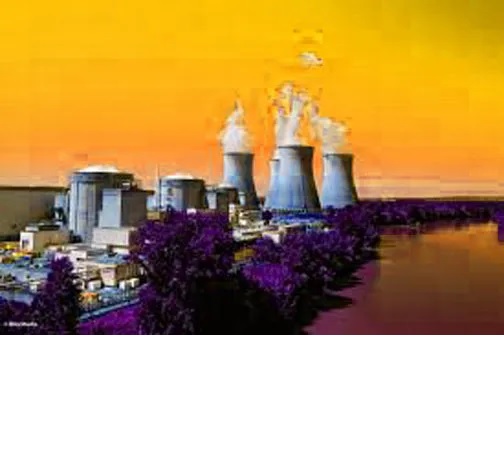
Who else? Mother Nature herself. The heat wave experienced in France this year (and in previous years) shuttered 32 of 54 French reactors due to lack of river water to cool them and make steam – precisely when they were needed most. The laws of physics state that reactors will also produce less electricity the warmer the water they take in to make steam. And climate induced swarms of jellyfish, mayflies and other creatures have led to reactor shutdowns on multiple occasions. These will only become more frequent with the worsening climate disruption. These incidents have led former Union of Concerned Scientists staff scientist and NRC consultant David Lochbaum to sardonically ask, “And what will save nuclear power from climate change?
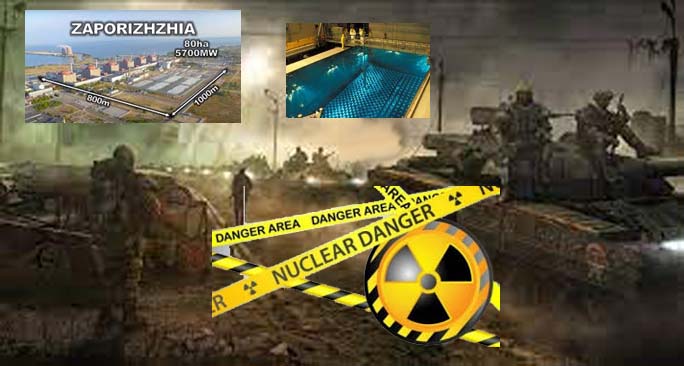
Finally, the war in Ukraine has forced to world to examine whether nuclear power even belongs on a planet where war seems omnipresent. Nuclear power plants are now targets in war. Do not think this will be the end of it. The war and what has happened at the Zaporizhzhia nuclear plant in Ukraine now forces the nuclear industry, military planners and governments of the world to face what they have long avoided and refused to discuss: nuclear power plants are gigantic, pre-positioned radiation dispersion devices. The thought of sprinkling literally thousands of so-called “small modular nuclear reactors” (SMNRs) worldwide like fairy dust — without containment buildings and with reduced emergency planning/response zones and plans, as nuclear proponents eager to market their new techno-toys currently suggest — almost seems to be the quintessential confirmation of Einstein’s admonition that insanity is doing the same thing over and over, expecting different results.
Regrettably. powerful nuclear lobbies, the Biden Administration, and nuclear supporters in Congress have ramrodded legislation (the 2021 IFA; the 2022 IRA) through Congress worth as much as $70+ billion dollars to bail out this false climate “solution.” This is one time when trying to jam a square peg down a round hole will not work. You can’t build an energy future by bailing out the past.
Today’s demonstrations make two very important points: we are out of time; and we must declare a climate crisis – and act like it is a crisis, to paraphrase climate activist Greta Thunburg. We do not have the time or money for “all of the above”, business as usual false solutions like those proposed by Sen. Joe Manchin and Sen. Chuck Schumer. We must act now to implement real energy solutions.
Nuclear power is simply a false solution to the climate crisis. Anyone who says otherwise is as much a “denier” as those who still falsely claim that climate change does not exist.
This article also appeared as a September 23, 2022 press release from Nuclear Energy Information Service, a non-profit organization committed to ending nuclear power and advocating for sustainable ecologically sound and socially just energy solutions.
Interviews With Donetsk Residents After Joining Russia
Eva Bartlett 1 Oct 2022Given the predictable Western negation of the referendum to join Russia, and following having done many interviews with people during the referendum, yesterday I did some follow up interviews with Donetsk residents, asking their opinions on joining Russia
King Charles abandoned plans to speak at Cop27 climate summit, now will not attend, on instruction from Prime Minister Liz Truss.
Liz Truss advised King Charles to stay away from Cop27 climate summit. The
King, a passionate environmental campaigner, has abandoned plans to attend
next month’s Cop27 climate change summit after Liz Truss told him to stay
away. He had intended to deliver a speech at the meeting of world leaders
in Egypt. Truss, who is also unlikely to attend the Sharm el-Sheikh
gathering, objected to the King’s plans during a personal audience at
Buckingham Palace last month.
Times 1st Oct 2022
King Charles III has reportedly abandoned plans to attend and deliver a
speech at the Cop27 climate change summit on the advice of Liz Truss. The
monarch, a veteran campaigner on environmental issues, had been invited to
the 27th UN climate change conference in Sharm el-Sheikh, Egypt, next
month. But the prime minister is understood to have raised objections
during a personal audience at Buckingham Palace last month, according to
the Sunday Times. Buckingham Palace has confirmed King Charles III will not
attend the summit.
Guardian 1st Oct 2022
Climate pragmatism or Faustian bargain? — Beyond Nuclear International

A (rotten) compromise
The Inflation Reduction Act, with its hodgepodge of climate measures, is what remains of progressive Democrats’ multi-trillion dollar Green New Deal agenda of 2019 and the $2 billion Build-Back-Better framework legislation that President Biden pushed last fall……..……………………………
the enacted climate action bill is technology agnostic, and includes, for example, tax support for nuclear plant lifetime extensions. Rhodium Group estimates that without the bill’s funding commitments, about one-third of U.S. nuclear plants would have to shut down by 2030 due to cost. Hundreds of millions of dollars also support nuclear fusion research………….
New US laws will prop up old nukes
Climate pragmatism or Faustian bargain? — Beyond Nuclear International What the new US climate law does—and where it fails
By Liane Schalatek, Heinrich Böll Stiftung 2 Oct 22,
Analysis: U.S. climate policy is currently putting observers through a roller coaster of emotions: just a few weeks ago, the Supreme Court limited the authority of the U.S. Environmental Protection Agency to issue far-reaching climate regulations. Now, after decades of unsuccessful legislative attempts, the U.S. Congress has passed the most comprehensive American climate legislation ever by a razor-thin majority.
The $369 billion package is now law with President Biden’s recent signature. The legislation is intended to lead to drastic emissions reductions over the next decade and transform the U.S. energy sector and the U.S. economy. What some see as an expression of goal-oriented climate pragmatism, in which the perfect must not become the enemy of the good, others see as a Faustian bargain that tightens rather than loosens the fossil fuel industry’s stranglehold on the U.S. economy. So what exactly is in the package?
The sweeping climate package, embedded alongside health care and tax reforms in the surprise passage of the more than 700-page Inflation Reduction Act, represents the largest U.S. funding boost to date to reduce greenhouse gases and promote climate-friendly “green” technologies. It is roughly four times what was authorized for climate action under President Biden’s Democratic predecessor Obama in 2009 in what was then the American Recovery and Reinvestment Act. This spending is in addition to the more than $200 billion in clean energy and climate action investments that a majority Democratic Congress already approved last year in a massive infrastructure funding bill.
Passage of the bill is a much-needed win for the Biden administration, whose approval ratings are extremely low given the impact of inflation on American households. It comes just months before the November midterm elections, in which Republicans are expected to win.
Carrots instead of sticks: financial incentives instead of bans
The law includes neither a carbon price nor a CO2 cap under a federal emissions trading system. It also fails to radically address the main cause of climate change, namely the extraction and burning of fossil fuels. Thus, the measure clearly relies on carrots rather than sticks, in part because previous attempts to push a climate bill through Congress that relies on carbon taxation have repeatedly failed over the past several decades. Then-Vice President Al Gore’s push in 1993 failed to gain traction, as did the Markey-Waxman emissions trading plan of 2010.
So instead of punitive measures and restrictions, the package prioritizes financial support as an incentive and emphasizes how much the investments will support the American economy, create jobs and benefit consumers. This also secured the almost euphoric support of the U.S. business sector for the proposed legislation, with letters of support from more than 1,000 companies, investors and trade groups, including major oil companies, as well as labor unions. The Biden administration has purposefully pursued this approach, which justifies climate protection with green jobs and economic growth, since the beginning of his term in office as part of his reconstruction strategy to Build Back Better after the pandemic-related economic crisis.
Accordingly, the White House stressed that the Inflation Reduction Act “secures America’s position as a world leader in domestic manufacturing and clean energy supply chains,” creates and sustains “good-paying union jobs in construction and manufacturing, including in rural communities,” and lowers annual energy costs for Americans by an average of up to $1840, according to expert estimates.
Expansion of the US markets for renewable energies and e-mobility…………………………………
A (rotten) compromise
The Inflation Reduction Act, with its hodgepodge of climate measures, is what remains of progressive Democrats’ multi-trillion dollar Green New Deal agenda of 2019 and the $2 billion Build-Back-Better framework legislation that President Biden pushed last fall…………………………………..
The majority of Democrats and climate experts celebrates the package as a historic success of pragmatic climate policy, in which good legislation was not sacrificed in the name of hoping for an even better ideal—especially in the face of the expected Republican win in the midterm elections, which could block U.S. climate legislation for the rest of the decade so critical for accelerated climate action. …………………………..
Safeguarding the fossil fuel industry
The many-voiced chorus of those hailing the legislative coup drowns out the critical voices from the progressive U.S. climate movement, who castigate what they see as a rather rotten compromise and a Faustian bargain.
That’s because in order to win Manchin’s approval, numerous pledges were made that solidify the fossil fuel industry’s stranglehold on the U.S. economy instead of reducing its influence. Chief among these is the provision requiring the U.S. Department of the Interior to agree to millions of acres of new oil and gas development concessions over the next decade as a precondition to leases for offshore wind and solar and wind farms on federally owned land, including in the Gulf of Mexico and Alaska’s Cook Inlet. Each year, for example, an area of ocean the size of the U.S. state of Wyoming, about 60 million acres, could be opened to offshore drilling. While such extraction concessions need not necessarily lead to expanded fossil fuel production, their forced linkage to permits for new renewable energy projects could slow such clean investments…………………………………………..
the enacted climate action bill is technology agnostic, and includes, for example, tax support for nuclear plant lifetime extensions. Rhodium Group estimates that without the bill’s funding commitments, about one-third of U.S. nuclear plants would have to shut down by 2030 due to cost. Hundreds of millions of dollars also support nuclear fusion research……………………………………………………..
even in the best-case scenario, emissions reductions are still well below what would be needed to meet the climate pledge President Biden has made to the global community, which calls for the U.S. to reduce emissions by 50 to 52 percent from 2005 levels by 2030………………………………..
Climate justice deficits
Many U.S. climate activists view the passage of the legislative package with mixed feelings , if not outright anger and disappointment, including in light of critical equity deficiencies in its design and foreseeable implementation. After all, it was their political pressure on Democrats, their mobilization of votes, and their implementation proposals over recent years, which made the Inflation Reduction Act even possible.
………………………………………………………………………. Many progressive climate groups in the U.S. see the passage of the climate package, despite or more precisely because of all its flaws, as an incentive to ramp up their climate activism in the run-up to the midterm elections and to keep up the pressure on Democrats to implement more progressive legislative goals if more progressive climate activists can be elected to Congress. They have not yet given up hope that President Biden might yet declare a national climate emergency, as they have requested, which would allow him, via presidential decrees, to, for example, halt U.S. crude oil exports, limit private investment in fossil fuel projects abroad, or spend defense budget money on renewable energy. And they are also counting on young climate activists in particular to become more involved at the local level in the coming years in order to politically implement their vision of far more comprehensive climate-just social and environmental protection rules in cities and municipalities in all U.S. states.
NATO chief throws cold water on Ukraine’s bid to join NATO
NATO Secretary General Jens Stoltenberg condemned Russia’s move to take over the Donbass, but also threw cold water on Ukraine’s bid to join NATO. 30 Sept 22 “……………………………………………………………………………….Neither side will be getting exactly what they want anytime soon. On Friday, Ukrainian President Volodymyr Zelenskyy announced that Ukraine would seek a “fast-track” application to join NATO. “De facto, we have already made our way to NATO. De facto, we have already proven compatibility with the Alliance’s standards. They are real for Ukraine—real on the battlefield and in all aspects of our interaction,” Zelenskyy said.
Stoltenberg, when asked about the application on Friday, answered as he has in previous engagements, without making any promises and referring to NATO’s rule that “membership, of course, has to be taken by all 30 allies and we take these decisions by consensus.”
That consensus seems a long way off. Hungary is openly opposed to Ukrainian membership and even Germany and France—allies who are supporting Kyiv’s fight against the Russian invaders—have opposed it in the past.
U.S. National Security Advisor Jake Sullivan said that Ukraine’s NATO bid should be taken up “at a different time.” ………………. https://www.defenseone.com/threats/2022/09/nato-chief-slams-russias-nuclear-blackmail-remains-cool-ukraines-membership-bid/377906/
How can Diablo Canyon nuclear power plant stay open? ‘It’s not a done deal’
The Tribune, BY STEPHANIE ZAPPELLI SEPTEMBER 30, 2022,
PG&E is preparing for two futures: one in which it closes Diablo Canyon Power Plant in 2025 and another in which it continues operating the nuclear power plant through 2030. “It’s not a done deal,” PG&E director Tom Jones told the San Luis Obispo County Board of Supervisors on Tuesday. “We’re maintaining both tracks.” Diablo Canyon was on track to shut down in 2025, but the California State Legislature passed Senate Bill 846 in October.
The bill, which Gov. Gavin Newsom signed into law on Sept. 2, creates resources to keep the power plant near Avila Beach open until 2030. One of those resources is a $1.4 billion grant to the state Department of Water Resources. That department will then loan the money to PG&E.
The utility company will receive a $600 million loan this year, and another $800 million next year if approved by the California legislature, Jones told the Board of Supervisors. PG&E applied for a grant with the U.S. Department of Energy to “back-fill those funds,” Jones said.
Even though the state provided PG&E with new support, the utility company has to complete a few more steps to keep the power plant open, Jones said. WHAT’S NEXT FOR DIABLO CANYON? In order to continue operating Diablo Canyon, PG&E must renew the power plant’s license to operate with the U.S. Nuclear Regulatory Commission, Jones said. Normally, the federal commission requires a power plant to apply to renew its license five years before it expires…………………………………………….. more https://www.sanluisobispo.com/news/local/environment/article266566596.html
Why Donbass residents voted to join Russia – the pro-Russian point of view
‘I can’t imagine our future differently’: Donbass residents explain why they voted to join Russia, By Vladislav Ugolny, a Russian journalist based in Donetsk Rt.com, 30 Sept 22
Last week, referendums on once-again becoming part of Russia were held in the Donetsk (DPR) and Lugansk (LPR) People’s Republics, as well as in the liberated territories of Zaporozhye, Kherson, and Nikolaev regions (the latter was annexed to Kherson Region).
According to the results, the ‘For’ option won all four by an overwhelming margin. RT’s correspondent in Donbass, Vladislav Ugolny, has been observing the sentiment there for the past eight years. He describes how the referendums took place, what they meant to local residents, and why their outcome simply could not have been different.
All arguments ‘against’
For those who are sufficiently immersed in the history of the struggle of the Russian residents of Ukraine for unity with their historic homeland, the results of the referendums are hardly surprising. But it is also worth pointing out from the start that not everyone in these regions took part in the vote……………………..
There are many people who are unhappy with what has been happening in Donbass these past eight years – where they have slowly languished as geopolitical hostages – and are also prepared to die for their land and identity. It is thanks to them and their resilience that Russia’s military offensive was possible. And these referendums also took place because of them.
They all had a lot of reasons to hate what was happening. The wounded were often dismissed retroactively to avoid paying for their injuries. And in a betrayal of memory, the names of children killed by Ukrainians in Sloviansk and Konstantinovka, towns not controlled by the DPR, disappeared from the Alley of Angels (a monument honoring the children of Donbass killed by Ukrainians). By removing these names, it was as if DPR officials were abandoning the territories and the memory of those who remained under Kiev’s occupation.
In the early years of its independence, the LPR had constant political crises, from which the despised Igor Plotnitsky emerged as the victor. Until he was overthrown and the much more popular Leonid Pasechnik was elected.
All arguments ‘for’
The hope for reunification was based on the fact that Russia is a stable state governed by the rule of law, with fully-fledged institutions and an established civil society. Living their lives on the frontline of a geopolitical confrontation, Russians in Donbass dreamed that one day war would disappear.
They hoped that Donbass would become an ordinary, peaceful region of Russia, like neighboring Rostov. They hoped that they would be able to put away their weapons and return to the mines and factories, and they could teach their children without regular shelling………..
Fate decided otherwise and the referendums had to be held during the fighting, with the risk of Kiev shelling the polling stations. Thus, the votes themselves did not become a moment of triumph and victory. But they could no longer be delayed, given that one of the declared aims of Moscow’s military operation was to restore peace to Donbass.
……….. The sweeps in Kharkov Region after towns and villages were seized by Kiev earlier this month, and the convoys of refugees, were apparently the final straw.
The risk of polling stations being shelled was one reason some locals criticized the referendums. A friend of mine who is now serving in one of the DPR’s army units refused to participate in the referendum. He justified it by saying he had expressed his position a long time ago and was now defending it with a gun in his hand.
However, his view was marginal. Residents of Donbass, despite the risks of terrorist attacks, flocked to the polls. Since the issue was a foregone conclusion, the polling stations became a place for declaring one’s position.
Journalists were told not about the choice people made, but rather about how long they had waited for the opportunity to make it.
The procedures of the referendum were designed with the usual legal provisions in mind, but the voters themselves effectively abolished the concept of ‘secret ballot’ by ticking the ‘yes’ box publicly.
The people of Donbass needed the referendum not to reassert their choice, which was made back in 2014 and has not changed since, but to present it to the international community in a more or less accepted framework,” a graduate of the political science department at Donetsk National University said after the vote. A leg injury prevented her from going to the polling station, but she was able to vote Yes by door-to-door voting:
Dmitry, a native of the border town of Yenakievo, Donbass, said, “Of course I waited for the referendum and voted Yes. I cannot imagine our future any other way. Back in 2015, I was repeatedly offered the chance to leave my home region and live in Ukraine so that I would not know what war is like.
“As you can see, I refused. Voting in the referendum was not my biggest contribution, but I was glad I did it. I didn’t doubt it for a second, especially when, about 40 minutes later, a HIMARS missile was shot down over the polling station, with shrapnel hitting my neighborhood.”
This is how the referendum was held in Donbass. As for the Zaporozhye and Kherson regions, the votes there were less festive there due to greater infiltration by Ukrainian security services and a bigger risk of sabotage. The lack of an eight-year wait was also a factor. However, even there, people were hoping that the Kharkov tragedy would not be repeated in their areas…… https://www.rt.com/russia/563764-they-voted-to-join-russia/
‘People’s Plan for Nature’ – a response to UK government’s attack on environmental protection laws
Three of the UK’s biggest conservation charities have joined with
celebrities to launch a new People’s Plan for Nature, in response to the
Government’s “open season” on policy protection for nature, which
could seed hundreds of environmental laws eased.
The National Trust, the RSPB, and WWF have joined forces with celebrity champions Maisie Williams
and Cel Spellman to launch the People’s Plan for Nature, a national
rallying cry for the public to have its say on how to respond to the
ecological crisis. The plan calls on Prime Minister Liz Truss and new
Environment Secretary Ranil Jayawardena to take rapid action on what the
charities describe as “open season” on existing environmental
legislation, with the recent mini-budget and rumours that Defra will U-turn
on its manifesto sparking concerns amongst green groups.
Edie 30th Sept 2022
Labour’s ‘Great British Energy’ Company likely to be a nuclear turkey

My ears perked up in eager anticipation when Keir Starmer, in his address to Labour’s Conference, started talking about setting up a state-backed renewable energy development company. But I sighed with
despair when it became clearer that this would be an investment conduit for what would be failing, black hole-type, nuclear projects.
Unless it is ring-fenced for renewable energy, and nuclear kept out, this will sink like a stone. If it is to be a vehicle for investing in new nuclear power plant, small or large, it will be like attaching a ship anchor to a rowing boat. It will sink. Quite fast in fact. The whole thing now sounds like an impractical soundbite meant to satisfy a committee on which sits Labour’s prime pro-nuclear donor, the GMB.
It’s actually a great pity that this is being spoiled by the nuclear-damned notion of this ‘Great British
Energy’ Company. I’m sorry Keir, I’d really like to be impressed by this, but it is a loser, certainly in the way it is being spun. When will politicians get it into their heads that new nuclear investment won’t and
can’t make money? Or maybe it’s just the soundbite that counts and they just don’t care that it doesn’t make sense?
100% Renewable UK 27th Sept 2022
HISTORIC CONTEXT OF THE REFERENDA IN UKRAINE.
Popular Resistance, By Moon of Alabama., September 24, 2022, Educate!
Voting for membership in the Russian Federation has started in four oblast of Ukraine:
………………….. The Ukrainian regime has resorted to pure terrorism to prevent the votes from happening:
” Ukrainian partisans, sometimes working with special operations forces, have blown up warehouses holding ballots and buildings where Russian proxy officials preparing for the vote held meetings. Ukrainian officials have acknowledged that they are engaged in a campaign to assassinate key Russian administration officials; more than a dozen have been blown up, shot and poisoned, according to Ukrainian and Russian officials.“
Such behavior by the Zelenski regime against its still Ukrainian compatriots will only encourage the people in the four oblast to vote for an alignment with Russia.
The propaganda in the ‘west’ will declare that the vote is irregular and that the results, likely to be pro-Russian, will be fake.
But a view on historic election outcomes since Ukrainian independence in 1991 show clear geographic preferences in east and south Ukraine for pro-Russian policies:
[ The original here shows a graphic chart illustrating voting patterns over the years]
The graphic above is from research published by the Eurasian Research Institute of the International Hoca Ahmet Yesevi Turkish-Kazakh University. Its author writes:
“As we can see, the have always been a clear-cut geographical split in the way the regions of Ukraine vote for particular candidates. The East and West division or also referred as Southeast and Northwest division was always present throughout the electoral history of the independent Ukraine. It is conventionally believed that the eastern part of Ukraine is more influenced by Russia politically, economically and culturally. Therefore, the presidential candidates proposing more pro-Russian agenda usually gain much more political support in eastern regions than in other parts of Ukraine.
On the other hand, the western part of the country has traditionally been more pro-European with strong reference to traditional core Ukrainian ethnic traditions and values. Consequently, presidential candidates with pro-European political agenda and traditional Ukrainian appeal usually had strong support in western regions of the country. It is interesting to note that preferences of the electorate were not related to the geographical origin or background of the presidential candidates and any candidate could easily become popular in the east as well as in the west. Moreover, the same candidate could be both pro-eastern and pro-western in different periods of time as did Leonid Kuchma in 1994 and 1999, who is the only Ukrainian president to serve two consecutive terms from 1994 to 2005.“
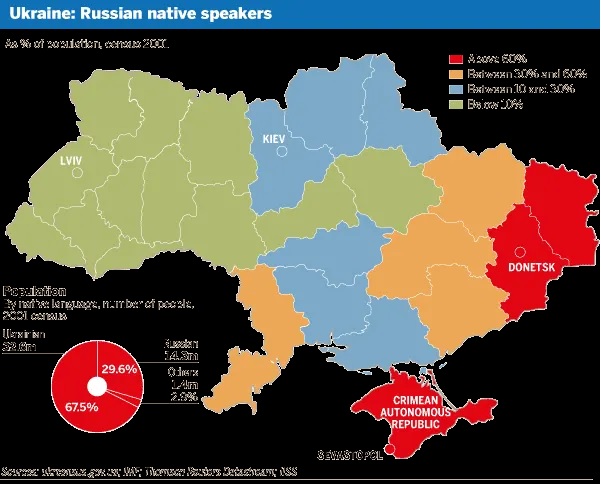
The division is consistent with ethnic and linguistic differences between those parts of Ukraine.
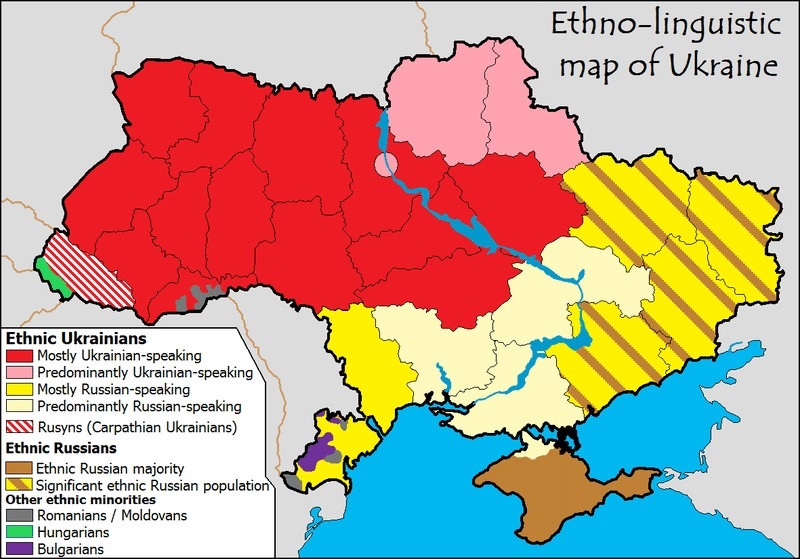
In 2014, after the violent fascist coup in Kiev, one of the first laws implemented by the new government removed the Russian language from official use. Instead of overcoming the differences between its people it only sealed the predominant split in Ukraine.
The election promise of the current Ukrainian president Vladimir Zelenski to make peace with the Russia aligned rebellious Donbas region by adhering to the Minsk 2 agreements was rewarded with a large share of southeastern votes for his presidency. However, after having been threatened with death by fascists, Zelenski has made a 180 degree turn and has since posed as Ukrainian nationalist. In consequence he has lost all support in southeastern Ukraine.
The southeastern parts of today’s Ukraine have for centuries been part of the central Russian empire. They were only attached to the Soviet Republic of Ukraine under Lenin’s rule in 1922 and, in the case of Crimea, in 1954 under Nikita Khrushchev who himself had grown up in the Donbas region.

A likely high turnout and majority vote for membership in the Russian Federation will only correct the historic misalignment created by those illogical transfers.
https://popularresistance.org/historic-context-of-the-referenda-in-ukraine/
UK government to change the rules – so that billions of pounds of pension funds can go to dodgy new nuclear projects

Pension fund reforms will help to unleash wave of investment in nuclear energy, according to senior industry sources. The Chancellor, Kwasi Kwarteng, announced a plan on Friday to unlock billions of pounds of cash that could be poured into major infrastructure programmes and innovative businesses. The Government is scrambling to get energy projects off the ground following the Russian invasion of Ukraine.
French state energy giant DF is developing Sizewell C and has received UK Government backing. But
the project still needs to drum up billions of pounds in private investment. Kwarteng’s plan will relax rules in order to allow fund managers to invest in assets that will potentially take a long time to make a return.

Details of the changes are likely to be closely monitored by regulators and pension campaigners. Tom Greatrex, chief executive of the Nuclear Industry Association, said pension money ‘will be a boost to the
prospect of getting new nuclear plants built to fix our energy security crisis’, adding: ‘The first big infrastructure project where this will have an effect could well be Sizewell C.’ He said it was a ‘very important step’ alongside two other major changes that are shaking up the industry.

The first is a new financing model, called the ‘regulated asset base’, which allows investors to receive returns during the construction phase of big projects.

The second is a planned rebranding – expected later this year – of nuclear as green energy, which it is hoped will attract backers that are currently barred from putting money into the sector. Kwarteng’s plan
could also help spur funding for a fleet of mini nuclear reactors being developed by engine maker Rolls-Royce. A spokesman for Rolls-Royce said: ‘This broadens the pool for vital UK infrastructure funding. SMRs are perfectly sized for pension investment owing to the lower project costs of around £2billion.
Mail on Sunday 24th Sept 2022
Continuing campaign to stop the dumping of Hinkley nuclear power station mud off Cardiff coast
Campaigners attempting to stop mud from the construction of Hinkley Point
Nuclear Power Station, Somerset, being dumped into Welsh waters, have
announced they are working with leading environmental lawyers Leigh Day to
block the proposals. In February EDF Energy applied to National Resources
Wales for a licence to dump 800,0000 tonnes of mud dredged as part of
building work for the new plant that is being built on the site of the
disused Hinkley Point A facility.
Two years ago, EDF were given permission
to dump 300,000 tonnes of mud from the site off the Cardiff coast, despite
protests and following a Senedd debate. A petition against the latest
proposals received over 10,000 signatures and has triggered a debate in the
Senedd tomorrow. Earlier this month EDF Energy confirmed it will carry out
an Environmental Impact Assessment as part of its licence application. This
agreement reverses NRW and Welsh Government’s previous position that an
EIA was not needed for the dumping they permitted in 2018 just 2.1 miles
off the South Wales coast and 2.5 miles from Cardiff. Leigh Day has now
written to Natural Resources Wales (NRW) requesting full disclosure of
documents on the Environmental Impact Assessment (EIA)-screening
application from EDF and the agreement with NRW that “environmental
impact assessment is required”.
EDF are also facing a public inquiry over
a controversial fish management system that is being installed at the site
of the new facility. The Environment Agency granted a licence to EDF in
2013 that permitted sea water to be used for the nuclear power station’s
cooling system but required the deployment of a fish deterrent system on
the site to protect marine life in the estuary. Initially the operator
proposed the use of an acoustic deterrent system to reduce the number of
fish being killed by the cooling system but in 2017 abandoned the plans
without suggesting any alternative.
Currently the plant’s proposed Fish
Recovery and Return System will consist of a 5mm mesh barrier set up in the
water intake tunnel to stop large fish from being sucked in while another
channel will divert fish, dead or alive, back out to sea. Last year the
Sunday Times reported that marine and conservation groups estimated that
this system will kill 250,000 fish a day and called for it to be altered or
scrapped. EDF said the FRR will kills an estimated 650,00 fish a year.
Source: Nation Cymru 20th Oct 2020
https://nation.cymru/news/senedd-roundup-leading-environmental-lawyers-join-battle-to-block-mud-dump/
Belgium shuts down one reactor, in line with its “40 years life” rule for nuclear reactors
One of Belgium’s seven nuclear reactors
was disconnected from the grid on Friday evening. This follows legislation
passed in 2003 requiring reactors to be shut down after 40 years of
operation.
Belgium has two nuclear power plants: Doel near Antwerp and
Tihange near the town of Huy in Wallonia. The two plants consist of seven
reactors (four at Doel and three at Tihange) covering around 50 percent of
the country’s electricity needs, according to the news website Euractiv.
On Friday, the Doel 3 reactor was disconnected from the power grid in
accordance with the 2003 Nuclear Abandonment Act. The law was passed at the
insistence of the “green” parties that were part of the government at
that time. The legislation stipulates that reactors are to be shut down 40
years after being put into operation. A spokeswoman for the energy company
Engie, which operates Belgium’s nuclear power plants, Nele Scheerlinck,
stated that “the decision was made years ago” and “it is simply not
possible to change plans at such short notice”.
TVP World 24th Sept 2022
https://tvpworld.com/62949498/belgium-turns-off-nuclear-reactor-despite-energy-crisis
1 This Month
23-25 October – on Zoom – World BEYOND War’s annual global conferenc


Shut down the radiation-damaged Heysham nuclear reactors now
To see nuclear-related stories in greater depth and intensity – go to https://nuclearinformation.wordpress.com

Say No to NASA’s Reckless Nuclear Reactor on the Moon
Say No to NASA’s Reckless Nuclear Reactor on the Moon

-
Archives
- October 2026 (190)
- September 2026 (339)
- August 2026 (330)
- July 2026 (355)
- June 2026 (287)
- May 2026 (306)
- April 2026 (356)
- March 2026 (251)
- February 2026 (267)
- January 2026 (308)
- December 2025 (358)
- November 2025 (359)
-
Categories
- 1
- 1 NUCLEAR ISSUES
- business and costs
- climate change
- culture and arts
- ENERGY
- environment
- health
- history
- indigenous issues
- Legal
- marketing of nuclear
- media
- opposition to nuclear
- PERSONAL STORIES
- politics
- politics international
- Religion and ethics
- safety
- secrets,lies and civil liberties
- spinbuster
- technology
- Uranium
- wastes
- weapons and war
- Women
- 2 WORLD
- ACTION
- AFRICA
- Atrocities
- AUSTRALIA
- Christina's notes
- Christina's themes
- culture and arts
- Events
- Fuk 2022
- Fuk 2023
- Fukushima 2017
- Fukushima 2018
- fukushima 2019
- Fukushima 2020
- Fukushima 2021
- general
- global warming
- Humour (God we need it)
- Nuclear
- RARE EARTHS
- Reference
- resources – print
- Resources -audiovicual
- Weekly Newsletter
- World
- World Nuclear
- YouTube
-
RSS
Entries RSS
Comments RSS

