US to “buy and own” new domestic reactors
November 20, 2025, https://beyondnuclear.org/us-to-buy-and-own-domestic-nuclear-reactors/
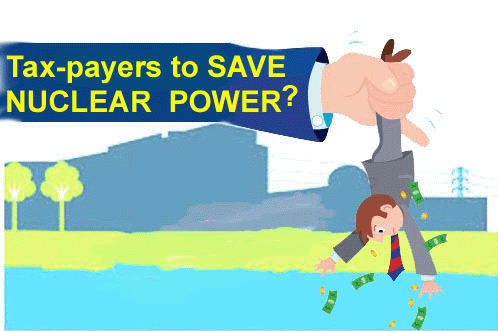
On November 19, 2025, Bloomberg news reported that the United States government will “buy and own” as many as ten new, large (1000 MWe and bigger) commercial nuclear reactors. The new nuclear power deal emerged out of President Trump’s October meeting with Japan’s first woman and ultra-conservative Prime Minister, Sanae Takaichi. According to the Trump White House, Japan pledged to invest a total of $550 billion in US infrastructure of which $332 billion will go into developing domestic energy projects. The Japan/US domestic energy infrastructure plan includes the licensing and construction of new large nuclear reactors (Westinghouse AP1000 pressurized water reactors as well as a new breed of small modular reactors [SMR]), new natural gas power plants, electric transmission projects and pipelines.
On November 13, 2025, Beyond Nuclear spotlighted “Make Atoms Great Again?” on the White House announcement of an agreement with Westinghouse Electric where the US Department of Energy (DOE) plans to buy an $80 billion government equity share for 20% of Westinghouse corporation’s future nuclear profits from its fleet expansion of the controversial AP1000 “advanced” pressurized water reactor. The AP1000 pressurized water reactor was to only new reactor design to launched construction projects in 2007 and only two of the new Westinghouse units are operable today in the US.
Vogtle Units 3 & 4 were stricken with extreme cost overruns and as a result have indefinitely stuck Georgia ratepayers and manufacturers with electric rate shock. Two additional AP1000 units (V.C. Summer 2 & 3) financially collapsed mid-construction in South Carolina and were abandoned with nearly $10 billion in sunk costs. The President and CEO of Santee Cooper at the time of project’s cancellation was quoted to observe in July 2017, “When you find yourself riding a dead horse, the best strategy is to dismount.” An effort to resuscitate the failed construction project is presently underway by the utility. The cost overruns, recurring delays and cancellations however resulted in the 2017 Westinghouse bankruptcy that shifted the corporation to new Canadian ownership.
The White House issued an October 28, 2025 “Fact Sheet: President Donald J. Trump Drives Forward Billions in Investments from Japan,” identifying,
“Critical Energy Infrastructure Investments: Up to $332 billion to support critical energy infrastructure in the United States, including the construction of AP1000 and small modular reactors (SMRs), in partnership with Westinghouse; construction of SMRs in collaboration with GE Vernova and Hitachi.”
The World’s Largest Nuclear Plant Inches Toward Restart After Key Approval.
By Tsvetana Paraskova – Nov 19, 2025, https://oilprice.com/Latest-Energy-News/World-News/The-Worlds-Largest-Nuclear-Plant-Inches-Toward-Restart-After-Key-Approval.html
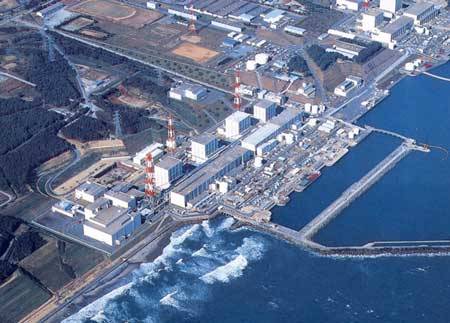
The Kashiwazaki-Kariwa nuclear power plant in Japan, the world’s largest in terms of nameplate capacity, could soon clear a major hurdle toward a partial restart as the governor of the prefecture hosting the plant is expected to give consent to startup, Japanese media reported on Wednesday.
Hideyo Hanazumi, the governor of the Niigata Prefecture, is set to announce on Friday an approval to the restart of two units of the 8-gigawatt (GW) nuclear power plant, Japan’s Kyodo news agency reports.
The governor’s approval is not enough for the plant operator, Tokyo Electric Power Company (TEPCO), to restart two reactors—the startup needs the approval of the Niigata Prefecture assembly, too. A session of the assembly is set to discuss TEPCO’s proposal in early December.
TEPCO, which also operated the nuclear power plant in Fukushima prior to the 2011 disaster, has planned for years to restart the Kashiwazaki-Kariwa plant in the Niigata prefecture.
Last month, TEPCO said that it carried out a full round of integrity checks at Kashiwazaki-Kariwa after fuel loading of Unit 6 was completed, confirming that primary facilities can sufficiently perform the functions required for reactor startup.
But the company faces backlash over its restart plans and proposal to “contribute monetarily to vitalizing the regional economy.” Local residents and anti-nuclear activists in Japan oppose the restart and have slammed TEPCO’s proposal as a “bribery” of the local residents to accept the restart of the plant.
Opinion polls suggest that local residents are split on whether TEPCO should be allowed to restart the nuclear power plant.
Japan’s newly elected Prime Minister, Sanae Takaichi, favors accelerating the restart of nuclear reactors as a way to reduce the G7 economy’s dependence on energy imports.
Before the Fukushima meltdown in 2011, nuclear energy accounted for about 30% of Japan’s electricity mix. The disaster prompted the closure of all reactors for safety checks. Since 2015, Japan has restarted 14 reactors out of 33, while 11 others are currently in the process of restart approval.
Trump administration lends $1 billion to restart Three Mile Island nuclear reactor.
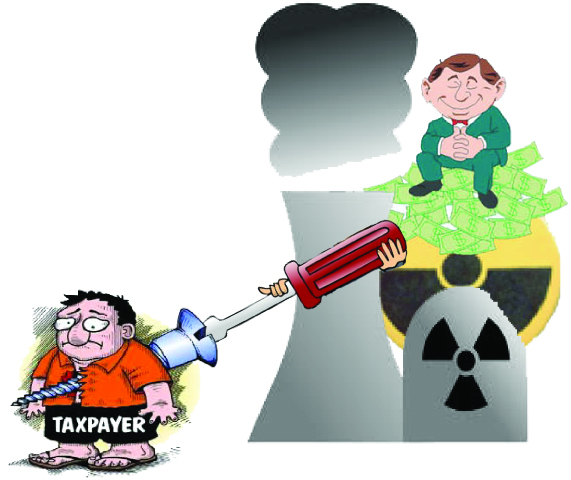
The Trump administration said on Tuesday it has loaned Constellation Energy Corp $1 billion to restart its nuclear reactor at a Pennsylvania plant
formerly known as Three Mile Island. Constellation signed a deal in late
2024 with Microsoft to restart the 835-megawatt reactor, which shut in
2019, and which would offset Microsoft’s data center electricity use. The
other unit at the plant, renamed the Crane Clean Energy Center, shut in
1979 after an accident that chilled the nuclear power industry. U.S. power
demand is now rising for the first time in two decades on technologies
including artificial intelligence. Nuclear energy, which is virtually
carbon-free, has become an option for technology companies with
uninterrupted power needs and climate pledges. Critics point out that the
U.S. has failed to find permanent storage for radioactive waste.
CNN 18th Nov 2025, https://edition.cnn.com/2025/11/18/business/three-mile-island-restart-trump
Trump officials announce $1bn loan to restart Three Mile Island nuclear plant

Facility that was site of worst nuclear disaster in US history will provide power for Microsoft datacenters
Emine Sinmaz and agency, Guardian, 20Nov 25
The Trump administration has announced a $1bn federal loan to restart the
nuclear power plant at Pennsylvania’s Three Mile Island that is under
contract to provide power to Microsoft’s datacenters. The US energy
secretary, Chris Wright, said on Tuesday that the loan to Constellation
Energy, the plant’s operator, would “ensure America has the energy it
needs to grow its domestic manufacturing base and win the AI race”.
Constellation signed a 20-year purchase agreement in 2024 with Microsoft,
which needs power for its artificial intelligence operations, to restart
the 835MW reactor that shut in 2019. The other unit at the plant, renamed
the Crane Clean Energy Center, shut in 1979 after the most serious nuclear
meltdown and radiation leak in US history.
https://www.theguardian.com/us-news/2025/nov/19/three-mile-island-nuclear-loan-microsoft-datacenter
First Minister John Swinney absolutely rules out changing SNP’s no nuclear stance
the proposal to develop new nuclear energy was both “economic and environmental folly” that would lead to more expensive bills.
First Minister John Swinney absolutely rules out changing SNP’s no nuclear stance saying ‘there is no way on this planet that I am going to change that policy’
By Scott Maclennan, John O’Groat Journal 20th Nov 2025
First Minister John Swinney has absolutely ruled out any change to the SNP’s position against nuclear energy saying: “There is no way on this planet that I am going to change that policy.”
He was speaking at the weekend at the adoption night for the party’s candidate for Skye, Lochaber and Badenoch Eilidh Munro in Dingwall alongside Deputy First Minister Kate Forbes.
The First Minister reiterated the position after it was revealed that Anglesey in North Wales – which has many objective similarities with Caithness – is about to receive a £2.5 billion nuclear boost.
That sparked Caithness, Sutherland and Easter Ross MP Jamie Stone to reignite his argument that it is not too late for Dounreay – but the SNP must lift its ban on new nuclear power.
“This is an important announcement which demonstrates two things,” he said. “Firstly, that the UK government is serious about establishing ‘a network of small modular reactors across the UK’ – as the Energy Secretary put it.
‘It’s brilliant for a small town like Wick’ – local opticians celebrate award win
“The second point, which will be of enormous interest to the far north, is the specific reference from the UK government to ‘sites across the United Kingdom, including Scotland’.”
But Mr Swinney rebuffed all of those points arguing instead that the proposal to develop new nuclear energy was both “economic and environmental folly” that would lead to more expensive bills.
“I don’t think the position on nuclear power is exactly a surprise,” he said. “We have been around for a long time when we have won Caithness, Sutherland and Ross and there’s absolutely no way on the planet that I’m going to change that policy because I think it’s economic and environmental folly.
“These nuclear stations are hyper-expensive so if people are going to get nuclear power stations put onto their bills then they ain’t seen nothing yet because these projects always go way over budget.
“So we’ve got the opportunity for low cost renewable energy in Scotland in abundance and we should seize that opportunity to do the right thing, fiscally and environmentally and the nuclear argument will just saddle people with exorbitant fuel costs for the years to come.”…………………… https://www.johnogroat-journal.co.uk/news/first-minister-john-swinney-absolutely-rules-out-changing-sn-419801/
Wylfagasm! What does it tell us about Cymru?
18 Nov 2025, https://nation.cymru/opinion/wylfagasm-what-does-it-tell-us-about-cymru/
Some of the most unpopular politicians in the UK and Cymru, led by Starmer, rolled up to Ynys Môn on 13th November to announce that three Small Modular Reactors (SMR’s), to be designed by Rolls-Royce SMR are to be built at Wylfa by publicly owned Great British Nuclear, backed by £2.5 billion of public money.
Following the deferred gratification as the Hitachi project collapsed in 2019, the consequent media ballyhoo was euphoric, with the announcement being seen as at last confirming that nuclear is back on Ynys Môn, with up to 3,000 jobs expected during construction, and up to 900 jobs required to run the plant. The politicians of the UK, Cymru and Ynys Môn of almost all political colours welcomed the news. Starmer also announced that Cymru was to be an Artificial Intelligence (A.I.) zone, with 3,500 jobs to be created.
What’s not to like about nuclear at Wylfa?
A great deal, as I know from too many years of campaigning with PAWB (People Against Wylfa B)! Let’s be brief, though several volumes are needed to do justice to the objections.
The main argument used to justify nuclear by local politicians can be summarised in one word: JOBS! Jobs for Ynys Môn, which has haemorrhaged jobs for years, thus giving youngsters an opportunity to stay on the Island. Yes, Ynys Môn, like other economically bereft areas of Cymru, needs jobs to retain youngsters who have been drifting away in search of opportunities. But this has been a running sore for decades, and the chief focus on Ynys Môn has been to concentrate on the economic silver bullet of Wylfa since Blair’s Energy Review in 2006. So our youngsters have been let down for two decades, during which time a reliable job creation strategy could have been devised and implemented. The result is that jobs of any sort are accepted with very little robust questioning.
Poverty induces gratitude for a poisoned chalice.
Why is the chalice poisoned? The arguments against nuclear have been listed so many times that it is frankly staggering that mainstream politicians largely ignore them.
- No solution to the problem of radioactive waste which must be safe for millennia.
- Spiralling costs of every nuclear project, at the taxpayer’s expense.
- Too little, too late to mitigate climate change.
- The myth that nuclear is low carbon and safe.
- Huge long term environmental damage where uranium is mined.
- Risk of catastrophe as at Chernobyl, Fukushima, Windscale, Three Mile Island.
- Risk of malicious attacks by cyberwarfare or direct military attack in a dangerous world.
- Risk of nuclear proliferation
- Intrinsic link to military nuclear – the first Wylfa was built to produce plutonium.
Other issues can be added.
Continue readingKiev Coup Poker Update, 19 November 2025
Russian & Eurasian Politics, by Gordon hahn, November 19, 2025
Beleaguered Ukrainian President Volodomyr Zelenskiy is still on the road, having arrived in Turkey, where he had a meet and greet with of all people Mindichgate-incriminated Head of the Defense and Security Council of Ukraine Rustem Umerov supposedly to restart peace talks with Moscow. Umerov has recently been heard on the Mindichgate tapes discussing a corrupt deal on bulletproof vests. Zelenskiy needs the support of the military, but Umerov did not and certainly will not have now command or authority inside the military. That is the domain of Ukraine’s most popular political figure, Kiev’s ambassador to the UK, and former commander of the Armed Forces of Ukraine (UAF) Gen. Valeriy Zaluzhniy, fired by Zelenskiy last year.
Head of Zelenskiy’s Office of the President (OP) Andriy Yermak was reportedly in Washington speaking with the FBI, which has a hand in the opening of Mindichgate. He reportedly is now in London, where he is likely to meet with Zaluzhniy and British governmental figues, such as MI6’s new Ukrainian-British director (https://gordonhahn.substack.com/p/is-the-uk-readying-a-coup-option). With Zaluzhniy and the FBI, Yermak’s hand in the developing pre-coup or coup crisis is stronger than that of Zelenskiy, who is potentially isolated in Turkey with Umerov, a wholly unpopular figure in Ukraine and an ethnic Tatar to boot.
But the army is no longer Zaluzhniy’s to have without a fight. It is also the feifdom of the neofascists such as Azov and its founder Brig. Gen, Andriy Biletskiy, who heads a 20,000-strong Azov army corps as well as other Azov-dominated units.
There are also reports that the Secretary of the U.S. Army Dab Driscoll and Army Chief of Staff Randy George are in Kiev and are then scheduled to head to Moscow! They may be in Kiev to deliver an ultimatum to Zelenskiy in the form of the reported new U.S.-Russian peace plan he will be required to sign or face the consequences (arrest, removal from office by impeachment or coup, assassination), perhaps explaining why Zelenskiy remains away in Istanbul. However, this may prove a fatal mistake, as he has left door open to machinations.
Tonight Kiev stands empty without its president, its presidential chief of staff, its Security and Defense Council chief, its energy minister (with the country in an energy crisis), and perhaps who knows who else. Last night, Energy Minister Svetlana Grinchuk, who also is implicated in Mindichgate, fled Ukraine, joining a full cohort of Kievan wanderers – Zelenskiy, Yermak, Umerov, Mindich himself, and his sidekick Tsukerman. They are going faster than American politicians to Epstein island. Ruslan Stefanchuk, the speaker of the badly splintered Rada, rocked by Mindichgate, and head of the Cabinet of Ministers, Yuliya Svyrydenko, in her post for less than a year remain if talking about civilian leaders. Military Intelligence (HRU) chief Kyryll Budanov, a creature of the CIA remains, as presumably do at least some members of the UAF’s General Staff, including its chair Mikhail Gnatov, who just a week ago asserted military over civilian authority to Zelenskiy’s face.
This would be an excellent time for some of these figures, who remain in Kiev, to author a coup, it would seem, perhaps with the backing of those U.S. Army officials in town. It probably will not happen tonight, but who knows? Maybe tomorrow night, when Zelenskiy and Umerov can be arrested, as some official sources say they will be doing. At present a coup to replace Zelenskiy gives everyone among the present moment’s main players something of what they want. Zelenskiy remains a free (if likely hunted) man. The West’s Project Ukraine is rid of him and can be moved to its next course of action within the framework of Russian and American demands and ultimata. Russia achieves its special military operation’s goals at least for now. (Neofascist or others’ countercoups can turn over the chessboard and bring real chaos ala Ukraine’s 17th century Great Ruin or 1917-1920). At any rate, as an old American saying goes: “Get while the getting is good.”……………………………………………….. https://gordonhahn.com/2025/11/19/kiev-coup-poker-update-20-november-2025/
Energy Department loans $1B to help finance the restart of nuclear reactor on Three Mile Island.
The U.S. Department of Energy said Tuesday that it will loan $1 billion to
help finance the restart of the nuclear power plant on Pennsylvania’s
Three Mile Island that is under contract to supply power to data centers
for tech giant Microsoft. The loan is in line with the priorities of
President Donald Trump’s administration, including bolstering nuclear power
and artificial intelligence.For Constellation Energy, which owns Three Mile
Island’s lone functioning nuclear power reactor, the federal loan will
lower its financing cost to get the mothballed plant up and running again.
The 835-megawatt reactor can power the equivalent of approximately 800,000
homes, the Department of Energy said.
Daily Mail 18th Nov 2025, https://www.dailymail.co.uk/wires/ap/article-15304171/Energy-Department-loans-1B-help-finance-restart-nuclear-reactor-Three-Mile-Island.html
Starmer’s nuclear revolution is about PowerPoints, not power
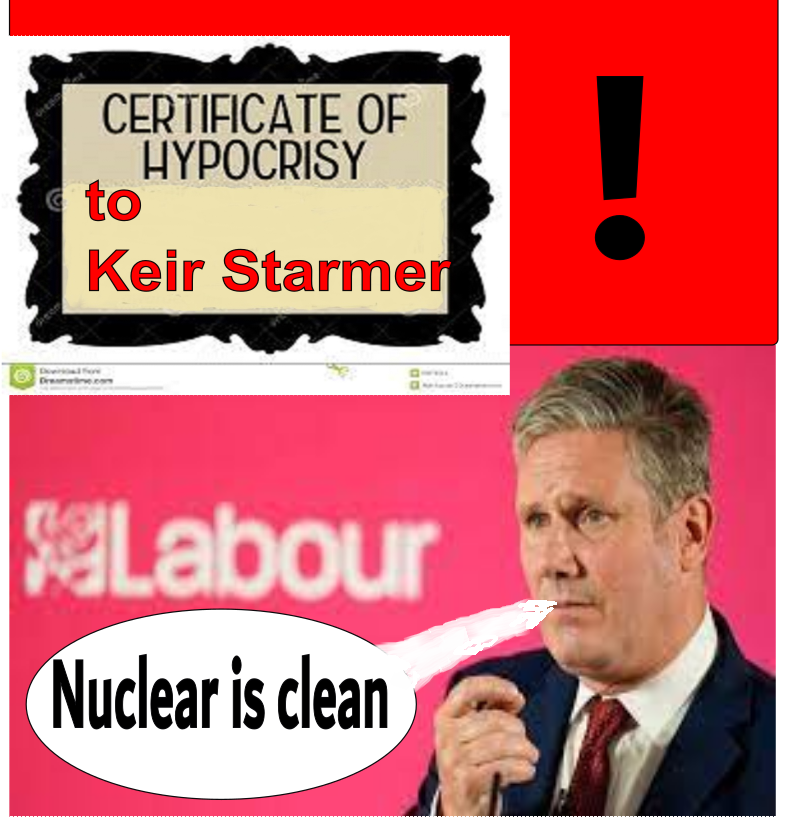
Government’s latest energy announcement is ‘going small as slowly as possible.
Another week and another lie from a government that only seems
capable of pulling defeat from the jaws of victory. Last week found Ed
Miliband, the Energy Secretary, trumpeting “the largest nuclear building
programme in Britain in half a century”.
But at the same time, the
Government is making promises to the people of North Wales – and to the
rest of the UK – that it can’t possibly fulfil. It will do nothing to
help us keep the lights on in 2030, after most of our existing nuclear
fleet has been shut down. “This isn’t ‘going big’ – it’s going
small as slowly as possible,” one industry source told me. “It’s
PowerPoints, not power,” one source fretted. The Government has approved
three new small modular nuclear reactors at the Wylfa site on Anglesey.
The implication is that spades will be in the ground very soon. But by choosing Rolls-Royce SMR, that cannot possibly happen. But Rolls-Royce was very late to the race and is trailing in the pack. Perhaps this will come as a surprise to some. But some of the coverage has been highly misleading.
Like this example: “Rolls-Royce is already world-leading when it comes to
making small modular reactors. It is just the ones they make currently go
into submarines,” Sam Dumitriu of the think tank Britain Remade told
readers of The Spectator last month. He’s the magazine’s go-to nuclear
expert.
Not only does Rolls-Royce not lead the world, being one of the last
to start its design process, but comparing military and civilian reactors
is like saying a horse is a slightly larger goldfish. They are completely
different creatures, adapted to different habitats.
Wylfa is the only site
in the UK that is currently licenced to accommodate a big, gigawatt-scale
reactor generating as much power as three SMR tiddlers. “Wylfa was our
best site for our next gigawatt nuclear plant, which is why I signed one
off there,” Claire Coutinho, the shadow energy secretary, told me.
“It’s big enough to do both small and large nuclear. It would be a huge
downgrade of ambition to only do small nuclear reactors there.”
Telegraph 17th Nov 2025,
https://www.telegraph.co.uk/business/2025/11/17/starmers-nuclear-revolution-is-about-powerpoints-not-power/
Trump Bets Big on a Nuclear Comeback
critics are not so certain that Westinghouse will be able to deliver on its promises due to the company’s poor track record.
The question now is, just how long will it take to achieve the U.S. nuclear renaissance? ……………………… The projects being funded by tech companies, which focus on the development of SMRs, are not expected to produce power until the next decade, and these are much smaller than conventional reactors.
By Felicity Bradstock , Oil Price- Nov 15, 2025, https://oilprice.com/Alternative-Energy/Nuclear-Power/Trump-Bets-Big-on-a-Nuclear-Comeback.html
- The Trump administration plans to quadruple U.S. nuclear capacity by 2050 and deploy 10 new large reactors by 2030, backed by major public funding and tech-sector investment.
- Westinghouse, Cameco, and international partners like Japan and the U.K. are central to the expansion push, though Westinghouse’s troubled track record raises concerns.
- Long development timelines, high costs, regulatory delays, and a diminished skills base make a rapid nuclear renaissance unlikely despite political momentum.
United States President Donald Trump is putting his money where his mouth is as he doubles down on efforts to accelerate the expansion of the country’s nuclear energy sector. The government will spend billions in public funding to reinvigorate U.S. nuclear power, following decades of underinvestment. Unlike renewable energy, Trump views nuclear power as key to expanding the U.S. electricity generation capacity and recently announced the target of quadrupling nuclear capacity by 2050.
In May, President Trump signed an executive order calling for the U.S. to develop 10 new large nuclear reactors by the end of the decade. In addition, several tech companies, including Alphabet, Amazon, Meta Platforms, and Microsoft, are providing billions in private funding to restart old nuclear plants, upgrade existing ones, and deploy new reactor technology to meet the growing demands from the data centres powering advanced technologies, such as artificial intelligence.
The U.S. Department of Energy’s (DoE) loan office will dedicate significant funds to the nuclear energy industry to support the development of new reactors. This week, the Energy Secretary Chris Wright stated, “We have significant lending authority at the loan programme office… By far the biggest use of those dollars will be for nuclear power plants — to get those first plants built.”
Wright expects the public support for the sector to encourage private actors to invest more heavily in nuclear power in the coming years. “When we leave office three years and three months from now, I want to see hopefully dozens of nuclear plants under construction,” said Wright.
In October, Trump came to an agreement with the owners of Westinghouse – uranium miner Cameco and Brookfield Asset Management – to invest $80 billion to build nuclear plants across the country. Westinghouse plans to construct large nuclear plants to be fitted with its modern AP1000 reactor design, which can power over 750,000 homes, according to the company. Cameco COO Grant Isaac suggested he would look to the DoE’s loans office to fund the development of the Westinghouse reactors.
However, critics are not so certain that Westinghouse will be able to deliver on its promises due to the company’s poor track record. The firm went bankrupt in 2017 after going over budget on large-scale nuclear projects in Georgia and South Carolina. Westinghouse will have to prove its ability to build the AP1000 on time and on budget to attract the investment it requires.
The Trump administration has developed various international partnerships to help develop its nuclear power sector in recent months. In September, Japan committed to investing in the Westinghouse nuclear project. The Asian country also agreed on an investment deal for Hitachi GE Vernova to build small modular reactors (SMRs).
Also in September, the U.S. signed a multibillion-dollar deal with the United Kingdom to expand nuclear power across both countries. The new Atlantic Partnership for Advanced Nuclear Energy is aimed at accelerating the construction of new reactors and providing reliable, low-carbon energy for high-demand sectors, such as data centres.
The question now is, just how long will it take to achieve the U.S. nuclear renaissance? It typically takes a decade or longer to develop a new nuclear power plant, and while adding additional reactors to existing plants can be faster, licensing and approval can take several years. In addition, after decades of stagnation in the sector, developing nuclear reactors in the U.S. can be extremely costly and slow, due to the lack of expertise, compared to rapidly growing nuclear powers, such as China.
In China, developing a new nuclear reactor now takes between five and six years on average, much faster than the decade-long timeline in most Western countries. This is supported by China’s strong regulatory system and tried-and-tested development methods. Meanwhile, in the U.S., just powering up a disused reactor, such as that of Three Mile Island, can take several years to achieve. The projects being funded by tech companies, which focus on the development of SMRs, are not expected to produce power until the next decade, and these are much smaller than conventional reactors.
The Trump administration hopes to speed up the development process through a range of measures. One executive order calls for the nuclear power industry’s safety regulator to approve applications in no more than 18 months. The recent funding announcement from the DoE’s loan office is expected to help overcome the biggest bottleneck – funding. Congress has also kept its tax breaks in place for nuclear development to attract private funding to the sector.
Thanks to greater political support and public financing, the U.S. nuclear energy sector could rapidly expand its power capacity over the coming decades. However, achieving the level of acceleration in nuclear development expected by the Trump administration is highly unlikely due to a range of challenges hindering development, from expertise to cost and manufacturing capacity. So, while a nuclear renaissance is possible, it is unlikely to be seen within the next decade.
Finally Some Accountability for Georgia’s Costly Nuclear Power Mistake

Vogtle stands as the only new nuclear reactor built in the last 30 years, and its fallout offers a bleak prognosis for any supposed “renaissance” and its supporters in statehouses across the country. We can look back to 2017 when the main contractor, Westinghouse, filed for bankruptcy due to the extreme cost overruns at Vogtle. At that critical moment, the Georgia PSC ignored its own staff, energy experts, and public outcry, choosing to burden ratepayers with the project’s continuation.
By Kim Scott.15 Nov 25 https://nuclearcosts.org/finally-some-accountability-for-georgias-costly-nuclear-power-mistake/
The story of Plant Vogtle’s two new nuclear reactors in Georgia is not a triumph of a “nuclear renaissance”; it’s a cautionary tale written in soaring electric bills and a growing political fallout. The people of Georgia are paying the price, literally, as their utility bills have skyrocketed by over 40% – and now, following last Tuesday’s Public Service Commission election in Georgia, it seems those that allowed this to happen in the first place are starting to feel the pinch as well. It’s about damn time!
Georgia voters delivered a stunning message by unseating two Republican utility commissioners, Tim Echols and Fitz Johnson, who rubber stamped and championed the costly mistakes leading to a 41% increase in Georgians’ electric bills. This election, which saw Democrats Alicia Johnson and Peter Hubbard championing fair rates, affordability and renewable energy, was a clear referendum on Plant Vogtle’s enormous price tag and more importantly, nuclear power as a not so clean future power resource both here in Georgia and elsewhere.
The stunning defeat of utility backed incumbents sends a powerful signal to utility regulators nationwide that consumers will not tolerate being forced to pay for multi-billion-dollar nuclear boondoggles. If they aren’t paying attention, Wall Street sure is, downgrading Southern Co.’s stock immediately following the election, citing the increased risk and the new difficulty the company will face in pushing through further rate hikes to pay for Plant Vogtle and other projects in their pipeline. Georgia customers will pay an additional $36 billion to $43 billion over the 60-80 year lifespan of the two Vogtle reactors compared to cheaper alternatives.
Vogtle stands as the only new nuclear reactor built in the last 30 years, and its fallout offers a bleak prognosis for any supposed “renaissance” and its supporters in statehouses across the country. We can look back to 2017 when the main contractor, Westinghouse, filed for bankruptcy due to the extreme cost overruns at Vogtle. At that critical moment, the Georgia PSC ignored its own staff, energy experts, and public outcry, choosing to burden ratepayers with the project’s continuation.
The consequences of those decisions, subsequent rate increases and soaring electric bills are not abstract—they are impacting the most vulnerable among us and the most overlooked i.e. middle class/working class Georgians. Disconnection rates for the inability to pay have soared by 30% in 2024. For retirees on fixed incomes, the rate increases to pay for Plant Vogtle mean the difference between making ends meet and falling into destitution. This summer, when brutal heat waves descended, vulnerable Georgians had their power shut off, creating life-threatening conditions because they could no longer afford to cool their homes.
The ratepayer backlash in Georgia is also being fueled by the projected massive energy demands of AI data centers, which are forcing utilities like Southern Co. to reckon with costly new generation and transmission projects. Instead of aggressively pushing nuclear power—as evidenced by the Trump administration’s recent $80 billion deal to buy reactors from Westinghouse, the same company bankrupted by Vogtle—we must demand that elected politicians focus on fast and affordable energy solutions like solar and battery energy storage systems.
The painful lesson learned in Georgia is that new nuclear power is simply too expensive and takes too long. The reality is that for half the cost and in less than a quarter of the time, we could have built more than twice the capacity using solar, wind, or battery storage technologies. But corruption won out and Vogtle is here for the foreseeable future. Georgians will be paying for this mistake for decades to come… I’m just glad there’s finally some accountability headed our way.
Kim Scott is Executive Director of Georgia WAND, is a native Georgian, and has a Chemical Engineering degree from Vanderbilt University in Nashville, TN.
UK’s New nuclear siting policy criticised by industry as ‘missed opportunity’
The highly anticipated National Policy Statement for Nuclear Energy
Generation EN-7, which will dictate where new nuclear reactors can be
deployed, has been published by the government, but it has been criticised
by the Nuclear Industry Association (NIA) as a “missed opportunity”.
New Civil Engineer 14th Nov 2025, https://www.newcivilengineer.com/latest/new-nuclear-siting-policy-criticised-by-industry-as-missed-opportunity-14-11-2025/
Why should Scotland pay billions for nuclear when renewables exist?
Dr Ian Fairlie: Why should Scotland pay billions for nuclear when
renewables exist?
Prime Minister Keir Starmer and Anas Sarwar this week
made further statements in support of more nuclear power in Scotland.
Scottish CND believe their claims about a “golden age of nuclear” are
pie in the sky and should be treated with a pinch (or more) of salt
A proper assessment of our energy situation requires us to look at what is
happening in the rest of the world. Last year, a record 582GW of renewable
energy generation capacity was added to the world’s supplies – but
there was almost no new nuclear. Indeed, each year, new renewables add
about 200 times more global electricity than new nuclear does.
Powerful economic arguments exist for renewables over nuclear. The main one is that the marginal (ie fuel) costs of renewable energy are next to zero, whereas nuclear fuel is extremely expensive. Nuclear costs – for both
construction and generation – are very high and rising, plus long delays
are the norm.
For example, the proposed Sizewell C nuclear station in
England is now predicted to cost £47 billion, with the UK Government and
independent experts acknowledging even this estimate may rise
significantly. And just this week, the Hinkley C station still under
construction in England added yet more costs to its anticipated huge bill.
Must Scotland follow these poor English examples? The reality is that new
nuclear power in Scotland would mean massive costs, a poisoned legacy to future generation and yet more radioactive pollution of our air and seas.
Given these manifest disadvantages, many independent commentators have questioned the UK Government’s seeming obsession with nuclear power.
The National 15th Nov 2025, https://www.thenational.scot/politics/25624042.scotland-pay-billions-nuclear-renewables-exist/
Nuclear for Wylfa the wrong way to go

Nuclear Free Local Authorities, 13th November 2025
Responding to today’s news that the UK Government intends to impose several so called ‘small modular reactors’ upon Wylfa, the Welsh NFLAs believe that this is the wrong way to go.
The money would be better spent on insulating Welsh homes to make them warmer and cheaper to run or used to develop more capacity in renewable technologies that can generate electricity cheaper and far quicker. And Ynys Mon can play a big part in that by becoming a centre of excellence for renewable technologies and so truly Wales’ ‘green energy’ island.
The Government’s nuclear delivery agency, Great British Energy – Nuclear recently concluded a ‘competition’ amongst SMR developers to select a preferred design. Unsurprisingly Rolls-Royce, which had already received a Government hand-out of £210 million during an earlier development stage and a Government hand-up by being fast-tracked onto the Generic Design Assessment process, won the competition. This was the equivalent of running a race with superior sports footwear, and starting the race much earlier, than the other participants. The company will now be awarded a further £2.5 billion of hard-pressed taxpayers money to build three pilot SMRs.
13th November 2025
Nuclear for Wylfa the wrong way to go
Responding to today’s news that the UK Government intends to impose several so called ‘small modular reactors’ upon Wylfa, the Welsh NFLAs believe that this is the wrong way to go.
The money would be better spent on insulating Welsh homes to make them warmer and cheaper to run or used to develop more capacity in renewable technologies that can generate electricity cheaper and far quicker. And Ynys Mon can play a big part in that by becoming a centre of excellence for renewable technologies and so truly Wales’ ‘green energy’ island.
The Government’s nuclear delivery agency, Great British Energy – Nuclear recently concluded a ‘competition’ amongst SMR developers to select a preferred design. Unsurprisingly Rolls-Royce, which had already received a Government hand-out of £210 million during an earlier development stage and a Government hand-up by being fast-tracked onto the Generic Design Assessment process, won the competition. This was the equivalent of running a race with superior sports footwear, and starting the race much earlier, than the other participants. The company will now be awarded a further £2.5 billion of hard-pressed taxpayers money to build three pilot SMRs.
Great British Energy – Nuclear also purchased the Wylfa and Oldbury sites off Horizon for £160 million for reuse as locations for these new SMRs, almost certainly at nil or minimal cost to the developer, and GNE – N recently advertised for a site manager with proficiency in the Welsh language letting slip that Wylfa was the preferred site.
The Government’s announcement refers to Wylfa becoming Britain’s first SMR ‘power plant’ with reactors plural, suggesting that the three initial reactors will all be co-located on the island. SMRs are an uncertain and unproven nuclear technology. The Rolls-Royce SMR design has yet to secure all the required regulatory approvals, no Rolls-Royce SMR have yet been built, let alone operated, and there is no experience of SMR modular assembly. Any reactor will not even come on stream until the 2030’s and even then will only deliver electricity for customers that is vastly more expensive than that generated by renewables. Nor has any permanent solution to the intractible problem of managing high-level radioactive waste been found, but there has been some academic research which indicates that many SMR designs create more waste per kilowatt generated than traditional gigawatt plants. And as Ukraine has demonstrated, nuclear power plants are obvious targets in any future conflict.
Wylfa is a particularly problematic location. The Horizon bid was rejected in part because of the damage it would cause to nature and the beautiful environment of Ynys Mon and its impact on the island’s linguistic heritage. But the bid failed largely because the developer felt they were not receiving enough financial support from the taxpayer. How will this be different? The price tag for a single SMR is likely to be at least £4 billion. Will a public subsidy of £2.5 billion be deemed sufficient to Rolls Royce to incentivise them to proceed with buiding three? How will electricity be transmitted across and out of the island? It is very likely that we shall see a sea of new pylons spring up across the green fields of Ynys Mon and beyond. If parts for a modular reactor are made off-site, how will they be transported onto the island? And with ‘First of a Kind’ experimental SMRs at Wylfa, and a military neighbour at RAF Valley, surely the UK Government is making Ynys Mons an even higher-priority target for terrorists or a hostile power in time of war. How will islanders be evacuated quickly and safely should there be an attack or an accident?
The promised thousands of jobs ‘for the local community’ must also be questionable. ………………………………………………………………………………………………
The Welsh NFLAs would rather see the £2.5 billion dedicated to SMR development at Wylfa redirected by the UK Government to reduce the energy bills of Welsh citizens and move closer to making Wales a wholly renewable electricity nation. How? By funding an emergency programme of retrofitting insulation to Welsh homes and into supporting renewable energy projects……………………………………………………………………………………………………………………… https://www.nuclearpolicy.info/news/nuclear-for-wylfa-the-wrong-way-to-go/
Wales Green Party responds to new nuclear power plans
by Green Party, https://greenparty.org.uk/2025/11/13/wales-green-party-responds-to-new-nuclear-power-plans/
Responding to the announcement of plans for new nuclear power generation on Ynys Môn, leader of Wales Green Party Anthony Slaughter, said:
“It’s Groundhog Day yet again. Gordon Brown declared a bold future for nuclear power back in 2009, showing us nuclear is of no help in fighting the climate crisis.
“New nuclear power at Wylfa would be nothing but an expensive distraction from the clean, fast and cheap renewables already available to us. We need to cut emissions fast, but even the most optimistic backers admit it’ll take a decade for new nuclear to be up and running.
“And there is still no answer to the safe disposal of nuclear waste.
“What Wales needs is a fast, ambitious roll-out of solar, wind and wave energy that will create jobs and cut energy bills.”
1 This Month

of the week – Shut Down Drone Warfare!


Tell the Ukrainian Government to Drop Prosecution of Peace Activist Yurii Sheliazhenko

Petition to revoke the licensing of the Near Surface Nuclear Disposal Facility (NSDF) at Chalk River. https://www.ourcommons.ca/petitions/en/Petition/Details?Petition=e-7247
To see nuclear-related stories in greater depth and intensity – go to https://nuclearinformation.wordpress.com
-
Archives
- March 2026 (251)
- February 2026 (268)
- January 2026 (308)
- December 2025 (358)
- November 2025 (359)
- October 2025 (376)
- September 2025 (257)
- August 2025 (319)
- July 2025 (230)
- June 2025 (348)
- May 2025 (261)
- April 2025 (305)
-
Categories
- 1
- 1 NUCLEAR ISSUES
- business and costs
- climate change
- culture and arts
- ENERGY
- environment
- health
- history
- indigenous issues
- Legal
- marketing of nuclear
- media
- opposition to nuclear
- PERSONAL STORIES
- politics
- politics international
- Religion and ethics
- safety
- secrets,lies and civil liberties
- spinbuster
- technology
- Uranium
- wastes
- weapons and war
- Women
- 2 WORLD
- ACTION
- AFRICA
- Atrocities
- AUSTRALIA
- Christina's notes
- Christina's themes
- culture and arts
- Events
- Fuk 2022
- Fuk 2023
- Fukushima 2017
- Fukushima 2018
- fukushima 2019
- Fukushima 2020
- Fukushima 2021
- general
- global warming
- Humour (God we need it)
- Nuclear
- RARE EARTHS
- Reference
- resources – print
- Resources -audiovicual
- Weekly Newsletter
- World
- World Nuclear
- YouTube
-
RSS
Entries RSS
Comments RSS
 nuclear-news