A lonely evening at home for Fukushima man retracing past
Unsurprisingly, concerns about radiation levels are still on the minds of many former residents. His wife, Mikiko, 64, refused to accompany him for that reason. Ikeda was the only individual in his neighborhood who took up the offer to return home.

December 11, 2021
OKUMA, Fukushima Prefecture–Settling in for the night, Mitsuhide Ikeda poured sake into a glass and raised a toast to framed photos of his deceased parents: “I finally made it back home. Let’s drink together.”
The last time the 60-year-old cattle farmer spent a night at home was 10 years and nine months ago.
Large parts of this town that co-hosts the Fukushima No. 1 nuclear power plant were declared “difficult-to-return” zones after the triple meltdown triggered by the 2011 earthquake and tsunami disaster.
Ikeda’s parents died after the nuclear accident.
The Shimonogami district where the Ikeda’s home is located lies about five kilometers southwest of the Fukushima nuclear facility.
As part of efforts to rebuild the areas around the plant, the government recently began letting residents return home for an overnight stay as a means of preparing for the day when they can do so permanently.
Unsurprisingly, concerns about radiation levels are still on the minds of many former residents. His wife, Mikiko, 64, refused to accompany him for that reason. Ikeda was the only individual in his neighborhood who took up the offer to return home.
Dangerously high radiation levels registered immediately after the disaster that made it impossible for anybody to live in the area have gradually fallen. The government spent vast sums on the time-consuming process of decontaminating topsoil as a way of reducing radiation levels.
It intends to lift the evacuation order for some parts of Okuma in spring. That would be the first step for setting the stage for residents to return home.
The temporary overnight stay program began in Katsurao on Nov. 30 and is gradually being expanded to five other municipalities, including Okuma.
A check for radiation in November on the Ikeda plot found one spot with a reading of 3.8 microsieverts per hour, above the level deemed safe enough for the government to lift the evacuation order.
Even though the Environment Ministry is planning additional decontamination work, Mikiko was unsettled by the reading and concluded it would be impossible to pick up the threads of their past life in Okuma.
Other changes in the close to 11 years since the nuclear disaster make a return to Okuma unrealistic.
While a large supermarket, hospital and bank branch remain standing in the town, there is no indication when those facilities might resume operations.
In the interim, the Ikedas plan to commute to Okuma from the community they moved to as evacuees.
The overnight stay program is restricted to an area close to what was once the bustling center of the town. About 7,600 residents lived there before the nuclear disaster.
The town government envisions that as many as 2,600 people will reside in the town within five years of the evacuation order being finally lifted if plans proceed to rebuild social infrastructure.
But the writing is on the wall for many people.
According to the Environment Ministry, about 1,150 homes in the district had been torn down as of the end of September.
And as of Dec. 8, only 31 residents in 15 households applied for the overnight stays.
Even Ikeda admits that Okuma will likely never return to the community he knew before 2011.
“Too much time has passed,” he said.
Nuns against nuclear weapons
Nuns against nuclear weapons – Plowshares protesters have fought for disarmament for over 40 years, going to prison for peace, https://theconversation.com/nuns-against-nuclear-weapons-plowshares-protesters-have-fought-for-disarmament-for-over-40-years-going-to-prison-for-peace-169918December 9, 2021 Carole Sargent Carole Sargent is a Friend of The Conversation. Literary Historian, Georgetown University In July 2012 Sister Megan Rice, an 82-year-old Catholic nun, and two men walked past multiple broken security cameras and into the heart of a high-security nuclear complex. Y-12 in Oak Ridge, Tennessee, was the birthplace of the atomic bomb and now stores enriched uranium for nuclear warheads. Although thanked by Congress for exposing astoundingly lax contractor security, the three were also convicted and served two years in prison.
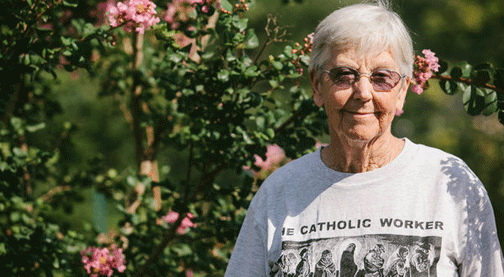
Rice, who died in October 2021, was part of a protest tradition called Plowshares. Since 1980, there have been over 100 Plowshares actions in the U.S., the U.K. and Europe. The name comes from the books of Isaiah and Micah in the Bible: “They shall beat their swords into plowshares, and their spears into pruning hooks: nation shall not lift up sword against nation, neither shall they learn war any more.” Isaiah and Micah are accepted as Scripture by Christians, Jews and Muslims.
Civil resistance, not disobedience
Rice’s journey with Plowshares began when she retired after four decades teaching science and math in schools founded in Nigeria by her religious order, the Society of the Holy Child Jesus. At Baltimore’s Jonah House, a faith-based activist peace community, she met Sister Anne Montgomery, a Society of the Sacred Heart nun and the daughter of a prominent World War II naval commander. Montgomery became Rice’s Plowshares mentor.
Montgomery helped develop Plowshares’ legal strategies, such as attempting to put nuclear weapons on trial. This means explaining to juries that nukes have been internationally illegal since the Treaty on the Prohibition of Nuclear Weapons and even its 1968 predecessor – and also how their use violates the Geneva Conventions and other binding treaties.
When testifying, these nuns do not describe their actions as “civil disobedience,” because that would mean they did something illegal. Instead, they prefer “civil resistance,” which Montgomery called “divine obedience” to higher principles of peace.
One of Plowshares’ most effective strategies is to represent themselves in court, known as pro se, which in Latin means “for oneself.” It allows protesters, including these nuns, to discuss humanitarian law, the necessity defense – meaning you broke a small law to stop a large crime – and the U.S. 1996 War Crimes Act. Lawyers cannot discuss these issues because judges limit cases to mere trespassing or property damage. Using pro se, activists speak freely in ways that might get a real lawyer professionally reprimanded. Lawyers often do, however, stand by as advisers.
Sabotage charges
Rice wasn’t the first nun to be convicted of sabotage. Ten years earlier, Dominican Sister Ardeth Platte, who inspired the nun character on the popular Netflix prison series “Orange is the New Black,” went to prison in Danbury, Connecticut, on the same charge. Platte (pronounced Platty) spent her retirement years engaging in Plowshares and other protests at weapons sites.
In 2002, along with fellow Dominican nuns, Sister Carol Gilbert and Sister Jackie Hudson, Platte breached an intercontinental ballistic missile facility in Colorado. The three poured blood in the shape of a cross to remember victims of war. Then they rapped on the blast lid with a household hammer. The small hammers do not damage such massive weapons in any significant way. The three were accused of preventing the United States from attacking its enemies or defending itself, which is the definition of sabotage.
Just like Rice’s group and many other Plowshares activists, the three nuns carried rosaries, Bibles and other objects in small black bags. Explosives experts, however, thought they might have bombs. Attack helicopters swooped in as they sang and prayed. Police pointed semiautomatic rifles at them and shut down a nearby highway. This was an unusual reaction, since Plowshares protesters are usually stopped and arrested with far less fanfare, and it may be why the prosecutors won a sabotage conviction.
Rice’s prosecutors brought up Platte’s case during her trial, in which she and her companions were also convicted of sabotage. However, two years later an appeals court overturned it, admonishing that “no rational jury could find” they actually injured the national defense.
Just like Rice’s group and many other Plowshares activists, the three nuns carried rosaries, Bibles and other objects in small black bags. Explosives experts, however, thought they might have bombs. Attack helicopters swooped in as they sang and prayed. Police pointed semiautomatic rifles at them and shut down a nearby highway. This was an unusual reaction, since Plowshares protesters are usually stopped and arrested with far less fanfare, and it may be why the prosecutors won a sabotage conviction.
Rice’s prosecutors brought up Platte’s case during her trial, in which she and her companions were also convicted of sabotage. However, two years later an appeals court overturned it, admonishing that “no rational jury could find” they actually injured the national defense.
Guest Post from Gordon Frederick Coggon – a Nuclear Test Veteran’s Experience — RADIATION FREE LAKELAND

Gordon Frederick Coggon ·26 Nov 21,
Guest Post from Gordon Frederick Coggon – a Nuclear Test Veteran’s Experience — RADIATION FREE LAKELAND
https://wordpress.com/read/feeds/331643/posts/3682558618 During 1957 and 1958 I was one of 20,000 British serviceman sent to the central Pacific testing ground of British Hydrogen bomb tests which in my own case involved being at Christmas Island.(now named Kiritimati). During my year there I was subjected to radiation contamination. I witnessed two hydrogen bombs, the first being Operation Grapple X with a 1.8 megaton yield on Nov 8th. 1957 and the second bomb being on 28th. April 1958. Which had a yield of 3 megatons.( Both these devices were dropped by a Valient ‘V’ bomber about 20 miles off the southern tip of the Island.)
After the Grapple X test I was sent to hand wash a Canberra Aircraft,s engine nacelles after it had flown through the cloud of the hydrogen bomb collecting samples. I was set to work using a small bore hosepipe and a scrubbing brush, (the Aircraft had been hosed down with high pressure jets of water before I was employed on a gantry cleaning where the jets of water were not directed at the intakes of the engines.) Initially, I was given a pair of denims, wellingtons, rubber gloves and a remote breathing apparatus (which consisted of a face mask attached to 38 feet of corrugated rubber hose and connected to a fresh air filter which was fastened down as far away as possible from the aircraft. The face mask head straps were broken so the man in the white suit and gas mask said it was useless for the job in hand so I was given a crude homemade mask made from cotton wool sandwiched between a silver paper foil.
Whilst working on the gantry the mask got wet through and I wasnt able to breathe, so I had to move it from my mouth and nose to enable myself to breathe. I continued to work for between 20 to 30 minutes before I was replaced by someone else and I was then sent to the decontamination tent where I showered several times until the man in the white suit and Geiger counter said I was ok to get dressed in the clean side of the tent and was given a new set of kd shorts and shirt. This showering and decontamination took at least one and a half hours, My contaminated clothing was put in a yellow barrel marked with radiation signs in the dirty side of the facility. I have to say also that some of us were given other dangerous tasks like picking up dead fish and birds after the tests and some guys had to dump contaminated equipment in the ocean or bulldoze contaminated earth. After the Grapple Y bomb on 28th.April 1958, there was a massive downpour of rain, which came from the bomb cloud, a lot of the young innocent troops stood outside bathing in it like one normally did during the rain showers, but unlike the normal rain this was said to be contaminated because there was no other clouds in the sky at the time.
At that time I was 18 years old (picture of me above whilst there) and most of us had no idea what radiation was. Nor was I told anything about it until later in my career when I remustered into the Fire, Crash and rescue trade, where I was trained up to an advanced stage about radiation and biological warfare and every Monday I was teaching an induction course to new arrivals on the station that I was posted too. That was when I began to worry about my own health. Had I been put at an high risk of radiation whilst on Christmas Island ??. The Aircraft that I had helped to decontaminate was still emitting Gamma radiation, to what extent?? Also, did I swallow, inhale Alpha particles.?? ( Alpha radiation cannot penetrate human skin but they can be swallowed in water droplets, eaten if on food, or more commonly inhaled.)
These Alpha particles may remain inside your body for your whole life, attacking cells of your body for decades and could take many years before irrepairable damage becomes apparent. Recently it has been associated with radiation caused diseases and malformities in new born descendants of nuclear test veterans. I have had Cancer and several other illnesses which most lightly have been caused by atomic radiation, so far, even after seventy years, the successive British Governments have continued to deny that their troops were subjected to radiation during their atomic and hydrogen tests in the fifties and sixties. And yet, many of the nuclear armed countries have acknowledged the troops that was sent to take part in their experiments with nuclear fission and have been recognised by being given a medal and/or compensation.
I have only mentioned my own experience at Christmas Island (Kiritimati) but during a period 1952 – 1968 there have been many such tests in Australia, other testing areas of the Pacific where a lot of fellow veterans were irradiated by atomic fallout and nuclear poisoning from various clean-up operations after the tests, many of these young men never got to grow old because of their contamination from the tests. Many test sites were carried out where local people lived, these same people have since lost their homes and way of life by the poisoning effects of radiation . Since; atomic radiation contamination illnesses have continually been killing test veterans and clean-up veterans nothing has been done so far to help the families of these brave innocent troops and civilians by the British Government, who were subjected to experiments during the trials.
It is now becoming more alarming by the number of offspring who have also inherited their veteran father’ s damaged cells genetically. * reference to these tests are also available in two books that I have published on Amazon. The first one is titled :- ‘ Christmas Island 1957-1958 ‘ an Ebook on Kindle. The other is a paperback, titled:-‘ The Life of a Yorkshire Lad’ on Amazon and an ebook on kindle.
All royalties for the (latter paperback/ebook have been donated to LABRATS INTERNATIONAL for their continued valuable work in helping test veterans and their descendants come together from all over the world in their fight for justice.
Libbe HaLevy’s interview with Sister Megan Rice 2019

Anti-Nuclear Peace Nun Sister Megan Rice of Plowshares http://nuclearhotseat.com/2019/12/24/anti-nuclear-peace-nun-sister-megan-rice-of-plowshares/
by Libbe HaLevy | Dec 24, 2019 | Listen Here:
Anti-Nuclear Peace Nun Sister Megan Rice – To celebrate the holidays, a reminder of one of 2015’s successes — the early release from prison of Sister Megan Rice, one of three brave activists who broke into high security nuclear weapons at the Y-12 nuclear facility in Oak Ridge, Tennessee – the so-called “Fort Knox of Nuclear“- to protest nukes and war. She was arrested on-site and, at age 82, convicted of sabotage – a conviction that was overturned after she’d already served two years in prison.
We’ll hear from:
- Sister Megan Rice, the now-89-year-old anti-nuclear peace nun. She speaks at length about the peaceful 2012 Transform Now Plowshares protest action. She and two other activists broke into the Y-12 National Security Complex in Oak Ridge, Tennessee which resulted in her being charged with sabotage and sentenced to almost three years in prison. This interview was recorded when she was newly out of prison pending a re-sentencing hearing. All further charges were later dropped. The break in was an antiwar protest referred to as “the biggest security breach in the history of the nation’s atomic complex.” All it took? Three determined senior or senior-adjacent activists, some wire cutters, and a deeply spiritual love for people and the planet.
- Co-defendant Gregory Boertje-Obed, 60, who along with co-defendant Michael Walli, 68, was sentenced to over five years in prison for their non-violent protest.
Originally presented on May 26, 2015, for Nuclear Hotseat #205.
LINKS to the Transform Now Plowshares statement and Indictment of Oak Ridge for War Crimes that were drawn up by these three brave activists and read at the Y-12 site.
Vale Sister Megan Rice – an anti-nuclear hero

Catholic sister who spent 2 years in prison for nuclear weapons protest dies at 91, Catholic News Service 13 Oct 21,
ROSEMONT, Pa. (CNS) — Sister Megan Rice, whose yearslong crusade against nuclear weapons included serving two years behind bars for a felony, died Oct. 10 at the Rosemont residence of her religious order, the Society of the Holy Child Jesus. She was 91.
Colleen Carroll, director of communications for the order, said the cause of death was congestive heart failure.
“It is incredible to consider how the bravery of this small, smiling, unassuming woman in standing up to the entirety of the U.S. military-industrial complex could bring so much awareness to the devastation our nation’s idolatry of nuclear weapons inflicts on people here in the U.S. and around the world,” Johnny Zokovitch, executive director of Pax Christi USA, said in a statement.
“All of Pax Christi USA grieves at her passing, but we give thanks for her witness, for her life and for the challenge that she issued by standing up nonviolently for a better world for all of us,” he said.
Sister Rice’s bold campaign against nuclear weapons launched her into the spotlight and caused her to become the issue’s ad hoc spokeswoman.
In July 2012, at age 82, she and two other members of Transform Now Plowshares breached security to stage a protest at the self-styled “Fort Knox of uranium,” the Y-12 National Security Complex in Oak Ridge, Tennessee. The facility creates and houses materials for making nuclear weapons.
The three activists cut through fences and reached the warehouse that stores bomb-making uranium. There, they splashed blood on the wall, hung banners and spray-painted messages condemning nuclear weapons.
The action sparked national shock and outrage, led to a congressional investigation of the security at Y-12 and sent Sister Rice and her companions, Michael Walli, then 63, and Greg Boertje-Obed, then 57, to prison.
On Feb. 18, 2014, in U.S. District Court, Sister Rice, of Washington, was sentenced to 35 months in prison on each of two counts — one count of depredation of property and one count of sabotage.
Sister Rice toured the country to protest the United States’ nuclear arsenal as the star of the film. She also spoke to a congressional hearing and at the United Nations in New York City on the issue of nuclear disarmament.
And she continued her activism through vigils, marches, prayers and visits to classrooms.
“It’s illegal to deal in weapons of mass destruction — immoral and illegal,” Sister Rice declared during an April 8, 2018, event at the DeBartolo Performing Arts Center at the University of Notre Dame in South Bend, Indiana, where the documentary was being screened.
“We’re not being taken to the international court of justice and indicted the way Iran or some other place would,” she said.
……….In the 1980s, Sister Rice got involved in the anti-war movement, participating in protests against a variety of American military actions, military sites and nuclear weapons installations.
She was arrested more than three dozen times in acts of civil disobedience, including her anti-nuclear weapons activism. https://www.americamagazine.org/faith/2021/10/13/sister-megan-rice-obituary-241640
The sunken nuclear submarines: Russia’s ‘slow-motion Chernobyl’ at sea

One of them is the K-27, once known as the “golden fish” because of its high cost. The 360ft-long (118m) attack submarine (a submarine designed to hunt other submarines) was plagued with problems since its 1962 launch with its experimental liquid-metal-cooled reactors, one of which ruptured six years later and exposed nine sailors to fatal doses of radiation. In 1981 and 1982, the navy filled the reactor with asphalt and scuttled it east of Novaya Zemlya island in a mere 108ft (33m) of water. A tugboat had to ram the bow after a hole blown in the ballast tanks only sank the aft end.
The K-27 was sunk after some safety measures were installed that should keep the wreck safe until 2032. But another incident is more alarming. The K-159, a 350ft (107m) November-class attack submarine, was in service from 1963 to 1989. The K-159 sank with no warning, sending 800kg (1,760lb) of spent uranium fuel to the seafloor beneath busy fishing and shipping lanes just north of Murmansk. Thomas Nilsen, editor of The Barents Observer online newspaper, describes the submarines as a “Chernobyl in slow motion on the seabed”.

While the vast size of the oceans quickly dilutes radiation, even very small levels can become concentrated in animals at the top of the food chain through “bioaccumulation” – and then be ingested by humans. But economic consequences for the Barents Sea fishing industry, which provides the vast majority of cod and haddock at British fish and chip shops, “may perhaps be worse than the environmental consequences”, says Hilde Elise Heldal, a scientist at Norway’s Institute of Marine Research.
But an accident while raising the submarine, on the other hand, could suddenly jar the reactor, potentially mixing fuel elements and starting an uncontrolled chain reaction and explosion. That could boost radiation levels in fish 1,000 times normal or, if it occurred on the surface, irradiate terrestrial animals and humans, another Norwegian study found.
Russia’s ‘slow-motion Chernobyl’ at sea https://www.bbc.com/future/article/20200901-the-radioactive-risk-of-sunken-nuclear-soviet-submarines, By Alec Luhn, 2nd September 2020
Beneath some of the world’s busiest fisheries, radioactive submarines from the Soviet era lie disintegrating on the seafloor. Decades later, Russia is preparing to retrieve them.
By tradition, Russians always bring an odd number of flowers to a living person and an even number to a grave or memorial. But every other day, 83-year-old Raisa Lappa places three roses or gladiolas by the plaque to her son Sergei in their hometown Rubtsovsk, as if he hadn’t gone down with his submarine during an ill-fated towing operation in the Arctic Ocean in 2003.
Continue readingIs Bill Gates ‘a nice man in a jumper’ or a power-hungry egotist?
Is Bill Gates ‘a nice man in a jumper’ or a power-hungry egotist? The Conservative Woman ByKate Dunlop, May 6, 2021

”…………According to Forbes, Gates is worth £93billion and is the fourth richest man in the world after Jeff Bezos, Elon Musk and French luxury goods owner Bernard Arnault (obviously they are not counting anyone in China)…………
Bill Gates is known to be difficult, but he is extraordinarily adept at managing his own reputation. Over the years he has forked out millions to the world’s media to secure sympathetic and uniform reporting. They would have you believe he is a ‘nice man in a jumper’. Bill Gates is a power-hungry, obsessive, manipulative egotist. He is not like you or me.
I say that not out of cruelty, but as a warning. The upside of his marital breakdown may be that he finds himself distracted, even for a few months, which might give the rest of us respite from his pursuit of world dominance.
Who might benefit from his absence? Well, the first thing to come to mind, is the unwarranted and undemocratic influence that Gates has on our cultural and political masters.
Writer Naomi Wolf, a former political consultant for the presidential campaigns of Bill Clinton and Al Gore, compared the current political situation to the rise of the Nazis in the 1930s but observed that the current rise in political tyranny and ‘bio-fascism’ is not restricted to one state. It is almost universal, with liberal and conservative governments across the world, ‘all reading the same sound bites’………
Wolf discussed Gates’s increasing influence over global news corporations in the August 2020 Columbia Journalism Review. Her article revealed his substantial financing not only of ‘media, media, media,’ but also of ‘K through 12 education [kindergarten to age 18].’
She warns people to avoid imagining that Bill Gates, the ‘tech bros,’ Soros, and China ‘think like us’ because ‘they don’t’.
If Gates were off the world stage, even temporarily, governments might be able to see him for the hypocritical manipulator that he is. Some leaders might break free from the path to perdition that they are set on. The brave might even develop a strategy to counter him. ………..
It’s not science fiction, it’s just capitalism,’ Naomi Wolf says, ‘It’s just a kind of Asperger’s kind of psychopathic guy with too much power surrounded by . . . communists who have perfected inhuman, anti-individualist thinking and Silicon Valley guys who are making billions of dollars from it and who also don’t think in terms of human rights and freedoms, but a “new space”, as they put it, to monetise.’
Nuclear test veterans: ‘My dad was treated like a guinea pig’
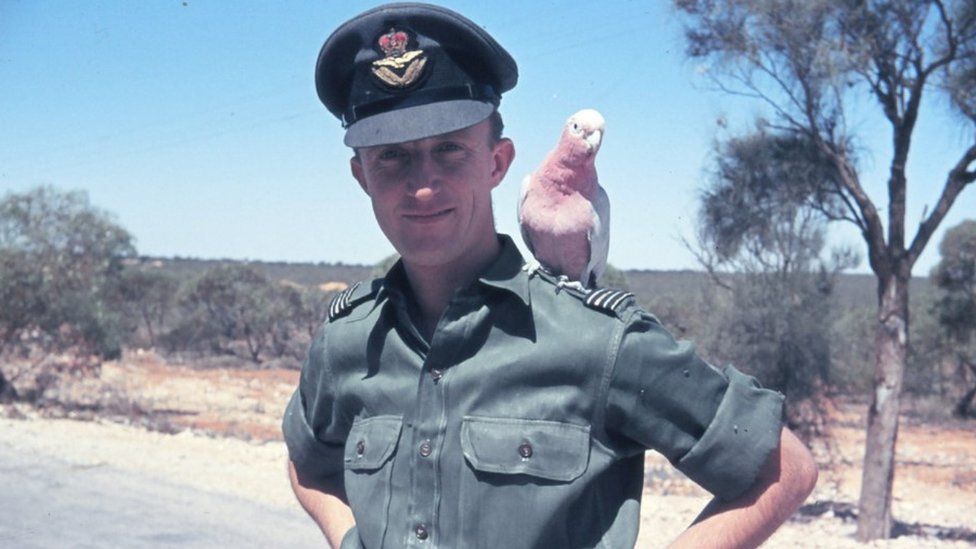
Nuclear test veterans: ‘My dad was treated like a guinea pig’, By Chris Wood, BBC News 30 May 21, When David Purse was sent to Australia, he thought it would be a “wild adventure” in a little-explored place.
However, the RAF flight lieutenant’s posting to a remote area called Maralinga was to test atomic weapons.
Son Steve, 47, from Prestatyn in Denbighshire, puts his own “unique” condition down to “a rare genetic mutation” caused by radiation.
The Ministry of Defence said three large studies found no link between the tests and ill health.
But a study at Brunel University is currently looking at the possibility genetic damage from the tests has affected the children of personnel.
“Flying through mushroom clouds or watching”, Steve believes men were “treated like guinea pigs” and wants recognition for them, adding: “It wasn’t an act of God but an act of government.”
In all, about 40,000 British personnel took part in the testing of atomic and hydrogen bombs in the 1950s and 1960s.
Most were in the Pacific – the biggest being Operation Grapple, where about 22,000 people oversaw the exploding of bombs in 1957.
Maralinga, in South Australia, saw the first test launches of atomic weapons from aircraft in 1962.
“He was told at short notice and was looking forward to visiting a warm country, a relatively unexplained place, and having a wild adventure,” Steve said of his father.
However, he was “close enough to ground zero to see sand to turn to glass” during tests, with no protective equipment.
Steve added: “There was a rope saying ‘do not enter’ but radiation was in the sand and would blow into food, into their face.
“They would swim in the lagoon, and catch fish that contained highly toxic radiation.”……………..
Steve describes his condition as “unique”, with doctors unable to diagnose it exactly, but says it is a form of short stature, similar to that of actor Warwick Davis.
He believes it is because of a “rare genetic mutation” as a result of the nuclear tests, and part of the “roulette” future generations must live with.
Steve is worried his baby son, Sascha, could also develop problems as he grows older.
“That’s the sad thing, it probably won’t die with veterans,” he said………
The possibility that children of personnel could be affected was first raised in a study at New Zealand’s Massey University in 2007.
Al Rowlands, who led the investigation at the university, said results were “unequivocal” that veterans had suffered genetic damage as a result of radiation.
Support group Labrats estimates there are 200,000 descendants of those who took part in British tests – and says the UK is the only nuclear state not to properly recognise its veterans and support them.
It conducted a health survey with 123 people who took part in tests, 76 from the UK.
“Many [problems experienced by descendants] tend to be autoimmune diseases, but if there are problems, they tend to be severe,” said founder Alan Owen.
“There are bone problems, teeth problems, eye sight. Issues that are meant to affect one in 1,000 – we talked to 10 descendants, four were affected.
“They have developed cancer, heart problems, a wide range of diseases.”
He described talking to veterans about their fears, adding: “When a grandchild is born, they don’t ask if it’s a boy or a girl, but if it’s okay. It’s quite sad they’re living with that now.”
Mr Owen’s father was involved at Operation Dominic, where the United States conducted 31 tests in the Pacific in 1962.
The American government has paid compensation to British personnel present and Mr Owen wants recognition by UK authorities.
He believes there are about 1,500 British nuclear veterans still alive, adding: “All they want is for the government to say ‘we did wrong, it was the 1950s’.
“No prime minister has ever met nuclear veterans. Anthony Eden was warned about the consequences and his reply was ‘it’s a pity but we can’t help it’…………
A number of veterans have already called for an apology, linking their cancer to the testing.
The Ministry of Defence responded by saying: “The National Radiological Protection Board has carried out three large studies of nuclear test veterans and found no valid evidence to link participation in these tests to ill health.”
The Brunel University study has been carried out with those involved in British nuclear tests and their children, with results due soon.
“We anticipate that our findings will have a lasting benefit for the broader nuclear community by providing scientific evidence that will resolve current uncertainties and speculation about potential adverse health effects in nuclear test veterans and their families,” said chief investigator Rhona Anderson. https://www.bbc.com/news/uk-wales-57157476
1 This Month
To see nuclear-related stories in greater depth and intensity – go to https://nuclearinformation.wordpress.com/
12 February – Webinar The Big Push: New Nuclear Projects in Canada

Thursday, February 12, 7 pm Eastern | 2nd of 4 sessions in the 2026 Nuclear Waste Online webinar series
Join a webinar on the push for new nuclear generation in Canada. Go to Northwatch.org to register or use the registration link https://us02web.zoom.us/webinar/register/WN_ZfWOf1GITqSRIZX8CB-A9w

-
Archives
- February 2026 (115)
- January 2026 (308)
- December 2025 (358)
- November 2025 (359)
- October 2025 (376)
- September 2025 (258)
- August 2025 (319)
- July 2025 (230)
- June 2025 (348)
- May 2025 (261)
- April 2025 (305)
- March 2025 (319)
-
Categories
- 1
- 1 NUCLEAR ISSUES
- business and costs
- climate change
- culture and arts
- ENERGY
- environment
- health
- history
- indigenous issues
- Legal
- marketing of nuclear
- media
- opposition to nuclear
- PERSONAL STORIES
- politics
- politics international
- Religion and ethics
- safety
- secrets,lies and civil liberties
- spinbuster
- technology
- Uranium
- wastes
- weapons and war
- Women
- 2 WORLD
- ACTION
- AFRICA
- Atrocities
- AUSTRALIA
- Christina's notes
- Christina's themes
- culture and arts
- Events
- Fuk 2022
- Fuk 2023
- Fukushima 2017
- Fukushima 2018
- fukushima 2019
- Fukushima 2020
- Fukushima 2021
- general
- global warming
- Humour (God we need it)
- Nuclear
- RARE EARTHS
- Reference
- resources – print
- Resources -audiovicual
- Weekly Newsletter
- World
- World Nuclear
- YouTube
-
RSS
Entries RSS
Comments RSS
 nuclear-news