The logic behind the terror: Why does Ukraine keep attacking civilian areas in Donetsk?
Rockets have hit peaceful neighborhoods once again. Why does Kiev continue its policy, if not purely out of hate?
By Vladislav Ugolny, a Russian journalist based in Donetsk 4 Feb 23 https://www.rt.com/russia/570954-logic-behind-ukrainian-terrorism/
At least ten rockets hit central areas of Donetsk on Saturday morning, damaging three residential buildings, a local Russian official has reported in his Telegram channel.
One of the projectiles fired by Ukrainian forces hit an apartment building in the Kievsky district. While rescuers continue to search for survivors under the rubble, preliminary information suggests that there were three people in one of the apartments.
There was no information on casualties at the time of writing, but the absence of victims would be unusual; indeed, Ukrainian shelling of the capital of the Donetsk People’s Republic intensified weeks before the Russian attack in February 2022, and has taken a heavy toll ever since.
The suffering of Donbass residents
According to the human rights commissioner of the DPR, Daria Morozova, at least 1,091 civilians were killed and another 3,533 were recorded as injured last year as a result of combat operations. The figures do not include places such as Mariupol, where the full scale of the tragedy has yet to be assessed.
The 4,624 people mentioned above were victims of regular artillery strikes on urban areas of Donetsk and Gorlovka.
When Donetsk residents are asked why the Ukrainian Armed Forces continue to attack civilians, people usually have no explanation other than the desire of the Ukrainian government and military to destroy Donbass and its people. This is supported by a massive campaign to dehumanize local residents and a number of hateful statements by Ukrainian politicians. “We will kill them with nuclear weapons,” warned former Prime Minister Yulia Timoshenko, while ex-president Pyotr Poroshenko has vowed: “Our children will go to school, while their children will go sit in basements. That’s how we will win this war.”
Ukrainian forces continue to bomb Donbass despite the shortage of shells experienced by both sides of the conflict. However, while Russia can solve this issue by activating its military-industrial complex, Ukraine is entirely dependent on foreign supplies.
It should make a lot more sense for Ukraine to use scarce ammunition on military targets rather than on peaceful residential areas. Even if a lot of the time, Kiev’s forces misfire. A typical example is a Ukrainian shell landing in the frozen Kalmius River that divides Donetsk.
How Ukraine explains the attacks
Whenever Ukrainian artillery hits a civilian object – for example, a flower market – or kills civilians, officials in Kiev deny it. Unofficial voices resort to false claims that no such thing ever happened. Over the past eight years, the latter have come up with several memes allegedly proving that the Ukrainian Army wasn’t involved – with explanations such as “the air conditioner exploded.” Even if Ukrainian forces manage to hit a military facility, such as a warehouse, they usually deny involvement, claiming that “someone smoked in the wrong place” and that the explosion wasn’t related to the conflict. Thus, an information environment is created that denies the fact that Kiev attacks cities.
The Ukrainian side claims the attacks on civilians are “self-inflicted” – implying that the Russian Army attacks cities under its control, supposedly to blame Ukrainian forces and demonize them in the eyes of the population, as well as for propaganda purposes. This kind of post-truth has given rise to a whole area of fact-checking, where journalists collaborate with open-source intelligence to calculate the trajectory of the strikes.
For Donbass residents, all this is extremely painful. Discussions of terrorist attacks on civilian infrastructure often end in profanities. According to Donbass locals, Ukrainians keep on attacking Donetsk simply because they can. Meanwhile, people are just trying to survive and are waiting for the front to move away from the area. Other details don’t concern them.
However, this is a distorted view of the situation; there is every reason to believe that the regular shelling of cities in Donbass is part of Ukrainian strategy and follows military logic. Perhaps Kiev’s “hybrid war” era military doctrine has adopted terrorist methods. So, how do these attacks on the civilian population help Ukraine?
Psychological pressure
Let’s take a clear example. In June 2022, the units of the first corps of the People’s Militia of the DPR were dislodged from their permanent locations because of the battle for Lisichansk – they had to storm a huge section of the front from Popasnaya to Verkhnekamenka, moving from south to north. The Russian Armed Forces then lacked personnel and had to use troops from Donetsk. Ukraine intensified strikes on the city to force the leadership to return the units back to their locations.
A similar thing is happening now. Some areas are under pressure – in particular, the fighters of the Wagner Group are pressing in Soledar and Artyomovsk (known in Ukraine as Bakhmut). They are advancing backed by the artillery of the Russian Armed Forces. Ukrainians use civilian strikes to provoke politicians, hoping that they will influence the military and interfere with the army’s plans. In June, this plan failed and the Ukrainians, taking advantage of the lack of counter-battery fire in the Donetsk region, committed a number of atrocities.
Commenting on the situation in a private conversation, one fighter explained why the army didn’t take the bait: “Normally, no military man – from simple soldier to general – suffers if the enemy attacks the city. This sounds harsh, but it’s better for the enemy to attack the city than the army’s manpower. This would be the usual military logic, but there is one key detail: 95% of our corps are made up of local residents who are worried about their cities. So, after completing the mission in Lisichansk, our soldiers were very angry when they got back to Donetsk.”
This is all very close to home for fighters from Donbass. In the case of a fast-paced conflict without a stable front line, such attacks would have motivated the soldiers, by enraging them. Perhaps this explains the near-complete silence of the Ukrainian artillery in the first month of the Russian military campaign. In those days, when the front line was mobile, it was better not to further motivate the enemy.
However, in positional warfare, fighters are conscious of a permanent threat to their relatives and other civilians in their hometowns. Motivated warriors who identify themselves as “defenders” feel as if they don’t have enough strength to break through. This acts to discourage. Concern for those who are not on the front line returns the soldier to his other life, behind the front lines, and distracts him from battle. By itself, this does not break morale, but soldiers are also affected by constant adrenaline swings, a risk of death or injury to themselves or their brothers in arms, the cold and damp conditions, the monotony of their work (for example, a good soldier digs more often than shoots), and numerous other factors.
Russia doesn’t have a strong memory of World War I – it has been replaced by that of World War II. However, the current fighting resembles the trench warfare of the early 20th century. With the possibility to adjust and fine-tune firing using Chinese drones and the chance to search the internet for how to repair military equipment. The rest of it – mud, trenches, the frozen front line – is like World War I, including politicians demanding a large-scale and ambitious offensive.
Why can’t the strikes be stopped?
At the end of July 2022, such an event began in the Donetsk region. Its main goal was to free the city from artillery strikes. The Donetsk corps were successful for several days, but then became stuck in positional battles. By the end of January, six months into the operation, the army had barely advanced 10km (6 miles).
The fighters were unable to break through the pre-established line of defense, and the forces only managed to wedge and slowly push through the three lines of fortifications near the villages of Vodianoye and Opitnoe, north of Donetsk airport. However, the fighters cannot give up on storming these fortifications – the strikes on Donetsk and Makeyevka must end for good.
As a result, there have been signs of an emerging contradiction. On the one hand, military leaders who are interested in achieving military goals and saving manpower, and on the other, politicians who express the interests of the civilian population and want to put a swift end to the artillery terror. Politicians want the public to like them. They don’t want to deal with the consequences of hostilities, hoping for things to return to normal so they can receive funding to restore the affected regions. As a result, they view the situation quite differently from the military.
Through manipulation, propaganda and informational and psychological influence, Ukrainians have made cunning use of the differences between civilian and military interests. This comes down to a grotesque choice between “killing the army in Avdeevka” and “allowing the Ukrainian Armed Forces to wipe Donetsk off the face of the Earth.” If politicians push the army to force the assault, the latter will make more mistakes, which will reduce their power. This, in turn, favors Kiev.
Perhaps seeking rational reasons behind the artillery strikes in Donbass is pointless – maybe it’s just the manifestation of rage on behalf of Ukrainian nationalists. However, if we ask ourselves “who benefits from this,” there is a creeping suspicion that terrorizing the population with NATO ammunition is a strategy initiated by Ukraine’s top military leadership. Firstly, these attacks tie up the forces of the Russian Army and distract it from concentrating on other areas. Secondly, they negatively affect the combat spirit of the fighters from Donbass. And finally, they allow political factors to intervene in military strategy, dealing a serious blow to its quality.
Twin threats to the Marshallese — Beyond Nuclear International

Art reflects trauma of nuclear testing and climate change
Twin threats to the Marshallese — Beyond Nuclear International
Youth activists paint pictures of their forgotten history and perilous present
From Reverse The Trend and the Marshallese Educational Initiative
Last summer, Reverse The Trend and Marshallese Educational Initiative showcased a series of paintings by Marshallese youth that reflect the twin existential threats of nuclear testing and climate change as part of the Amnesia Atómica Exhibit in New York City’s Times Square.
The paintings expose the trauma experienced by youth living in diaspora in the United States who are learning about the ongoing biological, ecological, and cultural consequences of US nuclear testing on their homelands — a history not taught in US schools.
Joining other youth from affected communities and using art as activism, Marshallese youth are reversing the trend and engaging leaders and their communities to act on these twin threats.
The Amnesia Atómica exposition centered around artist Pedro Reyes’s ZERO NUKES, a 30-foot-tall inflatable sculpture serving as a beacon to bring experts, political leaders, and engaged citizens together to address the nuclear threat.
It was commissioned by the Bulletin of the Atomic Scientists, which focuses on three main areas—nuclear risk, climate change, and disruptive technologies—and equips the public, policymakers, and scientists with the information needed to reduce man-made threats to our existence.
The sculpture was designed to serve as a central platform for a series of public programs and events to spotlight the voices of activists, artists, scientists, and community organizations in the anti-nuclear field, and drive conversations around non-proliferation and disarmament.
Amnesia Atómica was curated by Pedro Alonzo, who specializes in ambitious artworks in public spaces.
We are also sharing our documentary, “A Journey Home.” The film is based on a community poem written by six Marshallese students — ranging from high school to undergraduate — living in Springdale, Arkansas. It is a reflection on the many meanings of home: as Arkansas, as the Marshall Islands, and as Earth that needs to be protected and cultivated for the next generation…………more https://beyondnuclearinternational.org/2023/02/05/twin-threats-to-the-marshallese/—
Iran and the West clash over IAEA report on Fordow nuclear plant
The latest row comes as the IAEA chief hopes for progress in a potential visit to Tehran in February.
Tehran, Iran – Iran and the Western parties to its 2015 nuclear deal have once more clashed over the country’s nuclear programme, this time after a report by the International Atomic Energy Agency (IAEA) on the sensitive Fordow uranium enrichment site.
The global nuclear watchdog said in a confidential report on Wednesday leaked by Western media that the interconnection between two cascades of advanced IR-6 centrifuges at Fordow had been changed in a way that was “substantially different” from what Iran had declared.
The agency also pointed out this is inconsistent with Iran’s obligations under a safeguards agreement required by the Treaty on the Non-Proliferation of Nuclear Weapons (NPT).
Iran’s nuclear chief, Mohammad Eslami, dismissed the report on Thursday by calling it “incorrect” and claiming an agency inspector had made a mistake.
“We immediately offered explanations that were communicated the same day and the agency inspector also became aware of their mistake,” he said, denouncing the fact that confidential IAEA reports are regularly leaked to the media.
But the E3 – France, Germany and the United Kingdom – and the United States, Western signatories to Iran’s 2015 nuclear accord with world powers that also included China, Russia and the EU, rejected Iran’s stance in a statement on Friday.
“We judge Iran’s actions based on the impartial and objective reports of the IAEA, not Iran’s purported intent,” they said, calling on Iran to fully cooperate with the agency.
“We recall that the production of high-enriched uranium by Iran at the Fordow Enrichment Plant carries significant proliferation-related risks and is without any credible civilian justification.”…………………………..
The Fordow site is so important that enrichment there had been forbidden under the Joint Comprehensive Plan of Action (JCPOA), as the nuclear accord is officially known. But Iran has gradually abandoned any limits set in the accord after the US unilaterally withdrew from it in 2018 and imposed sanctions.
Talks to restore the deal remain deadlocked since September, with the US publicly maintaining it does not currently prioritise advancing the talks following deadly protests in Iran, while Tehran claims Washington is secretly sending messages to reach an agreement.
The latest clash on Fordow comes as IAEA Director General Rafael Grossi had said last month he hopes to visit Tehran in February to hold talks with Iranian officials on the unresolved cases of nuclear particles found years ago at several Iranian sites.
International group of scientists warns nuclear radiation has devastating impacts on ecosystems
03Feb, 2023, By Jayme DeLoss https://warnercnr.source.colostate.edu/international-group-of-scientists-warns-nuclear-radiation-has-devastating-impacts-on-ecosystems/
Russian President Vladimir Putin has threatened the use of “tactical” nuclear weapons in the war in Ukraine, but nuclear weapons of any kind would cause widespread devastation, according to a new position paper by a group of renowned scientists from around the world. They want to make policymakers and the public aware of the ecosystem impacts and long-lasting consequences of nuclear radiation.
The authors are members of the International Biodiversity Network, an organization of globally recognized experts in biodiversity, climate change, ecosystem health and ecosystem services, including A. Alonso Aguirre, dean of Colorado State University’s Warner College of Natural Resources.
Any release of nuclear radiation – including accidental leaks – would be detrimental to all life on Earth, the authors representing 10 countries conclude.
“Even a ‘tactical nuclear war’ could alter all life on planet Earth,” said Cristian Bonacic, lead author and a professor of ecosystems and the environment at the Pontifical Catholic University of Chile. “Food production and chain effects with migratory movements would be on a scale never before seen, ending the current Anthropocene era. As scientists, we want to call the attention of all decision-makers to the risks associated with radiation.”
Radiation doesn’t stay where it’s released and triggers cascading effects as it spreads through air and water. Contamination can last hundreds or even thousands of years and could alter how the biosphere functions.
High levels of radiation cause death and disease and could lead to extinction of local animals and plants that are already endangered. Some ecosystems might be pushed beyond their limits for mitigation or adaptation, the scientists warn.
“We have to be very careful about what’s going to happen to our ecosystems and ecosystem services that provide basic, essential needs for human life,” Aguirre said. “Nuclear war would cross these boundaries beyond what the planet can sustain.”
Accidental radioactive leaks have caused widespread environmental impacts. Following the Chernobyl nuclear reactor explosion in 1986, radioactive dust was found throughout most of Europe. Fish with high levels of radiation have been caught off the coast of California since the Fukushima nuclear disaster spilled radioactive material into the Pacific Ocean in 2011.
The paper states that the shelling of the Zaporizhzhia Nuclear Power Plant in Ukraine represents a particular risk for radioactive leaks.
The authors warn that a nuclear explosion would cause widespread hunger by disrupting the global food web; toxic air, water and soil; habitat destruction; and death. They urge all scientists to speak out about the hazards of nuclear radiation for the preservation of humanity and ecosystems.
“Scientists warning on the ecological effects of radioactive leaks on ecosystems” is published in Frontiers in Ecology and Evolution.
UK, France, Germany, USA urge Iran to meet all reporting obligations on its nuclear facilities
We, the governments of France, Germany, the United Kingdom and the United
States, take note of the report by the International Atomic Energy Agency
(IAEA) that Iran has implemented a substantial change in the configuration
of some of its centrifuges without informing the Agency in advance.
These centrifuges produce high-enriched uranium up to 60% and are located at the
Fordow Enrichment Plant. As stated by the Agency, this unnotified change is
inconsistent with Iran’s obligations under its NPT-required Comprehensive
Safeguards Agreement.
Such lack of required notification undermines the
Agency’s ability to maintain timely detection at Iran’s nuclear
facilities. The newly reported change in configuration of centrifuge
cascades used to produce near-weapons-grade uranium underscores the need
for Iran to meet all its safeguards reporting obligations, and to accept
whatever safeguards monitoring the IAEA sees as necessary in light of
Iran’s production of such highly enriched uranium.
FCO 3rd Feb 2023
China marketing nuclear reactors to Pakistan
Pakistani Prime Minister Shehbaz Sharif has inaugurated the third unit of
the Karachi Nuclear Power Plant (KANUPP), which has 1.1GW of power
generating capacity. Built with an investment of $2.7bn, the K-3 nuclear
unit is expected to ease Pakistan’s ongoing energy crisis, according to
Bloomberg.
It is the second Chinese-designed Hualong One reactor to be
deployed at KANUPP, having been built with the Chinese Government’s
assistance under the China-Pakistan Economic Corridor (CPEC) initiative. At
the inauguration ceremony, Prime Minister Sharif said Pakistan ‘badly
needs’ clean and cheap sources of energy, be they nuclear, hydropower or
other renewables.
Power Technology 3rd Feb 2023
https://www.power-technology.com/news/pakistan-karachi-nuclear-power-plant/
South Korea to sell 40 trilion won ($32.55 billion) nuclear power plant to Turkey.
South Korea has conveyed its preliminary proposal to Turkiye for
constructing a major nuclear power plant in Turkiye, local Turkish media
reports. According to the report, Korea Electric Power Corp. (KEPCO)
presented the proposal regarding the construction of four reactors capable
of providing 1,400 megawatts (MW) of electricity in the northern province
of Sinop. The project is forecast to be worth about 40 trillion won ($32.55
billion).
Middle East Monitor 2nd Feb 2023
Climate hypocrisy: UAE oil company employees given roles in office hosting Cop28

At least a dozen employees from the United Arab Emirate’s state-owned
oil company have apparently taken up roles with the office of the UAE’s
climate change special envoy, who will host this year’s Cop28 UN climate
summit. The revelation adds to growing concerns over the potential for
blurred lines between the team hosting this year’s crucial summit and the
oil-rich country’s influential fossil fuel industry.
Guardian 3rd Feb 2023
https://www.theguardian.com/world/2023/feb/03/uae-oil-company-cop28
Ukraine planning for two $5 billion Westinghouse AP 1000 reactors, part of USA marketing a fleet of new nuclear reactors to Ukraine!

Ukraine’s Cabinet of Ministers has greenlighted the preliminary phases
of building two $5 billion Westinghouse AP 1000 reactors at the Kmelnitsky
nuclear power plant once the Russian invasion ends, the embattled
country’s energy officials have said, according to World Nuclear News.
The cabinet-level approval builds on the deal Kyiv and Westinghouse signed
in June that outlined plans for the US-based nuclear corporation to
construct a total of nine new reactors in Ukraine, as well as supply all
nuclear fuel burned in the country’s 15 Soviet-built reactors.
Bellona 3rd Feb 2023
Ukraine greenlights first steps on new nuclear reactor builds
Facebook Protects Nazis to Protect Ukraine Proxy War

BRYCE GREENE https://fair.org/home/facebook-protects-nazis-to-protect-ukraine-proxy-war/ 3 Feb 23,
Meta, the parent company of Facebook, announced on January 19 that the company no longer considers Ukraine’s Azov Regiment to be a “dangerous organization.” The far-right paramilitary group grew out of the street gangs that helped topple Ukraine’s president in the US-backed 2014 coup. Originally funded by the same Ukrainian oligarch that backed President Volodymyr Zelenskyy’s rise to power, Azov was on the front lines of civil war in Eastern Ukraine, and was later fully integrated into the Ukrainian national guard.
The main outlet to report on this move was the Kyiv Independent (1/19/23), a Ukrainian newsroom closely linked to Western “democracy promotion” initiatives. These ties are reflected in its coverage of Facebook’s move. Take the description of the Azov Regiment:
The group has sparked controversy over its alleged association with far-right groups—a recurring theme used by Russian propaganda.
The “association” with “far-right groups” has been far more than “alleged,” and is well documented and openly acknowledged by members of the organization. Even the use of “far-right” downplays the fact that they have regularly been seen sporting Nazi symbols and even making Nazi salutes. NATO was forced to apologize after tweeting a photo of the regiment, circulated as part of public relations for the war, in which a soldier was wearing a symbol from the Third Reich (Newsweek, 3/9/22).
Even the logo of the Regiment is a variant of a popular Nazi symbol. Another Nazi symbol affiliated with Azov was printed on the Christchurch, New Zealand, shooter’s jacket as he opened fire on multiple mosques in 2019.
The founder of the regiment once asserted (Guardian, 3/13/18) that Ukraine’s mission was to “lead the white races of the world in a final crusade…against Semite-led Untermenschen.”
Even the US Congress, who was funding the Ukrainian military years before the war, acknowledged the regiment’s neo-Nazi affiliation. In 2018, it passed a law restricting those funds from going to Azov fighters (The Hill, 3/27/18). However, officials on the ground acknowledged that there was never any real mechanism preventing the aid from reaching Azov (Daily Beast, 12/8/19).
.
The Kyiv Independent article was republished in the US press by Yahoo News (1/19/23)—with a note appended with a link to the Independent’s Patreon fundraising account.
The Washington Post (1/21/23) also reported on the move, suggesting that the “Azov Regiment” is now separate from the “Azov Movement,” since the Regiment is now formally under the control of the Ukrainian military. The Post, which called the Regiment “controversial,” did not criticize Meta’s move, and instead highlighted Mykhailo Fedorov, Ukraine’s minister of digital transformation, who praised the decision.
The tech news site Engadget (1/21/23) noted that “the change will allow members of the unit to create Facebook and Instagram accounts.”
Backing NATO PR
The emblem of the 2nd SS Panzer Division (left) compared with those of the Azov Battalion (center) and Azov Regiment (right) (FAIR.org, 10/6/22).
This isn’t the first time that the platform’s policies were used to promote US public relations objectives. In February 2022, Facebook announced that it would carve out an exception to its policy against praising white supremacy to accommodate the Azov Regiment (Business Insider, 2/25/22). In March 2022, Facebook announced it would allow posts calling for violence against Russians within the context of the invasion (Intercept, 4/13/22). This included allowing users to call for the death of Russian President Vladimir Putin, and even Belarusian President Alexander Lukashenko.
Facebook encouraged even more ethnic hate against Russians by relaxing policies on violent or hateful speech against Russian individuals. Materials reviewed by the Intercept (4/13/22) showed that Facebook and Instagram users were now allowed to call for the “explicit removal [of] Russians from Ukraine and Belarus.” In sharp contrast with its policy against allowing graphic images of the victims of Israel’s attacks on Palestine, the platform began to allow users to post such images from Russia’s invasion (Intercept, 8/27/22).
All of this has contributed to the normalization, or even embrace of neo-Nazis in the US. Early in the war, Western media uncritically promoted an Azov publicity event while making no mention of the group’s Nazi ties (FAIR.org, 2/23/22). In October, the New York Times (10/4/22) wrote a laudatory article about “Ukraine’s celebrated Azov Battalion” that completely ignored the group’s Nazi ties (FAIR.org, 10/6/22). An Azov soldier with a Nazi tattoo was even welcomed to Disney World by liberal icon Jon Stewart (Grayzone, 8/31/22).
All of this comes as US media promote ostensible concern about the growth and influence of the far right at home. This blind spot is especially egregious, given the numerous accounts of US white supremacists going to Ukraine to train with the Azov Regiment in preparation of a new US civil war (Vice, 2/6/20).
US makes diplomatic move targeting China
Washington sends diplomats to Solomon Islands after 30-year absence
https://www.rt.com/news/570836-us-embassy-solomon-islands/ 2 Feb 23
The US embassy in the Solomon Islands reopened on Thursday, decades after being shut down as redundant, amid concerns in Washington about the South Pacific archipelago’s overtures to Beijing.
The mission in Honiara will consist of a charge d’affaires, a “couple” of State Department employees and a “handful” of locals, according to Associated Press, which described the reopening as part of an effort to “counter China’s push into the Pacific.”
In a pre-recorded statement, US Secretary of State Antony Blinken said that through its new embassy, Washington will be “better positioned” to advance democracy and “tackle shared challenges.”
Located about 1,800 kilometers northeast of Australia, the Solomons last hosted a US diplomatic mission in 1993, when the State Department decided to downsize due to the end of the Cold War. The US had played a key role in liberating the archipelago from Japanese occupation during the Second World War, in the bloody Guadalcanal campaign.
In 2019, however, Honiara decided to transfer its diplomatic relations with China from the nationalist exiles in Taiwan to the Communist government in Beijing. The decision touched off riots in Guadalcanal, with protesters targeting Chinese businesses and setting fire to the prime minister’s residence.
In 2022, Honiara signed a security agreement with China, causing further alarm in the US and Australia. The State Department informed Congress that reopening the embassy was a priority given China’s “growing influence” and fears of a military build-up in the Solomons.
The US had told the Solomons that Washington would have “significant concerns and respond accordingly” to any “permanent military presence, power-projection capabilities, or a military installation” by China.
The Australian government said any kind of Chinese naval base in the archipelago would be a “red line” for Canberra, while some commentators even called for invading the islands.
In response to those concerns, Solomon Islands Prime Minister Manasseh Sogavare said that Australia remains the “security partner of choice,” and issued assurances that there would be no Chinese military base, insisting the security pact with Beijing “had solely domestic applications.”
France tries to label nuclear as “renewable” in push to the EU for nuclear-produced hydrogen
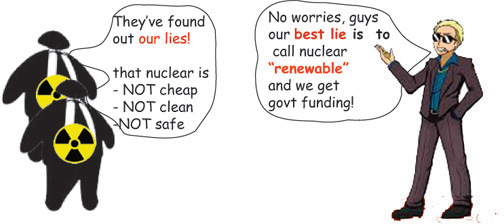
France leads push for EU to boost nuclear-produced hydrogen
By Kate Abnett 4 Feb 23, BRUSSELS, Feb 3 (Reuters) – France is leading a campaign for the European Union to recognise low-carbon hydrogen produced from nuclear power in its renewable energy rules, but some member states oppose the idea for fear of undermining efforts to quickly scale up wind and solar.
Ministers from France, Poland, the Czech Republic and six other EU countries wrote to the European Commission this week urging it to open up EU renewable energy targets to include hydrogen produced from nuclear energy.
EU countries and lawmakers have been preparing for negotiations next week on the law, which will guide the pace of Europe’s renewable energy expansion this decade.
EU Parliament’s lead negotiator has asked for next week’s talks to be delayed because the European Commission has still not published rules to define “renewable” hydrogen more clearly, which were scheduled for late last year, EU officials said on Friday……………
The nine countries’ letter, seen by Reuters, said the EU should include nuclear energy – which is low-carbon, but not renewable. https://www.reuters.com/business/energy/france-leads-push-eu-boost-nuclear-produced-hydrogen-2023-02-03/
France approves study on extending nuclear reactors’ life.
https://www.reuters.com/world/europe/french-presidency-green-light-looking-into-extending-lifespan-existing-nuclear-2023-02-03/
PARIS, Feb 3 (Reuters) – France has approved looking into the possibility of extending the lifespan of nuclear reactors to 60 years and beyond if safety rules allow it, the French Presidency said.
The Presidency announced the move in a statement after President Emmanuel Macron, who has announced plans to build at least six new reactors by 2050, on Friday chaired the first of a series of meetings on nuclear policy.
France historically has relied on nuclear power for around 70% of its energy, although the share is likely to have fallen last year as the nuclear fleet suffered repeated outages.
A public debate about the six new EPR2 nuclear reactors is set for the end of February.
The commissioning schedule for the new reactors will be established by a bill that will determine the speed of the procedures near the existing nuclear sites and the operation of the existing facilities, the statement said.
The bill is expected to reduce delays in administrative procedure and allow for progress on the construction sites.
The statement also announced plans for the construction of the first pilot of a small advanced nuclear reactor by the 2030s.
The extension of the plants will also require the launch of an examination of the issue of the fuel cycle, including the waste management, the statement said.
Several studies are set to be launched on the matter and presented at the next meeting of the nuclear council in June 2023, the statement said. The presentation of the studies is expected to be followed with a debate in Parliament on the development of energy and climate laws.
NASA and DARPA are working on a nuclear-powered rocket that could go to Mars
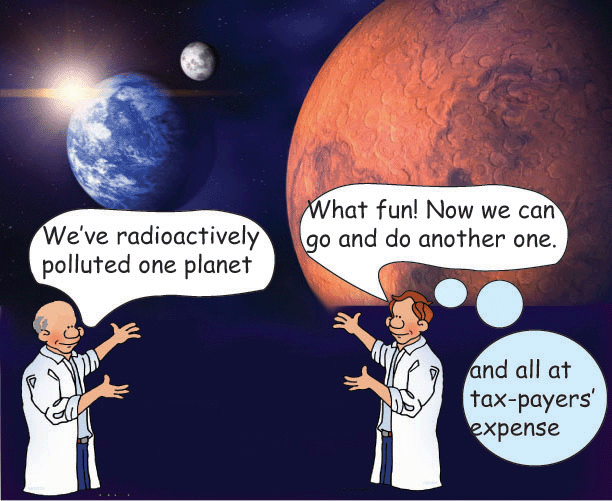
The technology would also have significant national security implications
Washington Post By Christian Davenport, February 3, 2023
“……………………………………… If NASA’s going to get to Mars, it needs to find a way to get there much faster. Which is one of the reasons it said last week that it is partnering with the Pentagon’s Defense Advanced Research Projects Agency on development of thermonuclear propulsion technology.
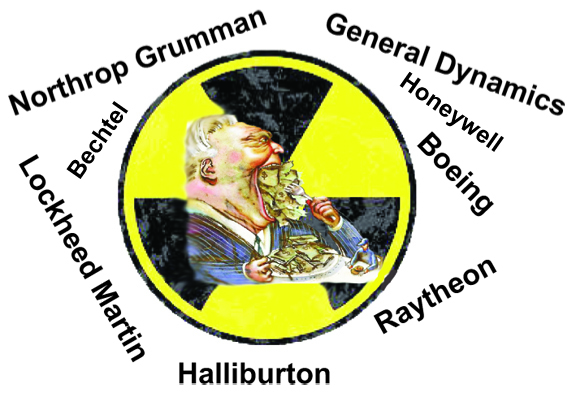
………………. DARPA, the arm of the Defense Department that seeks to develop transformative technologies, has been working on the program since 2021, when it awarded three contracts for the first phase of the program to General Atomics, Lockheed Martin and Blue Origin, the space company founded by Jeff Bezos. (Bezos owns The Washington Post.) A nuclear-powered rocket would use a nuclear reactor to heat propellant to extreme temperatures before shooting the fuel through a nozzle to produce thrust.

………………….. The program is called DRACO, for Demonstration Rocket for Agile Cislunar (or in the vicinity of the moon) Operation……………………..
The agencies hope they’ll be ready to demonstrate their work with a spaceflight in 2027.
NASA is also working with the Department of Energy on a separate project to develop a nuclear power plant that could be used on the moon and perhaps one day on Mars.
But getting to Mars is exceedingly difficult, and despite claims from NASA for years that it was gearing up to send astronauts there, the agency is nowhere close to achieving that goal.
One of the main obstacles is the distance. Earth and Mars are only on the same side of the sun every 26 months. But even at their closest points, a spacecraft would have to follow an elliptical orbit around the sun that, as Tory Bruno, the CEO of the United Launch Alliance, wrote in a recent essay, will require “a great sweeping arc of around 300 million miles to arrive.”
……………………………. . The need for spacecraft that can maneuver away from the enemy has become clear during the war in Ukraine. https://www.washingtonpost.com/technology/2023/02/03/nuclear-rocket-darpa-nasa/
1 This Month

Read the Public Inquiry Report, the Commissioners’ report, Surrendering Australia: The AUKUS Deception is available to download for free at aukuspublicinquiry.com. Or just watch the replay of the National Press Club Luncheon.


19 November – Webinar – The Reality of Reprocessing
Time: 11:00 AM Pacific Time (US & Canada) / 2:00 PM Eastern / 7:00 PM UK / 8:00 PM CET
Register for the Zoom Event Here



Shut down the radiation-damaged Heysham nuclear reactors now
To see nuclear-related stories in greater depth and intensity – go to https://nuclearinformation.wordpress.com

Say No to NASA’s Reckless Nuclear Reactor on the Moon
Say No to NASA’s Reckless Nuclear Reactor on the Moon
-
Archives
- November 2026 (94)
- October 2026 (302)
- September 2026 (339)
- August 2026 (330)
- July 2026 (355)
- June 2026 (287)
- May 2026 (306)
- April 2026 (356)
- March 2026 (251)
- February 2026 (267)
- January 2026 (308)
- December 2025 (358)
-
Categories
- 1
- 1 NUCLEAR ISSUES
- business and costs
- climate change
- culture and arts
- ENERGY
- environment
- health
- history
- indigenous issues
- Legal
- marketing of nuclear
- media
- opposition to nuclear
- PERSONAL STORIES
- politics
- politics international
- Religion and ethics
- safety
- secrets,lies and civil liberties
- spinbuster
- technology
- Uranium
- wastes
- weapons and war
- Women
- 2 WORLD
- ACTION
- AFRICA
- Atrocities
- AUSTRALIA
- Christina's notes
- Christina's themes
- culture and arts
- Events
- Fuk 2022
- Fuk 2023
- Fukushima 2017
- Fukushima 2018
- fukushima 2019
- Fukushima 2020
- Fukushima 2021
- general
- global warming
- Humour (God we need it)
- Nuclear
- RARE EARTHS
- Reference
- resources – print
- Resources -audiovicual
- Weekly Newsletter
- World
- World Nuclear
- YouTube
-
RSS
Entries RSS
Comments RSS

