Small modular nuclear reactors: a good deal for Southwest Virginia?

FEBRUARY 16, 2023 By Rees Shearer, https://www.virginiamercury.com/2023/02/16/small-modular-nuclear-reactors-a-good-deal-for-southwest-virginia/
In announcing his 2022 Virginia Energy Plan, Gov. Glenn Youngkin said, “A growing Virginia must have reliable, affordable and clean energy for Virginia’s families and businesses.” The governor’s plan to promote and subsidize small modular nuclear reactors (SMRs) in Southwest Virginia fails all three of the governor’s own criteria:
- SMRs can’t be reliable, when they cannot reliably be built and brought on line in a predictable and timely fashion.
- SMRs can’t be affordable, because nuclear power is close to the costliest of all forms of electric power generation.
- SMRs can’t be clean, since they produce extremely toxic high- and low-level nuclear waste, which has no safe storage or disposal solution.
Appalachia has long served as a sacrifice zone for rapacious energy ambitions of other regions. Southwest Virginians have had reason to hope that would change as opportunities for low-cost solar development emerged in recent years. Instead, politicians like Youngkin are making too-good-to-be-true promises about SMRs, sidelining opportunities to promote solar, which can produce power in a matter of weeks, not decades.
Imposing SMRs on Southwest Virginia is disturbing. My father worked for the Atomic Energy Commission in the 1950s. The promise the nuclear industry and the government touted then, “electricity, too cheap to meter,” has never been realized. Tennessee Valley Authority and other utilities abandoned nuclear plants under construction, leaving costly monuments to that folly and sticking electricity customers with the bill.
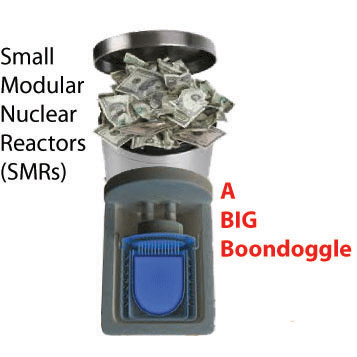
It’s not at all clear that SMR technology will succeed, or when. Levelized cost charts of electric power generation rate nuclear as among the very most expensive means to generate electric power at utility scale. If nuclear waste management, insurance and decommissioning costs are included, actual costs are far higher. (Some of these costs are already socialized for nuclear power, such as insurance in the Price-Anderson Act.)
The first commercial SMR is not expected to be completed until 2029, but already its developers have raised the target price of its power by 53%. This is not a surprise; nuclear power construction history documents an extremely strong correlation between new designs and cost increases and project delays. Indeed, the Lazard analysis shows that nuclear is the ONLY grid-wide generation source to increase in price between 2009 and 2021. The increase was 36%!

Nuclear waste and reprocessing are also serious concerns. Make no mistake, un-reprocessed nuclear waste, for all practicable purposes, is forever. The fact that we have become accustomed to risk does not, by any means, reduce risk. Nor will SMRs generate less waste than their larger forbears. Indeed, a recent Stanford University study concluded that “small modular reactors may produce a disproportionately larger amount of nuclear waste than bigger nuclear plants.”
Safeguarding this waste is already costing taxpayers and utility customers tens of billions of dollars. Since the United States has failed to designate a central storage facility, nuclear power plants are forced to continue to store the waste in pools on site.

Yet nuclear waste recycling, known as reprocessing, is no panacea. In November, the governor spoke in Bristol in support of recycling nuclear waste from SMRs: “I think the big steps out of the box are the technical capability to deploy in the next 10 years and on top of that to press forward to recycling opportunities for fuel.” He may have had in mind BWX Technologies of Lynchburg, which is beginning reprocessing of uranium at its Nuclear Fuel Services plant in Erwin, Tennessee, for nuclear weapons.

Transportation of SMR nuclear wastes along Virginia mountain roads or railroads across the border to Erwin presents further risk of accident and contamination. Longstanding concerns about transportation and security of nuclear wastes have never been adequately addressed.
Given these questions about cost, practicality and safety, the governor’s choice of SMRs as the cornerstone for future energy development in the coalfields of Southwest Virginia risks leaving residents here with nothing. This is especially worrisome as it pulls state support from proven, cheaper and more readily deployable solar and energy storage applications.
It also redirects government resources away from homegrown economic projects, like the New Economy Program, based on cleaning up and repurposing unrestored mine lands for a burgeoning utility solar energy industry, employing local residents and adding productive purpose to restored land and benefiting the tax base.
Counties across eastern and Piedmont Virginia are benefiting from a property tax bonanza flowing from utility-scale solar development. Coalfield counties are being told to ignore a sure solar bet and place their few economic development chips on a risky, unproven, costly, pie-in-the-sky energy prospect.
Why should SWVA be forced to endure the burden of risky and more costly electric energy, subsidized by the state to benefit powerful corporations, which seek to exploit our region and its people? Why indeed, while the rest of Virginia benefits economically from low-cost, safe solar energy?
This same shell game occurred when state mining regulation allowed mountaintops to be blown away and thousands of acres of forestland despoiled. Once again, government officials are choosing to make decisions that benefit the interests of corporations outside the region instead of the people who actually live here.
Southern Co boosts cost estimate, delays timing for nuclear reactors

Feb 16 (Reuters) https://www.reuters.com/business/energy/southern-co-boosts-cost-estimate-delays-timing-nuclear-reactors-2023-02-16/ – U.S. energy company Southern Co (SO.N) on Thursday delayed the timing and boosted cost estimates for its Georgia Power utility’s share of two nuclear reactors being built in Georgia.
The Vogtle plant reactors in Burke County, Georgia, already billions of dollars over budget and years behind schedule, are the only nuclear power units under construction in the United States.
In an investor presentation, Southern forecast Georgia Power costs would rise to $10.593 billion, up from a prior forecast of $10.383 billion in its third quarter results in October.
Southern also pushed back the in service dates for the new reactors to May or June of 2023 for Unit 3 and late in the fourth quarter of 2023 to the end of the first quarter of 2024 for Unit 4.
“After careful consideration and given our experience on Unit 3 and the degree of critical work ahead of us, we are further risk adjusting our Unit 4 schedule,” Southern Co Chief Executive Thomas Fanning said on a call with investors.
Fanning, who will be succeeded by Georgia Power’s CEO Chris Womack in the coming months, said Unit 3 required additional fixes to pipes, a valve and flow through the reactor’s cooling pumps. He added that the company expects testing on Unit 4 to reveal more needed fixes.
“We’re just trying to get anything we can see right now,” Fanning said.
In January, Southern said in a filing with the U.S. Securities Exchange Commission that it expected Unit 3 to enter service during April 2023. In its third quarter earnings, the company said it expected Unit 3 to enter service in the first quarter of 2023 and Unit 4 in the fourth quarter of 2023.
When Georgia approved the Vogtle expansion in 2009, the two 1,117-megawatt Westinghouse AP1000 reactors were expected to cost about $14 billion in total for all owners and enter service in 2016 and 2017.
Some analysts have estimated total costs, including financing, have ballooned to more than $30 billion following delays related to the pandemic, the nuclear accident at Japan’s Fukushima plant in 2011 and the 2017 bankruptcy of Westinghouse, the project’s former contractor.
The Vogtle owners include Georgia Power (45.7%), Oglethorpe Power Corp (30%), Municipal Electric Authority of Georgia (22.7%) and Dalton Utilities (1.6%).
Oglethorpe and Dalton have said they wanted to freeze their spending on the project.
The World’s Dumping Ground for Nuclear Waste Doesn’t Want Fukushima’s Wastewater
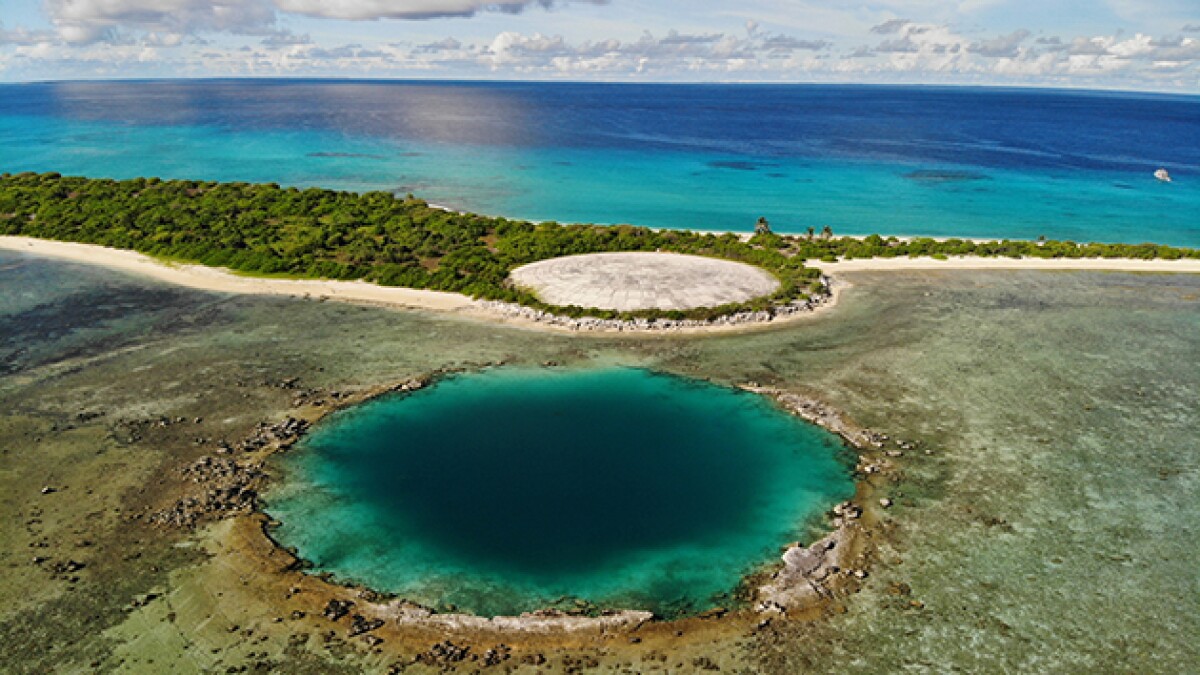
Japan’s plan to discharge more than 1,000 tanks of nuclear wastewater into the Pacific has incensed island nations.
VICE, By Hanako Montgomery 17 Feb 23,
TOKYO — In the middle of the Pacific Ocean, a group of tropical islands has never seen winter. But one morning 70 years ago, a loud bang followed by a flash of light made it “snow” for the first time.
Fluttery and white, the powdery material sank into the Marshall Islands’ deep blue lagoons. It lightly covered the palm trees that lined Rongelap Atoll, astounding those who came out of their thatched homes to watch it settle on roofs. Children played with it, scooping the dust into their mouths.
But within hours, the atoll’s residents mysteriously began falling ill. Hair fell out in clumps. Skin burned. People vomited. They were evacuated two days later, but the damage was already done. Years later, the Rongelapese would suffer heightened cases of cancer, miscarriages, and birth deformities.
This was the fallout of Castle Bravo, the U.S.’ largest-ever thermonuclear bomb test that sprinkled radioactive debris on that warm March day. Now, residents of the island nations that include Fiji, the Marshall Islands, and French Polynesia invoke the nuclear accident and its subsequent contamination to oppose Japan’s plan to release its nuclear wastewater into the Pacific.
“We have a legacy of being the dumping ground when it comes to the issue of nuclear waste,” James Bhagwan, a Fijian anti-nuclear activist and secretary-general of the Pacific Conference of Churches, told VICE World News.
“Pacific Islanders have a spiritual bond with both land and ocean. So this again speaks to the issue of poisoning a part of us, our family,” he said.
The comparison Bhagwan drew between the controlled release of treated wastewater and an atmospheric nuclear test gone wrong may sound like a stretch. But it speaks to how much Pacific Island nations fear Japan’s planned discharge in the coming months of more than 1.3 million metric tons of contaminated water into the world’s largest ocean.
The nuclear waste sits in over 1,000 water tanks in Japan’s northeastern prefecture of Fukushima, the product of the meltdown of the Daiichi nuclear reactors there in 2011. …………………………………….
In objecting to the release, Motarilavoa Hilda Lini, a Vanuatu stateswoman, has cited the slogan of the Nuclear Free and Independent Pacific movement: “If it is safe, dump it in Tokyo, test it in Paris, and store it in Washington, but keep our Pacific nuclear-free.”…………………………………………………………..
Ken Buesseler, a marine radiochemist and one of five experts on the Pacific Islands Forum’s panel of independent scientists, questioned TEPCO’s ability to sufficiently remove radioactive material from the liquid. He cited how, in 2020, the company had to retreat about 70 percent of the stored wastewater because it was found to contain amounts of radioactive substances exceeding standards.
“That doesn’t give me a lot of confidence,” he told VICE World News. Monitoring the wastewater after it was released into the ocean would be too late, Buesseler added, as once it’s in the ocean, TEPCO can’t get it back.
He also faulted the company for analyzing only about a quarter of the 1,061 tanks and providing testing results on just seven radioactive substances out of the dozens TEPCO said it would monitor. This, he said, ignored the possibility that there would be variation among the tanks, potentially overlooking harmful levels of more radioactive substances such as cesium-137 and strontium-90………………………………………………
Though the deadline for Japan’s release of the treated wastewater is fast approaching, the country is yet to fully convince Pacific Island nations that its plan won’t be harmful. The tanks fill up day by day, swelling to their 1.3 million ton limit.
Now, the Pacific Islands are running out of time to defend their oceans, the environmentalist Bhagwan said, warning Japan of the consequences that could lay ahead.
“The culture of shame will be laid upon the Japanese government and the people of Japan in years to come. Do they want that to be part of their legacy?” he said. https://www.vice.com/en/article/4axjk9/japan-nuclear-disaster-fukushima-wasterwater-pacific-islands
Biden says three aerial ‘objects’ US shot down likely not related to China surveillance
President Biden addressed recent aerial objects during a Thursday press briefing
By Chris Eberhart | Fox News, 17 Feb 23
Three aerial objects that were shot down after the military’s take-down of the Chinese spy balloon aren’t believed to be connected to China or other surveillance operations, President Biden said Thursday.
The intelligence committee is still assessing the three unknown aerial objects. “We don’t yet know what these three objects were, but nothing right now suggests they were related to China’s spy balloon program or that they were surveillance vehicles from any other country,” the president said during Thursday afternoon’s press briefing.
“These three objects were most likely balloons tied to private companies, recreation or research institutions studying weather or conducting other scientific research,” Biden said.
Fighter jets shot down at least four aerial objects, including a Chinese spy balloon that flew across country from Alaska to South Carolina, over an eight-day stretch.
………………. “But make no mistake, if any object presents a threat to the safety security of American people, I will take it down.” Reporters shouted questions at the president, but he left without taking any. https://www.foxnews.com/politics/biden-says-three-objects-shot-down-most-likely-from-private-companies-not-from-china
EDF posts record net loss after nuclear fleet hit by repairs
French energy company EDF has reported a significant downturn in its 2022 results after repairs choked its nuclear power output and government measures tightened, but it saw UK profits soar due to high electricity prices.
Annabel Cossins-Smith 17 Feb 23, https://www.power-technology.com/news/edf-posts-record-losses-after-nuclear-troubles/
rench energy giant EDF on Friday posted a record loss for 2022 after necessary repairs to its nuclear power reactors saw a serious decline in electricity output.
A company spokesperson said in a press release that in November last year just 30 of 56 reactors were operational but that this number has now risen to 43. It cited stress corrosion on 16 of its reactors as a key reason for its output decline, stating that 10 of these have been or are currently being treated.
The state-controlled gas and electricity supplier saw a net loss, excluding non-recurring items, of $13.5bn (€12.7bn) last year, a significant decline from its profits of $5bn (€4.7bn) in 2021. Its raw earnings (EBITDA) stood at -$5.3bn (-€5bn), compared with a positive EBITDA of $19bn (€18bn) in 2021.
“The target for 2023 is to improve operational performance,” EDF CEO Luc Rémont said on a call, Bloomberg reports. “The aim is to achieve an EBITDA that will be significantly higher than in 2021.”
The company also posted a net financial debt of $68.6bn (€64.5bn), up 50% from 2021. An EDF statement cited issues with cash flow from operations, hybrid bonds and a $3.7bn (€3.5bn) capital increase as reasons behind this.
However, EDF’s UK profits soared, largely due to electricity price rises in the country. This took its underlying profits to $1.4bn (£1.2bn), up from a loss of $25m (£21m) in 2021.
The company has said that its losses in France in particular come in part due to government price caps. The French government set these to protect consumers from soaring energy prices, shortly before taking majority control of the company last year.
“The French government’s exceptional regulatory measures to limit the increase in sales prices to consumers in 2022 had an adverse estimated effect of -€8.2 billion (-$8.7bn) in EBITDA”, a company press release stated. It added that “before these measures, EBITDA benefited from market price rises passed on to customers for an estimated amount of €8.7 billion ($9.2bn)”.
EDF began legal proceedings against the French government in August last year, claiming $8.8bn (€8.3bn) in damages after the company was forced to sell more of its power to rivals at prices below market rates as a way to counter its monopoly position in France.
The government is also continuing efforts to nationalise the company. Power stations operated by EDF provide almost 70% of France’s electricity, mainly through its nuclear fleet.
NASA Gets High on Its Nuclear Supply

Why can’t our species sit down, seek some peace and quiet, and sort out our priorities? Consider race, sex, and class injustices. Consider human trafficking, animal trafficking, and habitat loss. Wars and famines. The steady disintegration of the ice caps that keep the nuclear nations physically apart, and keep Earth itself balanced, and watered with the seasons. Shouldn’t these be our preoccupations? Instead, we’re keen to expand the outsized footprint of human commerce and conflict.
BY LEE HALL https://www.counterpunch.org/2023/02/16/nasa-gets-high-on-its-nuclear-supply/
NASA’s going nuclear. It was decreed before most of us were born. Back in 1955, the Air Force set out to design a nuclear-propelled stage for an intercontinental ballistic missile at the Los Alamos Scientific Laboratory. In 1958, a few months after the Soviets launched Sputnik, Congress held hearings on Outer Space Propulsion by Nuclear Energy. And the Air Force project was reassigned to the newly created National Aeronautics and Space Administration.
NASA was founded as “a defense agency of the United States for the purpose of chapter 17 of title 35 of the United States Code.” Its council—including the U.S. President and Secretaries of State and Defense, and the Chair of the Atomic Energy Commission—would forge “cooperative agreements” with the Army, Navy, Air Force, and Marines.
NASA’s military roots are deep.
Since 1961, NASA has deployed “more than 25 missions carrying a nuclear power system.” Today, the federal Defense Advanced Research Projects Agency (DARPA) is making a nuclear fission reactor and rocket for NASA to test in 2027. The Demonstration Rocket for Agile Cislunar Operations aims to replace chemical propellants with nuclear propulsion systems at least three times as efficient, enabling crewed flights to reach Mars.
Chemical propulsion isn’t totally passé. The demo rocket will be nuclear-powered in space, but chemically launched—to limit the potential for an accidental release of radioactive materials on the ground. NIMBY!
In 1961, John F. Kennedy found the perfect aerospace engineer for the U.S. space mission. In 1962, JFK publicly vowed that U.S. Americans would be first to set foot on the moon.
JFK’s pick, Wernher von Braun, had reached the rank of major in Nazi Germany’s Allgemeine SS paramilitary forces, invented the V-2 rockets. These monstrosities were linked to many thousands of deaths—of civilians, soldiers, and concentration camp prisoners who were forced to build Germany’s vengeance weapons./

Historian Michael J. Neufeld found that von Braun was not in charge of assignments or punishments of concentration camp prisoners, but had been in “direct contact with them and with decisions how to deploy them.” While von Braun wasn’t directly killing people, the ruin and loss of others’ lives in the course of the work didn’t seem to trouble the scientist.
In the United States, von Braun designed TV satellites and early intercontinental ballistic missiles. As part of Hermes, General Electric’s missile-making project for the U.S. Army, von Braun helped refurbish V-2s taken from Germany after the war. And von Braun led the Saturn V rocket project that launched Apollo 11, fulfilling JFK’s promise.
The Wrong Stuff
Such is the story of NASA’s formative years. Today, the agency touts its moon missions through “graphic novels and interactive experiences” for young people. Artemis 3, NASA’s first crewed mission since 1972, will feature female and Black astronauts. Take that, Gil Scott-Heron.
The European Space Administration has floated the concept of an international “village” on the moon. NASA’s Artemis Accords allow extraterrestrial mining. Israel has launched a rocket made by Elon Musk’s SpaceX. The governments of China, India, and Russia all have space stations in the works.
As the space domain becomes more contested and congested, the U.S. military Space Force is on display, maintaining Space Domain Awareness. This adolescent language might be laughable, but for the coiled aggression, obscene spending, and the natural resource depletion behind it. It might be laughable, but for the failure of humanity to ensure everyone is housed and fed on Earth. Let them eat interactive experiences?
But here we go, bringing nuclear rockets to Mars.
The Mars Project was written in 1948, and published in 1953. It contained the first technical specification for a crewed Mars flight. Its author was Wernher von Braun. (Per Twitter, the book prophesied that Elon Musk would be involved in a human Mars landing. If von Braun were looking for a 21st-century protégé, an oft-noted habit of prioritizing production over people could fortify Musk’s candidacy.)
By 1969, von Braun’s designs included nuclear thermal propulsion. Nixon sidelined von Braun’s career. And “nuclear power went out of fashion after the disasters of the 1980s,” says Joshua Frank, author of Atomic Days: The Untold Story of the Most Toxic Place in America.
“People had turned on atomic energy, so the industry was coming up with the most ridiculous ideas about what to do with all of its deadly stuff, and there was talk about dumping radioactive waste in space, or on the moon.”
Could the new boosters of nuclear technology resurrect these ridiculous plans, asks Frank, “in order to sidestep the valid concerns that radioactive waste is a poison that lasts millennia? Fortunately, at least for now, it’s simply not cost-effective to rocket nuclear waste to space. If it were, you can bet Elon Musk would be loading up his space fleet today.”
The resurgence of nuclear space projects raises these and many other questions.
To What End?
Jim Reuter of NASA’s Space Technology Mission Directorate says nuclear thermal propulsion will show our “transportation capability for an Earth-Moon economy.” The economy theme is a popular one. While Toyota develops Lunar Cruisers for NASA crews, Honda has an R&D contract with Japan’s space agency for lunar EVs. Hyundai, Kia, and Boston Robotics are all working on proprietary technologies for lunar robots and vehicles. And so on. A recent Bloomberg article titled Space Startups Are Trying to Make Money Going to the Moon sounds positively moonstruck:
“In the future, private companies could ferry people and cargo to and from the moon, creating a base to conduct science and, eventually, mine resources and even lunar ice as an ingredient to make rocket propellant. It’s a grand vision that could start to take shape this year and eventually lead to a marketplace in which companies could use the lunar environment to turn a profit…”
Anthony Calomino, a NASA research engineer, has said: “It’s important for the United States to remain a primary and dominant player in space. It is the next frontier.”
So, the main reasons for colonizing Space are: (a) because it’s there; (b) fear of missing out; (c) because there’s stuff to extract and profits to be made up there; and (d) because nobody puts a possessive nation of Homo sapiens in the corner.
Curb the Anthropocene
Why can’t our species sit down, seek some peace and quiet, and sort out our priorities? Consider race, sex, and class injustices. Consider human trafficking, animal trafficking, and habitat loss. Wars and famines. The steady disintegration of the ice caps that keep the nuclear nations physically apart, and keep Earth itself balanced, and watered with the seasons. Shouldn’t these be our preoccupations? Instead, we’re keen to expand the outsized footprint of human commerce and conflict.
If living organisms are out there, how will they withstand our acquisitive onslaughts? We lack the standing to colonize other planets. Our penchant for colonizing is, itself, a treacherous flaw. The sensitive among us are beginning to understand, and attempting to remediate, the vast and continuing harm done by the colonial mindset.
Meanwhile, humanity relentlessly drives other species and the climate itself past the brink of breakdown. If there were ever a time to “leave no trace” on nature, it’s now—on Earth and beyond.
Lee Hall holds an LL.M. in environmental law with a focus on climate change, and has taught law as an adjunct at Rutgers–Newark and at Widener–Delaware Law. Lee is an author, public speaker, and creator of the Studio for the Art of Animal Liberation on Patreon.
Coalition for Responsible Energy Development in New Brunswick (CRED-NB) informs Senate with analysis of “advanced” small nuclear reactors
On Feb. 14, our Coalition made our case against SMRs to the MLAs on the Climate Change and Environmental Stewardship committee of the Legislative Assembly of New Brunswick. Our presentation used the best scientific analysis to critique the “advanced” SMRs for development in New Brunswick. CRED-NB core member Susan O’Donnell presented on behalf of the Coalition. Our written presentation in English is HERE (and HERE in French). The video of the session is on YouTube, HERE. Check out the video to learn more about the SMR plans and what our elected representatives have to say about them.
There were 13 presentations over two days. Other presentations to watch for are, on Feb. 14: J.P. Sapinski, M.V. Ramana. On Feb. 15: Gordon Edwards, Chief Hugh Akagi + Chief Ron Tremblay + Kim Reeder, and Louise Comeau + Moe Quershi. Each has a one-hour time slot, with 20 minutes by presenters followed by 40 minutes of Q&A with the MLAs on the committee. The full schedule of presentations is HERE. The link to the video archive is HERE (scroll through or search to find the webcast archive from Feb. 14 and 15).
*on Thursday, the House of Commons Standing Committee on Science and Research released the report from the SMR study:
The link to the national report is here:
tiny pdf button top right of this page:
https://www.ourcommons.ca/DocumentViewer/en/44-1/SRSR/report-3/
The report recommends that the federal government pay half the development costs of SMRs
*Today the front page of the business section of New Brunswick’s Telegraph Journal has this story, attached:
Moltex wants $250 million in public funds (half its development costs)
Operational life of Finland’s nuclear reactors extended till 2050, and wastes to be stored onsite till 2090
The government has extended the permits for the Loviisa nuclear plant until
2050. The plant’s reactors had been scheduled to shut down in 2027 and
2030. Fortum, which operates the two reactors, also received permission to
store low and intermediate nuclear waste on the site until the end of 2090.
YLE 16th Feb 2023
France’s nuclear output plummeted in 2022
France’s nuclear output plummeted by 22.6% year on year in 2022, down 81.7
TWh to 279 TW, EDF said on Friday, citing lower nuclear fleet availability
amid inspections and reactor repairs.
Last November, EDF cut its full-year
French nuclear output estimate to 275-285 TWh, down from 280-300 TWh
previously, due to 10-year maintenance schedules and strikes, as well as
extended outages at four nuclear reactors. The French utility’s nuclear
generation slumped to a 33-year low in 2022 as the country became a net
power importer for the first time since 2001, according to data previously
released from TSO RTE.
EDF posted an operating loss of EUR 19.36bn for 2022
due to the record low nuclear output and government caps on energy bills,
it said this morning.
Montel 17th Feb 2023
https://www.montelnews.com/news/1444244/frances-nuclear-output-plunges-23-in-2022–edf
Scotland’s Minister Matheson reassures the Nuclear Free Local Authorities (NFLA) that no small nuclear power station will be permitted near Grangemouth refinery.
The Scottish Nuclear Free Local Authorities have been reassured by a recent
reply from Scottish Government Net Zero Minister Michael Matheson that
Small Modular Reactors are not under consideration at the Grangemouth
refinery complex.
Following media speculation that INEOS was contemplating
co-locating an SMR next to its colossal refinery to power operations, the
Convenor of the Scottish NFLA, Councillor Paul Leinster, wrote to the
minister expressing grave concerns that the combination of a nuclear power
station next to the chemical refinery represents ‘a disaster
waiting-to-happen’.
Covering an area of 1,700 acres and with 2,000 staff,
INEOS’s own website describes Grangemouth as a ‘world-scale
petrochemicals plant’ which produces about 7 million tonnes of fuels, much
of which is used in Scotland, and 1.4 million tonnes of other products per
year. These products are synthetic ethanol, ethylene, propylene,
polyethylene and polypropylene used in the food packaging, construction,
automotive and pharmaceutical industries.
In his letter, Cllr Leinster
described an accident involving an SMR and the INEOS refinery as ‘a
monumental calumny for Scotland against which any Hollywood disaster movie
would pale by comparison’. To the NFLA, ‘it would be madness to partner a
nuclear power plant with Scotland’s biggest explosive chemical factory’.
In his response, dated 12 January, Michael Matheson was quick to reassure the
NFLA that Scottish Ministers ‘remain committed’ to their ‘long-standing
government policy to withhold support for any new nuclear power stations to
be built in Scotland’ and that officials have been advised by INEOS that
‘Small Modular Reactors do not currently form part of their net zero road
map for Grangemouth’.
NFLA 17th Feb 2023
Rolls Royce’s “small” nuclear reactor will occupy 5.3 acres.
The UK/Ireland Nuclear Free Local Authorities have today received a reply
from Rolls-Royce as to just how big their proposed ‘Small’ Modular
Reactor will be.
During last year’s World Cup, the NFLA’s then Chair,
Councillor David Blackburn, wrote to Tom Samson, Chief Executive Officer at
Rolls-Royce, to point out the general state of confusion amongst nuclear
activists, pro- and anti-, alike, with media reports claiming that an SMR
would occupy a surface area amounting to between ‘one and a half and ten
football pitches’ and asking for clarification.
Now Dan Gould, Head of Communications at Rolls-Royce SMR, has provided a final score – 5.3 acres –
an area ‘incorporating the entirety of the SMR unit’.
NFLA 16th Feb 2023
We’ve Forgotton The Potential Horrors of What a Nuclear Winter Would Be Like

The results revealed 3.2 percent of UK respondents and 7.5 percent of US respondents had heard about the consequences of a nuclear war from contemporary media or culture.
In the event of a nuclear attack on Ukraine from Russia, nearly one in five people involved in the study supported retaliation with nuclear weapons. For those who had seen the infographics ahead of time, that figure dropped by 13 percent in the UK and 16 percent in the US – showing how education makes a difference in public opinion.
15 February 2023, By DAVID NIELD https://www.sciencealert.com/weve-forgotton-the-potential-horrors-of-what-a-nuclear-winter-would-be-like—
Under the shadow of the Cold War, many in the world feared the impending prospect of a nuclear winter. According to a new report, our focus has since drifted from its horrors, leaving us with a general lack of awareness that could be dangerous for the future of humankind.
It goes without saying that the threat of a nuclear blast is no trivial event. Decades of pop culture have left society with a relatively strong association between global calamity and atomic weapons.
But the exact details on exactly what we might expect from such an escalating conflict have become hazy in the past few decades.
The facts themselves are fairly clear. Besides the many millions who would be killed directly from the blasts, climate models predict the debris resulting from nuclear war would block out much of our sunlight for up to a decade. The consequences for survivors would be devastating: a decline in global temperature, followed by widespread crop failure, and then mass starvation.
In spite of this dark threat, just a small percentage of today’s population claim to be well informed about the precise consequences of a nuclear war – and many of those people are relying on outdated information spread amid the political tensions between superpowers in the 1980s.
“In 2023 we find ourselves facing a risk of nuclear conflict greater than we’ve seen since the early eighties,” says Paul Ingram, a global risk researcher and diplomacy expert at the Centre for the Study of Existential Risk (CSER) run by the University of Cambridge in the UK. Ingram is the sole author of the report, which has not been peer reviewed.
“Yet there is little in the way of public knowledge or debate of the unimaginably dire long-term consequences of nuclear war for the planet and global populations.”
An online poll of 1,500 people in the UK and 1,500 people in the US was used to prepare the new report. The participants were quizzed on how much they know about a potential nuclear winter, and where they had got their information from. The survey allowed multiple sources to be picked, so they’re not mutually exclusive.
The results revealed 3.2 percent of UK respondents and 7.5 percent of US respondents had heard about the consequences of a nuclear war from contemporary media or culture. A greater fraction of people said their recollection of information spread in the 1980s, during a period of increasing hostility in the US-Soviet Union Cold War, informed their views of the risk of a nuclear winter. Unsurprisingly, few people relied on recent academic papers.
Using hypothetical news reports as a prompt, Ingram also looked at how people would want their governments to respond in the event of a nuclear strike. Half of those surveyed were shown infographics on the effects of nuclear winter before they answered, while the other half were not.
In the event of a nuclear attack on Ukraine from Russia, nearly one in five people involved in the study supported retaliation with nuclear weapons. For those who had seen the infographics ahead of time, that figure dropped by 13 percent in the UK and 16 percent in the US – showing how education makes a difference in public opinion.
“There is an urgent need for public education within all nuclear-armed states that is informed by the latest research,” says Ingram. “We need to collectively reduce the temptation that leaders of nuclear-armed states might have to threaten or even use such weapons in support of military operations.”
The nuclear winter infographics used by the researchers were published in a 2022 peer-reviewed study. The smallest nuclear war theorized involved 100 nukes of 15 kilotons each (about the same size used on Hiroshima), which represents just 0.1 percent of the total combined nuclear arsenal of Russia and the US.
That ‘small’ war would lead to 27 million direct fatalities and 225 million additional deaths from starvation, scientists calculate. At the top end of the scale, all-out nuclear war, we’re looking at 400 million direct deaths and more than 5 billion people dying of starvation because of the consequences of nuclear war.
With so many factors to consider, estimates differ when it comes to the impact of a nuclear war – but even the best case scenarios will clearly be unimaginably terrible. What this report shows is that a big part of avoiding the self-destruction of our species is in raising awareness of what we might be about to do to ourselves.
“Ideas of nuclear winter are predominantly a lingering cultural memory, as if it is the stuff of history, rather than a horribly contemporary risk,” says Ingram.
The report is available to read in full online at the Centre for the Study of Existential Risk.
Australia’s dangerous and ill-judged obsession with the American “Alliance”
After that Australian forces, or rather their equipment, was aligned to a newer kind of threat from irregular or insurgent forces in Western Asia, conflicts in which Australia had little or no direct interest but was engaged there to keep the US on-side

The proposed long term acquisition of nuclear submarines has completely upended our diplomatic and strategic positioning, as revealed (perhaps unintentionally) by Defence Minister Richard Marles when he told a gathering in London this month that the AUKUS goal is to create “a more seamless defence industrial space” between the three countries, affirming that Australia is more tied at the hip to the US than previously admitted – because we would not have national control over the submarines in relation to their location and deployment, thereby severely compromising our national sovereignty.
The submarines would have little purpose for independent defence if ranged against China
Pearls and Irritations. By Andrew Farran, Feb 16, 2023
How might the renown mid-20th century linguist Ludwig Wittgenstein have addressed the current defence strategic review?
As the perceptive mid-20th century Cambridge based English/Austrian linguist Ludwig Wittgenstein explained, the answer you get to a question depends on how the question is formed. The same wisdom could have been conveyed to military planners in the past when they set out to plan force structures for twenty or more years ahead. Wrong question. Wrong answers.
Looking back, think of all the military expenditure over the past twenty years and more that has been wasted as being unusable or irrelevant to purpose. Think of the lost opportunities for sound force development and the money saved that might have been available for under-resourced schools, hospitals and welfare assistance falling short of need.
After World War Two planning remained where it had left off, with established formations around divisions, battalions and platoons, essentially ground forces and an expensive aircraft carrier unsuitable for serious combat. After much debate a viable carrier fleet was seen as unattainable and unaffordable with the loss of the existing fleet air arm. Upgrades on traditional lines were undertaken following the Korean War but thereafter with Vietnam becoming the main preoccupation (misconceived), and keeping faith with the US on military commitments, the conventional wisdom in military circles was that future conflict would involve containing insurgents in Asian jungles and the protection of naval approaches around continental Australia and its resources of a conventional nature.
Nonetheless a parallel objective was the search for a silver bullet that would provide cover for all contingencies whether existing or not. Hence the embrace by government of the F111 fighter/bomber not withstanding the tribulations of its procurement and eventual deployment (the latter being relatively little as it happened). After that Australian forces, or rather their equipment, was aligned to a newer kind of threat from irregular or insurgent forces in Western Asia, conflicts in which Australia had little or no direct interest but was engaged there to keep the US on-side – being our insurance in case of larger dangers closer to home.
…………………………. The real threat to America today is largely internal given rising levels of rioting and disaffection (racial and otherwise). But concern over America’s decline vis a vis China, whether real or not, is now front and centre on force structure issues.
…………….. As before we have looked for a magic pudding that would enhance our profile and please our once great and powerful friends. Hence as was the case with the F111s, and more recently the F-35s we have become fixated with nuclear powered submarines, having decided they are needed for long range deployment.
There is much that is unreal about this move. Firstly long range deployment implies that China is the potential or envisaged enemy requiring Australian engagement at that level. While China might be seen as flexing its muscles lately it has done nothing in this regard that is different from the United States. Both seek to protect and advance their relative status. But for neither side would this be advanced by military conflict.
……………..
wider world has a vested interest in the avoidance of counter-productive warfare and a deep felt need for viable multilateralism.
(See Jeffrey Sachs, “The new geopolitics”.)
………………………… The proposed long term acquisition of nuclear submarines has completely upended our diplomatic and strategic positioning, as revealed (perhaps unintentionally) by Defence Minister Richard Marles when he told a gathering in London this month that the AUKUS goal is to create “a more seamless defence industrial space” between the three countries, affirming that Australia is more tied at the hip to the US than previously admitted. – because we would not have national control over the submarines in relation to their location and deployment, thereby severely compromising our national sovereignty.
That would be a high price to pay even if we were engaged in a major war as was the case in 1942; but it is not and should not be the price we pay on speculation over assumed threats that are anything but imminent. The submarines would have little purpose for independent defence if ranged against China which can deploy a growing number of nuclear powered and armed submarines together with some 50 conventional powered ones (bearing in mind too that North Korea could deploy just as many given that the Korean War remains unresolved).
The Strategic Review currently underway will certainly strengthen our capacity to protect our immediate off-shore regions and coastline with new technologies including drones for enhanced surveillance, medium range missiles and sea mines, and survivable platforms to support them – while appreciating at the same time that in a high conflict situation the Chinese or any other militarily powerful nation could lob missiles on our vulnerable locations with disconcerting accuracy (including cities, Pine Gap and North West Cape). That point could well be the end of us sooner than we would like to think
So why buy into this unless doing so would make a difference when we know it would not. There is a lot more to this issue for the government to consider than when Prime Minister Menzies and his Cabinet decided on Australian forces being deployed in Vietnam or when Prime Minister Howard and his kitchen cabinet decided similarly in the case of Iraq – both gigantic mistakes. https://johnmenadue.com/the-defence-strategic-review-and-australias-alliance-obsession/
Media Ignores Evidence That West Opposed Ukraine Peace Deal

So we now have a NATO Foreign Minister, a journalist with sources “close to Zelensky” and a former Israeli PM all saying that Western leaders opposed a peace deal because they wanted to “weaken”, “press” or “smash” Putin.
there’s credible evidence that Western leaders stymied negotiations which might have led to a peace deal because they wanted to weaken Russia
BY NOAH CARL, 14 FEBRUARY 2023 https://dailysceptic.org/2023/02/14/media-ignores-evidence-that-west-opposed-ukraine-peace-deal/
As I noted in a previous article, the former Israeli Prime Minister Naftali Bennett revealed in a recent interview that in March of last year Western leaders blocked a draft peace deal between Russia and Ukraine.
There seems to be some disagreement over exactly what he said, as the interview was in Hebrew. Based on the English subtitles on YouTube, I quoted him as saying, “They blocked it.” But others insist he said, “They broke off negotiations.” Either way, he clearly implied that the West stymied negotiations that might have led to a peace deal.
What’s more telling is the reason he gave as to why the West did so, namely “to keep smashing Putin”. This tallies closely with Roman Romanyuk’s account of why Western leaders opposed negotiations in April:
Behind this visit and Johnson’s words lies much more than a simple reluctance to engage in agreements with Russia. The collective West, which back in February suggested that Zelenskyi surrender and run away, now felt that Putin is actually not as all-powerful as they imagined him to be. Moreover, right now there was a chance to “press him”. And the West wants to use it.
As Caitlin Johnstone points out, it also lines up with what the Turkish Foreign Minister Mevlut Cavusoglu said on April 20th last year:
Following the NATO foreign ministers’ meeting, it was the impression that … there are those within the NATO member states that want the war to continue, let the war continue and Russia gets weaker. They don’t care much about the situation in Ukraine.
So we now have a NATO Foreign Minister, a journalist with sources “close to Zelensky” and a former Israeli PM all saying that Western leaders opposed a peace deal because they wanted to “weaken”, “press” or “smash” Putin.
These seem like newsworthy revelations, don’t they? Not according to the mainstream media.
I checked whether the revelations have been mentioned by any of the following outlets: the BBC, CNN, the Times, the Guardian, the Telegraph, the New York Times, the Washington Post, or the Wall Street Journal. With the exception of one op-ed in the New York Times which quoted Cavusoglu’s statement, they’ve been completely ignored.
The point here isn’t that there definitely would have been a peace deal if not for the actions of Western leaders. We can’t know that. The point is: there’s credible evidence that Western leaders stymied negotiations which might have led to a peace deal because they wanted to weaken Russia.
With the exception of Tucker Carlson and a few lesser-known outlets, why hasn’t the media covered this? One of the current headlines on the BBC News homepage is ‘Rihanna reveals pregnancy at Super Bowl show’. Which is more newsworthy: Rihanna’s personal life, or the revelation that Western leaders may have sabotaged peace? I’m reminded of this meme: [on original]
A few days ago, in fact, a BBC Ukraine journalist got up and hugged Zelensky at a press conference. However much you support a particular cause, as a journalist you’re supposed to show a modicum of impartiality. Based on this incident, I wouldn’t expect any dramatic shifts in coverage.
Japan to extend life of nuclear power stations, and also remove rules specifying the operational periods of reactors.
Japan’s Nuclear Regulation Authority (NRA) has approved draft legislation
to extend the operating life of the country’s nuclear power reactors beyond
60 years. It also approved an amendment to the Nuclear Reactor Regulation
Law to remove the rule specifying the operational periods of reactors.
World Nuclear News 14th Feb 2023
https://www.world-nuclear-news.org/Articles/NRA-approves-use-of-Japanese-reactors-beyond-60-ye
1 This Month

Read the Public Inquiry Report, the Commissioners’ report, Surrendering Australia: The AUKUS Deception is available to download for free at aukuspublicinquiry.com. Or just watch the replay of the National Press Club Luncheon.


19 November – Webinar – The Reality of Reprocessing
Time: 11:00 AM Pacific Time (US & Canada) / 2:00 PM Eastern / 7:00 PM UK / 8:00 PM CET
Register for the Zoom Event Here



Shut down the radiation-damaged Heysham nuclear reactors now
To see nuclear-related stories in greater depth and intensity – go to https://nuclearinformation.wordpress.com

Say No to NASA’s Reckless Nuclear Reactor on the Moon
Say No to NASA’s Reckless Nuclear Reactor on the Moon
-
Archives
- November 2026 (94)
- October 2026 (302)
- September 2026 (339)
- August 2026 (330)
- July 2026 (355)
- June 2026 (287)
- May 2026 (306)
- April 2026 (356)
- March 2026 (251)
- February 2026 (267)
- January 2026 (308)
- December 2025 (358)
-
Categories
- 1
- 1 NUCLEAR ISSUES
- business and costs
- climate change
- culture and arts
- ENERGY
- environment
- health
- history
- indigenous issues
- Legal
- marketing of nuclear
- media
- opposition to nuclear
- PERSONAL STORIES
- politics
- politics international
- Religion and ethics
- safety
- secrets,lies and civil liberties
- spinbuster
- technology
- Uranium
- wastes
- weapons and war
- Women
- 2 WORLD
- ACTION
- AFRICA
- Atrocities
- AUSTRALIA
- Christina's notes
- Christina's themes
- culture and arts
- Events
- Fuk 2022
- Fuk 2023
- Fukushima 2017
- Fukushima 2018
- fukushima 2019
- Fukushima 2020
- Fukushima 2021
- general
- global warming
- Humour (God we need it)
- Nuclear
- RARE EARTHS
- Reference
- resources – print
- Resources -audiovicual
- Weekly Newsletter
- World
- World Nuclear
- YouTube
-
RSS
Entries RSS
Comments RSS

