The Trump administration’s unclassified summary of the National Defense Strategy (notably, they can’t call it a National “War” Strategy, by statute) is here (PDF). It released on a Friday evening, after 5 p.m.. My understanding is that the classified version has been complete for about a couple months now and this unclassified summary was going through reframing after the release of last month’s much-discussed National Security Strategy. Anyway, it’s here now, so let’s talk about it.
Much ink will be spilled elsewhere on what this document tells us about the United States’ defense priorities as the Trump administration continues to take a sledgehammer to longstanding principles of U.S. grand strategy. I want to focus on how nuclear policy-minded readers should approach this document.
If you haven’t heard, this administration is not planning on publishing a Nuclear Posture Review, which is not currently required by law, unlike the NDS. The 2026 NDS itself has very little to say on nuclear weapons. Page 17 contains this bullet, which sums up nearly the totality of what this document has to say about U.S. nuclear forces and policy:
“Modernise and adapt U.S forces: The United States requires a strong, secure and effective nuclear arsenal adapted to the nation’s overall and defense strategies. We will modernise and adapt our nuclear forces accordingly with focussed attention on deterrence and escalation management amidst the changing global nuclear landscape. The United State should never – will never- be left vulnerable to nuclear blackmail.”
Note the lack of any mention of the role of U.S. nuclear weapons or declaratory policy. Insofar as the role of U.S. nuclear forces is discussed, it is done so in a single sentence on page 3: “We will maintain a robust and modern nuclear deterrent capable of addressing the strategic threats to our country…”
There’s also no nod to allies here, either. In many of my conversations in Europe and Asia over the last year, there’s been quite a bit of interest in what the Trump NDS would have to say about alliances and extended deterrence. Silence, I suppose, is not the worst outcome, especially given the spotlighting of active U.S. hostility toward European allies in the last few weeks amid the Greenland imbroglio. Some allies took solace in the fact that the NSS did include a sentence on nuclear weapons that did allude to some role in their defense: “We want the world’s most robust, credible, and modern nuclear deterrent, plus next-generation missile defenses—including a Golden Dome for the American homeland—to protect the American people, American assets overseas, and American allies” (emphasis added, NSS, pp. 3).
Close allied readers of the NDS, however, might find that the document does appear to have something to say about how the United States views their security interests. Page 8 of the NDS observes that what makes the Trump administration’s strategy “fundamentally different from the grandiose strategies” of the past is that this document is apparently tethered to “Americans’ practical interests.” The document continues:
‘It does not conflate Americans’ interests with those of the rest of the world—that a threat to a person halfway around the world is the same as to an American.”
Part of the very premise of extended deterrence is that the United States would treat threats to allied persons (and nations) halfway around the world the same as those to the U.S. homeland. This, naturally, has been a very difficult premise to render credible—hence much of the history of our alliance management efforts over the last seven-ish decades.
It doesn’t seem far-fetched to me that allies will be willing to believe what the Trump administration is telling them here. There’s actually much in this NDS that I find doesn’t correspond all that well to the president’s views of the world (for starters, I don’t think Trump knows what the first island chain is). This bit, however, does correspond to much of what we know about how this president reasons about allies. Here you have the United States, I think, stating rather openly that, actually, it would not be willing to trade “Paris for New York,” as De Gaulle once famously asked of Kennedy. As I’ve written elsewhere, the ripple effects of this will likely be severe.
So, there’s that on extended deterrence.
Through the rest of the document, there’s very little on nuclear matters. There’s considerable attention on Iran’s program, with the expected commitment to denying Tehran the bomb (this also got a lot of attention in the NSS). North Korea is acknowledged as a country “increasingly capable of threatening to the U.S. Homeland” with its nuclear forces (a view that’s hardly controversial now in the United States). Very little else; even China’s historic nuclear build-up is not discussed head on in any detail.
It’s probably the case that the classified NDS has more to say on some of these questions, but that doesn’t excuse the lack of attention to nuclear matters in the unclassified version. Insofar as this document communicates U.S. priorities, it suggests an administration deeply uninterested in nuclear matters and aloof, at best, toward allies.
n American attack on Iran would not be a limited military operation, a punitive strike, or a calibrated act of deterrence.
It would represent a strategic rupture, a point at which accumulated American power begins converting itself into cascading liabilities. This is not a moral argument, nor is it a humanitarian one, it is more like a balance-sheet assessment of empire.
The question is not whether the United States can strike Iran. It can, and we’ve seen it. In June 2025, American warplanes joined Israel’s twelve-day campaign against Iranian nuclear facilities. Tehran struck back at a U.S. base in Qatar. The damage was extensive on both sides.
The question is what the United States loses the moment it does so again, and this time, without a ceasefire to stop the bleeding.
What follows is not ideology, but an autopsy written before the patient is declared dead.
The Liquidation of ‘FOB Israel’
For decades, Washington has not treated Israel merely as an ally, but as a Forward Operating Base, an unsinkable aircraft carrier, an intelligence nerve center, and the technological anchor of U.S. power projection in the Middle East.
A war with Iran inverts this logic.
Iran’s response would not be symbolic or theatrical. It would be functional. Through what Tehran describes as the Unity of Arenas, a coordinated strategy of simultaneous pressure across multiple fronts, retaliation would be applied with a singular objective: rendering Israel operationally unreliable as a base.
This doctrine is not a myth. It was first operationalized in 2021 during the Saif al-Quds war, when a joint command structure coordinated operations between Hamas, Hezbollah, and other Iranian-aligned groups. The concept matured through 2023 and 2024, expanding the geography of confrontation to encircle Israel from Gaza, Lebanon, Syria, Iraq, and Yemen.
If airports are disrupted, ports degraded, and civilian life in Israel’s economic and technological core placed under persistent stress, the asset ceases to function as an anchor. The United States would no longer project power from Israel, it would divert power into Israel merely to keep it viable.
At the moment of maximum strategic need, Washington loses its most valuable regional platform.
And then the anchor chain is cut.
The Trap of Strategic Overstretch
The U.S. military is built for dominance through speed, precision, and overwhelming force. Iran is built for endurance.
It will not fight where the United States is strongest. It will fight in time, depth, and dispersion, and force escalation without resolution.
The June 2025 strikes exposed this dynamic. Iran acknowledged extensive damage to its nuclear infrastructure. But within months, Foreign Minister Abbas Araghchi was claiming that Iran had “reconstructed everything that was damaged.” Whether true or not, the statement illustrated Iran’s strategy: absorb the blow, reconstitute, and wait.
Once engaged, Washington faces a structural dilemma: it cannot disengage without reputational collapse, yet it cannot remain without accelerating exhaustion. Every escalation deepens commitment. Every deployment degrades readiness. Every month consumes forces needed elsewhere.
The U.S. military currently maintains approximately 50,000 troops across bases in the Middle East. The USS Abraham Lincoln carrier strike group has just been diverted from the South China Sea, the very theater where America’s strategic future will be decided, and is now steaming toward the Gulf.
Iran seeks defeat by entropy—the slow erosion of capacity through overuse.
This is how empires bleed.
Economic Hemorrhage
A war with Iran would not be financed through shared sacrifice. It would be financed through monetary expansion and debt.
The consequences are predictable: inflationary pressure, rising energy costs, and the diversion of capital away from domestic resilience. Infrastructure, innovation, and social cohesion would erode as resources are consumed by a conflict offering no strategic return.
The Strait of Hormuz remains the world’s most critical energy chokepoint. Roughly one-fifth of global oil consumption passes through its narrow waters. Iran has long threatened to mine or close the strait in the event of war, and this threat grows more credible as conflict intensifies.
Tehran could also target energy infrastructure across Gulf states: pipelines, terminals, refineries. The resulting supply disruptions would send shockwaves through global markets, punishing American allies in Europe and Asia far more than the United States itself.
The empire would stabilize its periphery by hollowing out its core. History is unforgiving to systems that consume their own interior to preserve external dominance.
The China Dividend
The greatest beneficiary of a U.S.–Iran war would not be Iran. It would be China.
While Washington’s strategic nervous system is absorbed by escalation management in the Middle East, Beijing gains freedom of maneuver. The Indo-Pacific becomes secondary. Influence expands. Partnerships deepen. American deterrence thins.
This calculus is openly acknowledged in Beijing. As one prominent Chinese scholar at Renmin University recently observed: “Washington’s deeper involvement in the Middle East is favorable to Beijing, reducing Washington’s ability to place focused attention and pressure on China.”
The arithmetic is brutal. If the United States deploys two carrier strike groups off the coast of Iran, and it can only maintain three on station globally at any given time, that leaves one for the entire Pacific theater. Taiwan. The Philippines. Japan. All left with diminished coverage.
Every missile expended in the Gulf is one unavailable in East Asia. Every carrier tied down is one removed from Pacific balance.
In a zero-sum system, China collects the dividend without firing a shot.
Unconventional Retaliation
Perhaps the most underestimated consequence of attacking Iran is retaliation by actors who are not Iranian at all.
A U.S. strike would not be perceived globally as a bilateral conflict. It would be read as a hegemonic act and a signal that force remains Washington’s primary language. This perception would activate a diffuse ecosystem of anti-hegemony actors: ideological extremists, decentralized cells, and radicalized individuals scattered across continents.
They require no coordination, no command structure, and no attribution. The danger is not scale, but diffusion. American embassies, corporations, logistics nodes, and symbolic targets would face persistent, low-intensity pressure worldwide. Deterrence fails when the enemy is not a state but an environment.
This is the empire’s nightmare: a world where American presence itself becomes the trigger.
The Collapse of Credibility
Power ultimately rests on belief.
If the United States initiates a war it cannot conclude, fails to secure trade routes, exports inflation to allies, and generates instability rather than order, confidence erodes. Allies will hedge, partners will diversify, and rivals will start to probe.
The June 2025 campaign was supposed to demonstrate resolve. Instead, it demonstrated limitations. Six months later, western-backed protests have erupted across all 31 Iranian provinces, and the regime still stands. The strikes did not produce regime change. They did not eliminate the nuclear program. They did not deter reconstruction.
If the most powerful navy in history cannot impose decisive control over critical chokepoints, if it cannot translate kinetic superiority into political outcomes, the myth dissolves.
The emperor is revealed, not as weak, but overextended.
The Self-Inflicted Defeat
The final assessment is brutally simple. The greatest threat to American power is not Iran’s missile program. It is the American decision to attack it.
By doing so, the United States would neutralize its forward base, exhaust its military, hollow out its economy, accelerate China’s rise, and globalize resistance to its presence.
Empires do not collapse only when defeated. They collapse when they choose wars that consume them faster than their rivals.
In the case of Iran, this would not be miscalculation, it would be strategic suicide.
As the Trump administration proceeds with the military-police occupation of Minnesota in the face of mass resistance, and wages war all over the world, the majority of Democrats have joined with Republicans to pass a record military spending bill.
On Thursday, the House passed the combined defense and consolidated spending bills (H.R. 7148) by a vote of 341-88, with 149 Democrats voting yes and only 64 voting no. A separate bill funding the Department of Homeland Security and Immigration and Customs Enforcement (H.R. 7147) passed 220-207, with seven Democrats crossing the aisle to vote yes.
Republicans made no secret of what Democrats were voting for. After the vote Thursday, Representative Tom Cole, chairman of the House Appropriations Committee, declared the legislation would “champion American military power, ensuring that our brave warfighters have the tools, weapon systems and capabilities to meet any foe anywhere in the world at any time.” He summarized the bill’s purpose in three words: “America First, Fully Funded.”
Representative Ken Calvert, chairman of the Defense Subcommittee, said the bill “protects the administration’s ‘America first’ defense agenda.”
The House Appropriations Committee issued a statement hailing the “Republican-led funding that puts America First. These bills advance President Trump’s agenda.”
Despite Republicans openly proclaiming that the legislation would fund Trump’s fascistic agenda, nearly two-thirds of House Democrats voted in favor of the defense and consolidated spending bill.
An “opposition” party that votes this way is not in opposition, but an active collaborator. The Democratic Party is an instrument of the same ruling class that stands behind Trump.
The total defense appropriations amount to $839 billion, some $8.4 billion above what even Trump requested. The bill funds $27.2 billion for 17 warships, including a Columbia-class nuclear ballistic missile submarine and two Virginia-class fast attack submarines. It allocates $7.6 billion for 47 F-35 stealth fighters, $3 billion for the Air Force’s sixth-generation F-47 fighter, $1.9 billion for the B-21 Raider stealth bomber, and $4.5 billion for hypersonic weapons systems. The legislation fully funds the ongoing “modernization” of the nuclear triad—the B-21, the Columbia-class submarine, and the Sentinel intercontinental ballistic missile.
The Department of Homeland Security receives $64.4 billion, with approximately $10 billion earmarked for ICE. While the vote totals differed between the two bills, the fundamental intention is the same: the Democratic Party is systematically enabling the Trump administration’s assault on democratic rights and its preparations for global war.
The seven Democrats who voted for the DHS funding bill—Don Davis, Henry Cuellar, Laura Gillen, Marie Gluesenkamp Perez, Vicente Gonzalez, Jared Golden and Tom Suozzi—voted to fund the military occupation of Minnesota currently terrorizing immigrant communities. More than 2,000 ICE officers have been deployed across the state. Earlier this month, Renée Nicole Good, a 37-year-old Minneapolis woman and US citizen, was shot dead by a federal immigration agent. A 5-year-old boy was detained by ICE officers. On Wednesday, whistleblowers leaked an internal ICE memo authorizing agents to enter homes without judicial warrants.
The passage of the military spending bill comes after the Trump administration invaded Venezuela, overthrew the Maduro government and seized the country’s oil resources as part of Washington’s drive to consolidate its grip over Latin America in preparation for confrontation with China.
On Friday, US President Donald Trump announced that a “massive American fleet” is heading toward Iran, “just in case.” The USS Abraham Lincoln carrier group has reportedly been redeployed from the South China Sea to the Middle East. This follows Trump’s bombing of Iranian nuclear facilities last year.
The 2026 Winter Olympics will rely on millions of cubic metres of artificial snow. Climate crisis is threatening the future of the Winter Olympics, with warming winters already forcing heavy reliance on artificial snow at the upcoming games in Italy and raising questions about long-term viability of traditional skiing venues.
The 2026 Winter Olympics, co-hosted by Milan and the Alpine town of Cortina d’Ampezzo, will rely on millions of cubic metres of artificial snow…………………………..(Registered readers only)
let’s just talk about who is on this, the executive committee of this board. It includes, of course, Trump’s son-in-law Jared Kushner, Secretary of State Marco Rubio, as well as the former British Prime Minister Tony Blair. Now, the French President Emmanuel Macron refused to join, warning that it could undermine the United Nations. But Trump will not only serve as the board’s chair indefinitely, he will also have veto power over all the board’s decisions. I mean, what do you think that means, especially in light of critics, like yourself, saying that this might actually be an organization that supersedes the United Nations, or, in fact, makes the U.N. entirely redundant?
We speak to Greek economist Yanis Varoufakis about the United States under Donald Trump and its attempts to reshape the post-World War II international consensus. “Trump has all his work done for him by placid European centrists who went along with the policy of trashing international law and creating the circumstances for him to create his private company and say, ‘Right, I’m taking over the world,’” laments Varoufakis as he draws a connection between Trump’s pay-to-play diplomacy and the mercantalist policies of European colonial powers. Varoufakis comments on plans for the reoccupation of Gaza by the U.S.-led “Board of Peace,” which signed its founding charter this week; Trump’s designs on the Danish territory of Greenland; and European leaders’ ineffectual, largely symbolic resistance to Trump’s assertion of U.S. supremacy on the world stage.
Transcript
This is a rush transcript. Copy may not be in its final form.
NERMEEN SHAIKH: President Trump hosted an elaborate signing ceremony today in Davos for his so-called Board of Peace. Over 20 countries have joined, but that number is expected to increase. Many critics fear the board could undermine the United Nations. Trump will serve as chairman indefinitely. Each permanent seat has a price tag of a billion dollars, which Trump will control. Trump initially proposed the board to oversee Gaza, but said he now envisions a much broader vision.
PRESIDENT DONALD TRUMP: Once this board is completely formed, we can do pretty much whatever we want to do. And we’ll do it in conjunction with the United Nations. You know, I’ve always said, the United Nations has got tremendous potential — has not used it, but there’s tremendous potential in the United Nations. You know, on the eight wars that I ended, I never spoke to the United Nations about any of them. And you would think that I should have. You would think they could have done those eight wars, but they couldn’t have. And they tried, I guess, in some of them, but they didn’t try hard enough.
This is for the world. As everyone can see today, the first steps toward a brighter day for the Middle East and a much safer future for the world are unfolding right before your very eyes, because I’m calling the world a region. The world is a region. We’re going to have peace in the world. And, boy, would that be a great legacy for all of us. Everybody in this room is a star, or you wouldn’t be here. There’s a reason that you’re here. And you’re all stars.
NERMEEN SHAIKH: The charter makes no mention of Gaza.
Countries that have joined the board so far include many right-wing or authoritarian governments, including Argentina, Azerbaijan, Bahrain, Belarus, Egypt, Indonesia, Morocco, Saudi Arabia, Turkey and the United Arab Emirates. Hungary is the only European country to sign on. France, Norway, Slovenia, Sweden and the United Kingdom have all said they will not join.
Trump has invited Israeli Prime Minister Benjamin Netanyahu and Russian President Vladimir Putin to join the Board of Peace. The Israeli press reports Netanyahu opted not to fly to Switzerland, out of fear that he would be arrested for war crimes. During the Board of Peace ceremony, Trump also suggested a settlement on the Ukraine war is, quote, “coming very soon.”
Also at today’s signing ceremony, President Trump’s son-in-law and senior White House adviser Jared Kushner unveiled the board’s new $25 billion “master plan” for a new Gaza.
JARED KUSHNER: So, we did a master plan. We brought in — I thank you — Yakir Gabay, who’s one of the most successful real estate developers and brilliant people I know. He’s volunteered to do this not for profit, really because of his heart. He wants to do this. And we’ve developed ways to redevelop Gaza.
Gaza, as President Trump’s been saying, has amazing potential. And this is for the people of Gaza. We’ve developed it into zones. In the beginning, we were toying with the idea of saying, “Let’s build a free zone, and then we have a Hamas zone.” And then we said, “You know what? Let’s just plan for plan for catastrophic success.” We — Hamas signed a deal to demilitarize. That is what we are going to enforce.
People ask us what our plan B is. We do not have a plan B. We have a plan. We signed an agreement. We are all committed to making that agreement work. There’s a master plan. We’ll be doing it in phasing. In the Middle East, they build cities like this in — you know, 2-3 million people, they build this in three years. And so, stuff like this is very doable, if we make it happen.
Rafah, we’ll start with. This will show a lot of workforce housing. We think this could be done in two, three years. We’ve already started removing the rubble and doing some of the demolition. And then, New Gaza. It could be a hope. It could be a destination, have a lot of industry, and really be a place that the people there can thrive.
AMY GOODMAN: That’s former — that is former White House adviser, Trump’s son-in-law Jared Kushner.
Meanwhile, President Trump has backed down on his threats to take Greenland from Denmark and to impose tariffs on European allies who oppose his plans — at least for now. After a dramatic day at the World Economic Forum in Davos Wednesday, Trump announced the “framework of a future deal” had been reached for Greenland and the entire Arctic region. During his speech, Trump repeatedly referred to Iceland, instead of Greenland.
PRESIDENT DONALD TRUMP: Iceland, that I can tell you, I mean, our stock market took the first dip yesterday because of Iceland. So Iceland has already cost us a lot of money. But that dip is peanuts compared to what it’s gone up.
AMY GOODMAN: Trump’s comment came after he met with NATO Secretary General Mark Rutte. Details of the framework have not been made public. Trump said the deal would involve the United States getting mineral rights and for Greenland to be used for Trump’s proposed “Golden Dome” missile defense system. …………………………………………………………………………………….
YANIS VAROUFAKIS: When I first heard about the board of Gaza, months ago, it made me think that, you know, this is something that Philip K. Dick would invent — part of science fiction — if he was on really bad drugs. The reason why it is a monstrous idea is because — think about it — what he initially proposed — and this is still going on — is that a private company, headed by him for life, will annex the occupied land of Gaza. And interestingly, the Europeans, they went along with that, because they thought it was only about Gaza. But it wasn’t. They were wrong. It was much bigger than that. It was all about, as we now see, replacing the international order that came out of 1945, the carnage of the Second World War, the Holocaust and so on.
NERMEEN SHAIKH: And, Yanis, let’s just talk about who is on this, the executive committee of this board. It includes, of course, Trump’s son-in-law Jared Kushner, Secretary of State Marco Rubio, as well as the former British Prime Minister Tony Blair. Now, the French President Emmanuel Macron refused to join, warning that it could undermine the United Nations. But Trump will not only serve as the board’s chair indefinitely, he will also have veto power over all the board’s decisions. I mean, what do you think that means, especially in light of critics, like yourself, saying that this might actually be an organization that supersedes the United Nations, or, in fact, makes the U.N. entirely redundant?
YANIS VAROUFAKIS: Well, this is not a matter of interpretation. I mean, it’s what Trump wants. It’s what he says he wants to do. He says, “OK, well, maybe we can keep the United Nations as a rubber stamp.” You know, after all, he did push through his proposal of this Board of Peace for Gaza through the Security Council, with the complicity of the French and the British, who are now realizing that this is not just about, you know, Brown people in the developing world. It’s not just about the Palestinians, whom they themselves condemned to genocide. It’s about them, as well. So, they’re beginning to understand that they’re getting their comeuppance…………………………………………………………………………………………………………………………………………………………………………..
AMY GOODMAN: Very interesting to see Jared Kushner giving, center stage, a PowerPoint presentation on what they would do with Gaza — you know, no Palestinians included here — and President Trump himself saying today, describing Gaza as a “beautiful piece of property,” said he is a “real estate person at heart.”
AMY GOODMAN: Very interesting to see Jared Kushner giving, center stage, a PowerPoint presentation on what they would do with Gaza — you know, no Palestinians included here — and President Trump himself saying today, describing Gaza as a “beautiful piece of property,” said he is a “real estate person at heart.”
YANIS VAROUFAKIS:……………………………what this Board of Peace plan for Gaza is is the completion of the genocide. This is the logical limit of what Israel has been doing, to treat Gaza as a piece of real estate. Palestinians don’t exist. They can only exist as servants……………………………………..
Walt Zlotow West Suburban Peace Coalition Glen Ellyn IL , 24 Jan 26
Every day Ukraine sinks deeper into shattered rump state status. Every day brings more death, lost territory and degraded living conditions with no hope of prevailing against Russia.
Yet, instead of settling on Russia’s terms to end the war, end more casualties, end more lost land, Ukraine President Zelensky keeps shuttling between Europe and the US begging for weaponry to take the war deep into Russia.
The US has already bailed on investing in Ukraine’s lost cause. Europe is edging closer to bailing as well even as they continue the lie that a Ukraine victory is critical to keeping Russia from marching westward into NATO countries. They know the war is lost but cannot publicly admit that truth. In addition, without the US, they don’t have sufficient military resources to have any meaningful impact on the outcome.
Near four years into Ukraine’s demise, Zelensky may simply be delusional that Ukraine can prevail in expelling Russia from lost territories. It’s more likely he’s simply taking orders from his ultra-nationalist Kyiv handlers to keep demanding weaponry to continue Ukraine’s lost cause.
Zelensky’s recklessness was epitomized by his refusal to conclude the Istanbul Agreement with Russia in April 2022 that would have ended the 2 month conflict with a minimum of casualties, no lost territory and economy intact. All Zelensky had to do was give up NATO membership, guarantee Ukraine neutrality between Europe and Russia, and grant regional autonomy to the Russian cultured Ukrainians in Donbas being brutalized by Kyiv for 8 long years.
But instead of statesmanship, Zelensky chose recklessness, acquiescing in US, UK demands to keep the war going till Russia was defeated with US, NATO weaponry. But even with over $200 billion in such aid, Ukraine is nearing collapse, running out of soldiers that its western backers will never replace. $200 billion yes, but not one drop of western blood.
Zelensky’s recklessness in destroying Ukraine is exceeded by his dangerousness, putting the world at risk of nuclear war every day now for nearly 4 years. Every NATO bomb, tank, missile, gun given to Zelensky to attack Russia continues the threat of nuclear war between Russia and NATO. This was most irresponsibly demonstrated in 2022 when an errant Ukraine missile landed in Poland killing two Polish citizens. Zelensky immediately claimed it was a Russian missile which could have triggered a direct Article 5 NATO response against Russia. Tho the US quickly refuted Zelensky’s false claim, Zelensky has never wavered from demanding long range NATO weapons to attack deep into Russia, a prescription for all out NATO, Russia war that could go nuclear.
Continuing Ukraine’s inevitable collapse while keeping the whole world hostage to the possibility of nuclear war makes Volodymyr Zelensky the most reckless and dangerous leader in the world.
Like Bush and Blair planning the invasion of Iraq in 2003, Trump is planning to systematically violate the UN Charter, the Geneva Conventions, and especially the 1949 Fourth Geneva Convention, which guarantees protection for civilians in war zones or under military occupation.
It is perhaps no wonder that Trump and Blair see eye to eye on Palestine, as they share the same ignorance, egotism and inhumanity, and the same disdain for international law.
In the fantasy being pushed by Donald Trump, Marco Rubio, and Jared Kushner, Palestinians appear only as an absence, buried beneath the rubble of the real Gaza.
At the opening ceremony for Donald Trump’s so-called Board of Peace in Davos, Jared Kushner unveiled glossy images of his vision for a “new Gaza”: shining apartment towers, luxury developments, and sweeping views of the Mediterranean. There were no Palestinians at the ceremony—and none on the Board of Peace itself. In Kushner’s fantasy, Palestinians appear only as an absence, buried beneath the rubble of the real Gaza.
But how, exactly, are Palestinians to be “demilitarized” and pacified to make way for this Riviera of the Middle East? The assassination of Gaza’s Khan Younis police chief in a drive-by shooting this January offers a chilling clue. It was not an isolated act of lawlessness, but an ominous signal of what lies ahead. As Israeli-backed Palestinian militias openly take credit for targeted killings, the United States is reviving a familiar, deadly—and thoroughly discredited—playbook from Iraq and Afghanistan, in which death squads, night raids, and “kill or capture” missions are cynically repackaged as stabilization and peace.
Gaza is now being positioned as the next laboratory for this model, under the banner of Donald Trump’s so-called “peace plan,” with consequences that history has already shown to be catastrophic.
That strategy was laid bare on January 12th, 2026, when Lieutenant-Colonel Mahmoud al-Astal, the police chief of Khan Younis in Gaza, was assassinated by a death squad based in the Israeli-occupied part of Gaza beyond the “yellow line.” A militia leader known as Abu Safin immediately took credit for the killing, which he said was ordered by Shin Beit, Israel’s anti-Palestinian spy agency.
Another Israeli-backed militia, reputedly linked to ISIS, killed a well-known Gaza journalist, Saleh Al-Jafarawi, in October. That militia’s leader, Yasser Abu Shabab, was disowned by his family for running a pro-Israel death squad and was killed on November 4th, reportedly by one of his own gang.
These Israeli-run death squad operations follow a similar pattern to the targeted killings of Iraqi civil society leaders as resistance grew to the hostile US military occupation of Iraq in 2003 and 2004. But as they did in Iraq and Afghanistan, these targeted killings are likely to grow into a much more systematic and widespread use of death squads and military “kill or capture” night raids in the next phase of Trump’s “peace” plan.
President Trump has announced that the so-called “International Stabilization Force” (ISF) in Gaza will be under the command of US Major General Jasper Jeffers, who was, until recently, the head of US Special Operations Command. Jeffers is a veteran of “special operations” in Afghanistan and Iraq, where the US occupation responded to widespread armed resistance with death squad operations, thousands of airstrikes, and night raids by special operations forces that peaked at over a thousand night raids per month in Afghanistan by 2011.
But like Israel’s Palestinian death squads during the first stage of Trump’s “peace” plan, the US mass killing machines in Afghanistan and Iraq began on a smaller scale.
For an article in the New Statesman, published on March 15, 2004, British journalist Stephen Grey investigated the assassination of Abdul-Latif al-Mayah, the director of the Baghdad Centre for Human Rights and the fourth professor from al-Mustansariya University to be killed. Professor al-Mayah was dragged out of his car on his way to work, shot 20 times and left dead in the street. A senior US military spokesman blamed his death on “the guerrillas,” and told Grey, “Silencing urban professionals… works against everything we’re trying to do here.”
On further investigation, Grey discovered that it was forces within the occupation government, not the resistance, that killed Professor Al-Mayah. An Iraqi police officer eventually told him, “Dr. Abdul-Latif was becoming more and more popular because he spoke for people on the street here… There are political parties in this city who are systematically killing people. They are politicians that are backed by the Americans and who arrived in Iraq from exile with a list of their enemies. I’ve seen these lists. They are killing people one by one.”
A few months later, retired Colonel James Steele, a veteran of the Phoenix program in Vietnam, the US war in El Salvador and the Iran-Contra scandal, arrived in Iraq to oversee the recruitment and training of new Special Police Commandos (SPC), who were then unleashed as death squads in Mosul, Baghdad and other cities, under command of the Iraqi Interior Ministry.
Steven Casteel, who ran the Iraqi Interior Ministry after the US invasion, was the former intelligence chief for the US Drug Enforcement Agency in Latin America, where it worked with the Los Pepes death squad to hunt down and kill Pepe Escobar, the leader of the Medellin drug cartel.
In Iraq, Steele and Casteel both reported directly to US Ambassador John Negroponte, another veteran of US covert operations in Vietnam and Latin America.
Just as John Negroponte, James Steele and Steven Casteel brought the methods they learned and used in Vietnam and Latin America to Iraq, Jasper Jeffers brings his training and experience from Iraq and Afghanistan to Gaza, and will clearly bring other special operations and CIA officers with similar backgrounds into the leadership of the so-called International Stabilization Force (ISF).
The ISF, as described in Trump’s “Peace Plan,” is supposed to be an international force that would provide security, support a new Palestinian police force, and oversee the demilitarization and redevelopment of the Gaza Strip. But the Arab and Muslim countries that originally showed an interest in contributing forces to the ISF all changed their minds once they understood that this would not be a peacekeeping mission, but a force to hunt down and “disarm” Hamas and impose a new form of foreign occupation in Gaza.
Turkeywants to send troops, but so far, Israel has objected, and the other countries that have expressed interest, such as Indonesia, say there is no clear mandate or rules of engagement. And what Muslim country will send forces to Gaza while Israel controls over half of the territory and moves the “Yellow Line” even deeper into Gaza?
Even if some Arab and Muslim countries are persuaded to join the ISF, the most difficult and politically explosive job of actually destroying Hamas will most likely be in the hands of the US and Israeli Special Ops commanders, the mercenaries they bring in and the death squads they recruit.
We can expect to see General Jeffers and his team provide more training and direction to Palestinians already collaborating with Israel in death squad operations, and try to recruit more militia members from current and former Palestinian Authority security forces in the West Bank and from the Palestinian diaspora.
CIA and JSOC (Joint Special Operations Command) officers with experience in death squad operations in Iraq and Afghanistan are likely to oversee these operations from the shadows, using the same “disguised, quiet, media-free approach” that senior US military officers hailed as a success in Central America as they adapted it to the “war on terror” and the “war on drugs.”
For political reasons, Jeffers will probably use JSOC officers mainly for training and planning, and employ private military contractors to conduct night raids and other combat operations. Along with the huge expansion of US and allied special operations forces in recent US wars, there has been a proliferation of for-profit military contractors that employ former special operations officers from US and allied countries as unaccountable mercenaries.
These privatized forces have already been deployed in Gaza, notably by the Gaza Humanitarian Foundation. Its food distribution sites became death traps for desperate, hungry people forced to risk their lives just to try to feed their families. Israeli forces and mercenaries killed at least a thousand people at and around these sites.
The tens of thousands of Americans and others who took part in night raids in Iraq or Afghanistan and special operations in other US wars have created a huge pool of experienced assassins and shock troops that Jeffers can draw on, with for-profit military and “security” firms serving as cut-outs to shield decision-makers from accountability. More routine functions, such as manning checkpoints, can be delegated to other ISF forces, military police veterans and less specialized mercenaries.
The appointment of General Jeffers to command Trump’s ISF, and Israel’s formation and deployment of Palestinian death squads during the first phase of Trump’s phony peace plan, should be all the red flags the world needs to see what is coming—and to categorically reject Trump’s obscene plan before it goes any farther.
Like Bush and Blair planning the invasion of Iraq in 2003, Trump is planning to systematically violate the UN Charter, the Geneva Conventions, and especially the 1949 Fourth Geneva Convention, which guarantees protection for civilians in war zones or under military occupation.
Tony Blair’s role in Trump’s plan is further evidence that the plan has nothing to do with peace and everything to do with the Western imperialism that keeps rearing its ugly head around the world, and which has bedevilled Palestine for more than a century.
Appointing Blair to any role in governing Gaza ignores not only his role in US and British aggression against Iraq, but also his lead role in the U.K. and EU’s decision, in 2003, to abandon earlier efforts to bring Palestinian factions together in the interest of Palestinian unity. Instead, they adopted a militarized, “counterinsurgency” strategy toward Hamas and other Palestinian resistance groups. Blair’s failed policy helped pave the way for Hamas’s election victory in 2006, and for the endless, US-backed Israeli violence against Gaza ever since.
It is perhaps no wonder that Trump and Blair see eye to eye on Palestine, as they share the same ignorance, egotism and inhumanity, and the same disdain for international law. But the savage methods used by US special operations forces and US-trained death squads to kill hundreds of thousands of people in Afghanistan and Iraq only fueled broader resistance, which ultimately drove U.S occupation forces out of both countries.
The same tactics will lead to the same failure in Gaza. But unleashing such horrific violence on the already desperate, starving, unhoused, captive people of Gaza is a policy of such gratuitous barbarity and injustice that it should compel the whole world to come together to put a stop to it.
If I spoke critically of something abusive that India was doing in Kashmir, would you expect me to be accused of an anti-Hindu hate crime?
If you criticized an Indian military operation, would you have to preface it with “I don’t hate Hindus or their religion and am not the slightest bit Hinduphobic”?
If there was worldwide opposition to something that Indian military forces were doing, would you expect western governments to start frantically churning out laws to ban that opposition because it was making members of the Hindu community feel unsafe?
Would it ever in your wildest imaginings occur to you that a criticism of the violent actions of the government of India could in any way be interpreted as an attack on the Hindu faith and the membership of that religion?
You can probably see where I’m going with this.
You don’t expect to see criticisms of the state of India framed as an attack on its majority religion because people in your society haven’t been conditioned to have that expectation. But we have been conditioned to have that expectation about Israel.
The association between antisemitism and criticism of the state of Israel isn’t natural. It’s not something that would organically occur to an untrained mind.
If a man who’d never heard of Israel or Palestine were shown footage of the genocide in Gaza, he would reflexively recoil in horror and say what he was looking at was a bad thing. If somebody then ran up and explained to him that what he just said was actually a hateful act of religious persecution, he would be very surprised and confused. Because he hadn’t been indoctrinated into making that association, in the same way you haven’t been indoctrinated into associating criticism of the Indian government with an attack on the religion of Hinduism.
It’s a completely counterintuitive association. There’s nothing about it that that you could find your way into through your own observation and reasoning. It’s something you’d need to be taught by others. You need it to be explained to you.
That’s the literal translation of the Hebrew word “hasbara”. It means “explaining”. Israel and its supporters have spent decades “explaining” to the world that criticism of the state of Israel is actually a terrible hate crime against Jews and their religion, because otherwise it would never occur to a normal person that that is the case.
It’s actually astonishingly impressive. The political ideology of support for this tiny apartheid state has been so effective at explaining to the world what thoughts they should think about it that those efforts touch all our lives. It’s so effective that you could be at a social gathering all the way across the sea in the United States and, unless you are very familiar with the people around you, if the subject of Israel comes up you’ll immediately understand that you could be in for a very uncomfortable evening.
It’s stunning how much influence this ideology has had throughout our society’s culture and institutions. It’s almost magical.
There was a segment in last year’s Louis Theroux documentary The Settlers that stuck with me where Israeli settler leader Daniella Weiss refers to Zionism as a “magic system”.
“Jewish settlements in Gaza is a very difficult step that demands a lot of work,” Weiss told Theroux. “You have to influence the leftists, the government, the nations of the world, using the magic system: Zionism.”
It isn’t surprising to learn that Weiss views her operations as a kind of magic. On paper she and her ilk shouldn’t be able to do what they do. Forcefully dropping a foreign ethnostate on top of a pre-existing civilization and violently hammering it into place against every organic impulse of the region is freakish enough, but then convincing the rest of the world to support this? To the point that it actually affects our interpersonal relationships and interactions on the other side of the planet? It shouldn’t work. But it does.
I don’t really know what magic is, but it makes sense that some Zionists would see it that way. Because from the outside looking in all that mass-scale psychosocial manipulation kind of does look like an inexplicable sort of wizardry.
Luckily, the magic seems to be wearing off. The old tricks just aren’t working anymore. Calling someone who criticizes Israel an “antisemite” is widely recognized for the fraudulent manipulation that it is. Pro-Palestine politicians are winning elections despite highly coordinated smear campaigns saying their candidacy makes Jews feel unsafe. Everyone knows Israel lies about everything all the time. Trust in the media is at an all-time low, while awareness of the pro-Israel bias of the mainstream press is at an all-time high.
People are still showing up for protests and pro-Palestine events. The public is turning against Israel in unprecedented numbers. Nobody’s buying the old song and dance anymore.
Maybe the people are finding a little magic of their own.
In 2024, the US spent $997 billion on its military—more than the next nine countries’ spending combined, according to the Stockholm International Peace Research Institute, a fact the Times (12/10/25) acknowledged. What it didn’t state was that China—the second-biggest military spender—spent only $314 billion in 2024. Why must the US spend even more than three times more on its military than China? The Times never addressed this obvious question.
The New York Times published a seven-day series of editorials (12/8/25–12/14/25) meant to examine, as the initial piece put it, “what’s gone wrong with the US military” and “how we can create a relevant and effective force that can deter wars whenever possible and win them wherever necessary.”
These editorials serve as little more than propagandistic, jingoistic and Sinophobic tools that treat war as a game, turning a blind eye to the very real harms that wars have on civilians.
Devoting seven editorials to boosting the US military when the country’s own democracy is under threat—and Trump is using the military so irresponsibly and illegally that high-level officers are resigning—the Times demonstrated that its commitment to militarism knows few bounds.
‘Threaten democracies everywhere’
In total, the New York Times series referenced China 50 times, Russia 26 times and Israel just twice. It fed into an increasing Yellow Peril hysteria in a country that has a long history of hatred towards China and Chinese people, and from a news outlet that has repeatedly expressedanti-Chinasentiment.
The Times (12/8/25) kicked off the series by citing a Pentagon “classified, multiyear assessment,” called the “Overmatch brief,” which “catalogs China’s ability to destroy American fighter planes, large ships and satellites, and identifies the US military’s supply chain choke points.” The paper—which didn’t disclose how it obtained the brief, and didn’t publish its contents—called it “consistent and disturbing.”
The editorial opined that a “rising China” will “outlast this administration,” and will “require credible US military power as a backstop to international order and the security of the free world.”
…………………………………….It’s not China, though, that is threatening to annexitsneighbors—by force if need be—or declaring it has the right to replace the leaders of any country in its hemisphere it disapproves of.
The US has overthrown at least 31 foreign governments since the late 19th century—with Trump’s kidnapping of Venezuela’s Nicolas Maduro marking only the latest in that long string—and conducted more than 80 election meddling operations from 1946 to 2000 (NPR, 12/22/16). It has caused, conservatively, nearly a million deaths in the post-9/11 wars. By comparison, China has not been directly involved in a major external conflict since its 1979 invasion of Vietnam.
US special operations forces are deployed to 154 countries (Intercept, 3/20/21), and the Pentagon has at least 750 overseas military bases in 80 countries (Al Jazeera, 9/10/21), many of which surround China.
China, meanwhile, has just two overseas military bases, one it opened in 2017 in the East African nation of Djibouti (Reuters, 8/1/17; Foreign Policy, 7/7/21) and another it opened in 2025 in Cambodia (Newsweek, 4/7/25).
Moreover, the US currently has imposed some form of damaging economic sanctions on more than 20 countries, while China has issued no nationwide sanctions.
…………………………………………………………. While the US declares a right to use nuclear weapons first in a war (Council on Foreign Relations, 12/16/25), China has maintained a “no first use policy” since it first developed nuclear weapons in 1964—a position it has repeatedlyre-affirmed, including late last year (Arms Control Association, 12/11/25).
The Times also warned about hypersonic missiles: “China in recent years has amassed an arsenal of around 600 hypersonic weapons,” compared to the US, which “has yet to deploy a single hypersonic missile,” wrote the Times (12/8/25). FAIR (7/12/19) has written before about media attempts to hype a hypersonic missile gap.
In fact, the US has pursued hypersonic weapons since 9/11, and is now among those “leading the pack” (Bulletin of the Atomic Scientists, 3/12/24), underscored by Trump’s near $4 billion request in 2026 for hypersonic weapons research. Most US hypersonic weapons are being designed for conventional payloads—making them usable weapons rather than deterrents. This means they will take longer to deploy (Congressional Research Service, 8/27/25), and will be more destabilizing if they are deployed.
………………………………….The Times‘ enthusiasm for defending Taiwan from forcible reunification with China contrasts sharply with its commitment to supporting Ukraine in its efforts to retake breakaway territories. In the Taiwanese case, the right to self-determination is unquestioned, trumping China’s sovereignty; in Ukraine’s case, the sacredness of national borders renders self-determination claims irrelevant.
Though popularity of a war hardly seems to matter to US administrations, intervening to protect Taiwan separatism remains largely unpopular among US citizens (although more are in favor of intervention this year than last).
‘Transformation of the American military’
US politicians often leverage the alarmist message of “imminent military threats” to increase military spending (Defense News, 2/17/21). The New York Times took on that role in these editorials. To achieve this country’s foreign policy goals, it argued (12/8/25), requires not just maintaining current obscene levels of military spending, but increasing them: “In the short term, the transformation of the American military may require additional spending, primarily to rebuild our industrial base.”
In 2024, the US spent $997 billion on its military—more than the next nine countries’ spending combined, according to the Stockholm International Peace Research Institute, a fact the Times (12/10/25) acknowledged. What it didn’t state was that China—the second-biggest military spender—spent only $314 billion in 2024. Why must the US spend even more than three times more on its military than China? The Times never addressed this obvious question.
While the paper occasionally criticized military spending—calling the 2026 defense budget “loaded with pork for unnecessary programs” (12/11/25)—its issue wasn’t the amount spent, but rather how it was spent—“a stronger US national security depends less on enormous new budgets than on wiser investments” (12/8/25).
Ultimately, the Times (12/11/25) suggested spending $150 billion more on “manufacturing capacity” to rebuild the US naval industrial base, despite noting that the US has already spent nearly $6 billion on the industry over the past decade.
The editorial board didn’t seem to consider what the public wants in our nominal democracy: Only one in ten voters want a bigger military budget (Jacobin, 12/15/25).
Rather than funding an arms race, the US could focus more on diplomacy and turn its investments towards more popular measures like government-subsidizedhousing, healthcare for all, universal childhood education, infrastructure, clean energy, and/or community college. A 2023 report published by Brown University’s Costs of War project showed reducing military spending and diverting funds to these areas would create 9% to 250% more jobs than the military.
The killer robot gap
Another area where the New YorkTimes wants the US military to spend more money is autonomous weapons systems.
The Times (12/9/25) wrote that “China is testing how to fly drones in sync. Soon such swarms could hunt and kill on their own.” To counter this “growing threat,” the US “must simultaneously win the race to build autonomous weapons and lead the world in controlling them.” To do so, “Congress needs to expand funding for research and development into technologies with military applications” and Trump needs to “bring private industry into the mission.”
The Times wrote that they “join the United Nations secretary general and the International Committee of the Red Cross in their call for a new treaty to be concluded by 2026 on autonomous weapons systems.” The editors then say the treaty should include
limits on the types of targets, such as outlawing their use in situations where civilians or civilian objects are present; and requirements for human-machine interaction, notably to ensure effective human supervision, and timely intervention and deactivation.
But that’s far short of what the secretary general and the Red Cross recommend: a ban on all autonomous weapons used to attack humans. This humanitarian goal doesn’t square with the Times‘ enthusiasm for the US to “win the race to build autonomous weapons,” even if it says it also wants to “win the race to control them.”
The Trump administration wants to quadruple America’s production of nuclear power over the next 25 years and is hoping to entice states to take the nuclear waste those plants produce by dangling the promise of steering massive investments their way.
President Donald Trump’s big bet on amping up nuclear production is not an easy feat, fraught with NIMBY concerns about safety and waste byproducts. The administration hopes to solve at least one of those issues — what to do with toxic nuclear waste — with a program they plan to roll out this week.
Governors would effectively be invited to compete for what the administration believes is a once-in-a-generation economic development prize in exchange for hosting the nation’s most politically and environmentally toxic byproduct.
A September survey asked 12,000 residents if they believed the conditions for restarting operations were already in place — 37% responded positively and 60% negatively.
One day after Tokyo Electric Power Company Holdings (Tepco) restarted the world’s largest nuclear power plant, what was meant to mark a turning point in Japan’s long-stalled nuclear revival became an object lesson in just how fragile that effort remains.
At stake is Japan’s decadelong attempt to reduce imported energy dependency, which increased following the 2011 disaster at the Fukushima No. 1 nuclear power plant, and restore trust lost during the meltdown and in the 15 years since.
On Wednesday night, Tepco restarted reactor No. 6 at the Kashiwazaki-Kariwa nuclear power plant — the company’s first restart since all of its reactors were shut down in the aftermath of Fukushima.
Hours later, an alarm sounded for one rod inside the reactor, and the removal of control rods was suspended. About 16 hours later, Tepco announced that it would carry out a “planned temporary shutdown,” taking the reactor back offline to allow a full probe into the cause of the alarm to proceed.
“We are not assuming that the investigation and related work will be wrapped up in one day or two, but at this point, we cannot say at all how many days it will take,” plant manager Takeyuki Inagaki told a news conference on Thursday night.
Control rod insertion began at 11:56 p.m. on Thursday, and the reactor was formally shut down early Friday morning, according to the company.
“For now, our priority is to move forward with the cause investigation,” Inagaki said.
The company said that the alarm came from a control panel for a motor that drives the control rod, indicating a problem in the control panel. A separate alarm indicated a problem with an inverter.
Tepco added that the alarms indicate with light and sound.
Control rods regulate the nuclear reaction inside a nuclear power reactor. They are pulled out to start fission and reinserted to slow and stop it.
Located 120 kilometers northwest of Tokyo, Kashiwazaki-Kariwa is the world’s largest nuclear power plant, with seven reactors. It is one of the three nuclear power plants owned by Tepco, with the other two located in Fukushima.
After the March 2011 earthquake and subsequent tsunami triggered triple meltdowns at the Fukushima No. 1 plant, all nuclear plants in Japan were shut down. While some owned by other operators have since resumed operation after meeting stricter safety standards, Tepco has not been able to restart any of its reactors until this week.
Two prerequisites come into play when the government greenlights the restart of a nuclear plant: that it meets the post-Fukushima regulation standards set by the Nuclear Regulation Authority, and that it gains the “understanding” of local communities.
The local community in Niigata Prefecture, where Kashiwazaki-Kariwa is located, has mixed views on the plant’s restart. A September survey asked 12,000 residents if they believed the conditions for restarting operations were already in place — 37% responded positively and 60% negatively.
In 2017, Kashiwazaki-Kariwa units No. 6 and No. 7 passed Nuclear Regulation Authority reviews required for restart, but the subsequent discovery of inadequate antiterrorism measures in 2021 led to an effective withdrawal of approval through 2023.
Tepco was initially set to restart the reactor on Tuesday, but postponed the restart after a problem — which was separate from Thursday’s — was identified in one of the control rod alarms during testing.
An alarm that was designed to notify of unintended control rod removals did not go off when one of the rods was pulled out, the company said on Saturday. The process to address this delayed the restart by a day.
The government has positioned its restart as central to Japan’s energy strategy, which includes a goal of achieving 30% to 40% energy self-sufficiency by fiscal 2040, and having nuclear power generating roughly 20% of the country’s power, up from 8.5% in fiscal 2023
Prime Minister Sanae Takaichi is also keen on energy security.
During her campaign for the ruling Liberal Democratic Party’s presidency last year, she vowed to achieve “100% self-sufficiency” in energy, and said in her first policy speech as prime minister that her government would aim for the quick implementation of next-generation reactors and fusion power.
In the aftermath of the Fukushima disaster, Japan’s rate of self-sufficiency on energy dropped from 20.2% in fiscal 2010 to 6.5% in fiscal 2012. While it rebounded to above 10% in recent years, data center and semiconductor needs are expected to lead to a surge in electricity demand.
Kashiwazaki-Kariwa’s restart is “extremely important” in resolving vulnerabilities in eastern Japan’s power supply, containing electricity prices and developing decarbonized power sources, Economy, Trade and Industry Minister Ryosei Akazawa said on Friday, calling the restart a “highly significant step.”
“Under guidance of the Nuclear Regulation Authority, Tepco should continue to respond with the highest priority placed on safety and with a strong sense of vigilance. It should first and foremost work to identify the cause and resolve the issue, and provide careful and easy-to-understand explanations to local communities and the public,” he added.
Now that Iran is experiencing the biggest protests since the Islamic Revolution of 1979, there is renewed interest in the history of the country during the Shah era. This is a short article to debunk three myths about the Shah of Iran. I have written a much longer article on this topic — here is the link. Okay, let’s look at the myths and debunk/clarify them.
The three talking points to demonize Mohammad Reza Pahlavi are:
He was a dictator
He was a puppet of the US, since he was installed by the CIA in the 1953 coup
He ran a brutal secret police known as the SAVA
All of these accusations have some truths and some lies. The claims are exaggerated and miss the context.
Shah being a Dictator
First, the Shah was a monarch and would be considered a “dictator” by today’s Western standards. But, in those years, most countries in the world were under dictatorships — left or right. From the Soviet Union and the Eastern bloc to China and the Middle East to Latin America and even Spain and South Korea, dictators ruled the world!
What matters is this: Iranians had incomparably more political freedom, more economic freedom and more social freedom under the Shah than under the current theocratic regime in Iran.
Below [on original] is a photo of protesters — in Tehran from 1978 — with a sign that says, “Down with the Shah, the blood-sucker.” Can you imagine a similar sign today that says, “Down with Khamenei, the blood-sucker”? The protesters will be hanged from a crane.
Anti-Shah groups such as liberal university students, communists (like the Tudeh Party), and Islamic extremists thrived in Iran under the Shah. A terrorist group named as Fedayeen of Islam tried to assassinate the Shah — they fired five bullets, of which 4 narrowly missed, and one hit him in the shoulder.
Ironically, all the anti-Shah groups were brutally suppressed and eliminated by their former ally, Khomeini, after the revolution.
Within a month after coming to power, Khomeini denounced leftist Iranians as “non-Muslims” who “are at war with the philosophical beliefs of Islam.”
One year later, the Ayatollah openly declared a jihad on Iran’s liberals, Marxists and communists.
During the Shah’s rule, Iran had a parliament (majlis) which was freely elected by the people. In fact, one of the Prime Ministers — Mossadegh — was so powerful that the Shah had to flee the country for a couple of days in 1953!
The simple fact is that, if the Shah were a true dictator, there would have been no revolution in 1979!
Shah was a Puppet of the USA
This is a Soviet-era propaganda that is still being repeated today — remember that during the Cold War, both the US and the USSR were fighting over control of Iran, a very strategic country in terms of resources, influence and location.
The USSR was funding communist groups within Iran to destabilize the Shah’s government. And from radio stations near the Iranian border, the Soviets were blasting anti-Shah propaganda 7 hours a day.
The Shah was a very Westernized man who gravitated towards the US/Europe. But, of course, in such relations, the US would naturally have more power.
But he was not a “puppet.” In fact, the CIA complained in a classified psychological profile that the Shah was a “megalomaniac” who followed his “own plans, while disregarding US interests.” Not the description of a subservient leader.
The Shah also met with Soviet leaders in an act of extraordinary diplomacy during the intense Cold War. Here he is [on original] in Moscow with his wife Soraya in 1956:
About that infamous 1953 CIA coup: It was a coup to stop a coup
Contrary to the popular myth, the Shah was NOT installed by the CIA in a 1953 coup. He had actually come to power in 1941– that was 12 years before the coup and even 6 years before the CIA was created!
But… here is the nuance. The CIA certainly carried out the coup and helped the Shah, who had left/fled the country for 3–4 days.
Here is what happened:
Iranian Prime Minister Mossadegh was an influential and ambitious populist, who nationalized the oil sector in 1951. But it was a total disaster — Iran’s oil production fell a staggering 95% over the next two years, as the British withdrew all their technicians, and Iranians did not have the skill to operate the refineries.
At that point, the Shah tried to fire Mossadegh, but couldn’t. (So much for being a brutal dictator). Afraid of a coup or worse (assassination), the Shah fled to Italy for a couple of days.
At the same time, powerful Western oil interests and the deep state (MI6/CIA) were waiting for an opportunity to get rid of Mossadegh. Hence the CIA coup of 1953.
It was a coup to stop a coup.
SAVAK — The Shah’s Brutal Secret Police
After the 1953 coup discussed above, the Shah sought help from the West. That’s why SAVAK was created in 1957 with help from the CIA and MI6. Yes, SAVAK was ruthless, operated outside the law, and engaged in spying, arrests, torture etc.
But guess what happened after the Islamic Revolution? SAVAK was not dismantled, but simply renamed as SAVAMA! In fact, the deputy chief of SAVAK — General Hossein Fardoust — became the head of SAVAMA. All the infrastructure, files, intelligence, torture methods, along with most intel agents continued under Khomeini.
The anti-Shah people never talk about this inconvenient fact.
Conclusion
For ideologues on the far left, a good dictator is an anti-American dictator. So, they worship Stalin, Fidel Castro, Islamic regime in Iran etc., while hating on the Shah.
This is a short summary. You can read my much longer article on Substack:
In May, President Donald Trump issued a series of executive orders that, in part, require the US Nuclear Regulatory Commission (NRC) to consider dramatically weakening its radiation protection standard. If federal radiation limits are gutted in the manner urged by the president, the new standard could allow four out of five people exposed over a 70-year lifetime to develop a cancer they would not otherwise get.
Contesting the scientific consensus. Section 5(b) of the executive order—formally titled “Ordering the Reform of the Nuclear Regulatory Commission”—directs the NRC to issue a proposed “wholesale revision of its regulations and guidance documents,” including reconsideration of the agency’s “reliance on the linear no-threshold (LNT) model for radiation exposure.” The LNT model maintains that risk from radiation exposure is proportional to the dose: Even a tiny amount of radiation causes some small but real increased risk of cancer, and that risk goes up linearly as the dose increases.
While most Americans have doubtless never heard of the LNT model, it has been the bedrock of radiation exposure risk analysis for decades and forms the basis of public health protection from radiation. The LNT model is scientifically robust, supported by the longstanding and repeatedly affirmed determinations on low-dose radiation by the National Academies of Sciences, Engineering, and Medicine, virtually all international scientific bodies, the Environmental Protection Agency (EPA), and the NRC itself.
Despite the LNT model’s long track record and the well-established body of scientific evidence upon which it is built, President Trump has unilaterally issued a presidential finding that this scientific consensus is wrong. His order could lead to LNT’s complete abandonment in a matter of months, posing a serious increase in the amount of radiation that industries and government agencies would be allowed to inflict upon the public.
If the NRC goes along with Trump’s assertion, the weakening of radiation protection standards would likely be extreme. Advocates of abandoning LNT have often asserted that low-dose radiation is harmless or even beneficial, and therefore, that the public health radiation limits should be hugely increased. In 2015, three petitions for rulemaking to the NRC proposed doing away with the LNT model and increasing allowable radiation exposures for everyone—including children and pregnant women—to 10 rem. (The Roentgen equivalent man (rem) is a unit of effective absorbed radiation in human tissue, equivalent to one roentgen of X-rays. One rem is equal to 0.01 Sievert in the international system of units.)
One petition to the NRC went so far as to ask, “Why deprive the public of the benefits of low-dose radiation?” The NRC strongly rejected the petitions in 2021, citing the conclusions of numerous scientific bodies that “[c]onvincing evidence has not yet demonstrated the existence of a threshold.
Low-level, or “low-dose,” radiation is generally defined as a dose range of 10 rem and below. However, “low dose” is something of a misnomer, as 10 rem is still relatively high. Even when doses are low, they nonetheless cause substantial harm when spread across a large population over time, especially for sensitive groups like children.
Raising radiation exposure limits. If President Trump’s executive order results in a new public radiation exposure limit of around 10 rem—the level LNT opponents often advocate—the increased health risks would be extraordinary. Longstanding radiation protection limits for members of the public are in the range of 10 to 100 millirem (0.01 to 0.1 rem) per year. A 10-rem limit would increase allowed exposures to radiation by factors of 100 to 1000—and so would increase the risk of cancer.
A single chest X-ray is about 2 millirem (0.002 rem) of radiation exposure. An annual limit of 10 rem would correspond to a person receiving a dose equivalent to 5,000 chest X-rays each year, from conception to death. Current official radiation risk estimates—adopted by EPA from the National Academies’ BEIR VII study on the health risks from exposure to low levels of ionizing radiation—indicate that receiving 10 rem per year over a 70-year lifetime would result in about four out of every five people exposed getting a cancer they would not get otherwise.
Despite what opponents of the LNT model claim, there is no threshold at 10 rem below which there is no measurable health harm. A substantial body of scientific work has demonstrated significant negative health impacts well below 10 rem. Beginning in the 1950s, pioneering Oxford researcher Alice Stewart demonstrated that a single fetal X-ray with a dose of 200 millirem (0.2 rem) was associated with a measurable increase in the risk of that child dying of cancer. The radiation establishment fought Stewart’s findings vigorously, but her research has long since been vindicated.
More recently, a major study covering an international cohort of over 300,000 nuclear facility workers has found that annual doses well below 1 rem create measurable increases in the risk of developing a variety of cancers, and that, as NRC put it, “even tiny doses slightly boost the risk of leukemia.” A second massive study of nearly one million European children found that those who received a CT scan, at an average dose of 800 millirem (0.8 rem), suffered a measurable increase in their risk of getting cancer.
Standards already weak. Radiation protection standards should be tightened, not weakened. The US government has a long history of underestimating radiation risks. The more scientists have learned about low-dose radiation, the more their estimates of the risk per unit dose have tended to increase. Yet the NRC has not updated in step with the science.
The NRC protection limit for workers of 5 rem per year was set in the early 1960s and has not changed since, despite decades of increasing official estimates of radiation risk. The current best estimate, from the National Academies’ BEIR VII, indicates that one out of every five workers receiving the NRC’s allowable dose each year from ages 18 to 65 would develop a cancer.
NRC’s radiation exposure limits for the public have not been updated in 35 years. Despite a requirement to employ EPA’s more conservative radiation risk standards, the NRC has long ignored it and instead continues to use 100 millirem per year—100 times lower than what Trump’s executive order could lead to. Current risk figures from the National Academies and the EPA indicate that 70 years of exposure at that level would result in nearly one in 100 people getting cancer from that exposure. That is 100 to 10,000 times higher than the EPA’s acceptable risk range. As the former director of EPA’s Office of Radiation and Indoor Air said years ago, “To put it bluntly, radiation should not be treated as a privileged pollutant. You and I should not be exposed to higher risks from radiation sites than we should be from sites which had contained any other environmental pollutant.”
The NRC held a webinar in July to gather public feedback on implementing President Trump’s executive order on abolishing the LNT model. Many presenters—including representatives from the National Council on Radiation Protection and the Union of Concerned Scientists—gave a vigorous defense of the LNT model, as did many of the comments from the public. Yet the NRC, despite itself having strongly reaffirmed this standard only 4 years ago, seemed to minimize low-dose radiation risks and suggested that all radiation cancer risk models be treated equally (including the long-discredited view that low-dose radiation has health benefits). More concerning, the NRC has put its thumb on the scale, giving special treatment to LNT opposition by posting among the general meeting materials a link to one presenter’s paper, which suggests that an annual dose of 10 rem is acceptably safe.
At a time when radiation protection should be strengthened, President Trump has directed action to weaken it markedly. If the NRC implements the executive order, the potential outcome would be a new, deeply flawed radiation standard as much as a thousand times weaker than the current standard, resulting in a massive increase in radiation-related health hazards across the American population.
The Trump Administration plans to offer U.S. states incentives for building nuclear reactors in exchange for agreeing to store nuclear waste, a source familiar with the matter told Reuters on Thursday.
However, a spokesperson for the U.S. Energy Department told Reuters that the story was “false” and that “no decisions have been made at this time,” after POLITICO first reported on the plan late on Wednesday.
The POLITICO report said that the Energy Department could invite interest from U.S. states as early as this week.
Handling nuclear waste is a politically and environmentally sensitive issue, and the U.S. may have much more of that in the coming years as it the Trump Administration plans to facilitate the expansion of U.S. nuclear energy capacity from about 100 gigawatts (GW) in 2024 to 400 GW by 2050.
The U.S. Administration has bet big on nuclear power, alongside gas, to meet the expected surge in America’s electricity demand driven by AI, data centers, and the onshoring of manufacturing………….
Earlier this month, the Energy Department announced a $2.7 billion investment to strengthen domestic enrichment, in support of President Trump’s commitment to expand U.S. capacity for low-enriched uranium (LEU) and jumpstart new supply chains and innovations for high-assay low-enriched uranium.
Last month, the Energy Department awarded $800 million to TVA and Holtec to advance the deployment of U.S. small modular reactors.
Jack Loughran, Engineering and Technology, ENDS 20th Jan 2026
Government plans to cut environmental protections in a bid to make it easier to build nuclear power plants is “misguided” and based on “misleading advice”, the Wildlife Trusts has said.
Published in November 2025, the Nuclear Regulatory Review proposes a number of changes to the habitats regulations so that developers building nuclear plants would face less stringent requirements to avoid harming protected nature sites before they build.
In theory, it would allow developers to proceed, even if there is potential harm to nearby habitats, by moving directly to off-site compensation or mitigation rather than blocks to their original proposals.
But the Wildlife Trusts has said the rule changes would have “devastating consequences” for what remains of Britain’s natural landscape and warned that many habitats are “irreplaceable” and would be lost forever if proper protections were not in place.
Nuclear power plants were originally limited to just eight sites in the UK, but these restrictions are being scrapped ahead of a new wave of small modular reactors that are expected to be more numerous and constructed in various locations around the country.
The Wildlife Trusts said that a major expansion of the UK’s nuclear power infrastructure, which is planned by the government in order to decarbonise the energy grid, risks weakening critical environmental safeguards that protect habitats and landscapes across the country. The body also argues that the Nuclear Regulatory Review exaggerates the cost of adhering to nature regulations while underplaying the real ecological consequences of nuclear development near sensitive areas………………………………….. https://eandt.theiet.org/2026/01/20/plans-ease-nuclear-build-rules-could-spell-disaster-wildlife-says-wildlife-trusts




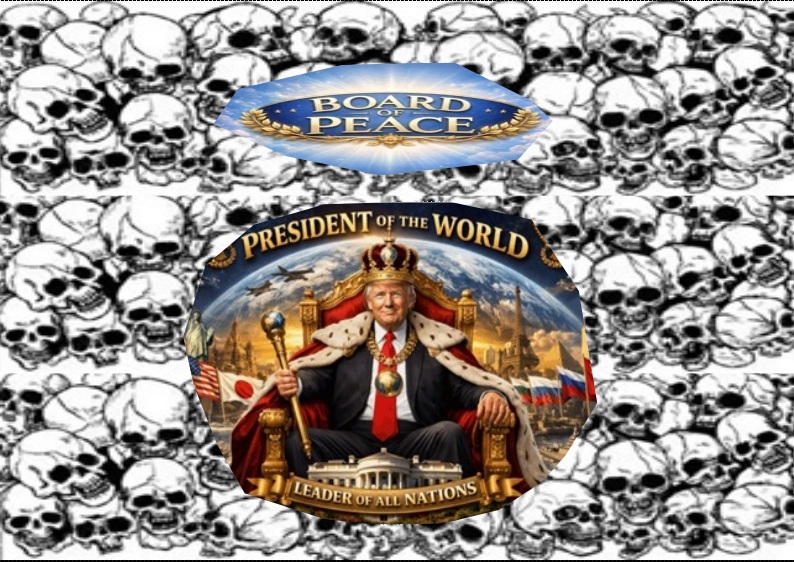







 nuclear-news
