Caitlin Johnstone – The Trumpanyahu Administration Is Preparing Another Iran Attack, And Other Notes
Caitlin Johnstone, 23 Oct 26, https://www.caitlinjohnst.one/p/the-trumpanyahu-administration-is-179?utm_source=post-email-title&publication_id=82124&post_id=221731326&utm_campaign=email-post-title&isFreemail=true&r=1ise1&triedRedirect=true&utm_medium=email
Well, it looks like they’re going to attack Iran again. Might be after the US midterms. Might be sooner.
President Trump is telling the press that he is done negotiating with the Iranians and that something will be happening “fairly soon”, while America’s other president, Benjamin Netanyahu, proclaims that the time has come to topple Tehran once and for all.
Haaretz reports that Netanyahu is calling for “preemptive strikes” on Iran, which is empire-speak for “attack completely out of the blue without any provocation or justification whatsoever”.
The New York Times reports that the US and Israel are preparing for an attack after the midterms, with sources claiming that “targets would likely include Iran’s energy infrastructure, nuclear facilities, and missile and drone arsenal” inflicted with the goal of collapsing the Iranian economy.
All this could perhaps be dismissed as empty bluster, except that NBC News is reporting that US troops are being evacuated from their posts in the middle east — exactly what happened in the lead-up to the US-Israeli attack on Iran last February.
Iran is warning that it will hit new targets and expand its strikes geographically in the event of a US/Israeli attack, saying “cables, data centers, artificial intelligence facilities, and numerous other sites will be destroyed” in order to damage US economic interests.
So I guess this is happening. Another brazen assault in an evil war of aggression that makes life harder for people all around the world.
The US empire must end.
Another choice quote from the Bell review on “antisemitism” in British schools which I missed in my write-up yesterday:
“British attitudes relating to Jewish people and Israel show two broad trends. AntiJewish attitudes are typically less prevalent and have remained more stable, whereas anti-Israel sentiments are more prevalent and have been increasing.”
The report explicitly acknowledges that hatred toward Jews is not on the rise, and that only anti-Israel sentiments are increasing. And yet they still published a 107-page review claiming that “antisemitism” is a major problem in British schools.
This tells you everything you need to know about what the word “antisemitism” actually refers to in today’s world. It just means criticism of Israel.
Hat tip to Nate Bear on Twitter for highlighting this quote.
Double Down News has a great report out explaining that the “antisemitism” review was based on heavily manipulated data, ultimately citing the claims of just 29 individuals to justify its outlandish claim that anti-Jewish discrimination is running rampant throughout the British school system.
Anyone who talks about “left wing antisemitism” like it’s a real thing should be immediately and permanently labeled a bad faith actor and an ideological enemy without any further discussion.
❖
Zionism is not a religion, it’s a political ideology which indisputably gives rise to apartheid and ethnic cleansing. You can tell me that your personal religious beliefs compel you to be a Zionist, but then I’ll say your religious beliefs are bad and you should change them. Your religion does not magically exempt you from the basic requirements of human decency.
It should not be taboo to say this. If your religious tolerance prohibits you from telling someone they shouldn’t espouse a racist political ideology which inflicts endless war, genocide, ethnic cleansing, apartheid and abuse upon your fellow human beings, then you have too much religious tolerance.
Jeffrey Sachs – A Framework for Peace in Ukraine
This proposed settlement—designed to help end a conflict that has cost hundreds of thousands of lives and carries a continuing risk of confrontation—addresses the causes of the war rather than only its symptoms.

The trouble is – this would be difficult, tricky, time-consuming, to bring about. Just keeping on killing is so much quicker and easier – and indeed, fun, using all the newest toys. Negotiation is so boring – and old-fashioned stuff.
Jeffrey D. Sachs, Oct 20, 2026, https://www.commondreams.org/opinion/framework-for-peace-in-ukraine
The war in Ukraine can be ended permanently on terms that protect Ukraine’s statehood, meet Russia’s security concerns, and lay the foundation for a durable European security order. As another round of negotiations gears up in Norway, I propose a settlement concluded as a single package, signed by Ukraine and Russia, adopted by a vote of the United Nations Security Council under Chapter VII of the Charter, and guaranteed jointly by the five permanent members of the Council together with other states that choose to join. The proposal rests on the principle of indivisible security set out in the Helsinki Final Act and the Charter of Paris.
The package would have four core commitments.
The first is Ukraine’s permanent neutrality, adopted in a constitutional law on the model of Austria’s law of 1955, which would return Ukraine to the founding choice of its Declaration of State Sovereignty of 1990. Ukraine would join no military alliance and host no foreign bases or forces, whether of NATO, the European Union, their member states, or Russia. Neutrality would not mean disarmament, and Ukraine would retain armed forces for its own defense.
The second is that Ukraine would pursue its candidacy for membership in the European Union as a permanently neutral state, with a neutrality protocol in its accession treaty on the model of Ireland’s, and Russia would affirm that Ukraine’s membership in the EU is consistent with Russia’s security.
The third is an armistice line drawn along the line of contact on the date of signature. Each side would exercise de facto jurisdiction on its side of the line, neither would recognize the other’s territorial claims, and both would renounce force in any future adjustment. This formula is compatible with both countries’ constitutions, which bar or severely restrict the cession of territory.1
The fourth is the end of NATO enlargement eastward. At signature the North Atlantic Council would declare that NATO will not admit Ukraine or other new members in Eastern Europe or the South Caucasus, withdrawing the Bucharest pledge of 2008.
The settlement would take effect as a permanent end of hostilities on signature, not as a temporary ceasefire, and its provisions would be implemented in stages under international verification. No element would be negotiated in isolation, and no party would be asked to make a concession in advance of signature.
The territorial arrangements are designed to address the concerns and claims of both sides. Ukrainian forces would withdraw from the part of Donetsk region that Ukraine now controls, which would become a demilitarized special zone. Russian forces would not enter it, the existing local civil administration would continue to function, and its final status would be left to negotiation. Russia would withdraw from the areas it holds in Dnipropetrovsk region and from the Kinburn Spit. A Northern Security Zone would be demilitarized on both sides of the Russian-Ukrainian border, and Russian forces would leave the areas they hold in Kharkiv and Sumy regions as Ukrainian forces withdraw from their side. The Zaporizhzhia Nuclear Power Plant would remain under Russian control with IAEA safety oversight and would sell an agreed share of its electricity to Ukraine at cost.
A demilitarized belt would run along both sides of the armistice line, with heavy weapons and long-range strike systems withdrawn to agreed distances, and mutual ceilings on forces would apply in the border regions on both sides. In the Black Sea and the Sea of Azov, commercial navigation would be free for all Ukrainian and Russian ports, and attacks on shipping and ports would be prohibited.
The settlement in Ukraine should also begin the repair of European security as a whole. NATO and Russia would agree on a moratorium on ground-launched intermediate-range missiles in Europe, refrain from deploying nuclear weapons in any additional state, and restore the NATO-Russia Council. Normal diplomatic relations would be restored on both sides. The parties would convene the first summit of the Organization for Security and Co-operation in Europe since 2010 to entrust the OSCE with monitoring the settlement, verifying arms limits, and overseeing the provisions on rights.
Questions of language, education, culture, and religion would be resolved according to European standards, with the Russian language treated on the same basis as Ukraine’s other minority languages, and Russia would accept the same obligations toward Ukrainian speakers and religious communities on its side of the line. All obligations concerning extremism and incitement would be mutual and monitored by the OSCE. Prisoners of war would be exchanged on an all-for-all basis, detained civilians released, and separated children reunited with their families.
Sanctions would be lifted during 2027. Russia’s immobilized sovereign assets would also be released, and private property seized or immobilized on both sides would be restored. An international reconstruction fund administered by the European Investment Bank would finance reconstruction on both sides of the line, with contributions from all parties, Russia included, in a common effort rather than as reparations. Gas transit through Ukraine could resume wherever there are willing buyers, without any commitment by the European Union to purchase Russian gas.
A report of serious violation by an OSCE monitoring mission of unarmed observers from states outside NATO would trigger consultations among the guarantors and referral to the Security Council. Ukraine would lift martial law and hold elections under OSCE observation, and the newly elected Verkhovna Rada would ratify the settlement and adopt the constitutional law on neutrality, while the Russian Federal Assembly would ratify it at the same stage.
This proposed settlement addresses the causes of the war rather than only its symptoms. Europe has been largely absent from the design of the peace. By putting forward such a framework, European governments can take the lead in building Europe’s indivisible security and help end a war that has cost hundreds of thousands of lives and carries a continuing risk of confrontation between nuclear powers.
Nuclear Kills Kids – by Tony Webb
Tony Webb,, April 2025, https://www.fabians.org.au/nuclear_kills_kids
One moment from my work in the USA in the early 1980s stands out in my memory. I’d driven from Chicago to Cleveland at the invitation of the Health and Safety Officer of the US Boilermakers Union. The purpose was to speak to the members meeting held on the night ahead of the recruitment of members for work on the annual ‘clean-up’ of the local Nuclear Power plant. The hired workers would be ‘radiation sponges’ – short-term casuals recruited for the ‘dirty jobs’ that would result in significant radiation exposures sometimes up to the permitted annual exposure limit and ‘let go’ if they reached that limit. The practice offered some protection to the company’s full -time employees whose skills would be needed on an ongoing basis and whose exposures needed to be kept below the limit. The meeting was well attended , rowdy, with a lot of questions and discussion which spilled over into the carpark after the meeting closed. I noticed one man hanging back from the circle and invited him to join and share his thoughts. As I recall them the essence was:
“I will be going in to apply for work tomorrow. I understand what you shared about the risks . . . no safe level of exposure and chance of getting cancer perhaps 20 years from now . . . It will put a roof over my family’s heads and food on the table . . . BUT my wife and I have had all the family we want. If we hadn’t, what you shared about the genetic risks, the damage to our children and future generations . . . no I wouldn’t be going . . . “
It is a sad fact that workers, both men and women will choose, often from necessity, to put their health at risk from the work environment. What is however consistent in my experience of working on radiation and other occupational health and safety issues is that they are far more concerned, cautious and likely to prioritise safety when it comes to risks to their children.
We now have solid evidence(1) that workers in nuclear power plants routinely exposed to radiation face significantly increased cancer risks, risks of cardiovascular disease including heart attacks and strokes, dementia and potentially other health effects. There is also an increased risk of genetic damage that can be passed on to their children and future generations. But perhaps most significant of all there is now solid evidence of increased rates of leukaemia in children living close to nuclear power plants.
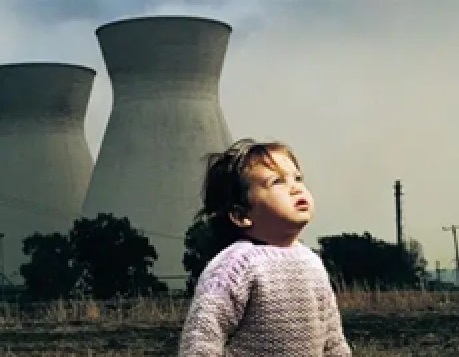
To put it simply and in language that will resonate with workers and their families in the communities around the seven nuclear power plant sites the federal Liberal-National Coalition proposes to build if elected to government, nuclear kills kids. It matters little whether or not these nuclear plants can be built on time, within budget, make a contribution to climate change, reduce electricity prices, or secure a long-term energy future; these nuclear power plants will likely kill kids who live close by. They cannot operate without routine releases of radioactive material into the environment and our young will be exposed and are particularly susceptible to any exposure that results.
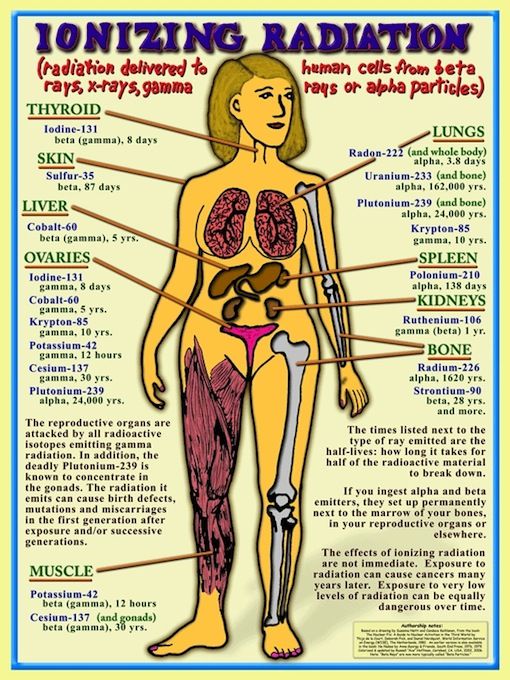
Now add to that if you care that women are more susceptible than men; that workers in these plants face greater exposure and health risks than adults in the community; that nuclear plants have and will continue to have both major accidents and less major ‘incidents’ resulting in radiation releases, community exposures and health damage. Add also that quite apart from the workers and others exposed when these plants need to be decommissioned, the radioactive wastes resulting from perhaps 30-50 years life will need to be safely stored and kept isolated from human contact for many thousands of years longer than our recorded human history. And, again if you care, also add in the concerns around proliferation of nuclear weapons which historically has occurred on the back of, enabled by and sometimes concealed by countries’ developing so called peaceful nuclear power.
All these arguments add weight to the absurdity of Australia starting and the world continuing down this nuclear power path. But if we want a single issue that strikes at the heart of human concerns it is this – and forgive me saying it again, it needs to be repeated many times until the electorate in Australia hears it loud and clear – Nuclear Kills Kids.
Dr Tony Webb is a Fabian and a long-time community and environmental activist. He has worked on housing, unemployment, worker cooperatives, anti-nuclear, radiation and health, food policy, and energy/climate issues in the UK USA Canada and Australia. Along the way he picked up an MSc in Energy Resources Management and a PhD in Humanities.
(1) SOURCES……………………………………………………………….
State officials offered to store nuclear waste. Then residents found out.

As soon as details of the West Virginia proposal were disclosed, thanks to a public records request by the Charleston Gazette-Mail, the backlash was intense. Days after dismissing the report as “fake news,” Morrisey (R) withdrew the state from consideration altogether.
Wimer said everything about the site the state was proposing near Harpers Ferry was unworkable. The porous limestone is particularly ill-suited for storing toxic materials. Half the property is a federally protected conservation zone, forever honoring its status as a historic battlefield. The other half, she said, is underwater.
As soon as details of the West Virginia proposal were disclosed, thanks to a public records request by the Charleston Gazette-Mail, the backlash was intense. Days after dismissing the report as “fake news,” Morrisey (R) withdrew the state from consideration altogether.
Wimer said everything about the site the state was proposing near Harpers Ferry was unworkable. The porous limestone is particularly ill-suited for storing toxic materials. Half the property is a federally protected conservation zone, forever honoring its status as a historic battlefield. The other half, she said, is underwater.
West Virginia officials didn’t consult anyone on their proposal to host a “Nuclear Lifecycle Innovation Campus” for the Trump administration.
October 19, 2026, sed the plan to accept nuclear waste from other parts of the country. (Photos by Carlos Bernate/For The Washington Post)
By Evan Halper
HARPERS FERRY, W.Va. — The jagged limestone rocks of Old Standard Quarry have weathered many eras of history. The property was the site of a Civil War battle, then a quarry and is now a popular destination for bungee jumping, its dark green water fed by a natural spring.
Recently, the state proposed yet another use for the land: as storage for radioactive nuclear waste from around the country.
“I thought it was a joke,” said Pasha Majdi, president of the Jefferson County Commission. “It doesn’t make any sense.”
It wasn’t a joke. Without consulting residents or local officials, Gov. Patrick Morrisey’s energy office submitted a detailed pitch to the Trump administration offering the Jefferson County quarry and three other sites for a potential “Nuclear Lifecycle Innovation Campus.”
The Trump administration has said such campuses would need to agree to store spent nuclear fuel — one of the nation’s most vexing environmental problems — in exchange for federal support for research, development and production facilities that aim to modernize and grow the country’s nuclear power infrastructure.
The administration claims the campuses could create 25,000 jobs and generate tens of billions of dollars in private investment and tax revenue. Those economics are alluring to states eager for development.
Twenty-six expressed some manner of interest before the federal government chose Utah, Tennessee, Oklahoma, Louisiana, Idaho and West Virginia as finalists.
“West Virginia is intentionally beginning with nuclear initiatives that are actionable and high‑value, particularly those tied to the spent and partially spent fuel stream and backend services, areas where the state can quickly demonstrate success and build momentum,” the state’s pitch promised. It assured that “West Virginia recognizes that for any project with potential community impacts, social buy-in and community alignment are foundational.”
But the way things played out in West Virginia underscored how community anxiety around nuclear waste is not easily overcome. That anxiety is why there is no comprehensive plan for permanently disposing of the tens of thousands of tons of spent fuel that already exists in the United States, much less for getting rid of the waste that could be generated with the quadrupling of nuclear power capacity President Donald Trump envisions.
As soon as details of the West Virginia proposal were disclosed, thanks to a public records request by the Charleston Gazette-Mail, the backlash was intense. Days after dismissing the report as “fake news,” Morrisey (R) withdrew the state from consideration altogether.
The Morrisey administration did not respond to requests for comment.
Energy Department spokesman Ben Dietderich said in an emailed statement that “the program has proven to be a huge success — with more than 25 states applying to participate — much of that success can be attributed [to] allowing states and local communities decide for themselves if an innovation campus is right for them.”
The West Virginia episode, though, left communities bewildered, the governor politically wounded and the nuclear waste problem unresolved.
The nuclear life cycle campus competition comes after the federal government tried — and failed — to create a repository for spent fuel for decades. Congress had designated Yucca Mountain, Nevada, as the most suitable place for it. But local opposition derailed that plan.
Now, the focus is on finding a “consent-based” solution that would be developed in coordination with communities interested in developing facilities. Such a model has been successful in parts of Europe. It typically takes many years of deliberation and negotiation by the communities involved.
“I’m personally a bit skeptical that states are going to move as fast as the [Trump] administration wants or is expecting,” said Matt Bowen, a nuclear scholar at Columbia University’s Center on Global Energy Policy who has been tracking the life cycle campus initiative.
The difficult conversations state officials need to have with the cities and counties that would host nuclear campuses are just getting underway. Nuclear industry officials say states taking a deliberative, democratic approach are getting genuine interest from communities that are viable candidates for a campus.
In West Virginia, though, state officials appear not to have communicated with each other or the towns they were offering up in their pitch. And their experience shows how quickly the process can go sideways.
Far from the fast-growing Harpers Ferry region, in economically struggling Boone County, the state’s nuclear pitch called for storing waste at what was once one of the largest mountaintop-removal coal mines in the country — an environmentally damaged site the state and local community have for years been seeking to convert into a redevelopment opportunity. The former coal-mining stronghold has lost nearly one-fifth of its population since 2010, as jobs disappeared.
But the nuclear campus proposal landed with a thud there, too. Local opposition quickly emerged. The area’s state representative expressed frustration on social media that the community had not been consulted and relief when the state scrapped the proposal.
The proposal had highlighted the potential benefits of a new state law, written for data center developers, that allows for fast-track approval of permits while bypassing local governments.
“It felt for many of us like: ‘Here we go again,’” said Christine Wimer, president of the Jefferson County Foundation, a conservation advocacy group. “This is the same old thing in West Virginia. People come here. They get the good stuff. We get taken advantage of.’”
Wimer said everything about the site the state was proposing near Harpers Ferry was unworkable. The porous limestone is particularly ill-suited for storing toxic materials. Half the property is a federally protected conservation zone, forever honoring its status as a historic battlefield. The other half, she said, is underwater.
“Limestone essentially works like a highway for waste,” said Cara Keys, a county commissioner, as she stood over the quarry. “You could put something here, and it could infect someone’s well 20 miles away. The fact that they thought this could be a nuclear waste dump is very concerning.”
Steve Pearson, editor of Jefferson County’s Observer Weekly newspaper, dove deep into the details of the proposal and emerged perplexed how it ever got submitted. “Even if you just wanted to build a warehouse, you could not do it there,” he said. “There is no land for it.”
Down the road from the quarry in Middleway, a remarkably well-preserved village of 18th- and 19th-century stone, brick and log buildings on the National Register of Historic Places, farmers were already exhausted trying to stop plans for a large water-bottling plant that developers are seeking to build over the vociferous objections of community leaders, who warn it would be an environmental mess. The news that the state hoped to store nuclear waste nearby left them stunned.
“I like to be left alone,” said David Liskey, 75, who has been in the area all his life. His ancestors started farming there in the mid-1700s. “People like it here the way it is. We don’t want what they are talking about doing.”
Gabby Wilson has only been in the area a short time, having recently relocated from North Carolina. But Wilson, the owner of Prismatic Art Studio in downtown Charles Town, was every bit as blunt as Liskey.
“It’s just gross,” she said of the nuclear campus proposal. “We moved here to get away from things like that.”
Work begins in UK for arming new nuclear submarines at £7.75bn each
Work begins on Coulport building for Dreadnought submarines, 19th October, By Donald Erskine
WORK has started on a building which will arm the Royal Navy’s new multi-billion-pound nuclear submarines.
Naval Base Commander Clyde Commodore Andy Bray recently broke ground on a new facility at Royal Naval Armament Depot (RNAD) Coulport to support future classes of submarines.
Building 300 at the site will house the Vertical Embarkation System, or VES, a new facility used to load tactical weapons onto future Dreadnought-class deterrent submarines.
The House of Commons approved replacing the current submarines in 2016, despite opposition from anti-nuclear groups and campaigners concerned about the cost.
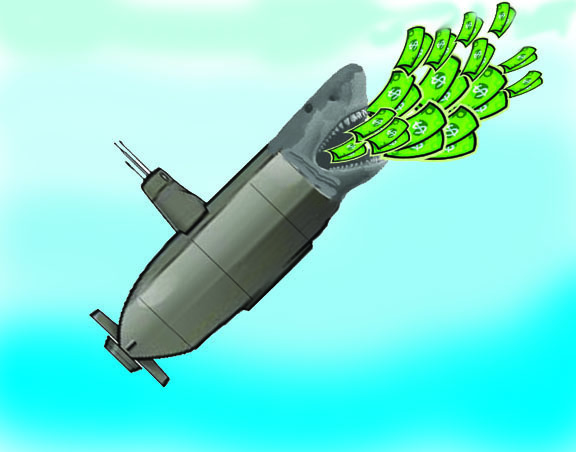
Built at a cost of £7.75bn per unit, four Dreadnought submarines will replace the current Vanguard ships, which constantly patrol the seas carrying ballistic missiles equipped with thermonuclear warheads.
The Trident system is designed to act as a deterrent to other nations with nuclear capability, as a first strike on the UK would not eliminate the ability to strike back, given some of the country’s weapons are continuously at sea.
The building is designed to receive, store, assemble, and maintain Spearfish torpedoes, the Royal Navy’s primary underwater weapon for both anti-submarine warfare and anti-surface warfare. The VES will also be used to train personnel to handle the weapons…………………………………………………
https://www.helensburghadvertiser.co.uk/news/26648451.work-begins-coulport-building-dreadnought-submarines/
The Normality of Evil: Reflections on the “NAZA” Documentary
Yakov M. Rabkin 10/19/2026, https://www.juancole.com/2026/10/normality-reflections-documentary.html
Montréal Informed Comment, – Hannah Arendt’s characterization of Eichmann as representing “The Banality of Evil,” the subtitle of her book Eichmann in Jerusalem, shocked many people. It was later criticized in the wake of the discovery of her protagonist’s antisemitic pronouncements, unknown during his trial.
The new film NAZA, documenting the inner mechanisms of the Gaza genocide brings the concept of the banality of evil front stage again. Except that this time we have the testimonies of two dozen perpetrators who, unlike Eichmann, do not face a tribunal but share their experience mostly in a casual and relaxed manner, some with pride in their accomplishment, others with remorse. They sound like normal middle-class men and women conscientiously doing their challenging hi-tech job. These Israelis embody something different from the Nazis who tried to hide their crimes from their own people, whom they feared would not support them. The new film is about the normality of evil in a society that has largely accepted the genocide taking place less than forty miles south of Tel Aviv.
The twenty-four perpetrators interviewed in the film belong to elite intelligence units that harness the power of AI and total surveillance to destroy Gaza. They are not “Arab haters,” remarks one of the interviewees. Yet he believes he killed more women and children than the fiercest Arab hater. However abhorrent the ongoing West Bank pogroms against Palestinians by Zionist squatter-settler vigilantes taking place under the sympathetic gaze and occasional assistance of the IDF—the magnitude of mass murder of civilians in Gaza is incomparably greater.
The perpetrators come from privileged classes of upscale, glittering Tel Aviv, the visual background of the entire film. Among the leitmotifs of the testimonies are the readiness to obey orders and the delight of overcoming difficult technical challenges (technodélice, as the late Jean-Jacques Salomon defined it). “It was fun (kef),” admitted one of the perpetrators.
NAZA is a Hebrew acronym for collateral damage. The association with “Nazi” is not fortuitous; one of the perpetrators compares his experience with that of Nazis engaged in industrialized, albeit less sophisticated, mass murder in the early 1940s. When, like many young Israelis (and Jews from elsewhere), he was taken to visit Nazi extermination camps, he wondered how these Nazis could switch to normal life after killing thousands of people a day. Now, he admits, he knows. He would meet friends after a day of killing mostly women and children and enjoy his night out.
Initially, neither the Nazis nor the Zionists intended to commit genocide. In their exclusivist nationalist fantasies, German National Socialists wanted to expel the undesirables, to make the “purified,” expanded Germany great again and, in the case of the socialist Zionists in power in 1948 and 1967, when massive expulsions took place, to turn Palestine into a “Jewish state.” Both had land lust: the Nazis wanted fertile land in Eastern Europe ‘cleansed’ of most Slavs and all the Jews—while critics and political figures alike have described Israel’s territorial strategy as a pursuit of ‘a maximum of territory with a minimum of Arabs.’
From the turn of the 20th century, Zionist pioneers laid strong emphasis on breeding the intrepid and valiant New Hebrew Man who had broken with the victimhood of the past. In his eulogy for Theodor Herzl in 1904, Vladimir Jabotinsky, who established and shaped the now dominant stream of Zionism, defined the new creature thus:
Our starting point is to take the typical Yid of today and to imagine his diametrical opposite … because the Yid is ugly, sickly, and lacks decorum, we shall endow the ideal image of the Hebrew with masculine beauty. The Yid is trodden upon and easily frightened and, therefore, the Hebrew ought to be proud and independent.
It was only later, faced with resistance kindled by the settler movement, that Israelis assumed the role of innocent victims, forced to defend themselves. Visits to the Nazi extermination camps are essential components of the didactic tools used to forge hard-nosed fighters. No wonder most of them called the attack on southern Israel in October 2023 “the largest massacre of Jews since the Holocaust.” Totally lost was the difference between powerless Jewish civilians targeted by the Nazis and the powerful Jewish state that had expelled and confined Palestinians in an open-air concentration camp in Gaza. Referring to the violence they unleash, the Israelis often use the expression ein brera (“there is no choice”), which preserves their self-image and justifies excesses. This is how the genocide has metastasized from Europe to West Asia.
The film’s protagonists explain how they use sophisticated technology to survey every telephone communication of the Palestinians. One of the phrases AI extracts from millions of conversations is “When does daddy come home?” This is how the decision is made to destroy the suspect’s home along with his wife and children. Behind their computer screens, those who determine such targets can later hear the cries of those wounded children who were waiting for their fathers a few minutes earlier.
Israel, many of whose politicians overtly advocate and pursue fascist policies, is justly proud of being a world leader in technological innovation, a “Start-up Nation.” Its qualitative edge over its neighbours, guaranteed in American law, involves close cooperation with the U.S. military-industrial-digital complex. Forthcoming legislation will formally embed the Israeli military in it. Unlike Ukraine, which serves mostly as a testing ground for Palantir and other Western facilitators of hi-tech warfare, Israeli scientists and engineers actively contribute to the development of new systems such as Lavender, which are widely used against the Palestinians. All this happens within the larger ecosystem of U.S. financial, material, and strategic support. Not only Washington, Berlin, and London but even Belgrade maintain the lifeline, or rather the deathline, of munitions, materiel, and cloud services to Israel. These enable it not only to oppress and kill Palestinians but also to attack other countries, doing, as Chancellor Merz of Germany candidly admitted, “the dirty work for all of us.” There is little doubt that Merz and his Western counterparts were aware all along of the methods that the new film exposes to the public.
Moreover, Israeli expertise in surveillance and population control is in demand around the world. This portends dangers to privacy and democracy elsewhere. Tools of total surveillance may tempt rulers concerned about potential social turmoil and even revolutions against the growing—and unprecedented—economic polarization. Sprouts of fascism have been noticed in a good part of the Political West. ICE activities to target undocumented immigrants in the United States may be just the beginning. The ruling classes’ need to protect their privilege foments connivance with Israel and thereby contributes to the country’s impunity.
Similarly, the penetration of Hezbollah with booby-trapped pagers, which led to the murder and mutilation of thousands of people in Lebanon and Syria in 2024, shows how vulnerable anyone may become by using deceptively inoffensive civilian gadgets. (NAZA does not mention this gruesome episode, which is the subject of another recent documentary.) Israeli officials have bragged that for them the stage is the entire world, and they are the main players on it. Ominously and proudly, Prime Minister Netanyahu said that everyone in the world carries a piece of Israel in his pocket.
The Nazi genocide of Jews, Slavs, and many others shocked Europeans mainly because the victims were fellow Europeans. Their genocides in Africa and the Americas had provoked no comparable revulsion. Another important cause of the shock is the rational organization of the Nazi genocide. Israelis in Gaza used hi-tech, including AI, to raise the level of organization to unprecedented levels. IDF specialists and snipers admit feeling like gods capable of killing people practically at will. Israeli media reported cases of depression when soldiers returned to civilian life. For some, the cause was the loss of the sense of omnipotence. They felt they were no longer gods but just nobodies lost in the crowd. Other IDF veterans experience depression in the face of world opprobrium, which they, convinced of their innocent victimhood, cannot comprehend and attribute to antisemitism.One of the Israelis interviewed in the film was assigned to the political wing, which had to use electronic media to besmirch, discredit, and undermine critics of Israel. (After NAZA was released in cinemas, Israelis promptly produced a fake misleadingly named “Naza: The Real Story. Full Film” in an effort to divert viewers from the original, which, unlike the fake, is so far not available online.) This operation contributes to repressive measures even against political, let alone material, support for the Palestinians in several European nations and in the United States. Criticism of Israel is criminalized as antisemitism. Israeli agents in these countries provide target data — most probably collected by the Israeli intelligence—to police, employers, and universities, which promptly move to intimidate, arrest, deport, sack, and expel the critics. While Israel undermines fundamental freedoms of speech and assembly in most Western countries, it nonetheless is losing the battle for public opinion.
Facing growing public disaffection in Europe and in the United States, Netanyahu promises to turn Israel into a “super-Sparta”—a heavily militarized, self-sufficient society capable of standing alone amid growing international isolation. Israeli politicians and military experts have long concluded that the official definition of Israel as a “Jewish and democratic state” is rent with tension between the two. Liberal democratic values —ostensibly cherished by Western democracies—have to yield to Jewish supremacy. Consequently, peace is no more than a temporary policy option for Israel. To paraphrase von Clausewitz, politics is the continuation of war by other means.
States are inanimate but are operated by individuals. While the psychological and political range among the Israelis is broad, the film NAZA illustrates the striking success of breeding the New Hebrew Man liberated from the moral constraints of Jewish tradition and humanity tout court.
One of Francisco Goya’s famous works is titled “El sueño de la razón produce monstruos.” It is usually understood as “when reason falls asleep, monsters appear.” But the Spanish sueño also means “dream” or “fantasy.” The Zionist state embodies the phrase “Wenn ihr wollt, ist es kein Märchen” (“When you will it, it is no fairy tale”), written by Herzl, the founder of political Zionism, over a century ago. (It bears a striking resemblance to the title of the Nazi cinematographic masterpiece Triumph des Willens, or The Triumph of the Will.) The project that appeared like a fantasy and a fairy tale came true by rational use of political, financial, and human resources. Israel’s actions show that instrumental rationality—a characteristic trait of modernity—can also produce monsters. Moreover, such monsters are convinced that they are normal, and so are most Israelis around them. This makes Israel a serious danger to the region, to the world and, of course, to itself.
Yakov M. Rabkin is Professor Emeritus of History at the Université of Montréal. His publications include over 300 articles and a few books: Israel in Palestine, Zionism Decoded in 101 Quotes Science between Superpowers, A Threat from Within: a Century of Jewish Opposition to Zionism, What is Modern Israel?, Demodernization: A Future in the Past and Judaïsme, islam et modernité. He did consulting work for, inter alia, OECD, NATO, UNESCO and the World Bank. E-mail: yakov.rabkin@umontreal.ca. Website: www.yakovrabkin.ca
Why trade is vital to understanding how Ukraine needs western capital to stay afloat and how Russia can pay for its war effort without new debt
Four graphs [on original]that tell a bigger story
Ian Proud, The Peacemonger, Oct 20, 2026
I have wanted to write an article for sometime about the differing fates of Russia and Ukraine since the onset of the conflict in 2014. The headline is that Ukraine has never made up the difference in increased trade with Europe having cut its trade with Russia to the bone since 2014. This has inadvertently meant that Europe has had to inject significant sums of capital into Ukraine just to prevent its currency from collapsing as the war has gone on. Russia has diversified its trade away from Europe such that its export model is as strong today as it was in 2014, giving it the liquidity it needs to underwrite the war effort.
Key finding:
Ukraine exported 24% less and imported 46% more in 2025 than in 2014. The war has driven up imports while exports never recovered from the signing of the DCFTA and have been hampered by the war effort.- The yawning trade deficit Ukraine has built since the war started has placed greater strain on European sponsors to provide the capital Ukraine needs to prevent its currency collapsing, in addition to providing funding to meet its fiscal requirements.
- This funding challenge for Europe will persist after the war ends until Ukraine can become self-sufficient in boosting exports and/or attracting sufficient foreign investment to offset its trade deficits.
- Russia’s export strength and consistent surpluses have been unaffected by war. After the Ukraine crisis started, Russia started to diversify its major energy exports away from Europe, allowing it to weather the progressive reduction of exports to Europe. Indeed, Russia gained a huge windfall in 2022 from surging energy prices. There is no evidence that sanctions have impacted Russia’s export model in a significant way.
- Russia has already started to reaccumulate FX reserves after the oil price collapse of late 2014, until before the war started. Following the immobilisation of $300bn in Russian FX reserves, Russia started to accumulate reserves in monetary gold, to sanction-proof future earnings. Russia now has liquid reserves of over $420bn meaning the immobilisation of its foreign currency reserves is no longer an economically limiting factor.
Detailed analysis
Russia’s export model in which it runs consistently large trade surpluses has ensured it can generate the reserves of foreign currency and gold which have undoubtedly helped to bankroll the war in Ukraine. Ukraine’s trade deficit has yawned since the war started, requiring continual injections of European capital to prevent its currency from collapsing.
This helps to explain by Russia can sustain the war for longer; it doesn’t need to take on significant new debt, its debt remaining low at 20%. Ukraine can only fund the war and keep its national accounts in balance with European money that cannot be guaranteed long-term and which, in any case, has increased Ukrainian debt by an average of 20% of GDP each year since the war started. This is not sustainable.
The Deep and Comprehensive Free Trade Agreement of 2014 has disadvantaged Ukraine because it forced a choice away from trading with Russia.………………………………………………………………………………………………………………………………………………………………………………….
by encouraging Ukraine to trade with Europe and not with Russia, Europe has imposed a deadweight economic loss on Ukraine which took a sovereign decision to forgo a previously profitable trade relationship, to pursue a political goal of EU integration……………………………………………………………………………..
Dragged into a persistent and growth trade deficit by war, Ukraine needs continued injections of foreign funds to prevent its currency collapsing.…………………………………………………………………………………………………..
………………………………………………… While Russia would undoubtedly like to see the return of its immobilised assets after the war ends (big question mark) it has nevertheless built up a significant financial buffer to the tune of over $420bn in reserve assets in addition to those assets that remain frozen.
This deep well of reserves undoubtedly helps to underwrite Russia’s war effort without the need for significant borrowing. Russia’s debt today sits at around 20% of GDP.
In 2021 Ukraine’s debt sat at around 49% of GDP. Today it sits at around 110% of GDP……………………………………………… https://thepeacemonger.substack.com/p/why-trade-is-vital-to-understanding?utm_source=post-email-title&publication_id=3221990&post_id=221204744&utm_campaign=email-post-title&isFreemail=true&r=1ise1&triedRedirect=true&utm_medium=email
Ukraine’s Black Sea escalation threatens global trade, with risks of spiralling
Ukraine’s expanding Black Sea attacks are disrupting shipping, raising insurance costs, and threatening global food and energy trade. As “wild-card” Zelensky raises the stakes (angering the US), the risk of a wider confrontation grows.
Friday, October 16, 2026, https://infobrics.org/en/post/103298
Uriel Araujo, Anthropology PhD, is a social scientist specializing in ethnic and religious conflicts, with extensive research on geopolitical dynamics and cultural interactions.
Black Sea shipping is in crisis, adding pressure to a global economy already absorbing Red Sea and Strait of Hormuz disruptions. Commercial vessels face rising risks, insurance costs have climbed, and tanker freight rates have surged.
Ukraine has stepped up attacks on Russia’s Black Sea Fleet, ports, oil facilities, and vessels associated with Russian trade, expanding the conflict’s geographical scope. Grain, oil, fertilizers, and other commodities move through these waters, including shipments for non-belligerent countries.
S&P Global reported on October 9 that tanker freight rates rose sharply amid attacks, sanctions, and security concerns disrupting Russian energy exports. According to maritime security consultancy Ambrey, Kyiv expanded its campaign beyond naval assets and oil infrastructure to merchant ships trading with Russian ports.
In November 2025, attacks had already expanded to commercial vessels, particularly oil tankers, in the open sea. In May 2026, Ambrey attributed strikes on three Russia-linked tankers inside Turkey’s exclusive economic zone to Ukrainian naval drones.
By July, targeting expanded to dry-bulk carriers, general cargo, container ships, and roll-on/roll-off vessels. In September, insurers widened the high-risk zone. Ambrey data shows 45 merchant vessels struck outside the previous war-risk area in 12 months, 31 after July 1, 2026.
Ambrey’s finding is that Ukraine-attributed strikes (on Russia-linked shipping far offshore) helped drive insurers’ growing risk perception across the Black Sea.
Russia has responded by also conducting strikes in the Black Sea. As Modern Diplomacy puts it, Moscow has made any Black Sea truce conditional on Kyiv ceasing attacks on Russian energy infrastructure.
This is, after all, a proxy war of attrition, marked as it is by considerable military asymmetry. Russia possesses a larger population, defense-industrial base, strategic arsenal, air force, and navy, as well as greater resources for prolonged warfare.
Ukraine, despite developing formidable drone capabilities and long-range strike capacity, remains heavily dependent on Western assistance.
Global Firepower’s 2026 ranking places Russia second and Ukraine twentieth. The military asymmetry is therefore considerable.
The hard truth is that, notwithstanding any legitimate criticism one may have of Moscow’s campaign, Russia has refrained from employing its full destructive capabilities.
Such restraint, particularly in the war’s early stages, may have reflected not only humanitarian and military calculations but also (on Moscow’s end) awareness of historical and cultural ties between the two countries – which may have a psychological effect on decision-makers.
Kyiv, in contrast, since the 2014 ultra-nationalist revolution, has launched an anti-Russian campaign to distance the nation from Moscow. Even so, 42.6% of Ukrainians still regularly spoke Russian in December 2022, despite the war and media censorship restrictions.
Former US diplomat Chas Freeman and retired US Army Colonel Douglas Macgregor have both argued that Moscow exercised restraint.
Poland’s Centre for Eastern Studies likewise noted in June 2022 that Russia had refrained from systematically destroying key infrastructure – while the US Congressional Research Service observed that the initial bombardment was more limited than expected.
For comparison, Bono Vox performed in Kyiv on May 8, 2022, less than three months after Moscow launched its campaign. One could hardly imagine Bono performing in Baghdad shortly after the US invasion! Or in 2011 Libya, for that matter.
The broader point here is that the Russian Federation retains substantial military advantages, despite Ukrainian advances, but Western support has enabled Kyiv to sustain a prolonged war of attrition – increasingly targeting Russian energy.
In August, Ukrainian drone strikes on Russian and Iranian-linked vessels in the Caspian Sea risked expanding the conflict into a vital Russia-Iran logistics corridor.
The attacks risked further “proxifying” the conflict by aligning Kyiv with US and Israeli interests against Tehran, potentially merging the European and Middle Eastern theaters – a scenario that never materialized.
In any case, Ukrainian attacks on Russian energy infrastructure continue amid mounting political pressure, with Trump even saying it is “time for Ukraine to get new President.” I’ve commented before on Zelensky’s resilience, despite several reported plots against him.
The Ukrainian leader has shown a habit of acting unpredictably, sometimes behind his Western patrons’ backs. In 2023, leaked documents revealed wild Ukrainian plans that risked widening the conflict. More recently, attacks on Russian refineries drew attention amid rising diesel prices and reports of moves angering Washington.
This “wild-card” tendency risks triggering a dangerous spiral, with potentially disastrous consequences for Ukraine – and the global economy. Repercussions for food, energy, and fertilizer trade are already visible, while the danger of crossing red lines has arguably never been greater.
Rosyth councillor raises concerns over submarine dismantling
By Jamie Szmitz, Dunfermline Press 19th Oct 2026
https://www.dunfermlinepress.com/news/26648971.rosyth-councillor-raises-concerns-submarine-dismantling/
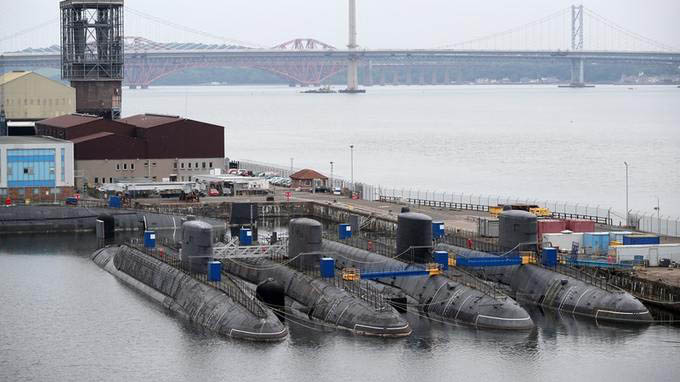
FRESH concerns have been raised about nuclear submarine dismantling plans at Rosyth Dockyard.
Councillor Brian Goodall has voiced renewed opposition to the long-term storage of radioactive material in the town, following recent discussions at the SNP annual conference in Aberdeen.
At the political party gathering he quizzed Gareth Hedicker, Babcock International’s Marine Chief Operations Officer, on the plans for radioactive waste that’s being removed from the first of seven old nuclear subs that are laid up at the West Fife yard.
Cllr Goodall said: “I’ve still not had any response from Babcock on how long, and where, they intend to store the highly radioactive reactor pressure vessel that they intend to cut out of the decommissioned nuclear submarine, Swiftsure, over the next few weeks, as part of the ongoing Submarine Dismantling Demonstrator Project.”
In a social media post he also stated: “I challenged the chief operations officer about the poor communication with the local community in relation to the activities at the nuclear regulated site at Rosyth Dockyard.”
He raised concerns about the outdated mailing list used for stakeholder meetings and criticised the lack of clarity around plans for storing the highly radioactive reactor pressure vessel from the decommissioned submarine HMS Swiftsure.
Cllr Goodall said he intends to accept an invitation to meet Mr Hedicker as soon as possible.
Rosyth Dockyard is at the centre of the UK Government’s Submarine Dismantling Programme, which aims to safely dismantle and recycle decommissioned Royal Navy nuclear submarines.
HMS Swiftsure is the first vessel to undergo dismantling under the programme.
Cllr Goodall has consistently opposed proposals to expand the programme at Rosyth, warning that bringing additional submarines to be cut up at the site would be “totally outrageous” and would go against assurances previously given by the Ministry of Defence.
He believes that long-term storage of radioactive materials at Rosyth is inappropriate given the dockyard’s proximity to homes, businesses, and the new Caledonia High School development.
The debate comes as a wider conversation continues about the future of the submarine dismantling programme and Rosyth’s role within it.
Concerns over scrutiny of nuclear factory plans
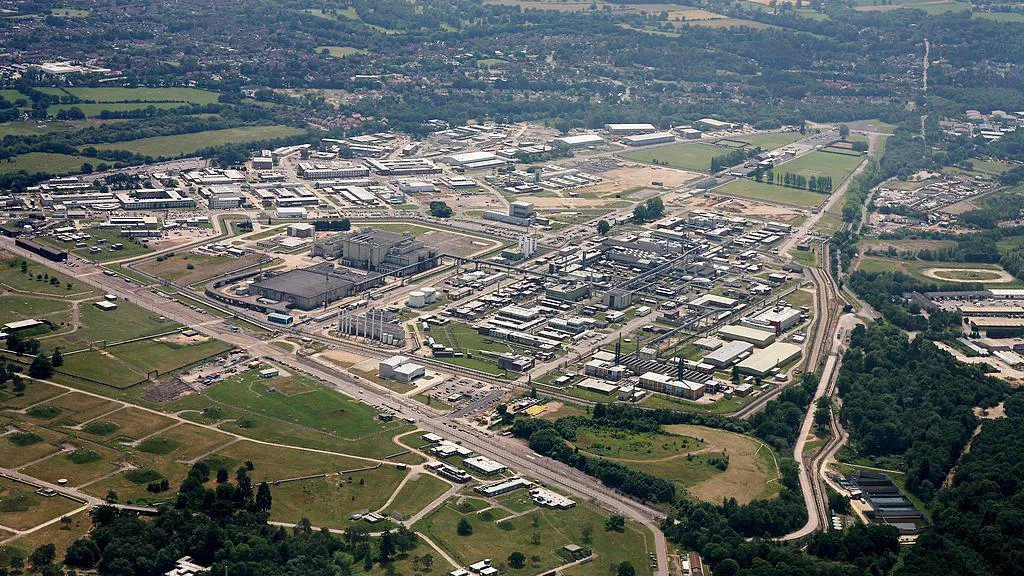
Questions have been raised over whether West Berkshire Council has the
expertise and resources needed to scrutinise plans for a major
redevelopment at the Atomic Weapons Establishment (AWE) in Aldermaston. The
nuclear weapons site is expected to submit plans for its Future Materials
Campus, part of a wider £15bn investment in the UK’s warhead programme.
During a meeting on Thursday, Conservative councillor Dominic Boeck said
residents had concerns about the impact of the project and asked how the
authority would independently assess an application of such scale and
complexity. Liberal Democrat deputy council leader Denise Gaines said any
proposal would be examined by qualified professionals and specialist
consultants to ensure all technical and environmental issues were properly
considered.
BBC 19th Oct 2026, https://www.bbc.co.uk/news/articles/cm369jg6d2wno
Massive Ukrainian drone attack on St. Petersburg escalates US-NATO war against Russia.
Under these conditions, there is a growing admission within the US and international media that NATO and Russia are entering a “world war.” In one of the foremost examples, the Financial Times published Saturday a column titled, “Are we sleepwalking into World War III?”
The old imperialist powers retain a military superiority they no longer possess economically.
Andre Damon,18 October 2026, https://www.wsws.org/en/articles/2026/10/19/yudl-o19.html
Ukraine attacked Russia with more than 1,000 drones overnight Saturday, in the largest bombardment of St. Petersburg since the Second World War. The attack, in which Russia’s Defense Ministry counted 1,015 drones across 15 regions, Crimea and the Black Sea, was one of the heaviest bombardments of Russian territory since the war began.
These strikes are directly funded by the NATO powers, which have provided Ukraine with over $100 billion in weapons, and are carried out on the basis of targeting data provided directly by their militaries.
The latest attack is a response by the NATO powers to the warning Russia gave European governments on September 30, that threats to Russia’s territorial integrity would be met with “the entire arsenal of forces and capabilities at its disposal, including nuclear weapons.”
Faced with this blunt warning that their actions risk triggering a nuclear war, the NATO powers are escalating. On October 12, General Alexus Grynkewich, NATO’s top commander in Europe, threatened to “break” the enemy’s “warfighting system,” including “anything and everything that supports, sustains, or controls that force.”
Under these conditions, there is a growing admission within the US and international media that NATO and Russia are entering a “world war.” In one of the foremost examples, the Financial Times published Saturday a column titled, “Are we sleepwalking into World War III?” by its chief foreign affairs commentator, Gideon Rachman. The title of his essay is taken from a 2012 book by Australian historian Christopher Clark, The Sleepwalkers: How Europe Went to War in 1914, which provided an apologetic explanation for the policies of German and European imperialism.
According to Clark, the war was the unforeseen outcome of mistaken judgments. The governments of the time and their leaders were not guilty of planning and starting war to achieve geopolitical and economic objectives. This benign interpretation of the war was especially welcomed by the German government and media, which praised Clark’s work and turned him into an intellectual celebrity.
Building upon Clark’s metaphor, Rachman depicts the imperialist powers as similarly clueless about the consequences of their actions. He writes, “Regions and countries that have for decades taken peace for granted—western Europe, east Asia, the Gulf states—now have to wrestle with the prospect, or the reality, of war.” It has become “commonplace,” he notes, “for world leaders to speculate publicly about the outbreak of a third world war.”
Rachman, citing a quote attributed to Leon Trotsky, declares, “You may not be interested in war, but war is interested in you.”
But the US and European leaders are not political somnambulists who are “sleepwalking” into World War III. They have been marching toward it with eyes open since the dissolution of the Soviet Union. The first President Bush proclaimed a “new world order” on the eve of the 1991 Gulf War. That war was followed by the intervention in Somalia, the bombing of Bosnia and the 1999 war against Serbia, the invasions of Afghanistan and Iraq, the destruction of Libya, the proxy war in Syria and the US-backed Saudi war in Yemen.
Since 2022, these wars have merged into a single global conflagration. It includes the US-NATO war against Russia in Ukraine; the Israeli genocide in Gaza, armed and defended by Washington; the bombing of Iran in June 2025; and the war against Iran launched on February 28 of this year.
The objective is the redivision of the world among the old imperialist powers. This violent and ongoing project includes the breakup of the existing Russian state, which will open up the vast Eurasian landmass to unfettered capitalist exploitation. For the oligarchs of finance capital, the loss of a few hundred million lives would be a small price to pay for this rich prize.
In Rachman’s telling, however, the danger of world war proceeds entirely from the actions of Russia and China. In this narrative, the threat of “world war” began with the decision Putin made in February 2022, with no antecedent history. Rachman asserts that an inflection point was reached when “Putin launched his ‘special military operation.’ In that time, the global political atmosphere has been transformed.”
The Russian invasion of Ukraine did not come out of nowhere. It was a reactionary and desperate response by the Russian capitalist oligarchy to years of provocations by NATO. NATO’s own leadership has said as much. In an interview published by the Washington Post in May 2023, then-NATO Secretary General Jens Stoltenberg declared that the war “didn’t start in 2022. The war started in 2014.”
Stoltenberg continued, “And since then, NATO has implemented the biggest reinforcement of our collective defense since the end of the Cold War … Until 2014, NATO allies were reducing defense budgets. Since 2014, all allies across Europe and Canada have significantly increased their defense spending … this is a huge transformation of NATO that started in 2014.”
The Russian invasion of Ukraine did not come out of nowhere. It was a reactionary and desperate response by the Russian capitalist oligarchy to years of provocations by NATO. NATO’s own leadership has said as much. In an interview published by the Washington Post in May 2023, then-NATO Secretary General Jens Stoltenberg declared that the war “didn’t start in 2022. The war started in 2014.”
Stoltenberg continued, “And since then, NATO has implemented the biggest reinforcement of our collective defense since the end of the Cold War … Until 2014, NATO allies were reducing defense budgets. Since 2014, all allies across Europe and Canada have significantly increased their defense spending … this is a huge transformation of NATO that started in 2014.”
But the Maidan coup was itself an outcome of decades of imperialist policy that had pushed the boundaries of the NATO alliance to Russia’s doorstep.
Rachman correctly centers the driving force of the eruption of global war in “a shift in the global balance of power.” He notes that, “In 1989, the year of the fall of the Berlin Wall, the G7 nations—the US, UK, Germany, France, Italy, Canada and Japan—accounted for around two-thirds of global economic output … By 2022, the G7 represented about 43 percent of global GDP.”
This shift, according to Rachman, is “encouraging revisionist powers to challenge the global dominance of the US and its allies.” China’s share of world output rose from under 2 percent in 1989 to about 17 percent in 2024, according to World Bank figures.
However, by 2022, Rachman notes, the G7 still accounted for “about half of global military spending.” The old imperialist powers retain a military superiority they no longer possess economically. It is they, not China, that have spent the past 35 years at war, seeking to reverse by force what they are losing in the world economy.
The most bizarre element of Rachman’s column is his effort to blame the reemergence of global war on the public’s opposition to it. He writes that “the growth of anti-war sentiment in the US” has “created an opening for revisionist powers,” that US President Donald Trump “is clearly attracted to the idea that the US should retreat from its security commitments to its allies” and that “the greatest risk of a third world war may lie in that very uncertainty.”
Beset by an all-pervasive capitalist crisis and the growth of working class opposition, the imperialist powers seek through war a way out of their problems. The global eruption of imperialist war is only intensifying the class struggle and the capitalist crisis. It is driving workers and youth into struggle around the world, from the United States to France—where students and workers filled the streets this week against a government that has billions for rearmament and nothing for social needs.
The working class and youth must reject and oppose the insane imperialist militarism that is inciting global conflict and threatening humanity with a nuclear conflagration.
Walt Zlotow – War criminal Hegseth to hide Iran school slaughter report till after election
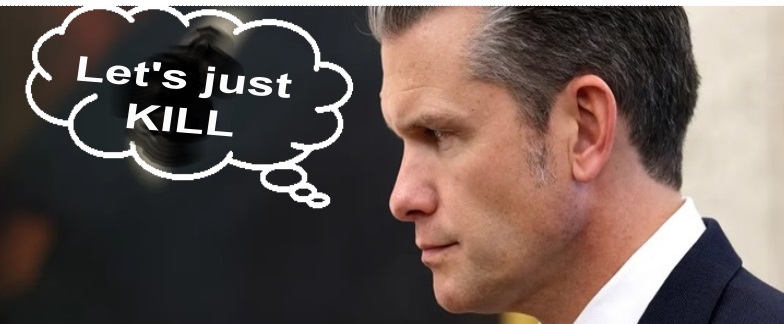
Hegseth did order a Pentagon investigation, which, ‘wink, wink’ was sure to reveal the truth.
20 October 2026AIMN Editorial, Walt Zlotow, https://theaimn.net/war-criminal-hegseth-to-hide-iran-school-slaughter-report-till-after-election/
Two hundred thirty-three days ago Defense Secretary Pete Hegseth committed a monstrous
war crime. He conspired with his fellow war criminal President Trump to attack Iran posing no threat to America whatsoever.
On day one Hegseth directed his ‘war fighters’ to bomb the Shajareh Tayyebeh Elementary School in Minab, Iran. The dastardly attack killed 120 students, 26 female teachers, the unborn child of a pregnant teacher, seven parents, a school bus driver, and a technician at a nearby clinic. Aboard Air Force One Hegseth demurred to his war criminal boss Trump who claimed Iran, not the US, must have been responsible for bombing their own folks because… ’They’re terrible shots.’
But Hegseth did order a Pentagon investigation, which, ‘wink, wink’ was sure to reveal the truth.
We’ve learned from a Bloomberg investigation that Pentagon officials, and of course Hegseth, were aware within hours the US was responsible due to flawed intelligence, outdated imagery, and an overreliance on AI. But with an election coming up, Hegeth, mindful how the slaughter of 120 little kids nd 36 parents and teachers might affect even MAGA diehards, has directed the Pentagon to wait until after the November 3 election before releasing the Pentagon report.
We shouldn’t be surprised if war criminal Hegseth tries to explain away the damning report of the grotesque war crime he unleased on those little Iranian students and their teachers last February 28 with the preface… ’I guess that Super Intelligence we used to mistakenly bomb the Shajareh Tayyebeh Elementary School in Minab, Iran wasn’t so Super after all.’
Trump Is Building the Machinery to Make Defeat Impossible
Joshua Scheer, SCHEERPOST, October 20, 2026
When Volodymyr Zelenskyy, whose presidential term ended in May 2024, informed Trump that elections would not be held in Ukraine because of the war, Trump responded: “So you’re saying during the war you can’t have elections? So let me just say, three and a half years from now … So you mean if we happen to be in a war with somebody, no more elections? Oh, that’s good.”
An election can be stolen long before the ballots are counted. This searing address from Chris Hedges warns that the Trump administration is assembling the machinery to discredit unfavorable results, intimidate voters and turn claims of election fraud into a justification for federal intervention. The danger, the speech argues, is a government preparing to make its hold on power permanent.
But the indictment reaches beyond Trump. Decades of corporate domination, bipartisan betrayal of working people and the hollowing out of democratic institutions have prepared the ground for authoritarian rule. If the elections are subverted, the speaker argues, defending democracy will require mass organizing, nationwide strikes and sustained public resistance from people whose own future is at stake.
Full Edited Transcript……………………………………………………………………………………………………………………………………………………………………………………………………………………………………………………… https://scheerpost.com/2026/10/20/trump-is-building-the-machinery-to-make-defeat-impossible/
Zelensky still the most dangerous man in the world.

Walt Zlotow West Suburban Peace Coalition Glen Ellyn IL, 20 October, 26
Ukraine President Volodymyr Zelensky has been pushing all out war between the West and Russia since the Russian invasion of February 2022. And ‘all out’ only has one inevitable outcome…nuclear war.
That’s a long time to be put under threat of nuclear annihilation by a former comedian. Zelensky used his celebrity to win the Ukraine presidency in 2019, promising to make peace with the Russian leaning Ukrainians in Donbas on Russia’s border being brutalized by the ultra nationalist Kyiv government for years preceding Zelensky.
The Kyiv deep state quickly disabused Zelensky of reproachment with Donbas Ukrainians and Russia. With the US and NATO cheering Zelensky on, this made the Russian invasion nearly 3 years later.
Zelensky went along, foolishly believing Western aid would defeat an overwhelmingly more powerful Russia that Ukraine had no chance of defeating single handedly.
But right at the start, President Biden, most responsible for provoking the war, declared no US troops or long range weapons for Zelensky because ‘that would lead to nuclear war.’ That essentially sealed Ukraine’s fate, a truth Zelensky could not comprehend.
How right Biden was then and how wrong Zelensky was and is today, demanding endless long range NATO weapons that are reaching deep into Russia.
Microsoft pulls out of AI datacentre project in Essex over power supply concerns
Driven by hopes of an economic transformation, many are taking on increasingly risky debt, including companies vital to the AI boom
Development by UK firm Nscale heralded by ministers as largest of its kind in country loses anchor tenant
Gwyn Topham and Aisha Down, Mon 19 Oct 2026 ,
https://www.theguardian.com/uk-news/2026/oct/18/microsoft-drops-huge-ai-datacentre-project-in-essex-over-power-supply-concerns
The development of a huge AI datacentre hailed by the UK government has received a fresh setback after Microsoft pulled out of the project over concerns about power supplies.
The development by the British company Nscale, heralded by ministers as the country’s largest AI datacentre when it was announced in 2025, was planned to open at Loughton in Essex next year.
Doubts had already emerged about the scheme after the Guardian revealed in March that the location was still an operational scaffolding yard.
Now there are further concerns after Microsoft, one of its largest planned customers and expected to have been the anchor tenant, informed the company that it was pulling the plug on its agreement.
It comes a month after it emerged that power supply problems meant the project would face a lengthy wait before coming online.
Keir Starmer’s government had highlighted the Loughton project when announcing the UK’s AI strategy in 2025, describing it as the “largest UK sovereign AI datacentre”. Datacentres are the central nervous system of AI technology such as chatbots.
The end of the deal with Microsoft, first reported in the Telegraph, means Nscale has lost its only publicly announced customer for the Essex datacentre. It is understood that Microsoft remains on board for another project the company has in Norway.
Doubts had already emerged about the scheme after the Guardian revealed in March that the location was still an operational scaffolding yard.
Now there are further concerns after Microsoft, one of its largest planned customers and expected to have been the anchor tenant, informed the company that it was pulling the plug on its agreement.
It comes a month after it emerged that power supply problems meant the project would face a lengthy wait before coming online.
Keir Starmer’s government had highlighted the Loughton project when announcing the UK’s AI strategy in 2025, describing it as the “largest UK sovereign AI datacentre”. Datacentres are the central nervous system of AI technology such as chatbots.
The end of the deal with Microsoft, first reported in the Telegraph, means Nscale has lost its only publicly
Nscale, which is backed by tech companies including Nvidia, has positioned itself as Britain’s “sovereign” datacentre provider but the loss of an anchor tenant for its Loughton project could undermine its ambition to float on Wall Street this year with a potential valuation of $35bn (£26bn).
Targeting the rapid growth of AI to boost the economy, the UK government’s proposals to harness the technology have focused on two Nvidia-backed companies: the London-based Nscale and the US company CoreWeave.
Official figures show investments in AI are among the factors helping Britain’s economy to beat expectations of a weaker growth performance this year as the war in the Middle East rattles global business activity.
Nscale is a “neocloud”, one of a number of companies with deep ties to Nvidia that are building the key infrastructure for the AI boom. It is this relationship with Nvidia that meant it and CoreWeave were chosen as key players in the UK’s sovereign AI push, which happened under Starmer.
There is, however, a growing chorus of voices which suggest that neoclouds may be a vulnerability in the broader AI economy, especially as delays pile up across partners.
Driven by hopes of an economic transformation, many are taking on increasingly risky debt, including companies vital to the AI boom. If Nscale pushes back its initial public offering in New York, these vulnerabilities may come into sharper focus.
The former UK deputy prime minister Nick Clegg and the former Meta chief operating officer Sheryl Sandberg are board members at the company. Clegg holds a 0.25% stake that could be worth $88m if the company floats at a $35bn valuation.
It emerged earlier this month that UK Power Networks (UKPN), which owns and maintains the electricity grid across London and the south-east of England, had informed Nscale that it would not be able to supply enough power to the company’s Loughton datacentre until the early to mid-2030s.
Nscale said it was “committed to the project” but the failure to find a quick fix to the power supply issue underlines how much energy has become a hindrance to datacentre development.
The scaffolding yard site has been cleared by Nscale, and the company is investigating whether it can generate power onsite and whether it can speed up the connection process.
An Nscale spokesperson said: “We remain committed to both the Loughton project and the UK, and we are exploring alternative power sources for the site, in addition to other expansion sites in the UK.
“Our relationship with Microsoft remains strong and long-term, and this unfortunate London-wide grid issue has no impact on our other contracts.”
1 This Month
23-25 October – on Zoom – World BEYOND War’s annual global conferenc


Shut down the radiation-damaged Heysham nuclear reactors now
To see nuclear-related stories in greater depth and intensity – go to https://nuclearinformation.wordpress.com

Say No to NASA’s Reckless Nuclear Reactor on the Moon
Say No to NASA’s Reckless Nuclear Reactor on the Moon

-
Archives
- October 2026 (247)
- September 2026 (339)
- August 2026 (330)
- July 2026 (355)
- June 2026 (287)
- May 2026 (306)
- April 2026 (356)
- March 2026 (251)
- February 2026 (267)
- January 2026 (308)
- December 2025 (358)
- November 2025 (359)
-
Categories
- 1
- 1 NUCLEAR ISSUES
- business and costs
- climate change
- culture and arts
- ENERGY
- environment
- health
- history
- indigenous issues
- Legal
- marketing of nuclear
- media
- opposition to nuclear
- PERSONAL STORIES
- politics
- politics international
- Religion and ethics
- safety
- secrets,lies and civil liberties
- spinbuster
- technology
- Uranium
- wastes
- weapons and war
- Women
- 2 WORLD
- ACTION
- AFRICA
- Atrocities
- AUSTRALIA
- Christina's notes
- Christina's themes
- culture and arts
- Events
- Fuk 2022
- Fuk 2023
- Fukushima 2017
- Fukushima 2018
- fukushima 2019
- Fukushima 2020
- Fukushima 2021
- general
- global warming
- Humour (God we need it)
- Nuclear
- RARE EARTHS
- Reference
- resources – print
- Resources -audiovicual
- Weekly Newsletter
- World
- World Nuclear
- YouTube
-
RSS
Entries RSS
Comments RSS

