Deep concerns regarding the Rolls-Royce development at the Wylfa site

Open Letter to Miatta Fahnbulleh MP, Secretary of State for Energy Security
and Net Zero.
Dear Secretary of State, I am contacting you with a letter
written to the former holder of the post, Ed Milliband, expressing my deep
concerns regarding the Rolls-Royce development at the Wylfa site on Ynys
Mon.
Since writing to Ed Miliband, there have been developments that make
the prospects of a nuclear site on the island even more concerning:
1)Increasing threats of war mean that we will be targets for attack. Russia
and Iran have both threatened us, due to our interventions in Ukraine and
the use of British bases for the bombing of Iran. Whatever the rights and
wrongs of these interventions, it is clear that nuclear power stations are
now regular targets for attack. How are we to be protected? How are we to
get off the island in the event of an attack ( or nuclear accident)? There
are two bridges connecting us to the mainland, and even if there were
three, there would be no safe evacuation possible, without the danger of
accidents.
RAF Valley is also on the island, making us a further target.
The waste produced by the possible new nuclear reactors will also serve as
an ongoing target and risk, as it would remain onsite for at least 100
years, being too hot to remove. Our future generations will be responsible
for this; not a legacy we want to bequeath.
2) Increasing droughts and
wildfires have threatened the safety of nuclear plants all over the world,
including at Sizewell B this year. Should the electricity supply be cut to
a nuclear power station, if backup diesel power is then cut off or damaged,
through flooding, as in the case of the Fukushima nuclear disaster, then
there is also disaster, as the reactors cannot be cooled if there is no
electrical power to the station. So, for a nuclear station to be safe,
there needs to be adequate power in the first place. This can no longer be
relied on.
3) A December 2025 Harvard T.H Chan study found a statistical
link between those living close to nuclear power plants and higher cancer
rates in Massachusetts. The strongest link was seen within 20 to 30
kilometers of a nuclear station, and the risk increased as people got
older. There is also a risk to workers.
4) Whereas the Rolls-Royce site has
advertised that the electricity generated at Wylfa would go to homes, it is
now published that energy could go to AI centres being developed on the
island and nearby. How are we to know the end use of the electricity to be
generated by these nuclear reactors?
The World Nuclear Industry Status
Report ( WNISR) 2026 shows that between March 2025 and June 2026, both
solar and wind power have independently surpassed generating electricity
from nuclear reactors. I understand that you want to mitigate the effects
of climate change in the most efficient and safe ways possible. Nuclear
power is neither efficient or safe, particularly under conditions of
conflict, climate change, or indeed pandemic, where routine maintenance is
reduced, as happened during the Covid pandemic.
We implore you to
reconsider pouring more money into these nuclear reactors, yet to receive
the Generic Development Consent order, and instead concentrate our
resources to upgrading the grid, as you propose, and using our excellent
renewable energy sources.
People Against Wylfa B 19th Oct 2026,
https://www.stop-wylfa.org/
Under pressure from AI data companies, USA government facilitating the upgrade of tired old nuclear reactors
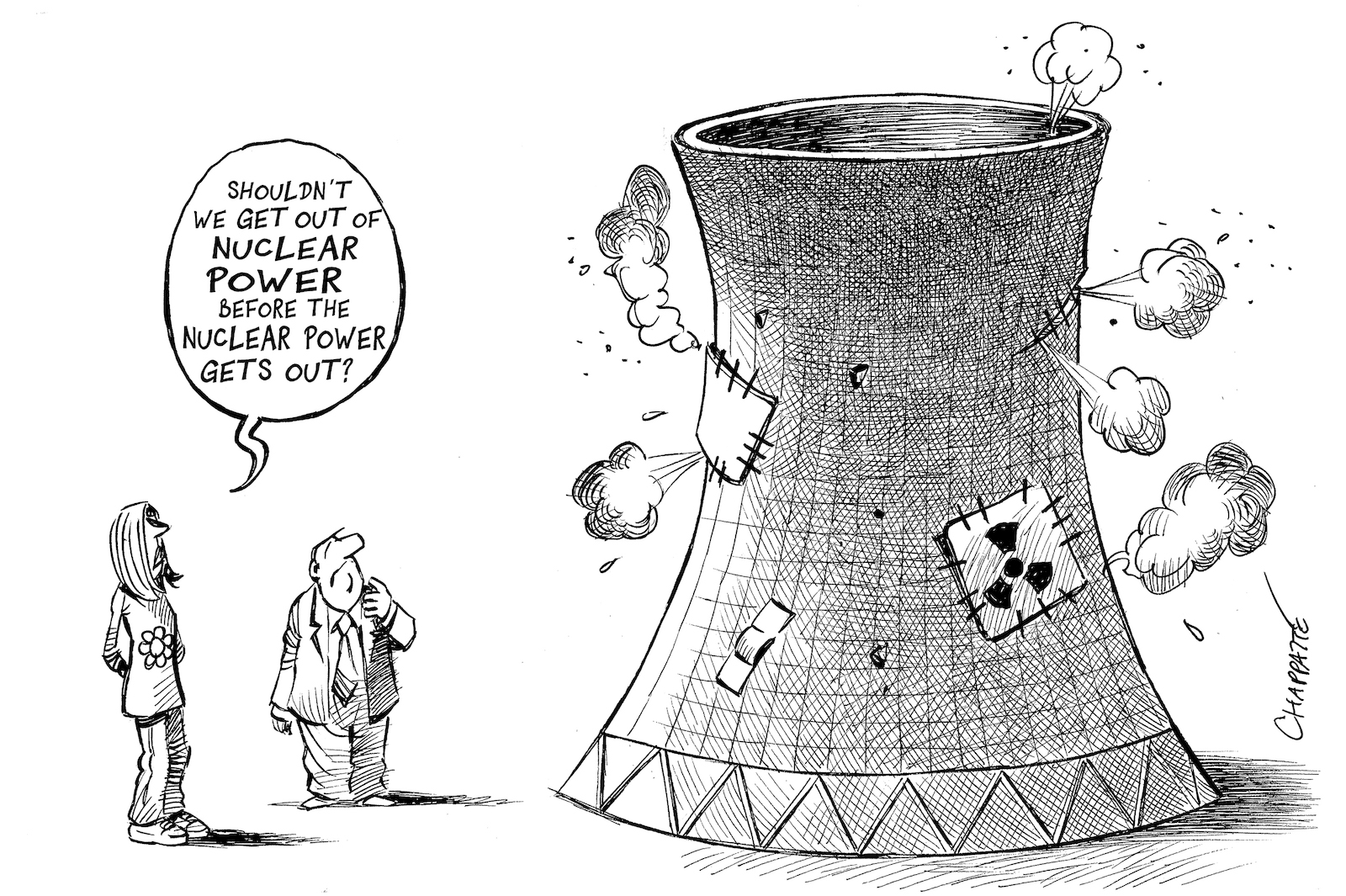
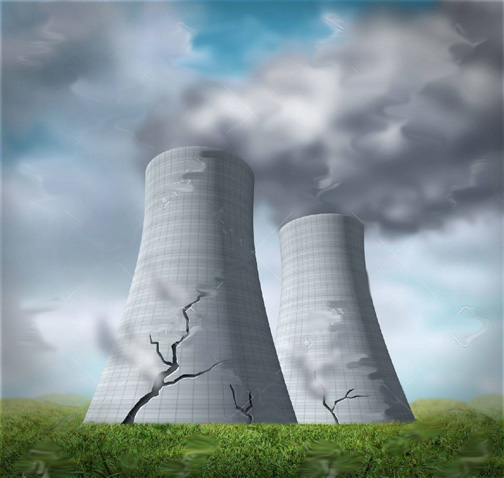
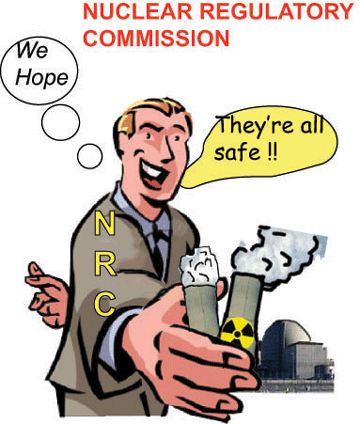
The Nuclear Power Shortcut That Could Add Gigawatts to the U.S. Grid
the U.S. Department of Energy (DoE) announced it would conditionally loan the energy company Vistra $4.2 billion to uprate three nuclear plants in Pennsylvania and Ohio, adding another 430 MW of capacity. Amazon also completed an agreement to uprate Constellation’s Calvert Cliffs Nuclear Power Plant in Maryland, while Google announced plans to increase power production from four reactors in Georgia.
By Felicity Bradstock – Oct 18, 2026, https://oilprice.com/Alternative-Energy/Nuclear-Power/The-Nuclear-Power-Shortcut-That-Could-Add-Gigawatts-to-the-US-Grid.html
- U.S. nuclear operators could add gigawatts of power by upgrading existing reactors instead of building new facilities.
- Google, Amazon, and other tech companies are supporting major nuclear uprate projects to meet growing AI electricity demand.
- Nuclear uprates could deliver additional reliable electricity years before new reactors can be constructed.
The process of increasing the maximum power level at which a commercial nuclear power plant may operate is called a power uprate. Several nuclear plants are now considering applying for permission to uprate operations to produce more power in the mid-term to bridge the gap while more nuclear capacity is being developed.
The United States Nuclear Regulatory Commission (NRC) regulates the maximum power level at which a commercial nuclear power plant may operate. The permitted power level is stated in the license and technical specifications for the plant and cannot be altered unless approved by the NRC. U.S. nuclear plants can request permission from the NRC to increase their power output, or “uprate”.
The NRC will determine whether to grant a plant uprate permission depending on whether it can be achieved safely. To increase power output, nuclear operators must modify the nuclear reactor’s instrumentation, controls, and power-generation systems. Over the past two decades, the NRC has approved uprates that have provided an extra 6 GW of power to the U.S. electricity grid, which is equivalent to six large reactors. The agency is considering uprate requests from various operators that massively boost the country’s nuclear power capacity.
To safely uprate operations, plant operators must upgrade components such as controls, turbines, and pumps within their nuclear facilities to generate more electricity. While these upgrades can cost billions of dollars to implement, they can allow operators to produce more power much more quickly than it takes to build a new facility. Many upgrades can be completed in five years or less. Analysts estimated that increasing electricity output from existing nuclear plants could add a massive 6-8 GW of clean power to the grid.
In October, the largest nuclear power plant operator in the United States, Constellation Energy, announced plans to invest over $4.3 billion to refurbish 11 reactors at six plants in Illinois, Pennsylvania, and New Jersey, enabling them to produce more power. The investment is expected to help Constellation add 890 MW of power to the grid, enough to supply 700,000 homes. Google has agreed to buy electricity from those plants at an undisclosed price.
This is just one of several projects that are expected to support the massive increase in U.S. power demand driven by the rapid rollout of new artificial intelligence (AI) data centres. Also this month, the U.S. Department of Energy (DoE) announced it would conditionally loan the energy company Vistra $4.2 billion to uprate three nuclear plants in Pennsylvania and Ohio, adding another 430 MW of capacity. Amazon also completed an agreement to uprate Constellation’s Calvert Cliffs Nuclear Power Plant in Maryland, while Google announced plans to increase power production from four reactors in Georgia.
The Trump administration, which has announced plans to quadruple the U.S. nuclear power capacity by 2050, is highly supportive of these new projects. Energy Secretary Chris Wright said in a statement, “By getting more power out of the nuclear plants we already have, we can deliver more affordable, reliable, around-the-clock energy.”
Several nuclear plant operators have struggled to secure the funds to upgrade their plants as U.S. power demand plateaued in the 2000s and public perception of nuclear power was poor. However, the rising demand for power driven by data centres and the improved public perception of nuclear power has encouraged tech companies to invest heavily in a wide range of energy projects, from nuclear power to gas plants and renewable sources. Several tech companies are now willing to pump vast amounts of capital into uprating projects to rapidly increase their access to the clean power needed to run massive data centres.
The NRC expects a total of 31 power uprate applications totalling 7.3 GW thermal and 2.4 GW electric between 2026 and 2032. The organisation is expected to approve several of these projects, as many of the operators requesting uprate permissions have decades of experience in nuclear power development in the United States, making them well-versed in managing safety concerns
Some operators are wary of conducting uprate work because the necessary upgrades would require them to stop producing power for several months. However, as tech companies demonstrate their willingness to invest heavily in nuclear energy projects, more companies may be convinced in the coming years.
Uprating operations is unlikely to detract from plans to develop new nuclear plants in the United States, given the projected rise in power demand over the coming decades. However, it could provide an alternative way to rapidly expand the country’s nuclear power capacity to fill the gap while new facilities are being designed, licensed, and constructed.
Several tons of jellyfish packed the seawater filters at a nuclear plant on France’s northern coast, and three reactors shut down automatically
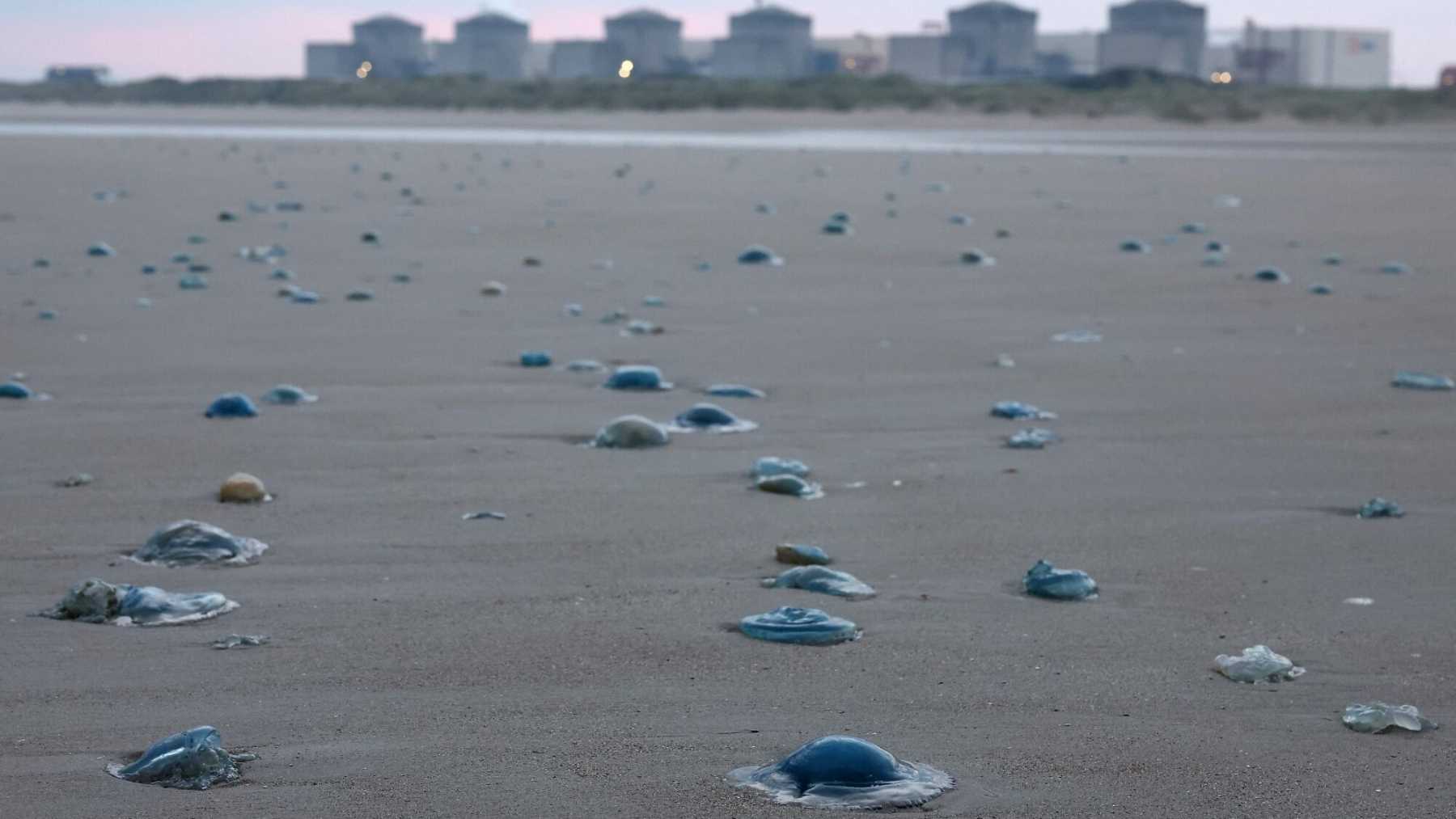
By Hugo RojasOCT 17, 2026,
https://www.ecoportal.net/en/france-s-northern-several-tons-jellyfish/43014/
The alarm at the coastal plant came from the water, not the core.
Pumps that normally pull in a steady, boring flow of seawater began choking instead.
Inside the filter drums, something soft and pale was piling up by the ton.
It was not sand, not seaweed, not debris from a storm.
It was jellyfish, drifting in on an ordinary summer tide.
By the time the night was over, three reactors had shut themselves down and a fourth was running at half power.
Why a jellyfish can stop a nuclear reactor cold
A nuclear reactor does not cool itself. It depends on a constant river of seawater pulled through intake pipes to carry heat away from the turbine side, and that water passes through grids and rotating screens first. The filter drums and grids exist to stop seaweed, driftwood and fish, not a soft bodied animal with almost no skeleton.
That is exactly why jellyfish are so effective at jamming them. A weak swimming creature that drifts with the current cannot escape the pull of an intake. Its gelatinous body does not bounce off the mesh the way debris does; it packs flat against it and blinds the filter.
Enough soft tissue in one place and the pressure loss across the drums becomes severe, cooling water flow falls, and the plant’s protection systems order an automatic shutdown to preserve the reactor’s ability to cool itself. All of that happens on the seawater side, in the non nuclear part of the site, well away from anything radioactive.
A swarm that grew from pounds to tons in a matter of days
The plant is Gravelines, sitting between Dunkirk and Calais and drawing its cooling water from a canal connected to the North Sea. A reinforced watch kept by local fishermen and volunteer sea rescuers had spotted only a few dozen kilograms of jellyfish near the site in the days before, on the order of a hundred pounds.
The operator says the swarm then multiplied far faster than anticipated, until several tons of jellyfish pushed into the pumping stations and saturated the filter drums. Units 2, 3 and 4 dropped offline, another unit was cut to half power, and a single reactor kept running at full strength while the last one sat idle for scheduled maintenance.
None of it touched the reactor cores. “This situation has no impact on the safety of the facilities, the safety of personnel, or the environment,” the operator said in a statement. The jellyfish never got near radioactive material, they simply jammed the plumbing.
This has happened before, at Gravelines and far beyond it
What makes the story stranger is that this was not a one time fluke. The same plant had lost four reactors to a near identical swarm almost exactly a year earlier, in August 2025, which shut the whole site down while two units were already in maintenance.
Gelatinous animals have stalled coastal plants elsewhere too. Sweden’s Oskarshamn lost a unit to a sudden jellyfish influx in 2005 and again in 2013, when tons of moon jellyfish clogged the cooling intake of its largest reactor. Scotland’s Torness shut down in 2011, and California’s Diablo Canyon took a unit offline in 2012 after salps, jellyfish like relatives, packed its intake pipes.
Experts quoted on the French shutdowns point to warming coastal water, overfishing and pollution as conditions that let jellyfish thrive longer. That chain is plausible rather than proven, since marine biologists cautioned it is hard to show jellyfish are genuinely increasing because long run historical data barely exists.
The fix is mechanical, not nuclear, and it is still catching up
Engineers have not redesigned the reactors to cope with jellyfish. The countermeasures sit entirely on the seawater side. After the first episode, the operator installed supervision cameras on equipment including the filter drums and the intake canal so the swarm can be watched continuously from the control room.
A partnership with a fishermen’s association and sea rescuers now runs daily visual checks and targeted fishing when a bloom builds. When the water turned thick again, three fishing boats worked around the clock to move jellyfish offshore, and crews netted tens of tons of them out of the water in little more than a day.
It is a strangely low tech answer to a high tech problem. Other energy infrastructure faces its own version of this puzzle, whether it is a dam managing its intake flow or a turbine blade tested against years of wear before it ever meets open water.
What it means for a warming coastline
None of this makes nuclear power newly unsafe. The affected units were reconnected to the grid over the following days and weeks once the drums were cleared, with one unit staying offline longer than the rest.
The story is really about plumbing meeting biology at an inconvenient hour. Even so, the frequency is worth watching, since the same plant has now been halted by the same animal two summers running.
If coastal seas keep favoring jellyfish, plants built decades ago around a certain tonnage of debris may need sturdier intake screens designed for a softer, larger problem than their builders expected. For now it remains a curiosity more than a crisis, proof that a sophisticated machine on the coastline can be stopped by an animal with no brain, no bones and barely any muscle, simply because it floats where the water goes.
New nuclear technology is predicted to transform North Wales.

A major programme delivering Small Modular Reactor (SMR) technology is set
to transform Anglesey and wider North Wales in the coming years. Wylfa on
Anglesey has been selected as the site of the UK’s first SMR nuclear power
station. The move recognises the strong nuclear heritage and expertise of
the area.
Earlier this month, a group of public and private bodies across
industry, local government and the Welsh Government, and led by Bentley
Systems met at a roundtable to discuss benefits for the region. Gary
Pritchard, leader of Isle of Anglesey County Council and Llinos Medi AS/MP
for Anglesey were in attendance. Institution of Civil Engineers Wales Cymru
Fellows provided impartial advice and expertise on building the programme
in its first steps.
The programme will pioneer skills in the region,
develop new vocational and academic training programmes, and create jobs in
Anglesey. ICE Wales Cymru Regional Director Keith Jones said: “ICE Wales
Cymru supports the Welsh and UK governments in the development of Small
Modular Reactors (SMR). Wales is ideally placed to play a very significant
role in clean energy generation and become an energy hub for the UK.
Nuclear power has a key part to play in the transition to net zero”.
Insider Media 19th Oct 2026, https://www.insidermedia.com/news/wales/new-nuclear-technology-set-to-transform-north-wales
Jeffrey Sachs: Europe Must Break With Washington’s March to War
Joshua Scheer, October 17, 2026
Europe’s leaders are gambling with their people’s future—and, Jeffrey Sachs warns, with the survival of the world. Speaking to members of the European Parliament, the economist delivers a blistering indictment of American foreign policy and Europe’s willingness to follow Washington into confrontation with nuclear powers.
Drawing on decades of advising governments, Sachs argues that NATO expansion and the pursuit of American dominance helped squander the promise of peace after the Cold War. From Ukraine to Iran and Gaza, he challenges Western claims to moral leadership and demands a return to diplomacy. Europe, he insists, must find its own voice, negotiate directly with Russia and build relationships with China and the wider world around cooperation rather than war.
Acknowledgment: Thanks to MEP Danilo Della Valle for co-organizing the event with the Fidias Podcast. Visit their YouTube channel to watch more conversations and subscribe.
TRANSCRIPT …………………………………………………………………………………………………………………………………………………………………………………………………………………………………………………….. https://scheerpost.com/2026/10/17/jeffrey-sachs-europe-must-break-with-washingtons-march-to-war/
Democratic senators set up vote on blocking Saudi nuclear deal

Sens. Jeff Merkley (D-Ore.) and Ed Markey (D-Mass.) introduced a measure
Thursday that would block President Trump’s deal to allow Saudi Arabia to
build a civilian nuclear program. The Democrats’ measure is a joint
resolution of disapproval, a legislative tool that requires a vote after
Nov. 29. The senators expressed concern that the deal gives Saudi Arabia
access to U.S. technology for civilian nuclear energy but does not contain
sufficient guardrails against Riyadh using that tech to create nuclear
weapons.
The Hill 15th Oct 2026,
https://thehill.com/homenews/senate/6152383-senators-block-saudi-nuclear-deal/
OPG firm joins UK BWRX-300 project
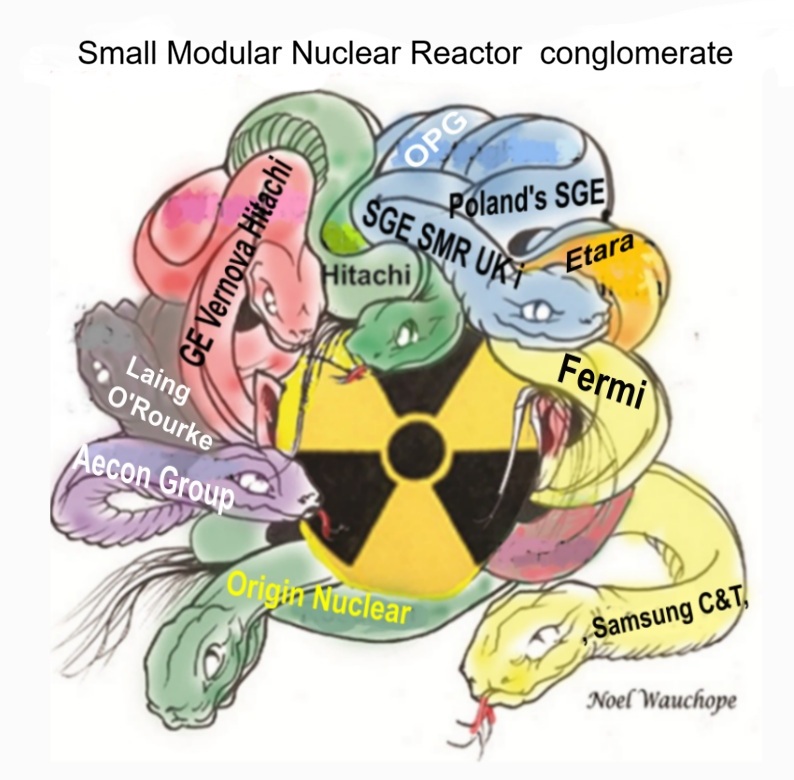
The UK-based project company of European SMR developer and investor SGE, and Origin Nuclear, a subsidiary of Ontario Power Generation, have signed a letter of intent to establish a joint venture for the future operation of a planned fleet of 14 BWRX-300 small modular reactors.
SGE SMR UK is the UK-based project company of Poland’s SGE (formerly Synthos Green Energy). Earlier this year, SGE outlined plans for the privately financed deployment of 14 GE Vernova Hitachi BWRX-300 small modular reactors across three sites in the UK, for which it submitted an application under the UK’s Advanced Nuclear Framework.
The proposed joint venture will see SGE SMR UK and Origin Nuclear work together to establish a UK-based nuclear operating company. Origin Nuclear – whose owner, Canadian nuclear operator Ontario Power Generation (OPG), is developing the first BWRX-300 reactor at Darlington in Ontario – will support the licensing process, commissioning and operational readiness of the reactors, and will also be responsible for plant operations, and centralised support services across the proposed UK BWRX-300 fleet.
“This is a significant step forward for our UK programme,” SGE CEO Rafał Kasprów said. “Securing an operating partner is one of the most important decisions in developing a nuclear project, and with Origin Nuclear and its parent company OPG, we have a partner backed by more than a half century of nuclear experience and direct involvement in the first BWRX-300 project in Canada. It gives us greater confidence in our ability to deliver 14 reactors across three sites in the UK. Just as importantly, it brings us closer to establishing a long-term operating model that can support BWRX-300 projects across Europe.”
“The Darlington New Nuclear Project, where OPG has begun construction of the first BWRX-300, will deliver the reliable, low-carbon electricity Ontario needs to meet rapidly growing demand, while creating opportunities for Origin Nuclear and other Ontario companies to showcase our expertise on the global stage,” said Jos Diening, Origin President and CEO. “As OPG builds the next generation of nuclear infrastructure at home, Origin is helping position Ontario’s world-class supply chain to compete for opportunities around the world.”
The BWRX-300 is a 300 MWe water-cooled, natural circulation SMR with passive safety systems that leverages the design and licensing basis of GE Vernova Hitachi Nuclear Energy’s US Nuclear Regulatory Commission-certified ESBWR boiling water reactor design and its existing, licensed GNF2 fuel design. SGE is a co-investor in the standardised BWRX-300 design alongside GE Vernova Hitachi Nuclear Energy, OPG and the Tennessee Valley Authority (TVA).
The unit under construction in Canada is envisaged as the first of four at OPG’s Darlington New Nuclear site. In September, the US Nuclear Regulatory Commission issued a construction permit to TVA for a BWRX-300 reactor at the Clinch River site in Tennessee.
The first site in the UK is planned to accommodate six BWRX-300 reactors, with the first unit starting commercial operation in 2034. This would be followed by two further multi-unit sites – an approach SGE says is intended to support repeat construction, coordinated procurement and the transfer of experience between projects. The programme is supported by an international delivery team comprising SGE, GE Vernova Hitachi Nuclear Energy, Samsung C&T, Laing O’Rourke, Aecon Group Inc, Fermi Development and Etara.
The proposed total generating capacity from the 14 units of 4.2 GW would be enough, SGE says, to meet around 11% of UK power demand, equivalent to the needs of almost eight million homes, for at least 60 years.
UK’s Green Party goes nuclear

I still find the pro-nuclear case unconvincing. Though basically I’m a Faithfull trying to accept that a group of Traitors have won! At least for the moment, in this specific setting
COMMENT from Amory Lovins – on this article
Re land-use: my 2011 Electricity Journal article at https://doi.org/10.1016/j.tej.2011.06.005 showed that including the nuclear fuel cycle makes land-use equivalent between groundmount solar and nuclear power. Newer data would probably give solar a modest advantage. Windpower’s land-use is one or two order of magnitude smaller than either, if one avoids the common confusion of area actually occupied by infrastructure (equipment, roads,…) with area spanned across. The latter confusion would say that the area of lampposts in a car park is the area of the car park (leaving no room for cars), when actually it’s roughly 1% of the total area. As noted, the other ~99% can be and often is used for farming, grazing, wildlife, recreation, or solar power. And solar power’s land-use can be displaced by mounting on roofs or other structures (then it’s ample to power the whole world), or by sharing the same land with agriculture via profitable agrivoltaics. In short, the claim that solar and wind use far more land than nuclear power is wrong.
Another point omitted in the discussion in the article below flows from nuclear power’s producing electricity manyfold costlier than solar or windpower (even if they’re equivalently firmed by now-ultracheap batteries or the nine other and generally cheaper carbon-free grid-balancing methods). That lack of a nuclear business case means there’s no climate case either. That’s because of opportunity cost: you can’t spend the same £ on two different things at the same time. Every £ spent on nuclear electricity would have bought far more solar or wind electricity (or efficient use of electricity) and hence displaced far more fossil fuel and carbon emissions. In other words, because nuclear power produces less electricity and displaces less fossil fuel per £ (and per year), it actually makes climate change worse than if more climate-effective competitors were bought instead.
, https://renewextraweekly.blogspot.com/2026/10/green-party-goes-nuclear.html
The Green Party of England and Wales has abandoned it long standing opposition to nuclear power. A bit of a shock. However, its briefing paper on ‘Ending the Green Party’s Blanket Opposition to Nuclear Fission’, produced evidently by the ‘greens for nuclear’ group, says the proposed new policy, now accepted by the Party, ‘does not commit the green party to being a pro-nuclear party in any way beyond committing the party to following contemporary scientific research. We contend this is what the motion is really about: evidence’. OK so let’s look at its marshalling of the evidence.
First it points to an ‘Our World in Data’ chart which it says shows that ‘nuclear power has the lowest carbon footprint and the second lowest death rate of any energy source.’ It’s hard to know where to start with these much debated and controversial topics. It is true that nuclear plants do not generate carbon dioxide when running, but producing the fuel for them does. That’s not the case for renewables like wind and solar, so they also avoid the eco and social impacts of uranium mining and waste management, although their output per GW installed is less and is variable and dependent on location, making comparisons hard. But, though there are debates on the exact difference between nuclear and renewables in CO2 terms, it is small – fossil fuels are much worse.
In terms of the deaths, there are some big uncertainties and controversies. For example, in the video produced by Greens for Nuclear Energy, Prof Gerry Thomas puts the death toll for the Chernobyl disaster at 28 initially, followed by around 19 later. But others put it very much higher, in the thousands including from clean-up workers, and possibly even more globally. Whereas the highest figure I’ve seen for wind, from an anti-wind farm group, is 272 fatalities so far worldwide, while, as the World in Data chart shows, deaths for solar are very low.
It may be true that, thankfully, at Fukushima, with the wind blowing the radiation cloud eastward across the sea and the prompt evacuation of local people, public exposure was reduced and deaths avoided, as Greens for Nuclear note, but there were some staff impacts and the debate on health impacts of nuclear in normal operation on workers and the public globally continues, with, for example, a US study claiming new proof that proximity to nuclear plants can lead to increased local cancer rates.
What about nuclear waste? The background paper says that the risk from nuclear waste (and by implication leaks) were less than was commonly thought, since ‘radioisotopes with long half-lives are inherently less radioactive than ones with short half-lives as they spread their radioactivity over a longer time.’ Even so it did admit that ‘raw spent nuclear fuel remains more radioactive than uranium ore for around 300,000 years’. However, it claimed that ‘the Plutonium can be removed from the spent fuel and reprocessed into new fuel. Fuel treated in this way decays to be less radioactive than uranium ore in 9,000 years’. So that’s fine then! And in case you were worried, it adds that, while some countries did get nuclear bombs from reactor material, that is no longer the case and now ‘there is not a clear connection between states with civilian nuclear power programs and the acquisition of nuclear weapons’. Tell that to those who worry about Iran’s uranium enrichment programme!
Then it moves on to ‘Nuclear Power’s Greatest Advantage’- reliability. Last summer’s heat wave led to many reactors across Europe having to be shut down due to problems with cooling. And in any case, in normal circumstances, reactors have to shut down regularly for spent fuel replacement – unlike renewables such as wind and solar, which do not need any fuel. These renewables do depend on the weather, so there have to be balancing/backup systems, but then, as noted above, that is also true of nuclear plants- they can’t be relied on all the time. The issue is how much will that backup add to the cost of either of them. Some say it will add a lot more to the cost of renewables, but Lazarsd’s LCOE data, which now includes the cost of storage, still has most renewables doing much better than (US) nuclear over almost all the range of cost estimates.
The greens for nuclear briefing does concede that ‘per unit of energy generated wind and solar are cheaper than nuclear’, but it says that is irrelevant since the market ‘is structured so that all producers are paid the price of the most expensive producer – i.e. whatever the cost for wind, solar, and nuclear they are all paid the price of whatever the most expensive electricity source currently being used is, generally natural gas’. However, it adds ‘any Green government would fix the electricity market (likely by bringing it into government control).’. Fine! But how does that make nuclear cheaper? Or faster to install- something that renewables also beat nuclear at hands down.
The Briefing paper may be more convincing when it talks of land use. Wind and solar do take up more space than nuclear plants, although the land needed for uranium mines and waste repositories also has to be taken into account, and the land around wind turbine bases can be used for farming, while solar can be on roof tops and there are agri-solar options for solar farms. The higher use of scarce minerals and materials for some wind and solar technologies is another key issue- although that has to be set alongside the fact that nuclear plants need uranium and reserves of that are not infinite. While there are options for recycling of all materials, including nuclear wastes, perhaps what needs to be said in all cases of impact (including in relation to the use of land and materials), is that we need to reduce demand for energy- that is something greens should all agree on.
The Briefing note ends by reporting that a survey conducted by IPSOS for Greens 4 Nuclear Energy in 2022 ‘found that on balance members of the public would look more favourably on the Green Party if it dropped its anti-nuclear stance’. It said ‘this was especially pronounced for members of the wider green movement’. I thought this was surprising. But when I checked with Google it confirmed that the report said that ‘people involved in environmental campaigning and green groups continue to support nuclear energy for electricity production.’
Sadly the Green4 nuclear web site link on this report is broken, so I could not explore more. But it is true that views may be changing. That may not be surprising given the wave of pro-nuclear propaganda in recent years – even Nature seems to have succumbed. However, I still find the pro-nuclear case unconvincing. Though basically I’m a Faithfull trying to accept that a group of Traitors have won! At least for the moment, in this specific setting.
There may still be some battles ahead, internally and externally – after all there are many who don’t want nuclear, especially if it undermines renewables. And the conference vote may not reflect the views of the wider party membership. So there may yet be a challenge. Though, maybe the big political issue is likely to be what the Green Party will do when and if Small Modular Reactors start spreading, and, as seems likely, local people object. Its deputy leader had earlier spoken out against SMRs. And, more generally, what will it do over the battles for funding between renewables and nuclear as the latter tries to expand? Will try to to sit on the fence on that too?
How much will the AWE Aldermaston build cost West Berkshire in consultants?
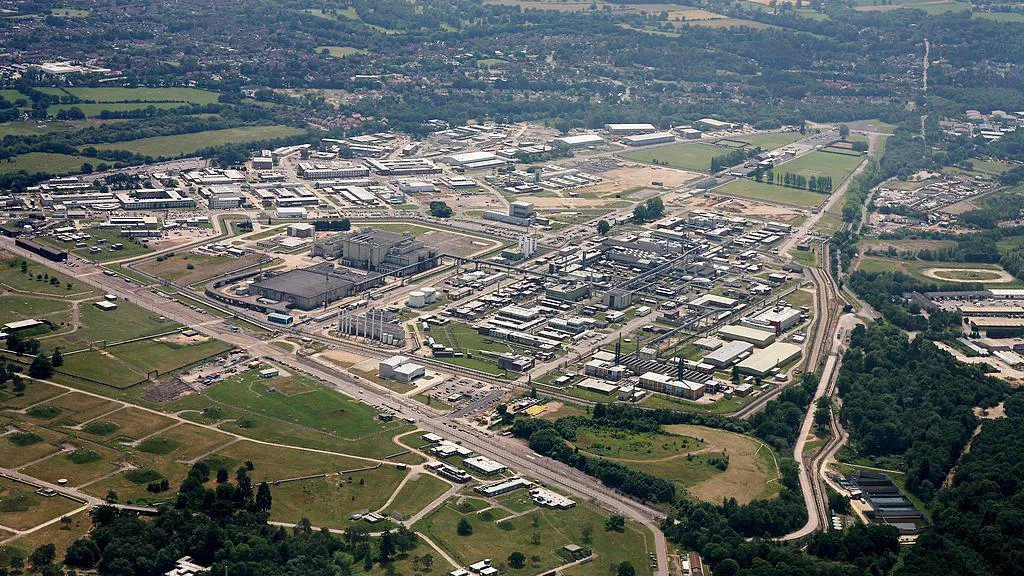
By Niki Hinman Local Democracy Reporter, 19 October 2026, https://www.newburytoday.co.uk/news/questions-raised-over-council-ability-to-approve-nuclear-wea-9487315/
Questions over West Berkshire Council’s ability to scrutinise forthcoming planning applications into a multi-billion pound upgrade to AWE Aldermaston have been raised.
The plans are likely to cost the authority tens of thousands of pounds in specialist consultants to evaluate the proposal to upgrade the nuclear weapons facility into a state-of-the-art science park.
The council will have to handle the massive application in the coming weeks, and has said it will need specialist help to deal with it.
The Government’s £15bn defence investment is dedicated specifically to the UK’s nuclear warhead programme as a whole – which encompasses both the Atomic Weapons Establishment (AWE) Aldermaston and its sister site at Burghfield.
Security-cleared consultants working on defence or submarine programmes command a notable market premium.
A Google search puts them upwards of £1,000 per day.
The nuclear weapons factory is soon to submit plans described as ‘being on the scale of London 2012 in complexity’ to the authority, which must then figure out whether they pass planning policies.
The person leading the project from the AWE side is Andrew McNaughton CBE – a prominent British civil engineer.
He led on delivering key components for the London 2012 Olympics and is on record as saying the Future Materials Campus is on the same scale.
The matter came up before West Berkshire Council last night (Thursday).
“Government-funded plans for the multi-billion pound Future Materials Campus (FMC) at AWE’s Aldermaston site will see planning applications coming forward soon,” said Dominic Boeck (Con, Aldermaston).
“How will the council support and engage constructively with residents, local councils and businesses on this enormous development?
“AWE have compared the scale and complexity of the proposed FMC development with London 2012
“What specific assurance can the lead member give that council has sufficient planning, emergency planning and other relevant technical resources and expertise to undertake a thorough and independent assessment of the application, including its implications for residential safety, emergency preparedness and amenity within and around the Aldermaston DEPZ?”
Deputy council leader Denise Gaines (Lib Dem, Hungerford and Kintbury) said: “We take the safety of residents and people at AWE very seriously.
“The anticipated planning application is going through the process.
“At this stage of the proposal it is a pre application.
“This is a confidential part of the process between council officers and the applicant.
“This sets out a clear timetable for a major and complex application.
“As with any planning application it will be assessed by a team of qualified professionals to ensure that all relvant technical and environmental matters are considered and evaluated either in house or by specialist external consultants.”
There is a statement of community involvement.
And the consultation will involve talks with the council’s emergency planning service and the Office for Nuclear Regulation.
“My concern and my community’s concern is the scale of this project,” added Mr Boeck.
“Of course we understand it is a matter of national security, but there are concerns about how this multi-billion pound project will impact us here.
“I appreciate much will be done behind the wire, but the trucks have got to roll.”
When local authorities deal with ‘enormous’ or hyper-scale planning applications like the London 2012 Olympic Games or major urban regenerations, the standard local planning mechanisms are usually adapted, bypassed, or heavily augmented.
Because these applications are far too large, complex, and politically sensitive for a standard local authority planning department to process normally, they are managed through a combination of special purpose vehicles, and strategic planning frameworks
New nuclear cannot save us from climate change

Letter Dr Paul Dorfman, Chair of the Nuclear Consulting Group
Lord Foster of Thames Bank suggests that new nuclear will help save us from the impact
of climate change (“We must go nuclear to save our natural wonders”,
Oct 11).
Unfortunately, that’s not the case. British households already pay
what amounts to a nuclear tax to fund Hinkley Point C and Sizewell C, which
are among the world’s most expensive nuclear projects. Meanwhile,
renewables generate 52 per cent of UK electricity, more than four times the
contribution of nuclear power.
Globally, the contrast is starker. In 2025,
renewables supplied 85.6 per cent of new global generating capacity; in
that year solar capacity grew by 510GW and wind by 159GW, against just
1.5GW for nuclear.
Nuclear now adds in a year roughly what renewables add
every two days. With 20-year build times, delays and huge cost overruns,
new nuclear diverts resources from faster options. It is simply too slow
and costly to counteract our climate and energy crises.
Sunday Times 17th Oct 2026, https://www.thetimes.com/comment/letters-to-editor/article/sunday-times-letters-rwanda-scheme-small-boat-deterrent-62b2srrjx
Stop Japan’s Failed Nuclear Plant Waste Coming to Cumbria
Please sign the petition here: https://www.change.org/p/stop-japan-s…
Cumberland Council plans to import sodium coolant, a type of nuclear waste, thousands of miles from Japan to Cumbria, for processing at the Port of Workington, just 885m from Northside Primary School and nearby residential areas including many towns and villages.
Sodium coolant is extremely hazardous, and carries a high risk of violent explosion or fire if exposed to air or water.
It may also contain radioactive elements.
Further concerns include:
- Less than a mile from Northside Primary School, the chemical plant is being designed to convert the hazardous coolant into caustic soda.
- Caustic soda is also a hazardous material and carries enormous risks to the environment over decades if spilled.
- £4.5m of the Workington Town Deal government funding is being used to develop this site, despite the development planning to employ just 20 people over a period of 7 years.
- The Workington Town Deal was promoted as being for the public benefit, not for creating profit for a handful of private businesses.
- The £25m that the site construction phase is predicted to generate is meaningless compared to the certain risk our children and local environments would face as a result of the site’s operation and the £Billions that would likely be required for clean up following operation of this proposed chemical plant for Japan’s failed fast breeder nuclear reactor wastes.
Further Info
Japan’s prototype fast-breeder reactor (FBR), ‘Monju’, was a disaster from the start. It was shut down due to an accident less than 9 months after achieving criticality, and remained closed for 15 years. Reopening in 2008, a second accident closed it for good. Overall, Monju generated electricity for exactly one hour after achieving criticality in 1994 and will cost £Billions to decommission.
Fast breeder reactors use liquid metal as a coolant – usually liquid sodium, which violently explodes on contact with air water. Dounreay, which ran the UK’s own Fast Breeder Reactors, processed the coolant onsite at both reactors. Sodium coolant at Dounreay did contain radioactive caesium.
Cumberland Council are partners in the plan to bring the Monju’s sodium coolant to the Port of Workington.
Ironically, ‘Monju’ was named to represent transcendent wisdom in Buddhist tradition. It has achieved neither wisdom nor its stated aim of electricity generation apart from one hour’s worth.
It has produced tonnes of chemical and radioactive waste some of which the operators the Japan Atomic Energy Agency want to ship thousands of miles to Cumbria instead of dealing with in Japan..
The Language of Extermination: NAZA, Artificial Intelligence and Gaza
18 October 2026 Dr Binoy Kampmark AIM Extra, https://theaimn.net/the-language-of-extermination-naza-artificial-intelligence-and-gaza/
The 80-minute documentary NAZA, directed by Yuval Abraham and Rachel Szor, is chastening. It examines the conduct of the Israeli Defense Forces (IDF) during its ferocious, unremitting war in Gaza, drawing upon the interviews of 24 anonymised military and intelligence personnel. The interviews were filmed on Tel Aviv rooftops at night, with profiles and voices appropriately altered. The name of the documentary draws on a Hebrew acronym for nezek agavi or collateral damage, an obscene term used when counting the estimated number of civilians who will perish in a military strike. Last month, the film won the Special Jury Prize at the 83rd Venice International Film Festival, receiving a standing ovation lasting 25 minutes.
The interviewees focus on the terrifyingly relevant role played by artificial intelligence (AI) targeting systems used in guiding the bombing campaign launched in response to the Hamas-led attacks of October 7, 2023. In Abraham’s words, “the Israeli intelligence officers we spoke with talked to us about how this mass killing is systemic: not by accident, but by design, actions of murder and policies that are based on the total dehumanization of Palestinians.” One of the interviewed subjects speaks of the goal being “quantity, not quality.” Another notes the conscious decision to target Hamas members, some even in the lower echelons, when they would be at home even if it meant killing family members and neighbours. In one recalled instance, the phone of a 12-year-old girl was hacked to learn when her father would arrive home. The subsequent strike killed her. The cold logic is revealed in the rhetorical question posed by one of the interviewees: “When people talk about ‘flattening Gaza,’ what do you mean if not executing people?’
Despite being placed in a “too hot to handle” category by prominent indie studios, the self-distributed documentary managed to pass the US$500,000 mark in the United States after two weeks of release. Eight days after premiering at New York’s IFC Center, it went on to earn US$125,000. A further 85 theatres across 30 cities across North America then showed the film. Michelle Goldberg, writing in The New York Times, was impressed by the drawing power of the production when attending Walter Reade Theater for a screening. The venue, seating 268, was at capacity. “This is, in my experience, very unusual for documentaries of any sort, even those that, like ‘NAZA,’ win the Special Jury Prize at the Venice Film Festival.”
Militaries specialise in euphemised killing. A dedicated process of terminology and assessment sanitises and exsanguinates: death and murder become justifiable, necessary measures against an enemy bloated with wickedness and venality. In that process, mock tributes are paid to the canon of international law, notably international humanitarian law and doctrines of targeting. The more honest generals do us a favour by boasting about high casualty figures and mass mortality: they are not hiding matters and lurking behind worn ceremonies and the emperor’s non-existent clothes. Take the remarks of a former head of Israeli military intelligence made in a leaked audio: “For every one person [killed] on Oct. 7, 50 Palestinians must die.” Those militaries with a heavily staffed legal department supposedly providing guidance in striking a target, largely to reassure the squeamish that they are not implicated in acts of murder, are always suspect. In that regard, the IDF provides a model example, always claiming to do things differently from other powers in the region, yet resorting to the selective language of exculpation.
The reception of the film in Israel has been markedly hysterical. This was to be expected: the film unmasks and discomfits. It demolishes shibboleths. The IDF chief of staff Eyal Zamir vowed to use “every tool at our disposal” against the production. The Israeli Culture Minister Miki Zohar thought the film treasonous. Abraham and Szor were “willing to harm their homeland in order just to get applause from antisemites around the world.” The irate minister was keen to “act immediately to revoke the Israeli citizenship of these despicable creators for treason against the state,” he thundered in a social media post. Israeli Prime Minister Benjamin Netanyahu also called upon the passing of legislation stripping the duo of their citizenship, a curious point given the existing provisions of Israel’s Citizenship Law. (Making German Jews stateless was a specialty of the Third Reich: that the Jewish state would consider this to its citizens is a distinct, bitter irony, yet sadly permissible in light of the Israeli Supreme Court ruling in 2022 validating revocation for acts done in “breach of loyalty to the State of Israel”.)
Activists and members of the far-right party Jewish Power (Otzma Yehudit) led by National Security Minister Itamar Ben-Gvir protested outside the parents of Szor’s house, with a speaker calling for both directors to be executed and the homes of their families to be demolished (collective punishment remains a great inspiration for tribal sentiment).
The IDF has marshalled its own response in a document accusing the filmmakers of presenting “a distorted, misleading and disingenuous picture of the IDF’s target planning and striking process.” The narrative of the documentary drew upon “substantial factual errors stemming from manipulative misrepresentations of reality.” Worth noting here is the lower register of critique that does not entirely repudiate the targeting practices of the IDF, dressed up in the apologetics of collateral damage. Concessions and confessions are always evident from those in and of power who resort to such dismissive language as “misrepresentative” and “disingenuous.”
Be that as it may, the agitated response is illuminating. The Lavender database, to take one objection, was apparently not one of targets, merely “a database that assists intelligence analysts.” This represents a distinction without a difference. The faith placed by militaries in the divinities of technology are hard to shake; there is nothing here to say that such analysts do not treat these data sets as unimpeachable. AI and religious deities serve to do the imagination for others; they discourage independent thinking and verification. Why bother when you have someone, or something else, doing it for you?
The response remains weak in claiming that the IDF believes itself “bound by and committed to international humanitarian law, its operational procedures are designed to implement those legal obligations, and it operates dedicated units and mechanisms to mitigate civilian harm.” The staggering death toll in Gaza, always sneered and jeered at by the Israeli authorities and their defenders, would suggest otherwise. NAZA serves to, as the Israeli American historian Omer Bartov points out, address a “state of denial” by “actually speaking about the issue of what happened in Gaza rather than refusing to speak about it.”
Caitlin Johnstone – Military-Industrial Complex Assures Investors That Wars Will Be Endless, And Other Notes
Caitlin Johnstone, Oct 17, 2026
Today in dystopia, the military-industrial complex is reassuring investors that the wars will indeed be endless.
Asked about concerns over falling defense stocks in a recent interview on CNBC, Lockheed Martin CEO Jim Taiclet replied, “Investors need to know and understand that this demand is not fleeting — it’s permanent.”
In 2023 Taiclet called Washington’s soaring military budget “as good an outcome as our industry or our company could ask for.”
These people are such evil freaks. War profiteering should be fucking illegal.
A Washington Post photojournalist was savagely beaten by a gang of Israeli settlers who were attacking Palestinian villagers on Friday, reportedly with the support of the IDF.
The reporter, Heidi Levine, said her assailants “just kept kicking me and kicking me, like probably 50 times” while she was wearing a clearly marked PRESS vest.
This is why everyone hates Israel now. They just can’t seem to stop themselves from doing evil things in broad daylight.
The western political/media class are always making up bogus excuses for Israel’s plummeting worldwide approval rating, from antisemitism to TikTok to Iranian propaganda, but ultimately public opinion of Israel is falling because there’s a glaring contradiction between Israel’s PR interests and the way Israelis actually conduct themselves.
In other words, Israel’s PR problem is caused by Israeli behavior. They can increase their propaganda budget as much as they like and western hasbarists can churn out all the narrative spin in the world, but it still won’t cancel out what happens when you just film Israelis doing Israeli things…………………………………………………………..
A judge in Brazil’s top electoral court ruled on Thursday that Meta has been algorithmically favoring right wing candidate Flavio Bolsonaro over President Luiz Inácio Lula da Silva, instructing the social media titan to cease its election interference and begin providing equal treatment to both candidates.
Meta’s own employees have acknowledged election interference favoring Bolsonaro over Lula, as Reuters reports:…………………………………………………….
This Zuckerberg scale-tilting is a reminder of why right wing “populism” has been so successful: it is able to posture as a revolutionary anti-establishment movement while still retaining the backing of western oligarchs and empire managers. It gets the votes that come with opposing the status quo without actually opposing the status quo. It gets the popularity of revolutionary politics with none of the cost………………………………………………………………………..
Sinesto on Twitter asks, “Hi Caitlin. You are brilliant on Palestine, but I still don’t get why you are not sympathetic to the people of Ukraine?”
Well Sinesto I am sympathetic to the people of Ukraine. That’s why I want a negotiated settlement to end the war, which is what polls say the people of Ukraine want, rather than continuing to force them to keep fighting and dying in a war they don’t support like the people of Washington want to do…………………………………………………………………………….. https://www.caitlinjohnst.one/p/military-industrial-complex-assures?utm_source=post-email-title&publication_id=82124&post_id=220842792&utm_campaign=email-post-title&isFreemail=true&r=1ise1&triedRedirect=true&utm_medium=email
The World is Not Trump’s Playground: Has the International Community Finally had Enough?

Australian Independent Media, 17 October 2026Michael Taylor
When the President of the United States mistakes global leadership for personal entitlement, the rest of the world eventually discovers that it has options.
There comes a point in every relationship when the other party stops making excuses for your behaviour.
You can forgive the occasional tantrum. You can overlook a misplaced insult, an unreasonable demand or even the odd diplomatic incident. You might tolerate somebody who thinks rather highly of themselves, provided they occasionally remember that other people exist.
But eventually, patience runs out.
Welcome to international relations in the age of Donald Trump.
The President of the United States appears to regard diplomacy as a peculiar game in which he makes the rules, changes them whenever circumstances become inconvenient, and declares victory regardless of the outcome. Allies are expected to demonstrate their loyalty through obedience. Adversaries are expected to surrender when threatened. International institutions are useful when they serve American interests and troublesome when they don’t.
And anyone who disagrees risks becoming the next target of a presidential outburst.
It is an extraordinary way to conduct relations between nations. It is also becoming increasingly expensive.
The world’s most powerful schoolyard bully?
Let’s be clear about something. The United States is entitled to pursue its national interests. Every sovereign country is. American presidents are elected to represent American citizens, not to spend their days worrying about whether foreign leaders find them agreeable.
But there is a considerable difference between defending national interests and behaving as though the interests of every other country are somehow subordinate to your own.
Trump’s approach appears to confuse the two.
Tariffs become instruments of punishment. Military alliances become opportunities to demand tribute. Trade agreements become personal victories. Diplomatic disagreements become public feuds.
And the demands keep coming.
At NATO’s July 2026 summit in Ankara, Trump attacked several European allies over their positions on the war with Iran, threatened to halt trade with Spain and renewed his controversial claims concerning Greenland. The summit subsequently produced declarations of unity, but the public disagreements demonstrated just how difficult it has become for America’s partners to anticipate Washington’s next move.
Imagine running an international alliance on the principle that everyone must demonstrate their friendship by agreeing with you, while reserving the right to punish them if they don’t.
That isn’t a partnership. It’s a protection racket with considerably better stationery.
NATO members have legitimate disagreements about defence spending, military commitments and national priorities. Those disagreements are precisely why alliances require negotiation, established procedures and mutual respect.
The purpose of an alliance is not to eliminate differences of opinion. It is to enable countries to cooperate despite them.
Apparently, somebody forgot to explain that to the President.
Friendship is not a subscription service
One of the great ironies of Trump’s approach is that he seems to regard American power as an unlimited personal resource.
He can threaten tariffs against allies, question their commitment to collective defence, demand concessions and then expect them to turn up smiling at the next summit.
But international relationships do not work like a subscription service. Countries cannot be charged an additional fee every time the American president becomes dissatisfied with their behaviour.
Nor can decades of diplomatic cooperation simply be switched on and off according to the mood of the occupant of the White House.
Consider the implications for Australia.
Our alliance with the United States has been central to Australian defence and strategic planning for generations. It involves intelligence cooperation, military coordination, technology sharing and the (unpopular and finance-draining) AUKUS partnership.
These arrangements matter. They cannot be dismissed lightly, and Australia has good reasons to maintain a close relationship with Washington.
But an alliance is only as dependable as the trust underpinning it.
If an American president can threaten one ally today, impose economic penalties on another tomorrow and question established commitments the following week, Australian governments must ask an uncomfortable question.
What happens when our interests diverge from his?
Australia cannot simply assume that friendship, history and military cooperation will guarantee predictable American support under every conceivable circumstance.
That does not mean abandoning the alliance. It means approaching it with open eyes.
A sensible government maintains its relationships while ensuring that the country’s security does not depend entirely on the goodwill of one foreign leader.
That is not disloyalty. It is responsible government.
The curious case of the disappearing trust…………………………………………………….
International law is not an inconvenience
Perhaps the most troubling aspect of Trump’s approach is his relationship with the international institutions designed to restrain the arbitrary exercise of power.
On 9 October 2026, the Trump administration imposed sanctions on the International Criminal Court, prompting criticism from the Court, United Nations officials, European institutions and several allied governments. The dispute raised further concerns about the independence of international justice and the willingness of powerful countries to accept legal scrutiny.
One need not agree with every decision made by an international court to recognise the importance of judicial independence………………………………………………………………………………………………………………………………
Ukraine: another lesson in uncertainty
Ukraine offers another example of the difficulties created when diplomatic signals become unpredictable.
For European governments, the war is not an abstract negotiating exercise. It concerns the security of the continent, the future of European borders and the consequences of allowing military aggression to succeed.
Yet Trump’s shifting approach to American support for Ukraine has repeatedly forced European allies to consider how much they can rely on Washington………………………………………………………………………………………………………………………………………………………………………………………………………………………………………………………….. https://theaimn.net/the-world-is-not-trumps-playground-has-the-international-community-finally-had-enough/
Congress has the power to fix the Trump-Saudi nuclear deal
By Alan J. Kuperman, Bulletin of Atomic Scientists, October 13, 2026
Press reports claim that Congress cannot stop the Trump administration’s nuclear agreement with Saudi Arabia, despite significant proliferation concerns, because it will enter force automatically in a mere 90 days after its August 24 submittal to Capitol Hill. Democrats and a handful of dissenting Republicans could try to pass a disapproval resolution that was introduced recently in both houses. But President Donald Trump could veto it, and Republicans in Congress would not override that veto, which means the deal is essentially a fait accompli.
In reality, however, the prospects of Congressional action are not so bleak. Because of the US Atomic Energy Act’s fine print and the deal’s legal shortcomings, Congress has at least 9 months and considerable leverage to make things right.
Proliferation concerns. Three aspects of the Saudi deal are most objectionable. First, the agreement explicitly refers to uranium enrichment “technologies that could be deployed in the Kingdom of Saudi Arabia.” The danger is that any enrichment technology provided for peaceful purposes could also make weapons-grade uranium or be duplicated to do so secretly elsewhere in the country. Moreover, allowing Saudi enrichment could spur similar demands from other countries in the region and beyond, spreading the risks.
Second, the Saudis have refused to sign the Additional Protocol of the International Atomic Energy Agency (IAEA), which allows “environmental sampling” to detect illicit nuclear activity at sites “other than those” disclosed by the country. Riyadh instead has signed a bilateral safeguards agreement with Washington, which does not permit such inspections of undeclared facilities. This feeds suspicion that the Saudis are contemplating secret bomb plants.
Third, the Saudis have said repeatedly that if Iran were to get nuclear weapons, they would pursue them too, which would violate their promises under the Nuclear Non-Proliferation Treaty. This means their commitment in the US deal to exclusively “peaceful uses” is, at best, conditional.
An illegal deal? Fortunately for Congressional Democrats, the Atomic Energy Act does not allow nuclear agreements to enter force automatically unless they are fully compliant with the law’s nonproliferation requirements. If such an agreement violates even one of those requirements, according to Section 123d of the act, it “shall not become effective unless the Congress adopts, and there is enacted, a joint resolution stating that the Congress does favor such agreement.” The Saudi deal currently appears not to comply on four grounds……………………………………………………………………………………………………………………………….
https://thebulletin.org/2026/10/congress-has-the-power-to-fix-the-trump-saudi-nuclear-deal/
1 This Month
23-25 October – on Zoom – World BEYOND War’s annual global conferenc


Shut down the radiation-damaged Heysham nuclear reactors now
To see nuclear-related stories in greater depth and intensity – go to https://nuclearinformation.wordpress.com

Say No to NASA’s Reckless Nuclear Reactor on the Moon
Say No to NASA’s Reckless Nuclear Reactor on the Moon

-
Archives
- October 2026 (247)
- September 2026 (339)
- August 2026 (330)
- July 2026 (355)
- June 2026 (287)
- May 2026 (306)
- April 2026 (356)
- March 2026 (251)
- February 2026 (267)
- January 2026 (308)
- December 2025 (358)
- November 2025 (359)
-
Categories
- 1
- 1 NUCLEAR ISSUES
- business and costs
- climate change
- culture and arts
- ENERGY
- environment
- health
- history
- indigenous issues
- Legal
- marketing of nuclear
- media
- opposition to nuclear
- PERSONAL STORIES
- politics
- politics international
- Religion and ethics
- safety
- secrets,lies and civil liberties
- spinbuster
- technology
- Uranium
- wastes
- weapons and war
- Women
- 2 WORLD
- ACTION
- AFRICA
- Atrocities
- AUSTRALIA
- Christina's notes
- Christina's themes
- culture and arts
- Events
- Fuk 2022
- Fuk 2023
- Fukushima 2017
- Fukushima 2018
- fukushima 2019
- Fukushima 2020
- Fukushima 2021
- general
- global warming
- Humour (God we need it)
- Nuclear
- RARE EARTHS
- Reference
- resources – print
- Resources -audiovicual
- Weekly Newsletter
- World
- World Nuclear
- YouTube
-
RSS
Entries RSS
Comments RSS

