Trump reaffirms his support for another strike on Iran after meeting with Netanyahu

On Monday, Donald Trump reaffirmed his support for another strike on Iran after meeting with Israeli Prime Minister Benjamin Netanyahu. But analysts say Netanyahu’s designs go far beyond Iran.
Mondoweiss, By Michael Arria December 30, 2025
In comments to reporters after his meeting with Israeli Prime Minister Benjamin Netanyahu, President Donald Trump reiterated his support for another strike on Iran.
“I hope they’re not trying to build up again, because if they are, we’re going to have no choice but very quickly, to eradicate that build up,” said Trump, referring to the alleged expansion of Iran’s ballistic missile program.
“We’ll knock them down,” he added. “We’ll knock the hell out of them.”
Netanyahu has consistently pushed for a wider war on Iran, and was expected to make the case for further attacks during his Mar-a-Lago visit.
Trump’s comments prompted an immediate response from Iranian officials.
In an article in The Guardian, Iranian foreign minister Seyed Araghchi called on the Trump administration to defy Israel on the issue.
“The US administration now faces a dilemma: it can continue writing blank cheques for Israel with American taxpayer dollars and credibility, or be part of a tectonic change for the better,” he wrote. “For decades, Western policy towards our region has been mostly shaped by myths originating from Israel.”
“The response of the Islamic Republic of Iran to any oppressive aggression will be harsh and regrettable,” tweeted Iranian President Masoud Pezeshkian.
In a post on the meeting, Quincy Institute for Responsible Statecraft Vice President Trita Parsi wrote that an attack on Iran could easily lead to retaliatory strikes.
“Tehran has gone to great lengths to avoid a military confrontation with Washington, but just because it has shown restraint in the past does not mean that it can afford to do so in this scenario,” wrote Parsi. “Indeed, given that Iran will be totally exposed without its missiles, it will likely reckon that it has no choice but to strike directly at U.S. targets.”
“Even if Trump opts to ‘only’ support Israel defensively in yet another Israeli choice of war — which is the position Biden took — it nevertheless incentivizes Israel to restart war, as the U.S. is lessening the cost for Israel to do so,” he continued……………………………………………………. https://mondoweiss.net/2025/12/trump-reaffirms-his-support-for-another-strike-on-iran-after-meeting-with-netanyahu/
Poor, beleaguered Venezuela, with new pals China and Russia, may be demolishing two century old US Monroe Doctrine.
Walt Zlotow West Suburban Peace Coalition Glen Ellyn IL, 31 December 2, https://theaimn.net/beleaguered-venezuela/
Over the past several months the US has committed mass murder of unknown souls on small boats off Venezuela, seized a Venezuelan oil tanker, and massed a huge force of 10,000 troops, aircraft and world’s largest aircraft carrier nearby Venezuela. All this designed to dislodge hated Venezuelan President Nicholas Maduro to allow America’s takeover of Venezuelan oil resources.
And they are vast, among the world’s largest at over 300 billion barrels. They also pose a major threat to US world energy and political dominance. Venezuela supplies over 80% of China’s energy needs, all of which is paid for in Yuan, not US dollars. China has made major investments in the Venezuelan economy to further their energy interdependence.
Russia too has become a significant military, economic and political partner of Venezuela to counter 2 decades of US intimidation, now turned violent, to oust the socialist governments of first Hugo Chavez and now successor Maduro.
Neither China nor Russia will sit back as Trump seeks his illegal, immoral and criminal takeover of Venezuela and its vast resources. Both are pouring in military and intelligence resources to keep US boat bombings and tanker seizers from devolving into outright invasion.
President Trump keeps ratcheting up the military pressure but so far avoided outright invasion. What is Trump waiting for when his intimidation force squanders over $8 million per day and Maduro has clearly signaled he’s going nowhere but to the Venezuelan war room? Due to Chinese and Russian help, Venezuela will be no pushover. While the US brings vast military firepower to any intervention, US cannon fodder may end up arriving at Arlington by the planeload. Even the Gerald R. Ford aircraft carrier might be joining those small fishing boats down to Davy Jones Locker. With just 15% of Americans supporting invasion, domestic opposition to Trump’s folly will be ferocious.
The rest of Latin America, indeed the world, watches as the US has boxed itself into an untenable corner. Engage in all out war and it’s likely to end disastrously even in victory. Turning around the Trump armada will signal to Latin America that the Monroe Doctrine is dead, allowing more countries to pivot from US military and economic intimidation to countries like China, Russia and others who treat them as decent political, economic partners.
Time for the US to retire the Monroe Doctrine, end senseless economic sanctions that simply turn the world against America, and become an honest, reliable partner in world affairs. Alas, Trump and his neoconservative war council appear oblivious how they are accelerating America’s world dominance decline.
Electric Vehicles and Nuclear Power Are Fighting Over One Obscure Mineral
Oil Price, By Michael Kern – Dec 31, 2025,
- The market for ultra-high-purity (UHP) graphite, essential for EV anodes and nuclear reactors, is projected to hit $1.43 billion by 2030, masking structural friction in the global energy transition.
- The vast majority (86% in 2024) of UHP graphite is synthetic, requiring a massive industrial footprint of fossil fuel feedstock and staggering amounts of electricity for high-heat graphitization furnaces.
- Two massive, well-funded industries—transportation and power generation (SMRs/nuclear)—are competing for the same narrow, geopolitically sensitive supply of high-purity carbon, which is primarily controlled by Asia Pacific’s refining capacity.
The energy transition is often sold as a story of ethereal “green” progress, but if you look at the balance sheets of the companies actually building it, the story is written in soot and high-voltage electricity. While the financial press spends its time obsessing over the price of lithium or the latest solid-state battery breakthrough, a much more grounded, and expensive, reality is setting in.
We are entering the era of the engineered anode.
New data suggests the market for ultra-high-purity (UHP) graphite is on a trajectory to hit $1.43 billion by 2030. On the surface, a 10.5% compound annual growth rate looks like a healthy, if predictable, industrial expansion. But for those of us who track the friction between a digital climate pledge and the physical hardware required to meet it, that number masks a massive structural shift in how we power the world… and who holds the keys…………………………………………………………………………………………
The Nuclear Renaissance’s Dirty Secret
There is a quieter, more desperate buyer entering the UHP market: the nuclear sector.
As we move toward Small Modular Reactors (SMRs) and high-temperature gas-cooled reactors, the demand for “nuclear-grade” pyrolytic graphite is set to lead the market in growth. This material is produced via chemical vapor deposition (CVD)—an even more complex and expensive process than standard synthetic graphitization.
In a nuclear core, graphite is a structural necessity that must survive extreme radiation and heat without absorbing neutrons.
The report highlights that this “unrivaled ability” makes it indispensable. But here is the friction point: the standards for nuclear-grade purity are even higher than battery-grade.
We are effectively seeing two massive, well-funded industries—Transportation and Power Generation—fighting over the same narrow pipe of high-purity carbon…
It is a zero-sum game played with atoms………………………………………………………………………………….. https://oilprice.com/Metals/Commodities/Electric-Vehicles-and-Nuclear-Power-Are-Fighting-Over-One-Obscure-Mineral.html
Energy bills to rise on New Year’s Day ‘to fund nuclear in England’
31st December 2025, By Xander Elliards, Content editor
ENERGY bills are set for a slight rise on New Year’s Day as the price cap
increase comes into effect. The 0.2% uplift to Ofgem’s energy price cap
will see an average overall bill of £1758 a year for the average household in England, Wales and Scotland remaining on a standard variable tariff, up
from the current £1755.
While only a small increase, it is £190 higher
than the £1568 average bill in place in July 2024 – when Labour came to
power pledging to cut costs by £300 a year. Regulator Ofgem said
Thursday’s increase in the cap, which was announced in November, was
being driven by the funding of nuclear power projects and discounts to some
households’ winter bills. This included funding the Government’s
Sizewell C nuclear power plant in Suffolk – with an average of £1 added
to each household’s energy bills per month for the duration of the £38
billion construction.
The National 31st Dec 2025,
https://www.thenational.scot/news/25732168.energy-bills-rise-new-years-day-to-fund-nuclear-england/
Concerned Citizens for Nuclear Safety (CCNS) Nuclear Literacy Program to Educate Nuevomexicano Communities on the LANL Programmatic Environmental Impact Statement for Plutonium Pit Production

For over eighty years, the People of New Mexico have borne the burden of the 1943 establishment of Los Alamos National Laboratory (LANL). Through the Congressional continuing resolution process, LANL may receive an additional $1 billion dollars to support expansion of the number of plutonium triggers, or plutonium pits, fabricated for nuclear weapons. The people of northern New Mexico are unaware of the effects that this potentially may have on nearby communities. The effects of eight decades of nuclear weapons development has had a cumulative impact on New Mexico, especially in Rio Arriba County, which borders Los Alamos County to the north and west.
During the Bush II and Obama Administrations, the U.S. Department of Energy (DOE) proposed three new weapons systems: the Robust Nuclear Earth Penetrator (RNEP), the Reliable Replacement Warhead (RRW), and the Interoperable Warhead (IW). Grassroots organizations networked, educated each other, spoke at public meetings, wrote informed public comments, and worked with technical experts, elected officials and the media to understand how increased weapons development would impact frontline communities, which are mostly comprised of Indigenous and Hispanic people. With leadership from New Mexico and colleagues and NGOs throughout the world and through active organizing and public engagement in the National Environmental Policy Act (NEPA) process, those proposed weapons systems were defeated and eventually canceled.
Israel Bans Dozens of Aid Groups from Operating in Gaza, Including Doctors Without Borders.

Other groups that are being banned include the Norwegian Refugee Council, the Catholic charity Caritas, and Oxfam
by Dave DeCamp | December 30, 2025 , https://news.antiwar.com/2025/12/30/israel-bans-dozens-of-aid-groups-from-operating-in-gaza-including-doctors-without-borders/
Starting on January 1, Israel will ban 37 international aid groups and charities from operating in Gaza in its latest effort to add to the misery for the Palestinian civilians living in flimsy tents and bombed-out buildings in the Strip.
The groups being banned include several prominent international aid organizations: Doctors Without Borders (Médecins Sans Frontières (MSF), the Catholic charity Caritas, the Norwegian Refugee Council, and Oxfam. The NGOs will also be barred from working in the Israeli-occupied West Bank.
Israel will stop the groups from operating in Gaza for failing to comply with its stringent new requirements, which include handing over information about their Palestinian employees. The new Israeli rules also include vague ideological requirements that can disqualify any NGO that “promotes delegitimization campaigns” against Israel, or if it, or any officeholder, has called for a boycott of Israel.
An Israeli official claimed, without providing evidence, that an investigation revealed “employees of certain organizations were involved in terrorist activity… in particular, Doctors Without Borders.” The action against MSF is seen in part as an Israeli reaction to the organization’s criticism of Israel’s genocidal campaign in the Strip.
In a statement warning of the consequences of banning it from Gaza, MSF said that it has served hundreds of thousands of Palestinians in Gaza this year.
“If Israeli authorities revoke MSF’s access to Gaza in 2026, a large portion of people in Gaza will lose access to critical medical care, water, and lifesaving support,” the group said. “MSF’s activities serve nearly half a million people in Gaza through our vital support to the destroyed health system. MSF continues to seek constructive engagement with Israeli authorities to continue its activities.”
Israel’s move to ban the NGOs comes as Israel continues to violate the US-backed ceasefire deal by continuing to launch attacks on Palestinians and maintaining restrictions on aid and shelter materials entering the Strip.
Ukraine Takes Part in NATO War Games, Further Integrating Into Collective Defense Architecture
by Kyle Anzalone | Dec 28, 2025, https://libertarianinstitute.org/news/ukraine-takes-part-in-nato-war-games-further-integrating-into-collective-defense-architecture/
Ukrainian representatives participated in NATO war games simulating the alliance’s response to an attack.
According to a NATO press release, 1,500 soldiers and civilians from multiple European countries participated in the Loyal Dolos 2025 drills that were conducted at the beginning of the month.
On Sunday, the General Staff of the Armed Forces posted on Facebook that Ukrainian officials participated in Loyal Dolos. “Ukraine is becoming part of the collective defense architecture of NATO. Ukrainian JATEC experts have, for the first time, joined the work of the mechanisms of Article 5 of the NATO Treaty on the training LOYAL DOLOS 2025,” the post explained.
Senior National Representative of Ukraine in JATEC, director of Implementation of the programs of the Joint Center NATO-Ukraine Colonel Valery Vyshnivsky said, “The participation of Ukrainian JATEC experts in the LOYAL DOLOS 2025, which is one of the key elements of NATO’s preparation according to Article 5 of the North Atlantic Treaty, has strategic significance for us, as for the first time Ukrainian representatives have been involved in the work of the Alliance’s collective security mechanisms.”
Kiev’s military ties to NATO countries are one of the primary reasons Russian President Vladimir Putin ordered the invasion of Ukraine in 2022. The Kremlin has demanded that Kiev agree to neutrality as a condition for ending the war.
President Zelensky recently announced that Ukraine would agree to stop seeking formal membership in the North Atlantic Alliance if members of the bloc agreed to bilateral agreements with Kiev that are similar to NATO’s Article 5. Article 5 is considered the mutual defense pact in the NATO charter.
That Ukraine is continuing its integration into NATO suggests that Kiev is still seeking to become an informal member of the bloc.
The Trillion Dollar War Machine (w/ William D. Hartung) The Chris Hedges Report
December 31, 2025 , https://www.youtube.com/watch?v=4mxti7sPPD0
Once warned against as a looming danger to democracy, the military-industrial complex has evolved into a vast and entrenched system of power that shapes U.S. policy, budgets, and global conflict. Now far beyond what even its earliest critics imagined, the question is no longer whether it exists, but how far it will go — and whether anything can meaningfully restrain it. In this analysis, Chris Hedges interviews arms-industry critic William D. Hartung in a wide-ranging conversation on how runaway military spending and the power of the military-industrial complex drive U.S. foreign policy and perpetual war.
Russia claims to have moved nuclear-capable missile system into Belarus
Guardian, 30 Dec 25
Assertion comes after the Kremlin accused Ukraine of attacking Vladimir Putin’s palace in Novgorod
Russia said its latest nuclear-capable missile system has been deployed in Belarus, a day after Moscow claimed that Ukraine had carried out a large-scale drone attack on Vladimir Putin’s residence.
Footage released by Russia’s ministry of defence showed the new Oreshnik missile trundling through a snowy forest. Soldiers were seen disguising combat vehicles with green netting and raising a flag at an airbase in eastern Belarus, close to the Russian border.
The video appeared part of a choreographed attempt to intimidate Europe and to prepare Russians for a further escalation in the already brutal war against Ukraine. The deployment, if true, would symbolically reduce the time it would take for a Russian missile to hit an EU capital.
Belarus’s president, Alexander Lukashenko, said 10 Oreshnik systems would be stationed in his country. Putin announced they were entering active service at a meeting on Monday with his generals, where he reaffirmed his intention to capture more Ukrainian territory, including the southern city of Zaporizhzhia.
Earlier Russia’s foreign minister, Sergei Lavrov, warned that “reprisals” would be carried out against Kyiv and that targets were already prepared. They followed what he said was an attack on Sunday night involving 91 Ukrainian drones on the Russia’s president’s palace in the Novgorod region.
The Kremlin has not produced evidence to back up its allegations. Dmitry Peskov, Vladimir Putin’s spokesperson, said on Tuesday that no proof would be offered since all the missiles had been shot down. He said he could not comment on the lack of debris. Guardian 30th Dec 2025 https://www.theguardian.com/world/2025/dec/30/russia-claims-moved-nuclear-capable-missile-system-belarus
Pike County mom sues revived nuclear plant, alleging radiation led to daughter’s death

by: Katie Millard, Dec 29, 2025, https://www.nbc4i.com/news/local-news/pike-county/pike-county-mom-sues-revived-nuclear-plant-alleging-radiation-led-to-daughters-death/
Julia Dunham is suing Centrus Energy in a wrongful death case after her daughter, Cheyenne Dunham, died in 2015. Julia sued Centrus Energy Corp within two months of becoming the administrator of Cheyenne’s estate in October, alleging radiation from a nearby nuclear plant, now managed by Centrus, was responsible for Cheyenne’s death.
The Portsmouth Gaseous Diffusion Plant in south central Ohio was formerly run by the U.S. government and shut down in 2001 after decades of environmental concerns. In September, Centrus Energy announced it will expand the former uranium plant and bring 300 new jobs in uranium enrichment. See previous coverage of the plant in the video player above (- on original)
Pike County residents said they are still getting sick from past U.S. uranium enrichment on the site. The Dunham’s lawsuit is one of many that blame the uranium plant for illness or death.
According to the lawsuit, the Dunhams lived near the Portsmouth Gaseous Diffusion Plant until Cheyenne was a teenager. The lawsuit said she played in creeks and regularly ate food grown in gardens near the plant throughout her childhood.
Cheyenne also spent three years enrolled at Zahn’s Corner Middle School, about two miles from the uranium plant. The school served more than 300 students in Piketon until its abrupt closure in 2019, when officials shuttered the building due to health concerns after enriched uranium was detected in school buildings.
According to the lawsuit, Cheyenne began experiencing health issues when she turned 16. One day, the lawsuit alleged, her legs turned blue and she was taken to the emergency room. Doctors found blood clots in her legs and lungs, and she was diagnosed with GATA Deficiency, a rare condition that effects a person’s blood and immune system.
Cheyenne underwent two bone marrow transplants to avoid developing leukemia but became very sick in February 2015 after her second transplant, according to the lawsuit. By May, her body rejected the transplant, and she died in November 2015 of her illness, her death certificate showed. The lawsuit alleges her health issues were a direct result of Cheyenne’s proximity to the uranium plant.
The lawsuit included studies of the area around the uranium plant that show high levels of radiation, and data tracking cancer rates in Ohio. One exhibit, a study by a Morgantown, West Virginia, doctor, found cancer rates in people under age 25 who lived in proximity to the uranium plant were three times higher than in other Ohio sample groups.
Julia Dunham is requesting a trial by jury and monetary damages for Cheyenne’s funeral and medical costs, as well as emotional damages to Cheyenne’s loved ones. Julia filed the lawsuit on Nov. 24, 2025, almost 10 years to the day after Cheyenne’s death.
Julia was involved in another lawsuit filed in 2019, where she and four other parents sued the plant on behalf of their children. That parents allege the uranium plant released radiation that contaminated their properties, endangering their kids and living spaces. The court dismissed all claims on behalf of minor children for lack of standing, but the case is otherwise ongoing.
Centrus plans began domestic manufacturing on Dec. 19 to support its Piketon facility and has begun design work on a major training, operations and maintenance facility at the site. Centrus Energy hopes to begin its updated uranium enrichment work in 2029 once site renovations are complete. The nuclear work is slotted to help the U.S. regain energy dominance and stop reliance on other countries.
U.S. Plans Largest Nuclear Power Program Since the 1970s

How many reactors will $80 billion buy?
Chief executives of investor-owned utilities know that if they were to propose committing to similar projects on the same commercial terms, they’d be sacked on the spot. As a result, the private sector in the United States has been unwilling to take on the financial risk inherent in building new reactors.
Ed Crooks, IEEESpectrum,17 Dec 2025
The United States aims to embark on its most active new nuclear construction program since the 1970s. In its most high-dollar nuclear deal yet, the Trump administration in October launched a partnership to build at least $80 billion worth of new, large-scale nuclear reactors, and chose Westinghouse Electric Company and its co-owners, Brookfield Asset Management and Cameco, for the job.
The money will support the construction of AP1000s, a type of pressurized water reactor developed by Westinghouse that can generate about 1,110 megawatts of electric power. These are the same reactors as units 3 and 4 at the Vogtle nuclear plant in Georgia, which wrapped up seven years behind schedule in 2023 and 2024 and cost more than twice as much as expected—about $35 billion for the pair. Along the way, Westinghouse, based in Cranberry Township, Penn., filed for Chapter 11 bankruptcy protection.
Chief executives of investor-owned utilities know that if they were to propose committing to similar projects on the same commercial terms, they’d be sacked on the spot. As a result, the private sector in the United States has been unwilling to take on the financial risk inherent in building new reactors.
The $80 billion deal with the federal government represents the U.S. nuclear industry’s best opportunity in a generation for a large-scale construction program. But ambition doesn’t guarantee successful execution. The delays and cost overruns that dogged the Vogtle project present real threats for the next wave of reactors……………………………………………………………………………………..
One of Trump’s orders included a series of provisions intended to help build the U.S. nuclear workforce, but it’s clear that that will be a challenge. The momentum gained in training skilled workers during the construction at Vogtle is already dissipating. Without other active new reactor projects to move on to immediately in the United States, many of the people who worked there have likely gone into other sectors, such as liquified natural gas (LNG) plants………………………………………………………………………………………………….
the plans that have been announced so far pale in comparison to the Trump administration’s nuclear ambitions. Earlier this year, Trump set a goal of adding a whopping 300 gigawatts of nuclear capacity by 2050, up from a little under 100 GW today. That would mean much stronger growth than is currently projected in Wood Mackenzie’s forecasts, which show a near-doubling of U.S. nuclear generation capacity to about 190 GW in 2050.
The main driver behind the Trump administration’s interest in nuclear is its ambitions for artificial intelligence. Chris Wright, the U.S. energy secretary, has described the race to develop advanced AI as the Manhattan Project of our times, critical to national security, and dependent upon a steep increase in electricity generation. Speaking to the Council on Foreign Relations in September, Wright promised: “We’re doing everything we can to make it easy to build power generation and data centers in our country.”
One of the hallmarks of the Trump administration has been its readiness to intervene in markets to pursue its policy goals. Its nuclear strategy exemplifies that approach.In many ways, the Trump administration is acting like an energy company: using its financial strength and its convening power to put together a deal that covers the entire nuclear value chain.
Throughout the history of nuclear power, the industry has worked closely with governments. But the federal government effectively taking a commercial position in the development of new reactors would be a first for the United States…………………………………………..https://spectrum.ieee.org/80-billion-us-nuclear-power
Anas Sarwar silent as Scottish bill payers face UK ‘nuclear tax’
The National, 30th December 2025, By Jamie Calder
THE SNP have slammed Scottish Labour leader Anas Sarwar for his silence on Westminster’s “nuclear tax”, which could see Scottish households paying out a total of £300 million over the next decade to fund nuclear projects in England.
The new levy has been introduced to fund the spiralling costs of the Sizewell C nuclear power station in Suffolk, which is now predicted to cost £38 billion, almost doubling the previous prediction of £20bn.
Ed Miliband has also faced criticism for asking GB Energy staff to look at opportunities to develop Scottish nuclear energy, going against the policy of the Scottish Government.
The SNP have opposed the creation of new nuclear plants and are able to use planning policy to block developments, despite energy policy being largely reserved to Westminster.
The Scottish Government instead wishes to focus on renewable developments, with Scotland’s last nuclear plant, Torness, set to be decommissioned in 2030.
The party has criticised Labour for making Scots pay for a Westminster nuclear project in the south of England, instead arguing that investment from Scottish taxpayers should be targeting renewables like wind and hydro power based in Scotland, avoiding “extortionate” nuclear plants.
Anas Sarwar has also been questioned over why he has refused to fight the tax which will see Scots foot the bill for the Westminster project.
Writing to Sarwar, SNP MP Graham Leadbitter said: “A recent report found the UK is the most expensive place in the world to develop nuclear power and these massive overspends mean that Scottish taxpayers will pick up a £300m tab for the projects through a decade long ‘Nuclear Tax’.
“Meanwhile, we learned Ed Miliband has assigned GB Energy staff to work on exposing Scotland to these horrific risks. Quite frankly nobody knows what GB Energy is meant to be, but we at least understood it was created to drive forward renewables jobs in Scotland – not blasted on extortionate nuclear power plants.
“These toxic white elephants are irrelevant to Scotland where we produce far more electricity than we can hope to use and where our future is in renewables, closer ties with Europe and harnessing the existing offshore industry to deliver energy security – it certainly is not in over budget, wasteful English nuclear energy projects.
“Your support for these projects in Scotland would see us exposed to colossal financial risk and undermine our renewables future while there are serious questions as to why you support the ‘Nuclear Tax’ currently being imposed on Scottish bill payers…………………………………………………………………………….. https://www.thenational.scot/news/25728226.snp-slam-scottish-labours-anas-sarwar-nuclear-tax-acceptance/
Rambling Toward Chaos: Trump and the Nuclear Precipice

Louis Rene Beres, Jurist News, January 30, 2026
The author, Emeritus Professor of International Law at Purdue University, argues that President Trump’s unchecked nuclear command authority, combined with his demonstrated preference for ‘attitude’ over strategic preparation and his alignment with Russian aggression, has made an American president the principal threat of nuclear war for the first time in history…
“I tell you, ye have still chaos in you.”
Friedrich Nietzsche, Thus Spoke Zarathustra
On January 27, 2026, the Bulletin of the Atomic Scientists advanced the hands of its “doomsday clock” to eighty-five seconds before midnight. This unprecedented move signified that the world has never been closer to nuclear war. Ipso facto, there could be no more urgent metaphor for planet earth.
But even the Bulletin’s 2026 Doomsday Clock statement stopped short of drawing the most politically sensitive conclusion: For the first time in history, the principal threat of nuclear war is an American president. More precisely, during the continuously dissembling Trump presidency,[1] the immediate casus belli atomicum is apt to be presidential miscalculation, psychological breakdown, cognitive impairment (including transient dementia) or outright irrationality.
There are many pertinent details. Somehow, since the start of the Cold War, the notion that the constitutional commander-in-chief should be able to launch US nuclear weapons on his own authority has been widely accepted by Americans. This is the case even though any such presumed authority would be unconstitutional prima facie.
Legal issues aside, there are no convincing strategic arguments for assigning the president effectively unchecked nuclear command authority. Today, credible US nuclear deterrence lies less in “hair trigger” nuclear readiness than was the case during the Cold War. Now, at least with regard to expectedly-rational nuclear adversaries, the plausibility of an “assuredly destructive” US nuclear retaliation lies beyond any reasonable doubt.
There is more. At some point, if a no-longer defensible enlargement of presidential military authority were to remain in force, a triumvirate of Donald Trump, Pete Hegseth and Stephen Miller could have final say on both national and planetary survival.[2] Could such a scenario be anything less than a hideous caricature of American and human progress? A prophetic answer was supplied by the ancient Roman philosopher Tertullian: “Credo quia absurdum.” “I believe because it is absurd.”
What have been determinable trajectories? When Donald J. Trump returned to the White House in January 2025, prospects for a nuclear war were increased. Since the start of “Trump II,” the president has announced plans to resume nuclear weapons testing and enlarge America’s nuclear forces. Regarding his “plan for peace” in Ukraine, his proposal turned out to be an abjectly lawless surrender of a victim state to a Russian aggressor. In essence, Trump’s self-adoring plan was to reward Vladimir Putin’s Nuremberg-category crimes[3] (crimes of war; crimes against peace; crimes against humanity). Significantly, as an utterly incontestable principle of law and justice, no US president (or any other head of state) has the right to support an aggressor state over a victim state.
In a world afflicted by multiple and intersecting existential threats, nothing is more urgent than nuclear war avoidance. Accordingly, it is the responsibility of capable scholars and strategists engaged in supporting this goal to raise appropriate questions.[4] How could such thinkers best meet this indispensable goal? The answer lies in reason-based replies to the following interrelated questions:
- What intolerable nuclear hazards could arise under President Trump?
- How might these hazards involve US foreign relations, international law, national survival and stable world futures?
Looking ahead three more years, the always-underlying nuclear danger will be an unqualified American president who conspicuously values presumed personal advantage over authentic national security…………………………………………………………………………………………………………………………………………………………………………………………………………………………………….. https://www.jurist.org/commentary/2026/01/rambling-toward-chaos-trump-and-the-nuclear-precipice/
Pentagon In Panic: China Just Delivered The Final Blow
Br decode, 29 Dec 2025 https://www.youtube.com/watch?v=qEa9E9vhQ0U
“Amateurs talk strategy. Professionals talk logistics.” The US Military just learned this lesson the hard way.
In this video, we analyze the “Supply Chain War” that has erupted between Washington and Beijing. While the US focuses on financial sanctions, China has just sanctioned 9 major US defense firms and is restricting the export of **Antimony**—a critical mineral essential for armor-piercing bullets, missiles, and night-vision goggles.
We expose the “Industrial Suicide” of the Pentagon: How the US shut down its own mines to save money, leaving its entire military industrial base 100% dependent on China for critical resources. We look at the “Sanction Boomerang,” the failure of the US National Defense Stockpile, and why the “Arsenal of Democracy” is running on empty.
The US has the money. China has the minerals. And in a real war, you can’t build missiles out of paper.
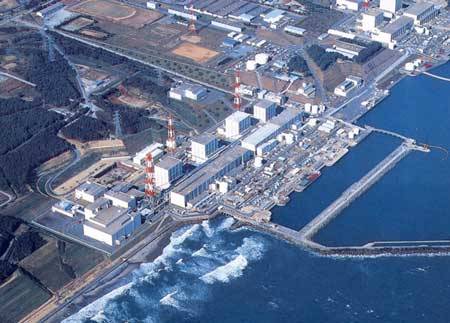
Safety fears as Japan prepares to restart nuclear plant ‘built on tofu’
the greatest risk remains the region’s susceptibility to seismic activity.
the will of the majority of residents today is opposition to a restart and that opposition is f
While Fukushima operator Tepco says it is ‘committed to safety’ at Kashiwazaki-Kariwa, critics believe it is a disaster waiting to happen.
Julian Ryall, 27 Dec 2025
Campaigners against nuclear energy have condemned Japan’s decision to resume operations at the Kashiwazaki-Kariwa power plant, claiming that the facility will be unable to withstand a major earthquake as it was “built on tofu”.
Tokyo Electric Power Co (Tepco), the operator of the Niigata prefecture plant, on Wednesday applied for a final examination of the facility to the Nuclear Regulation Authority (NRA). Approval is likely to be a formality as the prefectural assembly already gave the nod on Tuesday.
Tepco, which has been fiercely criticised for its handling of the Fukushima Daiichi nuclear power plant disaster in March 2011, intends to restart one reactor at Kashiwazaki-Kariwa on January 20.
It would be the first of Tepco’s nuclear reactors to resume since three of Fukushima’s six reactors melted down after a magnitude 9 offshore earthquake unleashed devastating tsunamis.
Tepco has been working hard in recent years to convince the local government and residents of Niigata prefecture that it has made upgrades to secure the site from natural disasters.
Its president, Tomoaki Kobayakawa, told the media that as the operator “responsible” for the Fukushima accident, the company was now “committed to prioritising safety” at Kashiwazaki-Kariwa.
Many people remain unconvinced.
“The plant was famous for having been built on tofu – the bedrock is 30 metres (100 feet) below the surface – with many fault lines running through the site as well as offshore,” said Shaun Burnie, senior nuclear energy specialist for Greenpeace.
“Kashiwazaki-Kariwa is one of the world’s largest nuclear plants and the only one in theory capable of operating for Tepco. So restarting operations has been a priority for both the company and the government for more than a decade,” Burnie told This Week in Asia.
“But resistance from Niigata residents, the scale of safety issues and the incompetence of Tepco have undermined all efforts until now.”
History repeating itself?
Nearly 15 years after the Fukushima plant was the site of the second-worst nuclear accident in global history, Burnie warns that serious problems are being overlooked again.
Even during the preliminary planning stages, in the mid-1970s, it was apparent that ground conditions at the site by the Sea of Japan were not suitable, he said.
That was shown in July 2007, when the Chuetsu-oki earthquake struck. The magnitude 6.6 quake occurred on a previously unknown offshore fault line about 11km (7 miles) off the coast, followed 13 hours later by a 6.8 tremor around 330km (205 miles) to the west.
The nuclear plant, 19km (12 miles) due south from the epicentre of the initial quake, registered a peak ground acceleration – essentially how much the ground shook – of 6.8 metres (22 feet) per second squared in reactor No 1. The design specification for achieving a safe shutdown is 4.5m/s², while the restart level for key equipment in the plant is 2.73m/s².
Burnie said the original design specifications at the site “turned out to be gross underestimates”, with the quakes causing damage of varying degrees at 3,000 places within the plant.
A fire in an electric transformer caused the most serious damage. It left a pall of black smoke over the plant and alarmed local residents. There were also a number of leaks of mildly radioactive water and spills of radioactive cobalt-60, iodine and chromium-51 from overturned storage drums.
Given the events of 2007 and 2011, Burnie said local residents’ concerns were justified, particularly as new issues have come to light.
“We should have no confidence in Tepco assurances on safety at Kashiwazaki-Kariwa,” he said. “For example, two months after the NRA had approved the reactors’ basic safety assessment in late 2017, Tepco revealed that … the site under the emergency hydrogen ventilation buildings at units five, six and seven was vulnerable to liquefaction.”
Tepco “immediately came under pressure to explain the scale of liquefaction at the site, prove that it does not extend to the reactor buildings and how it was that the NRA was not informed prior to granting approval”, Burnie said.
Equally, he said, the NRA had to explain how it failed to identify liquefaction as a problem for a site before it granted basic safety approval.
A series of security incidents have also been cause for concern. There have been accusations of poor handling of sensitive documents, malfunctioning intruder detection systems and an employee borrowing a colleague’s pass to enter the restricted main control room in 2020.
Shaken by fears
But the greatest risk remains the region’s susceptibility to seismic activity.
“There are multiple seismic fault lines in the area of the Kashiwazaki-Kariwa site, including large-scale submarine active faults,” Burnie said. “The enormous seismic risks at the site remain unresolved and are certain to dominate the debate about the safety of any reactor restart, including in ongoing legal challenges.”
In a statement issued on Tuesday, Tepco said it would “carefully cooperate with all inspections performed by the NRA while also continuing to prioritise safety and steadily making each and every preparation for a restart”.
Takeshi Sakagami, a member of the Citizens’ Association for Monitoring Nuclear Regulation, said that a recent survey conducted by Niigata prefecture determined that 60 per cent of local residents believed that “conditions are not right” to resume operations at the plant.
“The governor explained that support should increase as understanding deepens,” Sakagami said. But “opponents counter that the will of the majority of residents today is opposition to a restart and that opposition is firm”.
Sakagami believed the government was hastening to restart the reactors “because they fear that Japan’s nuclear technology will fall behind the rest of the world”.
For him, the direction that Japan should take is simple.
“I believe Japan should abandon nuclear power and boldly shift towards renewable energy sources and energy conservation,” he said.
1 This Month





PLEASE OPPOSE HR 8255 AND S.3639 – bills would accelerate satellite deployment, with no environmental review or safeguards – https://ncstd5li.quorum.us/campaign/169331/
To see nuclear-related stories in greater depth and intensity – go to https://nuclearinformation.wordpress.com
-
Archives
- October 2026 (19)
- September 2026 (339)
- August 2026 (330)
- July 2026 (355)
- June 2026 (287)
- May 2026 (306)
- April 2026 (356)
- March 2026 (251)
- February 2026 (267)
- January 2026 (308)
- December 2025 (358)
- November 2025 (359)
-
Categories
- 1
- 1 NUCLEAR ISSUES
- business and costs
- climate change
- culture and arts
- ENERGY
- environment
- health
- history
- indigenous issues
- Legal
- marketing of nuclear
- media
- opposition to nuclear
- PERSONAL STORIES
- politics
- politics international
- Religion and ethics
- safety
- secrets,lies and civil liberties
- spinbuster
- technology
- Uranium
- wastes
- weapons and war
- Women
- 2 WORLD
- ACTION
- AFRICA
- Atrocities
- AUSTRALIA
- Christina's notes
- Christina's themes
- culture and arts
- Events
- Fuk 2022
- Fuk 2023
- Fukushima 2017
- Fukushima 2018
- fukushima 2019
- Fukushima 2020
- Fukushima 2021
- general
- global warming
- Humour (God we need it)
- Nuclear
- RARE EARTHS
- Reference
- resources – print
- Resources -audiovicual
- Weekly Newsletter
- World
- World Nuclear
- YouTube
-
RSS
Entries RSS
Comments RSS

